
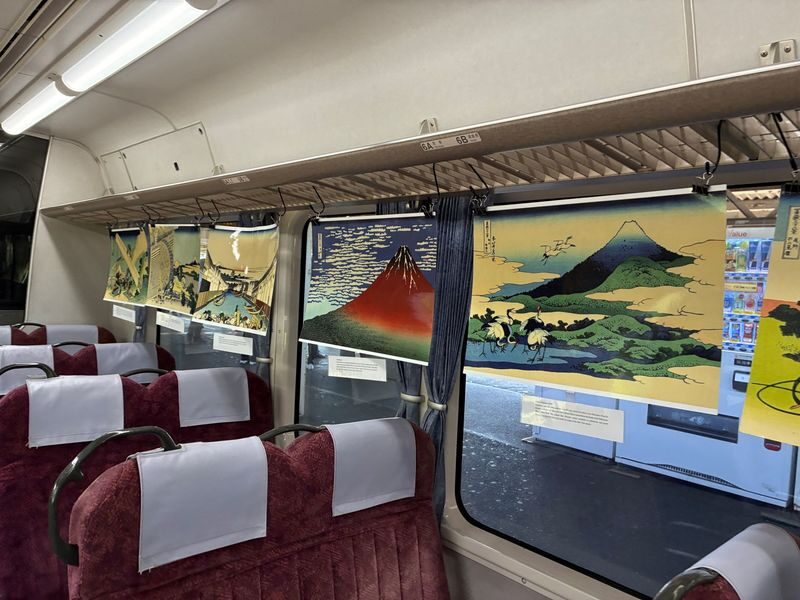
The unusual star of this day trip is the journey itself: first the Shinkansen, then a train decorated with Hokusai’s Mount Fuji prints, rolling through places tied to his famous views. From there, the day moves between a sacred shrine, two very different waterfalls, and a farm where you grate and taste fresh wasabi.
I like the mix of art and local culture with real time outdoors, and the chance to try wasabi straight from the root rather than from a tube. The main trade-off is a packed schedule: you spend a good deal of the day moving between stops, and cloudy weather can hide Fuji.
- At a glance
- The Shinkansen gets you out of Tokyo quickly
- The World Heritage Centre puts Fuji in context
- Shiraito and Otodome show two sides of Fuji’s water
- Lunch comes late, so eat breakfast
- The wasabi farm makes the day personal
- A full day with a few important limits
- Who should book this Fuji day trip?
- FAQ
- Where does the tour start?
- Where can I finish the tour?
- Is Mount Fuji guaranteed to be visible?
- What lunch options are available?
- Are seats included on the trains and bus?
- Can young children join?
- Can I bring a suitcase, and what should I wear?
- The Best Of Fujinomiya!
- More Farms in Fujinomiya
- More Tours in Fujinomiya
- More Tour Reviews in Fujinomiya
At a glance
 1 / 8
 2 / 8
 3 / 8
 4 / 8
 5 / 8
 6 / 8
 7 / 8
 8 / 8
- Hokusai by rail: Ride a special train decorated with works from Thirty-six Views of Mount Fuji.
- Fuji’s spiritual side: Learn about the mountain at the World Heritage Centre and visit its head shrine.
- Two contrasting waterfalls: See Shiraito’s delicate streams and Otodome’s forceful cascade.
- Fresh wasabi, by hand: Tour a growing field, grate Mazuma wasabi, and taste it.
- Four lunch choices: Choose Japanese, vegetarian, Muslim-friendly, or Indian thali.
- Pick your finish: Depending on your package, end at Tokyo Station, Mishima Station, or Gotemba Premium Outlets.

👉 See our pick of the 3 Best Spa & Hot Springs Experiences In Fujinomiya
The Shinkansen gets you out of Tokyo quickly
Meet your guide at 8:00 am at Tokyo Midtown Yaesu’s B1F bus terminal, near the information desk. Be on time: late arrivals and no-shows are not refunded. The group boards the Tokaido Shinkansen for Mishima, a ride of about 53 minutes. Reserved seats are planned, though non-reserved seating may be used if trains are crowded.
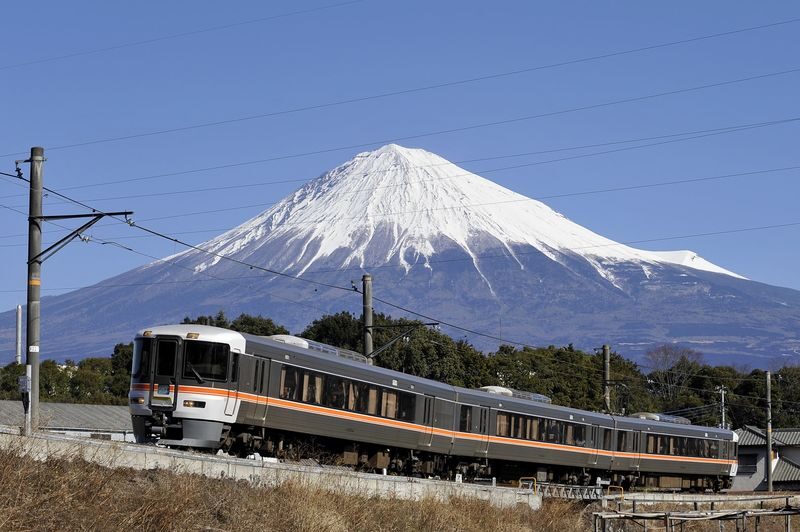
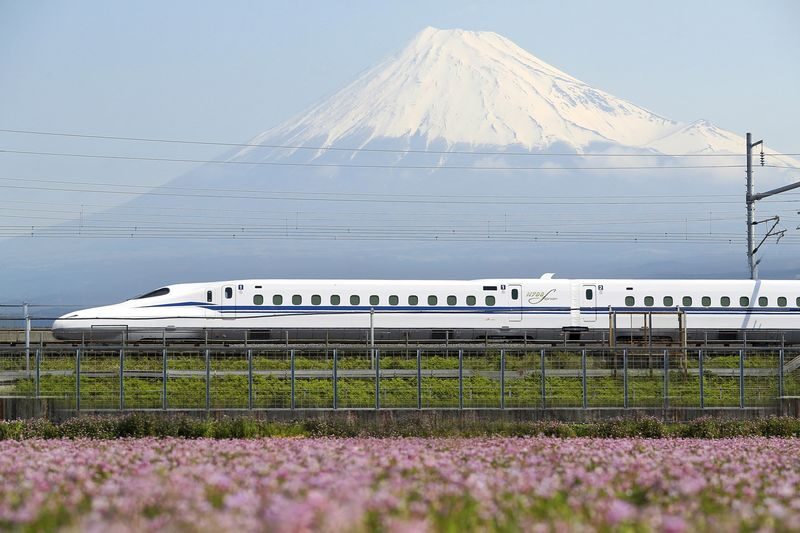
At Mishima, transfer to the Hokusai Special Train for the roughly 45-minute ride toward Fujinomiya. The art inside the carriage gives the trip a clear theme, while the route connects the prints to the region they depict. The train may slow at places shown in Hokusai’s Thirty-six Views of Mount Fuji, with chances to take photos.
That makes the rail section more than a way to get from A to B. You get a taste of Japan’s efficient long-distance trains, then a slower local ride that invites you to look out the window. Keep your camera ready, but don’t count on a clear view of Fuji: weather can obscure the mountain, and the tour runs regardless.
The day’s English-speaking guide helps tie the stops together. Recent departures have included guides named Nao and Sunny, but your guide may be someone else. The most useful thing to expect is an organized day with explanations in English, not a free-roaming trip where you set your own pace.
You can also read our reviews of more tours and experiences in Fujinomiya
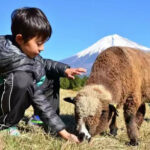
The World Heritage Centre puts Fuji in context
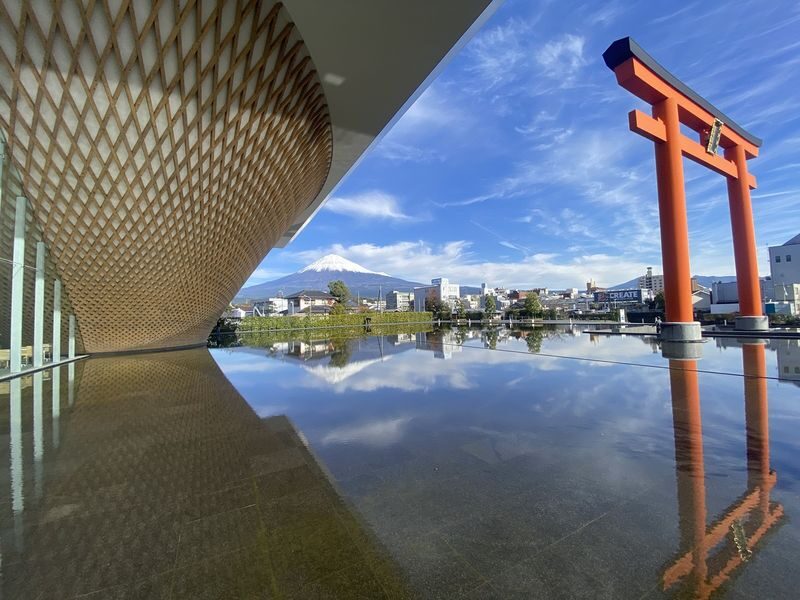
After reaching Fujinomiya, a short bus ride takes you to the Mt. Fuji World Heritage Centre. You have about 50 minutes here. The centre covers the mountain’s history and spiritual importance, giving you a foundation for the shrine visit that follows.
A featured attraction is a 4K theatre screening of Mount Fuji, shown every 15 minutes. That’s especially useful on a cloudy day, when the real mountain may be partly or fully hidden. The centre can’t replace a clear view outdoors, but it gives you something meaningful to see and learn even when the weather refuses to cooperate.
The walk to Fujisan Hongu Sengen Taisha Shrine takes about five minutes. You’ll have around 20 minutes at the shrine, regarded as the head shrine of Japan’s Sengen shrines and a centre of Fuji worship. The mountain has long been revered here, including as a force whose eruptions people hoped to calm.
This stop adds a quieter, more reflective note to the day. If you’re mainly after scenic photos, the visit may feel brief. If you’re interested in how a natural landmark shapes belief and local life, it makes the mountain feel less like a backdrop and more like a place with spiritual meaning.
Shiraito and Otodome show two sides of Fuji’s water
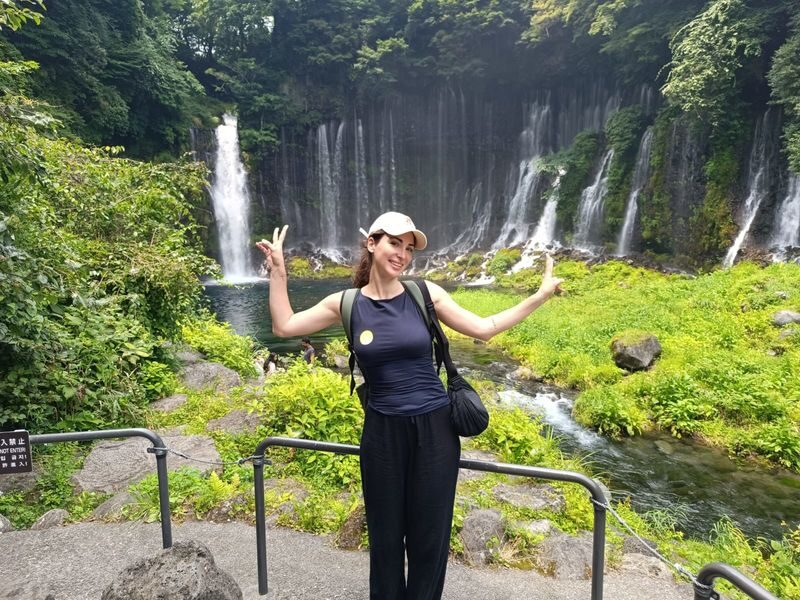
The bus ride to the falls takes about 30 minutes. The schedule allows roughly 15 minutes at Shiraito Falls and another 15 at Otodome Falls, so bring your camera and be ready to keep moving.
At Shiraito, snowmelt from Mount Fuji emerges through the cliffs in many slender streams. Its appeal is in the spread of water across the rock face, rather than in one huge drop. Otodome is the contrast: a powerful fall that sends water down in columns with a strong, reverberating sound.
Together, the stops make a good pair. One is fine and dispersed; the other is forceful and concentrated. The short visit times mean you won’t have a long walk or an unhurried nature break, but you do get two distinct views of the area’s water in a single outing.
Weather and road conditions can change the order and timing of stops. The company may also substitute another facility if a planned site is unavailable. The named alternatives include Gotemba Premium Outlets, Kakita River Park, and Mishima Taisha Shrine.
Lunch comes late, so eat breakfast
Lunch is scheduled after the falls, with about 50 minutes to eat. One practical tip: have a filling breakfast. The meal may not arrive until around 2:30 pm, which can feel late after an 8:00 am start and several hours of sightseeing and transport.
You can choose from four options: a Japanese-style meal, a vegetarian meal, a Muslim-friendly meal, or an Indian thali with tea or coffee. The Muslim-friendly menu avoids pork and alcohol but is not halal-certified. The Indian thali is vegetarian and does not include meat or fish.
Special allergy-friendly and gluten-free meals are not available. If you have a dietary restriction beyond the listed choices, check carefully before booking rather than assuming the kitchen can adjust the meal. The included lunch is a useful part of the package, but it doesn’t replace planning ahead for a long morning.
The wasabi farm makes the day personal
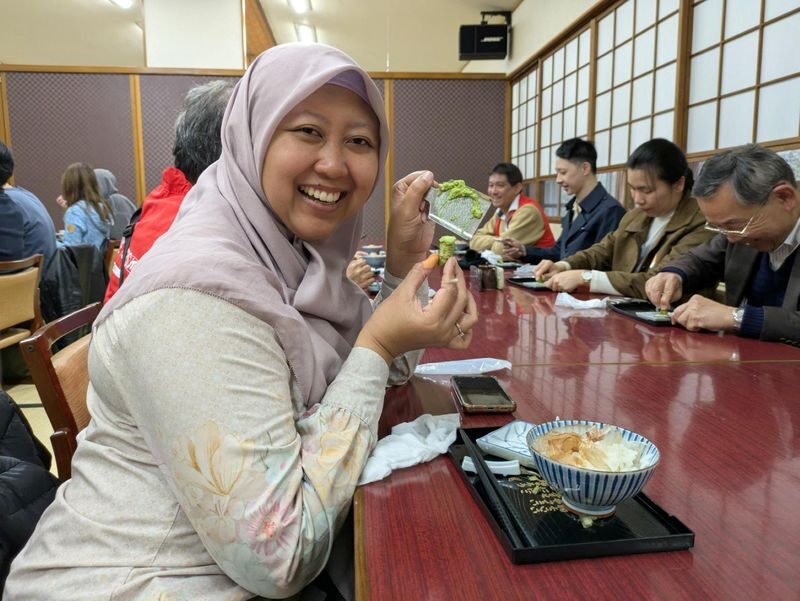
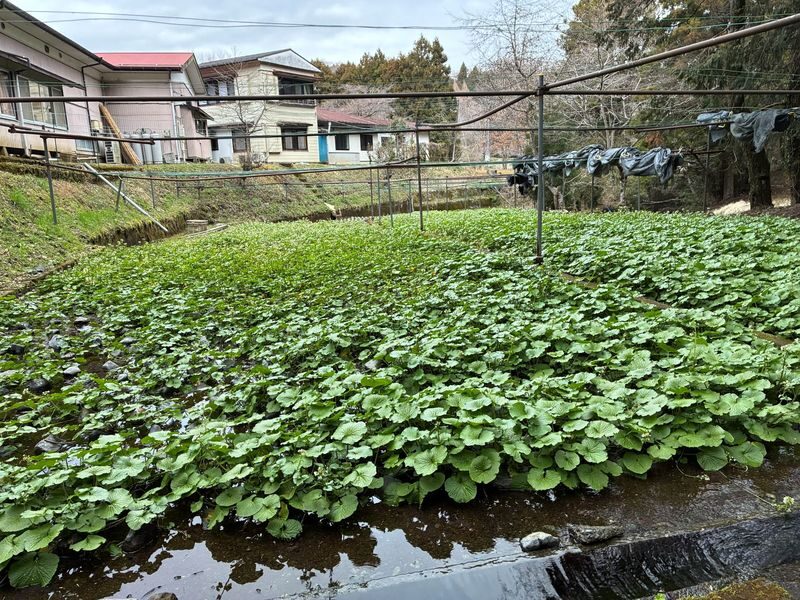
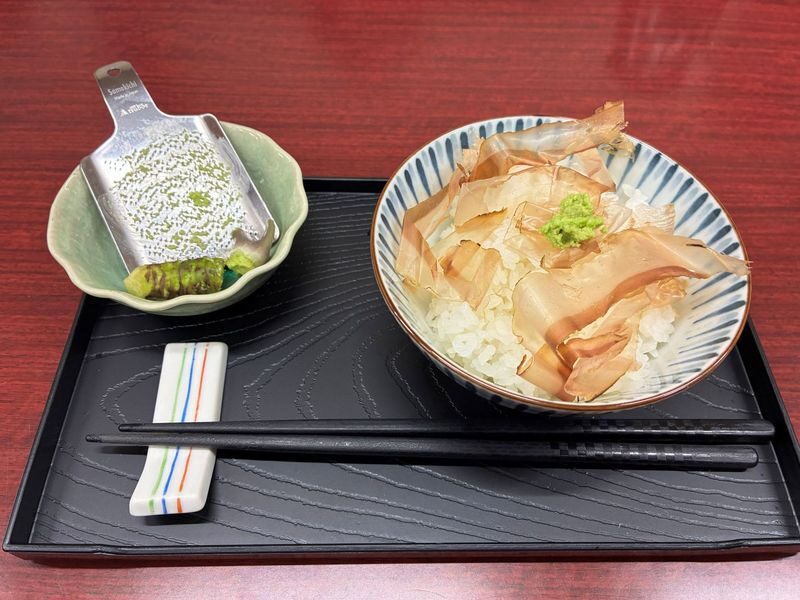
After lunch, the bus heads to the wasabi farm, where you spend about 30 minutes. You’ll see a field used to grow wasabi, then grate and taste Mazuma wasabi. It’s a hands-on stop, and a welcome change from simply looking at another exhibit or landmark.
Freshly grated wasabi can taste quite different from the familiar paste served with sushi. The experience gives you a chance to notice its aroma and flavour for yourself, and to see the plant’s growing environment. If you enjoy food and local production, this may be the day’s most distinctive stop.
The visit is short, so think of it as an introduction rather than an in-depth farm tour. If the planned facility is closed, the tour may visit an alternative instead. That flexibility keeps the day moving, but means the exact farm experience cannot be treated as guaranteed.


A full day with a few important limits
This is a structured day trip, not a slow country escape. You’ll switch from Shinkansen to local train, then spend much of the rest of the day on an air-conditioned bus with free Wi-Fi. That makes several far-flung stops possible, but the timetable leaves limited time at each one.
The tour is scheduled to return around 4:10 pm, with arrival timing subject to change. The end point depends on the package you book: options include Tokyo Station, Mishima Station, and Gotemba Premium Outlets. The Mishima package ends at Mishima Station, where you make your own way onward. Check your selected package before booking, especially if you have an onward connection or want time for shopping.
The bus and rail connections are included, along with admissions, an English-speaking guide, lunch, and the wasabi grating and tasting. The listed starting price is US$151.35 for the Mishima or Gotemba option; the Tokyo Station return option starts at US$176.59. That price buys a lot of moving parts in one day, including the Shinkansen and the themed train, but value depends on whether you want a guided, tightly organized route. Independent transport may give you more time at one or two places, while this tour covers more ground without asking you to plan each connection.
A few practical details matter. Wear athletic shoes, since you’ll be walking at the shrine and falls. Large suitcases are not allowed, so leave them at your accommodation. Children aged 0 to 5 can join free without their own seats or lunch; book the child rate if they need either. Children aged 6 to 11 must be with a paying adult, and those aged 12 or older pay the adult rate.
The tour is intended for international visitors, and residents of Japan cannot book it. Its price also includes government-certified J-Credits that support environmental measures such as forest conservation. That’s a modest but concrete part of its sustainability approach, alongside efforts to encourage responsible travel.
Who should book this Fuji day trip?
I’d look closely at this tour if you want more than a quick Fuji photo stop. It brings together Japanese art, religious tradition, waterfalls, regional food, and two kinds of train travel in one day. The Hokusai train and fresh wasabi tasting give it a different feel from a standard Fuji sightseeing route.
It suits first-time visitors who want a guided introduction to Shizuoka, as well as repeat visitors looking for a change from the better-known Hakone route. It’s also a sensible option if you don’t drive and would rather not piece together local rail and bus connections yourself.
Skip it if your top priority is a guaranteed, unobstructed view of Mount Fuji. Visibility is weather-dependent, and the tour does not cancel or refund because the mountain is hidden. Also think twice if you prefer a relaxed pace, need a late lunch, require a special diet not listed, or want to spend a long time at each attraction.
Book it for the combination of culture, transport, scenery, and tasting, not for a promise of perfect Fuji weather. If that balance suits you, this is a practical way to see a thoughtful slice of Shizuoka in one long day.
Mt Fuji, Shizuoka Wasabi Farm Tour with Hokusai Train & Bullet Train
“I really enjoyed this tour. It was very well organized and offered a unique combination of nature, culture, and local experiences. The itinerary in…”
FAQ
Where does the tour start?
Meet at 8:00 am at Tokyo Midtown Yaesu B1F Bus Terminal B, in front of the information desk. Look for a guide holding a JTB Sunrise Tours sign.
Where can I finish the tour?
Package options end at Tokyo Station, Mishima Station, or Gotemba Premium Outlets. Check the destination on your chosen package, since the return route and price vary.
Is Mount Fuji guaranteed to be visible?
No. Weather may partly or fully hide Mount Fuji, but the tour still operates and no refund is given for poor visibility.
What lunch options are available?
You can choose a Japanese-style meal, vegetarian meal, Muslim-friendly meal, or vegetarian Indian thali with tea or coffee. The Muslim-friendly meal is not halal-certified, and allergy-friendly and gluten-free meals are not available.
Are seats included on the trains and bus?
The tour includes a one-way Shinkansen ticket from Tokyo to Mishima and the Hokusai Special Train fare. Reserved Shinkansen seats are planned, but non-reserved seating may be used if trains are crowded. An air-conditioned bus with free Wi-Fi is also included.
Can young children join?
Children aged 0 to 5 can join free if they do not need their own seats or lunch. Book the child rate if either is needed. Children aged 6 to 11 must be accompanied by a paying adult; children aged 12 and older pay the adult rate.
Can I bring a suitcase, and what should I wear?
Large luggage such as suitcases is not allowed, so leave it at your accommodation. Athletic footwear is recommended.


