Kamikochi puts the Japanese Alps within reach of Nagoya for a day: clear water, forest paths, and the Hotaka peaks rising above Kappa Bridge. The catch is the long coach ride, so the payoff depends on how much you value mountain scenery over a leisurely pace.
I like the choice between a flat first-timer route and a longer walk toward Myojin Pond, and I like that the tour leaves you free to set your own pace. The main drawback is limited time on site: about three and a half hours is enough for a focused walk, not every stop at a slow pace.
- At a glance
- The long ride is the price of a short alpine escape
- Taisho Pond starts the easiest walk
- Kappa Bridge is the landmark, and the natural pause
- Myojin Pond takes more time and planning
- The Nagoya schedule rewards punctuality
- Weather, crowds, and what to pack
- What the price covers, and what it does not
- Who should book this Kamikochi day trip?
- FAQ
- How long is the tour?
- Where does the tour leave from?
- How much time do I have at Kamikochi?
- Which walking route is better for a first visit?
- How long is the route to Myojin Pond?
- Are meals included?
- What languages does the guide speak?
- What should I bring?
- What happens if bad weather closes the road?
- The Best Of Matsumoto!
- More Hiking & Trekking Tours in Matsumoto
- More Tours in Matsumoto
- More Tour Reviews in Matsumoto
At a glance
 1 / 9
 2 / 9
 3 / 9
 4 / 9
 5 / 9
 6 / 9
 7 / 9
 8 / 9
 9 / 9
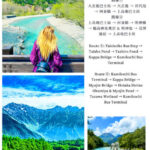
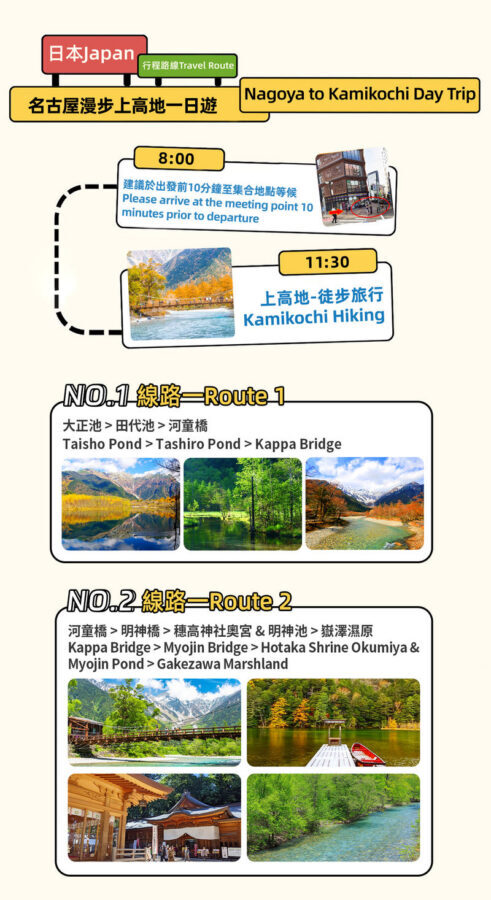
- Taisho Pond to Kappa Bridge: A scenic, mostly flat 3.5 km walk that takes about one to one and a half hours.
- Kappa Bridge to Myojin Pond: A 5.6 km option for a longer outing to Myojin Bridge and Hotaka Shrine Okumiya.
- Kamikochi time: Plan on roughly three and a half hours to walk, take photos, and fit in a meal or rest.
- Transport from Nagoya: Meet at 8:00 a.m.; the return to Nagoya is scheduled for about 6:30 to 7:00 p.m.
- Bring your own lunch: Meals and drinks are not included, and mountain weather can change quickly.
- Guides and group size: Chinese and English service is offered. The group may range from 4 to 49 people, with the vehicle and guide arrangement varying by group size.

👉 See our pick of the Our Picks For The 7 Best Walking Tours In Matsumoto
The long ride is the price of a short alpine escape
The tour trades a long stretch of road for a few hours in Kamikochi, a highland area in the Japanese Alps near Matsumoto. You leave Nagoya in the morning and return in the evening, with the walking portion designed to be self-guided. That makes the outing practical if you are based in Nagoya and do not want to arrange the transfers yourself.
The schedule gives you about three and a half hours at Kamikochi. Traffic and weather can shift the day, and the route or stops may be adjusted for conditions. Treat the times as a plan, not a promise. On a clear day, that window can feel rewarding; on a crowded or rainy day, it can feel tight.
This is not a guided trek where the group follows a leader along the whole route. The guide gives instructions and route advice, then you explore on your own. Guides named by people on past trips include Zhang, Guo Huajuan, Sasha, Suzy, and Xiao Yu, but assignments vary. The most useful service is often practical: clear directions, reminders about the return meeting time, and advice on which path suits your available time.
You can also read our reviews of more hiking tours in Matsumoto
Taisho Pond starts the easiest walk
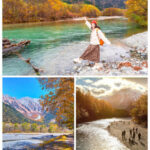
For a first visit, the 3.5 km route from Taisho Pond to Tashiro Pond and Kappa Bridge is the sensible choice. It is described as flat and takes about one to one and a half hours to walk, leaving time for pauses, photos, and a meal. You do not need to be a seasoned hiker to enjoy it, though comfortable walking shoes still matter.
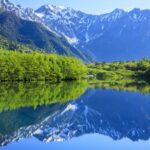
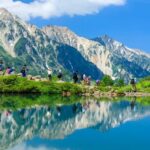
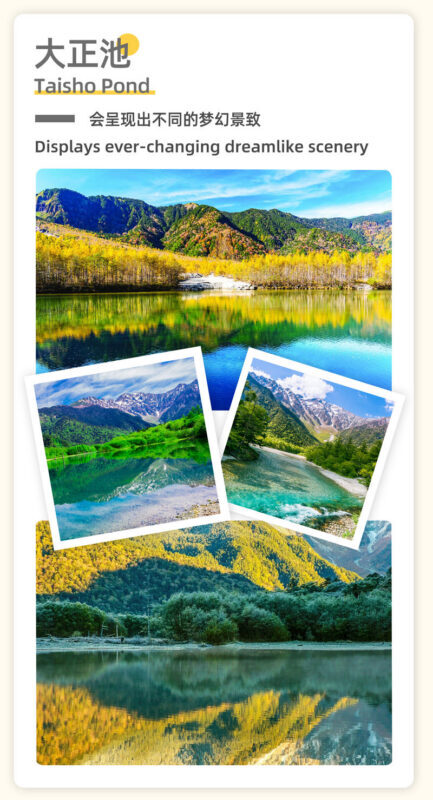
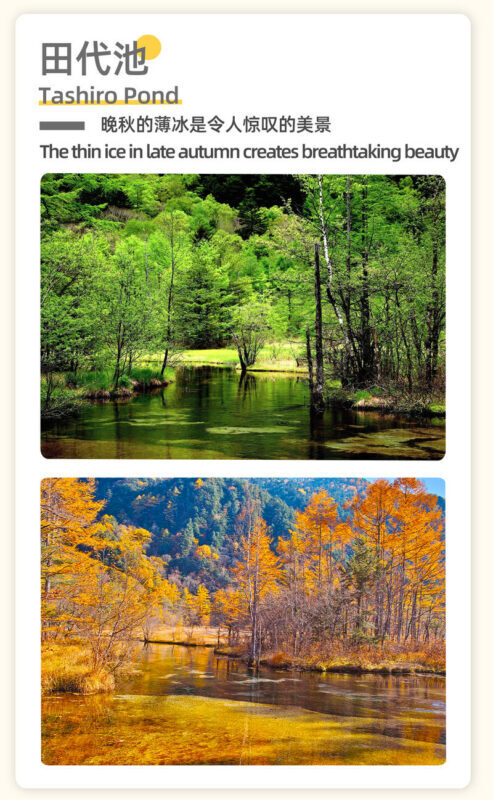
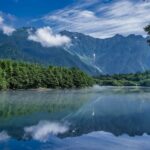
Taisho Pond was formed after a volcanic eruption. Dead trees rise from the water, creating a striking scene that changes with the light and season. This is a good place to slow down at the start. If you hurry straight toward the bridge, you miss one of the route’s most distinctive views.
The path continues through the wetland around Tashiro Pond. Fresh green is noted in May, while October brings autumn color; thin ice can appear in late autumn. These seasonal details make the route worth considering beyond peak foliage dates. Conditions vary, of course, and weather can obscure the mountains or change the feel of the walk.
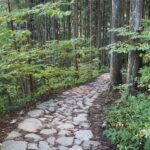
The path is popular, especially during holiday periods and autumn foliage season. Expect other walkers, particularly on the stretch toward Kappa Bridge. The well-marked, maintained paths are a practical advantage, but this is not a solitary wilderness walk during busy dates.
Kappa Bridge is the landmark, and the natural pause
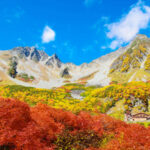
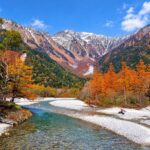
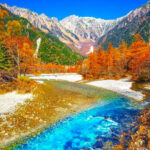
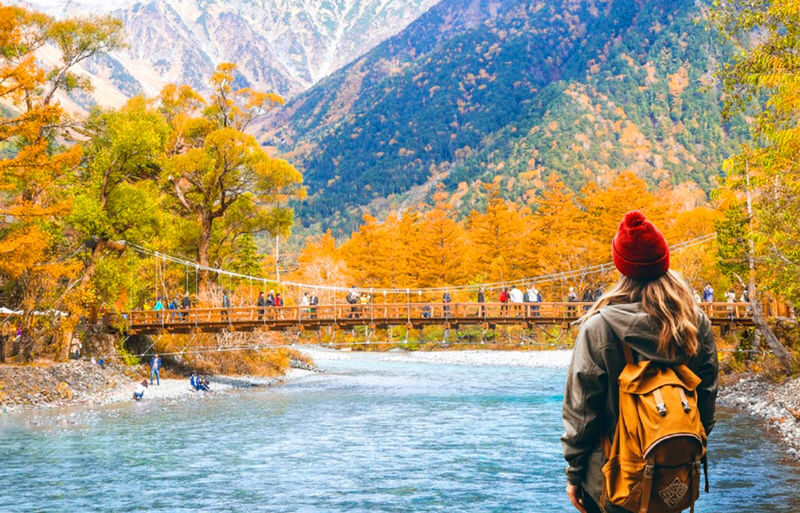
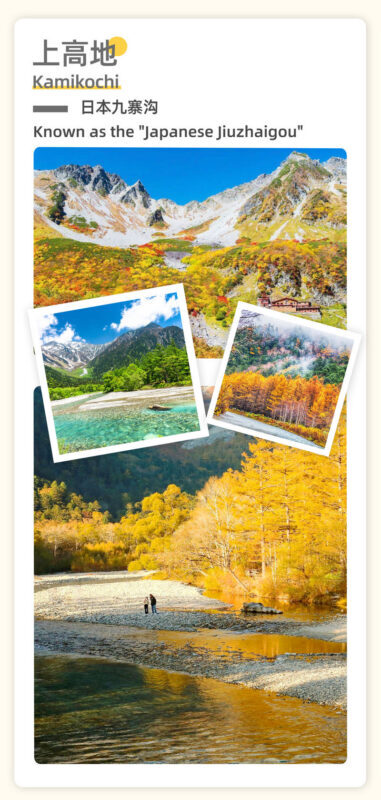
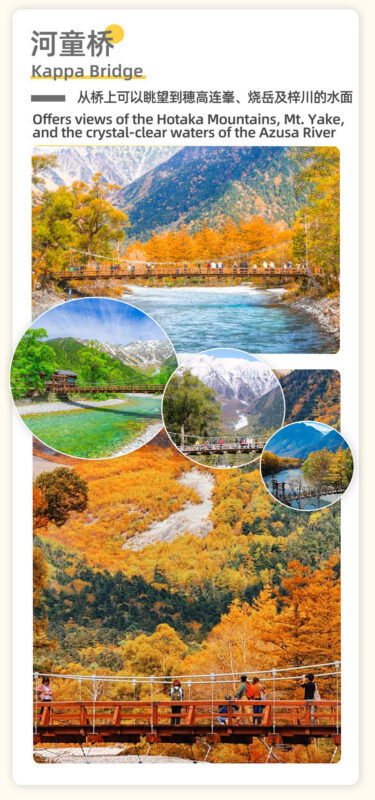
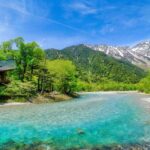
Kappa Bridge is Kamikochi’s best-known meeting point, with views toward the Hotaka Mountain Range, Mount Yake, and the Azusa River. The river’s clear water and the mountain backdrop are the reason many people make the trip. In good weather, the high peaks give the bridge its full effect; in rain or fog, the scene can turn misty and subdued instead.
The bridge is a natural place to pause, take photos, and check the clock. It can also be crowded, especially in peak seasons. If the view is busy, step away from the bridge area and spend some time along the river rather than waiting for a completely empty photo.
The Hotaka range includes Oku-Hotaka, identified as Japan’s third-highest peak. Mount Yake, an active volcano, adds another kind of drama to the view. You are seeing a powerful mountain setting without undertaking a summit climb: the tour is built around walking the valley floor, not climbing the peaks.
Myojin Pond takes more time and planning
The longer option begins at Kappa Bridge and continues toward Myojin Bridge, Hotaka Shrine Okumiya, and Myojin Pond. At 5.6 km, it asks more of your time and legs than the first route. The reward is a quieter-feeling stretch of riverside scenery and a visit to a pond linked with the shrine.
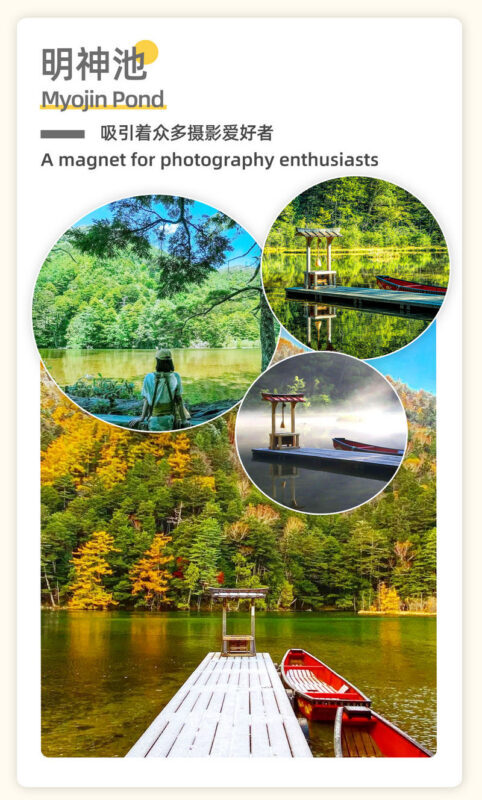
Myojin Pond is described as a peaceful, sacred place and a favorite setting for photography. Hotaka Shrine Okumiya, with its large torii gate, adds a cultural stop to a day otherwise focused on forest, water, and mountains. The nearby Kamonji Hut is associated with local iwana, or char. Food is not included in the tour, so bring money if you hope to buy something there, and do not count on a long sit-down meal fitting your schedule.
The route choices are alternatives, not a promise that you can comfortably complete every stop in the allotted time. If you want the pond and shrine, set out with a clear return time and keep your pace steady. If you prefer a relaxed visit, the Taisho Pond walk is a better match. The guide can explain the options, but you are responsible for being back at the bus on time.
The Nagoya schedule rewards punctuality
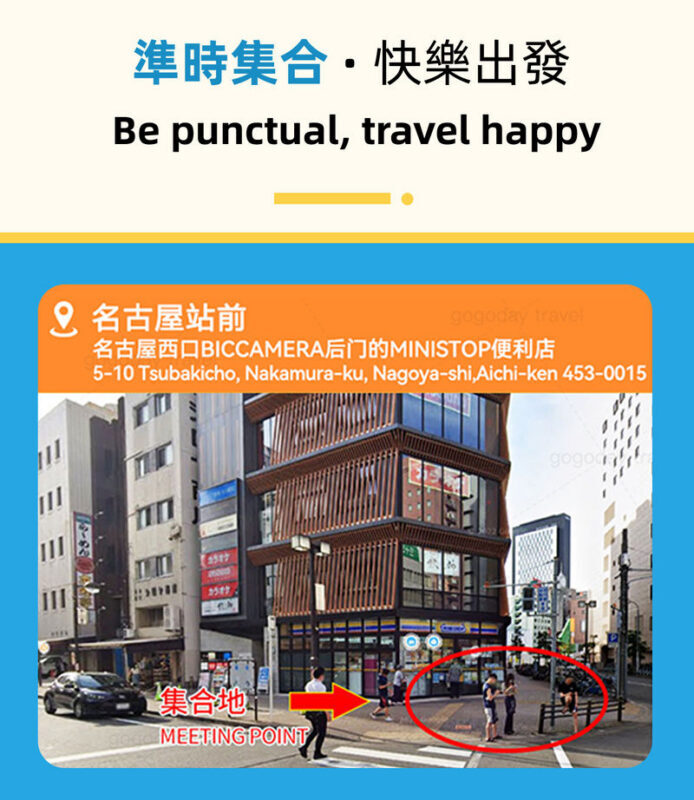
The stated departure is 8:00 a.m. from the Nagoya Station Taikodori Exit area, near Ministop Tsubakicho Branch at 5-10 Tsubakicho. Arrive at least ten minutes early. The information also gives a Nagoya CORE Meieki Building address for the return, so read the final meeting and vehicle message carefully rather than relying on a saved map pin alone.
The operator sends guide and vehicle details by email between 6:00 and 9:00 p.m. the evening before departure, with a stated deadline of 9:00 p.m. Check your spam folder if it does not arrive, and follow the latest message if more than one comes through. This small bit of preparation matters: the tour is a shared ride, and late arrivals are not refunded.
The published plan has you at Kamikochi around 11:30 a.m., with the group gathering to return at 3:00 p.m. Arrival back in Nagoya is scheduled between 6:30 and 7:00 p.m. Road closures, weather, holidays, and traffic can affect timing or require changes. There is no refund simply because the day runs differently for those reasons, so avoid booking a tight connection afterward.


Weather, crowds, and what to pack
Kamikochi’s weather and temperature can shift through the day. Pack comfortable shoes, rain gear, a hat, sunglasses, and an extra layer you can add or remove. An umbrella may help, but waterproof clothing is more useful if rain sets in during a walk. Rain and fog can hide the peaks, although the ponds and river can still look atmospheric. If it pours, you may get wet, so dress for the forecast rather than the ideal photo.
From June through September, temperatures are given as around 20°C, but the tour still recommends warm clothing. Mountain weather is changeable, and a light jacket is a sensible addition even in summer. Bring your own lunch and drinks because meals and beverages are excluded. That also gives you control over how long you stop to eat.
Crowds can slow your walk, especially on busy Saturdays, public holidays, and during autumn color season. Give yourself a margin for the return meeting rather than using every minute to reach the farthest point. The paths are described as maintained and well signed, but the tour is not suitable for everyone: it is not recommended for people with high blood pressure, epilepsy, heart disease, asthma, other serious medical conditions, or for pregnant women.
What the price covers, and what it does not
Prices start at $44.25. For a day trip that includes round-trip transport from Nagoya and a Chinese or English-speaking guide, that can be good value, particularly if you would otherwise need to organize the journey yourself. The main value is practical: transport gets you to the valley and back while you focus on the walk.
The price does not include meals, drinks, or personal expenses. It also does not buy you a private walking guide or a long stay in the mountains. Groups can range from 4 to 49 people. For groups of 4 to 13, the driver may also act as guide, with driving taking priority; larger groups may have a separate driver and guide. Seating is not guaranteed to be together, so arrive early if you are traveling with others and hope to sit nearby.
One piece of luggage is allowed per person at no charge. Extra pieces cost JPY 2,000 each and must be declared when booking; the vehicle may not accept undeclared excess luggage. Children aged 0 to 2 can ride free if they do not need a separate seat. Children aged 3 and older pay the adult rate, and anyone aged 0 to 17 must travel with a paying adult.
Who should book this Kamikochi day trip?
I would book this if I were staying in Nagoya, wanted to see the Japanese Alps without arranging my own transport, and was content with a few focused hours on foot. The flat Taisho Pond to Kappa Bridge route is the best fit for first-time visitors and anyone who wants scenery without turning the day into a strenuous hike.
Choose the longer Myojin route if walking is a priority and you are comfortable keeping an eye on the clock. Think twice if you want a slow lunch, a quiet walk far from other people, or a full day among the mountains. The drive is long, and weather can change the view. But if the trade-off suits you, Kamikochi offers a rare contrast to city time: cold clear water, forest paths, and high peaks in one carefully timed day.
Nagoya Kamikochi Hiking Tour: One-Day Nature Forest Hiking Tour of Kamikochi & Taisho Pond & Tashiro Pond & Kappa Bridge & Myojin Pond & Hotaka Mountain Range & Hotaka Shrine Okumiya (Departure from Nagoya)
“Our tour guide was Ms. Zhang, who was lively, gentle, and provided very detailed introductions. It is definitely worth booking again.”
FAQ
How long is the tour?
The day runs from about 8:00 a.m. to 6:30 or 7:00 p.m. The scheduled time at Kamikochi is about three and a half hours, though traffic and weather may affect the schedule.
Where does the tour leave from?
Meet near Ministop Tsubakicho Branch by Nagoya Station’s Taikodori Exit, at 5-10 Tsubakicho, Nakamura-ku. Arrive at least ten minutes before the 8:00 a.m. departure.
How much time do I have at Kamikochi?
The tour allows about three and a half hours for your visit. The exact timing may change with traffic, weather, and arrangements on the day.
Which walking route is better for a first visit?
The 3.5 km route from Taisho Pond through Tashiro Pond to Kappa Bridge is recommended for first-time visitors. It is flat and takes about one to one and a half hours to walk.
How long is the route to Myojin Pond?
The route from Kappa Bridge via Myojin Bridge to Hotaka Shrine Okumiya and Myojin Pond is 5.6 km. The tour information does not give a walking time, so leave enough time to return for the bus.
Are meals included?
No. Meals and drinks are not included. Bring your own lunch and beverages, and budget separately for any personal purchases.
What languages does the guide speak?
The tour includes a Chinese or English-speaking guide. The guide and vehicle details are sent by email before departure.
What should I bring?
Bring comfortable walking shoes, rain gear, an umbrella if useful, a hat, sunglasses, and an extra jacket. Warm clothing is recommended even from June through September.
What happens if bad weather closes the road?
If roads are closed due to bad weather, the tour may be canceled for safety and the tour fee will be fully refunded. You are responsible for your own transport costs to the meeting point.