Hokkaido’s best day trips often mean a lot of road time. This private car charter lets you choose the stops, travel at your own pace, and leave the winter driving to someone familiar with the roads. I like the hotel pickup and flexible route, and I like that you can build a day around your group rather than follow a bus schedule.
The main trade-off is simple: freedom does not make distant places closer. A Sapporo-to-Furano-and-Biei route can involve hours in the car, and weather or traffic may force you to drop a stop. Also, the driver is not necessarily a tour guide, and tolls and parking are extra.
- At a glance
- Choose your Hokkaido day before you book
- What the sample Sapporo itinerary actually includes
- The long run to Furano and Biei
- Otaru, Lake Toya, and other route choices
- What the driver can and cannot do
- The real cost: fare, fees, and the clock
- Pick the right vehicle and travel light
- Is this charter worth booking?
- FAQ
- Is this a guided tour?
- Which languages may the driver speak?
- Are highway tolls and parking included?
- How long is the car charter?
- Can I bring children and request a child seat?
- Can I visit all the stops on a suggested route?
- More Tours in Furano
- More Tour Reviews in Furano
At a glance
 1 / 6
 2 / 6
 3 / 6
 4 / 6
 5 / 6
 6 / 6
- You choose the route: Options range from central Sapporo to Otaru, Lake Toya, Noboribetsu, Biei, and Furano.
- A private vehicle keeps the day flexible: It is especially useful for families, older relatives, and groups who want to avoid connecting trains and buses.
- Long drives need realistic plans: Biei and Furano are ambitious from Sapporo, particularly in winter or when you want time at several stops.
- Driver language can vary: Chinese-speaking drivers are prioritized, but Chinese, Japanese, or English speakers may be assigned.
- Budget for extras: Highway tolls and parking are paid separately, and peak-season surcharges or overtime may apply.
- The service is a car charter, not a guaranteed guided tour: You get transport and may get useful local suggestions, but guiding and attraction tickets are not included.
Choose your Hokkaido day before you book
This is best thought of as a private vehicle service with a menu of possible routes, not one fixed tour. You can stay in Sapporo, head to Otaru, or plan a longer trip toward Furano, Biei, Noboribetsu, or Lake Toya. The operator’s customer service can help shape a sensible route, but the more ground you cover, the less time you have on foot.
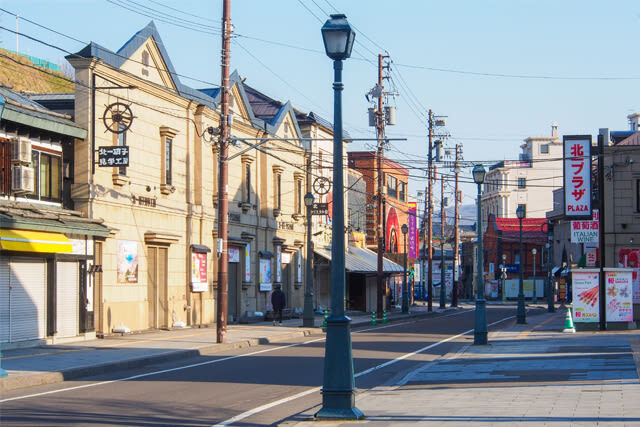
The published examples show the range. A Sapporo city day might include Hokkaido University, Shiroi Koibito Park, Hokkaido Shrine, Odori Park, and Tanukikoji Shopping Street. An Otaru outing could combine the canal, Sakaimachi Street, Sankaku Market, glass shops, and the Music Box Museum. A Furano and Biei plan might include the Blue Pond, Shirahige Falls, Shikisai-no-oka, Farm Tomita, or Ningle Terrace.
Those are choices, not promises that every stop fits into one day. The service sets a 300-kilometer route limit and warns that traffic, weather, capacity, or seasonal closures can change the plan. Pick a few priorities and give them enough time. A list of six famous stops looks good on a screen; it can feel like a race from the back seat.
You can also read our reviews of more tours and experiences in Furano.


What the sample Sapporo itinerary actually includes
The sample Sapporo city schedule starts at 8:30 a.m. and returns around 5 p.m. It gives about an hour each for Hokkaido University, Shiroi Koibito Park, and Hokkaido Shrine, with a 40-minute lunch break and a final 90-minute block. The schedule also names Odori Park and Tanukikoji elsewhere among the activity stops, but the precise order and time allocation are not fully spelled out.
That matters if you are booking specifically for a particular attraction. Confirm which stops you want before the day, and ask customer service how they fit into the route. With a private charter, the value lies partly in being able to negotiate the plan in advance, rather than discovering at 3 p.m. that your last stop never made the schedule.
Hokkaido University offers a quieter start than a day built entirely around shopping streets and photo stops. It is a self-guided visit, so you can stroll at your own pace, but do not expect a formal campus tour or a guide explaining the buildings.
At Shiroi Koibito Park, allow time to look around rather than treating it as a quick roadside stop. It is a popular, recognizable attraction, but admission to ticketed attractions is not included. Check what you want to see inside and budget accordingly.
Hokkaido Shrine adds a more reflective pause to the day. The sample itinerary lists an hour there, again as a self-guided visit. The name in the schedule appears as Hokkaido Shrine Mikado, so confirm the exact stop with the operator when agreeing on your route.
The 40-minute lunch break is practical, but not leisurely. Food and drinks are not included, and the menu can change with season and ingredient availability. For a longer day outside the city, ask the driver or customer service to identify a lunch stop that fits the route rather than assuming a restaurant visit is already arranged.
The long run to Furano and Biei
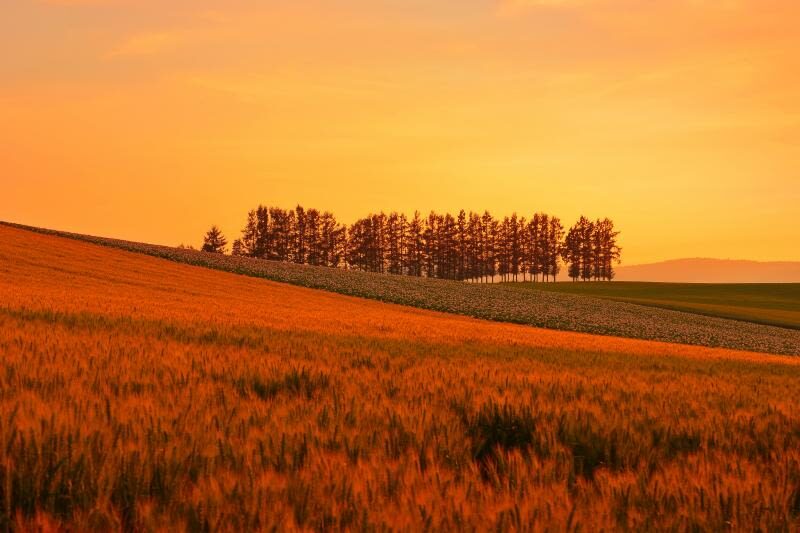
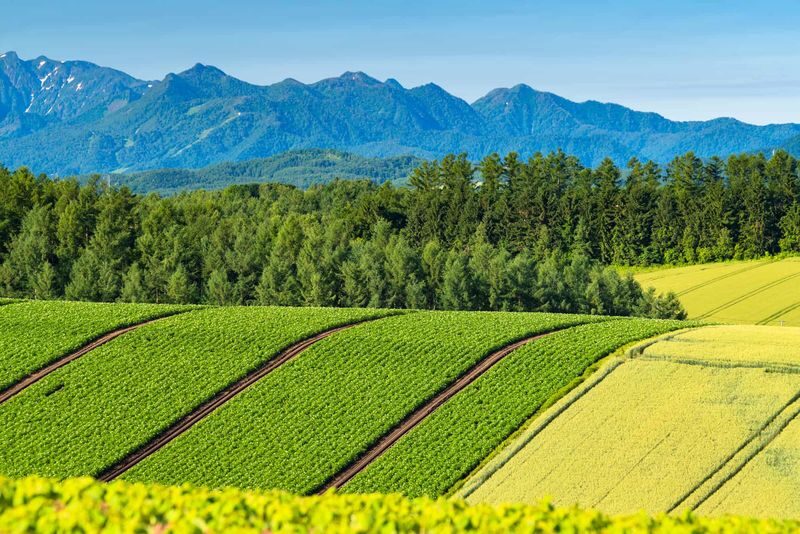
The Furano and Biei route is the most tempting and the easiest to overfill. From Sapporo, the sample route can combine Patchwork Road, Shikisai-no-oka, Blue Pond, Shirahige Falls, Farm Tomita, and Ningle Terrace. These places are spread out, and some are more rewarding in particular seasons. The drive itself can take a substantial share of the day.
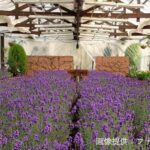
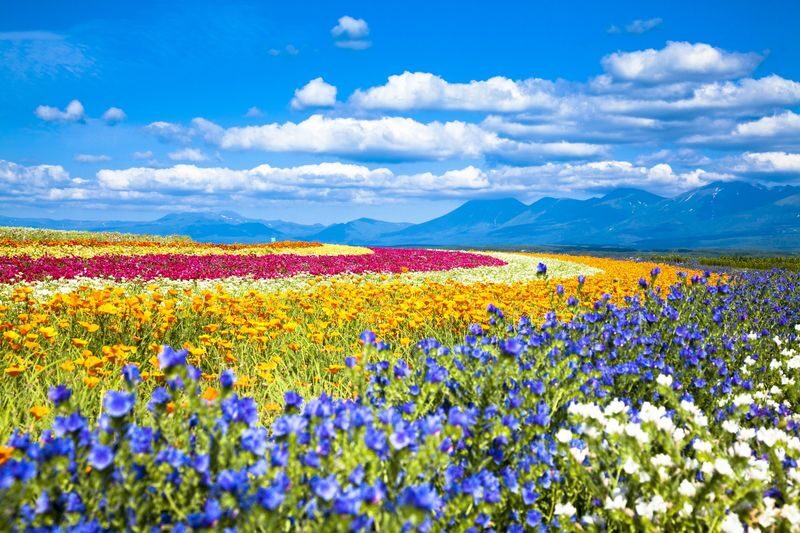
Flower fields are a seasonal proposition. In April and early May, visitors have found some flower attractions far less impressive than they expected because blooms were not yet in season. Summer is a better bet for flowers, though the exact display depends on timing and conditions. If flowers are your main reason for going, check seasonal opening and bloom information before booking, and keep your expectations flexible.
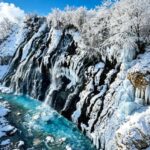
The Blue Pond also changes with the calendar. In winter, it can freeze over and lose the blue appearance that draws many people there. A winter route may still be beautiful, but it is not the time to count on seeing the famous color. Snow and highway conditions can add more than an hour to the expected drive, so the operator may recommend cutting a stop.
Ningle Terrace is another stop worth planning around. Its small woodland setting is a different sort of outing from the open fields, but early arrival can mean some shops are still closed. Decide whether you want the atmosphere and a walk, or whether you need the shops to be open, then time the stop accordingly.
I would not combine Asahiyama Zoo with a full Biei and Furano circuit unless the zoo is your top priority and you are content to shorten other stops. The distance from Sapporo is demanding, and a family who spent four hours at the zoo understandably valued the freedom to stay as long as they liked. That is the charter’s strength, but it also means something else has to give.
Otaru, Lake Toya, and other route choices
Otaru is a more manageable choice for a day from Sapporo than the farthest countryside routes, though you still need to prioritize. The suggested route includes Sankaku Market, Kitaichi Glass, the Music Box Museum, and Otaru Canal, with Mount Tengu as an optional addition. You might also ask about Sakaimachi Street or Asari Station. Markets, shops, and the canal offer different kinds of stops, so pick the ones that suit your group rather than ticking off every name.
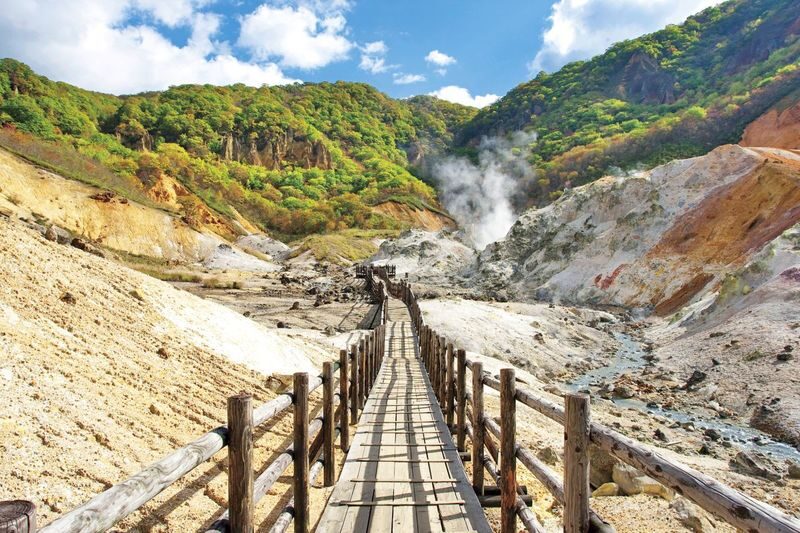
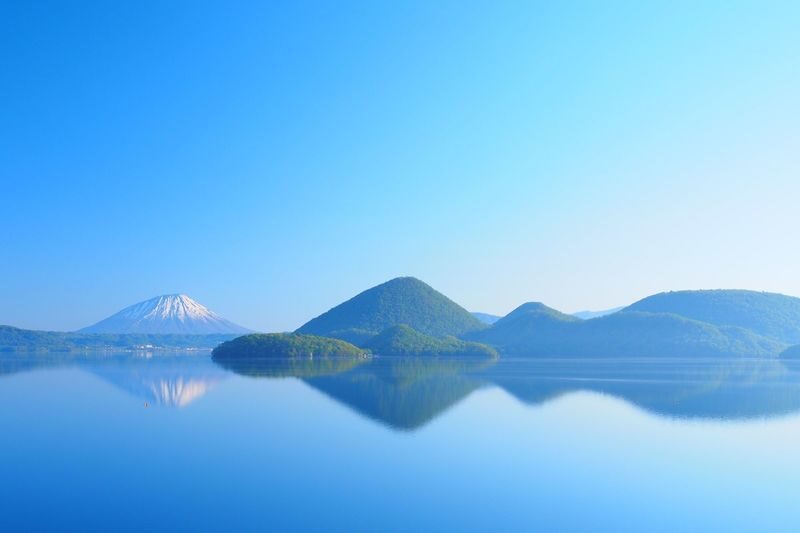
The Lake Toya and Noboribetsu route is another substantial day. Hell Valley, the onsen town, a lake observation deck, and Showa Shinzan Bear Park can make a varied itinerary, but do not assume you will have time for every attraction. Oyunuma is listed as closed in winter until the end of April. The Jozankei option adds Hoheikyo Dam and a Lake Toya cruise, subject to seasonal and operating conditions.
The service also lists Hakodate and Mount Asahi routes, but these have different starting points in the examples: Hakodate departures begin in Hakodate, and the Mount Asahi route begins in Asahikawa. Do not assume those are ordinary Sapporo day trips. Confirm pickup location, service time, and any empty-car charges before booking an out-of-town route.
What the driver can and cannot do
The driver is the heart of the experience. Many outings have gone well because the driver arrived on time, drove steadily, suggested food or route changes, and helped families adjust their plans. Names such as Xiao Zhang, Tao Ji, Xiao Ma, and Mr. Ji appear in accounts of past trips, but drivers are randomly assigned, so you cannot count on a particular person.
Language is worth sorting out early. Drivers may speak Chinese, Japanese, or English, with Chinese-speaking drivers given priority in principle. Some English-speaking passengers have found communication limited, while others have had smooth conversations. If you need English, ask customer service to note that clearly, but understand that a specific language is not guaranteed by the supplied terms.
Also set your expectations about the word guide. A driver may share local suggestions, help with practical arrangements, or give a brief introduction, but a separate tour guide is not included. Attraction admissions are also excluded. If you want detailed interpretation at each stop, this is not the same as hiring a dedicated guide.
You can also read our reviews of more private tours in Furano

The real cost: fare, fees, and the clock
The advertised starting price is $290.50, but the final value depends on the package, vehicle, dates, and group size. A private charter can be a sensible expense for a family or group, particularly when public transport would involve several transfers or when older relatives need fewer walks between connections. For one or two people, compare the total cost with rail and bus options before deciding.
Highway tolls and parking are not included. The actual costs are paid to the driver in cash, in Japanese yen, so bring money for them. The operator may also confirm a peak-season price difference after you place an order. The stated possible surcharge is ¥10,000 to ¥30,000, especially relevant during Hokkaido’s busy travel periods. Confirm any added amount before the booking is finalized.
The service terms describe up to 10 hours of car use for round trips within Sapporo, while the activity summary gives an 8.5-hour duration and the sample schedule runs from 8:30 a.m. to 5 p.m. Out-of-town pickup or drop-off may reduce service time to eight hours, and routes are limited to 300 kilometers. Because these figures vary by package and location, confirm the exact service window for your chosen option.
Overtime is charged in cash if you exceed the agreed time. Rates listed are ¥5,000 per hour for five- to seven-seat vehicles, ¥10,000 for a 10-seat vehicle, and ¥15,000 for vehicles with 14 seats or more. Travel beyond 300 kilometers can incur a ¥300-per-kilometer charge. Traffic-related overtime can still be charged, even when the delay is outside your control. Build in a realistic return time, especially for winter routes.
Pick the right vehicle and travel light
Vehicle sizes range from a five-seat car for up to three passengers with two standard suitcases, to a seven-seat vehicle for up to five passengers with four suitcases, a 10-seat vehicle for up to nine passengers with eight, and an 18-seat Coaster for up to 17 passengers with 10. Infants and children count toward passenger capacity. These figures matter: do not book by passenger count alone if you are bringing large bags or a stroller.
One child seat is available free when requested in advance, subject to space. Additional seats cost ¥2,000 each per day, and a child seat takes up about one and a half passenger spaces. Confirm the seat and luggage plan before travel. If you need an oversized bag or stroller, tell customer service in advance.
This format is particularly useful for multigenerational families. A private car reduces the need to move between buses and trains, and lets you adjust the pace for children or older relatives. But do not expect every vehicle to have the same room, condition, or equipment. Get the vehicle size, passenger count, luggage allowance, and child-seat arrangement confirmed in writing.
Is this charter worth booking?
Book it if you want control over the route, have a group to share the cost, or would rather not drive Hokkaido’s winter roads yourself. It can be especially helpful for families and older relatives, and the chance to change the itinerary gives you more breathing room than a fixed coach tour.
Think twice if you expect a fully guided experience, need a guaranteed English-speaking driver, or want to fit a long list of distant sights into one day. Before paying, confirm the route, total hours, pickup and drop-off points, driver-language request, vehicle capacity, and every possible extra charge. Then choose fewer stops than you think you can manage. Hokkaido rewards a slower day, and no one needs to admire the Blue Pond from the car window.
Hokkaido | Sapporo City/Furano/Lake Toya/Otaru Customized Private Car Day Tour
“I was worried because the driver was Chinese, but he spoke English well, so it was a good trip. I have another car booked with Klook for tomorrow,…”
FAQ
Is this a guided tour?
No separate tour guide is included. The service provides a driver, who may offer suggestions or brief information, but the listed visits are self-guided.
Which languages may the driver speak?
Drivers are randomly assigned and may speak Chinese, Japanese, or English. Chinese-speaking drivers are given priority in principle, but a particular language is not guaranteed.
Are highway tolls and parking included?
No. Highway tolls and parking are paid separately to the driver in Japanese yen cash. Meals, drinks, attraction tickets, and personal expenses are also excluded.
How long is the car charter?
The activity summary gives a duration of 8.5 hours, while the service terms describe up to 10 hours for round trips in Sapporo. Out-of-town pickup or drop-off may mean an eight-hour service. Confirm the time for your package before booking.
Can I bring children and request a child seat?
Yes. Infants and children count toward the passenger limit. One child seat can be provided free if requested in advance; additional seats cost ¥2,000 each per day and affect vehicle capacity.
Can I visit all the stops on a suggested route?
Not necessarily. Travel time, weather, traffic, seasonal closures, and the distance between stops can require changes. The operator recommends a reasonable route within 300 kilometers, so choose priorities and confirm the schedule in advance.