
Beppu’s hot-spring pools and Kyushu’s safari park make an unusual pairing: one stop shows off geothermal heat, the next brings you close to lions, giraffes, and other animals. The day ends in Yufuin, a mountain town made for browsing, sweets, and a lakeside walk.
I like the range here: Umi Jigoku’s striking blue water is a memorable change from ordinary hot-spring scenery, and the safari park gives animal-loving families something more active than a town stroll. I also like that you get free time in Yufuin rather than being marched from shop to shop.
The trade-off is the mileage. You’ll spend much of a 10.5-hour day on the road, and the stops are brief by design. Entry fees, food, and the zoo’s jungle bus are extra, so the advertised starting price is only part of the day’s cost.
- Key points to know before you go
- From Fukuoka to Beppu, a long but useful day
- Umi Jigoku: Beppu’s blue-hot spectacle
- Kamado Jigoku: steam, heat, and a quick look around
- Kyushu Natural Zoological Park: the day’s animal encounter
- Yufuin: shop, snack, and make a choice
- The Yufu no Mori train: a separate option, not a free extra
- What the price covers, and what you should budget
- Who will enjoy this route most
- Should you book it?
- FAQ
- Where does the tour depart from?
- How long is the tour?
- Which attractions are included in the route?
- Are the attraction admission fees included?
- Is the zoo jungle bus included?
- Is the Yufu no Mori train included?
- What happens if the safari park closes in winter?
- What languages are available for the guide?
- Can infants join the tour?
- The Best Of Oita!
- More Tours in Oita
- More Tour Reviews in Oita
Key points to know before you go
 1 / 10
 2 / 10
 3 / 10
 4 / 10
 5 / 10
 6 / 10
 7 / 10
 8 / 10
 9 / 10
 10 / 10
- Umi Jigoku is a vivid blue hot spring: You get about 30 minutes to see the steaming pool and surrounding grounds.
- Kamado Jigoku adds bubbling geothermal theater: Plan for roughly 35 minutes, with hot springs that can reach 90°C.
- The safari park is the animal highlight: Allow 90 minutes, but budget separately for admission and the park’s jungle bus if you plan to ride it.
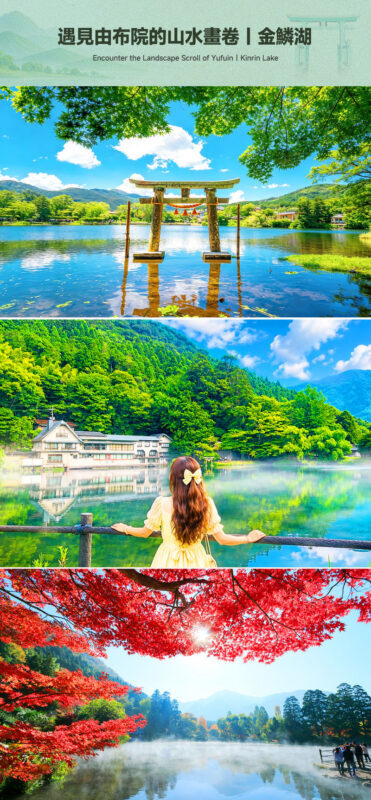
- Yufuin gets the longest stop: Two hours and 20 minutes gives you time for shops, snacks, and Kinrin Lake, but not an unhurried visit to everything.
- The Yufu no Mori train is optional: It is not included in the standard tour price, and the advertised train experience is a separate add-on.
- The day is shared and tightly timed: Traffic, weather, or closures can change the order or shorten a stop.

👉 See our pick of the The 3 Top Spa & Hot Springs Experiences In Oita: Which Is Best?
From Fukuoka to Beppu, a long but useful day
The tour leaves Fukuoka at 8:30 a.m. from the Lawson beside the Oriental Hotel at Hakata Station. Arrive at least 10 minutes early. The vehicle is shared, and its size depends on the number of people booked; you cannot choose the vehicle type. The group can include people speaking different languages, even if you book a particular guide language.
The drive is part of the bargain and part of the cost. Beppu and Yufuin are far enough from Fukuoka that fitting both into one day without a rental car takes planning. Here, you leave the driving and route decisions to the operator, with a guide handling instructions and giving commentary. That makes the day easier, but it also means keeping to the group’s pace and accepting possible traffic delays.
Guides may speak Chinese, Japanese, Korean, or English, depending on the package. English-speaking service is offered, but language arrangements can vary with the group. Guides named by past customers include Huahua, Zhu Zhu, Summer, and Kang Chun-hwa. Those names are examples, not a promise of who will lead your departure.
The tour is scheduled to return to Hakata between 6:45 and 7:15 p.m. Treat that as an estimate, not a firm appointment. The route is long, and road conditions or weather can push the arrival later, so don’t book a dinner reservation, train, or other timed activity for that evening.
You can also read our reviews of more tours and experiences in Oita.


Umi Jigoku: Beppu’s blue-hot spectacle
The first stop is Umi Jigoku, or Sea Hell, for about 30 minutes of self-guided time. Beppu is one of Japan’s leading hot-spring areas, and its hells are not bathing pools. They are geothermal features, too hot for a soak, with steam and water that make the area feel more like a natural display than a spa.
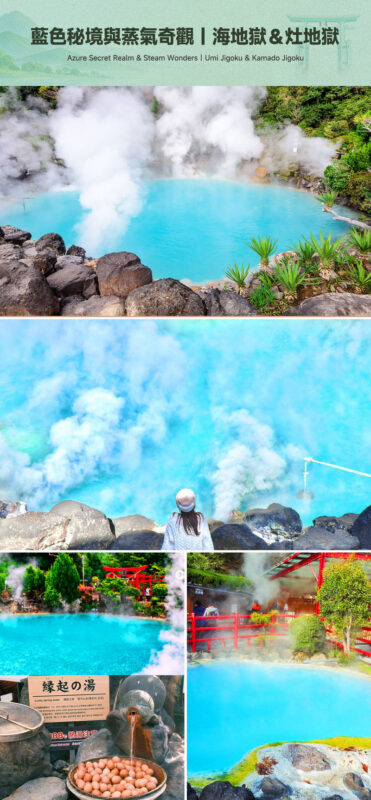
Umi Jigoku’s porcelain-blue pool is the visual star. In cool or rainy weather, mist can make the grounds especially atmospheric. The short visit is enough for a look and photos, but you will need to move along rather than linger over every feature.
There is an entrance fee of 500 yen per person, paid separately. If hot-spring eggs or local pudding catch your eye, leave room for a snack, but remember that the clock is running. This is a quick scenic stop, not a slow morning at a bathing resort.
Kamado Jigoku: steam, heat, and a quick look around
At about 11:15 a.m., the group visits Kamado Jigoku for roughly 35 minutes. The name means Cauldron Hell, and the site gives you another look at Beppu’s hot-spring activity: hot pools, forceful jets, and visible steam. Some springs in the area reach temperatures as high as 90°C, so keep to marked paths and don’t mistake the dramatic water for a place to dip a hand.
The two hells are similar in the broad sense: both are geothermal sights, and both are compact visits. Umi Jigoku has the more distinctive blue pool; Kamado Jigoku adds its own hot-spring features and a chance to see the ground’s heat at close range. If you are short on time, these stops make a sensible introduction. If you want a detailed tour of every feature, the schedule may feel brisk.
Admission is another 500 yen per person. Together, the two hells cost 1,000 yen, and you have about an hour and five minutes between them. That’s enough for the main sights, not a leisurely survey.
Kyushu Natural Zoological Park: the day’s animal encounter
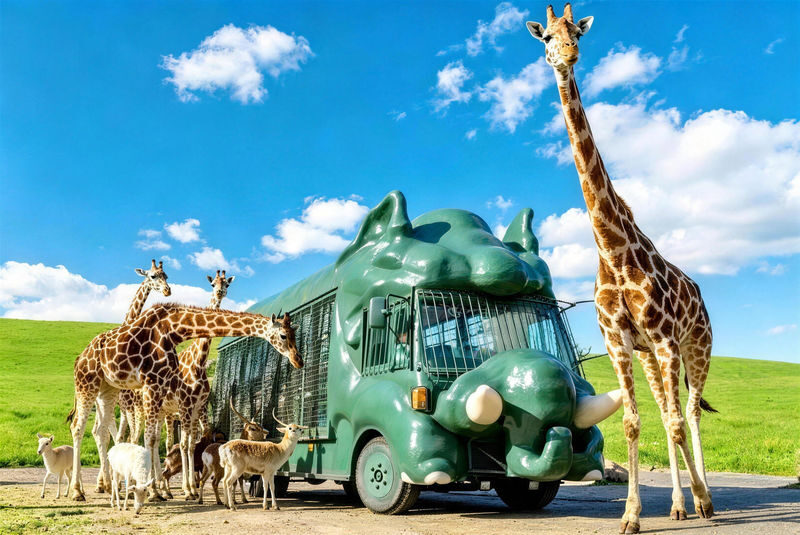
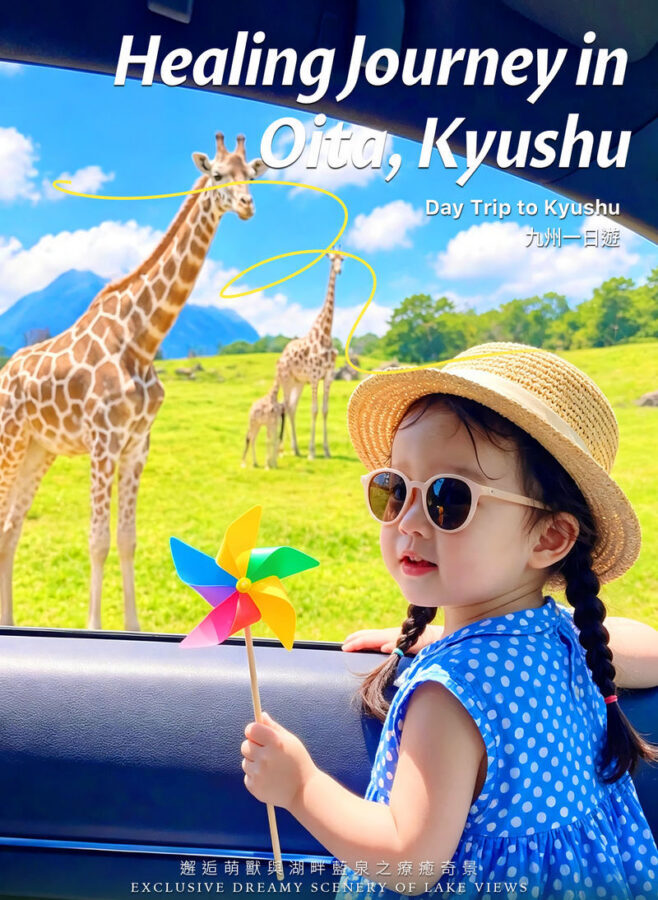
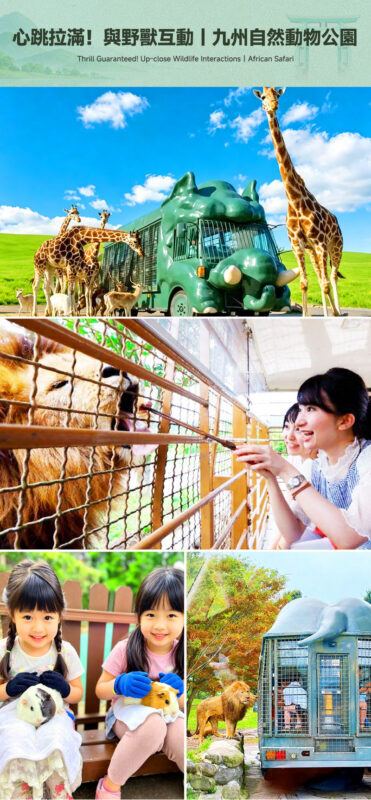
The schedule gives the Kyushu Natural Zoological Park about 90 minutes, starting around 12:25 p.m. The park is a safari-style attraction, so the appeal is seeing animals in a more open setting than a conventional row of small enclosures. Lions and giraffes are among the animals visitors hope to spot, and the grounds also include smaller animals for closer encounters.
Admission is not included. The listed adult ticket is 2,600 yen, and the jungle bus costs another 1,300 yen. The bus is the option associated with feeding animals at close range, but do not assume it is part of the tour fare. Confirm how your particular departure handles the safari route, and decide whether the extra bus fee is worth it to you.
The fixed 90-minute stop is the main compromise. It has to cover the park visit, and the available time for the small-animal area can feel limited if you’re traveling with children who want to linger. The park is large enough that you could easily wish for more time. On the other hand, the schedule gives you a taste of the safari without letting one stop consume the whole day.
In winter, extreme weather may close the safari park without advance notice. The alternative is Umitamago Aquarium, with a separate admission charge: 2,600 yen for adults aged 16 and up, 1,300 yen for ages 7 to 15, and 850 yen for children aged 4 to 6. Children three and under enter free. The operator may also rearrange stops to fit road conditions.
Yufuin: shop, snack, and make a choice
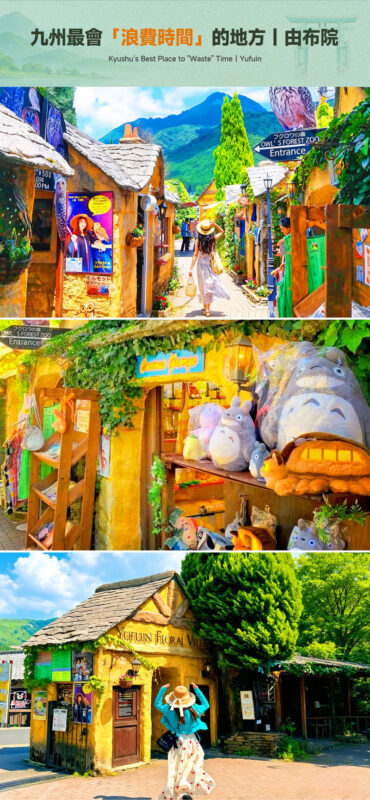
Yufuin gets the longest stop, about two hours and 20 minutes, beginning around 2:30 p.m. This is a mountain town with a softer pace than Beppu’s hot-spring displays. Its central shopping street, Yunotsubo Street, is lined with small shops and food stops, making it easy to wander, browse, and pick up a dessert.
That free time is useful, but it calls for a little strategy. You may not have time to sit down for a full meal, sample several snacks, shop at length, and visit every sight. I’d choose one priority before you arrive: a relaxed lunch, a focused stroll and treats, or a walk to Kinrin Lake. Yufuin Floral Village is another possible stop, though it may be one of the places you have to skip if weather, crowds, or timing intervene.
Kinrin Lake is a tranquil stop at the edge of town, known for its misty appearance in the right conditions. It can be a lovely change of pace after the busy shopping street, but it is not a guaranteed dramatic scene. The light, weather, and season shape the view, and some people may find the lake visit less memorable than the shops.
Yufuin is popular, so even a weekday can feel crowded. Spring brings the possibility of cherry blossoms along the town and riverside, but seasonal flowers and scenery depend on the weather. The tour runs if there is no official cancellation, even if blossoms or autumn colors are not at their peak.

The Yufu no Mori train: a separate option, not a free extra
The Yufu no Mori is a sightseeing train between Hakata and Yufuin, with a green exterior and a retro forest style. It can add a pleasant rail journey to a Kyushu visit, but the train experience is not included in the standard tour price. The package options describe a version with the train on the following day, so check the exact option and date before booking rather than assuming you’ll board it as part of this day trip.
The listed return choices from Yufuin are 3:56 p.m. to 6:10 p.m. and 5:17 p.m. to 7:28 p.m. The later departure is presented as the better fit for sightseeing time. From July 30 to September 30, the earlier service is replaced by the Yufu Express, according to the schedule provided.
There is a practical trade-off. The bus tour keeps your day organized and can leave luggage in the vehicle, while taking the train means planning around its own departure and the separate train cost. If the train is a priority, choose the package that explicitly includes the experience and check how it affects your return plan.
What the price covers, and what you should budget
Prices start at $44.25, which can be good value for a full-day transfer from Fukuoka to three destinations. You avoid arranging a long drive yourself, and the guide and round-trip transport are included. That convenience matters most if you want to see Beppu and Yufuin in one day without renting a car.
But the base fare does not cover the principal admission charges. Budget at least 3,600 yen for the two hells and zoo entry, then another 1,300 yen if you want the zoo’s jungle bus. Food, drinks, and personal purchases are extra, as is the Yufu no Mori train. Keep some cash handy for admissions and small purchases; an ATM stop can take time out of your Yufuin visit.
Children aged three and up pay the adult tour rate. Children aged zero to two may ride free if they do not occupy a separate seat, but they still count toward the vehicle’s passenger capacity and must be included when booking. Child seats are not available.
Who will enjoy this route most
I’d recommend this tour if you have one day based in Fukuoka and want a broad sample of Oita: geothermal scenery, a safari park, and a classic shopping-town stop. It suits families with animal-loving children, first-time visitors who prefer transport arranged for them, and anyone happy to see the highlights rather than explore each place at length.
It is less suited to someone who wants a slow visit to the zoo, a full afternoon in Yufuin, or a detailed tour of every hot spring. The day’s appeal is variety, not depth. You’ll also need to be comfortable with a shared vehicle, a fixed schedule, and possible changes due to traffic or weather.
For older participants aged 70 or above and pregnant participants, a liability waiver is required. Pets are not allowed. The guide and vehicle details are sent by email between 8 and 9 p.m. the night before, so check your spam folder and follow the latest message. Arrive on time: late arrivals and no-shows are not refunded.
Should you book it?
Book this trip if you want a practical, high-variety day from Fukuoka and are willing to pay the entrance fees on top of the fare. The blue hot spring, safari animals, and Yufuin’s food-and-shop streets make a satisfying mix, especially for a family or a first visit to the region.
Skip it if your ideal day is unhurried. The stops are short, the road journey is long, and the zoo and Yufuin both invite more time than the schedule allows. If you go, pick your Yufuin priority in advance, bring money for admission and snacks, and leave your evening open in case the return runs late.
Kyushu Oita Healing Journey: Optional Yufu no Mori experience, Yufuin & Kyushu Natural Zoological Park & Umi Jigoku & Kamado Jigoku
“Tour guide Huahua is amazing! The explanations were clear and very patient, and the switch between Mandarin and Korean was seamless. It was a wonde…”
FAQ
Where does the tour depart from?
It departs from the Lawson beside the Oriental Hotel at Hakata Station in Fukuoka. The meeting time is 8:30 a.m., and you should arrive 10 minutes early.
How long is the tour?
The tour lasts about 10.5 hours. The estimated return to Hakata is between 6:45 and 7:15 p.m., but traffic and weather can affect the arrival time.
Which attractions are included in the route?
The planned stops are Umi Jigoku, Kamado Jigoku, Kyushu Natural Zoological Park, and Yufuin, including time to visit Kinrin Lake if the schedule allows.
Are the attraction admission fees included?
No. Umi Jigoku costs 500 yen per person, Kamado Jigoku costs 500 yen per person, and Kyushu Natural Zoological Park admission costs 2,600 yen. The listed fees are paid separately.
Is the zoo jungle bus included?
No. The jungle bus fee is listed as 1,300 yen and is not included in the tour price.
Is the Yufu no Mori train included?
No. The train experience is a separate optional add-on. Check the package details for the option that includes it.
What happens if the safari park closes in winter?
If extreme winter weather temporarily closes Oita African Safari, the itinerary may switch to Umitamago Aquarium. Aquarium admission is charged separately.
What languages are available for the guide?
Packages are offered with Chinese, English, or Chinese, English, and Korean guide options. Vehicle groups may include people speaking other languages.
Can infants join the tour?
Children aged zero to two can join without a separate seat at no charge, but they must be included in the passenger count and noted when booking. Child seats are not available.


