
This article contains affiliate links. If you book through these links, I earn a small commission at no extra cost to you.
Croatia has eight national parks, which is a lot for a country its size. Most visitors only visit Plitvice Lakes — arguably the most famous — but the others are equally worth your time and significantly less crowded. From island archipelagos you can only reach by boat to mountain ranges with wolves and bears, Croatia’s national parks show you a completely different side of the country from the coastal cities and beaches.
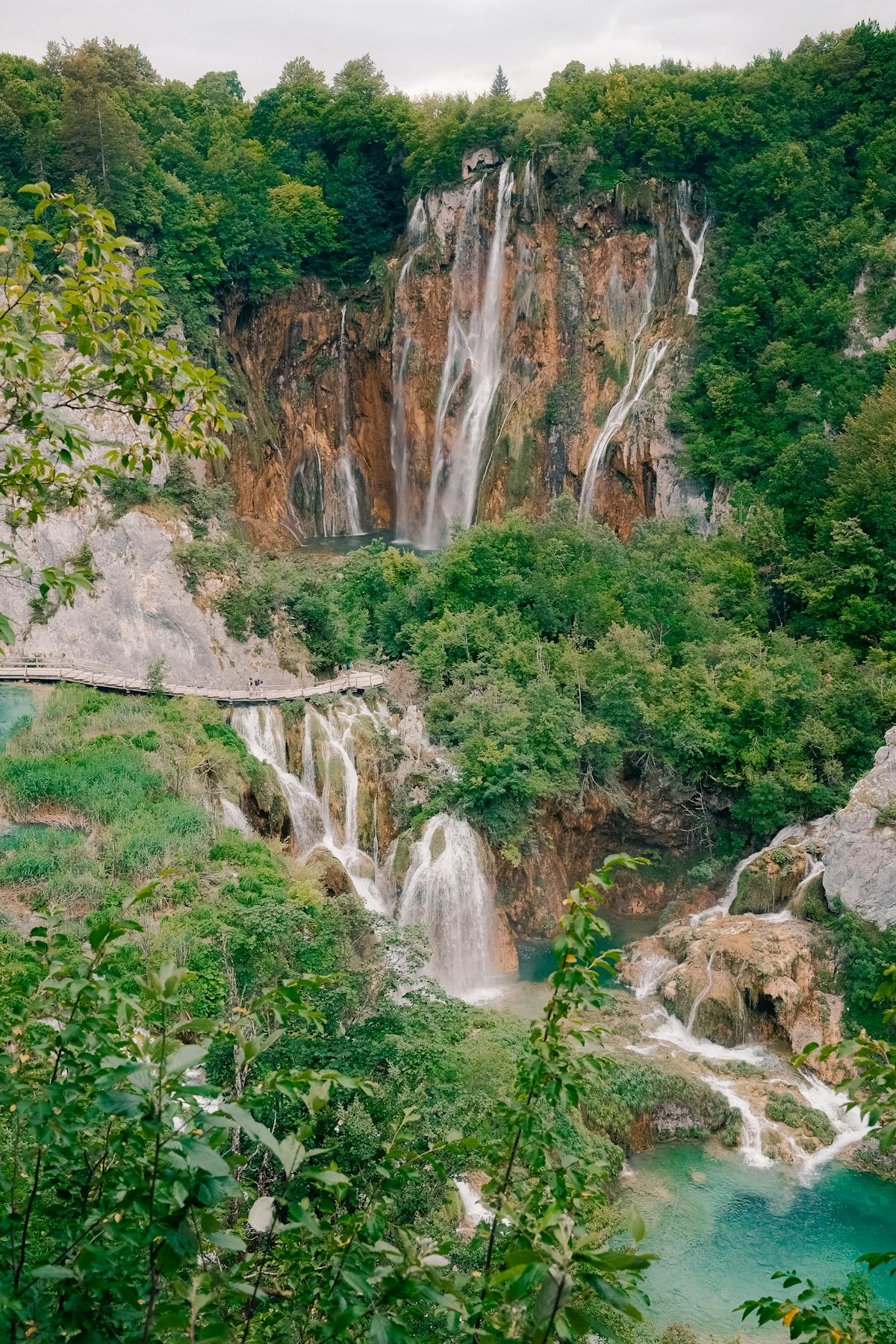
Plitvice Lakes
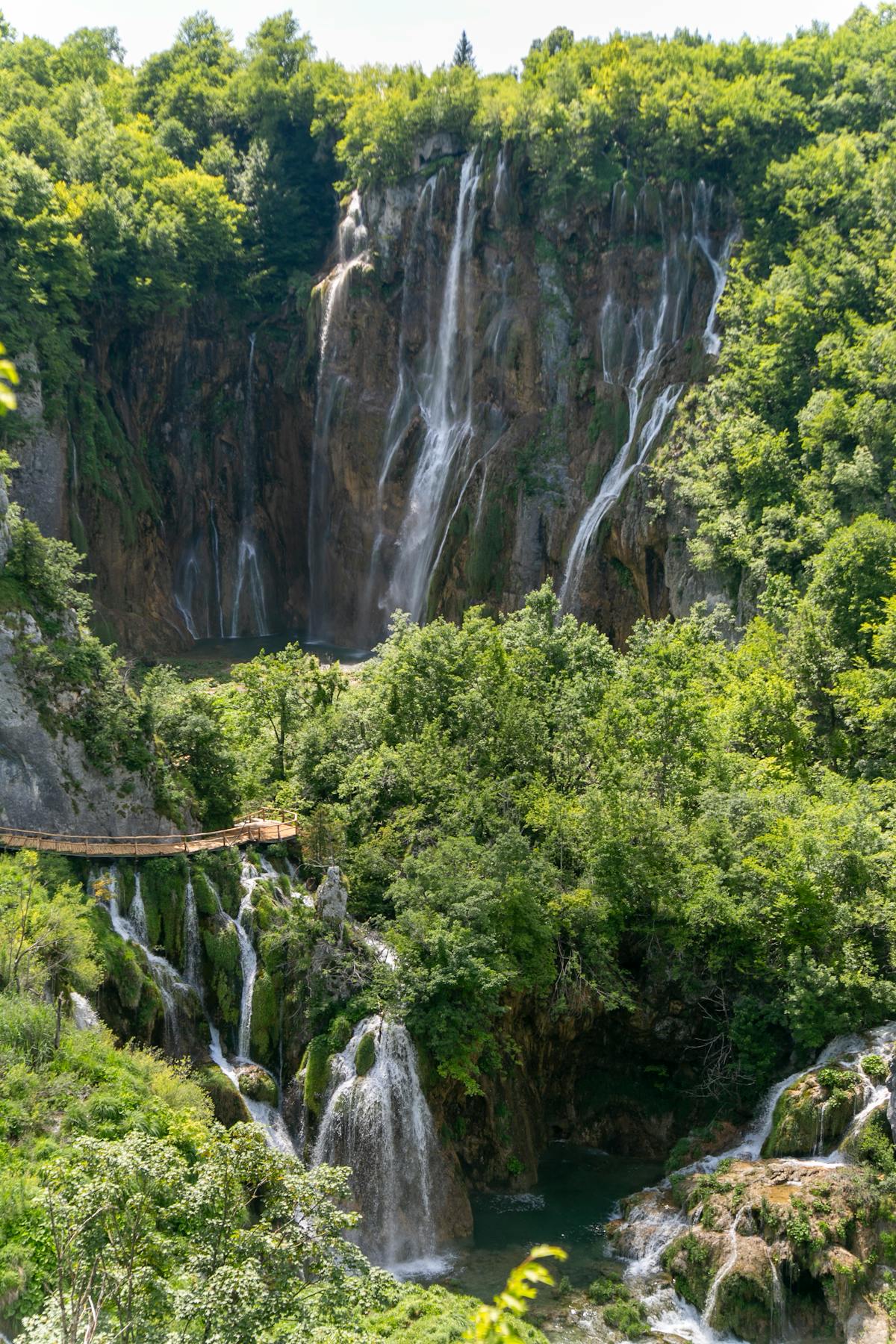
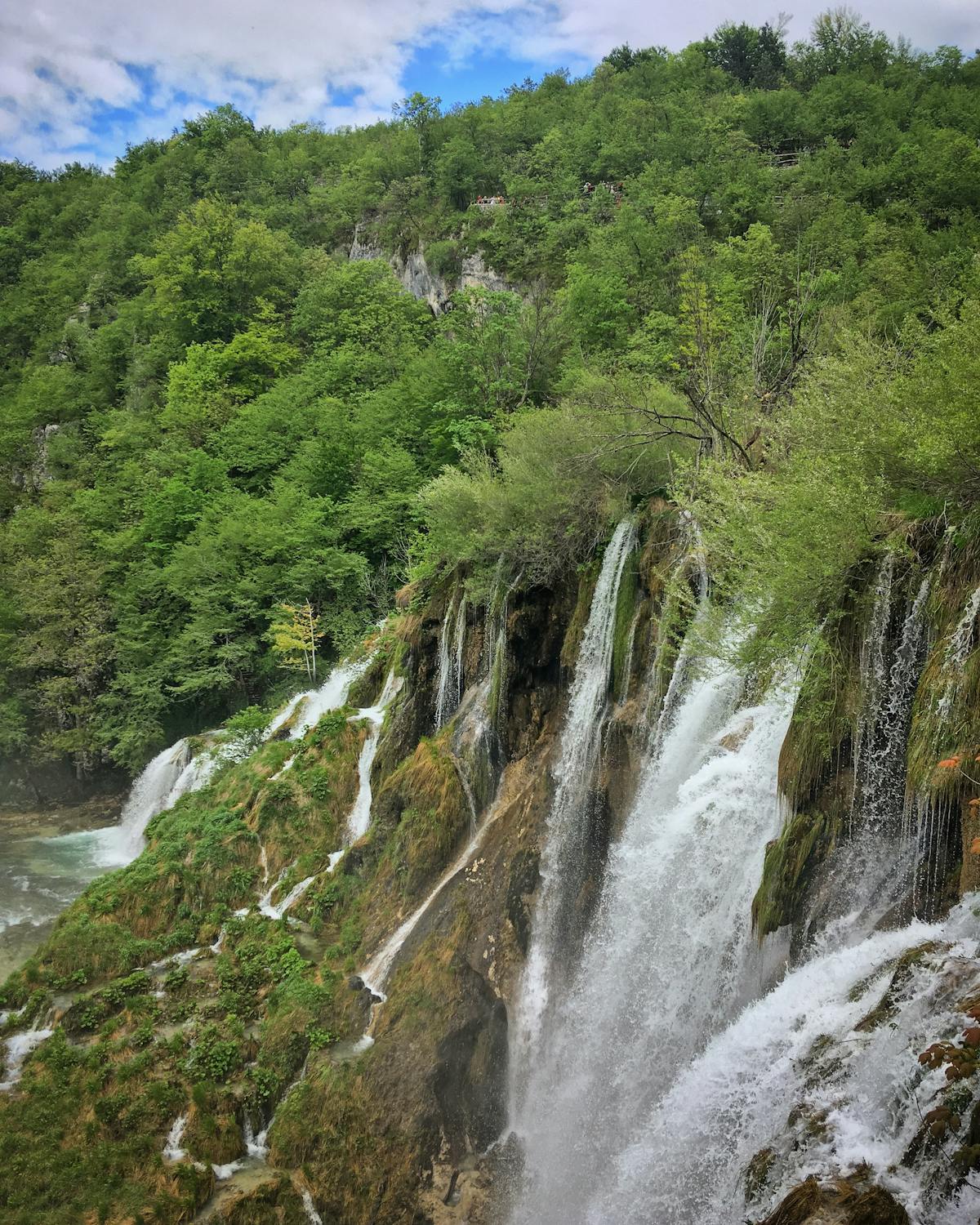
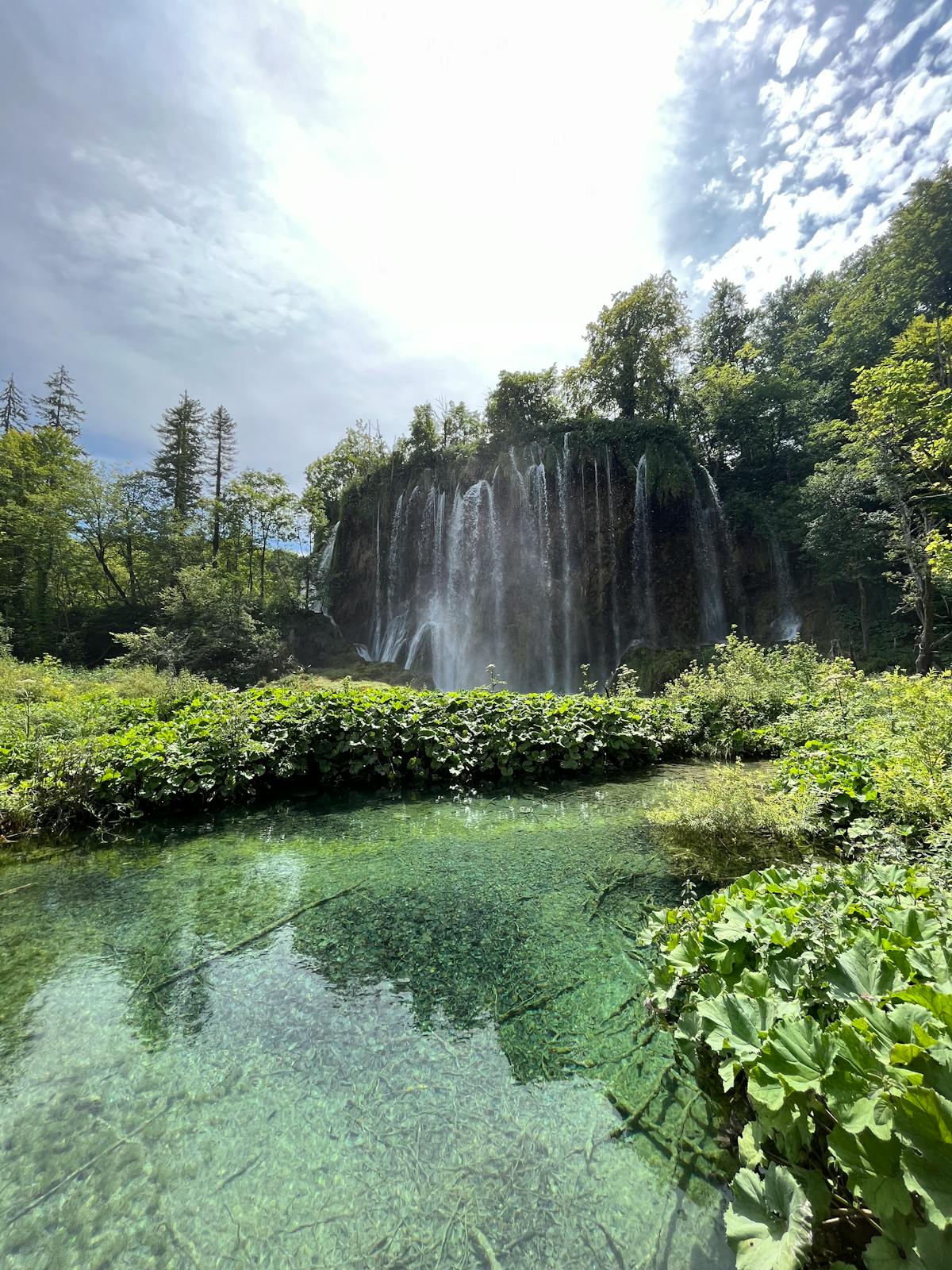
Plitvice Lakes is Croatia’s most famous natural attraction and a UNESCO World Heritage Site since 1979. The park contains sixteen interconnected lakes arranged in cascading terraces, connected by waterfalls and surrounded by dense forest. The water ranges from azure to green to deep turquoise depending on the mineral content, sunlight, and angle — the colours are not enhanced in photos, they really look like that.
The park is divided into Upper Lakes (larger, surrounded by forest) and Lower Lakes (smaller, more dramatic waterfalls, narrower canyon). Wooden boardwalks wind through both areas, and shuttle buses and boats connect different sections. The full circuit takes 4-6 hours. The most popular route (H) covers the main highlights in about 4 hours.
Practical details: Entry costs €30-40 in summer (July-August), €20-30 in shoulder season, and €10-15 in winter. Tickets must be booked online in advance for summer — walk-up tickets are often sold out by 10am. The park opens at 7am in summer, and arriving early is essential to avoid the worst crowds. Plitvice is about 2 hours from Zagreb and 2.5 hours from Split by car. There are no direct ferries — it is an inland park.
Best time to visit: May and early June for peak waterfall flow and green scenery without July-August crowds. September-October for autumn colours. Winter brings snow and a magical atmosphere, with drastically reduced ticket prices and almost no visitors.
Krka National Park
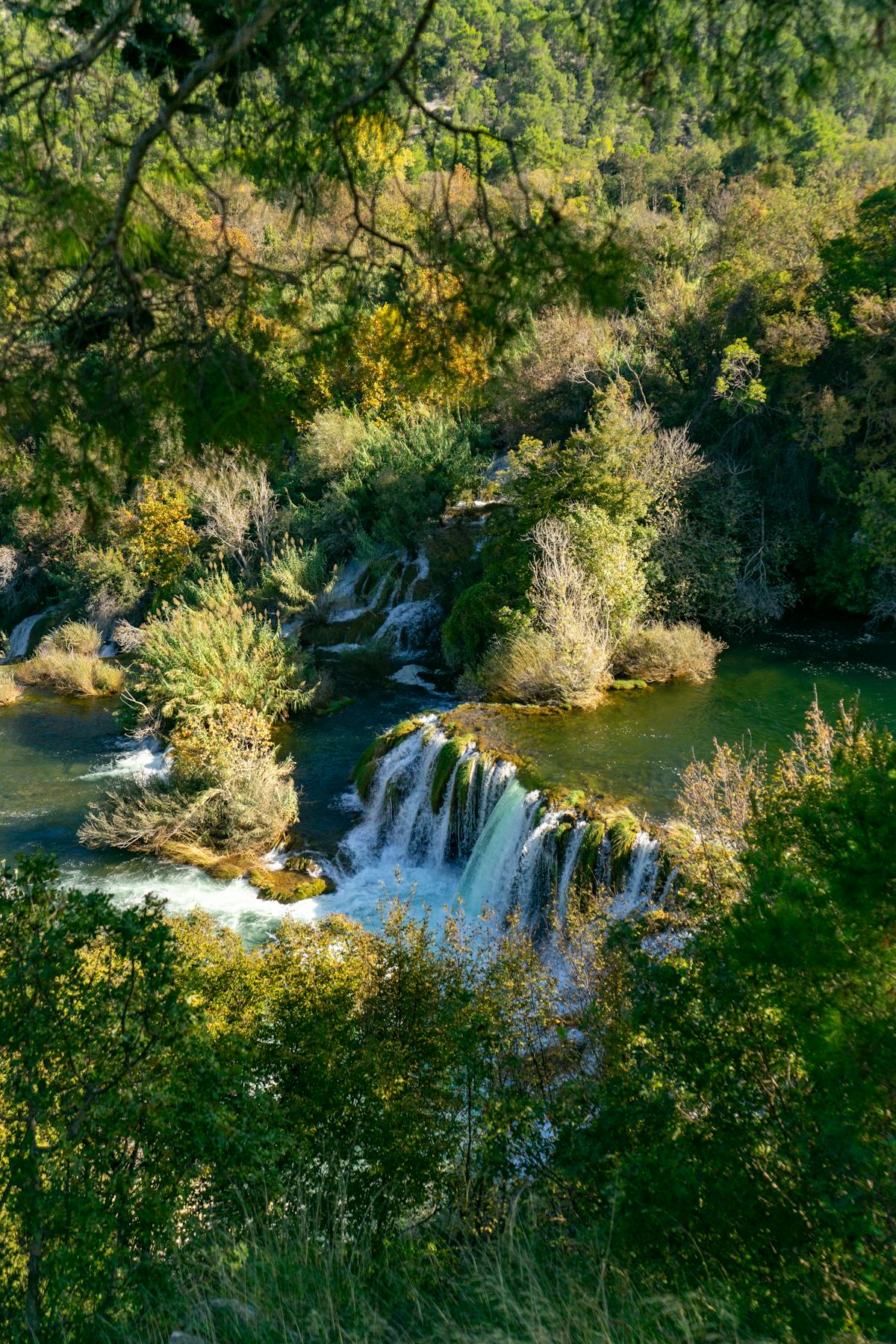
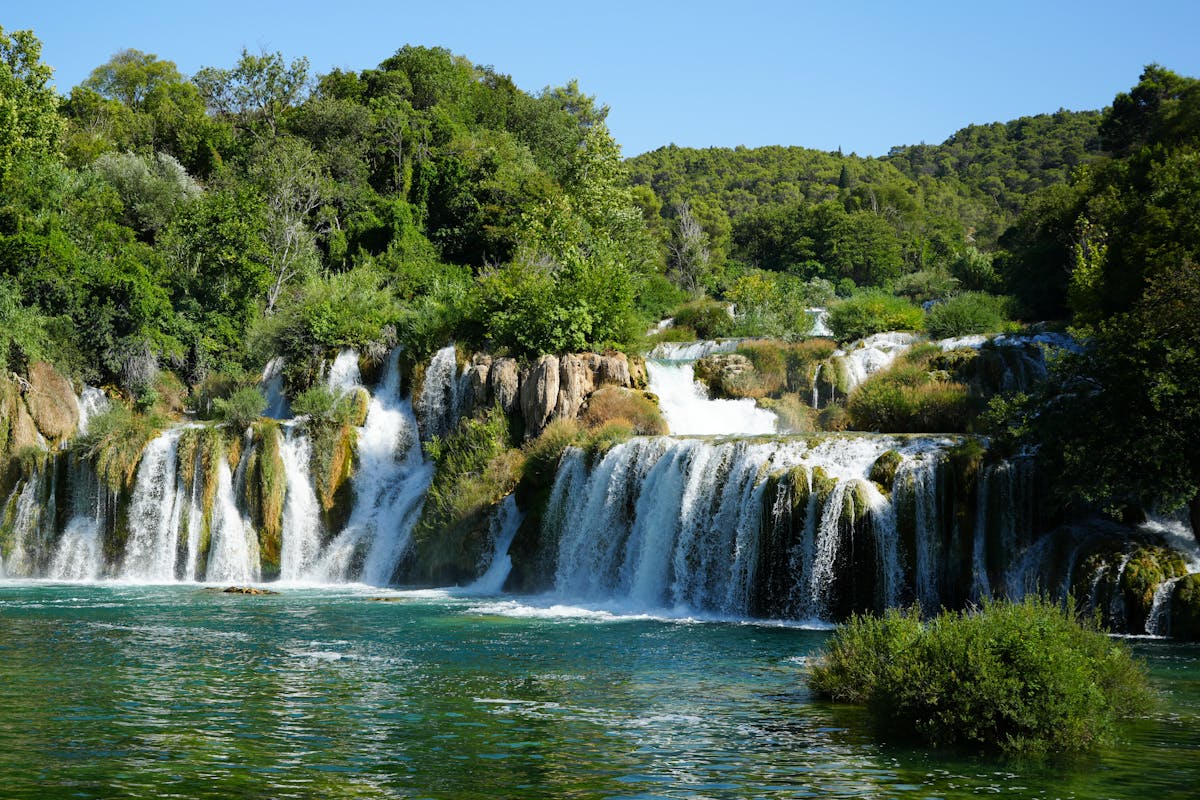
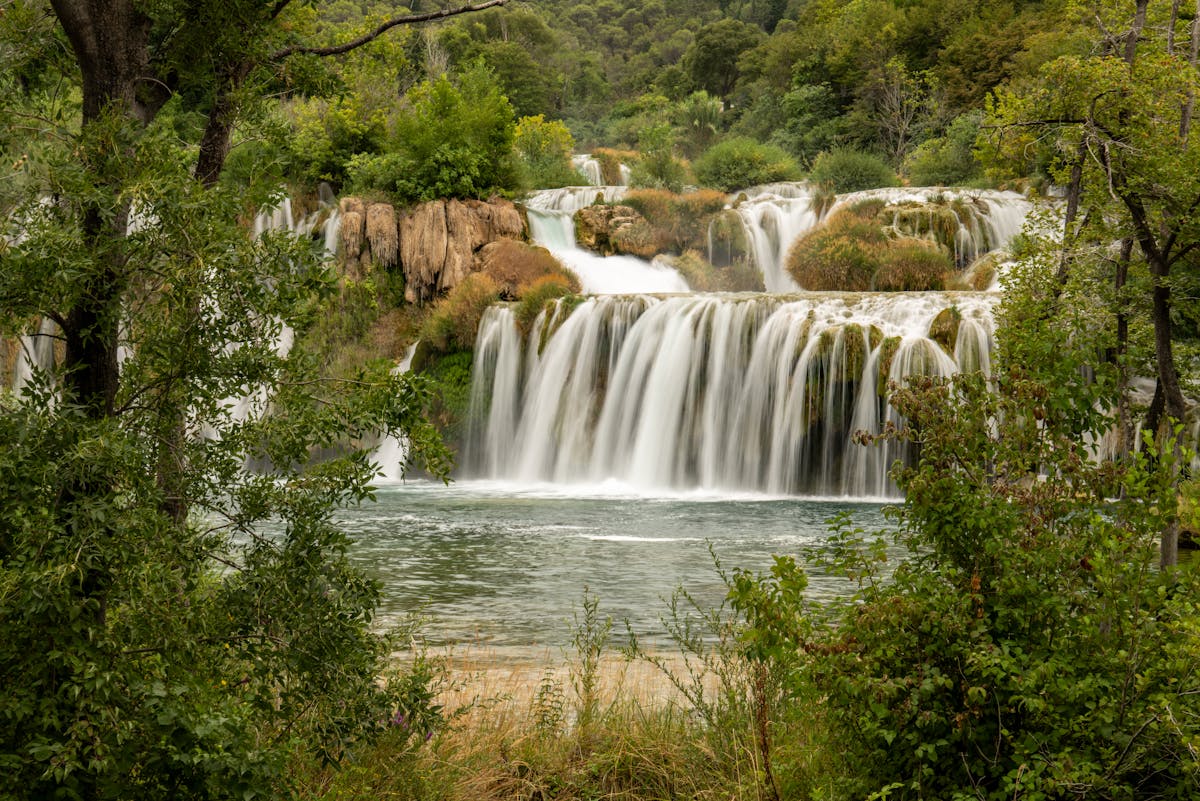
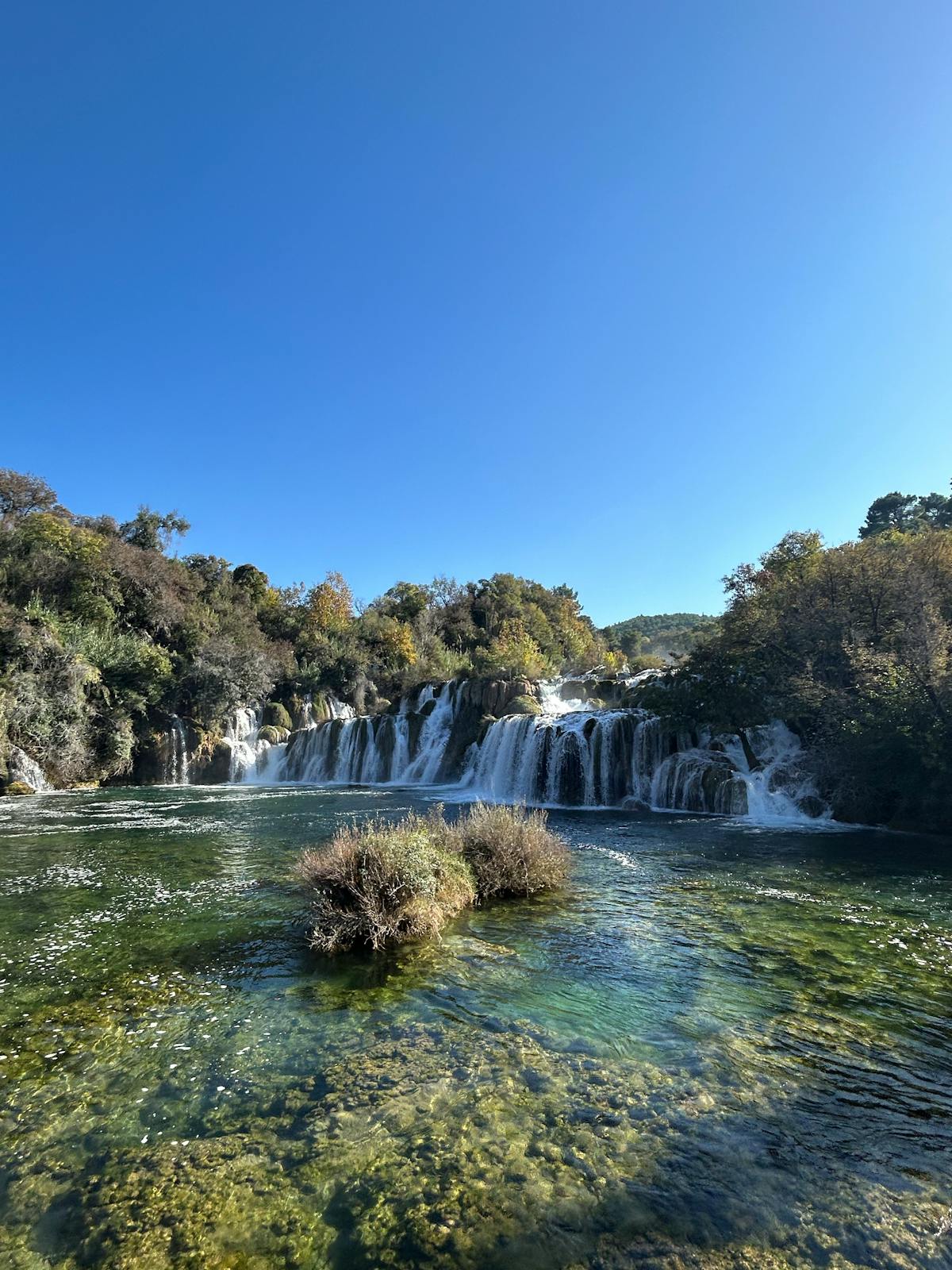
Krka is the more accessible alternative to Plitvice, located just an hour from Split and 15 minutes from Šibenik. The centrepiece is Skradinski Buk, a stunning series of 17 waterfalls where the Krka River drops through a natural travertine terrace system. The wooden boardwalks around the falls are spectacular, and the park is compact enough to see the main highlights in 2-3 hours.
Important note: swimming at Skradinski Buk has been prohibited since 2021. If your guidebook or a travel blog says you can swim there, it is outdated. You can still swim at Roški Slap, the park’s other waterfall area, which is less crowded and worth visiting.
Krka also has a small island — Visovac — in the middle of the river with a 15th-century Franciscan monastery. Boat tours to the island run from Skradinski Buk and from the town of Skradin (which is the main entrance to the park).
Practical details: Entry €30 in peak season, €20 in shoulder, €10 in winter. Boat from Skradin to the falls is included. Parking in Skradin is free. Arrive before 10am in summer. The park is easily combined with a visit to Šibenik’s cathedral (another UNESCO site) in a single day trip from Split.
Kornati Islands
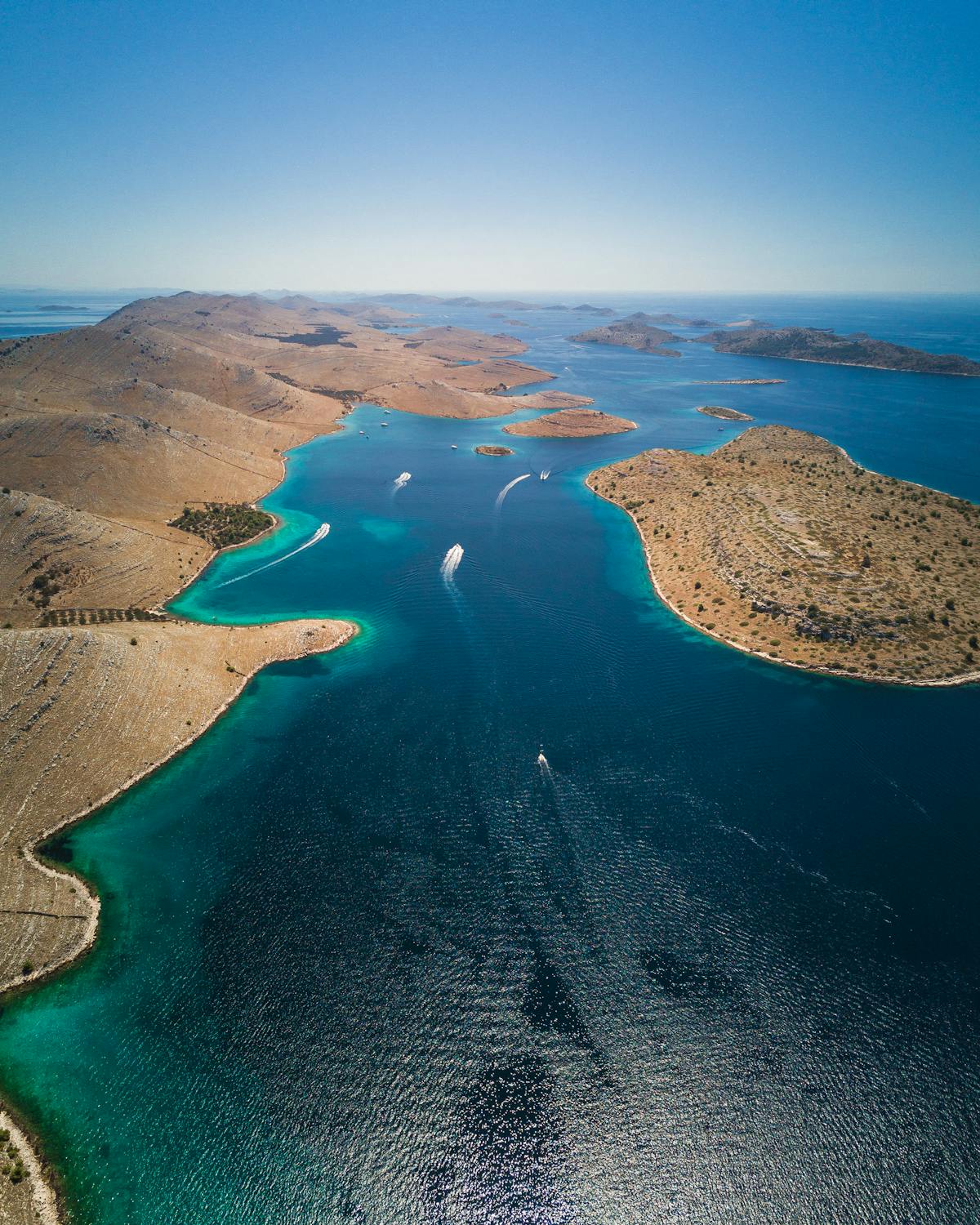
The Kornati archipelago is unlike any other national park in Croatia. It is a cluster of 89 islands (out of nearly 150 in the wider Kornati chain), almost all uninhabited, with no permanent settlements, no roads, and no freshwater sources. The islands are barren, stripped of vegetation by centuries of overgrazing, and the contrast between white limestone and deep blue water is striking.
You can only visit Kornati by boat — there are no ferries. Day trips run from Zadar, Šibenik, Murter, and Biograd. Sailing is the ideal way to experience the archipelago, as you can anchor in sheltered bays and explore at your own pace. The park charges entrance fees for boats (€40-80 depending on size), and a few tiny seasonal konobas on the islands serve food to visiting sailors.
The underwater world is excellent for snorkelling and diving — clear water, rich marine life, and underwater cliff faces. The park organises occasional guided diving excursions.
Mljet National Park
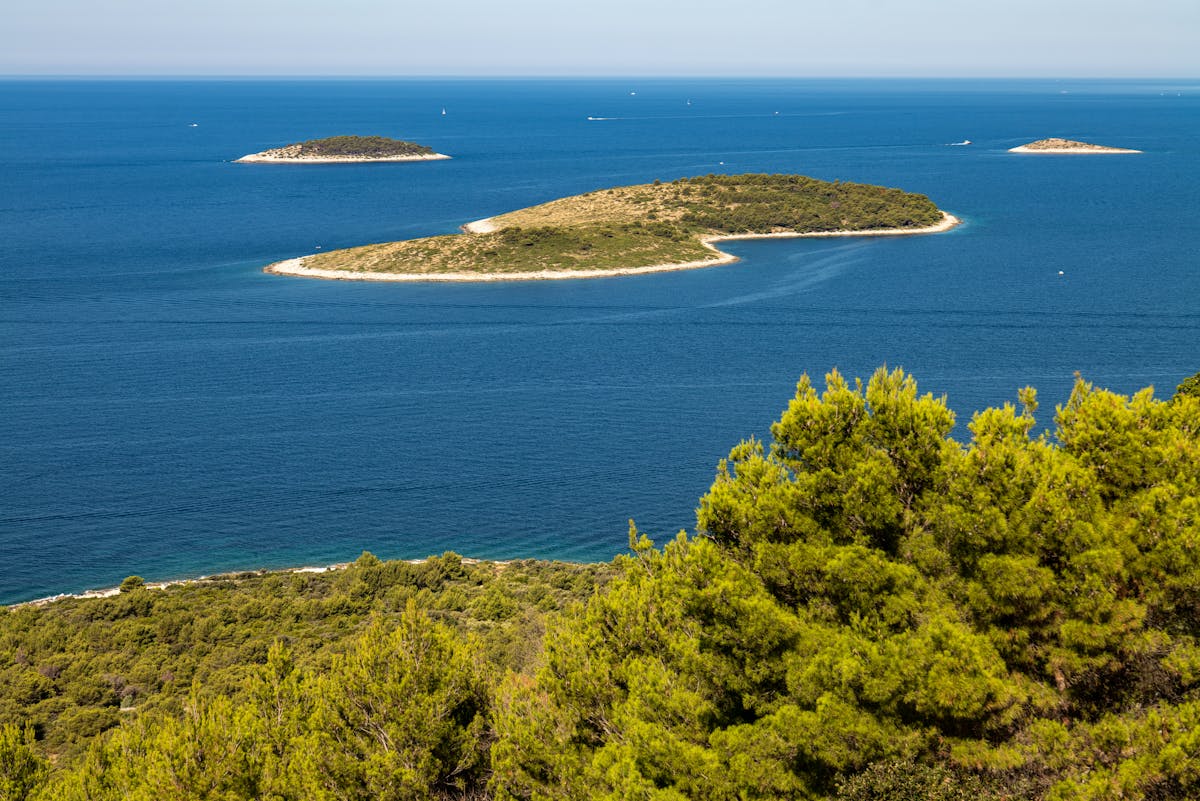
Mljet is a long, narrow island south of Korčula, and its western third is a national park. The main attractions are two saltwater lakes — Veliko Jezero (Big Lake) and Malo Jezero (Small Lake) — connected to the sea by a narrow channel. The water is warm, calm, and perfect for swimming and kayaking.
On a small island in the middle of Veliko Jezero sits a 12th-century Benedictine monastery that now houses a restaurant. You can swim to it, kayak to it, or take the park’s small boat. The combination of swimming in a lake, on an island, in a lake, on an island is pleasantly absurd.
Mljet is accessible by catamaran from Dubrovnik (about 1.5 hours) or by ferry from the mainland. It is quiet, forested, and refreshingly uncommercialized. If you are based in Dubrovnik, this is the best day trip or overnight option.
Entry: €14-20 depending on season. Includes the boat to the monastery island.
Brijuni Islands
Brijuni is a group of 14 islands off the western coast of Istria, near Pula. The main island (Veliki Brijun) was Tito’s private residence and playground for decades, and it retains a manicured, almost surreal quality — botanical gardens, a safari park with zebras and elephants (donated by world leaders to Tito), Roman ruins, and a Byzantine fort.
The park is accessible only by official boat from Fažana (15 minutes). Visits are organised as guided tours of the main island, lasting about 4 hours. You can rent bicycles to explore independently after the guided section. The waters around the islands are excellent for snorkelling.
Entry: €40-50 including the boat and guided tour. Book in advance in summer.
Paklenica
Paklenica is a mountain park on the southern slopes of the Velebit range, about 50km northeast of Zadar. It is Croatia’s premier hiking and rock climbing destination. Two dramatic canyons — Velika Paklenica and Mala Paklenica — cut through the mountains, with vertical cliffs that draw climbers from across Europe (over 400 climbing routes).
For hikers, the main trail follows the Velika Paklenica canyon inland and upward, with options ranging from easy 2-hour walks to strenuous full-day hikes to the summit of Vaganski Vrh (1,757m). The scenery is dramatic — exposed limestone, pine forests, and views over the Adriatic. Bring proper hiking shoes and water; the terrain is rocky and exposed.
Paklenica gets far fewer visitors than Plitvice or Krka. If you want solitude and mountains, this is your park.
Entry: €8-10. Open year-round. The main trailhead is near the village of Starigrad-Paklenica on the coast.
Risnjak, North Velebit, and Brijuni
Croatia’s remaining national parks are less visited by international travelers but offer unique experiences:
Risnjak (named after the lynx — ris in Croatian) is a mountain park in the Gorski Kotar region between Zagreb and Rijeka. Dense beech and fir forests, mountain meadows, and the source of the Kupa River. This is brown bear and wolf territory. Hiking is the main activity, with the Leska educational trail being the most popular easy walk. Best visited May-October.
North Velebit covers the northern section of Croatia’s largest mountain range. Highlights include the Premužić Trail (a 57km mountain trail built without a single step, following the ridge), Zavižan meteorological station (the highest in Croatia), and the Lukina Jama cave system (one of the deepest in the world). Serious hiking territory — not a casual day trip.
Planning Your Visits
A few practical tips for visiting Croatia’s national parks:
- Book online. Plitvice and Krka require advance booking in summer. Kornati requires booking a boat tour. The others are generally fine with walk-up tickets.
- Go early. All parks are quieter before 10am. For Plitvice and Krka, arrive at opening time.
- Bring cash. Some park cafes and smaller operators only accept cash.
- Wear proper shoes. The boardwalks at Plitvice and Krka are wet and slippery. Mountain parks require proper hiking boots.
- Check seasonal opening hours. Some parks (Kornati, Brijuni) have reduced access in winter. Plitvice and Krka are open year-round with reduced hours.
- Combine parks with coast. Krka + Šibenik is a natural day trip from Split. Paklenica is easily combined with Zadar. Brijuni goes with a Pula/Istria itinerary.
Do not make the mistake of only visiting the coast. Croatia’s national parks are among the best in Europe, and they show you a side of the country — mountains, waterfalls, dense forests, uninhabited islands — that the Dubrovnik and Split highlights cannot. Set aside at least one or two days for parks on any Croatia trip. You will not regret it.