
I’d been to Granada twice before and somehow never managed to see the Alhambra at sunset. The first trip was a rushed day from Seville. The second time, rain. So on this visit I made it the entire point — I booked a sunset walking tour through the Albaicin specifically to be standing at the Mirador de San Nicolas when the light hit.
It was worth the wait. And the steep uphill walk in sandals that I immediately regretted.
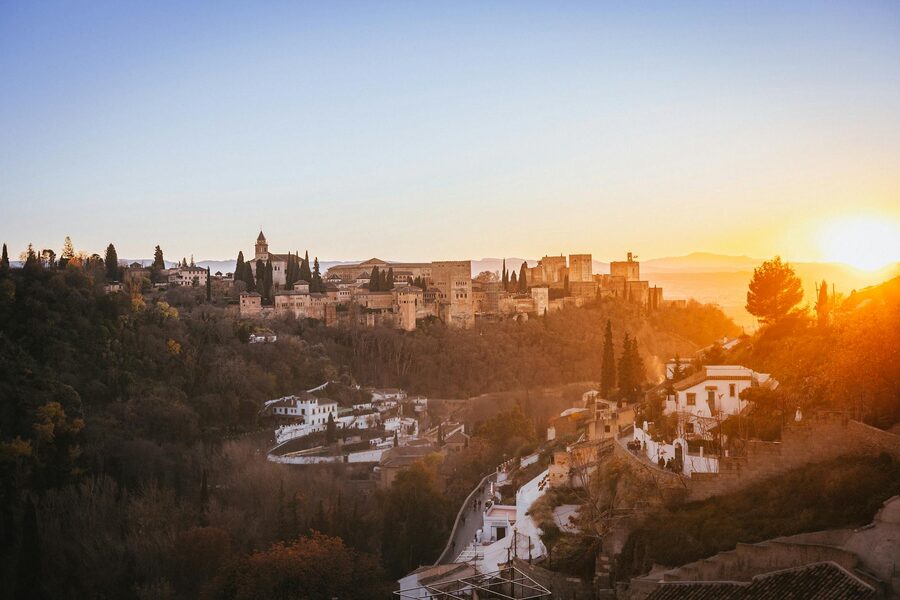
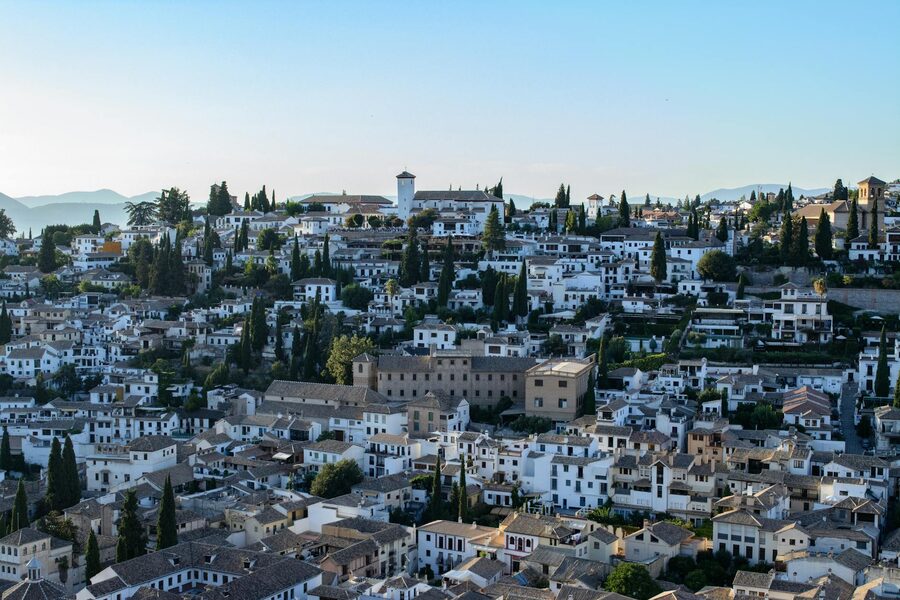
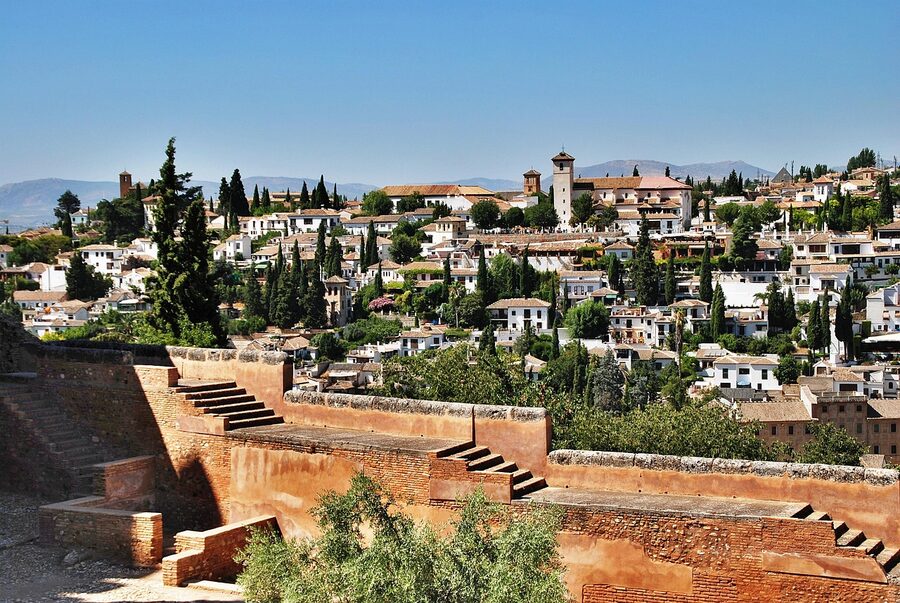
The Albaicin is Granada’s original Moorish quarter — a UNESCO World Heritage Site of narrow lanes, white-walled houses, and hidden carmen gardens tucked behind blank facades. It was the last stronghold of Moorish Granada before the city fell to Ferdinand and Isabella in 1492, and the architecture still carries the weight of everything that happened after.
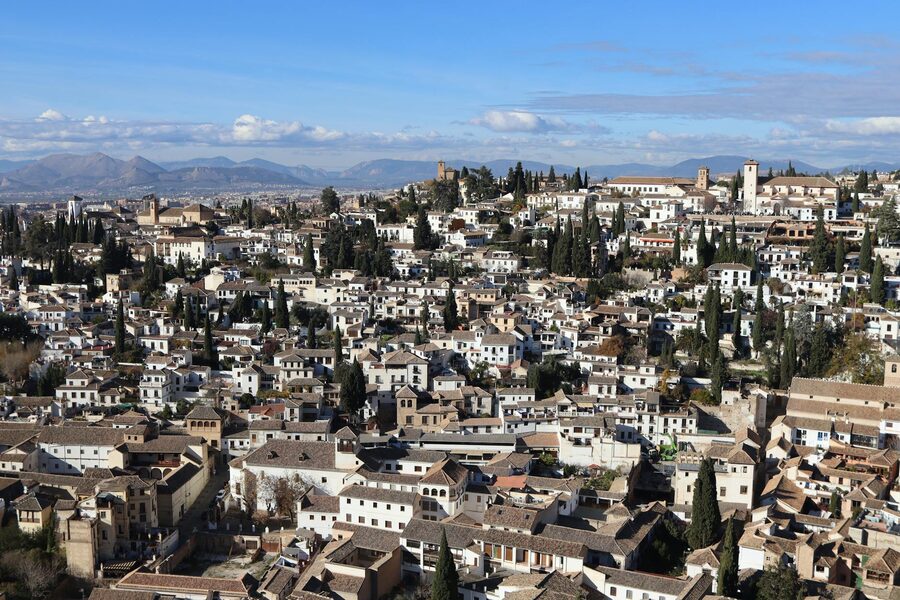
Booking a guided sunset walk is, hands down, the best way to experience it. You get the context you’d miss on your own, a local who knows the timing, and someone who’ll lead you to the right viewpoint before it fills up. Here’s everything you need to know.
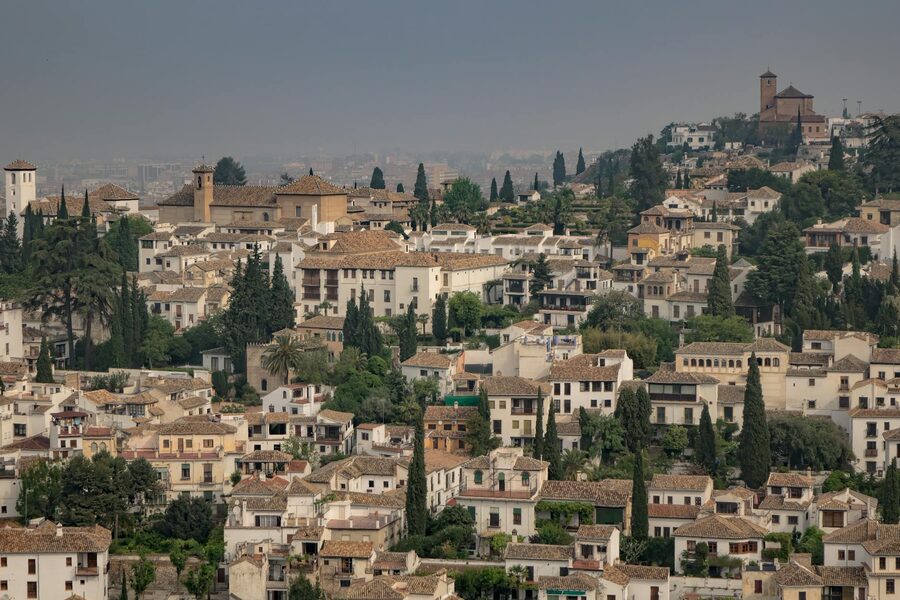
Best overall: Albaicin & Sacromonte Guided Sunset Walking Tour — $17. The most popular sunset tour in Granada by a wide margin, and the cheapest. Two hours through both neighbourhoods timed perfectly for golden hour.
Best for daytime flexibility: Albaicin & Sacromonte 2.5-Hour Walking Tour — $23. Longer route with more history, runs morning and afternoon slots so you can pair it with an evening flamenco show.
Best small-group experience: Golden Hour Sunset Walking Tour with Play Granada — $23. Perfect rating from a smaller local operator. The guides really know their stuff and the group sizes stay small.
- What Actually Happens on an Albaicin Sunset Tour
- Can You Do This Walk Without a Guide?
- The Best Albaicin Sunset Walking Tours to Book
- 1. Albaicin & Sacromonte Guided Sunset Walking Tour —
- 2. Albaicin & Sacromonte 2.5-Hour Walking Tour —
- 3. Golden Hour Sunset Walking Tour with Play Granada —
- When to Book Your Sunset Tour
- Getting to the Meeting Point
- Tips That Will Actually Help
- The Albaicin’s Moorish History (and Why It Matters)
- What You’ll See at the Mirador de San Nicolas
- More Granada Guides
What Actually Happens on an Albaicin Sunset Tour
Most sunset walking tours in Granada follow a similar route, but the experience varies more than you’d expect. Here’s the general pattern.
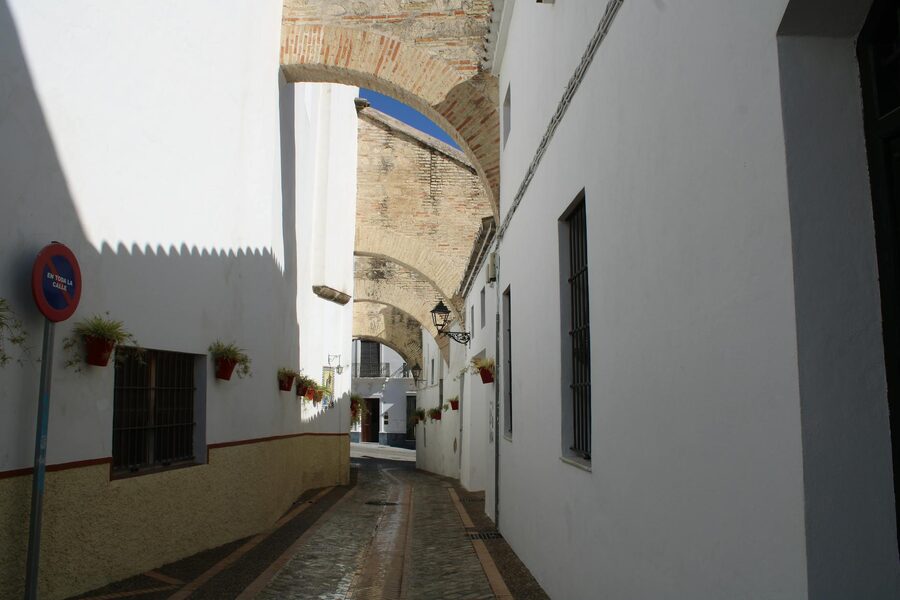
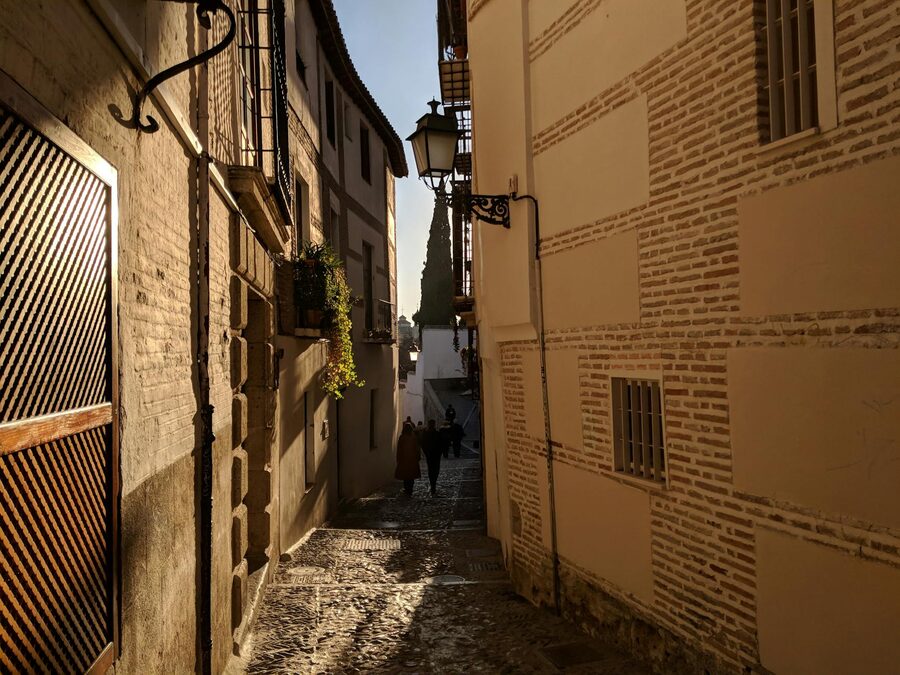
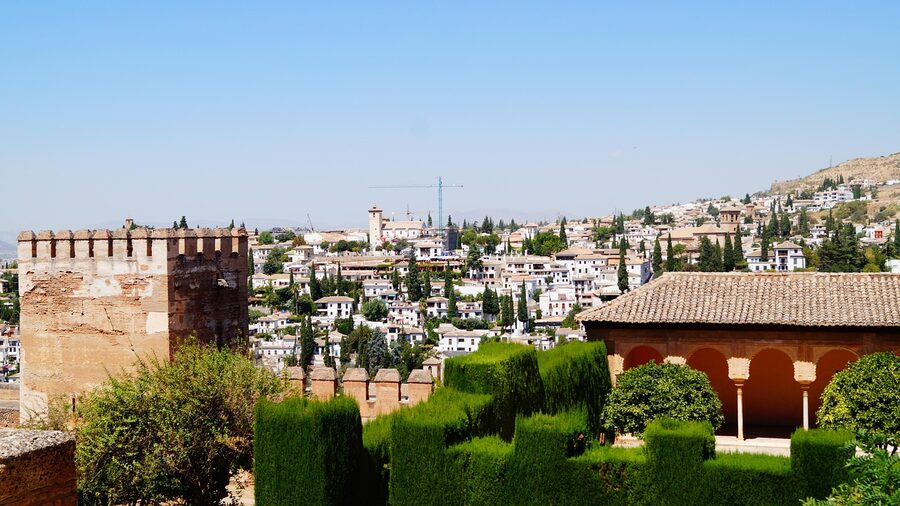
You’ll typically meet near Plaza Nueva, at the foot of the Albaicin hill. From there, the guide leads you uphill through a maze of streets that all look the same until you suddenly recognise nothing. That’s the point. The Albaicin was designed to be confusing — it was a defensive feature. Invading soldiers couldn’t navigate the tight alleys, while locals knew every shortcut.
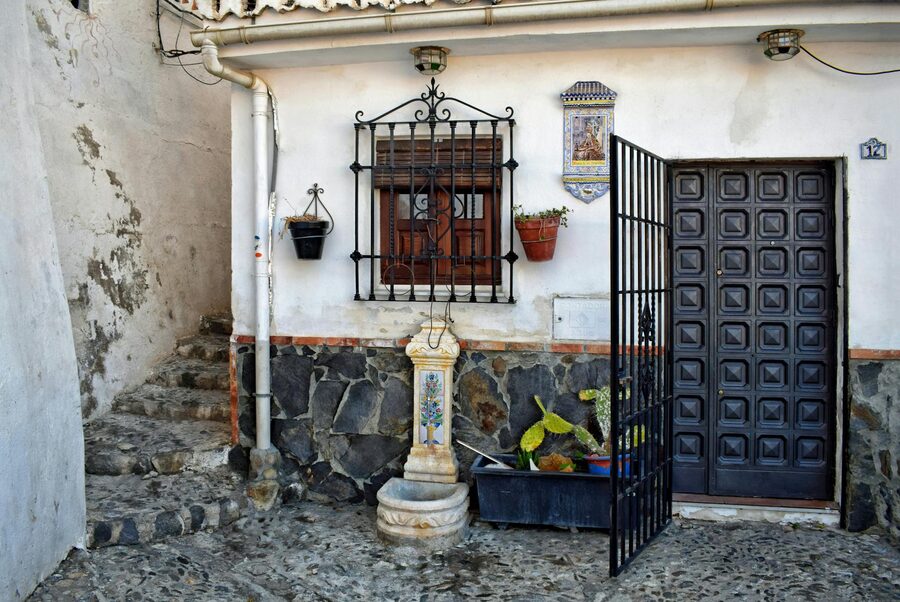
Along the way you’ll pass cisterns that once supplied the Moorish city with water, old city gates, and the exterior walls of carmen gardens. The word “carmen” comes from the Arabic karm, meaning vineyard — these walled compounds hide fruit trees, fountains, and courtyards behind blank facades that give absolutely nothing away from the street.
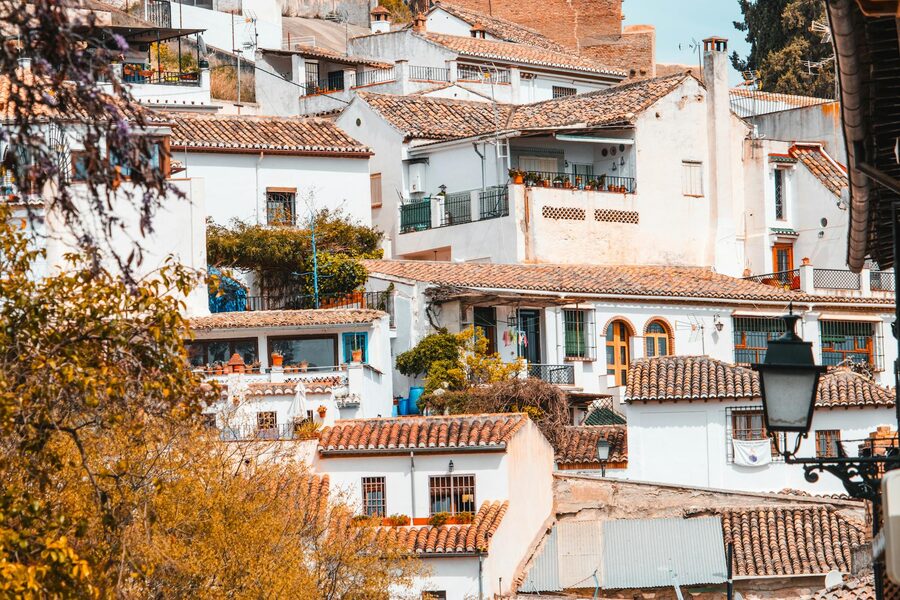
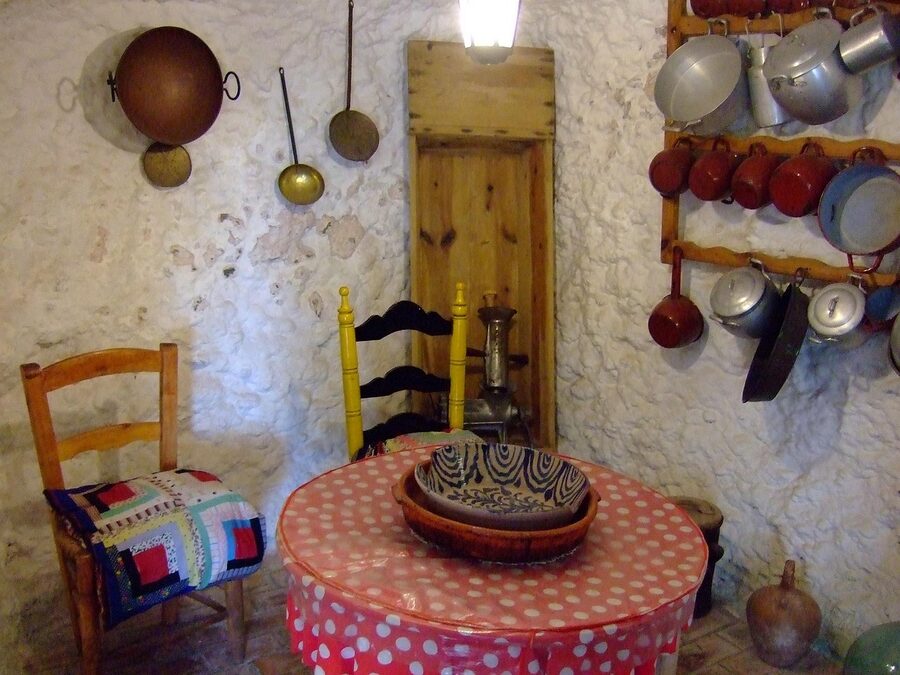
Most tours then cut through into Sacromonte — the Roma neighbourhood famous for cave houses carved directly into the hillside. Some of those caves are still homes. Others have been turned into small museums or flamenco venues. It’s a rougher, more lived-in feeling than the Albaicin, and honestly more interesting in some ways.
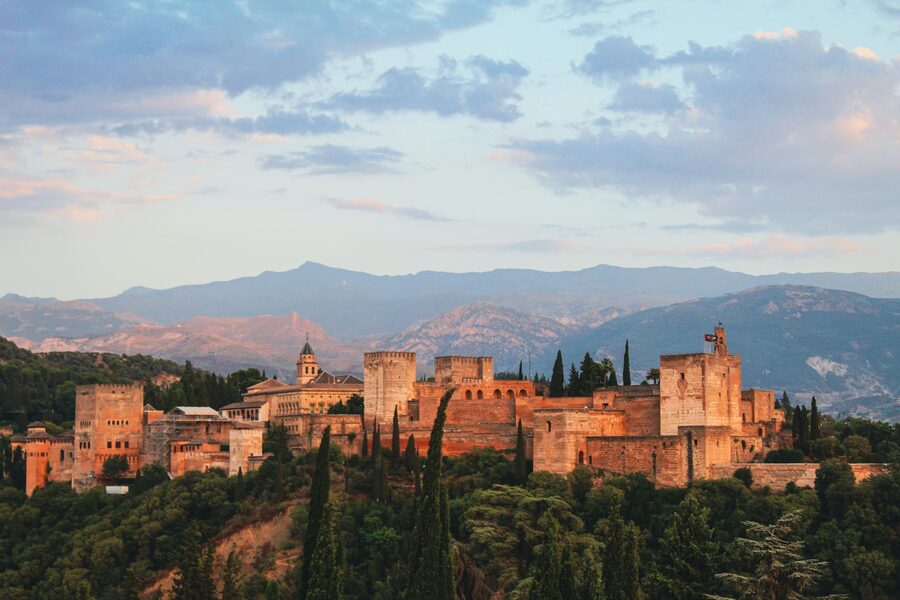
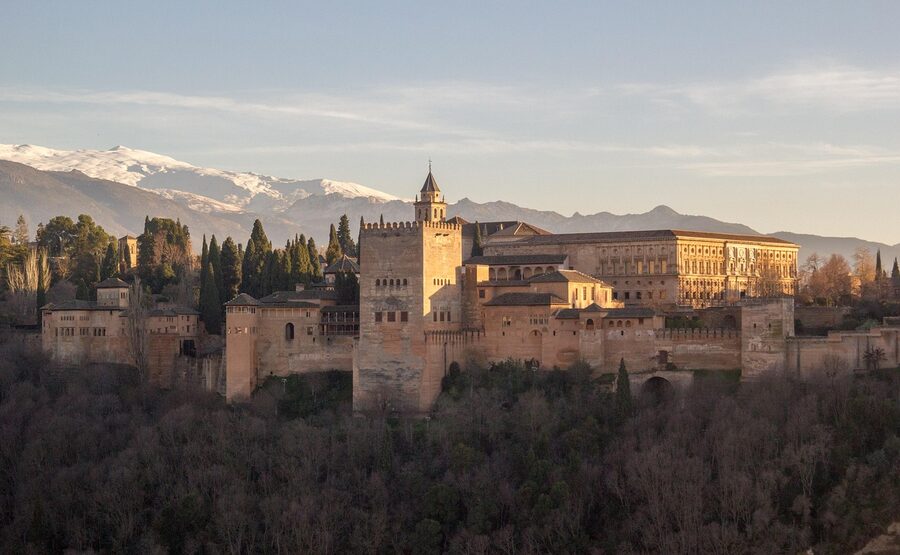
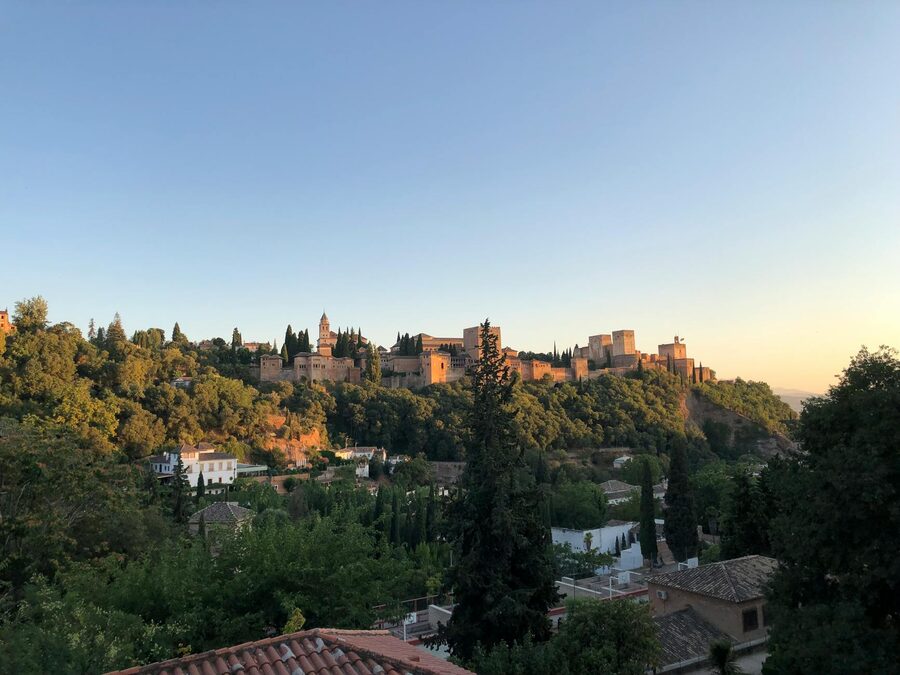
The grand finale is the Mirador de San Nicolas. If you’ve timed it right (and your guide will have), you arrive as the sun drops toward the western mountains and the Alhambra starts to glow. The Sierra Nevada snowcaps behind the palace catch the last light. Debussy supposedly said this was the finest sunset in Europe. I wouldn’t argue.
Can You Do This Walk Without a Guide?
Technically, yes. The Albaicin is free to walk and the Mirador is a public viewpoint. Nobody is stopping you. But there are a few reasons a guided tour is worth the money — and at $17-23, it’s not exactly breaking the bank.
The navigation problem is real. Google Maps works in the Albaicin, sort of. But many of the most interesting spots aren’t on Maps at all. The old cisterns, the best viewpoints that aren’t the Mirador, the side streets where you can see original Moorish stonework — you’ll walk right past all of it without a guide pointing it out.
The history isn’t obvious. When the Catholic monarchs conquered Granada, they initially promised to respect Muslim rights and culture. They broke every promise within a decade — forced conversions, book burnings, and the eventual expulsion of the Moriscos in 1609. The Albaicin’s architecture survives as a monument to what was lost. A good guide brings all of this to life in a way that reading a Wikipedia article on your phone doesn’t quite manage.
Timing. Sunset times change by over two hours across the year in Granada. A guide who runs this tour daily knows exactly when to leave, which pace to set, and where to be at golden hour. If you go solo, you’ll probably arrive either too early (bored, standing in the sun) or too late (already dark, wondering what you missed).
If you’re already planning to visit the Alhambra, you might want to read our complete guide to booking Alhambra tickets — the palace looks even better after you’ve seen it from the Albaicin first.
The Best Albaicin Sunset Walking Tours to Book
I’ve narrowed it down to three solid options. All cover the Albaicin and Sacromonte, all include the Mirador viewpoint, and all have strong track records from thousands of visitors. The differences come down to group size, price, and how much Sacromonte time you get.
1. Albaicin & Sacromonte Guided Sunset Walking Tour — $17
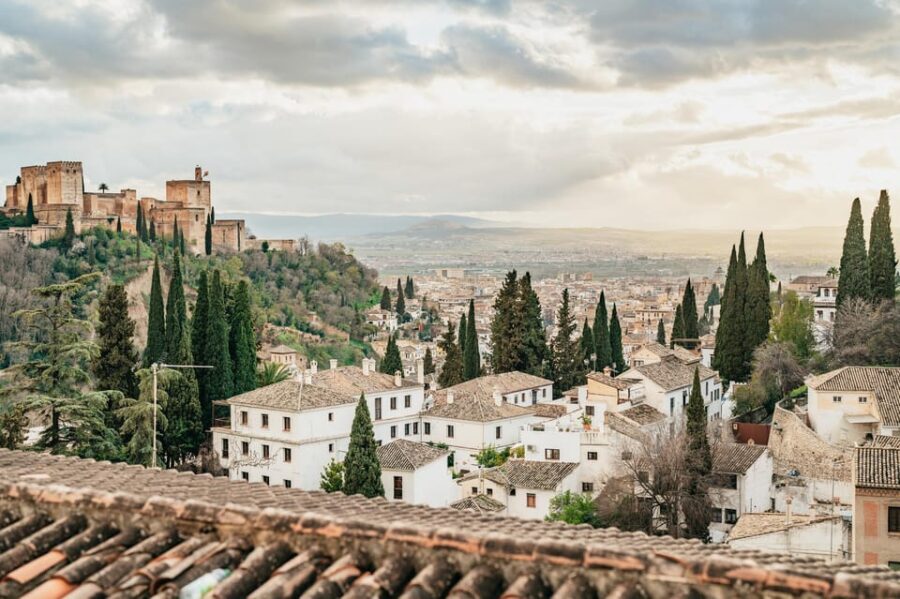
This is the one most people end up booking, and honestly it’s hard to argue with. At $17 per person for a two-hour guided walk through both the Albaicin and Sacromonte, it’s the best value sunset tour in Granada by a comfortable margin. The guides — names like Antonio, Paola, and Paula keep coming up in reviews — clearly know their routes and time the Mirador arrival well.
The tour covers the highlights without rushing. You’ll get the history of the Moorish quarter, walk through the cave neighbourhood of Sacromonte, and finish at San Nicolas for the sunset. Nearly 3,000 visitors have taken this one and rated it 4.9 out of 5, which for a walking tour at this price is remarkable. It’s a larger group tour, so don’t expect a private-feeling experience, but the guides manage the crowds well.
One thing I appreciated: the guides actively point out photo opportunities you’d miss on your own, and they know which side streets to duck into when the main paths get busy.
2. Albaicin & Sacromonte 2.5-Hour Walking Tour — $23
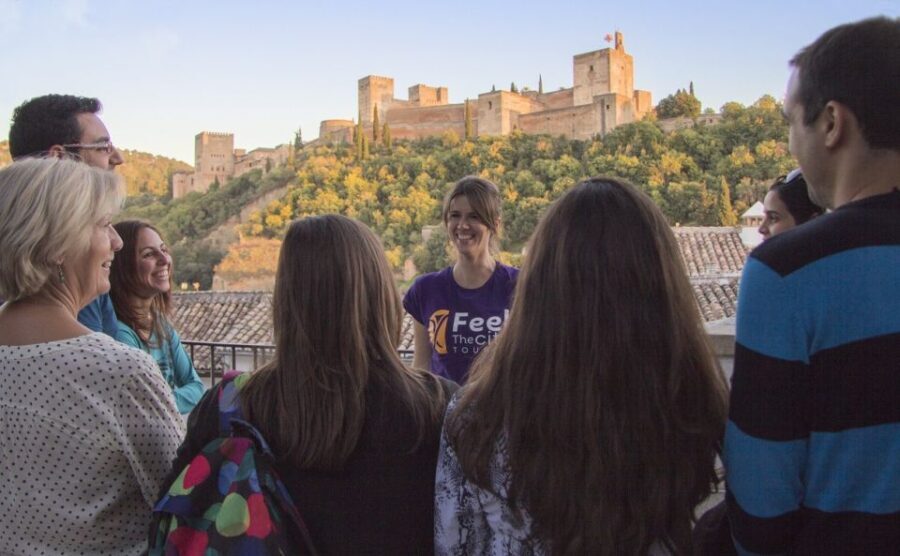
If you want a bit more depth, this 2.5-hour option adds extra time in Sacromonte and deeper dives into the history. At $23, the price jump from the top pick is minimal but you get thirty more minutes of guided content, which means more time at the cave houses, more context on the Roma community, and less feeling like you’re being herded between viewpoints.
The guides here — Josh gets mentioned repeatedly — seem to specialise in making the history feel personal rather than textbook. Reviews mention learning things about Granada’s Moorish past that they hadn’t found in any guidebook, which tracks with my own experience of the Albaicin. The best guides don’t just recite dates; they tell you about the people who lived in these streets.
This tour runs morning and afternoon slots too, not just sunset. So if you want to see the Albaicin in daylight and save the evening for a flamenco show in the Sacromonte caves, this is the one to book.
3. Golden Hour Sunset Walking Tour with Play Granada — $23
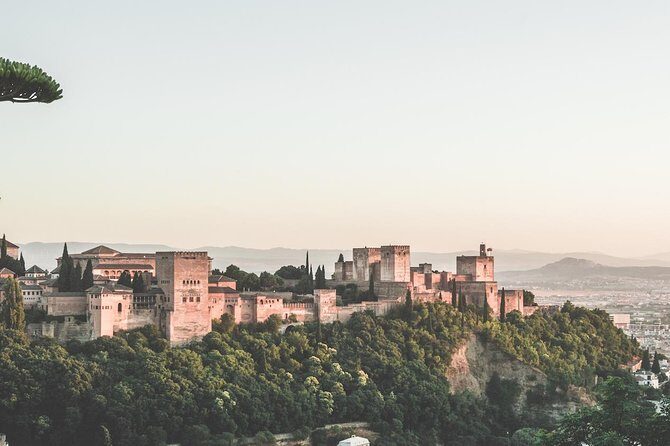
Play Granada is a local operator — not a big booking platform running tours under their own brand. That shows. The groups are smaller, the guides have a genuine connection to the neighbourhood, and it feels more like walking with someone who lives there than following a tour script. Guide Mario comes up often in reviews, and the descriptions of his tours mention specific neighbourhood stories you won’t hear on the larger tours.
At $23 for two hours, it’s the same price as the 2.5-hour tour above but shorter. What you’re paying for is the intimate feel and the local knowledge. This is the one to pick if you’ve done group tours before and found them impersonal. The perfect 5.0 rating from hundreds of visitors isn’t an accident — though one review does mention a no-show guide incident, so make sure to confirm your booking the day before.
Be warned: the route involves a lot of uphill walking on uneven cobblestones. One reviewer called it “breathtaking” in both senses of the word. Wear proper shoes. Leave the flip-flops at the hotel.
When to Book Your Sunset Tour
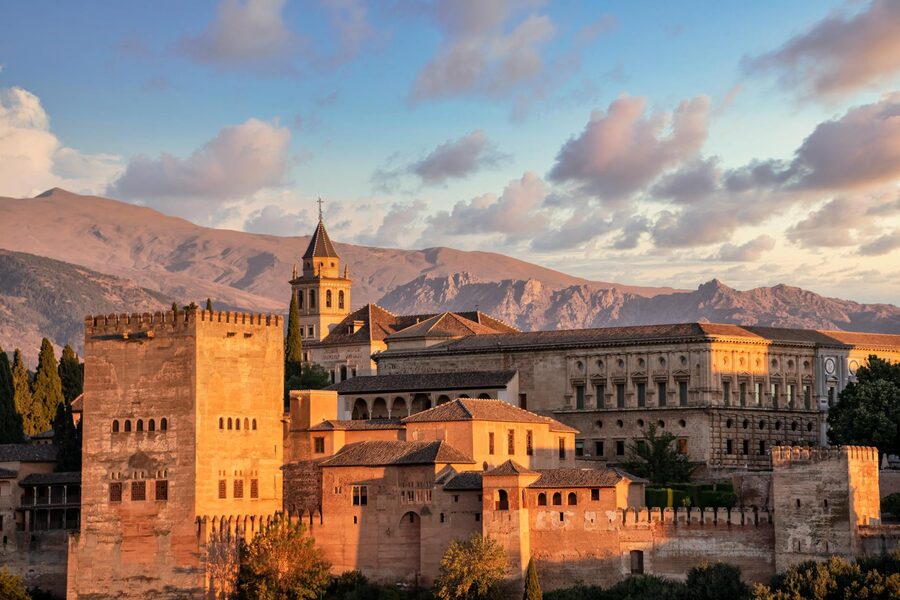
Best months: April through June and September through October. The temperatures are comfortable for walking uphill (July and August in Granada regularly hit 38-40C, and the Albaicin’s stone streets hold the heat), the sunset timing falls at a civilised hour, and the crowds are manageable.
Worst time: Mid-afternoon in July or August. I don’t care how badly you want the sunset — a two-hour uphill walk in 40-degree heat is not romantic, it’s dangerous. If you must visit in peak summer, pick a tour that starts after 8pm when the temperature finally drops.
Sunset times in Granada:
– December/January: around 5:45pm
– March/April: around 8:00pm
– June/July: around 9:30pm
– September/October: around 8:00pm
Most tour operators adjust their start times automatically based on the season. But double-check your booking confirmation for the actual meeting time — some platforms show a default time that the operator overrides closer to the date.
How far ahead to book: One to two days ahead is usually fine for the budget tours. During Easter week (Semana Santa) and long weekends, book at least a week out. The Alhambra sunset view is one of the most photographed scenes in Spain, and tour slots do sell out.
Getting to the Meeting Point
Almost every Albaicin sunset tour meets at or near Plaza Nueva, at the bottom of the Albaicin hill next to the Darro river. It’s the natural gateway between the modern city centre and the old Moorish quarter.
From the city centre: Plaza Nueva is walkable from most Granada hotels in 10-15 minutes. It sits at the junction of Gran Via and the Carrera del Darro.
From the train/bus station: Take the LAC bus line to Gran Via or Cathedral stop, then walk five minutes east to Plaza Nueva. A taxi from the station costs about 7-8 euros.
Don’t drive into the Albaicin. Seriously. The streets are too narrow for most cars, parking is impossible, and many roads are pedestrian-only with bollards. Some travelers try it every year and end up with their rental wedged between two walls. Park in the city centre and walk.
Tips That Will Actually Help
Wear real shoes. I cannot stress this enough. The Albaicin is cobblestones, steep ramps, uneven stairs, and the occasional stretch of loose gravel. Trainers are fine. Sandals are pushing it. Heels are a recipe for a twisted ankle and a ruined evening.
Bring a light jacket or scarf. Even in summer, the temperature drops noticeably once the sun goes down. Granada sits at 738 metres above sea level in a mountain valley, and evenings cool off faster than you’d expect from a city in southern Spain.
Arrive early to the meeting point. Give yourself 10 minutes of buffer. The tours leave on time, and if you’re late, they won’t wait. One reviewer learned this the hard way and lost their booking entirely.
Bring water. There are a few fountains along the route but not many, and the uphill sections will make you thirsty. A small bottle is enough.
Skip the Mirador restaurants. The cafes right at the San Nicolas viewpoint charge double for half the quality. Eat in the Albaicin side streets instead — places like Bar Lara on Calle Panaderos or any of the tiny bars on Calle Caldereria Nueva (the tea street) are better and cheaper.
Stick around after the tour ends. Most tours finish at the viewpoint right around sunset. But the Alhambra lights up about 30 minutes after the sun goes down, and that second show is free. Grab a spot on the wall, wait it out, and walk back downhill through the lamplit streets afterwards. It’s the best free show in Granada.
The Albaicin’s Moorish History (and Why It Matters)
You can walk the Albaicin and just enjoy the views. But knowing what happened here changes the experience completely.
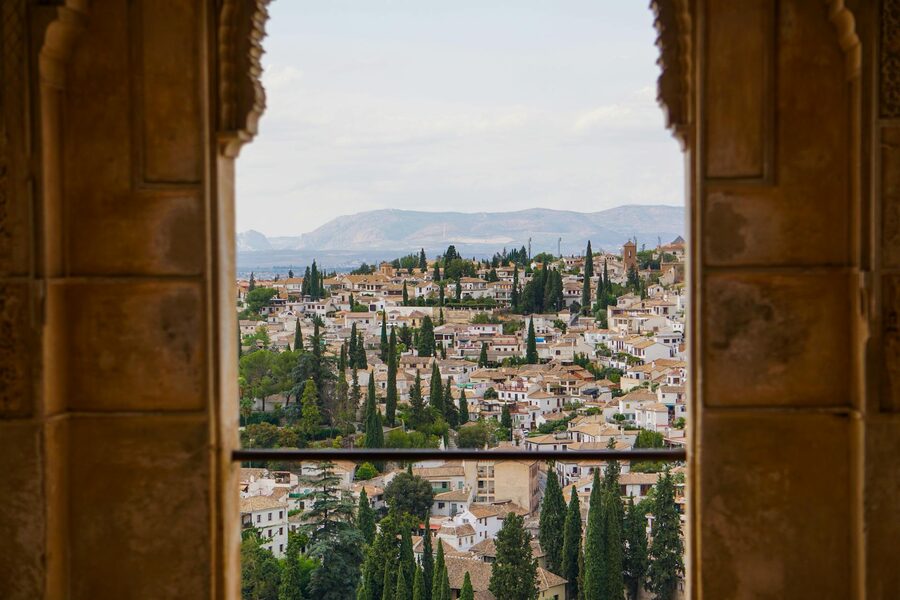
For nearly 800 years, this hillside was the heart of Moorish Granada — the last Muslim kingdom on the Iberian Peninsula. The narrow streets weren’t quaint; they were defensive. The blank-walled houses weren’t modest; they were private, following the Islamic architectural tradition of hiding beauty behind unassuming exteriors. The water systems feeding fountains and gardens across the quarter were engineering marvels that the city relied on for centuries.
When Ferdinand and Isabella took Granada in 1492, they signed the Treaty of Granada promising religious freedom and cultural respect for the Muslim and Jewish populations. They broke that promise within a decade. Forced conversions came first. Then the burning of thousands of Arabic manuscripts in the Plaza Bib-Rambla. Then the outright expulsion of the Moriscos — the converted Muslims — in 1609, emptying entire neighbourhoods of people whose families had lived there for generations.
The Albaicin survived this cultural destruction largely because its buildings were too useful to tear down. The carmen gardens, the cisterns, the narrow defensive layout — the new rulers moved in and used it all. Today UNESCO protects the whole quarter, and a good guide will point out the layers: Moorish foundations under Catholic churches, Arabic inscriptions hidden behind plaster, and garden layouts that follow Islamic water garden principles seven centuries after they were designed.
This is why I think a guided tour is worth it even if you could walk the route yourself. Without the context, you’re just looking at old white buildings on a hill. With it, you’re standing in one of the most complicated and tragic landscapes in European history.
What You’ll See at the Mirador de San Nicolas
The mirador itself is a stone-paved plaza with a low wall facing east toward the Alhambra. It’s small — maybe the size of a tennis court — which is why it feels so crowded at sunset. Street musicians usually set up in the corner. There are always people selling cold drinks from coolers. And in the middle of it all, that view.
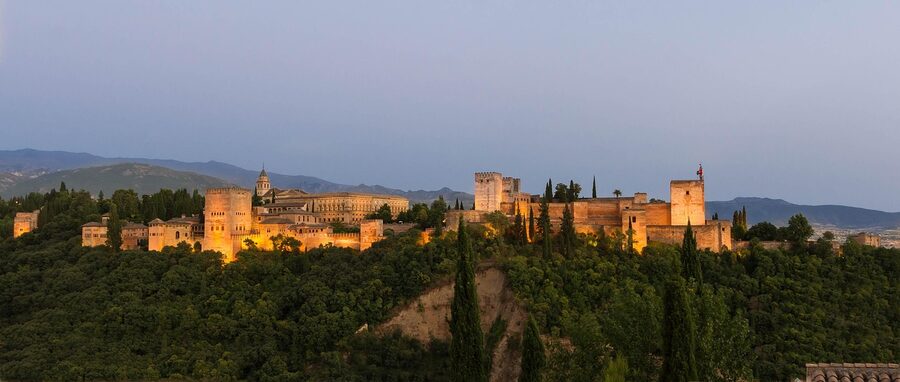
The Alhambra fills the entire opposite ridge — the Nasrid Palaces, the Alcazaba fortress, the Charles V Palace, and the Generalife gardens stretching out to the east. Behind it, on a clear day, the Sierra Nevada mountains still have snow on the peaks well into June. The light changes minute by minute as the sun drops: first everything goes gold, then pink, then deep orange, and finally the palace lights switch on and the whole thing glows against a darkening sky.
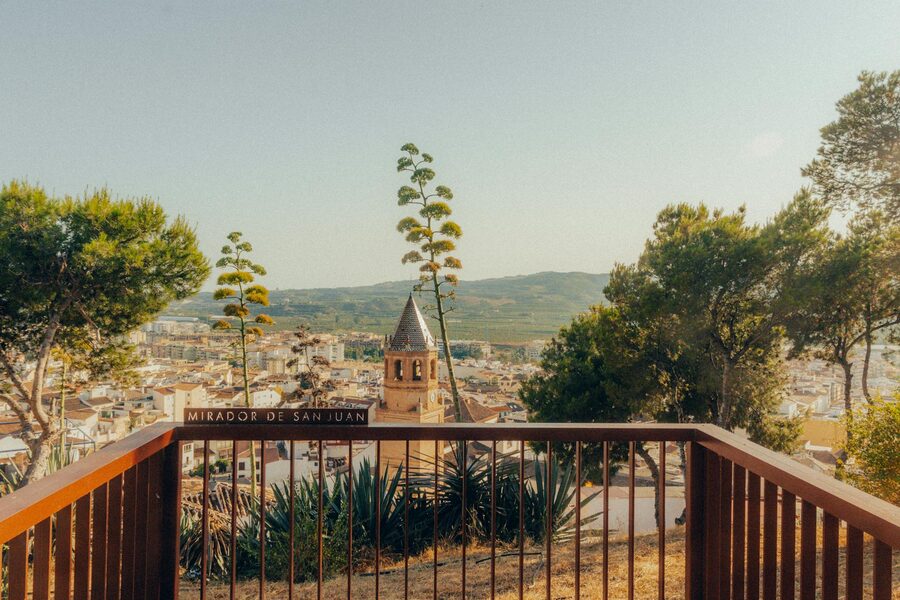
A few practical notes about the mirador: pickpockets work the crowd at sunset, so keep your phone and wallet in a front pocket or zipped bag. The wall is comfortable to sit on but there’s no railing — watch young children. And the walk back down the hill in the dark is steeper than it seemed on the way up, so use the main path rather than trying to find a shortcut.
More Granada Guides
If you’re spending more than a day in Granada, the Albaicin sunset tour pairs well with a morning at the Alhambra — we’ve got a full breakdown of how to book Alhambra tickets including which ticket types actually get you into the Nasrid Palaces. For evening plans, a cave flamenco show in Sacromonte is the classic follow-up — you can walk straight from the Mirador to the caves in about fifteen minutes. And if you want a daytime version of the neighbourhood walk without the sunset focus, our Granada walking tour guide covers the broader city routes, and our Albaicin tour guide goes deeper into the Moorish quarter specifically.
This article contains affiliate links. If you book a tour through our links, we earn a small commission at no extra cost to you. This helps us keep producing free travel guides. We only recommend tours we’ve genuinely researched and would book ourselves.