
AMAZE Amsterdam reliably divides opinion down the middle. Half the visitors walk out saying it was the most fun thing they did in the city; the other half leave bewildered, wondering what the €22 was actually for. Whether you book it depends entirely on which half you’re going to be in.
AMAZE sits at the intersection of art installation, nightclub aesthetic, and selfie venue — and it’s explicit about being all three. If you like contemporary installation art or electronic music, it works. If you expect narrative, historical context, or an educational frame, it doesn’t. The venue is on Amstelstraat, a few minutes south of Rembrandtplein, with 60-90 minutes of rooms to walk through and no exit timer if you want to stay longer.



In a Hurry?
- Best overall: AMAZE Amsterdam Immersive Entry — flagship experience, 60-90 min. Book 10am or 7pm for thinnest crowds.
- Best for art fans: Fabrique des Lumières — Monet Show — projected classical art. Less abstract, more narrative.
- Best for families: WONDR Immersive Playground — ball pits and paint rooms, built for group selfies and kids.
- In a Hurry?
- What You Actually Walk Through at AMAZE
- Three Immersive Tickets Compared
- 1. AMAZE Amsterdam: Immersive Audiovisual Experience — from €22
- 2. Fabrique des Lumières — Monet Entry — from €18.50
- 3. WONDR Immersive Playground — from €22
- How Long People Actually Stay
- Is AMAZE Worth It?
- The Neighbourhood — Rembrandtplein and Its History
- How to Book
- Logistics Before You Arrive
- Photography
- AMAZE vs Fabrique des Lumières
- AMAZE vs WONDR
- Combining With Other Amsterdam Evenings
- What’s Different in 2026
- Who Leaves Happy, Who Leaves Puzzled
- Other Immersive Experiences in Amsterdam
- Common Mistakes
- Accessibility and Sensory Warnings
- Pairing With the Rest of Your Amsterdam Day
- The Short Version
What You Actually Walk Through at AMAZE
The exact rooms rotate every 6-12 months but the format stays consistent. When I visited the most recent version, the sequence was roughly:
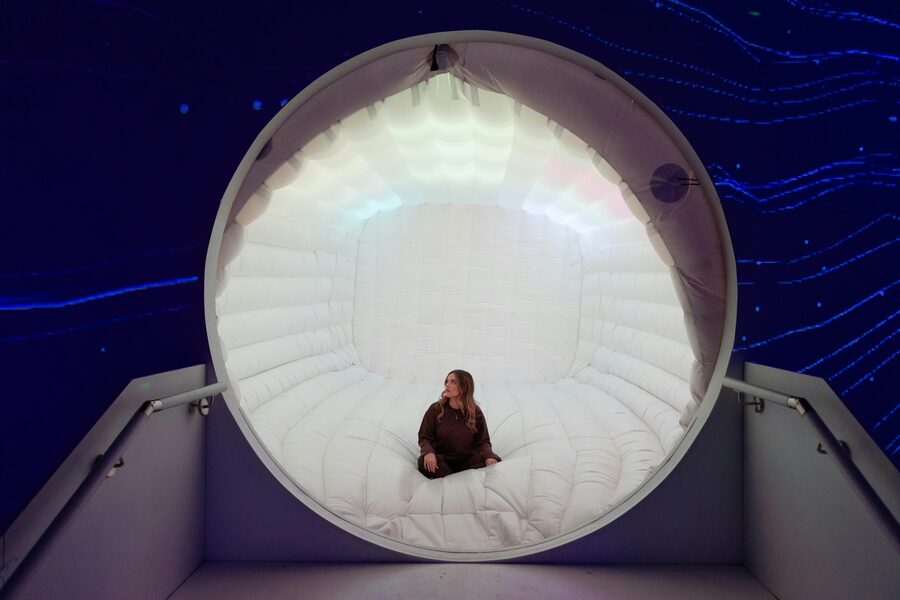
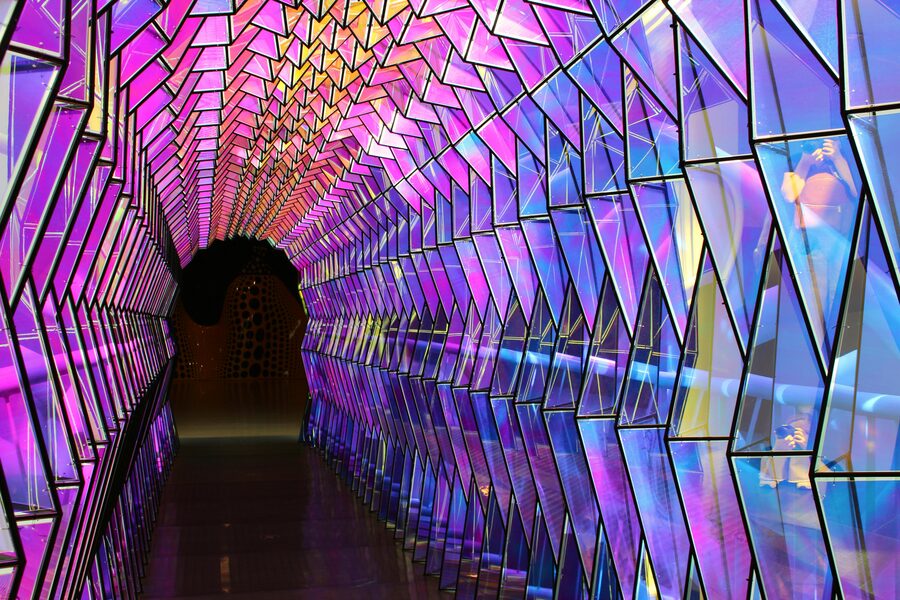
The Colour Gradient. Entry room with walls fading from hue to hue over 4-5 minutes. Eases the eyes into low light. Minimal sound, soft ambient pulse.
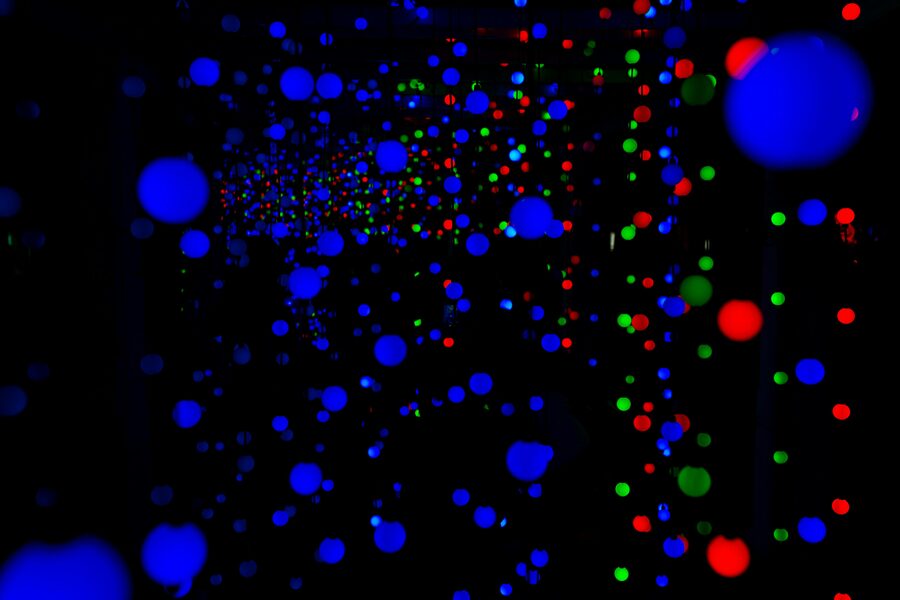
The Mirror Infinity. Two walls of mirrors facing each other, creating a corridor-without-end illusion. Small lights scattered at different depths. You see yourself receding 20+ times over.
The Motion Reactor. Pressure-sensitive floor; lights and sounds respond to where you step. Kids love it — expect them to spend 10-15 minutes in this single room.
The Sound Bath. Low-lit, directional speakers. Stand in different spots, different sounds dominate. Most “art gallery” of the rooms — people often sit on the floor 10+ minutes.
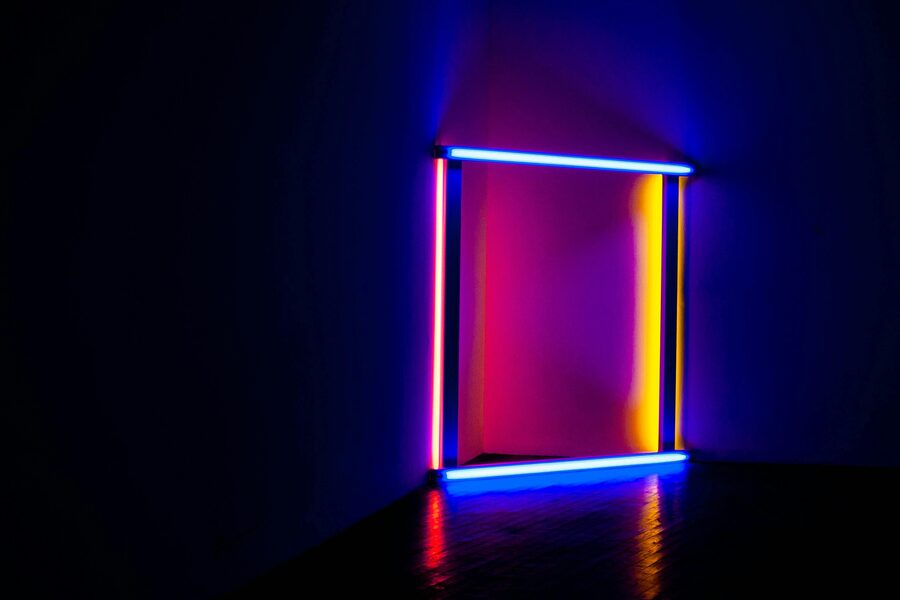
The Projection Hall. The main room. Floor-to-ceiling geometric animation changing every 8-10 minutes. Music fills the whole space. For most visitors this is the moment AMAZE “clicks” — or doesn’t.
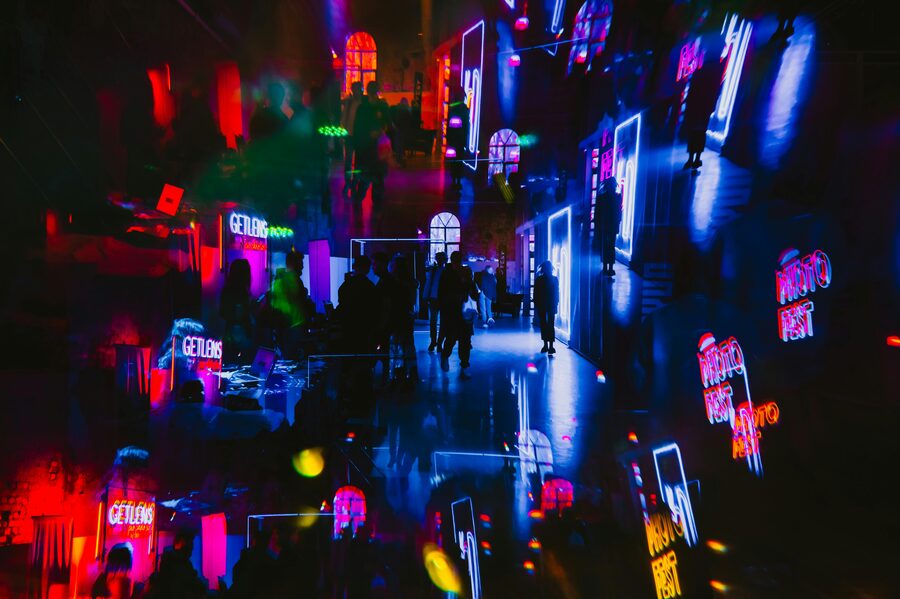
The Smoke Room. Fine mist fills a small space; coloured lasers cut through it. You see the beams as physical objects. Kids treat it like a haunted house; adults treat it like a rave backstory.
The Exit Gallery. Static contemporary-art pieces as a transition back to daylight. The point is to decompress before stepping back onto Amstelstraat.
Three Immersive Tickets Compared
1. AMAZE Amsterdam: Immersive Audiovisual Experience — from €22
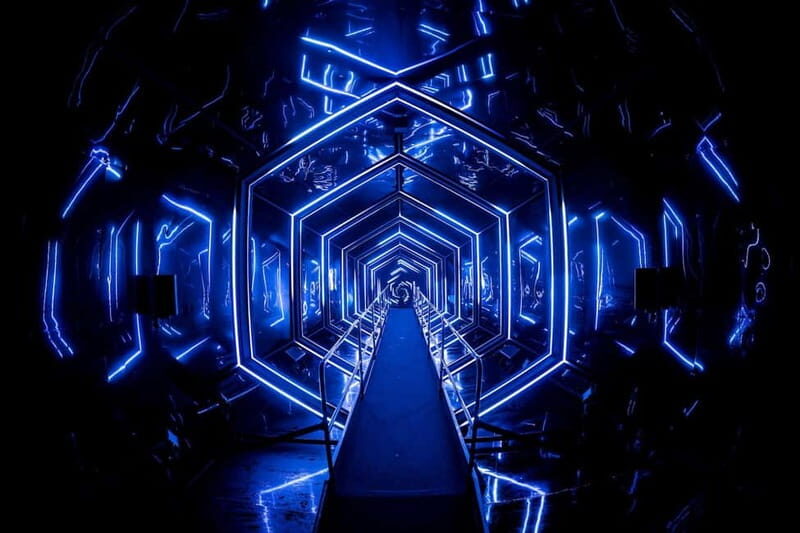
The flagship. Bundled rooms, audio-reactive visuals, strong electronic soundtrack throughout. Best for adults and teens who want the installation-art version of immersive. Full review walks every room.
2. Fabrique des Lumières — Monet Entry — from €18.50
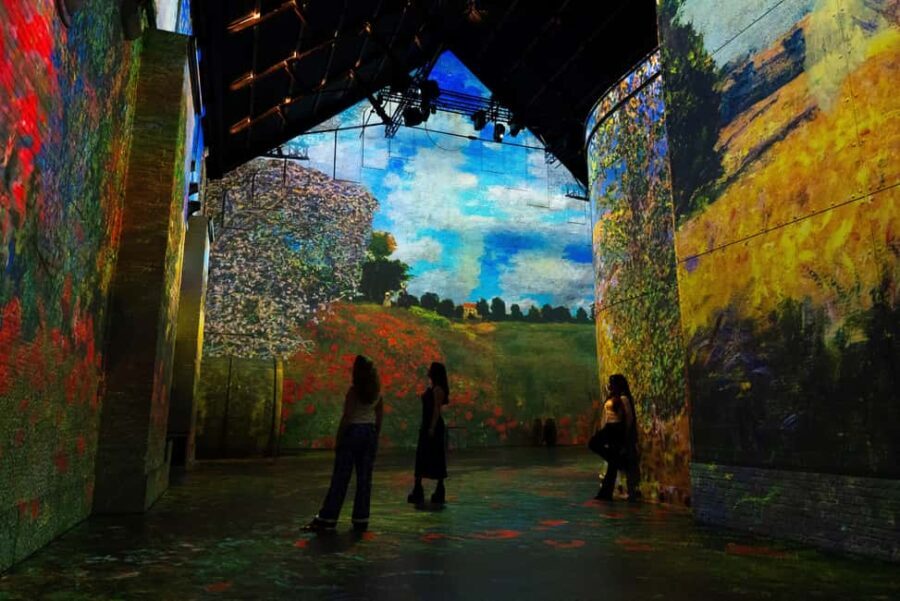
If AMAZE sounds too abstract, Fabrique des Lumières in Amsterdam Noord does projection-mapped classical paintings — Monet here, Van Gogh and Klimt in earlier exhibitions. Shows rotate every few months. Our Fabrique guide has booking details.
3. WONDR Immersive Playground — from €22
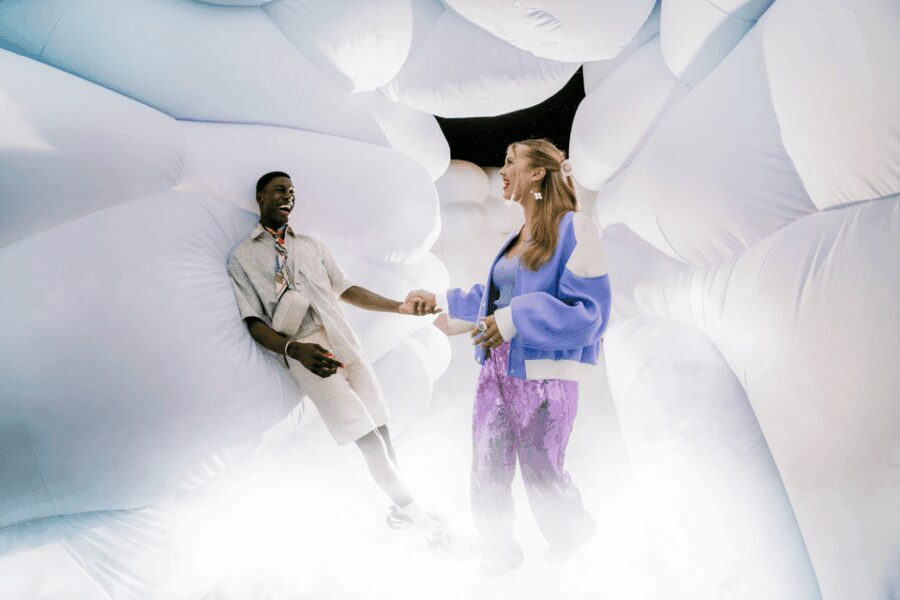
The selfie version of the immersive format. Primary colours, ball pits, cartoon-painted walls, strong focus on photo-friendly angles. Families with kids 6-12 love it; solo art pilgrims, less so. Located in Amsterdam Noord.
How Long People Actually Stay
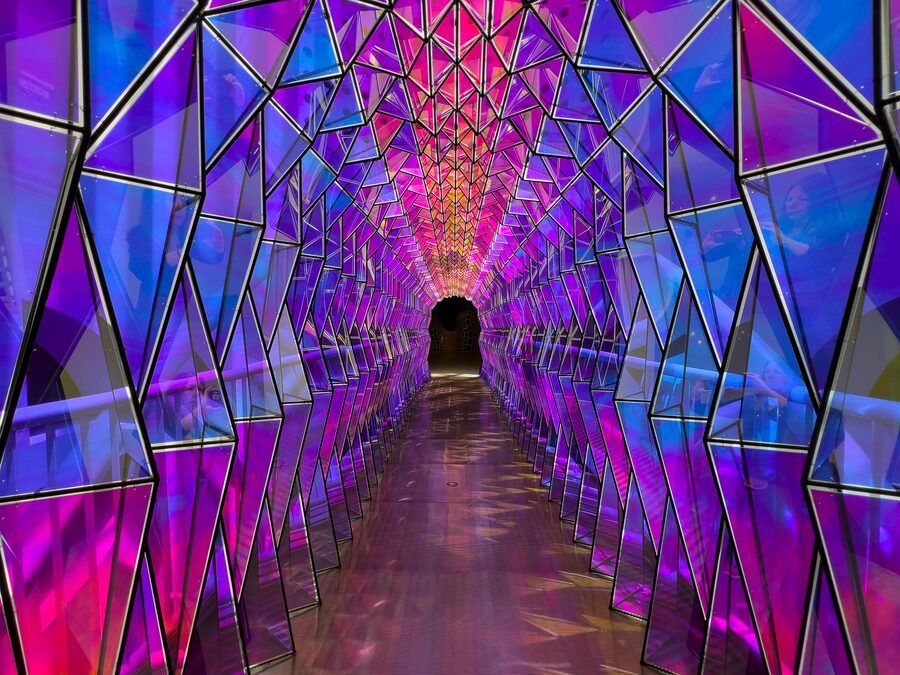
Official guidance: 60-90 minutes. Actual spread:
- Quick visit (no photos, linear walk): 40-50 minutes
- Normal: 75-90 minutes
- Photo-heavy: 2+ hours
- Repeat-favourites crowd: 2+ hours with backtracking
No exit limit. Some visitors enter at 2pm and stay until 8pm closing.
Is AMAZE Worth It?
Short answer: yes if you like electronic music, contemporary installation art, or night-out energy. No if you prefer classical museums and quiet contemplation — pick Fabrique des Lumières instead.
Strong yes: adults 18-35, couples on a date night, creatives and designers, teens and older kids, anyone who’s done the major Amsterdam museums and wants something different.
Strong no: under-6s (lighting and sound too intense); anyone with photosensitive epilepsy; people who expect narrative or educational framing.
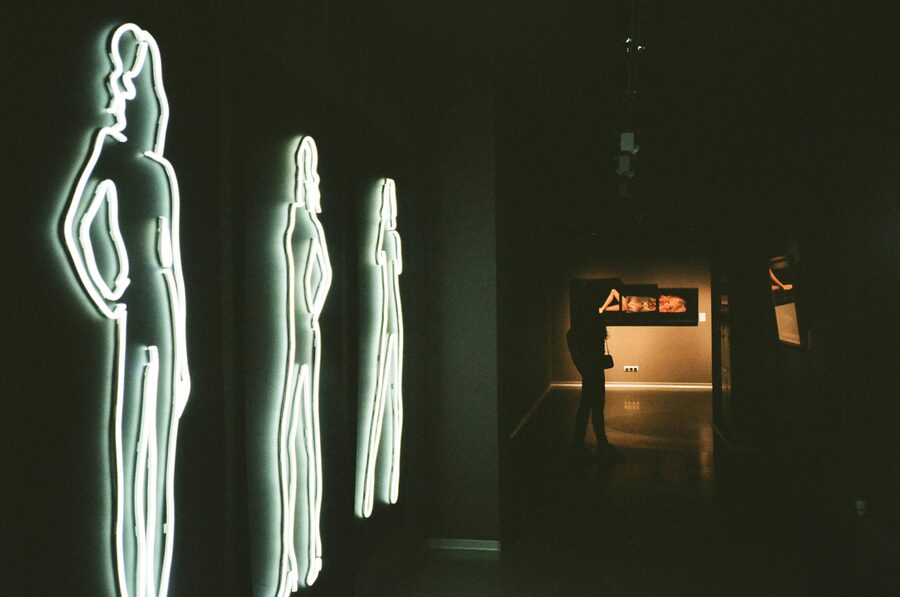
Maybe: people who found Moco Museum satisfying but not enough. AMAZE picks up where Moco’s neon rooms leave off.
The Neighbourhood — Rembrandtplein and Its History
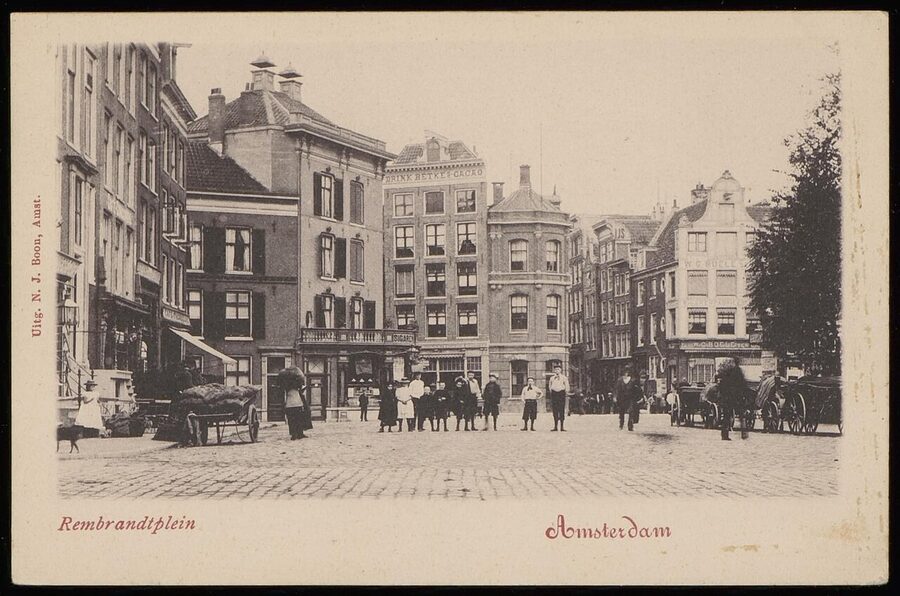

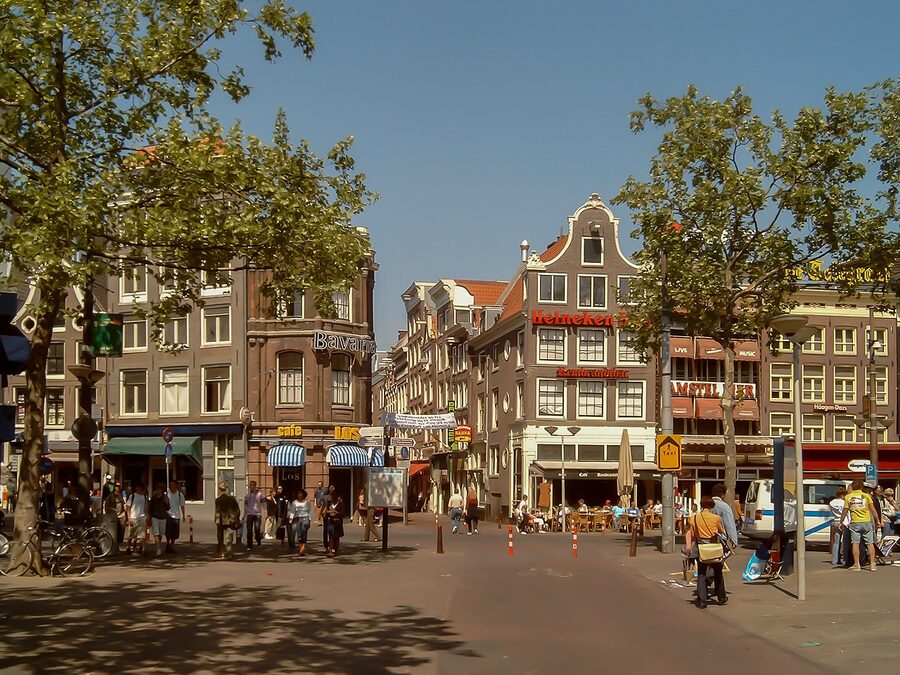
Rembrandtplein has been Amsterdam’s nightlife square since the 1880s. The original name was “Botermarkt” (“butter market”), changed in 1876 when the statue of Rembrandt was erected in the centre of the square. By 1900 the surrounding streets — Amstelstraat included — had been colonised by cafés, theatres, and late-opening restaurants.
The pattern hasn’t changed. Today Rembrandtplein fills up every Friday and Saturday with drinkers, clubbers, and tourists heading toward the nearby museums by day and bars by night. AMAZE, a few blocks south, picked the right neighbourhood — it feeds off the same audience that’s been coming to this part of the city since the 1880s.
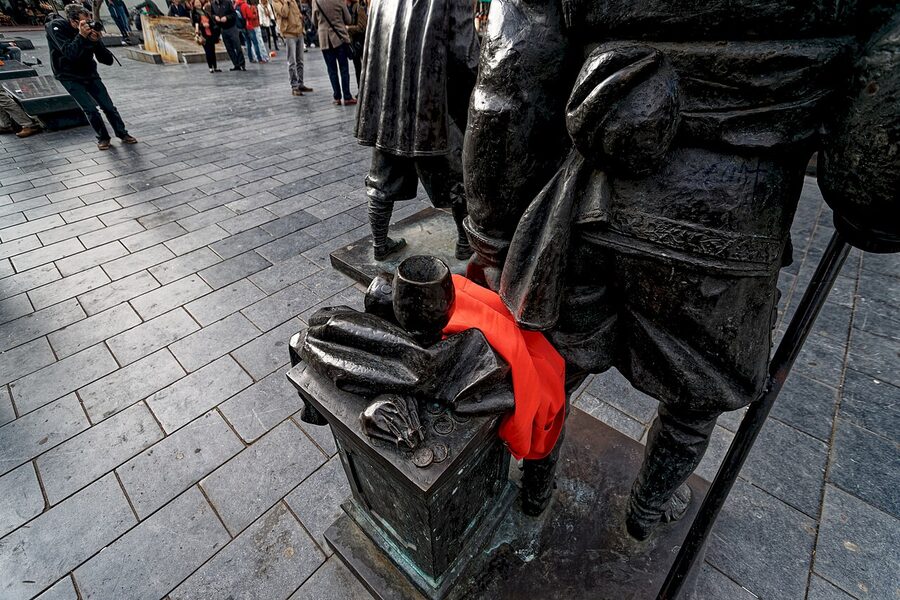

On the square itself, the “3D Night Watch” — 22 life-sized bronze figures recreating Rembrandt’s painting in physical space — is a 2006 installation that most AMAZE visitors walk past without noticing. It’s a nice quiet moment if you pause for it.
How to Book
Standard timed slots every 30 minutes through the day. Book online — walk-up possible but at peak times you’ll queue; Saturday evening slots sell out 2-3 days ahead.
Best slots: first of the day (10am) or the last slot before closing (7-7:30pm). Crowds noticeably lighter. Light visuals look the same whether outside is light or dark — inside is blackout.
Worst slots: 2-5pm weekends and public holidays. Rooms fill, motion-reactive floors jam with people.
Cancellation: GetYourGuide offers free cancellation up to 24 hours before. Within 24 hours, non-refundable.
Logistics Before You Arrive
Where: Amstelstraat, near Rembrandtplein. Central location, 6 minutes’ walk from the Rijksmuseum tram stop.
Getting there: tram 14 to Rembrandtplein, 4 minutes’ walk south. Or 15 minutes’ walk from Dam Square.
Bag policy: small bags fine. Free locker for anything larger.
Clothing: rooms kept at room temp so coats are fine to carry. No dress code.
Food and drink: not allowed inside. Small bar in the exit area — drinks, coffee, snacks, cash and card both accepted.
Wheelchair accessibility: venue is step-free, but some rooms have pressure-sensitive floor sections that can feel odd. Email ahead for specific accommodations.
Photography
Photos allowed everywhere — no flash. Phone cameras actually handle the rooms better than you’d expect, especially in night mode. Specific tips:
Turn off HDR. Low light confuses it; you get over-processed shots that don’t match what your eye sees.
Use wide-angle. Many rooms are more impressive at scale. iPhone 0.5x lens works well.
Hold still. Low light = slow shutter = handshake blur. Brace against a wall for crisp shots.
Don’t film long videos. Battery drains fast, audio doesn’t capture well. Short clips plus stills work better.
AMAZE vs Fabrique des Lumières
Both sell out regularly. Which one’s right for you?
Pick AMAZE if: you like electronic music; you want rooms that change around you; date night; you want something that feels closer to a nightclub than a museum.
Pick Fabrique des Lumières if: you want recognisable art (Monet, Van Gogh, Klimt, Dutch Masters); you want narrative and story; you prefer orchestral to electronic; you’re going with parents or older visitors. Our Fabrique guide has exhibition details.
Time: AMAZE slightly longer (75-90 min vs 60-75 min at Fabrique).
Price: AMAZE €22; Fabrique €18.50. Not a major differentiator.
AMAZE vs WONDR
WONDR is more kid-friendly and photo-friendly. Think giant ball pit, Lego rooms, bouncy-castle sensibility. AMAZE is dimmer, more sophisticated, less “everyone take a photo here” and more about immersion.
Ages 4-12: WONDR clearly better.
Ages 13-17: either works; teens often prefer AMAZE for the night-out feel.
Adults without kids: AMAZE is the clear pick.
Mixed-age family: do both if you have days; if you must pick one, follow the older kids’ preference.
Combining With Other Amsterdam Evenings

AMAZE works as an evening activity. By the time you finish — say, 8:30pm after a 7pm entry — central Amsterdam has shifted into night mode.
Dinner nearby: Amstelstraat and Rembrandtplein are packed with restaurants. Prices are tourist-inflated; try side streets for better value.
Canal cruise after: evening cruises depart near Centraal until about 10pm. Our canal cruise guide.
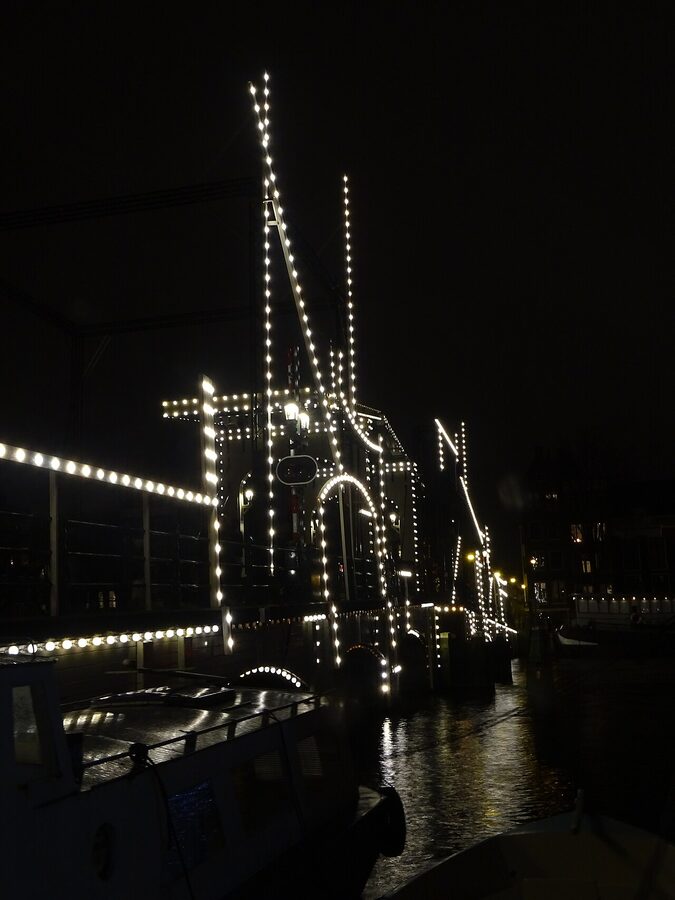
Amsterdam Light Festival loop: late November through mid-January, pair AMAZE with a light festival cruise — both work best after dark and both lean into Amsterdam’s nighttime personality.

Drinks at a nearby bar: Bar Oldenhof (gin, classy) or Café Schiller (historic Rembrandtplein) are both 5 minutes away.
What’s Different in 2026
AMAZE rotates installations every 6-12 months. At time of writing, the main installations emphasise motion-reactive projections — rooms changing as you walk through them rather than cycling on a timer. If you’ve been before and thought about a return, current reviews suggest the new rooms are stronger than the 2024 edition.
Seasonal specials appear around key holidays — Amsterdam Light Festival season (late November through January) usually means partial crossover with festival curators.
Who Leaves Happy, Who Leaves Puzzled
Leaves happy: electronic music fans, visual artists and designers, teenagers on family trips, anyone doing their second or third Amsterdam visit, Dutch locals on rainy weekends.
Leaves puzzled: people expecting narrative or education, anyone who found Moco Museum too much already, parents of children under 6, tourists on Day 1 still recovering from travel.
Genuine conversion case: “dragged along by my girlfriend, expected to hate it, spent an hour in the projection hall.” More common than cynics expect.
Other Immersive Experiences in Amsterdam
If you love one, you’ll likely love the others. Rough order of “most contemplative” to “most playful”:
- Fabrique des Lumières — classical art projected at scale. Our Fabrique guide.
- AMAZE — abstract audiovisual, the focus of this guide.
- Moco Museum — contemporary art with some immersive rooms. Our Moco guide.
- WONDR — playful, photo-driven. Comparison above.
- Upside Down Amsterdam — pure selfie museum. Our Upside Down guide.
On a 4-day Amsterdam trip wanting 2 of these, pair AMAZE with Fabrique — the contrast between abstract and classical projection is the most satisfying.
Common Mistakes
Rushing through. Rooms reward sitting still. Projections loop in 6-12 minute cycles; walking through in 2 minutes misses most of each cycle.
Wearing all-white. Projections land on your clothes, you become part of the installation. Unless that’s intentional, wear darker.
Leaving kids unattended. Kids love motion-reactive rooms and may linger. Agree a meet-at-exit before entry.
Going right after lunch. Heavy food plus dark rooms plus soundscapes equals sleepy. Go hungry or caffeinated.
Over-relying on phone photos. You’ll spend 40% of your visit looking at a screen. Put the phone away for at least half the rooms.
Accessibility and Sensory Warnings
AMAZE uses strobe lighting in 2-3 rooms. Warnings at entry; photosensitive visitors should be cautious. Staff can warn about specific rooms if you ask at reception.
Noise levels in the main projection hall hit around 85dB for short peaks. Earplugs available at reception.
Visually impaired visitors: most rooms have strong audio components that let you navigate by sound. The main projection hall is the most vision-reliant.
Pairing With the Rest of Your Amsterdam Day
AMAZE works best as evening anchor. Suggested day:
- Morning: Rijksmuseum or Van Gogh Museum
- Lunch: Nine Streets, 15 min walk
- Afternoon: Anne Frank House or a canal cruise
- 5-6pm: drinks at Café Schiller on Rembrandtplein
- 7pm: AMAZE slot
- 9pm: dinner on one of the Amstelstraat restaurants
The pattern gives you high and low culture in one day — and AMAZE lands best after you’ve done classical art, because the contrast makes both more interesting.
The Short Version
Book the €22 online ticket for a 10am or 7pm slot, dress in darker clothing, go with an open mind. Expect 75-90 minutes of abstract audiovisual art, not narrative or education. If you hate dim rooms and electronic music, choose Fabrique des Lumières. If you’re bringing kids under 7, choose WONDR.
On a 4-day Amsterdam trip this fits in an evening slot. On a weekend trip, a fair substitute for a night out. For first-time visitors who’ve never heard of it, it can be a surprisingly memorable detour.
Affiliate disclosure: Some links in this article are affiliate links. If you book through them we may earn a small commission at no cost to you. All recommendations are based on my own visit.