
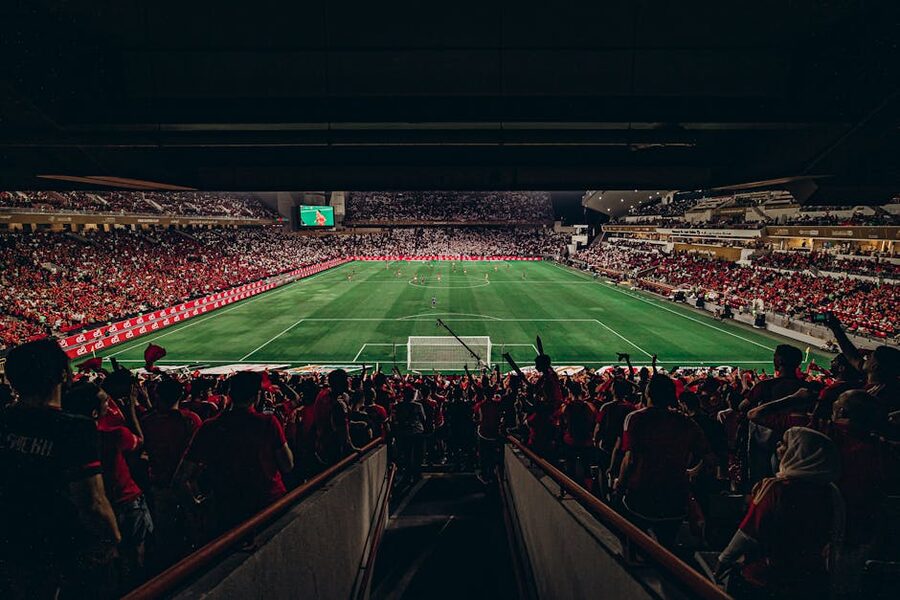
A live eagle flies around Benfica’s stadium before every home match. That’s not a metaphor — a trained bird gets released from the upper tier and circles the pitch while 64,000 Red Eagles fans roar it on. On a non-match day you can still walk the stadium floor for €31, just without the bird or the noise.
The Benfica tour runs 90 minutes and covers the club museum, the pitch edge, the dressing rooms, and the royal box. FC Porto’s equivalent at Estádio do Dragão is €20, shorter, and also worth doing if you’re visiting both cities. Here’s how both tours work, which to pick, and how to stretch €31 across a proper Portuguese football day.
In a Hurry? Three Stadium Tour Options
- Benfica: Luz Stadium Tour + SL Benfica Museum — from €31. 90 minutes, museum + stadium, includes a sit in the royal box.
- FC Porto: FC Porto Museum & Tour — from €20. Similar experience at the Estádio do Dragão in Porto. Cheaper.
- With scarf souvenir: Benfica Luz Stadium Tour with Scarf — from €25. Shorter version, no museum, but with a free Benfica scarf.
- In a Hurry? Three Stadium Tour Options
- SL Benfica — the Bigger Club
- The Three Stadium Tour Options
- 1. Luz Stadium Tour + SL Benfica Museum — from €31
- 2. FC Porto Museum & Tour — from €20
- 3. Benfica Luz Stadium Tour with Scarf — from €25
- What the Benfica Tour Covers
- What’s Off-Limits
- Benfica vs FC Porto — Which Is Better?
- Matchday vs Non-Matchday
- Getting Match Tickets
- Getting to the Estádio da Luz
- Estádio do Dragão (FC Porto) Getting There
- When to Book
- Who the Tour Works For
- Practical Questions
- Eusébio — Why He Matters
- Pairing With a Lisbon Day
- Food Near the Stadium
- The Benfica Eagle
- Comparing Portuguese Stadium Tourism
- Comparing to European Football Tourism
- The Short Version
- Why Portuguese Football Is Special
- Matchday Fan Experience Tips
- Transport Strategy Around Matchday
- Benfica’s International Fan Base
- Sporting CP and the Lisbon Derby
- Souvenirs and Merchandise
SL Benfica — the Bigger Club
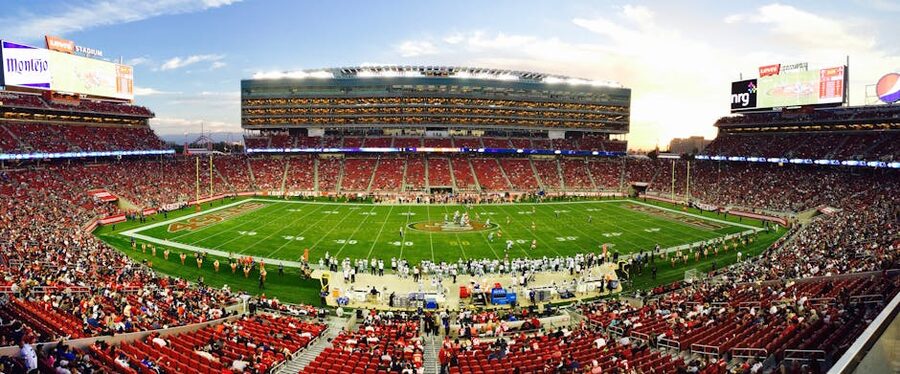
Sport Lisboa e Benfica was founded in 1904 by a group of students. They’re Portugal’s most-supported club with roughly 14 million fans worldwide. Club colours: red and white. Nickname: The Eagles (As Águias) or The Red Eagles (As Águias Vermelhas). A live eagle actually flies around the stadium before home matches.
38 Portuguese league titles (as of 2025). Two European Cup wins (1961, 1962). Eusébio — one of the top 10 footballers ever — played his entire prime here (1960-1975). His statue stands at the Estádio da Luz entrance.
The rivalry with FC Porto (O Clássico) and Sporting Lisbon (The Lisbon Derby) defines Portuguese football. If you can get a ticket to either, you’re watching one of Europe’s best rivalries.
The Three Stadium Tour Options
1. Luz Stadium Tour + SL Benfica Museum — from €31
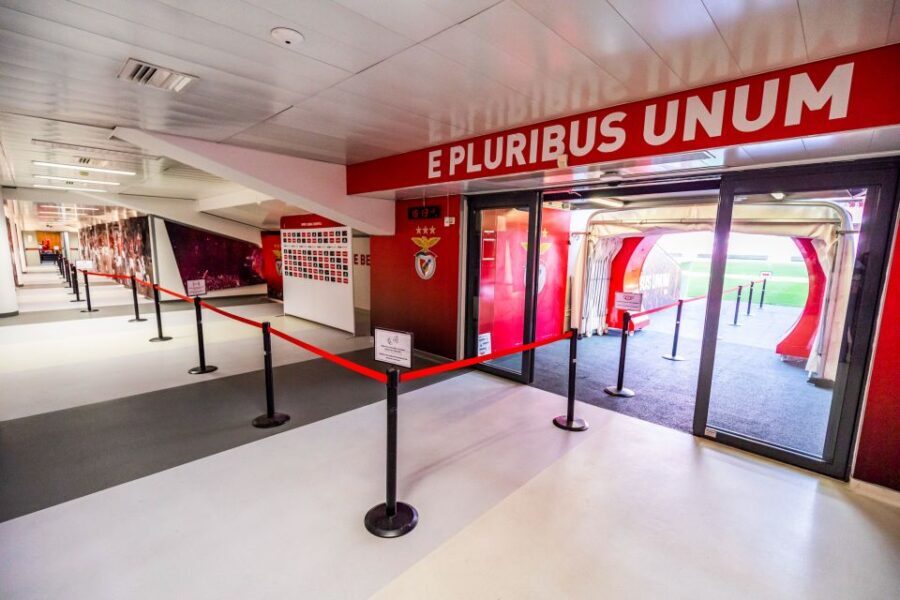
The complete Benfica experience. Starts with the Benfica Museum (four floors of club history, trophies, Eusébio memorabilia), then the stadium tour with entry to the dressing rooms, press conference room, VIP box, and pitch-side viewing. 90 minutes total. Our full review has the route and what’s off-limits.
2. FC Porto Museum & Tour — from €20
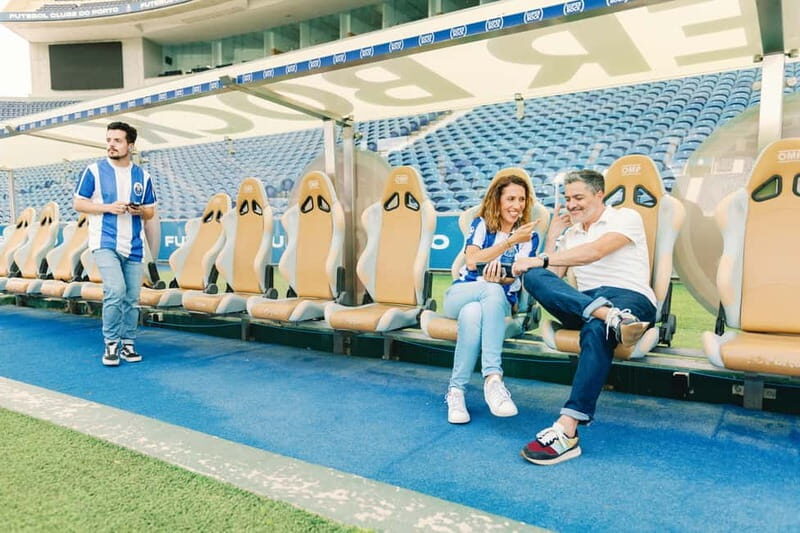
FC Porto’s equivalent in Porto. Porto has the more architecturally impressive stadium (2003, designed by Manuel Salgado) and an excellent museum covering their 2004 Champions League win under José Mourinho. €20 is the best-value football tourism in Portugal. Our review compares the two clubs’ offerings.
3. Benfica Luz Stadium Tour with Scarf — from €25
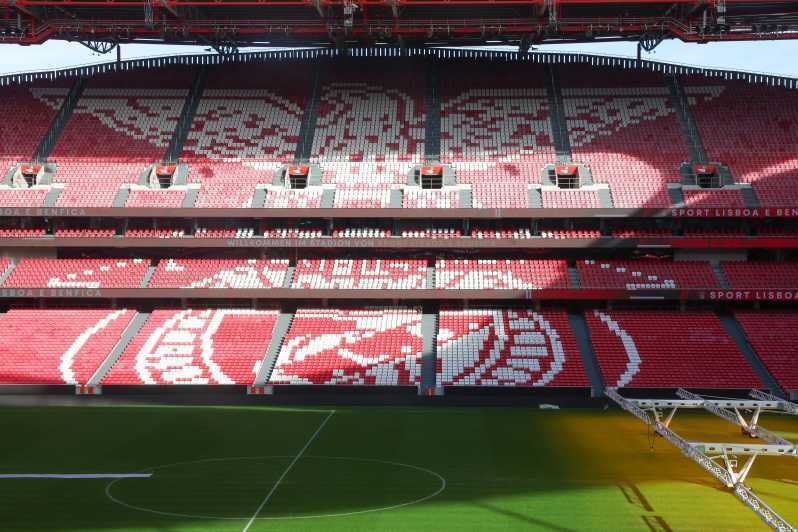
Stadium-only option. You skip the museum but get a branded Benfica scarf to take home. €25. Good if you’re specifically a scarf collector or budget-constrained. Our review has the scarf colour options and dressing-room access details.
What the Benfica Tour Covers
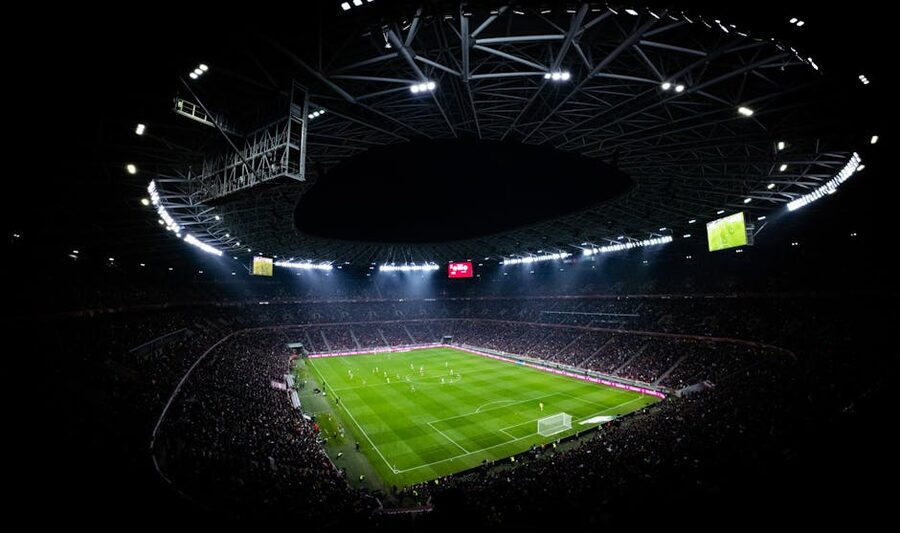
Museum (45 min): 4 floors. Ground floor: club origins and early era (1904-1950). First floor: Eusébio era (1960-1975), the two European Cup trophies (1961 and 1962). Second floor: modern era (1990-present), international trophies. Top floor: interactive kids’ zone.
Stadium tour (45 min): Press conference room, home dressing room, VIP box with views from the halfway line, pitch-side standing area. The tour guides are typically bilingual English/Portuguese.
Photo spots: at the dressing room with player lockers, in the pitch-side tunnel (this is the “emerging from the tunnel” photo), and at the VIP box.
What’s Off-Limits
You don’t get on the pitch itself. You don’t enter the away dressing room. You don’t go into specific VIP areas reserved for sponsors. These restrictions are standard.
Benfica vs FC Porto — Which Is Better?
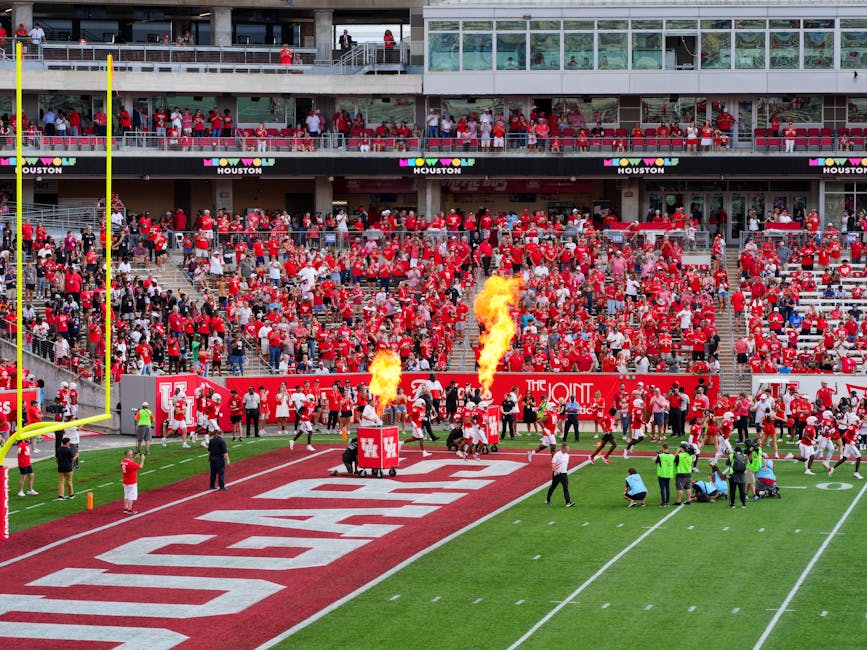
If you can only do one stadium tour in Portugal:
Pick Benfica (Lisbon) if: you’re already in Lisbon, bigger is more your speed, Benfica is your team, or you want the history-heavy museum.
Pick FC Porto (Porto) if: you’re already in Porto, better value matters, you prefer modernist architecture, or you care about the 2004 Champions League era and Mourinho.
If you’re doing both cities on your Portugal trip, do both stadium tours. Together they give you a proper grounding in Portuguese football culture.
Matchday vs Non-Matchday
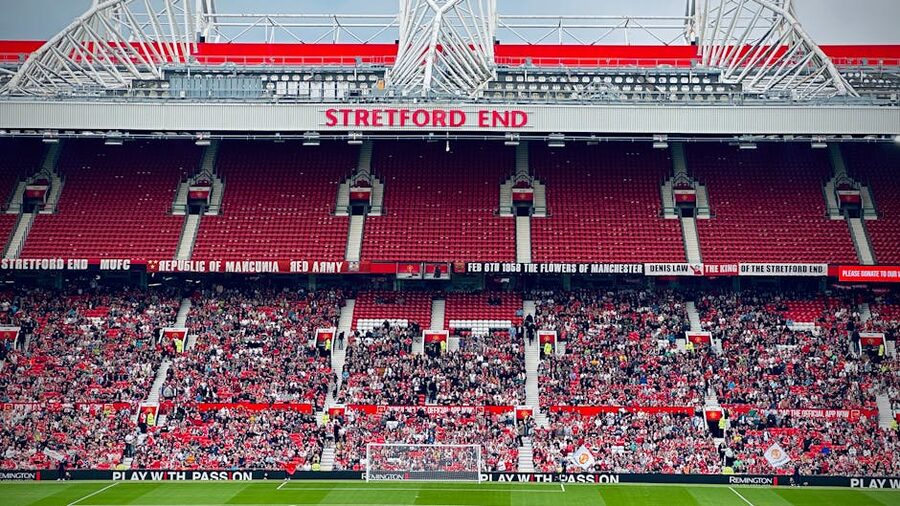
Tours run on non-match days only. If Benfica is playing at home, the tour that day is cancelled and rescheduled. Check the match fixture list when booking.
For the full experience, book both: stadium tour one day, match ticket another. Matchday tickets start at €25 and go up to €400+ for prime seats against Porto/Sporting.
Getting Match Tickets
Difficult for tourists. Benfica members get priority; remaining seats release to the general public 10-14 days before kickoff. Prime fixtures (vs Porto, vs Sporting, Champions League) sell out immediately.
The secondary market (Viagogo, etc.) works but prices 2-3x face value for top matches. Europa League or mid-season home games are easier.
Getting to the Estádio da Luz
Metro Blue Line to Colégio Militar / Luz. 5 minutes from central Lisbon to the stadium. On match days, the metro runs additional trains every 3-5 minutes.
Driving: paid parking at the stadium, €8-12 for 3 hours. Not recommended due to matchday closures.
The stadium is in the Luz neighbourhood of northwest Lisbon, about 10km from the historic centre. Allow 25 minutes from Rossio.
Estádio do Dragão (FC Porto) Getting There
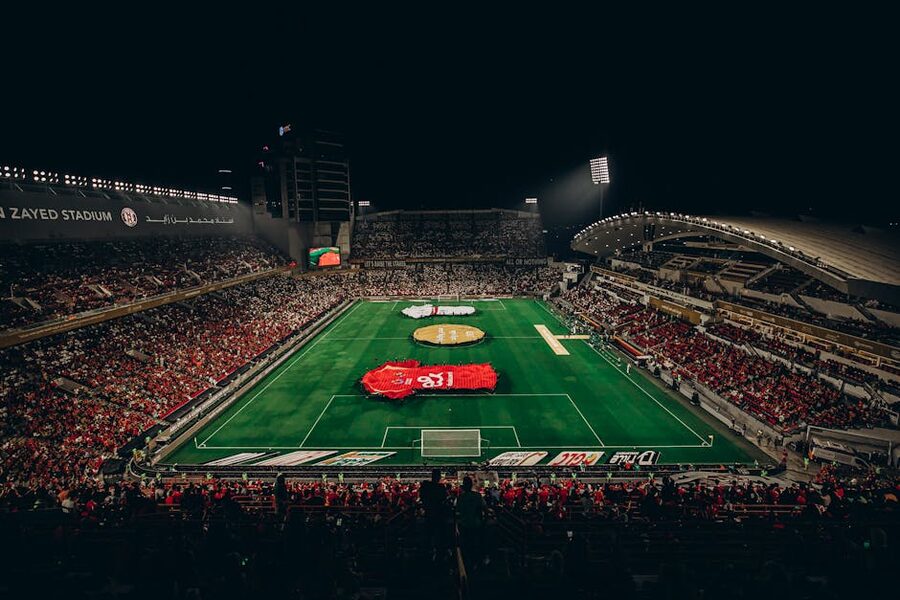
Porto’s Estádio do Dragão is similar in layout to Benfica’s Luz but slightly smaller (50,033 capacity) and newer (2003). It’s on the eastern edge of Porto, directly accessible via metro Line D (purple line) to Estádio do Dragão stop — right at the venue.
From central Porto (São Bento station): 15 minutes by metro, €3.
When to Book
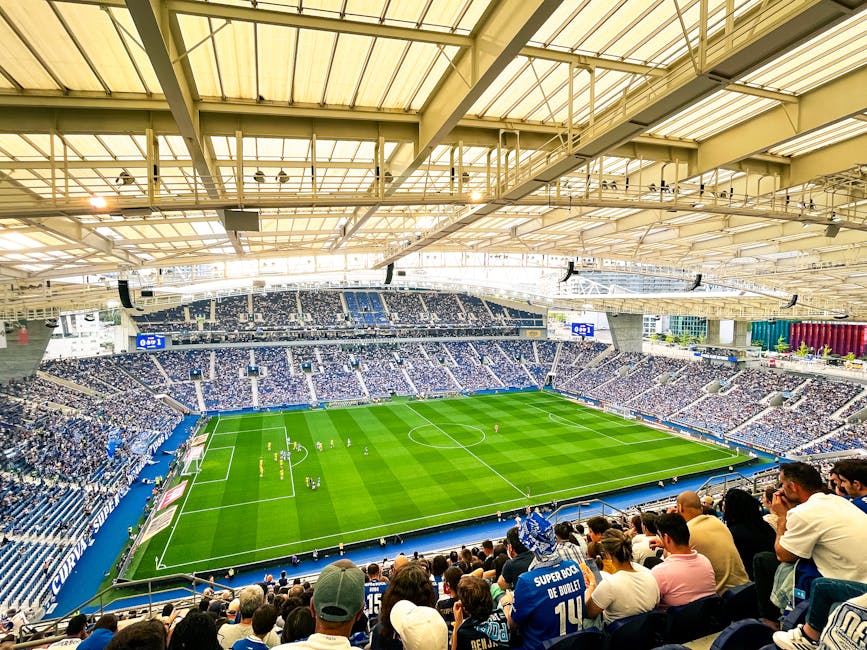
Stadium tours run daily except match days and major closure days. Standard hours: 10am-6pm. Check the Benfica fixture calendar before booking.
Same-day walk-up usually works on weekdays. Weekends (especially Saturday afternoons) book out 1-3 days ahead.
For peak interest: August (pre-season) and May (end of season) are the busiest times due to Portuguese fans returning for summer.
Who the Tour Works For
Works for:
- Football fans (any club)
- Kids 8+ (especially if they play football)
- History buffs (the Eusébio exhibition is properly compelling)
- Architecture fans (modern stadium design)
Skip if:
- You don’t care about football at all
- You’re in Lisbon only 1 day (spend it on the Alfama/Belém core)
- You’re specifically a Sporting or other-club fan (there’s no Sporting stadium tour — their stadium is less notable)
Practical Questions
Are kids welcome? Yes. Under 6 usually free. Interactive kids’ section on the museum’s top floor.
Is it wheelchair accessible? Yes fully. Lifts throughout both museum and stadium.
Photography? Allowed everywhere. No flash in some exhibition rooms.
Guided tour language? English and Portuguese on rotating schedules. Book the English slot specifically.
How long really? 90 minutes minimum; some fans spend 2+ hours in the museum alone.
Eusébio — Why He Matters
Eusébio da Silva Ferreira (1942-2014) was born in Mozambique, signed for Benfica at 18, and became the best footballer of the 1960s. He scored 733 goals in 745 matches. He won 11 Portuguese league titles and two European Cups. He came third in the 1966 World Cup top scorers.
In Portugal he is comparable to Pelé or Maradona in their home countries — a national icon beyond football. The museum’s Eusébio section includes his 1965 Ballon d’Or trophy, his 1966 boots, and a life-size statue. Spend time here. His story is why Benfica matters.
Eusébio died in 2014. His coffin lay in state at the Estádio da Luz for three days. 40,000 people filed past. Portugal declared national mourning.
Pairing With a Lisbon Day
The Luz stadium tour is a 3-hour commitment (including transit). Pairings:
- Morning: Lisbon Card museum run (Jerónimos + Belém Tower)
- Lunch in central Lisbon
- Afternoon: metro to Luz Stadium, tour (2-3 hours)
- Evening: back to central Lisbon for dinner + sunset boat cruise
Food Near the Stadium
Limited. The area around Luz is residential-commercial. Standard Portuguese fast food (bifanas, pastries) available at a handful of cafes near the metro station. For a proper meal, return to central Lisbon.
There’s a decent stadium-side restaurant called “Restaurante SL Benfica” inside the stadium complex. Pricey (€20-35 per main) but the atmosphere is pure Benfica and there’s a club museum corner.
The Benfica Eagle
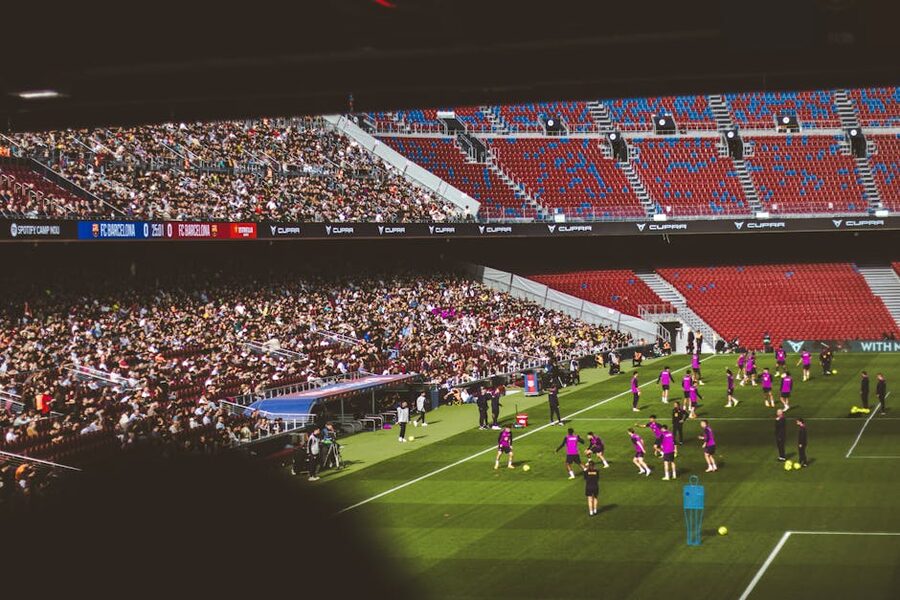
Benfica has used a live eagle as their mascot since 1993. Currently “Vitória” (she’s the second-generation bird; Vitória the First retired in 2015). The eagle flies one lap of the stadium before every home match, releases from the south stand, circles above the pitch, and returns to her handler. It’s a proper spectacle.
The eagle isn’t at the museum most days — she lives at a bird sanctuary 10km away. But matchday you can see her, and the stadium tour includes photos and video of her flights.
Comparing Portuguese Stadium Tourism
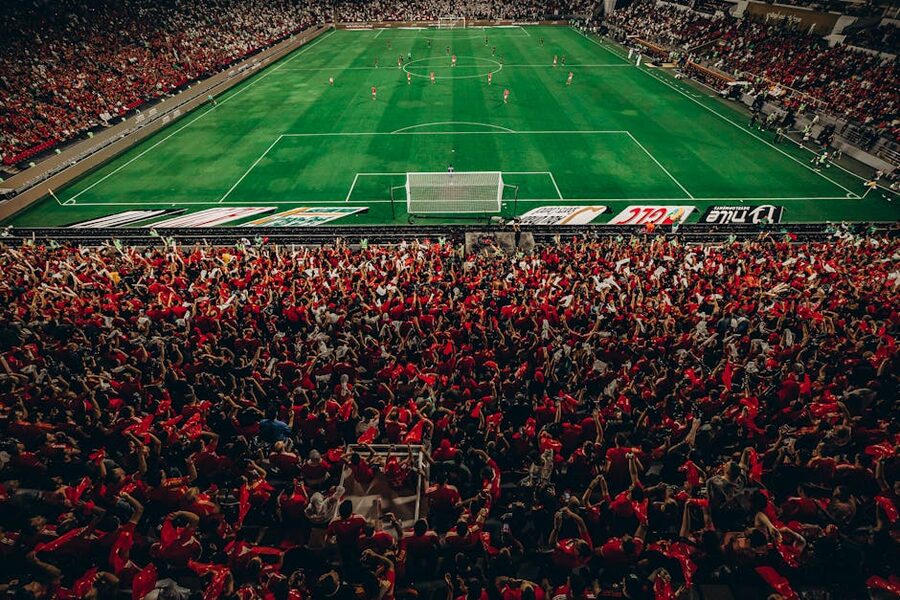
Portugal has three major football tour destinations:
Benfica (Lisbon): Luz Stadium, 64k capacity, €31 tour. Most historical.
FC Porto (Porto): Estádio do Dragão, 50k capacity, €20 tour. Best value.
Sporting (Lisbon): Estádio José Alvalade, 50k capacity. No standard tour product; only bookable for groups of 10+ with advance notice.
If you’re football-touristing Portugal: Benfica + FC Porto is the combo. Different cities, different vibes, both worth it.
Comparing to European Football Tourism
The Camp Nou (Barcelona) tour is €30 with museum. Santiago Bernabéu (Real Madrid) tour is €25. Anfield (Liverpool) is £25. Old Trafford (Manchester United) is £28.
Benfica at €31 is mid-pack pricing for European top-club tours. The museum quality is comparable. The stadium view is less iconic but the Eusébio story is unique.
The Short Version
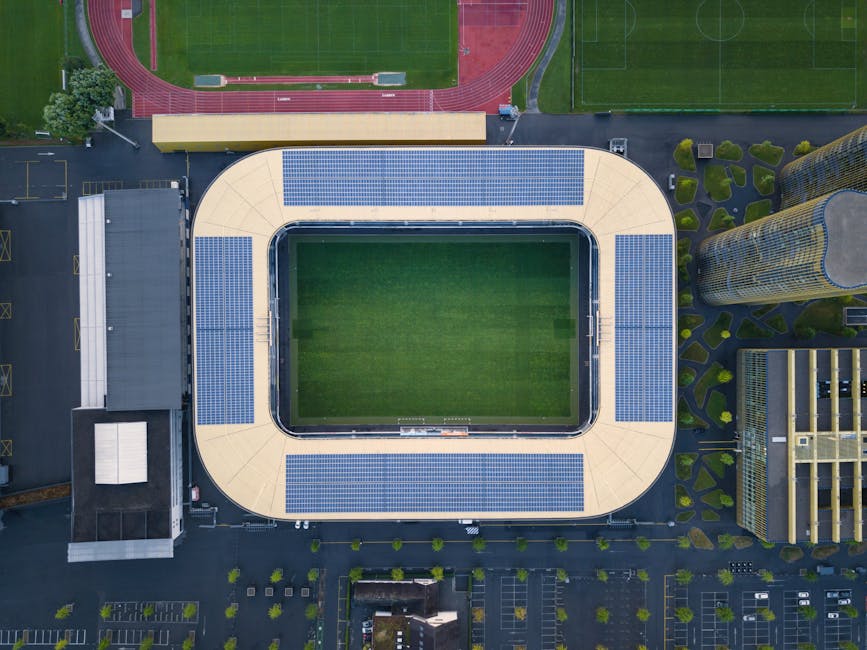
Book the €31 Benfica combo (museum + tour), go on a non-match day, give yourself 2-3 hours. Take the metro. Pair with a Lisbon day of sights earlier/later. If you’re also in Porto, add the €20 FC Porto tour — complementary experience at the rival city.

Why Portuguese Football Is Special
Portugal has a disproportionate international football footprint. A country of 10 million has produced Cristiano Ronaldo, Luís Figo, Eusébio, Rui Costa, Pepe, Bruno Fernandes, and many others. The domestic league (Primeira Liga) is rarely Europe’s strongest but routinely the second-best player-development league in the continent.
Benfica’s academy has produced players who’ve won multiple Champions Leagues at Real Madrid, Bayern Munich, and Liverpool. The Luz stadium tour passes by the academy training pitches — the academy is where you’d watch for next-generation stars.
Matchday Fan Experience Tips
If you do manage to get a Benfica match ticket, arrive 90 minutes before kickoff. The pre-match walk from the metro to the stadium is part of the experience — red and white scarves everywhere, street vendors selling Portuguese beer and grilled sausages, fans of all ages making the trek together. Security is thorough but efficient; allow 15 minutes to pass through the gates.
The home supporters’ end is the north stand — the “No Name Boys” section, Benfica’s organised ultras group. Tickets there are difficult to buy as a tourist. Safer bet: west stand, which gives you the pitch view without the chant intensity.
Transport Strategy Around Matchday
The metro gets overcrowded in the 90 minutes before kickoff. If you’re going to a match, either take the first wave (2 hours before) or walk from Colégio Militar metro station (10 minutes, avoids the last-minute crush). Post-match, expect 45 minutes to board a metro train — 64,000 people leaving simultaneously is brutal. Many fans walk to secondary metro stations a kilometre away to bypass the queue.
Benfica’s International Fan Base
Benfica claims 14 million supporters worldwide, concentrated in Portugal (obviously), Brazil, Angola, Mozambique, Cape Verde, and Portuguese diaspora communities in France, Luxembourg, and Canada. The Luz stadium tour sees visitors from all of these. English-language slots fill up with UK and US tourists; Portuguese slots fill with Brazilians and Angolans. Book ahead for your preferred language.
Sporting CP and the Lisbon Derby
Benfica’s arch-rival in Lisbon is Sporting Clube de Portugal, whose green-and-white striped jersey you’ll see around town almost as often as Benfica red. Sporting play at Estádio José Alvalade, 2km from the Luz. The derby between the two (O Dérbi) is one of Europe’s most intense city rivalries. If you’re in Lisbon when a derby is played, the city temperature rises noticeably — restaurants play the match, bars fill, and losing fans hide for a week.
Sporting doesn’t run a standard stadium tour product the way Benfica does. Group tours (10+) can be arranged via the club’s website but it’s not a walk-up experience. For individual tourism, Benfica is the only Lisbon club offering a proper stadium tour.
Souvenirs and Merchandise
Both clubs run extensive stadium shops. Benfica’s official store sits next to the museum entrance. You can buy current-season jerseys (€90), retro Eusébio shirts (€70), scarves (€18-25), and every imaginable piece of club-branded merchandise. Fan notes: the kids’ kits are half price for under-12s, and the club periodically does 2-for-1 weekends on older-season jerseys. Ask at the till.
FC Porto’s stadium shop is smaller but has the same range. Porto-branded wine (actual port with FC Porto labels) is a unique souvenir from the Dragão shop. For gifts back home, a branded scarf is the most reliable option — compact to pack, durable, and recognisable to any football fan. Kids’ scarves cost half as much and make great gifts for young football-mad friends back home.
Affiliate disclosure: Some links in this article are affiliate links. If you book through them we may earn a small commission at no cost to you. All recommendations are based on my own visits.