
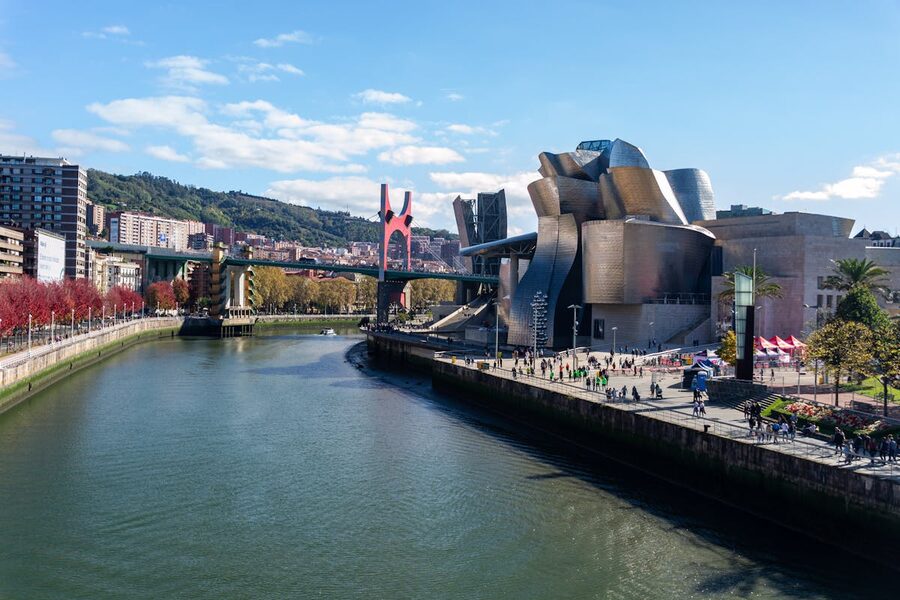
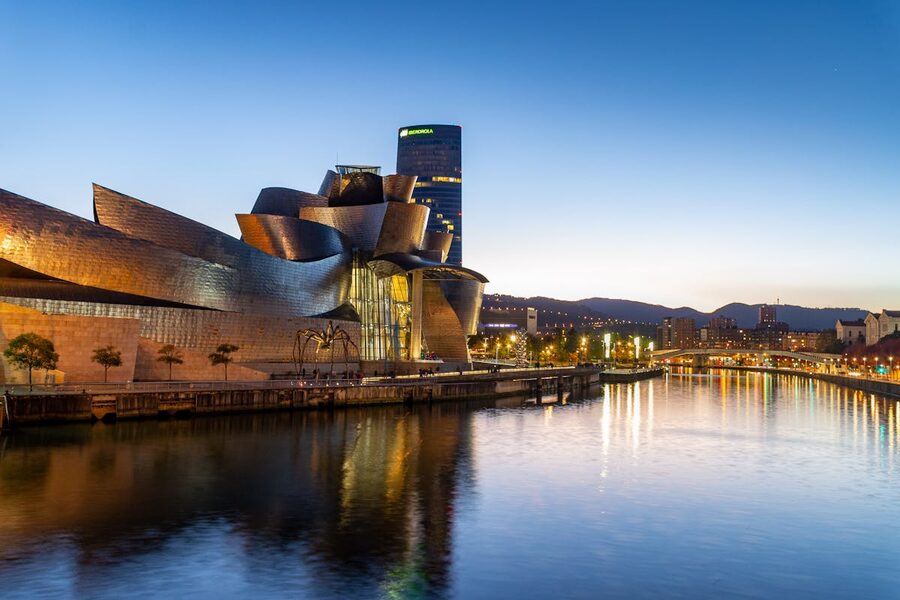
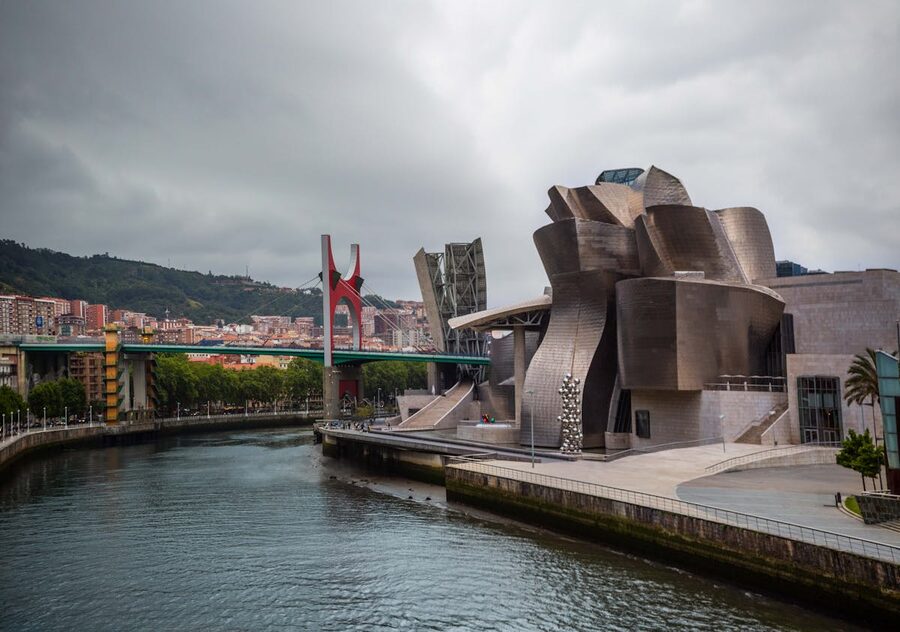
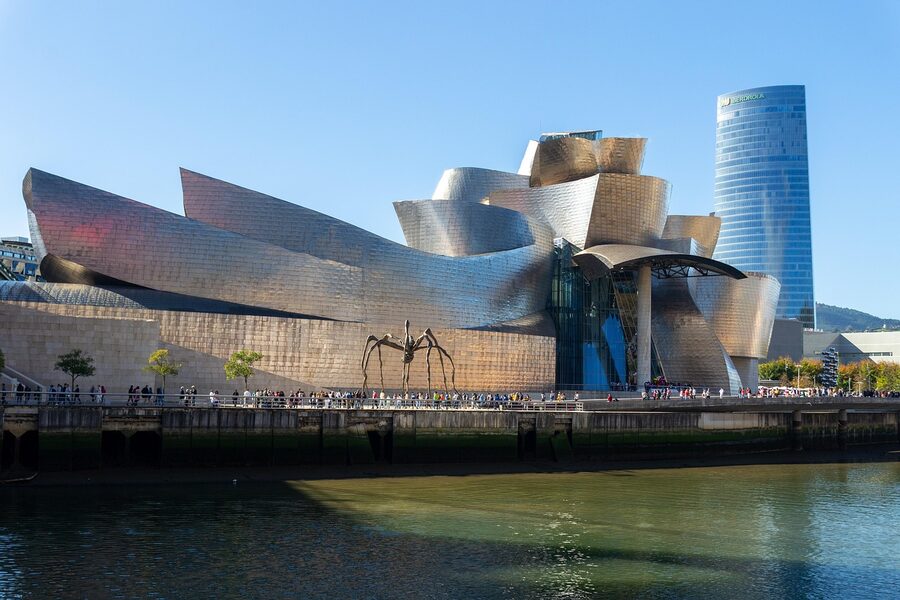
I didn’t expect much from a river cruise in Bilbao. Most city boat tours feel like floating PowerPoint presentations — someone points at buildings and reads dates off a script. But the Nervion estuary rewrites those expectations. Within the first ten minutes, the boat slid past Frank Gehry’s Guggenheim Museum, and the titanium panels caught the afternoon light in a way that made the whole thing look alive. The museum was designed to be seen from the water. I learned that on the boat, and once you know it, you can’t unsee it.
- In a Hurry? Best Bilbao Boat Tours
- From Industrial Wreck to Cultural Powerhouse
- How the Boat Tours Work
- The 2 Best Bilbao Boat Tours
- 1. Bilbao: 1 or 2-Hour Sightseeing Boat Tour —
- 2. Bilbao Estuary and Abra Bay Boat Tour —
- What You’ll See from the Water
- Best Time for the Boat Tour
- The Bizkaia Bridge: A Side Trip Worth Making
- The Nervion’s Architecture: A Floating Gallery
- Practical Tips for the Bilbao Boat Tour
- Bilbao Beyond the River: The Wider Story
- Where to Go After the Boat Tour
In a Hurry? Best Bilbao Boat Tours
Best overall: Bilbao: 1 or 2-Hour Sightseeing Boat Tour — $16/person. Choose between one or two hours. Passes the Guggenheim, historic bridges, and the Casco Viejo waterfront. By far the most popular boat tour in Bilbao.
Best for the full estuary: Bilbao Estuary and Abra Bay Boat Tour — $22/person. Nearly 3 hours on the water, going all the way out to the Bizkaia Bridge and Abra Bay. Worth the extra time if you want to see Bilbao’s industrial transformation up close.
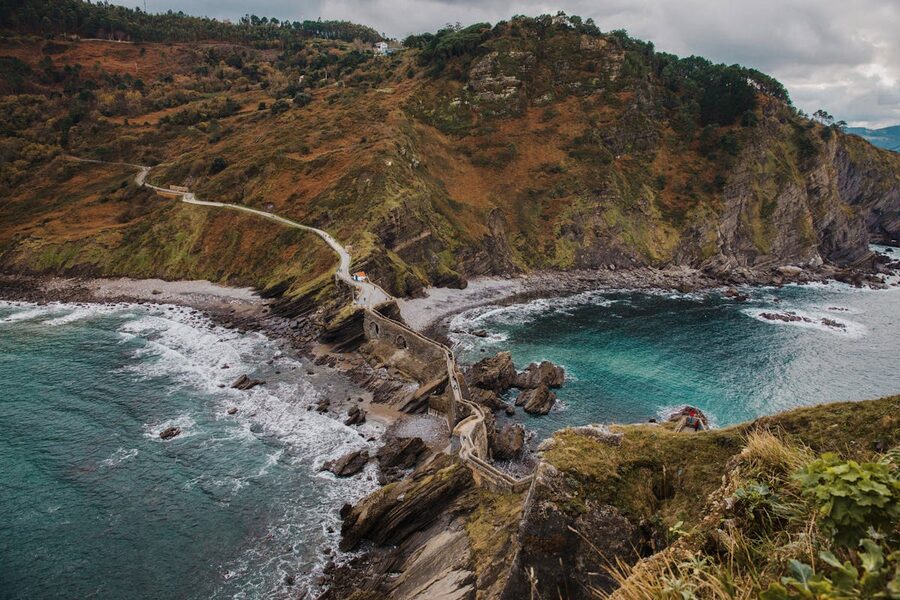
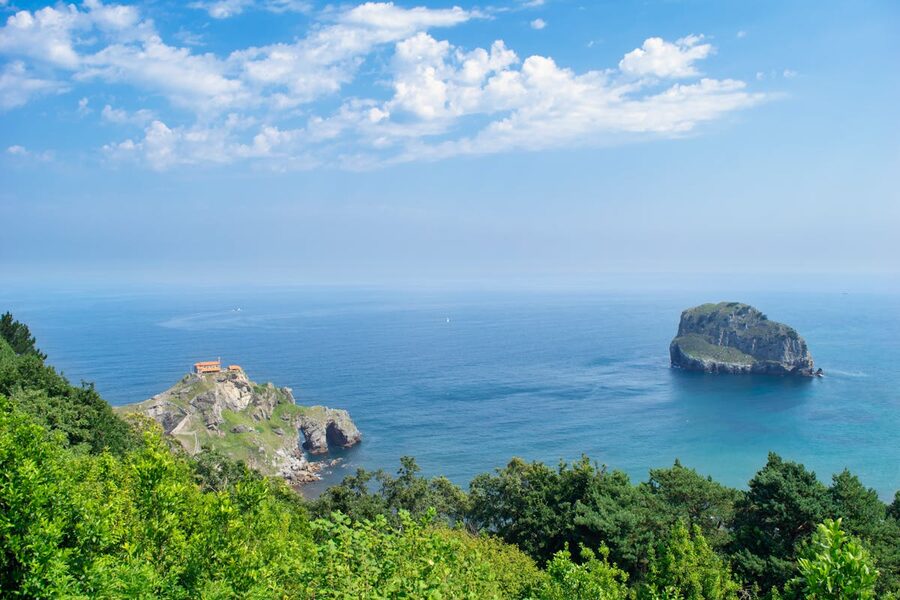
Pair it with: Gaztelugatxe day trip from Bilbao — the dramatic island hermitage from Game of Thrones is an hour from the city and makes a perfect half-day companion to a morning boat ride.
From Industrial Wreck to Cultural Powerhouse
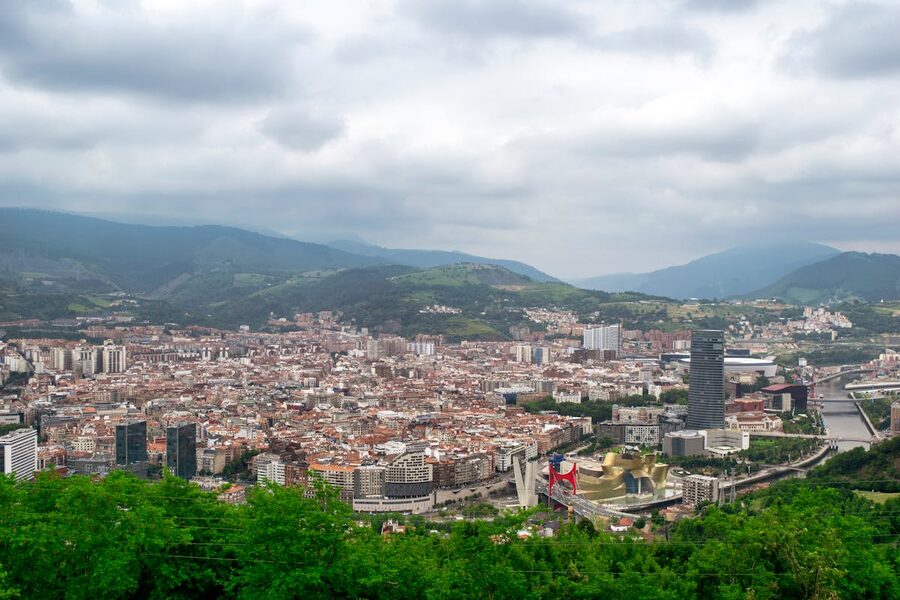
The story of Bilbao’s river is one of the most dramatic urban turnarounds in Europe. In the 1980s, the Nervion estuary was so polluted that fish had completely disappeared. Industrial shipyards, steel mills, and chemical plants lined both banks, dumping waste directly into the water. The city’s economy was collapsing as its traditional industries died. Unemployment hit 25%. People were leaving.
Then came the Guggenheim. When Frank Gehry’s titanium-clad museum opened in 1997, it didn’t just change Bilbao’s architecture — it rewrote the city’s identity. The building cost $89 million and was controversial before it opened. Locals protested the expense while the Basque economy was struggling. But within a year, the museum had attracted 1.3 million visitors. Hotels filled. Restaurants opened. The abandoned industrial waterfront became the city’s most desirable address.
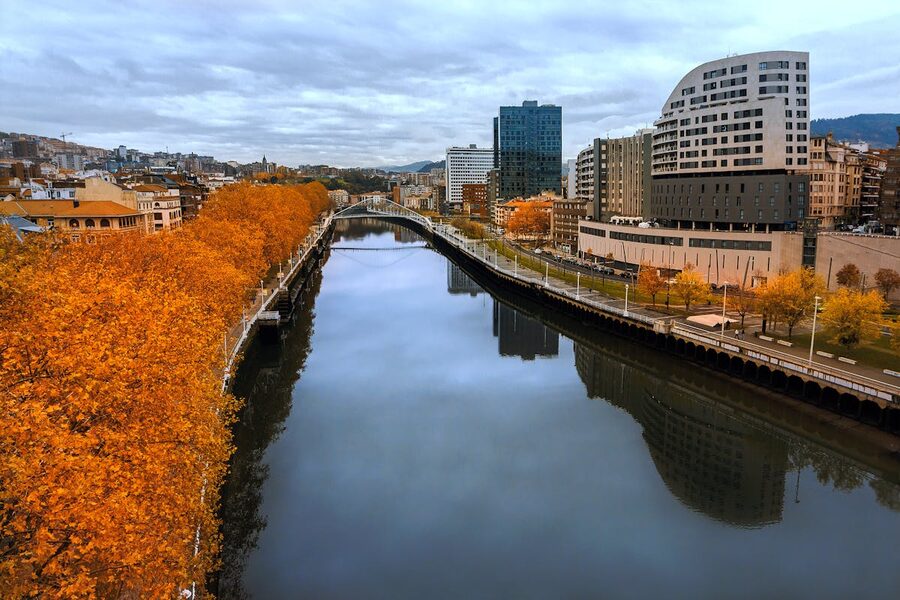
Urban planners call this the “Guggenheim Effect,” and cities worldwide have tried to replicate it (with mixed results). The crucial detail that gets overlooked is the cleanup. Before the museum could work, the city had to spend decades decontaminating the river. The environmental recovery of the Nervion is one of Europe’s most successful urban river restorations. On the boat tour, you’re cruising over water that was essentially toxic 40 years ago. The fish are back.
How the Boat Tours Work
Both tours depart from the Pio Baroja dock, which sits on the Nervion riverbank near the old town. It’s an easy walk from the Casco Viejo metro station — about 5 minutes. You don’t need to book months ahead; these tours run multiple departures daily, and for the shorter option, you can often just show up and grab the next one. That said, summer weekends do fill up, so booking a day or two ahead gives you a specific time slot.
The boats seat around 80 people and have open-air and covered sections. Audio commentary plays through speakers on the boat (in multiple languages), covering the architecture, history, and urban development along the route. One thing to note: you’ll want your own earphones if the boat uses an audio guide app instead of speakers. A few reviews mention this catching people off guard.
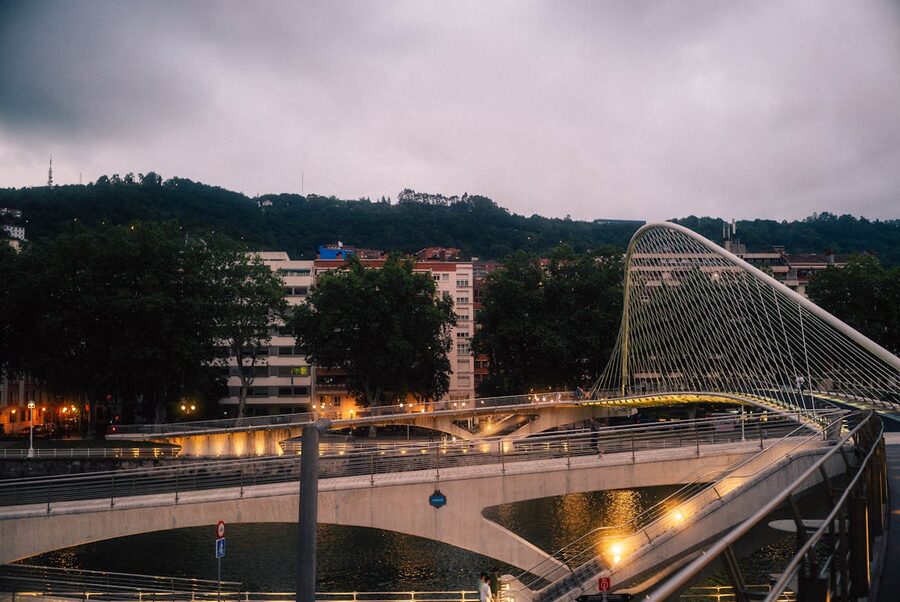
The one-hour tour covers the central stretch of the Nervion: the Guggenheim, the Zubizuri Bridge (Calatrava’s white suspension bridge), the Iberdrola Tower, the old shipyard area, and the Casco Viejo waterfront. The two-hour option extends further downstream toward the mouth of the estuary, passing the Bizkaia Bridge — a UNESCO World Heritage transporter bridge from 1893 that still ferries cars and pedestrians across the river on a hanging gondola.
The 2 Best Bilbao Boat Tours
1. Bilbao: 1 or 2-Hour Sightseeing Boat Tour — $16
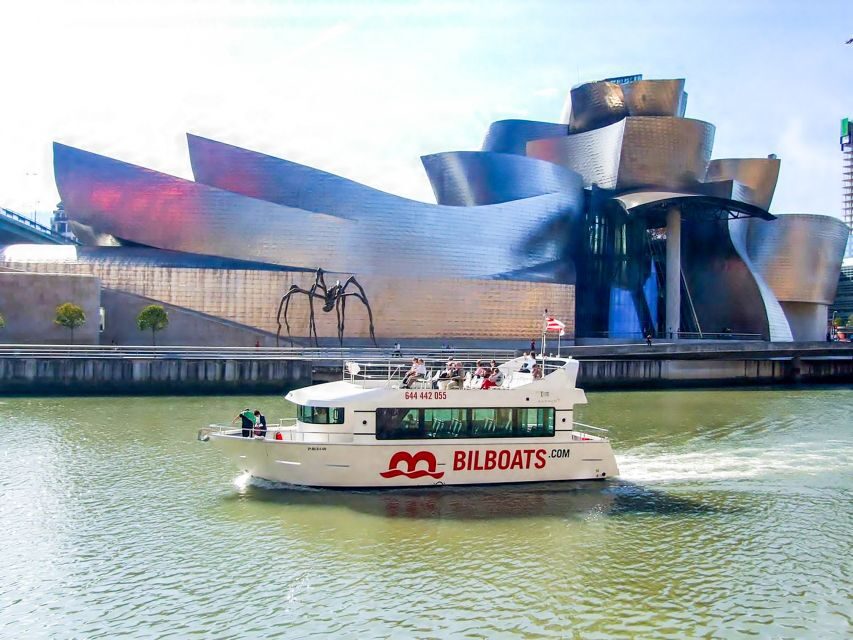
The go-to Bilbao boat experience, and the price is almost absurdly good. Sixteen dollars for a proper river cruise past the Guggenheim, under Calatrava’s bridge, and along the revitalised waterfront. The one-hour version covers the highlights efficiently, while the two-hour extension adds the wider estuary and the Bizkaia Bridge. Our full review covers both options — the one-hour is plenty unless you’re a serious architecture or industrial history enthusiast, in which case the extension is fascinating.
2. Bilbao Estuary and Abra Bay Boat Tour — $22
This is the deep cut — nearly three hours following the Nervion all the way from the city centre out to Abra Bay where the river meets the Cantabrian Sea. You pass everything the shorter tour covers, plus the industrial zones that tell the real story of Bilbao’s transformation, the massive Bizkaia Bridge (a working UNESCO World Heritage site), and the fishing villages at the river’s mouth. It’s the tour that locals recommend over the shorter option, and our review explains why the extra time is worth it. Bring a jacket — it gets breezy on the open water.
What You’ll See from the Water
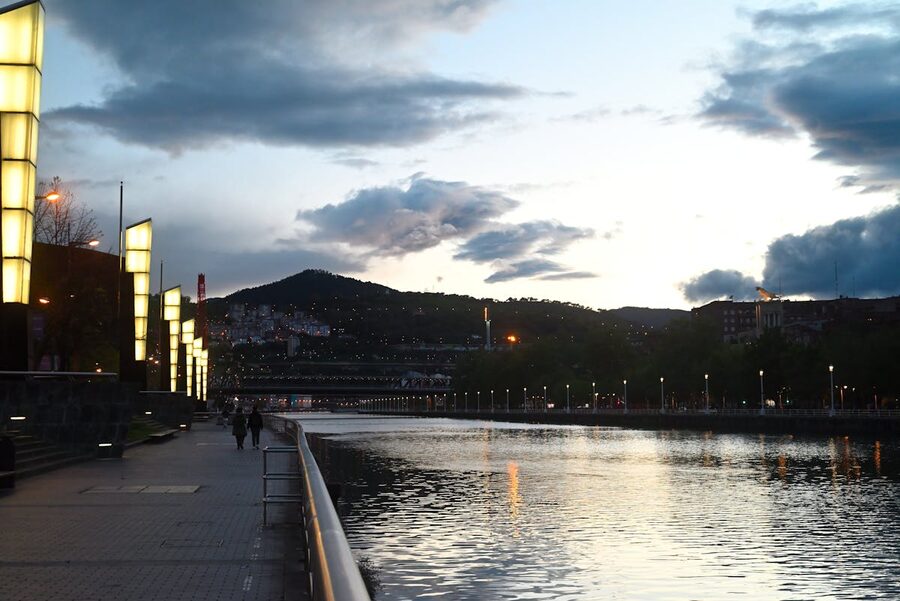
The boat route reads like a timeline of Bilbao’s reinvention. Starting from the Pio Baroja dock, you immediately pass the Casco Viejo — the medieval old town with its narrow streets and the Ribera Market building. Then the river widens and the skyline shifts to modern architecture: the Guggenheim’s flowing titanium forms, the angular Iberdrola Tower (Bilbao’s tallest building), and the white glass curve of the Zubizuri Bridge.
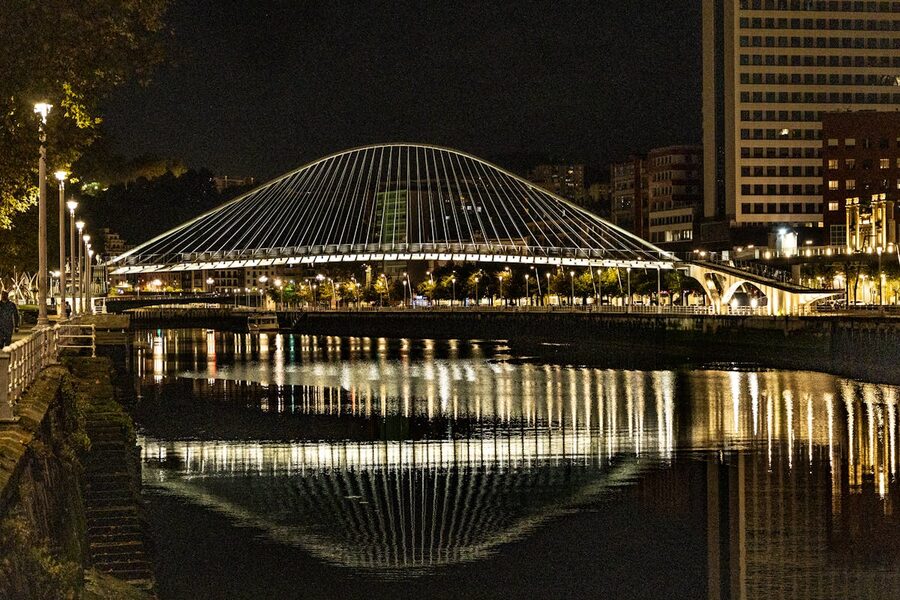
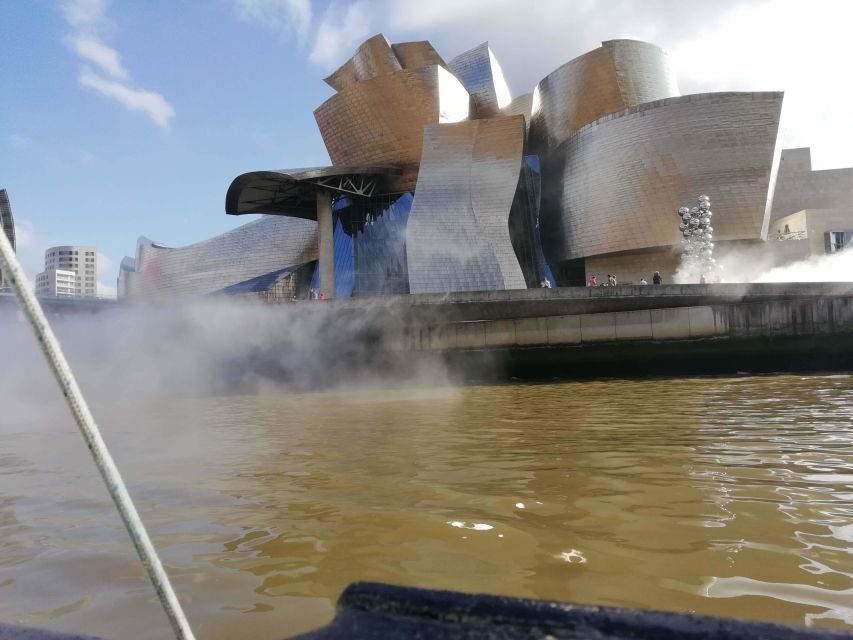
The Guggenheim is the obvious centrepiece. Gehry specifically designed the building to engage with the river — the waterfront facade is longer and more dramatic than the street side, and the museum’s “fish” sculpture (a massive mesh structure by the water) was placed to be seen from passing boats. The audio guide on the tour explains this, and it genuinely changes how you understand the building. Architecture from water level reveals proportions and relationships that get lost when you’re standing on the pavement looking up.
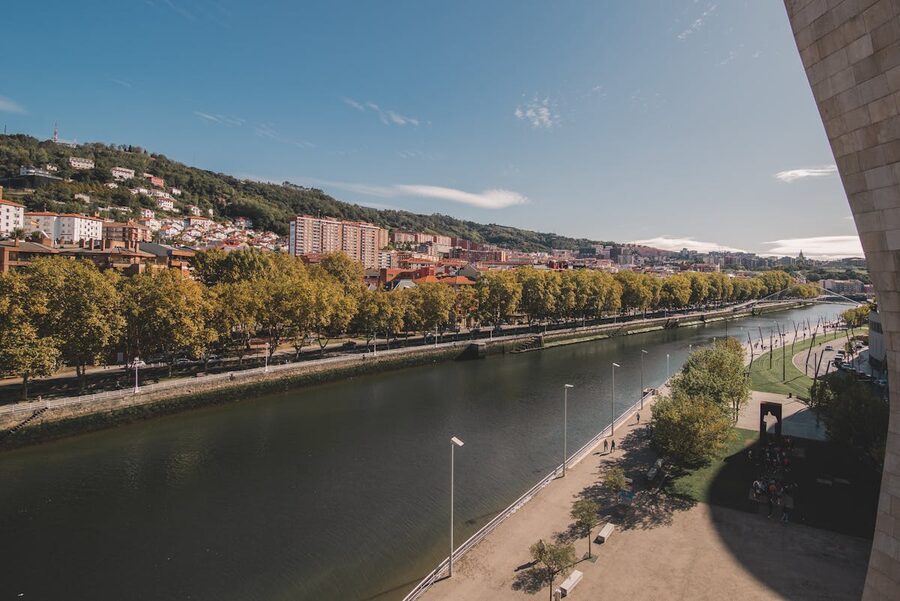
On the longer tour, the industrial section downstream is surprisingly compelling. You pass former shipyards that have been converted into parks and cultural spaces, rusting cranes preserved as industrial monuments, and the massive Bizkaia Bridge spanning the river like something from a steampunk novel. The bridge was built in 1893 to connect two industrial towns across the estuary, and it still operates today — a gondola car hanging from cables ferries vehicles and pedestrians back and forth every few minutes.
Best Time for the Boat Tour
Late afternoon, without question. The Guggenheim faces roughly west, so afternoon sun hits the titanium panels directly and creates those famous reflections that make the building look like it’s made of liquid metal. Morning tours are fine, but the museum sits in shadow for the first half of the day. If you can snag a departure around 4-5 PM, the light is perfect.
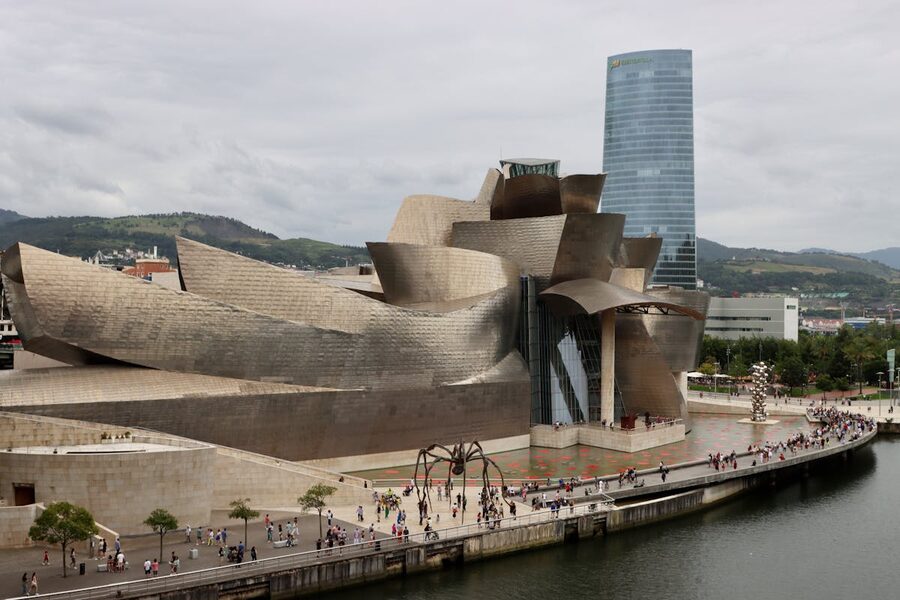
Weather matters more than you’d think. Bilbao gets rain — this is the Basque Country, not the Mediterranean. From October through April, expect rain on roughly half the days. The boats run rain or shine (they have covered sections), but the Guggenheim’s titanium panels look dramatically different under grey skies versus sunshine. Both are worth seeing, honestly, but if you’re specifically after the golden reflections, aim for a dry afternoon.
Summer (June through September) is prime season. July and August are warmest and driest, but also busiest. September might be the sweet spot — warm enough to sit in the open section of the boat, clear enough for good photos, and fewer travelers than the peak months. Tours run year-round, though winter schedules have fewer departures.
The Bizkaia Bridge: A Side Trip Worth Making
If you take the longer estuary tour, you’ll pass directly under the Bizkaia Bridge, and it’s worth knowing what you’re looking at. Built in 1893 by Alberto Palacio (a student of Gustave Eiffel), it was the world’s first transporter bridge — a bridge where a gondola car hangs from cables and moves back and forth, carrying passengers and vehicles across the water without blocking river traffic. It was an engineering marvel for its era and earned UNESCO World Heritage status in 2006.
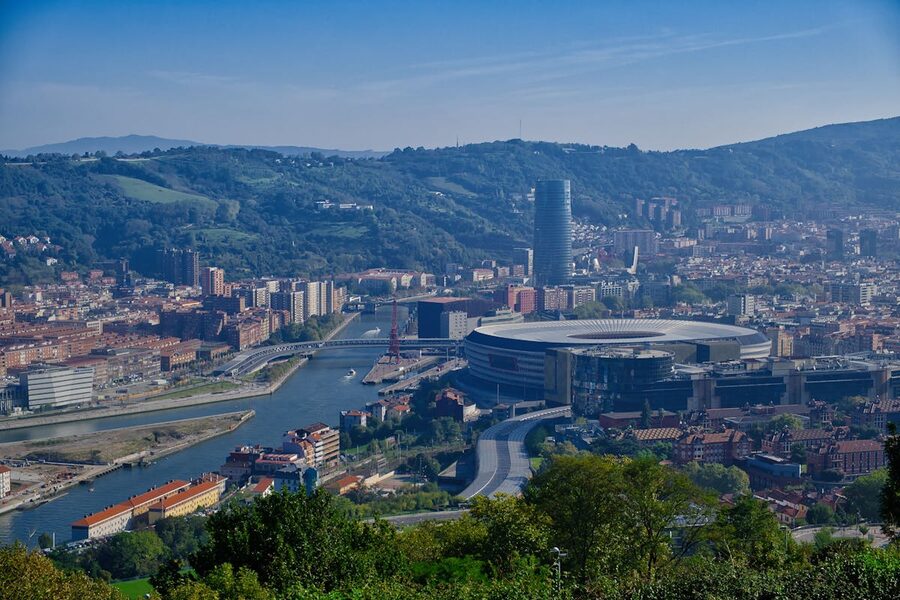
The bridge still works. For about 50 cents, you can ride the gondola across. For a few euros more, you can take the lift to the top walkway, 50 metres above the water, for panoramic views of the estuary and the Cantabrian coastline. If the longer boat tour piques your interest in this part of the estuary, the bridge visit makes a perfect standalone side trip on another day.
The Nervion’s Architecture: A Floating Gallery
What makes the Bilbao boat tour stand apart from generic city cruises is the density of significant architecture along the river. Within a few kilometres, you pass work by three of the world’s most famous architects: Gehry’s Guggenheim, Calatrava’s Zubizuri Bridge, and Cesar Pelli’s Iberdrola Tower. Add in the historic Ribera Market (the largest covered market in Europe when it opened in 1929), the La Salve Bridge with its bright red arch (added by artist Daniel Buren in 2007), and the Art Deco facades of the Ensanche district, and you’ve got one of the most architecturally diverse waterfronts in Europe.
Louise Bourgeois’s giant spider sculpture, Maman, stands outside the Guggenheim and is visible from the boat. The 10-metre-tall bronze spider is one of those things that makes you do a double-take from the water — you expect public art near a museum, but not a spider the size of a small building. Jeff Koons’s Puppy, the flower-covered topiary dog at the museum entrance, is harder to spot from the boat but the audio guide tells you where to look.
The Isozaki Atea — twin residential towers designed by Japanese architect Arata Isozaki — frame the entrance to the Ensanche district from the river. They’re less photographed than the Guggenheim but arguably more interesting from a design perspective: each tower leans slightly outward, as if pulling apart from the other. From the boat, the angle makes the tilt more pronounced than from street level.
Practical Tips for the Bilbao Boat Tour
Where to sit: The right side of the boat (starboard) gives you the best Guggenheim views on the way out. The left side (port) is better on the return. If you can, sit in the open-air section for unobstructed photos — the covered section has windows that add glare.
Bring earphones: Some boats use an audio guide app rather than overhead speakers. Check the booking confirmation for details. If you forget, the visual experience is still excellent, but you’ll miss the context about what you’re passing.
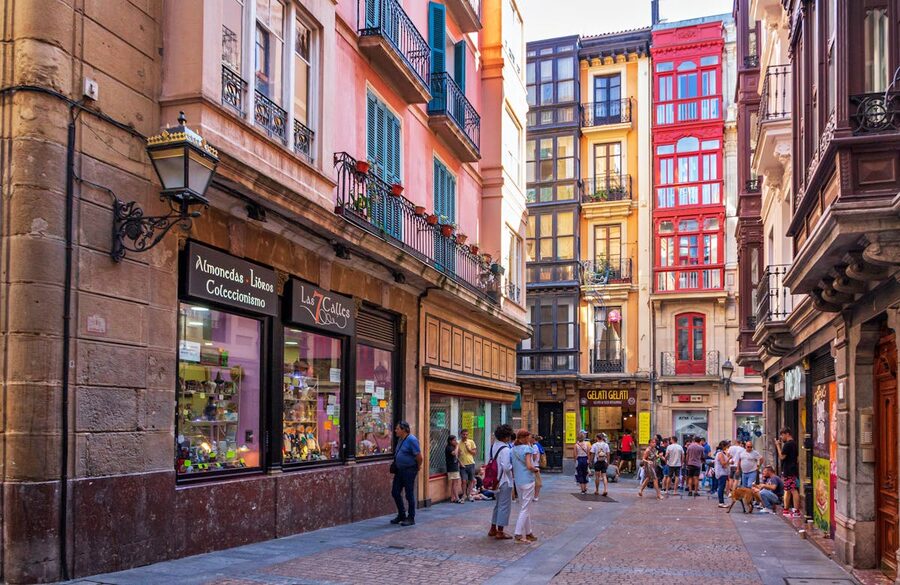
Combine with Casco Viejo: The departure point is right next to the old town, so budget time before or after the boat for the pintxos bars in the Casco Viejo. The seven-street area (Siete Calles) is packed with Basque bars serving pintxos — small bites on toothpicks lined up along the counter. Point at what looks good, order a txakoli (local white wine), and you’ve got the best cheap lunch in northern Spain.
Cost comparison: At $16-22 per person, the Bilbao boat tours are some of the cheapest sightseeing tours in any major European city. Compare that to river cruises in Paris ($18-25), London ($15-25), or Amsterdam ($15-20). And Bilbao’s waterfront arguably has more interesting architecture per kilometre than any of those.
Accessibility: The boats are step-on at dock level, with flat decks and seating throughout. Wheelchair access is available on most departures — confirm when booking if this is relevant.
Rain plan: The boats have covered sections with windows, so a rainy day doesn’t cancel the experience. But the Guggenheim’s reflections are genuinely better in sunshine, so if you have flexibility, check the weather forecast and pick a clear afternoon.
Language: Audio commentary is available in Spanish, Basque, English, French, and usually German and Italian. The Basque commentary is a nice touch — even if you don’t understand it, hearing the language spoken in context adds something to the experience. Basque (Euskera) is one of the oldest languages in Europe and isn’t related to any other known language. The boat tour gives you a taste of the Basque cultural pride that defines this region.
Families with kids: Both tours work well for children. The one-hour option is short enough for younger kids, and the open-air section keeps them entertained watching the river. There’s no age minimum, and under-5s usually ride free. The Guggenheim’s Puppy sculpture and Maman spider are great conversation starters for kids who might otherwise be bored by architecture talk.
Tipping: Not expected or customary on the boat tours in Bilbao. If you had a particularly good experience, a small tip is appreciated but absolutely not required. This is Spain — service is included in the price.
Bilbao Beyond the River: The Wider Story
The boat tour gives you the highlights, but the backstory of Bilbao’s reinvention adds layers that the audio commentary only hints at. The city was founded in 1300 by Don Diego Lopez de Haro (you’ll see his name on street signs everywhere), and for centuries it functioned as a trading port linking Castile to northern Europe. Iron ore from Basque mines shipped out; wool, wine, and manufactured goods flowed back. The industrial revolution turned Bilbao into Spain’s iron and steel capital, and by the late 19th century, the city’s merchant families were among the wealthiest in Spain.
The collapse came fast. Spanish industrialisation fell behind global competition in the 1970s and 1980s. Bilbao’s shipyards closed. The steel mills downsized or shuttered. The Nervion became an open sewer for industrial runoff. And then, in one of those decisions that historians still argue about, the Basque government bet an enormous sum on a museum designed by a foreign architect that looked like nothing anyone had ever built. The gamble paid off more spectacularly than anyone predicted.
Today, tourism brings over a million visitors a year to a city that had virtually zero tourist infrastructure in the 1990s. The Michelin-starred restaurant scene (the Basque Country has more stars per capita than almost anywhere in Europe) grew up alongside the museum. And the river that the boat tour follows was the spine of the entire transformation — cleaned, rebuilt, re-landscaped, and reinvented as a public space rather than an industrial corridor.
Where to Go After the Boat Tour
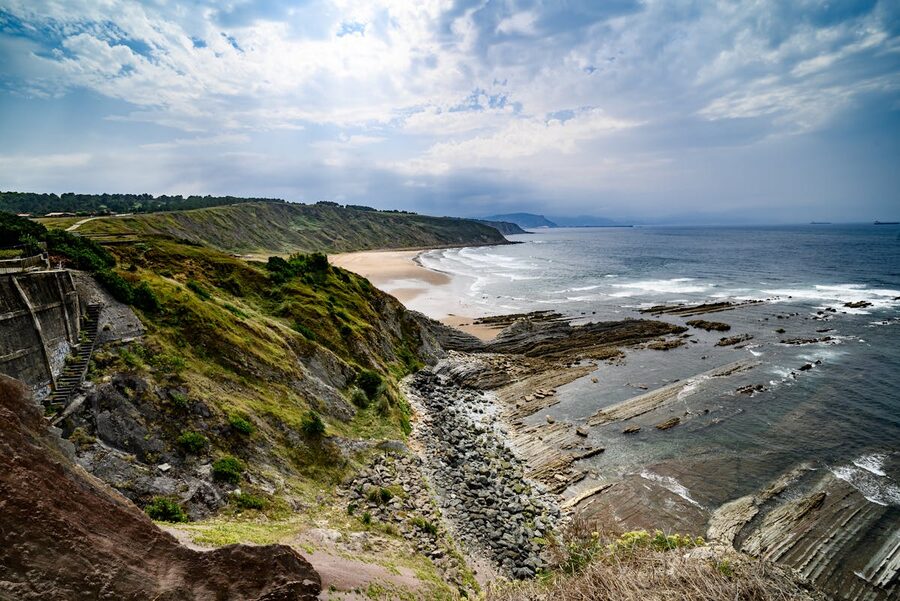
The Basque Country has some of Spain’s most dramatic coastal scenery outside of the boat. Gaztelugatxe is the obvious day trip — the island hermitage connected to the mainland by a stone causeway became globally famous as “Dragonstone” in Game of Thrones, but the real thing is more impressive than the CGI version. It’s about an hour from Bilbao, and the 241 steps to the top reward you with views across the entire Basque coast.
For Barcelona fans heading south, the Barcelona bike tour offers another perspective on a Spanish city from a different angle. And if your Spain trip includes the Costa Brava, our guide to kayaking the Costa Brava covers the other end of the Spanish coastline — Mediterranean sea caves versus Cantabrian river architecture. Two very different days on the water, both worth booking.
This article contains affiliate links. We may earn a small commission if you book through our links, at no extra cost to you. This helps us keep producing free travel guides.