
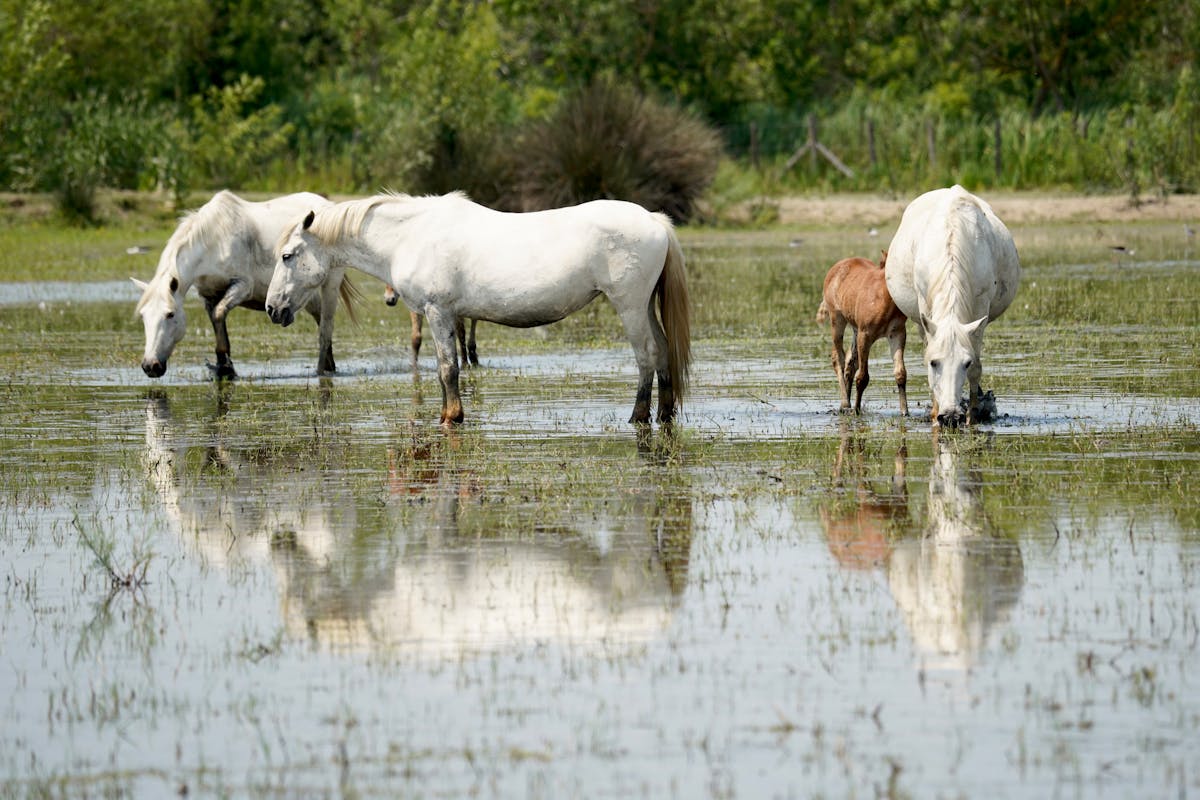
The Camargue is the only place in France where wild white horses run through salt marshes, black bulls graze next to pink flamingos, and French cowboys still herd cattle on horseback. All of it sits thirty minutes south of Arles.
I went expecting a nature park. What I found was stranger and wilder than anything I’d imagined in southern France.
Booking a safari from Arles is straightforward, but picking the right one makes a real difference. Some last two hours and barely scratch the surface. Others run four hours deep into the wetlands, past rice paddies and salt flats and manades where the gardians actually work. The price gap between them is surprisingly small.
Here’s everything you need to know to book the right Camargue safari, including which tours are actually worth it and which ones leave you wanting more.
Short on time? Here are my top picks:
Best overall: From Arles: Half-Day 4×4 Camargue Safari — $69. Four hours deep into the wetlands with a local guide who grew up in the Camargue. Departs from Arles. The one to book if you only have half a day.
Best budget: Camargue Safari from Saintes-Maries-de-la-Mer — $58. Two hours, convertible 4×4, solid introduction to the main highlights. Good if time is tight.
Best premium: Camargue 4×4 Safari VIP Tour — $619 per group. Private vehicle for up to eight people. Four hours off the beaten path with routes tailored to what you want to see.
- What the Camargue Actually Is
- How Camargue Safaris Work
- Departure points
- Duration and price
- 4×4 Safari vs Horseback vs Boat
- The Best Camargue Safari Tours to Book
- 1. From Arles: Half-Day 4×4 Camargue Safari —
- 2. Camargue: Half-Day 4×4 Guided Safari Adventure —
- 3. 3.5 Hour Camargue 4×4 Safari from Le Grau-du-Roi —
- 4. Camargue: Safari from Saintes-Maries-de-la-Mer —
- 5. 4×4 Camargue Safari 4h — Departure from Arles —
- When to Go on a Camargue Safari
- Getting to the Camargue from Arles
- Van Gogh, Romans, and the Other Side of Arles
- Tips That Will Save You Time and Money
- What You’ll Actually See on a Safari
- While You’re in the South of France
What the Camargue Actually Is
The Camargue is the largest river delta in Western Europe. It’s where the Rhone splits into two arms and fans out into the Mediterranean, creating a vast wetland of salt lakes, reed beds, rice paddies, and marshes that stretches for over 930 square kilometres. The Parc Naturel Regional de Camargue protects most of it, but this isn’t a fenced-in nature reserve. People live and work here. The land is farmed. Bulls are raised. Salt is harvested.
Three things make the Camargue unlike anywhere else in France.
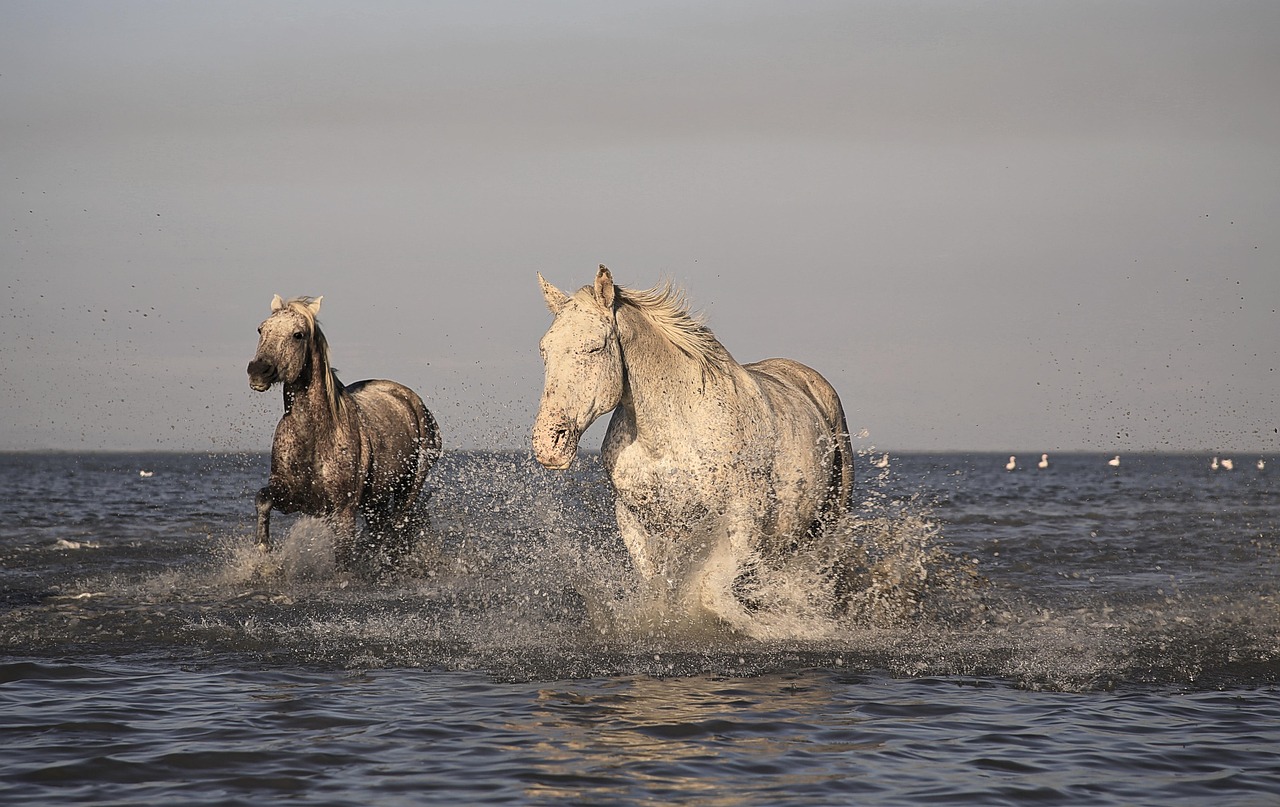
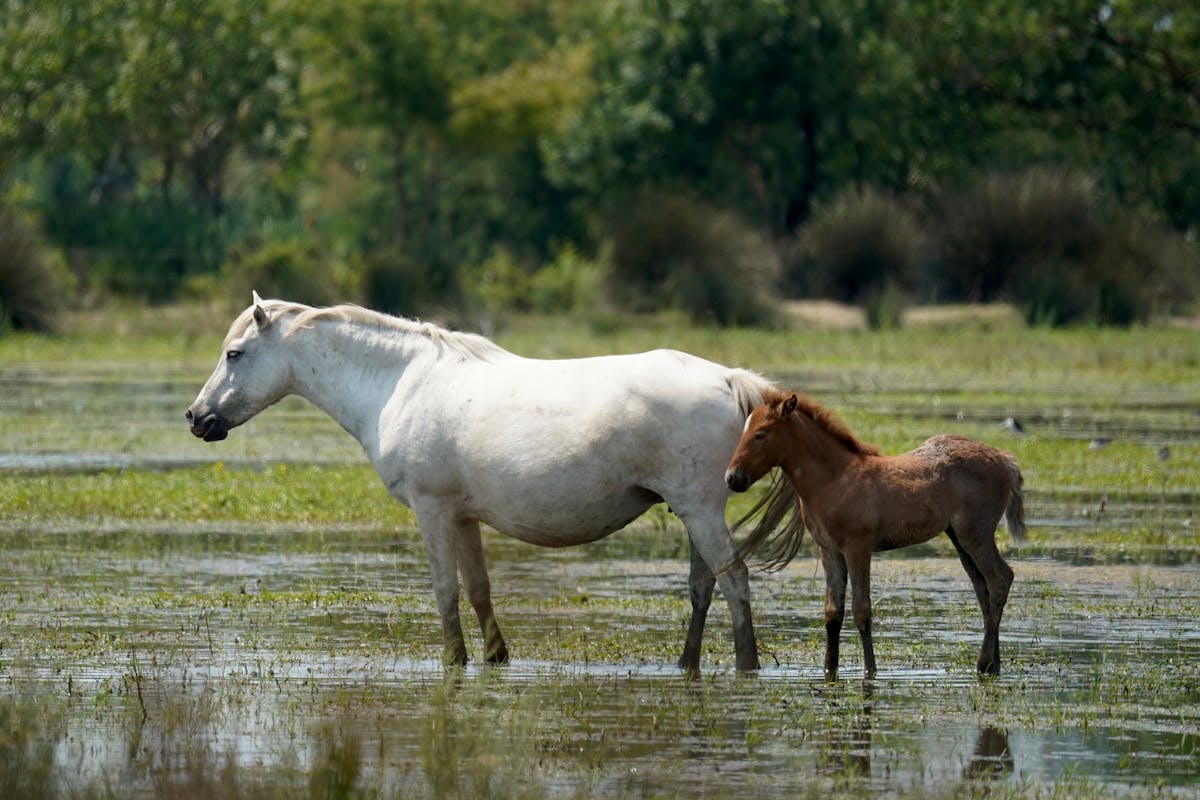
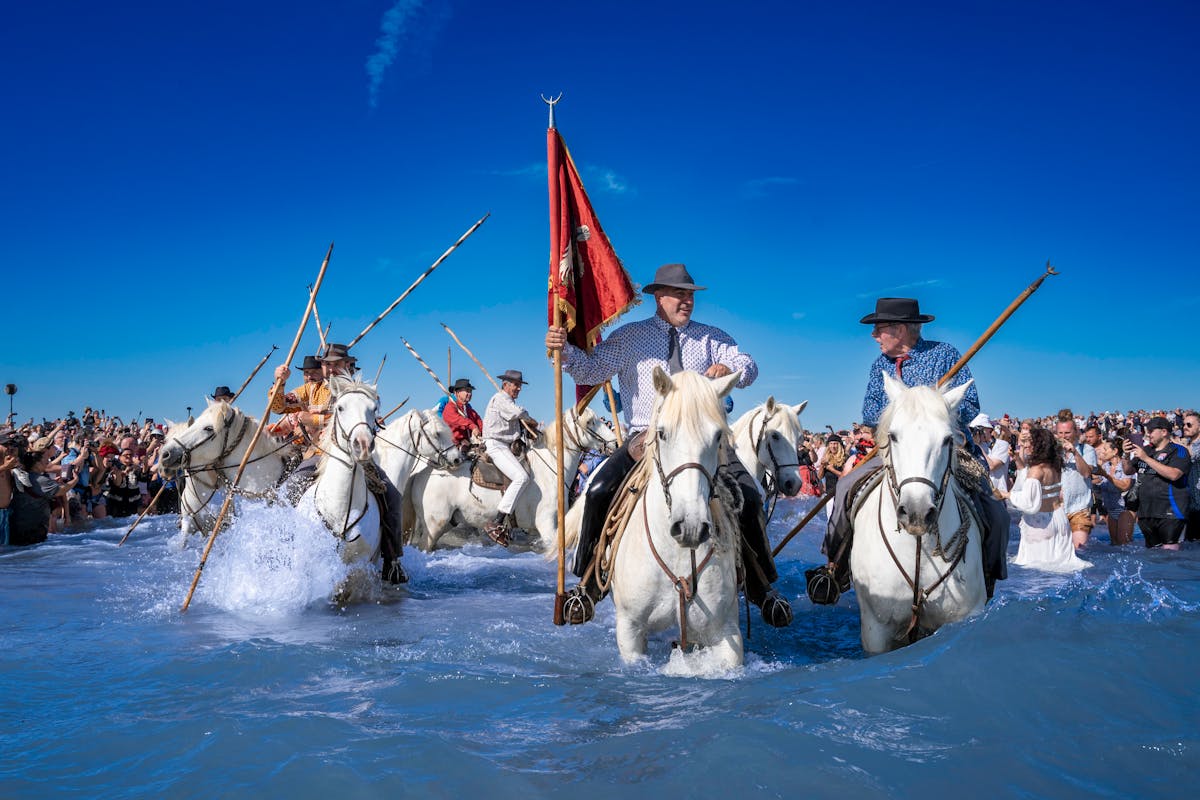
The horses. The white Camargue horse is one of the oldest breeds in the world. They’re born dark brown or black, then gradually turn white between age four and seven. Nobody is entirely sure how long they’ve been here, but the Romans described them. They live semi-wild in the marshes, and herds of them roaming free along the water’s edge is one of the defining images of the region.
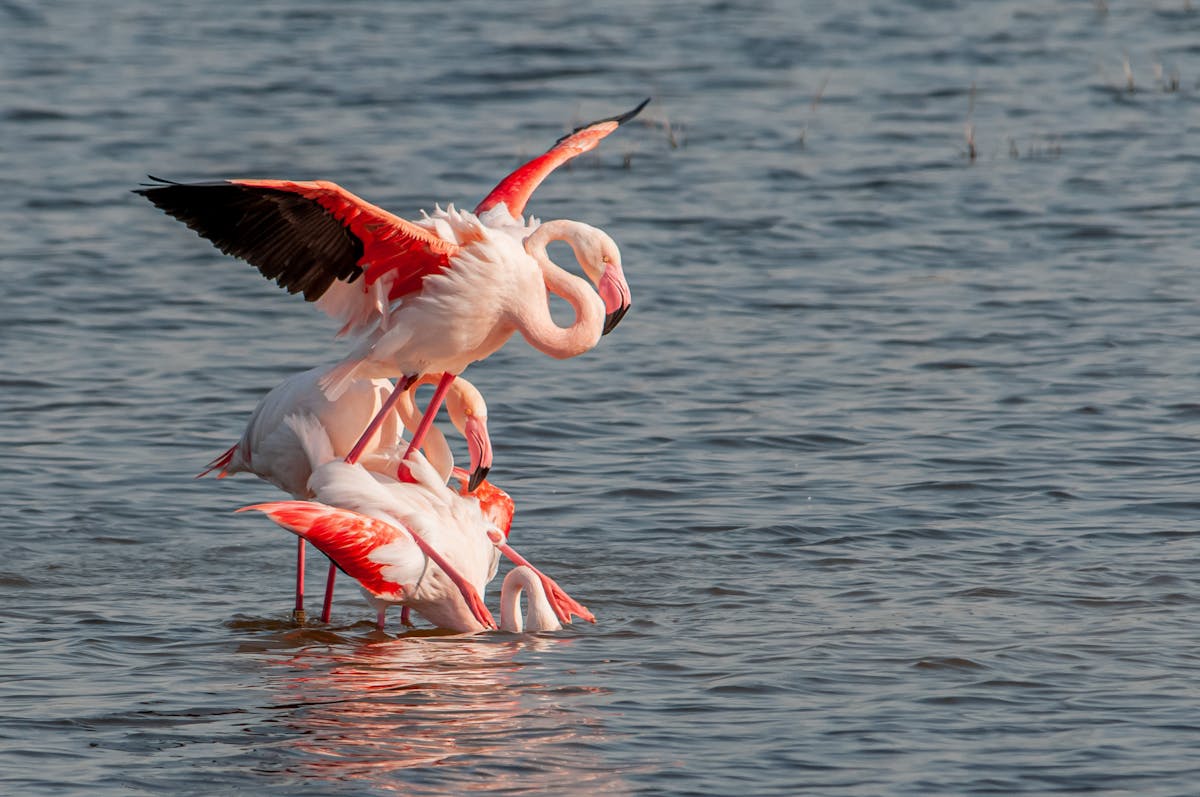
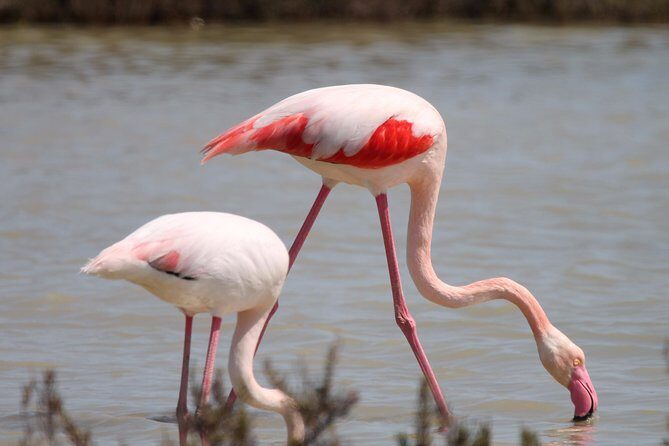
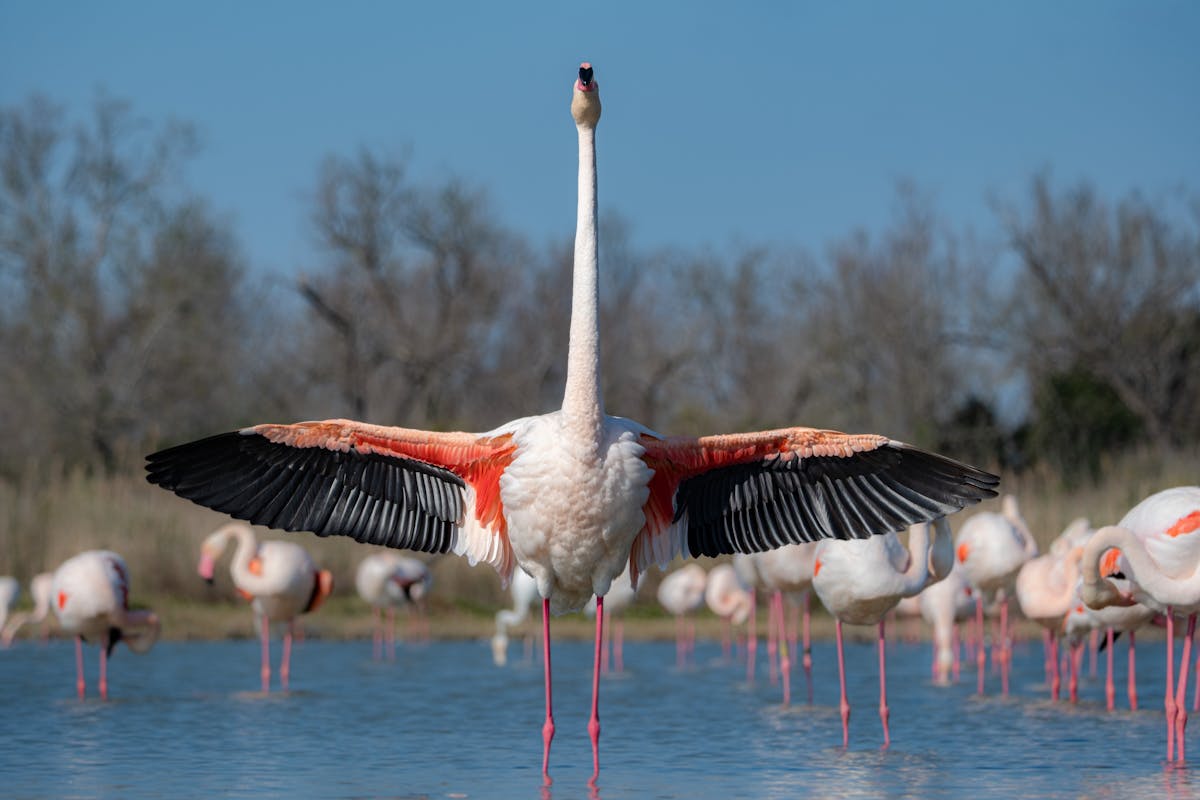
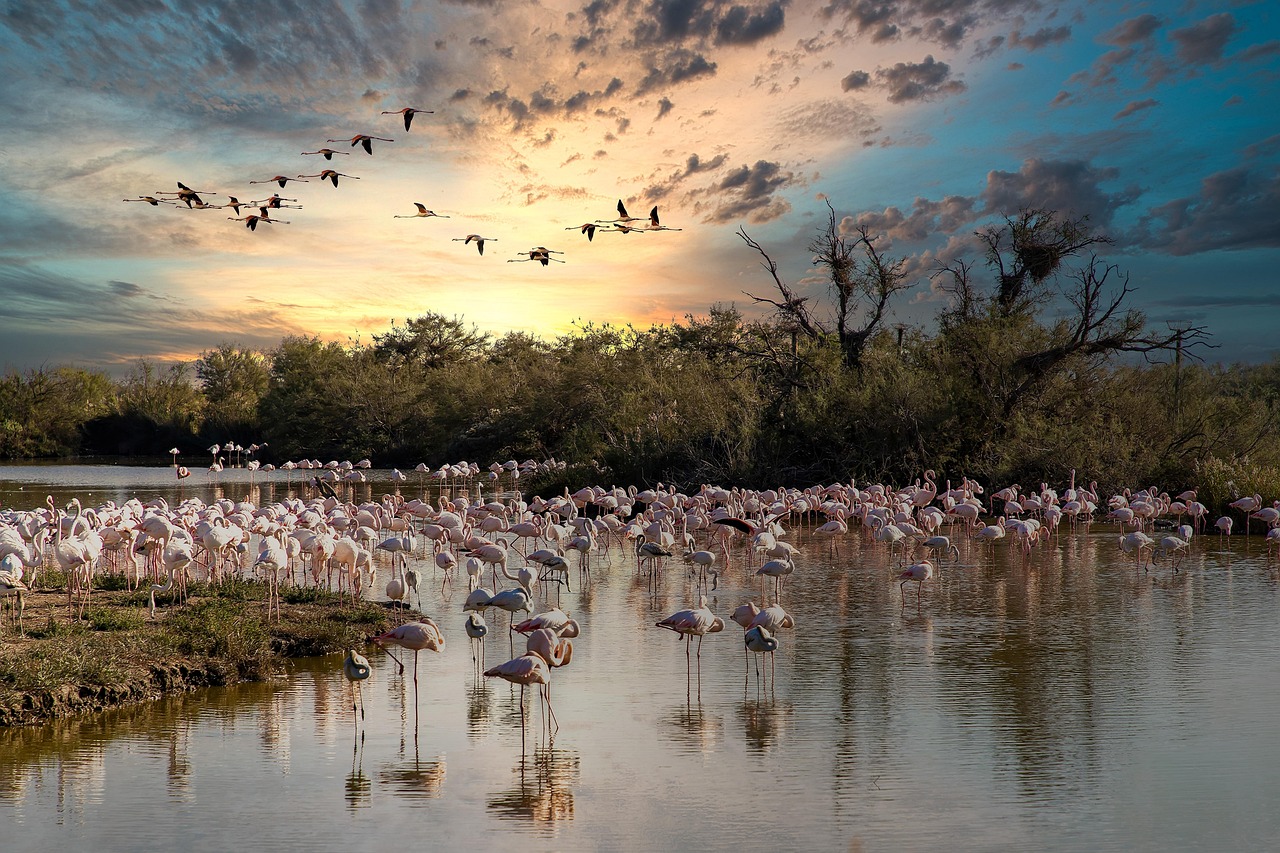
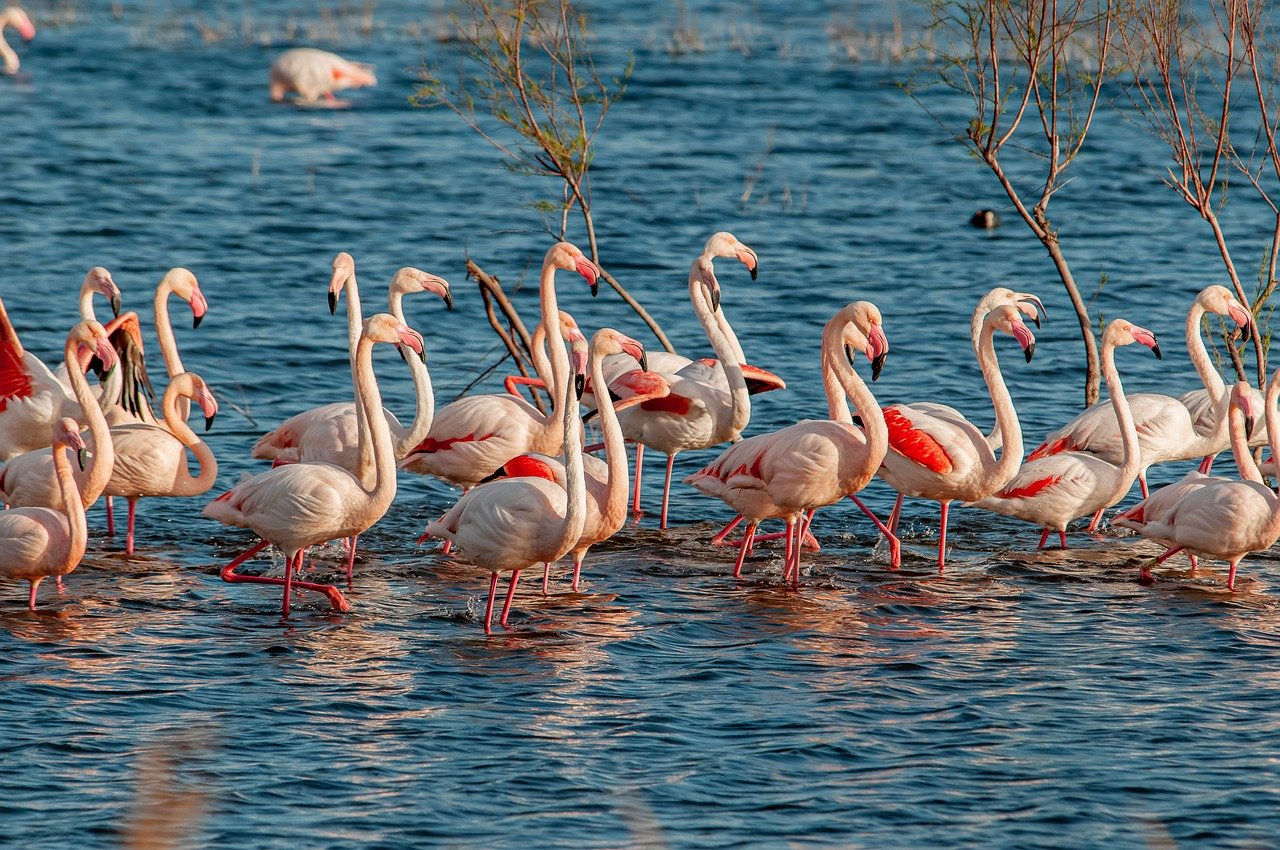
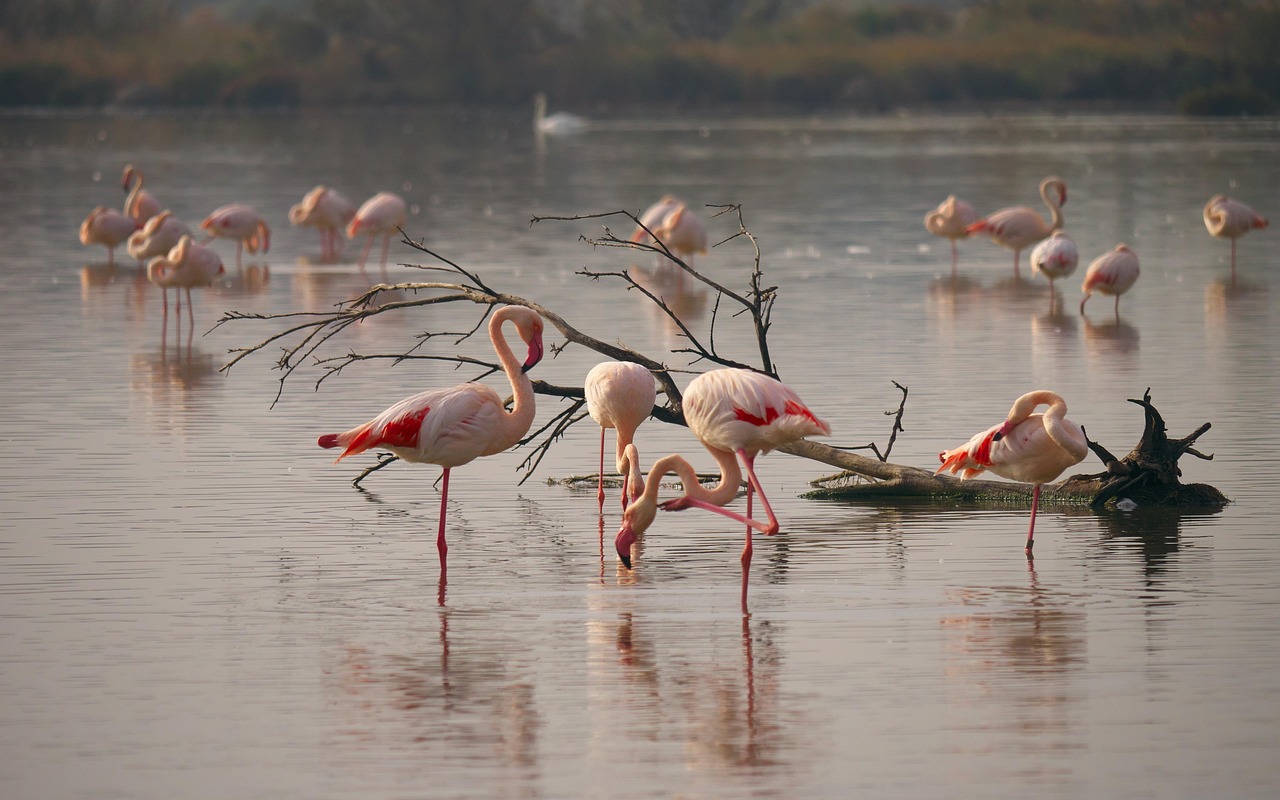
The flamingos. Greater flamingos breed in the Camargue — one of only two breeding colonies in all of Europe (the other is in the Ebro Delta in Spain). More than 10,000 pairs nest here. The shallow salt lakes around Saintes-Maries-de-la-Mer turn pink with them from spring through autumn. If you’ve never seen wild flamingos in Europe, this is the place.
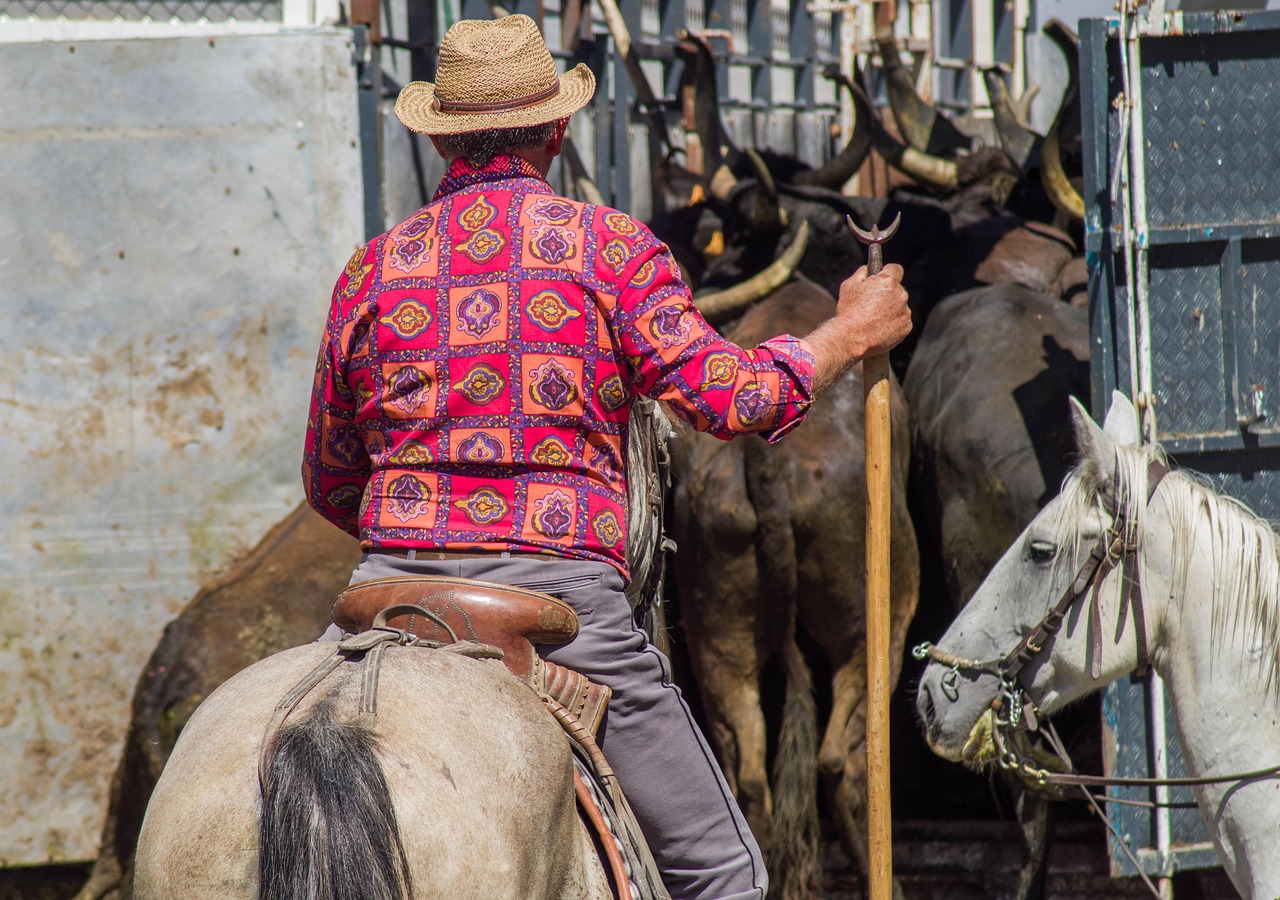
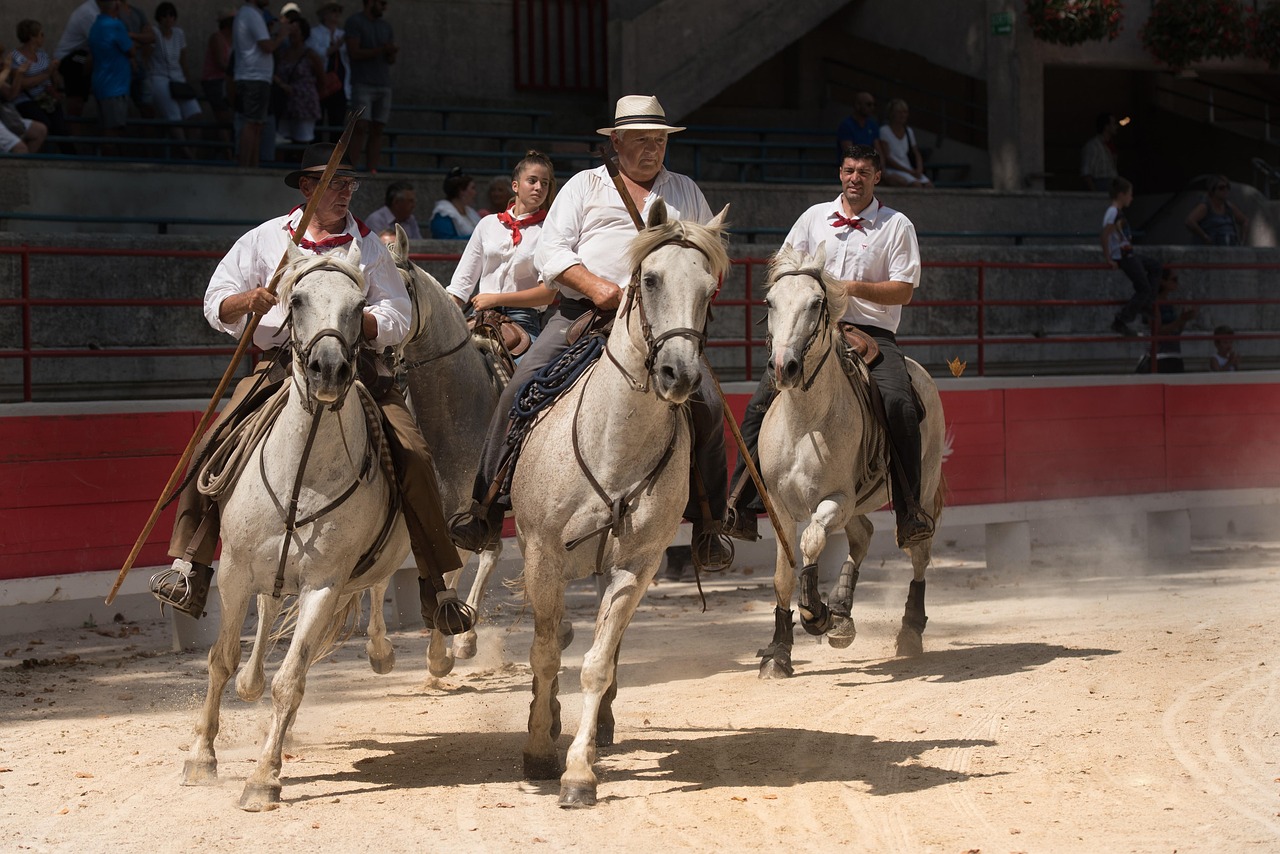
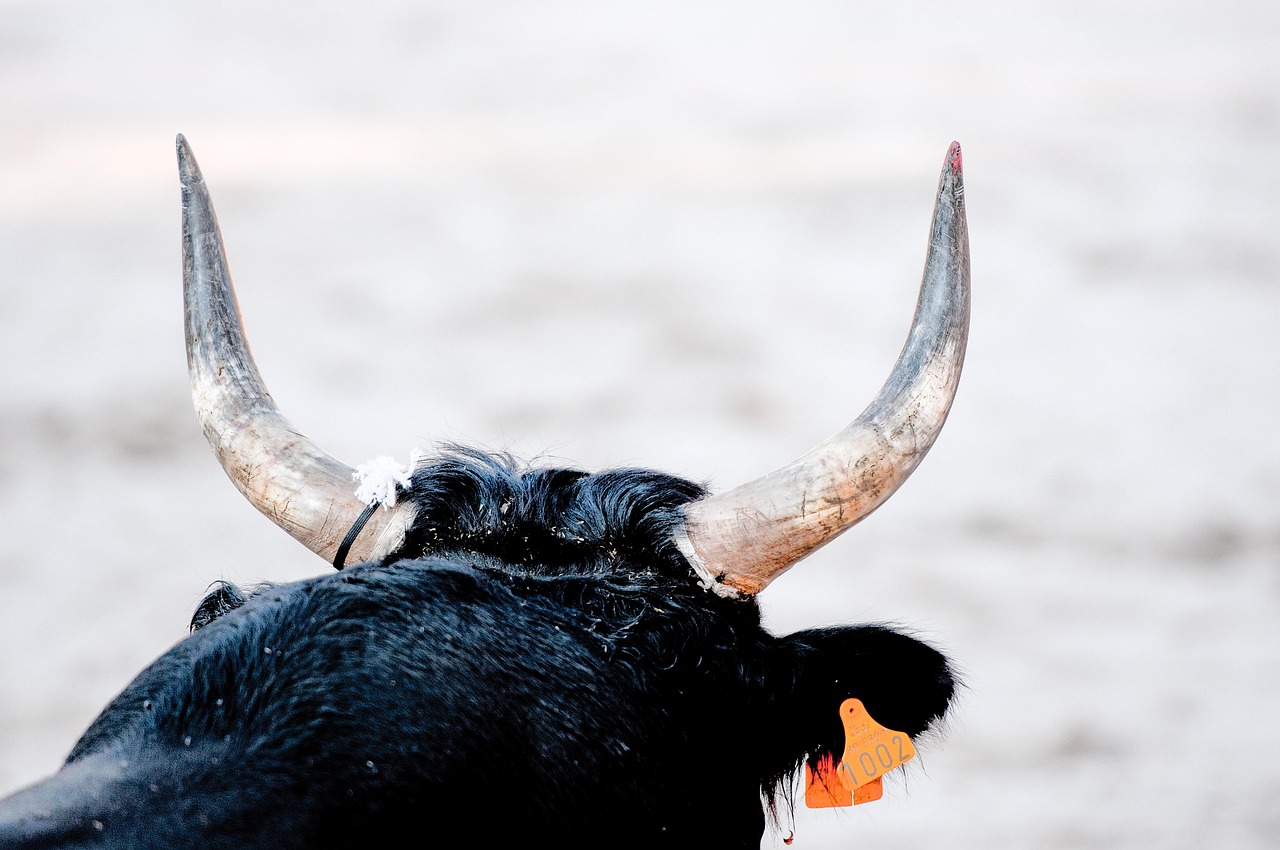
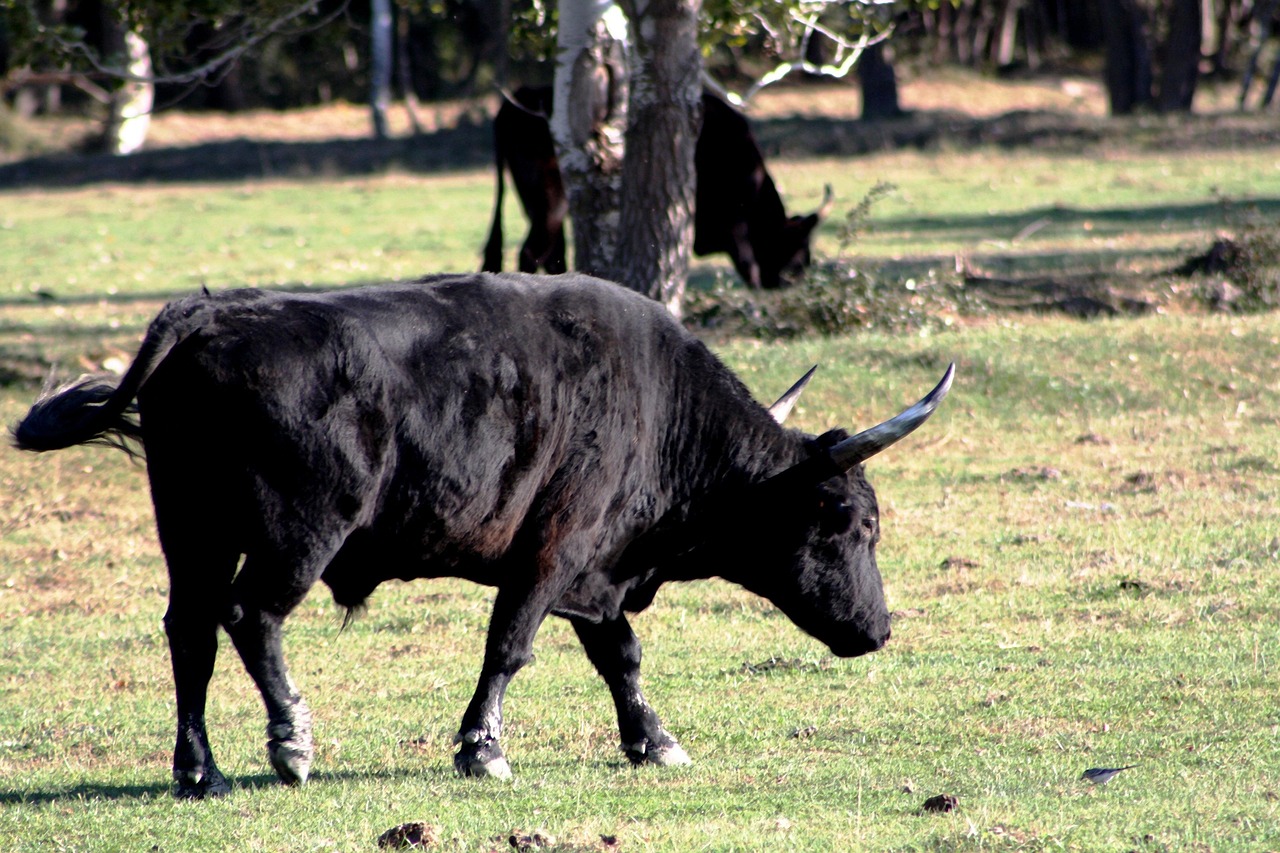
The gardians. These are the French cowboys. They ride Camargue horses, herd black Camargue bulls across the marshlands, and have been doing it for centuries. The bulls are raised for the course camarguaise, a traditional form of bullfighting where — and this matters — the bull is never killed. Unlike Spanish corridas, the Camargue version is about speed and skill. The raseteurs try to grab ribbons from between the bull’s horns while the bull chases them around the arena. The best bulls become local legends and get retired with honours.
How Camargue Safaris Work
Most Camargue safaris follow a similar pattern. You board an open-top or convertible 4×4 — usually a Land Rover Defender or a modified Jeep — and your guide drives you deep into the wetlands along dirt tracks that regular cars can’t handle. Some routes go through private farmland that’s otherwise closed to the public.
The standard stops include:
Wild horse herds — your guide knows where the manades (herds) typically gather, though they move around. Spring through early autumn is the most reliable time.
Flamingo colonies — the shallow salt pans and lagoons around the Etang de Vaccares and near Pont de Gau are prime spots. Guides time stops based on tides and seasons.
Bull ranches (manades) — some tours drive right through working ranches where black bulls roam free. The better guides will explain the whole gardian tradition, the course camarguaise, and how the bulls are bred and raised.
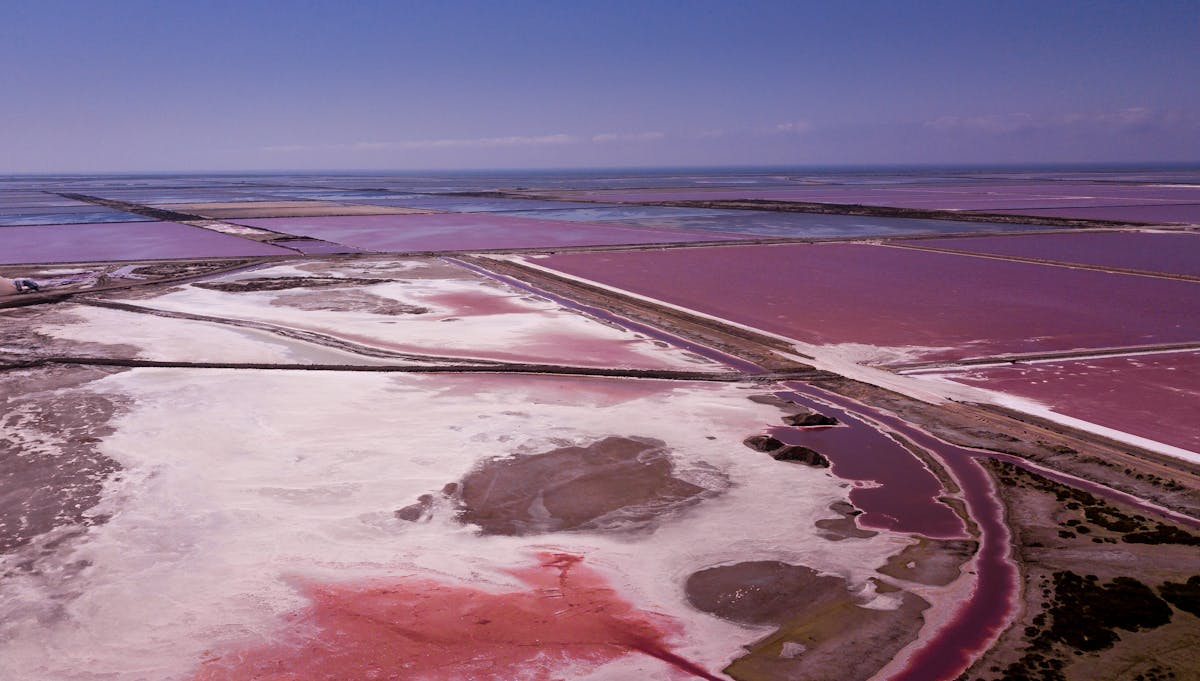
Salt flats and rice paddies — the Camargue produces most of France’s rice and some of its best salt (including the famous fleur de sel de Camargue). Several tours pass through both.
Medieval villages — longer tours (4+ hours) often include a stop at Saintes-Maries-de-la-Mer, the fortified church town at the southern tip, or Aigues-Mortes, the walled medieval town on the western edge.
Departure points
Safaris leave from three main locations:
Arles — the most convenient if you’re staying in the city. Most tours include hotel pickup. About 30 minutes to the main safari territory.
Saintes-Maries-de-la-Mer — right in the middle of the Camargue. Shorter drive to the wildlife, so you get more time on the ground. Better for shorter tours (2-3 hours).
Le Grau-du-Roi — on the western edge. Good alternative if you’re coming from Montpellier or Nimes.
Duration and price
Two-hour safaris start around $58 and give you a taster. You’ll see horses and flamingos but won’t get deep into the backcountry.
Half-day tours (3.5-4 hours) run $69-$77 and cover significantly more ground. This is the sweet spot for most visitors.
Full-day tours including Aigues-Mortes or other towns start around $145-$170. These make sense if the Camargue is your main day out rather than one stop among many.
Private VIP tours cost $619 per group (up to 8 people). Per person that’s actually reasonable if you have a group. Custom routes, flexible timing, and no sharing the 4×4 with strangers.
4×4 Safari vs Horseback vs Boat
There are three main ways to explore the Camargue. Each has trade-offs.
4×4 Safari (recommended for most visitors) — covers the most ground, gets you into areas you can’t reach on foot or horseback, and works in all weather. Guides drive, so you can focus on looking and taking photos. The open-top vehicles are designed for the terrain. This is what I’d book for a first visit.
Horseback rides — more romantic, more immersive, but you cover less ground and it depends heavily on your riding ability. Beginners stick to gentle walks along the beach or through shallow marshes. Experienced riders can do multi-hour treks deeper into the backcountry. If you can ride, this is a memorable way to see the Camargue. If you can’t, stick with a 4×4.
Boat tours — the Petit Rhone has boat cruises that go through the marshes, and there are catamaran tours from La Grande Motte along the coast. These give different perspectives but miss the inland wildlife and the bull ranches entirely. Better as a complement to a 4×4 safari, not a replacement.
The 4×4 safaris are the most popular for good reason. They’re the most practical way to cover the key sights in half a day.
The Best Camargue Safari Tours to Book
I’ve sorted through the options and picked five that are worth your money. They cover different price points, durations, and departure locations.
1. From Arles: Half-Day 4×4 Camargue Safari — $69
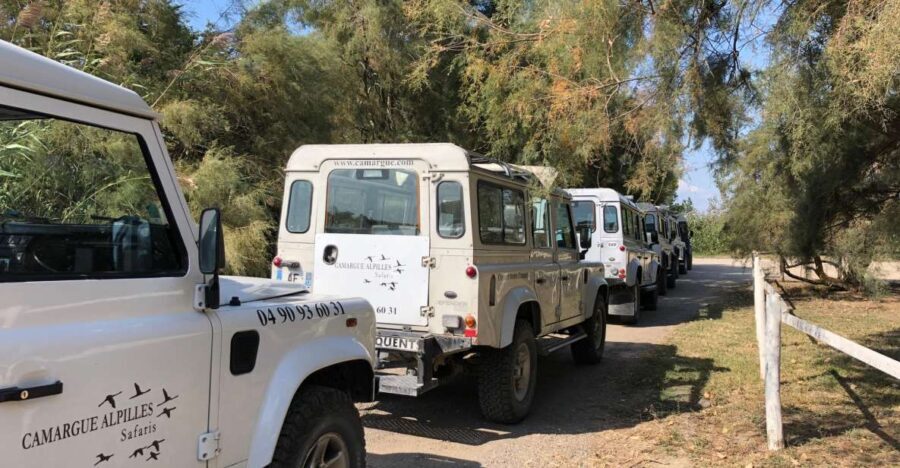
This is the one I’d book without hesitation. Four hours is the minimum you need to actually get into the good parts of the Camargue, and at $69 it’s the best value of any Arles departure. The guide takes you through private land that the shorter tours don’t reach. You’ll cover horses, flamingos, bull ranches, salt pans, and the rice fields, with plenty of stops for photos.
The guide — several reviews mention Olivier by name — clearly knows the Camargue inside out, and the restaurant recommendation at the end is a nice touch. It’s the most reviewed Camargue safari tour available, which tells you something about consistency.
Departs from Arles centre with hotel pickup. Read our full review | Book this tour
2. Camargue: Half-Day 4×4 Guided Safari Adventure — $75
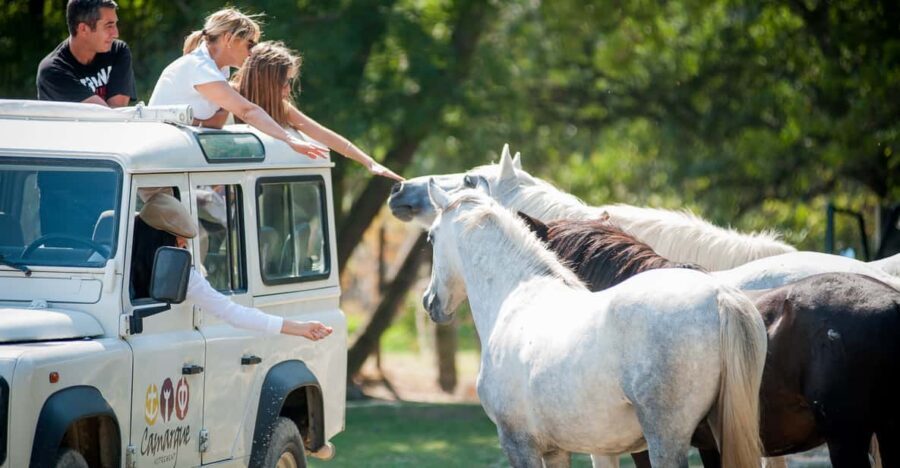
Similar to the Arles departure above but leaves from Le Grau-du-Roi on the western edge. At $75 it’s a touch more expensive and slightly shorter at 3.5 hours, but the departure point is closer to the action so you spend less time driving and more time actually in the marshes.
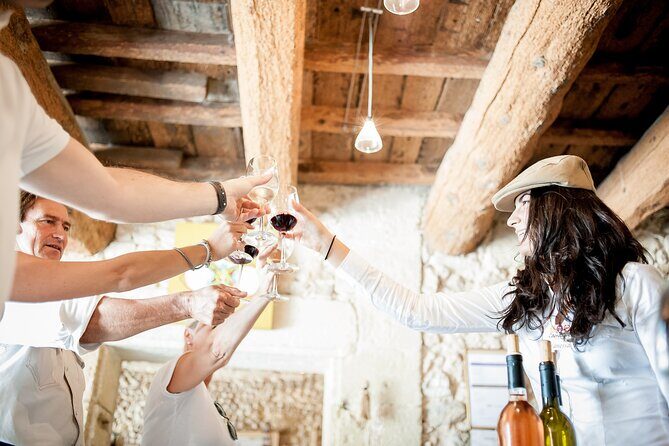
What I like about this one is the local food tasting that some departures include. The guide shares the wild landscapes, the horses, the flamingos, and then stops for local produce — Camargue rice, bull saucisson, that kind of thing. It’s well-rated and the guides are consistently praised for their passion and knowledge of the area.
Departs from Le Grau-du-Roi. Read our full review | Book this tour
3. 3.5 Hour Camargue 4×4 Safari from Le Grau-du-Roi — $77
The Viator option for those who prefer booking through that platform. Same Le Grau-du-Roi departure, 3.5 hours, $77. The route covers similar territory — the wild horses, flamingo colonies, bull ranches, and salt marshes — with English-speaking guides who adapt the tour based on seasonal wildlife patterns.
This one feels slightly more family-friendly based on the feedback. Guides are patient with kids and stop frequently for photos. If you’re travelling with children under 12, this is probably the better pick of the Le Grau-du-Roi options. The vehicles are comfortable and the pace is relaxed rather than rushed.
Departs from Le Grau-du-Roi. Read our full review | Book this tour
4. Camargue: Safari from Saintes-Maries-de-la-Mer — $58
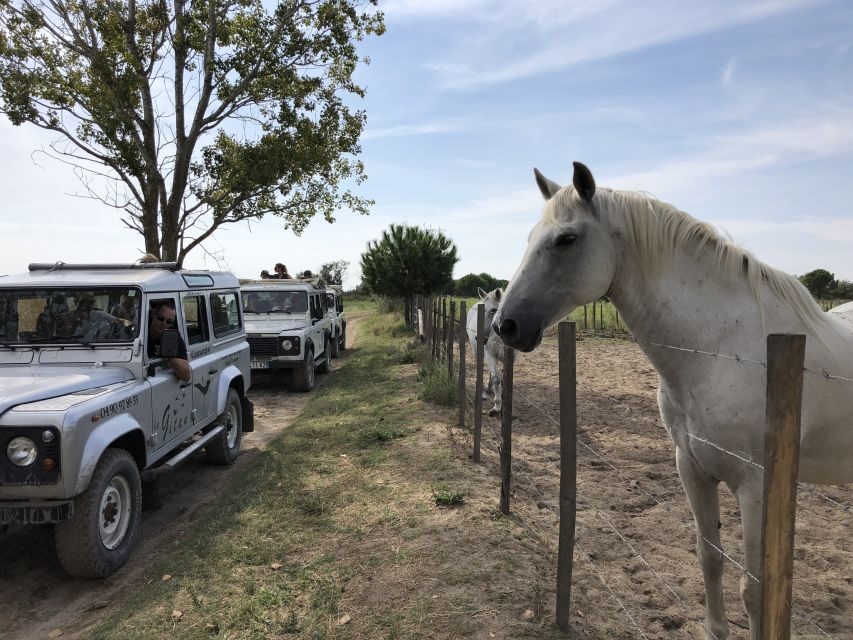
The budget option, and it’s shorter at two hours, but don’t dismiss it. $58 gets you a convertible 4×4, a knowledgeable guide named Luca (who keeps coming up in the feedback), and a route through the core Camargue territory right around Saintes-Maries-de-la-Mer.
The key advantage here is the departure point. Saintes-Maries sits in the middle of the Camargue, so you’re immediately in the wetlands. No 30-minute drive from Arles to reach the wildlife. That makes the shorter duration work better than you’d expect. You’ll see horses, flamingos, and learn the regional stories. For travellers who are already staying in or passing through Saintes-Maries, this is the obvious choice.
Departs from Saintes-Maries-de-la-Mer. Read our full review | Book this tour
5. 4×4 Camargue Safari 4h — Departure from Arles — $71
A Viator alternative to the #1 pick. Same four-hour format, same Arles departure, $71. The experience is very similar — horses, flamingos, bulls, salt pans — but the guide team is different and the specific routes vary. One reviewer pointed out that the Camargue is increasingly agricultural (rice farming has expanded), which felt like an honest observation. The guide Solenne was described as fun, friendly, and fluent in English.
This is a good backup if the #1 tour is sold out for your dates. The slight price difference is negligible for a four-hour safari. Both give you enough time to properly cover the Camargue without rushing.
Departs from Arles. Read our full review | Book this tour
When to Go on a Camargue Safari
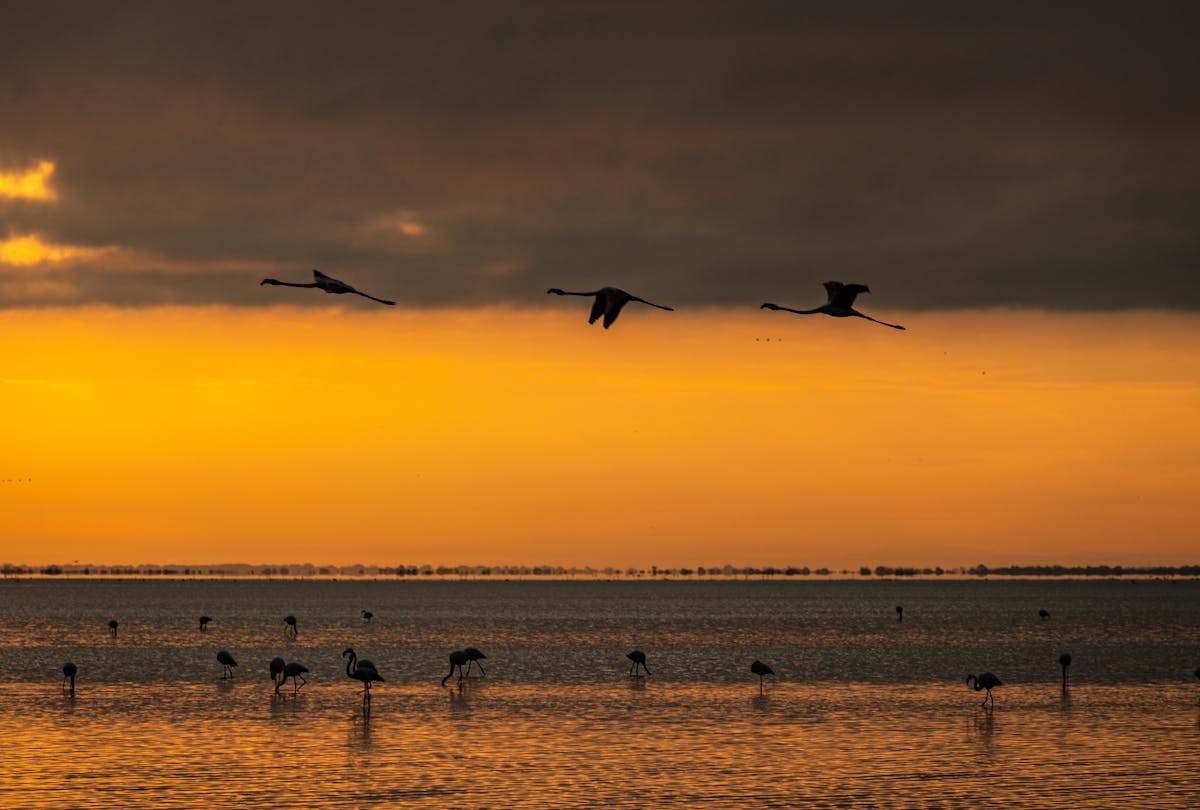
Best months: April through October. The flamingos arrive in March and stay through autumn. The horses are out year-round but foaling happens in spring. Summer (July-August) is hot — expect 35C+ — but the wildlife is abundant and the light for photography is best in the golden hours.
April-May: Foaling season for the horses. Flamingos are nesting. Wildflowers across the marshes. Temperatures are mild (18-24C). Fewer crowds than summer. This is my pick for the best time to visit.
June-August: Peak season. Everything is active, the rice paddies are green, and the salt harvesting is underway. But it’s hot, mosquitoes are fierce (bring repellent, seriously), and tours sell out. Book at least a week ahead in July and August.
September-October: Still warm, fewer travelers, flamingos are still here, and the light is gorgeous. The rice harvest happens in September, which adds another visual layer to the landscape. October festivals bring the gardians out in force.
November-March: Tours still run but wildlife sightings are less reliable. The flamingos mostly leave for North Africa. Horses stay but are harder to spot. The mood is bleaker and windier. Some tours reduce their schedules.
Morning vs afternoon departures: Morning tours (usually 8:30-9am start) are better for bird activity and cooler temperatures. Afternoon tours (2-3pm start) get the best light for photos. Evening departures catch the sunset over the marshes, which is genuinely spectacular.
Getting to the Camargue from Arles
If you’ve booked a tour from Arles, it’s simple. Most operators pick you up from your hotel or a central meeting point (usually near Place de la Republique or the train station). You don’t need a car.
If you’re not staying in Arles, getting there is easy:
By train: Arles has a TGV station on the Paris-Marseille line. Direct trains from Marseille take about 50 minutes. From Avignon, it’s about 20 minutes. From Paris Gare de Lyon, it’s around 4 hours with one change.
By car: Arles is off the A54 motorway. About 90 minutes from Marseille, 40 minutes from Avignon, and 30 minutes from Nimes. Parking in the centre is tight in summer — use the free lots near the Rhone and walk in.
From Nice or the Riviera: It’s a solid 3-hour drive or train journey. Possible as a day trip but you’ll be tired. Better to spend a night in Arles.
Saintes-Maries-de-la-Mer is about 40 minutes south of Arles by car. There’s a bus (Envia line 20) but it runs infrequently. If you’re booking the budget safari from Saintes-Maries, a rental car helps.
Van Gogh, Romans, and the Other Side of Arles
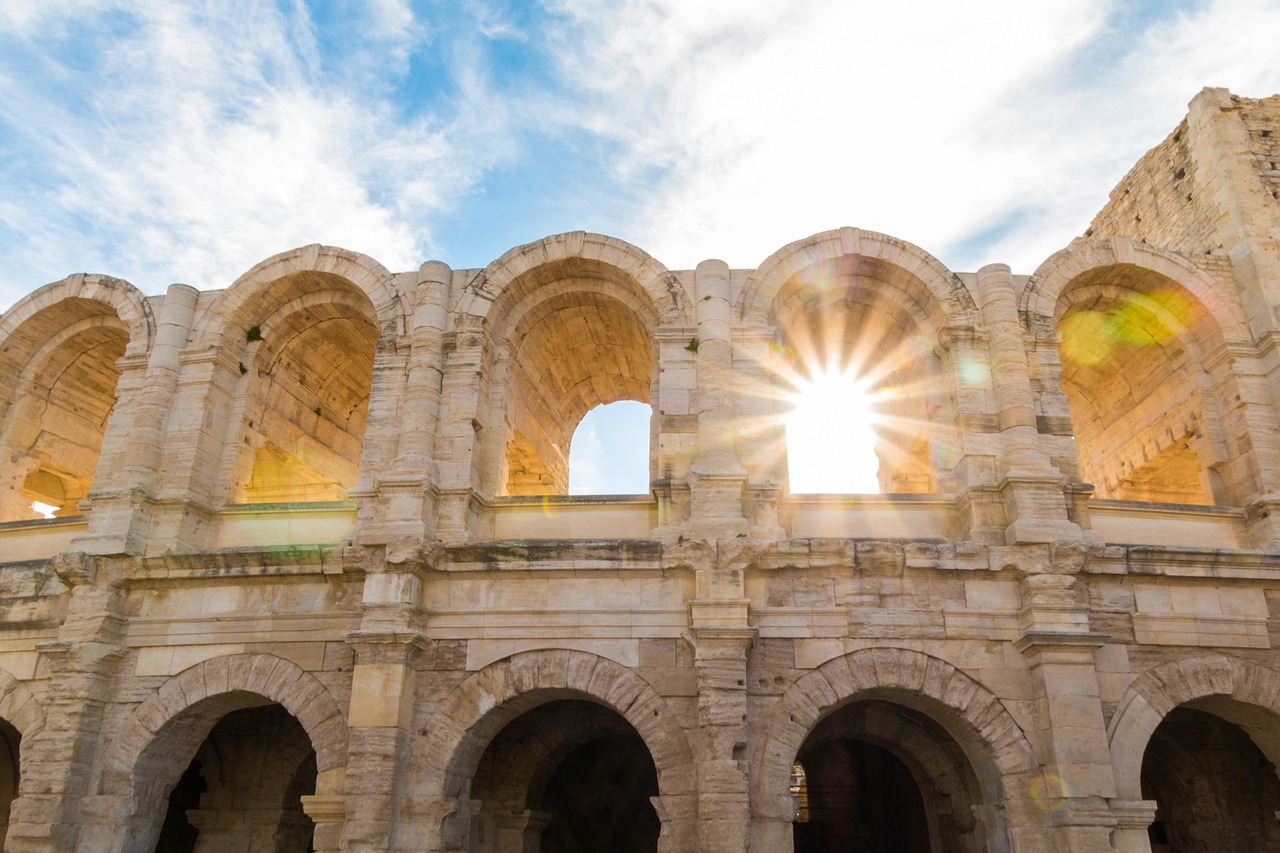
The Camargue safari is a half-day trip. That leaves you half a day in Arles, and the town itself is worth your time.
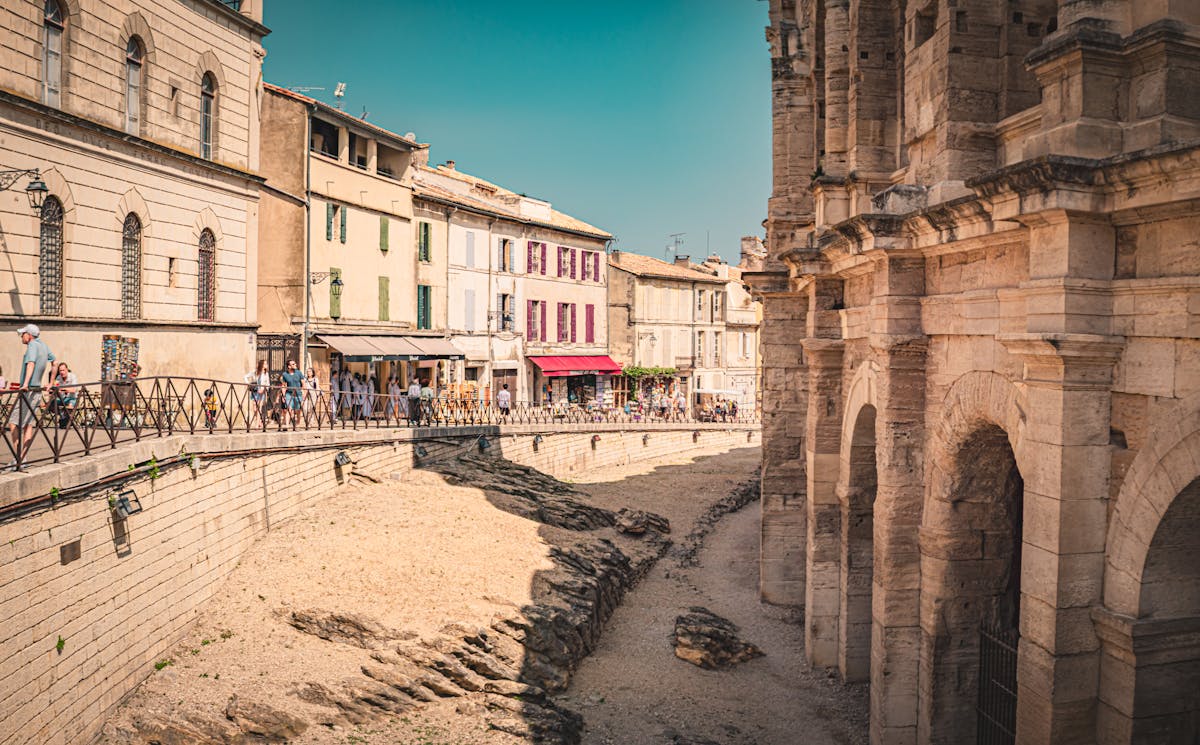
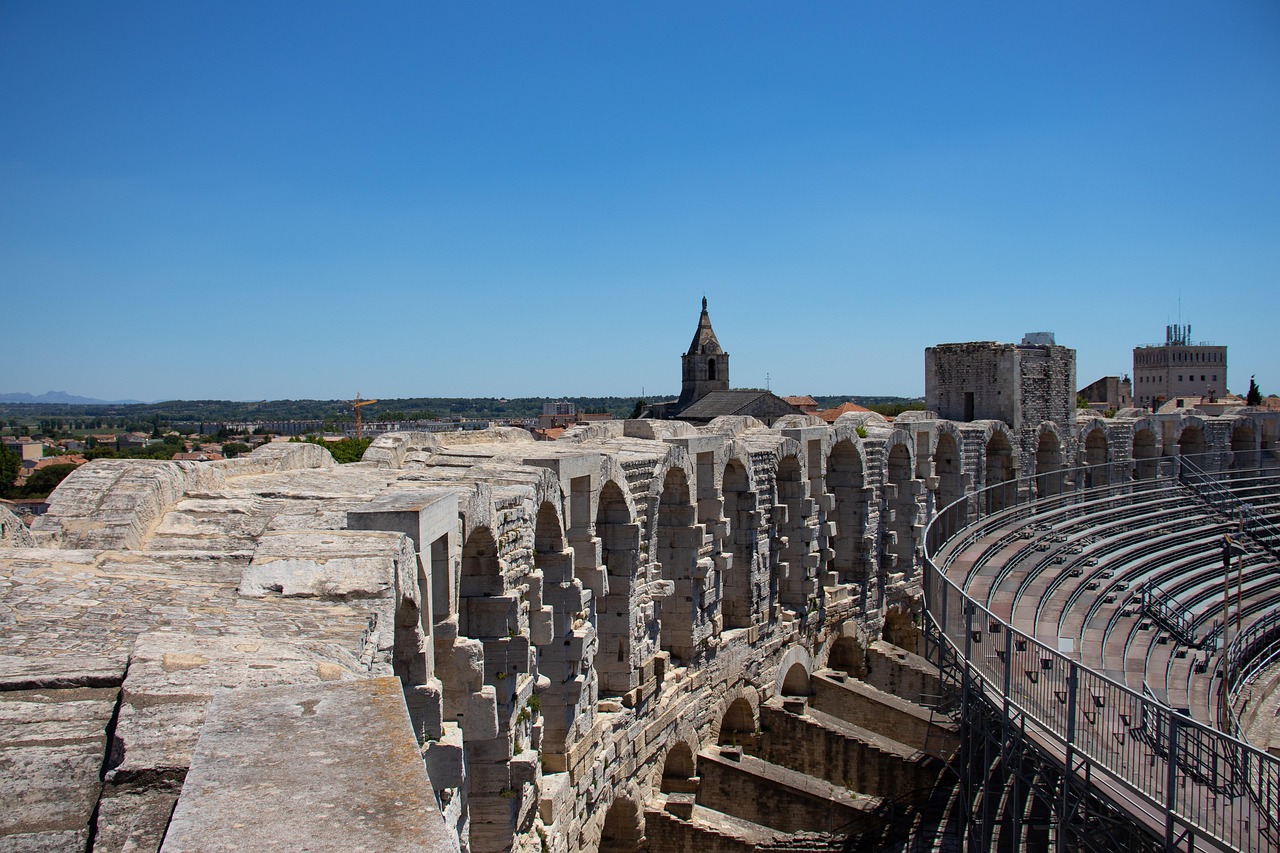
The Roman arena. Built in 90 AD, it held 20,000 spectators for gladiatorial combat. It still hosts events today — bullfights (the Camargue kind), concerts, and the Feria d’Arles in spring and autumn. Walk the upper tiers for free views over the Provence rooftops. It’s smaller than the Colosseum but feels more intimate, more real somehow.
Van Gogh’s Arles. Vincent van Gogh lived here for fifteen months between 1888 and 1889, and it was the most productive period of his life. He painted over 300 works in Arles, including Starry Night Over the Rhone, The Night Cafe, and his famous bedroom paintings. He cut off part of his ear here during a breakdown. The yellow house he lived in was destroyed by WWII bombing, but brass markers around town show where he set up his easel. The Fondation Vincent van Gogh has rotating exhibitions that give context to his time here.
Saintes-Maries-de-la-Mer. This is the main town inside the Camargue, sitting right on the Mediterranean coast. According to legend, Mary Magdalene, Mary Salome, and Mary Jacobe arrived here by boat from Palestine after the Crucifixion. The fortified church built to commemorate them still stands. Every May, Roma communities from across Europe make a pilgrimage here to honour Saint Sarah, their patron saint. The town itself is small and a bit rough around the edges, but the beach is wild and empty and the church is genuinely atmospheric.
Tips That Will Save You Time and Money
Book the 4-hour tour, not the 2-hour. The price difference is about $10-15, but the experience difference is massive. Two hours barely gets you past the flamingos. Four hours lets you go deep into the backcountry where the real Camargue starts.
Bring binoculars. Flamingos are often visible from a distance but binoculars make the difference between “I can see pink dots” and actually watching them feed and preen.
Mosquito repellent is not optional. The Camargue is a wetland. In summer, the mosquitoes are aggressive. Apply before the tour, bring extra for reapplication, and consider long sleeves despite the heat.
Sunscreen and a hat. Open-top 4x4s mean you’re exposed for hours. There’s minimal shade on the marshes. I saw multiple people on my tour turn lobster-red because they assumed the sea breeze would be enough.
Ask your guide about local restaurants. Several reviews mention that guides recommend specific places for lunch or dinner after the tour. These tend to be places where the gardians eat — bull stew, rice from the paddy you just drove through, tellines (tiny clams from the Camargue beaches). Skip the tourist menus on the main squares.
Combine it with the Pont de Gau bird park. If flamingos are your main draw, the Parc Ornithologique du Pont de Gau (about 4km from Saintes-Maries) lets you walk right up to them on raised boardwalks. It’s different from the safari — more controlled, closer access. Costs about $10 entry.
The Camargue is not Kruger Park. Manage expectations. You’ll see horses, flamingos, and bulls, but this isn’t the Serengeti. It’s a working agricultural landscape with incredible wildlife woven through it. The beauty is in the wildness and the space, not in ticking off a Big Five checklist.
What You’ll Actually See on a Safari
A typical four-hour safari from Arles goes something like this.
You meet your guide in central Arles — usually a weathered local in a 4×4 that’s seen better days (in a good way). The drive south takes about 25 minutes along the D570 before you turn off onto unpaved tracks that cut through the marshes.
The first stop is usually the horses. Your guide knows the grazing patterns and will find a herd within minutes. The horses are calm around vehicles, so you can get surprisingly close. Spring means foals — small, dark, gangly things stumbling through the mud while their white mothers graze.
Then it’s the flamingos. The guide drives to a viewpoint over one of the salt lagoons. On a good day, you’ll see hundreds of them — feeding, preening, taking off in long pink lines across the sky. The noise they make is surprisingly loud, a kind of honking that carries across the flat water.
The bull ranches are next. You drive through private land where the black Camargue bulls live semi-wild. The guide explains the course camarguaise, points out the older bulls with their distinctive lyre-shaped horns, and tells you which ones have competed. It’s a side of France most visitors never see.
The last stretch covers the salt pans and rice paddies. The salt pans turn brilliant pink and white in summer (the colour comes from the same algae that makes the flamingos pink). The rice fields are lush green from June through September.
You’re back in Arles by early afternoon, usually with a restaurant recommendation in hand.
While You’re in the South of France
If you’re spending more than a day or two in the region, the south of France has some of the best day trips in Europe. The medieval fortress at Carcassonne is about two hours west of Arles and worth a full day — the double-walled citadel is unlike anything else in France. For something closer, the Gorges du Verdon is France’s answer to the Grand Canyon, with turquoise water and cliff-edge driving that makes the Camargue’s flat marshes feel like another planet. And if you’re heading east toward Marseille, the Calanques National Park offers dramatic limestone inlets and some of the best coastal hiking in the Mediterranean. Between the Camargue, the gorges, and the calanques, this corner of France could easily fill a week.
This article contains affiliate links to tours and activities. If you book through these links, we may earn a small commission at no extra cost to you. This helps us keep creating detailed travel guides.