
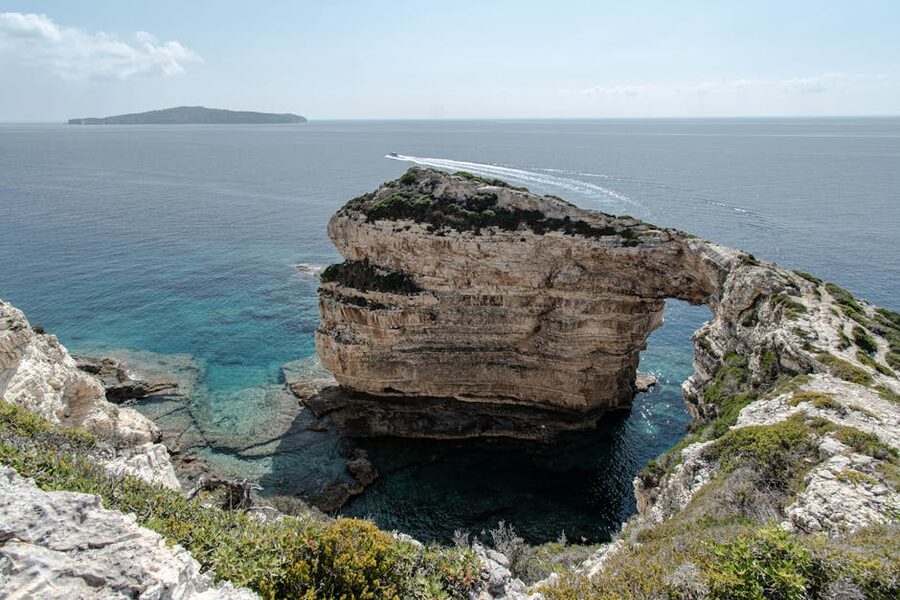
According to Greek mythology, Poseidon created Paxos by striking his trident into the sea bed next to Corfu and breaking off a chunk of rock. Three thousand years later, geologists figured out what actually happened — the small Ionian island is a limestone fragment that separated from the mainland 20,000 years ago — but the myth does a better job of capturing why you’d bother going there. Paxos is beautiful in a way that needs a good story to explain.
A Corfu-to-Paxos day cruise is one of the most-booked island-hopping trips in Greece. You sail from Corfu’s Old Port, cross to Paxos (1.5 hours), stop for swimming at the Blue Caves of Antipaxos, tour Gaios harbour on Paxos, and head back. It’s a full 8-hour day on the water with three swim stops, lunch on board, and some of the clearest water in the Mediterranean. If you’re Corfu-based and reading our general Corfu boat tour guide, this is the premium upgrade version.
This guide covers which of the three similar cruise options to book, how the day actually runs, and what you’ll see on Paxos and Antipaxos.
- In a Hurry? Here Are the Top Picks
- What the Day Looks Like
- The Three Main Stops
- Voutoumi and Vrika (Antipaxos)
- The Blue Caves
- Gaios (Paxos)
- The Best Tours to Book
- 1. From Corfu: Day Cruise to Paxos, Antipaxos & Blue Caves —
- 2. From Corfu: Antipaxos & Paxos Blue Caves Boat Cruise —
- 3. From Corfu: Paxos, Antipaxos and Blue Caves —
- What Makes Paxos Different
- When to Sail
- What to Bring
- Getting to Corfu’s Old Port
- Worth Knowing Before You Book
- Staying Overnight on Paxos
- Pairing with Other Corfu Activities
- Food on Paxos
- Worth the Day or Skippable?
- More Greece Guides
In a Hurry? Here Are the Top Picks
Most booked: From Corfu: Day Cruise to Paxos, Antipaxos & the Blue Caves — $58 per person. 7-11 hour day including lunch, multiple swim stops, Gaios.
Best value: From Corfu Island: Antipaxos & Paxos Blue Caves Boat Cruise — $53 per person. Similar itinerary at $5 less.
Quieter boats: From Corfu: Paxos, Antipaxos & Blue Caves — $53 per person. Smaller-group alternative.
What the Day Looks Like
Most Corfu-to-Paxos cruises follow a similar structure.
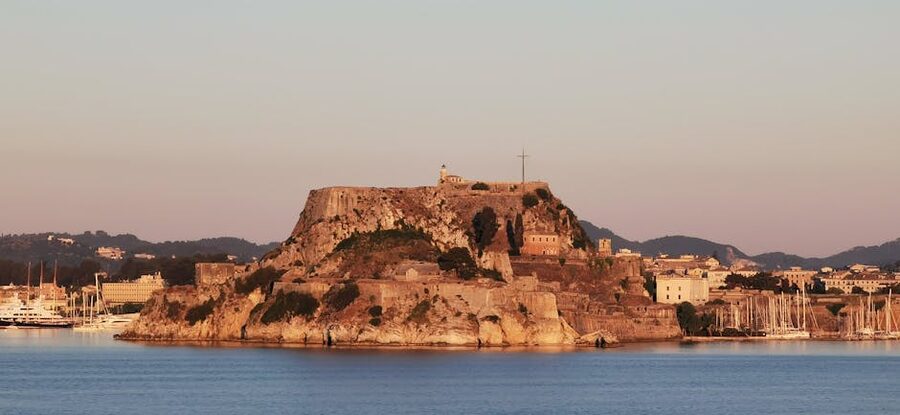
09:00-09:30: Boarding at Corfu Old Port. Quick safety briefing, welcome drink.
09:45: Cast off. Cross the Ionian Sea toward Paxos (about 90 minutes).
11:15: Arrive off Antipaxos. Stop at Voutoumi Beach or Vrika Beach (two small beaches on the west coast). Swim, snorkel, and float in shockingly clear water for about an hour.
12:45: Short sail to the Blue Caves. Swim through and around the cave entrances.
14:00: Lunch on board as the boat sails to Gaios, the main harbour town of Paxos.
15:00-17:00: Free time in Gaios. Walk the old Venetian streets, grab a coffee, or swim from the harbour steps.
17:30: Depart for Corfu. Sometimes one last swim stop along the route back.
19:00-19:30: Arrive Corfu Old Port.
The Three Main Stops
Each cruise hits the same three headline spots. Here’s what to expect at each.
Voutoumi and Vrika (Antipaxos)
Two small beaches on Antipaxos, the tiny sister island south of Paxos. Voutoumi has electric-blue water over white sand; Vrika has slightly darker water over pebbles. Both are 100-metre crescents with crystal clarity.
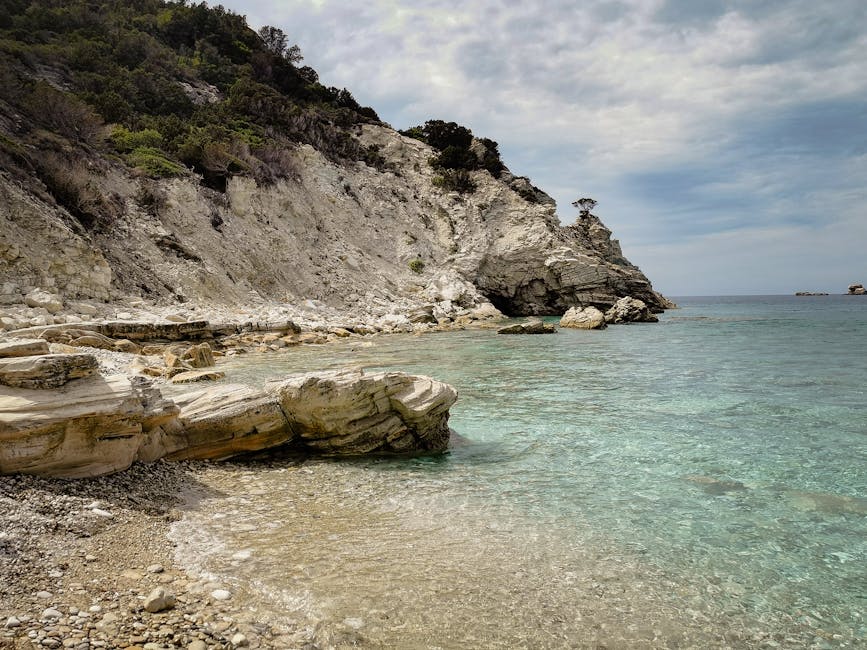
The beaches are accessible only from the sea. No road runs to them; the only residents are beach-bar owners who come in by boat each morning. Your cruise either anchors in the bay and shuttles you ashore, or you swim the 20 metres to the beach yourself.
The Blue Caves
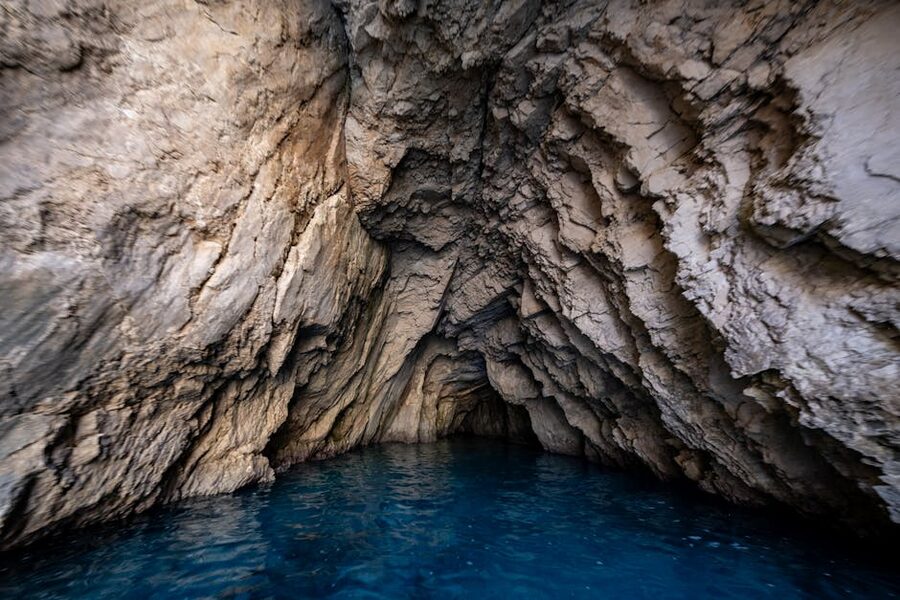
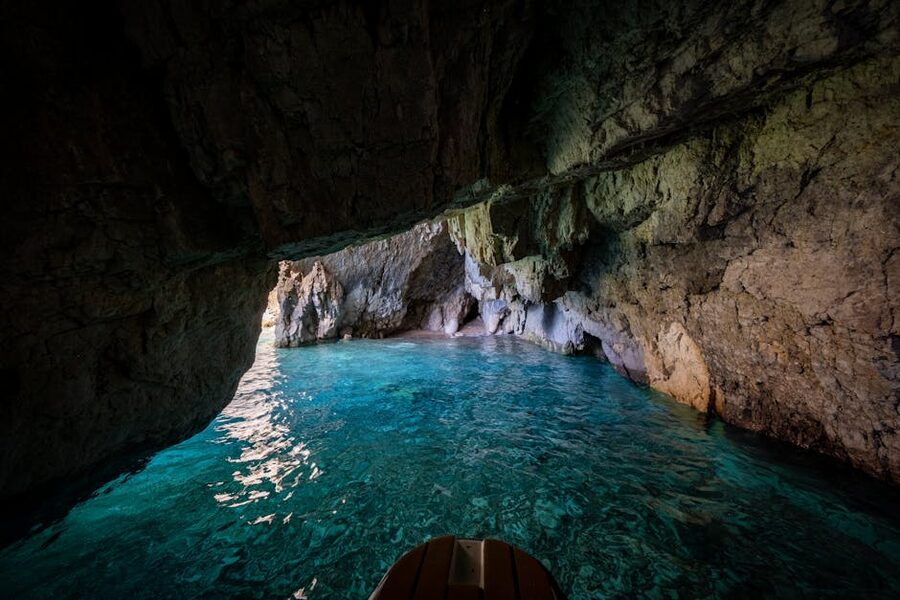
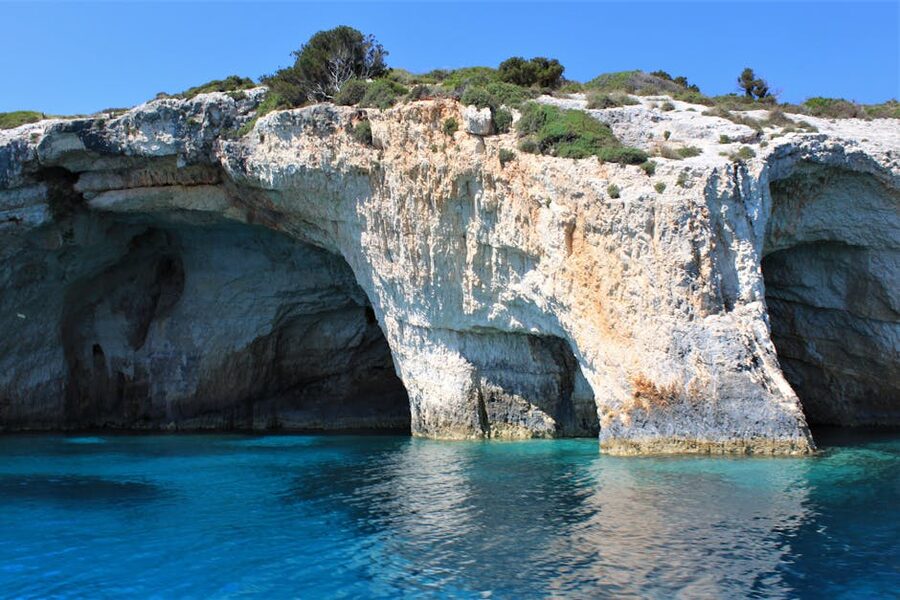
A sea-cave complex on the west side of Paxos. Three main caves plus several smaller ones. The biggest cave is about 40 metres deep with a ceiling 4-5 metres high; the water inside glows turquoise from the cave mouth’s refracted light.
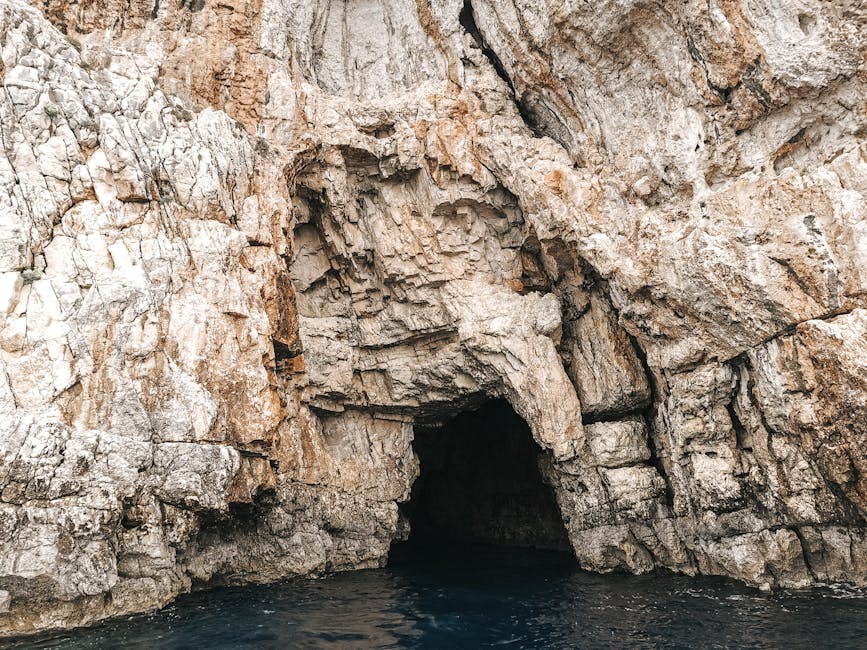
You can swim into some caves, kayak through others, or simply drift past on the boat. The operator’s call depends on sea conditions — in calm weather you’ll swim into 2-3 caves; in choppy weather the cruise will drift past without stopping.
Gaios (Paxos)
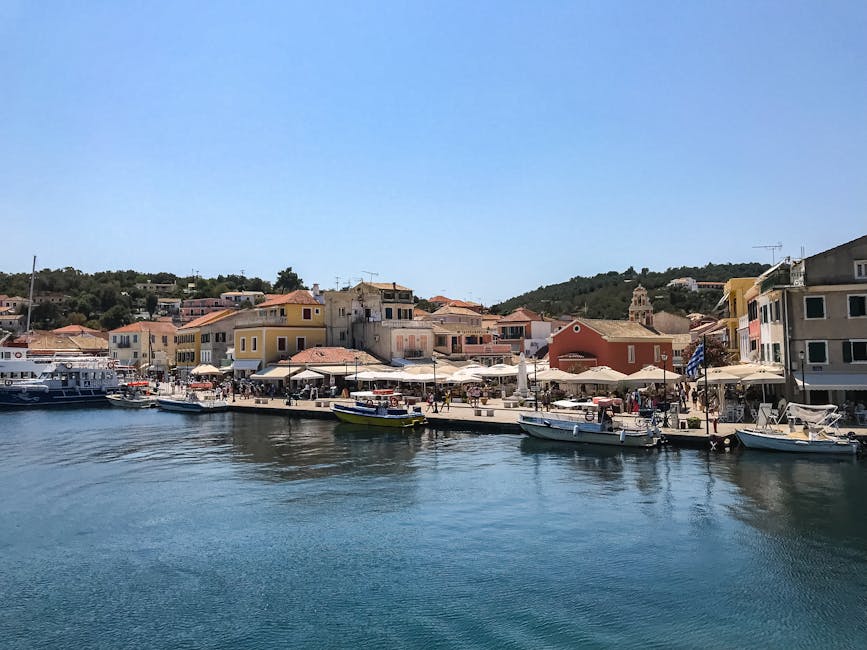
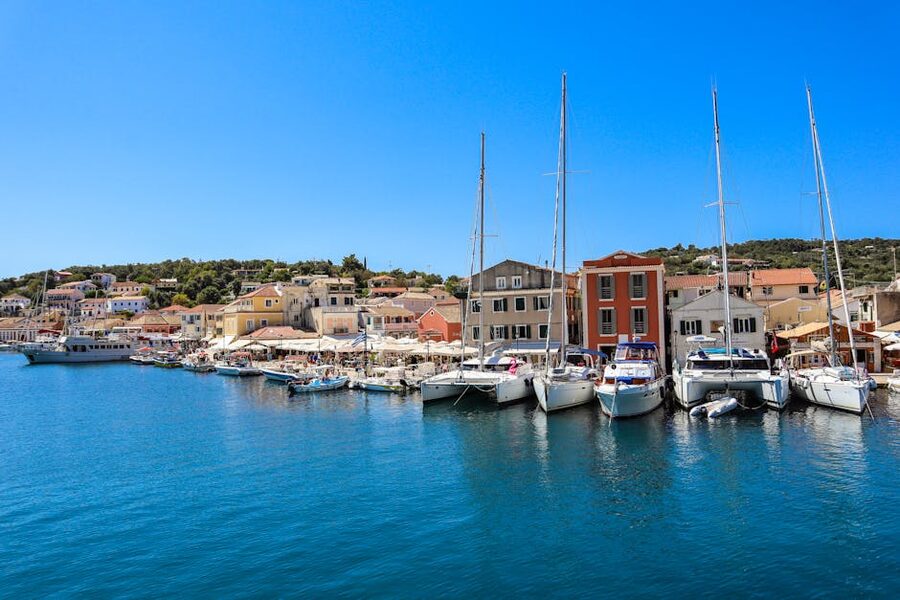
The main town on Paxos — 500 residents, one main square, and about 10 restaurants. Venetian architecture from the 16th-18th centuries when Paxos was a Venetian-ruled outpost. The two-hour stop here is technically “free time” but most visitors use it for lunch (despite already having had it on the boat), a quick walk, and maybe a coffee.
The Best Tours to Book
1. From Corfu: Day Cruise to Paxos, Antipaxos & Blue Caves — $58
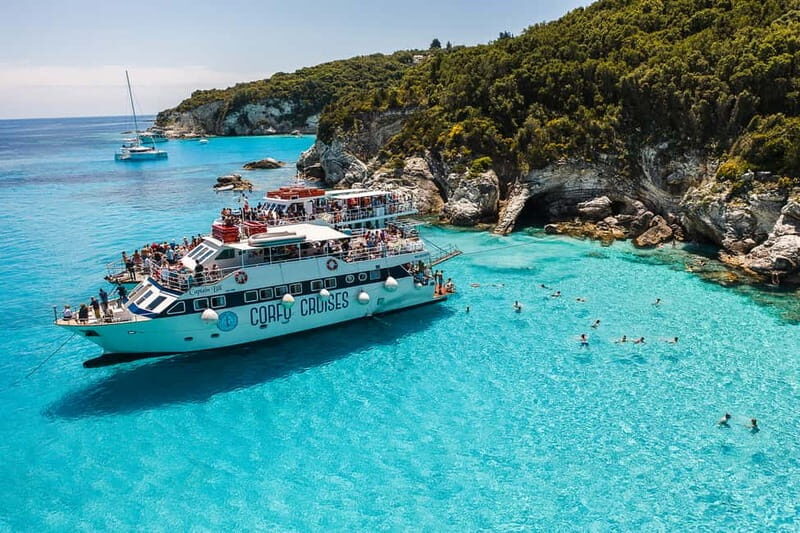
The classic. $58 covers a full 7-11 hour day including all swim stops, a proper lunch (Greek salad, pasta, moussaka-style main), drinks during the meal, and the Blue Caves tour. Past visitors rate the crews highly — most cruise operators run a rotating crew of 10-15 and training is visible in the consistency. Our review covers exactly what’s included. At $58 it’s one of the best-value full-day boat cruises in Greece.
2. From Corfu: Antipaxos & Paxos Blue Caves Boat Cruise — $53
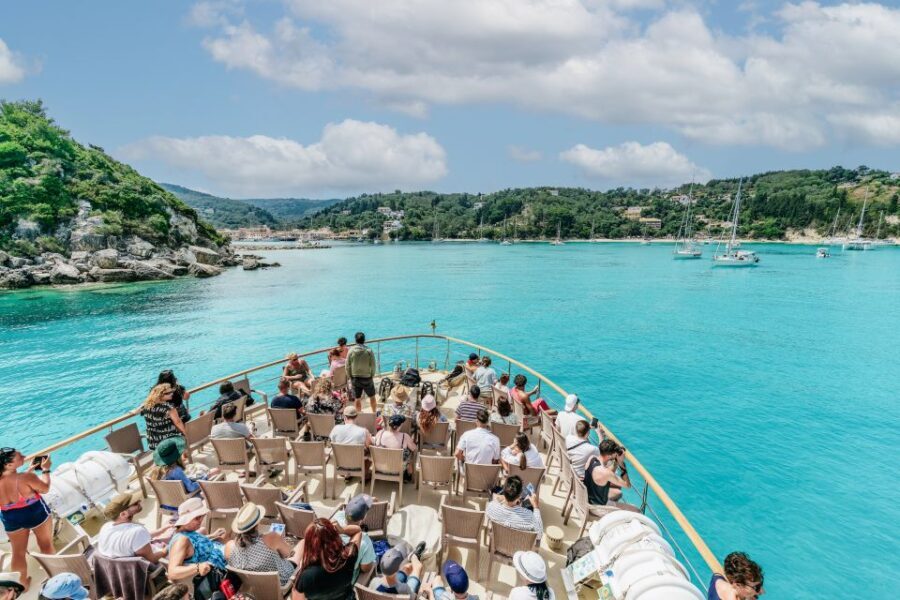
A slightly cheaper version of the same experience. $53 gets you essentially the same day — same stops, same lunch format, same duration. The main difference is which specific boat you’re on. Our review compares this head-to-head with the more expensive version. For budget-conscious travellers, this is the obvious pick. Book whichever has availability on your preferred date.
3. From Corfu: Paxos, Antipaxos and Blue Caves — $53
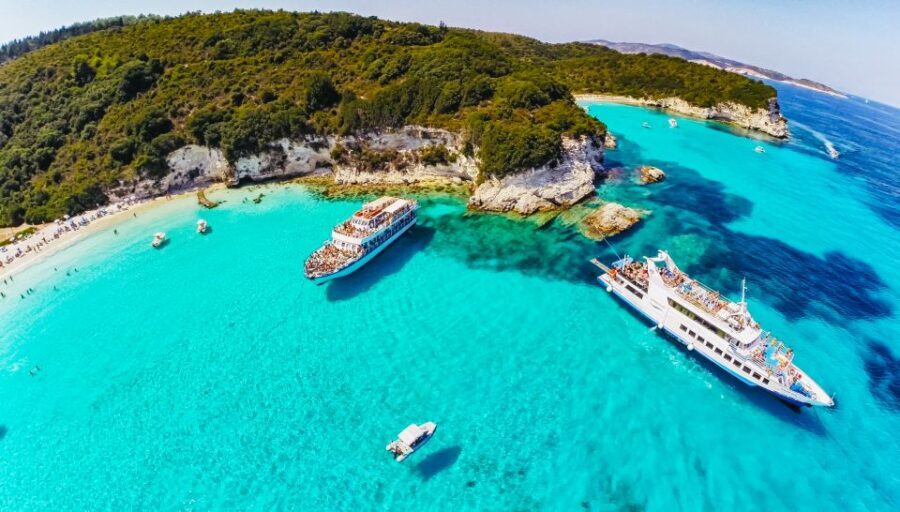
A third option from a smaller operator. Runs a smaller boat (usually around 60-person capacity vs 100-person for the bigger cruises) which means the swim stops feel less crowded. Same core itinerary. Our review covers the specific boat sizes of each operator. Good pick if crowded boats matter — not available every day, so check dates before assuming.
What Makes Paxos Different
Paxos is less developed than Corfu. The whole island has maybe 2,500 residents. There are three towns (Gaios, Lakka, Loggos) and only Gaios has a proper harbour. Roads are narrow; the “ring road” around the island is 20 km and single-track in places.
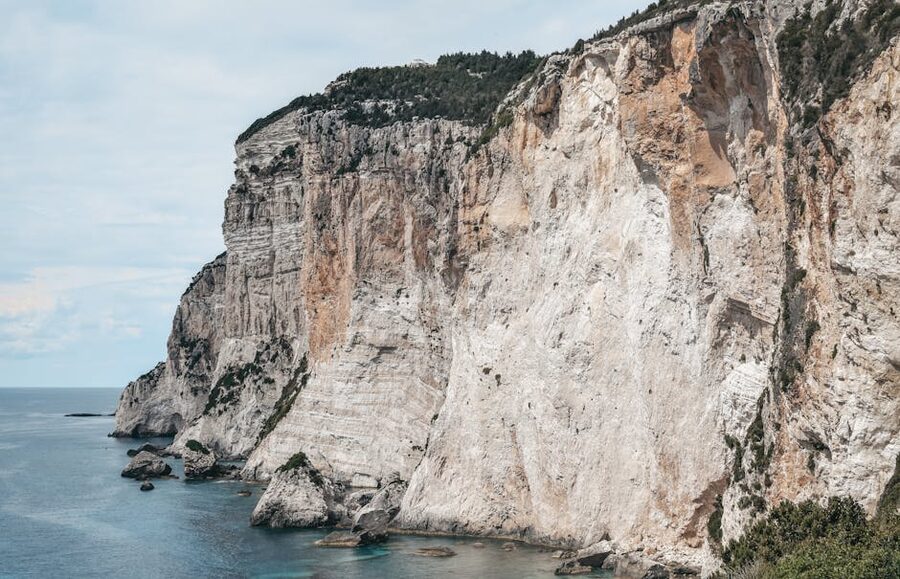
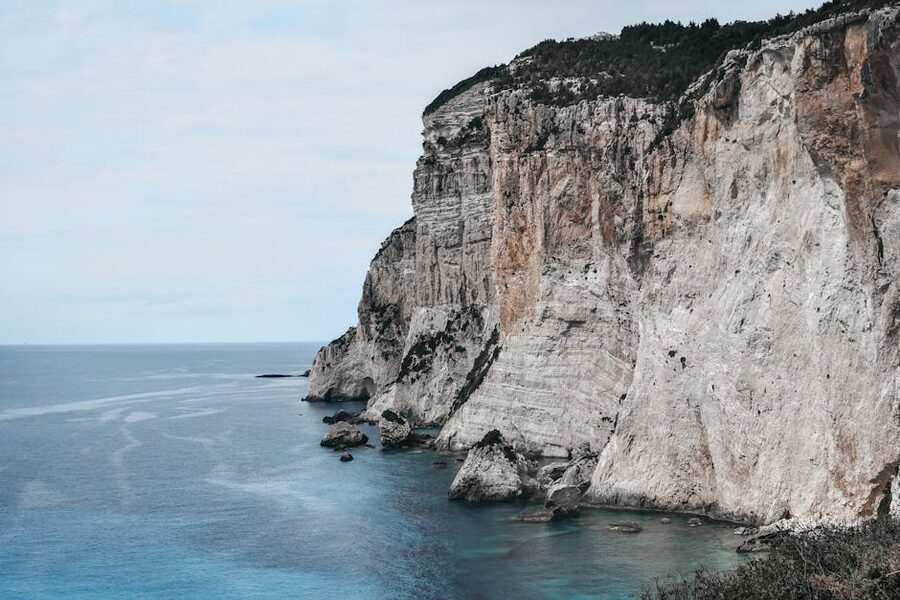
The reason to come is the water. Paxos has some of the clearest sea in the Ionian, partly because there’s no industry on the island and partly because the limestone cliffs filter sediment before it reaches the sea. Visibility reaches 30+ metres on calm days.
Venetian heritage is the other draw. Paxos was ruled by Venice from 1386 to 1797 — 400 years of Venetian administration that left olive groves, pale-pink stone houses, and a local dialect with significant Italian influence.
When to Sail
Corfu-to-Paxos cruises run May through October. Earlier or later is too windy.
May-June: Water temperature 20-22°C. Cool but swimmable. Few crowds, good light.
July-August: Peak season. Water 24-25°C, air 30-32°C. Cruises sell out 2-3 days ahead.
September-October: Best overall. Warm water (22-24°C), thin crowds, stable weather.
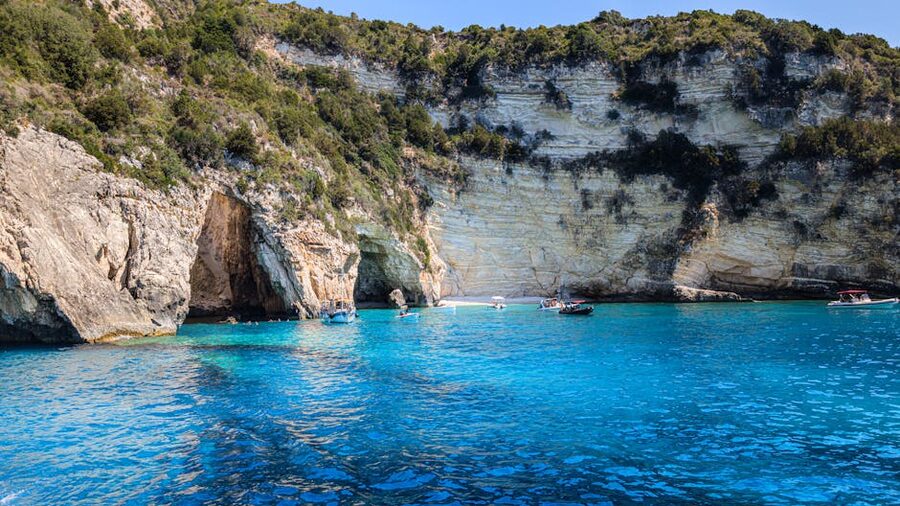
Weather cancellations: rare but possible. If the forecast shows winds above 25 knots, some cruises cancel rather than risk rough stops. Free rebooking or full refund is standard.
What to Bring
Swimsuit under everything. You board, have coffee, then pretty much immediately you’re in the water.
Waterproof sunscreen. 8+ hours of Mediterranean sun. Reapply after every swim.
Hat with chin strap. Gusts are real. Ordinary hats fly off.
Light jumper/windbreaker. Ionian evenings get cool even in August.
Snorkel mask. Most cruises provide basic ones. Your own is better quality.
Dry bag for phone. Swimming to and around the caves with your phone in hand is unwise.
Cash for Gaios. €20-40 for coffee/lunch/souvenirs. Paxos has ATMs but the queues in summer are long.
Motion sickness tablets if you’re prone. The cross to Paxos can be bouncy — take one at boarding.
Getting to Corfu’s Old Port
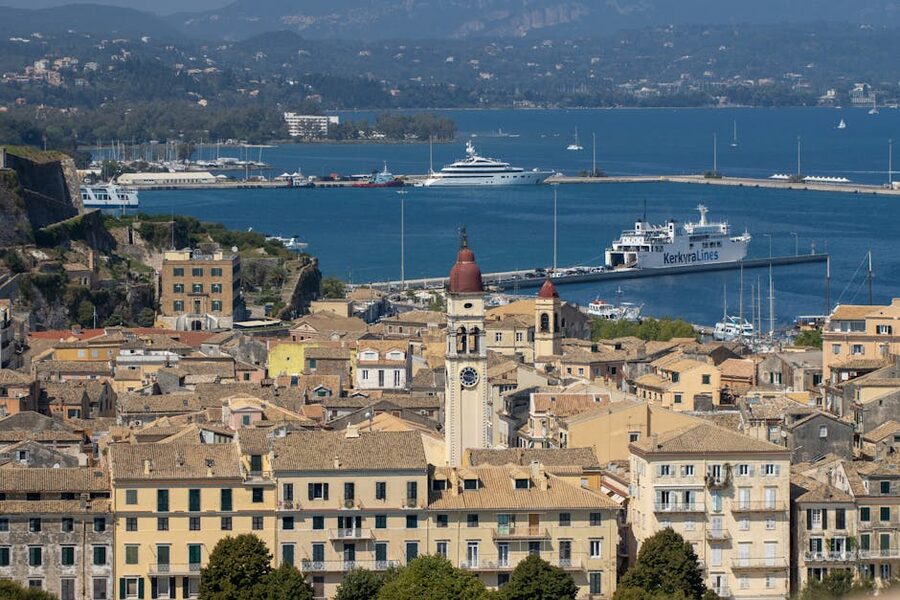
Most Paxos cruises leave from Corfu Old Port, a 10-minute walk from Corfu Town centre.
From Corfu Town: walking distance. The Old Port is signposted; it’s on the north side of the fortifications.
From beach resorts (Dassia, Kontokali, Ipsos): 15-25 minute taxi, €15-25. Or public bus (line 7 from Ipsos) for €2.50.
From Kavos (south Corfu): too far for a day cruise. Your cruise operator might not even accept bookings from down there — confirm before booking.
Parking: limited. If you’re driving, arrive 30 minutes early. The Old Port car park fills up by 9am in summer.
Worth Knowing Before You Book
Boat sizes matter. Bigger boats are smoother but crowded at swim stops. Smaller boats are bouncier but give you more space. Check the listed capacity.
Lunch is rarely gourmet. It’s a buffet of Greek basics (salad, pasta, moussaka or souvlaki). Good enough, not memorable. Don’t plan the day around lunch.
Drinks during lunch are usually included (water, soft drinks, often wine or beer). Drinks outside the lunch window are extra — budget €3-5 per drink.
Sea caves vary week by week. After a storm the caves get stirred up and the turquoise colour dulls for 2-3 days. If you can flex your cruise day, wait until the forecast shows calm seas for at least 48 hours beforehand.
The ferry from Corfu to Paxos for independent visits takes about 3 hours and runs 3x a day in summer. If you’re not keen on a group cruise, this is an alternative — €14 each way.
Children under 5 are free on most cruises. Ages 5-12 discounted about 30%.
Staying Overnight on Paxos
A few cruise operators offer an overnight version: you arrive in Gaios in the afternoon, skip the return leg, and stay on Paxos for 1-2 nights before getting the public ferry back to Corfu.
This turns a day-trip into a short island holiday. You get the cruise experience on the way out, miss the crowd on the return, and have a chance to see Paxos at night — which is very different from the day-trip version. Gaios at 10pm is locals fishing from the harbour, tavernas filling with regulars, and almost no tourists.
The overnight option costs about €40 more per person for the dropped return, plus €50-80 per night for a guesthouse. Worth it for travellers with time, not worth it if you’re squeezing Paxos into a tight schedule.
Pairing with Other Corfu Activities
Corfu is a 3-4 day island. The Paxos cruise is one full day; pair it with:
Morning walking tour of Corfu Old Town: Venetian fortress, Spianada square, Liston arcade. UNESCO-listed, free to walk, about 2-3 hours.
Beach day at Paleokastritsa: Corfu’s west coast, multiple beaches, monastery. 40 minutes by bus from Corfu Town.
Evening kumquat liqueur tasting: local speciality. Corfu is Europe’s main kumquat producer; several distillery tours exist.
Another boat tour: our general Corfu boat tour guide covers shorter half-day cruises around Corfu itself.
Food on Paxos
Paxos is small enough that restaurant recommendations concentrate in three towns.
Gaios: Taka Taka (Greek tavern basics), Genesis (seafood-focused), La Rosa di Paxos (Italian). All on the main square or waterfront.
Lakka (20 min north): La Bouche (French-Greek fusion, one of Ionian Greece’s better restaurants), Akis (casual taverna). Lakka itself is the most atmospheric Paxos village — a natural bay lined with tavernas.
Loggos (mid-island): Vasilis, O Gios. Smaller selection but the view across the bay at sunset is genuinely beautiful.
Cruise lunch is on the boat, but if your cruise includes a 2-hour Gaios stop, skip the harbour-front restaurants and walk 5 minutes inland for better food and lower prices. The local speciality is bianko — a garlic-and-potato fish stew that’s specifically an Ionian dish. You’ll see it on most menus. It’s not for everyone (garlic-heavy) but worth trying once.
Worth the Day or Skippable?
Worth the day if: you’re on Corfu for more than 2 nights, you like boat days, you want to see the Blue Caves, or you want an authentic quieter Greek island experience without committing to a multi-day stay.
Skippable if: you’re on a 1-2 night Corfu stopover. In that case pick a half-day boat tour instead — the shorter trips cover the south of Corfu and a couple of bays without the 3-hour Paxos crossing.
For most Corfu visitors, the Paxos day is the headline excursion. It’s what Corfu locals will tell you to book, and for good reason — the water genuinely is the clearest in the Ionian, and the cave swims are an experience you won’t get just lounging on a beach.
More Greece Guides
If Corfu is part of your Greece trip, the natural pairings are the general Corfu boat tour guide and our island-specific guides for Santorini caldera and Santorini catamaran cruises. For island-hopping logistics, the Kos island boat guide covers the Dodecanese equivalent. Athens travellers should read the Acropolis combo pass guide and Meteora day trip guide.
Affiliate disclosure: We may earn a small commission from bookings made through the links on this page. It doesn’t change the price you pay and helps keep the site running.