
Most people in Crete don’t realise there’s an uninhabited island sitting 12 km off Heraklion with four wild bays, no cars, no cafes, and better snorkelling than most places with both. It’s called Dia. You can only reach it by boat — and the sailboat cruises are why it exists on the tourist map at all.
I did the full-day sailing with swimming and lunch in early September, paid €95, and came home sunburnt and full of grilled swordfish. Here’s how the cruises work, what’s included, and why I’d pick the sailboat option over the faster catamarans.

In a Hurry? The Three Dia Cruises Worth Comparing
- Best overall: Dia Island sailboat cruise with swim and meal — from €95. Full day, 5.5 hours, proper sailboat (not catamaran), swordfish lunch onboard. This is the one with the most reviews and the one I did.
- Best for drinks & chill: Dia sailboat cruise with drinks & lunch — from €90. Slightly smaller, open bar from 11am onwards. A party at sea.
- Best for snorkellers: Dia Island cruise with snorkelling & lunch — from €82. Masks and fins included, longer at anchor, the actual underwater-life option.
- In a Hurry? The Three Dia Cruises Worth Comparing
- What Dia Island Is (and Why It’s Uninhabited)
- Why Sailboat Not Catamaran
- The Best Dia Island Sailing Cruises
- 1. Heraklion Dia Island Sailboat Cruise with Swimming & Meal — from €95
- 2. Dia Island Sailboat Cruise with Drinks & Lunch — from €90
- 3. Dia Island Sailing Cruise with Snorkelling — from €82
- What a Full Day on Dia Actually Looks Like
- Snorkelling at Dia — What You’ll Actually See
- When to Go — Weather and Seasons
- Seasickness Reality
- What’s Included (and What Isn’t)
- Getting to the Heraklion Marina
- If You’re Coming from Another Crete Town
- How Dia Compares to Other Crete Day Trips
- Worth Pairing With in Heraklion
- Food Onboard — The Lunch Details
- Practical Questions
- The Short Version
What Dia Island Is (and Why It’s Uninhabited)

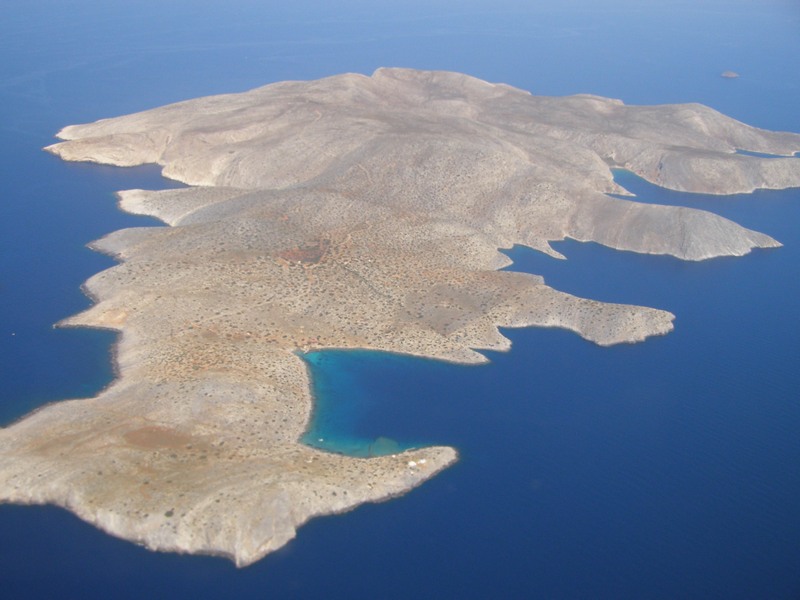
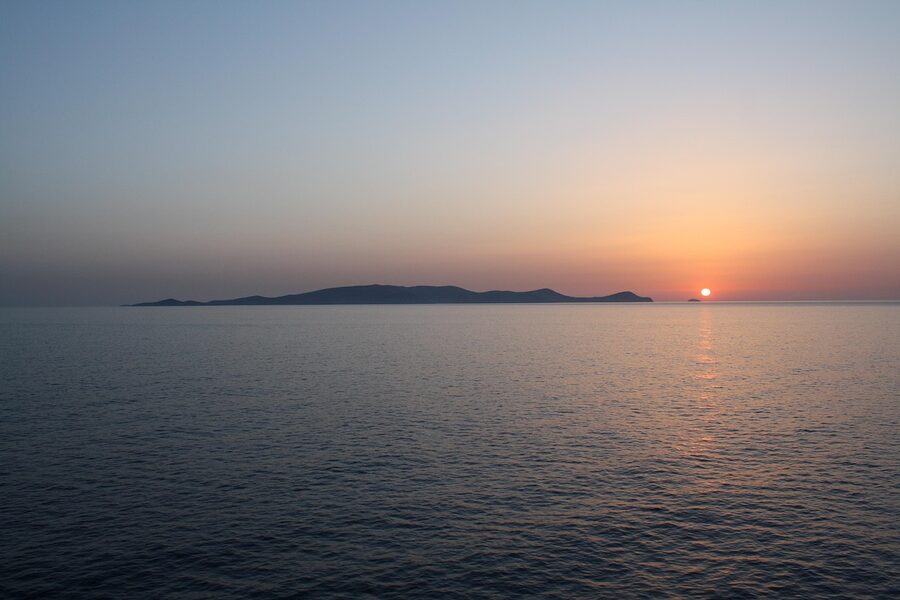
Dia is about 12 square km and sits due north of Heraklion. It’s been a nature reserve since 1972, protected mostly for its colony of wild goats (the kri-kri, a subspecies unique to Crete) and migratory birds. Nothing can be built on the island. No roads, no bars, no shops, no drinking water.
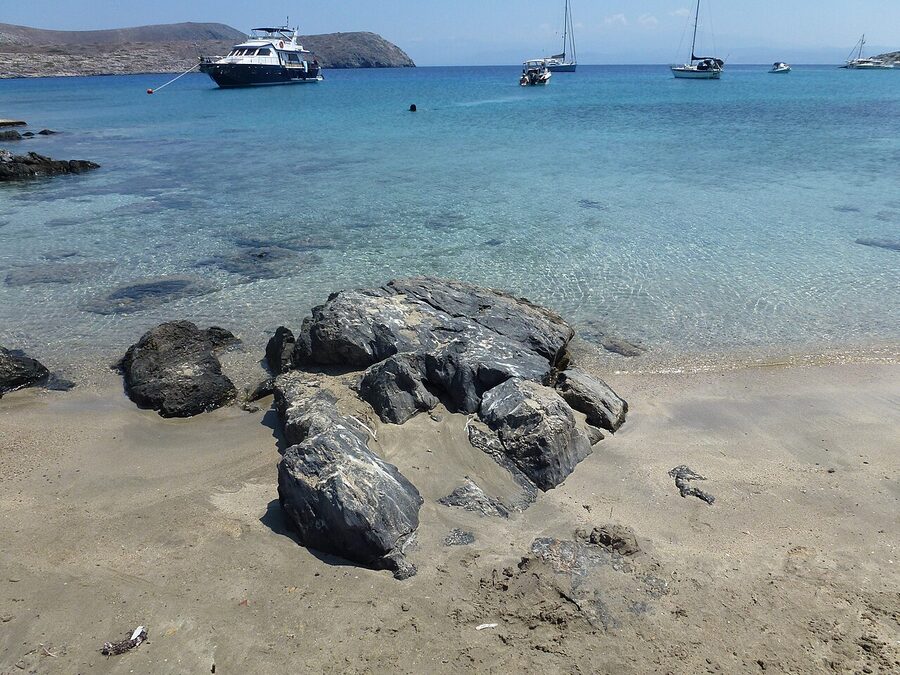
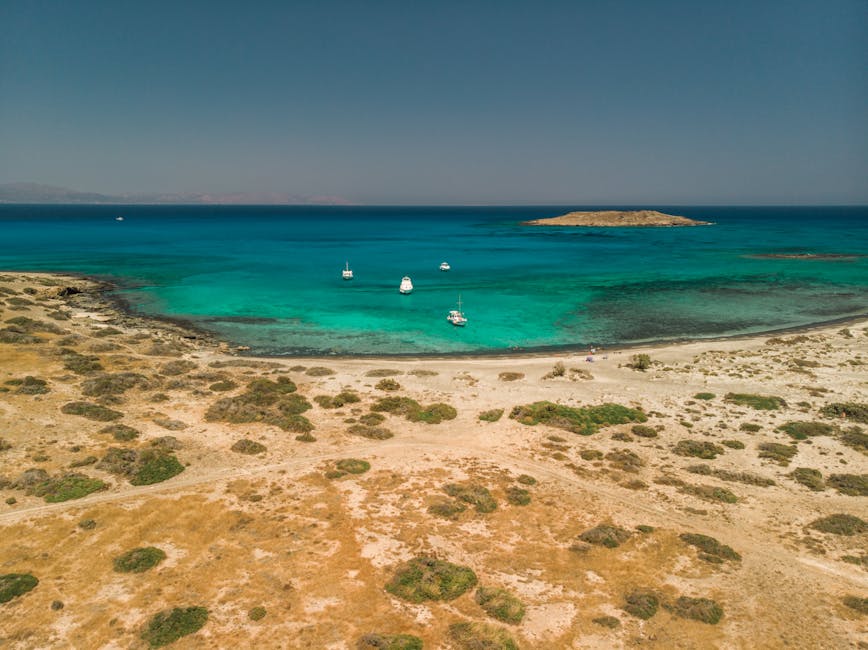
There are four natural bays on the south coast — Ormos Saint George, Kapari, Panagia, and Aginara — each one a tight inlet with clear water and limited beach space. Tour boats rotate between them depending on wind. Most cruises hit two on a full day, one on a half day. The north coast is wild and exposed. Boats stay well away from it.
Archaeologists think Minoan Knossos used Dia as a harbour 3,500 years ago — underwater remains of ancient breakwaters have been found in several of the bays. Cousteau filmed there in the 1970s. That’s about all the human history the island has.
Why Sailboat Not Catamaran
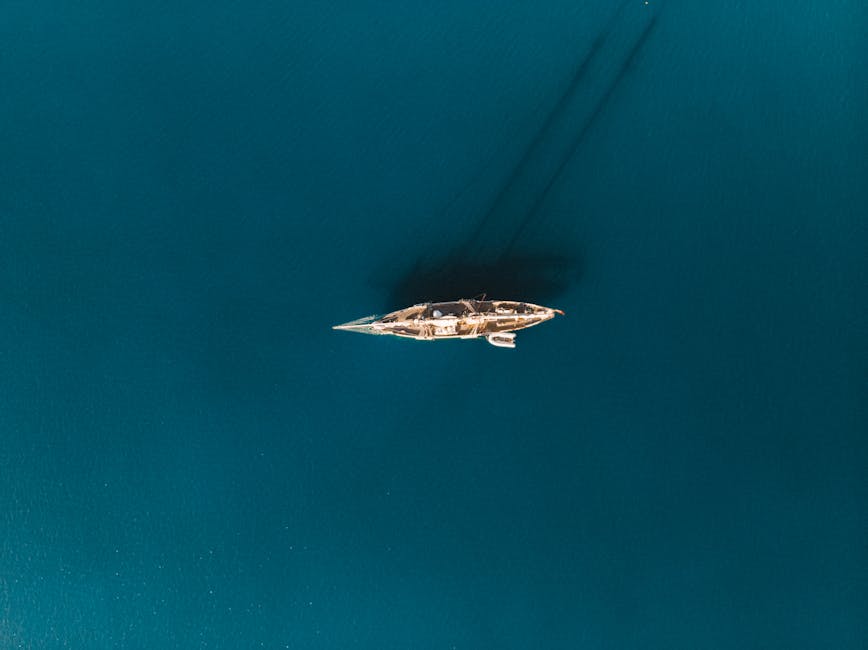
You have two options going to Dia: sailboat (slower, wind-assisted, quieter) or catamaran (faster, motorised, noisier, capacity 50+). I’d pick the sailboat every time. Here’s why:
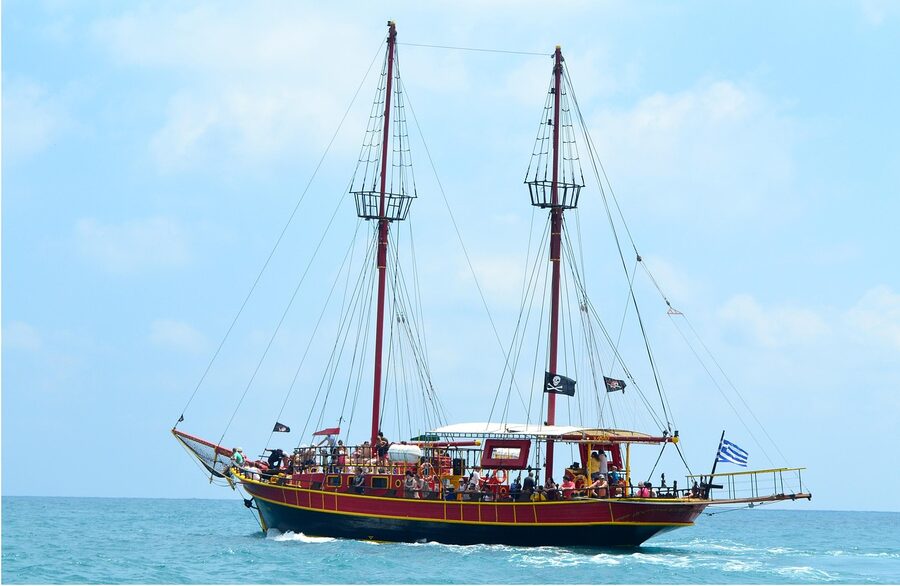
Dia is close enough to Heraklion (about 90 minutes under sail) that the catamaran’s speed advantage is marginal. What you lose is the sail experience — the only time most people actually get on a working sailboat during a Greek holiday. You also lose the vibe. Catamarans are mini cruise ships at this scale. Sailboats feel like you’re on a friend’s yacht.
The main operator uses a 15m motor-sailer with capacity of 20-ish guests, and everyone gets enough space to actually lie down and stretch out. Catamarans put you shoulder to shoulder. If you care about seasickness, bigger isn’t necessarily better either — the sailboat’s mono-hull handles swell more comfortably than a wide-beam cat.
The Best Dia Island Sailing Cruises
Three tours ranked by what most people actually want.
1. Heraklion Dia Island Sailboat Cruise with Swimming & Meal — from €95
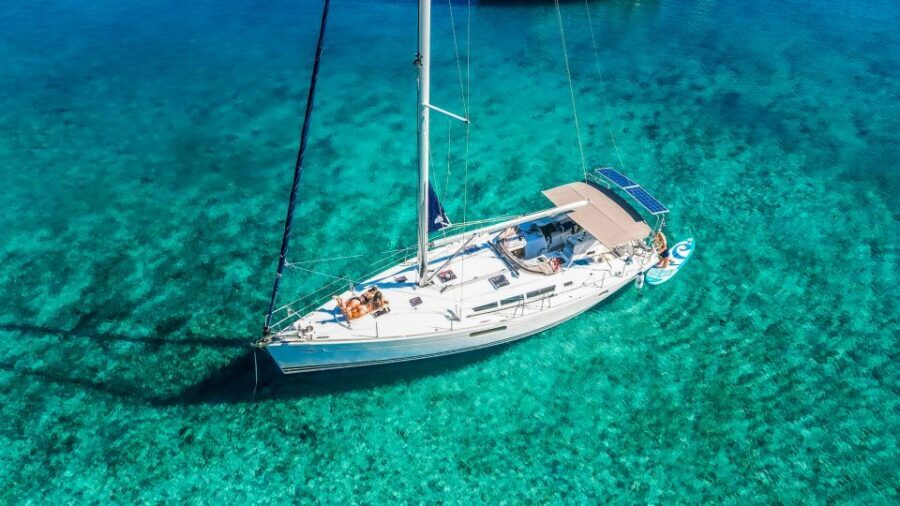
Full-day sailing trip on a proper sailboat, not a mass-market catamaran. Meal is grilled fish or chicken with salad and bread, cooked on the galley stove during the crossing. Two swim stops at different bays, usually Saint George and Kapari. Our full review has specifics on the boat, the meeting point at Heraklion marina, and which wind conditions make a difference to the route choice.
2. Dia Island Sailboat Cruise with Drinks & Lunch — from €90
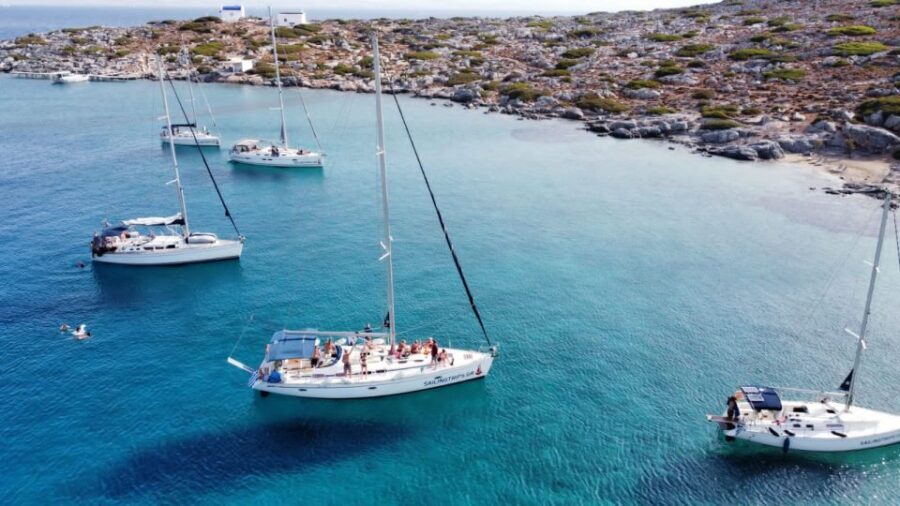
Same basic route but the drinks policy is different — unlimited wine, beer, and soft drinks from the first hour onwards, plus lunch. The boat is smaller (around 15 guests) so the vibe is closer to a private charter. Our review covers what’s on the drink menu and how much time the boat spends at each stop.
3. Dia Island Sailing Cruise with Snorkelling — from €82
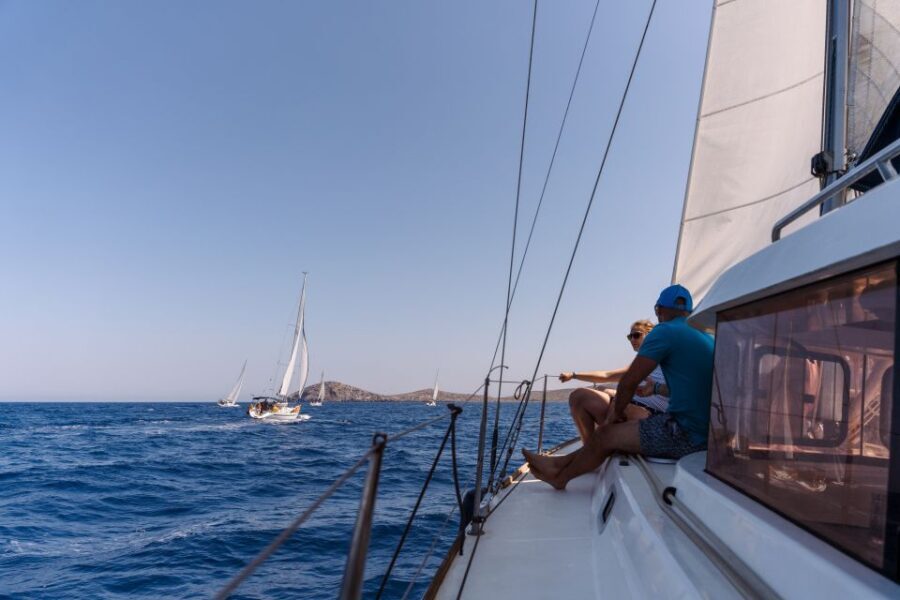
The snorkelling-first option. Crew briefs you on what to look for (octopus in the sea-grass patches, grouper hiding in rock crevices, the occasional stingray on sandy bottoms) and the boat anchors longer so you actually have time in the water. Cheapest of the three recommended tours. Our review has notes on the gear quality and water temperatures by month.
What a Full Day on Dia Actually Looks Like
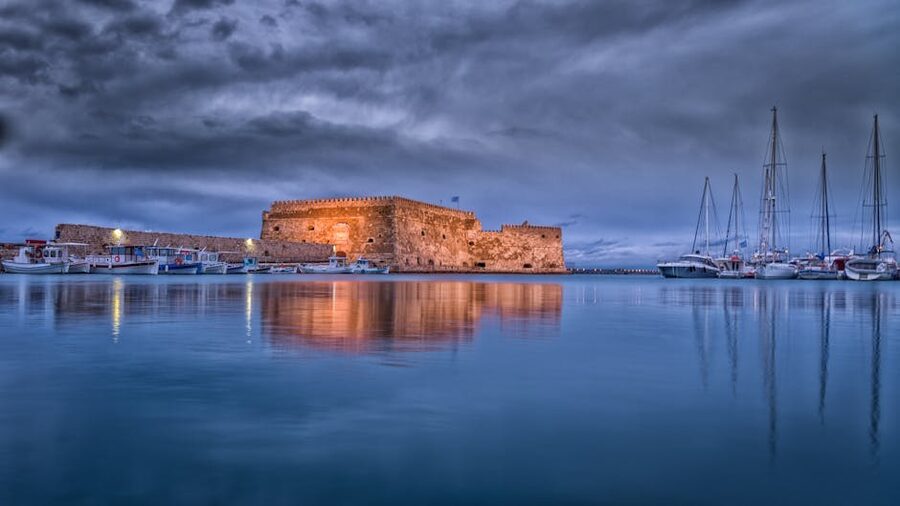
Here’s the schedule I had in September. Your timings will vary slightly but the shape is the same.
09:45 — Check-in. Boat briefing at the marina, shoe removal (all sailboats, take your shoes off on the dock), life-jacket assignment, brief about swim safety.
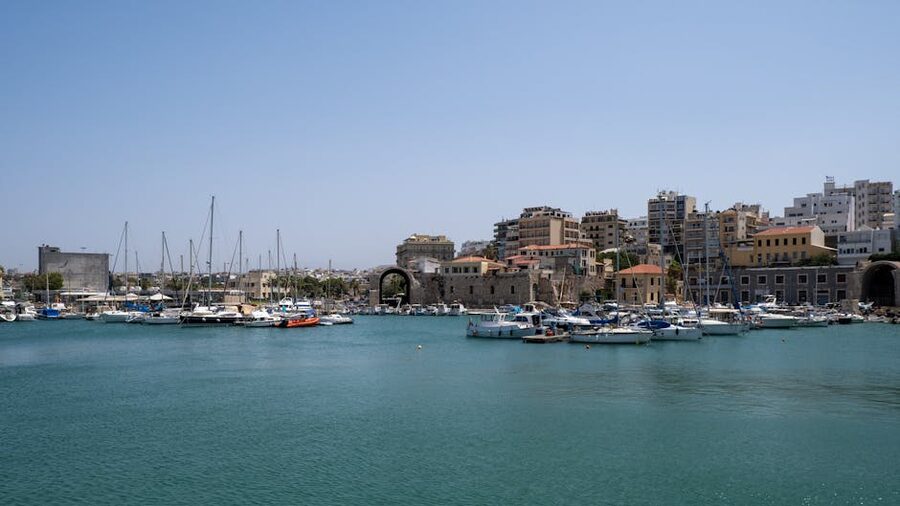
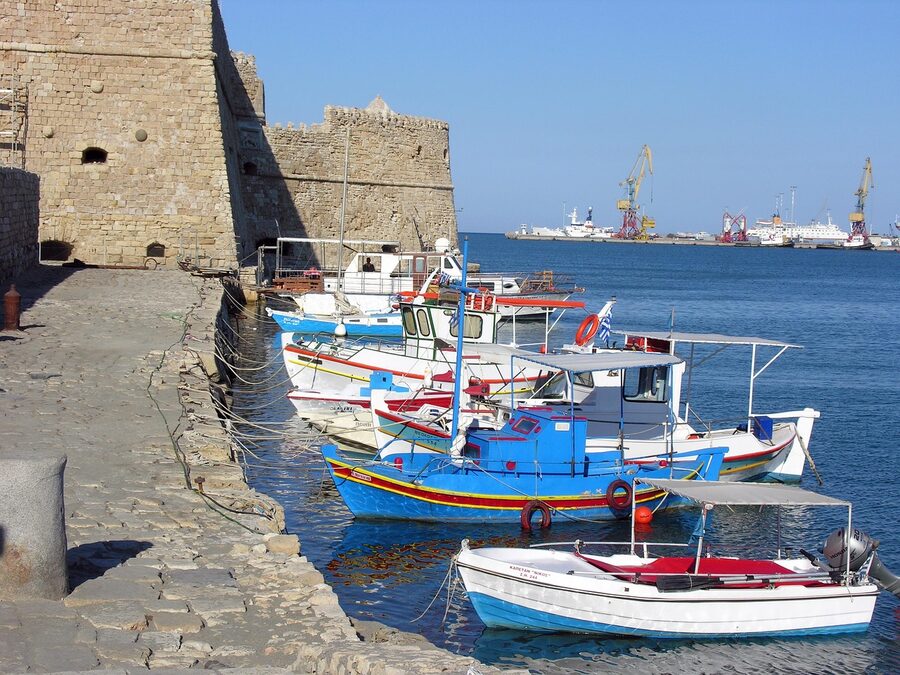
10:30 — Cast off. Motor out past the Koules Fortress and the old Venetian harbour wall. First half hour is engine only — no wind to catch until you clear the port.
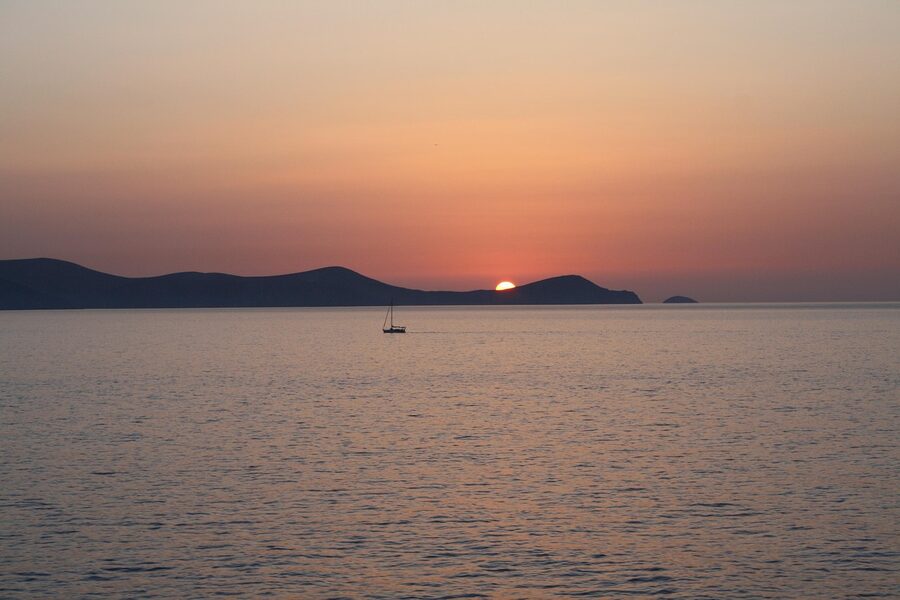
11:15 — Sails up. In the right wind conditions (north at 10–15 knots, which is the Cretan summer default) the sails go up and the engine goes off. This is the quietest, best part of the trip. The wake disappears. The slap of water against the hull is the only sound. Saw dolphins once, didn’t see them twice.
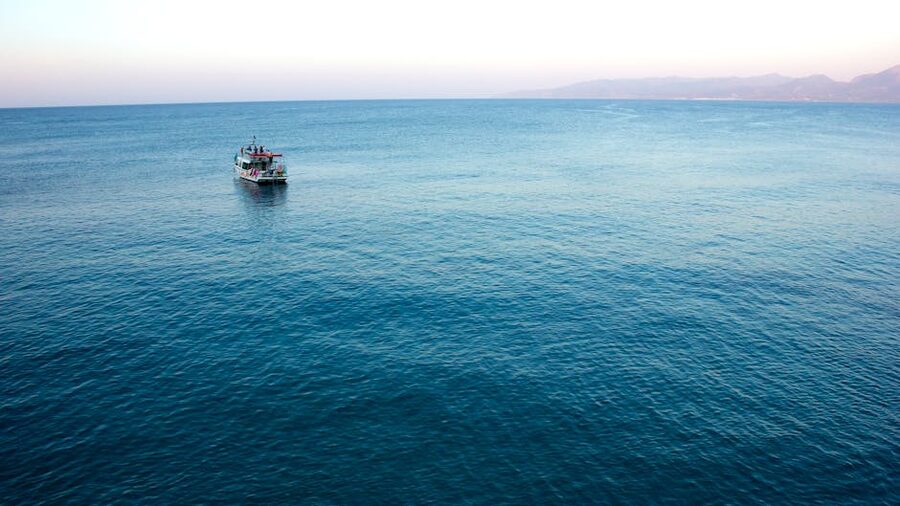
12:00 — Approach Dia. The south coast opens up and you can see the four bays cut into the hills. Boat picks one based on wind direction. Anchors off, about 50 metres from shore.
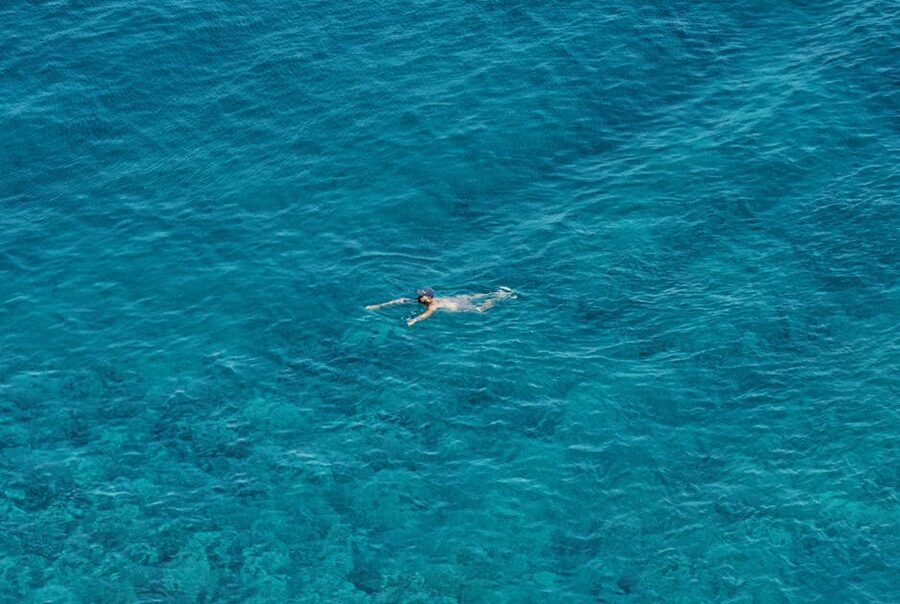
12:15 — First swim. Ladder down, you’re in the water. Temperature is 22-25°C June–October. Visibility is usually 10–15 metres. You can swim to shore if you want, but most people stay within arm’s reach of the boat.
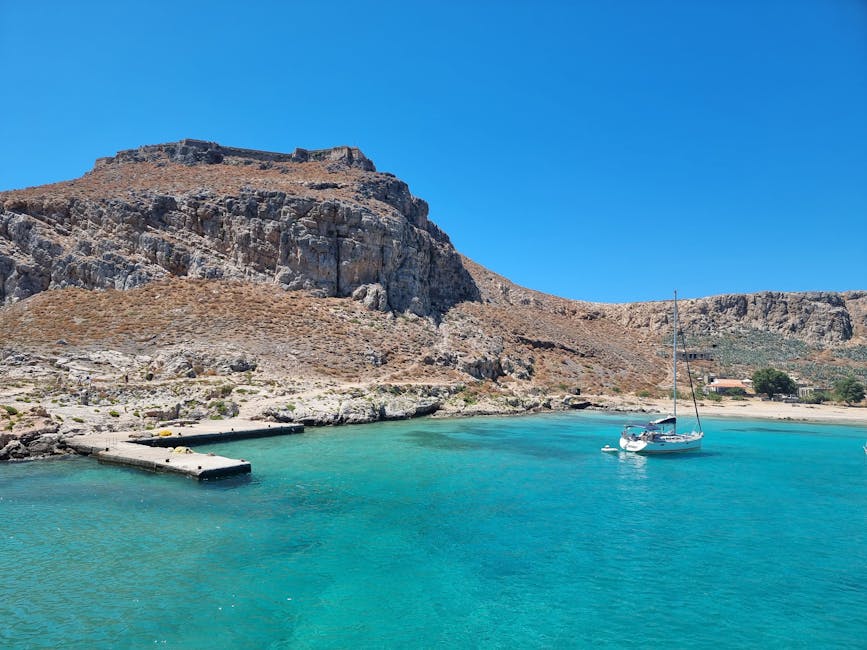
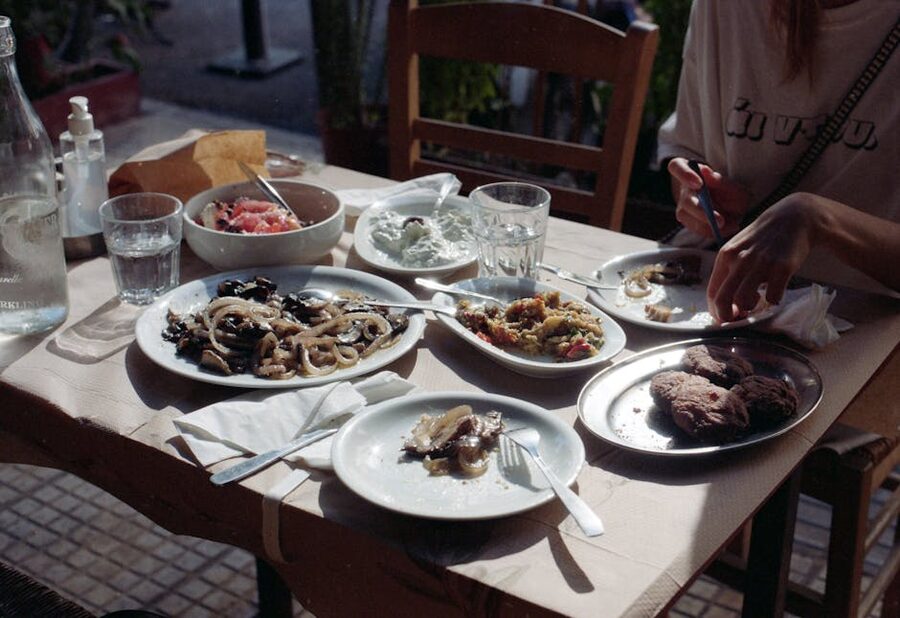
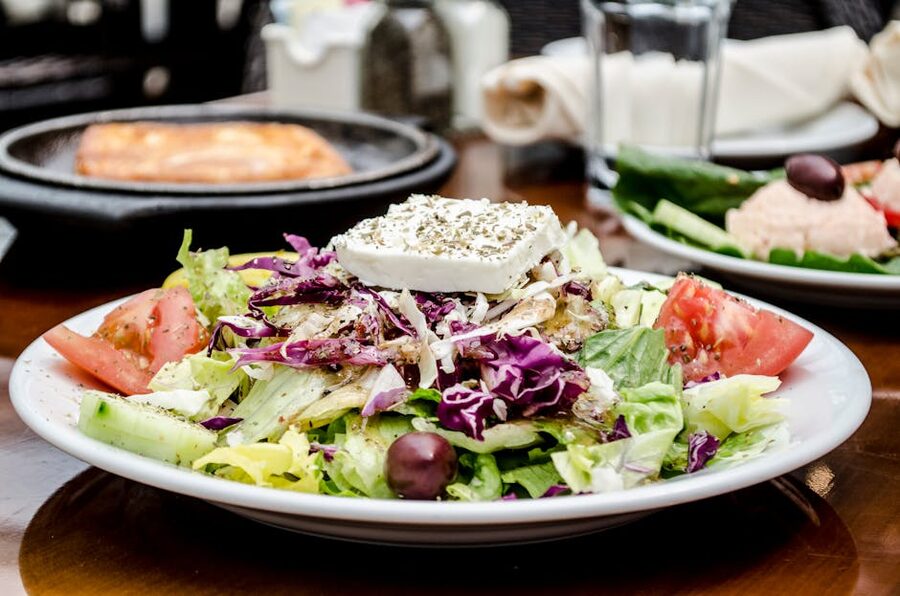
13:00 — Lunch. Cooked onboard while you were swimming. In my case: grilled swordfish, Greek salad, bread, fresh tomatoes, tzatziki, and a bottle of local Cretan white wine between four of us. Eaten on deck at low tables. This was genuinely one of the best meals I had on Crete.
14:30 — Second swim stop. Anchors up, move to a second bay 20 minutes away. Usually the one with slightly better snorkelling. Second ladder down.
16:00 — Head back. Sails up again for the return leg. This is when the Cretan afternoon wind is strongest and you actually feel the boat pick up speed.
16:30 — Arrive Heraklion. Docked around this time, mild sunburn, slight wine haze, ready for a shower and a real meal. Classic Greek sailing day.
Snorkelling at Dia — What You’ll Actually See
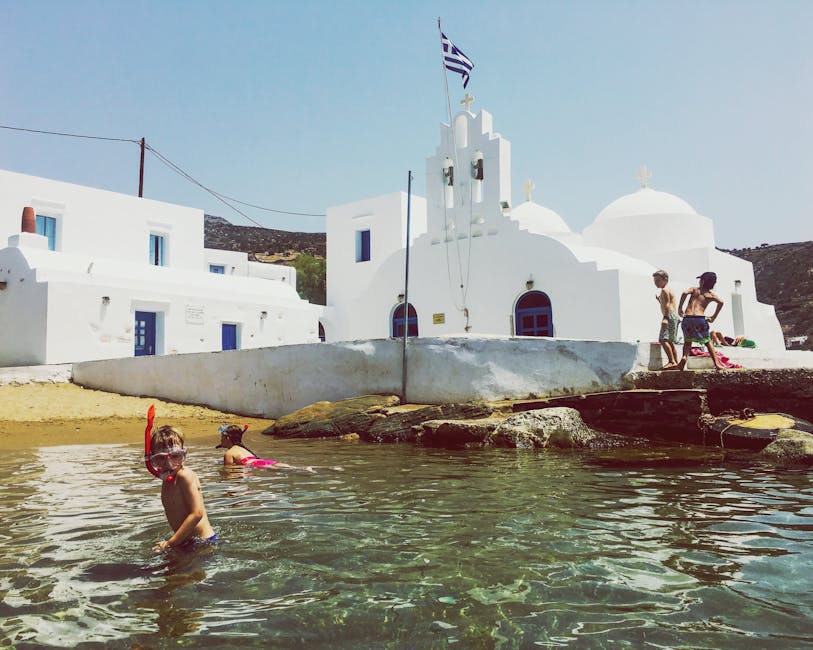
Dia’s underwater scene isn’t Red Sea spectacular but it’s good for the Mediterranean. The sea grass (Posidonia) beds between the bays hold octopus and cuttlefish. You’ll see needlefish everywhere near the surface. The rocky crevices around the headlands are where you might spot moray eels, dusky grouper, parrotfish, and the occasional stingray on sandy bottoms.
What you won’t see much of: coral, tropical fish, sharks (there are none of relevant size in Cretan waters). The underwater visibility is consistent May through October — you basically always get 10+ metres, which is plenty for casual snorkelling.
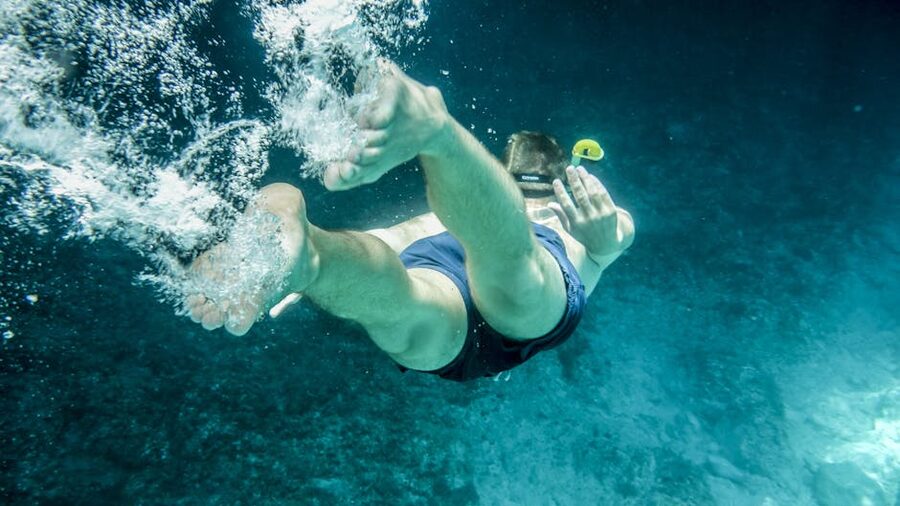
If you’re serious about underwater stuff, Dia is actually considered one of the better coastal dive sites in eastern Crete, with visibility up to 30 metres in the deeper sections. There’s a separate beginner scuba option from Heraklion that’ll take you there — different tour, different day.
When to Go — Weather and Seasons
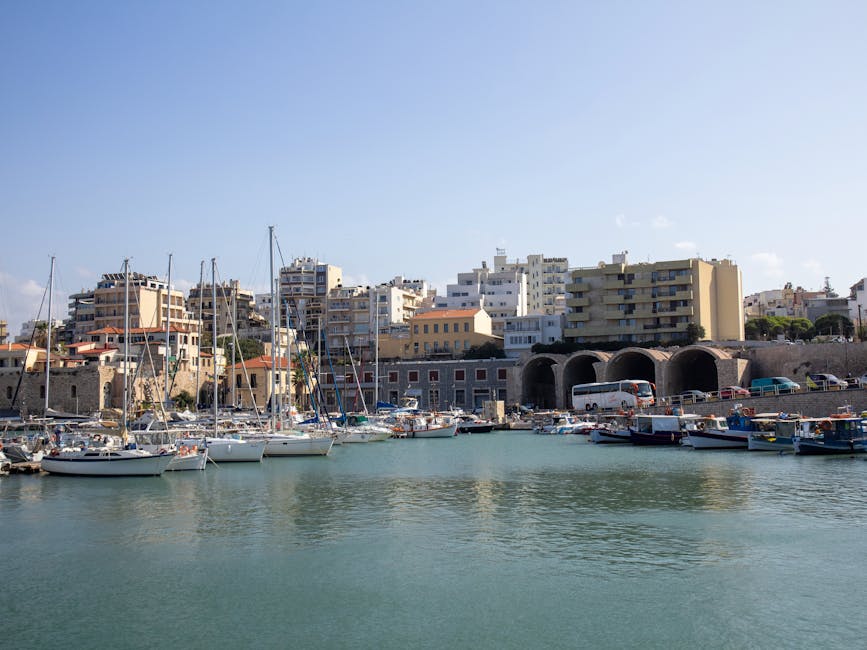
Cruises run April through October. The sweet spot is mid-May to mid-June and mid-September to mid-October — water’s warm enough, tours aren’t full, and the north wind (meltemi) is typically mild. Peak July and August have the most reliable weather but the hottest sun and the biggest crowds.
April and October trips can be cancelled at short notice if wind speeds exceed safe limits — generally above 25 knots the operators call it off. Don’t book Dia cruises as your only Crete activity in shoulder season; keep backup plans.
November through March the cruises don’t run. Water’s too cold to enjoy, and the north side of Crete gets serious winter storms.
Seasickness Reality
Mild swell is normal in the afternoon return leg. If you’re prone to seasickness, take a tablet (Dramamine, Stugeron) about an hour before boarding. Sit low and midships, look at the horizon, don’t read. I’d say about one person per trip in our group turned slightly green but nobody actually got sick — the boats are big enough and the route is sheltered enough that serious nausea is rare.
What’s Included (and What Isn’t)
Included on the standard tour: Sailing crossing both ways, two swim stops, lunch, water/soft drinks, one glass of wine, safety briefing, life jackets.
Not included on the standard tour: Snorkel gear (bring your own or book the snorkel-specific cruise), extra alcohol beyond the one included glass, transport to/from the marina from your hotel, sunscreen, tips for the crew.
Bring: Swimwear (obviously), towel, reef-safe sunscreen, hat, long-sleeve sun shirt if you burn easily, waterproof bag for phone, snorkel gear if you have it. Flip-flops are fine for the dock but take them off onboard — sailboats are barefoot by rule.
Getting to the Heraklion Marina
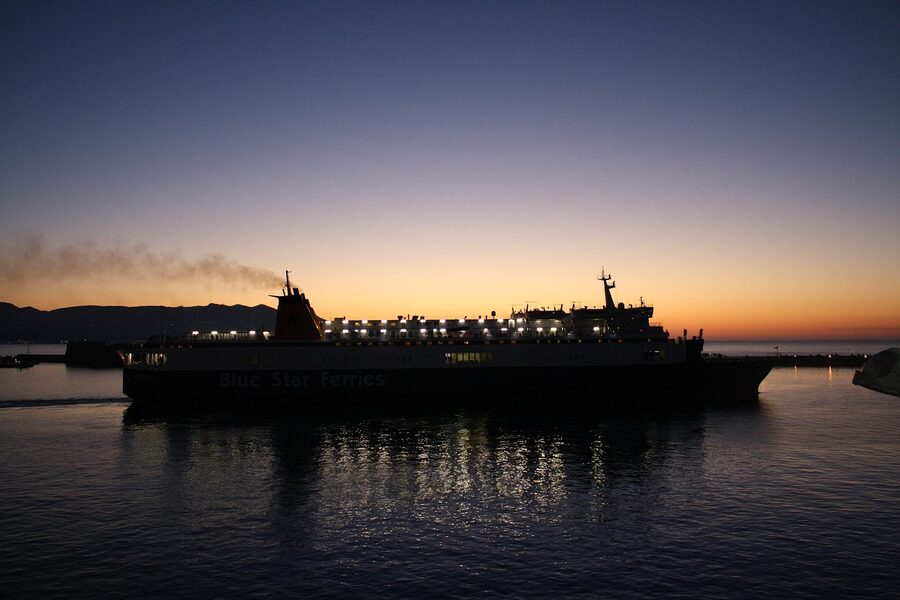
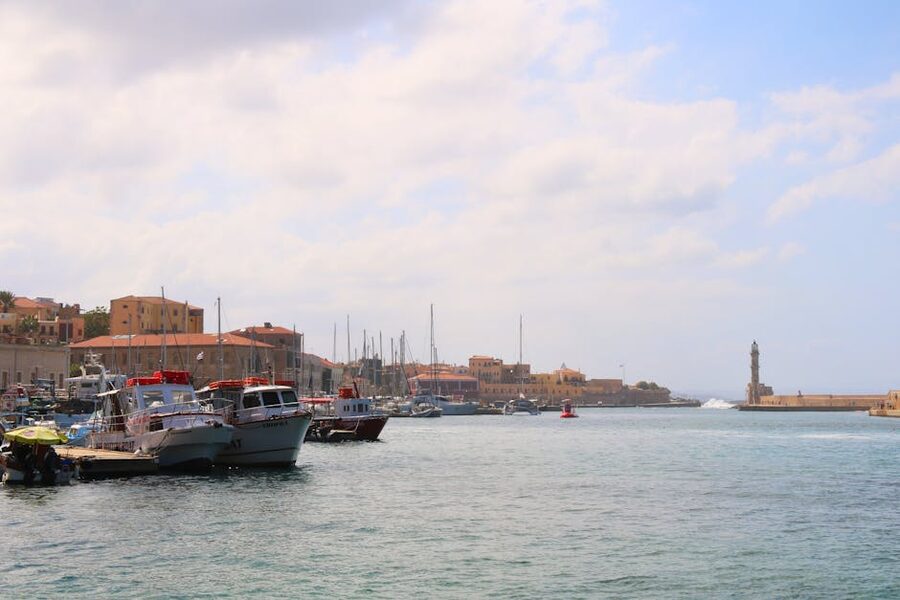
The marina is walking distance from central Heraklion. If you’re staying in the old town (near Lions Square or the cathedral), it’s a 10-minute walk through the back streets. If you’re further out (Ammoudara, Amoudara, or one of the coastal resort strips west of town), a taxi to the marina is €15–25 depending on traffic.
From the airport, budget €15 by taxi and 15 minutes. There’s also a public bus route (Bus 1) that goes from the airport terminal to the harbour for €1.50 — slow but cheap. Book the earliest departure if you’re flying in that morning; same-day is tight but doable.
If You’re Coming from Another Crete Town
Chania and Rethymno (west Crete) are 2+ hours by car from Heraklion and you’d be cutting it close on day-of travel. Better to do this tour from a base in Heraklion or Agios Nikolaos (east Crete, about 75 minutes’ drive). For travellers based further west, there’s a similar Balos Lagoon day trip that departs from Chania — a different experience but equally worth a day.
How Dia Compares to Other Crete Day Trips
If you’re choosing between day trips from Heraklion, here’s my take:
Dia is the sailing experience — best if you want time at sea and don’t mind that you don’t actually set foot on land much.
Balos Lagoon and Gramvousa (from Chania) is more spectacular scenery-wise but more crowded and you spend time on a bus. If you’re in west Crete anyway, do that. Our full Balos guide compares the options.
Spinalonga Island (from Agios Nikolaos or Elounda) is the historical option — the old leper colony, Venetian fortress, and the backdrop for Victoria Hislop’s novel The Island. Cheaper, shorter, but quite haunting. Our Spinalonga guide has logistics.
Santorini day trip by boat is the big one if you’re a first-timer in Greece — long day, early start, but hits the caldera, Fira, and Oia in one.
Worth Pairing With in Heraklion
A Dia Island day pairs beautifully with a morning or afternoon at Knossos Palace on your arrival or departure day — Knossos is 20 minutes inland from Heraklion and opens at 8am, so you can do it before a late cruise booking. Alternatively, Samaria Gorge is the epic landscape day for anyone with legs of steel.
If you’re spending a full week on Crete, I’d space the sea days — Dia one day, Balos another day, and spend the rest of the time exploring the inland villages and archaeological sites. The coast and the interior of Crete are completely different experiences.
Food Onboard — The Lunch Details
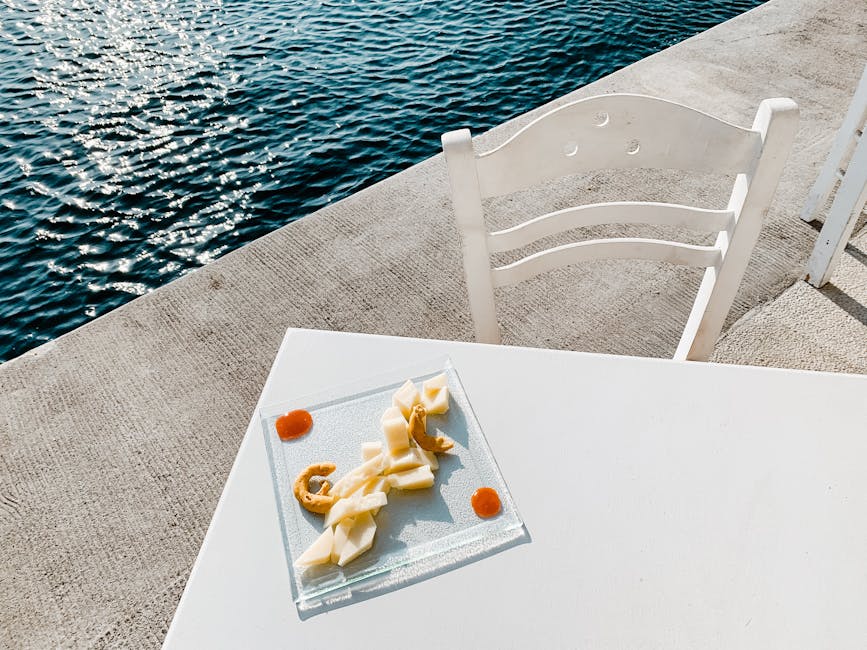
The meal is a big part of why I’d book the full-day cruise over the cheaper half-day. Fresh grilled fish (swordfish, sea bream, or sometimes red mullet depending on what the morning’s catch was), Greek salad with actual good tomatoes, homemade bread, tzatziki, a glass of Cretan white. You eat on deck, in swimwear, with the boat anchored in a bay. It’s not fine dining but it’s one of those situations where the setting makes the food feel better than it would in a taverna.
Dietary restrictions are handled if you tell the crew at booking — vegetarian, gluten-free, halal. Small operators, they care. The only thing they can’t really fix is a shellfish allergy if they’ve bought fish that morning.
Practical Questions
Can I take kids? Generally yes, from age 6 or 7 upward. Children under 6 can be turned away on open-sea sailing trips because the life jackets don’t fit. Check directly with the operator if you’re travelling with toddlers.
Is it wheelchair-accessible? No. Sailboats have steep steps and small doorways. If mobility is an issue, look at the larger catamaran options — some have wider access — but the standard sailboat cruises are not adapted.
What if I don’t swim? You’ll have a pleasant six-hour boat trip and watch everyone else swim. The boat is comfortable, the crew will chat, and you get the lunch either way. But the whole point is the water — if you don’t swim, pick a different activity.
Will my phone survive? Yes, if you keep it in a dry bag. Salt spray on deck is mild but constant. Waterproof phone cases are sold at the marina if you forgot one.
The Short Version
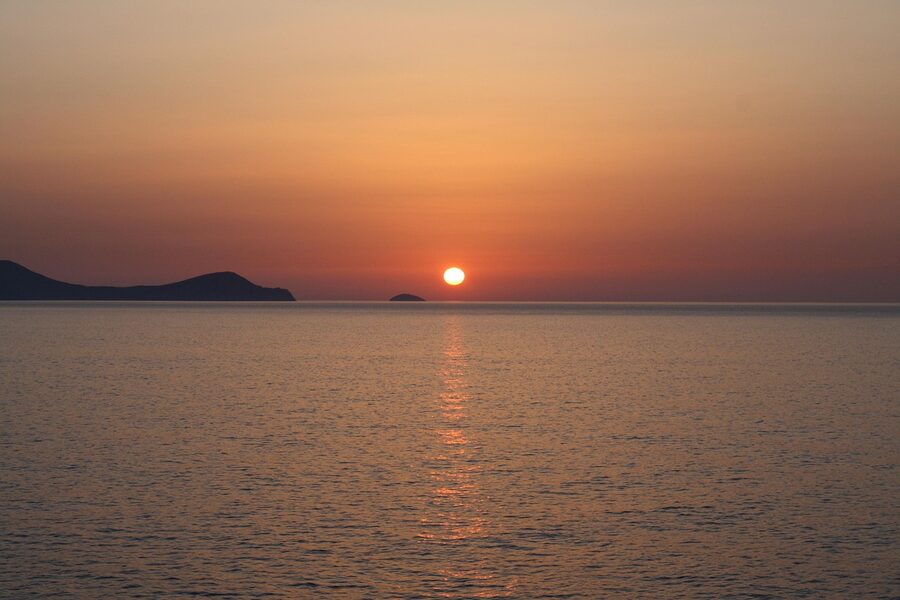
Book the full-day sailboat cruise — not the catamaran, not the half-day — go in May, June, September, or October, and bring your own snorkel gear. Six hours on a wind-powered boat to a protected uninhabited island with grilled fish for lunch is the cheapest way to feel rich for a day in Greece.
Affiliate disclosure: Some links in this article are affiliate links. If you book through them we may earn a small commission at no cost to you. All recommendations are based on my own trip.