
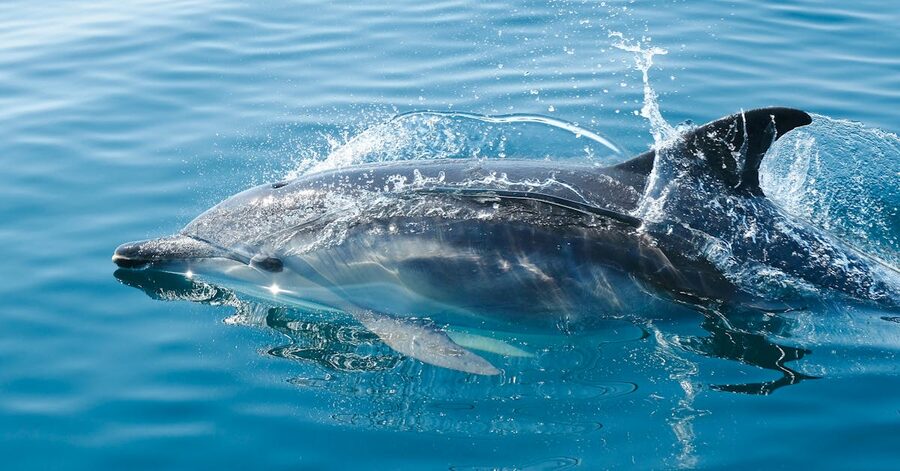
The Bocaina Strait between Fuerteventura and Lanzarote is one of the best cetacean corridors in the entire Atlantic. I didn’t know that when I first booked a dolphin trip here. I just wanted to see dolphins. But the captain cut the engine about twenty minutes out of Morro Jable, pointed at the water, and said “wait.” Within seconds, a pod of at least fifteen bottlenose dolphins surfaced around the boat. Some were close enough to touch.
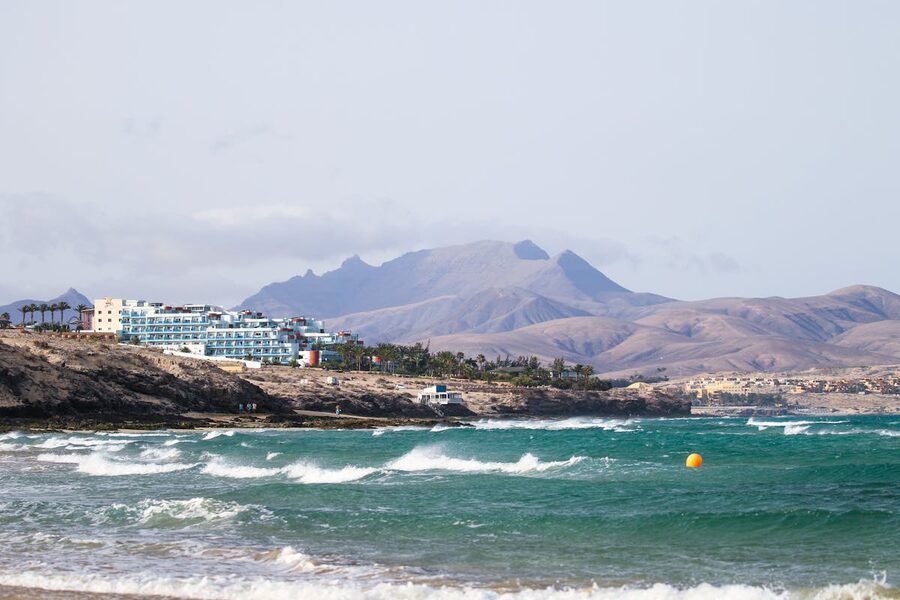
Fuerteventura sits just 100 kilometres from the Sahara coast, making it the oldest and driest of the Canary Islands — roughly 20 million years old. The warm Canary Current flowing between the islands channels nutrients through narrow straits, and that’s exactly where the dolphins feed. You don’t need luck here. You need the right boat and the right time of day.
This guide covers everything you need to know: which tours actually deliver on the dolphin-watching promise, what to expect on board, and the practical details that make the difference between a good trip and a wasted morning.
- In a Hurry? Top Picks
- Where the Dolphins Are (And Why Fuerteventura Is Different)
- The Three Best Dolphin Watching Tours
- 1. Glass Bottom Boat Cruise with Lunch and Drinks —
- 2. Sailing with Snorkeling and Dolphin Watching — 4
- 3. Costa Calma Dolphin Watching Boat Tour —
- Which Tour Is Right for You?
- How to Book (and Get the Best Price)
- What to Expect on the Water
- When to Go: The Season Breakdown
- Practical Tips That Actually Matter
- Getting to the Harbour
- The Oldest Island in the Canaries
- What Else to Do in Fuerteventura
- Beyond the Dolphins
In a Hurry? Top Picks
Best overall: Glass Bottom Boat Cruise with Lunch — $88/person, 4 hours. Full day out with glass-bottom viewing, snorkelling stop, and a proper lunch on board.
Best for sailing fans: Sailing with Snorkeling and Dolphin Watching — $104/person, 3.5 hours. Smaller sailboat, more personal, includes snorkelling and a charcuterie spread.
Best budget pick: Costa Calma Dolphin Watching Tour — $65/person, 2.5 hours. Focused purely on finding dolphins, no frills, just results.
Where the Dolphins Are (And Why Fuerteventura Is Different)
Most travelers go to Tenerife for whale watching. That’s a great trip. But Fuerteventura has something different: proximity. The continental shelf drops off sharply just south of the island, and the Bocaina Strait funnels cold, nutrient-rich water through a narrow channel. Dolphins don’t wander through here. They live here.
Bottlenose dolphins are the stars, but Atlantic spotted dolphins show up regularly too, especially between April and October. Pilot whales cruise the deeper waters, and on rare occasions, captains spot Bryde’s whales or even orcas. But don’t book expecting whales. Book for the dolphins. Everything else is a bonus.
The trips depart mostly from Morro Jable in the south. Some leave from Costa Calma. Both work well, though Morro Jable gets you to the strait faster. Morning departures tend to have calmer water, and the light is better for photos. Afternoon trips can get choppy when the trade winds pick up — Fuerteventura’s name literally comes from “strong winds.”
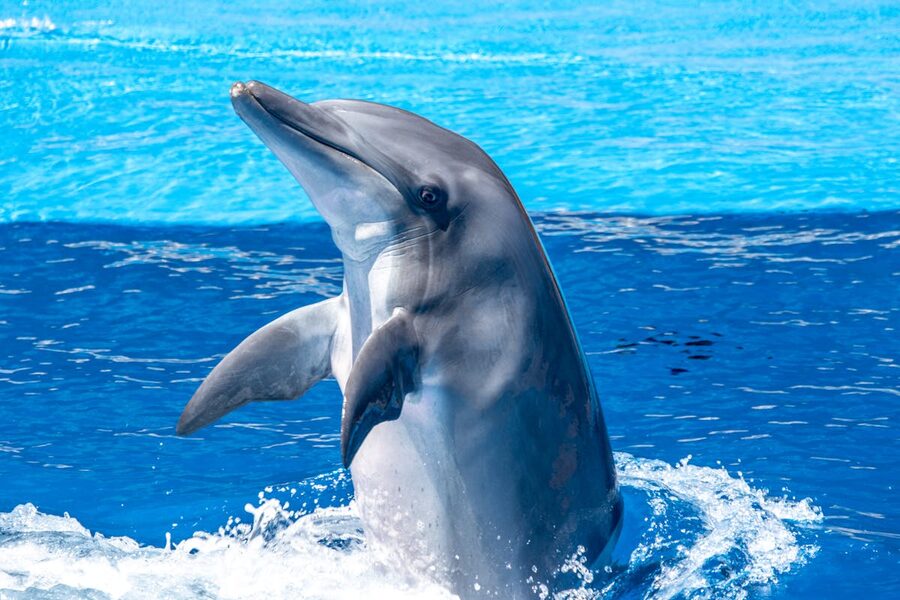
The depth profile along this coast is wild. Within a few hundred metres of shore, the seabed can drop from 20 metres to over 200. That shelf edge is where the dolphins hunt, because that’s where the baitfish school. The captains know the exact coordinates and head straight for them. On a good day, you’ll spend more time watching dolphins than travelling to find them.
The Three Best Dolphin Watching Tours
I compared every dolphin-related boat trip leaving Fuerteventura. These three are the ones worth your money, each for a different reason.
1. Glass Bottom Boat Cruise with Lunch and Drinks — $88
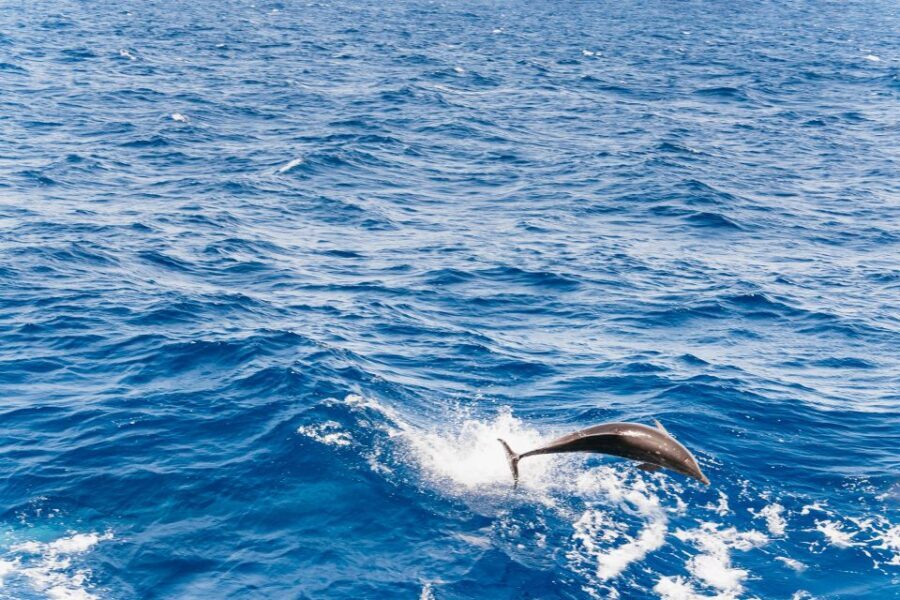
This is the crowd favourite and it’s easy to see why. The Odyssee 3 sails from Morro Jable for four hours, combining dolphin watching with a glass-bottom section, a snorkelling stop, kayaking, and paddleboarding. Lunch and drinks are included — not just a sandwich, but a proper spread. The captain speaks four languages and keeps the energy high. Our full review of the Glass Bottom Boat Cruise covers the snorkelling spot and what the glass bottom actually shows you. It’s a full half-day out, not just a dolphin search.
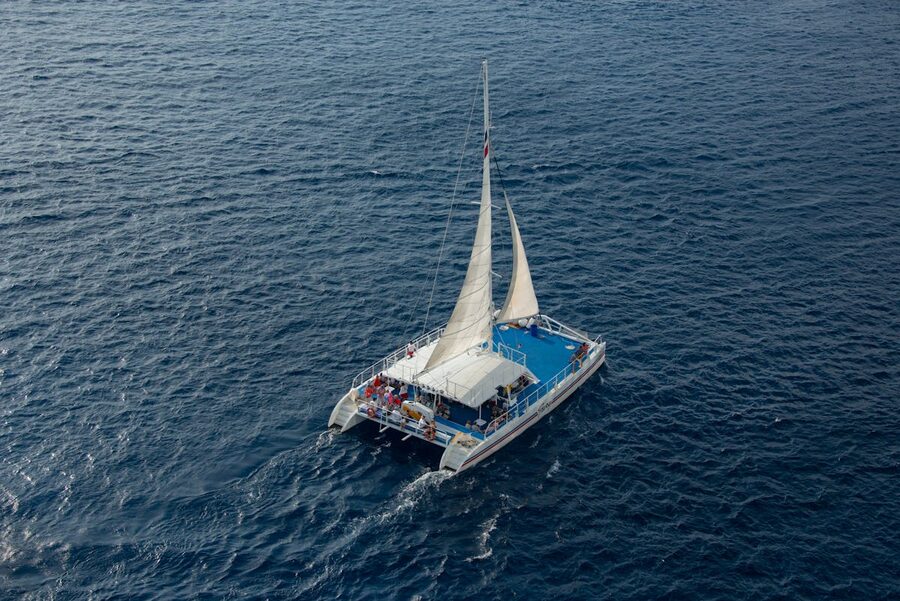
2. Sailing with Snorkeling and Dolphin Watching — $104
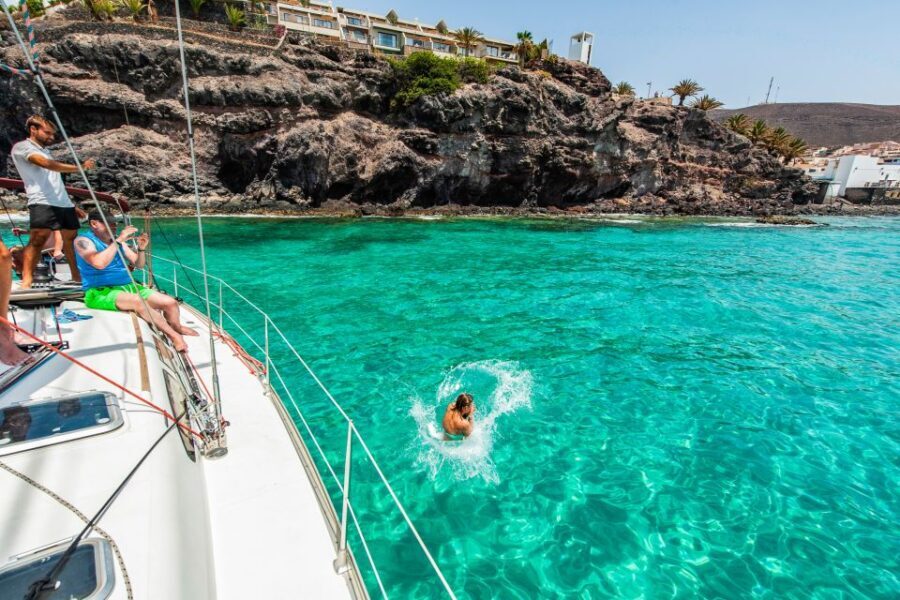
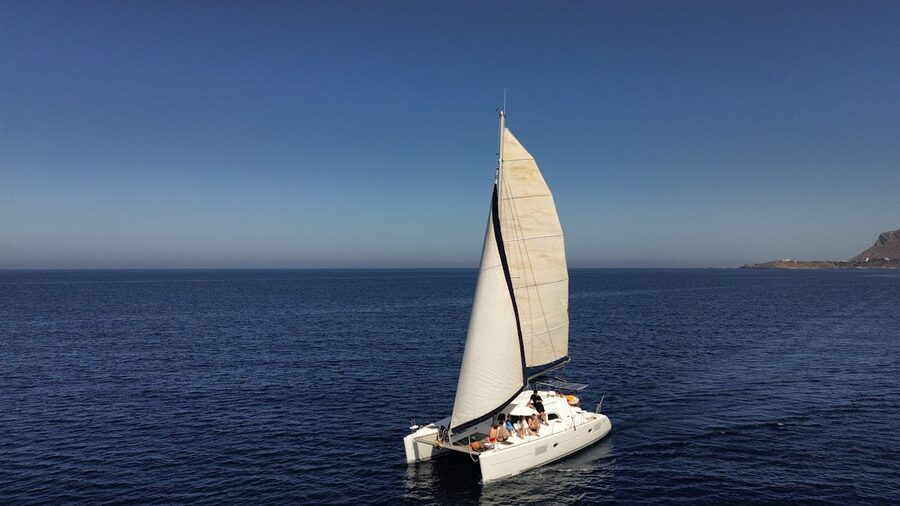
If you want something more intimate, this is the one. A proper sailboat, smaller group, and a captain named Younes who knows these waters inside out. He sails rather than motors when conditions allow, which makes the whole experience quieter — and dolphins seem to approach closer when the engines are off. The snorkelling stop is at a small beach, and he puts out a spread of local meats, cheese, and fruit that’s genuinely good. Our full review of the Sailing and Dolphin trip has details on the snorkelling conditions. Bring a jacket. The wind on the water is real.
3. Costa Calma Dolphin Watching Boat Tour — $65
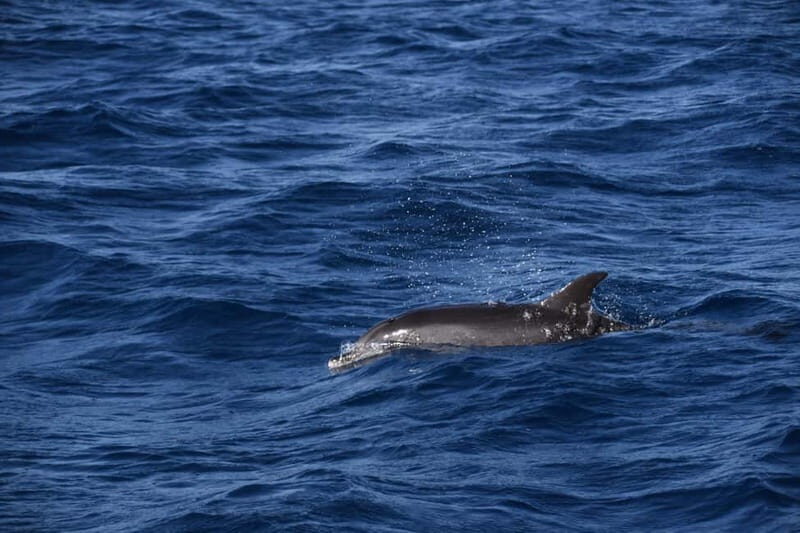
No snorkelling. No lunch. No paddleboarding. This one does one thing: it finds dolphins. At 2.5 hours and $65, it’s the cheapest and most focused option on the island. The captain in Costa Calma knows exactly where the pods hang out and doesn’t waste time with extras. If you’re staying in the Costa Calma area and just want the dolphin experience without a whole boat party, this is the practical choice. Our full review of the Costa Calma Dolphin Tour covers the sighting success rate.
Which Tour Is Right for You?
If this is your first time and you want the full experience — dolphins, snorkelling, lunch, water sports — go with the Glass Bottom Boat Cruise at $88. It’s four hours, the price-to-value ratio is the best of the three, and the glass-bottom section is genuinely fun for kids and adults.
If you’re a couple looking for something more romantic or you just hate being on a packed tour boat, the Sailing trip at $104 is worth the premium. Fewer people, a proper sailboat experience, and the food is actually good. The dolphins approach closer when the boat is sailing under wind power rather than motors.
If you’re short on time, already had your fill of boat-based activities, or simply want to see dolphins without the extras, the Costa Calma tour at $65 does the job. In and out in 2.5 hours. No-nonsense captain who knows where to go.
One thing to consider: the $88 glass-bottom boat includes lunch, drinks, and water sports. If you bought those separately after a $65 dolphin trip, you’d spend more total. The value equation favours the longer tour unless you genuinely don’t want the extras.
How to Book (and Get the Best Price)
All three tours sell through GetYourGuide and the booking process is straightforward. Choose your date, pay online, and show up at the harbour. But here’s where timing matters.
Book at least 3-4 days ahead in summer. July and August fill up fast, especially the sailing trip which takes fewer people. In winter (December to February), you can usually book the day before — but the sea is rougher and some operators reduce schedules.
The glass-bottom boat and the sailing trip both include free cancellation up to 24 hours ahead, which is worth something on an island where weather can change fast. Calima wind events (when Saharan dust blows over from Africa) don’t cancel most trips, but they make the visibility worse for snorkelling and the views hazy.
Hotel pickups: The glass-bottom boat tour includes a free hotel transfer from most southern resorts. This matters more than you’d think — the harbours aren’t always easy to find, parking is limited in Morro Jable during peak season, and if you’re arriving stressed and late, you’ve already lost the good mood. The other two tours are self-transfer, so factor in a taxi or rental car.
Where to stay for easy access: Morro Jable is the best base if dolphin watching is your main goal. Two of the three tours depart from there, and it’s a proper town with restaurants and a long beach. Costa Calma is fine too, especially for the budget tour. Corralejo up north is a 90-minute drive — doable, but not fun at 7am.
Price tips: These tours don’t run discounts or seasonal pricing. The listed price is the price. Don’t waste time searching for coupon codes — they don’t exist for boat operators in the Canaries. What you can do is book a weekday departure, which tends to have fewer people on board and a more relaxed atmosphere.
What to Expect on the Water
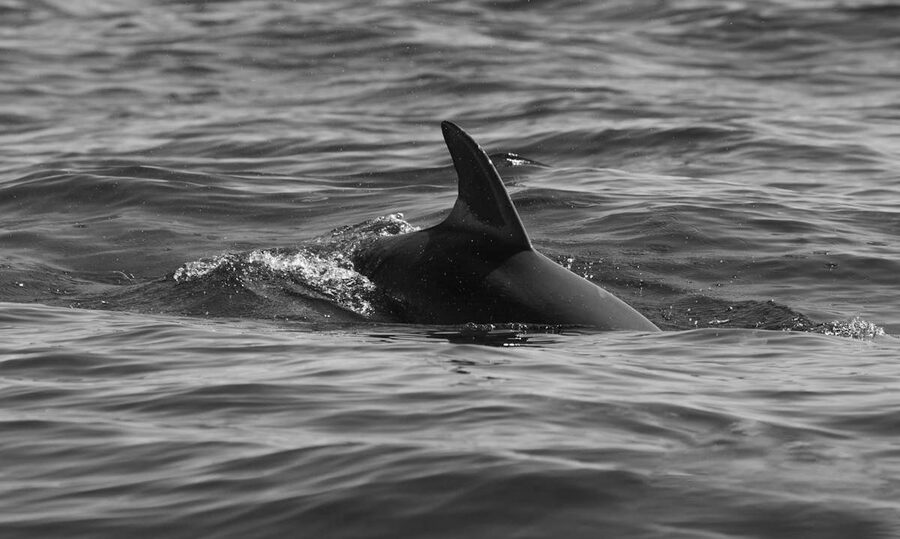
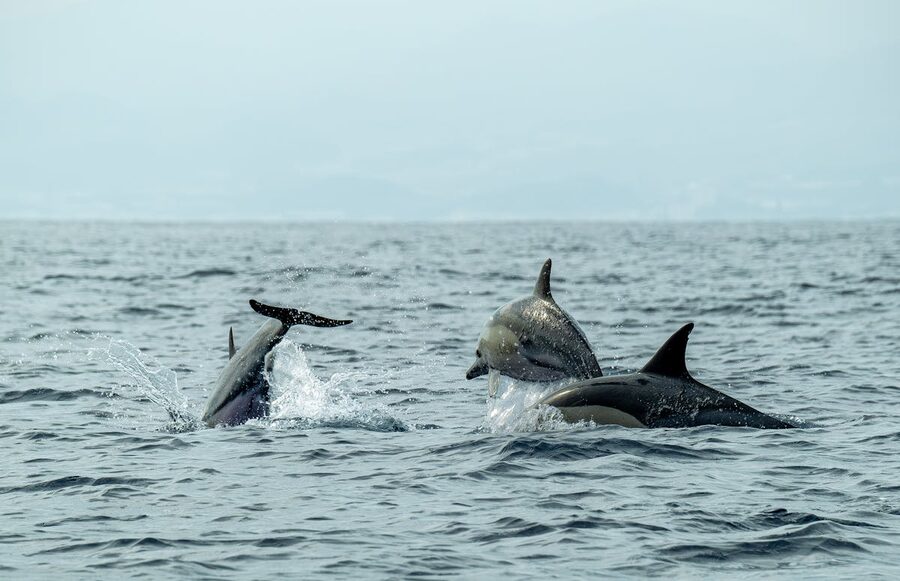
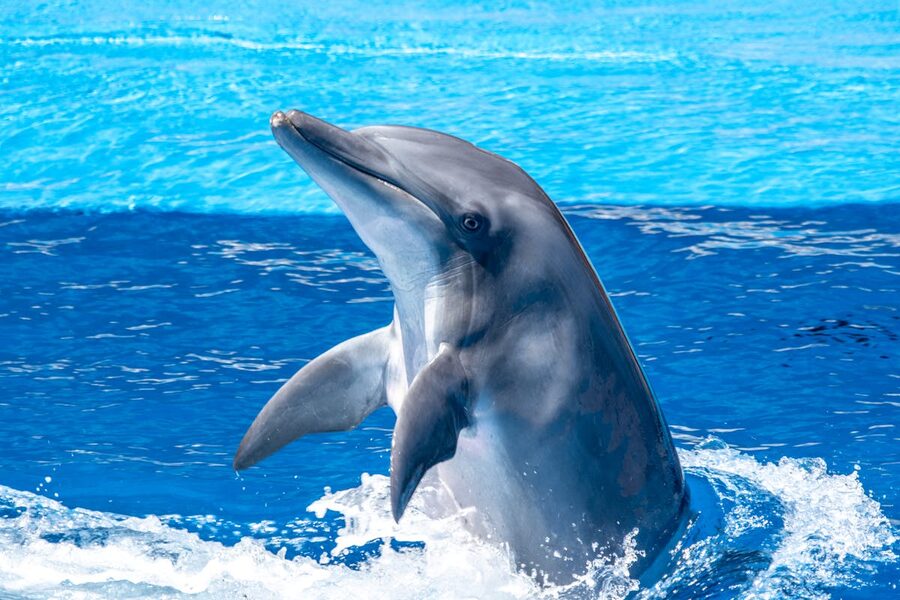
Sighting rates in these waters are high — captains report dolphins on around 90% of trips in calm conditions. That’s better than most Mediterranean dolphin tours. The species you’ll most likely see is the bottlenose dolphin, which hangs out in pods of anywhere from 5 to 40 animals.
Don’t expect a SeaWorld show. Wild dolphins do their own thing. Sometimes they leap and race the boat. Sometimes they cruise lazily on the surface and barely acknowledge you. Both are great in their own way. The leaping shows are exciting, but the calm moments — when a dolphin swims right alongside the hull and looks up at you — are the ones you remember.
The captains follow a strict approach protocol. Boats slow down well before reaching a pod and never chase or cut across their path. This isn’t just politeness — it’s legally required under the Canary Islands cetacean protection law. The rules limit how close boats can get (60 metres minimum, though dolphins often close that gap themselves), how many boats can be near a pod at once, and how long each boat can stay. The good captains follow these rules carefully, which is one reason the sighting success rate stays high — stressed dolphins leave, habituated dolphins stick around.
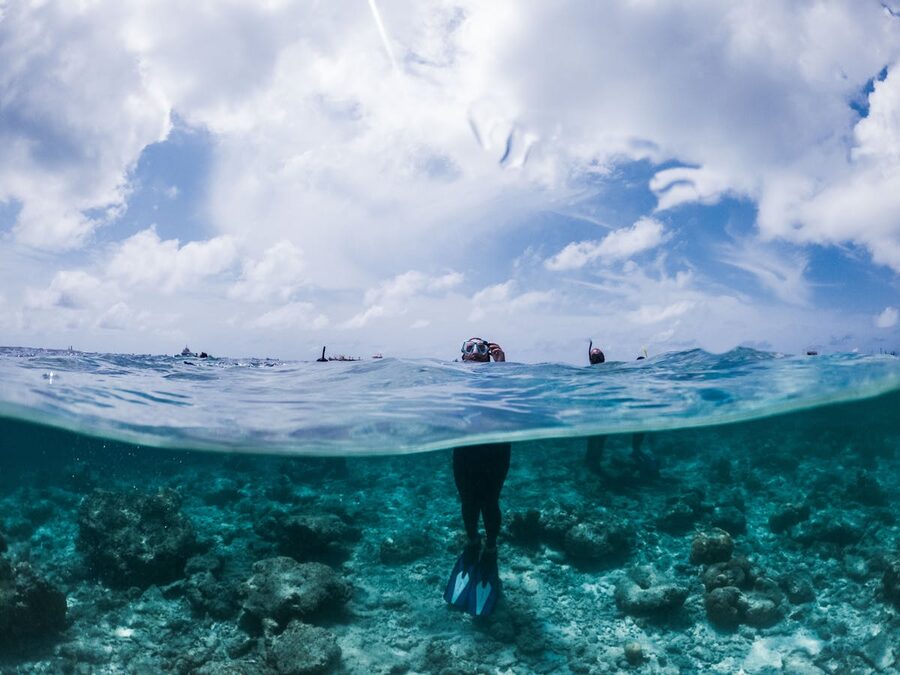
If your trip includes snorkelling (the first two options do), expect water visibility of 15 to 25 metres depending on conditions. The volcanic seabed drops off dramatically, so you’ll be snorkelling over surprisingly deep water quite close to shore. Fish life is decent but not Maldives-level — parrotfish, wrasses, the occasional trumpet fish. Keep an eye out for sea turtles near the surface, especially in the protected coves along the south coast.
The glass-bottom section of the Odyssee 3 works best in calm water with good sun. When the sea is flat and the sun is high, you can see 10-15 metres down through the glass panels — fish, the rocky bottom, occasionally a turtle gliding past. On rougher days, the visibility through the glass drops and it becomes more of a novelty than a real viewing experience.
When to Go: The Season Breakdown
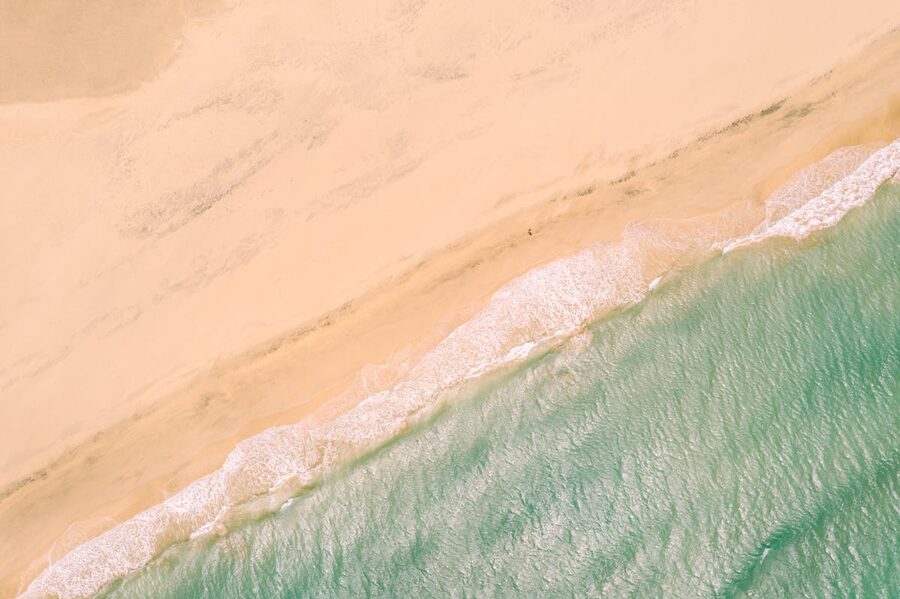
March to June is the sweet spot. The water is warming up, the wind hasn’t reached its peak summer intensity, and the tourist crowds are manageable. Dolphin sightings are consistently good. April and May tend to have the calmest seas.
July to September is peak season. The dolphins are active (spotted dolphins join the bottlenose this time of year), but the wind is at its strongest and the boats are at full capacity. Book well ahead. The calima events are more frequent in late August and September.
October to November is a quiet shoulder season. Water is still warm from summer, the wind starts calming, and prices for flights and accommodation drop. Good dolphin watching weather, fewer travelers.
December to February is the roughest period. Trips still run, but cancellations due to sea conditions happen more often. The upside: if the weather cooperates, you might see pilot whales or other deep-water species that come closer to shore in winter. And the tourist hordes are gone.
Practical Tips That Actually Matter
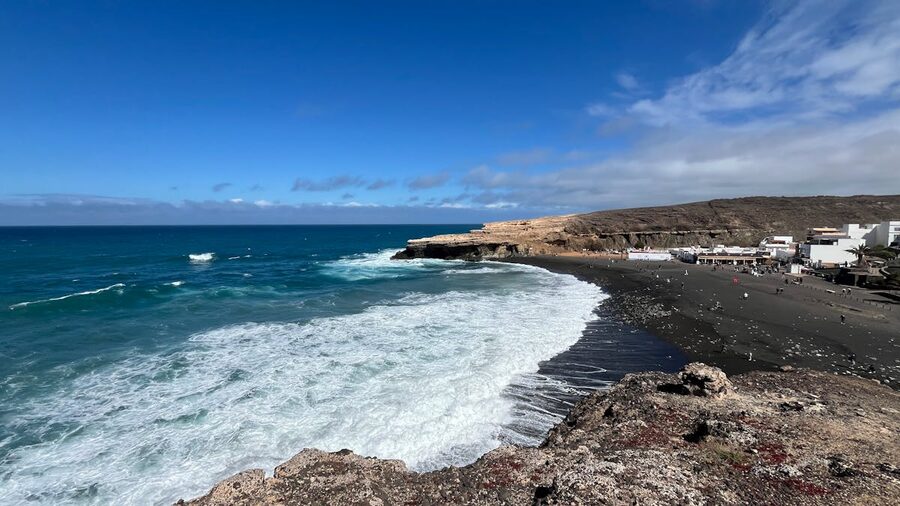
Seasickness is real here. Fuerteventura has rougher water than Tenerife or Gran Canaria. Take medication 30 minutes before departure if you’re prone to motion sickness. Seriously. The Atlantic swell is no joke, and even confident sailors get caught out. Sit at the back of the boat, watch the horizon, and don’t stare at your phone.
Bring a windproof layer. Even in summer, the wind on the water is cold. Fuerteventura earns its name — the trade winds are constant and strong. A thin waterproof jacket is enough. Don’t bring expensive clothes. You will get splashed.
Morning or afternoon? Morning, no contest. The water is calmer, the dolphins are more active, and the light for photography is better. Afternoon trips run hotter (wear sunscreen) and the wind typically picks up after 2pm. If you have a choice, take the earliest departure.
Camera tips: A waterproof phone case is essential. Salt spray gets everywhere. If you’re using a proper camera, bring a zoom lens — 70-200mm is ideal for dolphin shots. Shoot in burst mode when dolphins surface. You’ll delete 95% of the photos later, but the one where a dolphin is mid-leap with the sun behind it makes the whole trip. Polarizing filters help cut glare on the water.
What about kids? All three tours accept children. The glass-bottom boat is the best option for families because kids love the glass-bottom deck, the kayaking gives them something to do, and the overall vibe is relaxed. Very young children (under 3) might struggle on the sailing trip when it gets windy. No minimum age, but use common sense — a toddler on a bouncing boat in Atlantic swells is nobody’s idea of fun.
Sunscreen. Factor 50. Reapply after snorkelling. The combination of sea reflection and Canary Islands latitude means you burn fast, even on overcast days. I’ve seen people come back from four-hour trips looking like cooked lobsters. Reef-safe sunscreen if you’re snorkelling — the corals here need all the help they can get.
Getting to the Harbour
Morro Jable harbour is the main departure point. If you’re driving, there’s a small car park near the harbour, but it fills up by 9am in summer. Arrive 20 minutes early. The harbour is at the southern end of the town, past the main beach. Look for the blue-and-white Odyssee 3 or the smaller sailing boats at the eastern pontoon.
From Costa Calma: The dolphin watching boat departs from the small marina at the southern end of Costa Calma beach. It’s walkable from most hotels in the area. If you’re at the Barcelo or the Robinson Club, it’s about a 10-minute walk south along the beach.
From Corralejo or the north: You’re looking at a 90-minute drive to Morro Jable via the FV-2 motorway. It’s a straight, fast road through the desert interior. Not bad, but early morning starts (7:30am pickup) mean leaving Corralejo around 6am. Consider staying one night in Morro Jable instead.
Taxis: A taxi from Caleta de Fuste (the mid-island resort area) to Morro Jable runs about 60-70 euros one way. Not cheap, but split between a family it’s reasonable. Pre-book through your hotel — don’t rely on finding one at the harbour for the return trip.
The Oldest Island in the Canaries
Fuerteventura emerged from the Atlantic about 20 million years ago, making it the oldest of the Canary Islands by a significant margin. While Tenerife and La Palma still have active volcanoes, Fuerteventura’s volcanic days are long over. Erosion has ground down what were once towering peaks into the low, rounded hills you see today. The island’s highest point, Pico de la Zarza, barely reaches 807 metres.
It’s also the closest Canary Island to Africa — on clear days from the east coast, you can see the outline of the Moroccan shore. The island used to have forests, but centuries of goat farming and the relentless wind stripped them away. What’s left is a stark, beautiful, desert-like landscape that looks more like North Africa than Europe. In 2009, UNESCO designated the entire island a Biosphere Reserve.
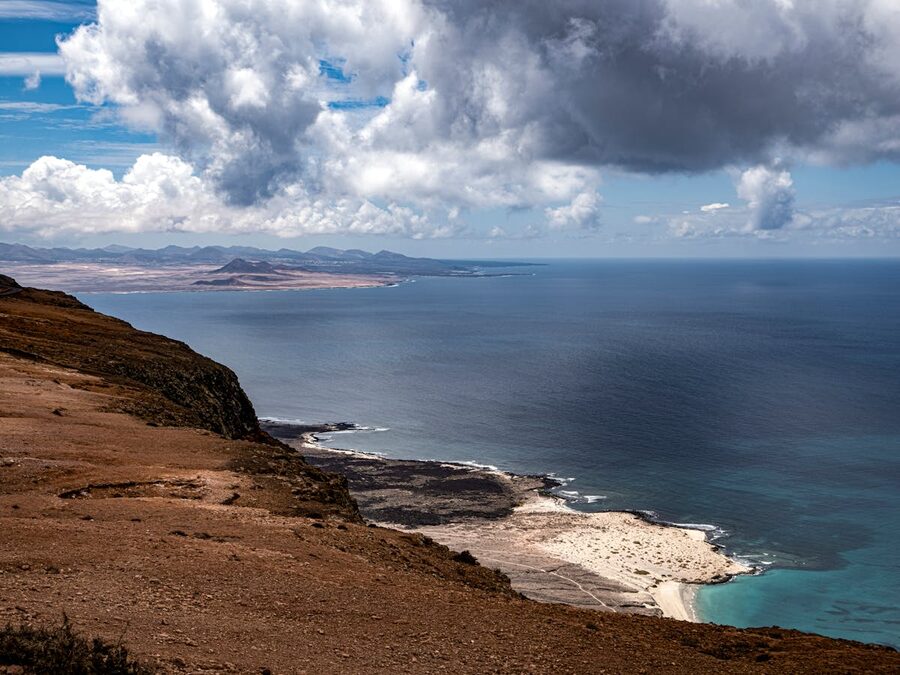
The Bocaina Strait — the narrow channel between Fuerteventura and Lanzarote — has been used by seafarers for centuries. It’s shallow and treacherous in parts, which is exactly why marine life concentrates here. The upwelling currents bring cold, nutrient-rich water from the deep ocean floor, creating a feeding ground that attracts everything from dolphins and whales to sea turtles and massive tuna schools.
The calima is the other thing that defines this island. Several times a year (most often in late summer), hot winds blow directly from the Sahara, carrying fine sand that turns the sky orange and drops visibility to almost nothing. It’s dramatic to experience once, uncomfortable to experience twice. The calima can last from a few hours to several days, and temperatures can spike 10-15 degrees above normal. Dolphin trips still run during calima, but the sea can be murkier and the experience less spectacular. Check the weather forecast before booking if you have flexible dates.
The local Guanche people — the original Berber inhabitants who arrived from North Africa over 2,000 years ago — called the island “Erbania.” The Spanish name “Fuerteventura” may come from “isla de la ventura fuerte” (island of strong fortune) or from the French Norman conqueror Jean de Bethencourt, who invaded in 1402. Either way, the wind part stuck. It’s always windy here.
What Else to Do in Fuerteventura
If dolphins are your day one activity, here’s how to fill the rest of your Fuerteventura trip. The island is surprisingly big — the second largest in the Canaries — and most people don’t explore beyond their resort beach.
Isla de Lobos is a tiny island just off Corralejo. You can take a short ferry over and spend a day hiking, swimming in perfect lagoons, and eating at the single restaurant (which needs advance booking). No cars, no shops, no noise. It’s what everyone imagines a deserted island to look like.
Corralejo Dunes in the north are basically a slice of the Sahara dropped onto Europe. Enormous sand dunes right next to turquoise water. They’re a natural park, so no development has touched them. Walk 15 minutes inland from the beach and you’d swear you were in North Africa.
Ajuy Caves on the west coast are free to visit and feature ancient sea caves carved into volcanic rock. The beach itself is black sand, and the walk along the cliff path to the caves takes about 20 minutes. It’s one of those spots that looks better in person than any photo manages to capture.
Betancuria is the old capital, set in a mountain valley in the interior. Tiny, quiet, with a church from the 1400s and a couple of good restaurants serving Canarian goat cheese and papas arrugadas. It’s the only place on the island that feels old.
Beyond the Dolphins
If you’re exploring the Canary Islands and want more ocean experiences, the options across the archipelago are excellent. Fuerteventura’s boat tours go well beyond dolphins — glass-bottom cruises, sunset sails, and trips to Isla de Lobos are all popular departures from Corralejo. On the neighbouring island, Gran Canaria’s dolphin watching trips offer a different perspective from Puerto Rico harbour, with a good chance of spotting pilot whales on the same outing. For something completely different, the submarine tour in Gran Canaria takes you 30 metres underwater without getting wet — the volcanic rock formations down there look like another planet. And if you’re heading to Tenerife, the whale watching trips from Los Cristianos are some of the best in Europe for pilot whales, with sightings on nearly every departure. Loro Parque in Tenerife is worth a day if you’re travelling with kids — the aquarium section alone justifies the ticket. Over on Lanzarote, Timanfaya National Park gives you the volcanic landscape experience that explains why the seabed around here is so dramatic. And for something truly unique, kayaking in Tenerife gets you out on the water under your own power, often with dolphins showing up alongside.
Disclosure: This article contains affiliate links. If you book through our links, we earn a small commission at no extra cost to you.