
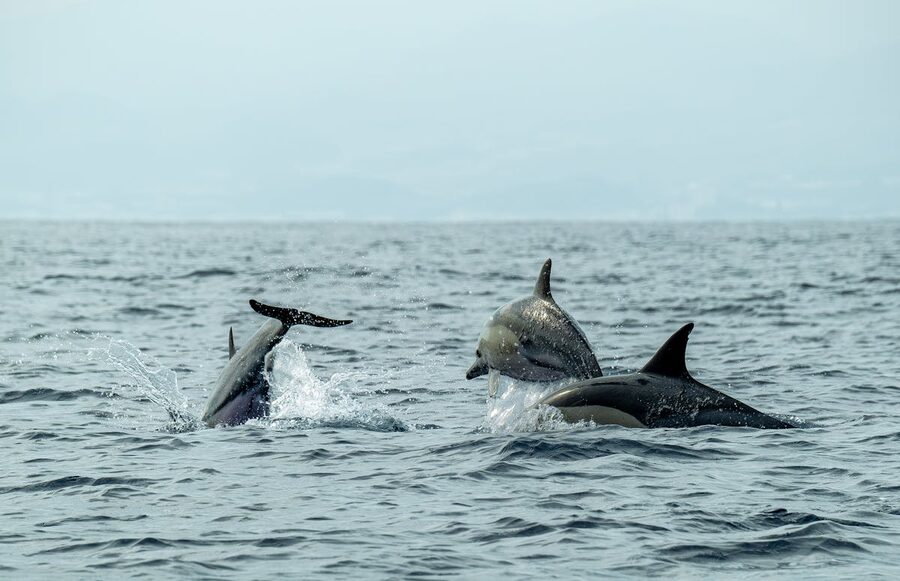
The captain cut the engine about two miles off the coast and told everyone to look starboard. Nothing happened for maybe thirty seconds. Then a fin broke the surface, and another, and suddenly there were dozens of them — bottlenose dolphins, moving fast, cutting through the wake like they’d been waiting for us to show up.
That’s the thing about dolphin watching from Gran Canaria. It’s not a “maybe you’ll see something” kind of trip. The southwest coast sits above a submarine canyon where the ocean floor drops to over 4,000 metres between the islands. That depth creates upwelling — cold nutrient-rich water rises to the surface, feeding a food chain that supports resident populations of dolphins and whales year-round. Thirty different cetacean species have been recorded in Canary Island waters. You’d have to try quite hard to go out and see nothing.
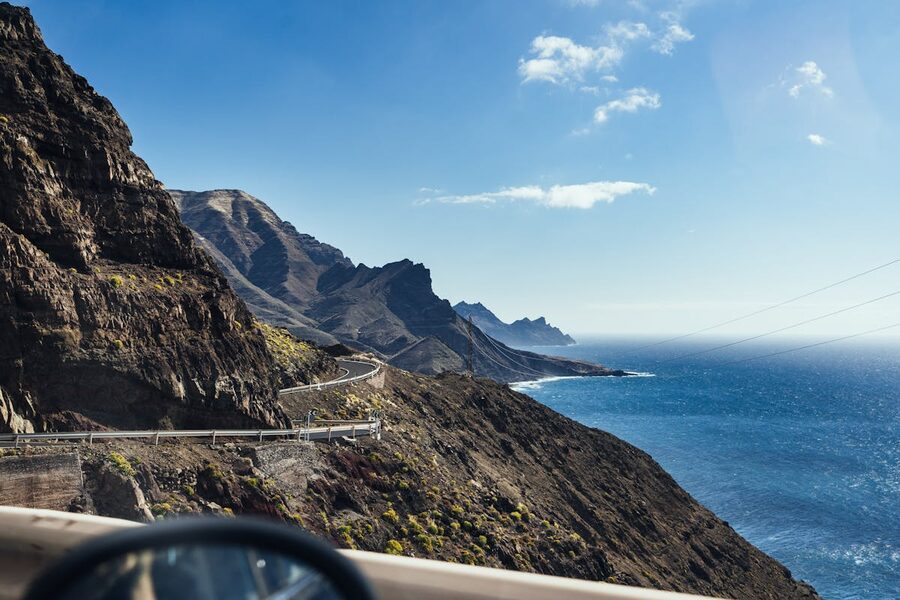
Most cruises depart from Puerto Rico de Gran Canaria (the resort town, not the Caribbean island — the name confusion is a running joke on the docks). Trips run 2 to 2.5 hours and cover the coast between Puerto Rico and Mogán, where the continental shelf drops off sharply and the dolphins and pilot whales congregate.
Best overall: Dolphin Watching Cruise from Puerto Rico — $47. 2.5 hours, expert guides, strong commitment to responsible wildlife ethics. The one I’d book first.
Best value: Dolphin & Whale Watching Cruise — $41. Cheaper, slightly shorter route, but still covers the prime whale and dolphin corridor.
Best on Viator: Spirit of the Sea Dolphin Cruise — $50. Glass-bottom boat option with a different perspective. Book this if you want to see dolphins from above and below the waterline.
- What to Expect on the Water
- Responsible Whale Watching — Why It Matters Here
- The Best Dolphin Watching Cruises to Book
- 1. Dolphin Watching Cruise from Puerto Rico —
- 2. Dolphin & Whale Watching Cruise —
- 3. Spirit of the Sea — Dolphin Watching —
- When to Go
- How to Get to Puerto Rico de Gran Canaria
- Tips That’ll Make Your Trip Better
- The Marine Life You’ll Encounter
- Submarine Dives and Aquariums — Other Marine Options
- Planning More of Your Canary Islands Trip
What to Expect on the Water
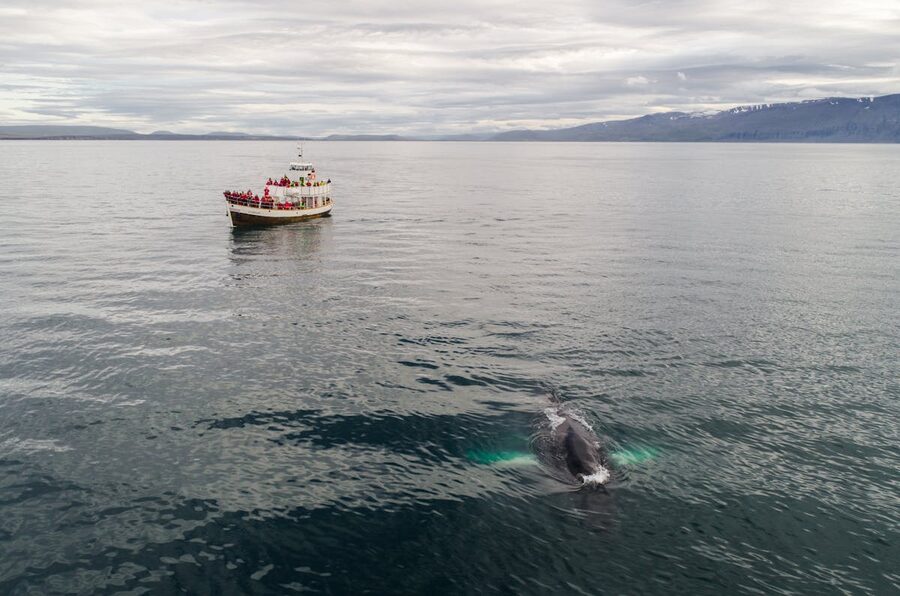
Most operators follow a similar pattern. You board at Puerto Rico harbour, motor south along the coast for 20-30 minutes to reach the deeper water, then the captain starts scanning. The boats use a combination of visual spotting and sometimes sonar to locate pods. Once dolphins or whales are found, engines cut to idle speed and the boat drifts alongside.
The Canary Islands have strict whale watching regulations — boats must keep at least 60 metres from the animals, can’t pursue them, and are limited to 30 minutes observation per sighting before moving on. Good operators follow these rules and it shows in the animals’ behaviour: the dolphins here aren’t skittish. They’re used to boats and will often approach on their own terms, riding bow waves and surfacing alongside.
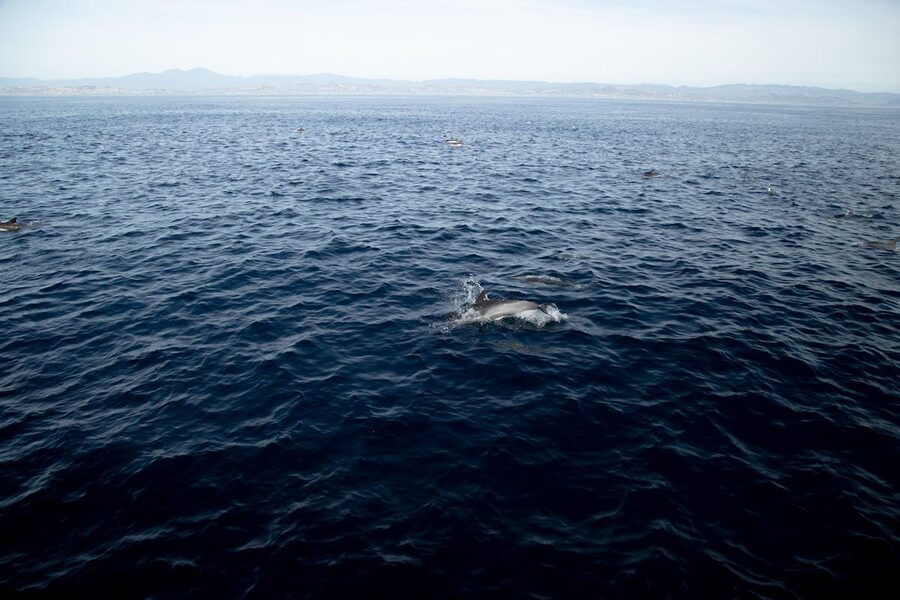
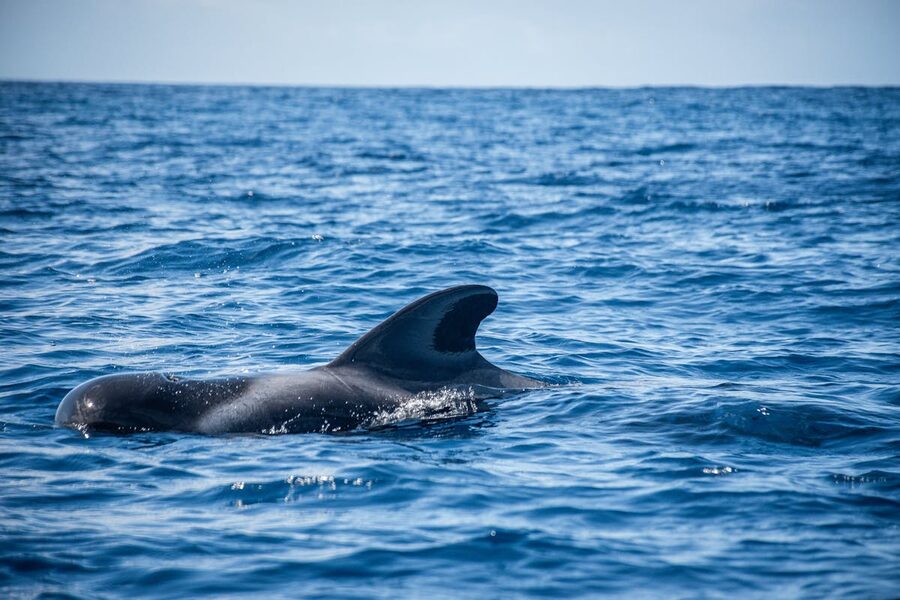
Bottlenose dolphins are the most frequent sighting — resident pods live in these waters permanently. Short-finned pilot whales are the second most common, usually spotted in deeper water further from shore. They’re darker, slower, and travel in tighter family groups. On a lucky day, you might also spot Atlantic spotted dolphins, Risso’s dolphins, or even Bryde’s whales, though these are less reliable.
One thing nobody warns you about: the journey to the sighting area can be bouncy. The first 20 minutes of open ocean on a catamaran or motorboat with any kind of swell will test anyone prone to seasickness. Take medication before boarding, not when you start feeling queasy. Some operators sell ginger sweets on board, but that’s a bandage, not a solution.
Responsible Whale Watching — Why It Matters Here
The Canary Islands take cetacean protection seriously, and there’s a reason. This archipelago is one of the most important whale and dolphin habitats in the North Atlantic. The deep channel between Tenerife and Gran Canaria supports one of the densest concentrations of short-finned pilot whales anywhere in the world.
Legitimate operators display a “Blue Boat” flag, which certifies compliance with the Canary Islands whale watching regulations. Check for this when booking — not every boat on the water plays by the rules. The best operators also contribute data to marine research programmes, sharing GPS coordinates and sighting details with university researchers tracking population movements.
The regulations exist because irresponsible boat behaviour does change animal behaviour. Constant engine noise, boats cutting too close, and multiple vessels crowding a pod can drive animals away from their feeding and nursing grounds. If your operator is chasing dolphins at full speed or ignoring distance rules, that’s a red flag — and it’s worth reporting to the port authority.
The Best Dolphin Watching Cruises to Book
1. Dolphin Watching Cruise from Puerto Rico — $47
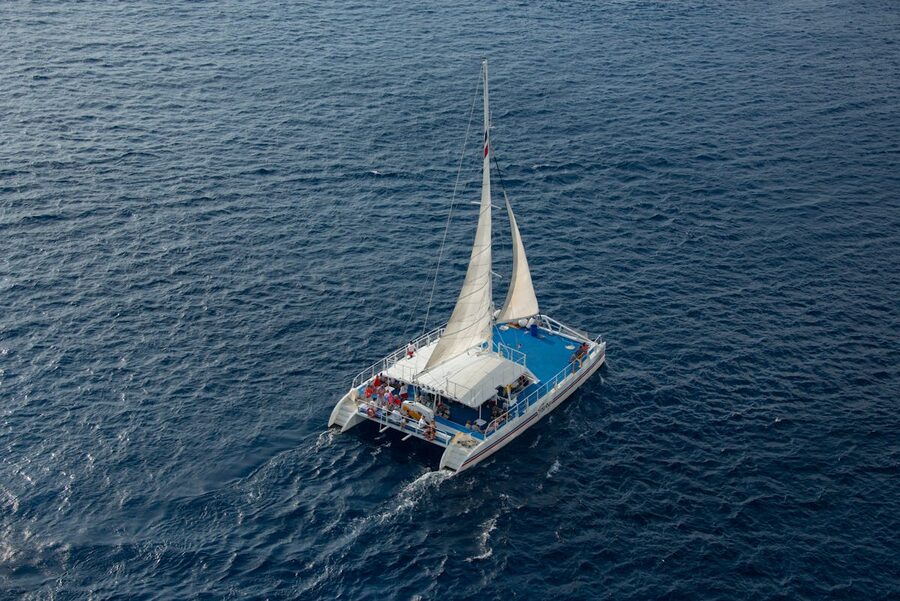
This is the one I’d book without hesitation. The 2.5-hour cruise from Puerto Rico covers the prime southwest corridor at a pace that actually lets you enjoy the sightings rather than rushing between them. At $47 per person, it hits the sweet spot between value and quality.
What separates this from cheaper options is the guide quality. The cruise from Puerto Rico uses marine biologist guides who can tell you what species you’re looking at and why they behave the way they do. That context transforms a nice boat ride into something you’ll actually remember. The captain has a reputation for finding pods quickly — some trips report seeing dolphins within the first fifteen minutes.
Capacity is moderate, so the deck doesn’t feel overcrowded. Bring binoculars if you have them; the guide will point out distant blows and fins that naked-eye observers miss entirely.
2. Dolphin & Whale Watching Cruise — $41
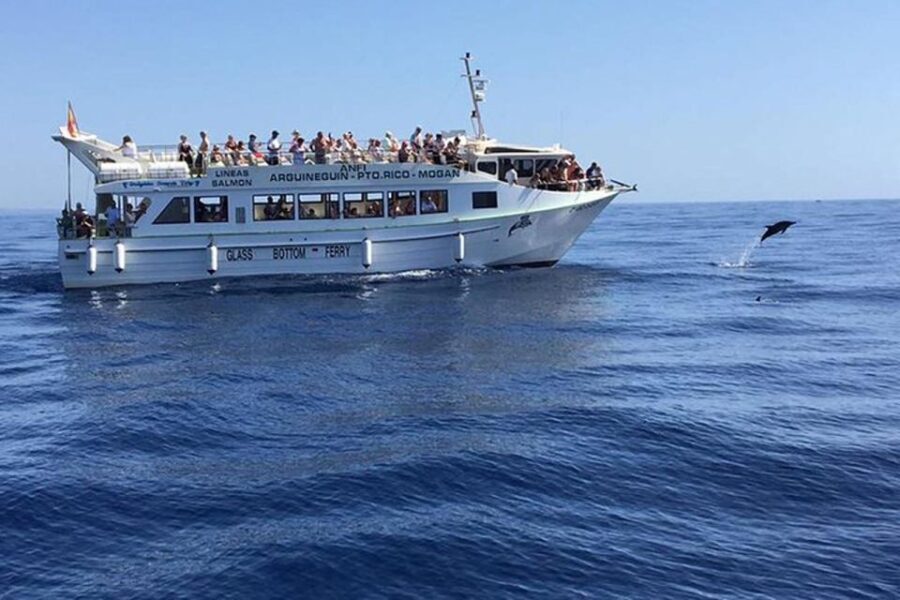
Six dollars cheaper and a touch shorter at 2.5 hours, this dolphin and whale watching cruise is the highest-volume operator on this coast. That popularity is a double-edged sword: the crew knows exactly where to find animals (they’re out there every day), but the boat can feel packed during peak season.
At $41 per person, it’s the most affordable way to see dolphins and pilot whales off Gran Canaria. The route covers the same southwest corridor between Puerto Rico and Mogán. Commentary is in English, Spanish, and German. Some visitors mention a hotel pickup included in the price, though the logistics of that add significant time to the total outing — if you’re staying in the south, getting to Puerto Rico yourself is usually faster.
The boat carries more passengers than option 1, so if having space to move around and pick your viewing spot matters, book the pricier cruise. But if you just want to see dolphins and keep the cost down, this does the job.
3. Spirit of the Sea — Dolphin Watching — $50
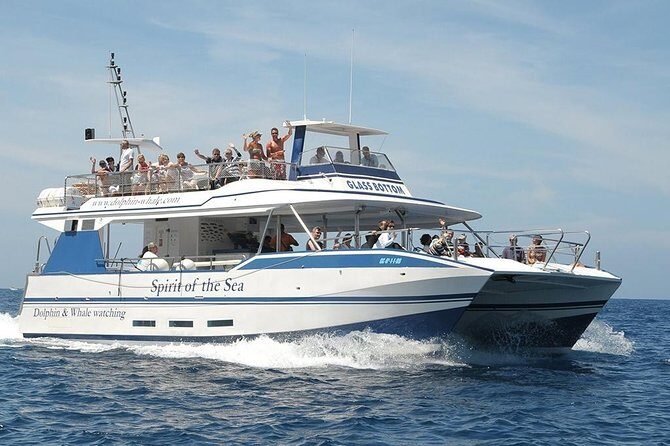
This is the one for people who want more than just surface viewing. The Spirit of the Sea uses a vessel with a glass-bottom viewing section, which means you can watch dolphins from above on deck and from below through the hull. It’s a genuinely different perspective that kids especially love.
At $50 per person, it’s the most expensive of the three options, and the Viator listing means slightly different cancellation terms (check before booking). The 2.5-hour duration matches the other cruises. One honest caveat: some reviews mention variable commentary quality, and at least one mentioned feeling quite seasick on rougher days. That’s not unique to this boat — it’s an open-ocean reality — but the glass-bottom section is below deck, which can make sea sickness worse for susceptible passengers.
If the weather is calm and you want the most immersive dolphin watching experience without getting wet, this is your best bet. On rough days, stick with option 1 or 2 and stay on the upper deck where the horizon is visible.
When to Go
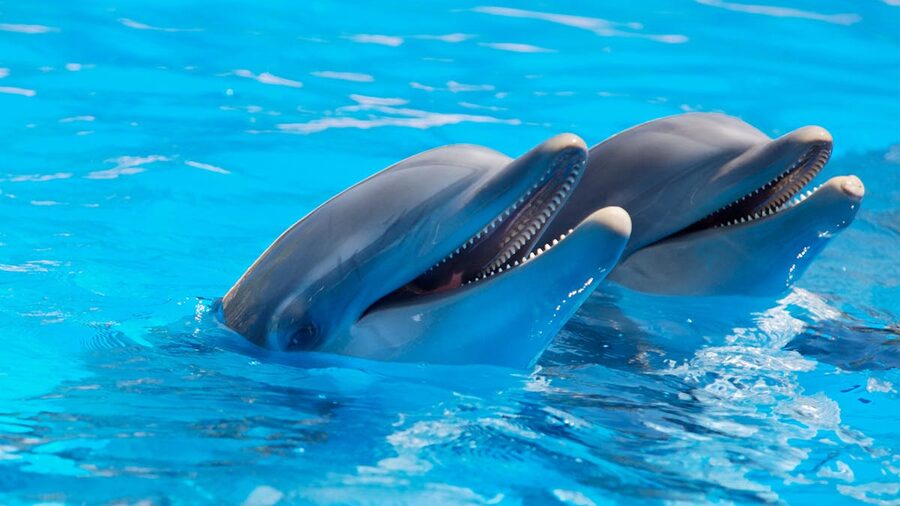
Dolphins and pilot whales are resident year-round, so there’s no “wrong” season. But conditions vary. May through October gives you flatter seas, warmer weather, and longer daylight hours. Winter trips (November-March) face choppier water and more cancellations, though sighting rates stay consistent — the animals don’t leave.
Morning departures are generally recommended. The sea tends to be calmer before the afternoon onshore breeze picks up, and the lower sun angle makes it easier to spot fins and blows against the water surface. The first departure of the day, usually around 10am, typically has the smoothest conditions.
If you’re hoping for something beyond the common dolphins and pilot whales — spotted dolphins, Bryde’s whales, even the occasional beaked whale — late spring and autumn are your best windows. These species tend to move closer to the island shelf during transitional seasons.
How to Get to Puerto Rico de Gran Canaria
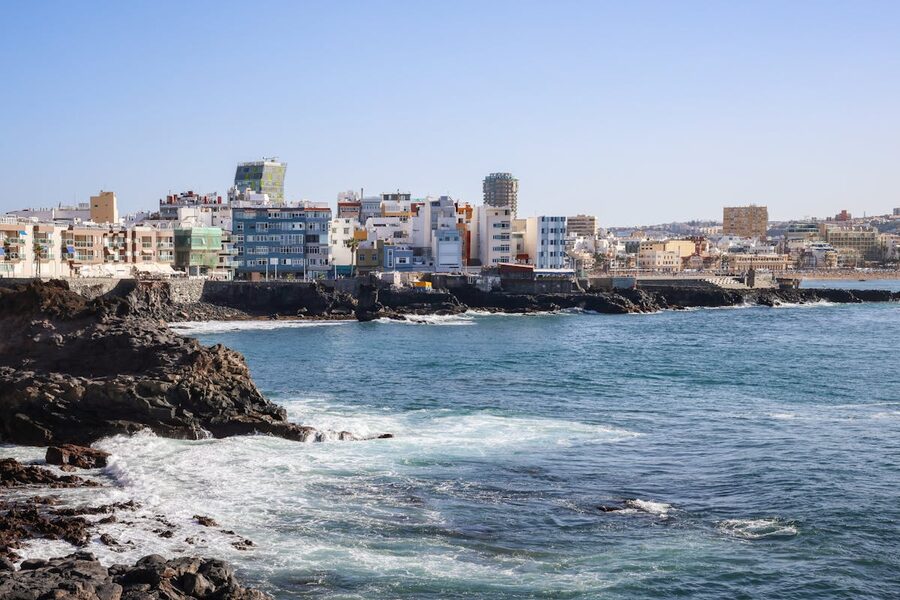
Puerto Rico sits on the southwest coast, about 30 minutes from Playa del Inglés and Maspalomas by car via the GC-1 motorway. Most hotels in the southern resort strip offer taxi services, or you can drive and park at the harbour — there’s a paid multi-storey car park right next to the departure point.
Global bus line 1 connects Maspalomas to Puerto Rico in about 40 minutes. The stop at the commercial centre is a 10-minute walk downhill to the harbour. Buses run every 20-30 minutes during the day.
Some operators include hotel transfers in the ticket price or as an add-on. This sounds convenient but read the fine print — the pickup loop can add 1-2 hours to your total trip time. If you’re in Maspalomas or Playa del Inglés, driving yourself to Puerto Rico and parking is almost always faster.
Tips That’ll Make Your Trip Better
Take seasickness seriously. I can’t stress this enough. Open Atlantic water off Gran Canaria is not a gentle lagoon cruise. Even on “calm” days, there’s a swell. Take motion sickness medication 30-45 minutes before departure. Dramamine, meclizine, or the patch behind your ear. Don’t rely on ginger sweets or wristbands alone.
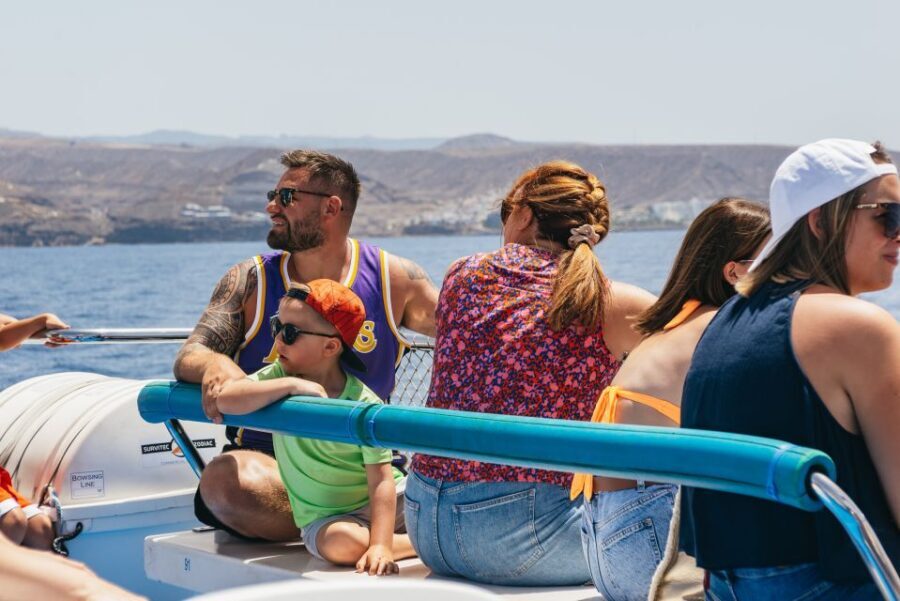
Sit at the front of the boat, on the upper deck. You’ll see more and feel less motion. The stern bounces more in swells and engine fumes drift backwards. The front also gets you closer to the water when dolphins ride the bow wave.
Bring polarised sunglasses. The Atlantic glare off the water is intense, and polarised lenses cut through the surface reflection to help you spot fins and shadows underwater. This genuinely makes a difference.
Sunscreen and a light jacket. You’re on open water for 2.5 hours with no shade on most boats. The wind chill at cruising speed drops the felt temperature significantly, even on a 28°C day. Burn and freeze simultaneously is a real possibility.
Manage expectations for photos. Dolphins surface for split seconds. Unless you have a fast shutter speed and a zoom lens (200mm minimum), your photos will mostly be grey sea with a distant splash. Put the phone down for a while and just watch — your memory of the experience will be better than any photo you take.
The Marine Life You’ll Encounter
The Canary Islands sit where the cold Canary Current meets warmer subtropical waters, creating one of the most productive marine ecosystems in the eastern Atlantic. The deep channel between the islands — plunging to over 4,000 metres — funnels nutrients upward in massive upwelling events that feed everything from microscopic plankton to 15-metre Bryde’s whales.
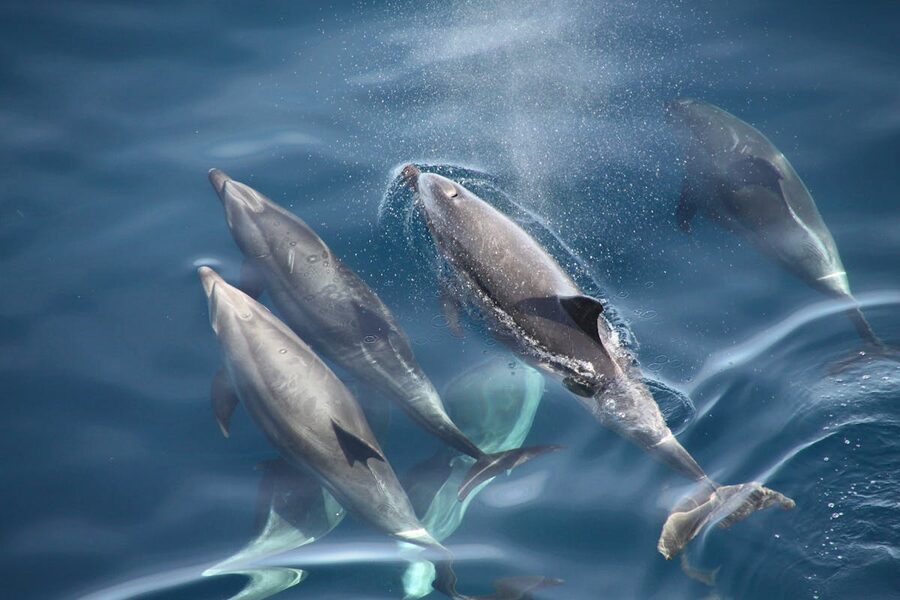
Thirty cetacean species have been recorded here. The regular cast along the Gran Canaria southwest coast includes:
Bottlenose dolphins — the most common sighting. Resident pods of 20-100 animals, highly social, frequently bow-riding. These are the larger coastal variety, not the smaller offshore type.
Short-finned pilot whales — technically the second-largest member of the dolphin family. Dark grey to black, blunt-headed, travelling in tight matrilineal family groups. They’re found in deeper water further from shore and tend to be more subdued than the acrobatic bottlenose dolphins.
Atlantic spotted dolphins — smaller, faster, and covered in distinctive spots that increase with age. Less reliable than bottlenose but seen frequently enough, especially in spring and autumn.

Less common but possible: Bryde’s whales (the only large whale species that stays in tropical waters year-round), Cuvier’s beaked whales (deep divers that surface briefly), and occasionally even sperm whales on the offshore runs. Don’t count on the rarities, but keep your eyes open.

Submarine Dives and Aquariums — Other Marine Options
If you want to go deeper than the surface, the submarine tour in Puerto de Mogán takes you 20-30 metres below the surface to see shipwrecks, angel sharks, and the volcanic seafloor. It’s a completely different experience — quiet, pressurised, through portholes — but pairs perfectly with a dolphin cruise. Book the submarine one morning and dolphins the next.
For an indoor marine experience, Poema del Mar in Las Palmas is Gran Canaria’s big aquarium, with 35 ecosystems and a deep ocean tank that puts you face to face with hammerhead sharks through a massive curved window. It’s a good rainy-day backup or an evening activity after a morning on the water.

Planning More of Your Canary Islands Trip
The dolphin watching is just one piece of Gran Canaria’s marine scene. The submarine tour at Puerto de Mogán is the natural complement — underwater views of angel sharks and shipwrecks, all without getting wet. Over on Tenerife, whale watching from Los Cristianos covers different waters and different species, with a better chance of large whale sightings in the deep channel between the islands. If you’re heading to Lanzarote, the landscape shifts dramatically — Timanfaya National Park and the volcano buggy tours take you into a volcanic moonscape that feels like another planet. For families, Loro Parque and Siam Park on Tenerife are both reachable by ferry and worth the crossing.
This article contains affiliate links to tours and attractions. If you book through these links, we earn a small commission at no extra cost to you. This supports our work in producing independent travel guides.