
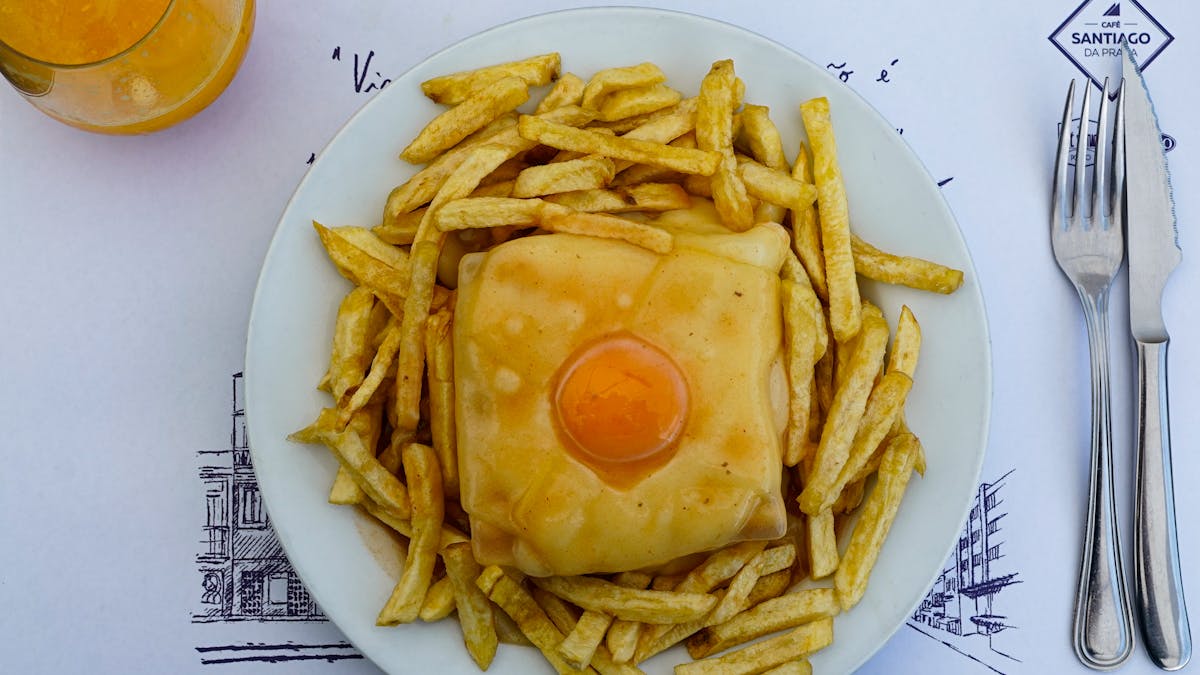
The francesinha arrived at the table looking like something that should come with a warning label. Layers of ham, sausage, and steak sealed under a blanket of melted cheese, swimming in a beer-and-tomato sauce that smelled like it had been simmering since morning. I cut into it, burned my tongue, and immediately understood why Porto treats this sandwich like a religion.
That was the first stop on a food tour I almost didn’t book. I figured I could wander Porto and eat on my own just fine. And sure, you can. But three hours later, standing in the back room of a tiny shop near Bolhao Market while the owner sliced presunto so thin you could read through it, I realized I would have walked right past this place a hundred times without ever going in.
Porto’s food scene punches well above its weight. This is not Lisbon, where tourist restaurants outnumber good ones ten to one. Porto is smaller, scrappier, and the local places still outnumber the tourist traps. A guided food tour is the fastest way to skip the guesswork and eat like someone who has lived here for years.
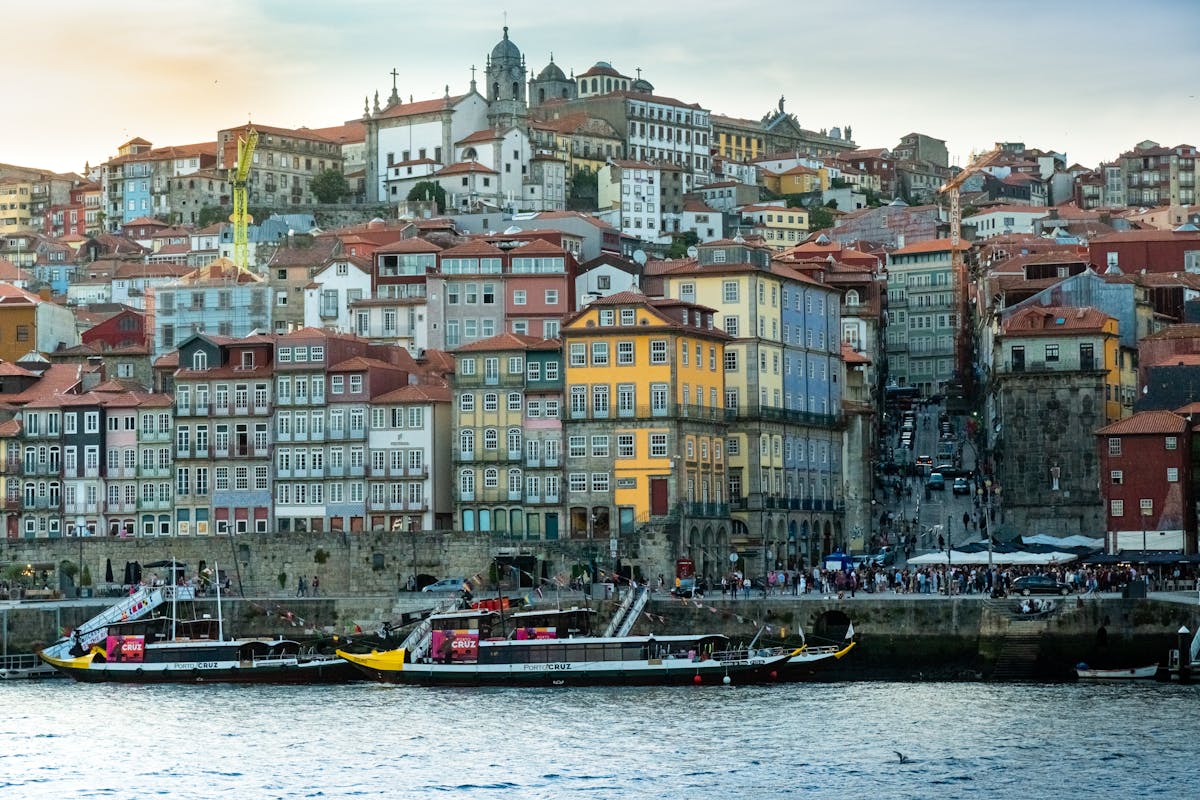
Best overall: Porto Food & Wine Tasting Tour — $83. Three hours of genuine neighborhood spots with port wine pairings. The lunch option turns it into a full afternoon.
Best for beer lovers: Craft Beer & Food Tour — $91. Skip the wine and pair local dishes with Porto’s growing craft beer scene instead.
Best small group: Authentic Food & Wine Tour by Food Lover — $83. Tiny groups, local guide, and enough food that you will not need dinner.
- What Porto Food Tours Actually Include
- Booking On Your Own vs. a Guided Tour
- The Best Porto Food Tours to Book
- 1. Porto Food & Wine Tasting Tour —
- 2. Craft Beer & Food Tour in Porto —
- 3. Authentic Food & Wine Tour by Food Lover —
- 4. Porto Delicious Food & Wine Walking Tour —
- Best Time to Take a Food Tour in Porto
- How to Get to the Meeting Points
- Tips That Will Save You Time and Money
- What You Will Actually Eat
- More Porto Guides
What Porto Food Tours Actually Include
Most food tours in Porto follow a similar format. You meet in the city center, usually near Bolhao Market or Clerigos Tower, and walk for about three hours through the older neighborhoods. Along the way, you stop at five to eight places: markets, tascas (small taverns), bakeries, and at least one wine bar.
The typical stops include:
Francesinha at a local tasca. This is Porto’s signature dish, a gut-busting sandwich layered with multiple meats, drowned in cheese and sauce. Every guide has their preferred spot, and they will explain why theirs is the right one.
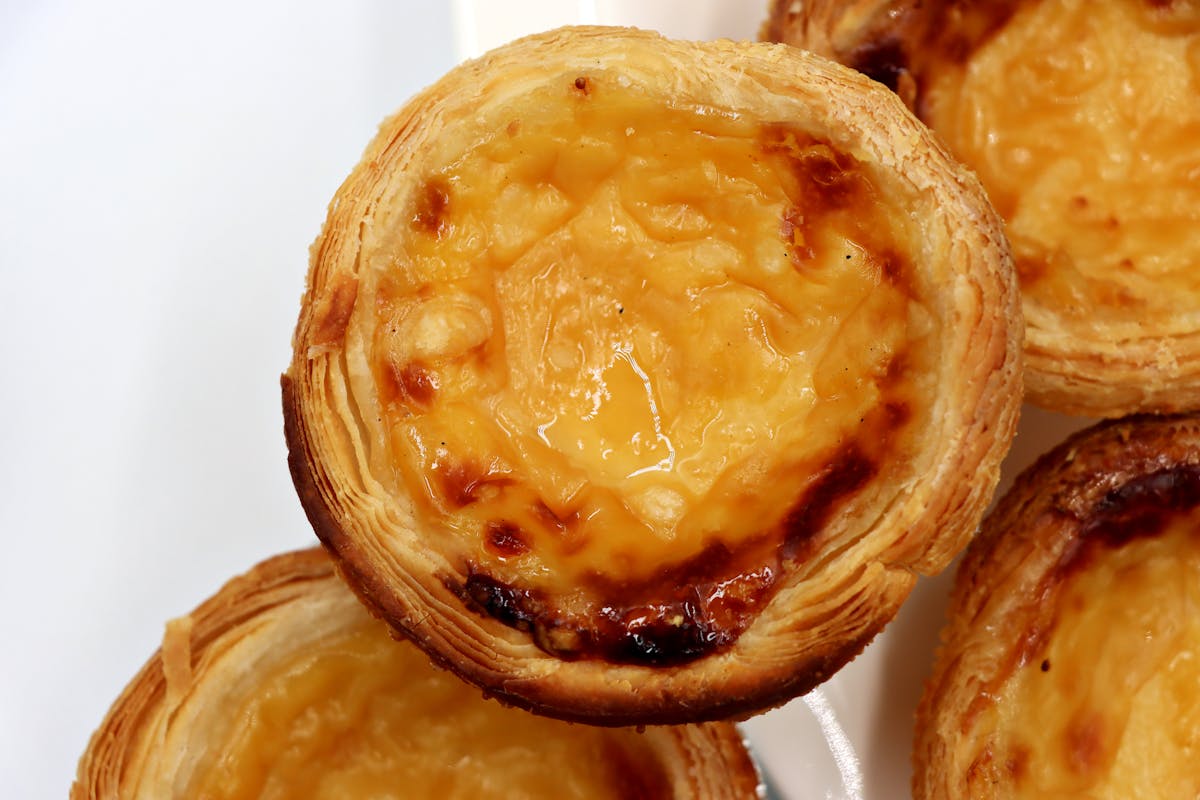
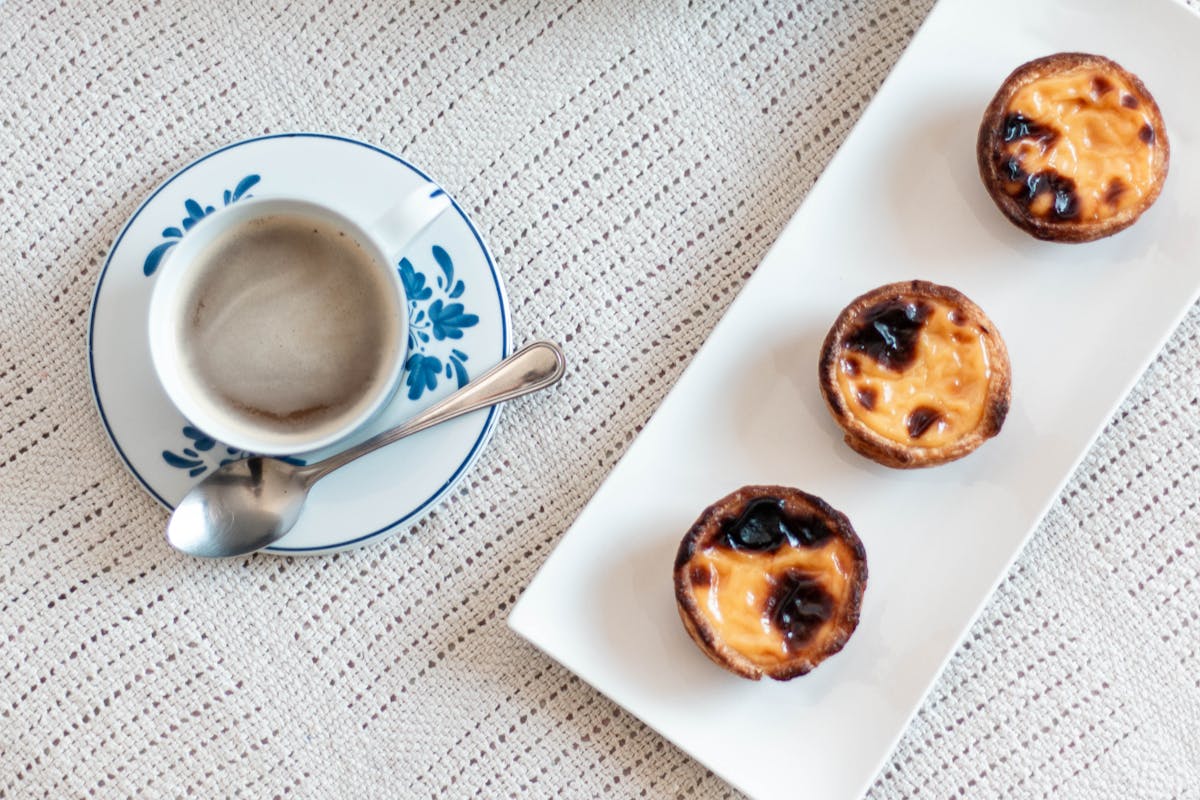
Pastel de nata fresh from a bakery, usually still warm. The Porto version does not get the fame of Lisbon’s Pasteis de Belem, but the local bakeries here are just as good. Some would say better, but that argument has no winner.
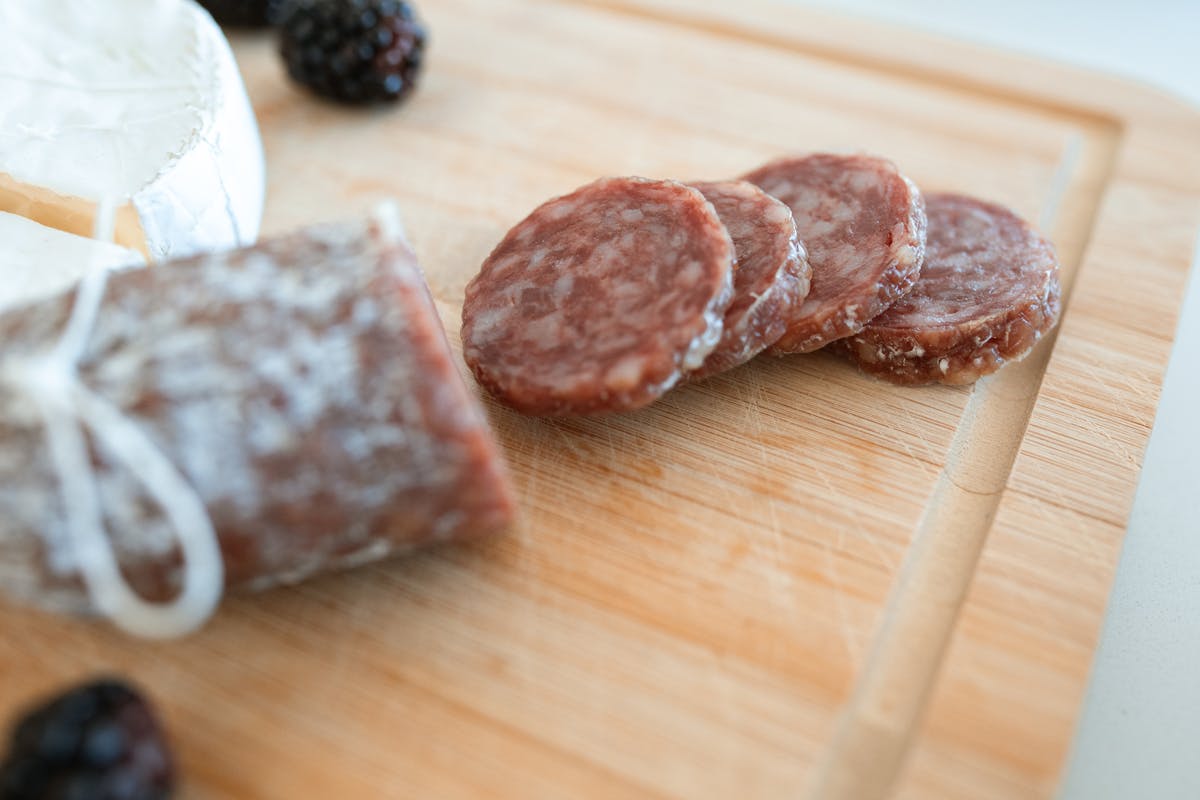
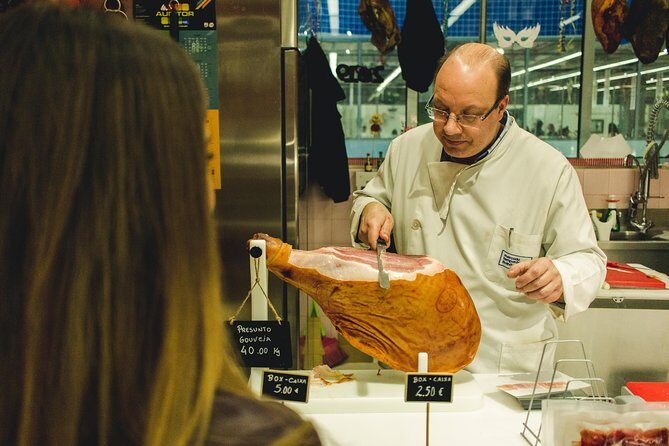
Presunto and local cheeses at a specialty shop or market stall. Portuguese cured ham is world-class, and most travelers never discover the smaller producers. Serra da Estrela cheese, when it is properly runny and room temperature, is unlike anything else.
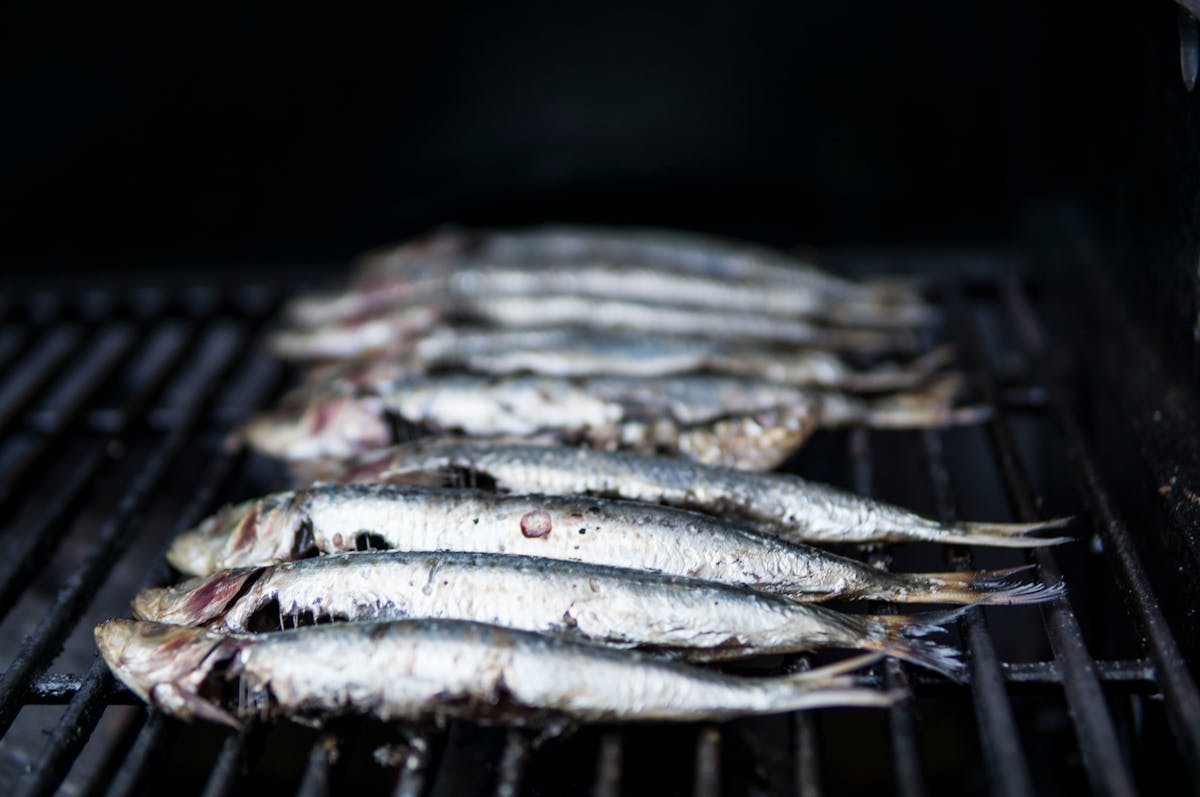
Bacalhau (salt cod) in one of its alleged 365 preparations. Porto does it grilled, fried in cakes, baked with cream, layered with potato. A good food tour will give you at least one version.
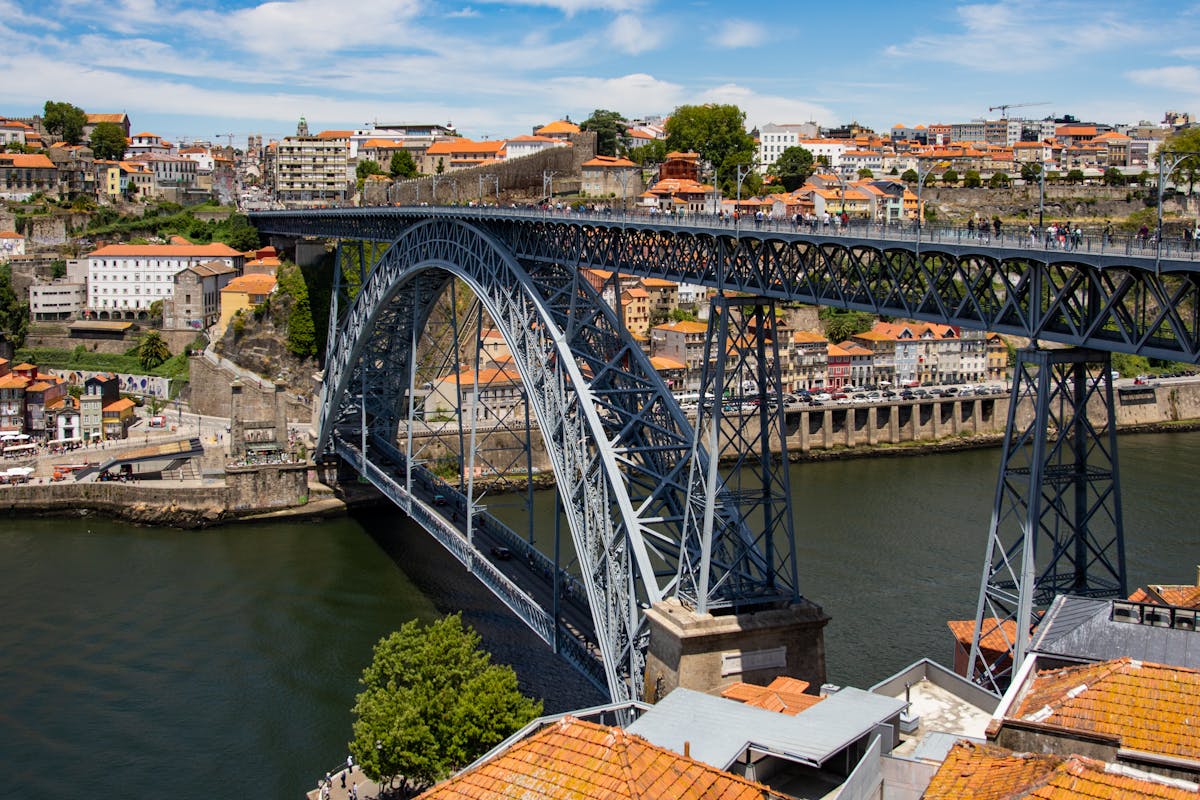
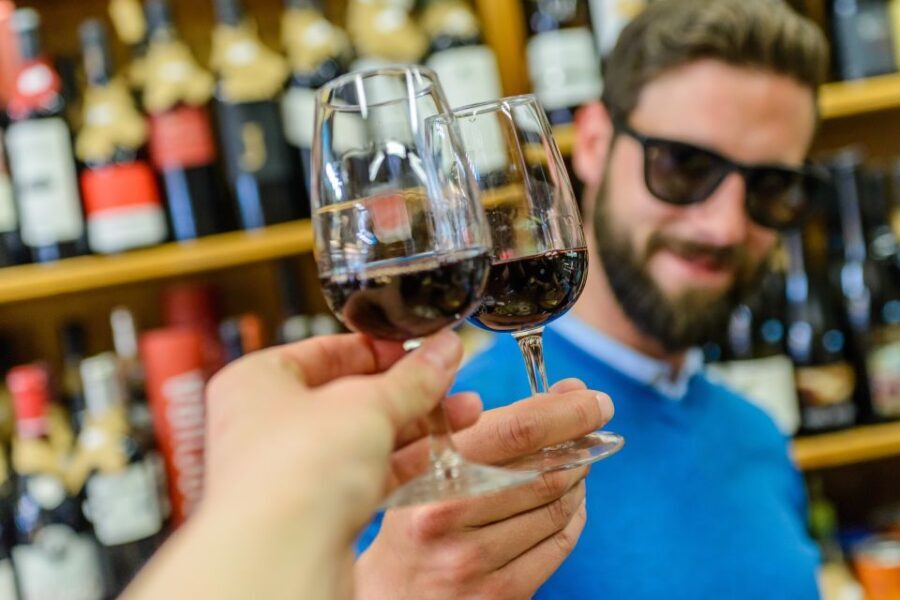
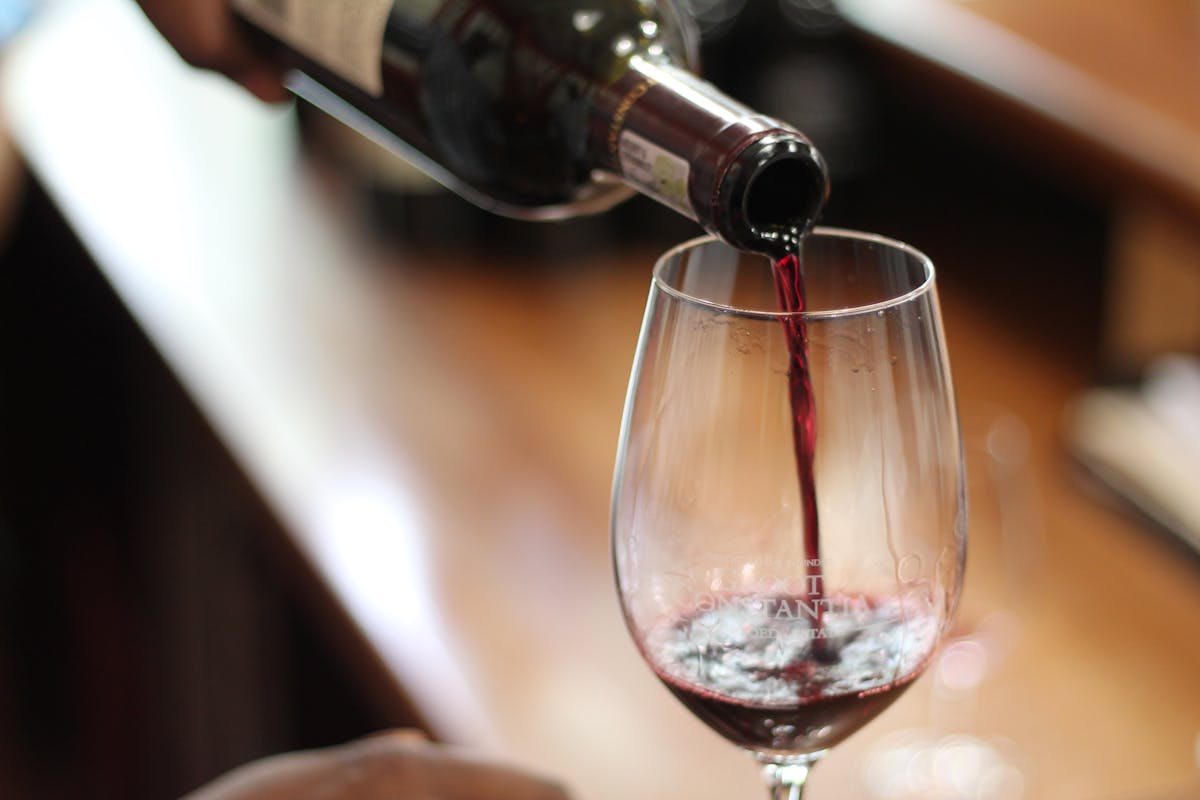
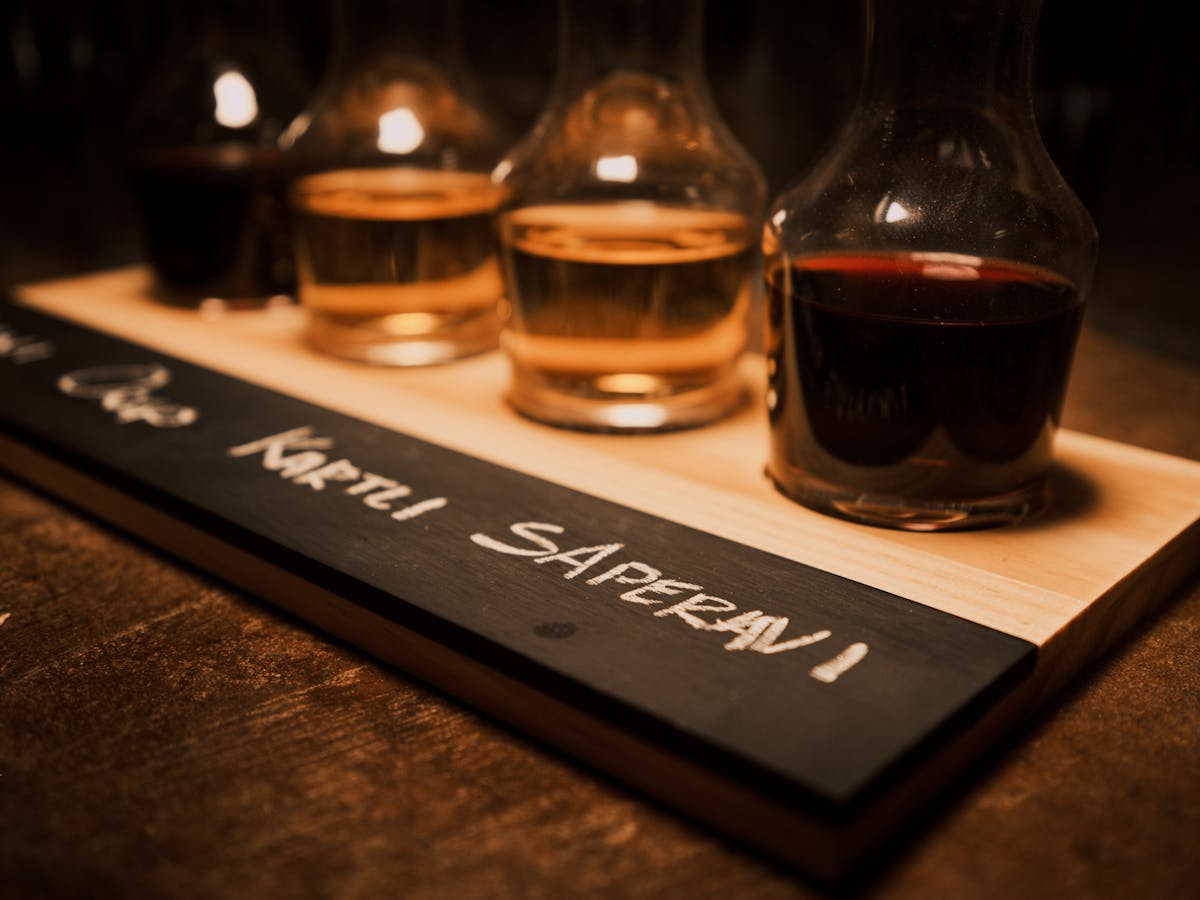
Port wine — obviously. Some tours cross the bridge to Vila Nova de Gaia for a proper cellar tasting, while others stick to wine bars in the city center. Either way, you will learn the difference between ruby and tawny, which is genuinely useful knowledge when you are buying bottles to take home.
If you are specifically interested in visiting the port wine cellars in Gaia, we have a separate guide that covers all the best lodges and how to book tastings.
Booking On Your Own vs. a Guided Tour
Can you eat your way through Porto without a guide? Absolutely. The restaurants are not hidden behind secret doors. But here is where the guided option earns its money:
Access. Guides have relationships with shop owners and small producers. The back room of the presunto shop, the grandmother’s recipe at the market counter, the tiny bakery that does not show up on Google Maps — these are not places you stumble into on day one.
Context. Porto’s food history is tangled up with its maritime past, its rivalry with Lisbon, and the influence of British port wine merchants. A good guide connects the food to the city in ways that make both more interesting.
Quantity. When you walk into a restaurant alone, you order one dish. On a food tour, you taste six or eight things across multiple stops. The variety alone is worth it.
The honest downside: food tours are not cheap. You are paying $80-90 per person for three hours, which is a lot in a city where a full restaurant lunch costs under 15 euros. If you are traveling on a tight budget and have more than two days in Porto, you could spend that money on six different restaurant meals and learn plenty on your own. The tour is best value for short visits — one or two nights — where you want maximum food exposure in minimum time.
The Best Porto Food Tours to Book
I went through every Porto food tour with a significant track record and narrowed it down to four worth your money. They all cover the core Porto dishes, but each has a different angle.
1. Porto Food & Wine Tasting Tour — $83
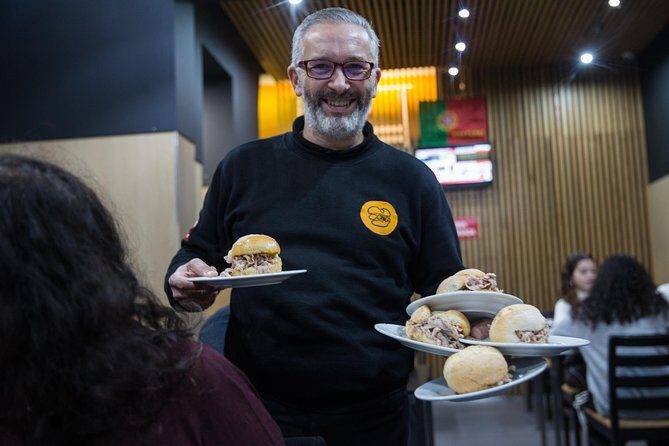
This is the one I would book if I could only pick one. At $83 for three to four hours, you get a proper walking tour through Porto’s historic center with stops at local markets, traditional taverns, and at least one wine tasting that goes beyond the basics. The guide pairs each food stop with a different Portuguese wine, which turns the whole thing into an education as much as a meal.
The lunch or dinner option is worth considering if you want to extend it into a full afternoon. Groups stay small enough that you can actually talk to the guide and ask questions without shouting over fifteen other people. The food and wine tour consistently gets top marks from visitors who came back raving about specific dishes they would never have ordered on their own.
2. Craft Beer & Food Tour in Porto — $91
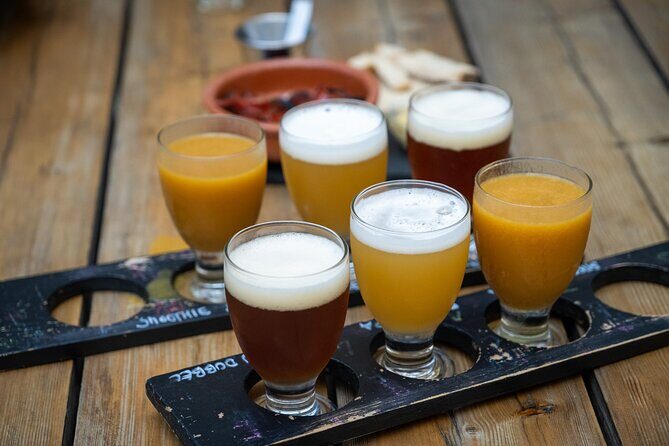
Not everyone wants to spend three hours drinking port wine, and that is fine. Porto has a surprisingly strong craft beer scene that most visitors completely miss, and this beer-focused tour is the best way into it. At $91 for three hours, you get generous pours of local craft brews paired with traditional Portuguese food — empadas, bifanas, and whatever the guide’s current favorite stop is serving.
Fair warning: a couple of past visitors have noted the food stops lean toward similar items (two types of empada, two bifanas) rather than a wider variety. If maximum food diversity is your goal, the wine tour above might be better. But if you love beer and want to see a side of Porto that the standard tourist circuit ignores completely, this is the one. The guides are clearly passionate about the craft brewing movement here, and they will send you away with a list of bars to hit on your own afterward.
3. Authentic Food & Wine Tour by Food Lover — $83
This tour runs with genuinely small groups, which changes the whole experience. When there are only four or five people, the guide can adjust the route on the fly, spend longer at a stop you are interested in, and actually introduce you to the people behind the counter. At $83 for three hours, it is priced the same as the wine tour above but puts more emphasis on the intimate, locals-only feel.
The Food Lover tour hits Bolhao Market and several spots that most visitors would never find without help. Multiple visitors have mentioned that the amount of food is almost overwhelming — plan to skip dinner afterward. If you care about having a personal experience rather than being herded through a checklist of stops, and you want your guide to know your name by the second tasting, this is where to put your money.
4. Porto Delicious Food & Wine Walking Tour — $87
This one leans harder into the walking tour side of things. At $87 for three to four hours, you cover more ground than the others and get a real sense of Porto’s layout while sampling the food. The stops include port wine, local cheeses, traditional pastries, and at least one proper sit-down dish. Think of it as a city tour that happens to feed you extremely well.
Recent visitors specifically called out guides like Igor and Biatriz as standouts who go beyond the script. The walking food tour also finishes with a list of personal recommendations emailed to you afterward, which is a nice touch if you have more days in Porto and want to keep exploring on your own. At $87 it sits slightly above the other two in price, but the longer route and added city context justify the difference.
Best Time to Take a Food Tour in Porto
Morning tours (starting 10-11am) are the best option. The markets are fully stocked, the bakeries have everything fresh, and you finish around lunchtime feeling comfortably full without having ruined dinner. Most tours run at this time for exactly these reasons.
Afternoon and evening tours exist too, and they are a solid choice if mornings do not work for your schedule. The evening versions often lean more heavily into wine and dinner-style dishes. Just know that some market stalls close by mid-afternoon, so late tours may substitute different stops.
Seasonal considerations: Summer (June through September) is peak season and tours fill up fast. Book at least a week ahead. Spring and fall are ideal — the weather is comfortable for walking, the city is less crowded, and you will not be sweating through a three-hour walk in 35-degree heat. Winter tours run but with shorter daylight. The food is actually better in the cooler months: heartier stews, richer wines, and fewer travelers competing for tables at the small spots.
Day of the week matters. Avoid Sundays and Mondays. Bolhao Market and many small shops are closed on Sundays, and some tascas close Mondays. Tuesday through Saturday gives you the full experience.
How to Get to the Meeting Points
Most Porto food tours start in one of two areas:
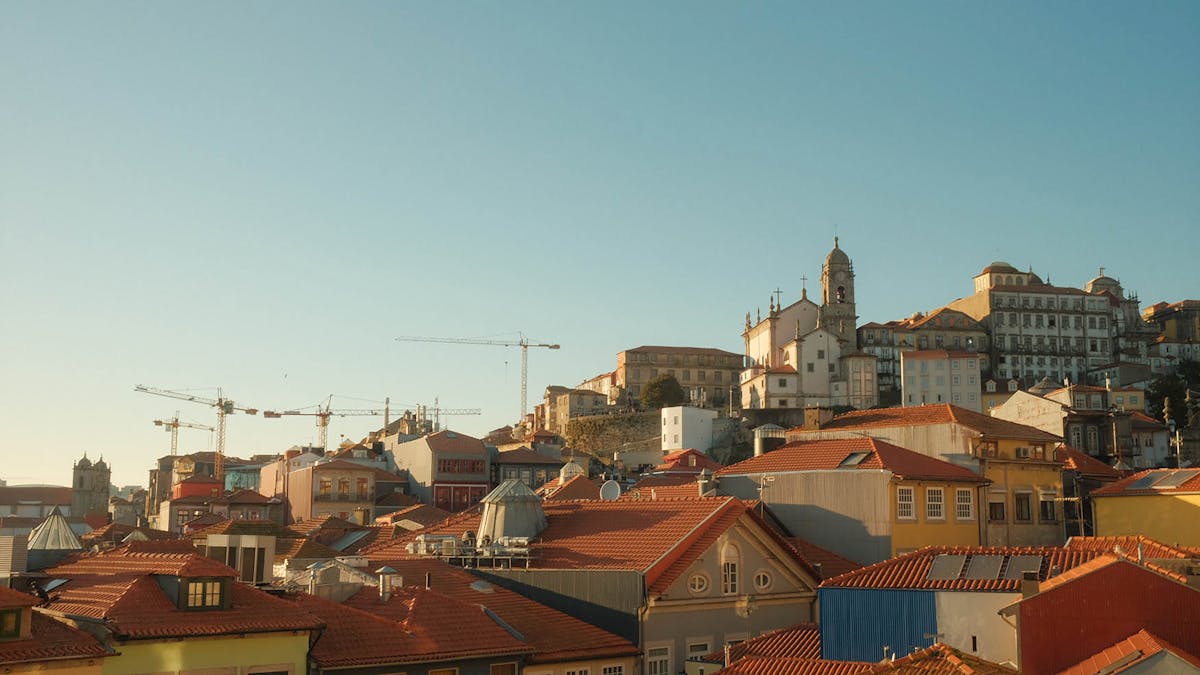
Near Bolhao Market (Rua de Fernandes Tomas area) — This is central and easy to reach. The Bolhao metro station on the purple and green lines drops you right there. From the Ribeira waterfront, it is a 15-minute uphill walk or a quick taxi.
Near Clerigos Tower (Praca de Lisboa area) — Also very central. The Aliados metro station is a 5-minute walk. If you are staying in the Ribeira, take the funicular up to avoid the steep climb.
Porto is walkable but hilly. If your accommodation is in the Ribeira district at river level and the tour starts uphill near the market, give yourself 20 minutes on foot or grab a quick taxi for 5-6 euros.
Tips That Will Save You Time and Money
Skip breakfast. Seriously. Every food tour company says this and every tourist ignores it. You will be eating for three hours straight. Show up hungry.
Wear comfortable shoes. Porto is built on hills. You will walk 3-5 kilometers on cobblestones, sometimes steep ones. Sandals and heels are a terrible idea.
Bring cash. Most tour stops are included in the price, but you will want to buy things. The cheese shop, the pastry counter, the wine you just tasted — you will leave with bags. Many small shops still prefer cash, though card acceptance has improved a lot.
Tell your guide about allergies early. Portuguese food relies heavily on pork, shellfish, dairy, and gluten. Good guides can work around restrictions, but they need advance notice to arrange alternatives at each stop.
Book early in your trip, not at the end. The food tour gives you a map of where to eat for the rest of your stay. You will discover places you want to return to, and you will know which neighborhoods have the best food. Doing this on day three of a four-day trip wastes that knowledge.
Ask about private tours. If you are traveling with four or more people, a private food tour often costs the same per person as a group tour but lets you customize the route. Some operators offer this but do not advertise it prominently.
What You Will Actually Eat
Porto’s food identity is built on a handful of dishes that locals take very seriously. Here is what to expect on your tour — and what to seek out on your own afterward.
Francesinha. Porto’s pride. A sandwich made with bread, ham, linguica (smoked sausage), fresh sausage, and steak, covered in melted cheese and drenched in a beer-based tomato sauce. Every restaurant guards its sauce recipe. It is heavy, messy, and addictive. Locals eat it for lunch, not dinner, which tells you something about how it sits.
Bacalhau. Salt cod in every conceivable form. The Portuguese are obsessed with it — the saying goes there are 365 ways to prepare it, one for each day of the year. On a food tour you will likely try bacalhau a bras (shredded with fried potatoes and egg) or bolinhos de bacalhau (fried cod cakes). Both are excellent.
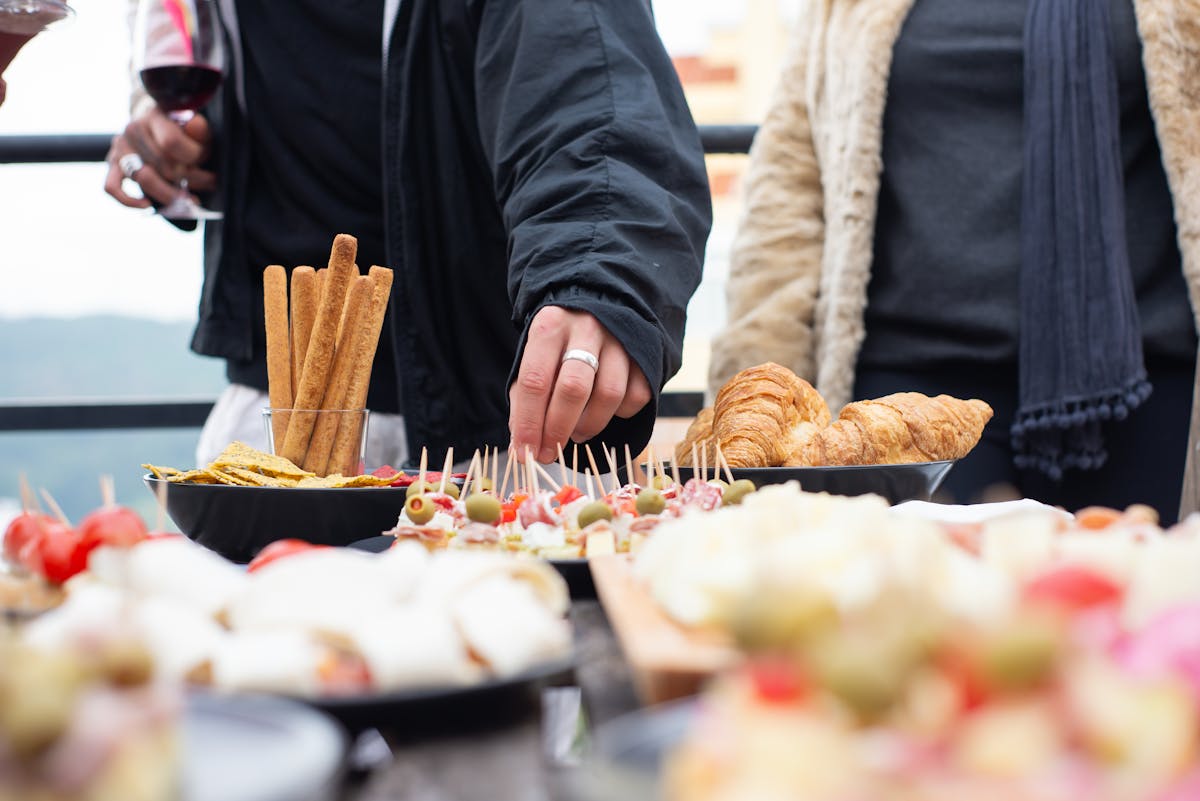
Presunto. Portuguese cured ham, similar to Spanish jamon iberico but with its own character. The best stuff comes from the Alentejo region and gets sliced paper-thin. You will taste the difference between industrial and artisanal immediately.
Queijo Serra da Estrela. A soft, runny sheep’s milk cheese from the mountains. When it is ripe, you cut the top off and scoop it out with bread. Absolutely incredible, and something most travelers never encounter outside of a food tour.
Pasteis de nata. Custard tarts. Yes, they are everywhere in Portugal, but the ones at good bakeries in Porto — fresh from the oven, slightly charred on top, still warm — are a different experience from the stale ones at airport shops. The cinnamon dusting is optional but recommended.
Port wine. You cannot eat in Porto without drinking port. The cellars are in Vila Nova de Gaia across the river, but wine bars in the city center serve excellent glasses. A food tour will teach you the difference between ruby, tawny, and white port, which makes choosing bottles at the airport afterward much less confusing. For a deeper look at the cellars themselves, check out our guide to visiting the port wine cellars.
More Porto Guides
Porto is a city that rewards eating and wandering in equal measure. After the food tour, a walking tour in Porto gives you the broader city on foot, covering the stories behind the streets your guide probably pointed out. visiting port wine cellars in Porto is the natural next stop if you want to pair port wine with the food knowledge you just picked up. a river cruise in Porto takes you along the Douro at a pace that lets you actually enjoy the views. For day trips, visiting the Douro Valley from Porto heads into the vineyard-covered valley where port grapes grow, and visiting Braga and Guimaraes from Porto takes you to two medieval towns that most visitors skip. If you are also visiting Lisbon, a food tour in Lisbon makes for a good comparison of how the two cities approach food.
This article contains affiliate links to tours and experiences. If you book through these links, we earn a small commission at no extra cost to you. This helps us keep producing in-depth guides like this one.