
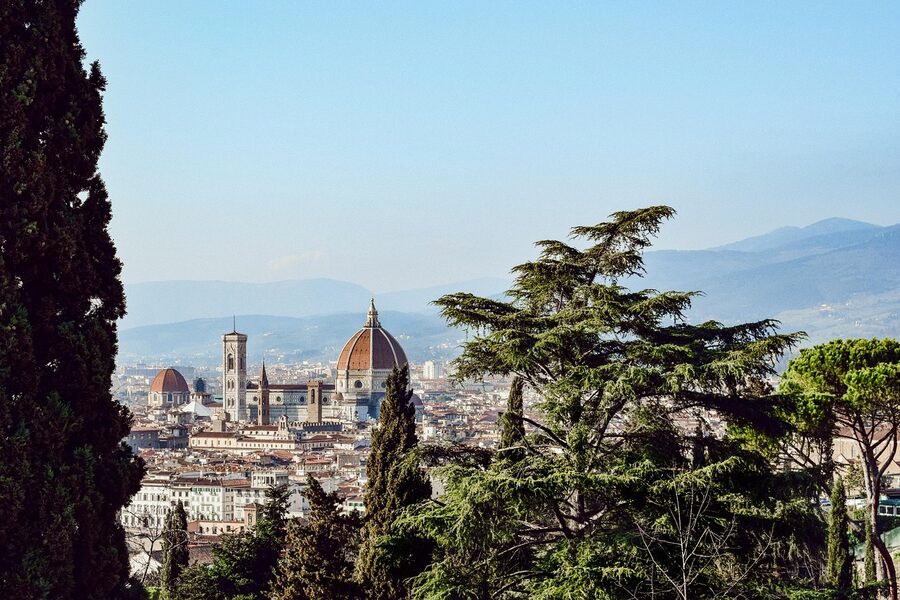
Filippo Brunelleschi spent sixteen years building the dome that still dominates Florence’s skyline. He invented a herringbone brick pattern to make the structure self-supporting, and he was so paranoid about rivals stealing his technique that he refused to write it down. Six hundred years later, you can see his dome from the top deck of a double-decker bus in about four seconds flat. That is roughly the speed at which a hop-on hop-off bus covers the Duomo stop.
I am being slightly unfair. The Florence HOHO bus does what it promises: it loops past the major landmarks, plays an audio guide in your earbuds, and lets you jump off whenever something catches your eye. But Florence is a walking city at heart, and the bus works best when you treat it as a tool rather than the main event. Use it for the long stretches between clusters of sights, skip it for the compact historic center where the streets are too narrow for buses anyway, and definitely ride the full loop at least once just for the views from Piazzale Michelangelo.
Here is how to book one, which ticket to pick, and what to expect once you are actually on board.

Best overall: Florence Hop-on Hop-off Bus Tour: 24, 48 or 72-Hour Ticket — $24. The one everyone books. Two lines covering all the big stops, audio guide in 16 languages, and the 48-hour ticket is the sweet spot for most visitors.
Best for cruise passengers: Florence Hop On Hop Off Shore Excursion from Livorno — $79. Handles the Livorno-to-Florence transfer so you do not have to figure out Italian trains on a tight port schedule.
Budget pick: City Sightseeing Florence Hop-On Hop-Off Bus Tour — $25. The classic red double-decker with two routes and decent coverage of the south bank.
- How the Florence Hop-On Hop-Off Bus System Works
- Which Ticket Duration Should You Pick?
- Hop-On Hop-Off Bus vs. Walking Florence
- The Best Florence Hop-On Hop-Off Tours to Book
- 1. Florence Hop-on Hop-off Bus Tour: 24, 48 or 72-Hour Ticket —
- 2. City Sightseeing Florence Hop-On Hop-Off Bus Tour —
- 3. Florence Hop On Hop Off Shore Excursion from Livorno —
- When to Ride the Bus (and When to Avoid It)
- The Route: What You Will Actually See from the Bus
- Tips That Will Save You Time and Money
- Getting to the First Bus Stop
- What the Bus Does Not Cover (and What to Do Instead)
- Planning the Rest of Your Florence Trip
How the Florence Hop-On Hop-Off Bus System Works
Florence has two main hop-on hop-off bus operators, and both run similar routes. The buses are open-top double-deckers that follow fixed loops through the city, stopping at or near the major attractions. You buy a timed pass (usually 24, 48, or 72 hours), and you can get on and off at any stop as many times as you want within that window.
The standard route hits about 15 stops. The loop takes roughly 60 to 90 minutes if you stay on the whole time without hopping off. Most operators run two lines:
Line A (City Center Loop): This covers the Duomo, Santa Croce, Piazza della Signoria area, the train station (Santa Maria Novella), and usually swings past the Arno River near Ponte Vecchio. The frequency is typically every 20 to 30 minutes in high season, longer in winter.
Line B (Fiesole / Piazzale Michelangelo): This is the scenic route. It climbs up through the Oltrarno neighborhood, passes Piazzale Michelangelo (the best viewpoint in Florence, full stop), and in some cases continues to the hilltop town of Fiesole. Line B runs less frequently, sometimes only every 45 to 60 minutes, so check the schedule before hopping off at the top.
How to buy tickets: You have three options. Book online in advance through GetYourGuide or Viator (usually the cheapest, and you get instant mobile tickets), buy from the driver when you board (cash or card, but expect a small markup), or pick up tickets from the operator’s booth near the main stops. The Santa Maria Novella train station stop usually has a staffed booth.
Audio guide: Every bus has a multilingual audio commentary. You will get disposable earbuds or can use your own. The audio is triggered by GPS and plays automatically as you pass each landmark. It is decent for orientation, though the timing can drift, and occasionally the narration is still talking about the Palazzo Pitti while you are already staring at the Boboli Gardens.
Hours: Buses generally run from 9:00 AM to 6:00 PM (later in summer, shorter in winter). The last full loop usually departs around 5:00 PM. Your timed pass starts from the moment you first board, not from the time you purchase.
Which Ticket Duration Should You Pick?
This depends on how many days you have in Florence and how you want to use the bus.
24-hour ticket ($24): Fine if you just want to ride the full loop once for orientation and maybe hop off at Piazzale Michelangelo. This is what most visitors buy, and honestly, it is all most people need. Florence’s historic center is compact enough to walk, so the bus is more of a nice-to-have than a necessity for the central sights.
48-hour ticket ($30-35): The best value if you want to ride both lines properly. Day one, do the city center loop with stops at the Uffizi and Accademia (to see Michelangelo’s David). Day two, take the scenic route up to Piazzale Michelangelo and Fiesole. You will not feel rushed.
72-hour ticket ($38-42): Only worth it if you are genuinely planning to use the bus as your main transport for three days. Most travelers find that two days is plenty, and by day three you have already walked past most of the stops on foot anyway.
My take: buy the 48-hour ticket. It gives you enough time to ride both lines without the pressure of cramming everything into one day, and the price difference from the 24-hour ticket is small.
Hop-On Hop-Off Bus vs. Walking Florence
I want to be honest about this: Florence is one of the most walkable cities in Europe. The entire historic center, the part with the Duomo, the Uffizi, Ponte Vecchio, and Piazza della Signoria, is roughly a square kilometer. You can cross it in 15 minutes on foot. The bus cannot even enter most of this area because the streets are pedestrianized or too narrow.
So why take the bus at all?
The bus wins for:
– Getting to Piazzale Michelangelo without the steep uphill walk (it is a serious climb, especially in summer heat)
– Reaching Fiesole, which is 8 kilometers outside the center and a pain to reach by local bus if you do not know the system
– First-day orientation, riding the full loop gives you a mental map of the city that makes the rest of your trip easier
– The south bank (Oltrarno), which is spread out and less intuitive to navigate on foot
– Resting your legs between museum visits, you will walk 15,000+ steps on a typical Florence day
Walking wins for:
– The historic center itself, where the bus cannot reach the best parts
– Spontaneous discoveries, the side streets between major landmarks are where Florence really shines
– Speed, during rush hour the bus can sit in traffic on Viale dei Colli while you could have walked the same distance in ten minutes
The smart play is to combine both. Walk the historic center, bus the hills and outer stops.
The Best Florence Hop-On Hop-Off Tours to Book
I have compared the main options available. Here are the three that cover your bases, whether you want the standard city loop, a budget option, or a package that includes the Livorno transfer for cruise passengers.
1. Florence Hop-on Hop-off Bus Tour: 24, 48 or 72-Hour Ticket — $24
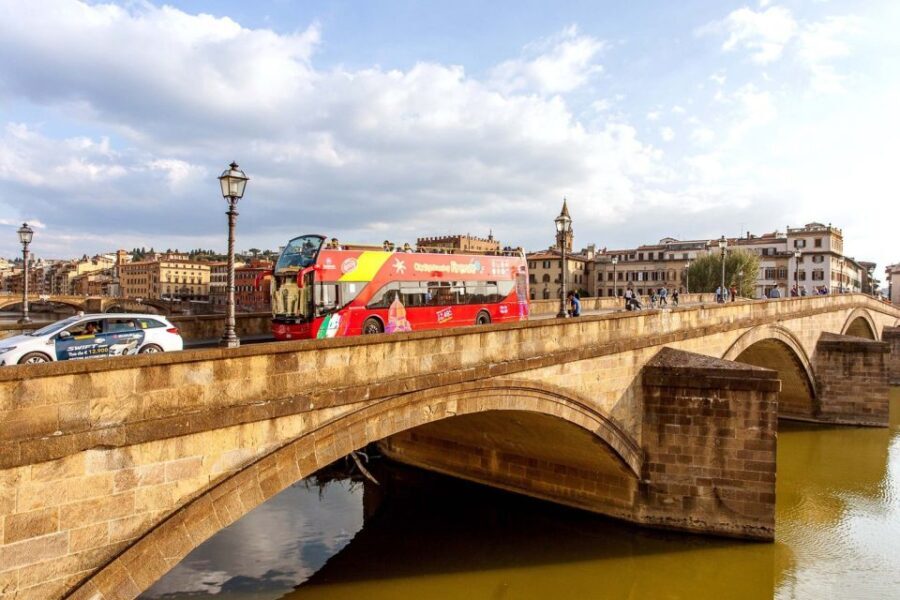
This is the most popular hop-on hop-off option in Florence by a wide margin, and for good reason. Two routes cover the full city from the Duomo to Fiesole, the audio guide comes in 16 languages, and the ticket flexibility (choose 24, 48, or 72 hours at booking) means you are not locked into one format. The $24 starting price for the 24-hour pass makes it one of the cheapest ways to get a structured overview of the city.
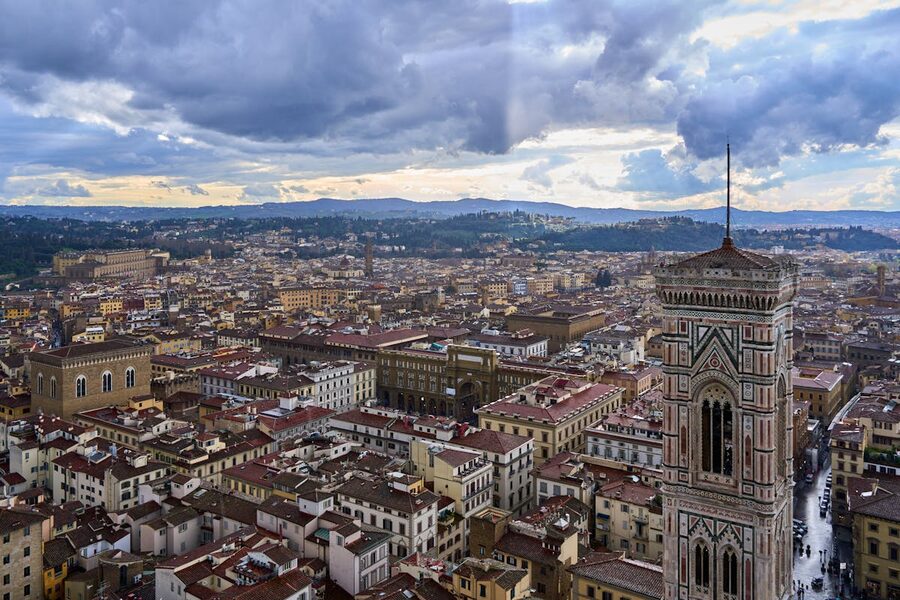
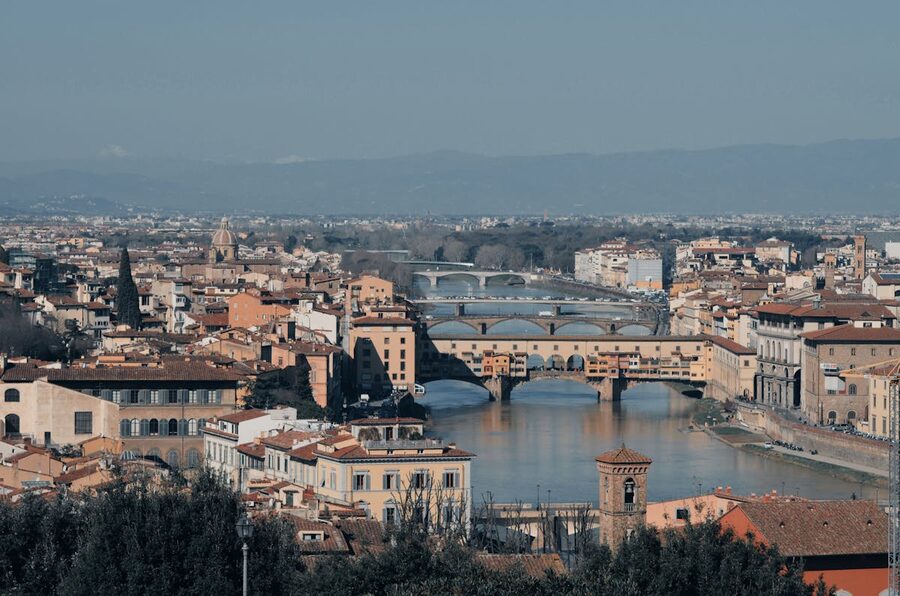
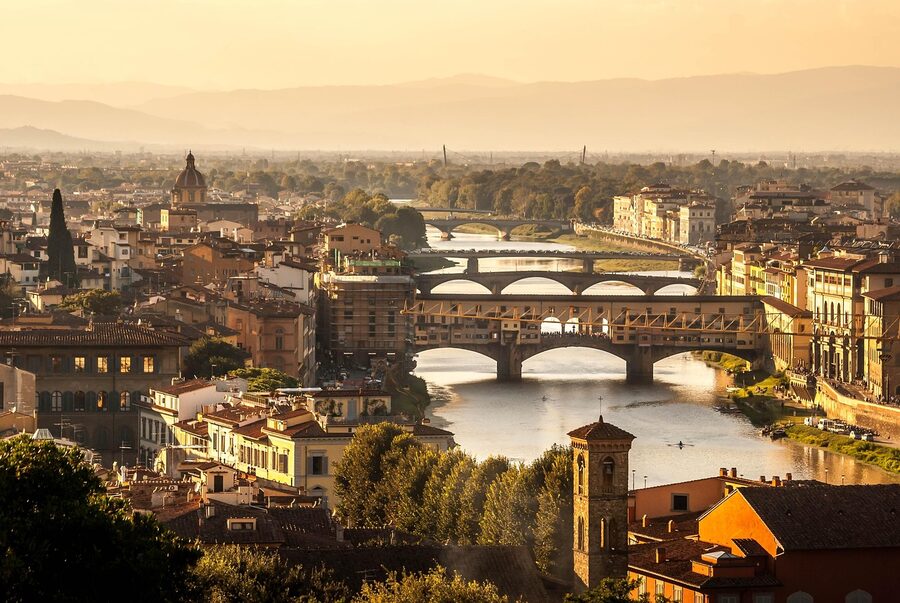
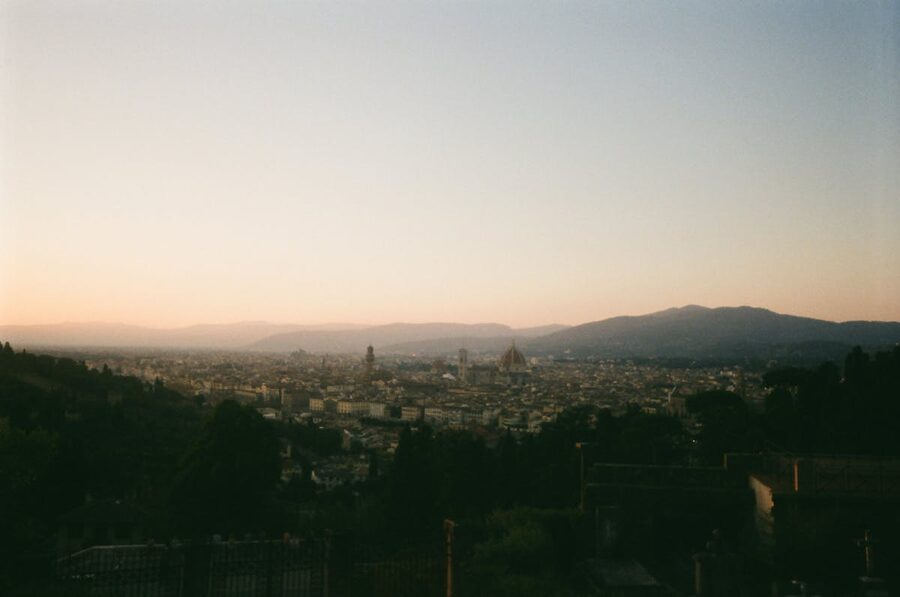
What sets this apart from the alternatives is the route coverage. Line B takes you up through the Oltrarno and past Piazzale Michelangelo, which is the one ride you absolutely should not skip. The view from the top of that hill, with Brunelleschi’s dome centered in the skyline and the Arno River curving below, is worth the entire ticket price.
The main drawback is the audio timing. It occasionally drifts out of sync, narrating one landmark while you are already looking at the next. Minor annoyance, not a deal-breaker.
2. City Sightseeing Florence Hop-On Hop-Off Bus Tour — $25

The City Sightseeing brand runs those iconic red double-deckers you have probably seen in other European cities. In Florence, their route covers similar ground to the option above, with two lines and stops near all the major landmarks. At $25, it is essentially the same price point.
Where this differs is in the details. The City Sightseeing version tends to have slightly more frequent departures on the main city loop (Line A), which means less waiting at stops. The trade-off is that the scenic route (Line B) runs less often, sometimes only every 45 minutes to an hour. If Piazzale Michelangelo is your priority, plan around the Line B schedule rather than just showing up and hoping.
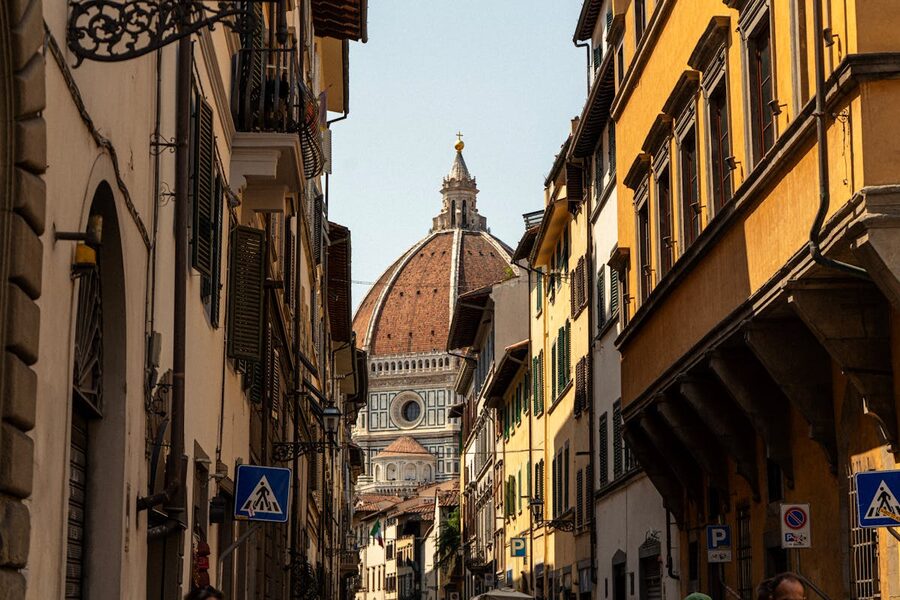
One thing to know: the stops near the historic center are a few blocks from the actual landmarks because the buses cannot enter the pedestrian zones. You will always need to walk 5 to 10 minutes from the bus stop to reach places like the Duomo or the Uffizi. That is true of all HOHO operators in Florence, not just this one.
3. Florence Hop On Hop Off Shore Excursion from Livorno — $79

This is a different product aimed specifically at cruise passengers docking at Livorno. The $79 price covers the round-trip coach transfer from Livorno port to Florence (about 90 minutes each way) plus a hop-on hop-off bus pass once you arrive in the city. It solves the logistical headache of figuring out the Livorno-to-Florence train connection on your own, which is doable but stressful when you have a ship departure to worry about.
The Florence bus portion works the same as the standalone passes. You get dropped in the city center, hop on the sightseeing bus, and have roughly five hours to explore. The guide on the transfer coach usually gives a good overview of what to prioritize based on your interests, and they provide maps highlighting walkable clusters of sights.
Is it worth the premium over booking the train and a separate bus ticket yourself? If this is your first time in Florence and you are nervous about making it back to the ship on time, yes. The peace of mind is real. But if you are comfortable with independent travel, you can do the Livorno-Florence round trip by train for about EUR 20 and buy a standalone bus ticket for another $24, saving roughly half the cost. Your call on the risk-reward.
When to Ride the Bus (and When to Avoid It)
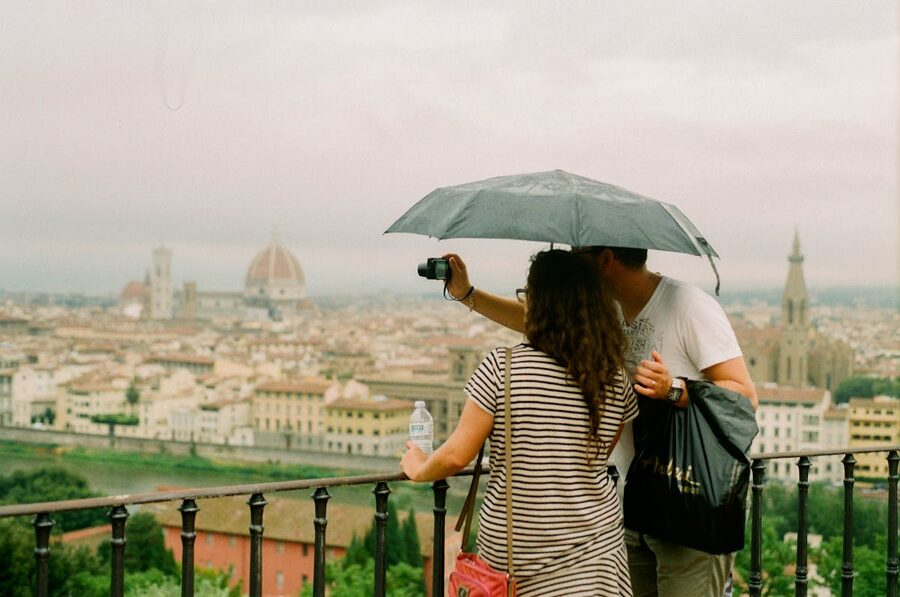
Best times to ride:
– Early morning (9:00-10:00 AM): The buses are emptiest and the light is gorgeous for photos from the top deck. You will get a seat on the upper level without a fight.
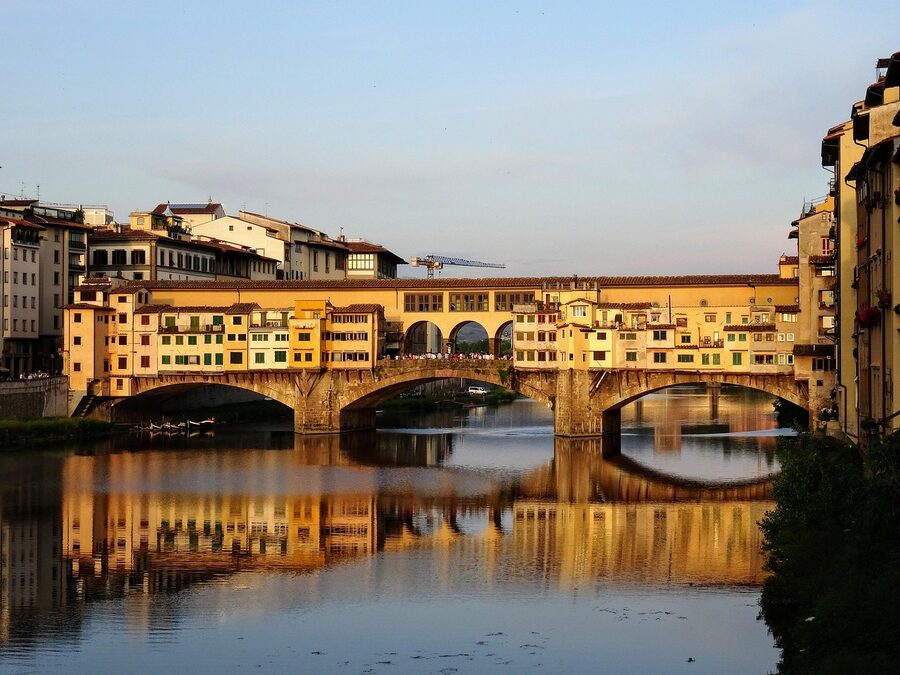
– Late afternoon (4:00-5:30 PM): Golden hour from the top deck as the bus passes along the Arno is genuinely beautiful. The Ponte Vecchio glows at this time of day.
– Weekdays: Noticeably less crowded than weekends, especially outside of July and August.
Worst times to ride:
– Midday in summer (12:00-3:00 PM): The top deck becomes a griddle. Florence regularly hits 35+ degrees in July and August, and there is zero shade up there. Bring water, sunscreen, and a hat, or sit downstairs with the air conditioning and skip the views.
– Saturday mornings: Cruise ship passengers from Livorno flood the city. The buses fill up fast and the stops around the Duomo get chaotic.
– December through February: Reduced schedules, sometimes only one line operating. Check before you book.
Seasonal tips: Spring (April and May) and early fall (September and October) are the sweet spot. Comfortable temperatures, full bus schedules, and the Tuscan light is at its most photogenic. Tuscany day trips from Florence pair well with a second-day bus pass if you are spending three or more nights.
The Route: What You Will Actually See from the Bus
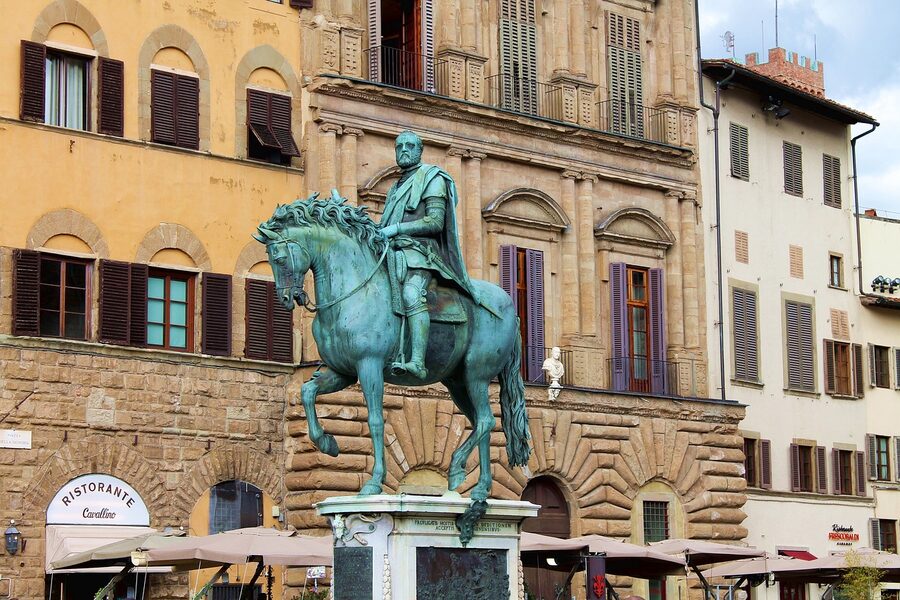
The Florence hop-on hop-off loop passes most of the city’s headline landmarks. Here is what to watch for from the top deck, in roughly the order you will see them on Line A.
Santa Maria Novella: Most routes start here, near the main train station. The church facade is one of the finest Renaissance designs in Florence, but the bus pulls away quickly, so look left as you depart.
The Duomo and Brunelleschi’s Dome: The bus cannot get very close because of the pedestrian zone, but you will see the dome rising above the surrounding buildings as you pass along Via dei Cerretani. Climbing the dome is something you should do on foot, not from the bus. The 463 steps are worth it for the fresco views inside and the panorama from the top. Brunelleschi’s herringbone brick pattern, the technique he kept secret from competing architects, is still visible in the dome’s inner shell.
Santa Croce: The Franciscan church where Michelangelo, Galileo, and Machiavelli are buried. The bus stops nearby, and the piazza in front is a good place to hop off for a gelato break.
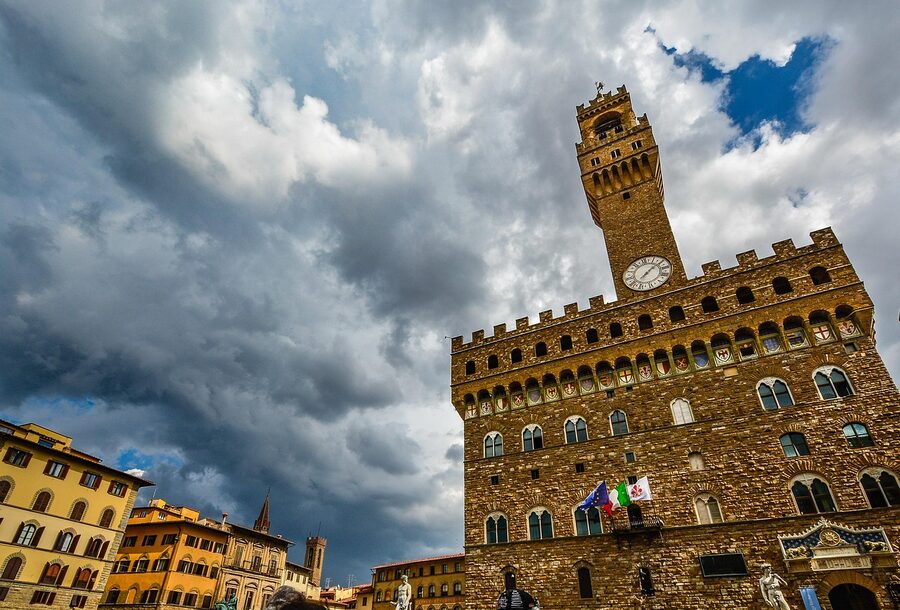
Piazza della Signoria and Palazzo Vecchio: Again, the bus skirts the edge because this area is pedestrianized. You will need to hop off and walk five minutes to reach the piazza itself. But this is where you want to be on foot anyway, the open-air sculpture gallery with the Neptune Fountain and a copy of Michelangelo’s David is one of those places where you just stand and stare.
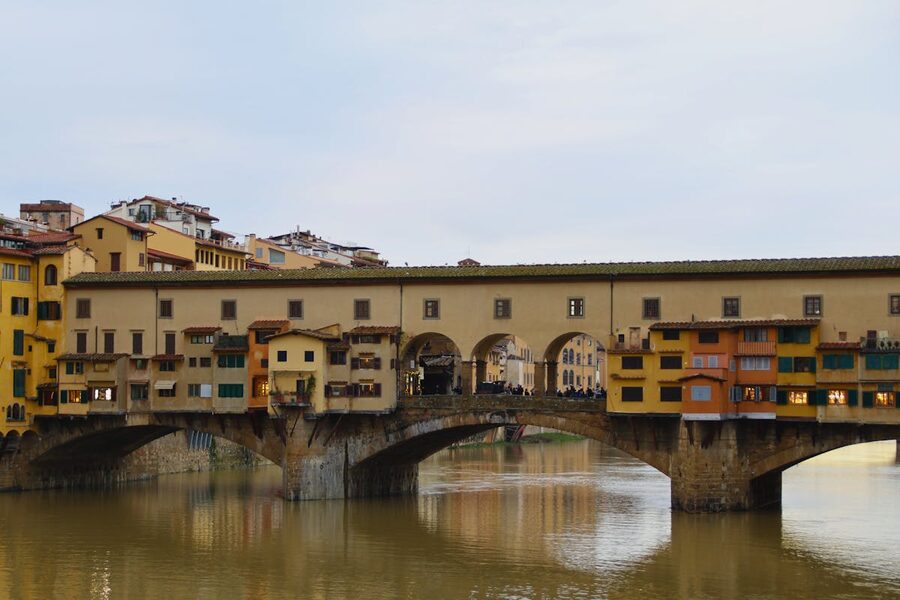
The Arno River and Ponte Vecchio: The bus crosses the river south of Ponte Vecchio. The bridge itself is pedestrian-only and packed with goldsmiths’ shops. It is the oldest bridge in Florence, the only one the Germans did not destroy during the World War II retreat in 1944. The story goes that the German consul in Florence convinced the commanding officer to spare it.
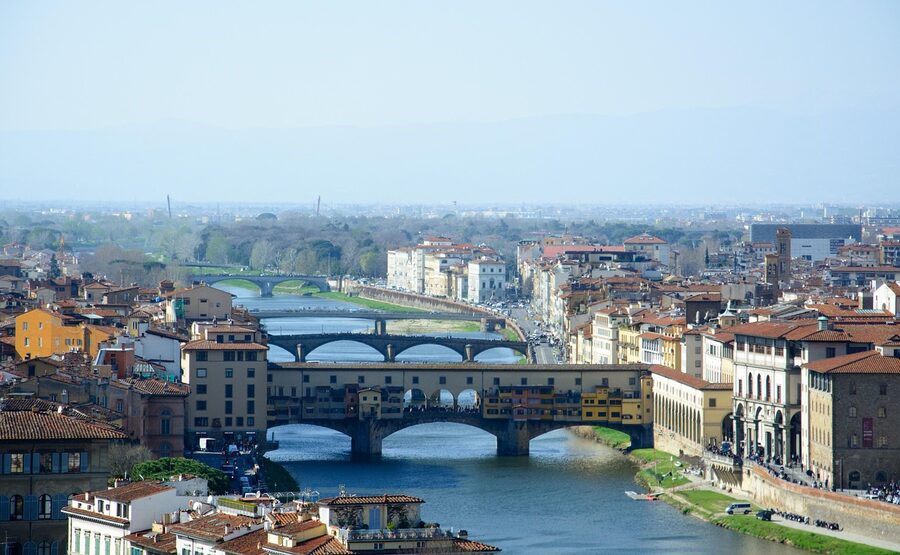
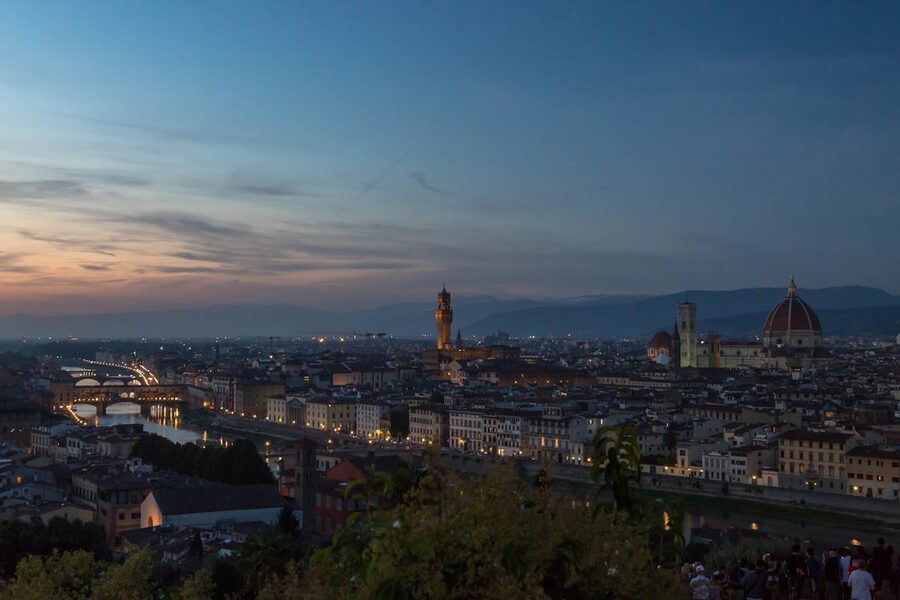
Piazzale Michelangelo (Line B): This is the stop that justifies the whole ticket. The bus climbs the south bank hills and drops you at the terrace overlooking the entire city. On a clear day you can see the Apennine Mountains beyond the Florentine rooftops. Late afternoon light here is something else. Bring your camera. Bring a bottle of wine if you are feeling Italian about it.
Fiesole (Line B, extended route): Some operators continue to this ancient Etruscan hilltop town, 20 minutes beyond Piazzale Michelangelo. There is a Roman amphitheater, a few small museums, and views that make Florence look like a model village laid out in the valley below. Worth it if you have a 48-hour ticket and a spare morning.
Tips That Will Save You Time and Money

Book online, not on the bus. Online prices through GetYourGuide or Viator are consistently cheaper than buying from the driver. You also get instant confirmation and can show the mobile ticket from your phone.
Start at Santa Maria Novella. This is stop #1 on most routes and the easiest place to orient yourself. The bus booth is near the station exit, and you can pick up a printed route map (useful for planning which stops to hop off at).
Do the full loop first. Resist the urge to hop off at the first interesting stop. Ride the complete circuit once to get your bearings, note which stops are worth returning to, then start your hop-on hop-off strategy on the second pass.
Ride Line B in the afternoon. Piazzale Michelangelo faces west, which means afternoon light illuminates the city perfectly for photos. Morning visits get harsh shadows from the east. If you time it right and arrive around 4:00 to 5:00 PM, you will catch the start of golden hour.
Combine the bus with a walking tour for the center. The bus handles the outer ring and the hills. A good walking tour covers the historic center where buses cannot go. Together, you get full coverage of the city without exhausting your feet.
Bring headphones. The disposable earbuds provided on the bus are terrible. Your own earbuds or over-ear headphones will make the audio guide actually enjoyable.
Check the last bus time. Getting stranded at Piazzale Michelangelo after the last bus has left means a long, steep walk downhill in the dark. It is not dangerous, but it is not fun either. The last Line B departure is usually around 5:00 PM, sometimes earlier in low season.
Validate the right pass duration. Your 24/48/72-hour window starts ticking from your first scan, not from when you bought the ticket. So buy in advance but do not activate until you are ready to start riding.
Getting to the First Bus Stop
From Santa Maria Novella train station: Walk straight out the main exit. Most operators have their first stop and ticket booth within 200 meters, usually along Piazza della Stazione or Piazza Adua. Follow the red double-decker bus signs.
From Florence airport (Peretola): The airport is only 6 kilometers from the city center. Take the Volainbus shuttle (EUR 6, runs every 30 minutes) to Santa Maria Novella station, then board the HOHO from there.
From Livorno cruise port: If you are on a cruise, the shore excursion package handles the transfer. Independent travelers can take the train from Livorno Centrale to Florence Santa Maria Novella (about 90 minutes, EUR 10 each way). From the station, the HOHO bus stop is a two-minute walk.
From your hotel: Check the route map to find the nearest stop. Most central hotels are within a 10-minute walk of at least one stop on Line A. Hotels in the Oltrarno (south bank) are closer to Line B stops.

What the Bus Does Not Cover (and What to Do Instead)
The hop-on hop-off bus is great for the outer ring, but the heart of Florence requires different transport: your own two feet.
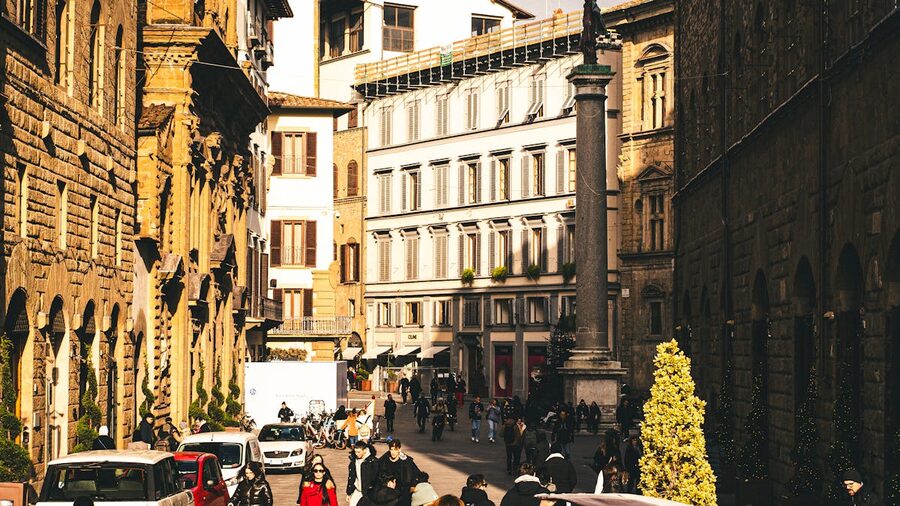
The bus cannot enter the ZTL (Zona a Traffico Limitato), the restricted traffic zone that covers most of the historic center. This means the Duomo, Piazza della Signoria, Ponte Vecchio, and the streets between them are all walking territory. Plan to spend at least half a day exploring this area on foot.
For the museums, book timed-entry tickets in advance. The Uffizi Gallery and the Accademia (for Michelangelo’s David) both have online booking that lets you skip the general queue. During peak season, the line at the Accademia can stretch to two hours without a timed ticket.
For day trips, the bus does not go beyond the city limits (except the Fiesole extension). If you want to explore Tuscany, the Tuscany day trips from Florence are the way to go, covering Siena, San Gimignano, Pisa, and the Chianti wine region. You can also book a dedicated wine tour if that is more your speed.
And if you want to learn something while you walk, a Florence cooking class is one of the best ways to spend a morning or afternoon. You will learn to make fresh pasta in the shadow of Renaissance palaces, which is about as Florentine as it gets.
Planning the Rest of Your Florence Trip
The hop-on hop-off bus gives you the big picture, but the best Florence experiences happen at street level. The Uffizi is the obvious starting point if you care about Renaissance art, and the Accademia is where you go to stand in front of the real David (the one in Piazza della Signoria is a copy). Climbing Brunelleschi’s dome is the best physical experience in the city, and a walking tour will fill in the stories behind the facades you saw from the bus. For a day outside the city, the Tuscany day trips and wine tours are both solid choices, and a cooking class is the kind of thing you will tell people about for years.
This article contains affiliate links. If you book through these links, we may earn a small commission at no extra cost to you. This helps us keep producing free travel guides.