
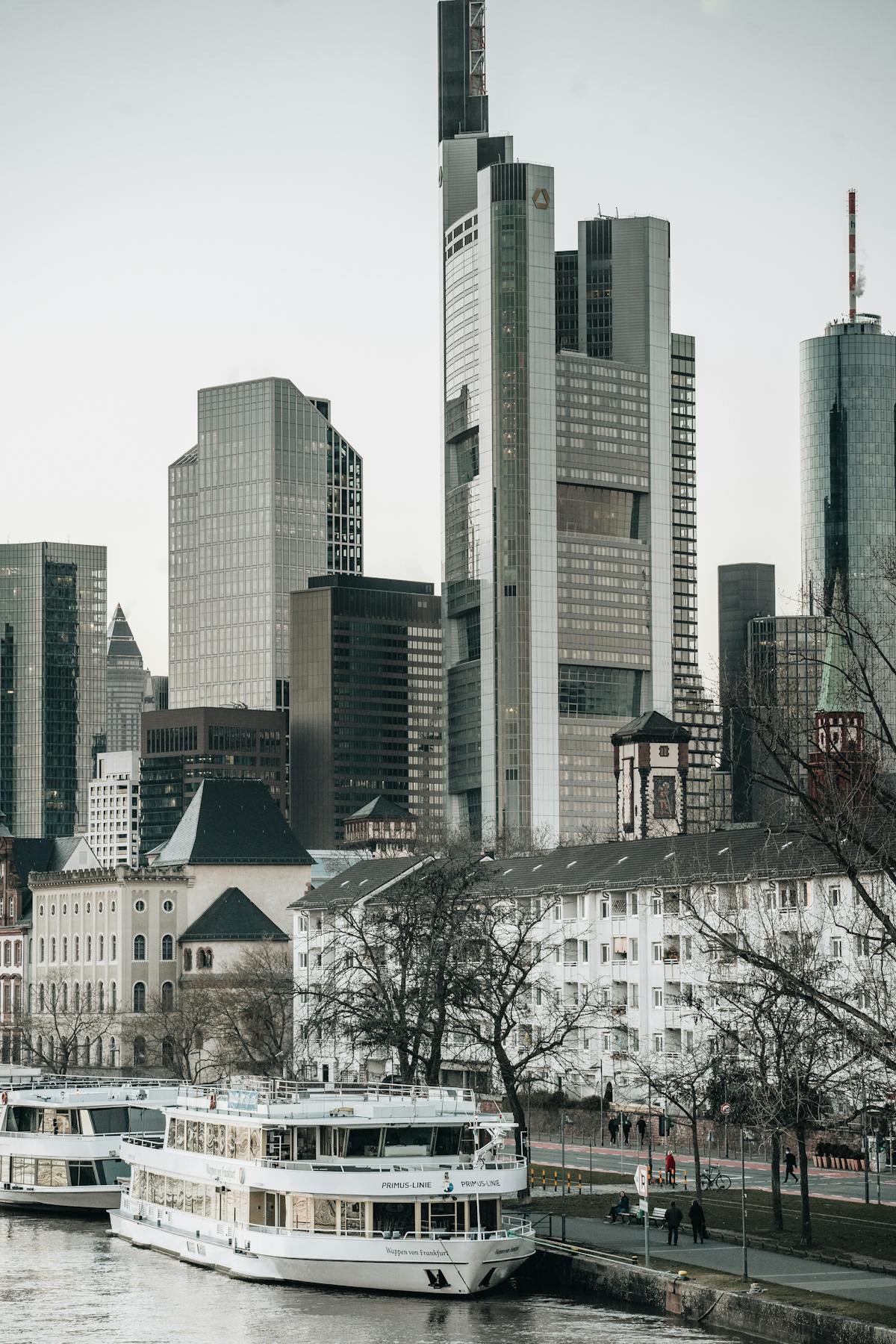
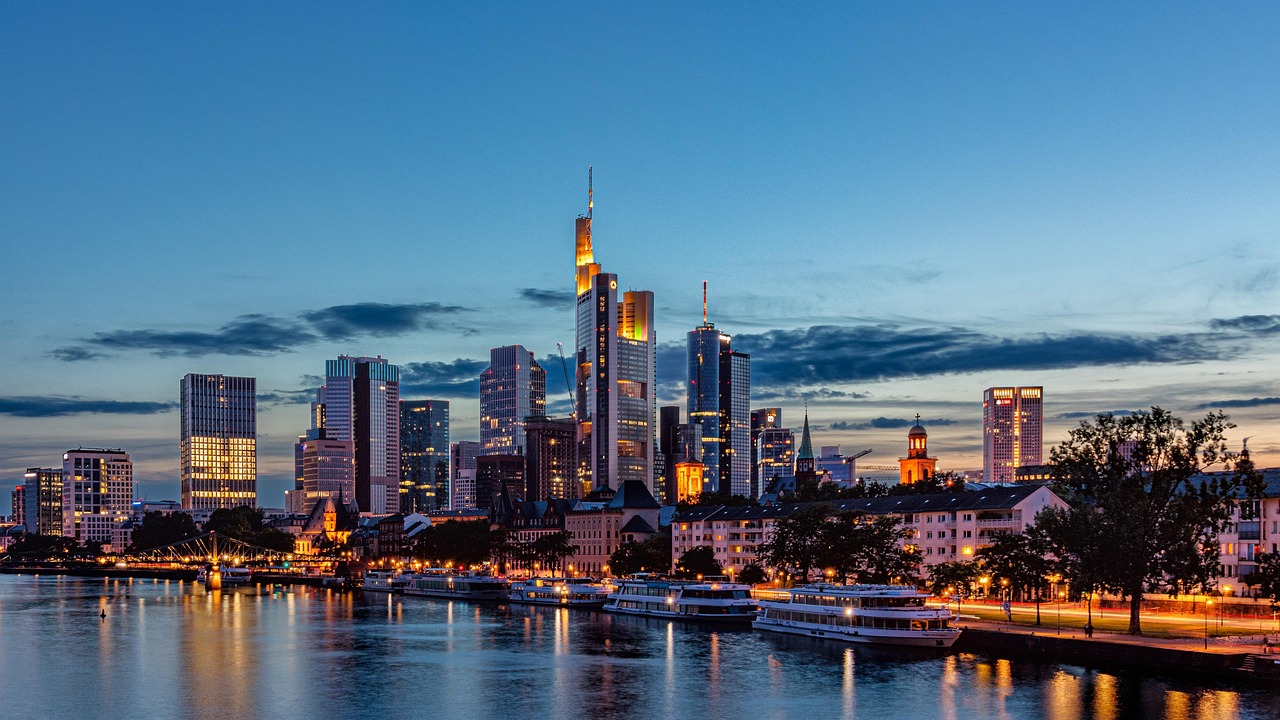
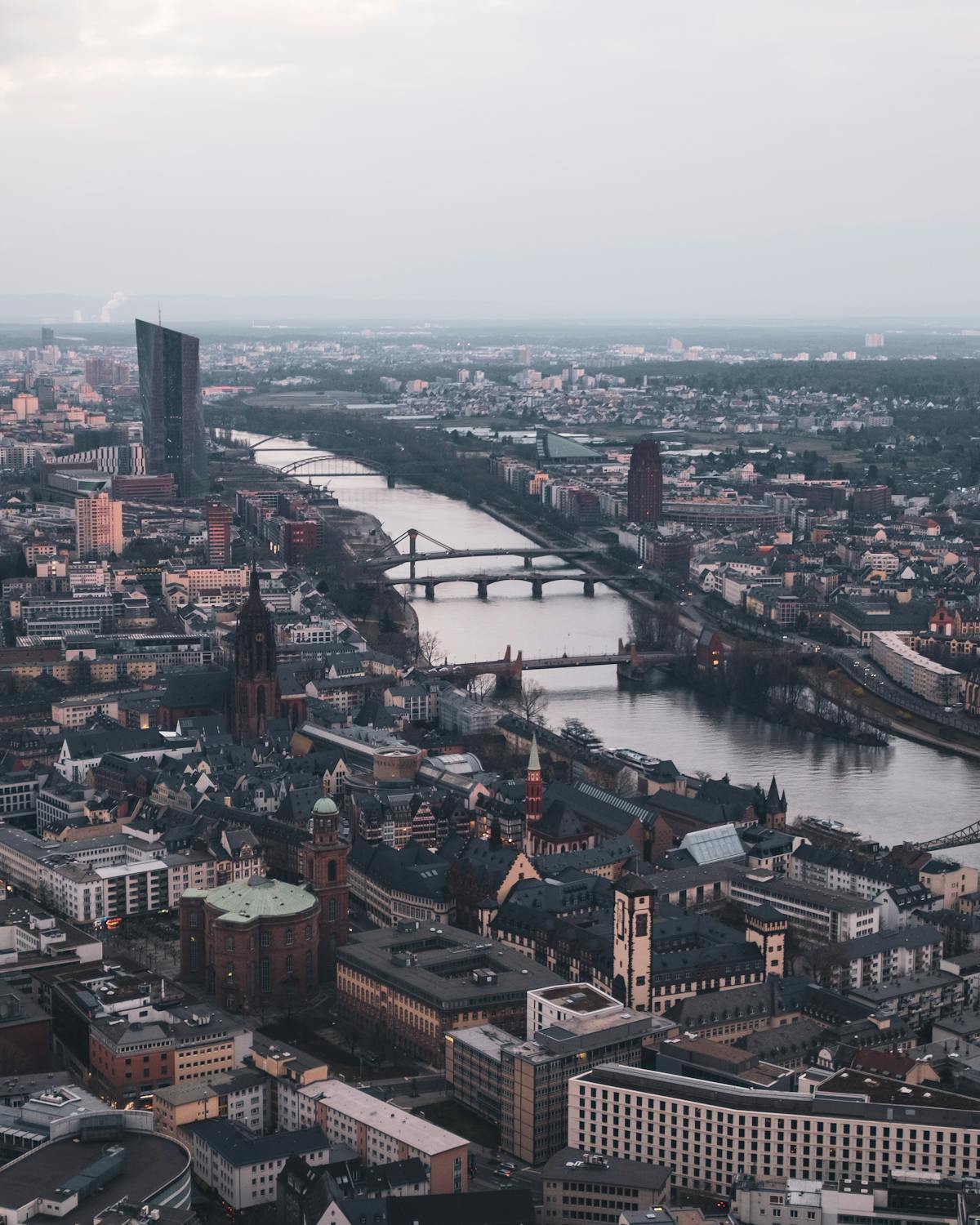
They call it Mainhattan, and from the river you actually get why. The glass towers of Frankfurt’s financial district stack up against each other in a way that really does look like a smaller, tidier Manhattan — except the river at their feet is the Main, not the Hudson, and there are half-timbered medieval houses sitting a block behind the skyscrapers. That collision of old and new is what makes a river cruise here worth doing. You simply don’t see the contrast from street level.
The Main is one of those rivers that people walk past without thinking much about. It’s not the Rhine — nobody’s writing folk songs about it. But the stretch through central Frankfurt runs past the Romerberg (the city’s medieval heart), the entire Museum Embankment, the European Central Bank, and that improbable skyline. And the whole trip takes an hour. Maybe 50 minutes if you get the shorter cruise.
Booking is simple. Most cruises run daily from the Eiserner Steg area (that’s the iron footbridge covered in love locks near the Romerberg). Primus-Linie and KD Deutsche Rheinschiffahrt are the two main operators, and both depart from roughly the same stretch of riverbank. You can book online or show up and buy a ticket at the dock, though weekends in summer get busy enough that pre-booking saves you a departure or two.
- Best overall: River Main Sightseeing Cruise with Commentary — 50-100 minutes with audio guide, from $18
- Best panorama experience: 1-Hour Panorama Boat Cruise — the classic route past the skyline, $20
- Best day trip extension: Rhine Valley Trip with Rhine River Cruise — full day trip out to the Rhine castles, $167
- What You See From the Water
- The Best Frankfurt Main River Cruises
- 1. River Main Sightseeing Cruise with Commentary
- 2. 1-Hour Panorama Boat Cruise on the River Main
- 3. Rhine Valley Trip from Frankfurt with Rhine River Cruise
- When to Go
- How to Book
- Getting to the Departure Point
- Tips That Actually Matter
- Frankfurt River Cruise vs. Other German City Cruises
- Beyond the Standard Cruise
What You See From the Water
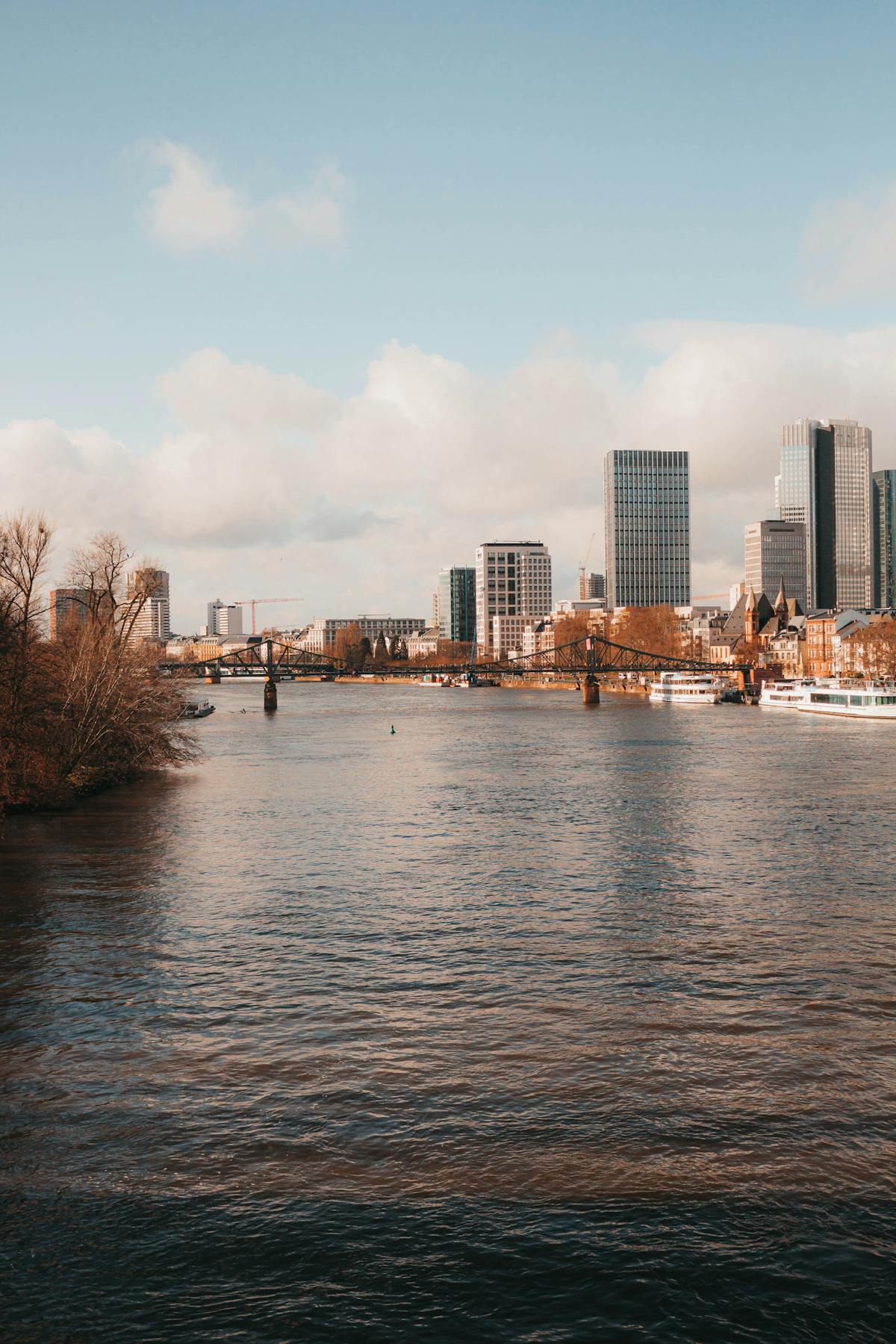
The standard one-hour cruise covers a loop that goes east from the Eiserner Steg, turns around somewhere near the ECB building, heads back west past the departure point, and returns. Some longer versions continue further west. Here’s what slides past:
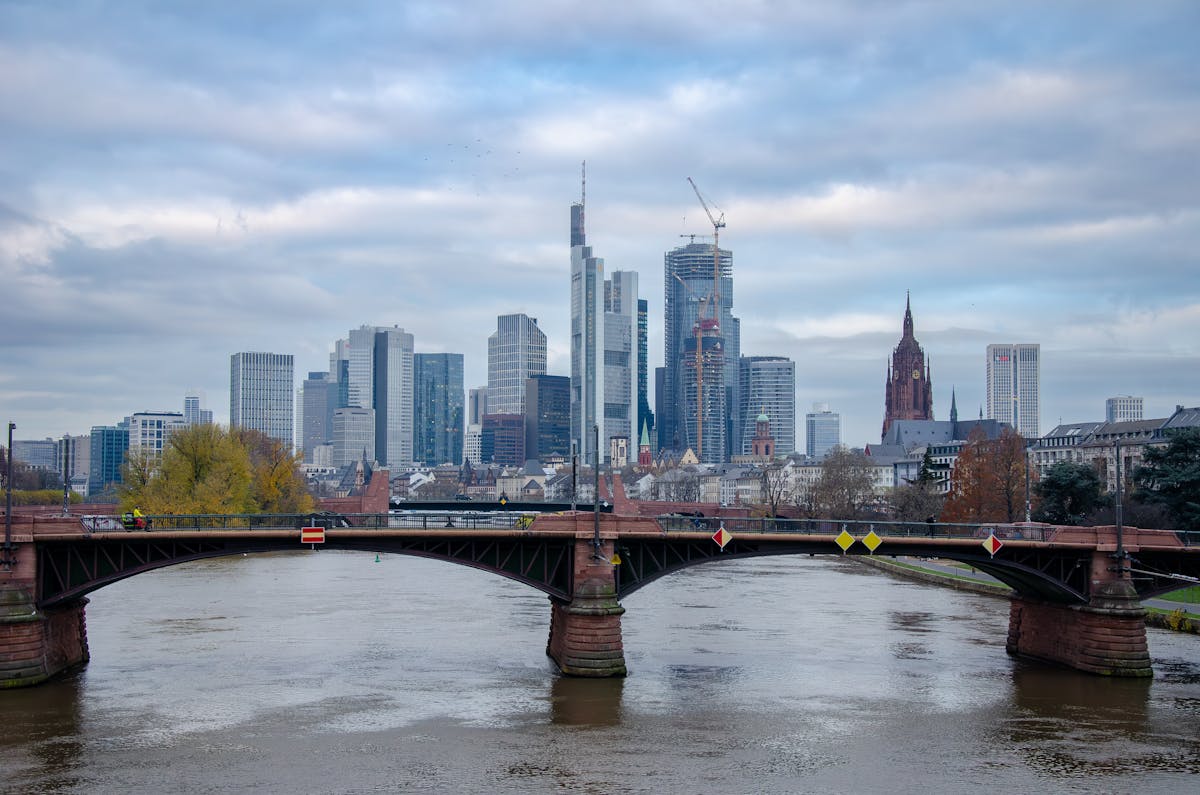
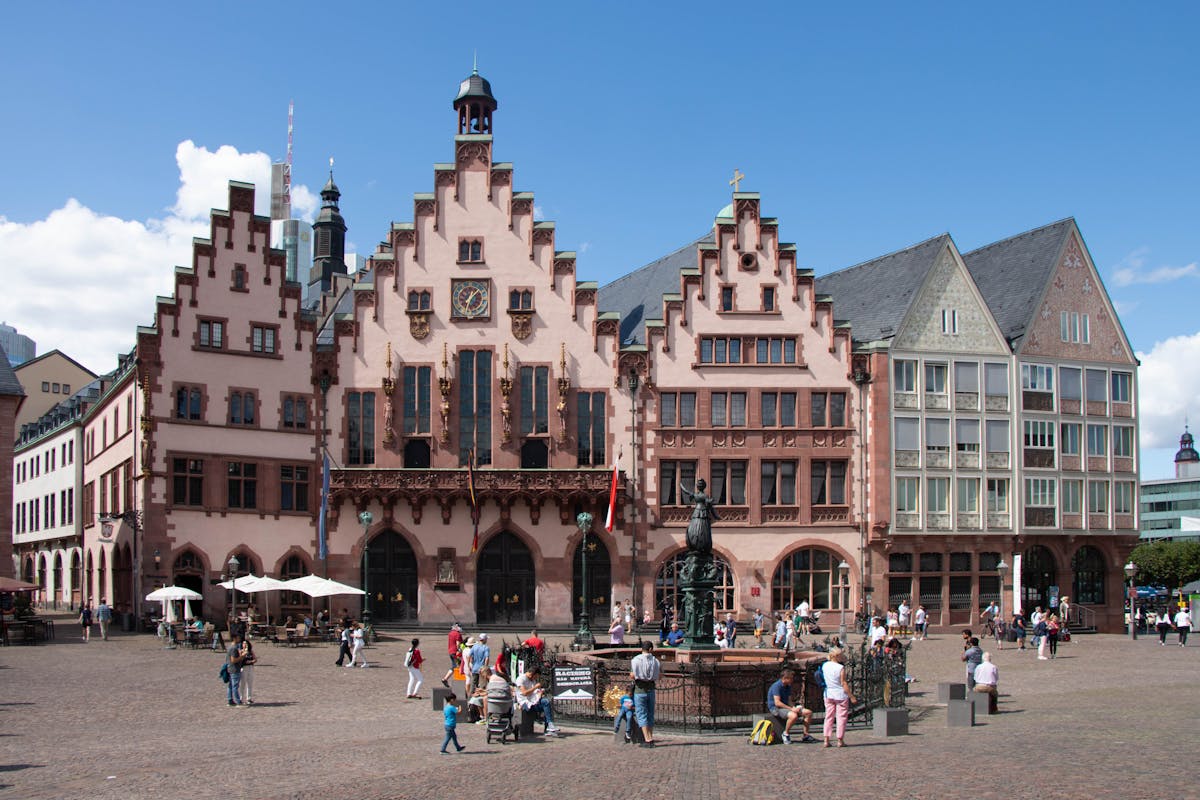
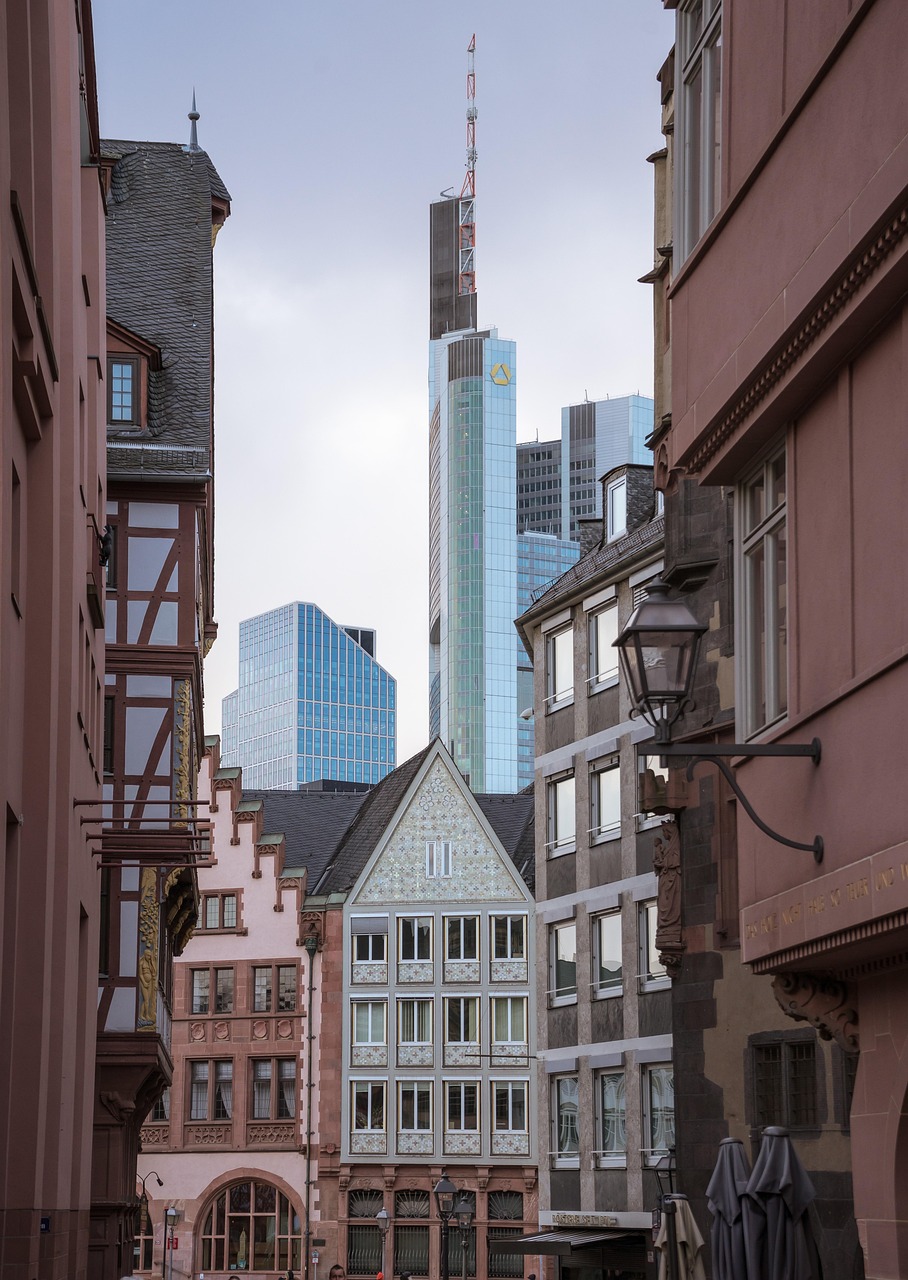
The Romerberg and Altstadt. Frankfurt’s old town square sits just north of the river. You can see the stepped gable roofs of the Romer (the medieval town hall) poking above the embankment wall. The whole Altstadt was rebuilt after being flattened in World War II — the half-timbered houses are reconstructions, but faithful ones. From the water, you get a sense of just how compact the old city center was before the skyscrapers arrived.
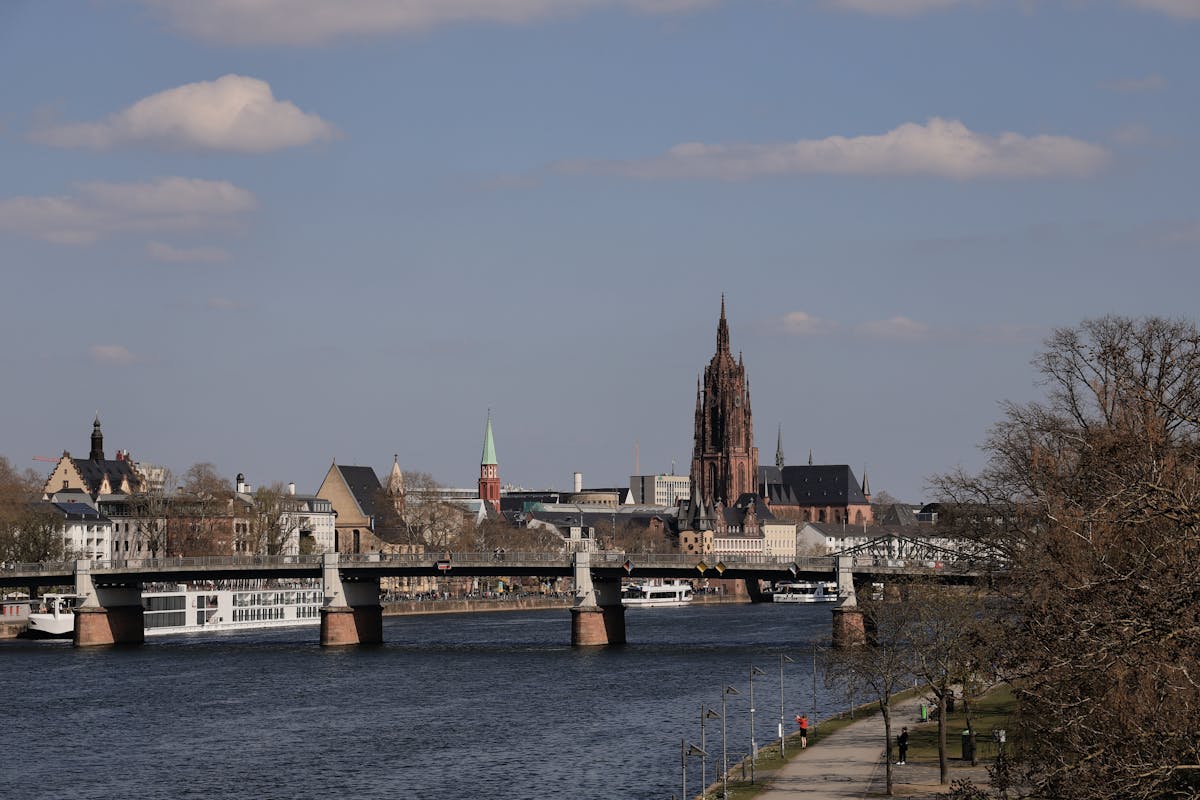
The Museumsufer (Museum Embankment). The south bank of the Main between Eiserner Steg and Friedensbrucke holds roughly a dozen museums, lined up shoulder to shoulder. The Stadel Museum, the Film Museum, the Architecture Museum — they’re all here. On a cruise, you see the whole row at once, which is the only way to appreciate how concentrated it is. Frankfurt packed more cultural institutions per meter along this stretch than almost anywhere else in Germany.
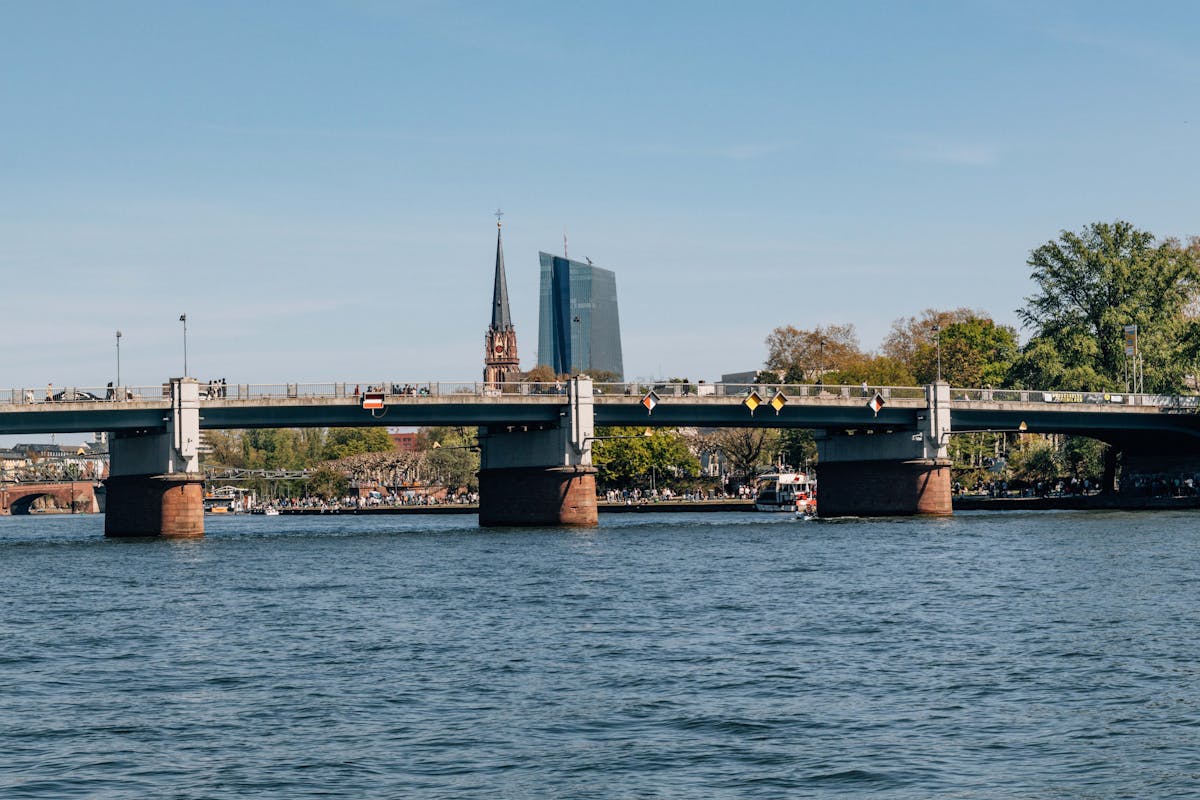
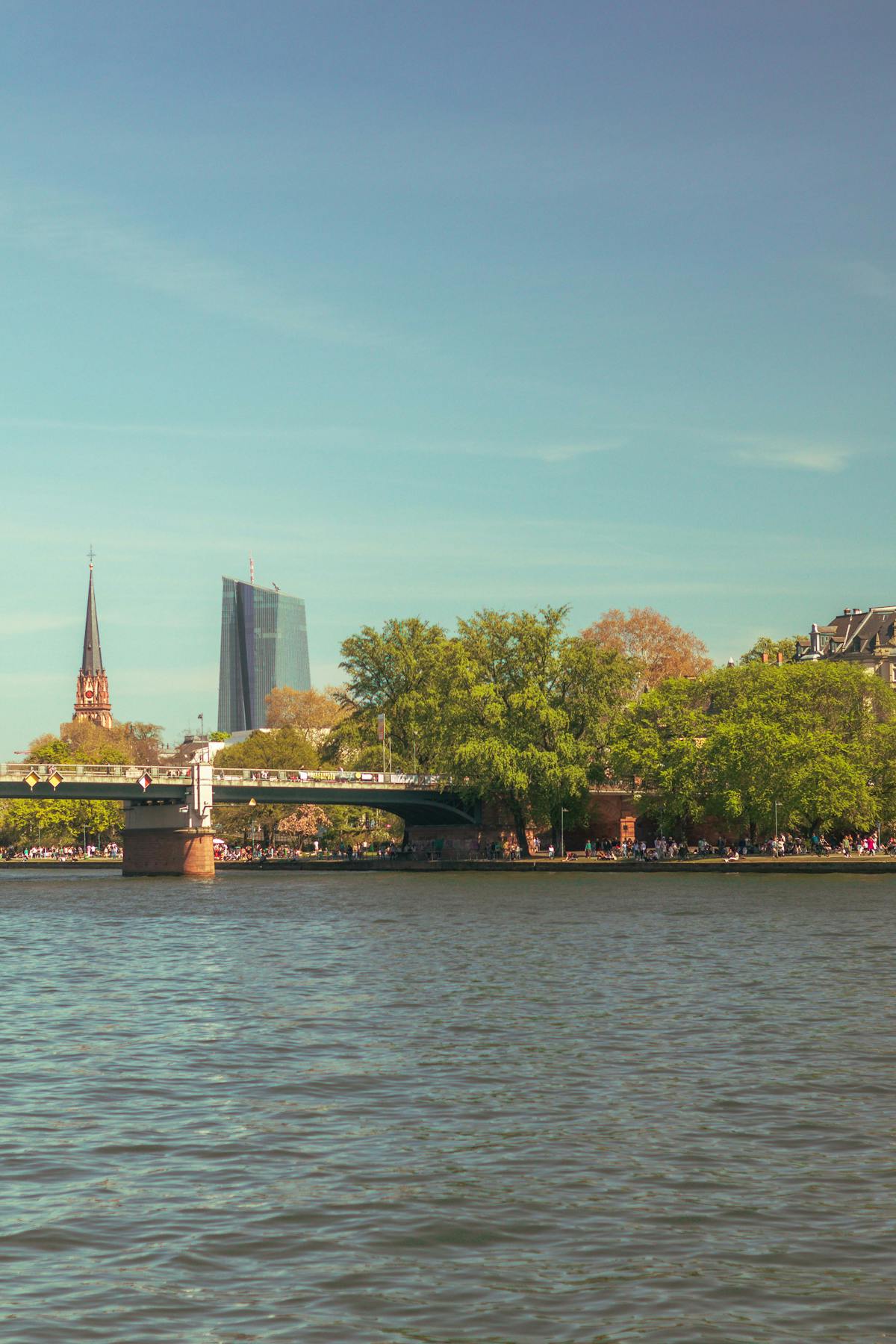
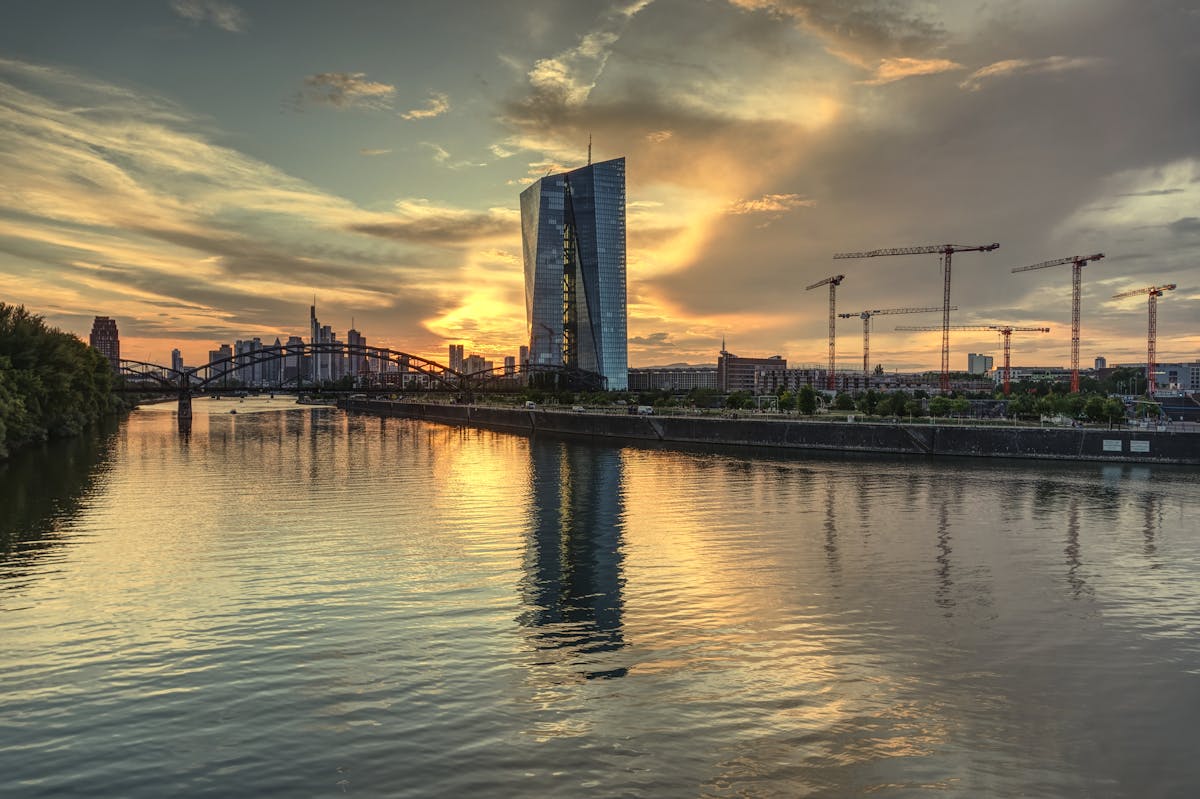
The European Central Bank. The ECB’s twin towers rise east of the old town, right along the river. The building is striking in person — 185 meters of glass at a slight angle, sitting on the site of the old Grossmarkthalle (wholesale market hall, parts of which were kept and incorporated into the base). Your audio guide will probably mention that the ECB moved here in 2015 from the Eurotower downtown.
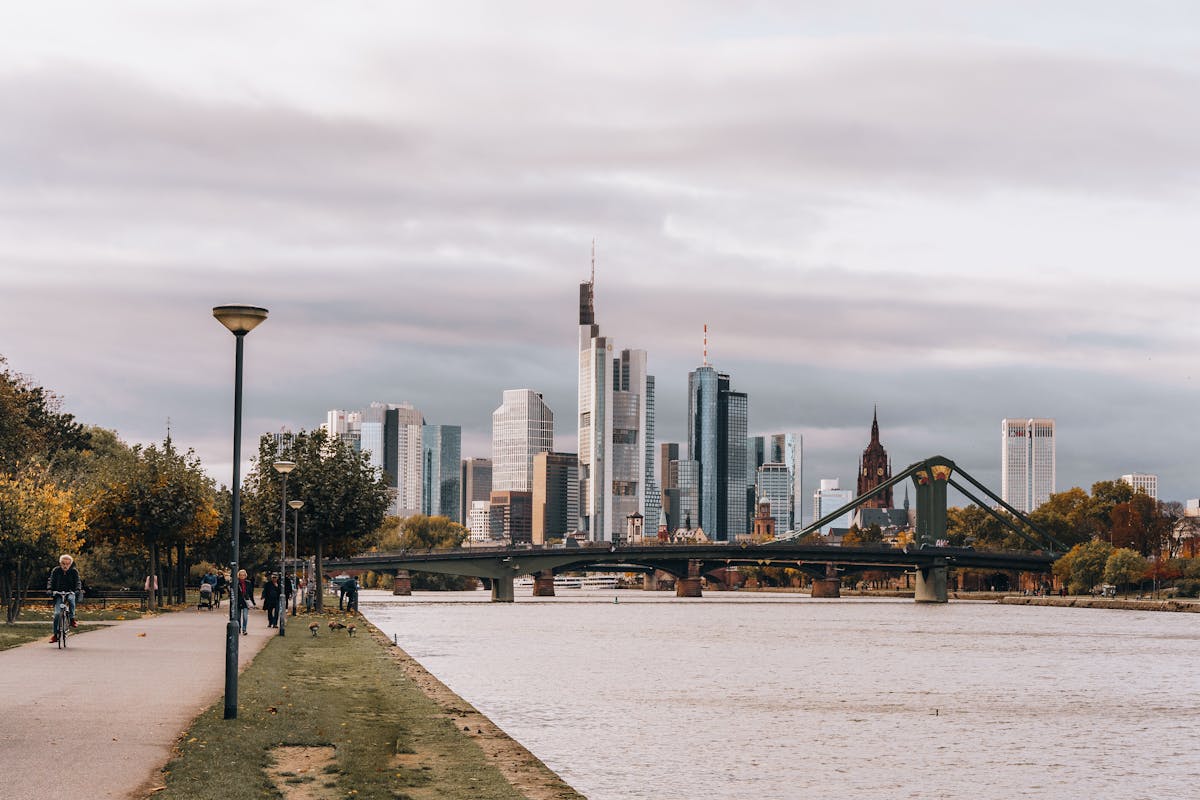
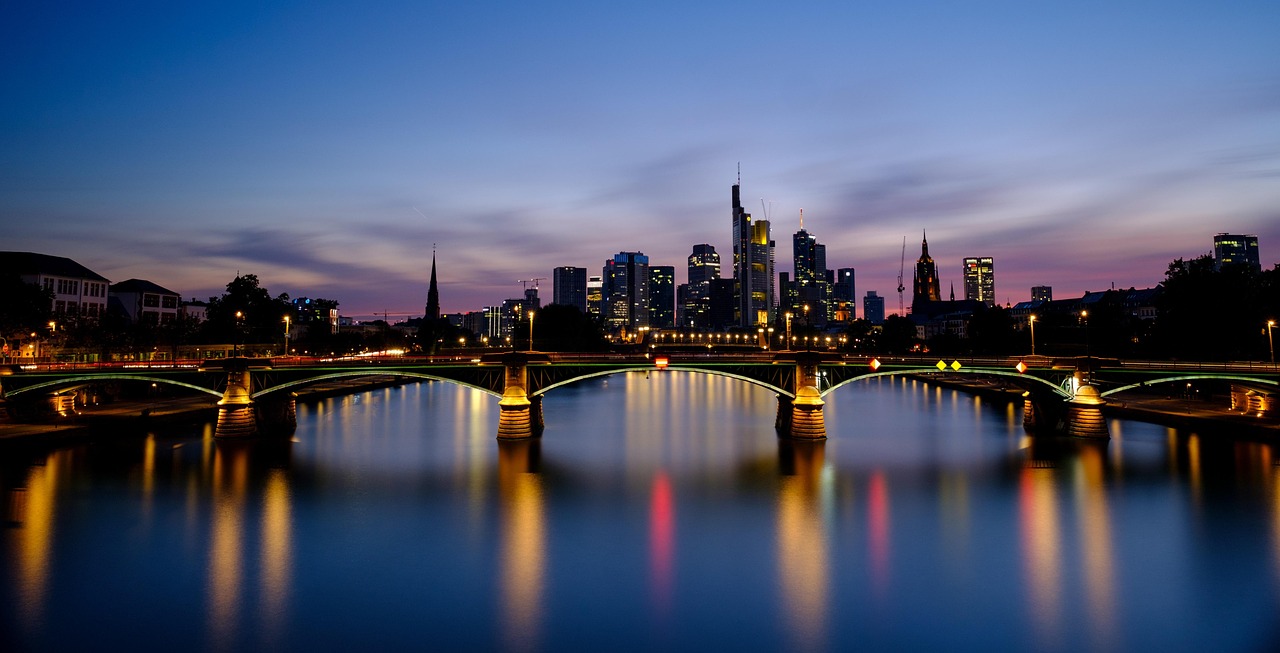
The Eiserner Steg. You’ll pass under this iron footbridge at the start and end of the cruise. Built in 1869, it’s covered in padlocks that couples have attached over the years. The bridge itself is one of the most photographed spots in Frankfurt, and you get a perspective from below that nobody walking across it ever sees.
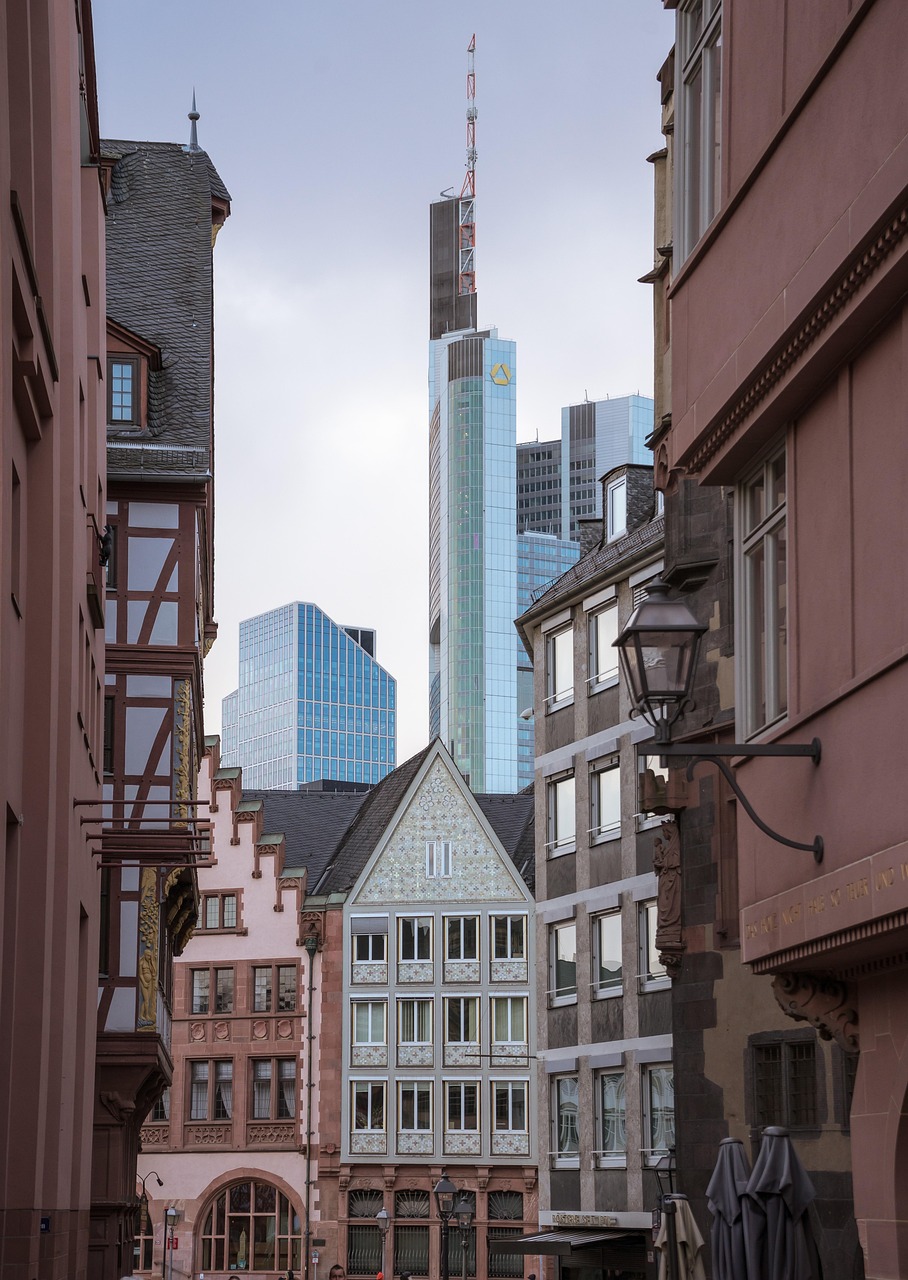
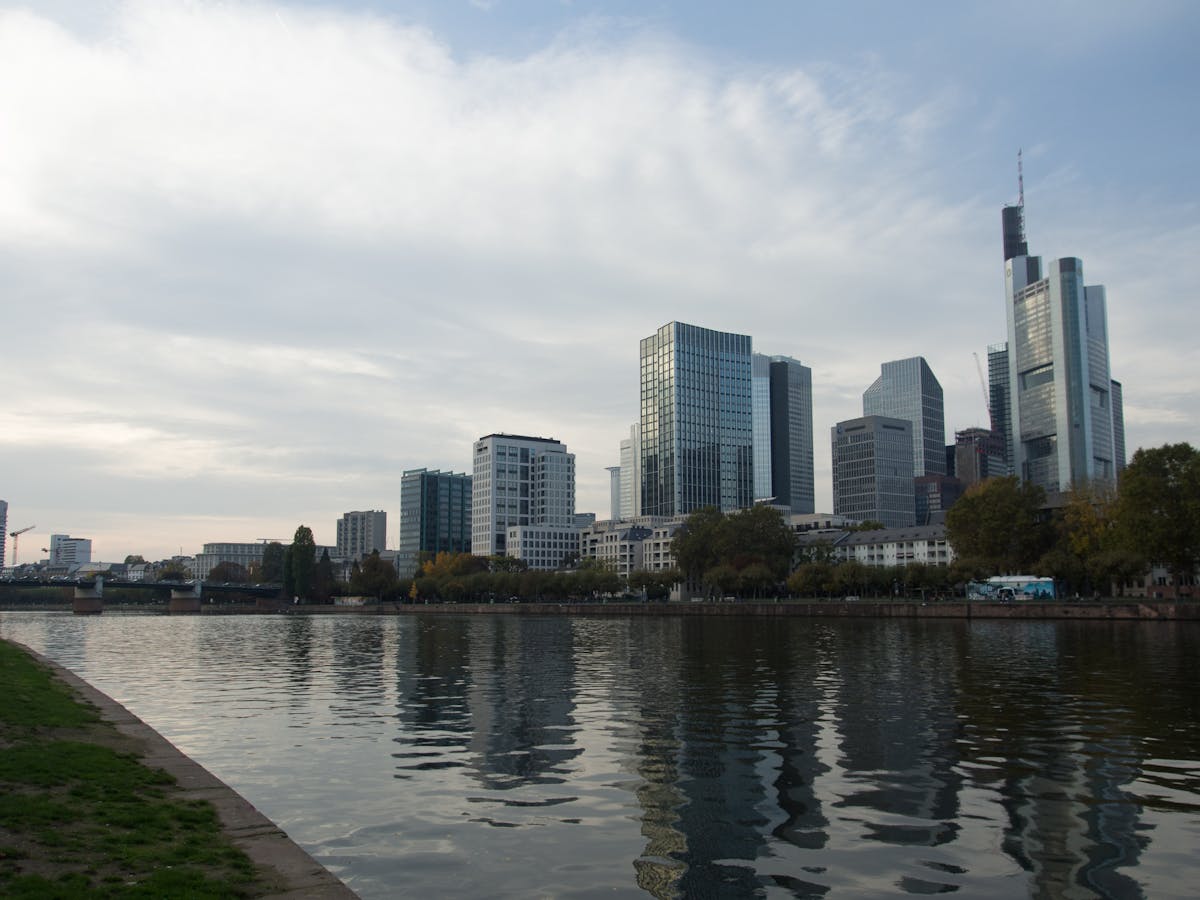
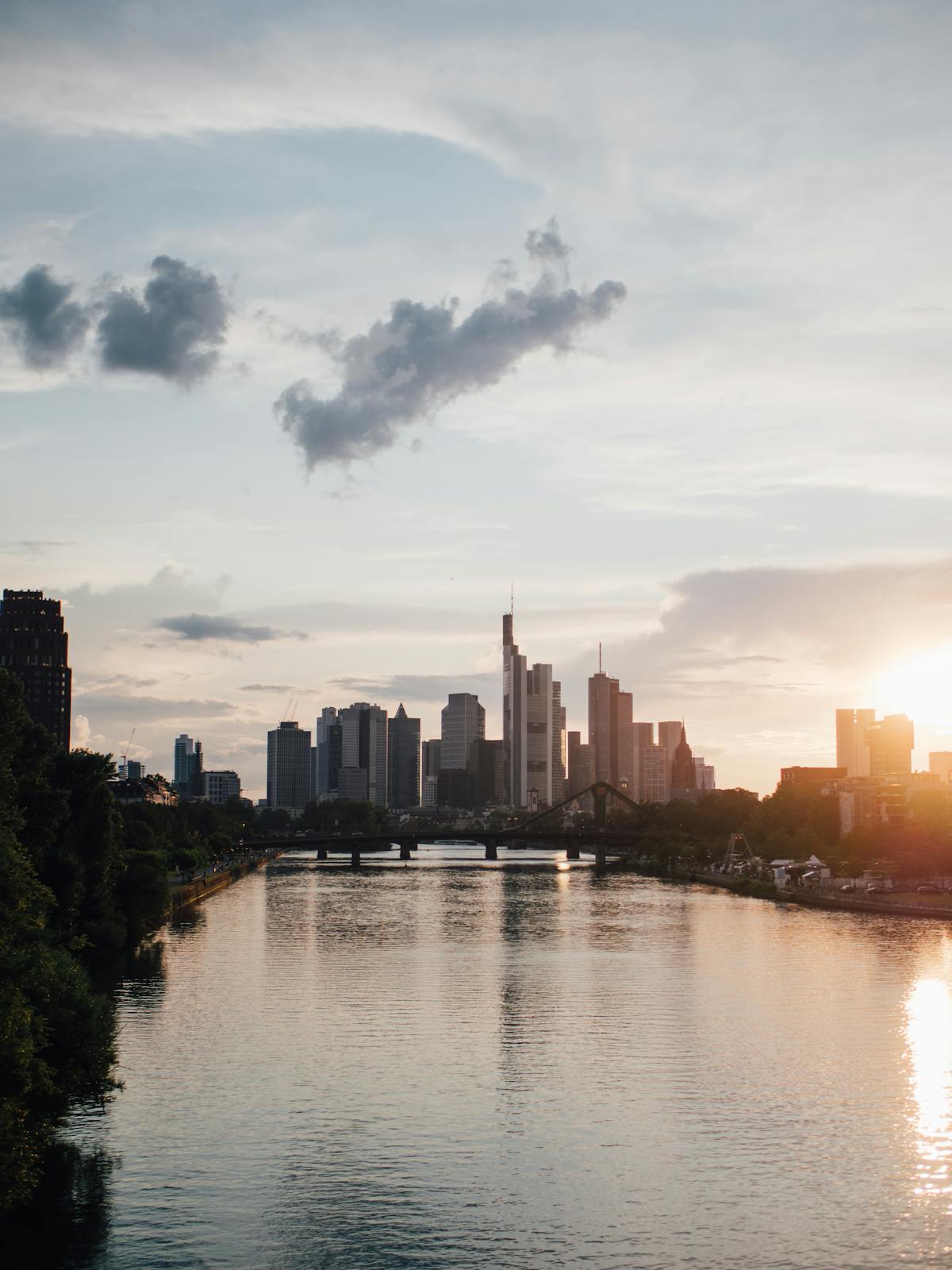
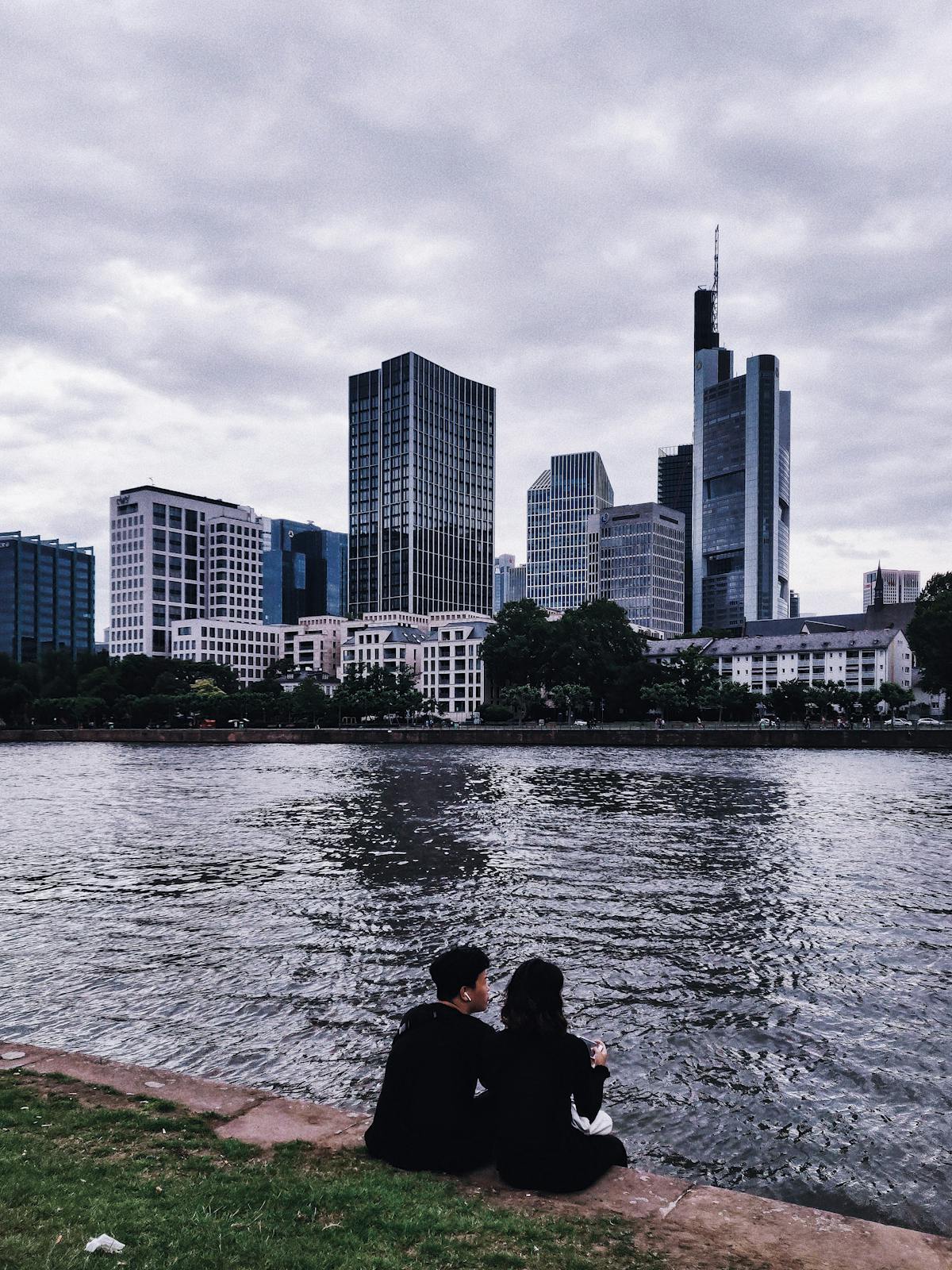
The financial district skyline. This is the showpiece. The Commerzbank Tower (259m), the Messeturm, the Deutsche Bank towers — they form a cluster that’s genuinely imposing from the river. Frankfurt is the only German city with a real skyline, and from the Main you get the unobstructed, full-width version of it. Best light is late afternoon when the glass catches the sun.
The Best Frankfurt Main River Cruises
We’ve reviewed hundreds of tours across Germany, and these three stand out for a Main River cruise in Frankfurt. Each covers different ground — pick the one that matches your schedule and budget.
1. River Main Sightseeing Cruise with Commentary
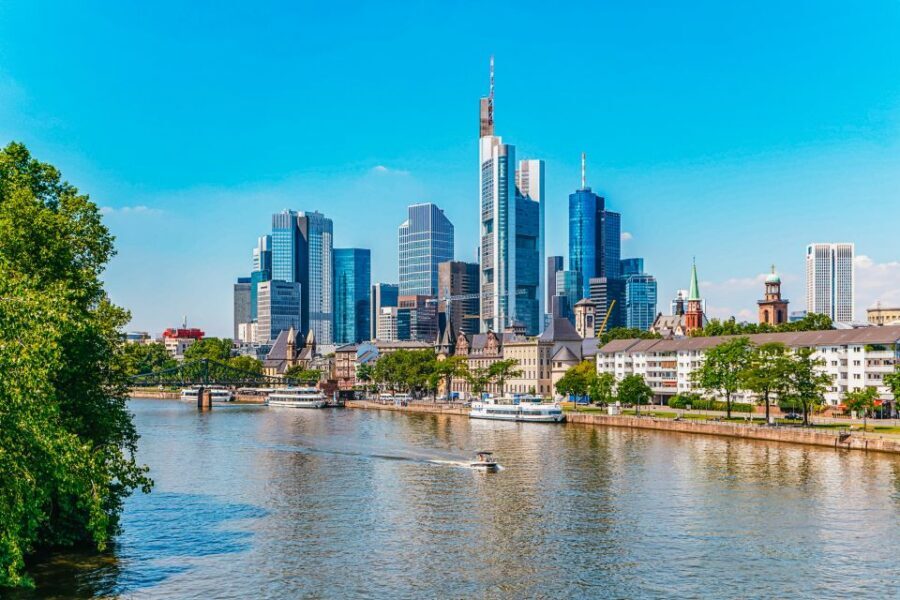
This is the one most visitors should book first. It runs 50 to 100 minutes depending on the route option you choose, and includes audio commentary in multiple languages. The boat heads east from the Eiserner Steg toward the ECB, then loops back westward, giving you views of both the Altstadt and the Museum Embankment along the way.
The commentary covers the major landmarks without being overbearing — you’ll learn about the Romer, the Dom cathedral, the financial district, and the ECB building as they pass. Drinks and snacks are available on board. The boat has both covered and open-air seating, so weather isn’t a dealbreaker.
From $18 per person. Duration: 50-100 minutes. Departs from the Eiserner Steg pier area.
Check Availability or read our full review
2. 1-Hour Panorama Boat Cruise on the River Main
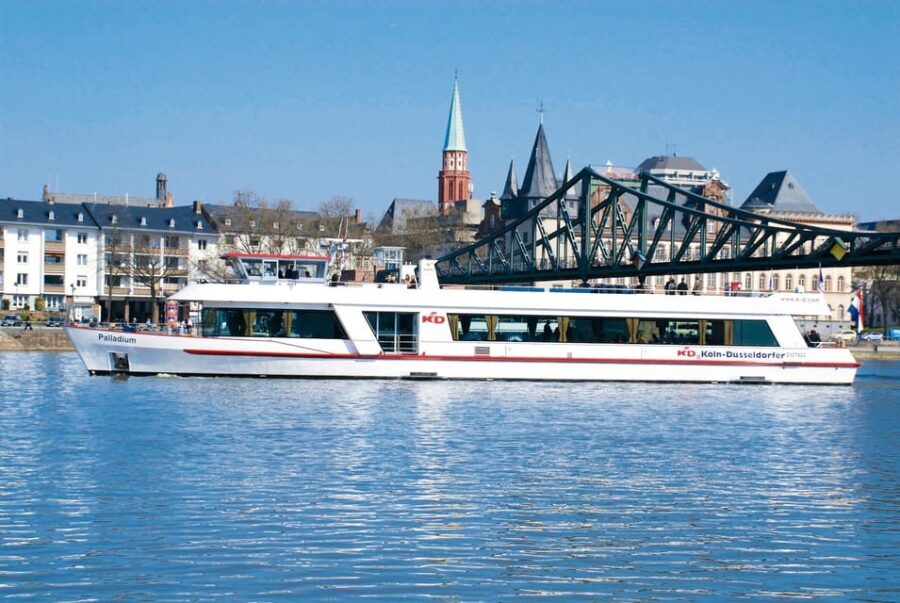
The panorama cruise is the classic one-hour loop. It covers essentially the same landmarks as the sightseeing cruise but in a fixed 60-minute format, which makes it easier to slot into a packed itinerary. Audio guide included.
What works here is the timing. One hour is long enough to see everything without the experience dragging — you get the skyline, the old town, the museums, and a bit of the eastern industrial stretch near the Osthafen. The boat is modern with large windows, and there’s a small bar on board. Not fancy, but perfectly adequate.
One honest note: the audio guide is functional rather than exciting. It covers the facts but won’t win any entertainment awards. You’re mostly here for the views, and on that front it delivers.
From $20 per person. Duration: 1 hour. Departs from the Eiserner Steg pier area.
Check Availability or read our full review
3. Rhine Valley Trip from Frankfurt with Rhine River Cruise
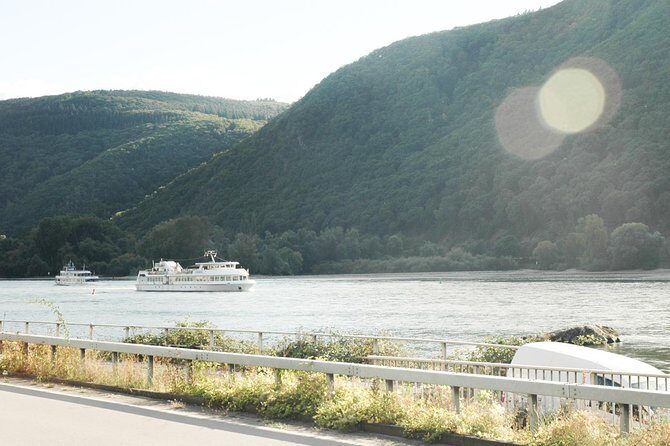
This is the full-day option for anyone who wants to go beyond the city. The tour picks you up in Frankfurt, drives you to the Rhine Valley (about 90 minutes), and puts you on a boat that cruises past the famous stretch of castles, vineyards, and the Lorelei Rock between Rudesheim and St. Goar. You get free time in Rudesheim’s wine-tavern-filled old town before the coach brings you back.
The Rhine Valley is a UNESCO World Heritage Site for good reason — the medieval castles perched on almost every hilltop along the gorge are genuinely dramatic. This is a different experience from the Frankfurt city cruise. Longer, more scenic, more of a proper day out. But it does eat up 8 hours of your trip, so it’s really for people with at least 3 days in Frankfurt or who’ve already done the city highlights.
The drive through the Taunus hills isn’t bad either, for what it’s worth.
From $167 per person. Duration: approximately 8 hours. Pick-up from central Frankfurt.
Check Availability or read our full review
When to Go
Cruises run from roughly March to late October, though the exact start and end dates shift each year depending on weather. Peak season is May through September when departures are most frequent — sometimes every 30 minutes on weekends.
Best time of day: Late afternoon. The sun hits the glass towers from the west and the whole skyline catches fire. Morning cruises are fine but the light is flat. Midday works too, especially if you want the clearest photos of the Museum Embankment.
Best season: May and September. June through August is warm but the boats fill up with travelers and school groups. Spring and early autumn give you the same views, fewer people, and more comfortable temperatures. Frankfurt gets surprisingly hot in July and August — low 30s Celsius isn’t unusual.
Winter: Most regular cruises stop by November. But some operators run special Christmas market cruises in December, which pair nicely with the huge Weihnachtsmarkt on Romerberg. Worth checking if you’re visiting during Advent.
How to Book
Three options:
Book online in advance. GetYourGuide and Viator both sell the main Frankfurt cruises with free cancellation up to 24 hours before. This is the safest bet on weekends from May to September when popular time slots sell out. You get a mobile voucher — no printing needed.
Buy at the dock. The Primus-Linie ticket booth sits right near the Eiserner Steg. You can walk up, buy a ticket, and wait for the next departure. Works well on weekdays and outside peak season. Cash and card accepted.
Book via the operator’s website. Primus-Linie (primus-linie.de) and KD (k-d.com) sell tickets directly. Prices are sometimes a euro or two cheaper than third-party platforms, but you lose the flexible cancellation policies that GetYourGuide offers.
For most visitors, booking through GetYourGuide or Viator is the easiest path. The cancellation flexibility alone makes it worth any marginal price difference.
Getting to the Departure Point
All of the standard Main River cruises depart from the Mainkai area, near the Eiserner Steg bridge. Getting there:
From Frankfurt Hauptbahnhof (main train station): Take the U4 or U5 to Romer station. It’s one stop if you transfer at Willy-Brandt-Platz. Or just walk — it’s about 15 minutes through the Bankenviertel (financial district), which is interesting in its own right.
From the airport: Take the S8 or S9 to Hauptwache or Konstablerwache station, then walk south 10 minutes to the river. Total journey time is about 25 minutes plus walking.
By foot from the Altstadt: The Romerberg is a 2-minute walk north of the pier. If you’re already exploring the old town, you’re basically there.
Parking: Don’t drive to the city center if you can avoid it. Frankfurt’s traffic and parking costs ($4-6/hour in garages near the Romer) make public transport the obvious choice. The Konstabler parking garage is the closest large option if you must drive.
Tips That Actually Matter
Sit on the right side (starboard) heading east for the best skyline views. Left side gives you the Museum Embankment. Both are good, but the skyline is why you’re here.
Bring a layer. Even in summer, the wind on the river gets chilly once the boat is moving. Open-air top decks are great for photos but cool down fast.
The audio guide is usually included — don’t pay extra if someone at the dock tries to sell you a “premium” commentary package. Check what’s included in your booking confirmation.
Skip the onboard food. It’s overpriced and unremarkable. Eat at Kleinmarkthalle (10 minutes from the pier) before or after instead — it’s a proper indoor market with good bratwurst, cheese, and wine.
Combine it with the Museumsufer. You’ll cruise past the museum row and want to go back on foot. The Stadel Museum alone is worth two hours if you care about art at all. The Saturday flea market along the embankment is also excellent.
Don’t confuse Frankfurt am Main with Frankfurt an der Oder. This sounds obvious, but Frankfurt (Oder) is a completely different city on the Polish border. Make sure your train ticket says “Frankfurt (Main)” or “Frankfurt am Main.” This catches at least a few travelers every year.
Frankfurt River Cruise vs. Other German City Cruises
If you’re hitting multiple German cities, you might wonder whether Frankfurt’s cruise is worth doing on top of, say, Hamburg’s harbor cruise. Short answer: yes, because they’re completely different experiences.
Hamburg’s cruise is industrial and maritime — container ships, dry docks, the Elbphilharmonie. Frankfurt’s is about the skyline contrast: medieval Altstadt meeting 21st-century glass towers, with museums and the ECB thrown in. Hamburg impresses with scale. Frankfurt impresses with that unlikely combination of old and new packed into a small space.
Berlin’s Spree cruises are probably the closest comparison, but Berlin’s skyline is flat. Frankfurt’s verticality is unique in Germany.
At $18-20 for the standard cruise, it’s also one of the cheapest hour-long sightseeing activities in the city. Hard to argue with that.
Beyond the Standard Cruise
The city cruises are the starting point, not the end. A few other options worth knowing about:
Private boat tours. If you’re traveling as a group or celebrating something, private charters on smaller boats start around EUR 293 for up to 5 people. You get the same route but without 150 other passengers and with a captain who can adjust the pace. Romantic skyline tours for two people run around EUR 412.
The Rhine Valley day trip. The full-day excursion from Frankfurt to the Rhine is genuinely worthwhile if you have 8 hours to spare. The stretch between Rudesheim and St. Goar is one of Europe’s most scenic river passages — hilltop castles, terraced vineyards, and the famous Lorelei Rock. It’s a completely different mood from the city cruise, more of a proper day out.
Evening and event cruises. Some operators run dinner cruises and special event boats (New Year’s Eve is particularly popular). Primus-Linie tends to have the most varied calendar — check their website for seasonal specials.
Frankfurt does not get the same tourist attention as Munich or Berlin, and that is part of what makes the river cruise here so satisfying. The Main is quiet, the sightseeing boats never feel overcrowded outside of peak summer weekends, and the skyline is genuinely one of a kind in Germany. It is a solid hour of your time in a city that rewards you for slowing down and actually looking at it.
If you are heading north, a Hamburg harbor cruise trades Frankfurt’s glass skyline for container ships and the Elbphilharmonie, and Berlin walking tours cover the capital’s layered history on foot. South toward Munich, the beer tour is a different kind of German experience entirely, and Neuschwanstein Castle is the classic Bavarian day trip. For another river perspective, the Spree River cruise in Berlin passes the Reichstag and Museum Island — the political counterpart to Frankfurt’s financial waterfront.