
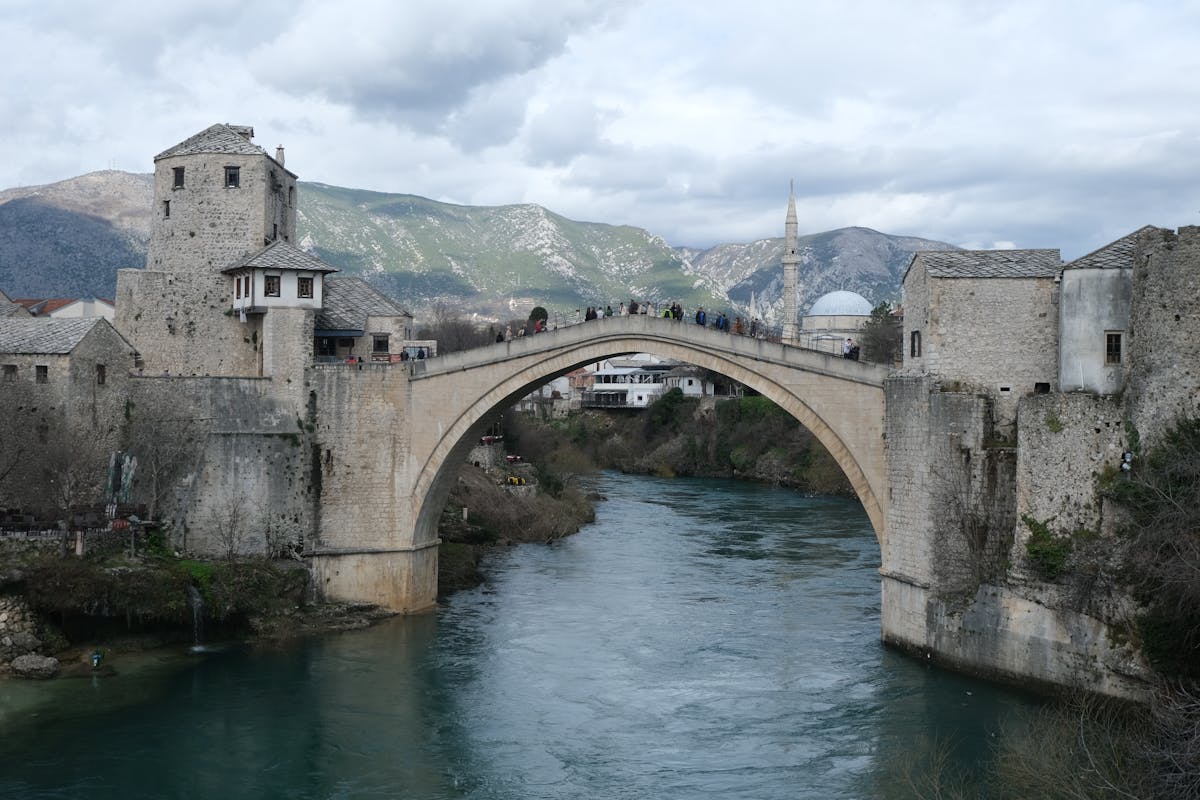
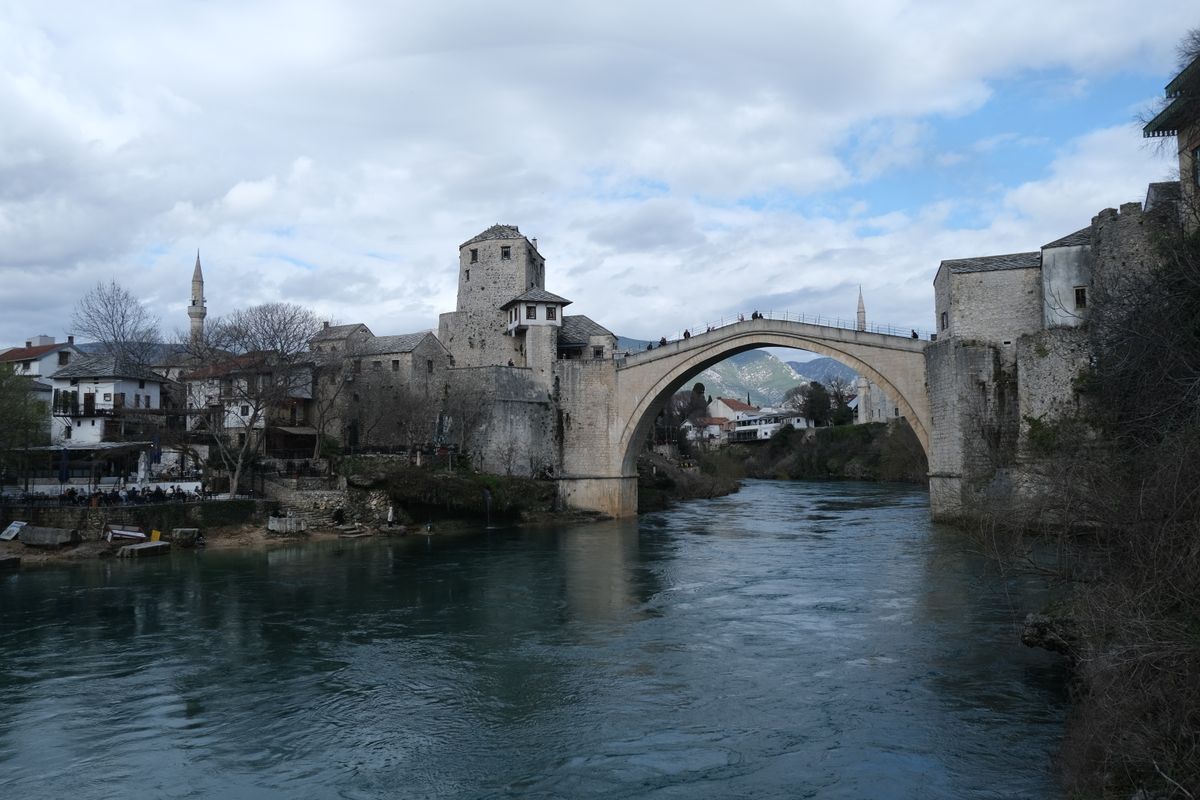
Mostar is one of those day trips that changes how you think about the region you’re visiting. An hour and a half from Dubrovnik, across the border into Bosnia and Herzegovina, this Ottoman-era city sits on the banks of the emerald Neretva River, dominated by the Stari Most — an iconic single-arch stone bridge that was destroyed during the Bosnian War in 1993 and painstakingly rebuilt using the original techniques and river stones, reopening in 2004 as a UNESCO World Heritage Site and a symbol of reconciliation.
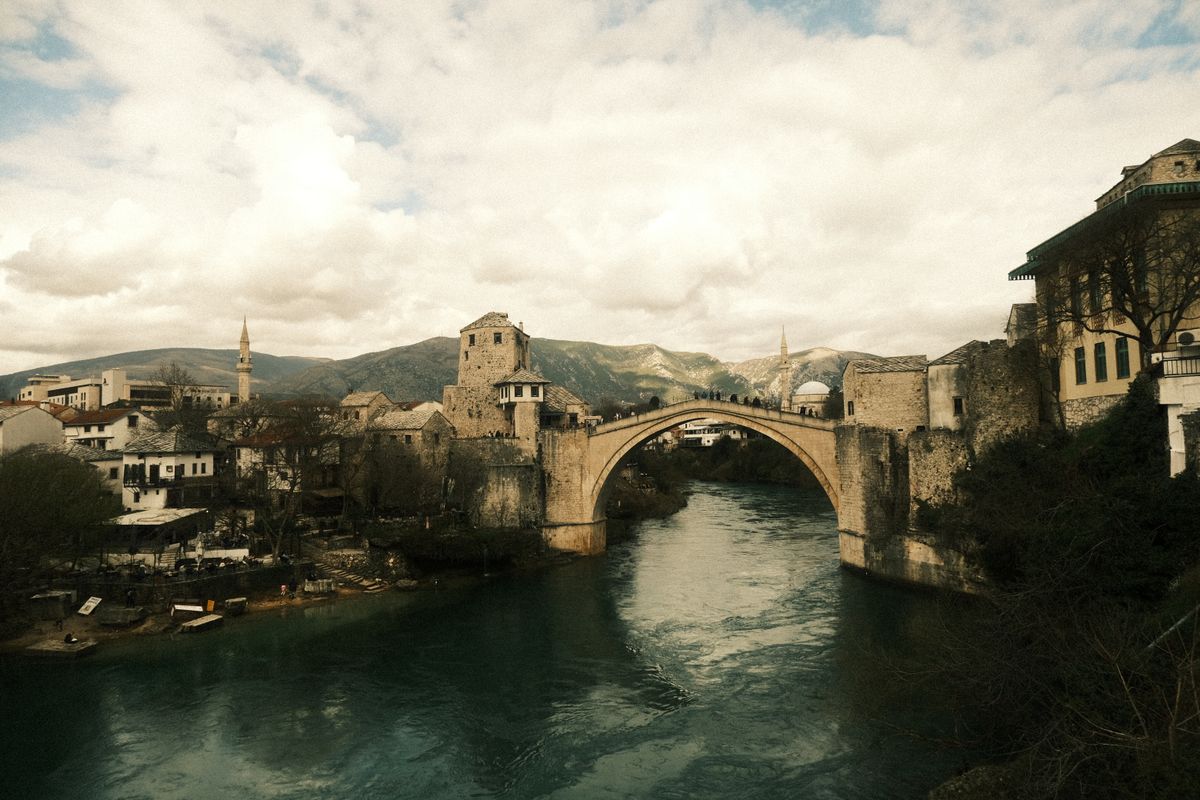
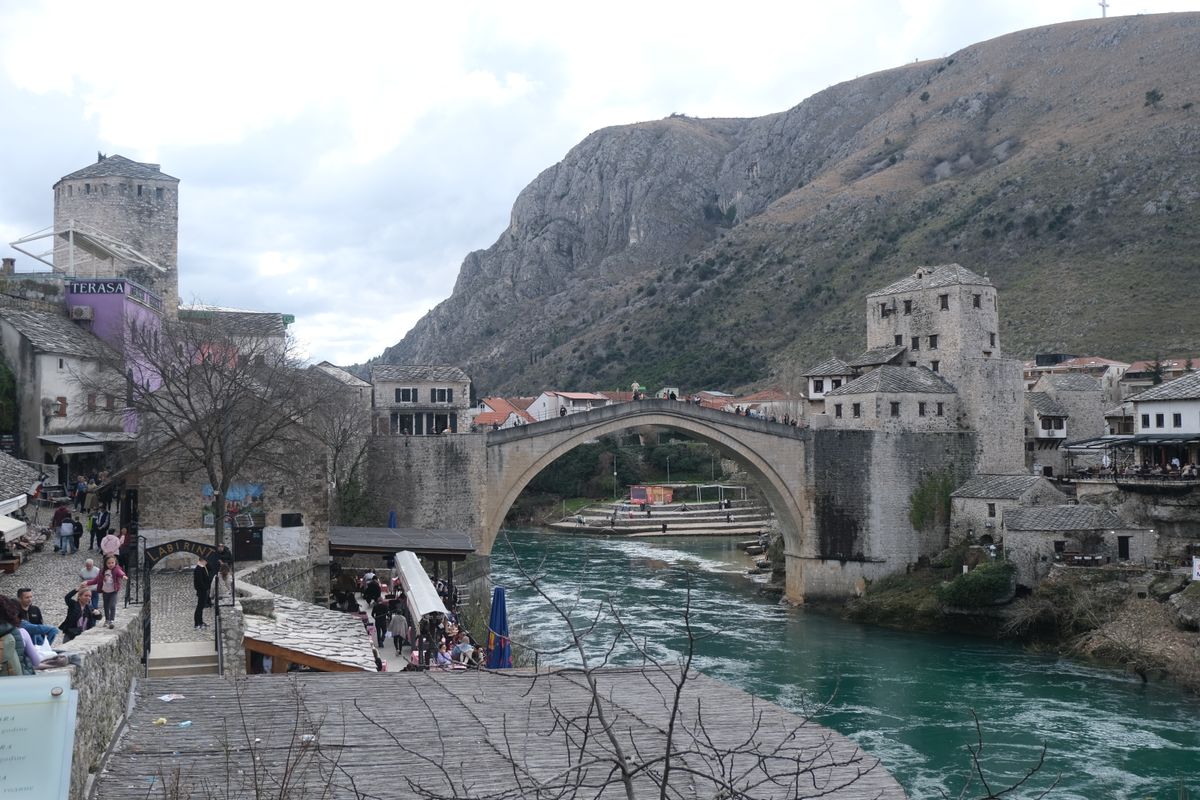
But Mostar isn’t just the bridge. The old town is a labyrinth of cobblestone lanes, copper workshops, Turkish coffee houses, and mosques with slender minarets rising above the rooftops. The call to prayer echoes through the valley several times a day, Ottoman bazaar stalls sell handmade goods that haven’t changed in centuries, and the Neretva’s almost unbelievable turquoise colour provides a backdrop that makes every photograph look like it’s been aggressively filtered — it hasn’t, the water really is that colour.

Most Mostar day trips from Dubrovnik combine the city with stops at Kravice Waterfalls (a stunning natural cascade), the medieval hilltop village of Pocitelj, and sometimes the pilgrimage town of Medjugorje. Here are the best options, plus the powerful history of the bridge and practical tips for crossing into Bosnia from Croatia.
Short on time? Here’s what to book:
Best overall: Mostar & Kravice Waterfalls Semi-Private Tour — €134. Small group with Kravice Waterfalls swimming, Mostar old town, and expert guide. The most reviewed Mostar tour from Dubrovnik.
Best value: Kravice Waterfalls, Mostar & Pocitelj Day Tour — €57. All entrance fees included at half the price. Covers the same highlights with a larger group.
Best from Split: Mostar & Herzegovina Tour from Split — €85. The option for those based in Split rather than Dubrovnik. Longer drive but same incredible destination.
- What to Know Before Going
- You’re crossing an international border
- Bosnia uses a different currency
- The cultural shift is immediate
- Most tours include Kravice Waterfalls
- The Best Mostar Day Trips from Dubrovnik
- 1. Mostar & Kravice Waterfalls Semi-Private Tour — €134
- 2. Kravice Waterfalls, Mostar & Pocitelj Day Tour — €57
- 3. Mostar & Medjugorje Day Trip from Dubrovnik — €102
- 4. Mostar & Herzegovina Tour from Split — €85
- 5. Blagaj, Pocitelj & Kravice Waterfalls from Mostar — €50
- The Bridge: Destruction, Memory, and Reconstruction
- Beyond the Bridge: What to See in Mostar
- When to Go
- Frequently Asked Questions
- Do I need a passport to visit Mostar?
- Is Mostar safe to visit?
- Can I swim at Kravice Waterfalls?
- How long do you spend in Mostar?
- Is the Mostar day trip worth it from Split?
What to Know Before Going

You’re crossing an international border
Mostar is in Bosnia and Herzegovina, which means crossing the border from Croatia. EU citizens need their passport (or national ID card). Non-EU visitors must have their passport. The border crossing is straightforward but can involve a 15-30 minute wait in peak season — guides handle the process and know which crossings are fastest.
Bosnia uses a different currency
Bosnia’s currency is the convertible mark (BAM/KM), not the euro or Croatian kuna. However, euros are widely accepted in Mostar’s tourist areas, and most shops and restaurants take cards. ATMs are available in the old town. If you’re buying from bazaar stalls, cash (in marks or euros) often gets you a better price.
The cultural shift is immediate
Crossing from Croatia into Bosnia feels like entering a different world. Ottoman architecture replaces Venetian, minarets replace church spires, Turkish coffee replaces espresso, and the pace slows noticeably. This cultural contrast is part of what makes the day trip so compelling — you travel from the Adriatic coast to a city that looks and feels like it belongs somewhere between Istanbul and Sarajevo.
Most tours include Kravice Waterfalls
Kravice is a natural waterfall about 40 minutes from Mostar where the Trebizat River drops 25 metres over a wide semicircular cliff into a natural swimming pool. Most tours stop here for 1-2 hours of swimming. It’s a spectacular spot — think miniature Niagara surrounded by dense forest — and a welcome refresh on hot summer days.
The Best Mostar Day Trips from Dubrovnik
1. Mostar & Kravice Waterfalls Semi-Private Tour — €134
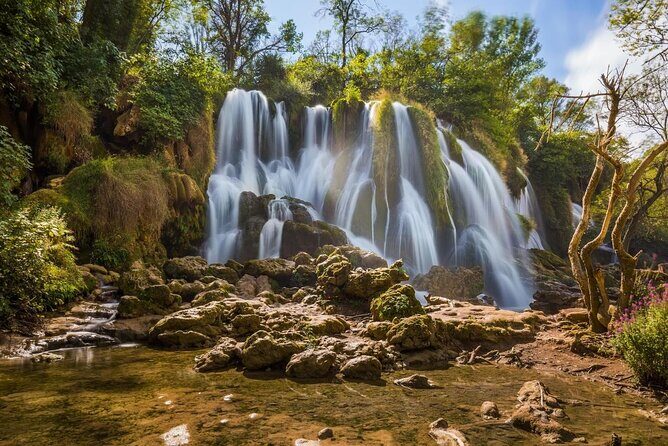
The premium option and the most highly reviewed Mostar tour from Dubrovnik. A semi-private group (typically 8-15 people) with a local guide who was born in the region and knows both the tourist highlights and the deeper stories. The itinerary covers Mostar old town with a guided walk, the Stari Most bridge, Kravice Waterfalls with swimming time, and the medieval village of Pocitelj.
The guide’s knowledge is what makes this tour special. They explain the bridge’s construction, destruction, and reconstruction with personal context that no textbook provides. Some guides have family connections to the war — hearing about the bridge’s destruction from someone who remembers it falling changes the experience entirely. The Kravice stop includes 1-2 hours for swimming, which is a welcome break in the heat.
Duration: 10.5 hours | Departure: Dubrovnik, early morning
2. Kravice Waterfalls, Mostar & Pocitelj Day Tour — €57
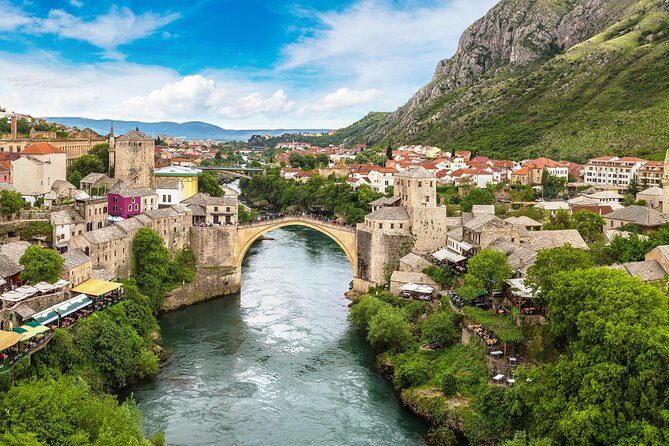
The value champion. At €57 per person with all entrance fees included, this tour covers the same three headline attractions — Mostar, Kravice Waterfalls, and Pocitelj — at less than half the price of the semi-private option. The group is larger, but the itinerary and time at each stop are comparable.
The all-inclusive pricing removes any budget surprises — entrance to Kravice, guided walk in Mostar, and Pocitelj are all covered. The guide provides commentary throughout the day, and the route passes through beautiful Herzegovina countryside with vineyards, olive groves, and the dramatic Neretva valley. For budget-conscious travellers who want the full Mostar experience, this is hard to beat.
Duration: 11-12 hours | Departure: Dubrovnik, early morning
3. Mostar & Medjugorje Day Trip from Dubrovnik — €102
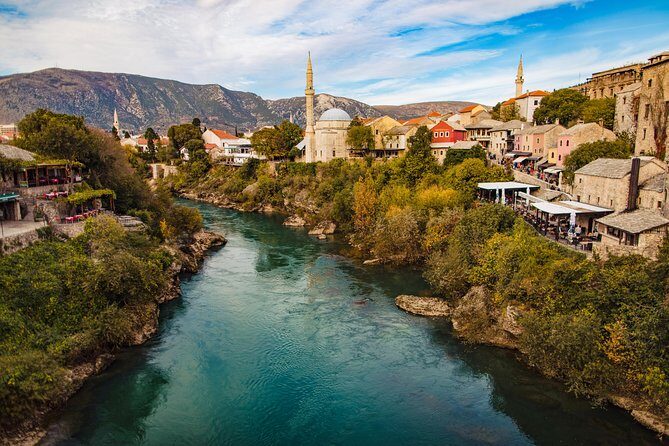
A different combination: Mostar plus Medjugorje, the small Herzegovinian town where six teenagers reported visions of the Virgin Mary in 1981. The site has since become one of the world’s most visited Catholic pilgrimage destinations, attracting millions of visitors. The Vatican has officially recognised the site’s significance, and the church of St. James is genuinely moving regardless of your personal beliefs.
This tour suits those more interested in spirituality and religious history than swimming. The Mostar portion follows the same pattern — guided old town walk, bridge visit, free time in the bazaar. The Medjugorje stop adds a dimension that the waterfall-focused tours don’t offer.
Duration: 11 hours | Departure: Dubrovnik, morning
4. Mostar & Herzegovina Tour from Split — €85
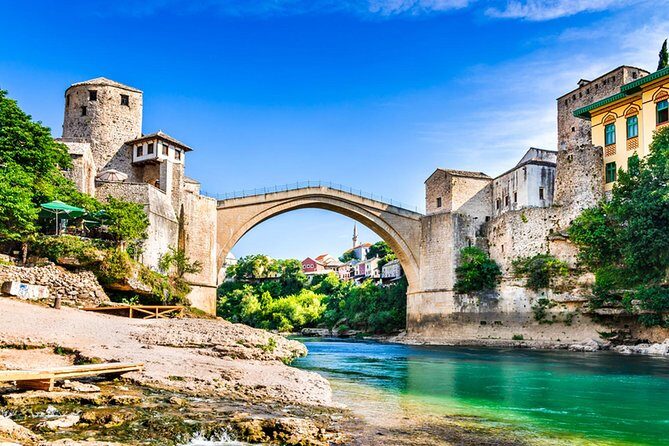
The Split-departure option for travellers based on the central Dalmatian coast. The drive from Split to Mostar is about 3 hours each way (compared to 1.5 from Dubrovnik), which makes for a longer day but an equally rewarding destination. The route passes through the dramatic Neretva valley with opportunities for photo stops.
The itinerary includes Mostar old town, the Stari Most, Kravice Waterfalls with swimming, and usually a stop at Pocitelj or Blagaj (a Dervish monastery built into a cliff face where a river emerges from a cave). The small group format keeps the experience intimate and the guide has time for questions.
Duration: 12 hours | Departure: Split or Trogir, early morning
5. Blagaj, Pocitelj & Kravice Waterfalls from Mostar — €50
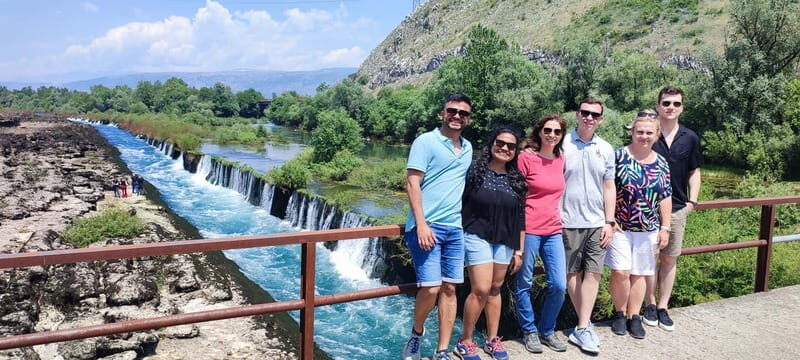
A different proposition: this tour departs from Mostar itself, covering the surrounding sights that most Dubrovnik-based tours don’t have time for. If you’re spending a night in Mostar (highly recommended — the old town at sunset and after dark is magical), this full-day tour takes you to Blagaj Tekke (a 16th-century Dervish monastery at the source of the Buna river), the medieval fortress village of Pocitelj, and Kravice Waterfalls.
Blagaj is one of Herzegovina’s most extraordinary sights — a monastery built directly into a cliff face at the point where a river explodes from a cave opening. The combination of natural drama and historical architecture is unlike anything else in the region. At €50 for a full day covering three major attractions, this is exceptional value for those already in Mostar.
Duration: 8 hours | Departure: Mostar, morning
The Bridge: Destruction, Memory, and Reconstruction

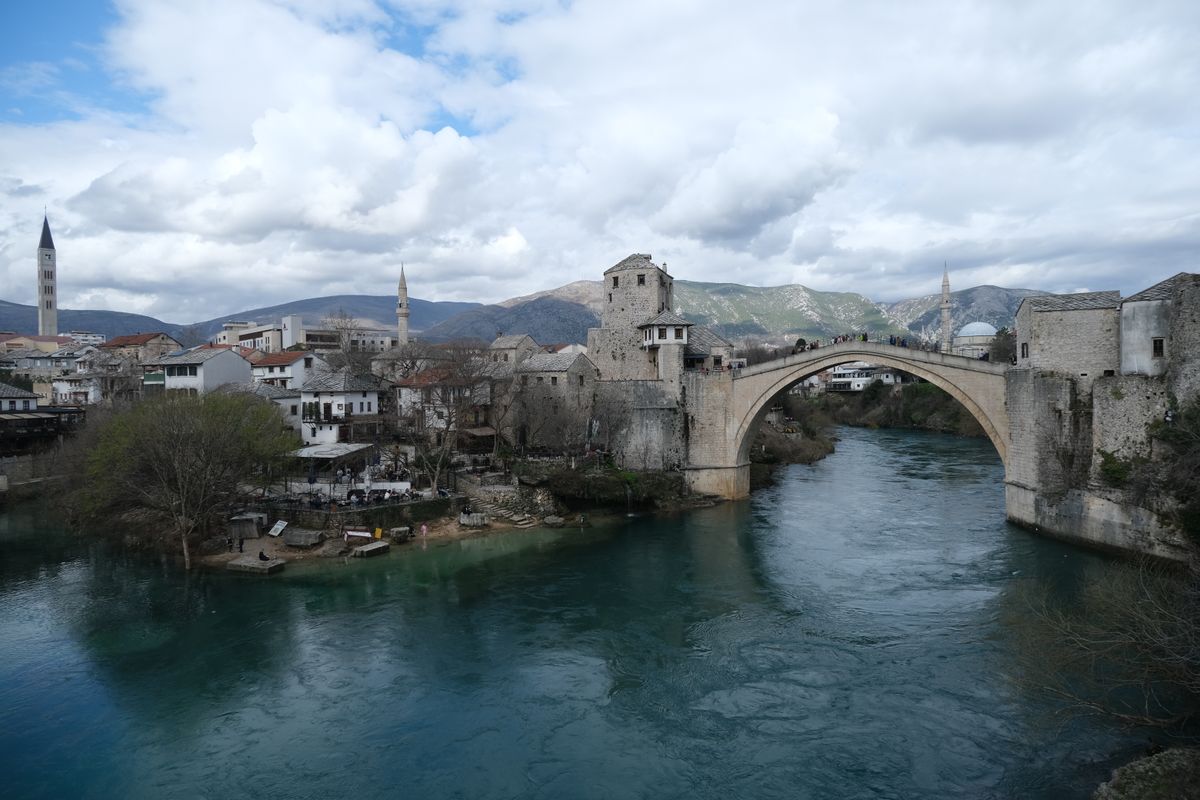
The Stari Most was built in 1566 on the orders of Suleiman the Magnificent, replacing an earlier wooden bridge that swayed so terrifyingly in the wind that locals called the city “Mostar” — from the word mostari, meaning “bridge keepers.” The Ottoman architect Mimar Hayruddin was reportedly so nervous about whether his design would hold that he prepared his own funeral before the scaffolding was removed. The bridge held. For 427 years.
On November 9, 1993, after two days of deliberate shelling during the Bosnian War, the Stari Most collapsed into the Neretva. The destruction was documented on film and broadcast worldwide. It was more than the loss of a bridge — it was the intentional destruction of a symbol of multicultural coexistence in a city where Bosniaks, Croats, and Serbs had lived together for centuries. The footage of the arch crumbling into the turquoise water remains one of the most iconic images of the Yugoslav Wars.

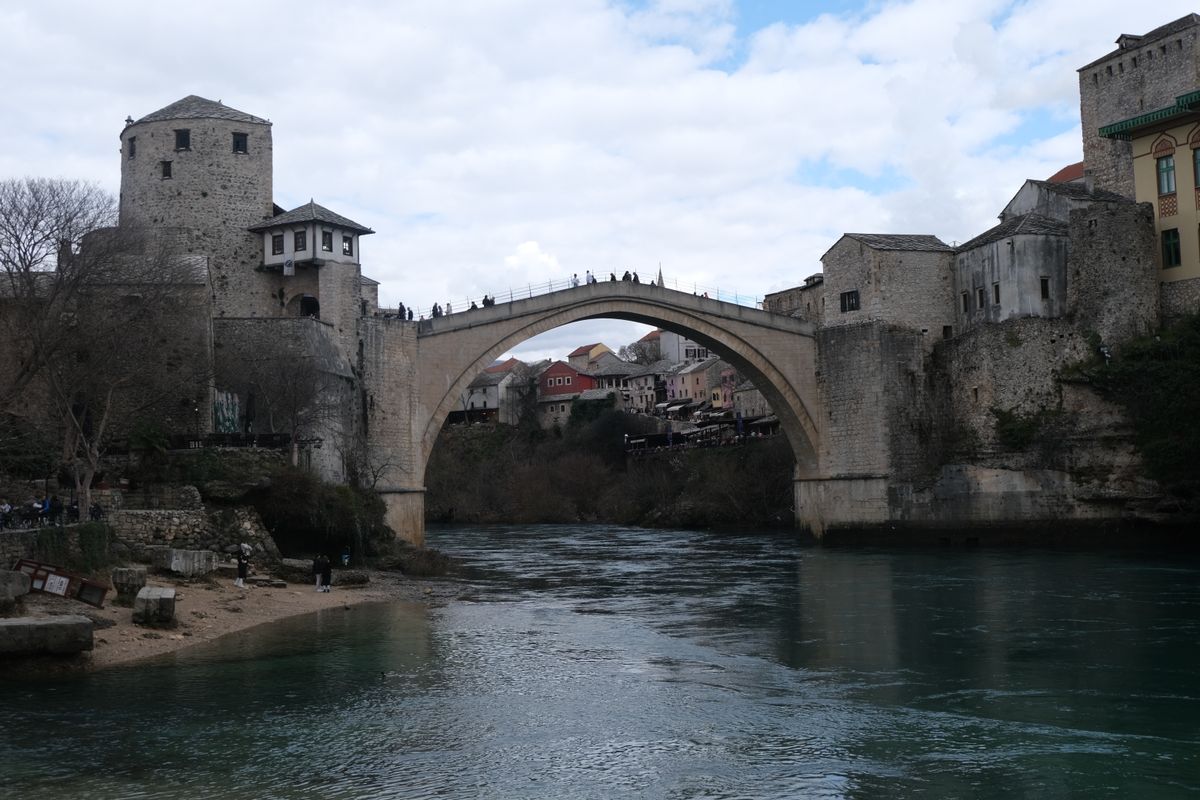
The reconstruction began in 1999 under UNESCO supervision, using stones recovered from the riverbed by divers and new limestone blocks from the same quarry the Ottomans used. The builders studied 16th-century Ottoman construction documents and replicated the original techniques — no modern mortar, no steel reinforcement, just precisely cut stone and engineering principles that had kept the original standing for four centuries. The bridge reopened on July 23, 2004, and the entire Old Bridge area was inscribed as a UNESCO World Heritage Site the following year.
Standing on the bridge today, you’re walking on a combination of 16th-century stones pulled from the river and newly quarried limestone shaped by the same methods. The colour difference between old and new stones is visible — the original blocks have a darker patina from centuries of weather, while the replacement stones are lighter. Over the coming decades, they’ll age to match. The bridge is alive in a sense — still settling, still weathering, still becoming.

Beyond the Bridge: What to See in Mostar

The Kujundziluk bazaar: The old bazaar streets leading to the bridge are lined with copper workshops, leather goods, Turkish lamps, and handmade jewellery. The craftsmanship is genuine — you can watch coppersmiths hammering coffee sets by hand in workshops that have operated for generations.
Koski Mehmed Pasha Mosque: The most photogenic mosque in Mostar, with a minaret you can climb for the best view of the bridge and river. The climb is steep and narrow, but the panorama from the top is the single best photo opportunity in the city.
Bridge divers: Since at least the 17th century, young men have jumped from the Stari Most into the Neretva — a 24-metre plunge into water that’s barely 5 degrees in spring. The tradition continues today. Professional divers jump for tips from travelers; amateur contestants compete in the annual diving competition every July. Watching a diver launch from the bridge’s apex is genuinely heart-stopping.
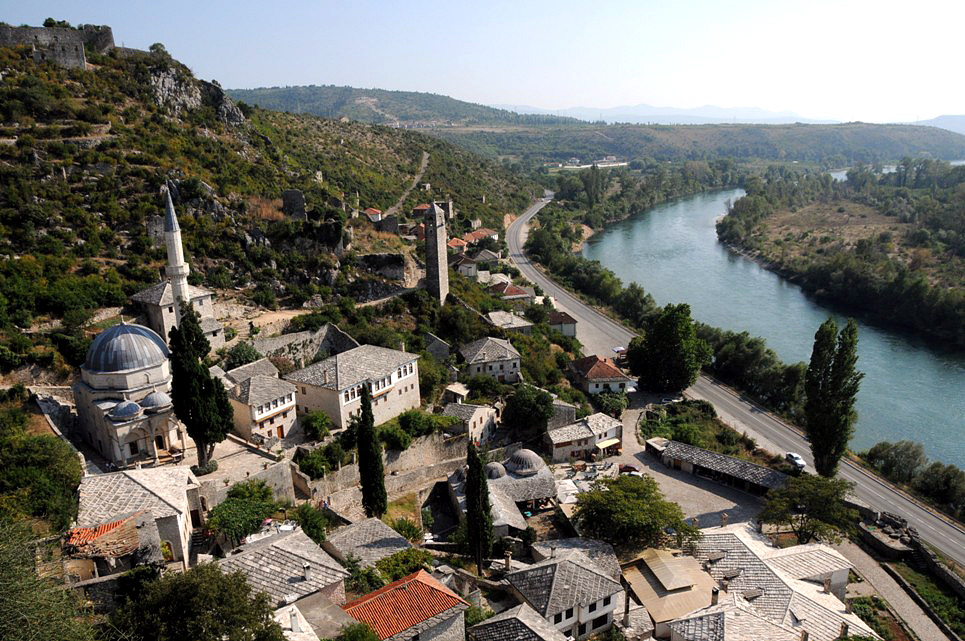
Pocitelj: Most tours stop at this medieval fortress village on the road between the coast and Mostar. Stone houses cascade down a hillside topped by a 15th-century fortified tower. The views over the Neretva valley are extraordinary, and the village is small enough to explore in 30-40 minutes.
Turkish coffee: Mostar takes its coffee seriously. Bosnian coffee (similar to Turkish) is served in a traditional set — a copper cezve (pot), a small cup, sugar cubes, and a Turkish delight. The ritual of pouring and drinking is part of the experience. Several cafes along the river serve coffee with front-row views of the bridge.

When to Go

Best months: May, June, and September. Warm enough for swimming at Kravice, cool enough for comfortable walking in Mostar’s sun-baked old town. The bridge divers are active from May onwards.
Peak season: July and August. Extremely hot (often 40+ degrees), crowded, and the old town’s stone streets radiate heat. If you visit in peak summer, do Mostar in the morning and Kravice in the afternoon heat.
Shoulder season: April and October. Pleasant temperatures, fewer travelers, and lower tour prices. Kravice Waterfalls are most powerful in spring after rainfall. Some tour operators reduce frequency in late October.

Frequently Asked Questions
Do I need a passport to visit Mostar?
Yes. Mostar is in Bosnia and Herzegovina, which is not in the EU. You’ll pass through a border checkpoint. EU citizens need a passport or national ID card. Non-EU visitors need a passport. The border process is straightforward and guided tours handle it smoothly.
Is Mostar safe to visit?
Yes, the city is very safe for travelers. The war ended in 1995 and Mostar has been rebuilt extensively. The old town is well-policed and tourist-friendly. Some bullet damage is still visible on buildings outside the tourist centre — a deliberate choice to preserve the memory — but this doesn’t indicate any current danger.
Can I swim at Kravice Waterfalls?
Yes, and you should. The natural pool at the base of the waterfalls is warm enough for swimming from May to October. Bring a swimsuit and towel. Water shoes are useful for the rocky entry points. Some tours provide snorkelling gear.
How long do you spend in Mostar?
Most tours allocate 2-3 hours in Mostar, which is enough to cross the bridge, walk the old town, visit a mosque, browse the bazaar, and have a coffee. For a deeper experience, consider staying overnight — the old town at sunset and after dark, when the tour groups have left, is magical.
Is the Mostar day trip worth it from Split?
Yes, but it’s a very long day (12+ hours with 3 hours of driving each way). From Dubrovnik, the drive is 1.5 hours, making it a much more comfortable day trip. If you’re based in Split and have limited time, consider whether the 6 hours of driving are worth it — for most people, the answer is still yes, but it’s a commitment.
Mostar offers a completely different experience from Dubrovnik’s Adriatic elegance. Back in Dubrovnik, a Game of Thrones walking tour shows you how the city became King’s Landing, while the Elaphiti Islands are a full day of swimming, island-hopping, and fish lunches on the Adriatic. And for a different kind of Croatian nature, Krka Waterfalls near Split deliver travertine cascades in a lush river canyon.