
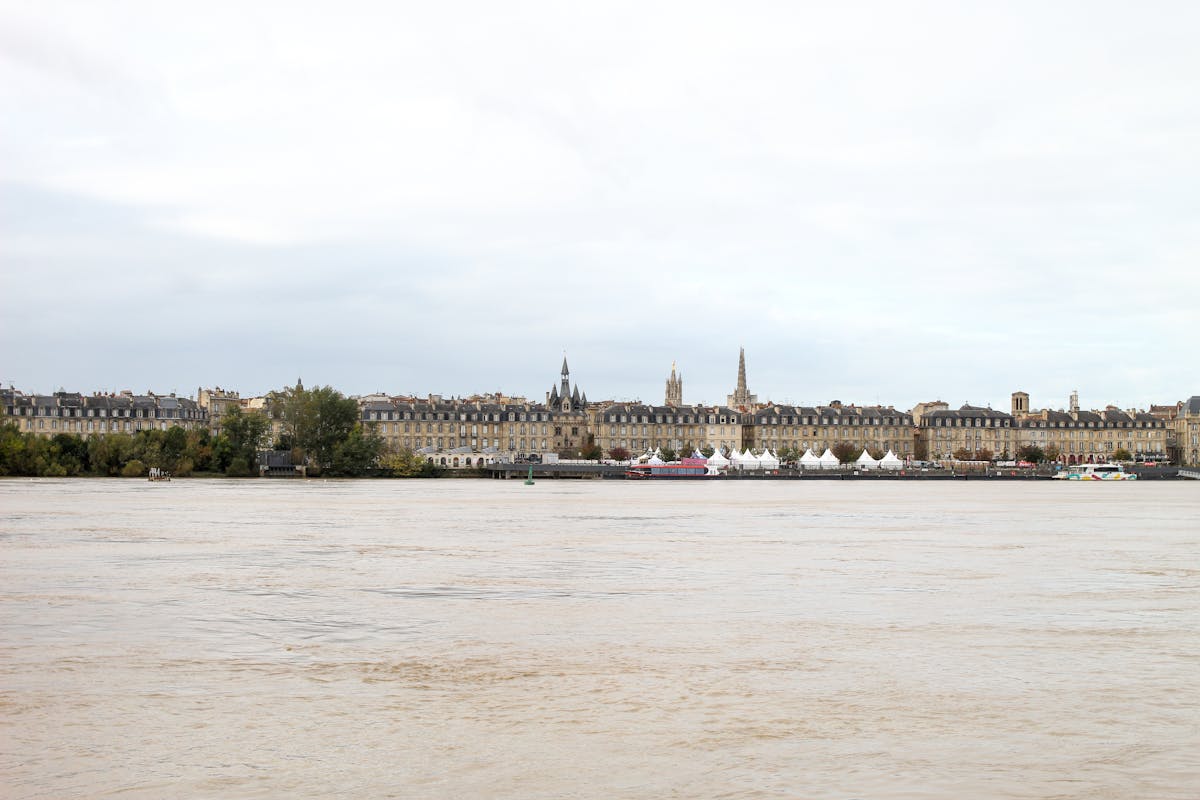
The Garonne is not a pretty river. I should get that out of the way first. It is brown, tidal, and — on a grey February afternoon — about as inviting as a cup of cold coffee. But none of that matters once you are on it, because a Garonne river cruise is not really about the water. It is about what lines the banks: two kilometres of UNESCO-listed 18th-century facades, the crescent-shaped Port de la Lune harbour, the oldest stone bridge in the city, and a waterfront that was a car park as recently as 2001.
I almost skipped the cruise. I had a wine tasting booked, a reservation at a canele shop I had been thinking about for weeks, and exactly zero interest in anything described as a “guided cruise.” That was a mistake. Ninety minutes on the Garonne turned out to be the single best way to understand how Bordeaux fits together — why the buildings face the way they do, why the port is shaped like a moon, and why the wine trade turned a muddy river town into one of the wealthiest cities in France.
Here is everything I learned about booking a river cruise in Bordeaux — the different options, what they cost, what you actually see, and which ones are worth your money.
Best overall: Garonne Cruise with Wine and Canele — $22. The one most people book, and for good reason. Wine, canele, and a solid 90 minutes of commentary.
Best budget: Guided River Cruise — $17. Same route, no wine included, but five dollars cheaper and the commentary is just as good.
Best premium: Yacht Cruise with Brunch — $64. A proper brunch spread on a yacht with an open bar. This is the one for a special occasion.
- How River Cruises Work in Bordeaux
- Standard Cruise vs Wine Cruise vs Brunch Cruise
- The Best Bordeaux River Cruises to Book
- 1. Bordeaux: River Garonne Cruise with Glass of Wine and Canele —
- 2. Bordeaux: Guided River Cruise —
- 3. Prestige Commented Cruise with Wine and Canele —
- 4. Bordeaux: Guided Wine and Canele Discovery Cruise —
- 5. Bordeaux: Garonne River Yacht Cruise with Brunch —
- When to Take a River Cruise in Bordeaux
- How to Get to the Departure Point
- Tips That Will Save You Time and Money
- What You Will See from the Water
- A River That Shaped a City
- More Bordeaux Guides
How River Cruises Work in Bordeaux
Bordeaux river cruises are not the multi-day affairs you might be picturing. These are short sightseeing cruises — typically 90 minutes to two hours — that loop along the Garonne past the main waterfront landmarks. Think of them as a floating city tour rather than a cruise holiday.
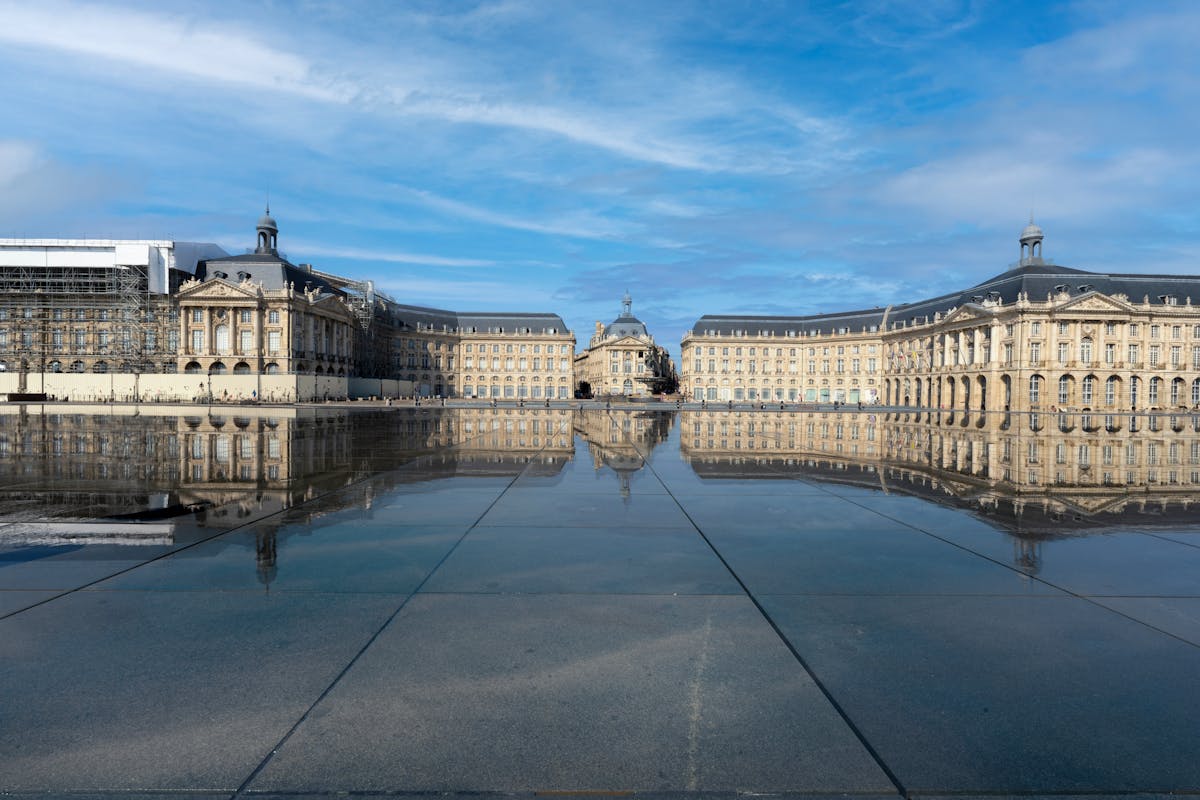
Most cruises depart from the Quai des Chartrons or near the Pont de Pierre on the right bank of the Garonne. The boats carry anywhere from 50 to 150 passengers depending on the vessel. You will pass the Place de la Bourse, the Miroir d’Eau (you see it from a different angle than the usual tourist shots), the Pont de Pierre, the Cite du Vin, and — on longer routes — the industrial port area to the north.
Booking is straightforward. You pick a date and time slot online, get a confirmation email or mobile voucher, and show up at the dock about 15 minutes before departure. Most operators run multiple departures per day during high season (April through October) and fewer in winter. Afternoon and sunset slots sell out first.
There is no “official” booking system like you might find for a museum or monument. You book through the tour operators directly or through platforms like GetYourGuide and Viator. Prices range from about $17 to $64 depending on whether food and drink are included.
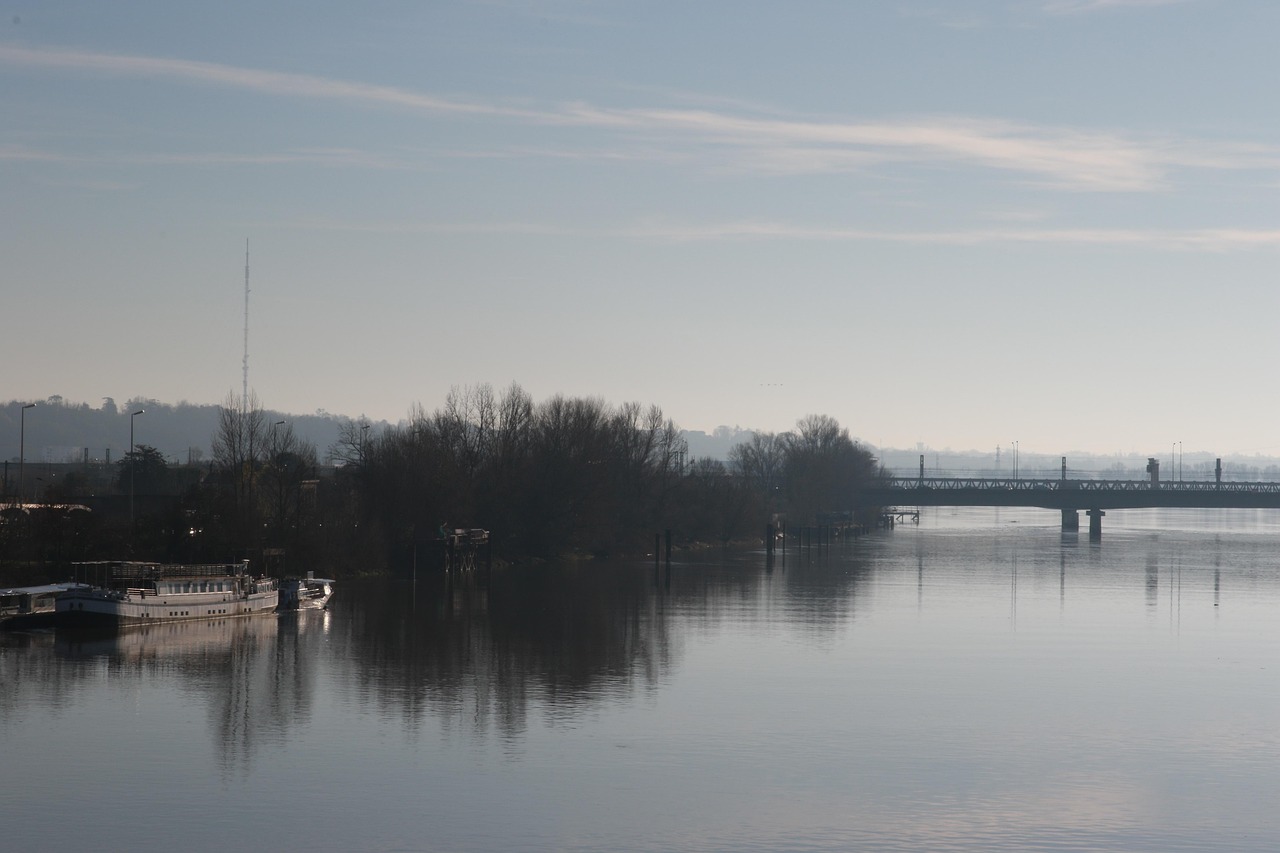
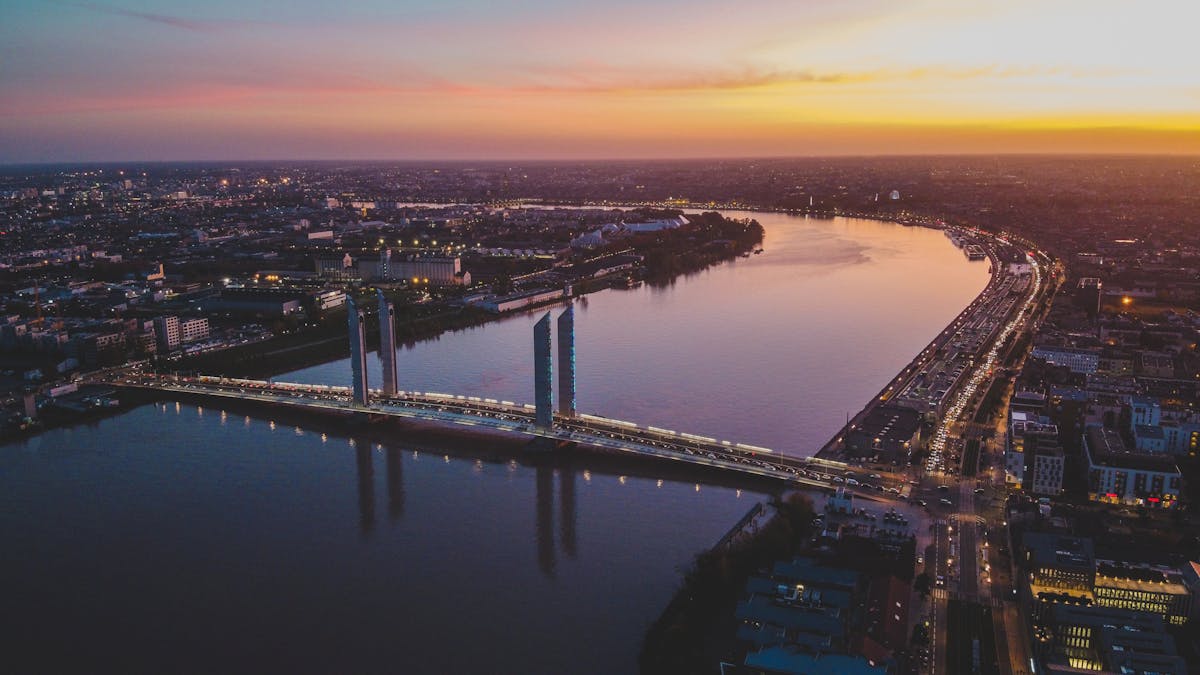
One thing to know: the Garonne is tidal this far inland. Water levels can vary by several metres between low and high tide. This does not affect the cruise (the boats are designed for it) but it does change the perspective. At high tide you sit closer to the level of the quays; at low tide you are looking up at the buildings from further below. Both have their appeal, but sunset at high tide is the money shot.
Standard Cruise vs Wine Cruise vs Brunch Cruise
There are three main types of Garonne cruise, and the differences matter more than you would think.
Standard guided cruises run about $17 and include a live commentary in French and English. You get the full route, the history, and 90 minutes on the water. No food, no drinks — bring your own water bottle. These are the best value if you are on a budget or simply want the sightseeing without the add-ons.
Wine and canele cruises are the most popular option, running about $22. You get the same route and commentary, plus a glass of regional Bordeaux wine and a canele — the small caramelised pastry that Bordeaux is famous for. The wine is usually a straightforward Bordeaux red or white, nothing spectacular, but it is local and it is included. If you are planning to book a wine tour in Bordeaux as well, this is a nice warm-up.
Brunch cruises are the premium tier at about $64. These run on yacht-style vessels with a full brunch buffet and an open bar. The food is more substantial — pastries, cold cuts, cheese, fruit, and coffee — and the atmosphere is noticeably more relaxed. These tend to run on weekends and are popular with locals celebrating birthdays or anniversaries.
My recommendation: The wine and canele cruise is the sweet spot for most visitors. You get the commentary, a taste of the local specialities, and 90 minutes of prime waterfront views for about 20 euros. The brunch cruise is worth the upgrade if you are celebrating something or just want a lazy Sunday morning on the water.
The Best Bordeaux River Cruises to Book
I have reviewed the major cruise options available in Bordeaux. Here are the five worth considering, ranked by the overall experience and value.
1. Bordeaux: River Garonne Cruise with Glass of Wine and Canele — $22
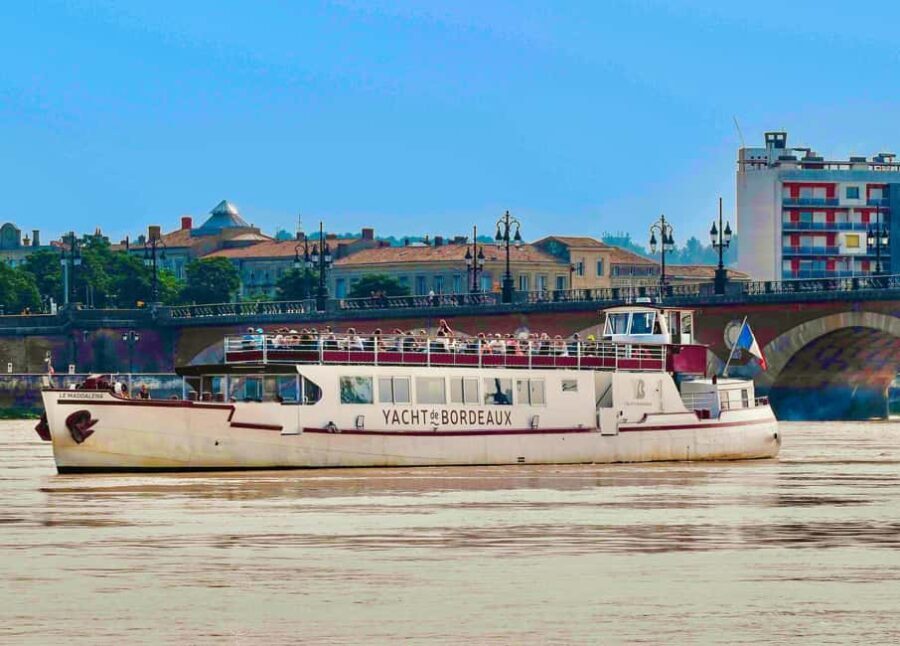
This is the cruise that most people end up on, and it earns that position honestly. Ninety minutes on the Garonne with a glass of Bordeaux wine in hand, a canele on the side, and a guide pointing out everything from the Place de la Bourse to the old submarine base. The commentary is bilingual (French and English) and covers the main historical and architectural highlights along the route.
At **$22**, this hits the price point where you do not feel like you overpaid but you also got something extra beyond just sitting on a boat. The wine is decent — it is Bordeaux, after all — and the canele is fresh. This is the one I would recommend to anyone visiting Bordeaux for the first time. The sheer number of people who have done this cruise and come away impressed speaks for itself.
2. Bordeaux: Guided River Cruise — $17
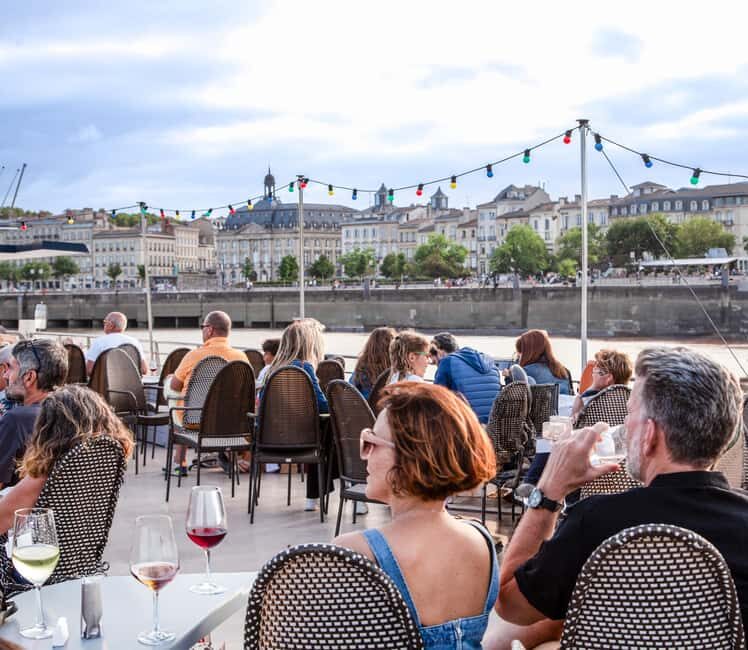
If you want the cruise experience without paying for wine you might not drink anyway, this is your pick. Same 90-minute route along the Garonne, same bilingual commentary, same views of the Pont de Pierre and Place de la Bourse. The only difference is that nothing edible comes with the ticket. The guides on this one get particularly good feedback — one reviewer described the experience as something that should be on everyone’s must-do list in Bordeaux, and I tend to agree.
**$17 is hard to beat** for a guided boat tour in a major European city. For context, a single glass of wine at a waterfront terrace in Bordeaux costs about the same. This cruise gives you 90 minutes of prime river views and a running history lesson. Families with kids who will not appreciate the wine anyway should consider this one seriously.
3. Prestige Commented Cruise with Wine and Canele — $23
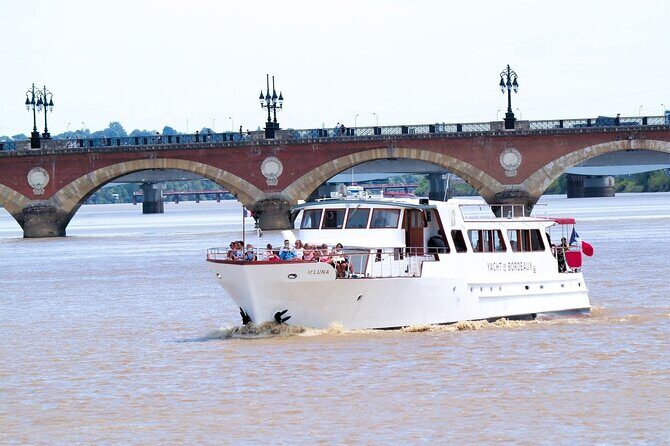
This is essentially the same concept as the top pick — a 90-minute cruise with wine and a canele — but operated through Viator by a different company. The route covers the same waterfront stretch, and the guides deliver commentary in both French and English. Where this one stands out is the sunset departures. Visitors consistently highlight the combination of historic buildings against a fading sky, and the silhouettes across the water as the city lights come on.
At **$23**, it is a dollar more than the GetYourGuide version. The experience is comparable, so your choice might come down to which platform you prefer booking through. If you already have Viator credits or prefer their cancellation policy, go with this one. Otherwise, the top pick edges it out on volume of consistently positive feedback.
4. Bordeaux: Guided Wine and Canele Discovery Cruise — $22
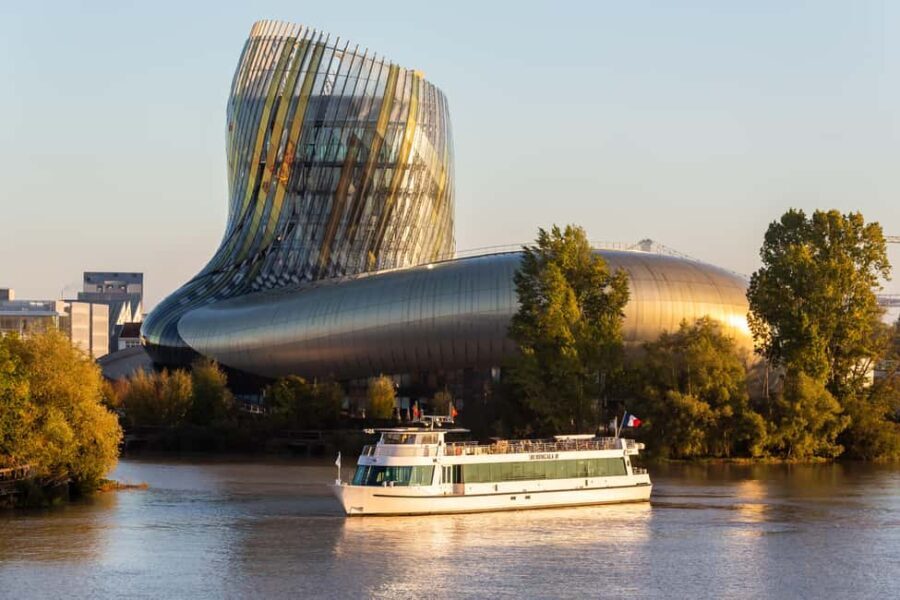
Another wine-and-canele cruise at the same **$22** price point, but this one leans slightly harder into the “discovery” angle. The commentary spends more time on the wine region itself — how the Garonne connected Bordeaux to the global wine trade, the different appellations you can visit nearby, and what makes the local canele recipe distinctive. If you are about to head out for a Saint-Emilion wine tour, this cruise makes a good introduction to the region.
A word of caution: check the specific boat assigned to your departure. Some visitors have noted differences between the boat shown in photos and the one that actually arrives at the dock. In cold or windy weather, the older vessels without enclosed cabins can be uncomfortable. If the forecast looks rough, consider rescheduling — most operators offer flexible cancellation.
5. Bordeaux: Garonne River Yacht Cruise with Brunch — $64
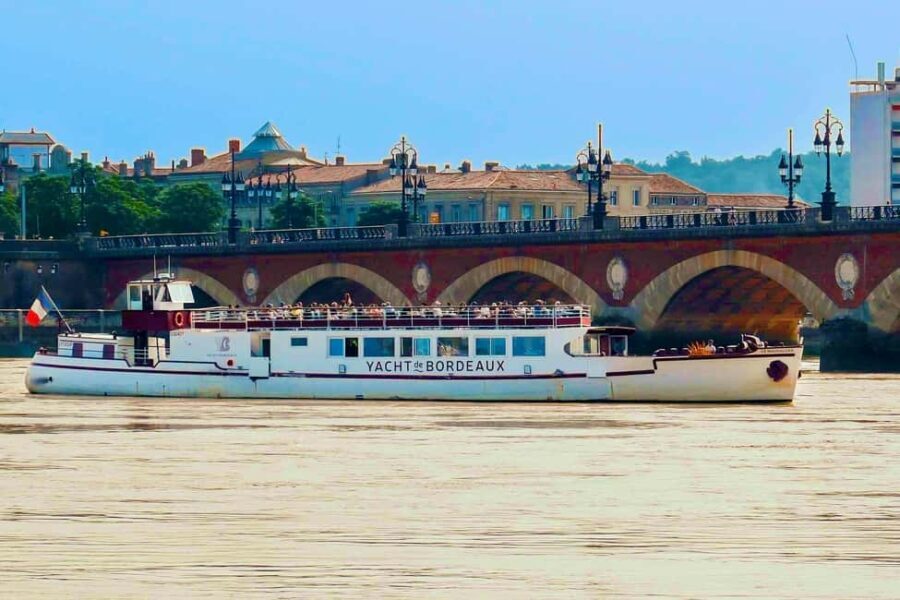
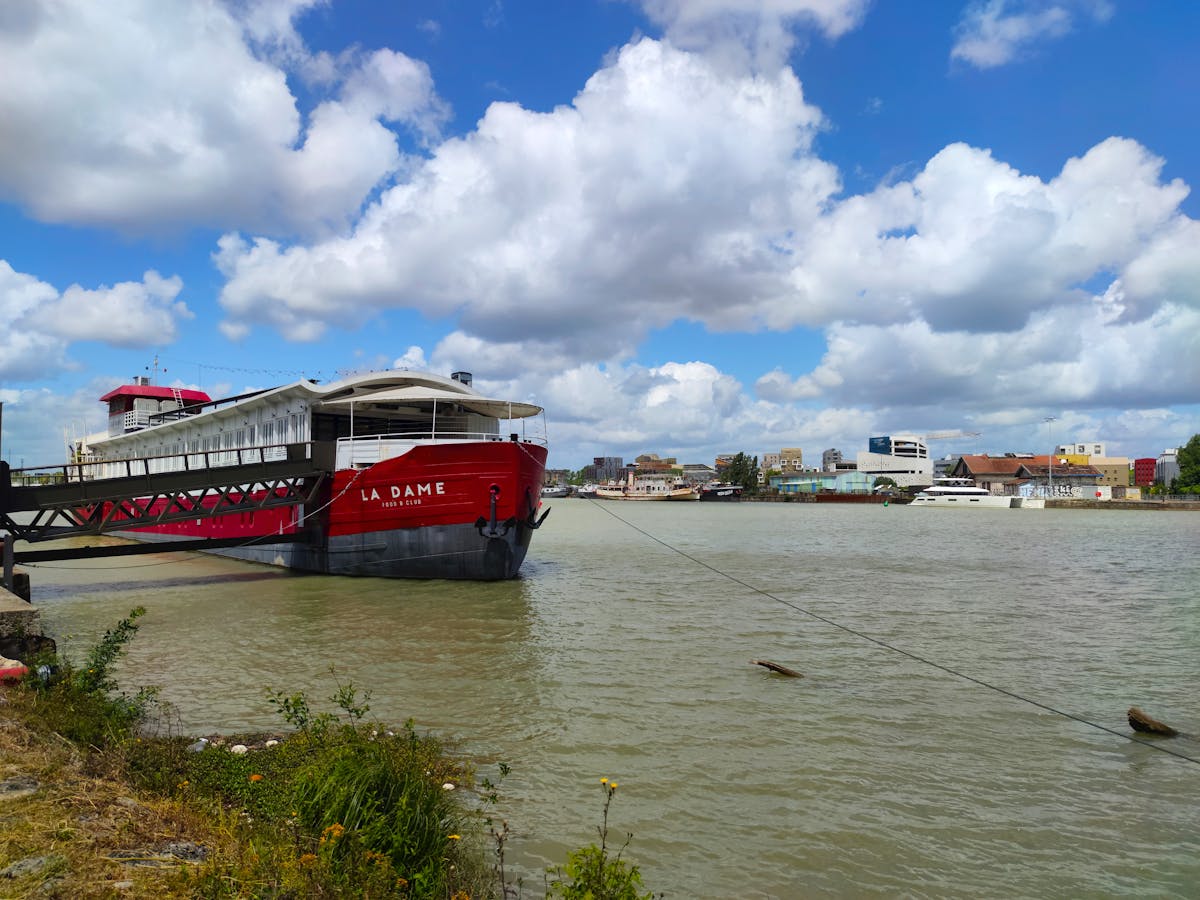
This is the premium pick and it earns its price tag. Two hours aboard a yacht called Le Luna, cruising the Garonne while working through a seasonal brunch buffet with an open bar. The food is legitimately good — not just token pastries but a proper spread. The crew gets consistently high praise for attentiveness, and the yacht itself is a step up from the standard tour boats.
At **$64**, it is three times the price of a standard wine cruise. Is it three times better? Honestly, it depends on what you want. For a birthday, an anniversary, or just a Sunday where you want to do something special, this is the one. For general sightseeing on a budget, the $22 options above will serve you just as well. The route covers the same stretch of river — you are paying for the food, the drink, and the ambiance.
When to Take a River Cruise in Bordeaux
Best months: May through September. The weather is warm enough to enjoy the open-air sections of the boat, and sunset departures run later in the evening. July and August are peak tourist season — book at least a few days in advance for weekend sunset slots.
Shoulder season (April and October): Still pleasant, with fewer crowds. Bring a jacket for evening departures. The light in October is particularly beautiful on the limestone facades.
Winter (November through March): Fewer departures and some operators shut down entirely. The brunch cruise tends to run year-round on weekends. Cold wind off the Garonne can make open-deck cruises uncomfortable, so check whether the boat has an enclosed cabin.
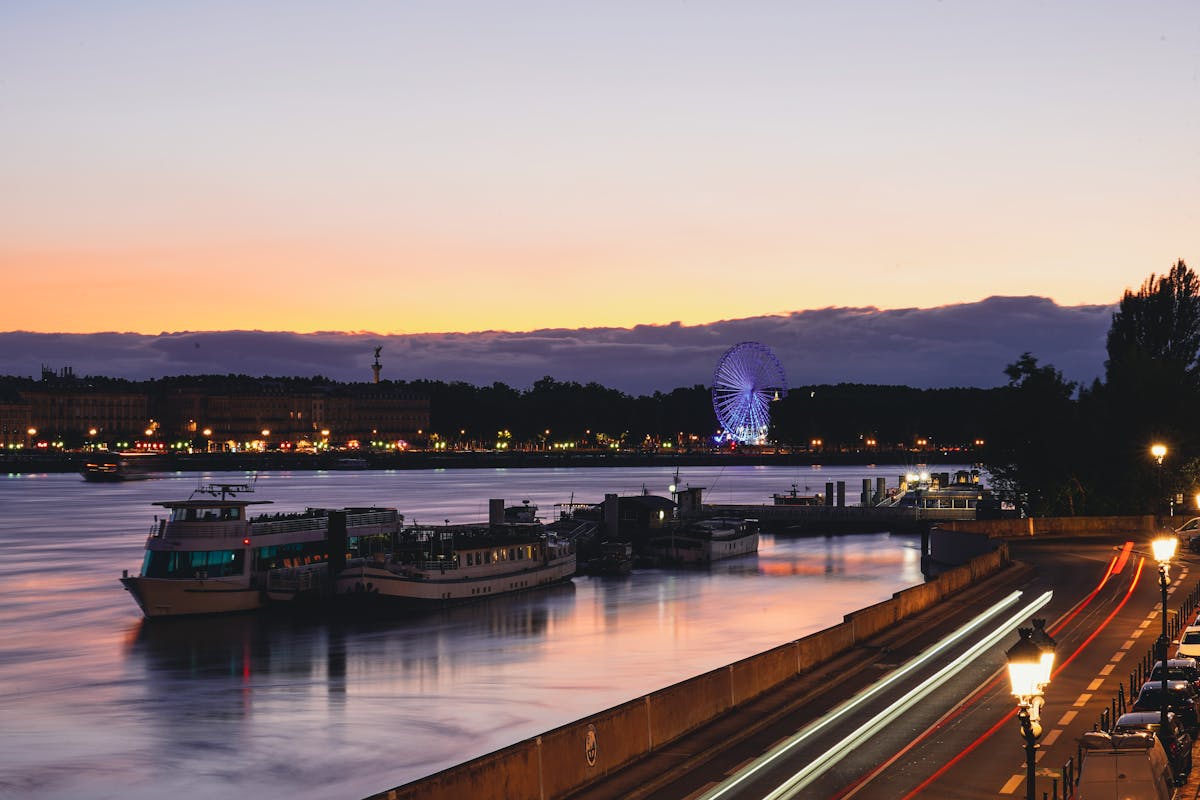
Time of day matters. Morning cruises are quieter but the light is flat. Afternoon cruises are the standard option. Sunset cruises are the ones everyone wants — the golden light on the Place de la Bourse is worth planning your day around. If you can only do one, go for a departure that puts you on the water about an hour before sunset.
How to Get to the Departure Point
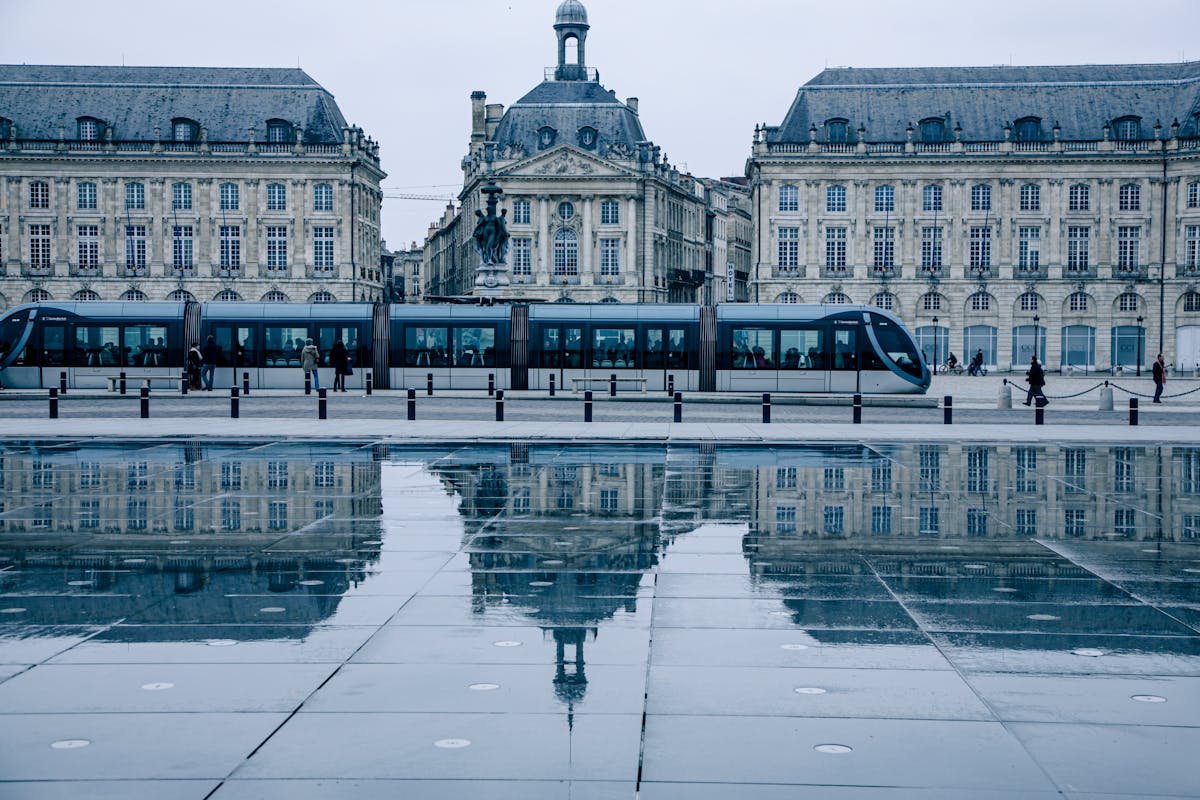
Most Garonne cruises depart from the quays between the Place de la Bourse and the Pont de Pierre. The exact dock depends on the operator — your booking confirmation will specify the meeting point.
By tram: Line C runs along the riverfront. Stop at “Place de la Bourse” or “Porte de Bourgogne” for most departure points. The tram is cheap, frequent, and drops you within a 2-minute walk of the docks.
On foot: If you are staying in the historic centre (Saint-Pierre, Saint-Paul, or near the Grand Theatre), everything is within a 10-15 minute walk along the quays. The riverside promenade is flat and well-marked.
By car: Street parking along the quays is limited and expensive. The Parc de Stationnement Bourse underground car park puts you right next to the Place de la Bourse. Expect to pay about 2-3 euros per hour.
Arrive at least 15 minutes before departure. Boats leave on time and they will not wait for latecomers. This is not a flexible schedule — if your confirmation says 17:00, be at the dock by 16:45 at the latest.
Tips That Will Save You Time and Money
Book the sunset slot early. Sunset cruises sell out days in advance during summer, especially on Fridays and weekends. If you know your dates, book at least 3-4 days ahead.
Sit on the left side of the boat (facing forward) for the best views of the Place de la Bourse and the historic facades. The right side faces the less photogenic industrial bank for most of the route.
Bring layers. Even on warm days, it is noticeably cooler on the water. Wind off the Garonne picks up in the afternoon. A light jacket or scarf makes the difference between comfortable and miserable.
Download your ticket. Most operators accept mobile vouchers. Have it ready on your phone before you reach the dock — cell signal can be patchy near the waterfront in peak season.
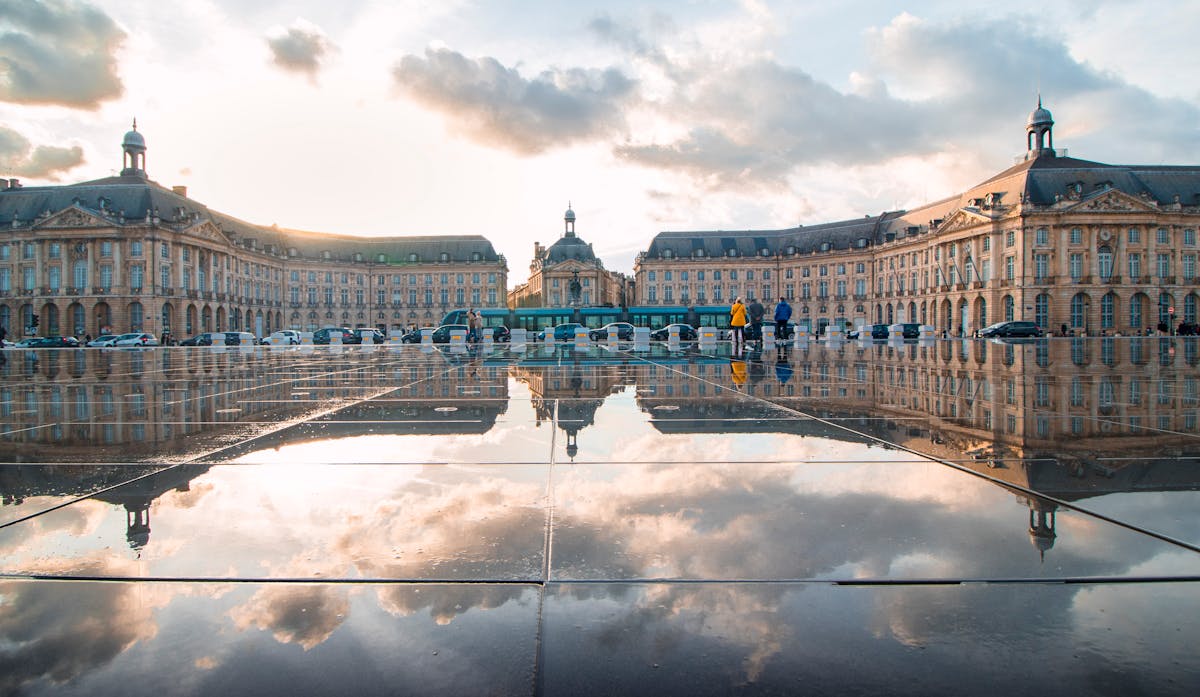
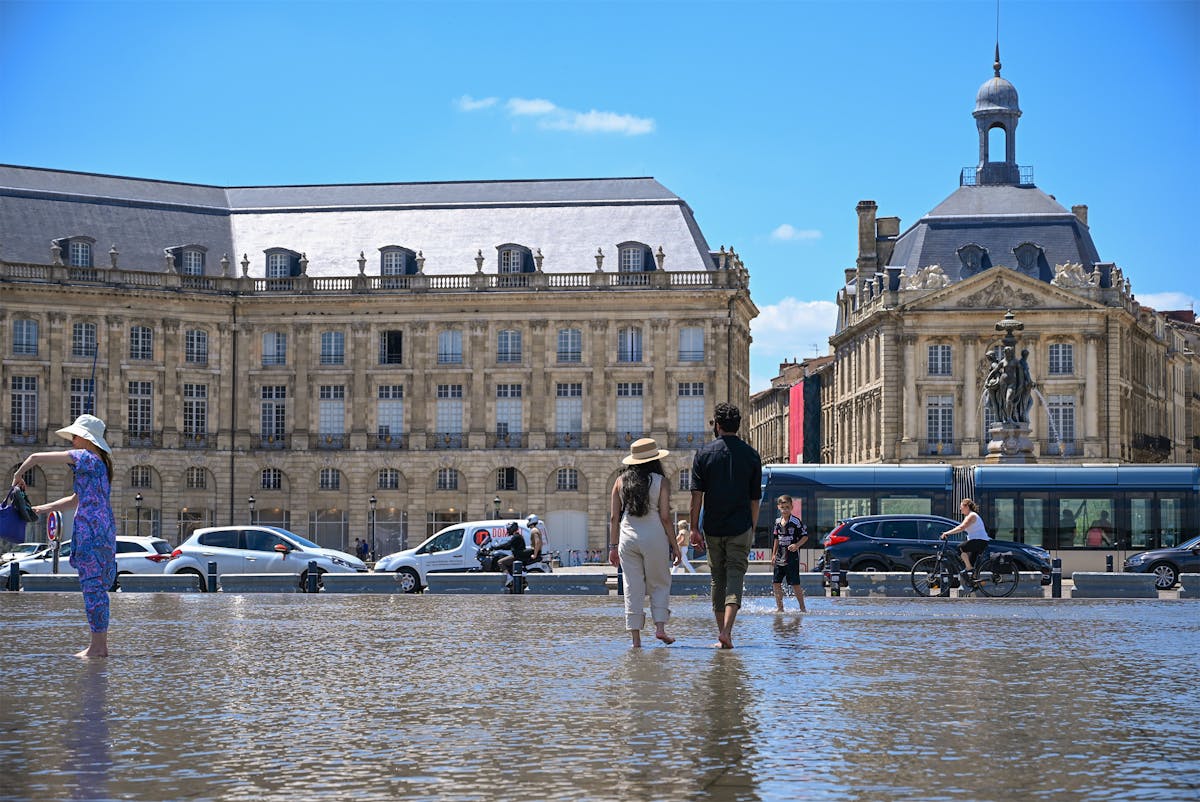
Combine with the Water Mirror. The Miroir d’Eau operates from March to October, cycling between a flat reflecting pool and a mist phase every 15-20 minutes. Hit it before or after your cruise for the full Bordeaux waterfront experience.
Skip the food if you have dinner plans. The wine and canele are nice but not substantial. If you are heading to dinner after the cruise, the $17 guided option gives you the same experience without spoiling your appetite.
What You Will See from the Water
The standard cruise route passes nearly every major waterfront landmark in Bordeaux. Here is what to look for, roughly in order:
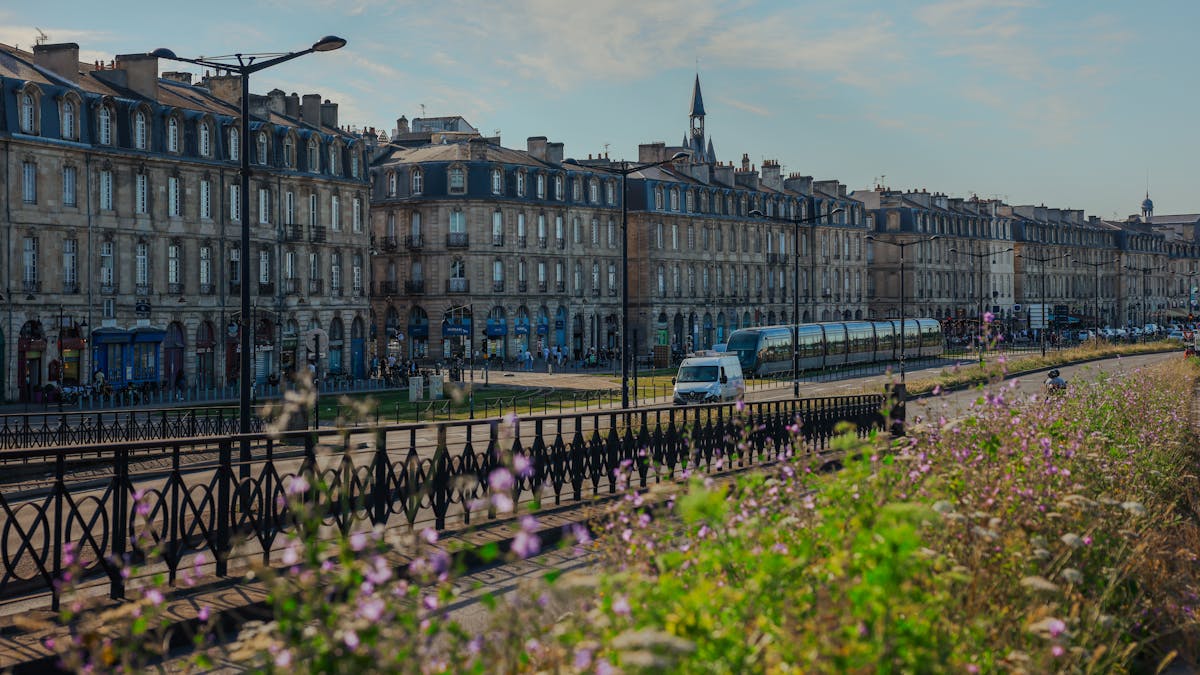
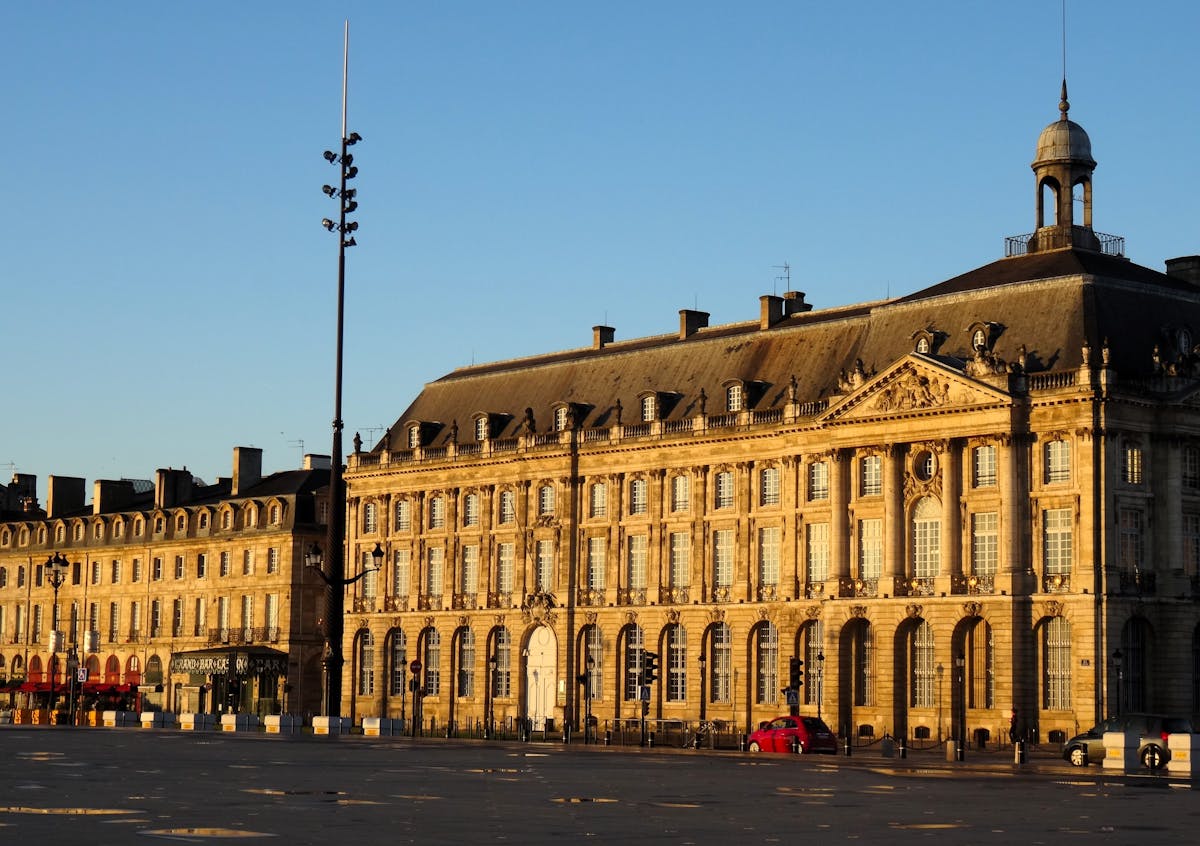
The Place de la Bourse and Miroir d’Eau. The crown jewel of the Bordeaux waterfront. The Place de la Bourse was built in the 1730s as a royal square facing the river, designed to impress visitors arriving by boat. The Miroir d’Eau — the world’s largest reflecting pool at 3,450 square metres — was added in 2006 and has become the most photographed spot in the city. From the water, you get the full panoramic sweep that you cannot see from street level.
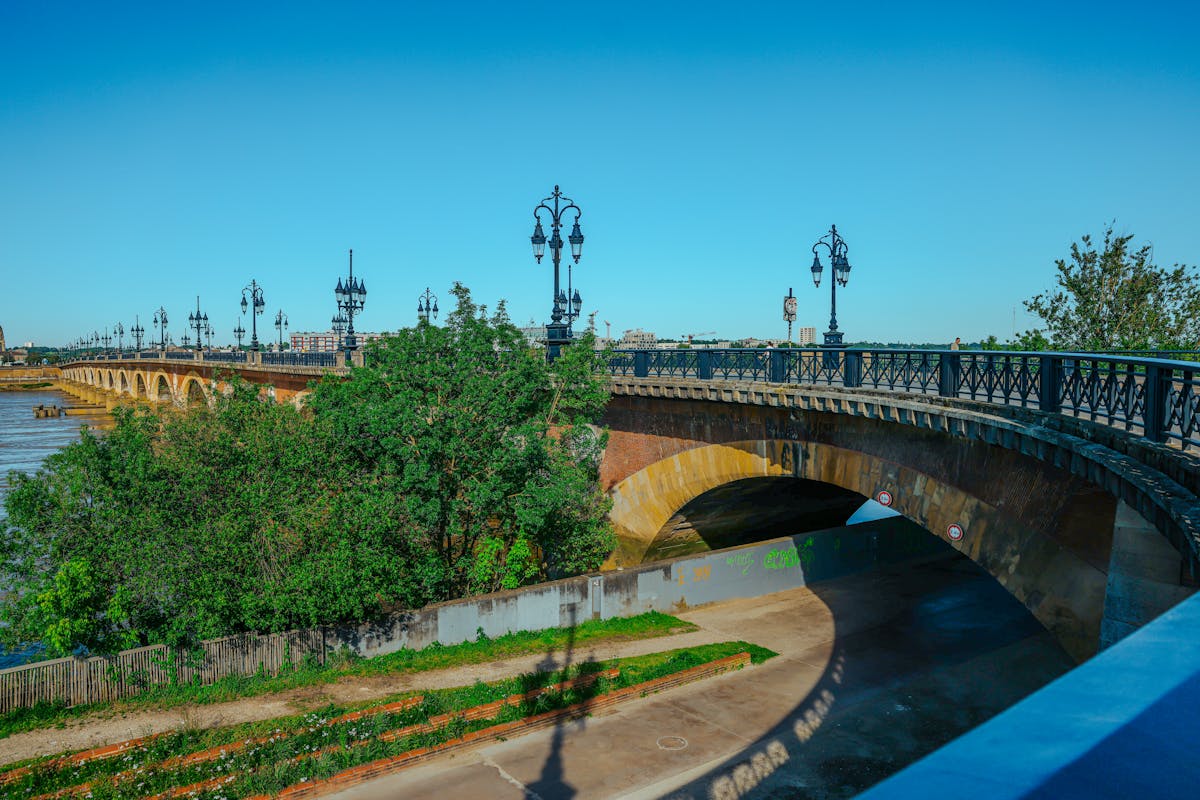
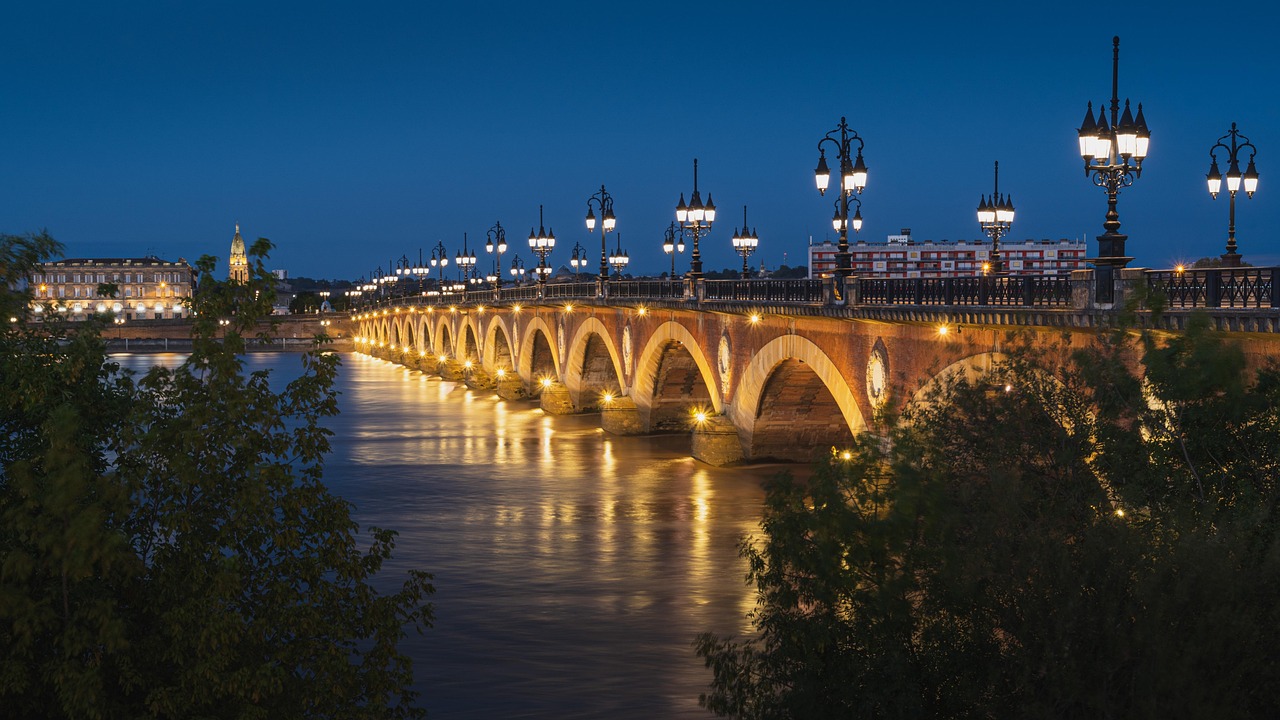
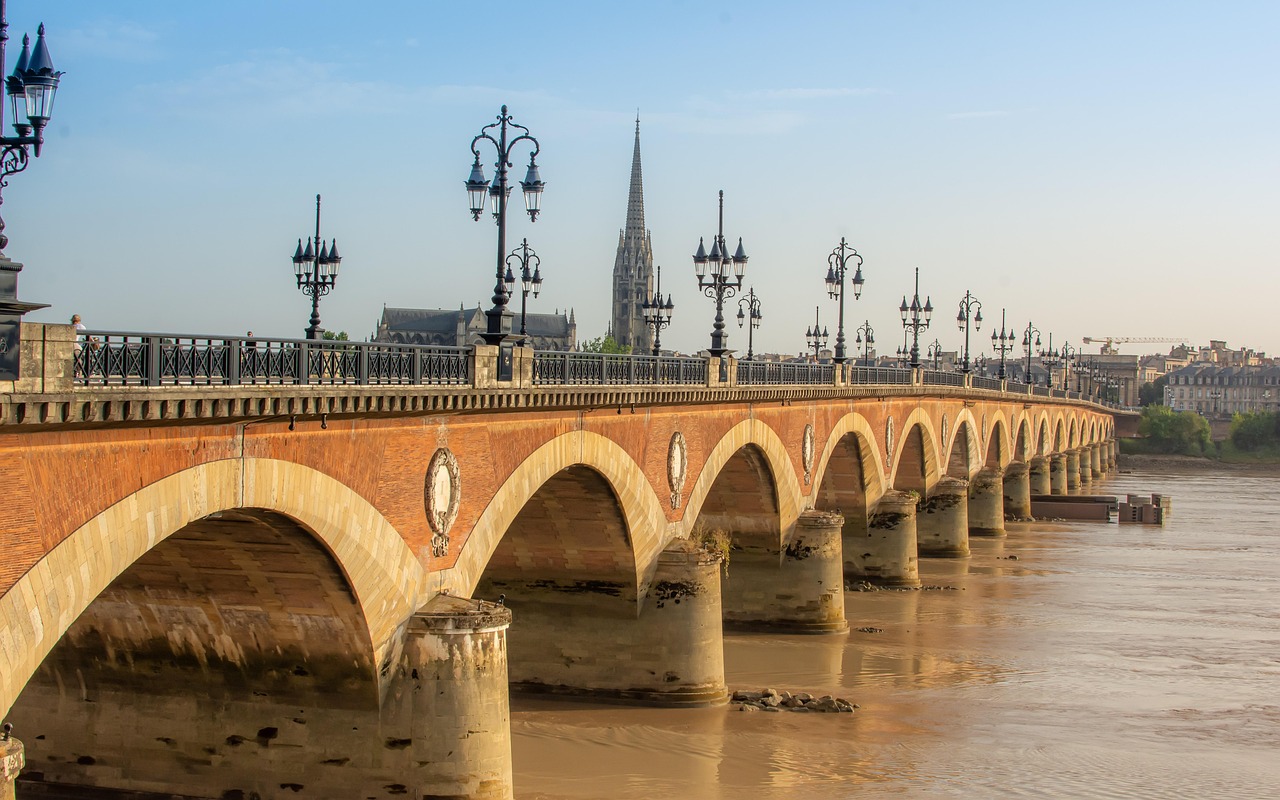
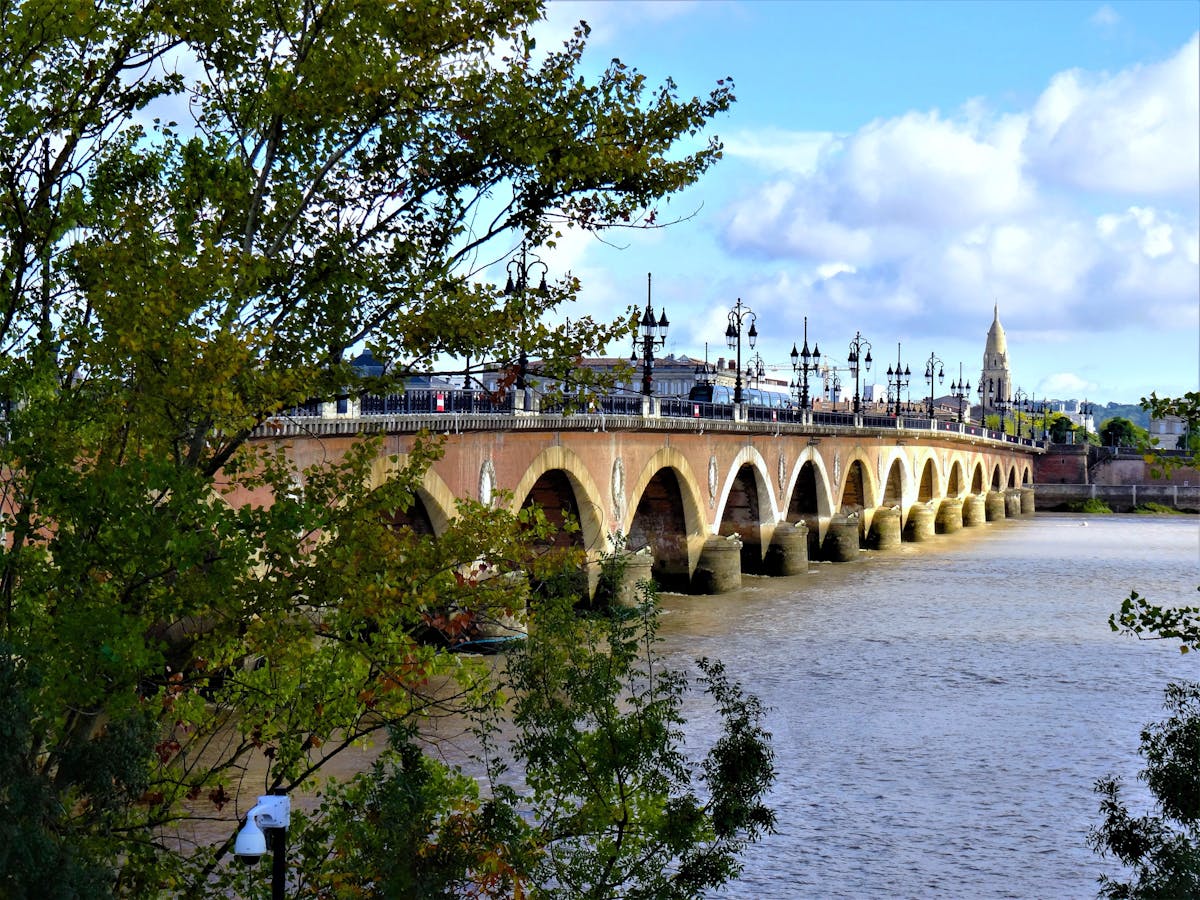
The Pont de Pierre. Bordeaux’s oldest bridge, commissioned by Napoleon in 1810 and completed in 1822. The 17 arches allegedly correspond to the letters in “Napoleon Bonaparte” — though historians argue about whether that is fact or folklore. For 800 years before this bridge was built, the only way across the Garonne was by boat. Your cruise will pass under or alongside it, and the stone arches look particularly striking at sunset.
The Quai des Chartrons. The old wine merchant quarter, where Bordeaux’s wealth was built. For centuries, wine barrels were loaded onto flat-bottomed boats called gabarres here and shipped downriver to the Atlantic port. The 18th-century merchant houses along the quay have been converted into restaurants, galleries, and wine bars. A few cruise operators even use replica gabarres for a more historical experience.
The Porte Cailhau and Porte de Bourgogne. Two medieval gates visible from the river. The Porte Cailhau (built in 1495 to celebrate a military victory) is the more dramatic of the two, with its turrets and Gothic stonework. The Porte de Bourgogne marks the entrance to the old Roman road leading south.
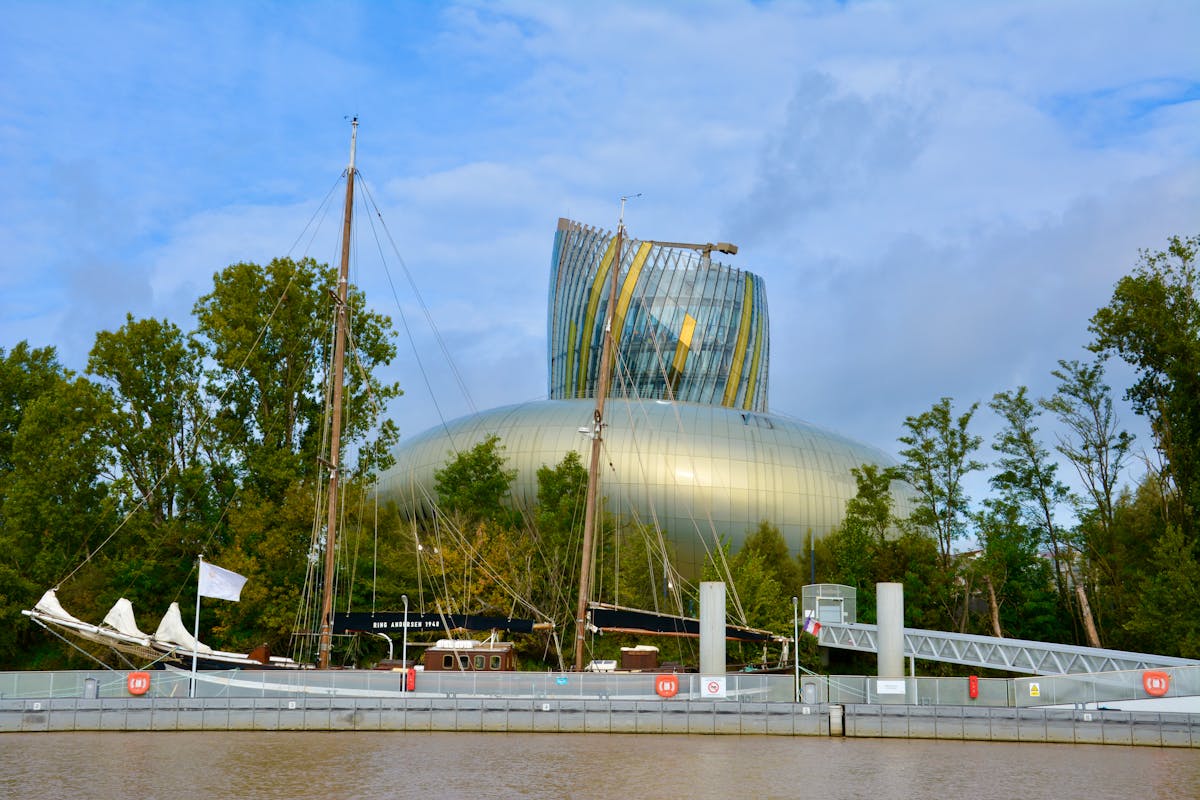
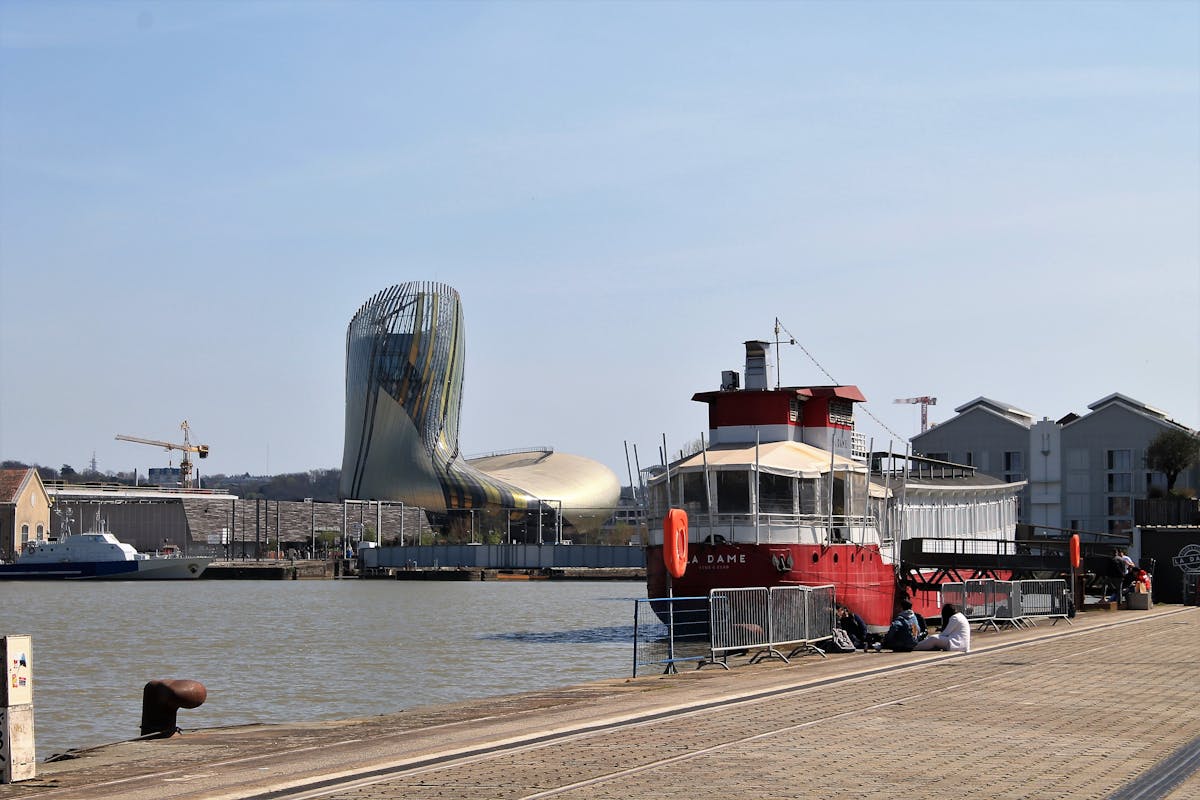
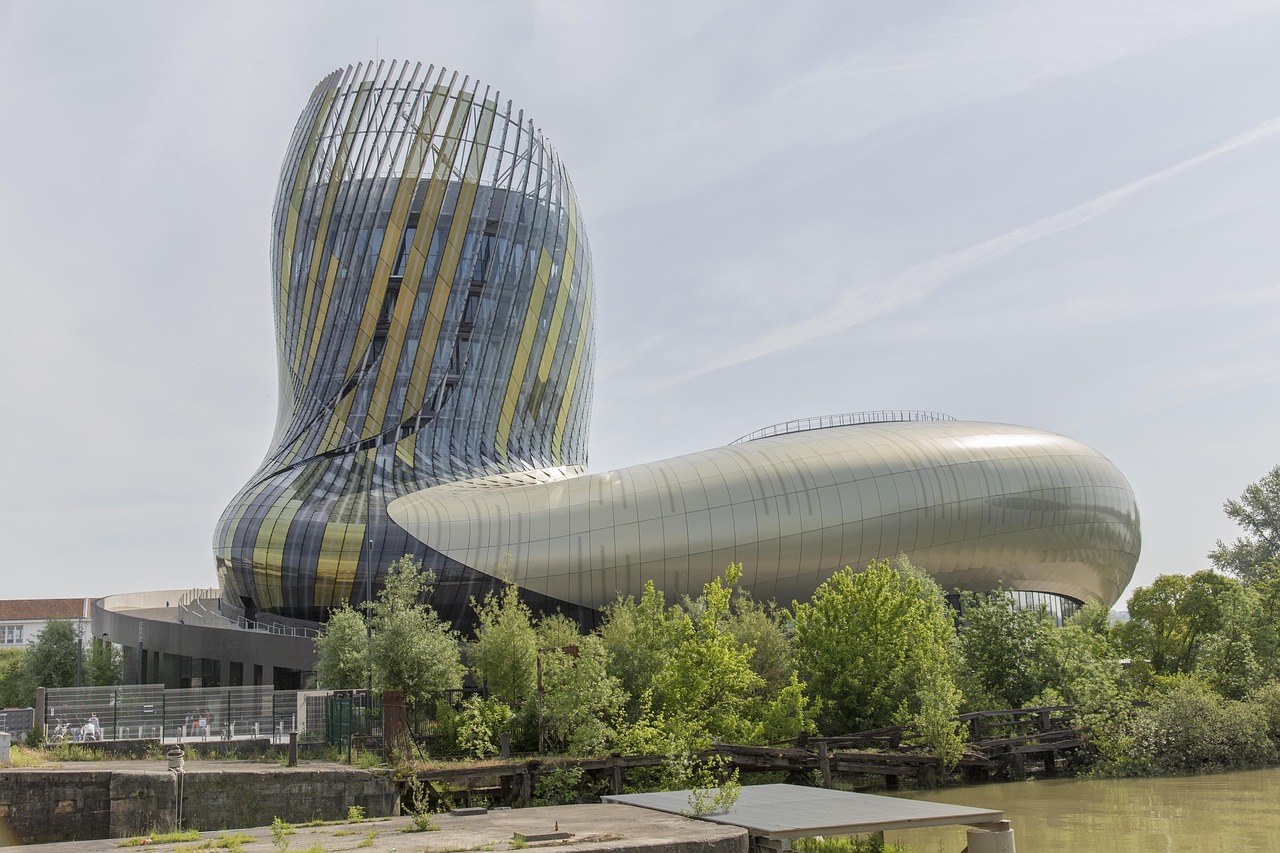
The Cite du Vin. At the northern end of the cruise route, you will spot the Cite du Vin — Bordeaux’s flagship wine museum. The building is shaped like a wine swirl (or a decanter, depending on your imagination) and looks striking from the water. If wine culture is your thing, we have a full guide on getting Cite du Vin tickets that covers skip-the-line options and what to expect inside.
A River That Shaped a City
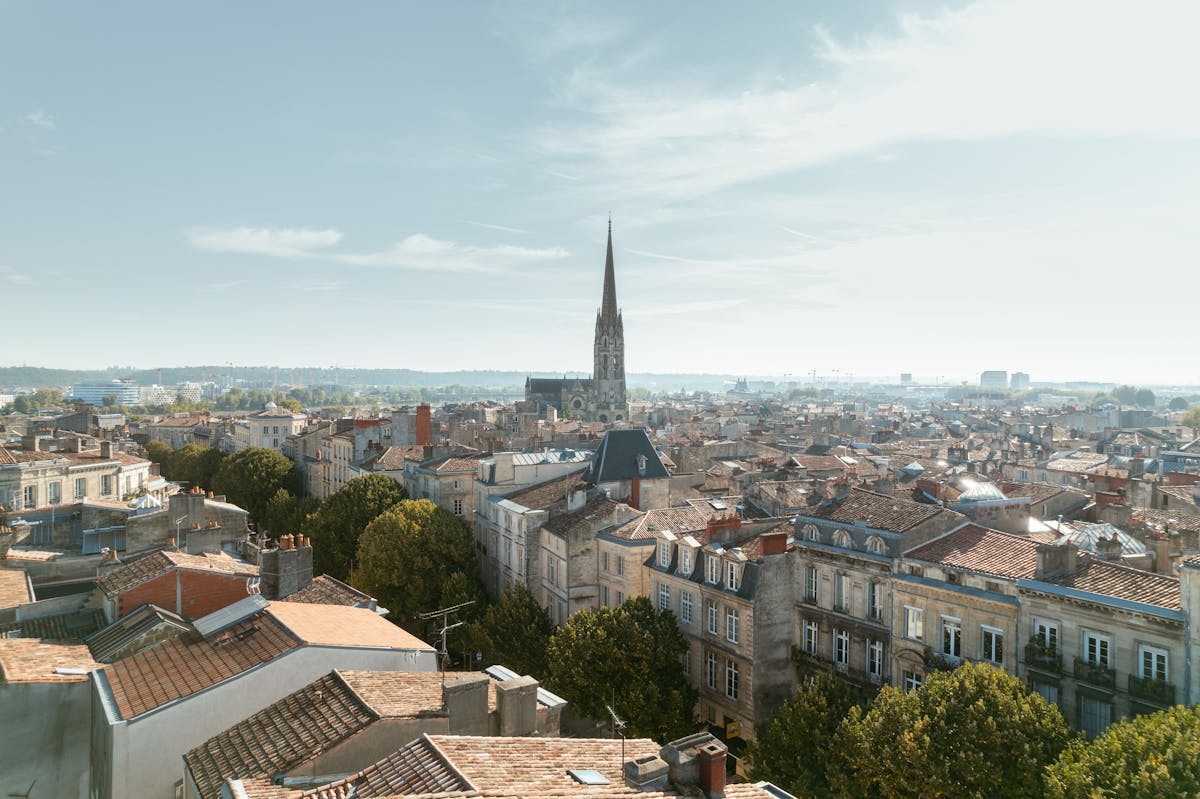
You cannot really understand Bordeaux without understanding the Garonne. This river made the city. Roman galleys sailed up it two thousand years ago to trade with Burdigala (the Roman name for Bordeaux). Medieval wine barges carried the first Bordeaux vintages down to the Atlantic, where English merchants bought them by the barrel-load — a trade that ran continuously for over 800 years.
The Port de la Lune — the crescent-shaped harbour where the Garonne bends — is the symbol of Bordeaux. The crescent moon appears on the city’s coat of arms and gives the harbour district its name. It was this natural crescent that made Bordeaux a perfect port: deep enough for ocean-going vessels, sheltered from Atlantic storms, and connected by river to the wine country inland. The flat-bottomed boats called gabarres carried wine barrels downriver to this port for eight centuries. A few replica gabarres still operate today, and some cruise operators use them.
There is a darker chapter too. In the 18th century, Bordeaux was France’s second-largest slave trading port, behind Nantes. The grand merchant houses along the waterfront — the ones you admire from the cruise — were built with profits from the triangular trade. The city has only recently begun to publicly reckon with this history, with a permanent exhibition at the Musee d’Aquitaine.
The transformation of the waterfront is one of the great urban renewal stories in Europe. Until the early 2000s, the Garonne quays were a car park. The facades were black with soot. The tram system did not exist. Then Bordeaux launched an ambitious cleanup: the quays were pedestrianised, the buildings were sandblasted back to their original honey-gold limestone, the tram was built, and the Miroir d’Eau was installed in 2006. The entire waterfront area earned UNESCO World Heritage status, and Bordeaux went from being known as “the Sleeping Beauty” to one of the most visited cities in France.
All of this is what makes a Garonne cruise worth the 90 minutes. You are not just floating past pretty buildings — you are floating past 2,000 years of history, trade, wealth, exploitation, and reinvention, all compressed into two kilometres of riverfront.
More Bordeaux Guides
If you are spending a few days in Bordeaux, the river cruise pairs well with the rest of the wine country. Our guide to booking a wine tour in Bordeaux covers half-day and full-day excursions to the main appellations, including transport options and which estates accept drop-in visitors. For something more focused, the Saint-Emilion wine tour guide is worth reading if you want to see the medieval village and its underground church alongside the tastings. And if the Cite du Vin caught your eye from the water, our Cite du Vin tickets guide breaks down the different entry options and what each floor of the museum actually contains.
This article contains affiliate links. If you book through our links, we may earn a small commission at no extra cost to you. This helps us keep producing free travel guides.