
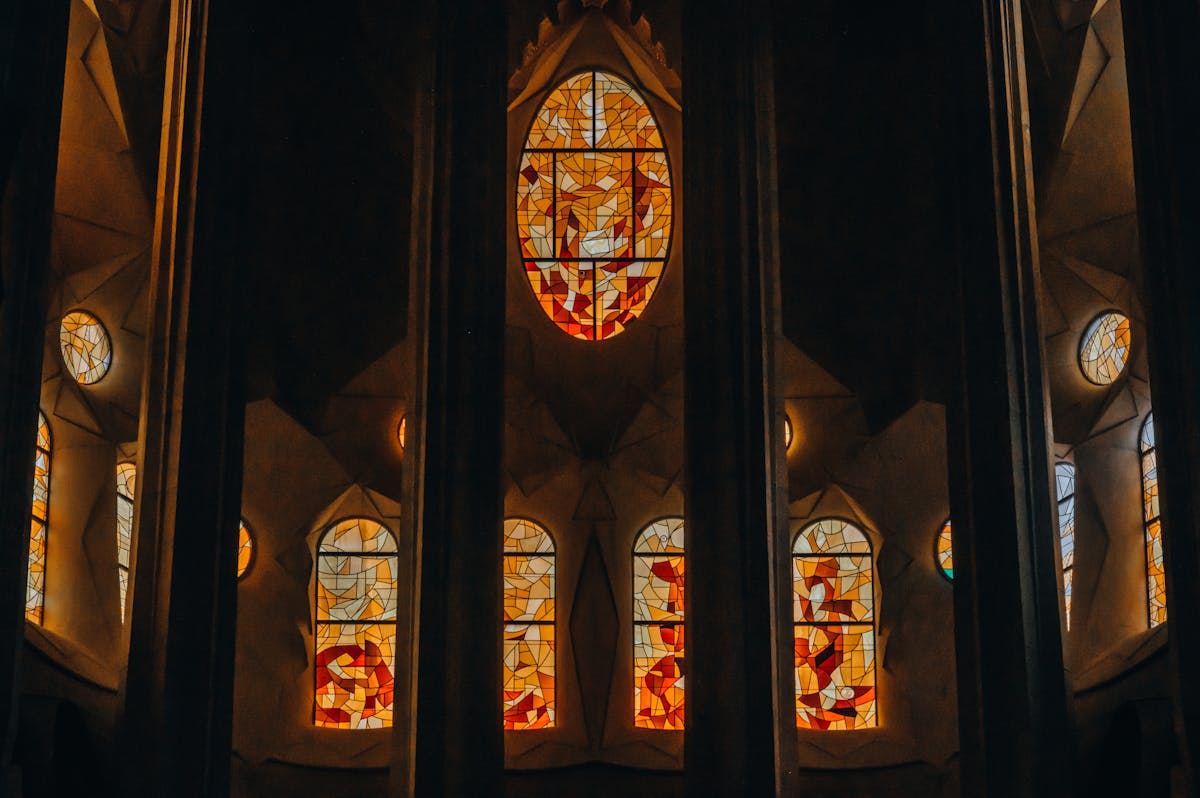
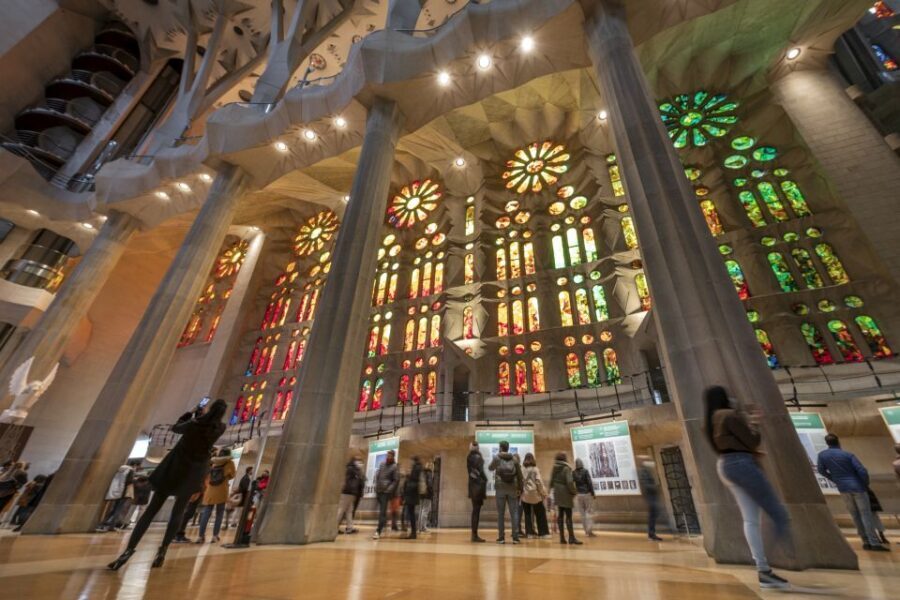
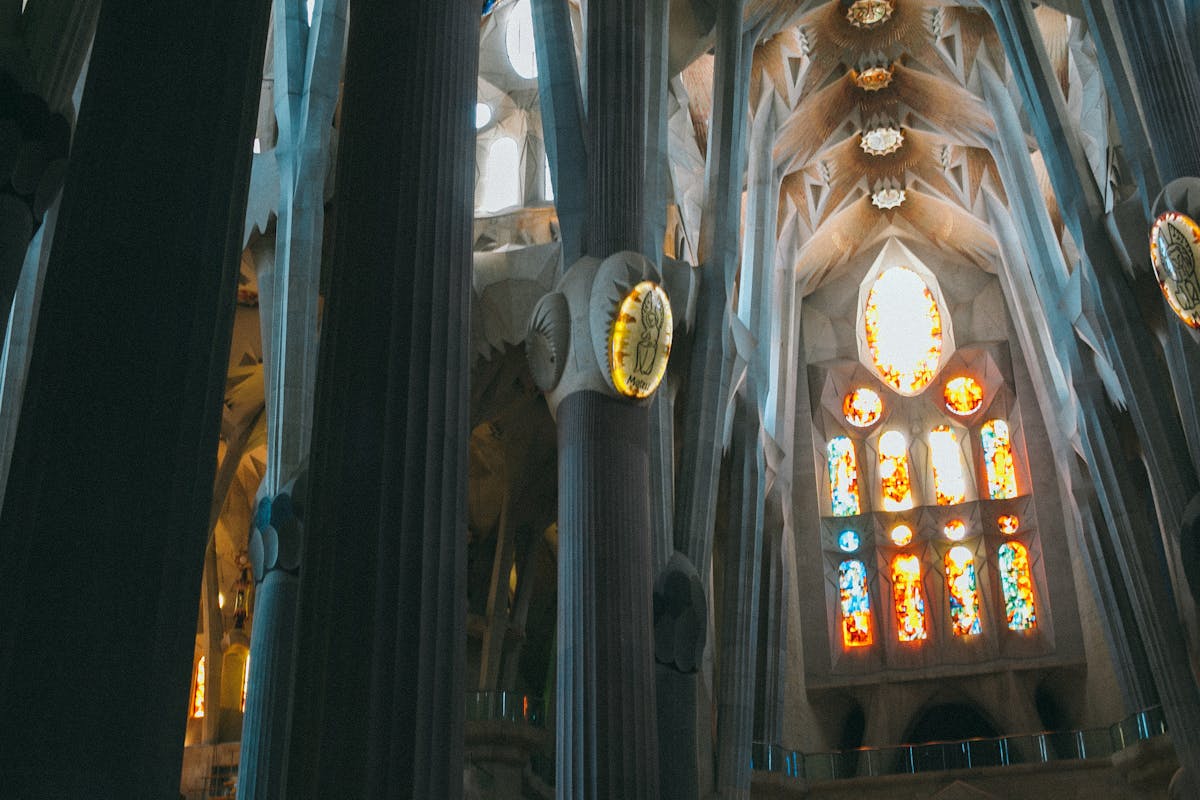
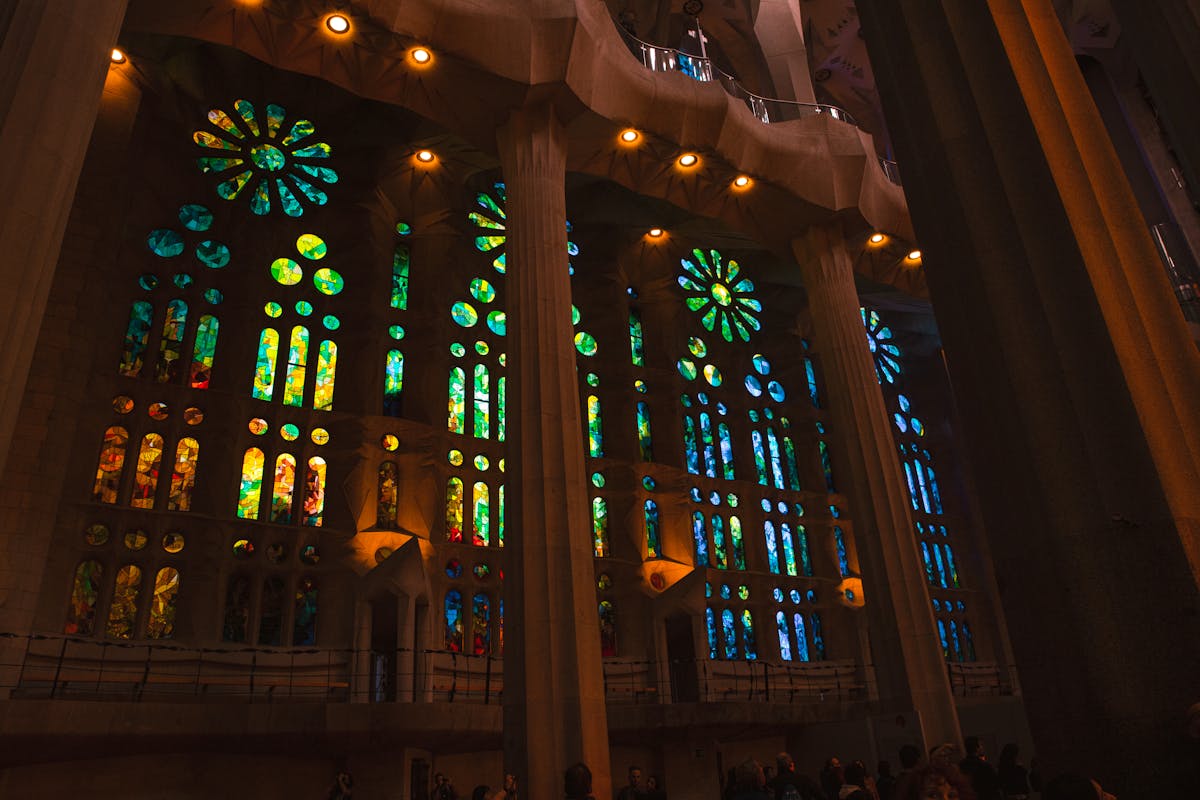
The light inside Sagrada Familia does something I have not seen in any other building. Mid-morning, when the sun hits the east wall, the stained glass throws colour across the stone columns — greens, blues, golds — and the whole interior looks like the bottom of a swimming pool made of jewels. Gaudi designed it that way on purpose. He studied how light moved through the nave for years, mapping the angles so the colour would shift as the day went on. The western windows go warm in the afternoon: reds, oranges, amber. It is less a church and more a living kaleidoscope made of stone.
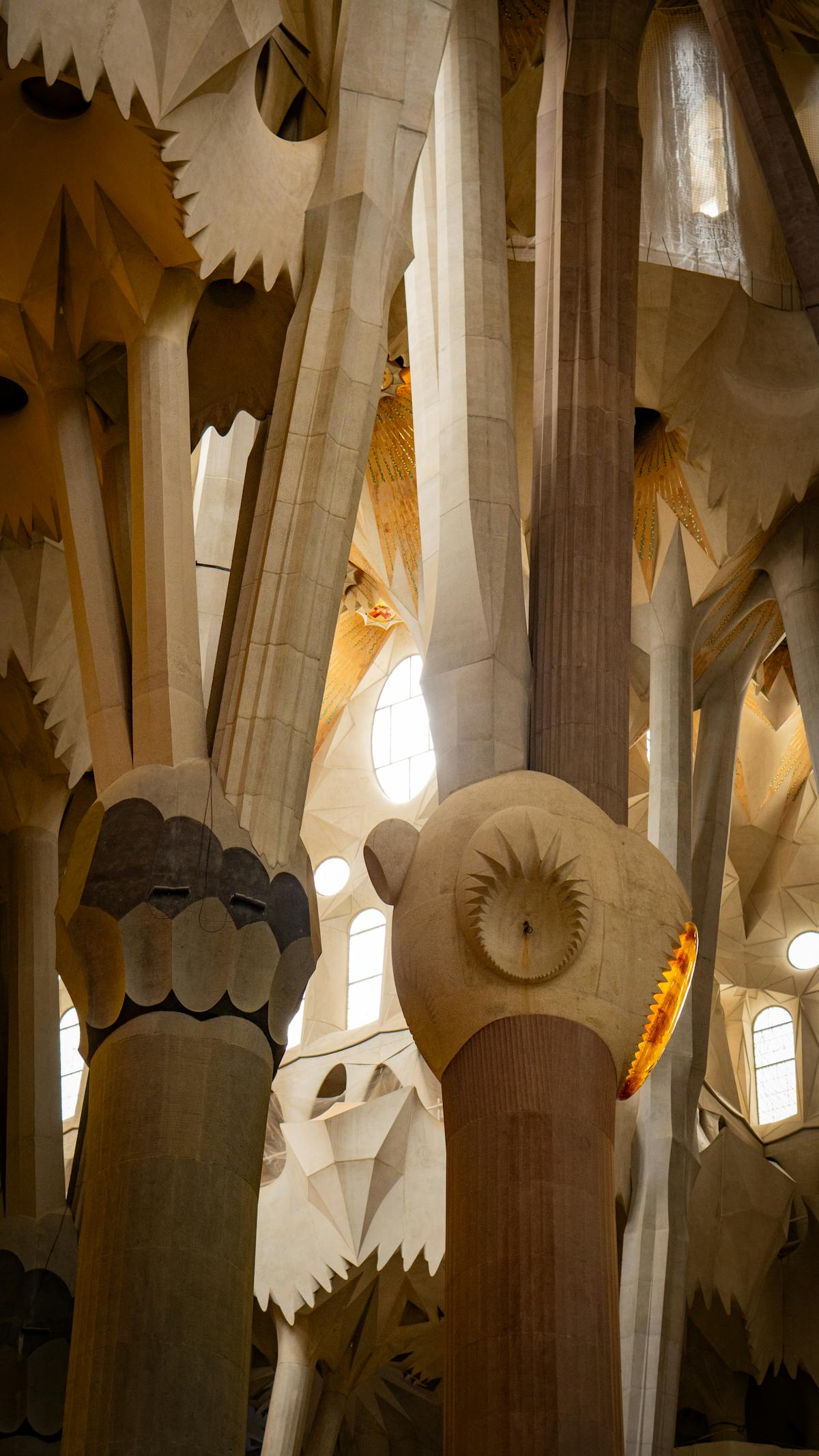
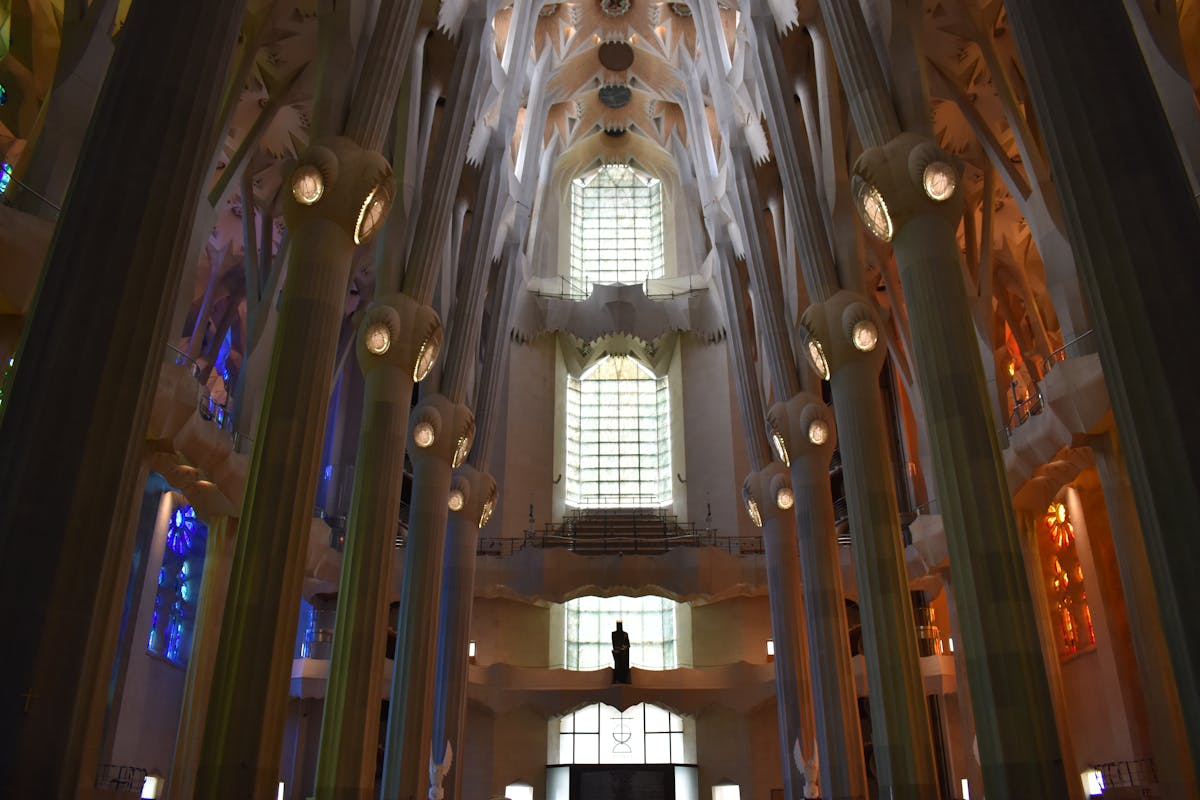
I have been to a lot of churches in Europe. Notre-Dame, St. Peter’s, the Duomo in Milan. Sagrada Familia is nothing like any of them. The columns branch like tree trunks into the ceiling, splitting and resplitting until you are standing inside a stone forest. Gaudi spent decades studying natural forms — bones, shells, flower stems — and the whole structure feels grown rather than built.
But getting inside takes some planning. Sagrada Familia is the most visited monument in Spain, and timed-entry tickets sell out days (sometimes weeks) in advance during peak season. Walk up without a booking and you will be turned away. I have gone through every ticket option, guided tour, and tower access pass available and laid out exactly what you need to know.
If You’re in a Hurry: My Top 3 Picks
- Best value entry: Sagrada Familia Entry Ticket with Audio Guide — $39 per person. Self-paced visit with a solid audio guide that covers everything a live guide would. Book this ticket
- Best guided experience: Sagrada Familia Priority Access Guided Tour — $58 per person. Small group, excellent guide, and the kind of details about Gaudi’s methods that make everything click. Book this tour
- Best for tower views: Fast-Track Sagrada Familia and Towers Guided Tour — $85 per person. Guided tour plus tower access by lift. The view from up top changes how you understand the building. Book this tour
- If You’re in a Hurry: My Top 3 Picks
- How Sagrada Familia Tickets Work
- Entry Ticket vs Guided Tour vs Tower Access
- 5 Best Sagrada Familia Tours and Tickets
- 1. Sagrada Familia Entry Ticket with Audio Guide —
- 2. Sagrada Familia Priority Access Guided Tour —
- 3. Sagrada Familia Skip-the-Line Entry Ticket and Tour —
- 4. Fast-Track Sagrada Familia and Towers Guided Tour —
- 5. Sagrada Familia and Park Guell Combo Tour — 8
- When to Visit Sagrada Familia
- Tips for Visiting Sagrada Familia
- What You Will See Inside
- More Barcelona Guides
- If You’re in a Hurry: My Top 3 Picks
How Sagrada Familia Tickets Work
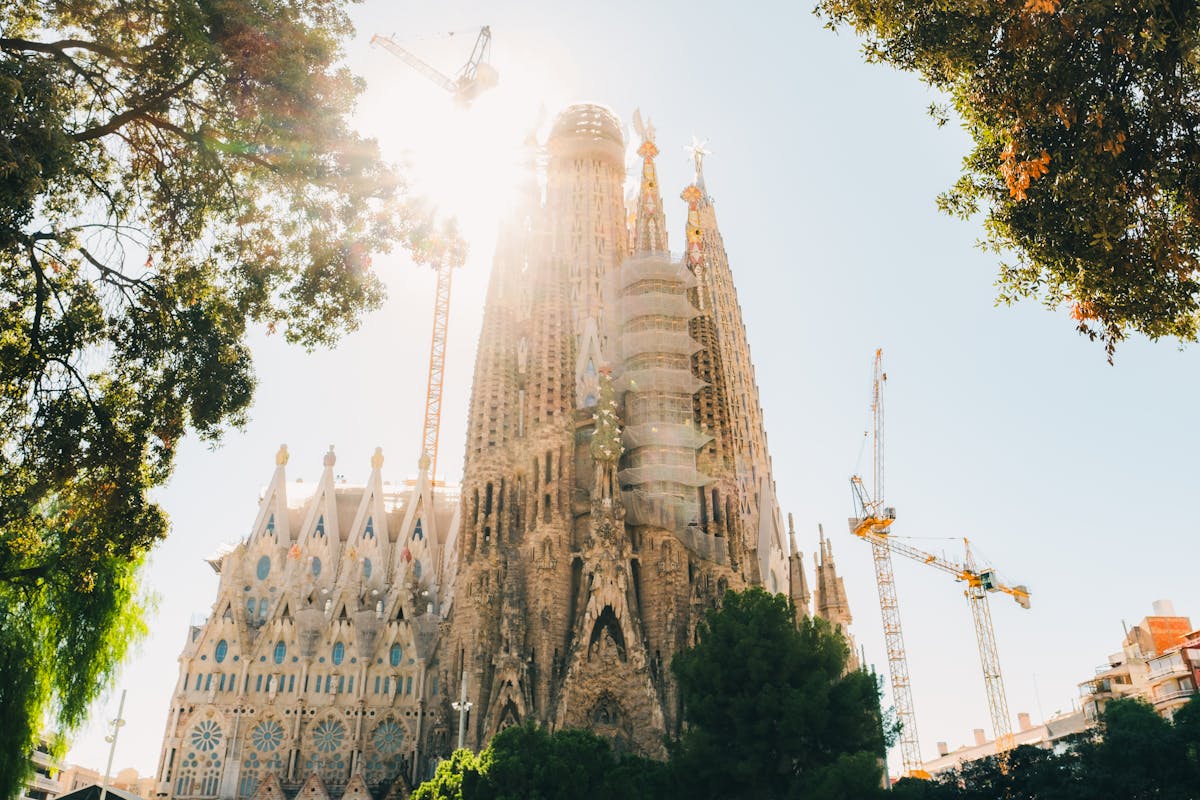
Sagrada Familia runs entirely on timed-entry tickets. There is no general admission queue you can just join. Every visitor needs a ticket with a specific date and time slot, and you scan it at the door during your 15-minute window.
The official site sells tickets starting about two months in advance. Popular time slots (mornings, weekends, any day in summer) sell out fast. If you are visiting between June and September, book at least two to three weeks ahead. For shoulder season (March-May, October-November), a week out is usually fine. Winter is the easiest — you can often book a couple of days before.
There are three main ticket types:
Basic entry (no towers): Gets you inside the basilica. You will see the nave, the stained glass, the columns, and both facades. This is the core experience and honestly where most of the magic is. The audio guide version adds context about Gaudi’s design philosophy, the symbolism of the facades, and how the structural engineering works. For most people, this is enough.
Entry with tower access: Same basilica access plus a lift ride to one of the towers. You choose either the Nativity Facade towers (east side) or the Passion Facade towers (west side) when you book. The Nativity side has more ornamental detail up close and views toward the sea. The Passion side gives you a wider city panorama. Both involve narrow spiral staircases on the way down — not ideal if you have mobility issues or serious claustrophobia. You cannot switch towers once you have booked.
Guided tour (with or without towers): A licensed guide takes you through the basilica in a group, explaining the symbolism, the construction history, and the details you would walk right past on your own. The good guides make a real difference here — they point out things like how Gaudi used mirrors and string models to design the columns, or why the Nativity and Passion facades tell the same story in completely different artistic languages. Some guided tours include tower access, some do not. Check before you book.
Entry Ticket vs Guided Tour vs Tower Access
This is the decision most visitors get stuck on. Here is how I think about it.
Go with entry + audio guide if: you prefer exploring at your own pace, you are on a budget, or you already know a fair amount about Gaudi and just want to experience the space. The audio guide is genuinely good — it is not a monotone lecture. You can spend as long as you want inside, linger at the spots that grab you, and skip the parts that do not.
Go with a guided tour if: you want to understand what you are looking at. Sagrada Familia is packed with symbolism that is not obvious. The columns represent different types of stone from different quarries. The facades tell biblical stories in specific sequences. The numbers on the Passion Facade magic square all add up to 33 (the age of Christ at his death). A guide connects all of this into a story that makes the building hit differently. I genuinely got more out of my guided visit than my self-guided one, even though I had read about the basilica beforehand.
Add tower access if: you want to see Barcelona from above and get a close look at the spires and sculptural details that you cannot see from ground level. The towers themselves are part of the experience — you ride a lift up and walk down a narrow stone spiral that winds through the interior of the tower. It is atmospheric, a little claustrophobic, and the views from the bridges between towers are staggering. Not essential, but if you have the extra budget and do not mind heights, it adds a whole extra dimension to the visit.
5 Best Sagrada Familia Tours and Tickets
1. Sagrada Familia Entry Ticket with Audio Guide — $39
Duration: 1 day (visit at your pace) | Price: $39 per person | Type: Self-guided entry
This is the baseline Sagrada Familia experience and the one most visitors should start with. You get timed skip-the-line entry and an audio guide that walks you through the basilica’s history, Gaudi’s design methods, and the meaning behind the major features.
The audio guide works through an app on your phone. It covers the nave, both facades, the apse, the crypt (where Gaudi is buried), and the museum in the basement. Each section runs about five to eight minutes, and you can skip or replay as you like. The narration is well-produced — better than most church audio guides I have used — and hits the right balance between architectural detail and human story.
What I like about this option: you control your time. Want to spend twenty minutes just staring at the stained glass? Go ahead. Want to rush through the museum and spend longer in the nave? Your call. There is no group to keep up with and no schedule to follow. At $39, it is also the most affordable way in.
The downside is that you will miss the deeper context a live guide provides. The audio guide is good but not great at connecting the individual details into a larger narrative. If Gaudi’s methods and the building’s engineering fascinate you, a guided tour will give you more.
2. Sagrada Familia Priority Access Guided Tour — $58
Duration: 1.5 hours | Price: $58 per person | Type: Guided tour, no towers
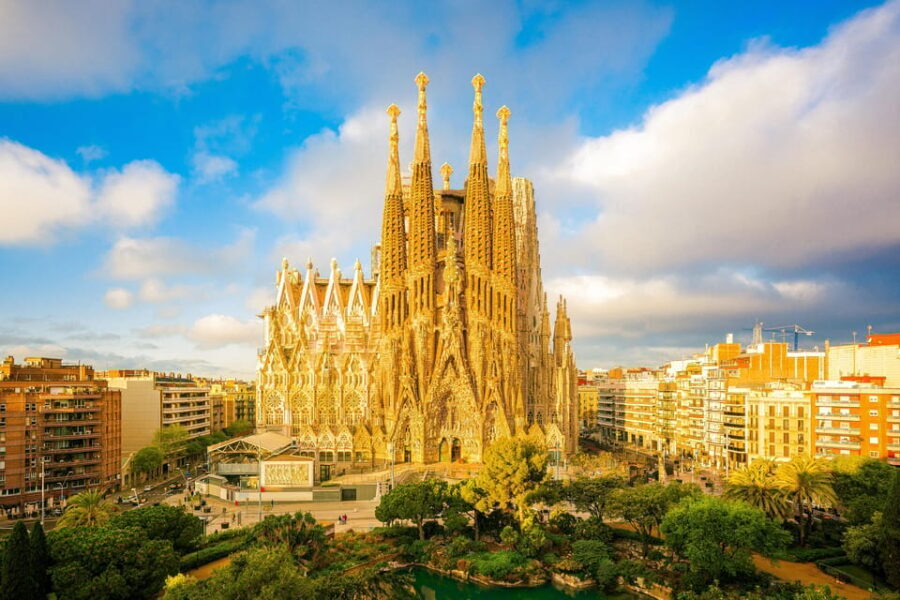
This is my pick for the best overall Sagrada Familia experience. The 90-minute guided tour covers everything the audio guide does, but with a live expert who adapts the tour to your group’s questions and interests. The guides on this one are licensed Sagrada Familia specialists, and the difference is noticeable.
What sets the guided tour apart is the storytelling. A good guide does not just tell you that the columns are designed like trees. They explain how Gaudi hung chains upside down to model the structure, took photographs of the hanging models, flipped the photos, and used the resulting shapes to design the arches. They show you the Passion Facade’s stripped-down angular figures and explain why Gaudi’s collaborator deliberately chose a style that clashes with the Nativity side — because the story being told is different. Death versus birth. Suffering versus joy. The whole building is an argument in stone, and a guide makes that argument visible.
Group sizes vary, but they use headsets so you can hear the guide even in a group of twenty. The priority access means you skip past the general entry queue, which can save 15-30 minutes on busy days. At $58, it is only $19 more than the audio guide and the value per dollar is better.
3. Sagrada Familia Skip-the-Line Entry Ticket and Tour — $67
Duration: 1.5 hours | Price: $67 per person | Type: Guided tour, no towers
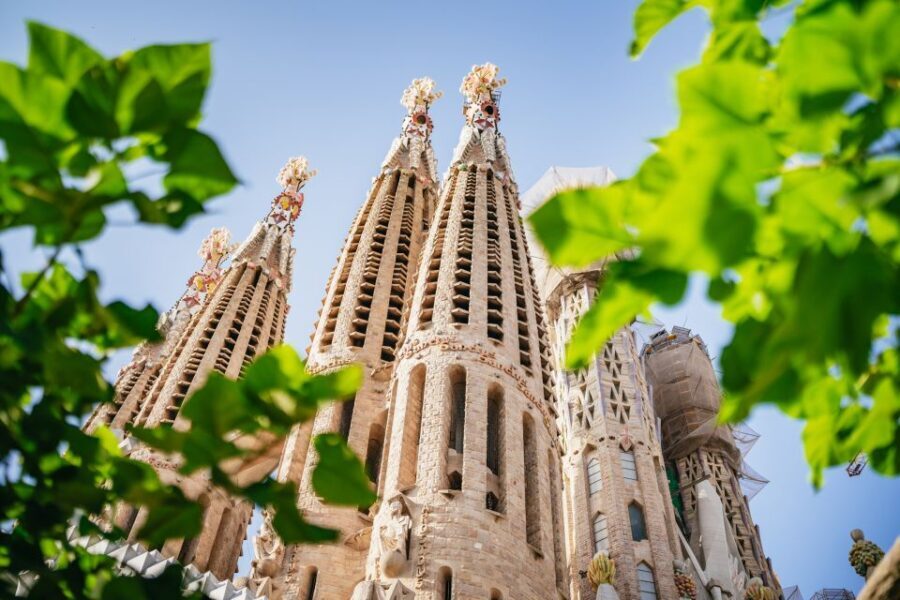
This is the most booked Sagrada Familia tour for a reason. It consistently delivers strong guides, a well-paced route through the basilica, and skip-the-line entry that saves real time during busy periods. The format is similar to the priority access tour above — 90 minutes, headsets, full basilica coverage — but with a slightly different operator and route emphasis.
Where this tour earns its keep is on guide quality. The operators behind this one have a deep bench of licensed guides who genuinely know the building’s engineering as well as its art. They tend to spend more time on the construction history: the decades-long pause, the controversial decision to continue after Gaudi’s death using his models, and what the final building will look like when it is complete (the central tower will stand 172 metres tall, making it the tallest church in Europe).
At $67 it is a little more than the priority access option, and honestly either one would be my recommendation depending on availability. Both are excellent. Check dates for both and book whichever has the time slot you prefer.
4. Fast-Track Sagrada Familia and Towers Guided Tour — $85
Duration: 1.5 hours | Price: $85 per person | Type: Guided tour with tower access
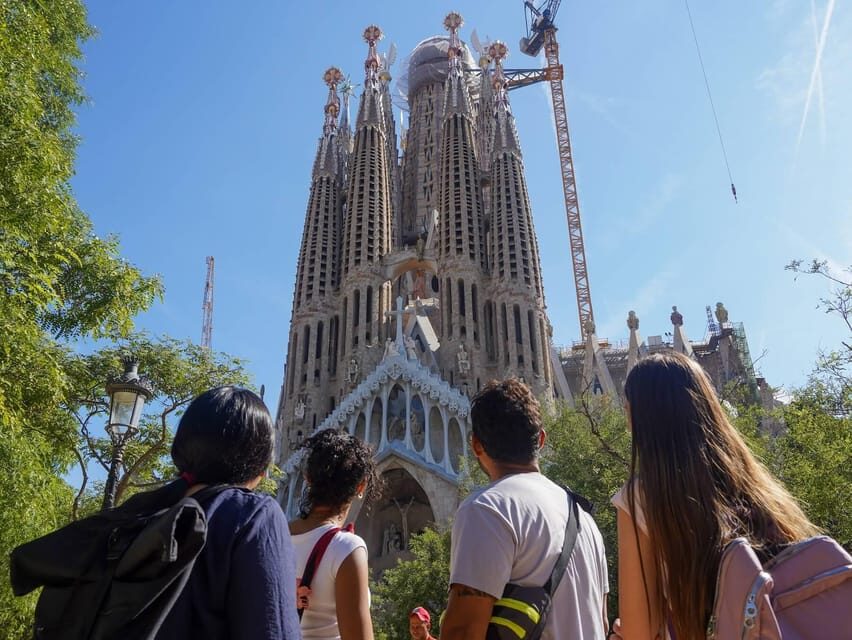
If you want the complete Sagrada Familia experience in a single booking, this is it. You get a guided tour of the basilica interior plus a lift ride to one of the towers. The guide covers the nave, facades, and crypt, then you head up the tower on your own with the lift ticket included.
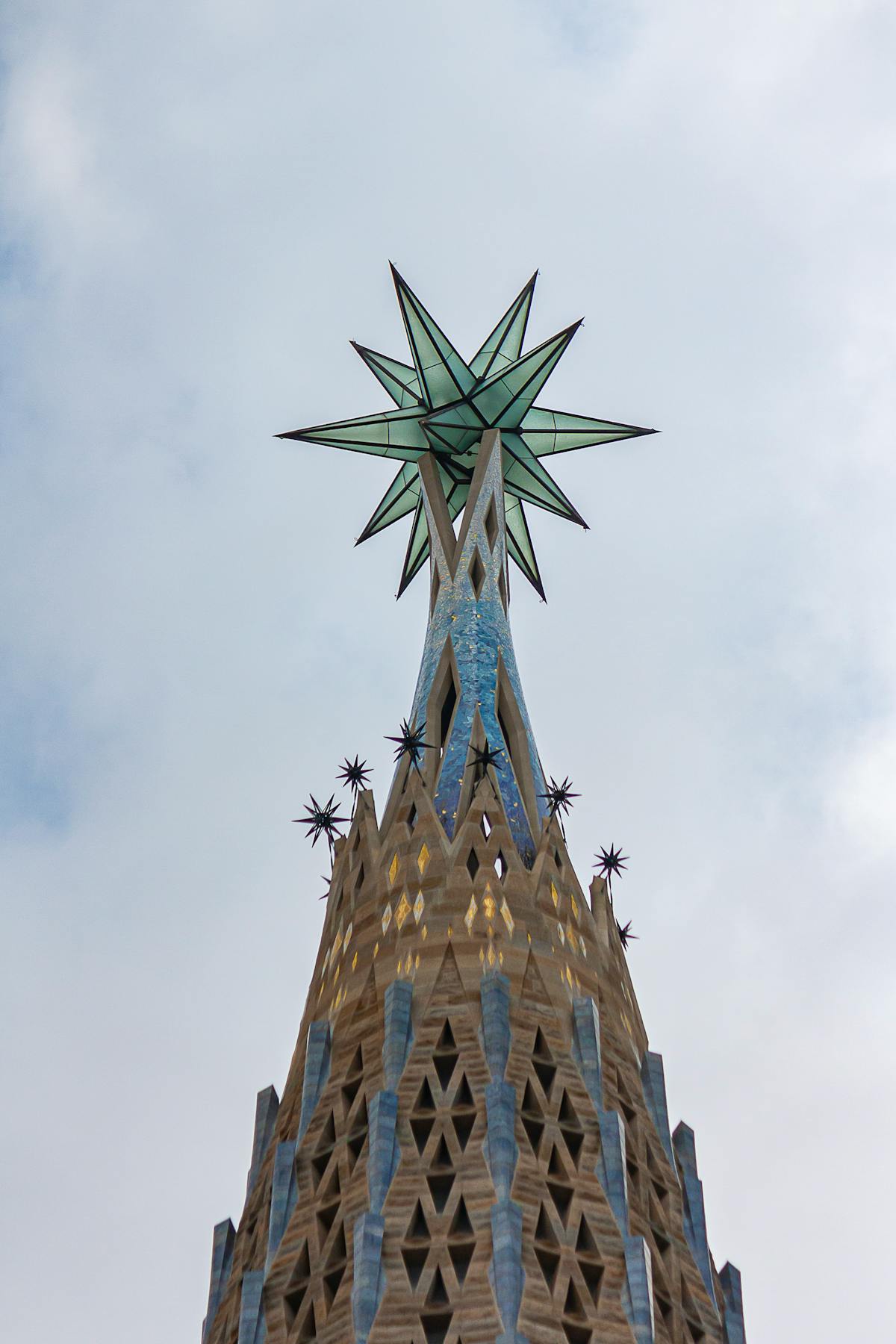
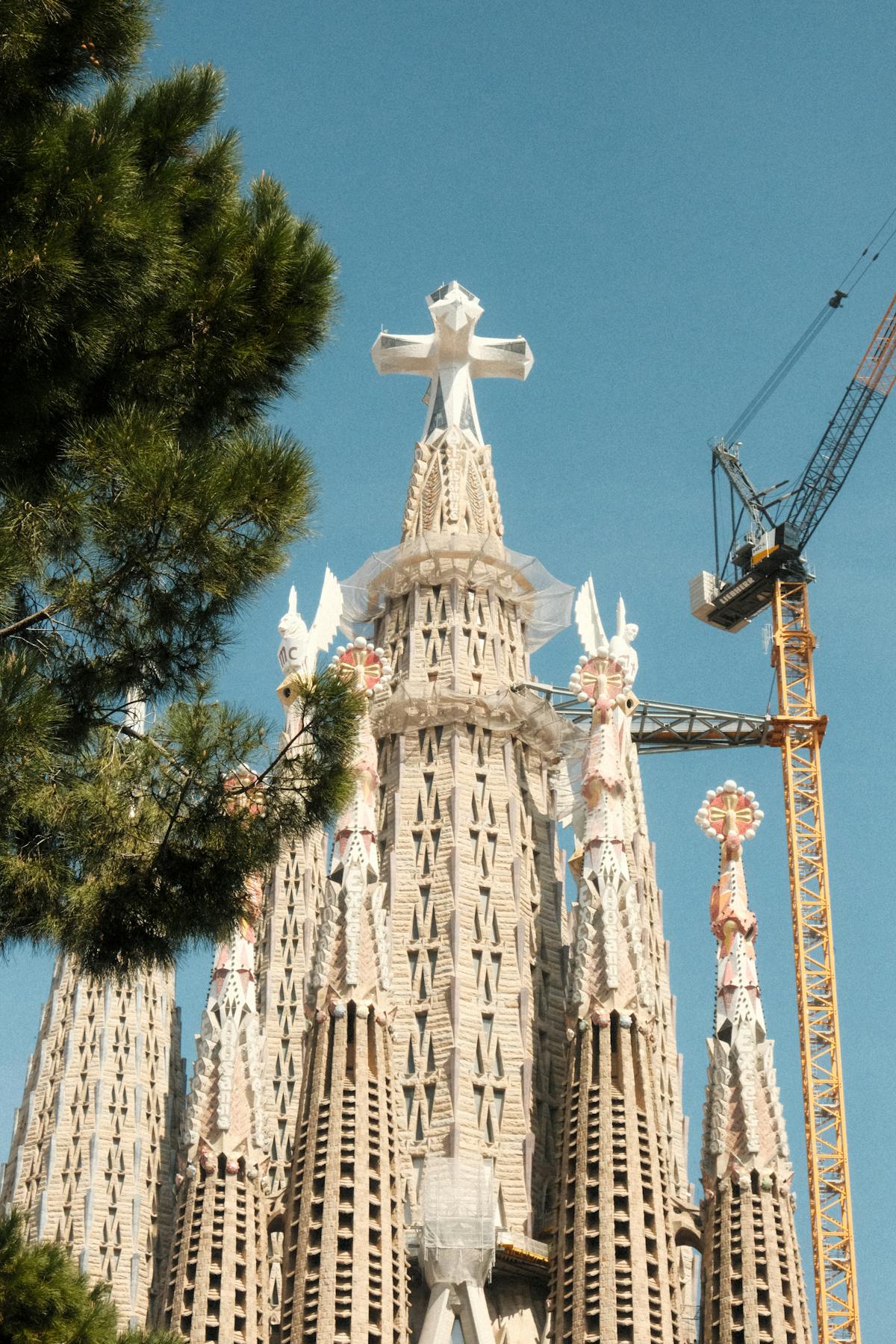
The tower experience is worth the extra cost if you are comfortable with heights. The lift takes you up about 65 metres. From the top, you get close-up views of the spire details — the fruit baskets, the geometric shapes, the coloured ceramics — that are invisible from ground level. The views across Barcelona stretch to the Mediterranean on one side and the hills of Tibidabo on the other. The walk down is via a narrow spiral staircase inside the tower wall, which is part of the thrill — you are literally descending through the guts of Gaudi’s creation.
One thing to know: you choose your tower (Nativity or Passion) when you book, and you cannot change it. The Nativity towers face east toward the sea and have more ornamental detail. The Passion towers face west with wider city views and a more stripped-down aesthetic. I slightly prefer the Nativity side for the sculptural details, but both are worth it.
At $85, it is the priciest single-site option here. But a guided tour alone is $58-67, and tower access on its own runs $36+, so the combined price actually saves you money over booking them separately.
5. Sagrada Familia and Park Guell Combo Tour — $108
Duration: 4 – 4.5 hours | Price: $108 per person | Type: Guided combo tour
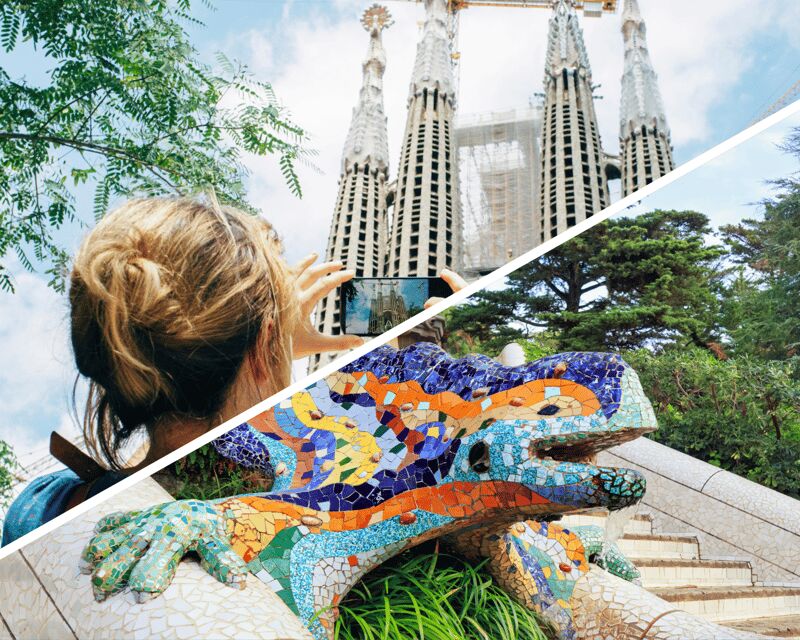
Two Gaudi landmarks, one ticket, one morning. This combo tour pairs Sagrada Familia with Park Guell, the public park on the hill above the Gracia neighbourhood where Gaudi went completely feral with mosaic tiles, curved benches, and organic architecture. The two sites are about a 20-minute bus ride apart, and this tour handles the transport and skip-the-line entry for both.
The format splits roughly in half. You start at one site (varies by day), get a full guided tour, then transfer to the other. Total time is around four to four and a half hours including transit. Guides cover both locations, so you get a continuous thread about Gaudi’s evolution as an architect — how his early influences at Park Guell (started 1900) fed into his later, more radical work at Sagrada Familia.
Park Guell on its own requires timed entry and the good time slots sell out too, so having both booked and managed for you is genuinely convenient. The combo price of $108 is competitive when you consider that Sagrada Familia entry alone is $39 and Park Guell entry runs about $13, plus you would need to arrange transport and timing yourself.
The trade-off: less time at each site. If Sagrada Familia is your primary interest, a dedicated guided tour gives you more depth. But if you want to see both Gaudi sites without logistical stress and only have one day for it, this is the practical choice.
When to Visit Sagrada Familia
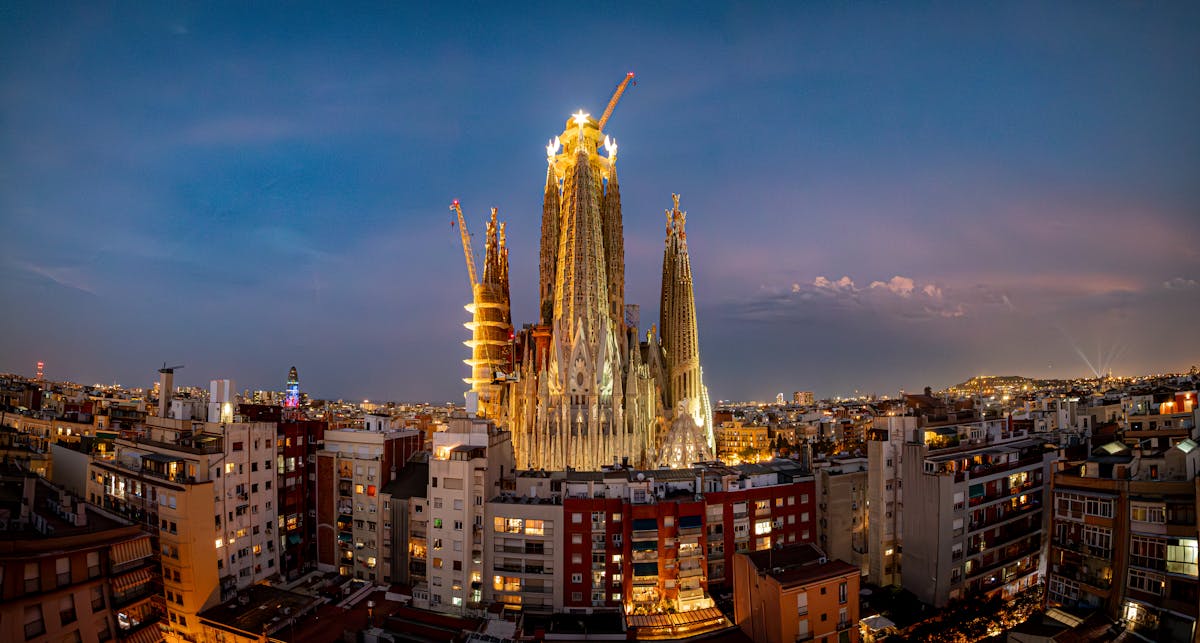
Best months: October through April. Counter-intuitive, I know. But the crowds thin dramatically after summer, the light is softer, and you actually have room to breathe inside the basilica.
The stained glass windows perform differently depending on the time of year and time of day. For the famous colour effect:
Morning visits (9-11 AM) give you the best light on the east wall — the cool blues, greens, and turquoise tones that most photos show. The sun is lower in autumn and winter, which means the light penetrates deeper into the nave.
Afternoon visits (3-5 PM) light up the west wall in warm reds, oranges, and golds. This is the sunset palette, and in winter months when the sun is lower, the effect is even more intense.
Summer (June-August) is peak tourist season. Tickets sell out weeks ahead, the basilica is packed, and you will spend a lot of your visit navigating around other people’s selfie sticks. If this is your only option, book the earliest morning slot available — the 9 AM crowd is lighter than midday and you get better light anyway.
Spring (March-May) is excellent. Comfortable weather, moderate crowds, and long enough days to catch both the morning and afternoon light shows if you visit twice (which, honestly, is not a bad idea if you have time).
Winter (November-February) is the insider move. Fewer visitors, easy ticket availability, and the low winter sun creates the most dramatic stained glass effects. The downside: shorter visiting hours and the exterior is less photogenic under grey skies. But the interior — where the real magic is — looks its best.
Tips for Visiting Sagrada Familia
Book early. I cannot stress this enough. Popular dates sell out 2-3 weeks ahead in summer and around holidays. Check availability as soon as you know your Barcelona dates.
Arrive 15 minutes before your time slot. The entry process involves a bag check and security scan. If you show up at your exact slot time, you will spend some of your visit in the queue rather than inside.
Bring headphones. If you booked the audio guide option, it runs through your phone. Wired headphones work most reliably — Bluetooth can be spotty with the number of devices connected inside.
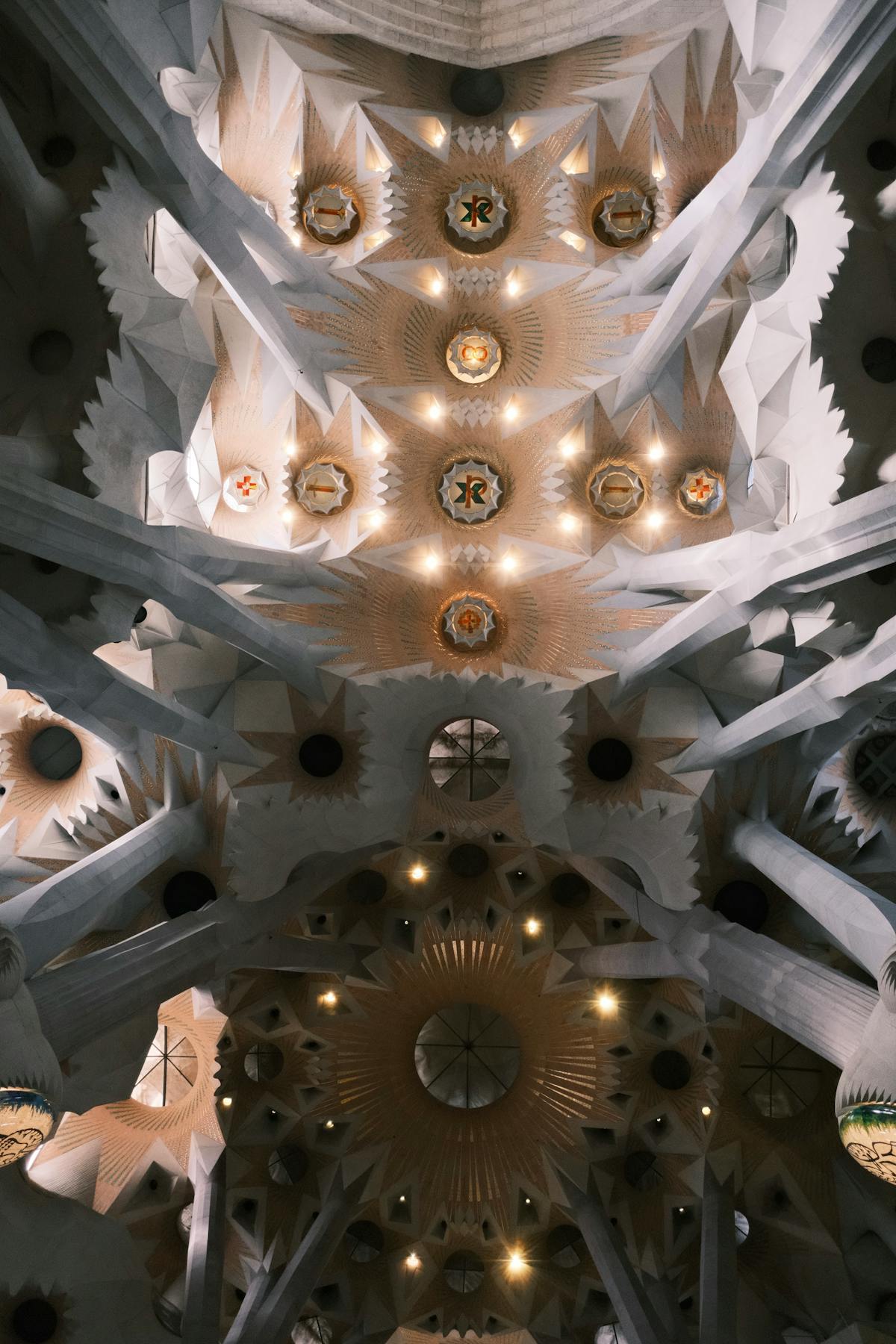
Look up. Then keep looking up. The ceiling is where Gaudi’s genius is most visible. Most visitors rush through at eye level looking at the facades and the stained glass. The ceiling — where the columns branch into hyperboloid shapes and the light filters through star-shaped openings — is the part that made my jaw drop.
Skip the gift shop entrance bottleneck. The exit routes you through the shop, and it gets congested. If you want souvenirs, come back later when it is quieter or order online.
Dress code exists but is relaxed. Shoulders and knees should be covered. They enforce it loosely, but a scarf or light jacket in your bag avoids any issues.
The museum in the basement is worth your time. Most people skip it or rush through. It has Gaudi’s original plaster models, his upside-down chain models (the string-and-weight structures he used to calculate the arches), and photographs of the construction across different decades. Fifteen minutes down there connects the dots between what you just saw upstairs and how it was engineered.
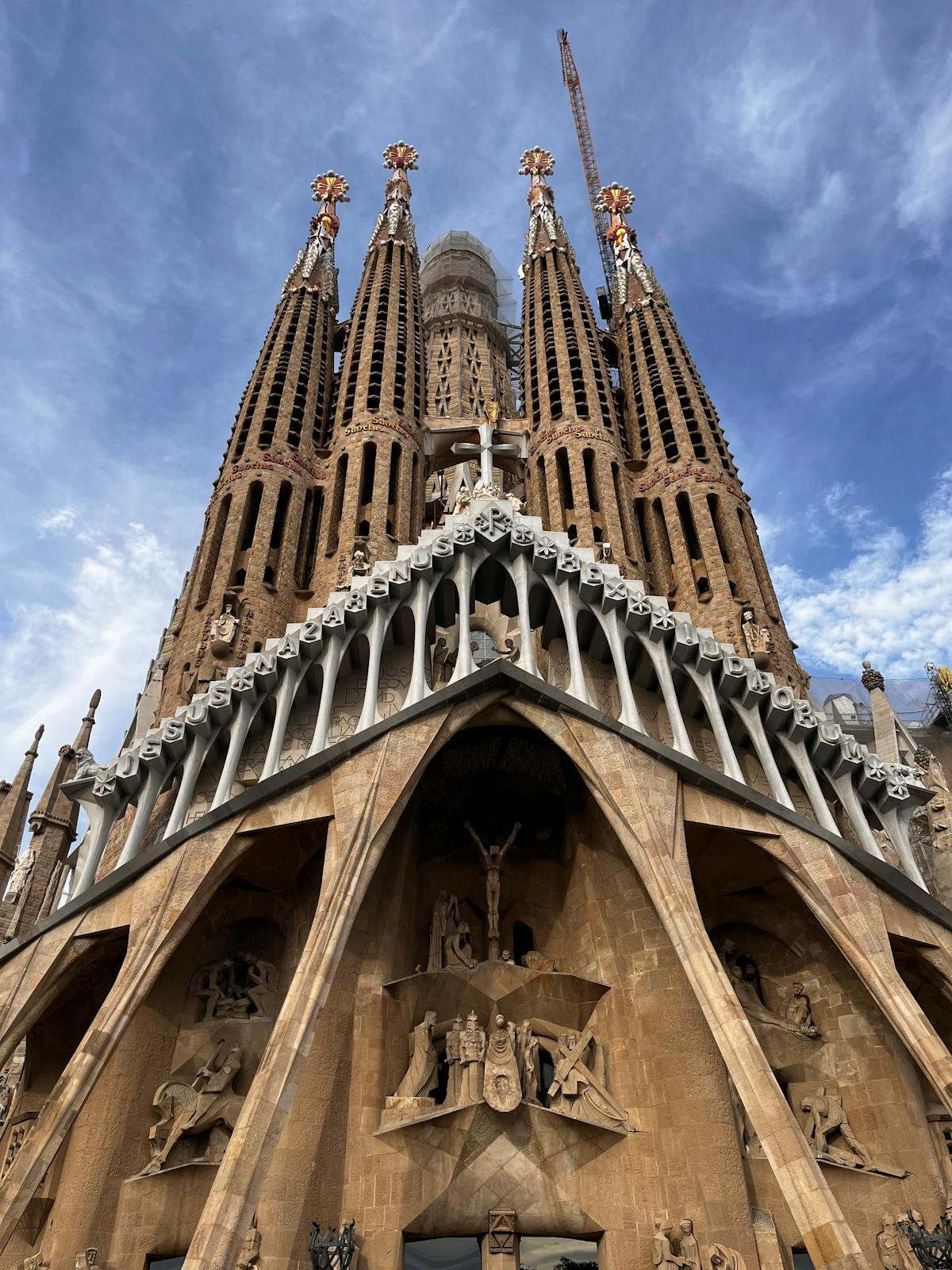
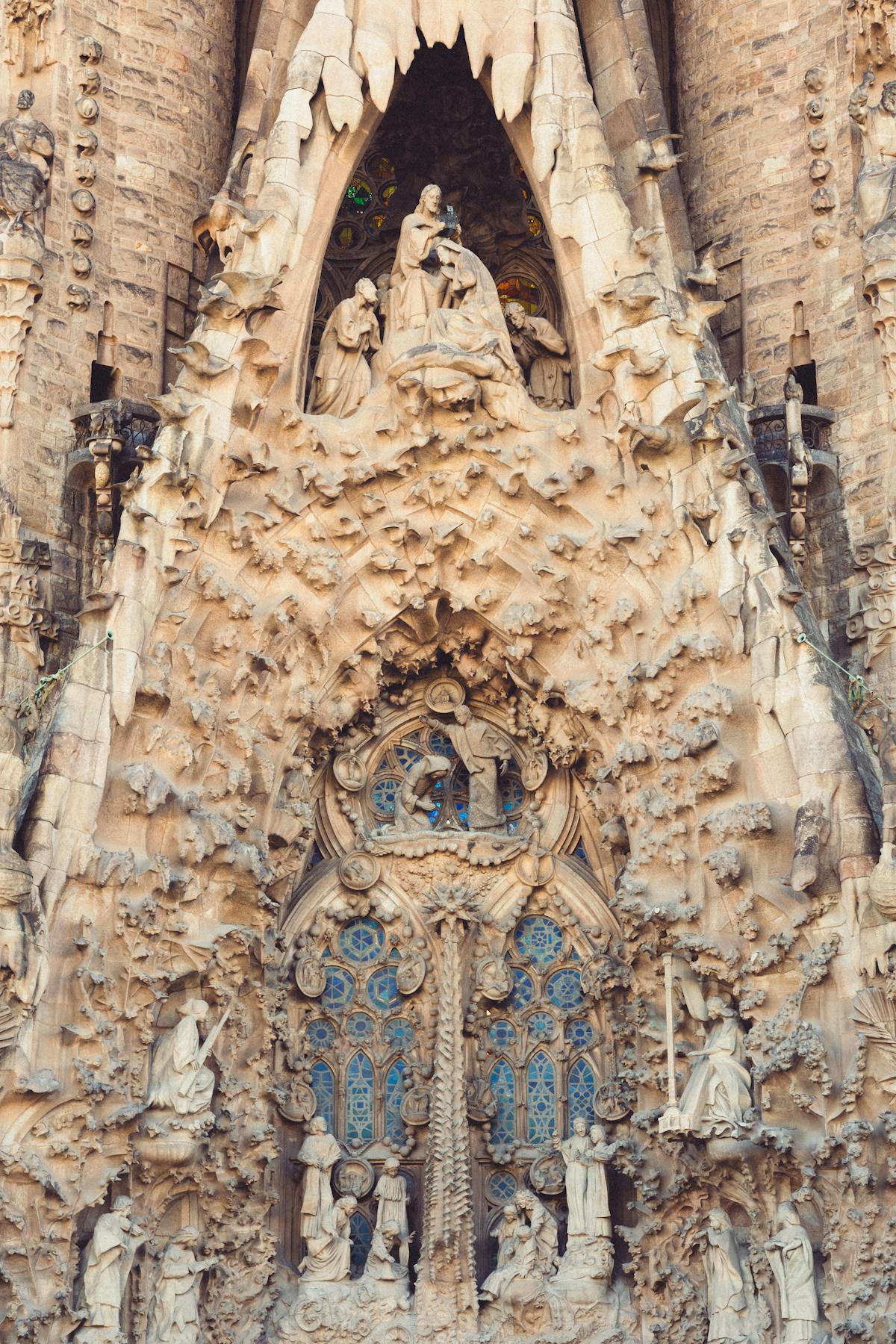
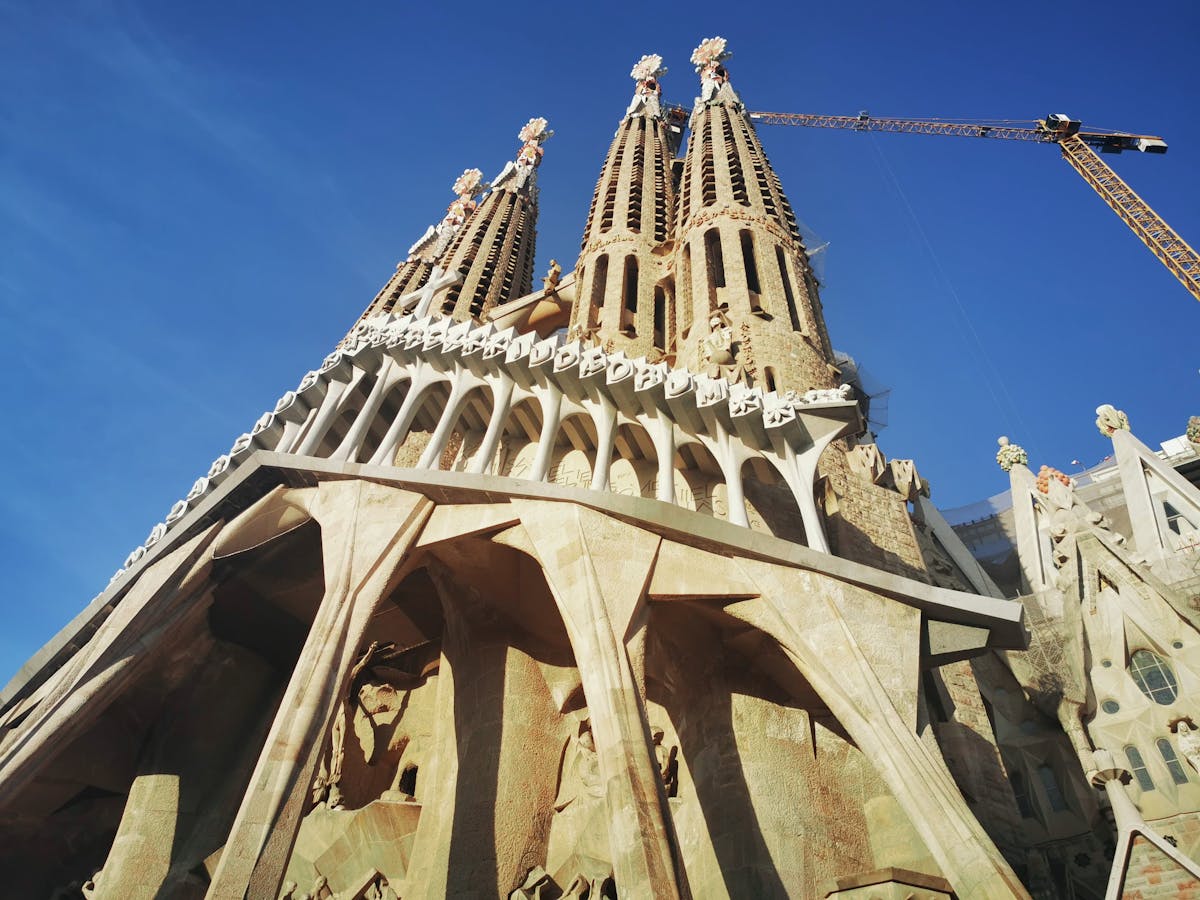
The exterior is free to admire. You do not need a ticket to walk around the outside and study the facades. The Nativity Facade (east side, facing Carrer de la Marina) is the one Gaudi completed himself, and it is incredibly detailed. Spend ten minutes out there before you go inside — it makes the interior hit harder when you have already started processing the scale.
If towers are sold out, do not panic. The basilica interior is the main event. Tower access is a nice addition but the real reason to visit — the columns, the light, the stained glass — is all at ground level. I would take a guided tour without towers over a self-guided visit with towers every time.
What You Will See Inside
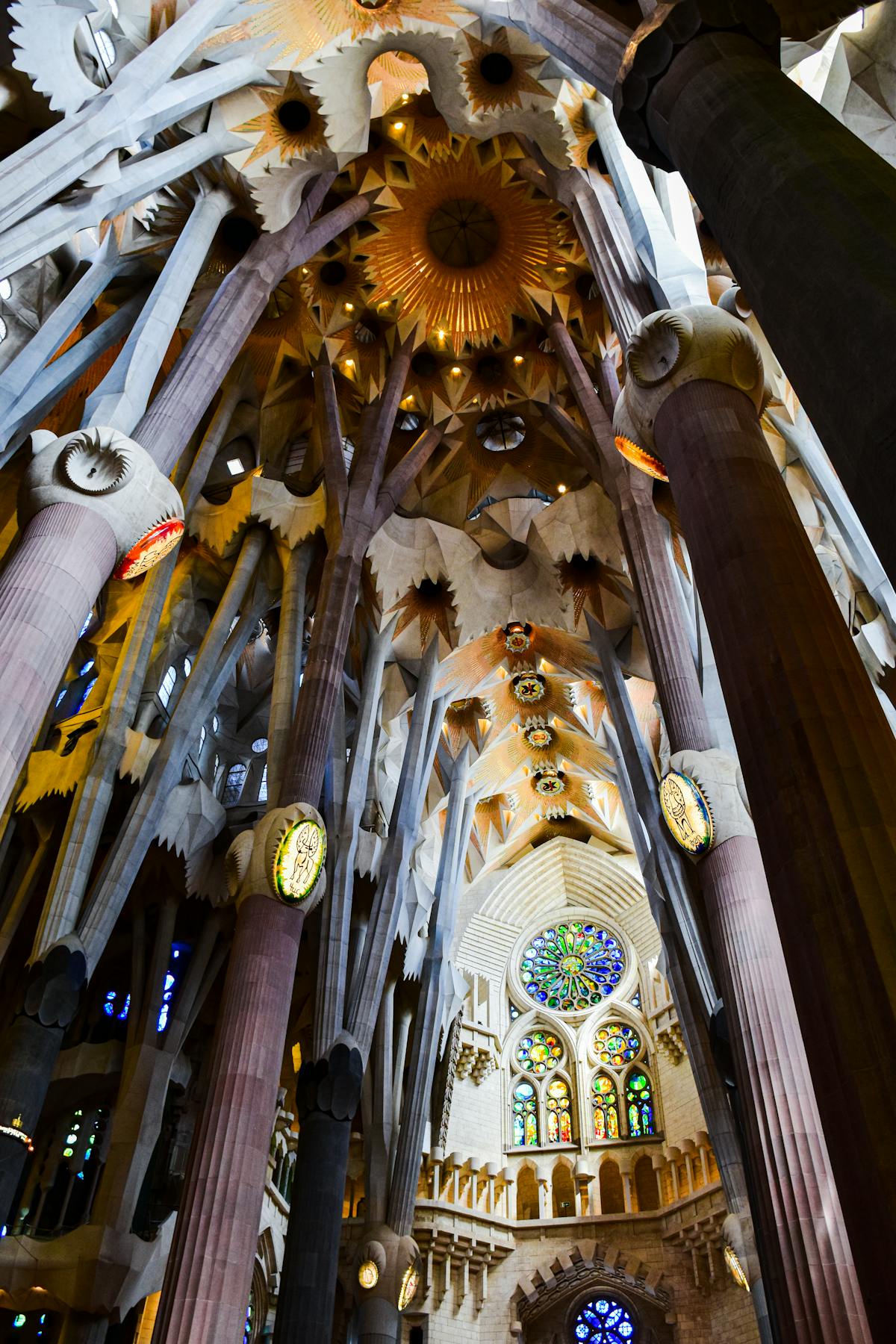
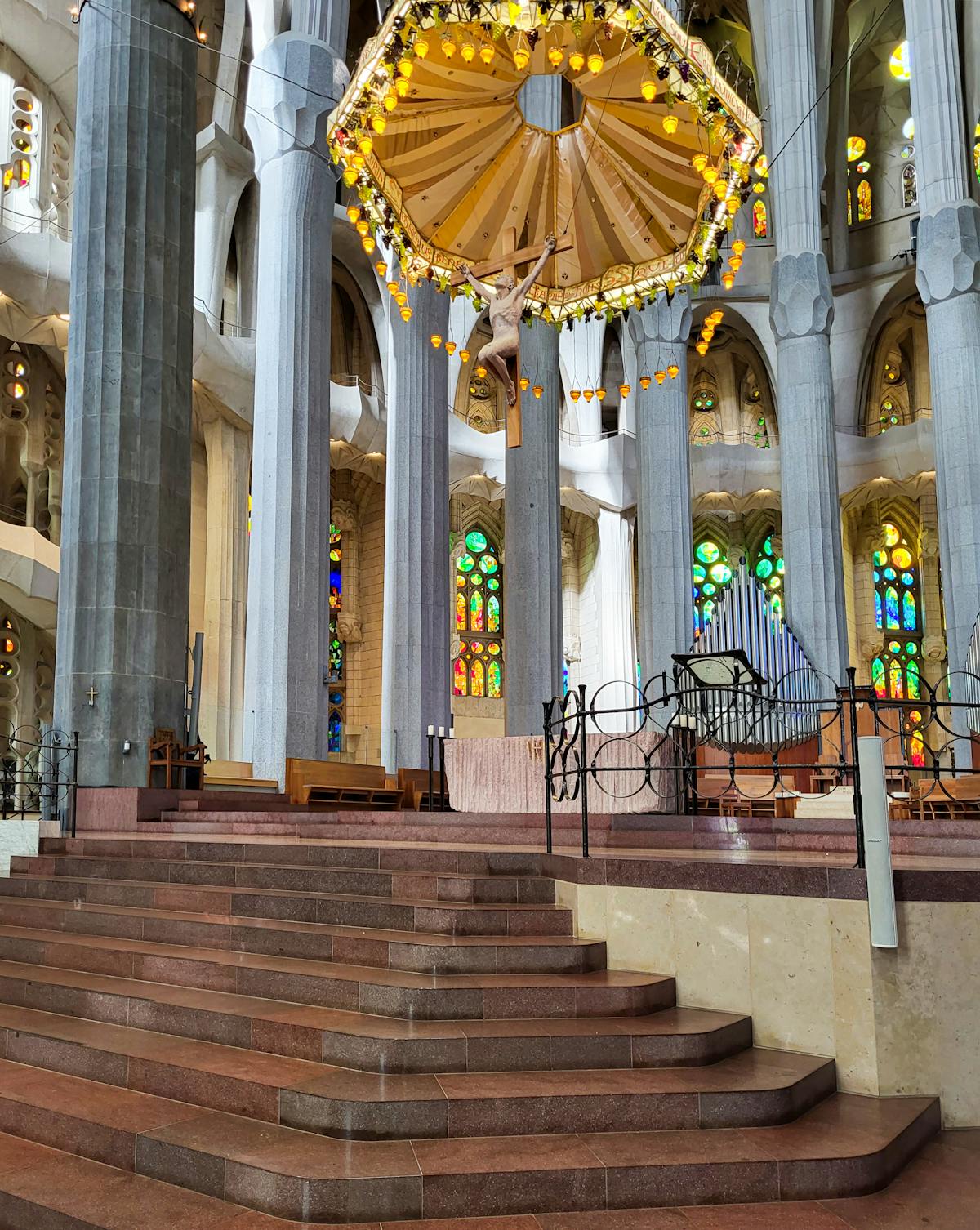
The Nave is the centrepiece. Five aisles wide, 45 metres tall at the highest point, and supported by those extraordinary branching columns. The sensation of standing in it is genuinely unlike any other interior space I have been in. The closest comparison is a forest, but that undersells it. A forest with a ceiling made of exploding stars and walls made of colour.
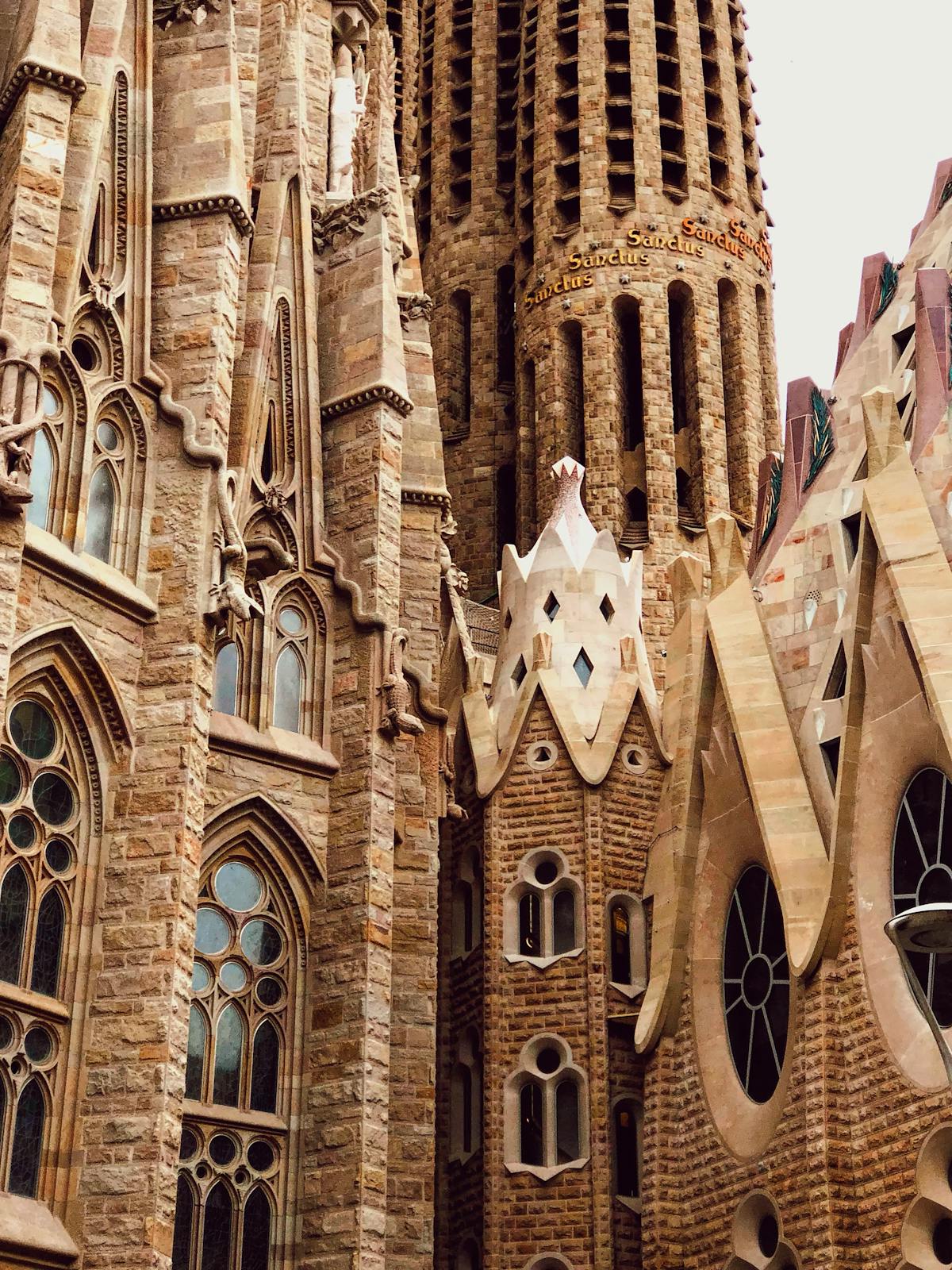
The Nativity Facade (east side) tells the story of Christ’s birth through an explosion of organic sculptural detail. Every surface is covered — angels, musicians, animals, plants, ice formations. Gaudi supervised this facade himself, and you can feel the obsessive attention to natural forms. The cypress tree at the top, covered in white doves, is the centrepiece.
The Passion Facade (west side) is the opposite. Designed by sculptor Josep Maria Subirachs decades after Gaudi’s death, it is angular, stripped-down, and deliberately harsh. The figures are gaunt, the surfaces are flat, and the emotional tone is grief and violence. Many Barcelona locals hated it when it was unveiled. It has grown on people, but it still provokes strong reactions — which is arguably the point.
The Stained Glass runs the full height of the nave walls and is colour-coded by orientation. East = cool tones (morning light), West = warm tones (afternoon light). The result is a building that literally changes colour as the day progresses. If you visit in the morning, plan a short walk around the exterior in the afternoon to peek through the western doors when the warm light is hitting.
The Crypt is below the main floor and houses Gaudi’s tomb. It is a simple space compared to the explosion above, but standing at the grave of the man who imagined all of this is a grounding moment. The adjacent museum has his workshop models and construction photographs.
More Barcelona Guides
If You’re in a Hurry: My Top 3 Picks
- Best value entry: Sagrada Familia Entry Ticket with Audio Guide — $39 per person. Self-paced visit with a solid audio guide that covers everything a live guide would. Book this ticket
- Best guided experience: Sagrada Familia Priority Access Guided Tour — $58 per person. Small group, excellent guide, and the kind of details about Gaudi’s methods that make everything click. Book this tour
- Best for tower views: Fast-Track Sagrada Familia and Towers Guided Tour — $85 per person. Guided tour plus tower access by lift. The view from up top changes how you understand the building. Book this tour