
Twenty metres below the surface of the Atlantic, the blue light filtering through the submarine’s portholes turned everything a ghostly shade of turquoise. I pressed my face to the glass and watched an angel shark glide across the volcanic sand floor like it had nowhere in the world to be. The whole dive lasted 40 minutes. It felt like five.
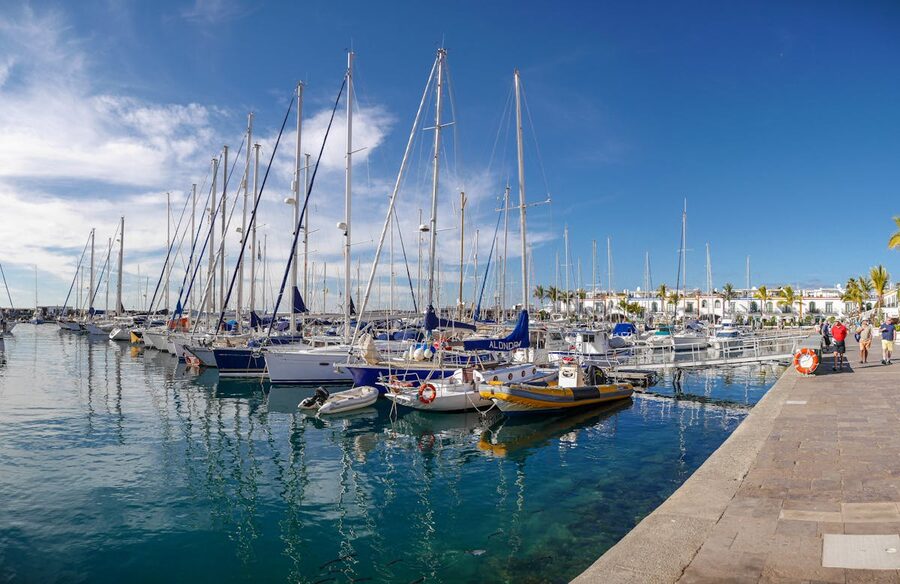
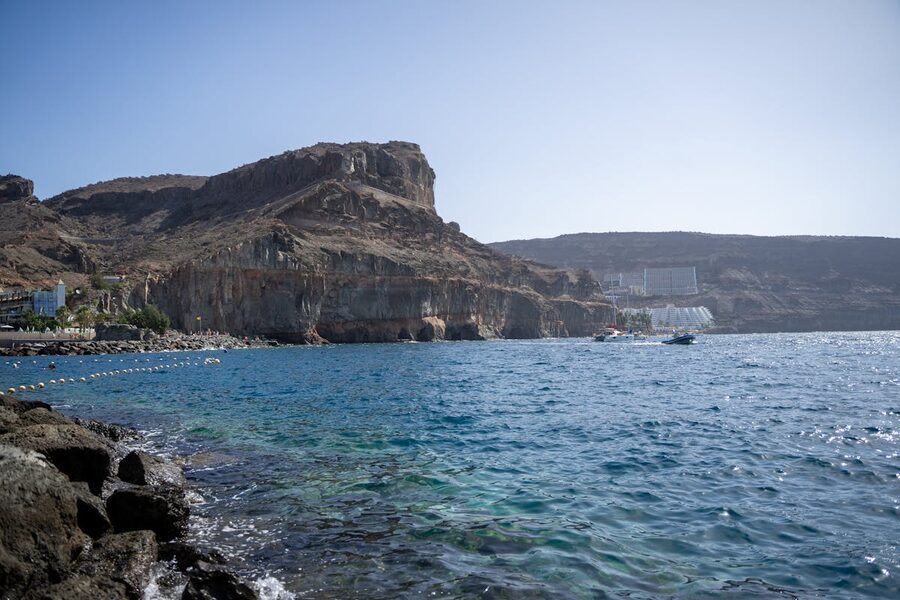
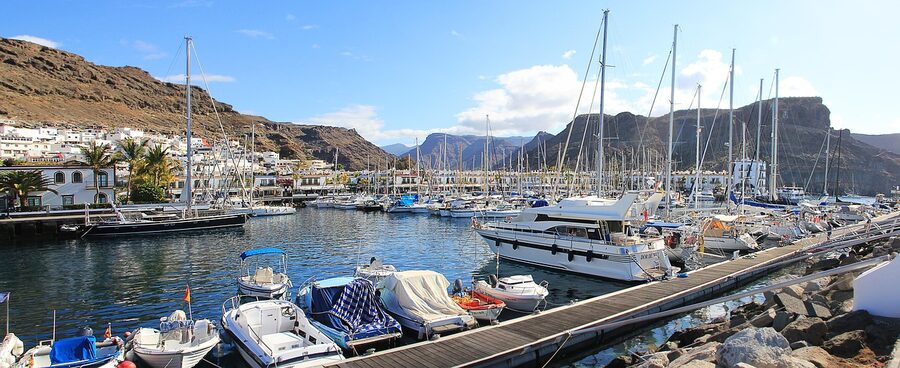
Puerto de Mogán sits on Gran Canaria’s southwest coast — a tiny harbour town locals call “Little Venice” because of the canals and bougainvillea-draped bridges. It’s also the only place in the Canary Islands where you can board a genuine submarine, not a glass-bottom boat with pretensions, but an actual pressurised vessel that sinks to the seabed.
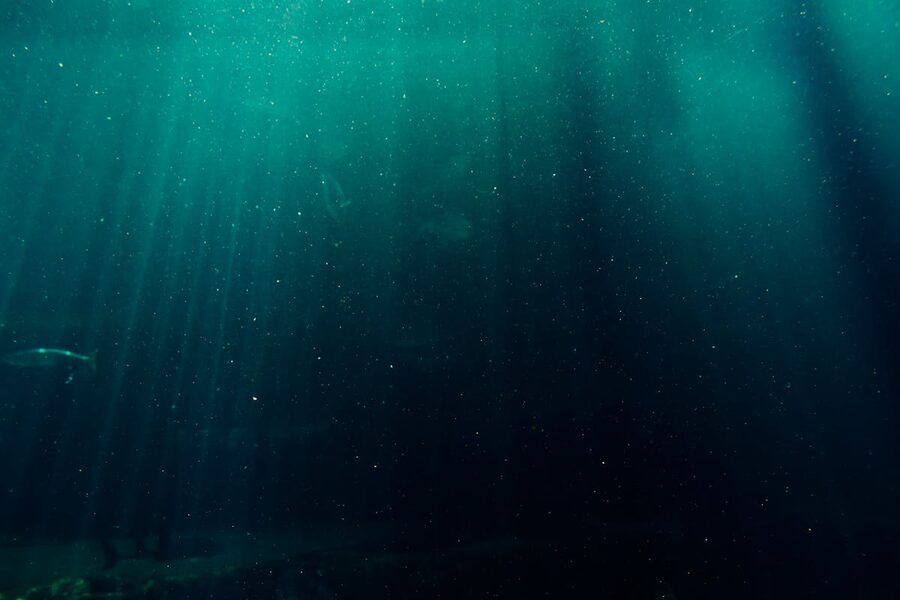
And here’s what makes it unusual: the Canary Islands are one of the last refuges of the angel shark, a species that’s critically endangered across the rest of the Mediterranean and Eastern Atlantic. The waters around Mogán are one of the only places you can reliably see them in their natural habitat — and you’re seeing them from a submarine that sits right on the seafloor.
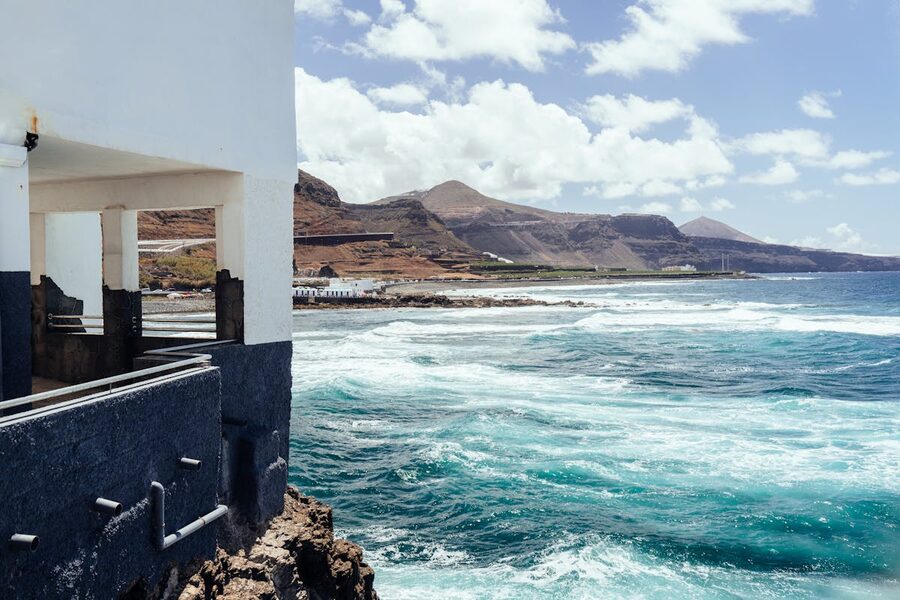
Best overall: Puerto de Mogán Submarine Tour — $45. The original and most popular option — 40-minute dive with multilingual commentary. Thousands of bookings for a reason.
Best for families who want more: Poema del Mar Aquarium Skip-the-Line — $32. Not a submarine, but the best marine experience on the island. Pair it with the sub dive for a full day of ocean life.
Budget alternative: Submarine Adventure via Viator — $46. Same 40-minute experience, different booking platform if GYG is sold out.
- What the Submarine Experience Is Actually Like
- Who This Is (and Isn’t) For
- How to Book and What It Costs
- The Best Submarine and Marine Tours to Book
- 1. Puerto de Mogán Submarine Tour —
- 2. Poema del Mar Aquarium — Skip-the-Line —
- 3. Submarine Adventure (Viator) —
- When to Go
- How to Get to Puerto de Mogán
- Tips That’ll Save You Time and Money
- What You’ll See Under the Surface
- Beyond the Submarine: Other Marine Experiences
- Planning More of Your Canary Islands Trip
What the Submarine Experience Is Actually Like
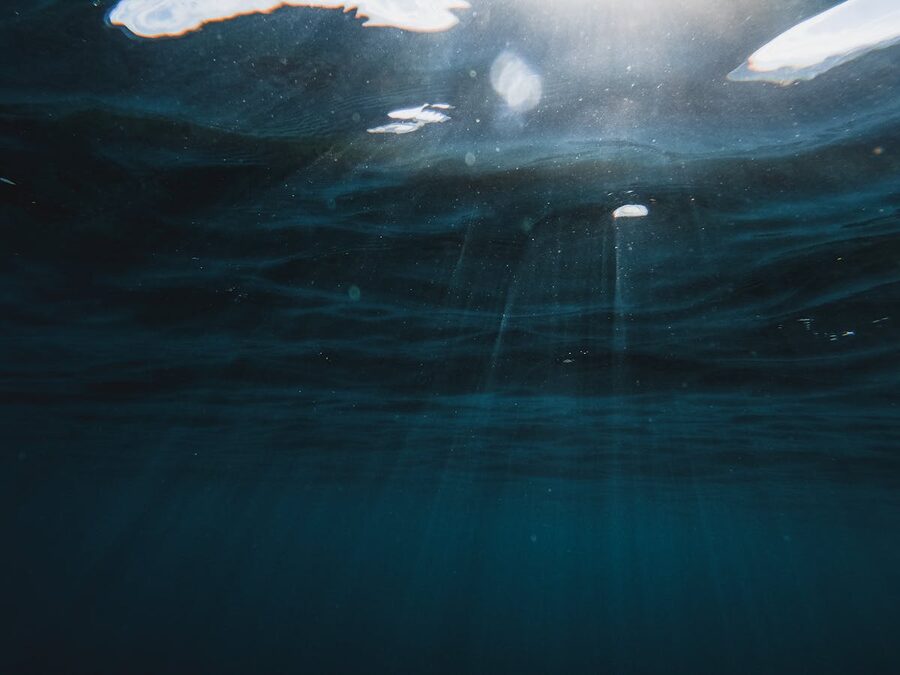
Let me set realistic expectations because this isn’t a Caribbean snorkel trip. The submarine descends 20-30 metres in the waters just off Puerto de Mogán’s harbour wall. You board from a floating platform, walk down a narrow staircase, and take your seat along one side of the vessel with individual portholes.
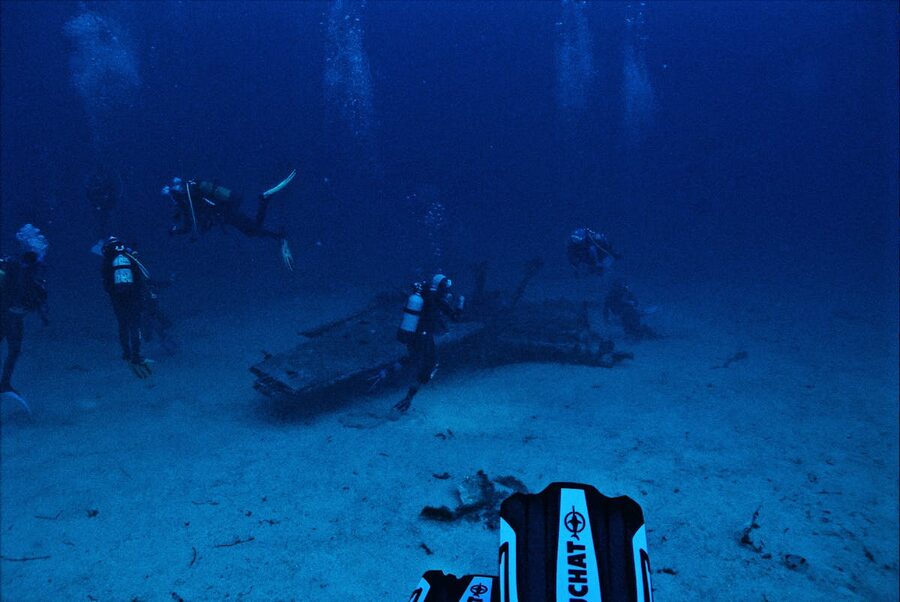
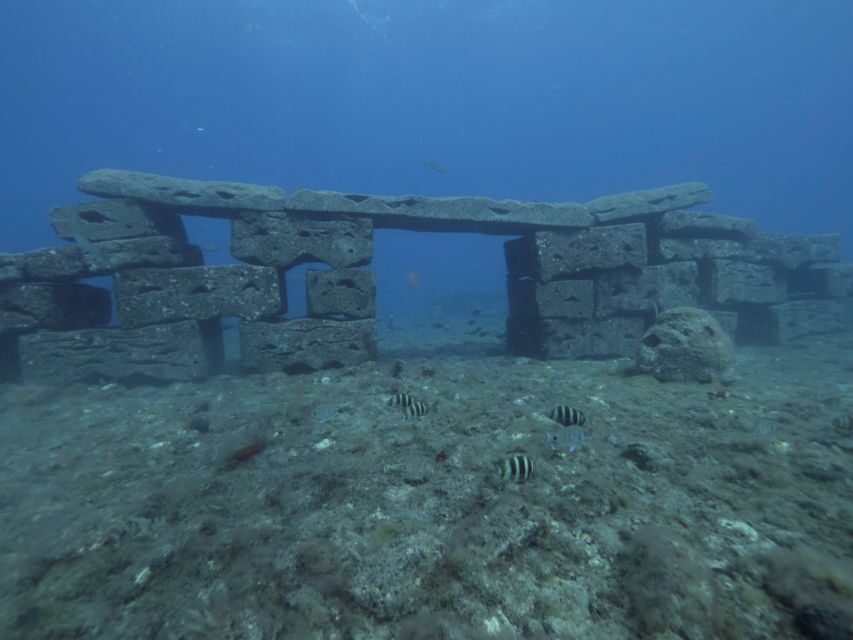
The dive takes about 40 minutes total. During the descent, multilingual commentary (English, Spanish, German — the three main tourist languages here) points out what you’re seeing. The volcanic seafloor creates an unusual landscape: black sand, lava rock formations, and two deliberately sunken wrecks that have become artificial reefs teeming with fish.
What you’ll likely see: angel sharks resting on the sand, barracuda, trumpet fish, stingrays, moray eels, and dense schools of smaller reef fish swarming the wrecks. The angel sharks are the headline act — flat-bodied, sand-coloured, and perfectly camouflaged until the submarine gets close enough to startle them into a lazy glide. They’re surprisingly large, up to 1.5 metres.
One honest downside: the portholes are small, about the size of a dinner plate. If you’re sitting on the wrong side when something interesting swims past, you’ll miss it. The submarine does rotate, but not quickly. The blue light is beautiful for photos but can make everything look the same shade after a while.
Who This Is (and Isn’t) For
The submarine is genuinely good for people who can’t or don’t want to get in the water. Older visitors, young children (minimum age is around 3-4), and anyone uncomfortable with snorkelling gear can still see the underwater world. It’s fully pressurised and air-conditioned — no wetsuit, no seasickness, no effort required.
If you’re an experienced diver or snorkeller, honestly, you might find it limiting. The portholes restrict your view compared to being in the water yourself, and the commentary can feel basic if you already know your barracuda from your bream. But for families, especially with kids under 8 who are too young to snorkel properly, it’s excellent.
How to Book and What It Costs
There’s really only one submarine operator in Puerto de Mogán — the yellow submarine run by Submarine Adventure. You can book directly at the harbour kiosk if you walk up, but availability is limited (the sub holds about 48 passengers), and in summer or during school holidays, walk-up spots sell out by mid-morning.
Online booking through GetYourGuide or Viator is the safer bet. Current prices are around $45 per person on both platforms, which works out to roughly €40-42 depending on the exchange rate. Children under 2 typically go free. There are no student or senior discounts that I’ve found.
Departure times vary by season, but you’ll usually find morning and early afternoon slots. The total time commitment is about 1.5 hours if you include the transfer from the platform to the submarine and back. The actual underwater portion is 40 minutes.
The Best Submarine and Marine Tours to Book
1. Puerto de Mogán Submarine Tour — $45
This is the one to book. It’s the original submarine tour in the Canary Islands and remains the most popular marine experience in Mogán for good reason — at $45 for a 40-minute dive, it’s genuinely reasonable for what amounts to an underwater safari.
The submarine tour takes you down to see shipwrecks, angel sharks, and all the marine life that congregates around the artificial reef system. Commentary comes in multiple languages, and the crew is well-practiced at positioning the sub for maximum wildlife sightings. It’s not a deep-sea expedition — think of it as an underwater bus tour — but the angel sharks alone make it worthwhile.
Book at least two days ahead in summer. Morning departures tend to have better underwater visibility.
2. Poema del Mar Aquarium — Skip-the-Line — $32
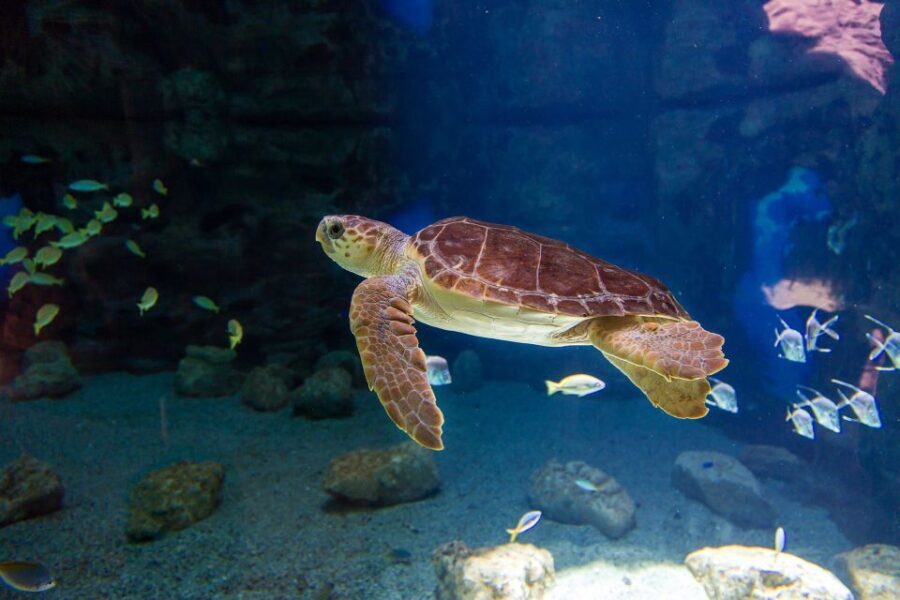
I’m including Poema del Mar because if you’re into marine life, this is the best complement to the submarine dive. It’s located on the opposite side of the island in Las Palmas, so it works as a different-day activity. The aquarium holds 35 separate ecosystems across three zones: jungle, reef, and deep ocean.
The deep ocean section is the star — a massive curved glass window looking into a tank holding sharks, rays, and open-ocean species. At $32 per person with skip-the-line access, it’s cheaper than the submarine and takes 2-3 hours to explore properly. The skip-the-line ticket matters here because the regular queue on weekends and school holidays can stretch to 45 minutes.
Take the submarine for the wild Atlantic experience, and Poema del Mar for the controlled, up-close encounters. They complement each other rather than compete.
3. Submarine Adventure (Viator) — $46
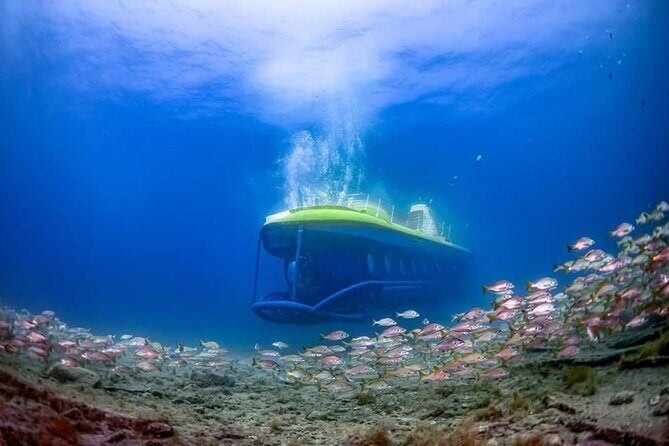
This is the same physical submarine experience as option 1, booked through Viator instead of GetYourGuide. The price difference is negligible — $46 vs $45 — and you get the same 40-minute dive, same crew, same route past the wrecks and angel shark territory.
Why include it? Because availability differs between platforms. I’ve seen dates sold out on GYG that still had spots on Viator, and vice versa. If your preferred date is showing full on one platform, try the other before giving up. The Viator listing also includes a multilingual audio guide option rather than live commentary, which some visitors prefer because you can listen at your own pace.
Worth noting: a few reviews mention weather cancellations, especially in winter. Both platforms offer full refunds if the submarine can’t operate due to sea conditions, so book with confidence.
When to Go
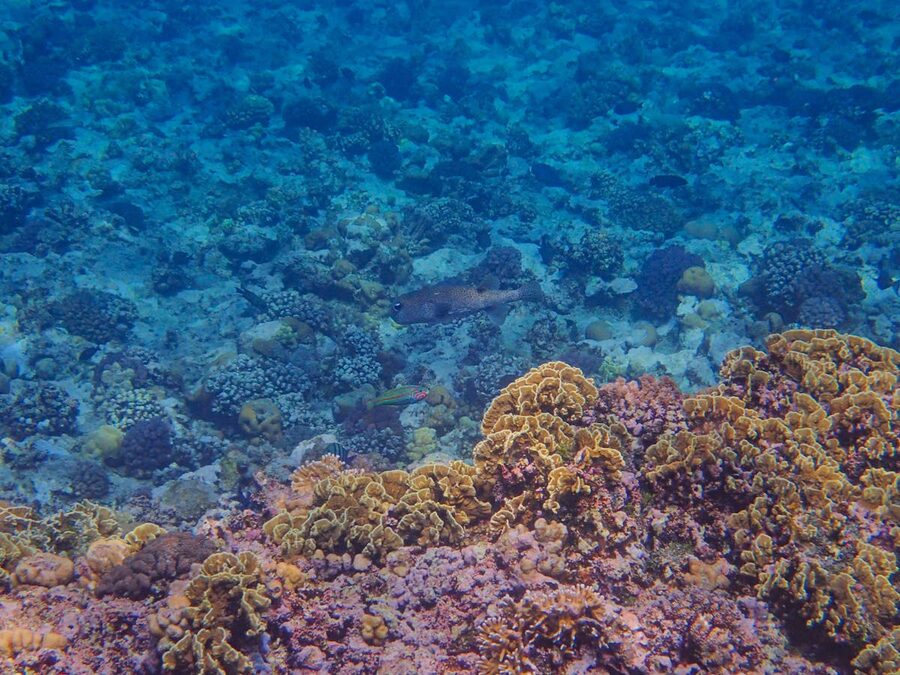
The submarine operates year-round, but conditions vary significantly by season. April through October gives you the calmest seas and best underwater visibility — sometimes up to 20 metres on a good day. Summer water temperatures hover around 22-24°C, which keeps the marine life active.
Winter (November-March) is trickier. The Atlantic swells can shut down operations entirely, and cancellation rates climb. Visibility drops too. If you’re visiting in winter, book for the first day of your trip so you have backup dates if weather cancels your slot.
Time of day matters less than you’d think for a submarine dive — you’re going deep enough that surface light conditions matter less. But morning departures, particularly the first slot of the day, tend to have slightly better visibility before boat traffic stirs up sediment.

How to Get to Puerto de Mogán
Puerto de Mogán is about 45 minutes by car from the main resort areas around Maspalomas and Playa del Inglés. The drive along the GC-1 motorway is straightforward — exit at Mogán and follow signs to the harbour. Parking is tight in summer; arrive early or use the paid car park on the hillside above the port.
By bus, Global line 1 runs from Maspalomas to Mogán roughly every 30 minutes. The journey takes about an hour. Get off at the Puerto de Mogán terminal and it’s a 5-minute walk to the submarine departure point on the harbour wall.
Some visitors arrive by ferry from Puerto Rico (the town, not the island) — a 20-minute boat ride that’s a pleasant way to approach. The ferry drops you right at Mogán harbour.

Tips That’ll Save You Time and Money
Book online, not at the harbour. Walk-up availability is unpredictable, especially in July-August and during school half terms. Online booking locks in your slot and usually includes free cancellation up to 24 hours before.
Sit on the left side of the submarine if you can. The route passes the wrecks primarily on the port side during the descent. Not a guarantee, since the sub rotates, but you’ll get slightly better wreck views.
Bring a camera but manage expectations. Photos through the portholes are tricky — the blue tint, reflections, and thick glass make smartphone shots come out murky. A camera with manual white balance will do better. Don’t waste your time with flash; it just bounces off the glass.
Combine it with Mogán’s Friday market. If you can time your visit for a Friday, the weekly market fills the harbour streets with local produce, crafts, and food stalls. Do the submarine in the morning, market in the afternoon.
Motion-sensitive visitors: the submarine itself is stable once submerged (no rocking), but the transfer from the platform to the sub can be bumpy if there’s any swell. It’s brief — maybe two minutes — but worth knowing if motion is a concern.

What You’ll See Under the Surface
The waters around Puerto de Mogán sit over a volcanic seafloor that’s unlike anything in mainland Spain. The black sand, the lava tubes, the rock formations — it looks otherworldly, especially under the blue-shifted submarine lighting.
The Canary Islands are one of the angel shark’s last strongholds. Across the rest of its range — the Mediterranean, the northeast Atlantic, the North Sea — populations have collapsed. Here, conservation efforts and relatively low fishing pressure have kept them healthy. Seeing one from the submarine isn’t a lucky break; it’s fairly common, especially in the warmer months when they rest on the sandy patches between rocks.

Beyond the sharks, the sunken wrecks are the other highlight. Two vessels were deliberately sunk to create artificial reef structures, and after years underwater they’re now crusted with marine growth and swarming with fish. Barracuda patrol the upper sections, trumpet fish hover vertically in the shadows, and dense schools of bogue and damselfish move through the broken hulls like rush-hour traffic.
The commentary during the dive gives context on what you’re seeing, though the quality varies — some narrators are more engaging than others. If you get a flat delivery, just focus on the portholes. The marine life doesn’t need a narrator.

Beyond the Submarine: Other Marine Experiences
If the submarine whets your appetite for Gran Canaria’s marine side, you’ve got options. Dolphin watching cruises depart from nearby Puerto Rico and run 2.5 hours along the southwest coast — bottlenose dolphins and short-finned pilot whales are the main sightings. It’s a completely different experience to the submarine: open air, open ocean, and you’re looking down rather than up.
For something on dry land, Loro Parque over on Tenerife is a ferry ride away and has one of Europe’s best marine collections, though it’s a full-day commitment with the crossing. Closer to home, Poema del Mar in Las Palmas (listed above) covers the aquarium angle without leaving Gran Canaria.

Planning More of Your Canary Islands Trip
Gran Canaria’s southwest coast is where most of the marine action happens, and the submarine is just one piece. If you’re spending a few days in the area, the dolphin watching cruises from Puerto Rico pair naturally with the submarine — book the sub for one morning and the dolphins for another. Over on Tenerife, whale watching from Los Cristianos offers a different scale entirely, with resident pilot whale pods and the chance of larger whale species in deeper water. If you’re island-hopping to Lanzarote, Timanfaya National Park and the volcano buggy tours are a complete contrast — fire and rock instead of water and marine life. And if you’re travelling with kids, Loro Parque tickets and Siam Park on Tenerife are both worth the ferry trip.
This article contains affiliate links to tours and attractions. If you book through these links, we earn a small commission at no extra cost to you. This supports our work in producing independent travel guides.