
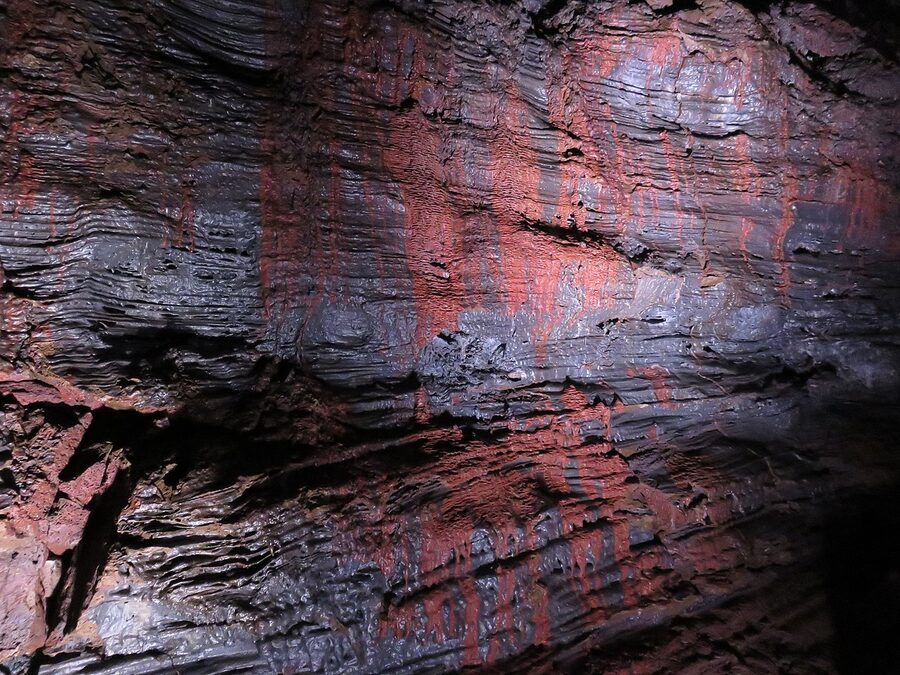
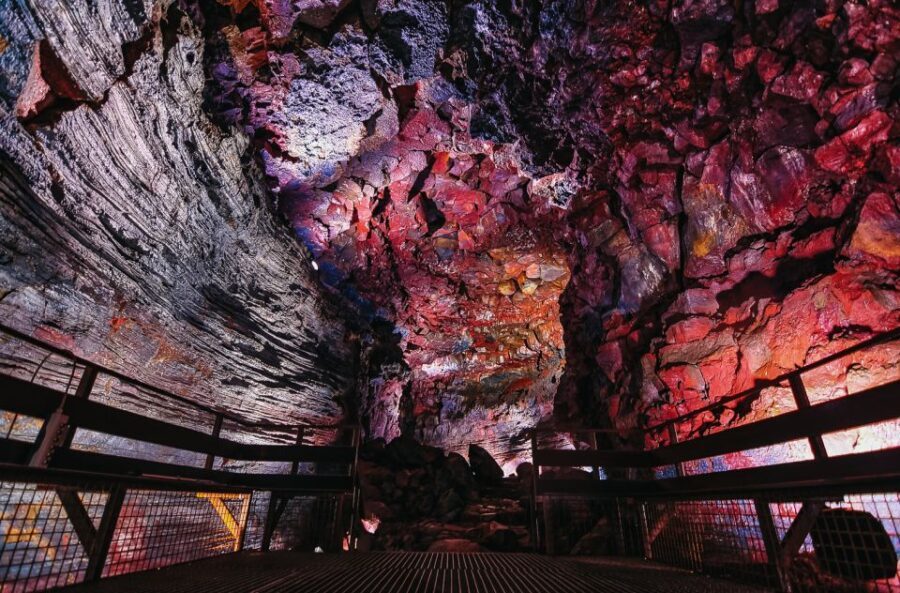
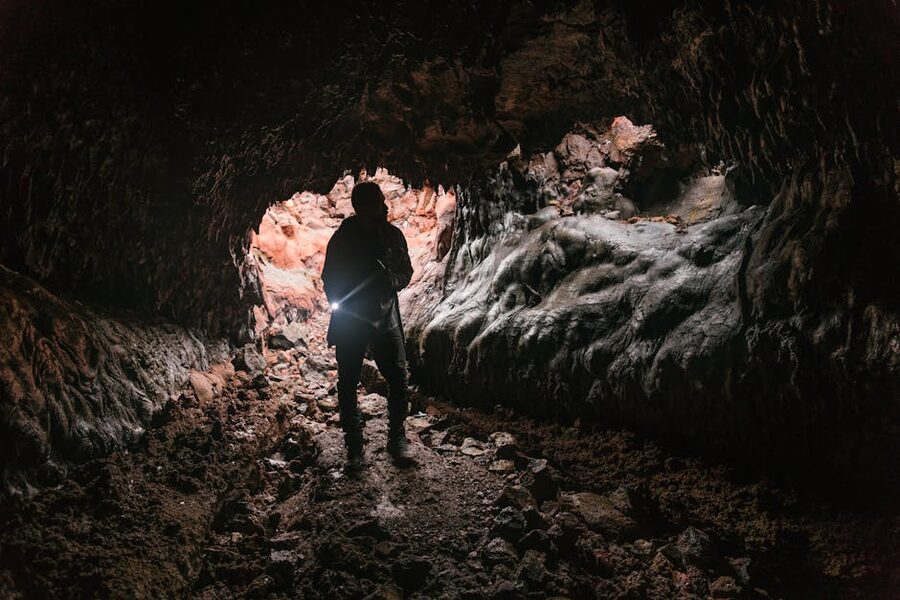
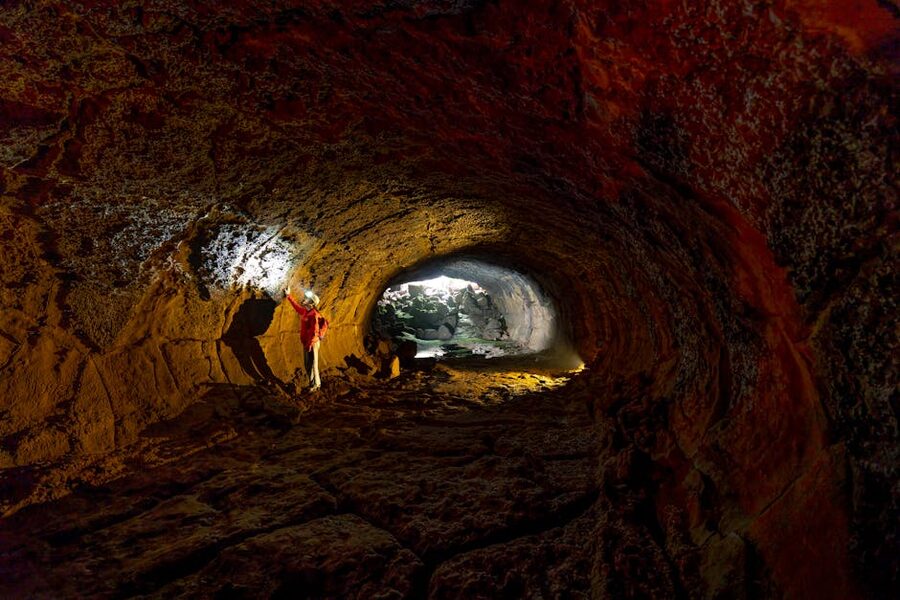
The walls of Raufarhólshellir are textured like coiled rope. Touch one with a bare hand and it is much colder than you expect — like reaching into a fridge. Water drips from the ceiling and the sound does not echo. Most people in the group stop talking within a minute of getting underground. You do not decide to stop; you just notice that you have.

This guide covers how to book the Raufarhólshellir lava tunnel tour: which version to pick (the standard one-hour walk versus the longer adventure tour), when self-driving from Reykjavík beats the bus transfer, and what the experience actually feels like once you are 15 metres under the ground.
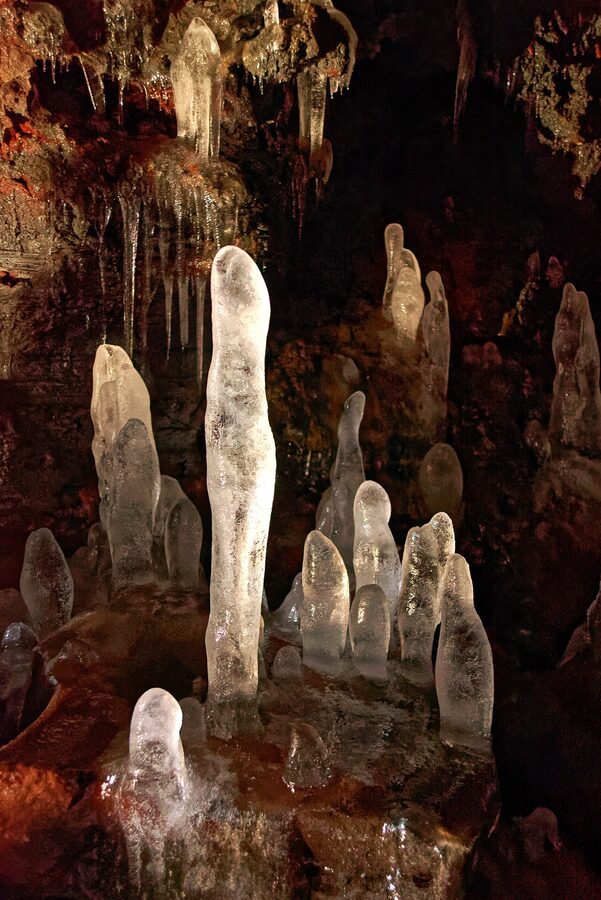

Raufarhólshellir is a 1,360-metre-long lava tube about 30 km southeast of Reykjavík. It formed when the Leitahraun lava flow drained out from underneath its own cooled crust, leaving a long hollow tunnel. The tour walks you through the front 600 metres of it. The remaining 760 metres is closed to the public — the roof is unstable and the operator has wisely not tried to make a ticket out of it.
In a Hurry? The Three Tickets to Choose Between
- Most reviewed pick: The Lava Tunnel Tour Raufarhólshellir — around $75, 1 hour, the standard tour with self-drive arrival.
- Same tour, alternative reseller: Raufarhólshellir Underground Expedition — around $73, 1 hour, self-drive.
- With bus from Reykjavík: Lava Tunnel by Bus from Reykjavík — around $129, 3 hours including transfer both ways.
- In a Hurry? The Three Tickets to Choose Between
- Which Tour to Book
- 1. The Lava Tunnel Tour Raufarhólshellir — from
- 2. Raufarhólshellir Underground Expedition — from
- 3. Lava Tunnel by Bus from Reykjavík — from 9
- What the Hour Actually Feels Like
- What You Are Actually Looking At
- Lava Tunnel vs Ice Cave vs Other Underground Iceland
- The Longer Adventure Tour
- Photography Inside
- Family and Accessibility
- What to Wear
- Getting There from Reykjavík
- What Else to Do With the Half-Day
Which Tour to Book
If you have a rental car, book one of the self-drive tours and pay $73-75 for the cave only. The bus transfer is a clean $50+ premium for what is essentially a 30-minute drive each way that you could do yourself. The road to the cave is paved and signposted from Reykjavík, and the parking is at the cave entrance.
1. The Lava Tunnel Tour Raufarhólshellir — from $75
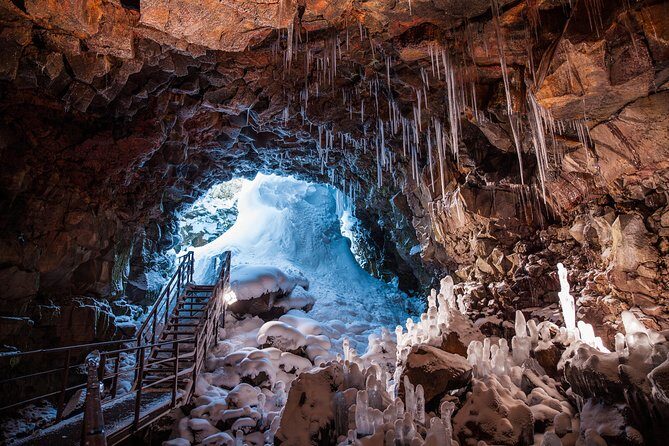
The most-reviewed of the Raufarhólshellir options. Standard 1-hour underground walk through the first 600 metres of the tube. Helmet and headlamp included. Tours leave on the hour from the visitor cabin. Our full review walks through what each chamber contains and the pacing of the guide commentary.
2. Raufarhólshellir Underground Expedition — from $73
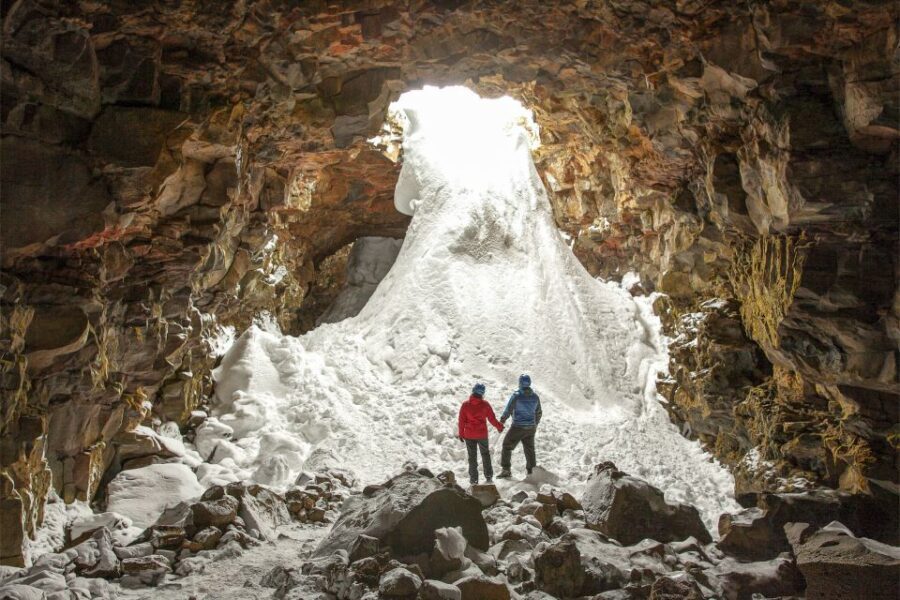
Same experience, different reseller. GetYourGuide sells essentially the same 1-hour tour as option 1 — same operator, same chambers, same guides. Worth picking based on which platform has a better time slot for your day. Our full review covers the booking mechanics and how to pick a good time slot.
3. Lava Tunnel by Bus from Reykjavík — from $129
The bus pickup version. They collect you from a central Reykjavík hotel, drive you to the cave, run the same 1-hour tour, then drive you back. Total elapsed time about 3 hours. Sensible if you are car-free; otherwise the premium is hard to justify. Our full review covers the bus logistics and pickup arrangements.
What the Hour Actually Feels Like

You meet at the visitor cabin five minutes before your tour. The cabin is a small green wooden hut at the side of the access road. They check you in, hand you a helmet with a headlamp built in, and call your group together. The guide is usually a young Icelander with a geology side-interest. Briefing takes maybe five minutes — what to touch, what not to touch, where to walk, where to stop.
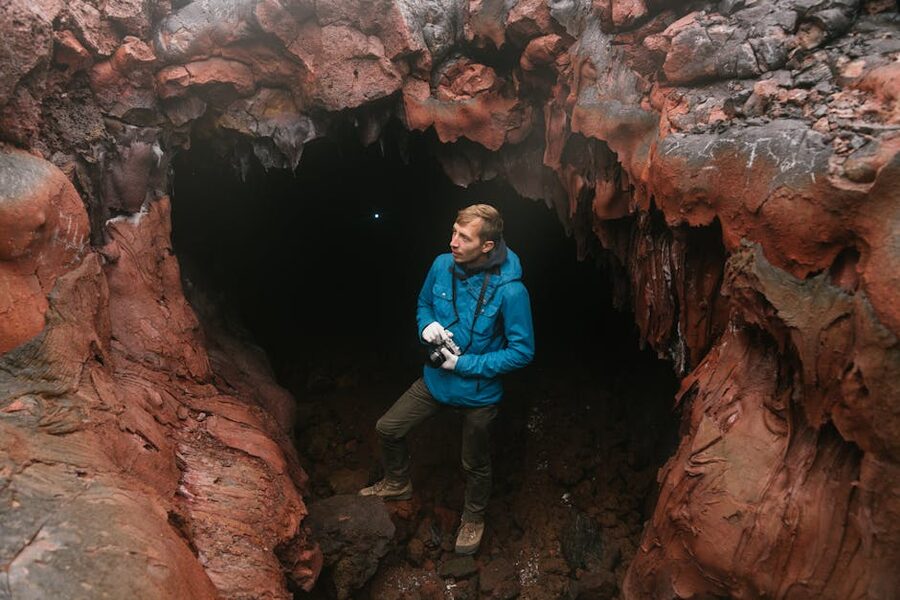
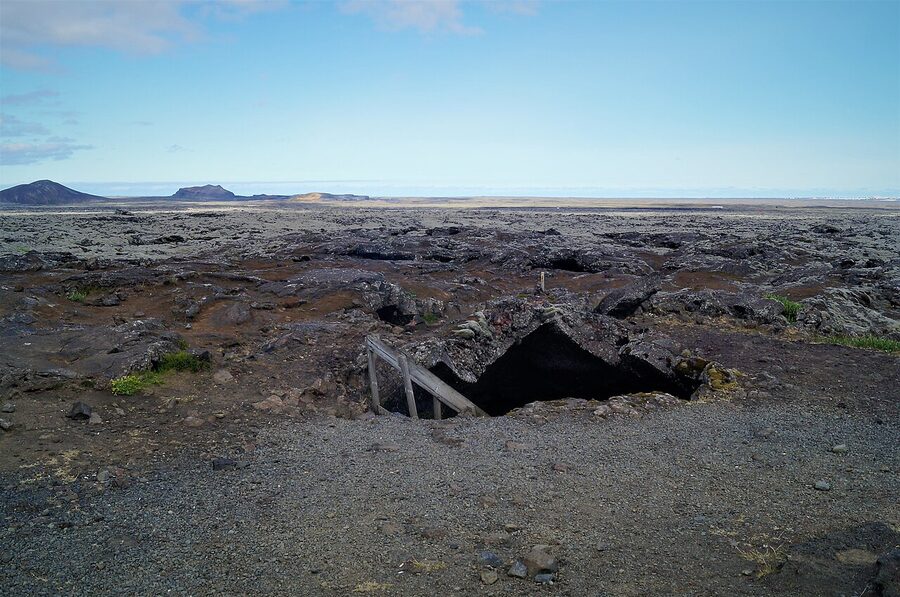
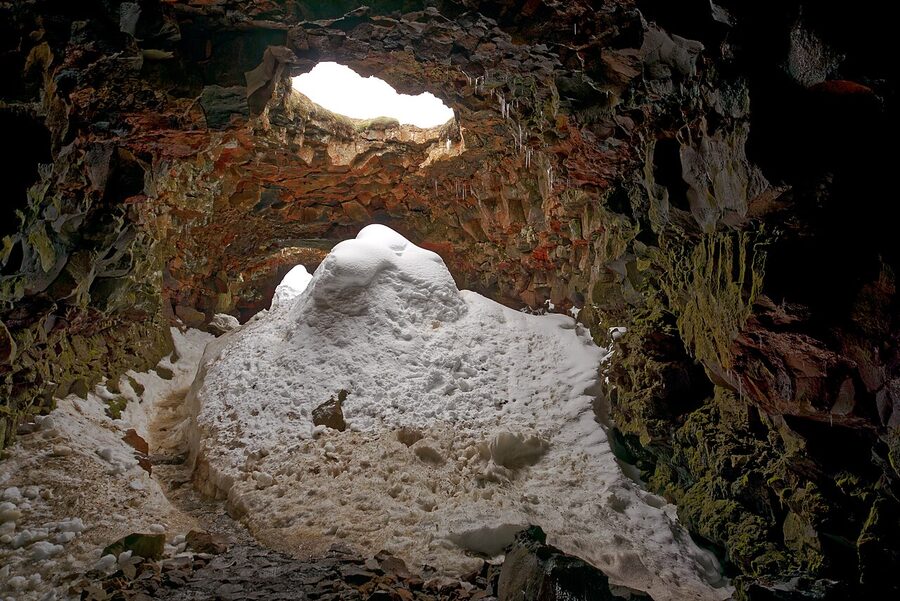
You walk about three minutes from the cabin to the cave mouth. The mouth itself is a circular hole in the ground about 10 metres across, fringed with moss. A modern metal staircase drops you 15 metres into the dark. The temperature drops as you descend — the cave holds steady at about 4°C year-round, which is a 20-degree shock if you are visiting in July.
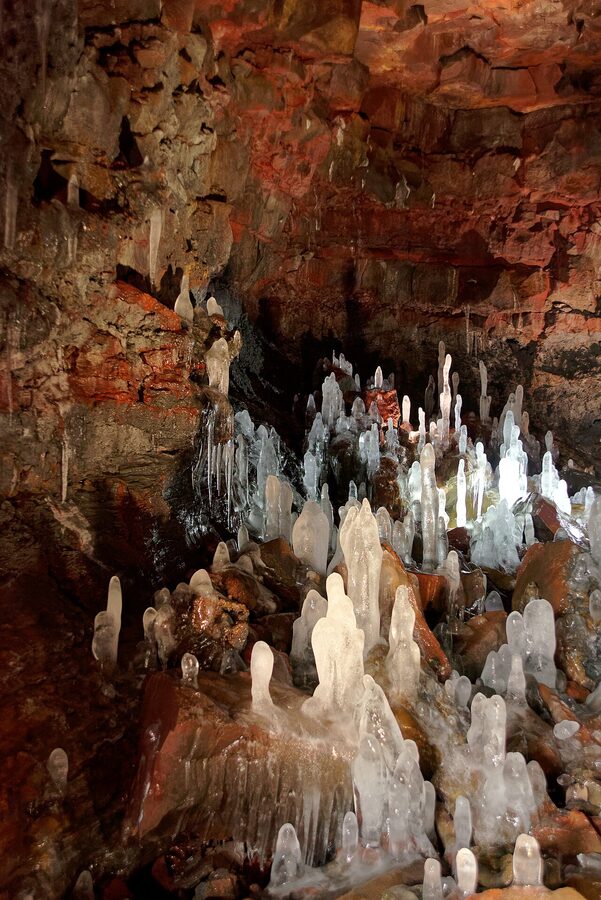

The first 200 metres has wooden walkways. The middle stretch is across the bare lava floor — uneven, some scrambling required, the helmet starts to make sense. The far end of the public section opens into a wider chamber where the guide turns off everyone’s headlamps for thirty seconds. Real darkness. Not “lights off in your bedroom” darkness; the darkness where your eyes do not adjust because there is nothing to adjust to.
What You Are Actually Looking At
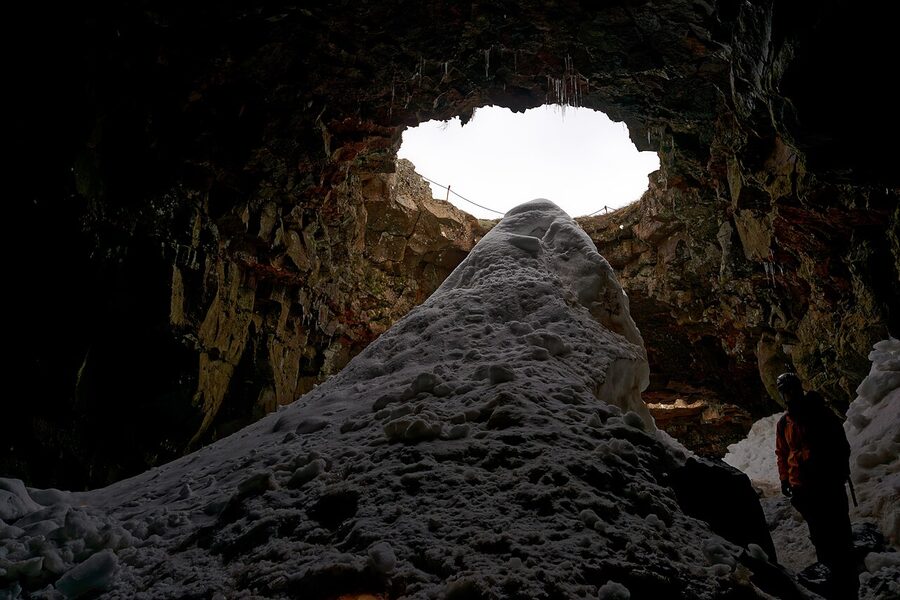

The tube formed about 5,200 years ago when a lava flow from a now-dormant volcanic system poured across the area. The top crust of the flow cooled and hardened first, creating a roof. The molten rock underneath kept moving, draining downhill, eventually emptying the inside while the roof stayed up. What you walk through is the air pocket left behind.
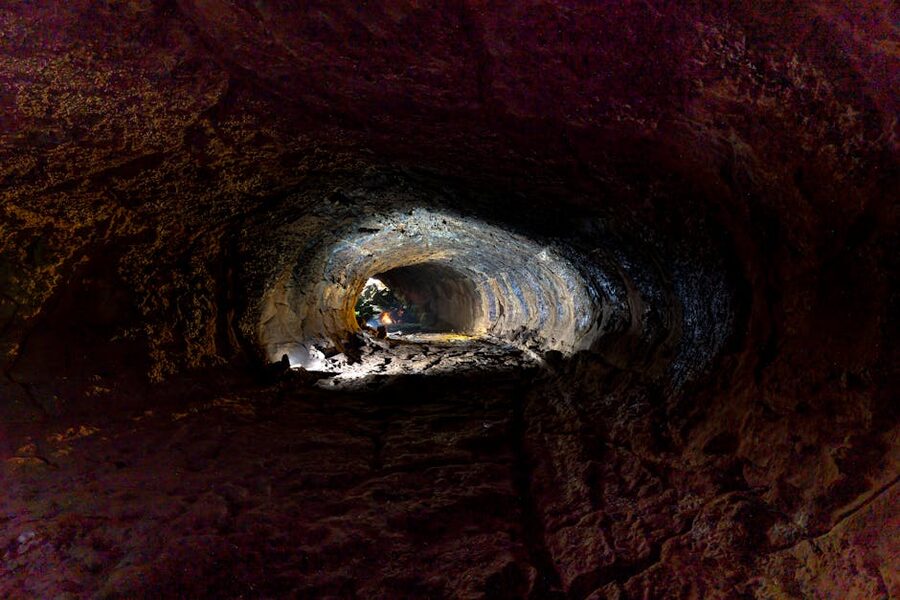
The walls show this story in cross-section. Each horizontal ridge is a layer that cooled and hardened against the moving flow inside. Some chambers have small “lavafall” features — places where molten rock splashed up onto the ceiling and re-froze. The colours range from black through deep red to mustard yellow, depending on iron content and how long that section was exposed to oxygen as it cooled.

The guide will tell you about the cave’s recent history too. It was discovered formally in 1909 (locals had known about it for centuries before that) and used as a hideout for outlaws in the 18th century. The Vikings called caves like this “elf houses.” A few archaeological finds have come out of the entrance area — bones, pottery — though most of it has been moved to the National Museum.
Lava Tunnel vs Ice Cave vs Other Underground Iceland
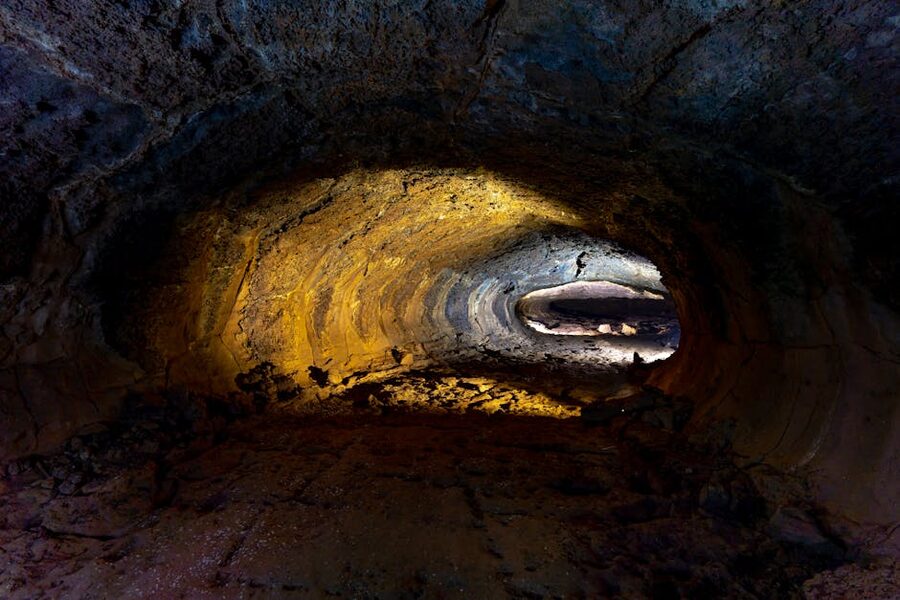
Iceland has three categories of guided underground tour. They feel completely different and travellers conflate them all the time.
Lava tubes like Raufarhólshellir are warm-toned, dry, and rocky. The walls are red, brown, and black volcanic rock. Year-round at 4°C. Feels like a cave you might find anywhere in Hawaii or the Canary Islands. Decent for any weather, runs all year, no special gear needed beyond a helmet.
Ice caves like the Katla ice cave or the Vatnajökull blue caves are cold, blue-toned, and sit inside glaciers. They are stunning but seasonal (October to May only) and require either a super jeep ride or a glacier walk to access. Significantly more expensive and weather-dependent.
The Vatnshellir lava cave on Snæfellsnes is a smaller version of Raufarhólshellir — same volcanic geology, but only 200 metres of tube and a more cramped feel. Usually combined with a Snæfellsnes day trip from Reykjavík.
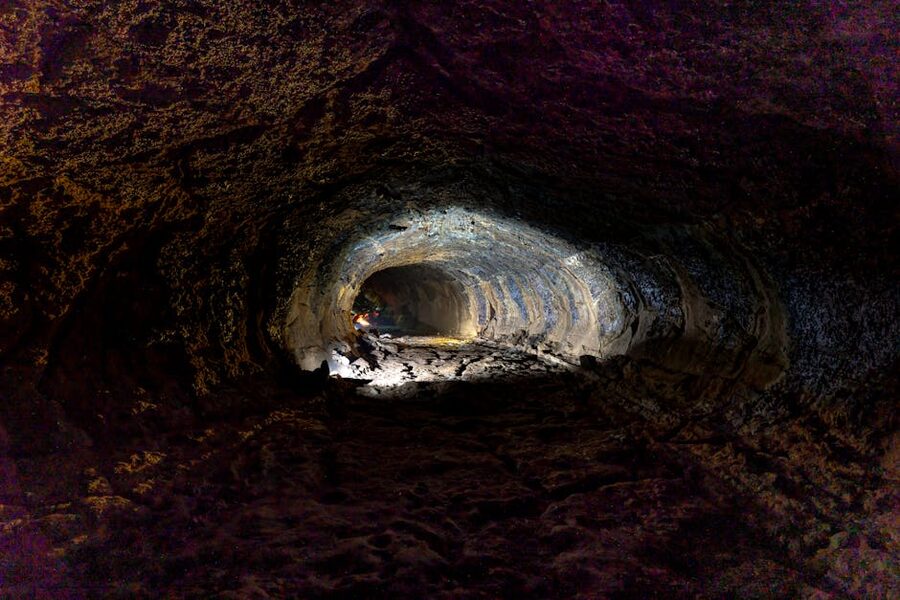
Honest pick if you can only do one: Raufarhólshellir is the most accessible, the most predictable in any weather, and the best for first-timers. The ice cave is more visually spectacular if you happen to be travelling in winter and have the budget. Vatnshellir is fine but I would skip it unless you are already on a Snæfellsnes day.
The Longer Adventure Tour
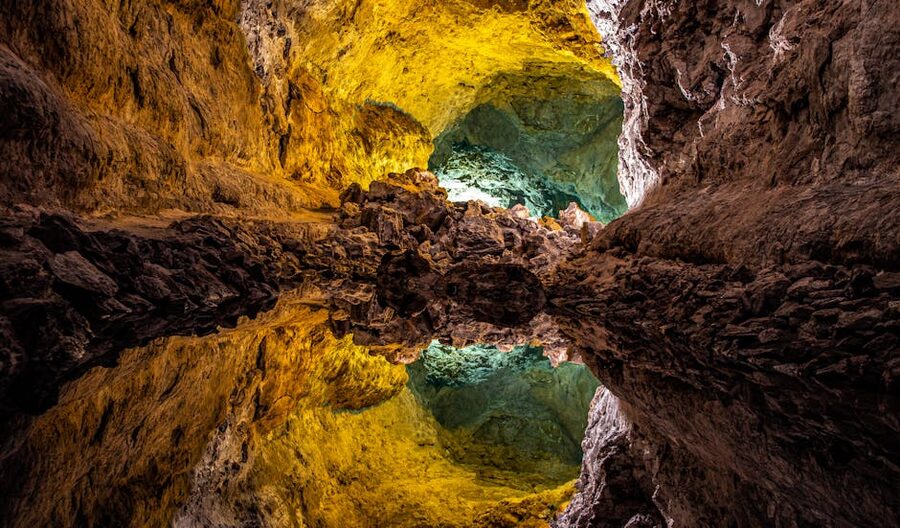
The standard one-hour tour covers the front 600 metres. The same operator runs a longer “Lava Falls” tour that takes a small group (six maximum) deeper into the closed section of the tube. It runs four to five hours, costs around $200, and involves more scrambling — proper boots, gloves, and a head for low ceilings are required. Worth it if you have already done the standard tour somewhere else and want a real caving experience instead of a guided walk.
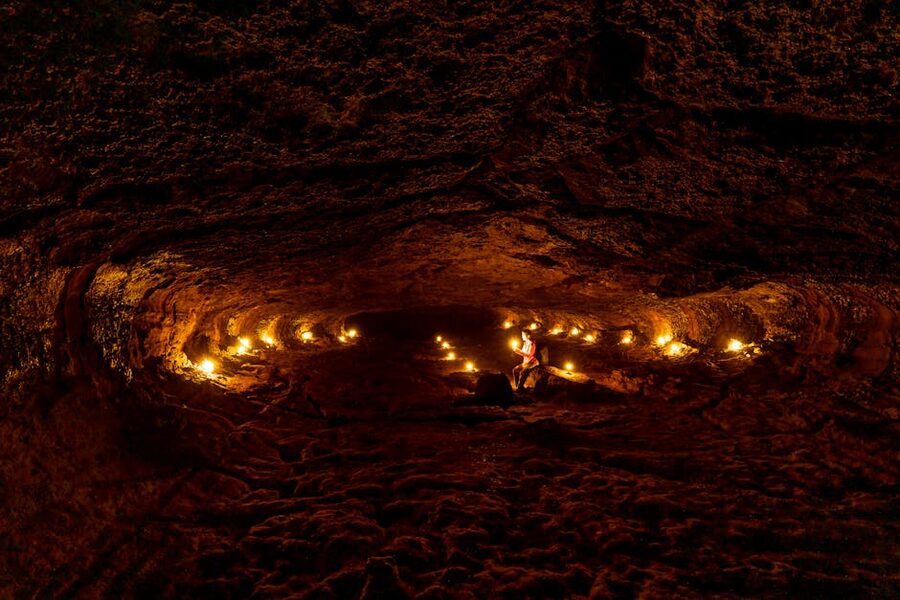
Honest call: most travellers should book the standard hour. The adventure tour is an order of magnitude more demanding and the marginal increase in cave is not enough to justify the extra spend unless you specifically want the harder physical experience. If you do book it, allow recovery time afterwards — your back and knees will know.
Photography Inside
The cave is lit with installed warm-white LEDs at intervals along the walkway. The lighting is good for the eye but tricky for cameras — bright next to the lights, dark in between. The shots that work best are the wider compositions that include both a lit chamber and a darker passage in the same frame.
Practical tips from doing this twice now. Turn off the flash immediately. The flash blows out the colour and washes the rope-textured walls flat. If you have a phone with a “night mode” or low-light setting, use it. If you have a real camera, set ISO 1600 or higher and brace the camera on something solid for the slower shutter speeds — the walls of the walkway work as a tripod substitute. Avoid landscape video; the cave looks like a brown corridor on video and works much better as stills.
Family and Accessibility
Kids over 8 do well on the standard tour. Younger kids will find the dark stretches scary and the uneven floor difficult; the operator’s official minimum is 8 years old. Older kids tend to love it — the helmet, the headlamp, and the slightly spooky atmosphere make for a good kid story.
The cave is not wheelchair-accessible. The metal staircase down is steep, the floor inside the cave is uneven, and the deeper sections have actual scrambling. Travellers with significant mobility challenges should pick the indoor ice cave at Perlan instead — same kind of underground feeling, all-flat surfaces, no climbing.
What to Wear
The cave is a steady 4°C. The path inside has wet patches and uneven volcanic rock. Wear closed shoes with grip — proper hiking boots are ideal but not essential. A waterproof jacket helps with the drip. If you visit in summer wearing T-shirts and sandals (and people do), the operator has spare jackets and rubber overshoes for loan; embarrassing but workable.
The helmet and headlamp are provided. You do not need to bring a torch. Phones work for photos but the cave is dark enough that a camera with manual ISO control will give better results.
Getting There from Reykjavík
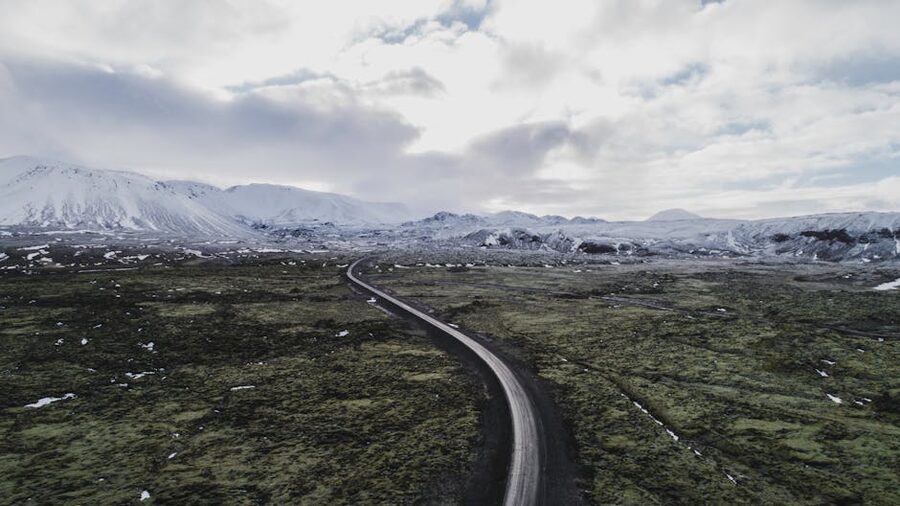
The cave is on Route 39, off the Þrengsli road, about 30 km from central Reykjavík. The drive is straight and easy in any rental car. Plug “Raufarhólshellir” into Google Maps; it gets you to the visitor cabin’s car park. There are no detours, no F-roads, no off-pavement.
If you do not have a car, the bus tour from Reykjavík (option 3 above) is the right call. The cave is too far for a taxi to make sense. There is no public bus service that gets you close enough to walk.
What Else to Do With the Half-Day
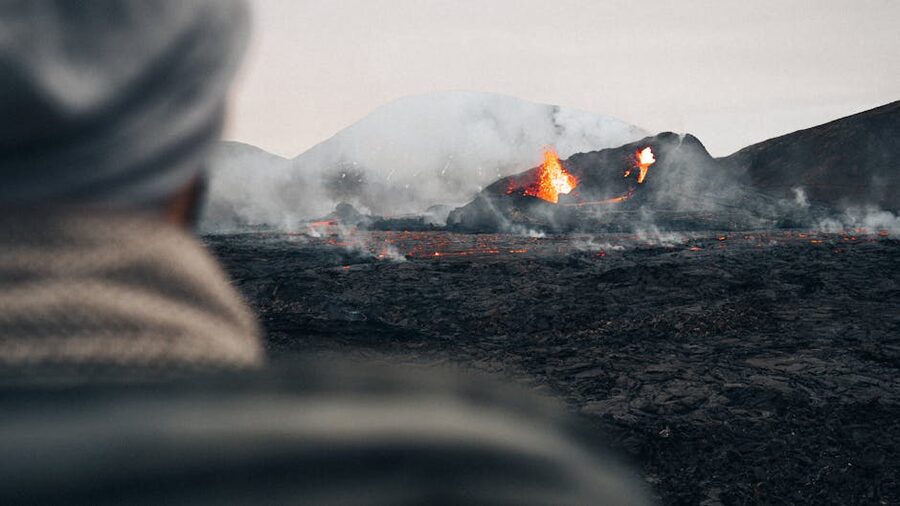
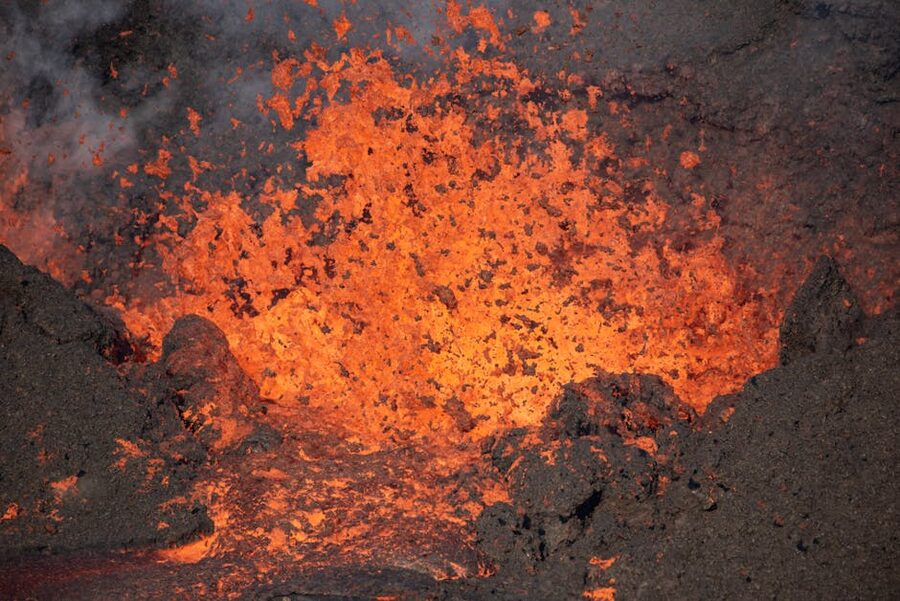
An hour underground leaves you with most of a day. The cave sits on the Reykjanes peninsula, the same peninsula where Iceland’s recent eruptions have happened. If there is an active eruption viewable while you are visiting, the volcano viewing site is 30-40 minutes from the cave — pair the underground walk with the surface lava view for a complete look at Iceland’s volcanic geology in one half-day.
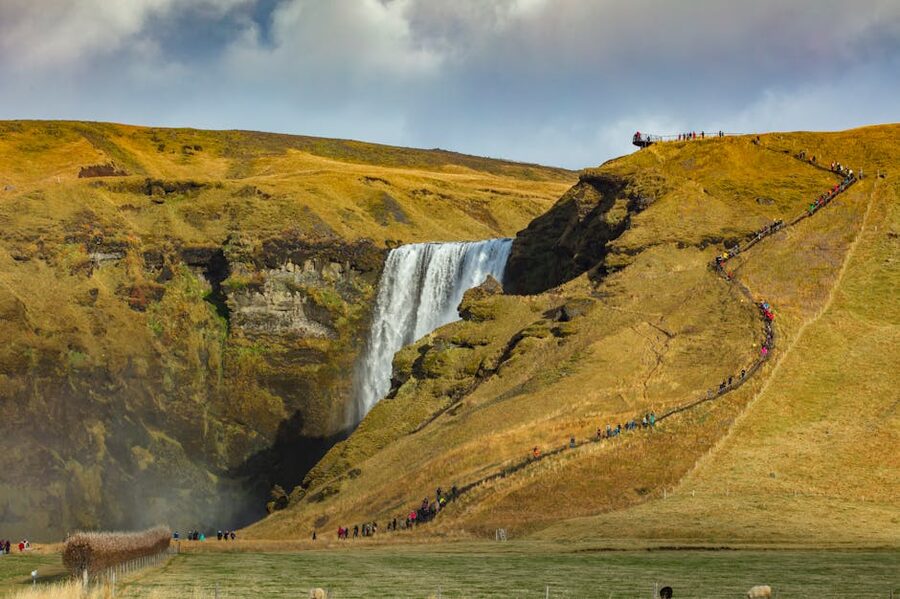
If there is no active eruption, the natural pairing is the south coast. From Raufarhólshellir you can drive directly south to Hveragerði (the geothermal greenhouse town), then continue to Seljalandsfoss waterfall, then back to Reykjavík for dinner. Half a south coast day on top of the cave makes for a full but unhurried day.
If you are heading back to Reykjavík, the right next move is a soak. The Sky Lagoon is on the way back into the city if you are coming from the south. The Blue Lagoon is on the way to the airport if your day finishes there. Both are the right kind of decompression after an hour underground.
Other half-day pairings that work well: a morning Golden Circle followed by the afternoon cave; the cave plus an evening Lava Show in town for a fire-and-stone day; or the cave plus a quick stop at Perlan Museum for the volcano exhibition that puts what you just saw underground into geological context.
One last note. Bring a bottle of water and a small snack for after — the visitor cabin sells coffee and a few cookies but nothing substantial, and you will be hungry. The nearest proper food is in Hveragerði, 20 minutes south, where the geothermal greenhouses serve some of the best tomato soup in Iceland.
This article contains affiliate links. If you book through our links, we may earn a small commission at no extra cost to you. This helps us keep producing detailed travel guides.