
I turned left off Stroget — the world’s oldest pedestrian street, for what that’s worth — and walked straight into a group of 40 travelers blocking the entire lane. Their guide was shouting about Hans Christian Andersen. I could barely hear him over the cyclists ringing their bells.
That was my first Copenhagen walking tour. The free one. It lasted three hours, covered about eight square blocks, and taught me that “free” in this city means “you’ll feel guilty if you don’t tip 100 kroner.”
The paid tours are better. Significantly better.
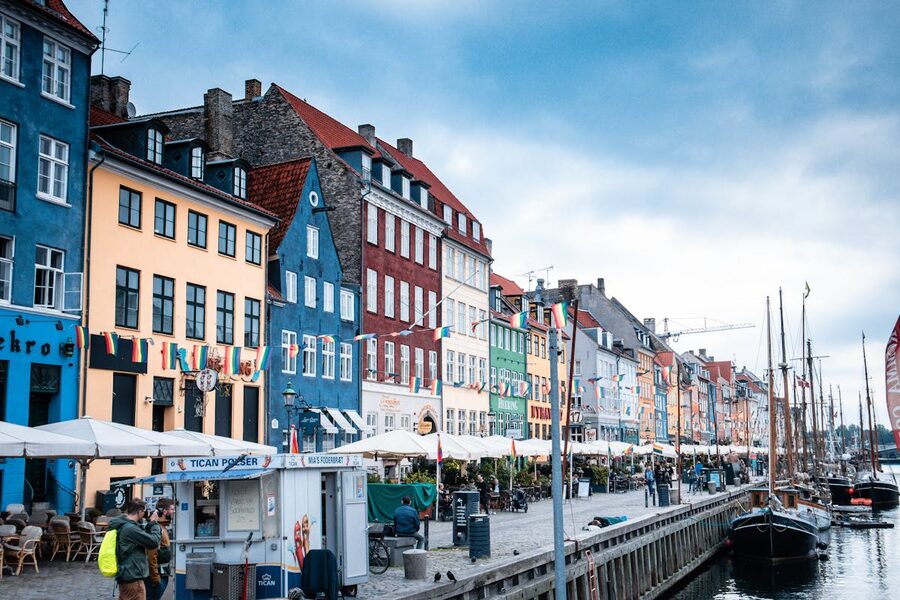
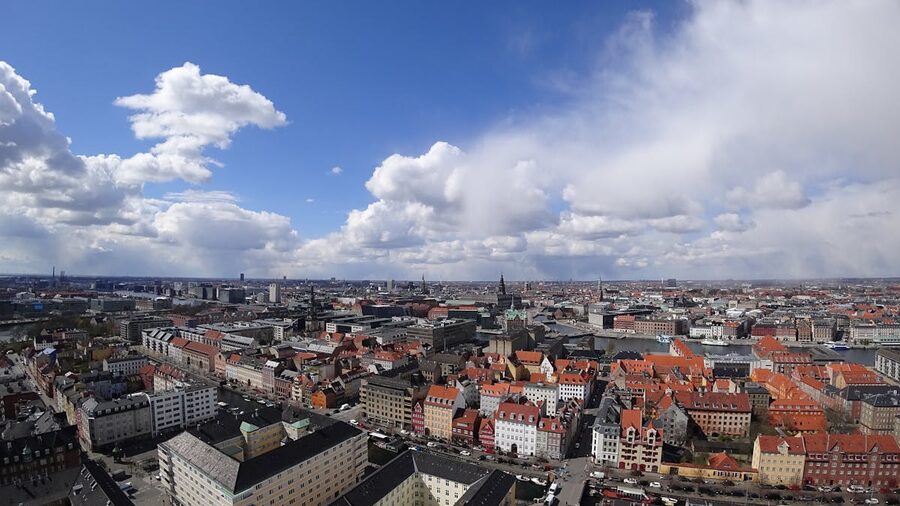
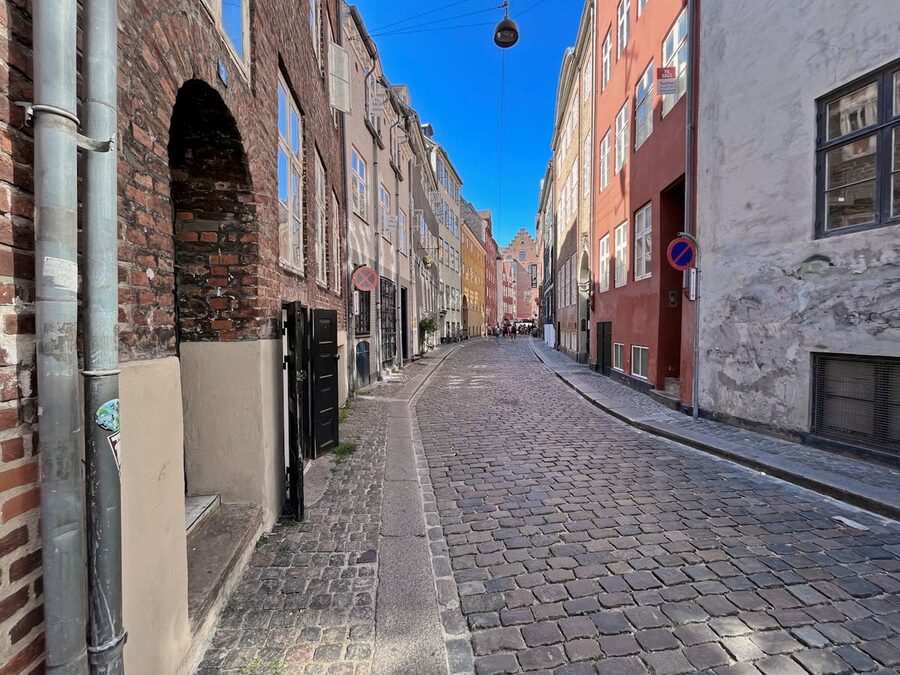
Copenhagen was founded as a fishing village called “Havn” in the 12th century. Bishop Absalon built a fortress here in 1167 on a small island in the harbour — that island is now Slotsholmen, where the Danish parliament sits. The city’s name literally means “merchants’ harbour,” and you can still feel that trading port DNA in the layout. Everything radiates out from the water.
Walking it with a good guide turns all that history from background noise into an actual story.
Short on time? Here are my top picks:
Best overall: Copenhagen Highlights Walking Tour — $41. Two hours, small group, and a guide who actually makes history funny.
Best small group: 3h Small Group Walking Tour — $51. Max 10 people, three hours, deeper dives into the backstreets most tours skip.
Best with ferry: Walk & Ferry Highlights Tour — $77. Walking plus harbour ferry to the Little Mermaid, finishes with the Changing of the Guard.
- How Walking Tour Bookings Work in Copenhagen
- Free Tours vs Paid Tours — An Honest Comparison
- The Best Copenhagen Walking Tours to Book
- 1. Copenhagen Highlights Walking Tour —
- 2. Copenhagen Group Walking Tour —
- 3. 3-Hour Small Group Walking Tour —
- 4. Walk & Ferry: Copenhagen Highlights with Guard Change —
- 5. Private Walking Grand Tour — 2 per group
- What You’ll Actually See on a Walking Tour
- When to Walk Copenhagen
- Getting to the Meeting Points
- Tips That Will Save You Time and Money
- Copenhagen’s Walking History — Why This City Was Built to Be Explored on Foot
- More Copenhagen Guides
How Walking Tour Bookings Work in Copenhagen
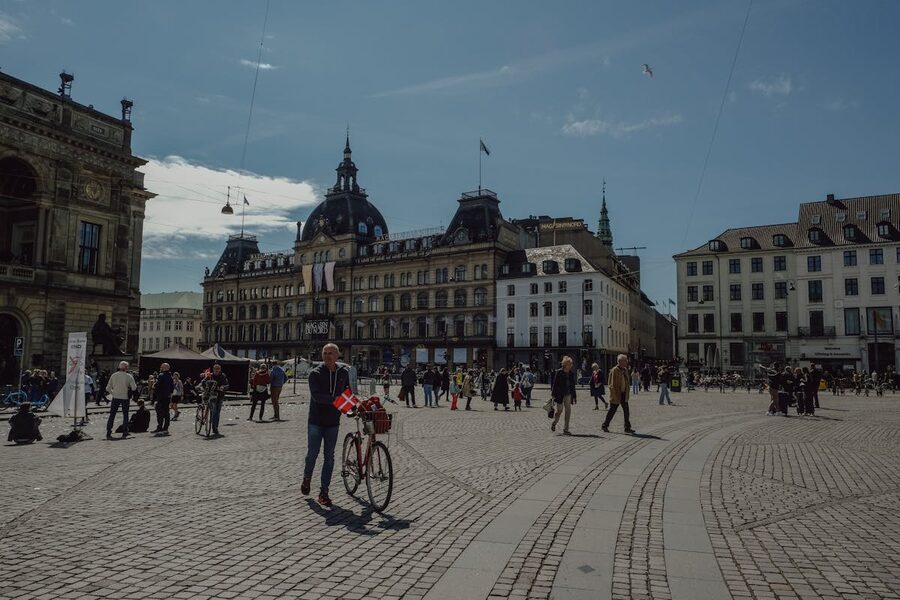
There are basically three ways to do a walking tour in Copenhagen.
Free walking tours operate on a tip-based model. You show up at a meeting point (usually near City Hall or Nyhavn), walk for 2-3 hours, and pay what you think it was worth at the end. These draw big crowds — 30 to 50 people is normal in summer. The guides are usually young, enthusiastic, and working hard for tips, which means the quality swings wildly from excellent to “I memorised this script yesterday.”
Paid group tours range from about $39 to $80 per person for a 2-3 hour walk. Groups are capped at 10-20 people depending on the operator. Guides tend to be more experienced, routes go beyond the obvious, and you can actually ask questions without shouting. Most depart from near Nyhavn or City Hall Square.
Private tours cost $275 to $350 for the whole group (up to 10-15 people). If you’re travelling with family or a group of friends, the per-person cost drops fast. A private tour for 10 people works out to about $28 each — cheaper than most group tours — and you can adjust the pace, linger where you want, skip what bores you.
All of them cover roughly the same core sights: Nyhavn, Amalienborg Palace, the Marble Church, Christiansborg, the Round Tower, and Stroget. The difference is depth. A free tour gives you names and dates. A good paid tour gives you stories.
Free Tours vs Paid Tours — An Honest Comparison
I’ll be honest: the free tours are fine if you’ve never been to Copenhagen and want a general overview. But there’s a catch. The guide knows that a portion of the group won’t tip at all, so they have to be entertaining enough to guilt the rest into compensating. This creates a dynamic where the tour becomes more performance than education.
On the paid tours, the guide doesn’t need to sell you on tipping. They’re already getting paid. So the dynamic shifts — less crowd-pleasing, more actual substance. The groups are smaller, which means you can actually hear the guide when they’re pointing at something on the far side of a building.
That said, don’t waste money on a paid tour for the route alone. If all you want is to walk past Nyhavn and the Little Mermaid, the free version does that. Pay for a tour when you want the stories behind the buildings, the weird history, the detours down lanes you wouldn’t find yourself.
The Best Copenhagen Walking Tours to Book
I’ve gone through the top-rated walking tours available in Copenhagen and picked five that actually deliver. These are ranked by value — not just ratings, but what you get for what you pay.
1. Copenhagen Highlights Walking Tour — $41
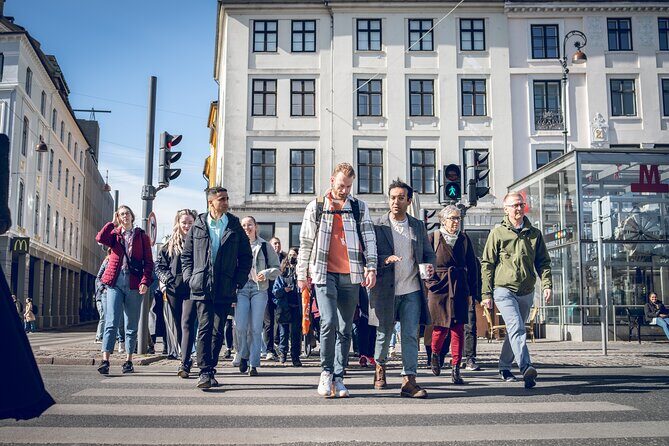
This is the one I tell most people to book. Two hours, covers all the main landmarks, and the guides have a knack for making 800-year-old history feel relevant. At $41 per person it sits right in the sweet spot — cheap enough that you don’t overthink it, good enough that you don’t regret it.
The tour hits Nyhavn, the Royal Palace, Christiansborg, and the old Latin Quarter. What sets it apart is the tone — the guides lean into the comedy side of Copenhagen’s history, which sounds gimmicky until you’re actually standing in front of a building hearing about the bizarre political scandals that happened inside it. Thor, who runs several of these tours, is genuinely hilarious and knows the city inside out.
2. Copenhagen Group Walking Tour — $39
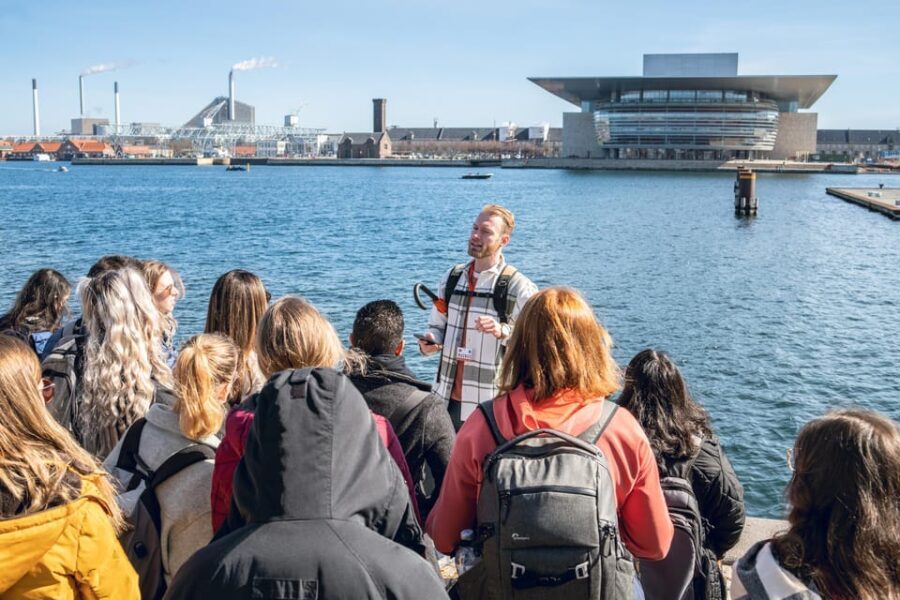
The cheapest paid option that’s still worth your time. Two hours covering the city highlights with a group that caps at around 20. At $39 per person it’s barely more than what you’d tip on a free tour — and the experience is miles ahead.
This one works particularly well for first-timers who want orientation. The route covers the greatest hits — Nyhavn harbour, Amalienborg, the Marble Church — and the guides do a solid job of connecting the dots between sights. It’s not as deep as the longer tours, but if you only have a morning free, this is how I’d spend it. Worth reading our detailed breakdown before you decide.
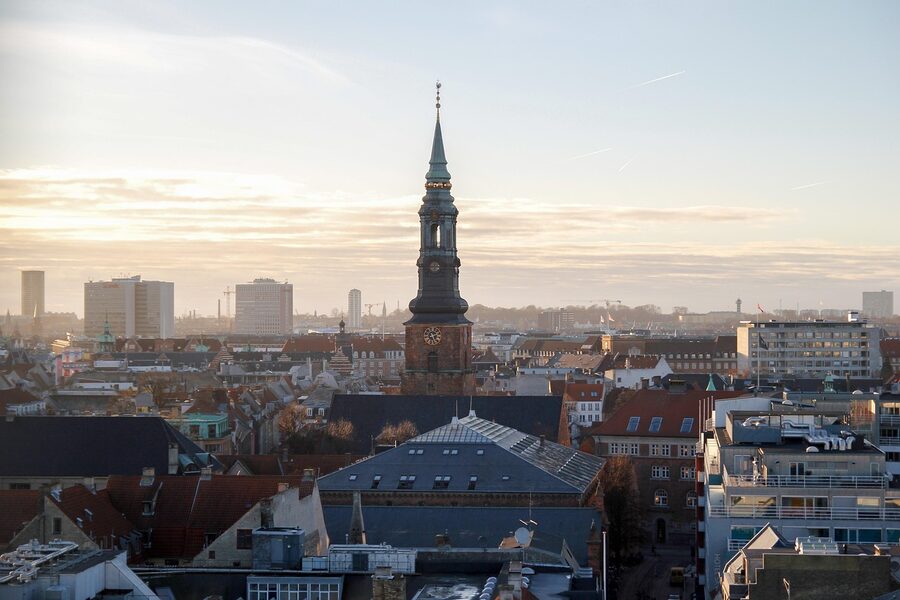
3. 3-Hour Small Group Walking Tour — $51
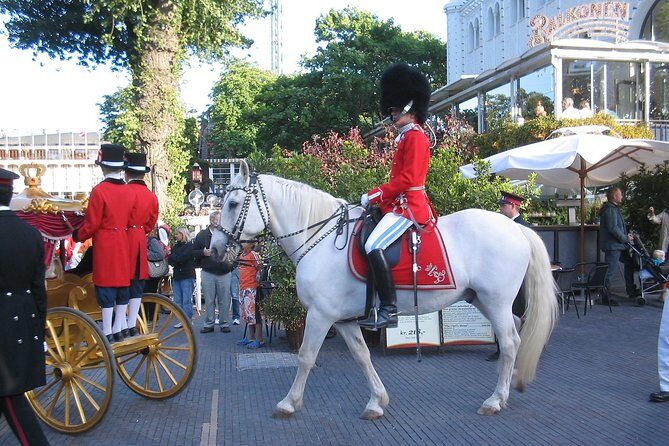
If the two-hour tours feel rushed, this is the upgrade. Three hours with a maximum of 10 people. The smaller group makes a real difference — you can duck into side streets, the guide can answer questions properly, and you’re not jostling with 25 other people for the same photo angle.
The route goes beyond the standard loop. You’ll hit all the big sights but also get pulled into the Tivoli Gardens area, the university district, and some genuinely surprising backstreets that the larger tours physically can’t navigate. At $51 it’s a tenner more than the budget options but the extra hour and smaller group are worth every krone. Good pick for anyone who’s been to Copenhagen before and wants more than the postcard version.
4. Walk & Ferry: Copenhagen Highlights with Guard Change — $77
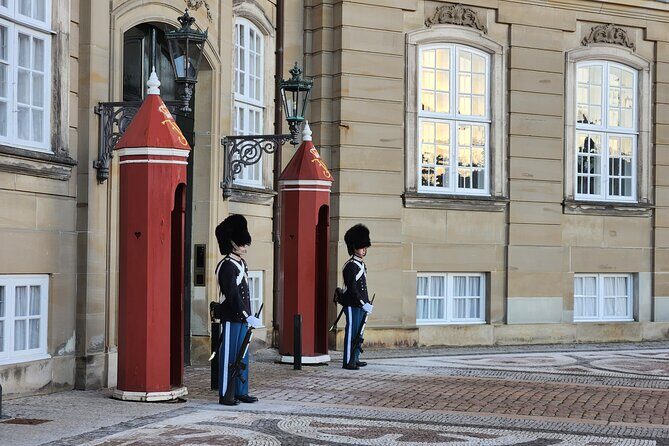
This one combines walking with a harbour ferry ride, which solves the biggest problem with Copenhagen walking tours: the Little Mermaid is annoyingly far from everything else. Instead of a 25-minute hike along the waterfront (which is honestly not that interesting), you take the harbour bus across.
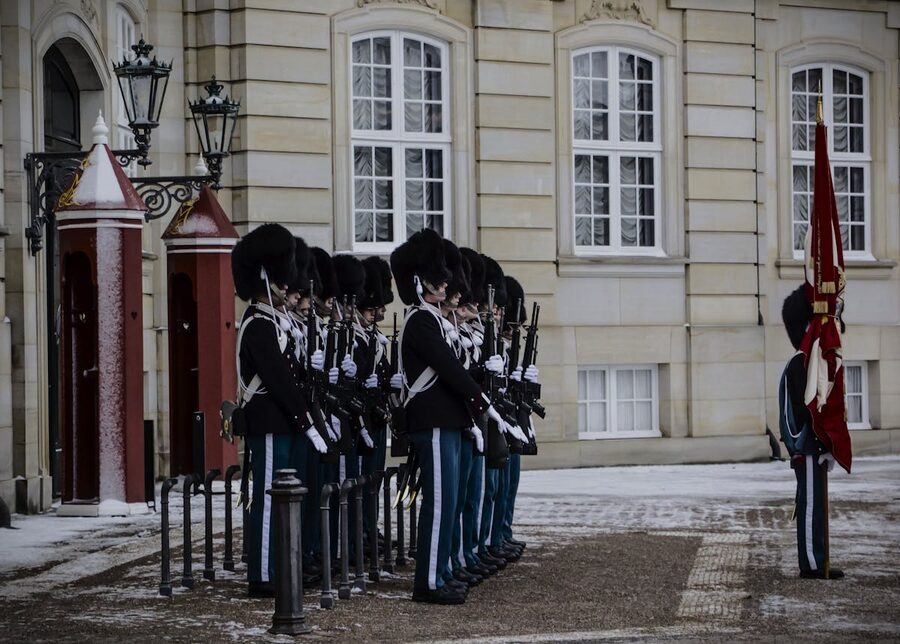
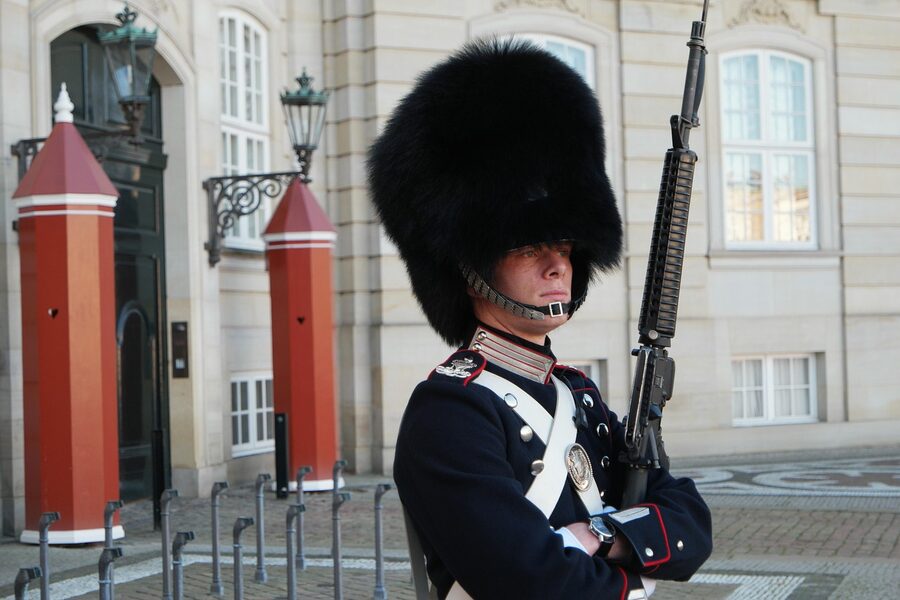
Three hours total, ending at Amalienborg for the Changing of the Guard at noon. That’s a smart piece of route design — most tours either rush to catch the guards or miss them entirely. This one is built around the timing. At $77 it’s the priciest group option, but the ferry ride and the guard ceremony make it feel like a proper half-day experience. If you’re only doing one tour in Copenhagen, this is the premium pick.
5. Private Walking Grand Tour — $342 per group
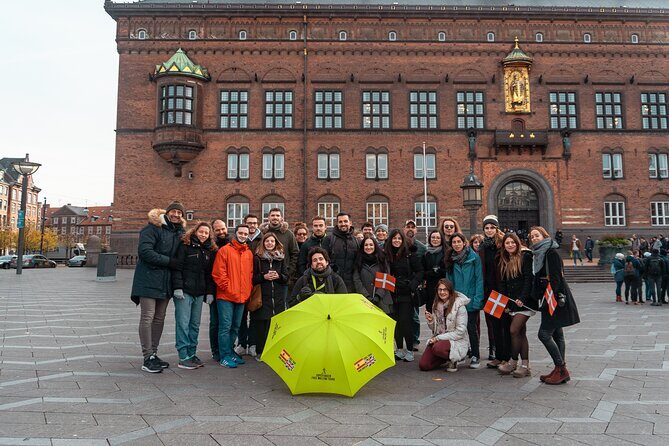
The splurge option, and honestly the best value if you’re in a group. $342 for up to 15 people works out to about $23 each — cheaper than every other option on this list. Three hours, completely private, and the guide tailors the route to what you actually want to see.
Families love this one because kids can set the pace without holding up strangers. The reviews consistently mention guides who are brilliant with children — adjusting the stories, adding games, keeping the energy up when little legs get tired. One family with a 5 and 8-year-old said the guide made it work perfectly for everyone. If you’re travelling as a couple, the $342 is steep. For a family of four, it’s $85 total. For a group of 10 friends, it’s a steal.
What You’ll Actually See on a Walking Tour
Most Copenhagen walking tours follow a similar loop, even if the guides won’t admit it. Here’s what to expect.
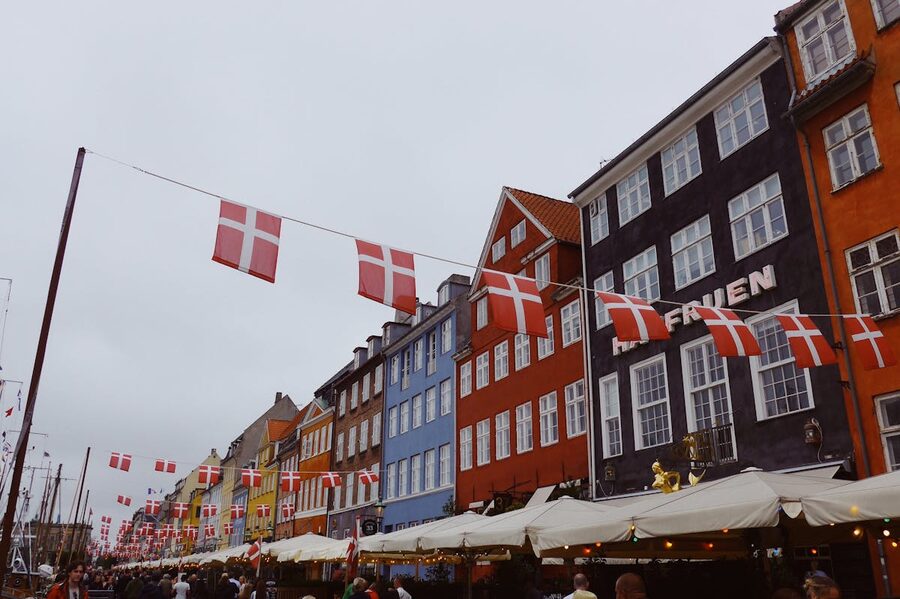
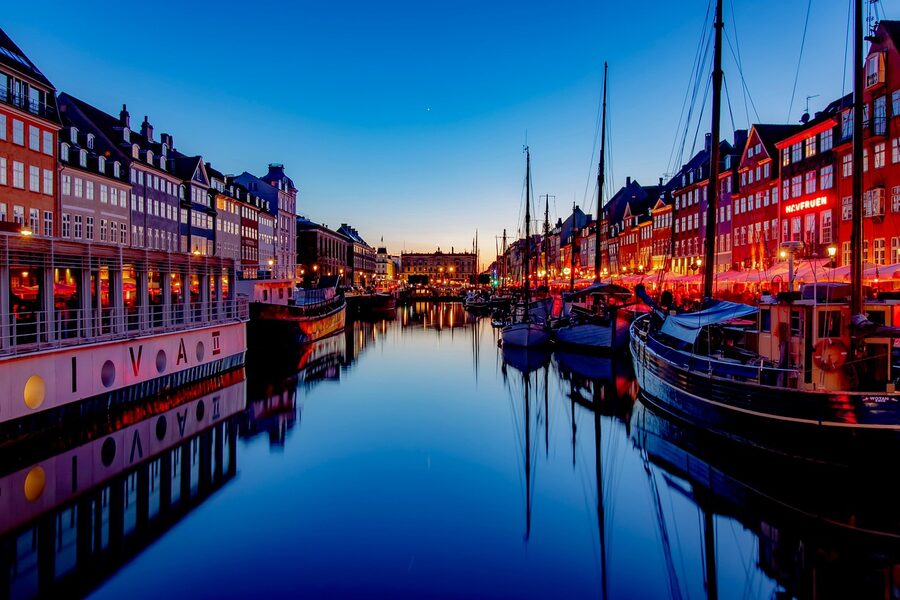
Nyhavn is the start of almost every tour. The colourful harbourfront houses date from the 17th and 18th centuries. Hans Christian Andersen lived at numbers 18, 20, and 67 at various points — which means three different buildings all claim him. The sunny side of the canal is where locals drink. The shady side is where travelers eat. Choose wisely.
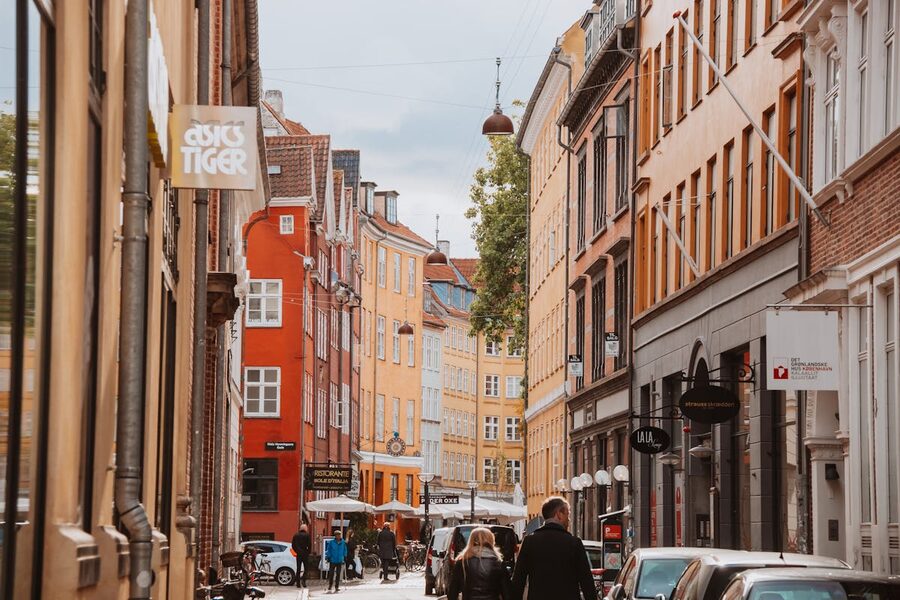
Stroget runs for about 1.1 km from City Hall Square to Kongens Nytorv. It opened as a pedestrian street in 1962, making it one of the longest and oldest car-free shopping streets in Europe. Today it’s packed with chain stores and fast fashion, but the side streets — Pistolstraede, Graabroedretorv — are where the actual charm lives.
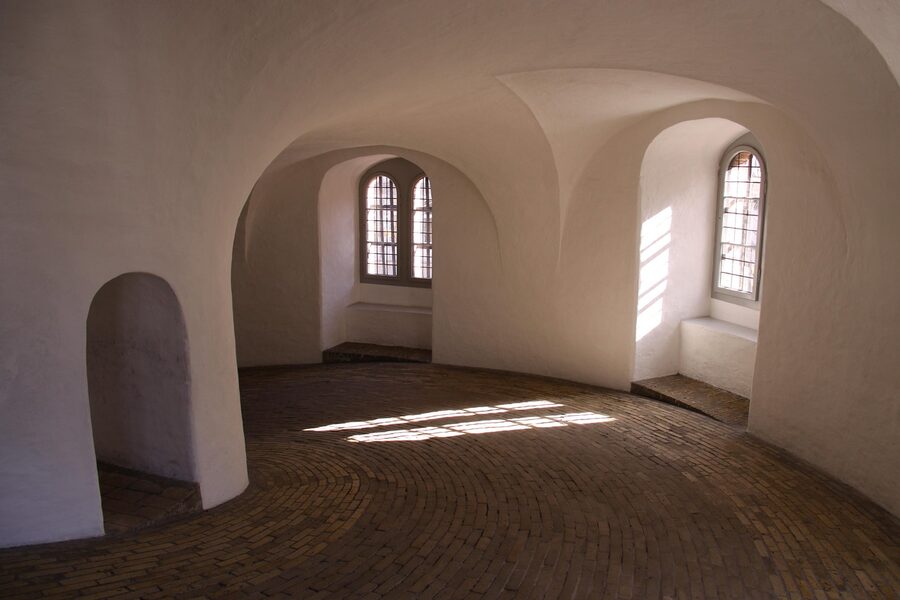
The Round Tower (Rundetaarn) was built in 1642 by King Christian IV as an astronomical observatory. Instead of stairs, it has a 209-metre spiral ramp wide enough for a horse and carriage — which is exactly what Tsar Peter the Great did in 1716, allegedly riding all the way up. The view from the top spans the entire city. Entrance is about 40 DKK.
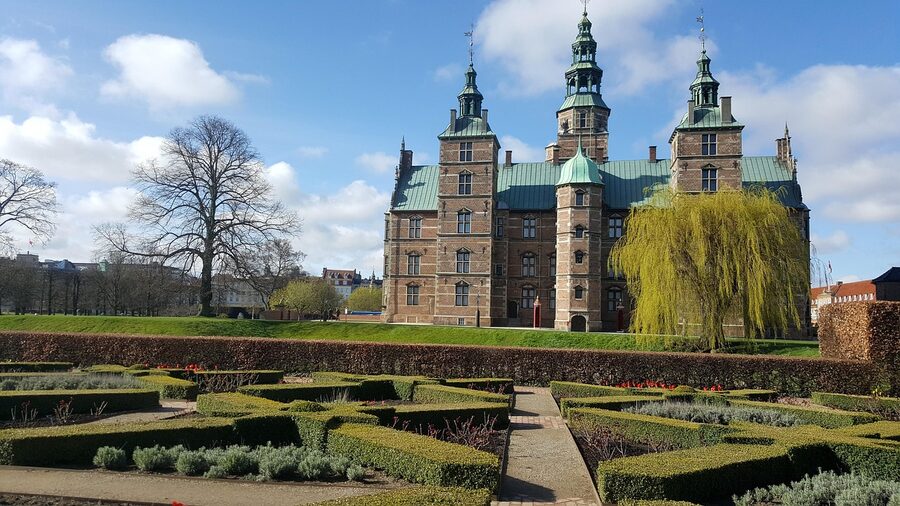
Amalienborg Palace is four identical rococo buildings arranged around an octagonal courtyard. It’s been the Danish royal residence since 1794, when the original palace at Christiansborg burned down. The Changing of the Guard happens daily at noon — the guards march from Rosenborg Castle starting at 11:30, so you can watch the whole procession if you position yourself along the route.

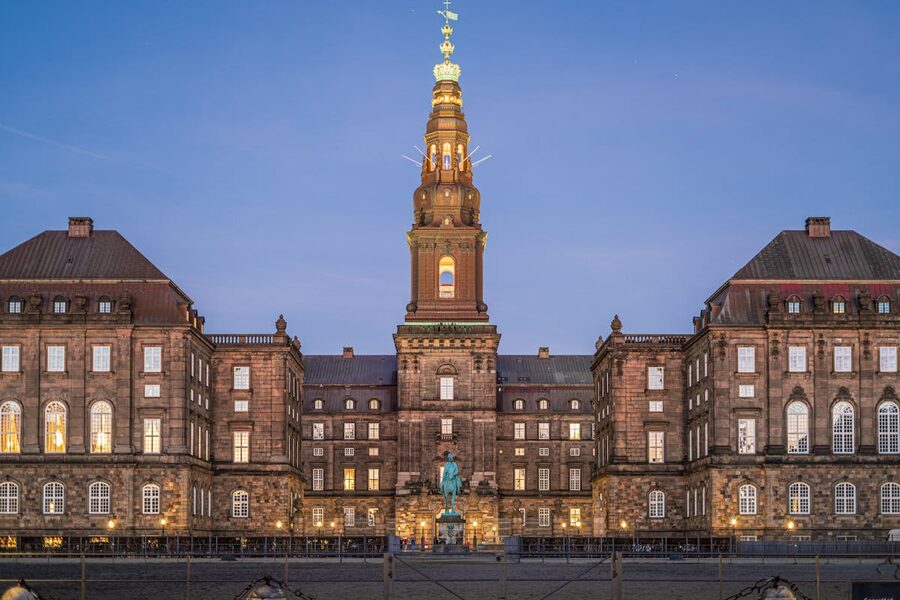
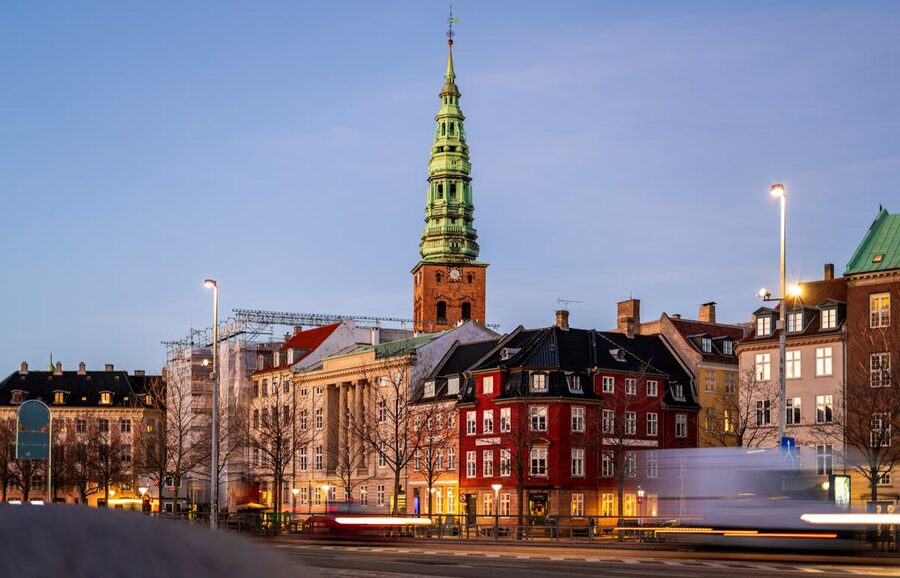
Christiansborg sits on Slotsholmen, the island where Bishop Absalon built his fortress in 1167. This is where Copenhagen began. Today the building houses the Danish Parliament, the Supreme Court, and the Prime Minister’s office — all under one roof. The tower is free to visit and gives you the highest viewpoint in central Copenhagen at 106 metres.
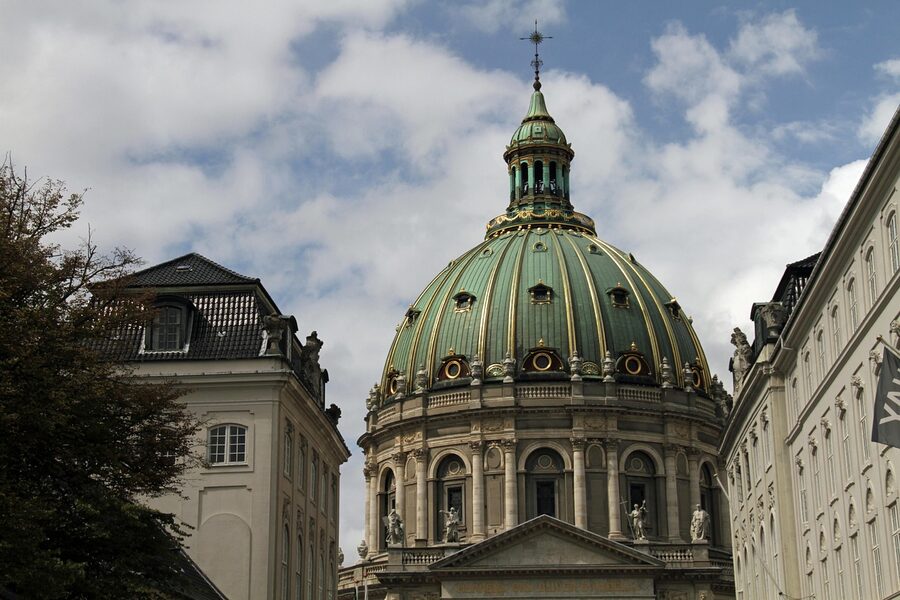
The Marble Church (Frederiks Church) has the largest dome in Scandinavia at 31 metres in diameter. Construction started in 1749 but they ran out of Norwegian marble and money in 1770. It sat as a ruin for over a century before being completed in 1894 using cheaper Danish limestone instead.
When to Walk Copenhagen
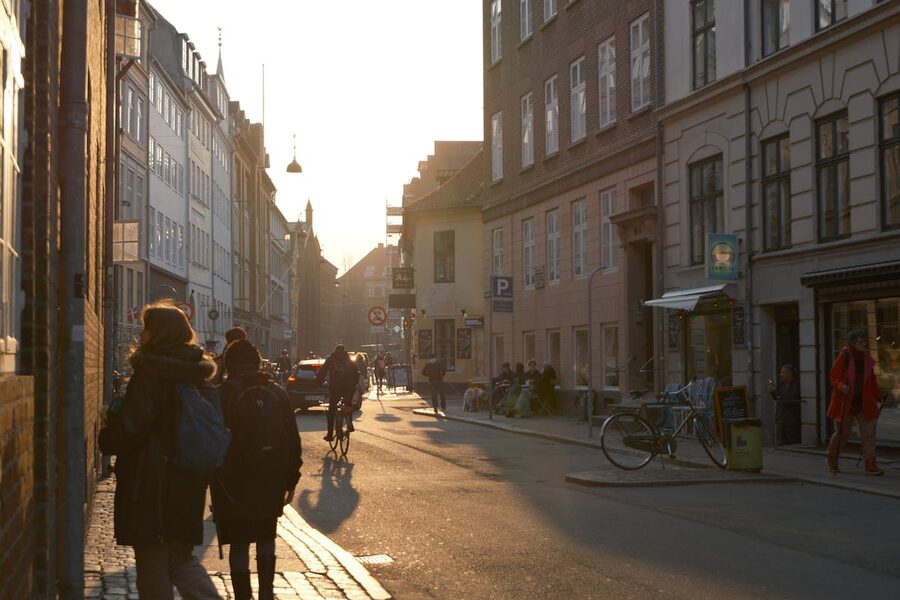
May through September is prime season. The weather is mild (15-22C), the days are long, and outdoor cafes spill onto every square. June and July get the most daylight — sunrise around 4:30am, sunset after 10pm — which means even an evening tour has plenty of light.
October and November get cold and wet, but crowds thin dramatically. If you don’t mind layering up, this is when you’ll get the smallest tour groups and the most attention from your guide.
December brings Christmas markets and the Tivoli holiday season. Winter walking tours are shorter (cold legs) but the city looks spectacular with lights everywhere. Expect around 7 hours of daylight and temperatures near freezing.
April is underrated. The city starts waking up, tulips appear in every park, and you’ll beat the summer rush by a solid month.
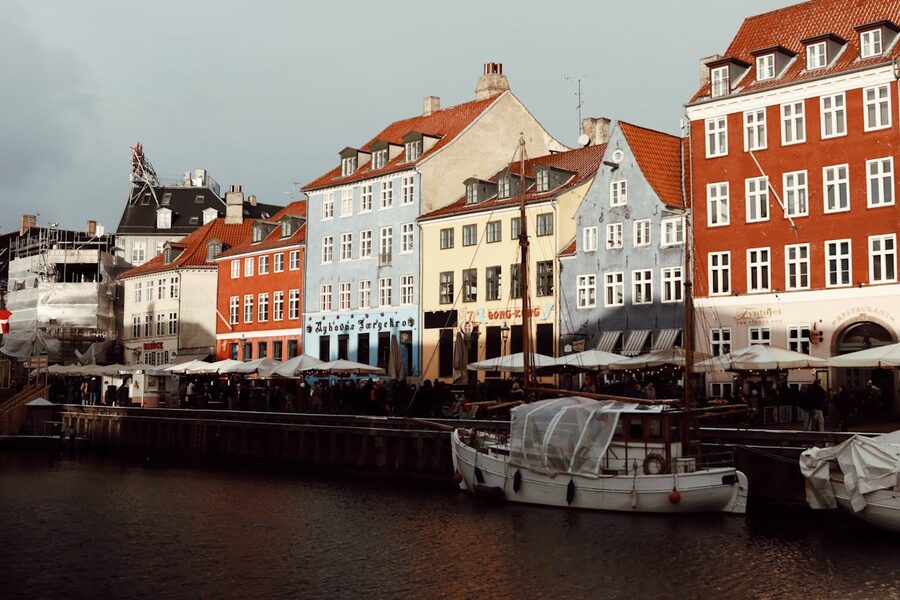
Morning tours (9-10am start) are best for photos. The light is soft, Nyhavn is less crowded, and you can still catch the Changing of the Guard at noon if the tour finishes nearby. Afternoon tours work well in summer but can feel hot and busy in July-August. Avoid starting anything after 2pm in winter — you’ll be walking in the dark by 4.
Getting to the Meeting Points
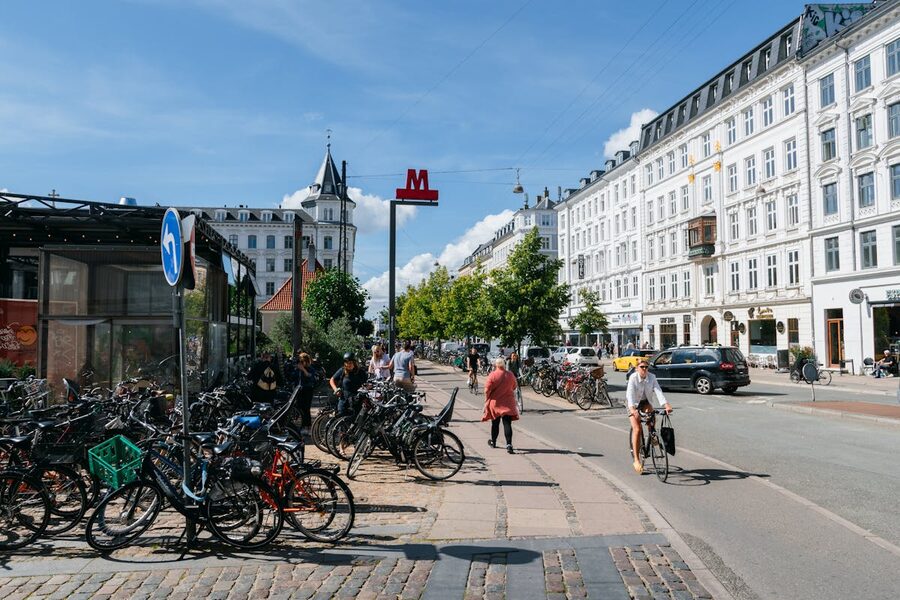
Most tours meet at one of two spots: City Hall Square (Radhuspladsen) or near Nyhavn. Both are central and easy to reach.
From Copenhagen Central Station (Kobenhavns Hovedbanegard), City Hall Square is a 3-minute walk straight out the front entrance. Nyhavn is about 12 minutes on foot heading east, or one stop on the Metro to Kongens Nytorv.
If you’re coming from outside the city centre, the Metro is the fastest option. The M1 and M2 lines both stop at Kongens Nytorv (for Nyhavn) and Norreport (for the Round Tower area). Single tickets cost 24 DKK within two zones.
The harbour bus (ferry line 991/992) is useful if you’re staying near the waterfront. It stops at Nyhavn and runs every 7-10 minutes during the day.
One tip: Copenhagen is flat. Completely flat. If your hotel is within 2km of the city centre, just walk. The bike infrastructure is excellent too — but do NOT try to figure out the bike lane rules five minutes before your tour starts. Locals ride fast and they do not slow down for confused travelers.
Tips That Will Save You Time and Money
Book at least 2-3 days ahead in summer. The good small-group tours fill up. In winter you can usually book same-day without issues.
Wear proper shoes. Copenhagen’s streets are cobblestone. Three hours on cobblestone in sandals is misery. I learned this the hard way.
Bring layers. Copenhagen weather changes fast. You can start in sunshine and finish in rain within the same two-hour walk. A light waterproof jacket that folds into a pocket is ideal.
Don’t eat a big meal beforehand. You’re going to be walking and standing for 2-3 hours. A heavy brunch at 10am followed by a 10:30 tour start is a bad combination.
Tipping is not expected on paid tours in Denmark. The price you pay is the full price. On free tours, 50-100 DKK per person is standard if the guide was good.
The Copenhagen Card includes free public transport and entry to 80+ attractions, but it does NOT cover walking tours. Buy tours separately. The card is worth it if you’re doing 3+ museum entries.
Ask your guide about food. Every good walking tour guide in Copenhagen has a list of restaurants they actually eat at. These recommendations are gold compared to whatever Google Maps throws up.
Copenhagen’s Walking History — Why This City Was Built to Be Explored on Foot

Copenhagen’s walkability isn’t accidental. The medieval city was built inside ramparts that limited how far it could spread, so everything was packed tight within the walls. When the ramparts came down in the 1850s, the city expanded — but the old core stayed dense.
Stroget became a pedestrian street in 1962, an experiment by architect Jan Gehl that was supposed to be temporary. Shop owners protested, drivers complained, newspapers predicted economic disaster. Instead, foot traffic tripled. It became a model for pedestrian zones worldwide, and Gehl went on to redesign streetscapes in Melbourne, New York, and Moscow.
Today Copenhagen has over 100km of dedicated walking and cycling paths through the city centre. The entire harbour area has been reclaimed from industrial use and turned into promenades, parks, and swimming areas. You can walk from Tivoli Gardens to the Little Mermaid along the waterfront without crossing a major road.
The city keeps investing in this. The new harbour bridges — Inderhavnsbroen, Cirkelbroen — are designed for pedestrians and cyclists only. No cars. The Cykelslangen (“Bicycle Snake”) is a raised cycling bridge that swoops over the harbour. And the Metro, which opened its Cityringen line in 2019, was deliberately designed to make the last-mile walk from station to destination as short as possible.
All of this matters for walking tours because it means the routes are genuinely pleasant. You’re not dodging traffic. You’re not breathing exhaust. You’re walking through a city that has spent 60 years prioritising people who move at 5km/h.
More Copenhagen Guides
If the walking tour is just the start of your Copenhagen plans, we’ve got you covered. The canal cruise guide is the obvious next step — seeing the city from the water fills in everything you miss on foot, especially the harbour district and Christianshavn. Tivoli Gardens is right next to where most walking tours end, and our guide covers skip-the-line strategies that save you 30+ minutes in summer. For something different, the full Copenhagen tour roundup covers everything from food walks to photography tours — and the city tour comparison breaks down which type of tour suits which kind of traveller.

This article contains affiliate links. When you book through the links on this page, we may earn a small commission at no extra cost to you. This helps us keep producing free travel guides.