
I stood at the edge of the Roman Forum on a Tuesday morning, staring at a chunk of marble that used to be part of the Temple of Saturn, and realized I had no idea what I was looking at. Not really. I had read about it, sure. I could have told you it was built around 497 BC and that Romans stored their treasury there. But standing in front of it, surrounded by columns and rubble and 2,500 years of history piled on top of itself, I could not tell the difference between what was important and what was just old stone.
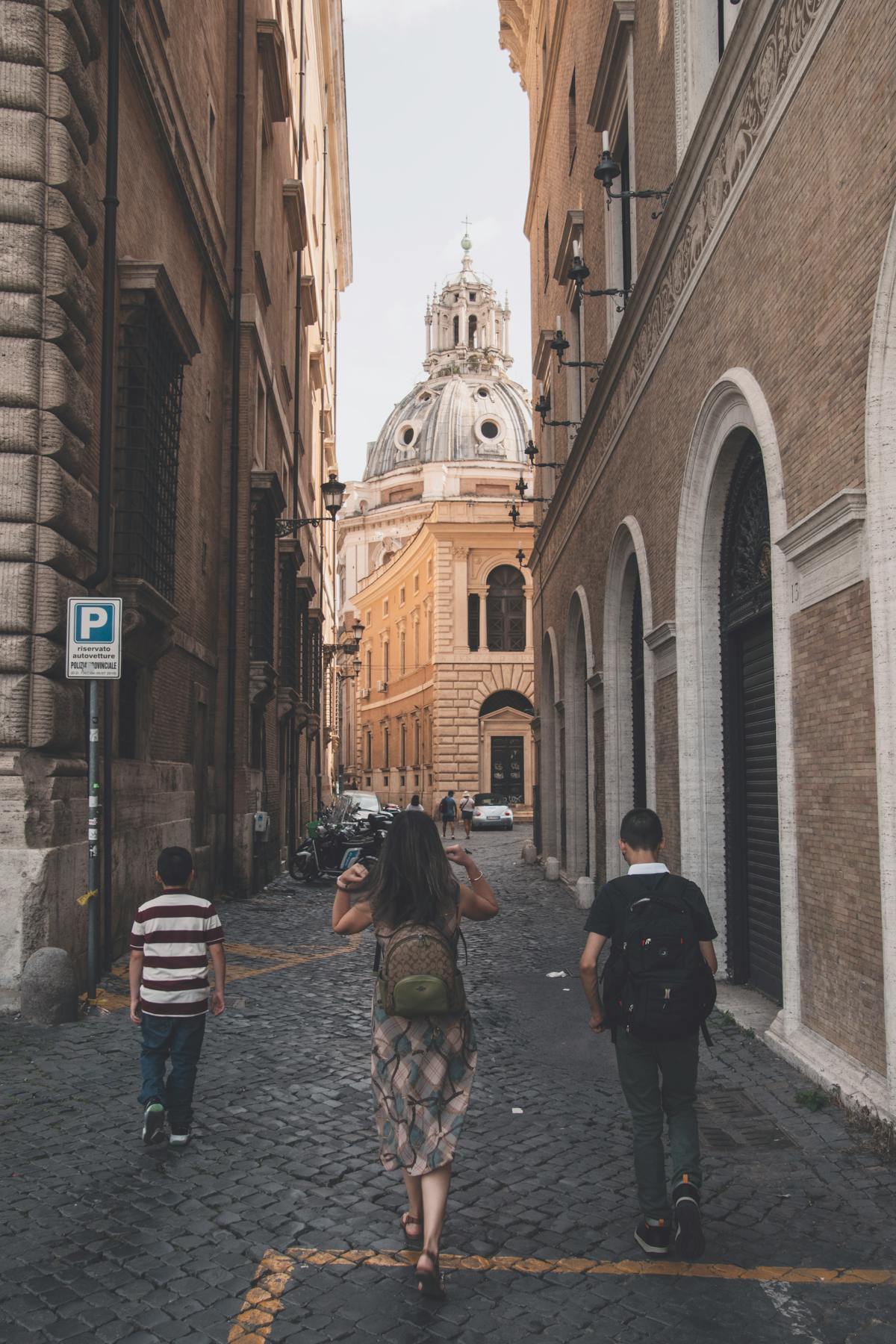
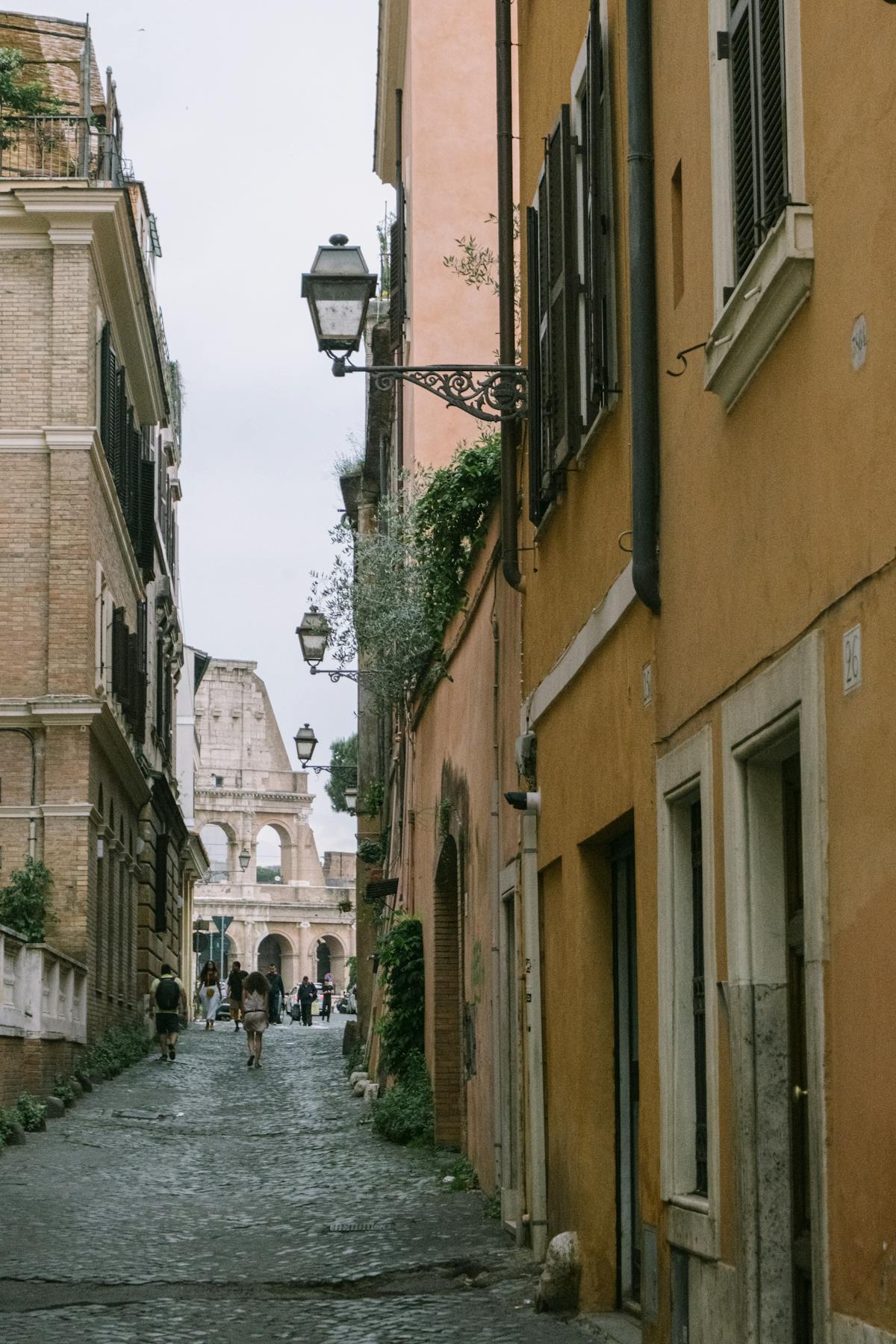

That is why walking tours in Rome hit differently than in most cities. Rome is not a place where the attractions are conveniently spaced out with clear signage and straightforward histories. The city is a pile-up — literally, layers of civilizations built on top of each other for nearly three thousand years. You are walking on medieval cobblestones that sit on top of ancient Roman roads that sit on top of Etruscan foundations. Without someone to decode it, you will spend your time taking photos of things you do not understand and reading Wikipedia articles on your phone while your gelato melts.
A good walking tour guide in Rome does what a guidebook cannot: they connect the dots between what you see and what it means. They point at a random wall and explain that the brickwork pattern tells you it was built during Hadrian’s reign. They take you down a side street to show you a medieval tower that is not on any tourist map but that tells the story of how Roman noble families used to wage private wars against each other from competing towers. They know which piazza to stand in at 10 AM so the light hits a Bernini fountain at exactly the right angle.
I have walked around Rome on my own and with guides, and the difference is not subtle. It is the difference between looking at a city and understanding it. If you have limited time — and most people do — a walking tour is the single most efficient way to make sense of this ridiculous, layered, contradictory place.
In a Hurry? The Best Walking Tours in Rome
- Best overall highlights walk: Best of Rome Walking Tour including Trevi Fountain — from $4.62/person (tip-based), 1.5-2 hours, hits Trevi, Pantheon, and Piazza Navona
- Best ancient history tour: Ancient Rome Guided Walking Tour: Colosseum, Forum and Palatine — $71.65/person, 3 hours, the full ancient Rome circuit
- Best for first-timers: Best of Rome Walking Tour with Piazza Navona and Trevi Fountain — $35/person, 2.5 hours, classic route through Centro Storico
- Best off-the-beaten-path: Rome Icons & Hidden Gems Walking Tour — $24/person, mixes major sights with spots most travelers never see
- Best flexible route: Trevi Fountain, Spanish Steps & Pantheon Walking Tour — $34/person, 2.5-4.5 hours, covers the Centro Storico greatest hits
- In a Hurry? The Best Walking Tours in Rome
- Why a Walking Tour Makes Sense in Rome (More Than Most Cities)
- Types of Walking Tours in Rome
- The 5 Best Walking Tours in Rome
- Best of Rome Walking Tour including Trevi Fountain
- Ancient Rome Guided Walking Tour: Colosseum, Forum and Palatine
- Best of Rome Walking Tour with Piazza Navona and Trevi Fountain
- Rome Icons & Hidden Gems: Guided Walking Tour
- Rome: Trevi Fountain, Spanish Steps & Pantheon Walking Tour
- When to Walk Rome
- Practical Tips for Walking Tours in Rome
Why a Walking Tour Makes Sense in Rome (More Than Most Cities)
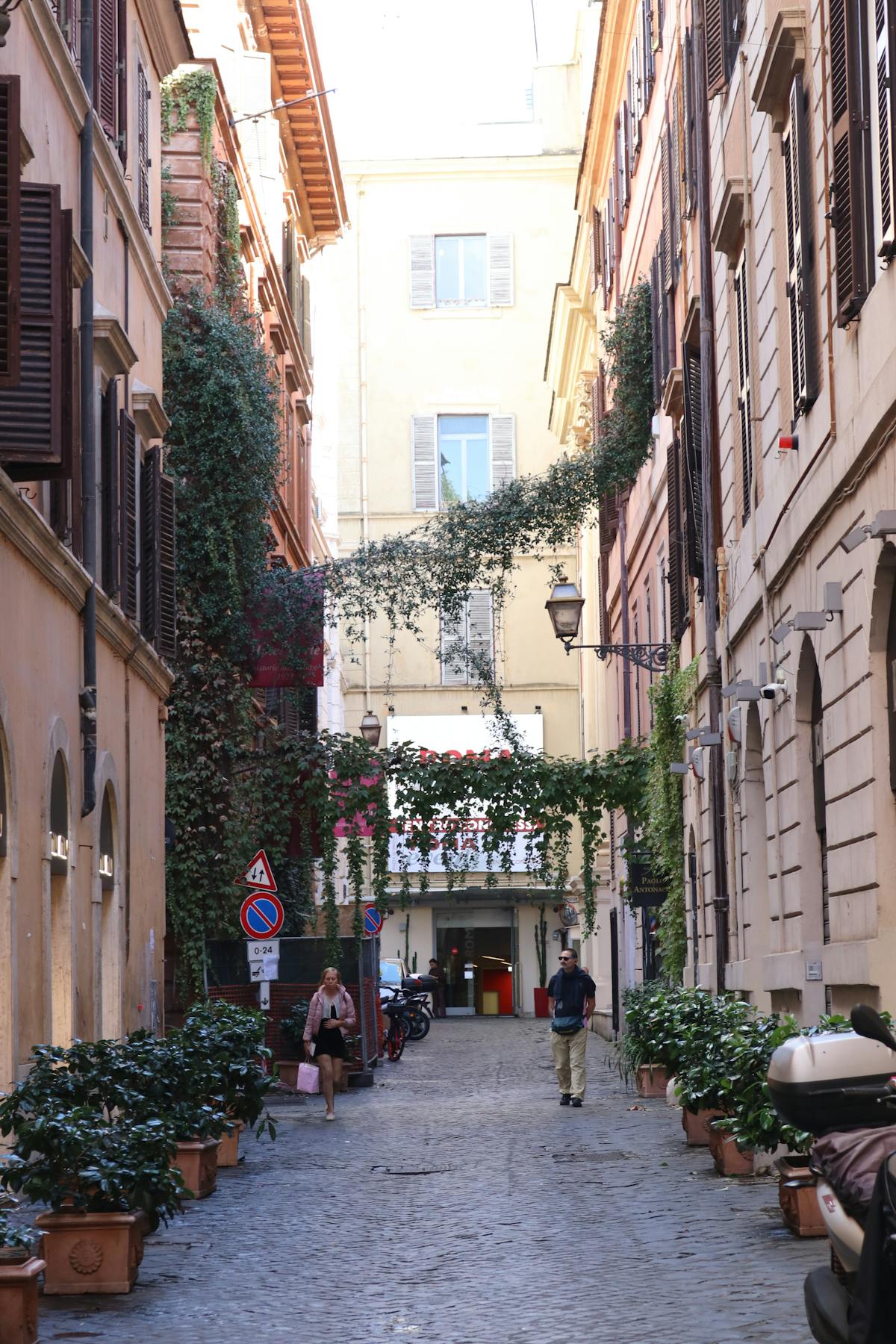
Rome’s layout is famously confusing. The street grid — or lack of one — dates back to the medieval period when the city shrank to a fraction of its ancient size and people built wherever they felt like building. Modern Rome grew around those medieval streets, which themselves grew around ancient ruins, which means the city’s logic is archaeology, not urban planning. GPS will get you from point A to point B, but it will send you down the widest roads, not the most interesting ones.
Walking tours fix this. The guides have routes that thread through alleys, cut through piazzas, duck under archways, and find viewpoints that Google Maps does not know exist. The route itself becomes part of the experience — you are not just getting between landmarks, you are discovering the city’s connective tissue. The tiny church with a Caravaggio painting that costs nothing to enter. The drinking fountain from 19 BC that still works. The apartment building with an ancient Roman column built into its ground floor because when this neighborhood was constructed in the 1500s, they just used whatever was lying around.
The other reason walking tours work in Rome is the density. Within a twenty-minute walk from the Pantheon, you can reach the Colosseum, the Spanish Steps, Piazza Navona, the Trevi Fountain, and the Roman Forum. On your own, you might hit two or three of these in a morning. With a guide who knows the shortcuts and the timing, you hit all of them — plus the half-dozen smaller sites between them that are just as interesting but that you would walk right past on your own.
Types of Walking Tours in Rome
Not all walking tours cover the same ground, and the type you book depends on what you want out of your time in Rome.
Highlights walks are the classic option. These cover the Centro Storico’s greatest hits — Trevi Fountain, Pantheon, Piazza Navona, Spanish Steps — in two to three hours. They work best on your first or second day when you want an overview of the city and its layout. The best ones also squeeze in a few lesser-known stops along the way, so you get the iconic photos and a couple of genuine surprises.
Ancient Rome walks focus on the classical period — the Colosseum, Roman Forum, Palatine Hill, and sometimes the Circus Maximus or Capitoline Hill. These are more educational and less scenic in the Instagram sense, but they are absolutely staggering if you care about history. Standing in the spot where Julius Caesar was cremated hits different when a guide is explaining what happened there in real time. These tours often overlap with Colosseum ticket tours, so check whether entry is included.
Hidden Rome walks go off-script. They take you to neighborhoods like Monti (Rome’s oldest residential district), the Aventine Hill (where the famous keyhole view of St. Peter’s dome is), or the streets behind Piazza Venezia where the ancient apartment buildings called insulae still have visible foundations. These are for second-time visitors or anyone who finds the major landmarks too crowded and wants to see what Rome looks like when it is not performing for travelers.
Small group tours cap attendance at 8-15 people. They cost more, but you can actually hear the guide, ask questions, and move at a pace that does not feel like a forced march. In Rome’s narrow streets, large groups (25-30 people) create bottlenecks and the guide’s voice gets swallowed by traffic noise. For about $10-20 extra per person, a small group tour is almost always worth the upgrade.
The 5 Best Walking Tours in Rome
I went through every walking tour option in Rome across GetYourGuide and Viator, cross-referenced the ones that actually focus on walking and sightseeing rather than museum entry, and picked these five. Each covers different ground and a different price point.
Best of Rome Walking Tour including Trevi Fountain
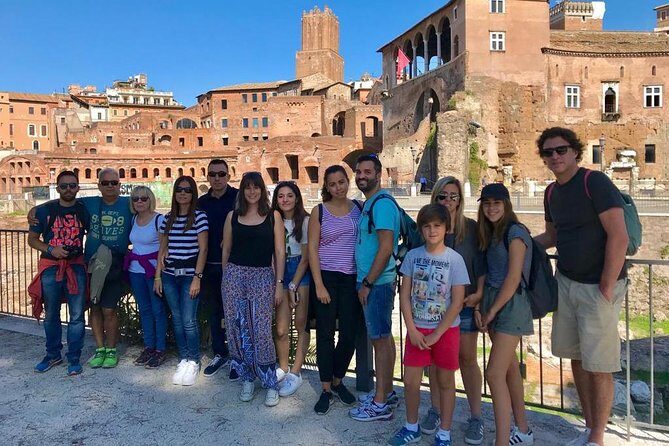
Price: From $4.62/person (tip-based) | Duration: 1.5-2 hours | Platform: Viator
This is a tip-based tour, which means the listed price is essentially a booking fee and you pay what you think the tour was worth at the end. The model works because the guides are motivated to be genuinely excellent — their income depends on it. And in practice, the guides on this particular tour are some of the most knowledgeable and entertaining you will find in Rome.
The route hits the Trevi Fountain, the Pantheon, Piazza Navona, and several stops in between. At 1.5 to 2 hours, it is compact enough that you are never standing around waiting, and the pace keeps you moving through the city in a way that feels natural rather than rushed. The guide fills the walking time between stops with stories and context about the streets you are passing through, so there is no dead time.
This works perfectly as a first-morning activity. You get oriented to the city center, you see the big landmarks, and you still have the entire afternoon free for deeper exploration — or for booking a separate tour of the Colosseum, Vatican Museums, or Pantheon. The tip-based model also means there is essentially no financial risk. If the guide is terrible (unlikely, but possible), you leave a small tip and move on.
One thing to note: the base price of $4.62 is just the booking fee. Plan to tip $15-25 per person for a good tour, which brings the actual cost more in line with the others on this list. Still a bargain for what you get.
Ancient Rome Guided Walking Tour: Colosseum, Forum and Palatine
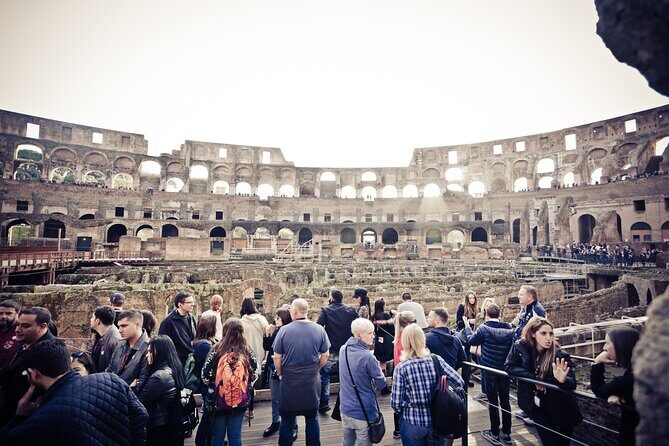
Price: $71.65/person | Duration: 3 hours | Platform: Viator
This is the serious history option. Three hours dedicated entirely to ancient Rome — the Colosseum, the Roman Forum, and Palatine Hill — with a guide who can explain the difference between Republican and Imperial construction techniques while making it genuinely interesting. The price includes skip-the-line entry to the Colosseum, which alone can save you an hour of queuing during peak season.
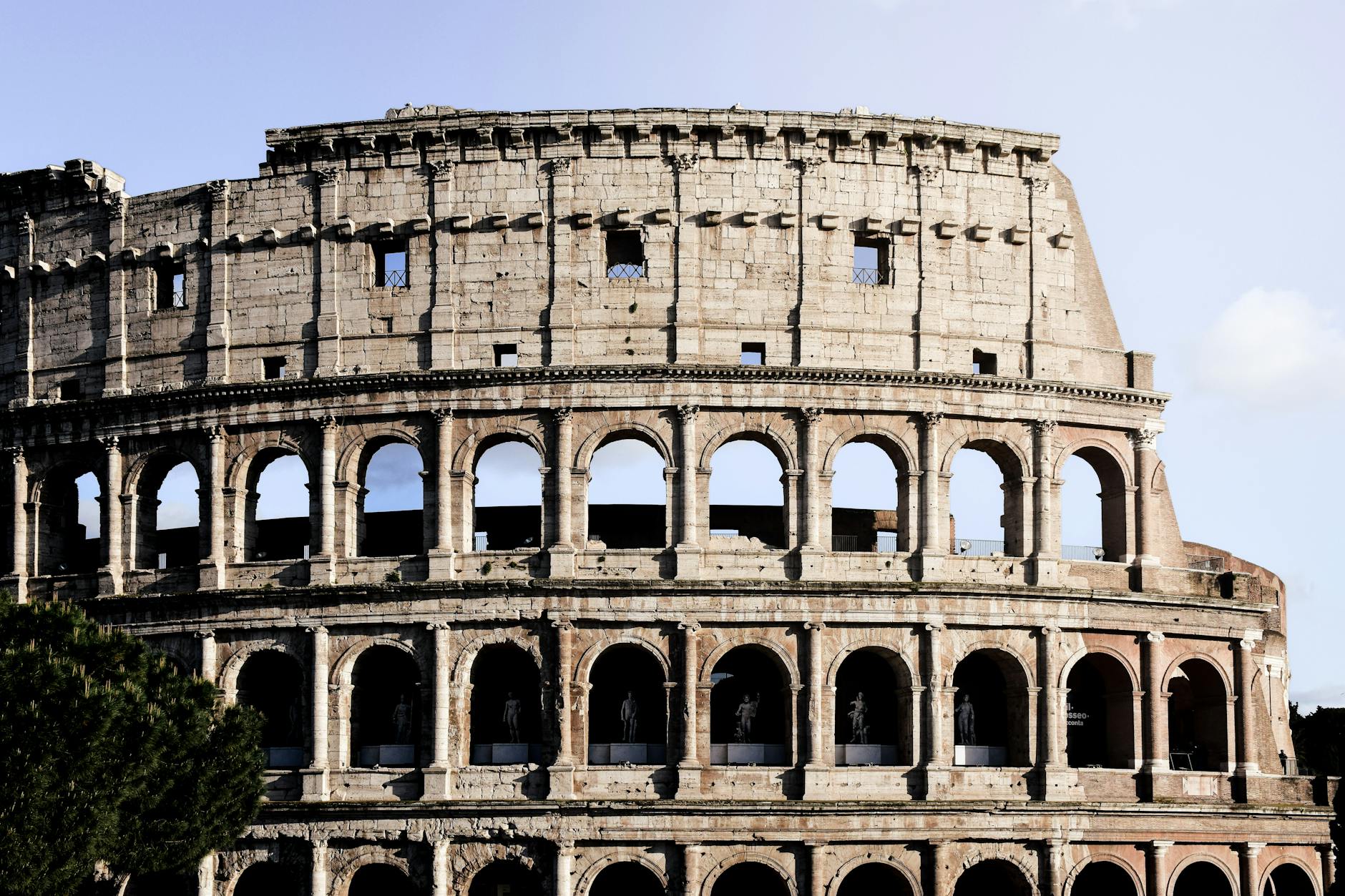
The Forum is where this tour really earns its money. Walking through the Forum on your own is mostly an exercise in staring at broken columns and trying to figure out what used to be where. With a guide, the Forum comes alive — you learn which building was the Senate, where public speeches were given, where the sacred fire was kept by the Vestal Virgins, and why the layout of the Forum tells the story of Rome’s transformation from republic to empire. The Palatine Hill section adds the imperial palaces and one of the best views in Rome.
At $71.65, it is the most expensive walking tour on this list, but the skip-the-line access to the Colosseum is worth roughly $20-30 on its own, and the three hours of expert guiding through Rome’s most historically significant area more than justifies the rest. If you only do one ticketed attraction in Rome, make it this.
Best of Rome Walking Tour with Piazza Navona and Trevi Fountain
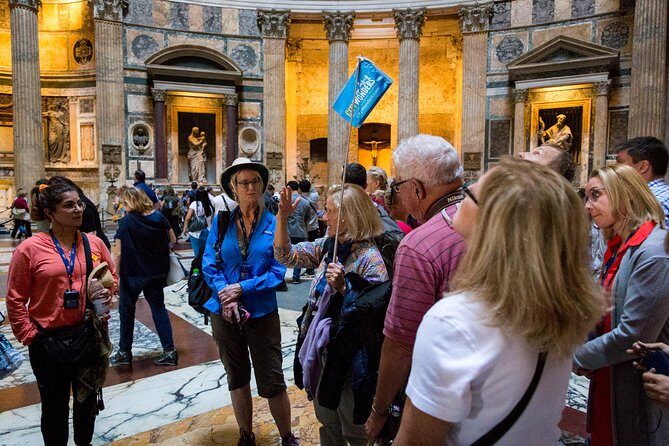
Price: $35/person | Duration: 2.5 hours | Platform: Viator
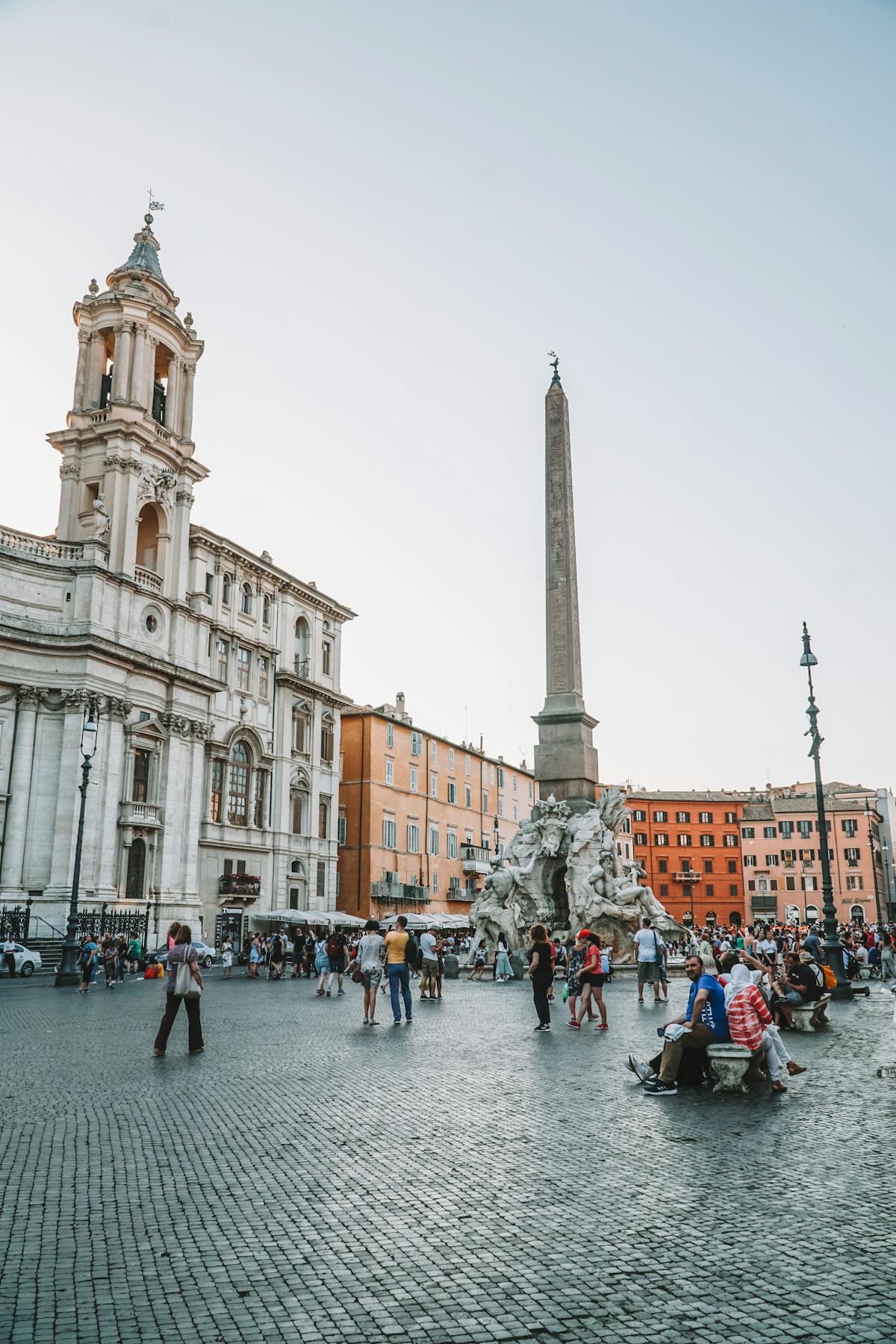
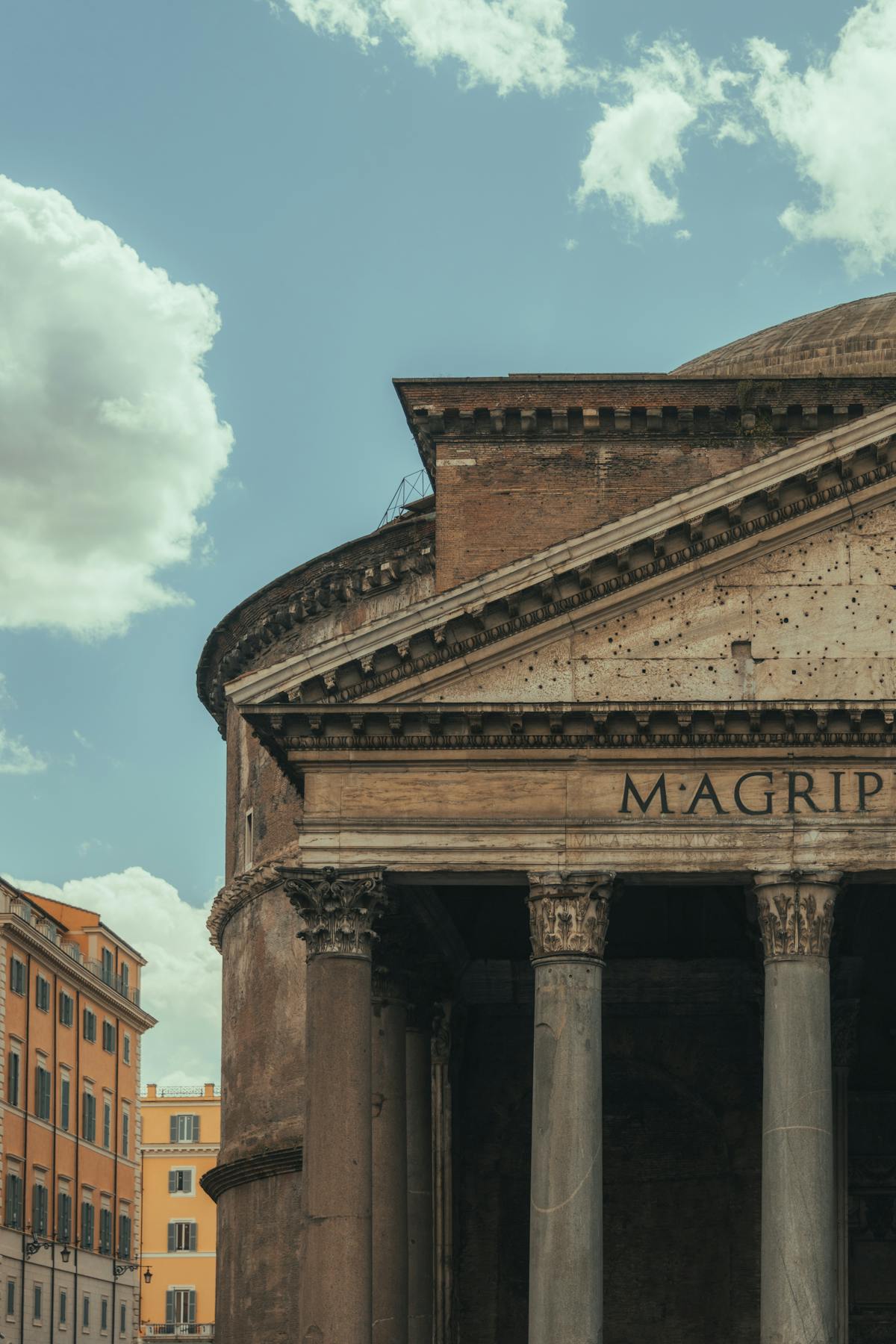
This is the Goldilocks option — long enough to cover serious ground, short enough that your feet do not stage a revolt, and priced at a point that makes it an easy yes for most budgets. The route runs through the Centro Storico’s heart: Piazza Navona with its Bernini fountains, the Pantheon (still the best-preserved ancient building in the world, and still free to gawp at from outside), the Trevi Fountain, and several piazzas and churches in between.
What separates this from similar tours is the pacing. Two and a half hours gives the guide time to stop, let you look, take photos, and actually absorb what they are saying rather than rushing between checkpoints. The Piazza Navona section is particularly good — most people walk through, take a photo of the fountain, and leave. The guide explains the piazza’s origin as the Stadium of Domitian, points out the rival Bernini and Borromini works facing each other across the square, and gives you context that makes you see the space completely differently.
At $35, this delivers excellent value. It is a proper guided tour of central Rome’s most significant sites, and the 2.5-hour runtime means you can book a morning departure and still have time for a late lunch and an afternoon at the Borghese Gallery or Catacombs.
Rome Icons & Hidden Gems: Guided Walking Tour
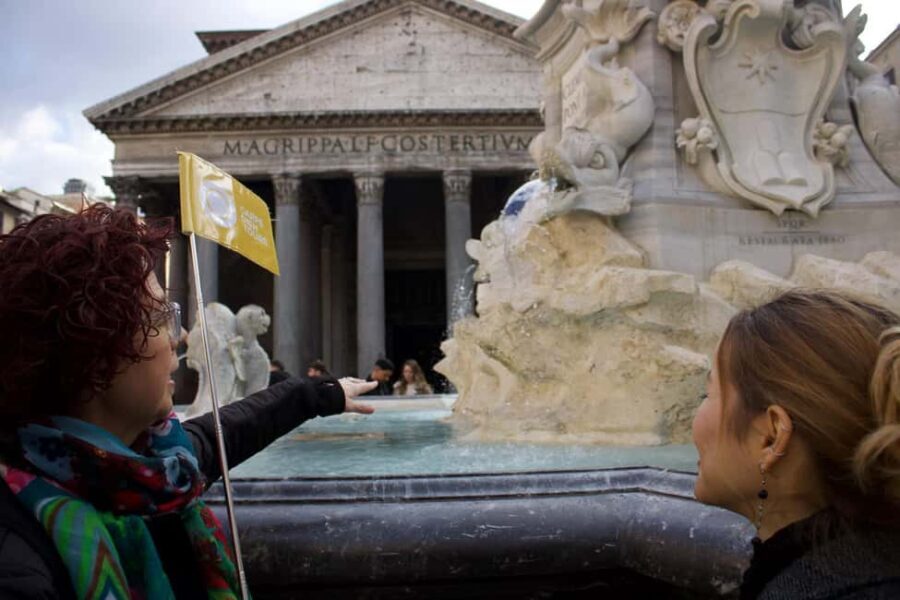
Price: $24/person | Duration: Typically 2-3 hours | Platform: GetYourGuide
The name is slightly cheesy, but the tour itself delivers on the promise. You get the icons — Trevi Fountain, Spanish Steps, Piazza Navona — but the guide also threads in stops that are not on the standard tourist circuit. Side streets with ancient inscriptions still visible in the walls. Tiny churches that contain paintings worth millions but that nobody visits because there is no queue outside. A viewpoint that does not show up on any best-views list but that is better than half of them.
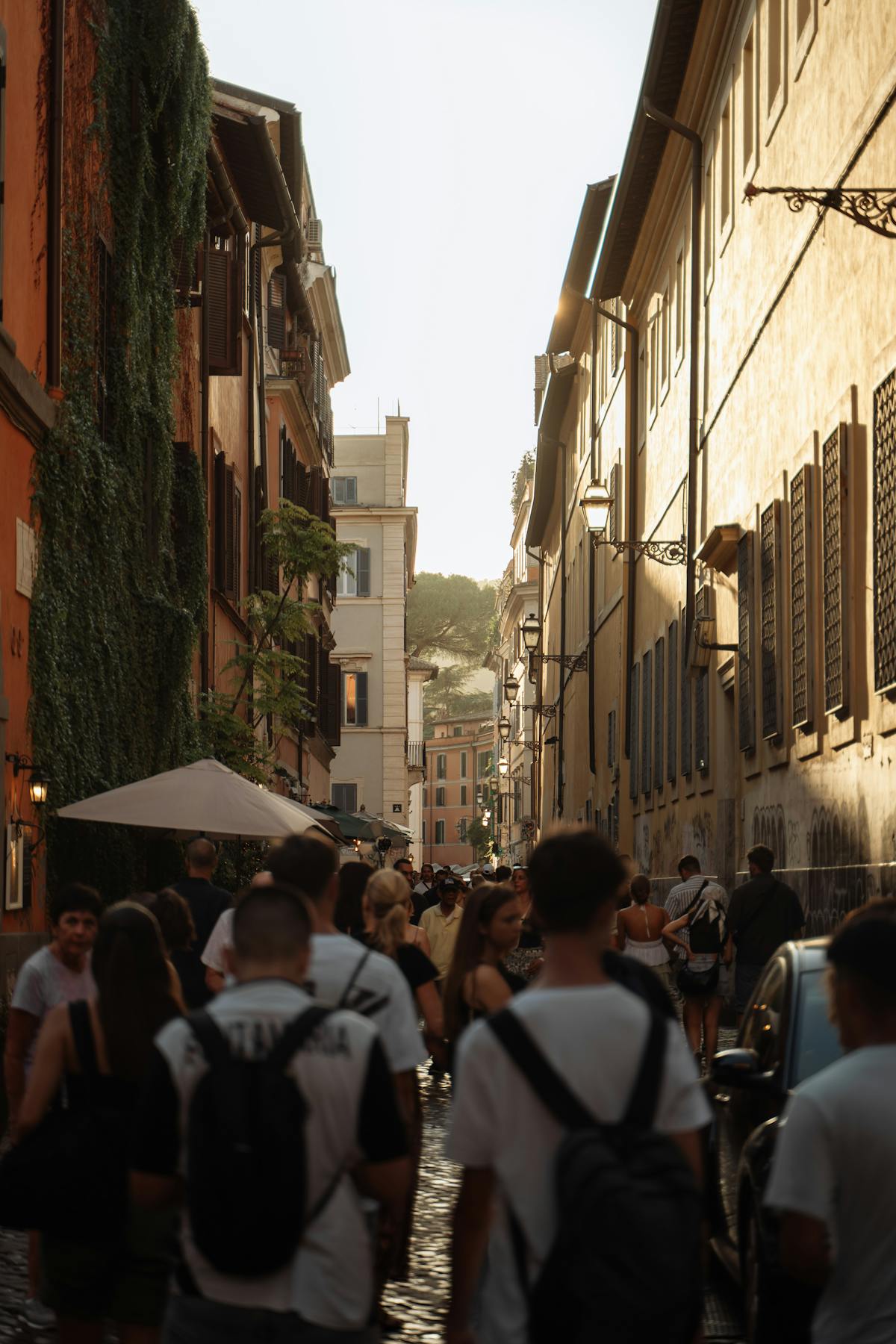
At $24, this is the cheapest paid walking tour on this list (the tip-based tour above could end up costing less, but probably will not). The lower price point does not translate to lower quality — it means you get a larger group, typically 20-25 people. If you are okay with that, the value per dollar is hard to beat. The guides are knowledgeable and the route is genuinely thoughtful.
This is a strong choice if you are visiting Rome for the first time and want maximum coverage for minimum spend. Pair it with the Ancient Rome tour for a two-day walking tour combination that covers both the classical and baroque layers of the city.
Rome: Trevi Fountain, Spanish Steps & Pantheon Walking Tour
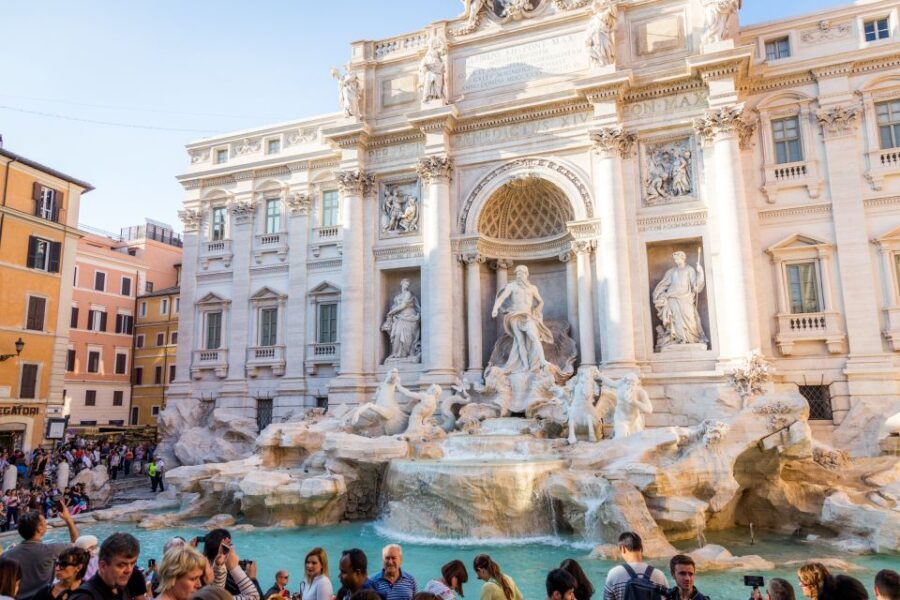
Price: $34/person | Duration: 2.5-4.5 hours | Platform: GetYourGuide
The duration range on this one is wide — 2.5 to 4.5 hours — which tells you that the guide adapts to the group. If people have questions and want to linger at the Trevi Fountain, the tour runs long. If the group wants to keep moving, it stays tight. That flexibility is unusual for walking tours and makes this a good choice for people who hate feeling herded.
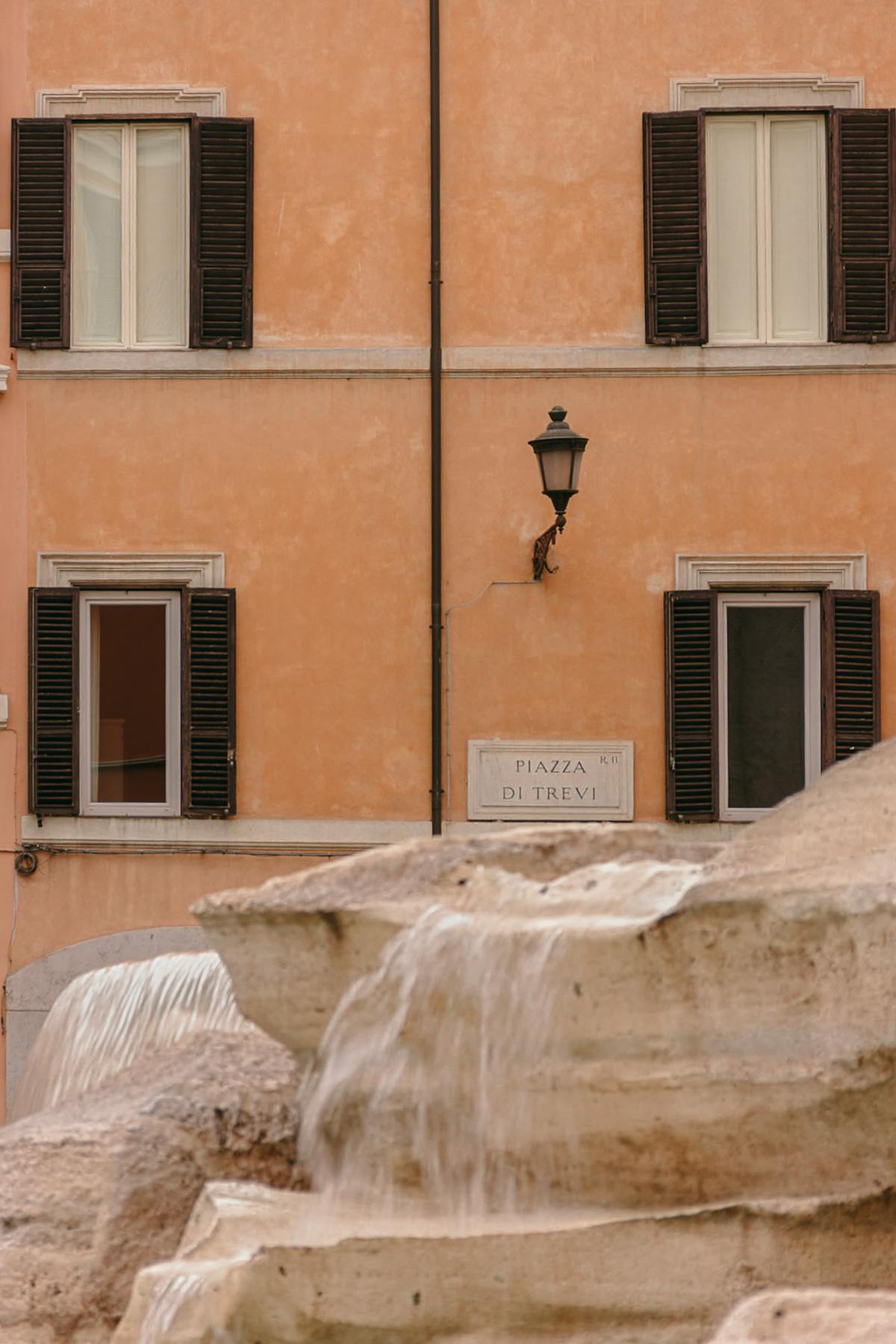
The route covers the three landmarks in the title plus connecting streets, piazzas, and the occasional detour based on what the guide thinks the group will appreciate. The Spanish Steps section includes the surrounding neighborhood — the designer shopping streets, Keats’ house, and the Barcaccia fountain at the base, which most people photograph without knowing it was designed by Bernini’s father. The Pantheon stop is the highlight for most groups: standing inside the best-preserved building from the Roman Empire, looking up at the oculus, and having someone explain how the engineering works is one of those Rome moments that sticks with you.
At $34, this is nearly identical in price to the Piazza Navona tour above but covers slightly different ground. If you want the Spanish Steps included in your route, this is the one. If you care more about Piazza Navona, go with the other.
When to Walk Rome
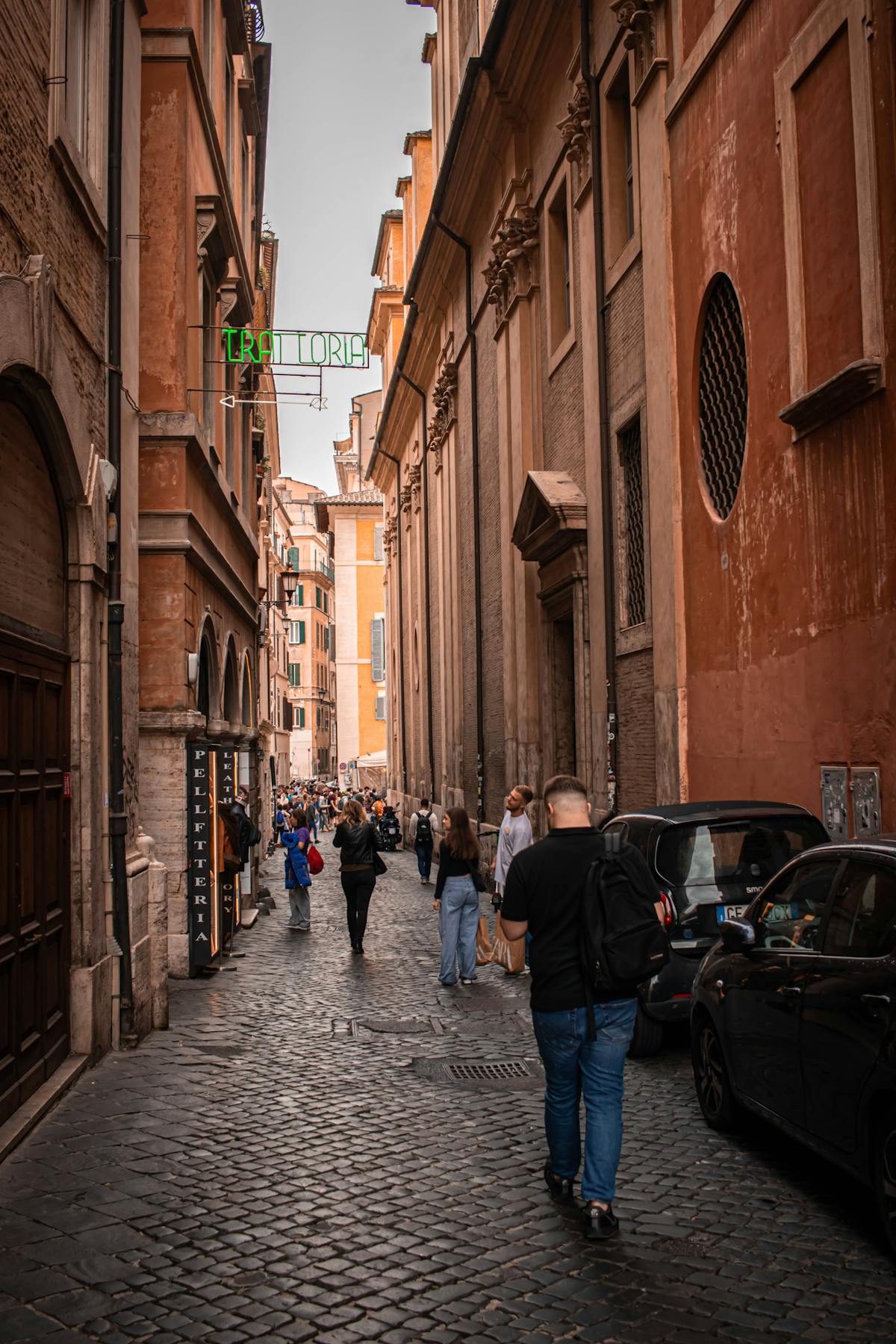
Rome’s walking tour season runs year-round, but the experience changes dramatically depending on when you go.
Spring (March-May) is the sweet spot. Temperatures hover around 15-22C, daylight stretches longer, and the city looks its best. April and May are peak months, though, so book tours at least a week ahead — the morning slots go first.
Summer (June-August) is brutal for walking tours. Temperatures regularly hit 35C and above, shade is scarce around the major landmarks, and the midday sun turns the Forum into a furnace. If you are visiting in summer, book the earliest morning tour available (9 AM or earlier) or wait for the late afternoon. Skip anything between noon and 3 PM unless you enjoy heatstroke. A night tour of Rome is a much better option during the hottest months.
Autumn (September-October) rivals spring as the best time. The summer crowds thin, the light turns golden, and the temperature drops to a comfortable walking range. October in particular is underrated — the city is gorgeous, prices start to dip, and you can actually hear your guide over the noise at the Trevi Fountain.
Winter (November-February) is cold and occasionally rainy, but Rome never freezes and the city takes on a completely different character. Fewer travelers means smaller tour groups and more time at each stop. The guides tend to be more relaxed and willing to go off-script. Bring layers and a rain jacket, but do not write off winter walking tours — some of my best Rome walks have been in December when the streets were half-empty and the espresso was twice as necessary.
Practical Tips for Walking Tours in Rome
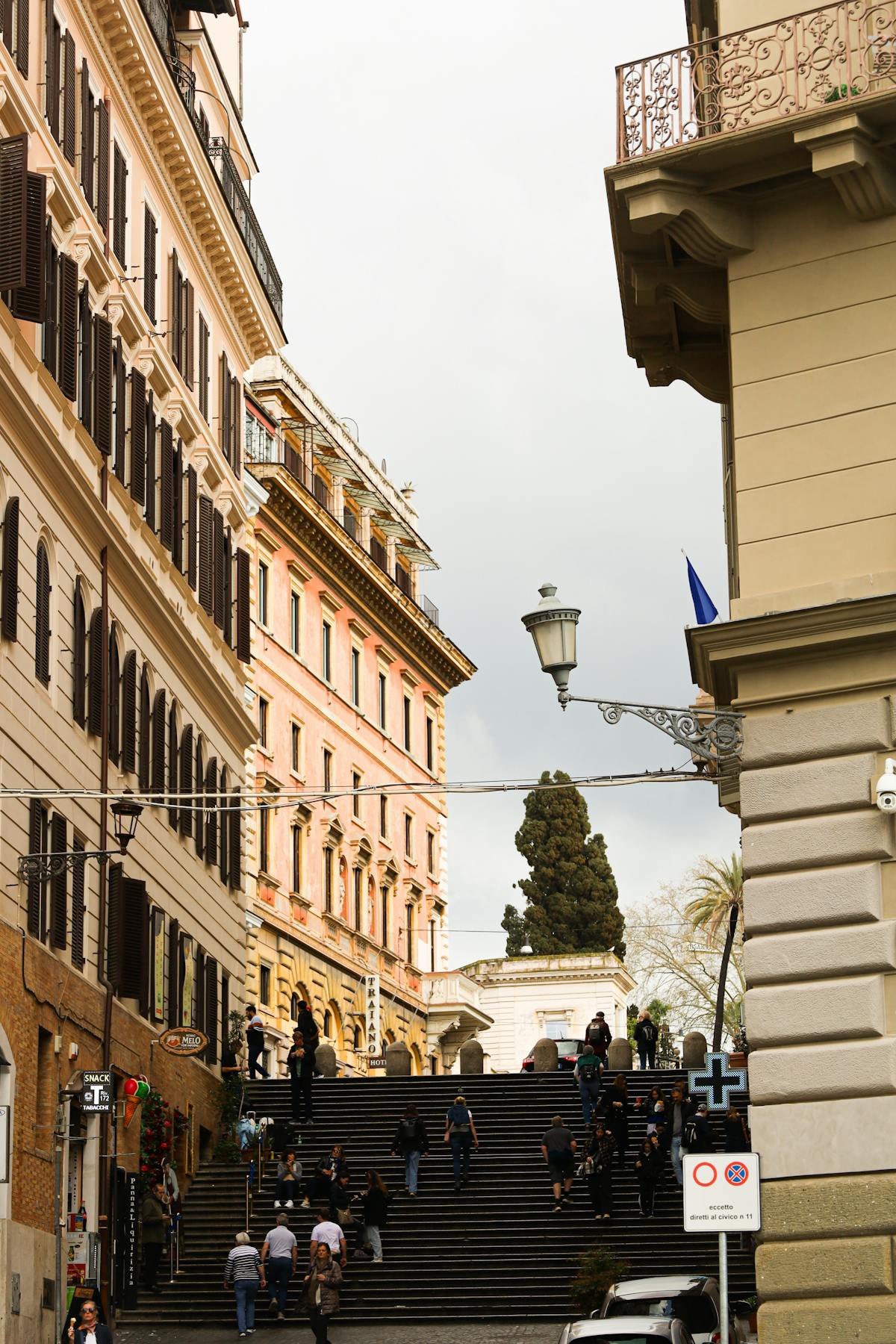
Shoes matter more than you think. Roman cobblestones (sampietrini) are beautiful and absolutely brutal on feet. The black basalt cubes are uneven, slippery when wet, and spaced just far enough apart to catch thin soles. Wear proper walking shoes with cushioning and grip. Sandals, flip-flops, and dress shoes will make you miserable by the one-hour mark.
Bring water but do not buy it. Rome has more than 2,500 public drinking fountains (nasoni) scattered across the city. The water comes from the same aqueducts that supplied ancient Rome and it is clean, cold, and free. Carry a refillable bottle and top it up at every nasone you pass. Your guide will point them out.
Morning tours beat afternoon tours. The light is better, the landmarks are less crowded, and your energy is higher. Most walking tours offer 9-10 AM departures. Take the earliest one. By noon, the Trevi Fountain area is packed so tight you cannot throw a coin without hitting someone’s selfie stick.
Combine, do not repeat. If you are booking multiple tours, make sure they cover different areas. A highlights walk through Centro Storico plus an ancient Rome tour at the Colosseum gives you comprehensive coverage. Two Centro Storico walks with slightly different routes will feel repetitive. Add a food tour or a Trastevere tour for variety rather than doubling up on sightseeing.
Tip in cash if you can. For tip-based tours, bring euros. Even for fixed-price tours, a tip of 5-10 euros per person for a good guide is standard practice in Rome. The guides work hard and most of them are freelancers without benefits.
Do not skip the Castel Sant’Angelo area. Most walking tours do not include it because it is slightly off the main Centro Storico loop, but the walk from Piazza Navona to Castel Sant’Angelo along the Tiber is one of the prettiest fifteen-minute walks in Rome. Ask your guide if they can point you in the right direction after the tour ends.
This article contains links to tours and activities from our partners. We may earn a small commission at no extra cost to you when you book through these links, which helps us keep creating free content like this. All recommendations are based on our own assessment and are not influenced by any partnerships.