
Thirteen white geese live in the cloister of Barcelona Cathedral. They’ve been there for centuries — one goose for each year of Saint Eulalia’s life when the Romans put her to death in 304 AD. Tourists walk in expecting stained glass and Gothic arches, and what stops them first is the honking. That’s Barcelona for you.
The cathedral itself is the real one. Not the Sagrada Familia — that’s a basilica, technically still under construction, and about 2 kilometres away. This is the Cathedral of the Holy Cross and Saint Eulalia, the actual seat of the Archbishop of Barcelona, sitting right in the middle of the Gothic Quarter. It took 150 years to build, from 1298 to 1448, and it shows. Every corner has something going on.
- In a Hurry? Our Top 3 Picks
- Do You Actually Need Tickets?
- How to Book Tickets
- What You’ll See Inside
- Best Tours to Book
- 1. Cathedral of Barcelona Entry Ticket —
- 2. Guided Tour with VR Experience —
- 3. Private Cathedral Tour with Rooftop Access —
- What Each Ticket Type Gets You
- Accessibility and Practical Details
- Barcelona Cathedral vs Sagrada Familia: The Confusion
- The Geese: Barcelona’s Weirdest Tradition
- History of the Cathedral
- When to Visit
- Getting There
- Tips for Your Visit
- What Else to See Nearby
In a Hurry? Our Top 3 Picks
Best value: Cathedral Entry Ticket — $23 for full access including the cloister, choir, rooftop, and museum. Everything you need in one ticket.
Best experience: Guided Tour with VR Experience — $34 for a 75-minute guided visit plus virtual reality that shows the cathedral through history. Worth it for the guide alone.
Best for small groups: Private Cathedral Tour with Rooftop — $34 for a private guide and rooftop access. Same price as the group tour but more personal.
Do You Actually Need Tickets?
This is where it gets confusing, and where most travelers mess up. Barcelona Cathedral has a free entry window and a paid entry system, and they’re completely different experiences.
Free entry: The cathedral opens for worship every morning, typically from 8:30am to 12:30pm on weekdays, and again in the late afternoon (usually 5:15pm to 7:30pm). During these hours, you can walk in and see the main nave, the cloister with the geese, and the crypt of Saint Eulalia. No ticket required. But you can’t access the choir stalls, the rooftop, or the museum.
Paid entry (tourist visit): From about 1pm to 5pm, you need a ticket. The basic tourist entry costs around $9-11 at the door and gets you the same areas plus the choir. The full-access ticket ($23 online) adds the rooftop and the museum.
My advice: Buy the full-access ticket online and go during the paid hours. Yes, you could see part of it for free, but the rooftop alone is worth the $23. The elevator takes you up to a terrace with 360-degree views of Barcelona’s rooftops, and almost nobody up there knows about it because they came during free hours and left. The Gothic Quarter looks completely different from above.
How to Book Tickets
Three options, and they differ more than you’d think.
Option 1: Official website (catedralbcn.org). The cathedral’s own ticket portal. Prices are competitive and you pick a time slot. The downside: the website is clunky, sometimes only shows Spanish, and the confirmation emails can take a while. But it works.
Option 2: GetYourGuide or Viator. This is what I’d recommend. The $23 entry ticket through GYG includes everything — cloister, choir, rooftop, museum — and the booking process is clean. You get instant confirmation, mobile tickets, and free cancellation up to 24 hours before. For the guided tour ($34), you also get a knowledgeable local guide and a VR headset that shows you what the cathedral looked like at different points in history.
Option 3: Buy at the door. Cash or card, no booking needed. The queue is rarely long — 5-10 minutes at worst. But the door price only gets you the basic tourist entry (no rooftop), and they sometimes run out of rooftop time slots by early afternoon. If the rooftop matters to you, book ahead.
One quirk: the cathedral’s ticket structure has changed multiple times in recent years. What you read on a 2023 blog post may not match the current system. The online platforms (GYG, Viator) tend to update faster than independent blog reviews.
What You’ll See Inside
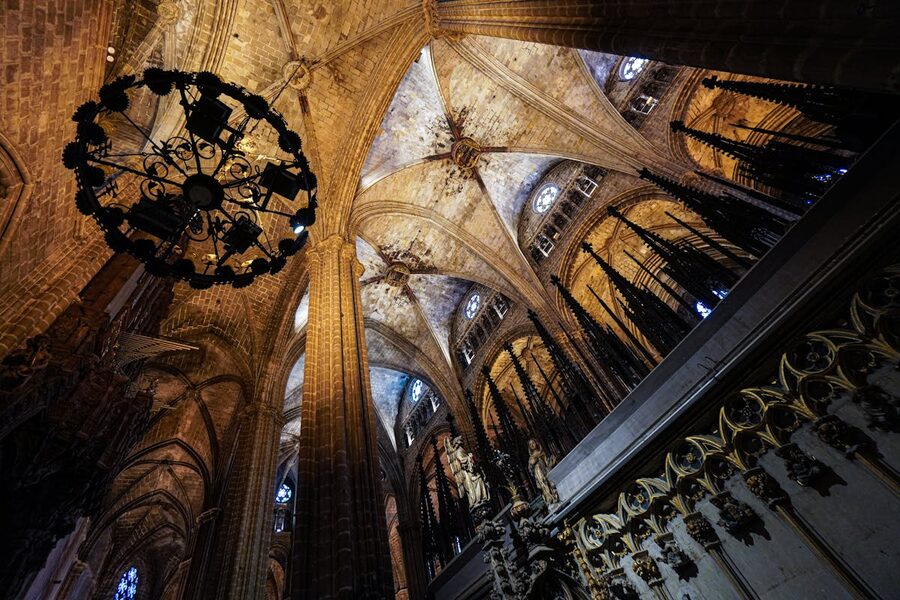
The interior is dark, cool, and massive. After the narrow Gothic Quarter streets, walking into the nave feels like entering a cave. The ceiling is 26 metres high — roughly the height of an 8-storey building — and the ribbed Gothic vaulting draws your eye upward immediately.
The main attractions inside:
The Crypt of Saint Eulalia: Below the main altar, down a narrow staircase. The alabaster sarcophagus dates to the 14th century and depicts scenes from Eulalia’s martyrdom. She was 13 when the Roman governor of Barcelona had her tortured — including, according to tradition, being rolled down a street in a barrel full of knives, nails, and glass. The crypt is small and atmospheric. Worth lingering here for a few minutes.
The Choir Stalls: Carved wooden stalls from the 14th and 15th centuries, reserved for the Knights of the Order of the Golden Fleece when they met here in 1519. The misericords (the small carved supports under the seats) are particularly detailed — faces, animals, grotesques. You need the paid ticket to access this area.
The Cloister: Open-air, surrounded by orange trees and palm trees, with a fountain in the centre and 13 white geese wandering around. The geese are the surprise highlight for most people. They’ve been here since at least the Middle Ages — 13 geese for the 13 years of Eulalia’s life. The cloister is free to access during worship hours and included with all paid tickets.
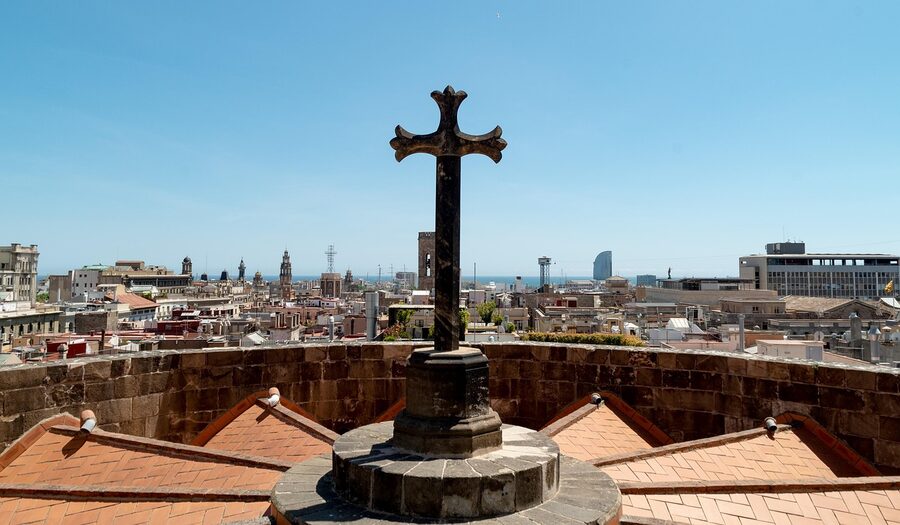
The Rooftop: Take the elevator from inside the cathedral to the rooftop terrace. This is the part most visitors miss, and it’s the best part. You’re standing on top of a 600-year-old Gothic cathedral, looking out over the entire Gothic Quarter — red rooftops, church spires, laundry hanging from balconies. On clear days you can see the sea and Montjuic. The rooftop is only included with the full-access ticket ($23) or the guided tour ($34).
Best Tours to Book
Three options, covering every budget and level of interest. Pick based on how deep you want to go.
1. Cathedral of Barcelona Entry Ticket — $23
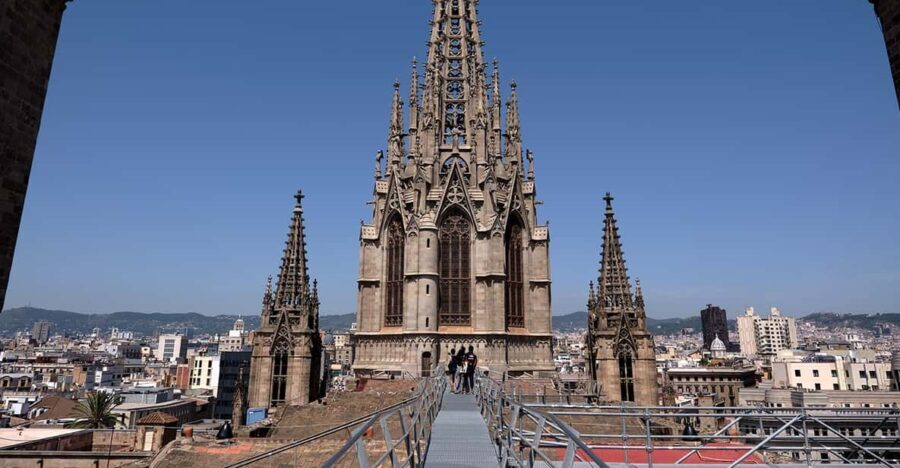
The straightforward self-guided option. Your ticket covers all areas of the cathedral — the nave, cloister with the geese, choir stalls, crypt of Saint Eulalia, the rooftop terrace, and the small museum. No guide means you go at your own pace, which some people prefer. Our full review of the cathedral entry ticket goes into what each area offers. At $23 for full access including the rooftop, this is the default choice for most visitors.
2. Guided Tour with VR Experience — $34
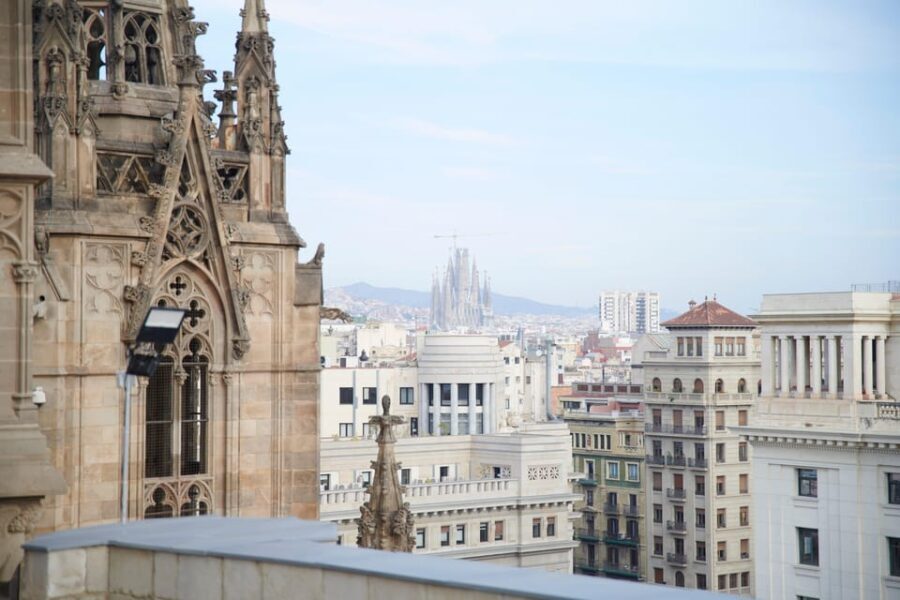
This is the one I’d recommend if you care about history at all. The 75-minute guided tour pairs you with a local guide who knows every stone, every story, every hidden detail. The VR headset shows you what the cathedral looked like during different periods — medieval, Renaissance, modern — and it’s surprisingly well done, not just a tech novelty. Our review of the guided tour with VR covers what the guides actually teach you. At $34 — just $11 more than the self-guided entry — the guide is worth every cent.
3. Private Cathedral Tour with Rooftop Access — $34
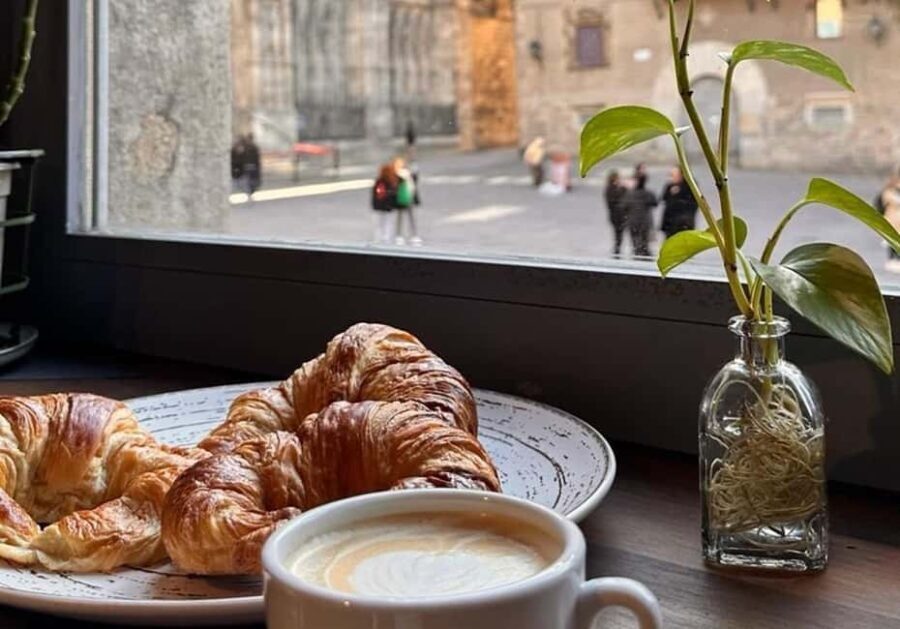
Same price as the group guided tour, but private. You get a dedicated guide for 75-90 minutes, full rooftop access, and the ability to ask as many questions as you want without feeling like you’re holding up a group. This is the one for couples, small families, or anyone who wants the deep dive without the crowd. Our review of the private cathedral tour explains the difference in quality. Surprisingly, it’s the same $34 as the group option — so if availability works, always pick this one.
What Each Ticket Type Gets You
The ticket structure is straightforward once you understand it, but the cathedral website doesn’t explain it very clearly. Here’s the breakdown:
Free entry (worship hours): Main nave, side chapels, the cloister with the geese, and the crypt of Saint Eulalia. You can see a surprising amount for free. The crypt alone is worth the visit. But you miss the choir, rooftop, and museum.
Basic tourist entry ($9-11 at the door): Everything above plus the choir stalls. Available only during paid hours (roughly 1pm-5pm). This is fine if you’re on a tight budget and don’t care about the rooftop.
Full-access ticket ($23 online): Everything including the rooftop terrace elevator, the museum, and audio guide. This is the one I recommend. The rooftop is the standout experience that separates the cathedral from other Gothic churches in Europe.

Guided tour ($34): Full access plus a 75-minute guided experience with a local expert and VR headset. The guide points out details you’d walk right past — hidden symbols, construction marks, stories carved into the stone. The VR component shows the cathedral at different historical points. I was sceptical about the VR, but it actually adds genuine context.
Private tour ($34): Same price as the group guided tour, but with a dedicated guide. Availability is limited, so book early. If you can get a slot, always choose this over the group option.
Accessibility and Practical Details
The main floor of the cathedral is fully accessible — flat stone floors throughout the nave, cloister, and side chapels. The crypt has stairs (no wheelchair access). The rooftop has an elevator, which makes it accessible for mobility-impaired visitors.
Bags are not checked but large backpacks may be asked to be left at a small storage area near the entrance. There’s no cloakroom. Audioguides are available in multiple languages and included with the full-access ticket. The cathedral has limited seating — a few wooden pews in the nave — so if you need to rest, the cloister has stone benches around the perimeter.
Barcelona Cathedral vs Sagrada Familia: The Confusion
I need to address this because it comes up constantly. Barcelona Cathedral and the Sagrada Familia are two completely different buildings, 2 kilometres apart, and travelers mix them up all the time.
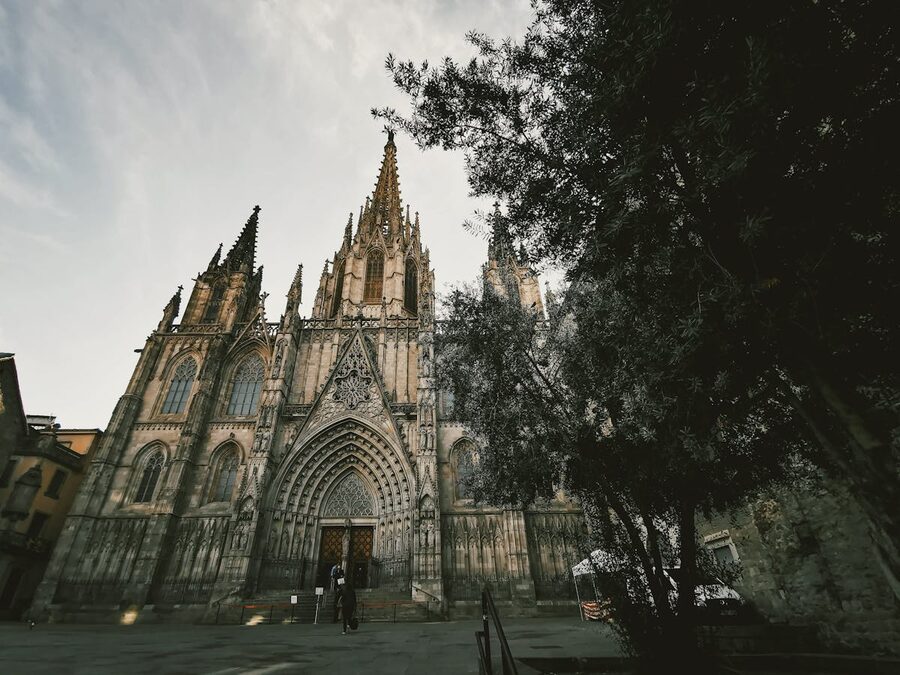
Barcelona Cathedral is the seat of the Archbishop, the official cathedral of the city, built 1298-1448 in Gothic style. It’s in the Gothic Quarter, surrounded by medieval streets. Tickets are $9-23.
Sagrada Familia is Antoni Gaudi’s unfinished basilica, started in 1882 and still under construction. It’s in the Eixample district. Tickets are $26-40 and sell out days in advance.
Both are worth visiting. But if you’re only going to see one, the Sagrada Familia is the more famous experience. If you’re seeing both, do the cathedral first — it’s quieter, cheaper, and a better introduction to Barcelona’s religious history. And the Gothic Quarter setting makes it a more atmospheric visit overall.
The Geese: Barcelona’s Weirdest Tradition
I’ve mentioned the geese a few times because they genuinely surprised me. The cloister of Barcelona Cathedral has kept 13 white geese since at least the Middle Ages. The number is specific: one for each year of Saint Eulalia’s life.
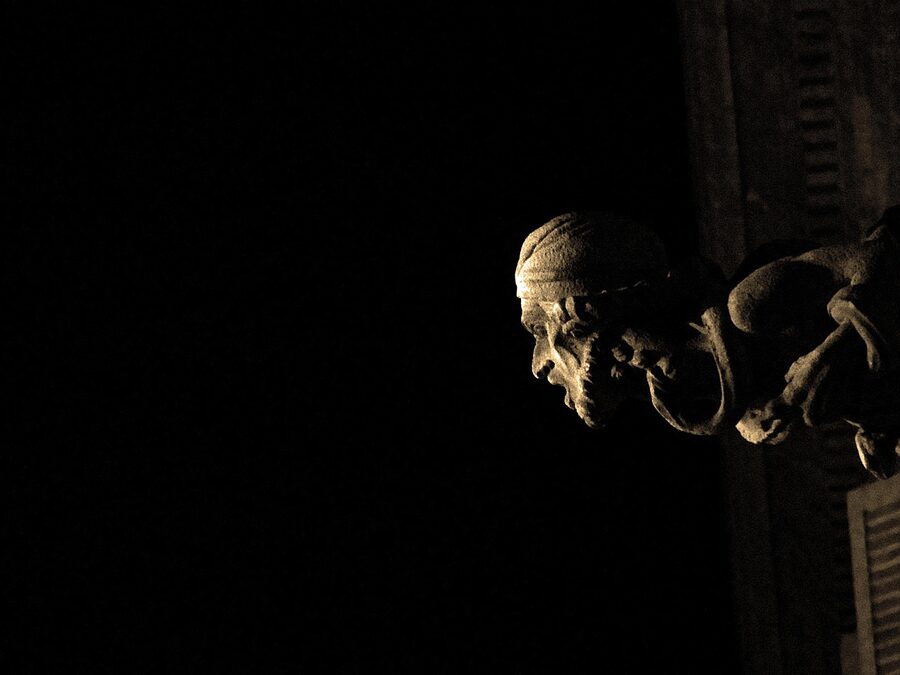
Eulalia’s story is brutal by any standard. She was a 13-year-old Christian girl in Roman Barcelona (then called Barcino) during the persecutions under Emperor Diocletian around 304 AD. According to tradition, the Roman governor Dacian subjected her to 13 tortures — one for each year of her age — including being placed in a barrel filled with knives and rolled down a street (now called Baixada de Santa Eulalia, and yes, it still exists). She was eventually crucified on an X-shaped cross.
Her remains are in the crypt below the main altar. The geese in the cloister are a living memorial — loud, slightly aggressive, and totally uninterested in the travelers taking photos of them. They have their own fountain and a small pool, and they’re fed daily by the cathedral staff. If you visit during free hours, the cloister is the main attraction.
History of the Cathedral
Barcelona’s cathedral site has been used for worship for nearly two thousand years. The Romans built a temple here when the city was called Barcino. A Visigothic church followed in the 6th century. A Romanesque cathedral was built in the 11th century. And then, in 1298, King Jaume II laid the first stone of the current Gothic cathedral.
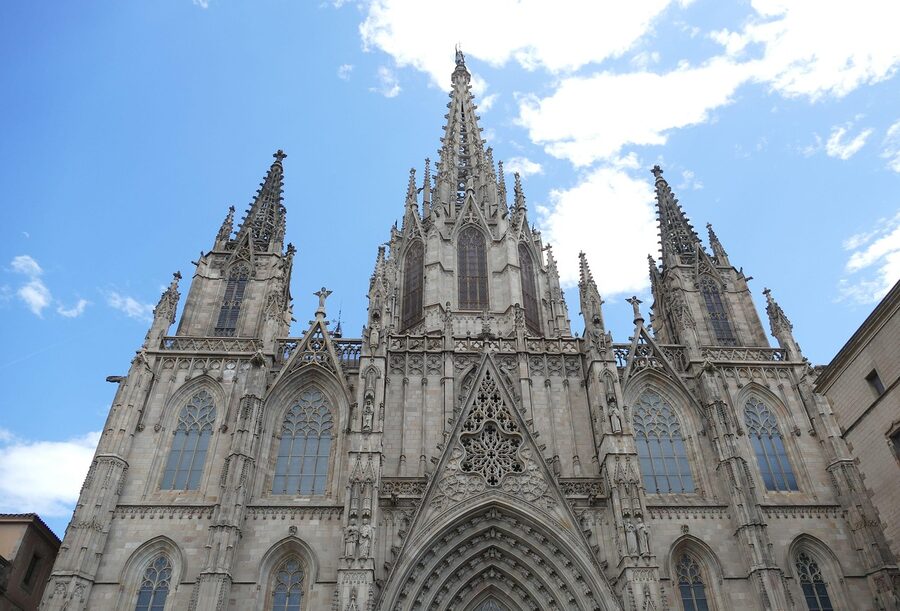
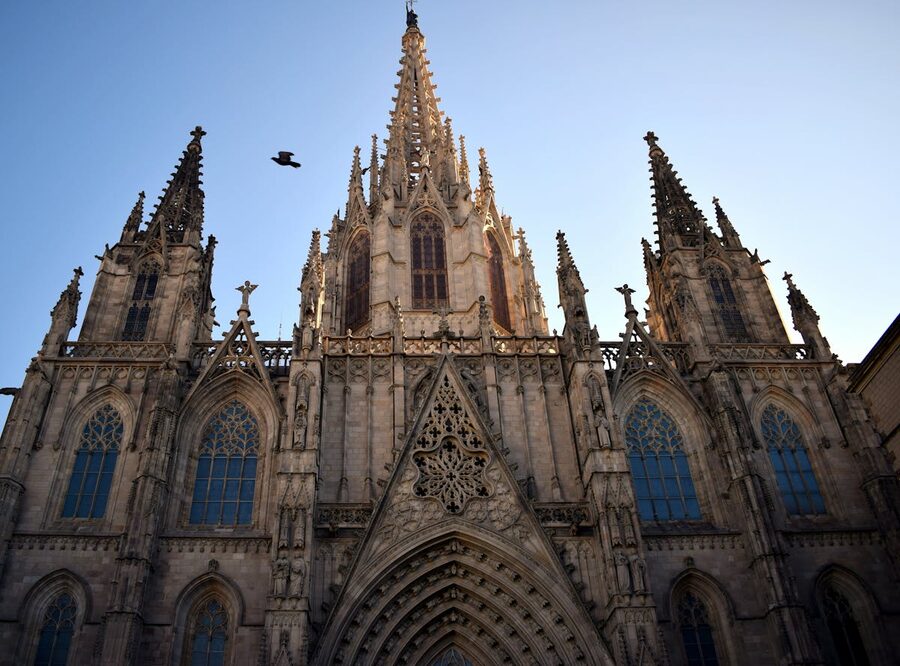
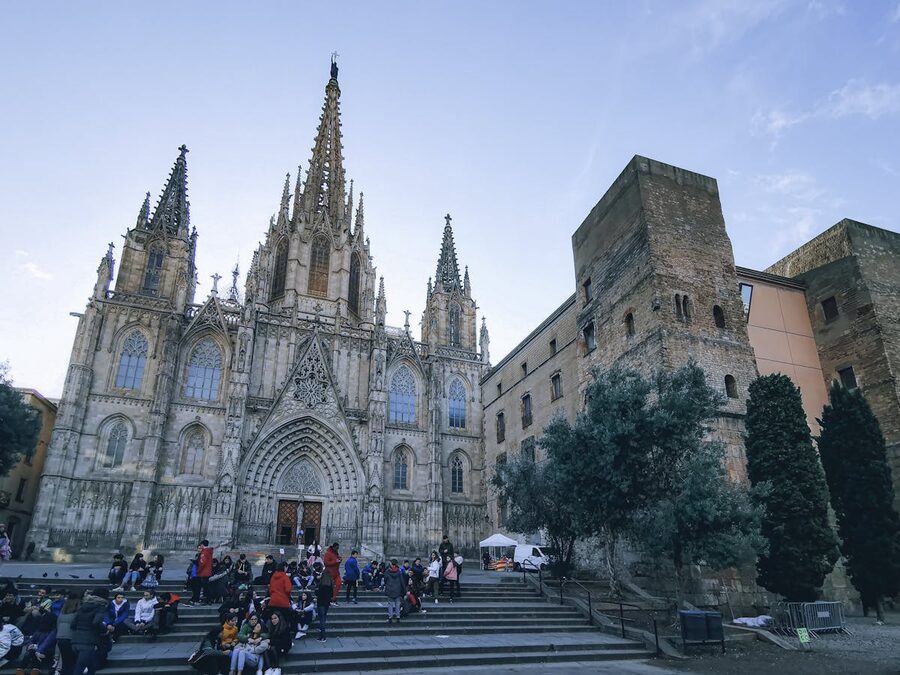
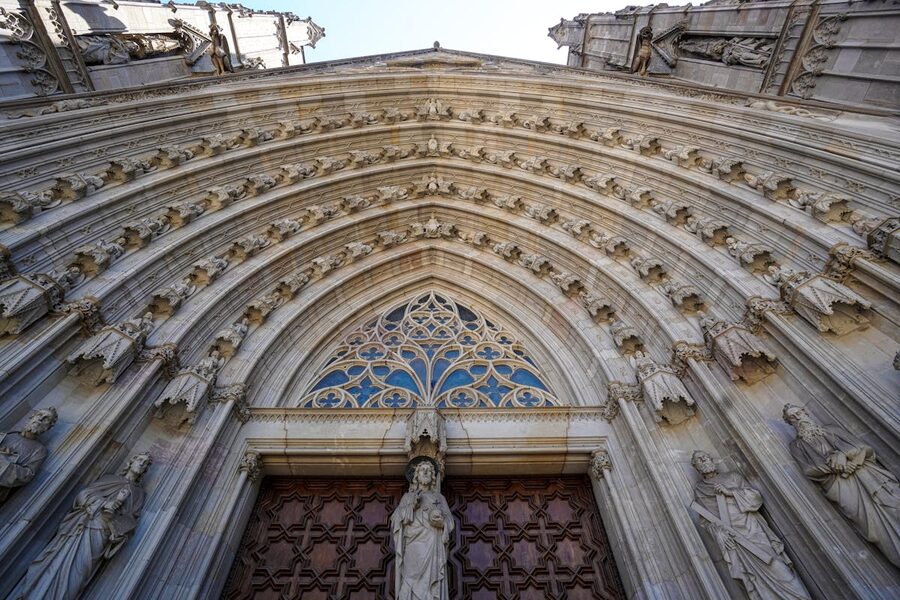
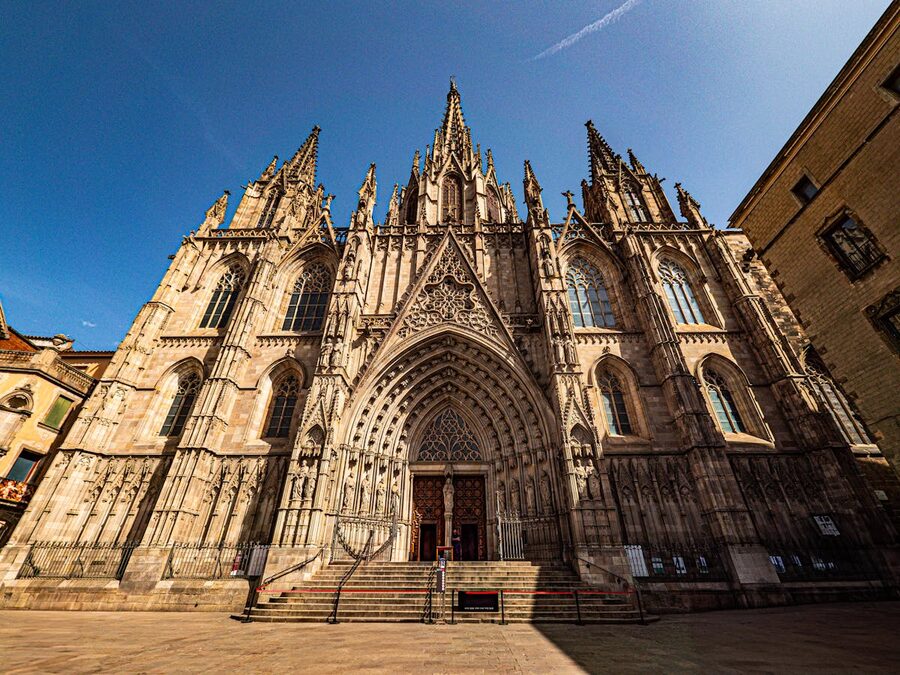
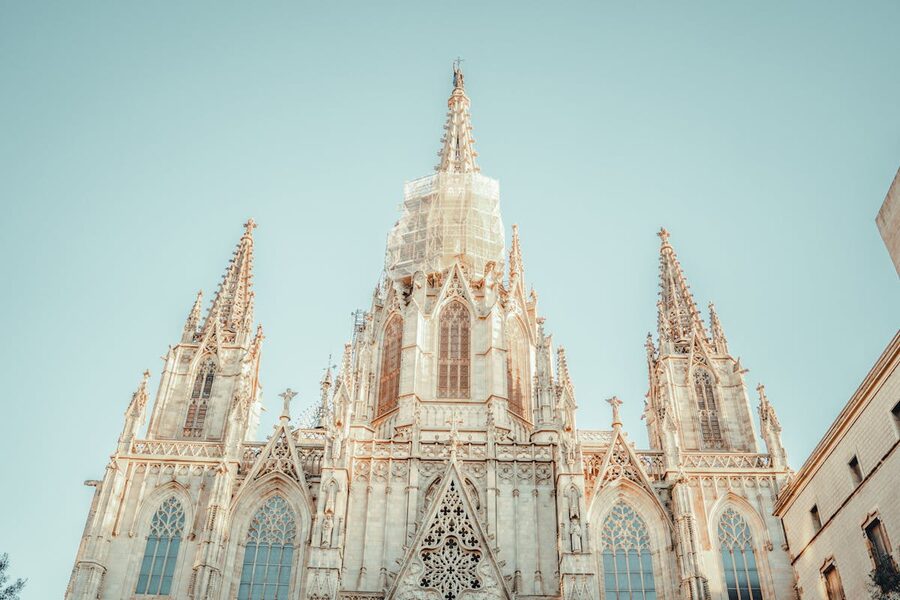
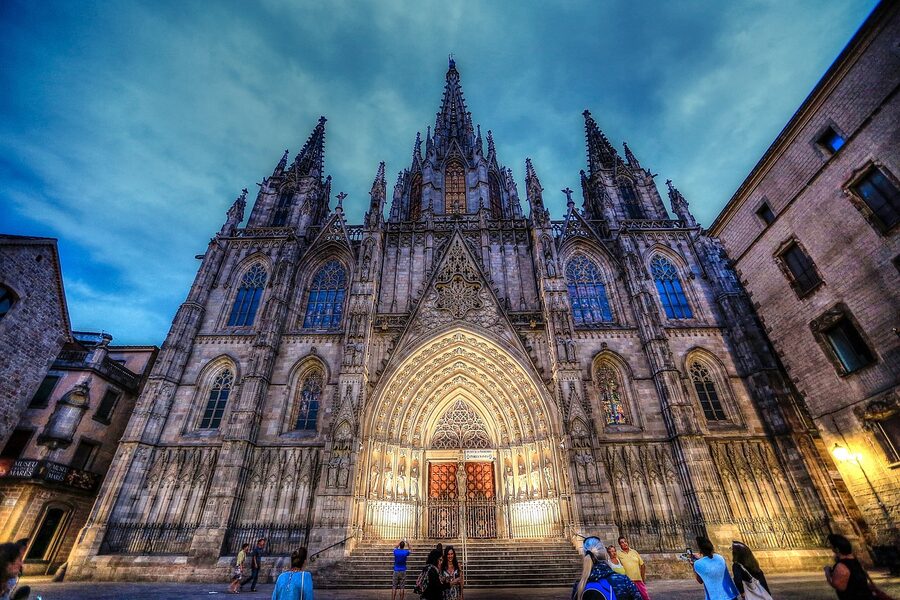
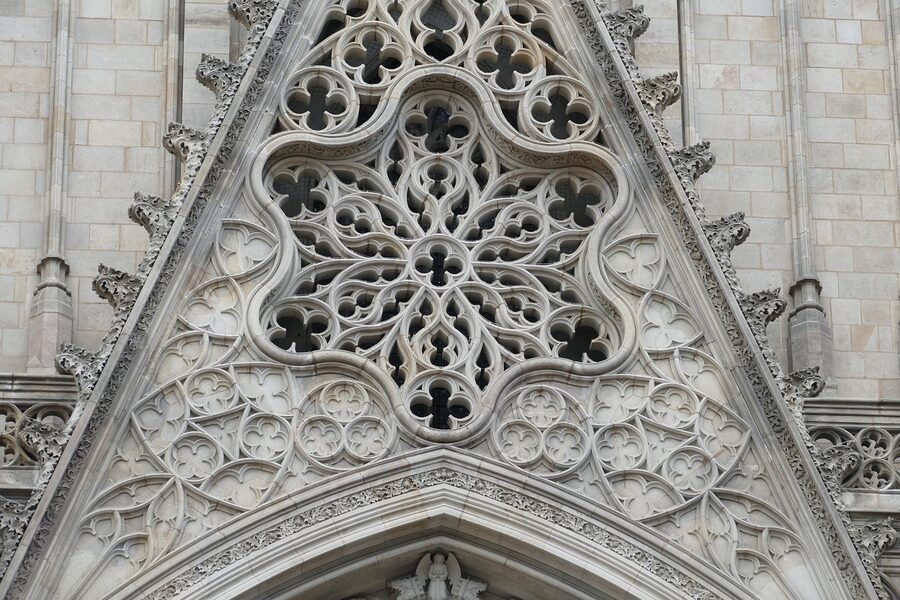
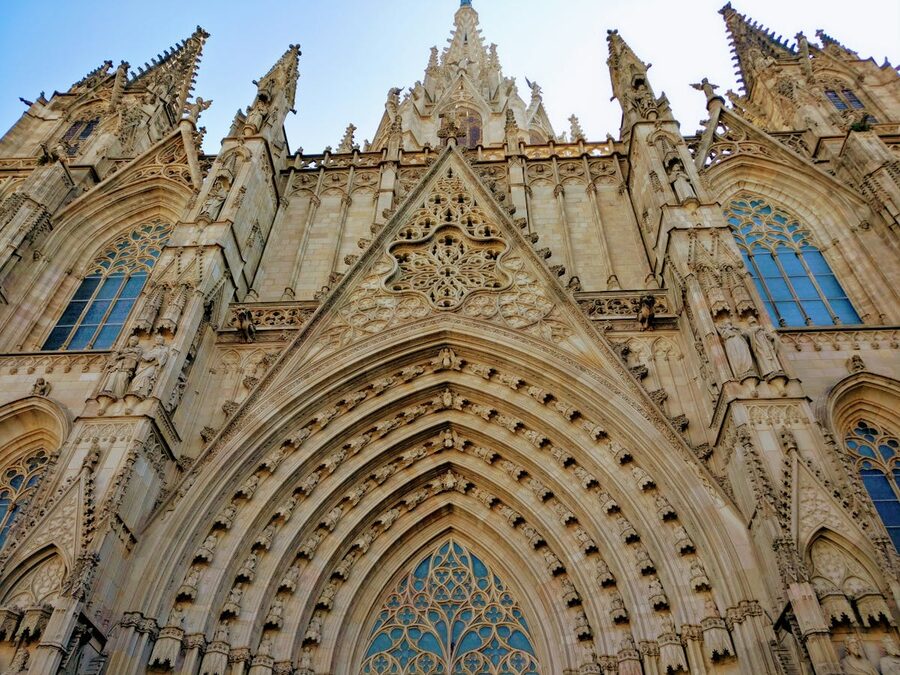
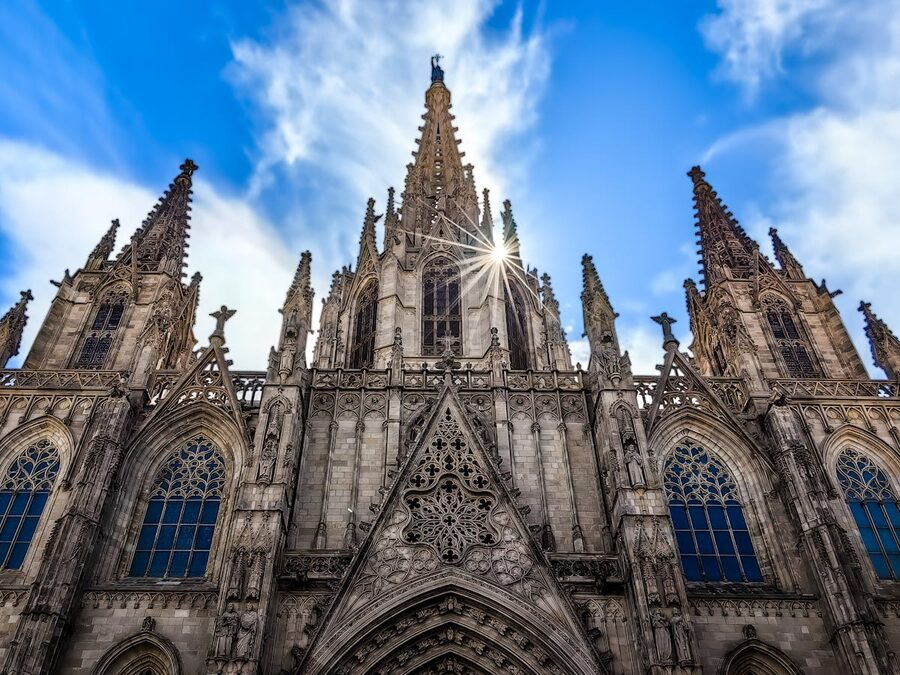
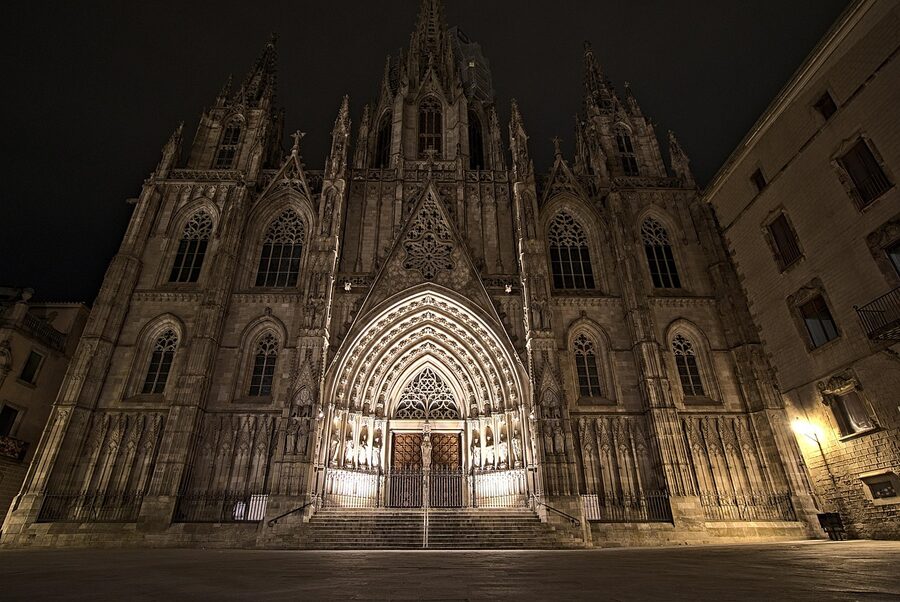
Construction took a century and a half. The main structure was finished by 1448, but here’s the odd bit: the facade wasn’t completed until 1888. For over 400 years, the front of Barcelona Cathedral was just plain, unfinished stone. It took the 1888 Universal Exhibition — the same event that launched the Golondrinas boats — to finally motivate the city to finish the job. The neo-Gothic facade you see today was designed by Josep Oriol Mestres and August Font i Carreras, funded by a wealthy banker named Manuel Girona i Agrafel.
So the facade is actually the newest part of the building, even though it looks medieval. The cloister, the nave, and the bell towers are all 400+ years older than the front door.
When to Visit
Timing matters more here than at most Barcelona attractions because of the free/paid entry split.
For the free visit: Go as close to 8:30am opening as you can manage. The cloister and nave are nearly empty, the light through the stained glass is beautiful, and the geese are at their most photogenic (and least grumpy). By 10am, the tour groups arrive and it gets noticeably louder.
For the full-access paid visit: The 1pm slot is usually the quietest because most travelers are at lunch. By 3pm it picks up. The rooftop is best in the late afternoon when the sun is lower and the shadows across the Gothic Quarter rooftops get dramatic.
Avoid: Sunday mornings (mass, limited access), any morning during cruise ship season (September-October) when the Gothic Quarter floods with day-trippers, and the hour after 12:30pm when free entry ends and everyone who didn’t pay rushes out while the paid visitors rush in.
Getting There
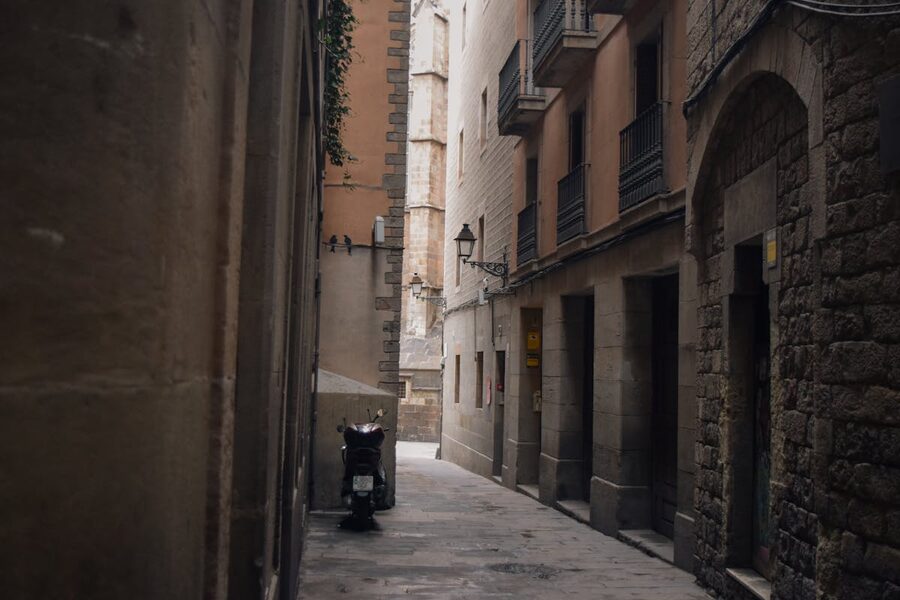
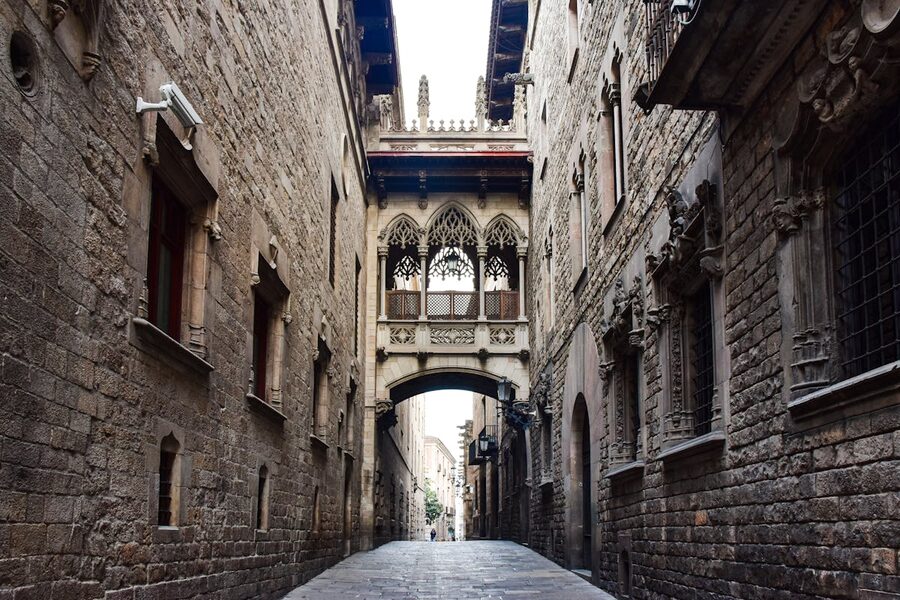
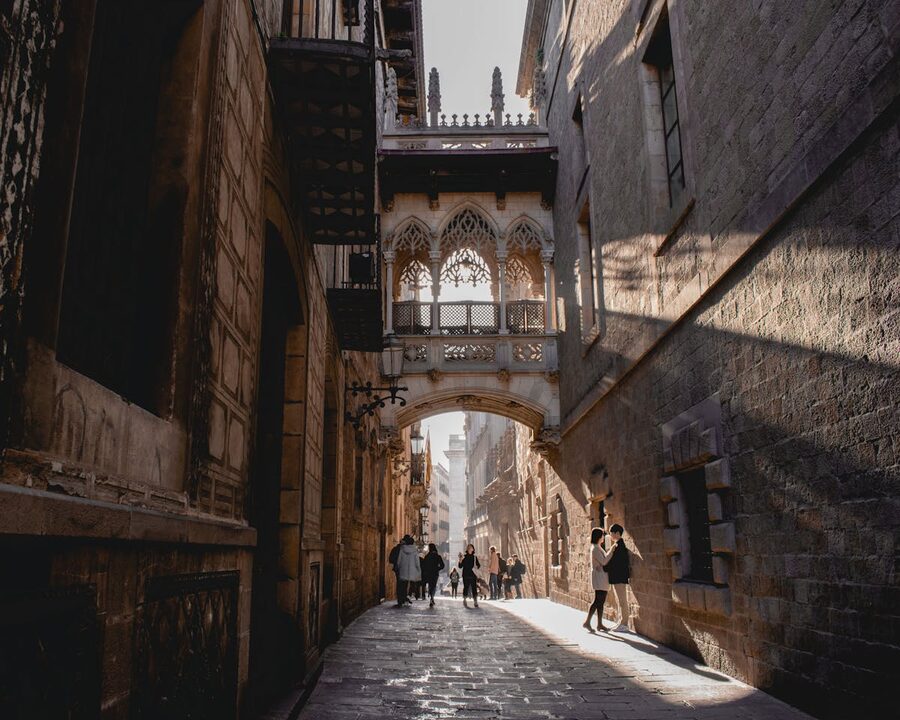
The cathedral sits in the dead centre of the Gothic Quarter, at Pla de la Seu. It’s surrounded by pedestrian streets, so you can only arrive on foot or by metro.
Metro: Jaume I station (Line 4, yellow) is a 3-minute walk. Liceu station (Line 3, green) is about 7 minutes through the Gothic Quarter. If you’re coming from Barceloneta or the beach, Jaume I is the one to use.
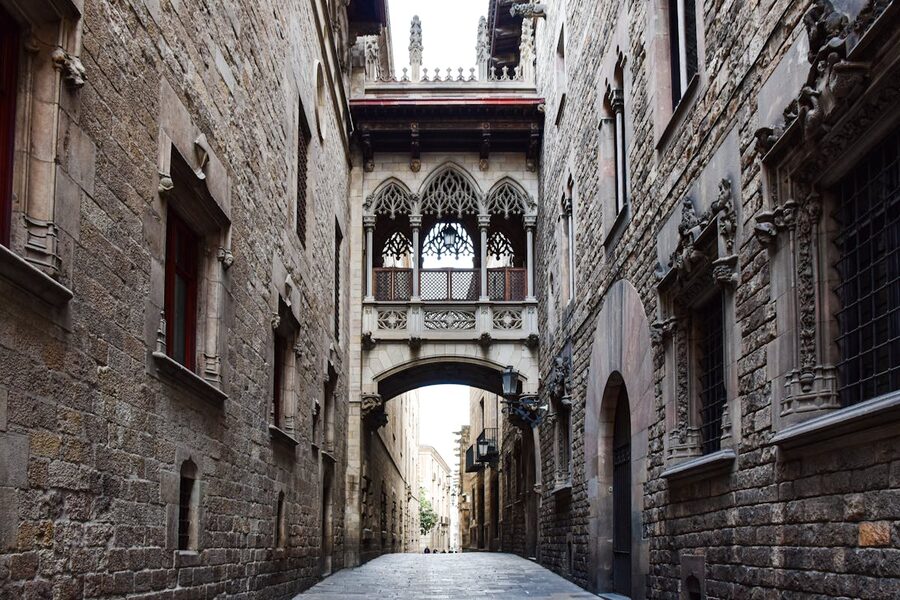
Walking from La Rambla: Turn east at any point between the Liceu metro station and Placa Reial, walk through the narrow streets for about 5 minutes, and you’ll hit the cathedral. There are signs, but honestly the cathedral’s spires are visible above the rooftops from most points in the Gothic Quarter.
From other attractions: Casa Vicens is about a 25-minute walk north. The Las Golondrinas boats at Port Vell are 10 minutes south. Casa Batllo is about 15 minutes northwest on Passeig de Gracia.
Tips for Your Visit
Dress code exists but is loosely enforced. Shoulders and knees should be covered. In practice, they’ll let most people in during paid tourist hours, but during worship services they’re stricter. Bring a light scarf or layer just in case — you’d be surprised how many people get turned away in August.
Photography is allowed inside the cathedral, but no flash. Tripods are technically not permitted, but I’ve seen people use small ones without issue. The best interior photos come from the choir area looking up at the vaulted ceiling — bring a wide-angle lens if you have one.
Don’t feed the geese. They look friendly. They’re not. One of them tried to eat my bag strap. The cathedral staff feed them daily and they’re well cared for, but they have zero respect for personal boundaries.
The museum is small but worthwhile. It’s included with the full-access ticket and houses paintings, reliquaries, and medieval liturgical objects. Budget about 15 minutes. The standout piece is a 15th-century pieta that’s genuinely moving.

Allow 60-90 minutes for the full-access visit. The cathedral itself is about 30-40 minutes. The rooftop adds 15-20 minutes. The cloister and museum another 15-20. If you’re doing the guided tour, it runs about 75 minutes and covers everything.
What Else to See Nearby
The cathedral sits at the heart of the Gothic Quarter, which means you’re surrounded by things to do. Walk two blocks east to the Gothic Quarter’s main attractions — the Roman temple remains, the Jewish Quarter, Placa del Rei. Head south toward the waterfront and you’ll reach Port Vell, where the Golondrinas boat tours depart from the Columbus Monument.
For more Barcelona churches and architecture, Sant Pau Recinte Modernista is a completely different style — Modernist rather than Gothic — and makes a great contrast if you’re visiting both on the same trip. Or combine the cathedral with a walking tour of Barcelona that covers the Gothic Quarter and beyond. And if you’re doing Barcelona’s full gastronomic scene, a paella cooking class pairs well with a morning at the cathedral.
For a completely different Barcelona experience, the catamaran cruise gets you out on the water, or the Gothic Quarter ghost tour brings you back to these same streets after dark — with a very different atmosphere.
Affiliate disclosure: Some links in this article are affiliate links, meaning we may earn a small commission if you book through them. This doesn’t affect your price — it helps us keep writing these guides.