
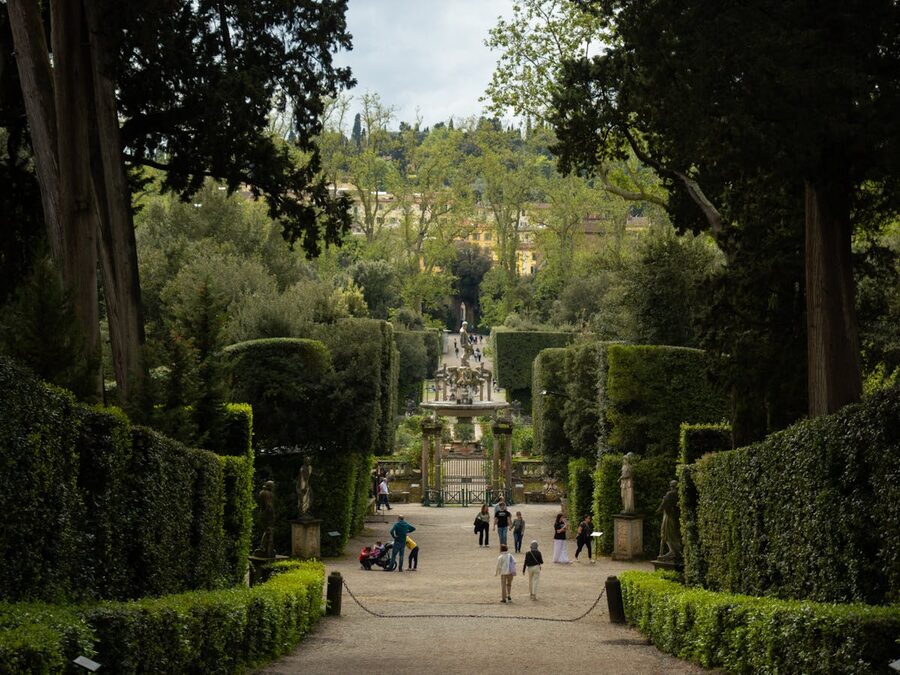
The Boboli Gardens contain over 1,000 sculptures. Most of them would be locked behind museum glass anywhere else in the world. In Florence, they just sit along gravel paths, collecting rain and pigeon droppings like they have for the past four centuries.
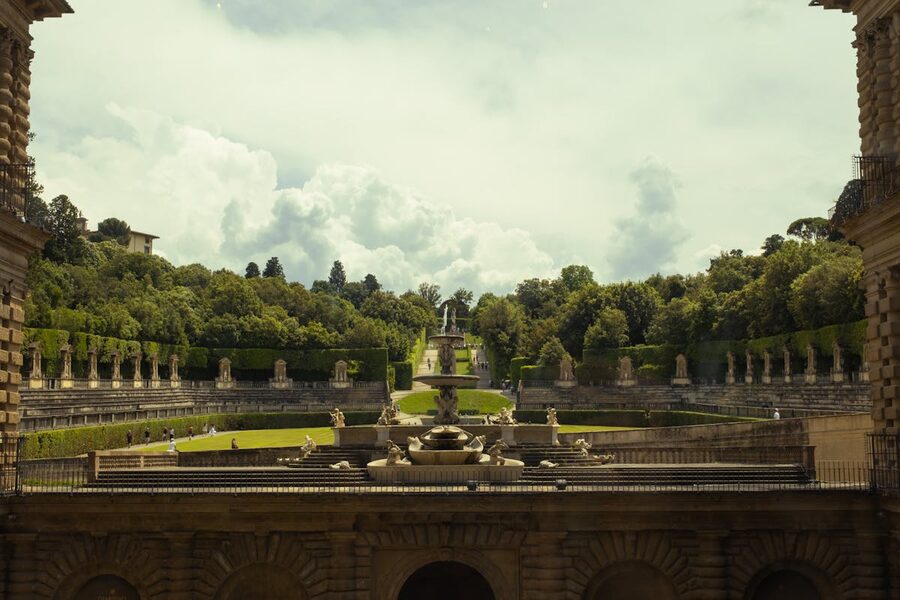
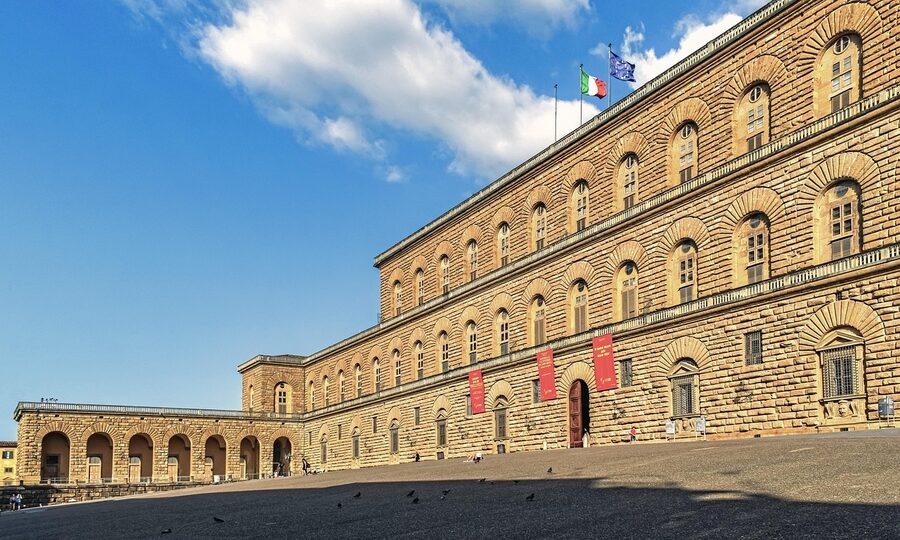
That contrast is what makes Boboli different from every other garden you have visited. This is not a manicured park with a few old statues. It is 45,000 square meters of Renaissance ambition — built in 1549 by Eleonora di Toledo, wife of Cosimo I de’ Medici, as the private backyard of the Pitti Palace. The design was so influential that it became the template for royal gardens across Europe, including Versailles.
But getting in takes a bit of planning. Tickets sell out on peak days, there are multiple ticket types, and the combo deal with Pitti Palace is not always the best move if you only care about the gardens. I will walk you through exactly how the ticketing works, which tours are worth the money, and what you should not waste your time on.
Best overall: Boboli Gardens Reserved Entry + Audio App — Skip-the-line entry with an audio guide that actually explains what you are looking at. The most popular option by a long shot.
Best combo deal: Pitti Palace + Boboli Gardens Ticket — $45. Gets you into both the palace museums and the gardens. Saves around $15 compared to buying separately.
Best guided experience: Boboli Gardens Guided Tour — $53. One hour with a local guide who knows the stories behind the sculptures. Surprisingly good for the price.
- How the Boboli Gardens Ticket System Works
- Official Tickets vs Guided Tours — Which Makes More Sense
- The Best Boboli Gardens Tours to Book
- 1. Boboli Gardens Reserved Entry Ticket + Audio App
- 2. Pitti Palace and Boboli Gardens Ticket with eBook —
- 3. Boboli Gardens Guided Tour —
- When to Visit the Boboli Gardens
- How to Get There
- Tips That Will Save You Time
- What You Will Actually See Inside
- More Florence Guides
How the Boboli Gardens Ticket System Works
The Boboli Gardens are managed by the Uffizi Galleries system, which means tickets work the same way as the Uffizi and Pitti Palace — timed entry slots, advance booking recommended, and a confusing website that makes you question your life choices.
Here is how it breaks down:
Boboli Gardens only: The standard entry ticket costs around EUR 10. This gets you into the gardens plus the Porcelain Museum (small but worth a quick look) and the Bardini Garden, which is connected to Boboli and far less crowded. You pick a timed entry slot when booking — arrive within your window or risk being turned away.
Pitti Palace + Boboli combo (Passepartout): For roughly EUR 22-24, you get the Pitti Palace museums (Palatina Gallery, Modern Art Gallery, Treasury) plus the Boboli Gardens and Bardini Garden. This is valid for two consecutive days, which is genuinely useful since doing both in one visit is exhausting.
Free entry: Under-18s get in free. EU citizens aged 18-25 pay a reduced rate of EUR 2. First Sunday of each month is free for everyone — but honestly, it is packed to the point where the experience suffers. The garden was not designed for several thousand people walking through it simultaneously.

Where to book: The official source is the Uffizi Galleries website (uffizi.it). Tickets go on sale roughly 30 days in advance. The interface is clunky and the English translation is rough, but it works. Third-party platforms like GetYourGuide charge a few euros more but the booking process is smoother, you get skip-the-line entry, and cancellation policies are usually better.
Booking tip: If you are visiting between April and October, book at least a week ahead for weekend visits. Weekday mornings sell out less quickly, but I still would not leave it to the day-of in peak season.
Official Tickets vs Guided Tours — Which Makes More Sense
This depends on what kind of person you are. Be honest with yourself.
If you are the type who reads every museum placard and genuinely cares about why the Neptune Fountain is positioned where it is, a guided tour will transform your visit. The gardens are full of hidden symbolism — political power plays encoded in garden layouts, mythological references in the statuary, and architectural jokes that only make sense when someone explains the context. The Grotta del Buontalenti alone, a bizarre 1583 artificial cave with stalactites, sponge walls, and copies of Michelangelo’s Prisoners emerging from the stone, needs someone to explain what you are seeing. It was designed as an escape from summer heat — a cool, dark fantasy world — but without context it just looks like a strange wet room.
If you would rather just wander at your own pace, take photos, sit on a bench, and soak up the atmosphere without someone talking at you for an hour — get the standard ticket and the audio app. The app is genuinely useful because you can pause it, skip sections, and go at whatever speed you want. It covers the main highlights without locking you into a group schedule.
Here is the honest breakdown:
Go self-guided if: You want freedom to explore, you have 2-3 hours, you care more about atmosphere than history, or you are traveling with kids who will not stand still for explanations.
Go guided if: You want to actually understand what you are looking at, you have limited time (a good guide hits all the highlights in an hour), or this is your first Italian Renaissance garden and you need the context.
Skip it entirely if: You have already visited Boboli before and are just looking for a green space to relax. The Florence Cathedral dome climb or Palazzo Vecchio tower give you better views of the city and are more memorable as repeat visits.
The Best Boboli Gardens Tours to Book
I have gone through the available tours, checked the reviews, compared prices, and narrowed it down to three that cover different needs and budgets. Here they are, ranked by what I think gives you the best overall value.
1. Boboli Gardens Reserved Entry Ticket + Audio App

This is the one to get if you want to explore on your own terms. The reserved entry means you skip the general admission queue, and the audio app gives you context at every major stop without tying you to a group schedule. With over five thousand reviews and a solid rating, this is the most popular Boboli option on GetYourGuide — and it is popular for good reason.
The audio guide covers the amphitheatre (where the Egyptian obelisk sits — it has been relocated three times over 3,500 years, from Luxor to Rome to Florence), the Neptune Fountain, the Kaffehaus pavilion with its panoramic views, and the main sculpture galleries. You can pause it whenever you want to take photos or sit down. For most visitors, this is the sweet spot between price and experience.
2. Pitti Palace and Boboli Gardens Ticket with eBook — $45

If you want both the Pitti Palace museums and the gardens, this combo ticket saves you real money compared to buying separately. At $45 it covers the Palatina Gallery (which has Raphaels and Titians that most travelers completely overlook because they are not in the Uffizi), the Modern Art Gallery, the Costume Gallery, and the full Boboli Gardens with Bardini Garden access. The included eBook is decent — not a replacement for a guide but better than nothing.
The two-day validity is what really sells this. Do the palace in the morning on day one, come back for the gardens the next afternoon when the light is better. Trying to cram both into a single visit is a recipe for exhaustion, especially in summer when the garden paths cook in the heat. For the full breakdown on the palace side, check our Pitti Palace and Boboli Gardens combo ticket guide.
3. Boboli Gardens Guided Tour — $53

At $53 for an hour-long guided tour with entry included, this is the priciest option but also the one that gives you the most depth. The guide takes you through the major highlights — the amphitheatre, the Grotta del Buontalenti, the Kaffehaus, and the Neptune Fountain — and puts them in context with Medici family history and Renaissance garden design philosophy. You actually leave understanding why things are where they are.
The reviews are mixed in an interesting way. Some people loved it — the guides clearly know their stuff and go beyond the garden itself into broader Florence history. Others found the gardens themselves underwhelming and felt they deserved better maintenance. Both takes are fair. Boboli is not the lush, manicured perfection you might expect from photos. It is old, a bit rough around the edges in places, and parts of it look like they could use some work. But that rawness is also part of the charm. These are 475-year-old gardens, not a theme park.
When to Visit the Boboli Gardens

Opening hours: The gardens follow a seasonal schedule. From November through February, they close at 4:30 PM. March and October bump that to 5:30 PM. April, May, September, and early October give you until 6:30 PM. And from June through August, the gardens stay open until 7:30 PM. Last entry is always one hour before closing. The gardens are closed on the first and last Monday of each month.
Best time to visit: Late afternoon, roughly 3-4 PM, is the sweet spot. The morning tour groups have left, the light turns warm and golden, and you can actually hear birds instead of tour guide megaphones. Spring (late March through May) and early autumn (September to mid-October) are the ideal seasons — warm enough to enjoy being outside but not the punishing 35-degree heat of July and August.
Worst time to visit: Midday in summer. There is very little shade on the main pathways, the gravel reflects heat, and the uphill walks become genuinely unpleasant. I have also heard from multiple sources that the free first Sundays are overwhelming — thousands of people on paths designed for a few hundred. Not recommended unless you are on a very tight budget.
How long to spend: Budget 90 minutes to 2 hours for a self-guided visit if you want to see the main highlights. Add another 30-60 minutes if you want to explore the Bardini Garden (connected to Boboli and significantly quieter). If you are combining with Pitti Palace, plan for a full half-day — 4 hours minimum.
How to Get There

The main entrance is through the Pitti Palace courtyard on Piazza de’ Pitti, in the Oltrarno neighbourhood on the south side of the Arno. There is a secondary entrance on Via Romana near the Annalena gate, which is often quieter.
Walking from the centre: From the Duomo, it is about a 20-minute walk south. Cross the Arno via Ponte Vecchio (everyone does), continue through the Oltrarno streets, and you will hit Piazza de’ Pitti within 5 minutes of crossing the bridge. From Palazzo Vecchio, it is closer to 12-15 minutes.
By bus: ATAF bus lines C3 and 11 stop near Piazza de’ Pitti. The C3 is a small electric bus that winds through the narrow Oltrarno streets. From Santa Maria Novella train station, take the D line.
By car: Do not even think about it. Parking in central Florence ranges from difficult to impossible, and the ZTL restricted traffic zone covers most of the area around the Pitti Palace. If you are staying outside the centre, park at the Piazzale Michelangelo car park and walk down (15 minutes, mostly downhill).
Tips That Will Save You Time
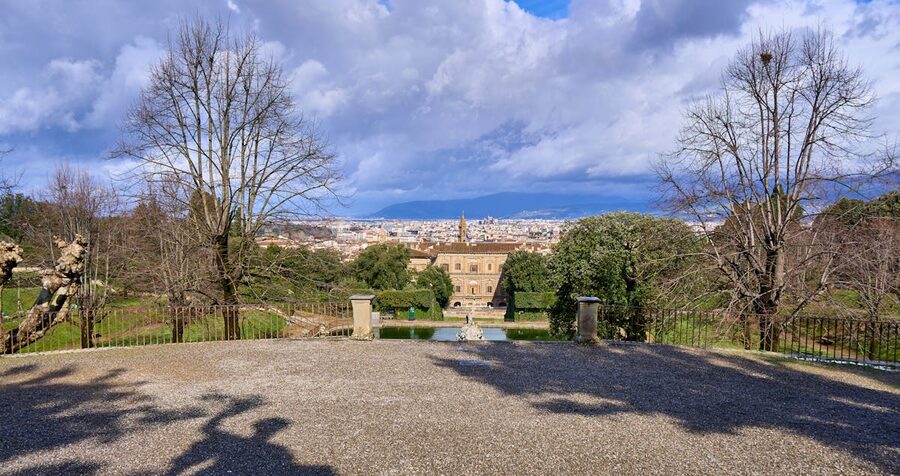
Wear proper shoes. The paths are gravel and uneven, and the garden is built on a hill. Sandals and heels are a bad idea. Trainers or low hiking shoes are perfect.
Bring water. There are a few fountains with drinkable water inside the gardens, but they are not always easy to find. In summer, bring at least 750ml. There is a small cafe near the Kaffehaus but prices are steep.
Use the Via Romana entrance. If you already have a timed ticket, the secondary entrance at Via Romana usually has a shorter queue than the main Pitti Palace entrance. You start from the south end of the garden and work your way up — a different perspective that most visitors miss.
The Bardini Garden is included. Your Boboli ticket also gets you into the Giardino Bardini, accessible from a connecting gate inside Boboli. It is smaller, steeper, and has better views of the Florence skyline. Most people skip it. Do not be most people.
The Kaffehaus has the best view. This 18th-century pavilion sits on the east side of the garden and offers panoramic views over Florence rooftops toward the Duomo. It is the single best viewpoint in the entire Boboli complex, and it is somehow less crowded than the Neptune Fountain terrace.
Skip the Porcelain Museum unless you really care about porcelain. It is included in your ticket and sits at the highest point of the garden. The collection is fine but small. The view from the terrace outside it is the real reason to go up there.
What You Will Actually See Inside
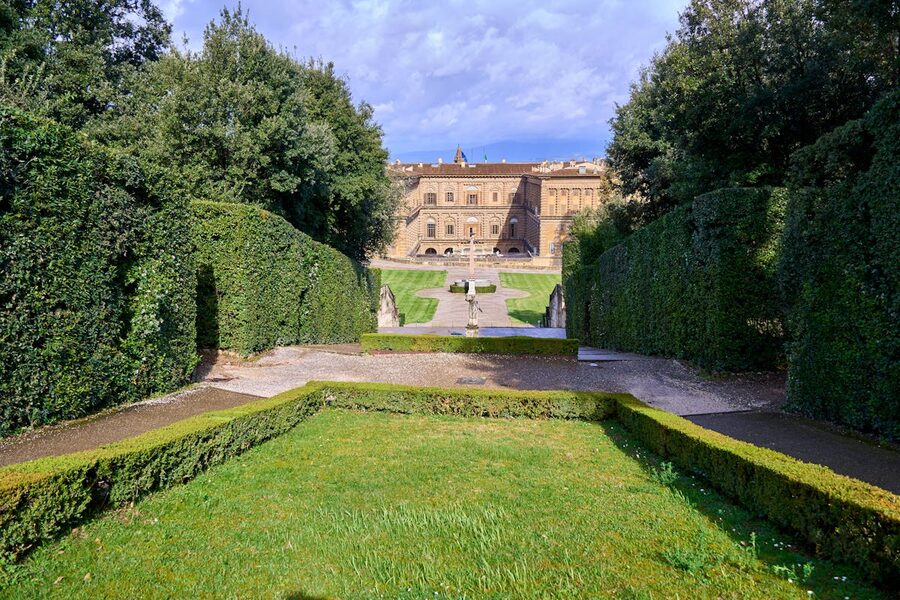
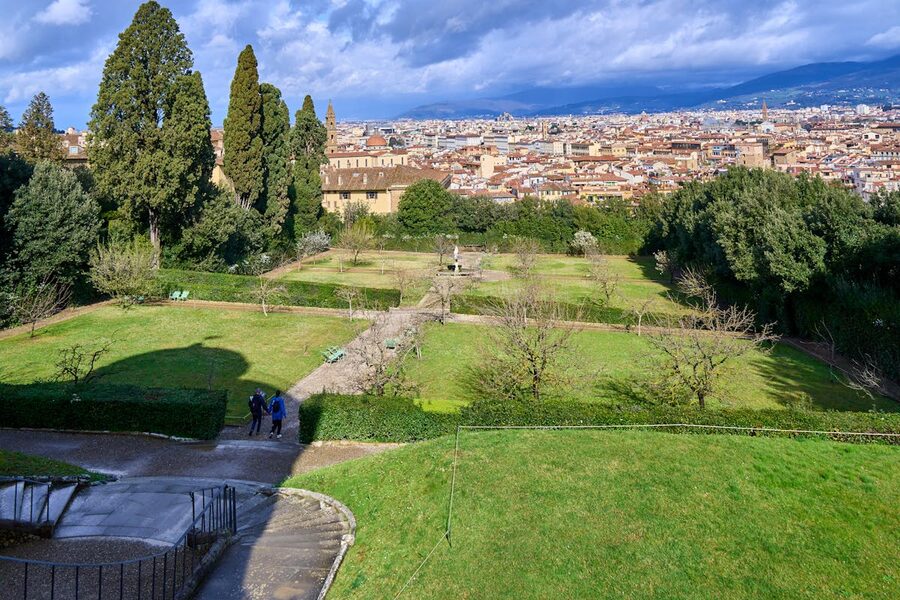
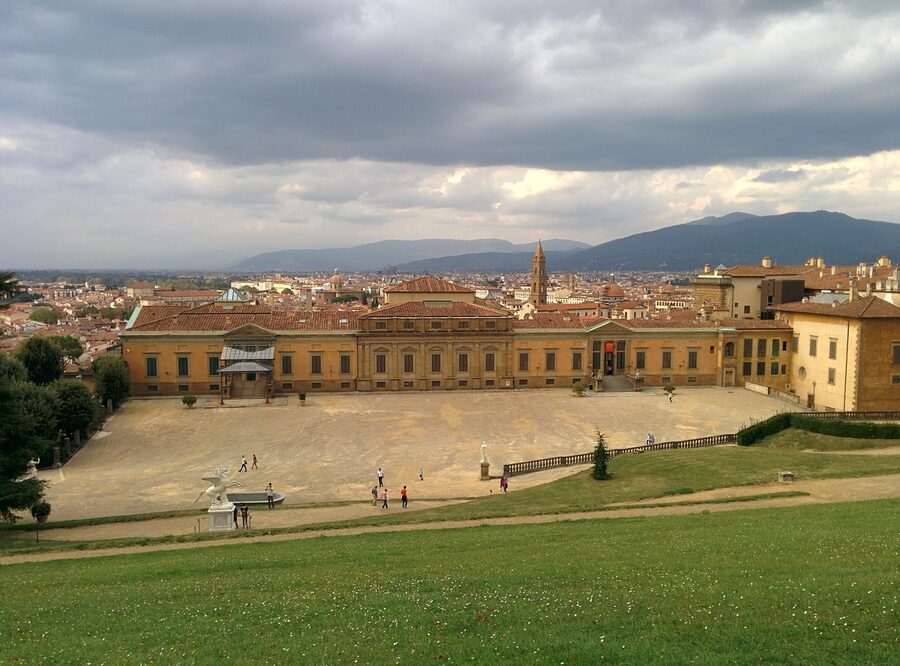
Boboli is not a flat, walk-through-in-30-minutes kind of garden. It is built into a hillside behind the Pitti Palace, and the terrain itself is part of the design. The Medici laid it out as a series of “outdoor rooms” — each section has a different theme, from formal Italian parterre gardens to wilder, more natural woodland sections that feel almost accidental in their beauty.
The Amphitheatre: Right behind the Pitti Palace, this is the first major area you encounter. It was originally a quarry — the stone from this exact spot was used to build the palace itself. The Medici turned the excavated bowl into an outdoor performance venue. In the centre stands the Egyptian obelisk, originally from Luxor, dragged to Rome by the Romans, and eventually moved to Florence by the Medici. It has been relocated three times over 3,500 years. The granite bathtub below it is Roman as well.
The Grotta del Buontalenti: This is the strangest and most fascinating thing in the entire garden. Built in 1583, it is an artificial grotto designed as an escape from the summer heat. The interior has fake stalactites, walls covered in what looks like sponge or coral, and copies of Michelangelo’s Prisoners (the originals are in the Accademia) appearing to emerge from the raw stone. There are also frescoes, hidden water features, and a small marble Venus by Giambologna in the back chamber. It was meant to blur the line between nature and art — a Renaissance funhouse for the Medici court. Access is sometimes restricted to specific hours or by guided tour only, so check when you arrive.
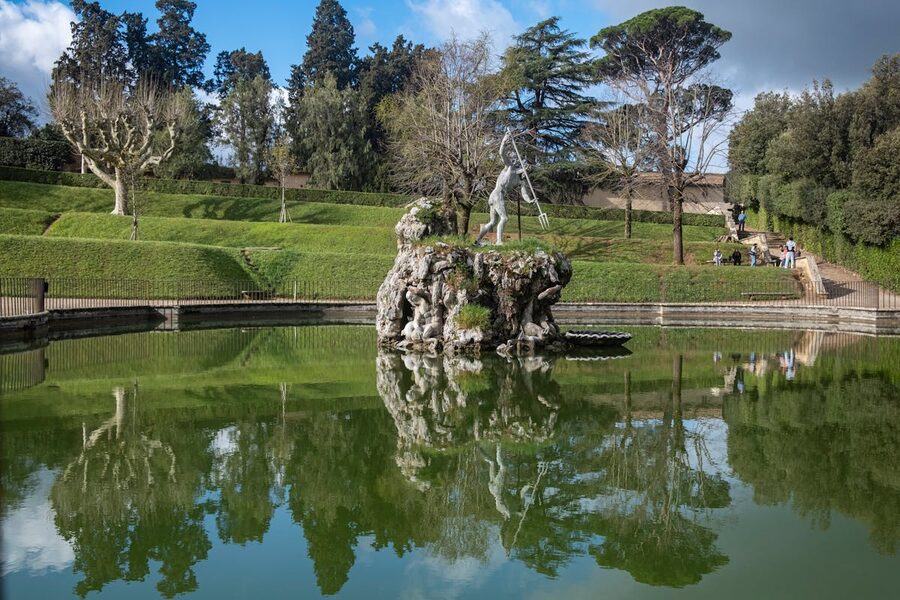
The Neptune Fountain: At the top of the central axis, this large basin with a bronze Neptune was originally a fish pond (the Medici used it to supply fresh fish to the palace kitchen). The view from here back down toward the palace and the city beyond is one of the best in Boboli.
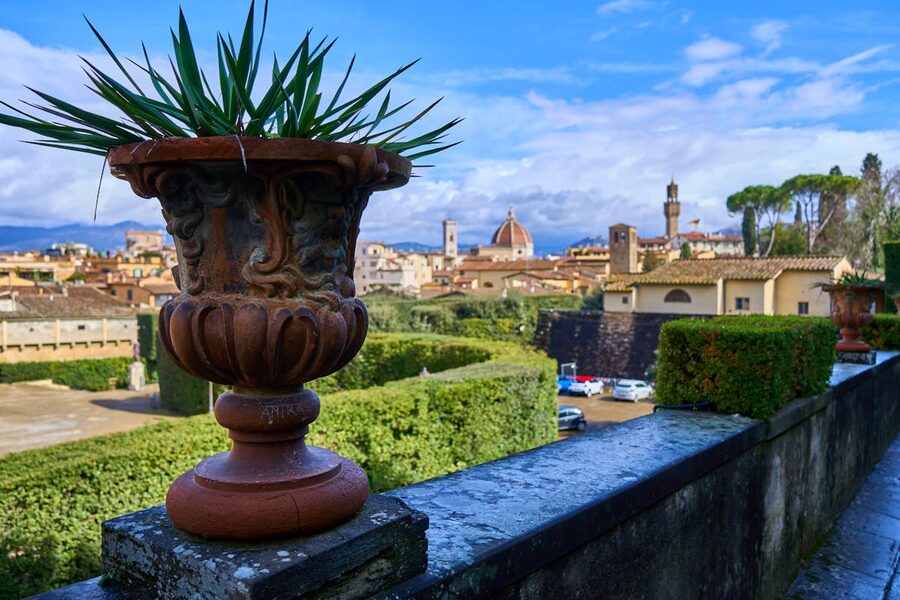
The Viottolone: A long cypress-lined avenue that runs from the Isolotto fountain down toward the Porta Romana gate. It is one of the most atmospheric walks in Florence — the tall cypresses create a tunnel effect, and on a warm afternoon the light filtering through is genuinely beautiful. This part of the garden is often quieter because most visitors stick to the upper sections near the palace.
The Isolotto: An island garden set in a circular pond at the bottom of the Viottolone. It has an elaborate fountain in the centre (the Oceanus Fountain, originally by Giambologna — the current one is a copy, the original is in the Bargello). The small bridges leading to the island are lined with terracotta pots of citrus trees in summer. It feels like a completely different place from the formal upper gardens.
More Florence Guides
If you are spending a few days in Florence, Boboli is just one piece of a much bigger puzzle. The Uffizi Gallery is a 15-minute walk from the Pitti Palace and needs a full morning on its own. The Accademia Gallery is where Michelangelo’s actual David lives (the one in the Piazza della Signoria is a copy), and it is smaller and faster than the Uffizi. For the best views of the city, the Florence Cathedral dome climb is unbeatable — 463 steps up a narrow staircase between the inner and outer shells of Brunelleschi’s dome. If you want to get out of the city for a day, our Tuscany day trip guide and Tuscany wine tour guide cover the best options. And for a solid overview of the city, a Florence walking tour is a great way to get your bearings on day one.

This article contains affiliate links. If you book through our links, we earn a small commission at no extra cost to you. This is how we keep the site running and the guides free.