
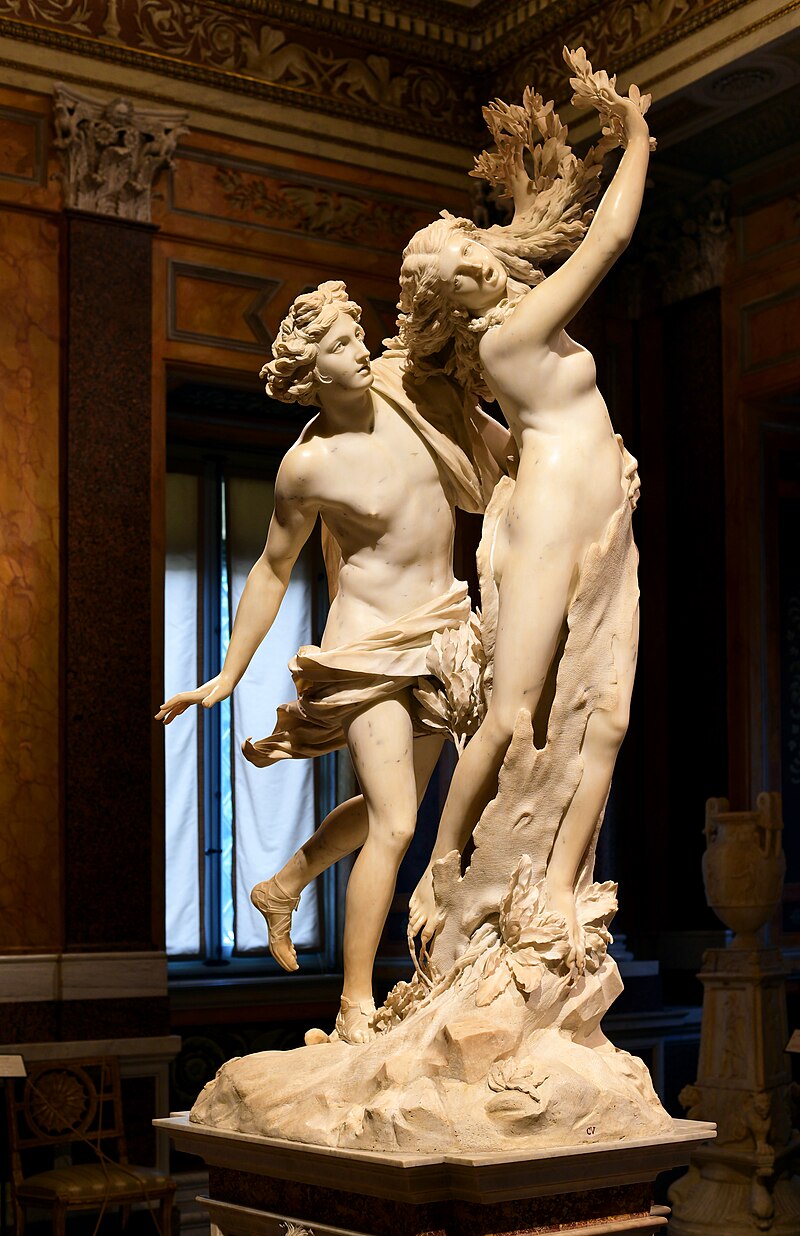
There is a moment in the Galleria Borghese when you turn a corner and see Bernini’s Apollo and Daphne for the first time. Daphne’s fingers are becoming branches. Her toes are digging into the earth, turning to roots. Apollo’s hand is on her waist, but he is already too late. And all of this is happening in marble — cold, solid marble that somehow looks like it is moving. I stood there for ten minutes on my first visit, and I still was not ready to walk away.
That is what makes the Borghese different from every other museum in Rome. The Vatican has more art. The Capitoline Museums cover more history. But nothing matches the Borghese for sheer concentration of masterpieces per square meter. Six Caravaggios. Three of Bernini’s greatest sculptures. Canova’s most provocative work. Raphael, Titian, Correggio. All of it packed into a 17th-century villa that was designed from the start as a showcase.
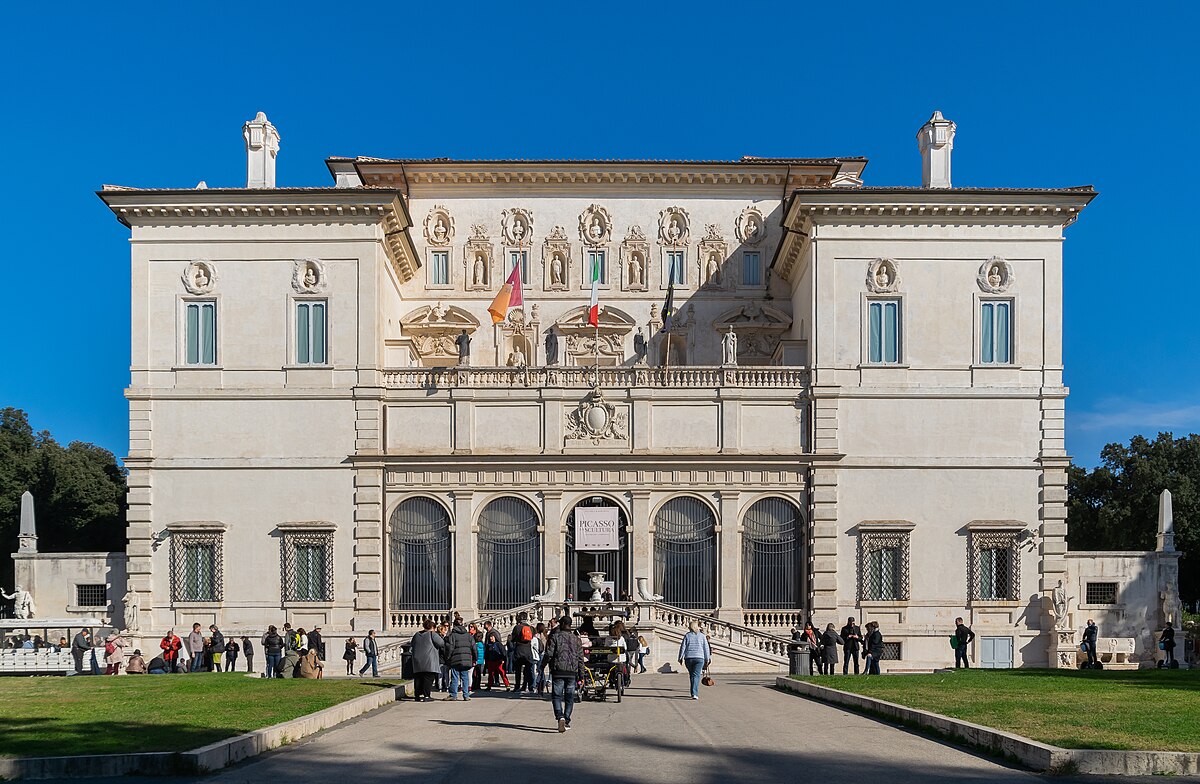
But here is the catch: the Borghese only admits 360 people at a time, in strict two-hour windows. Tickets sell out weeks in advance, sometimes months during peak season. If you show up without a reservation, you will not get in. No exceptions.
This guide covers everything you need to know about getting Borghese Gallery tickets — the official booking system, the timed entry slots, when to book, and the guided tours that honestly make the experience even better. I have been through the process multiple times and can tell you exactly what works and what does not.
If You’re in a Hurry: My Top 3 Picks
- Borghese Gallery Entry Ticket with Escorted Entrance — The simplest option. You get timed entry with an escort who gets you past the line, then you explore freely. No guide narration, just guaranteed access. From $50 per person.
- Borghese Gallery and Gardens Guided Small-Group Tour — My top recommendation. A knowledgeable guide walks you through the highlights and explains the stories behind Bernini, Caravaggio, and Canova. Small groups mean you can actually hear and ask questions. From $60 per person.
- Borghese Gallery Guided Tour with Tickets — The highest-rated option for a reason. An expert guide with a deep knowledge of Baroque art walks you through every room. The guides on this particular tour tend to be art historians, not general tourism guides. From $57 per person.
- If You’re in a Hurry: My Top 3 Picks
- How Borghese Gallery Tickets Work
- Skip-the-Line Entry vs. Guided Tours
- Skip-the-Line Entry Tickets
- Guided Tours
- Best Borghese Gallery Tours to Book
- Borghese Gallery Entry Ticket with Escorted Entrance
- Borghese Gallery and Gardens Guided Small-Group Tour
- Borghese Gallery Entry with Skip-the-Line Tickets
- Borghese Gallery Guided Tour with Tickets
- Borghese Gallery and Gardens Small Group Guided Tour (Viator)
- Borghese Gallery Guided Tour with Skip-the-Line Entry
- Exclusive Borghese Gallery Tour with Skip-the-Line Access (Viator)
- When to Visit the Borghese Gallery
- Tips for Your Borghese Gallery Visit
- What You Will See Inside the Borghese Gallery
- Bernini’s Masterpieces (Ground Floor)
- Canova’s Paolina Borghese (Room I)
- Caravaggio’s Paintings (Room VIII)
- Raphael, Titian, and the Upper Gallery
- The Ceilings and Floors
- The Villa Borghese Gardens
How Borghese Gallery Tickets Work
The Borghese operates differently from almost every other museum in Rome. Understanding the system before you try to book saves a lot of frustration.
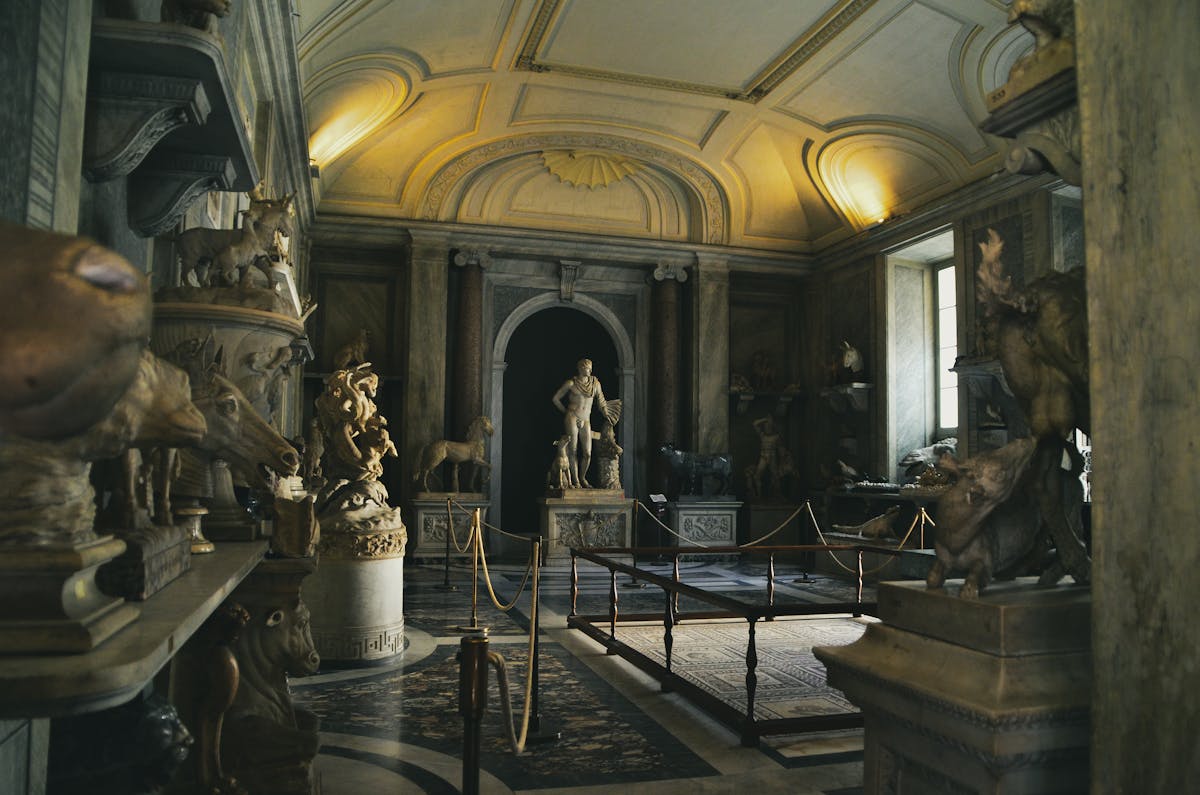
Timed entry is mandatory. The gallery runs on a strict two-hour slot system. You pick a time when you book, and that is when you enter. The five daily slots are: 9-11 AM, 11 AM-1 PM, 1-3 PM, 3-5 PM, and 5-7 PM. No entry is permitted after the slot begins — if your slot is 9 AM and you arrive at 9:45, you have lost 45 minutes.
Only 360 people per slot. This is both the gallery’s greatest feature and its biggest headache. The intimate atmosphere means you can actually stand in front of Apollo and Daphne without fighting through a crowd. But it also means tickets vanish quickly.
Reservations are required. You cannot walk up and buy a ticket at the door. Every visitor must have a pre-booked reservation. The gallery charges a mandatory 2 euro reservation fee on top of the ticket price.
The official website is your first option. The Galleria Borghese’s official ticketing page (galleriaborghese.cultura.gov.it) sells tickets directly. Standard adult entry is 15 euros plus the 2 euro booking fee. EU citizens aged 18-25 get a reduced rate, and those under 18 enter free (but still need a reservation).
Tickets open about 30 days ahead. New dates typically become available roughly a month before the visit date. If you are visiting during peak season (April through October), check the official site as soon as your dates fall within the booking window.
What if official tickets are sold out? This is where tour operators become genuinely useful. Companies like GetYourGuide and Viator receive their own allocations of entries, separate from the official pool. When the official site shows no availability, tour-based tickets are often still available. The markup covers the convenience of guaranteed entry, and in many cases you also get a guide who makes the two hours far more rewarding.
If you are planning a full Rome museum itinerary, getting your Vatican Museums tickets and Colosseum tickets sorted at the same time is smart — all three venues have booking challenges during peak season.
Skip-the-Line Entry vs. Guided Tours
This is the real decision, and the right answer depends on how much you care about understanding what you are seeing.
Skip-the-Line Entry Tickets
These give you guaranteed admission with an escort who walks you past the queue, then you are on your own inside. Prices start around $41-53 depending on the operator. The advantage is freedom — you spend your two hours however you want, lingering at the pieces that grab you and walking past the ones that do not.
The downside is significant. The Borghese has minimal English signage inside the galleries. Without a guide or at least a solid audioguide app, you will stand in front of masterpieces and know they are beautiful without understanding why they matter. Bernini carved Apollo and Daphne when he was 24 years old — that context changes how you look at it. Caravaggio painted several of the works here while on the run for murder. The stories are half the experience.
Guided Tours
A good Borghese guide is worth every extra euro. The gallery is dense with meaning — nearly every sculpture and painting has a story involving popes, power, rivalry, or scandal. The Borghese family itself was a dynasty of collectors, and understanding their ambitions gives the whole collection a narrative thread.
Guided tours typically run $57-94 depending on group size and depth. Small-group tours (6-15 people) hit the sweet spot between cost and intimacy. Private tours exist at the premium end for travelers who want a personalized experience.
My recommendation: take the guided tour on your first visit. If you fall in love with the place (and you probably will), come back another day with a skip-the-line ticket and spend two hours with your favorites.
Best Borghese Gallery Tours to Book
I have sorted these from the most popular to the most specialized. All include timed entry, so you do not need to buy a separate ticket.
Borghese Gallery Entry Ticket with Escorted Entrance
Duration: 1-2 hours | From: $50 per person
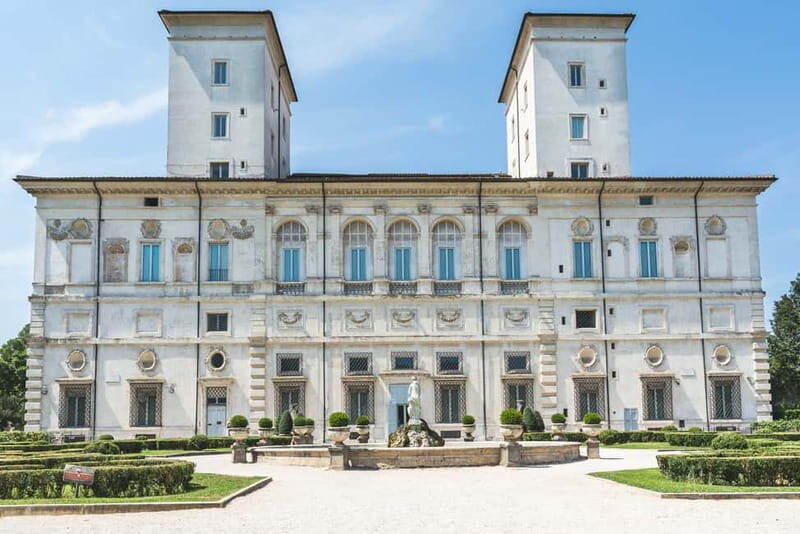
The straightforward entry option. A host meets you outside, walks you past the queue, and gets you inside. After that, you are free to explore at your own pace for the full two-hour window. This is not a guided tour — there is no narration or art commentary. It is purely about securing entry. Best for return visitors who already know the collection, or for anyone who genuinely prefers wandering museums alone. The escorted entrance part takes about 10 minutes, then you are on your own.
Borghese Gallery and Gardens Guided Small-Group Tour
Duration: 2.5 hours | From: $60 per person
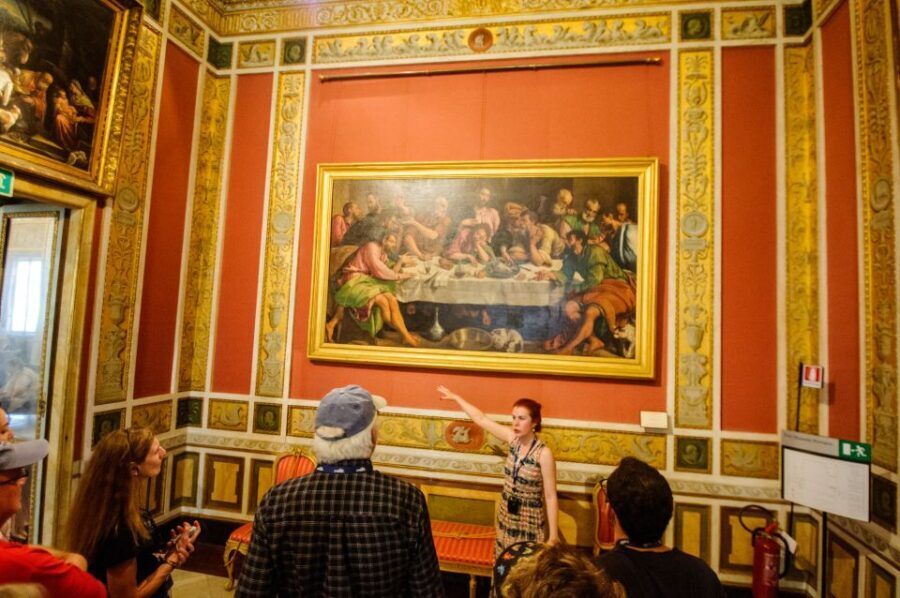
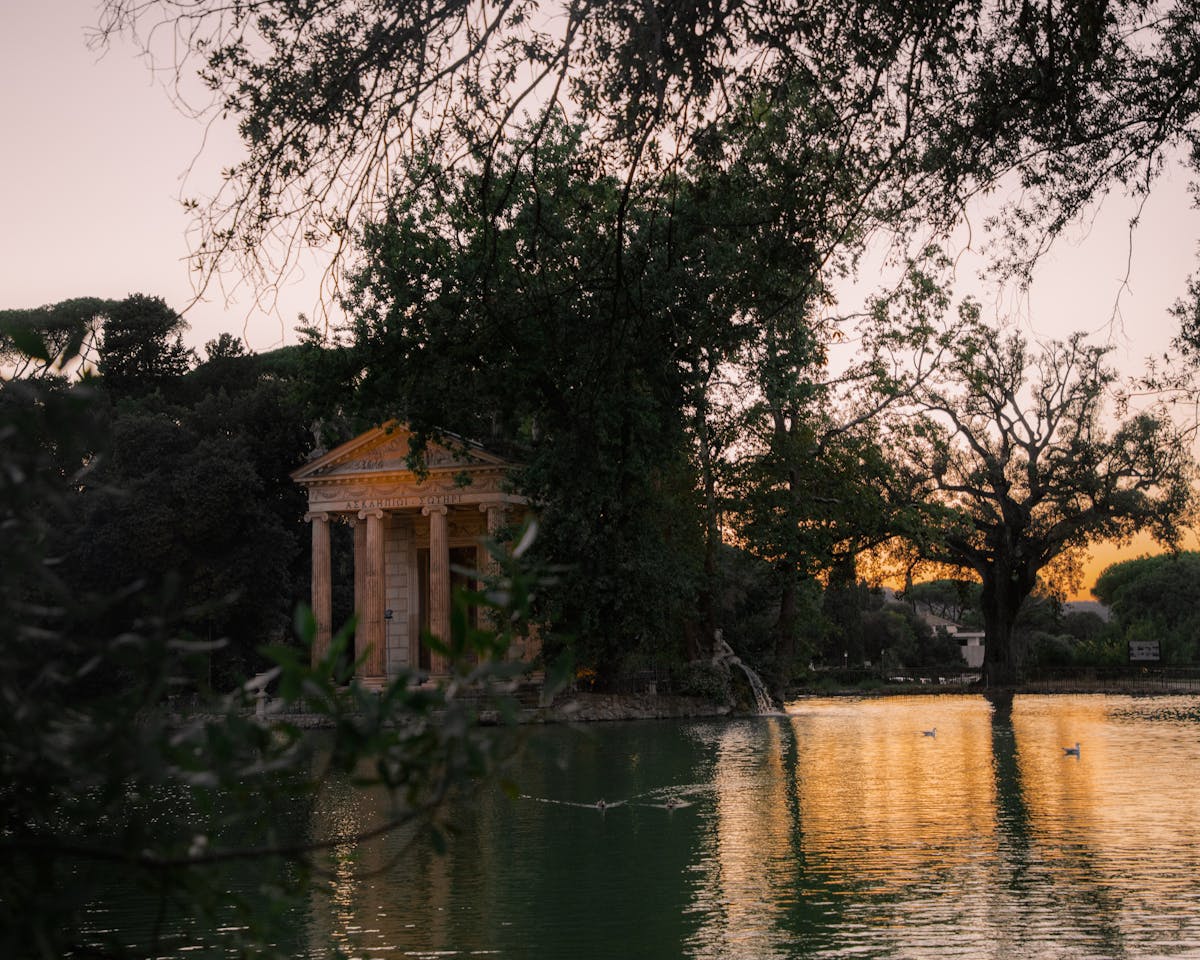
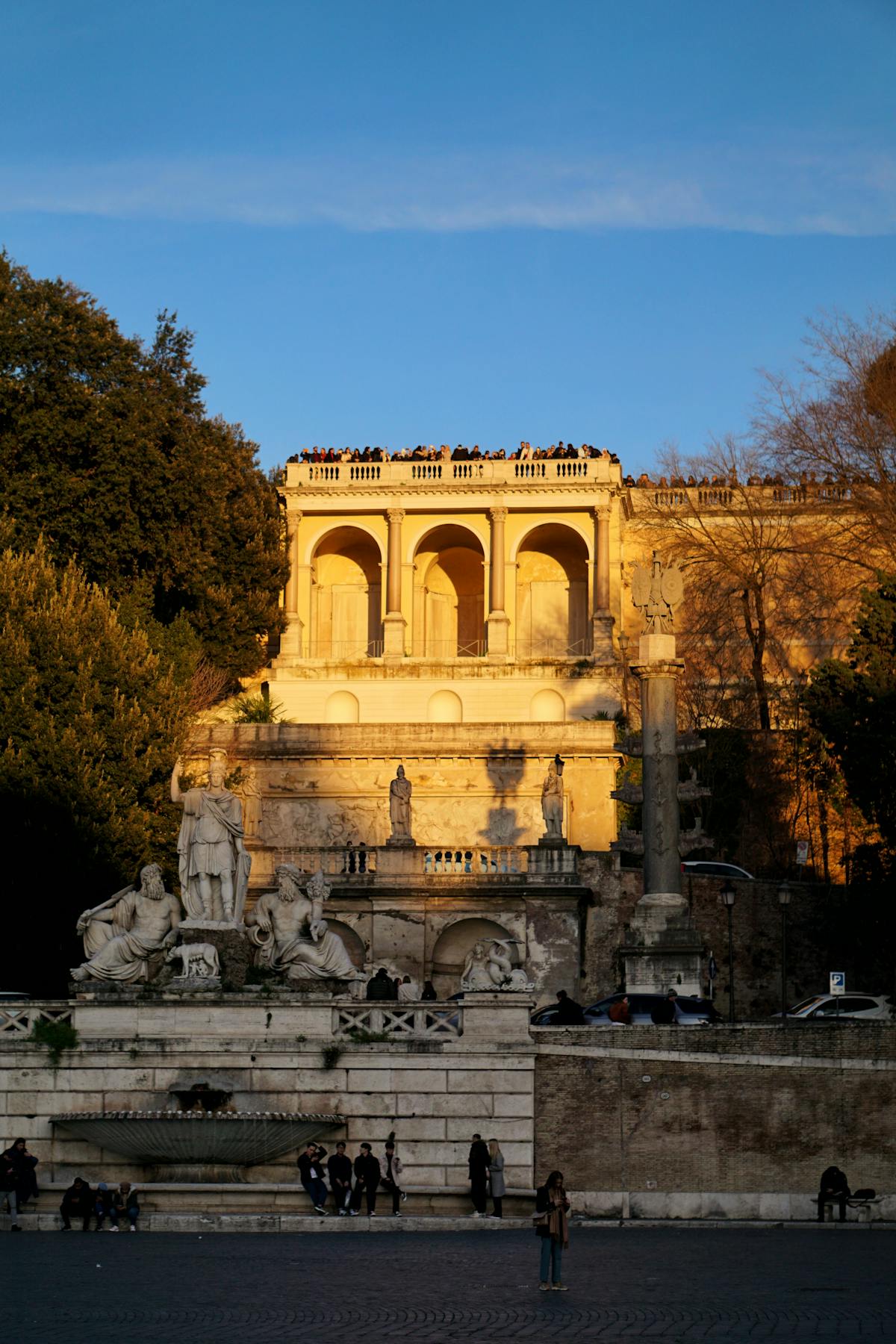
This is my top recommendation for first-time visitors. You get the gallery tour plus a walk through the Villa Borghese gardens, which most visitors never see. The guide covers the key sculptures (Bernini, Canova) and paintings (Caravaggio, Raphael) inside, then takes you through the gardens to the Temple of Aesculapius and the Pincio terrace with its views over Piazza del Popolo. The extra 30 minutes in the gardens feel like a palette cleanser after the intensity of the art inside. Small groups keep it conversational rather than lecture-like.
Borghese Gallery Entry with Skip-the-Line Tickets
Duration: 2-4 hours | From: $53 per person
Similar to the escorted entrance above, but with a bit more flexibility on timing. You get your timed entry ticket and skip-the-line access. The listing says 2-4 hours, which accounts for time in the gardens before or after your two-hour gallery slot. A good middle-ground option if you want guaranteed entry without committing to a guided tour. Pair it with a downloaded audioguide app and you get most of the benefits of a guide at a fraction of the cost.
Borghese Gallery Guided Tour with Tickets
Duration: 2 hours | From: $57 per person
The highest-rated guided experience on this list, and the reviews are not exaggerated. The guides here tend to be art historians who specialize in Baroque and Renaissance art rather than generalist tourism guides. You will learn about the rivalry between Bernini and Borromini, why Caravaggio painted darkness like no one before him, and how the Borghese family used art as political currency. The two-hour duration matches the gallery slot exactly, so there is no wasted time. If you want the best guided experience at a reasonable price, this is it.
Borghese Gallery and Gardens Small Group Guided Tour (Viator)
Duration: 2 hours 30 minutes | From: $47.16 per person
The Viator equivalent of the gardens-plus-gallery combo, and at $47 it is the most affordable guided option that covers both. The format is similar: gallery tour with the highlights, then a walk through the Villa Borghese gardens. If you prefer booking through Viator for their cancellation policies or already have credits on the platform, this is a solid alternative. The guides are licensed and the smaller group size (typically under 15) keeps the experience intimate.
Borghese Gallery Guided Tour with Skip-the-Line Entry
Duration: 1.5-2 hours | From: $83 per person
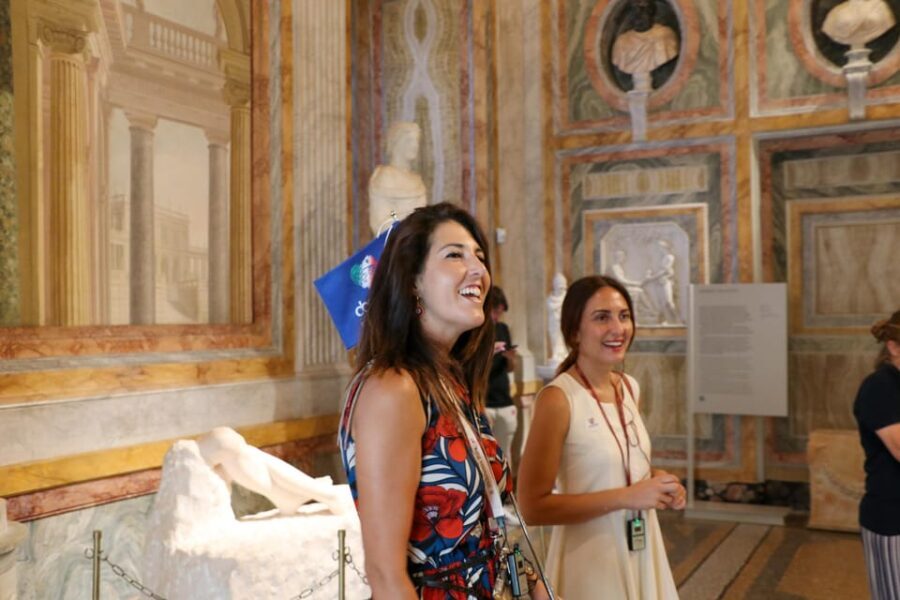
The premium guided option. The higher price reflects smaller group sizes and guides who go deeper into the art historical context. You are paying for a more intimate, almost private-feeling experience. The guide will point out details you would never notice on your own — the way Bernini carved veins visible under David’s skin, or how Caravaggio used himself as a model in some paintings. If budget is not a concern and you want the most thorough guided experience available, this is where to go.

Exclusive Borghese Gallery Tour with Skip-the-Line Access (Viator)
Duration: 2 hours | From: $83.44 per person
An exclusive small-group experience available in multiple languages. The group cap is low, which means your guide can adjust the tour based on what interests you most — if you want to spend extra time with the Caravaggios and less with the ancient busts, they will accommodate that. A strong option for art lovers who want something between a standard guided tour and a full private experience.
When to Visit the Borghese Gallery
Best time of year: Late October through March is the sweet spot. Tourist crowds thin out, tickets are easier to get, and the gallery feels even more intimate with fewer people in each room. April and May are lovely but busier. June through September is peak season with the tightest availability.
Best time slot: The 9 AM slot is my first choice. You get the freshest energy, the best natural light streaming through the gallery windows, and the least competition for space in front of the major pieces. The 1 PM slot is often the easiest to book because most travelers are eating lunch — a useful trick during high season.
Day of the week: Tuesdays and Wednesdays tend to be the quietest. Saturdays are the busiest. The gallery is closed on Mondays.
How far ahead to book: During peak season, book as soon as dates become available (roughly 30 days out). In the off-season, a week or two ahead is usually fine. If the official site is sold out, tour operators often still have availability up to a few days before.
The Borghese pairs well with other Rome attractions. Consider visiting the Pantheon the same afternoon — it is about 25 minutes away by taxi and requires no timed entry. Or combine it with a morning at St. Peter’s Basilica, which is free to enter and opens early.
Tips for Your Borghese Gallery Visit
The two-hour limit is real. At the end of your slot, a bell rings and staff gently but firmly clear the galleries. There is no staying late. Plan your route before you enter — if you spend 30 minutes on the ground floor sculptures, you have 90 minutes left for the paintings upstairs and everything else.
Start with the ground floor. This is where the Berninis and Canova are. The upstairs painting galleries are wonderful but less likely to take your breath away the way Apollo and Daphne will. If you only have energy for one floor to be fully present, make it the ground floor.
Bags go in lockers. You must check backpacks and large bags in the free cloakroom before entering. There is no exception. Bring a small crossbody or nothing at all.
Photography is allowed. No flash, no tripods, but you can photograph everything. The natural light in the ground-floor rooms is beautiful, especially during morning slots. Turn off your flash to get the warm, natural look rather than the flat white of a flash bouncing off marble.
There is no cafe inside. Eat before you go or plan to eat after. The Villa Borghese gardens have a few cafes, including one near the lake that is pleasant for a post-museum coffee.
Getting there: The nearest Metro station is Spagna (Line A), about a 15-minute walk through the gardens. You can also take a taxi directly to the gallery entrance on Piazzale del Museo Borghese. Bus lines 910 and 53 stop near the Via Pinciana entrance to the gardens. A hop-on hop-off bus also stops near the Villa Borghese area if you are combining it with other sights.
Arrive 15 minutes early. Security screening and ticket verification take time. If you arrive right at your slot time, you lose those minutes from your two hours inside.
What You Will See Inside the Borghese Gallery
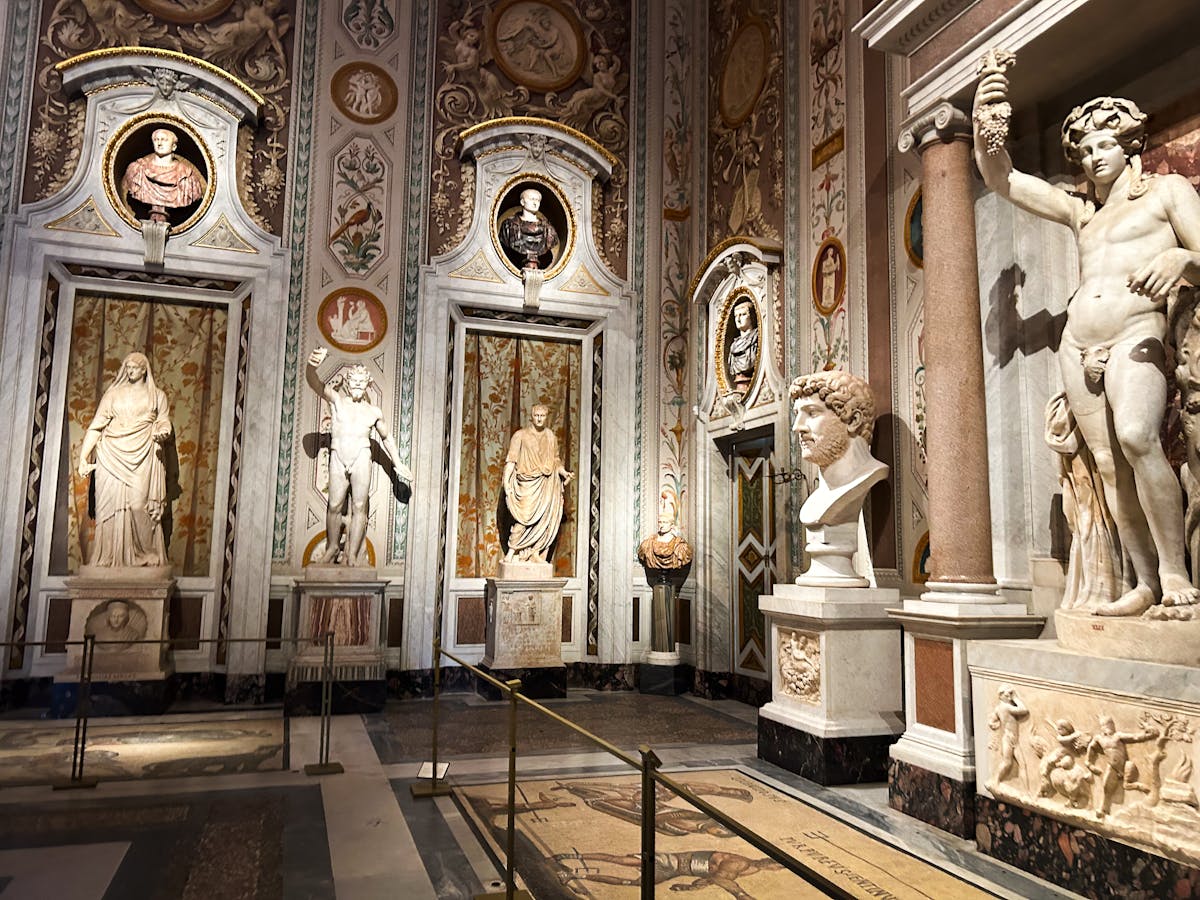
The gallery is divided across two floors. The ground floor houses the sculptures and antiquities. The upper floor (the Pinacoteca) holds the paintings. Here is what to prioritize if your two hours feel tight.
Bernini’s Masterpieces (Ground Floor)
Gian Lorenzo Bernini is the star of the Borghese. Three of his greatest works are here, and each one changed what people believed marble could do.
Apollo and Daphne (Room III): The piece that stops everyone in their tracks. Bernini was 24 when he completed it. Daphne’s transformation into a laurel tree happens before your eyes — bark creeping up her legs, leaves bursting from her fingertips, her face frozen in the last moment before she becomes something else entirely. Walk around the entire sculpture to see how the composition changes from every angle.
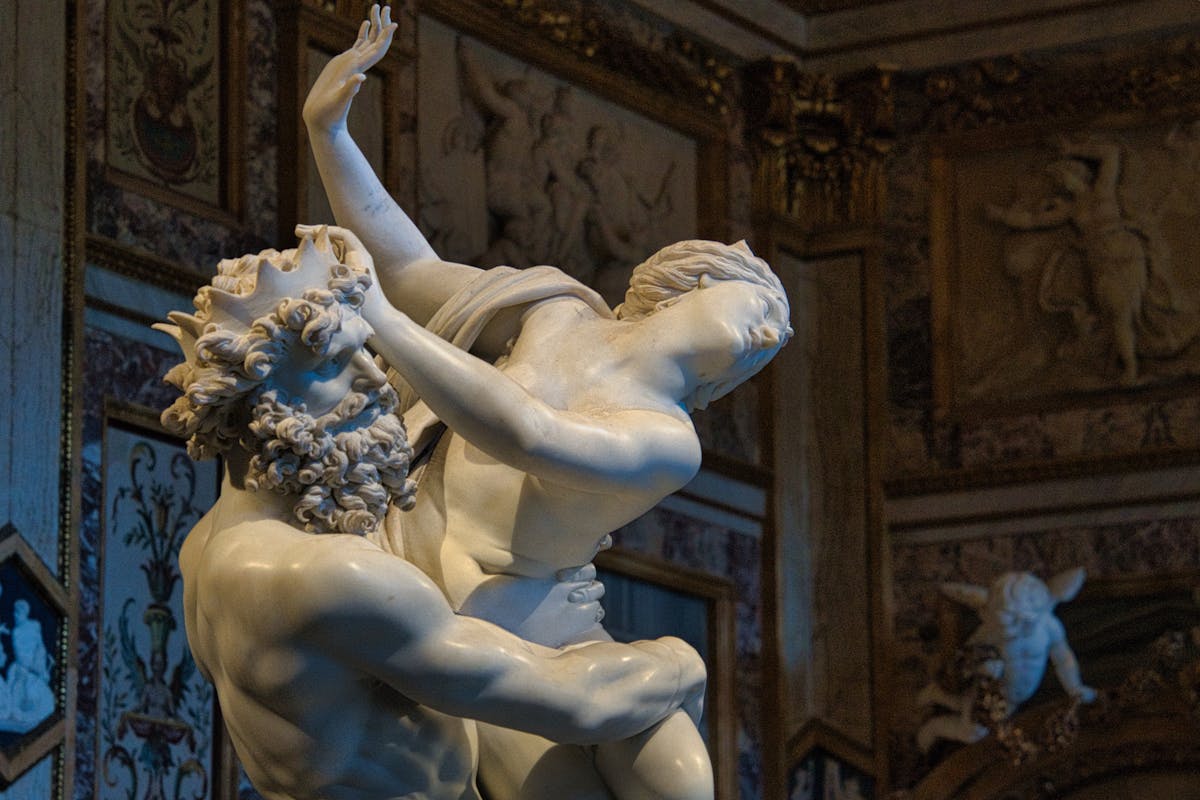
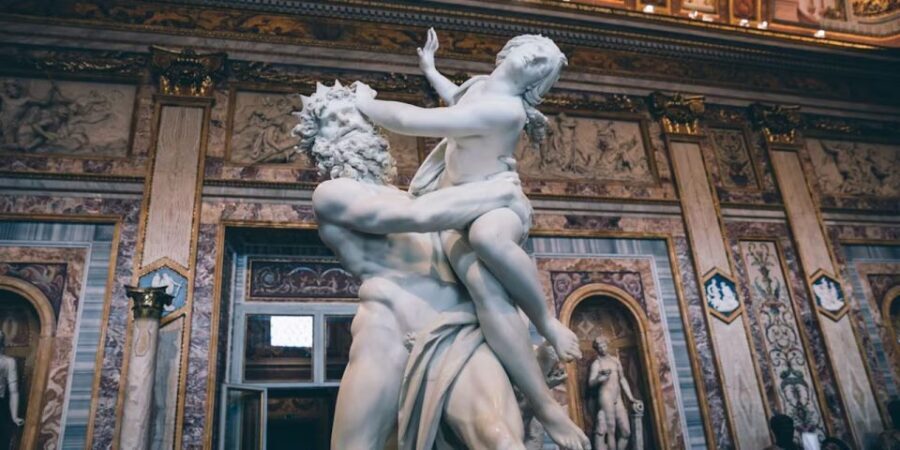
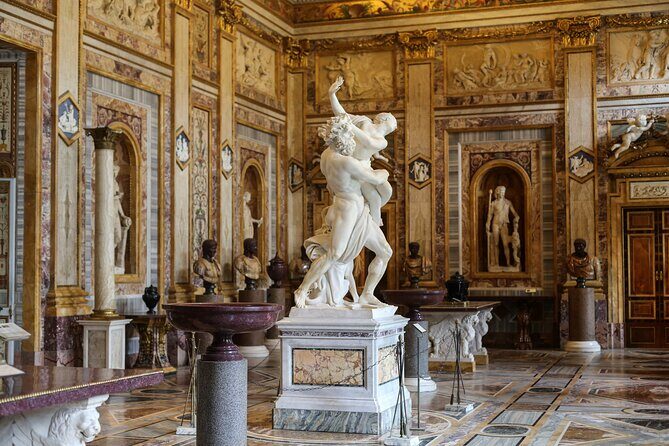
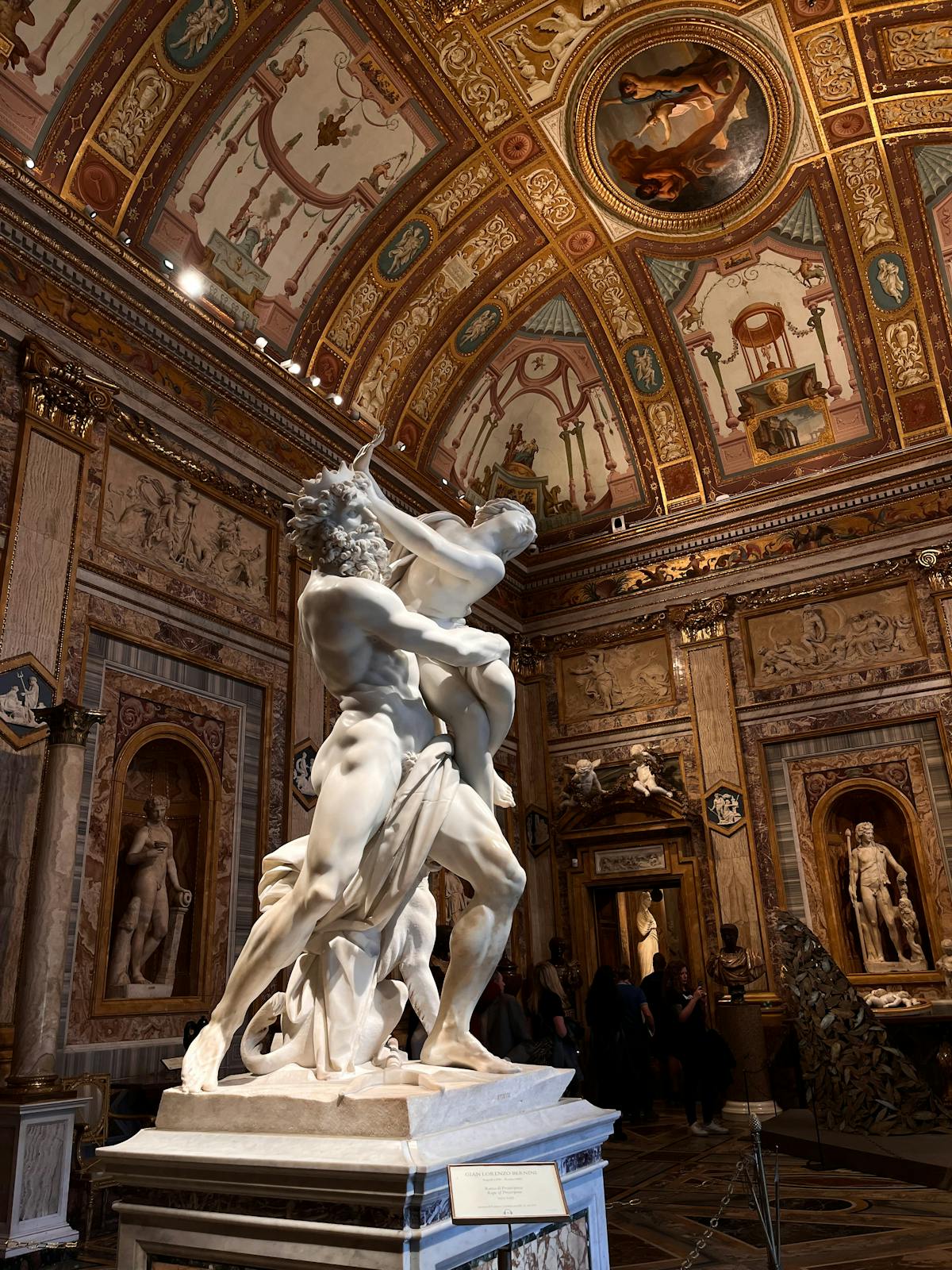
The Rape of Proserpina (Room IV): Pluto’s fingers pressing into Proserpina’s thigh is the most famous detail, and it deserves its reputation. The way the marble yields under his grip, creating the illusion of soft flesh, is one of the most technically astounding things ever carved. But notice Proserpina’s face too — the tears on her cheeks are individual drops of marble.
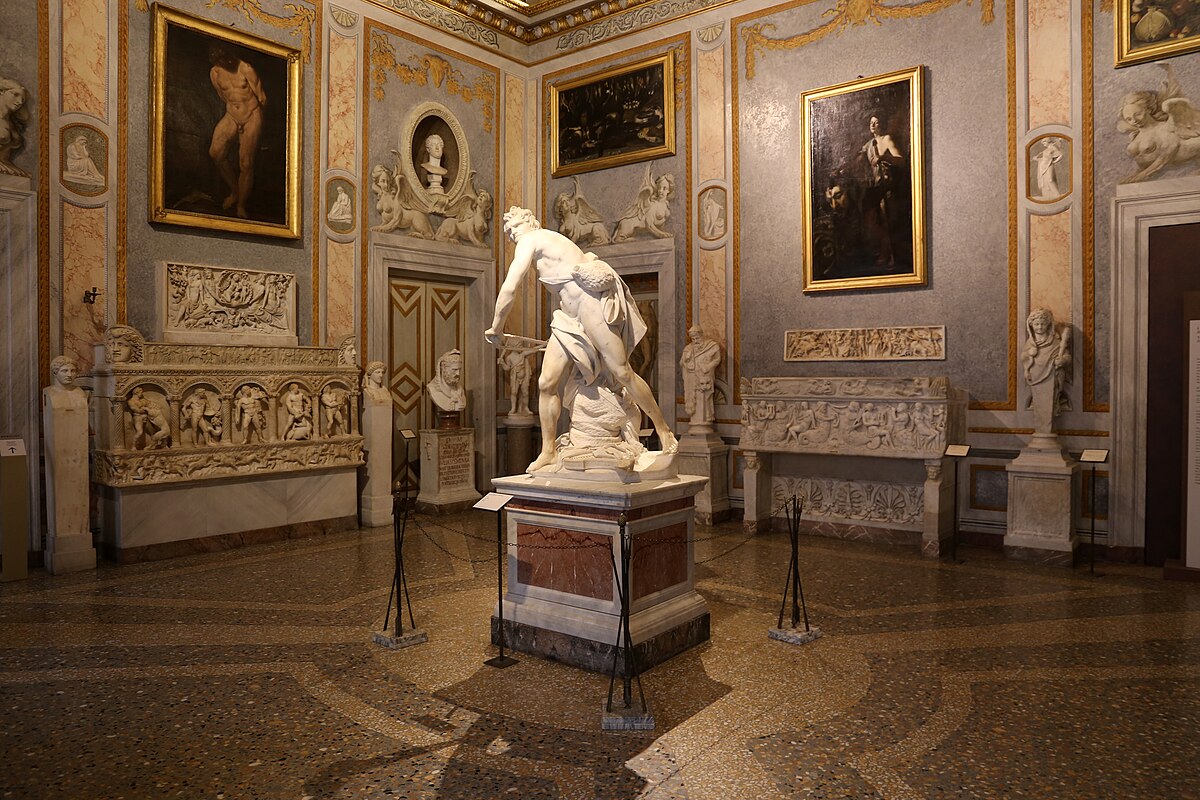
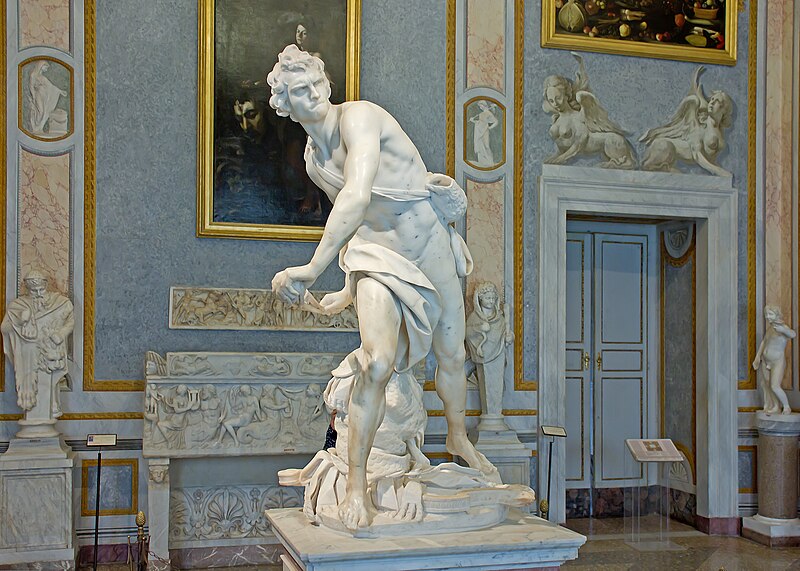
David (Room II): Forget everything you think you know about David sculptures. Michelangelo’s David stands in calm contemplation. Bernini’s David is mid-throw, his body coiled and twisting, his face contorted with effort. The legend says Bernini carved his own face into David’s expression, grimacing in a mirror as he worked. Stand in front of it and you can feel the tension in the stone.
Canova’s Paolina Borghese (Room I)
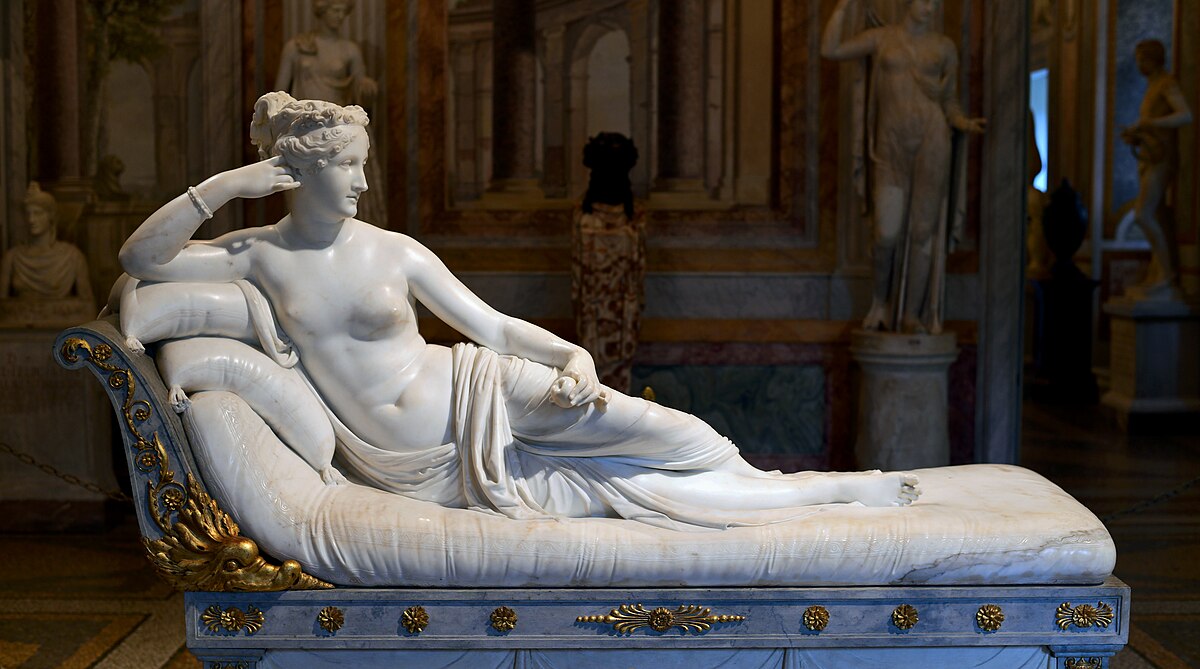
Antonio Canova sculpted Napoleon’s sister, Pauline Bonaparte, as Venus reclining on a chaise longue. The neoclassical style is cooler and smoother than Bernini’s dramatic Baroque, but no less impressive. The marble couch she reclines on originally sat on a rotating mechanism so viewers could admire the sculpture from every angle. The work was considered so scandalous that her husband, Prince Camillo Borghese, kept it locked in a private room.
Caravaggio’s Paintings (Room VIII)
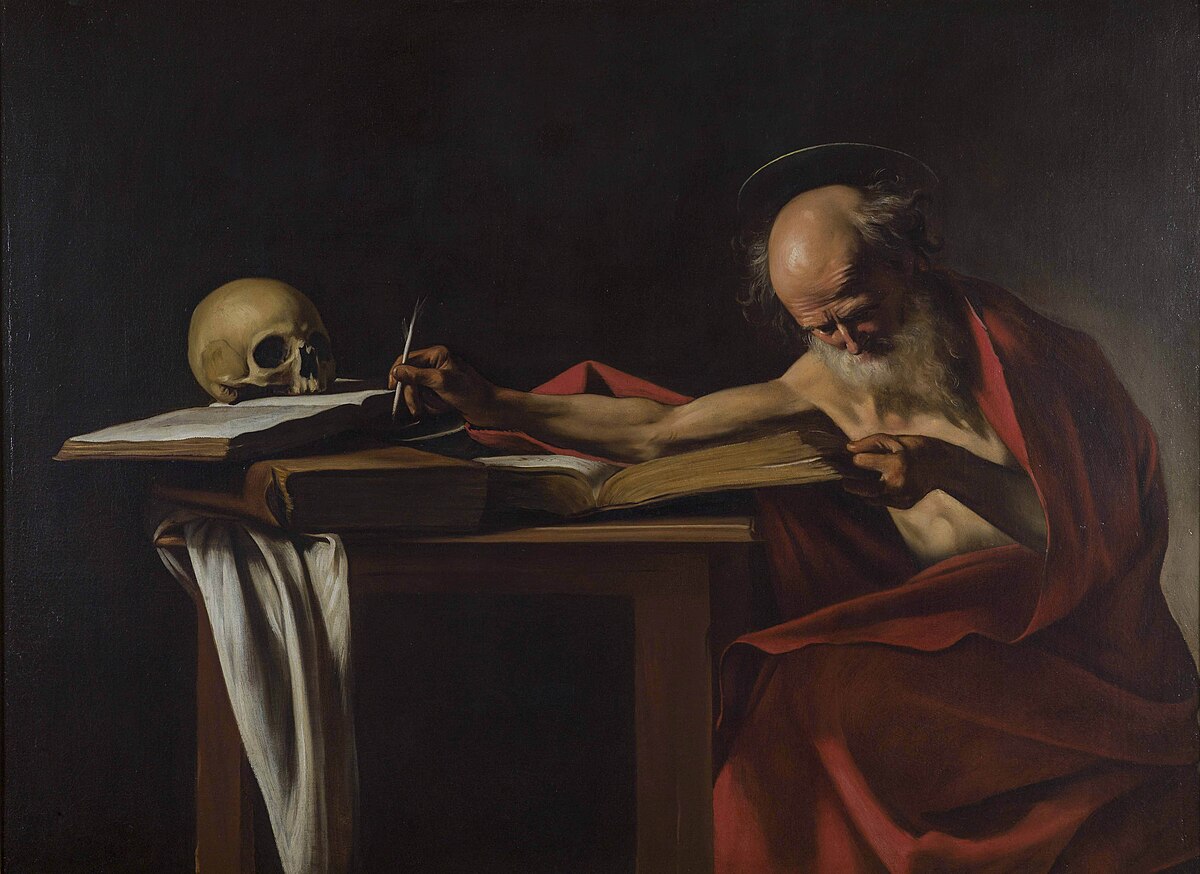
The Borghese holds six Caravaggio paintings — one of the largest collections anywhere. The standout is Boy with a Basket of Fruit, painted when Caravaggio was barely out of his teens and already showing the dramatic light-and-shadow technique that would change Western art. David with the Head of Goliath is haunting: Caravaggio painted his own face onto Goliath’s severed head, created while he was fleeing a murder charge. St. Jerome Writing shows an old man hunched over his work, the skull beside him a reminder that even scholarship cannot outrun death. These paintings sit in rooms flooded with natural light from the villa’s windows — an odd contrast with Caravaggio’s signature darkness.
Raphael, Titian, and the Upper Gallery
Upstairs, the Pinacoteca holds Raphael’s Deposition of Christ (Room IX), one of his most emotionally charged works. Titian’s Sacred and Profane Love is here too — two women, one clothed and one nude, sitting at a well. Art historians have argued about which one represents sacred love and which profane for five centuries, and the painting is no closer to giving up its answer. The upper gallery also holds works by Correggio, Veronese, and Rubens, though these tend to get less attention because of the star power downstairs.

The Ceilings and Floors
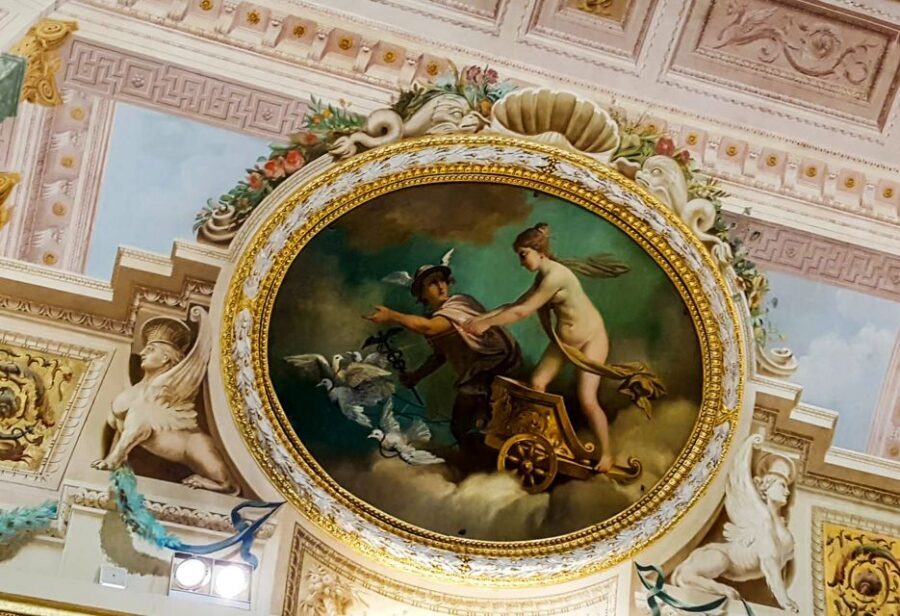
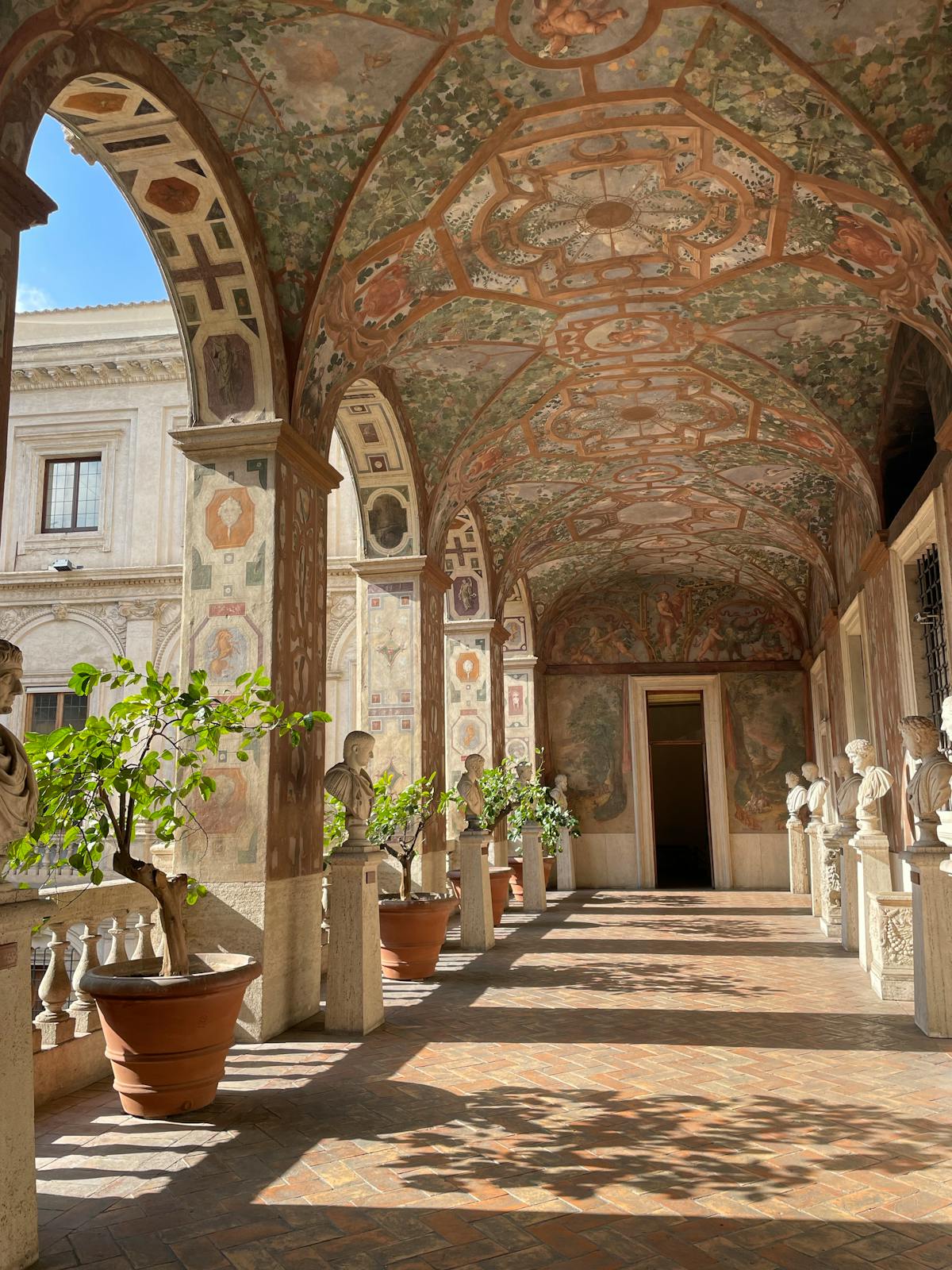
Do not forget to look up. The ceiling frescoes are works of art in their own right — Giovanni Lanfranco’s Council of the Gods in the main hall is a swirling composition of mythological figures that rivals anything in the Vatican. The mosaic floors feature 4th-century Roman mosaics that were brought here from a Roman villa on the Via Flaminia. You are literally walking on ancient art while looking at Renaissance and Baroque art on the walls.
The Villa Borghese Gardens
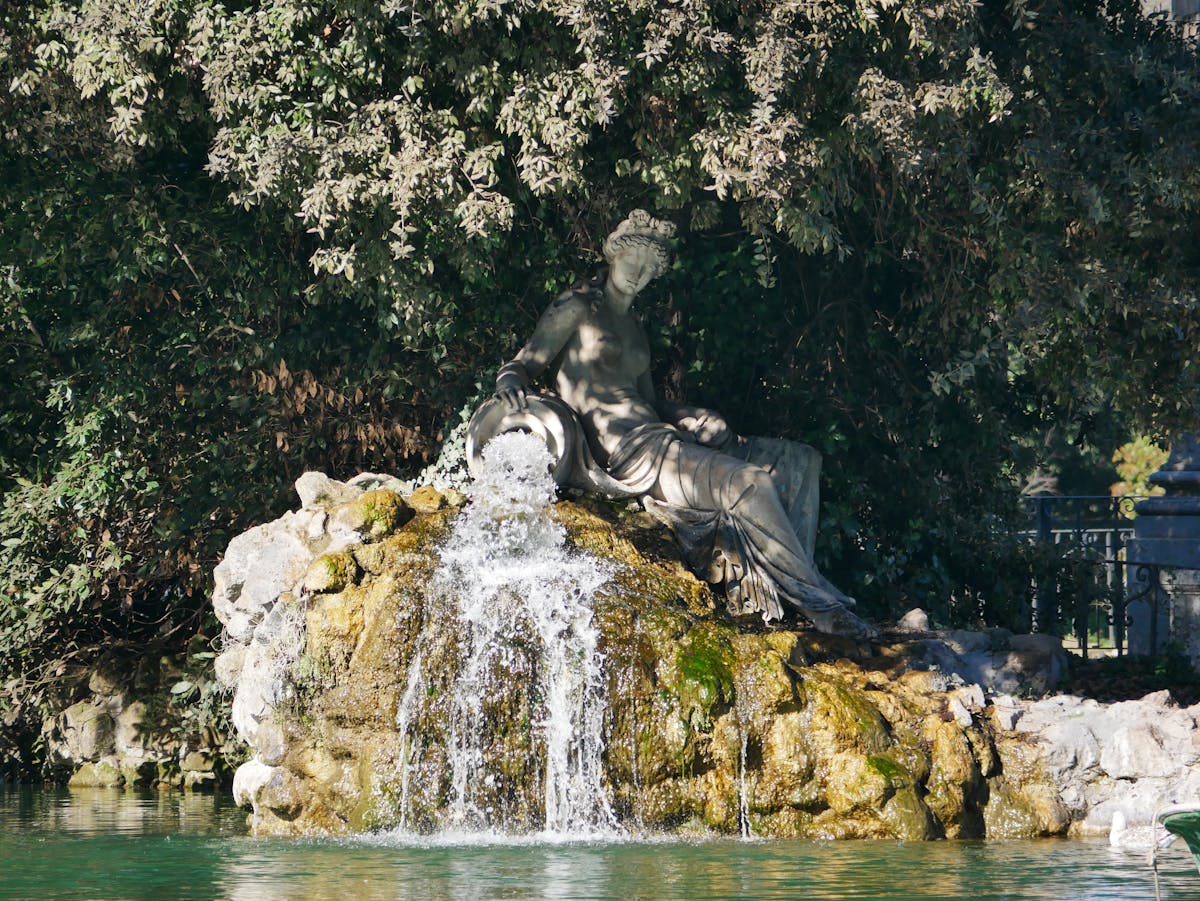
Your gallery ticket does not include the gardens (they are free and public), but spending time here before or after your visit is part of the full experience. The gardens cover 80 hectares and include the Temple of Aesculapius on an artificial lake, the Pincio terrace with panoramic views over Piazza del Popolo, a boating lake, and several smaller museums. It is one of the most pleasant green spaces in central Rome and a welcome escape from the traffic and noise.
If you are spending multiple days in Rome, the Borghese Gallery belongs on the same must-visit list as the Colosseum and the Vatican Museums. But it offers something neither of those can: a collection that feels personal rather than overwhelming, in a building that was designed to make art feel intimate. Two hours is not long. But if you use them well, they will be among the most memorable hours of your trip to Rome.
Disclosure: This article contains affiliate links to tour booking platforms. If you book through these links, we may earn a small commission at no extra cost to you. This helps us keep creating free travel guides. All recommendations are based on our own research and experience — we only suggest tours and tickets we genuinely believe are worth booking.