
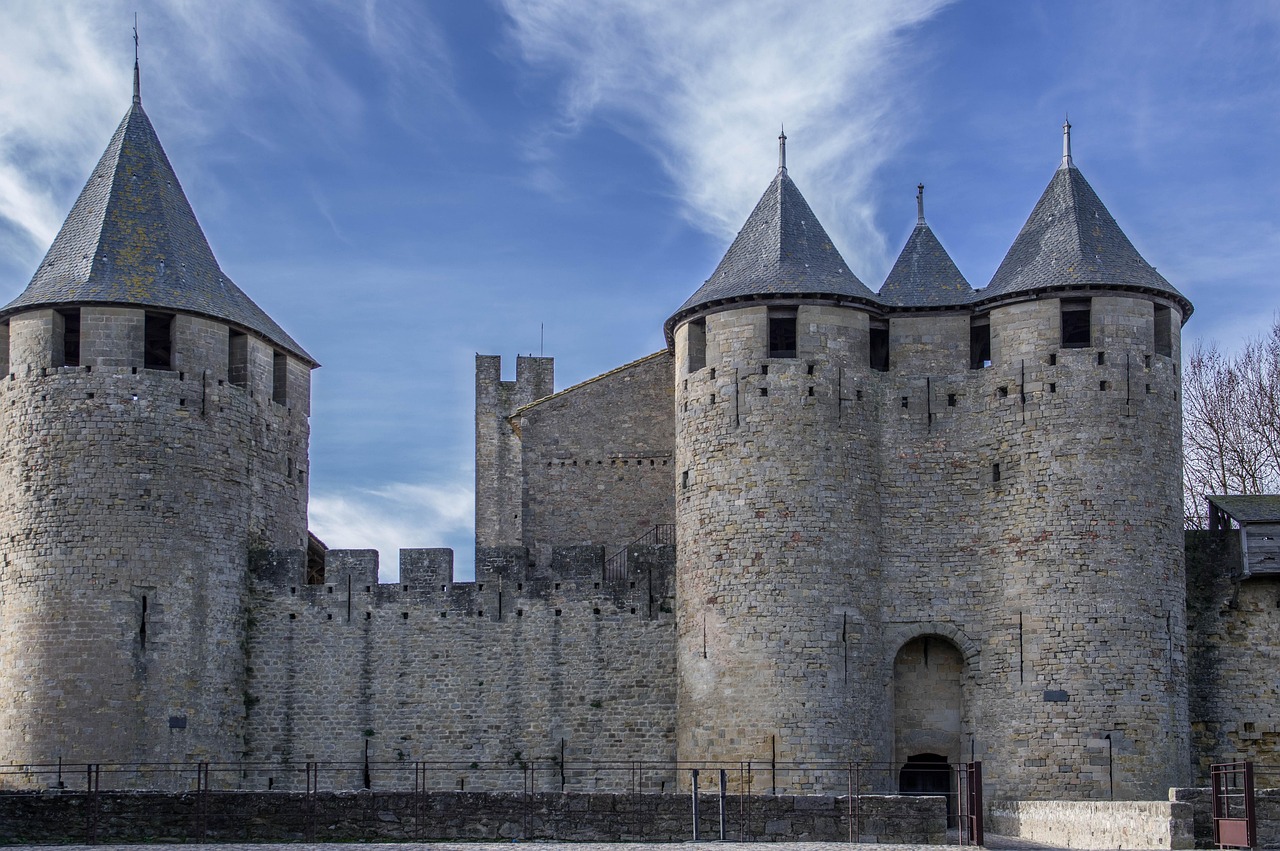
The first time I stood in front of Carcassonne’s double walls, I actually laughed. Not because it was funny — because it was absurd. Fifty-two towers. Three kilometres of ramparts. A complete medieval fortress sitting there like someone dropped a movie set into the south of France and forgot to pick it up.
This is Europe’s largest fortified city. And getting inside — properly inside, not just wandering the free streets — requires a ticket that most people don’t think about until they’re standing at the gate.
I’ve visited twice now — once in summer when the crowds were genuinely oppressive, and once in late October when I had entire sections of the ramparts to myself. The difference was night and day, and I’ll get into timing later. But first: how to actually get your tickets, what they cost, and whether you should book a guided tour or go it alone.
Short on time? Here are my top picks:
Best overall: Castle and Ramparts Entry Ticket — $15. The standard ticket that gets you into the Chateau Comtal and up on the ramparts. This is what most people need.
Best guided experience: Medieval Builder-Themed City Tour — $23. A 90-minute tour that explains how this fortress was actually constructed. Genuinely fascinating.
Best budget option: Walking Tour of the Medieval City — $17. Covers the whole Cite in 90 minutes with a local guide who actually knows the stories.
- How the Official Ticket System Works
- Official Tickets vs Guided Tours — Which One?
- The Best Carcassonne Castle Tours to Book
- 1. Castle and Ramparts Entry Ticket —
- 2. Medieval Builder-Themed City Tour —
- 3. 1h30 Walking Tour of the Medieval City —
- 4. Private Guided Tour of the Medieval Fortress — 5
- 5. Winery Visit with Food and Wine — 9
- When to Visit Carcassonne
- How to Get to Carcassonne
- Tips That Will Save You Time
- What You’ll Actually See Inside
- While You’re in the South of France
How the Official Ticket System Works
The Cite de Carcassonne itself is free to enter. You can walk through the Porte Narbonnaise, wander the cobblestone streets, eat at the restaurants, browse the shops — all without paying a cent. Most of the 3 million annual visitors do exactly this.
But the Chateau Comtal and the rampart walkways — the parts that make Carcassonne actually worth visiting — require a paid ticket through the Centre des Monuments Nationaux (CMN), which manages France’s national monuments.
Ticket prices (2025-2026):
Standard adult admission is EUR 11 (roughly $12 USD). Free for EU residents under 26 and everyone under 18. There’s also a reduced rate for some visitors — check the CMN website for the latest eligibility.
You can buy tickets three ways:
1. At the gate. The ticket office is inside the Porte Narbonnaise, on your left as you enter. In summer, expect a 20-40 minute queue. In the off-season, you’ll walk straight in.
2. Online through the CMN website. This is what I’d recommend for summer visits. You pick a time slot and skip the main queue. The website is monuments-nationaux.fr — make sure you’re on the official .fr site, not a reseller.
3. Through a tour operator. If you book a guided tour through GetYourGuide or Viator, your entry ticket is usually included. More on this below.
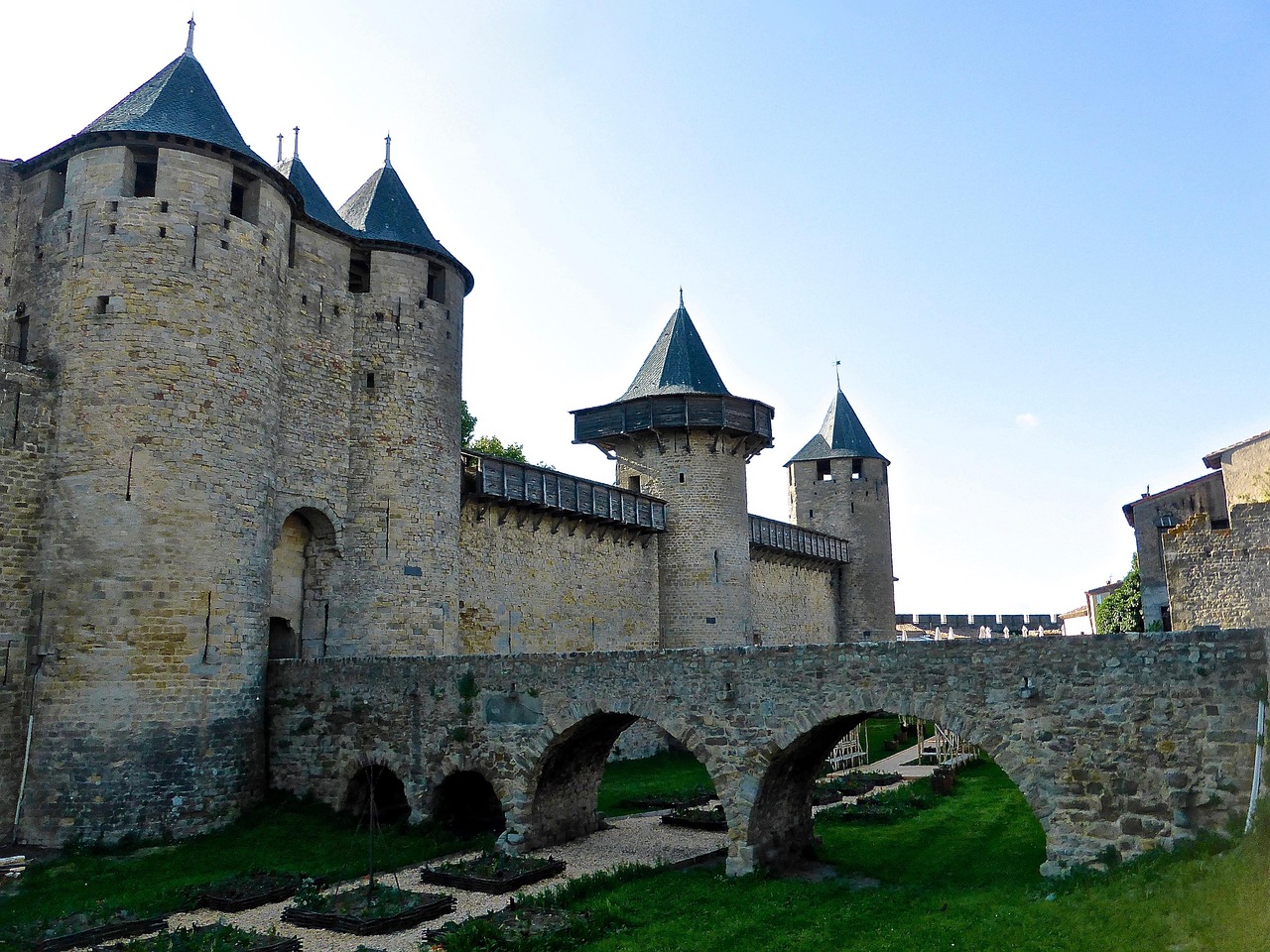
One thing that catches people off guard: your ticket gives you access to the Chateau Comtal’s interior rooms AND the rampart walkways, but these are actually two separate experiences connected by the castle courtyard. Budget at least 90 minutes to see everything properly. The ramparts alone are worth 45 minutes if you actually stop to take in the views rather than speed-walking through.
Free first Sundays: From November through March, entry is free on the first Sunday of each month. Good deal if your dates align, but it does get busier than a typical winter day.
Official Tickets vs Guided Tours — Which One?
This is genuinely a close call for Carcassonne, and I’d give different advice depending on your situation.
Go with just the official ticket if:
– You’ve already read up on Cathar history and the Albigensian Crusade (yes, it was a thing — more on that below)
– You prefer wandering at your own pace and hate being in groups
– You’re visiting in the off-season when the audio guide included with your ticket is perfectly adequate
– Budget is tight — the EUR 11 ticket is hard to beat
Book a guided tour if:
– You know nothing about the Cathars or why the Pope launched a crusade against his own people
– You want the stories behind the stones — who lived here, who died here, and why the roofs look wrong
– You’re visiting in peak summer and want someone to handle the logistics
– You’ve got kids who need someone animated to keep them engaged
The honest truth: Carcassonne’s history is wild enough that a good guide transforms the visit. The self-guided experience is fine but it’s mostly “look at these old walls” without context. With a guide, those walls become the site of one of medieval Europe’s bloodiest religious wars.
The Best Carcassonne Castle Tours to Book
I’ve gone through every Carcassonne tour option on the major platforms. Here are the five worth your money, ranked by value and experience quality.
1. Castle and Ramparts Entry Ticket — $15
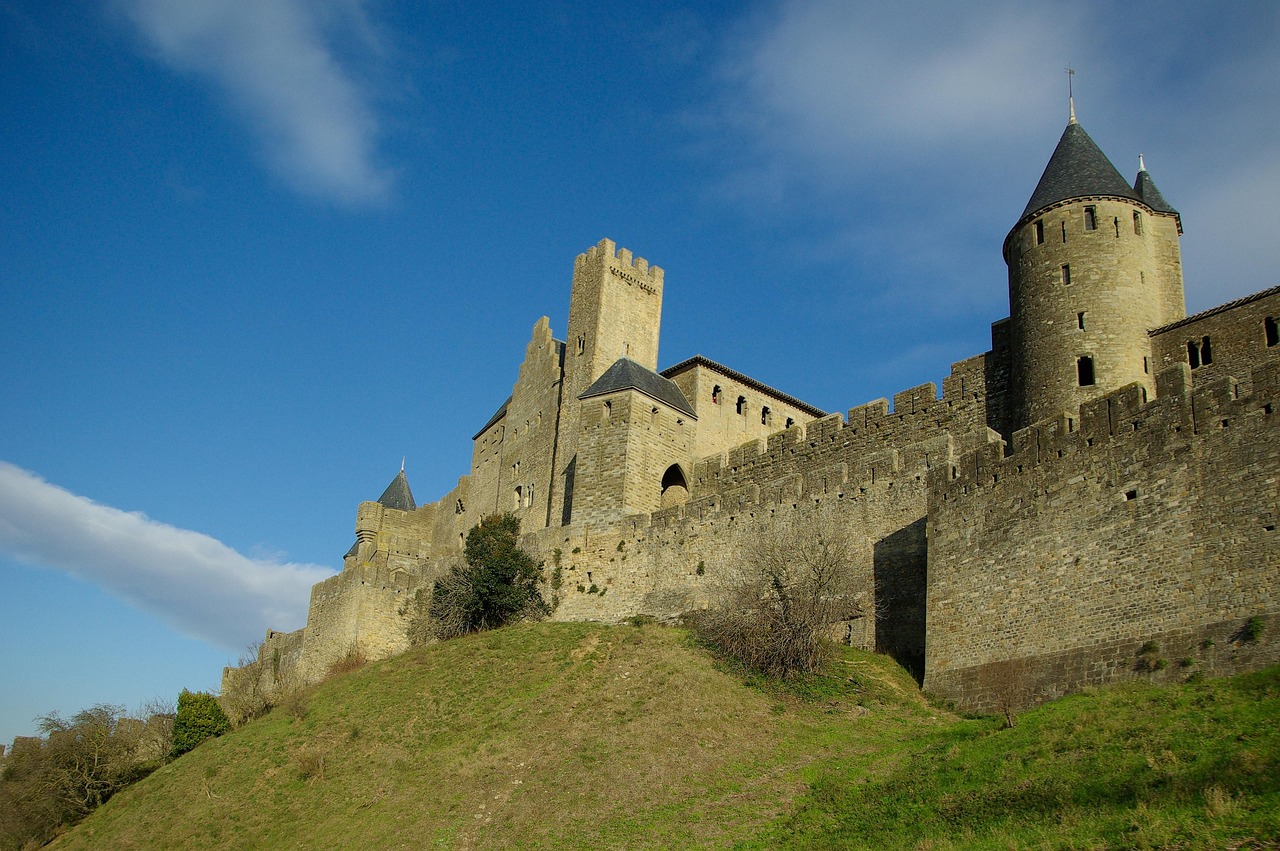
This is the one to get if you just want in. $15 per person gets you the full Chateau Comtal experience plus access to the rampart walkways, which are honestly the highlight of the whole visit. The castle interior has a decent museum on medieval warfare and the castle’s long history, but the real magic is walking along those walls and looking out over the Aude valley.
This is by far the most popular option — thousands of visitors book it every week, and for good reason. It’s cheap, it covers the essentials, and it gives you flexibility to spend as much or as little time as you want. The included audio guide adds useful context, though it’s not as engaging as a live guide.
2. Medieval Builder-Themed City Tour — $23
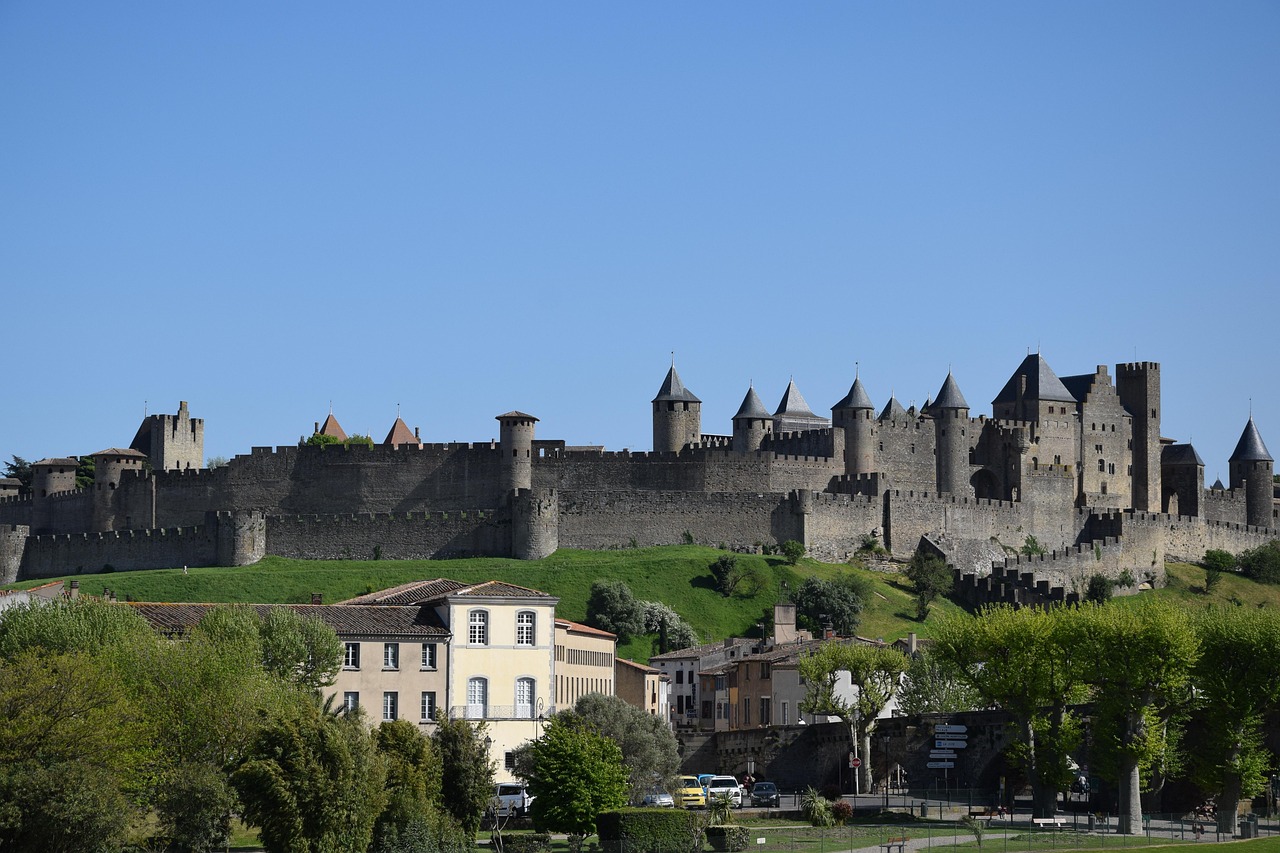
This is the one I’d pick if I could only do one thing in Carcassonne. The builder-themed tour takes a completely different angle from the standard historical walk: it focuses on HOW Carcassonne was built, why certain architectural choices were made, and what Viollet-le-Duc’s controversial 19th-century restoration actually changed. At $23 for 90 minutes, it’s remarkable value.
The guides on this tour are properly knowledgeable about medieval construction techniques. You’ll learn why the towers are round (harder to undermine), why there are two rings of walls (if you breach one, you’re still trapped), and why the arrow slits are shaped the way they are. Rated 4.9 out of 5 by visitors, and that rating is earned.
3. 1h30 Walking Tour of the Medieval City — $17
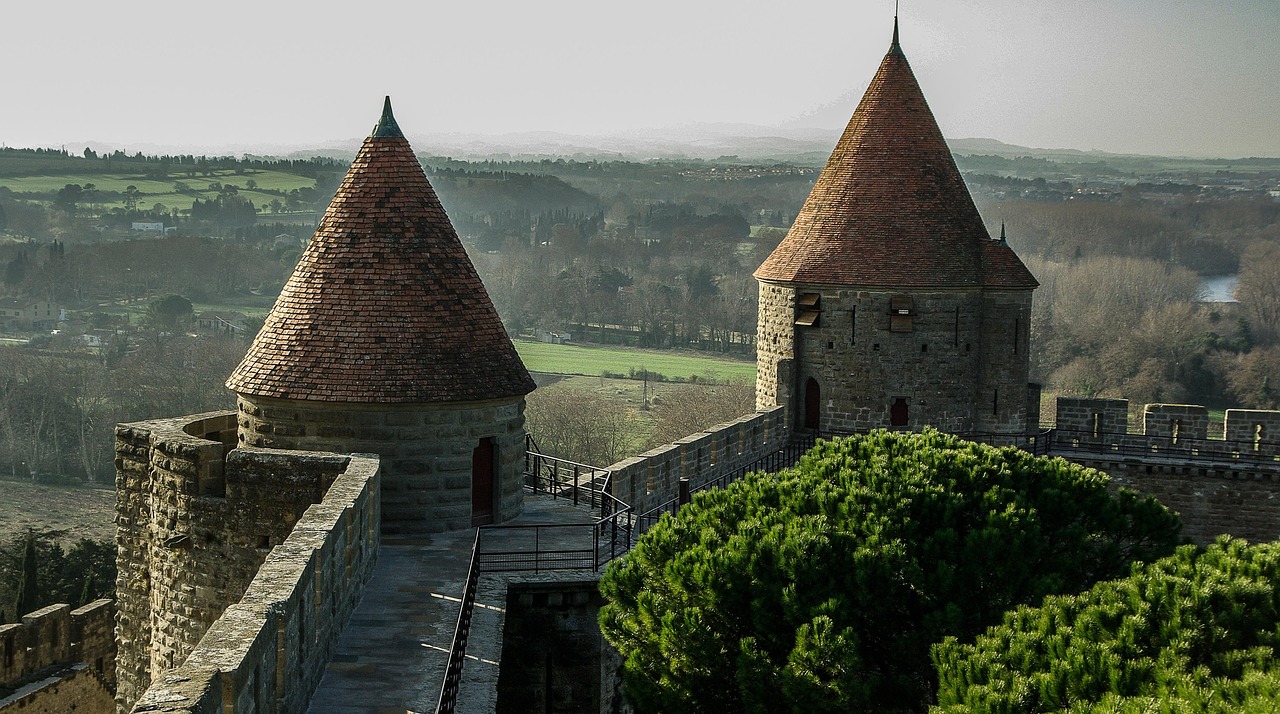
The straightforward option: a 90-minute guided walk through the entire medieval city for just $17. This covers both the free areas (the streets, Basilica of Saints Nazarius and Celsus, the squares) and gives you enough historical context to appreciate what you’re looking at.
Note that this does NOT include entry to the Chateau Comtal — that’s a separate ticket. So if you want the full experience, you’ll pay $17 for this walk plus EUR 11 for the castle entry. Still worthwhile if you want a guided introduction before exploring the castle on your own. The guide covers the Cathar history, the Albigensian Crusade, and the restoration story, which are the three things you actually need to know.
4. Private Guided Tour of the Medieval Fortress — $235
If you’ve got the budget and want the premium experience, the private guided tour runs $235 per person for 2-3 hours. Expensive? Yes. But this is the deep dive — a one-on-one (or small group) experience with an expert who can answer every question and take you to spots the group tours skip.
This makes the most sense for history enthusiasts, couples celebrating something, or families who want a more tailored experience. With a group of 4, the per-person cost starts looking more reasonable. The guides on these private tours tend to be the most experienced — they know where to stand for the best photos, which passages most travelers miss, and the gruesome details of the siege that the group tours sanitize.
5. Winery Visit with Food and Wine — $139
Not a castle tour, strictly speaking — but if you’re spending a full day in the Carcassonne area, the winery visit pairs perfectly with a morning at the fortress. $139 per person gets you 3 hours of wine tasting and food in the Languedoc wine region, which produces some of France’s most underrated wines.
Perfect 5.0 rating from visitors, and that doesn’t surprise me. The Languedoc has been making wine for longer than Bordeaux — it’s just less famous, which means the prices are friendlier and the winemakers are more relaxed. This is the kind of experience that turns a Carcassonne day trip into something you actually remember. Do the castle in the morning, the wine in the afternoon.
When to Visit Carcassonne
Timing matters more here than at most French monuments. Carcassonne gets 3 million visitors a year, and the vast majority come between June and September.
Best months: April, May, September, October. The weather is warm enough to enjoy the rampart walkways (they’re exposed — no shade), the crowds are manageable, and you won’t need to book anything in advance. September is my personal favourite because the light is gorgeous and the summer hordes have gone home.
Peak season (July-August): Hot, crowded, and the streets inside the Cite feel like a theme park. If you must visit in summer, get there before 10am or after 5pm. The midday crush is brutal, and there’s very little shade on the ramparts.
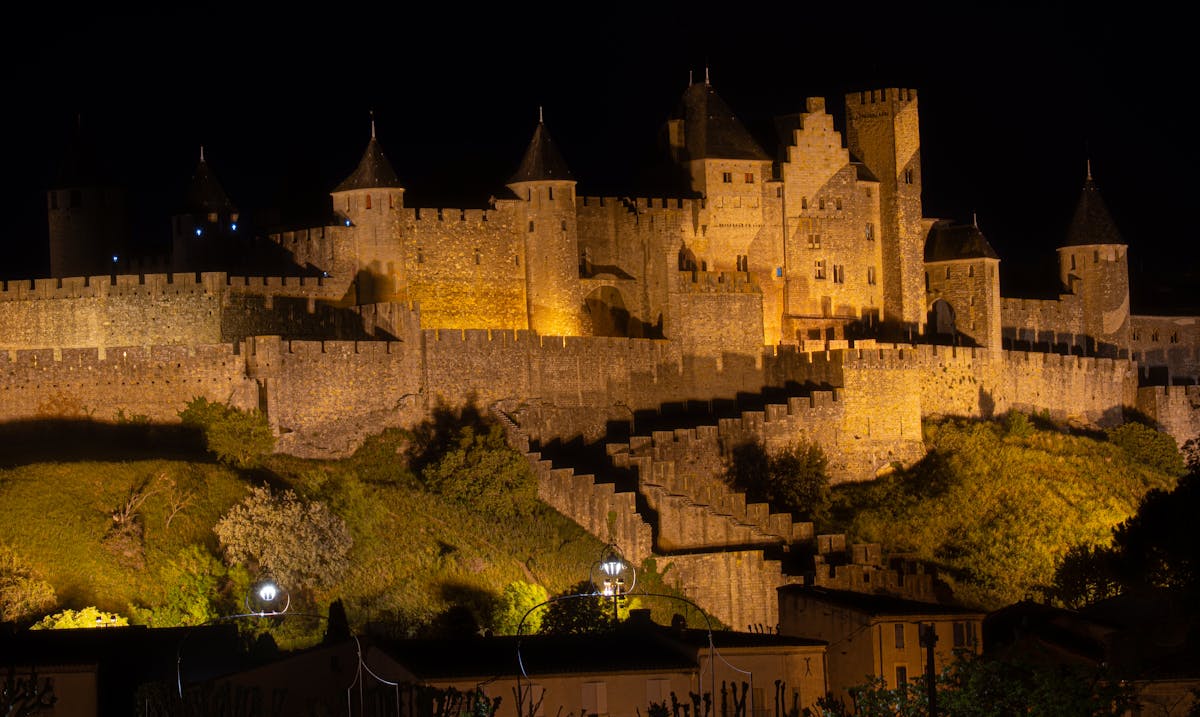
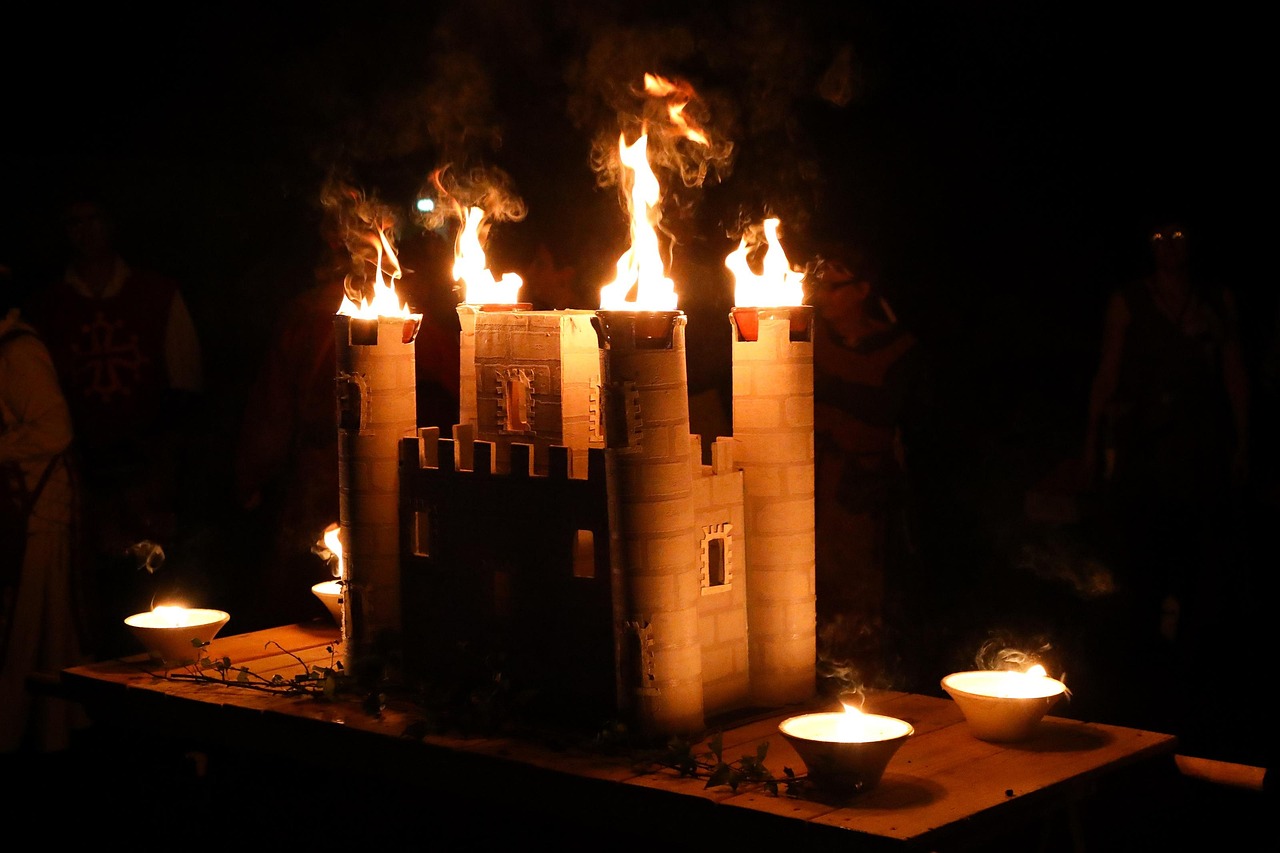
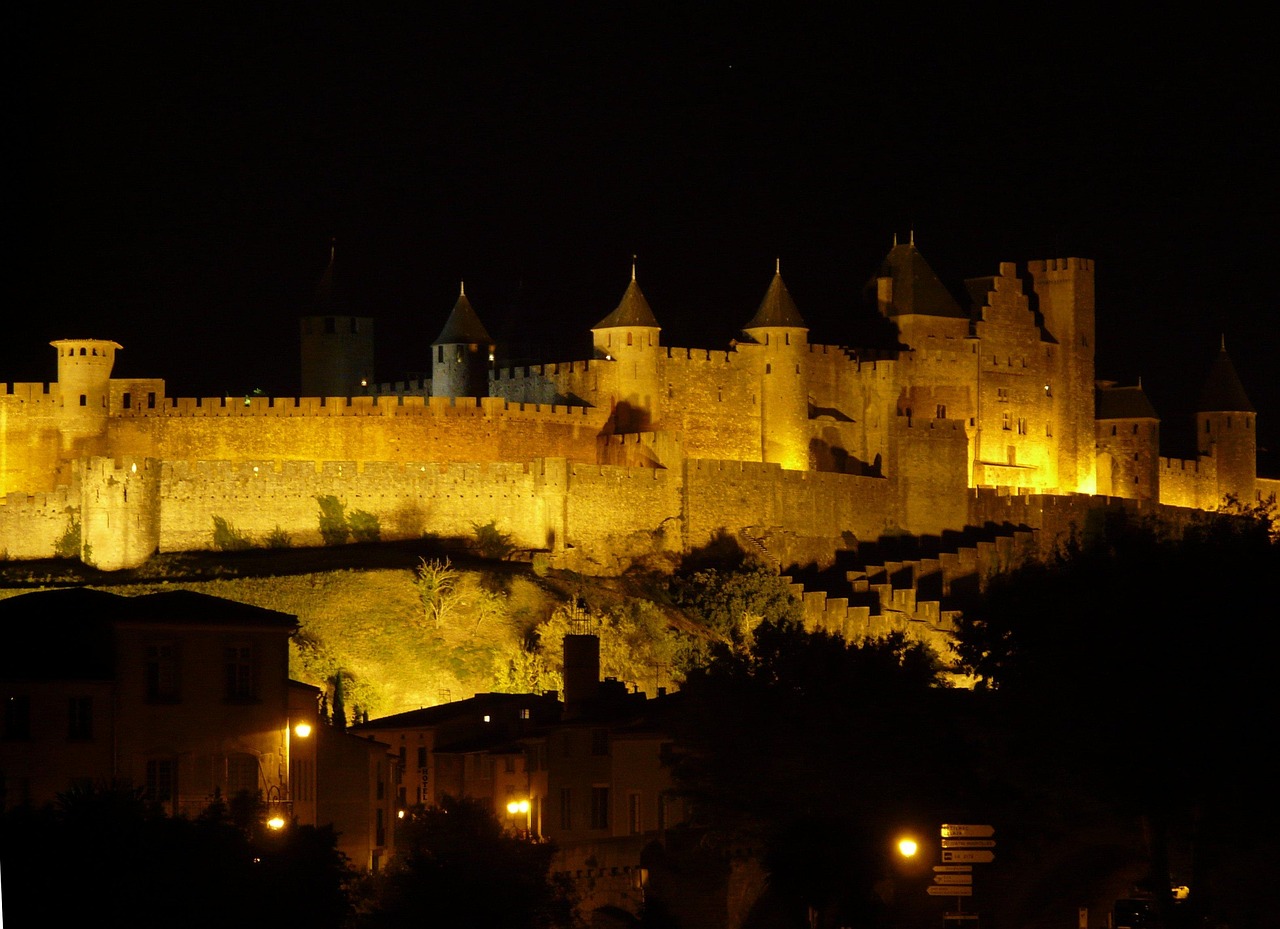
Bastille Day (July 14): If you’re anywhere near Carcassonne on July 14, try to stay for the fireworks. The entire citadel is lit with pyrotechnics — it’s one of France’s most spectacular Bastille Day celebrations, visible from 20 kilometres away. The city hosts one of the country’s biggest fireworks shows every year, and it’s genuinely worth planning a trip around.
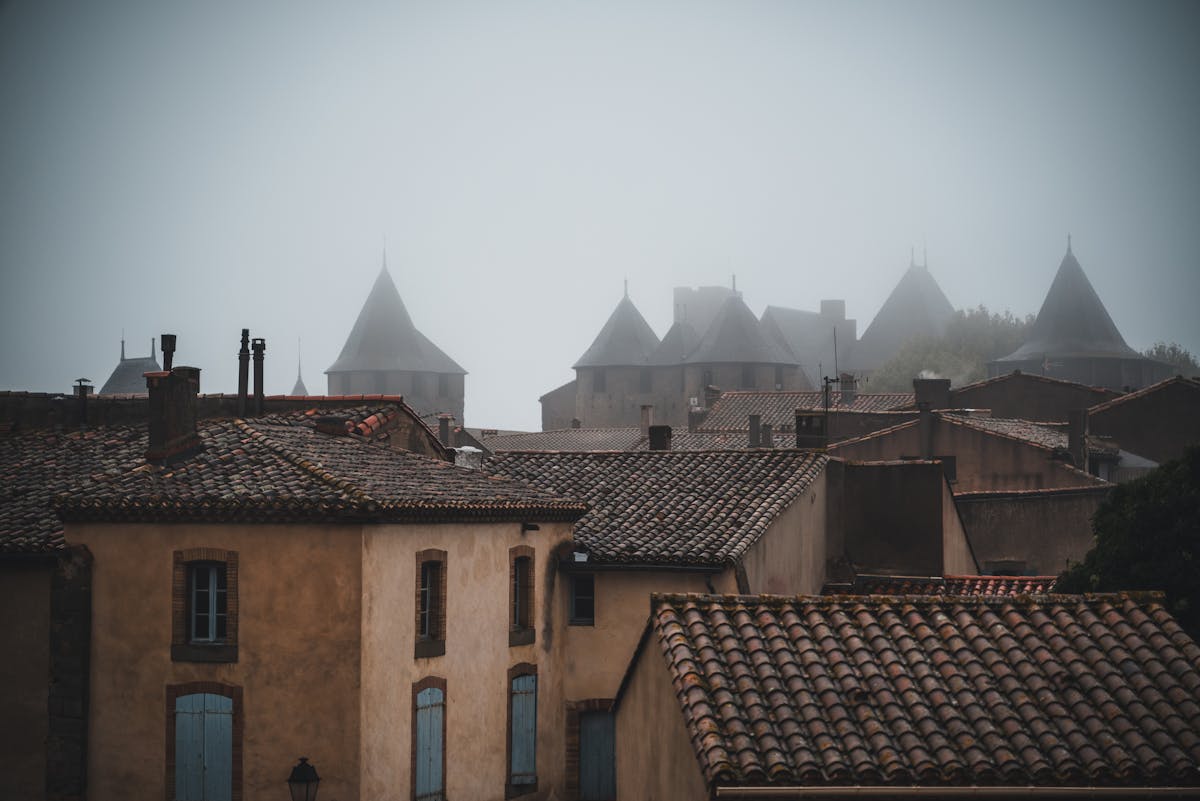
Winter (November-March): Cold and quiet. Some restaurants inside the Cite close, but the castle stays open (closed January 1, May 1, December 25). The upside: you might be completely alone on the ramparts. I did my second visit in late October and barely saw another person for an hour. Genuinely eerie walking through those towers in the mist.
Opening hours: The Chateau Comtal is open daily. April to September: 10am-6:30pm. October to March: 9:30am-5pm. Last entry is 45 minutes before closing. Closed January 1, May 1, and December 25.
How to Get to Carcassonne
Carcassonne is in the Occitanie region, roughly halfway between Toulouse and the Mediterranean coast. It’s surprisingly well-connected for a mid-sized French city.
By train: Carcassonne has its own SNCF station in the Ville Basse (the lower, modern town). Direct trains from Toulouse take about 50 minutes and run frequently. From Paris, it’s about 5 hours on the TGV with a change in Toulouse or Narbonne. From the station, it’s a 25-minute walk uphill to the Cite, or a quick taxi ride (around EUR 10).
By car: The A61 autoroute runs right past Carcassonne. From Toulouse, it’s about an hour’s drive. Parking at the Cite is a headache in summer — there’s a large paid car park at the base of the citadel (around EUR 6-8 for a full day), but it fills up by 10am in July and August. There’s free parking slightly further away along the Aude river.
From Toulouse as a day trip: This is how most people visit. The Toulouse to Carcassonne day trip by coach runs about $35 and handles all the transport. Or take the train — it’s cheap and fast.
From other cities: Narbonne is 45 minutes by train, Perpignan is about 75 minutes, and Montpellier is about 2 hours. Barcelona is reachable in about 3 hours by car, making Carcassonne a feasible stop on a Spain-to-France road trip.
Tips That Will Save You Time
Buy your ticket online. Especially in summer. The on-site queue can be 30+ minutes, and that’s 30 minutes you could spend on the ramparts. The online ticket has a timed entry slot, which means you can plan your day properly.
Arrive early or late. The Cite’s streets are free, so there’s nothing stopping you from arriving at 8am and wandering the empty medieval streets before the castle opens. It’s a completely different atmosphere without the crowds. Similarly, the streets are lovely after the castle closes — fewer people, warmer light.
Don’t skip the ramparts. I watched multiple visitors go through the Chateau Comtal museum, then leave without walking the walls. The rampart walkway is included in your ticket and it’s arguably better than the castle interior. You get views of the Pyrenees on a clear day.
Bring water. The ramparts are fully exposed to the sun. In summer, it’s scorching up there. There are no water fountains on the walls. The restaurants inside the Cite charge tourist prices — fill a bottle before you go up.
The Ville Basse is worth 30 minutes. The lower town has good restaurants at non-tourist prices, a nice Saturday market (Place Carnot), and the Canal du Midi runs through it. If you’ve got time after the Cite, walk down to the canal and watch the barges go by.
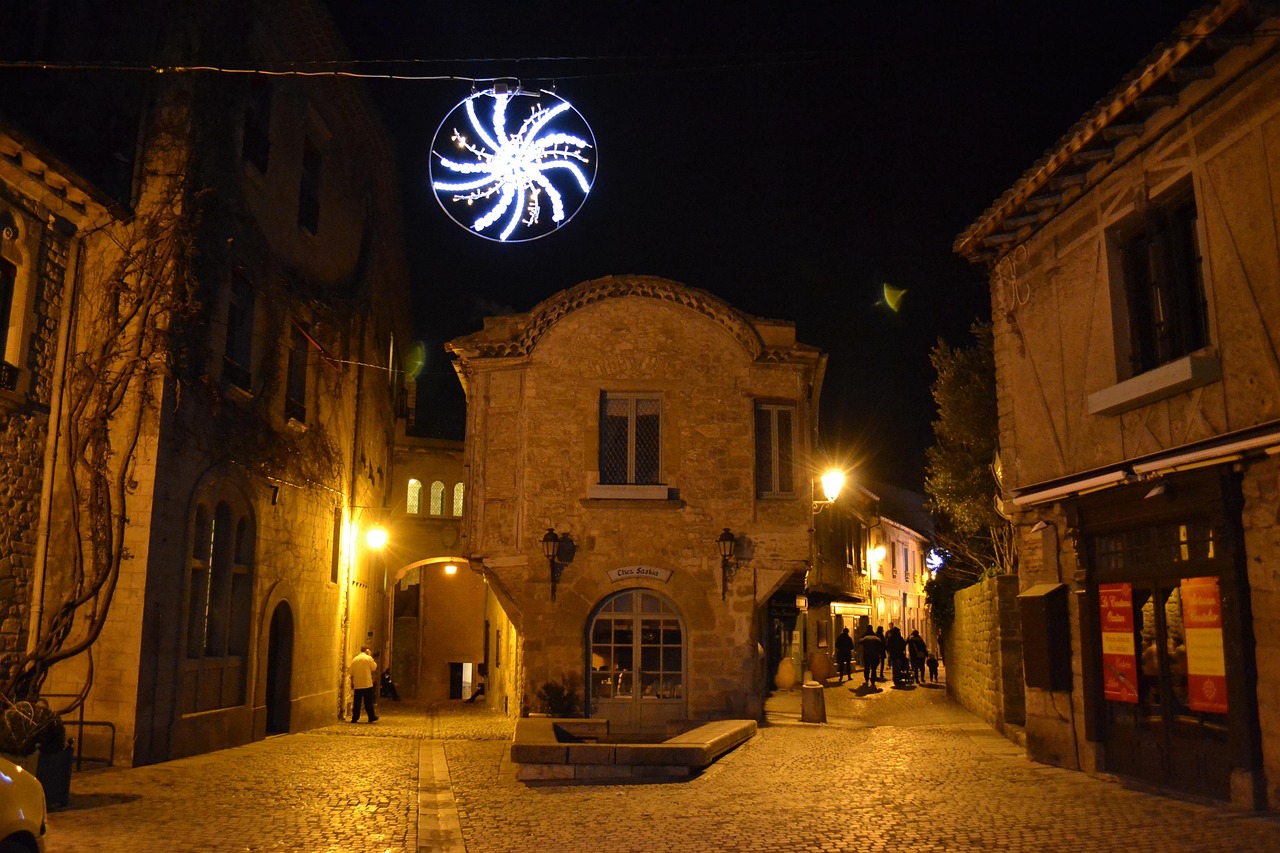
Wear proper shoes. The cobblestones inside the Cite are uneven and worn smooth. Flip-flops and heels are a bad idea. The rampart walkways have sections with uneven stone steps that are genuinely slippery when wet.
The self-guided tour on the walls is worth doing even without the audio guide. There are informational panels at most stops along the rampart walk. They’re in French and English, and they cover the key points. If you don’t want to pay for a guided tour, these panels are surprisingly detailed.
What You’ll Actually See Inside
Carcassonne isn’t just another medieval castle. It’s a complete fortified city — the largest in Europe — with a history that reads like something a novelist would be embarrassed to invent.
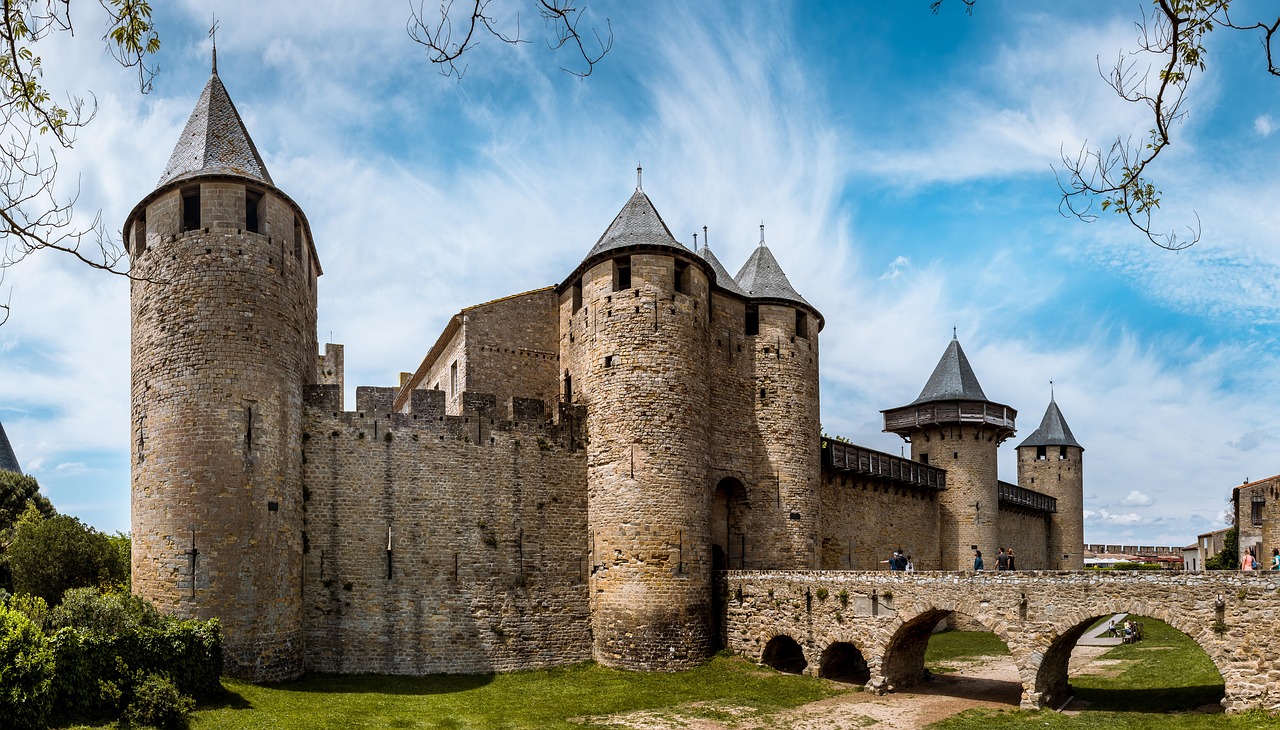
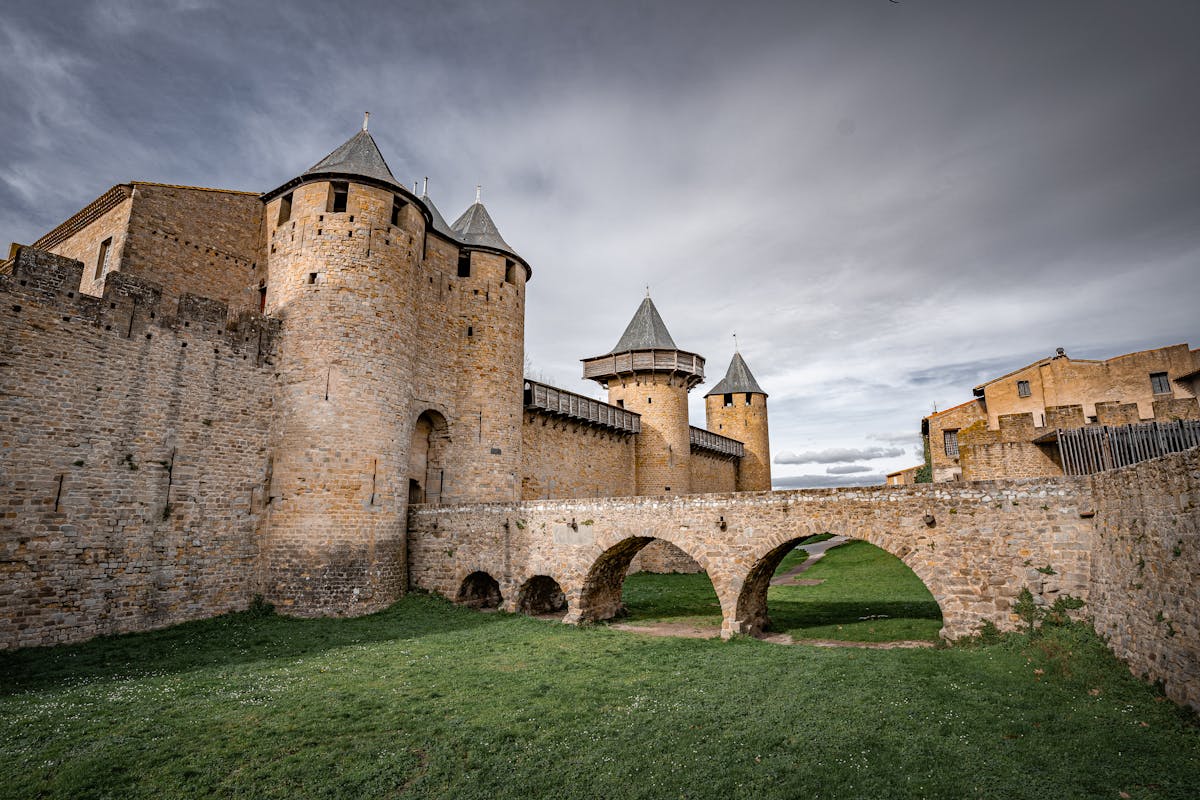
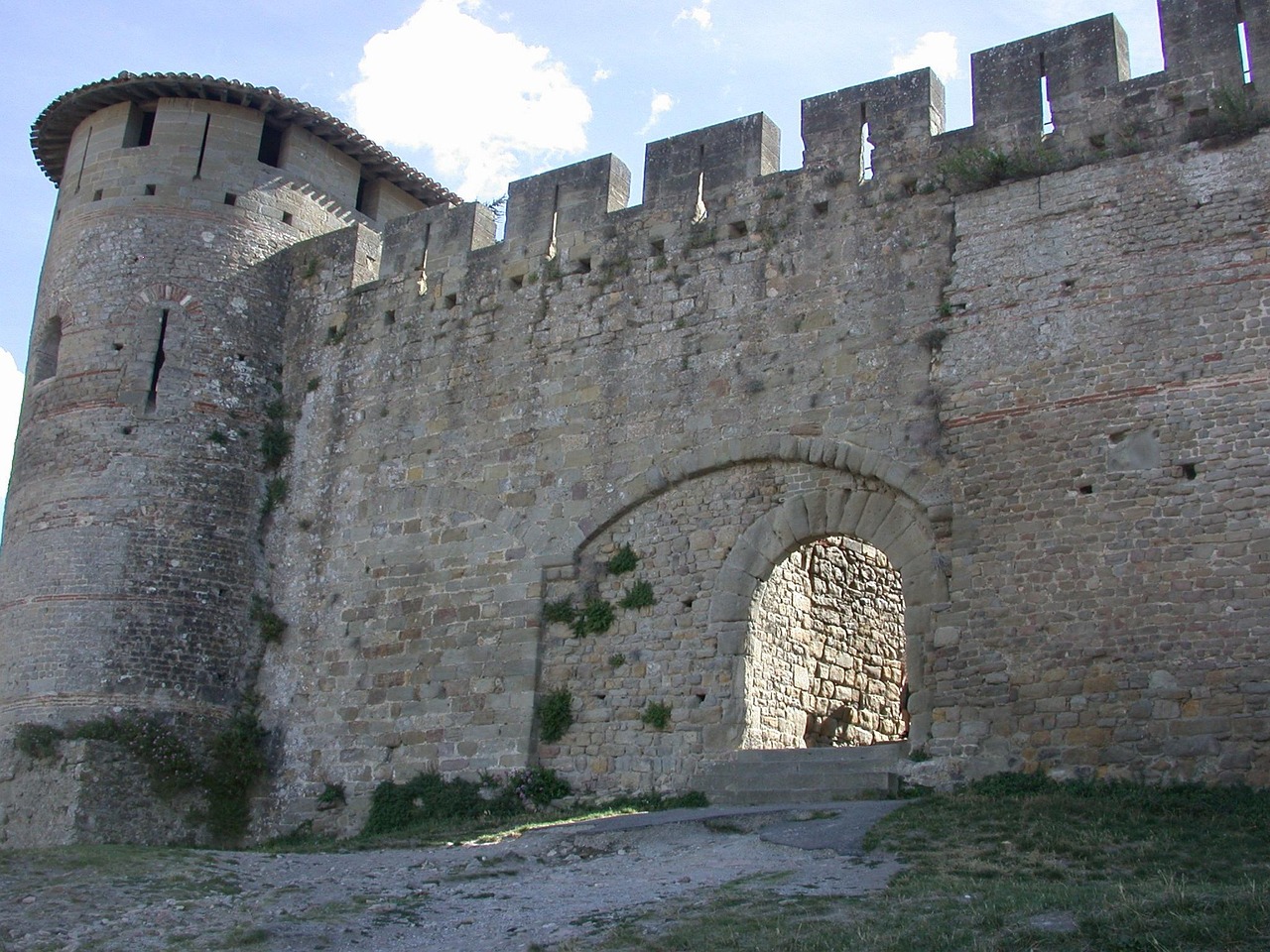
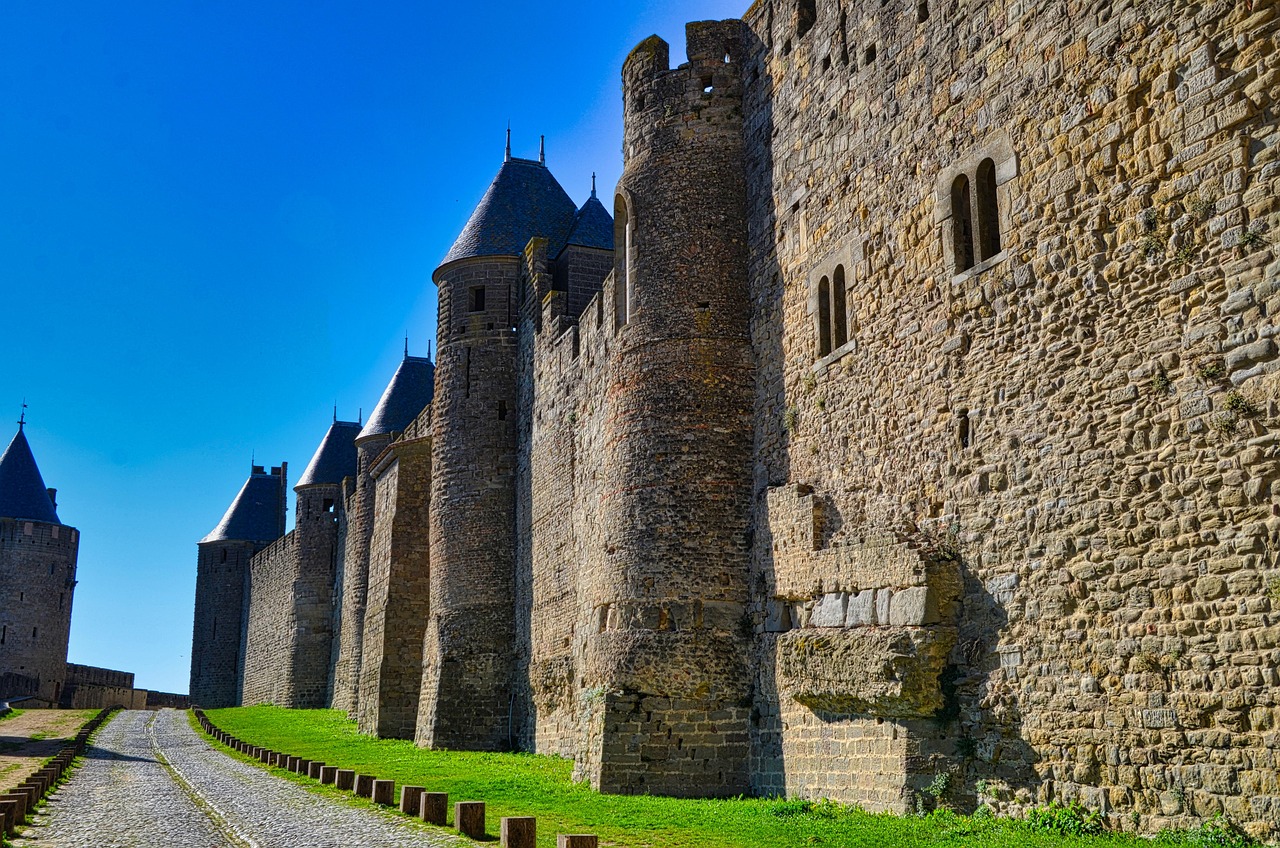
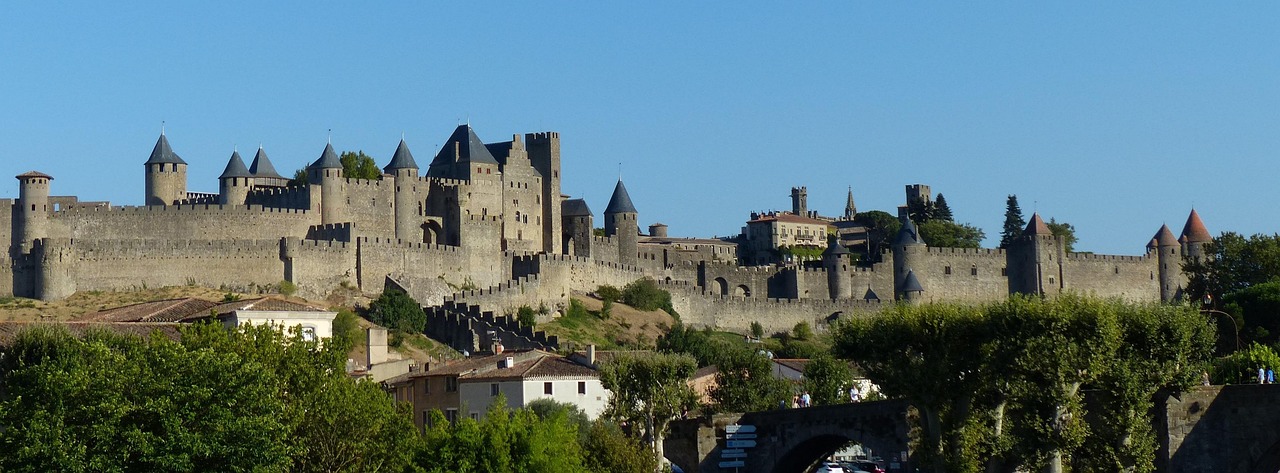
The defences: What makes Carcassonne unique is the double ring of concentric walls. The outer wall (built in the 13th century by French kings after the Crusade) surrounds an inner wall that’s much older — some sections are Gallo-Roman, dating to the 3rd century. Between the two walls runs a narrow corridor called the lices, which was a deliberate death trap: if attackers breached the outer wall, they’d find themselves in a confined space with no cover while defenders above poured boiling water, shot arrows, and dropped rocks.
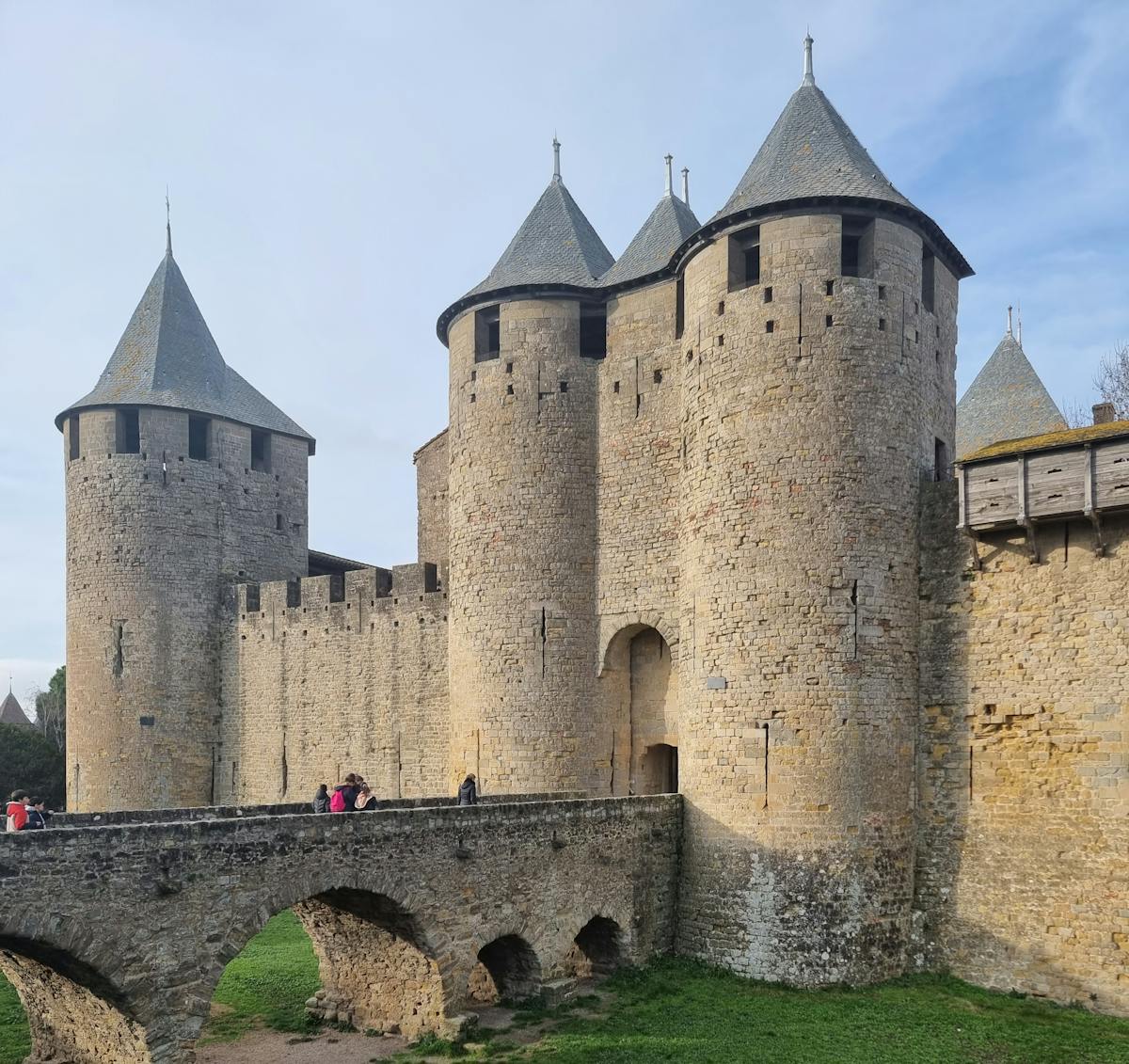
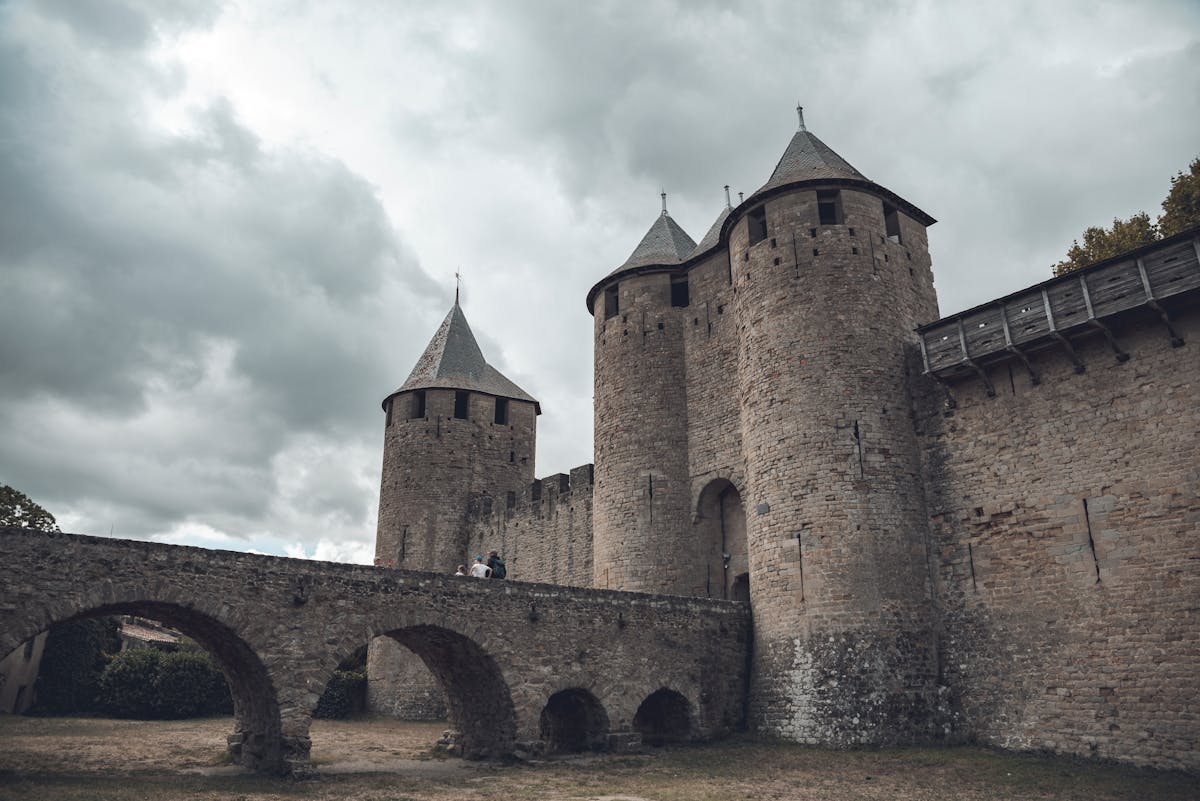
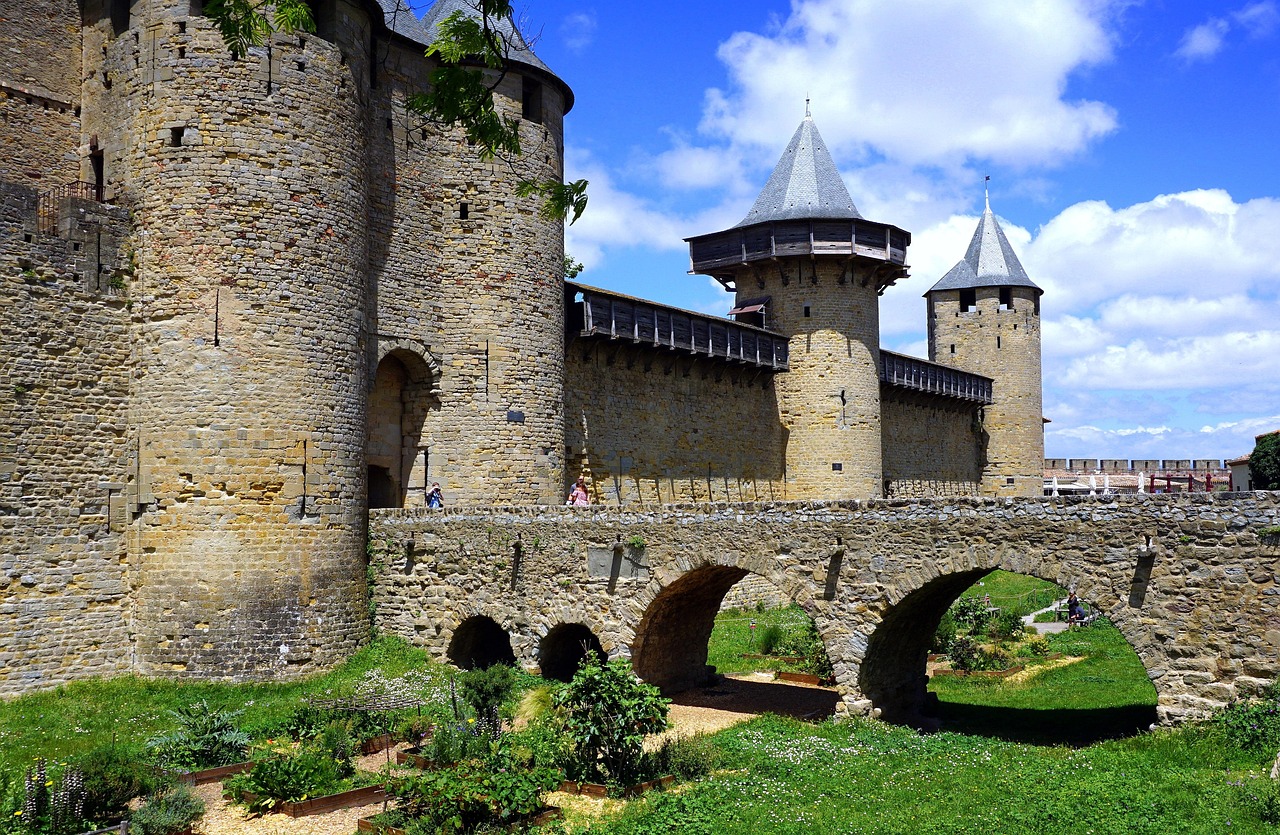
The 52 towers are not identical. Some are round (harder to undermine by tunnelling), some are square (better for covering straight sections of wall), and some are horseshoe-shaped (combining both advantages). You’ll notice this variation on the rampart walk, and it tells you a lot about when different sections were built and rebuilt.
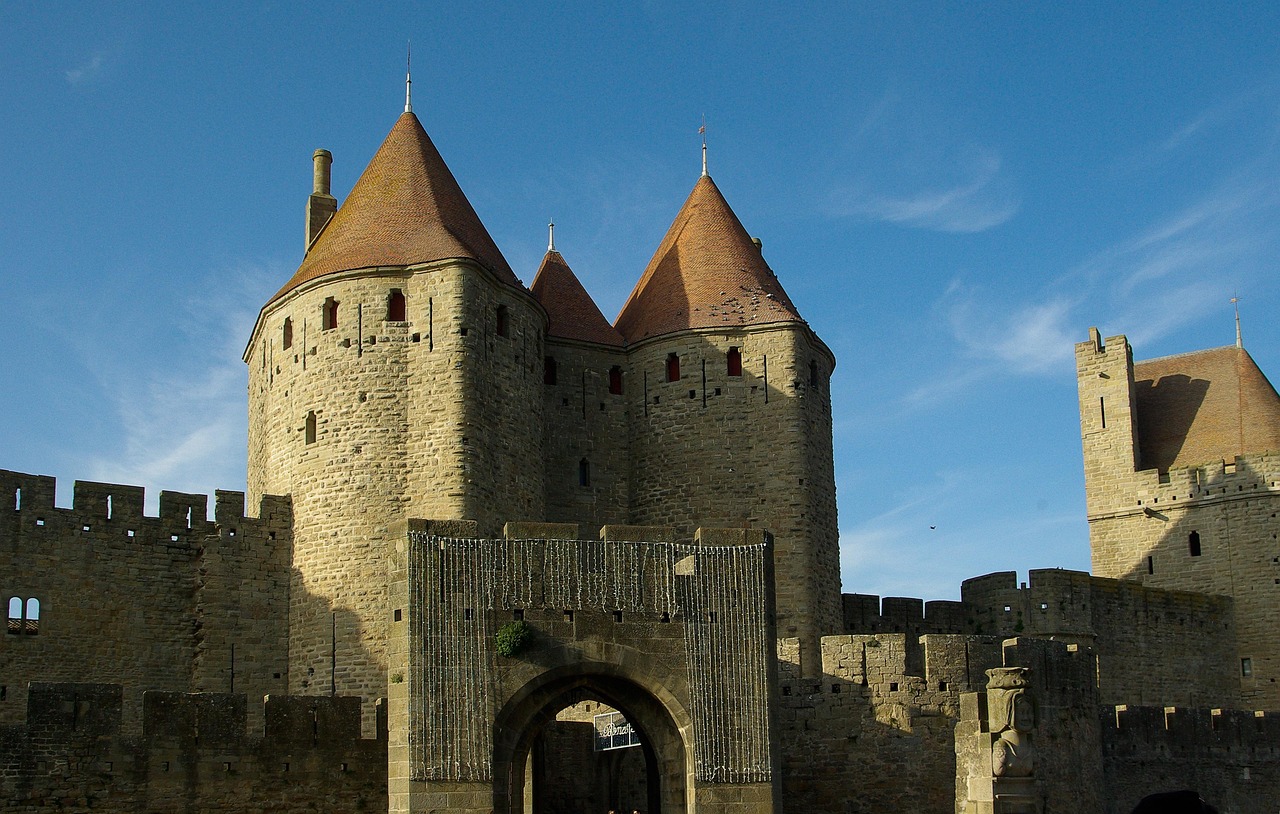
The Cathars and the Albigensian Crusade: This is the part of Carcassonne’s history that most visitors miss entirely, and it’s the most extraordinary. In the 12th and 13th centuries, a Christian religious movement called Catharism gained a massive following in southern France. The Cathars rejected the Catholic Church’s wealth and hierarchy, believing that the material world was created by an evil god. The Pope was not amused.
In 1209, Pope Innocent III launched the Albigensian Crusade — a crusade not against Muslims in the Holy Land, but against fellow Christians in France. It’s one of the most shocking chapters in European history. Carcassonne was a Cathar stronghold, and it fell after a two-week siege in August 1209. The defenders surrendered after the city’s water supply was cut off.
What followed was decades of war, massacre, and the hotel of the Inquisition in southern France. The Cathars were hunted, their leaders burned at the stake, and their culture was systematically destroyed. The crusade reshaped the political map of France — the previously independent south was absorbed into the French kingdom, and Carcassonne became a royal fortress on the new border with Aragon (Spain).
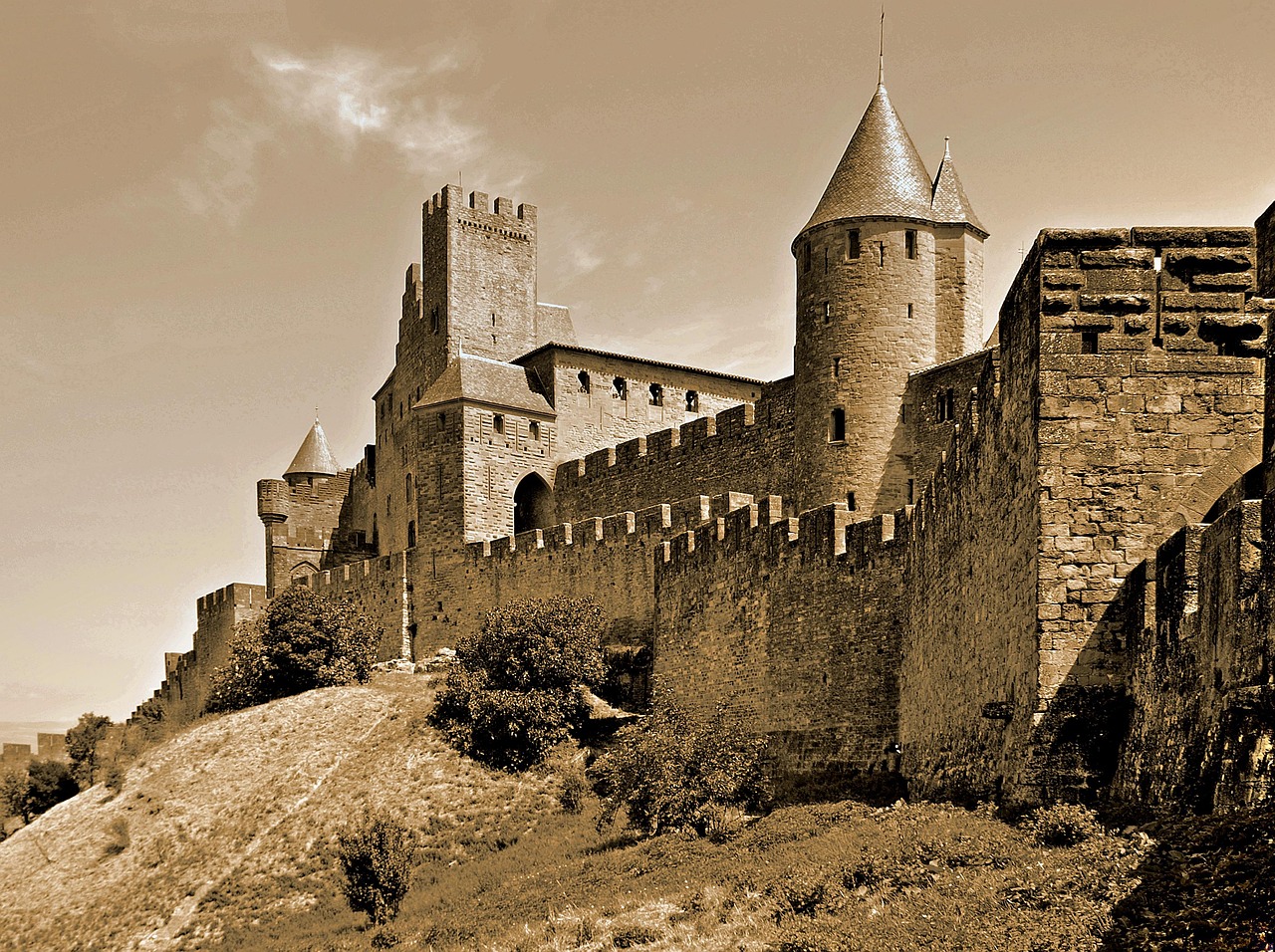
The near-demolition and Viollet-le-Duc’s restoration: By the 19th century, Carcassonne was a crumbling ruin. The fortress had lost its military importance centuries earlier, and the walls were slowly being dismantled by locals taking stones for building material. In 1849, the French government actually put the fortress on a list for demolition.
Local protests and a campaign led by the historian Jean-Pierre Cros-Mayrevieille and the writer Prosper Merimee saved it. In 1853, the architect Eugene Viollet-le-Duc — the same man who later restored Notre-Dame de Paris — was commissioned to rebuild Carcassonne.
His restoration was brilliant, controversial, and — depending on who you ask — slightly wrong. Viollet-le-Duc added slate roofs in a northern French (Gothic) style that many historians argue wouldn’t have been original to southern France, where flat terracotta tiles were the norm. Stand on the ramparts and look at those pointy grey roofs: they’re arguably the most visible historical inaccuracy you’ll find at any UNESCO site. But without Viollet-le-Duc, there would be no Carcassonne to argue about. The fortress was named a UNESCO World Heritage Site in 1997 and now receives 3 million visitors every year.
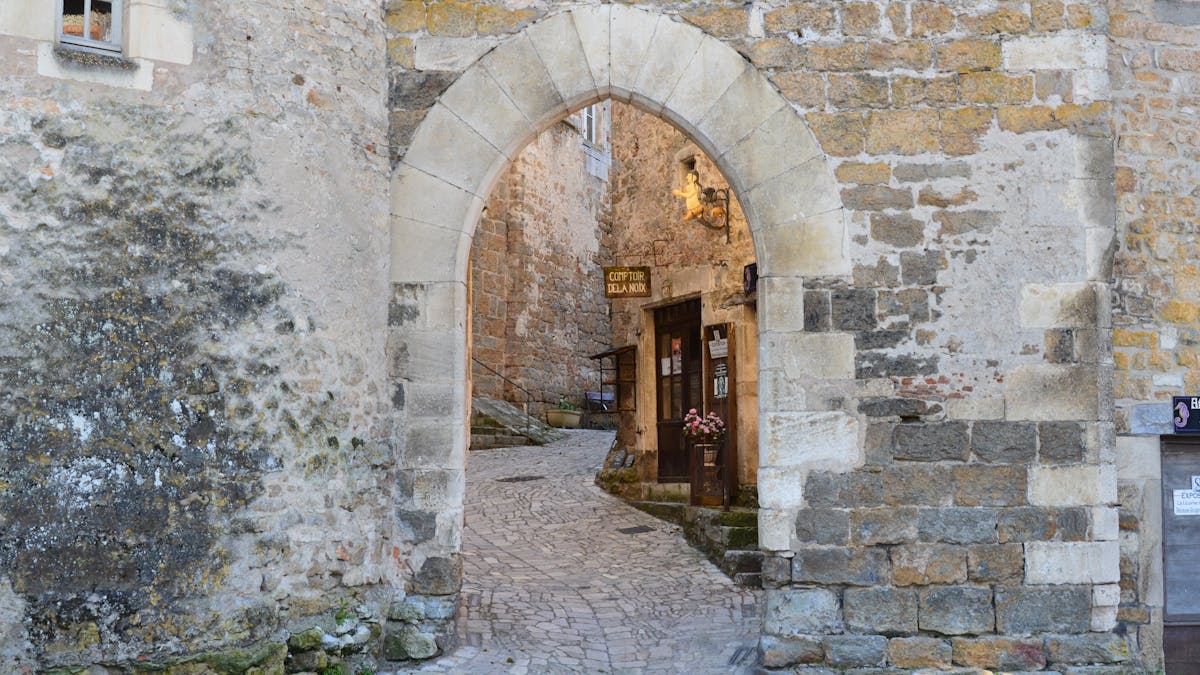
The Chateau Comtal: The castle within the city was built in the 12th century by the Trencavel family, who ruled Carcassonne before the Crusade. After the French crown took over, the castle was expanded and turned into a citadel. Today it houses a museum with medieval artifacts, architectural fragments, and some genuinely impressive stone carvings. The museum won’t blow your mind, but the views from the castle’s upper levels are the best in the entire Cite.
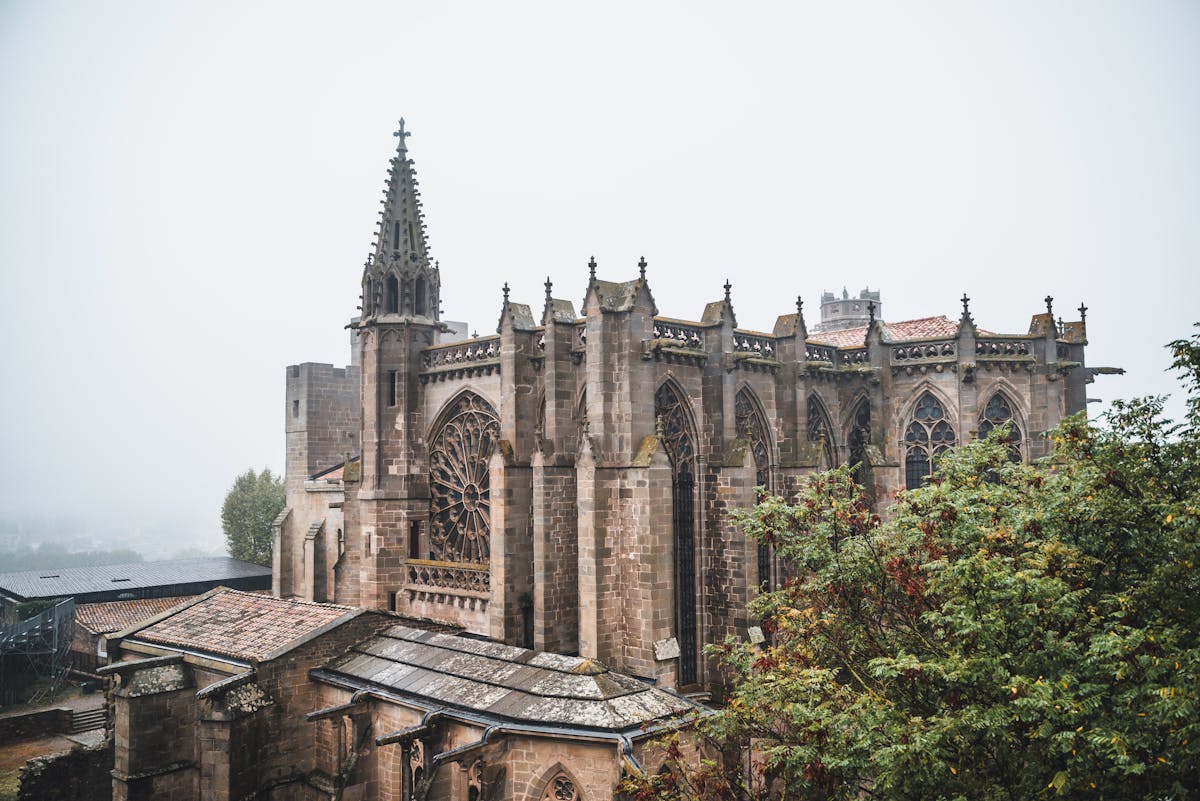
The Basilica of Saints Nazarius and Celsus: Free to enter and often overlooked. The stained glass windows are some of the oldest and finest in southern France, dating to the 13th and 14th centuries. The contrast between the Romanesque nave and the Gothic choir tells you the building’s construction spanned several centuries. Give it 15 minutes — it’s worth it.
While You’re in the South of France
Carcassonne sits in a part of France that most travelers skip entirely — and that’s a mistake. If you’re coming from Toulouse, you’ve probably already looked into Paris attractions, but the south has its own character entirely. The Bordeaux wine region is reachable in about 3 hours and worth a full day if you’re into wine — our guide covers the best vineyard tours. If you’re heading north toward Paris eventually, the Loire Valley castles make a logical stop between south and north, and Carcassonne is a useful comparison — one’s a military fortress, the others are aristocratic showpieces. For something closer, the Cite du Vin in Bordeaux is a modern wine museum that pairs well with the medieval wine traditions you’ll encounter around Carcassonne. And if you’re exploring more of France’s medieval heritage, Mont Saint-Michel is the only other French monument that rivals Carcassonne for sheer visual impact — though getting there requires more planning.
This article contains affiliate links. If you book a tour through our links, we earn a small commission at no extra cost to you. This helps us keep writing these guides.