
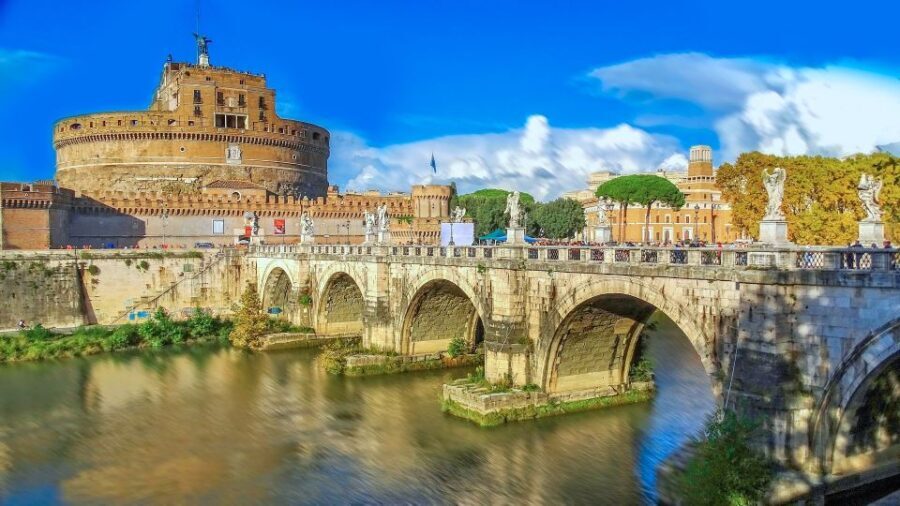
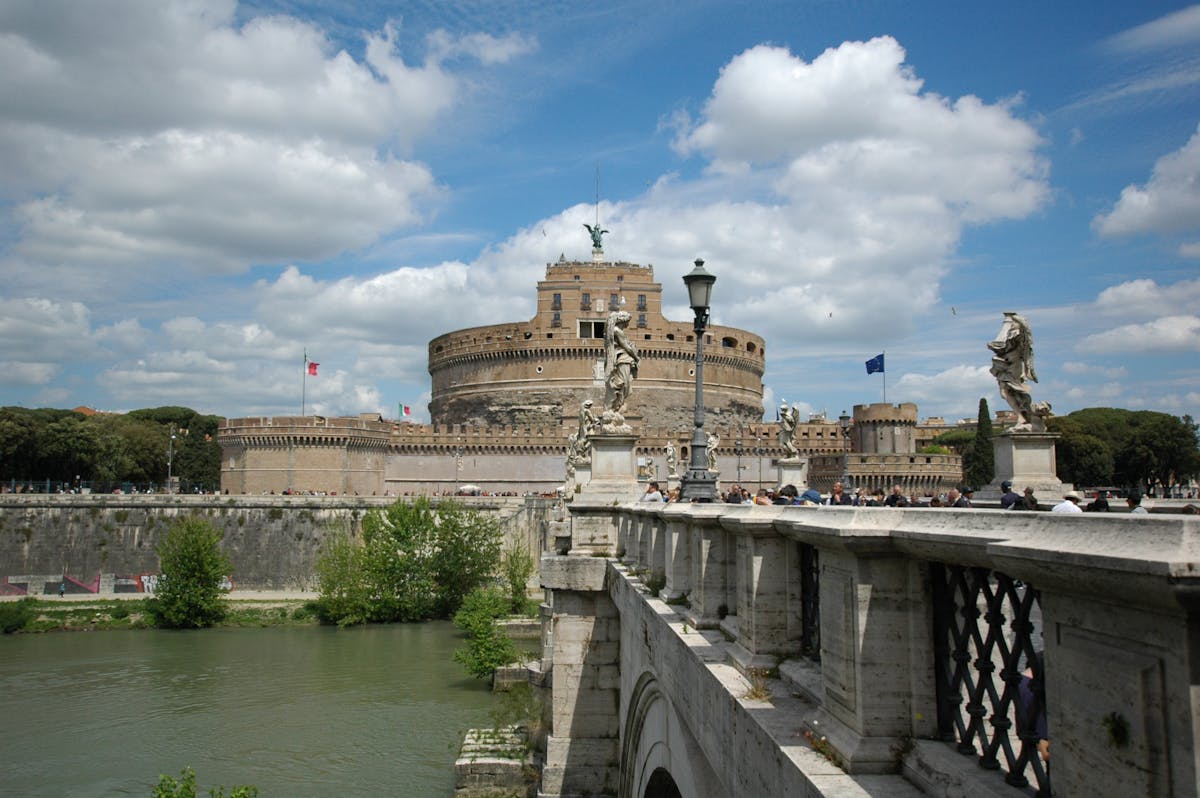
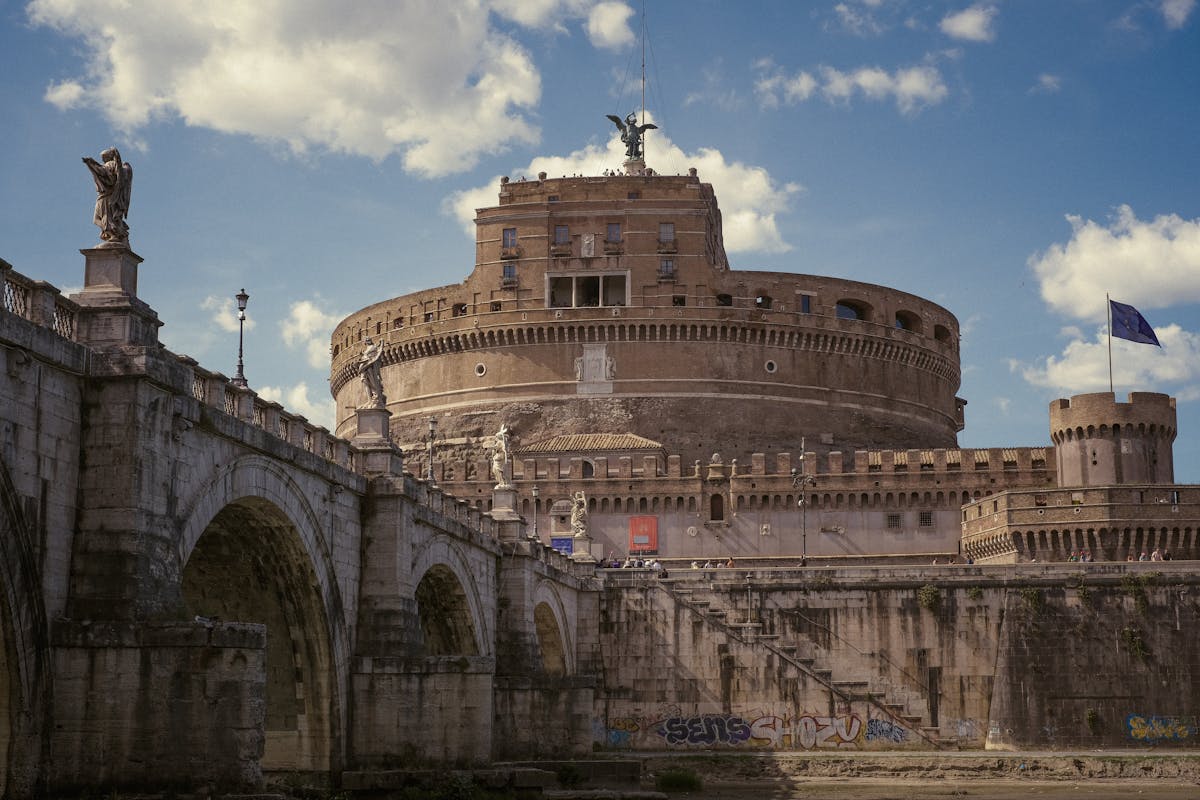
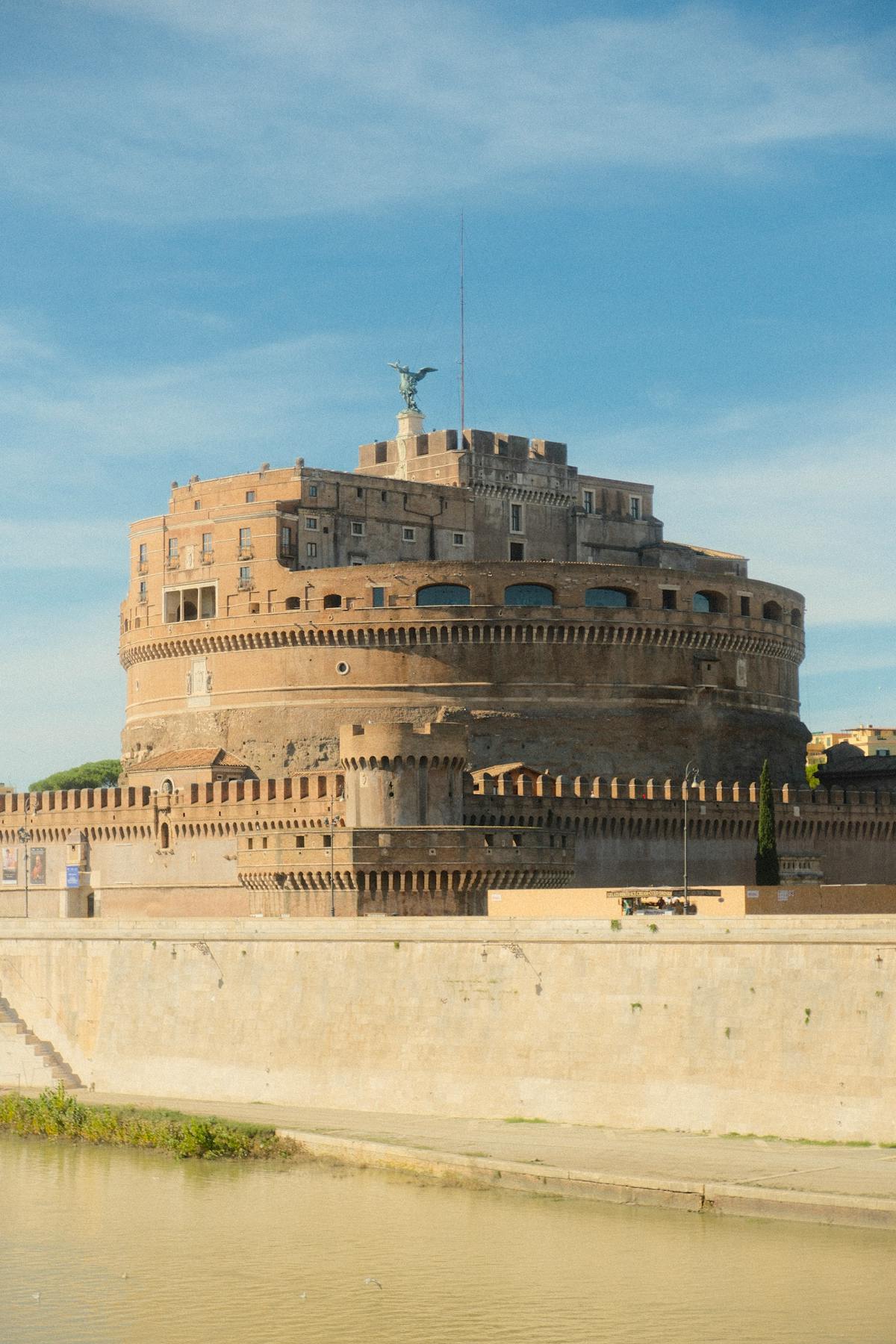
There’s a building in Rome that has been, at various points in its 1,900-year existence, an emperor’s tomb, a papal fortress, a prison, a treasury vault, and a private escape route for popes fleeing Vatican attacks. Castel Sant’Angelo sits on the banks of the Tiber like something out of a novel — because it literally inspired one. Dan Brown’s Angels & Demons featured it as the Illuminati’s lair. But the real history is stranger than fiction.
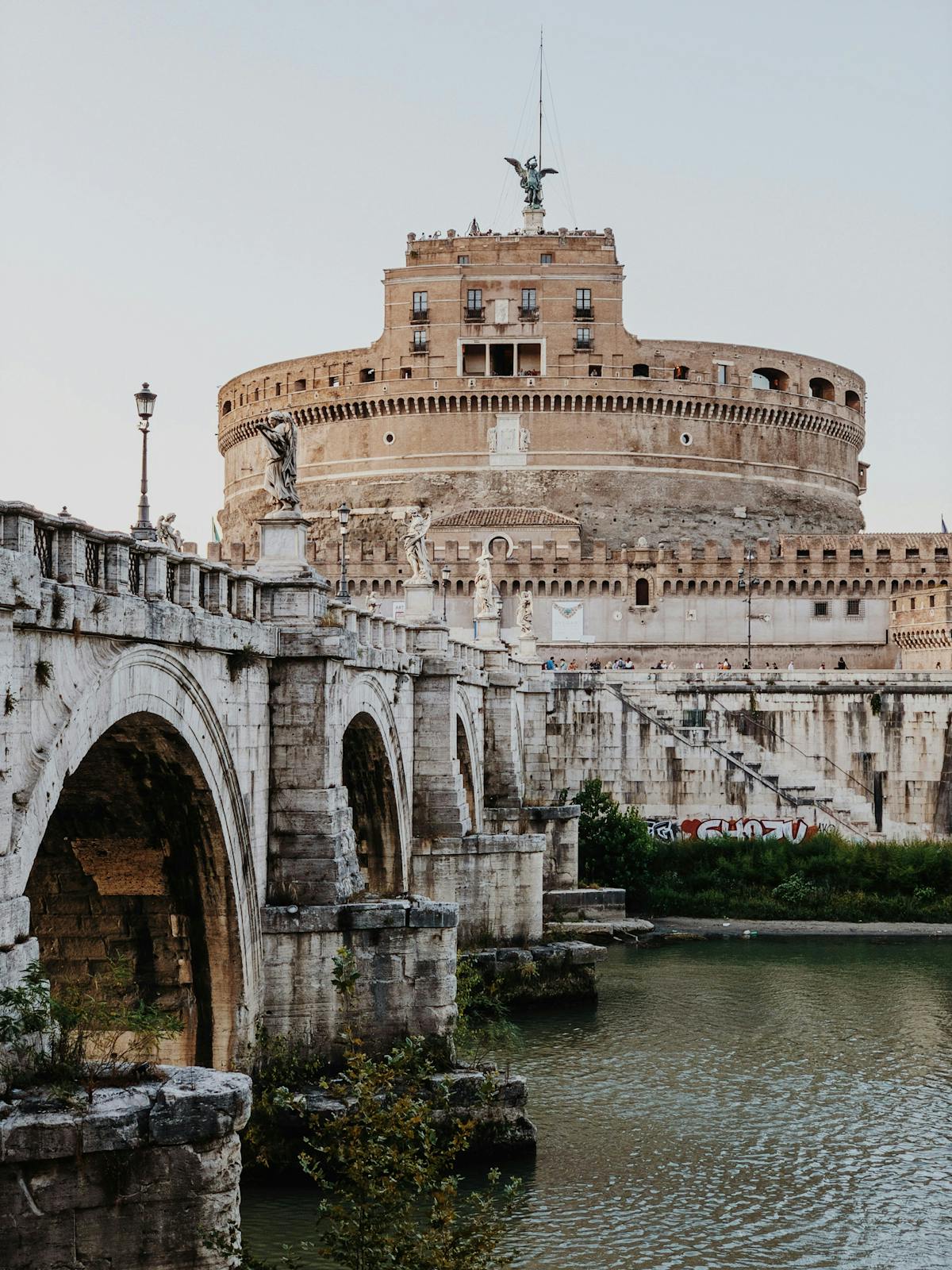
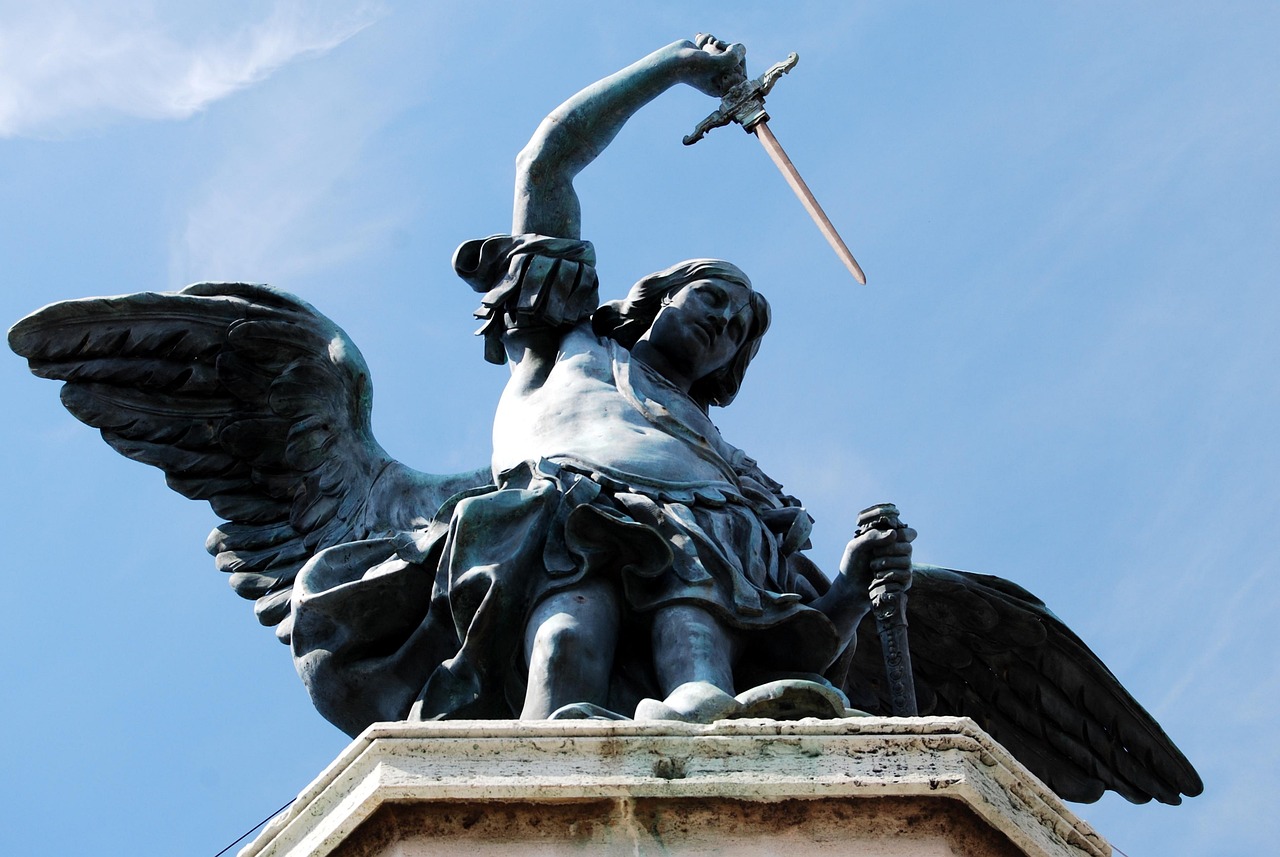
That secret corridor connecting it to the Vatican? Real. It’s called the Passetto di Borgo, and Pope Clement VII actually sprinted through it in 1527 while Rome burned around him during the Sack of Rome. You can walk it yourself on certain tours. The bronze angel perched on top? It commemorates a vision Pope Gregory the Great had during a plague in 590 AD — the Archangel Michael sheathing his sword, signaling the pestilence was over.
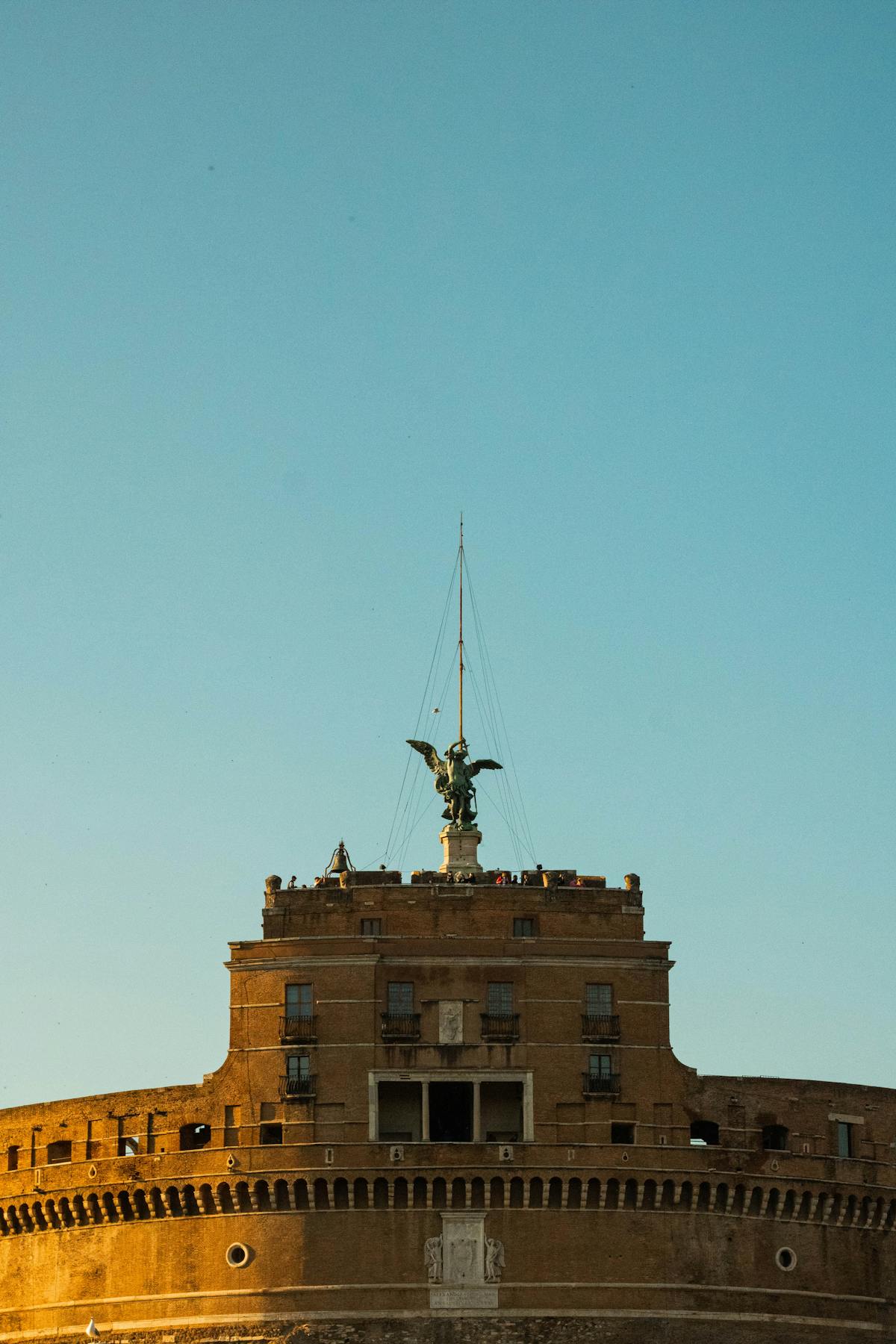
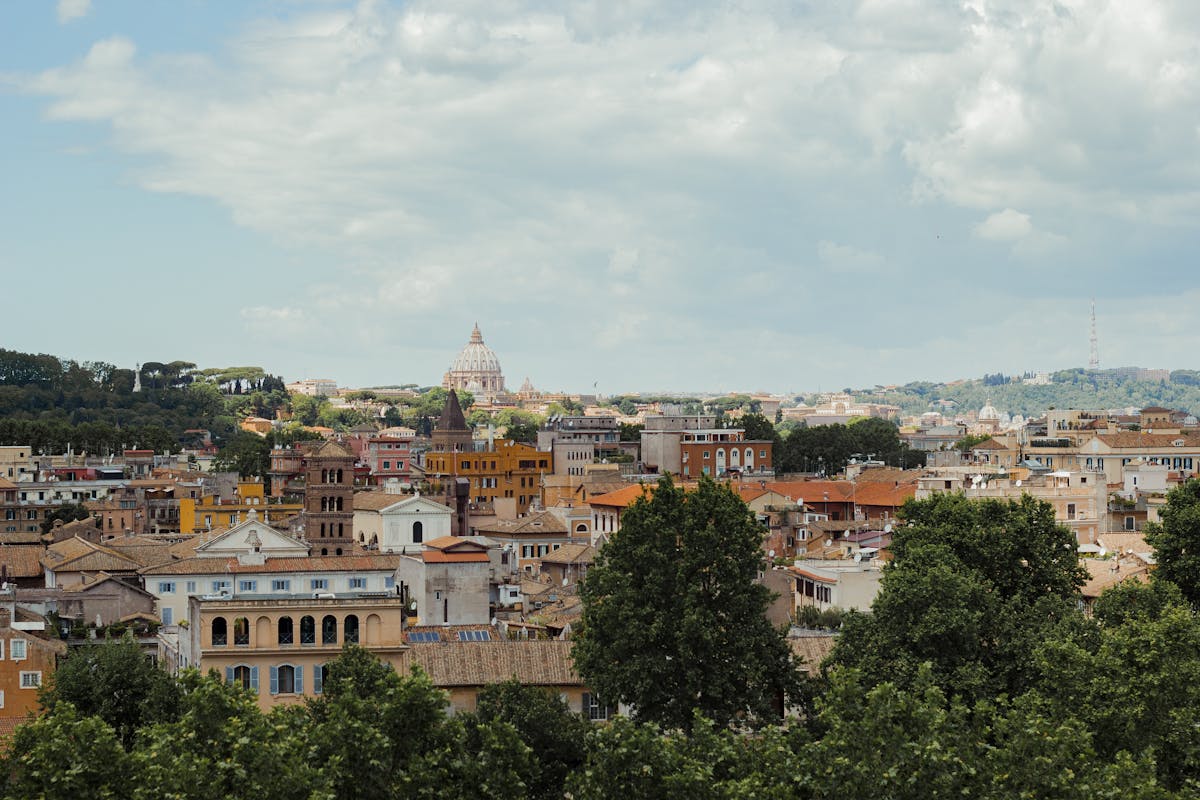
And then there’s the rooftop terrace. The view from up there — St. Peter’s dome so close you feel like you could reach out and touch it, the Tiber snaking through Rome below — is legitimately one of the best panoramas in the entire city.
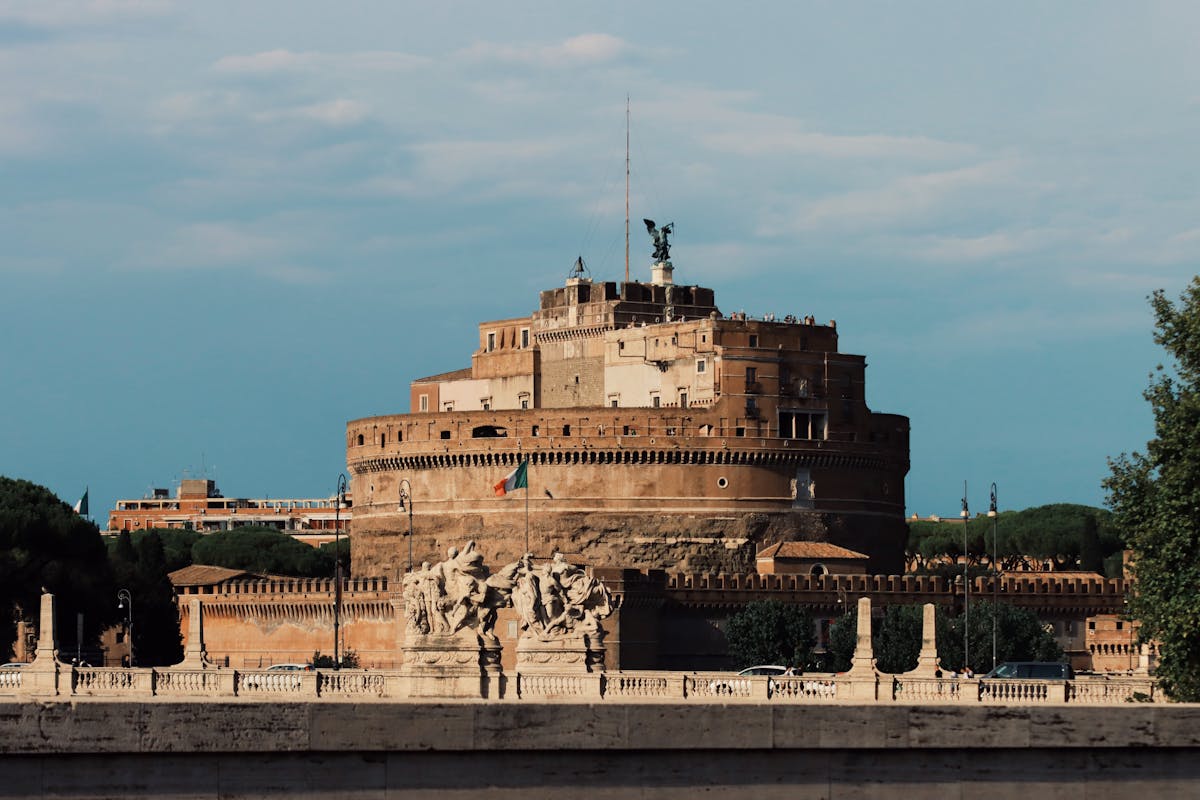
Getting in is straightforward, but there are a few things worth knowing about tickets, timing, and whether a guided tour is actually worth the extra cost. Here’s everything you need.
In a Hurry? Here’s the Quick Version
- Standard tickets: 16 EUR at the door, or grab a skip-the-line ticket with audioguide for about $19 online to avoid the queue.
- Best guided tour: The small group guided tour at $64 covers the history you’d completely miss on your own — the hidden rooms, the prison cells, the papal apartments.
- Unique experience: The Passetto di Borgo tour ($37) lets you walk the secret papal escape corridor. Not available every day.
- Time needed: Budget 1.5-2 hours. Longer if you want to sit on the terrace (and you will).
- When to go: First thing in the morning or after 4 PM. Midday in summer is brutal — no shade inside the courtyard.
- In a Hurry? Here’s the Quick Version
- How to Get Castel Sant’Angelo Tickets
- Self-Guided vs. Guided Tour: Which One Should You Pick?
- The Best Castel Sant’Angelo Tours Worth Booking
- Best Value Entry Ticket: Castel Sant’Angelo Entry Ticket with Audioguide
- Best Budget Option: Rome Castel Sant’Angelo Entry Ticket
- Best Guided Experience: Rome Castel Sant’Angelo Guided Tour
- Best Small Group Tour: Small Group Guided Tour of Castel Sant’Angelo
- Most Unique: Passetto di Borgo Tour with Castel Sant’Angelo Ticket
- Premium Audio Experience: Castel Sant’Angelo Entry Ticket and Audioguide
- When to Visit Castel Sant’Angelo
- Tips for Visiting Castel Sant’Angelo
- What You’ll See Inside Castel Sant’Angelo
How to Get Castel Sant’Angelo Tickets
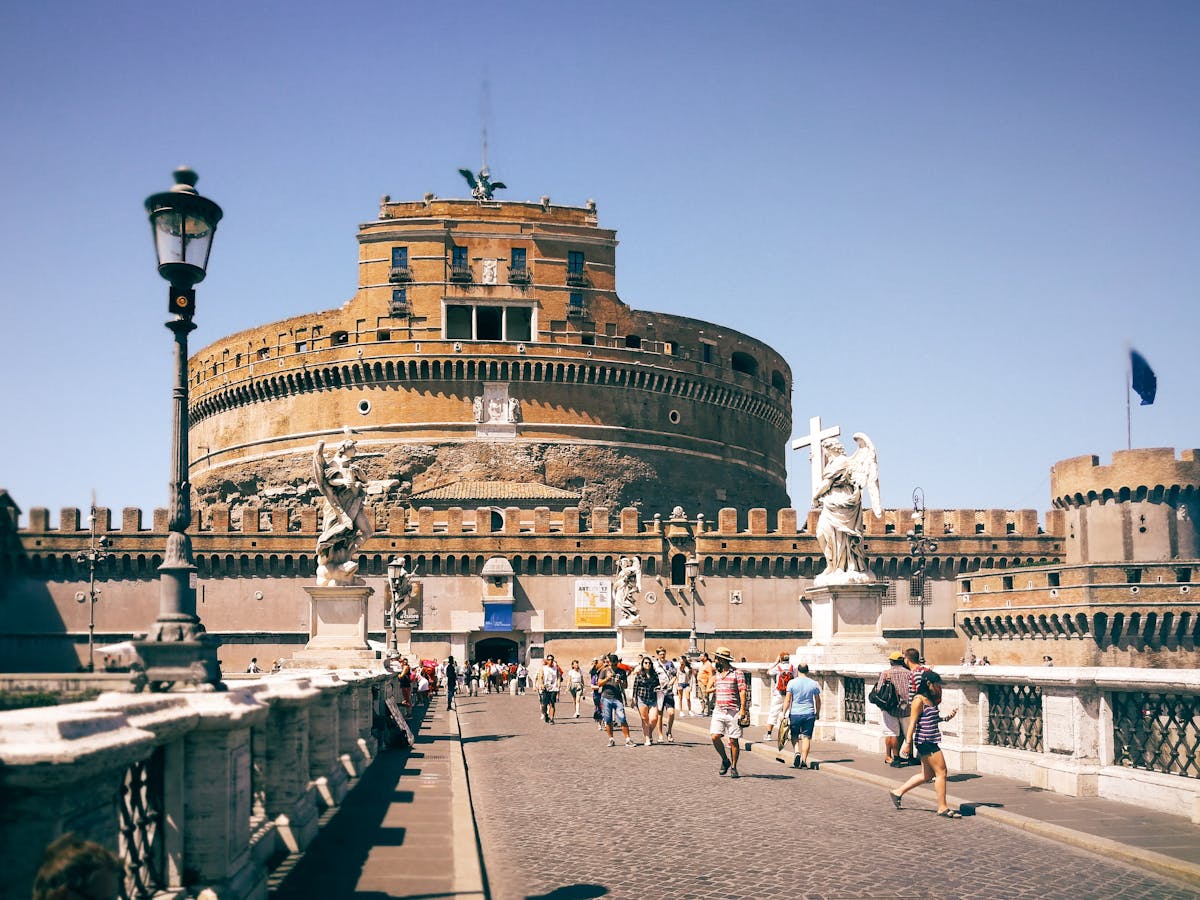
You have two main options for getting inside Castel Sant’Angelo: buying at the ticket office or booking online ahead of time.
At the door: Standard adult admission is 16 EUR. EU citizens aged 18-25 get a reduced rate. Under-18s from EU countries are free. The ticket office is right at the entrance, and the line varies wildly depending on the day and time. I’ve seen it take 5 minutes in March and 45 minutes on a July afternoon.
Online (recommended): Booking through a platform like GetYourGuide typically costs a few euros more than face value, but you skip the ticket line entirely. Given that your time in Rome is probably limited, spending $19-23 to avoid standing in line for 30+ minutes seems like an obvious trade. Most online tickets include an audioguide as well, which the on-site ticket does not.
The official booking site is through CoopCulture, which manages ticketing for many Italian museums. It works fine, but the interface is clunky and entirely in Italian unless you switch languages. Third-party platforms are smoother and include extras.
Free entry days: The first Sunday of each month, Castel Sant’Angelo is free to enter. Sounds great in theory. In practice, the lines are enormous and the experience is significantly worse because the place is packed. I’d honestly pay the 16 EUR and go on a normal Tuesday morning instead.
Roma Pass / Tourist Cards: The Roma Pass (48-hour or 72-hour) includes free or discounted entry to Castel Sant’Angelo depending on which version you buy. If you’re hitting multiple museums — the Colosseum, Borghese Gallery, Pantheon — it can save real money. But do the math first. The card costs 33-53 EUR, and if Castel Sant’Angelo is the only paid site you’re visiting, buying the card just for this doesn’t make sense.
Self-Guided vs. Guided Tour: Which One Should You Pick?
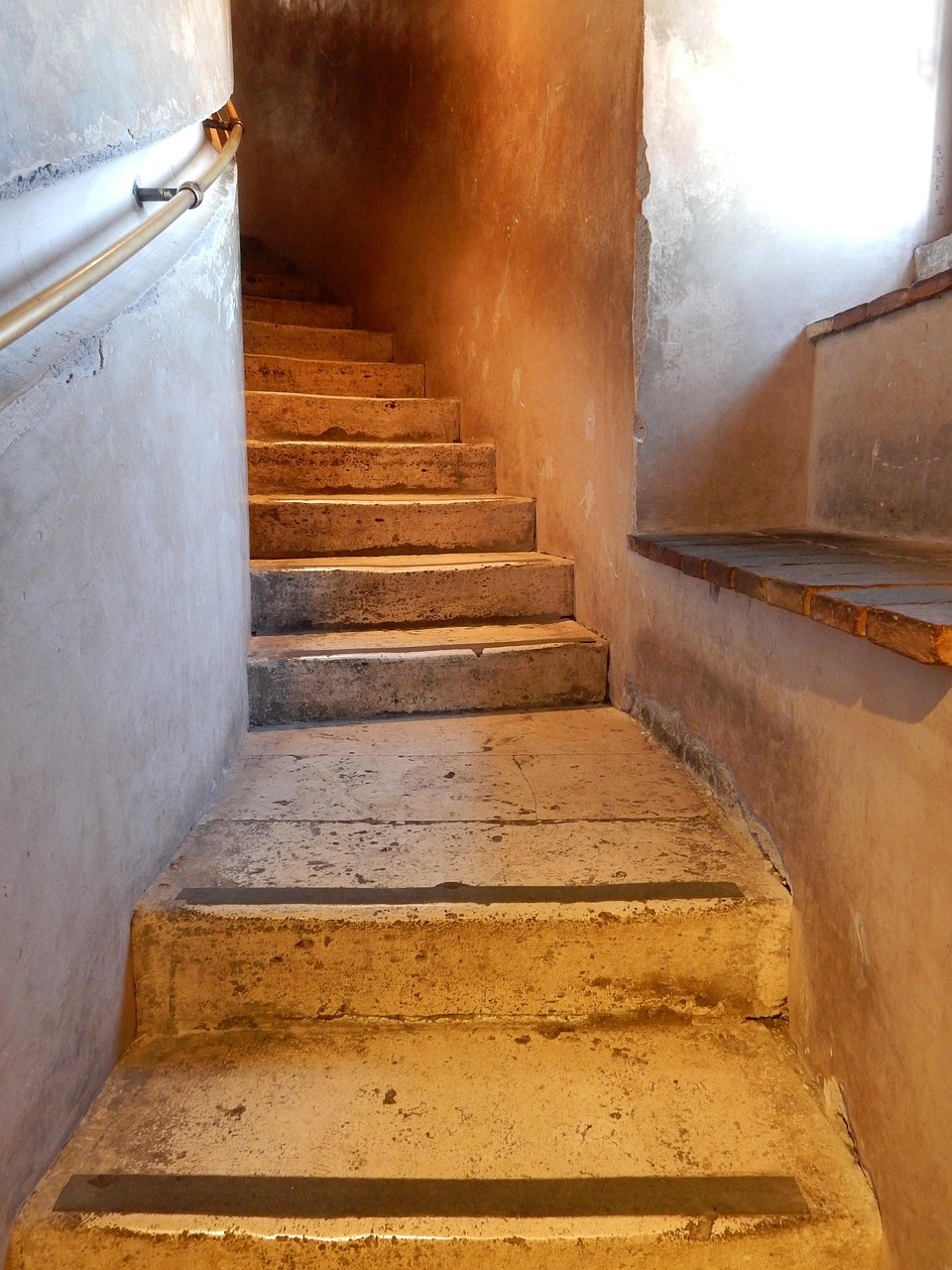
This is actually a meaningful decision at Castel Sant’Angelo, more so than at most Rome attractions.
Going self-guided works fine if you’re the type who reads every information panel (there are English panels throughout) or if you grab an audioguide. The building itself is architecturally fascinating — you’ll spiral up through the ancient Roman ramp, emerge into medieval rooms, and end up on the Renaissance-era papal terrace. The physical journey through the layers of history is powerful even without narration.
But here’s the thing: a lot of what makes Castel Sant’Angelo special isn’t visible to the naked eye. The prison cells where figures like Giordano Bruno and Beatrice Cenci were held look like ordinary rooms unless someone tells you the stories. The ornate papal apartments on the upper floors have frescoes and decorative details that are easy to walk past. And the military engineering — the arrow slits, the oil-pouring holes, the defensive architecture — becomes infinitely more interesting when explained.
My take: if this is your first visit, a guided tour is worth the extra cost. The guides working Castel Sant’Angelo tend to be passionate about the building (it’s a niche site, not a tourist factory like the Vatican Museums), and you’ll walk away with stories you’ll actually remember. If you’re returning for a second visit or just want to soak up the terrace views, self-guided with an audioguide is plenty.
The Best Castel Sant’Angelo Tours Worth Booking
I’ve gone through the available tours and picked the ones that make the most sense depending on what you’re after. Here’s what stands out.
Best Value Entry Ticket: Castel Sant’Angelo Entry Ticket with Audioguide
Price: From $19 per person
Duration: Self-paced (allow 1.5-2 hours)
What you get: Skip-the-line entry plus a downloadable audioguide app that covers all the major rooms and the terrace.
This is the straightforward choice if you want to explore on your own terms. The audioguide is surprisingly decent — it covers the history floor by floor and flags things you’d otherwise walk right past, like the faded fresco fragments in the lower chambers. You’ll download it to your phone before you arrive, so bring headphones.
The skip-the-line element is the real selling point. During peak season (April through October), the regular ticket queue can stretch along the river wall. With this, you walk straight to the priority entrance.
Check availability and book this ticket
Best Budget Option: Rome Castel Sant’Angelo Entry Ticket
Price: From $18 per person
Duration: Self-paced
What you get: Skip-the-line entry. No audioguide.
If you’re comfortable reading the information panels inside (which are actually quite good and all in English), this saves you a dollar compared to the audioguide option. The difference is minimal, honestly, and I’d probably just spend the extra dollar for the audio. But if you’re budget-conscious and visiting multiple sites, every euro adds up.
Check availability and book this ticket
Best Guided Experience: Rome Castel Sant’Angelo Guided Tour

Price: From $64 per person
Duration: 1-2 hours
What you get: Skip-the-line entry with a licensed English-speaking guide.
This is where Castel Sant’Angelo really comes alive. The guides who work this site tend to be genuinely excited about the building — you’ll hear about the papal treasury rooms, the bizarre execution methods in the prison, the engineering behind the Roman-era foundations, and why the Passetto di Borgo secret corridor was literally a matter of life and death for multiple popes.
Groups are small enough (usually under 15 people) that you can ask questions, and the guide adjusts the pace based on interest. The tour ends on the terrace, where most guides give you free time to take photos and absorb the view. Worth every cent if you care about history.
Check availability and book this tour
Best Small Group Tour: Small Group Guided Tour of Castel Sant’Angelo
Price: From $75 per person
Duration: 2 hours
What you get: Skip-the-line entry with a guide, capped at a small group size.
The premium over the standard guided tour gets you a smaller group and a slightly longer, more in-depth experience. In a building with tight corridors and small rooms — especially the prison cells and the Sala Paolina — being in a group of 8 rather than 15 makes a noticeable difference. You can actually see the frescoes without craning your neck over someone’s shoulder.
If you’re splitting the cost with a partner or travelling as a couple, the per-person jump from $64 to $75 is genuinely worth it for the more personal experience.
Check availability and book this tour
Most Unique: Passetto di Borgo Tour with Castel Sant’Angelo Ticket
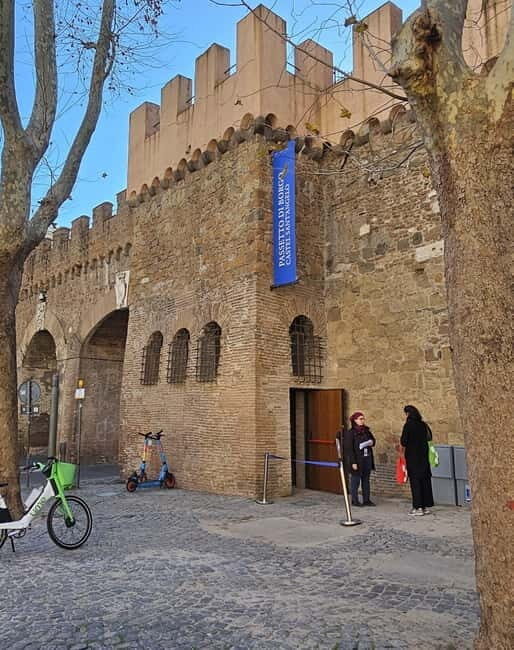
Price: From $37 per person
Duration: 1 hour
What you get: Guided walk through the Passetto di Borgo secret passage plus entry to Castel Sant’Angelo.
This is the one I’d call a genuine Rome insider experience. The Passetto di Borgo is the elevated, fortified corridor running from the Vatican to Castel Sant’Angelo — 800 meters of narrow passageway along the top of a medieval wall. It’s not open to regular visitors. You need a specific tour to access it.
Walking through it, you’re literally tracing the same steps Pope Clement VII took while fleeing the 1527 Sack of Rome, with German mercenaries ransacking the city below. The passage is narrow, atmospheric, and gives you views over Rome that no other tour offers. And then you emerge into Castel Sant’Angelo itself.
Fair warning: availability is limited and dates sell out quickly. This tour doesn’t run every day. If you see dates available for your trip, book immediately.
Check availability and book this tour
Premium Audio Experience: Castel Sant’Angelo Entry Ticket and Audioguide
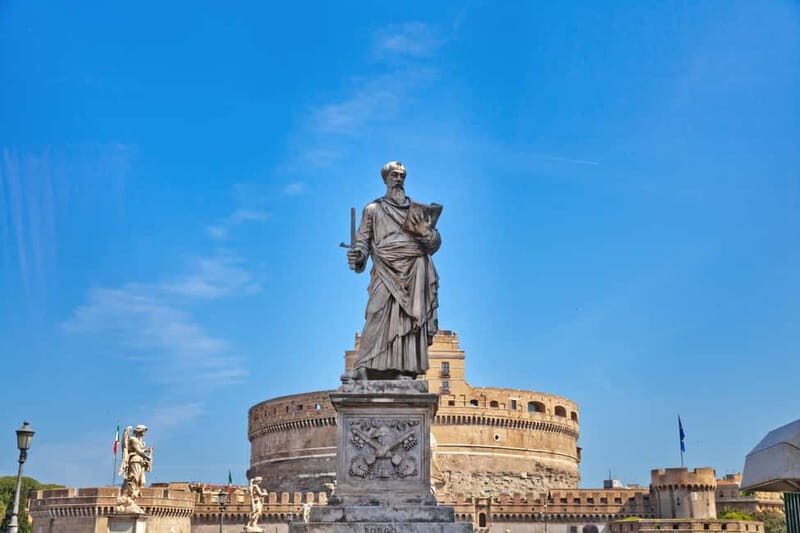
Price: From $34 per person
Duration: Self-paced (1 day validity)
What you get: Skip-the-line entry plus a more comprehensive audioguide.
The higher price point gets you a more detailed audioguide with expanded commentary on the art, architecture, and historical context. If you’re the kind of person who reads every museum placard front to back, this is your option. The all-day validity also means you can leave for lunch and come back, which is a nice perk if you want to split your visit.
Check availability and book this ticket
When to Visit Castel Sant’Angelo
Opening hours: Tuesday through Sunday, 9:00 AM to 7:30 PM. Last entry is at 6:30 PM. Closed on Mondays — don’t make that mistake, because the walk across the bridge to find locked doors is annoying.
Best time of day: First thing at 9 AM, without question. The terrace is nearly empty, the light is beautiful, and you’ll have the spiral ramp practically to yourself. Second best is after 4 PM when the tour groups thin out and the late afternoon light turns the travertine stone golden.
The worst time? 11 AM to 2 PM. Tour buses line up along the Tiber, school groups flood the corridors, and in summer, the courtyard area bakes. There’s no air conditioning in a 2nd-century Roman mausoleum, shockingly enough.
Best time of year: October and November are ideal — mild weather, smaller crowds, and the autumn light over Rome is gorgeous. March and April are good too, though Easter week brings a surge. July and August are hot and crowded, but if that’s when you’re in Rome, go early morning and you’ll be fine.
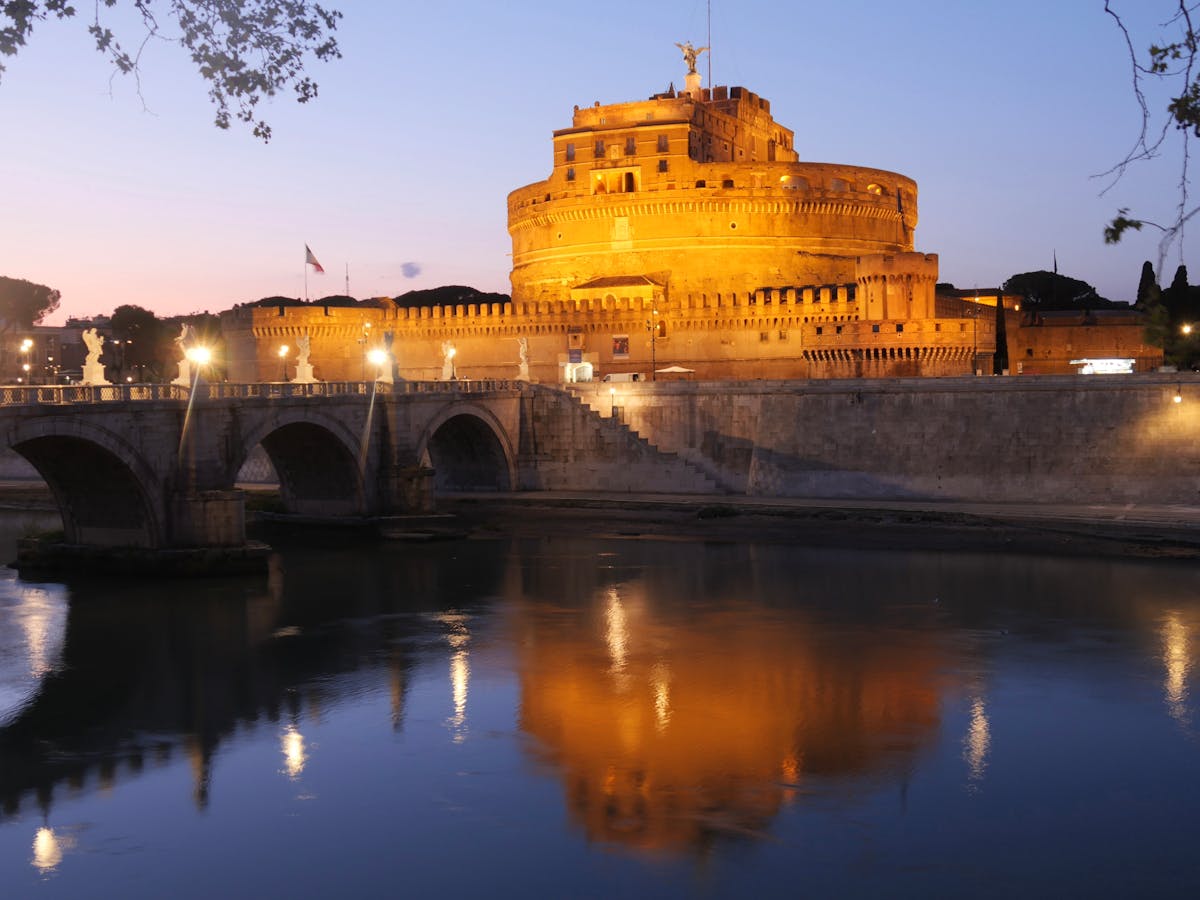
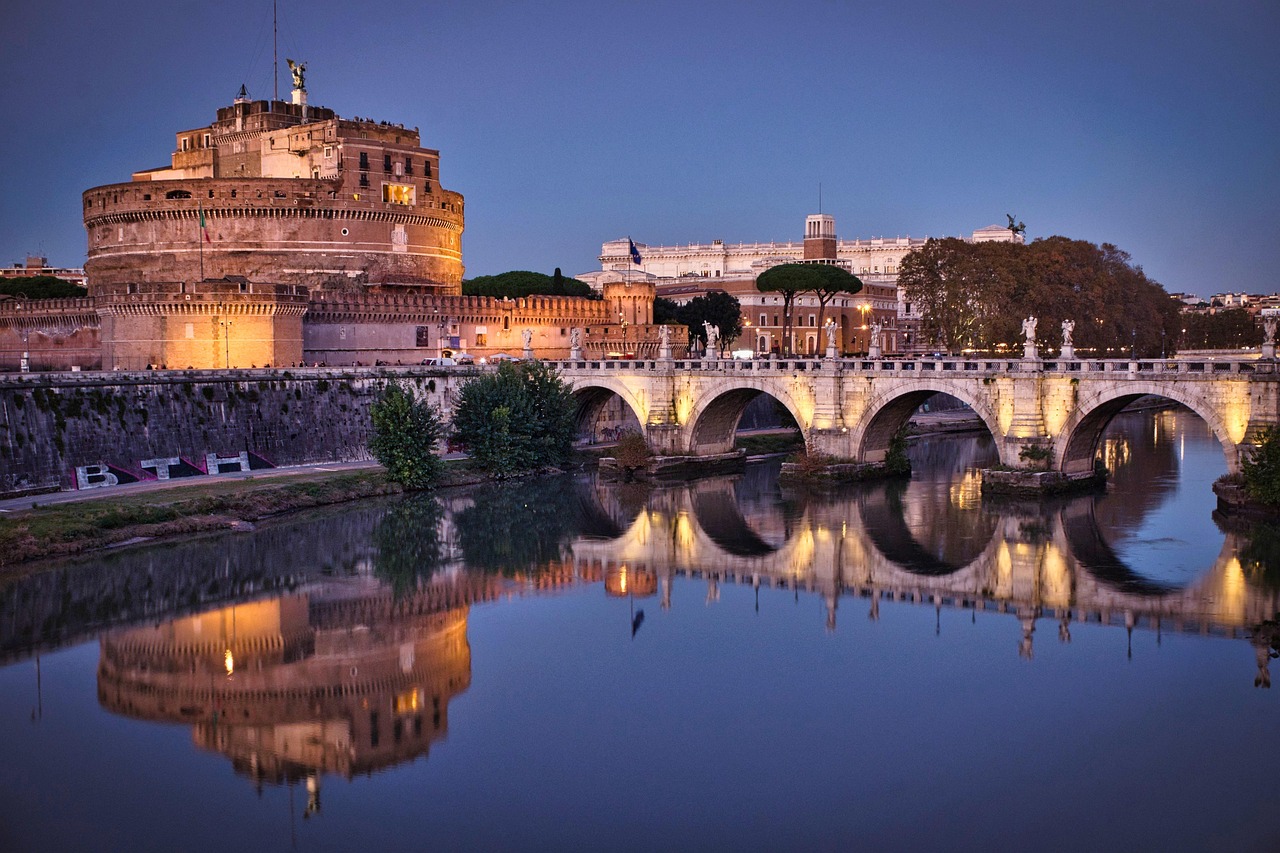
Special events: Castel Sant’Angelo occasionally hosts evening openings and special exhibitions. Check the museum’s site before your trip — catching the castle lit up at night from the inside is a completely different experience from the daytime visit. A Rome night tour typically passes right by here and includes the illuminated bridge.
Tips for Visiting Castel Sant’Angelo
Wear comfortable shoes. You’ll be climbing the ancient spiral ramp, walking through uneven medieval corridors, and ascending multiple staircases to reach the terrace. Sandals or heels are a bad idea. The ramp in particular can be slippery.
Bring water. There’s a small cafe/bar near the terrace at the top, but prices are what you’d expect at a tourist monument. Filling a bottle before you enter saves you a few euros.
Download your audioguide beforehand. The Wi-Fi inside is patchy. If you’ve booked a ticket that includes an audio app, download everything before you arrive. You’ll need headphones too — the castle corridors echo and playing audio out loud doesn’t work well.
Don’t rush the terrace. Seriously. A lot of people power through the museum rooms and spend 5 minutes on top before heading down. The terrace is the highlight. You can see St. Peter’s Basilica from a completely unique angle, the Tiber curving through the city, and on clear days, the Alban Hills in the distance. Sit down, take it in.
Combine it with the Vatican. Castel Sant’Angelo is a 10-minute walk from the Vatican Museums and St. Peter’s Basilica. A natural day plan is Vatican in the morning, lunch in the Prati neighborhood, then Castel Sant’Angelo in the afternoon. The two sites complement each other perfectly — you’ll see the Passetto connection from the castle terrace and understand how the Vatican and fortress worked as a system.
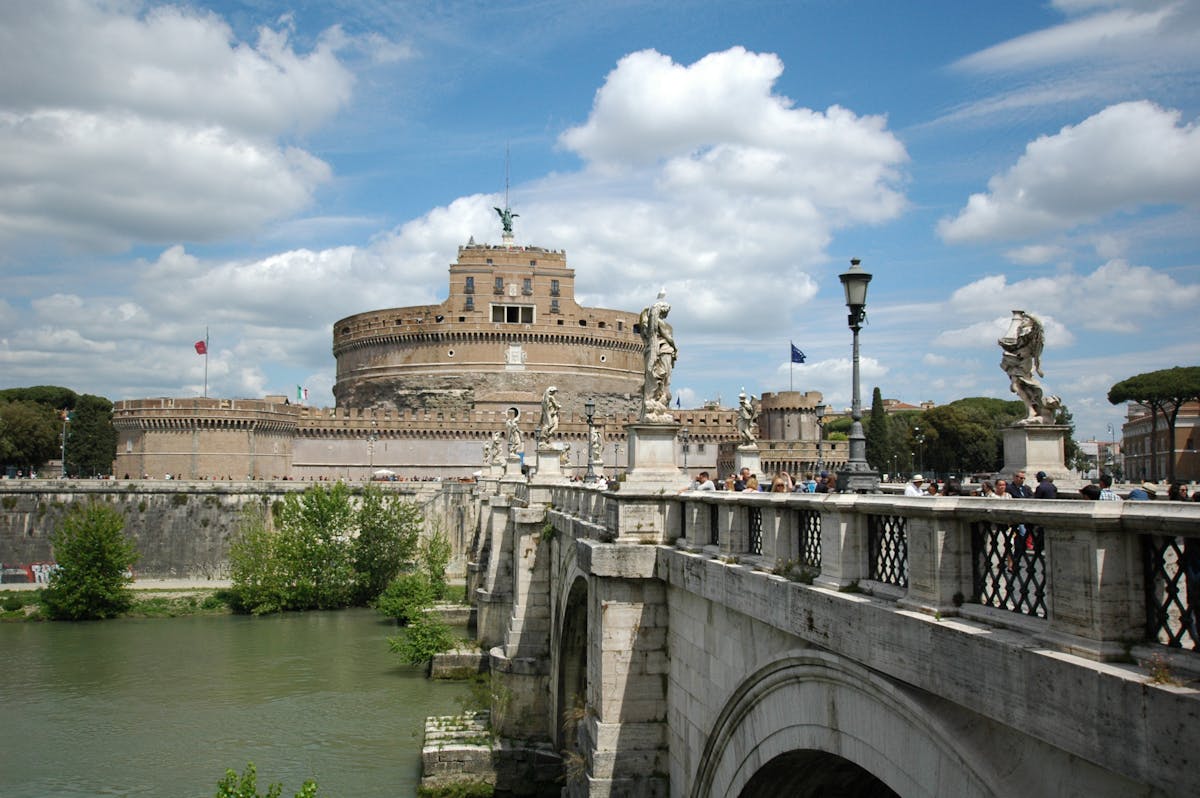
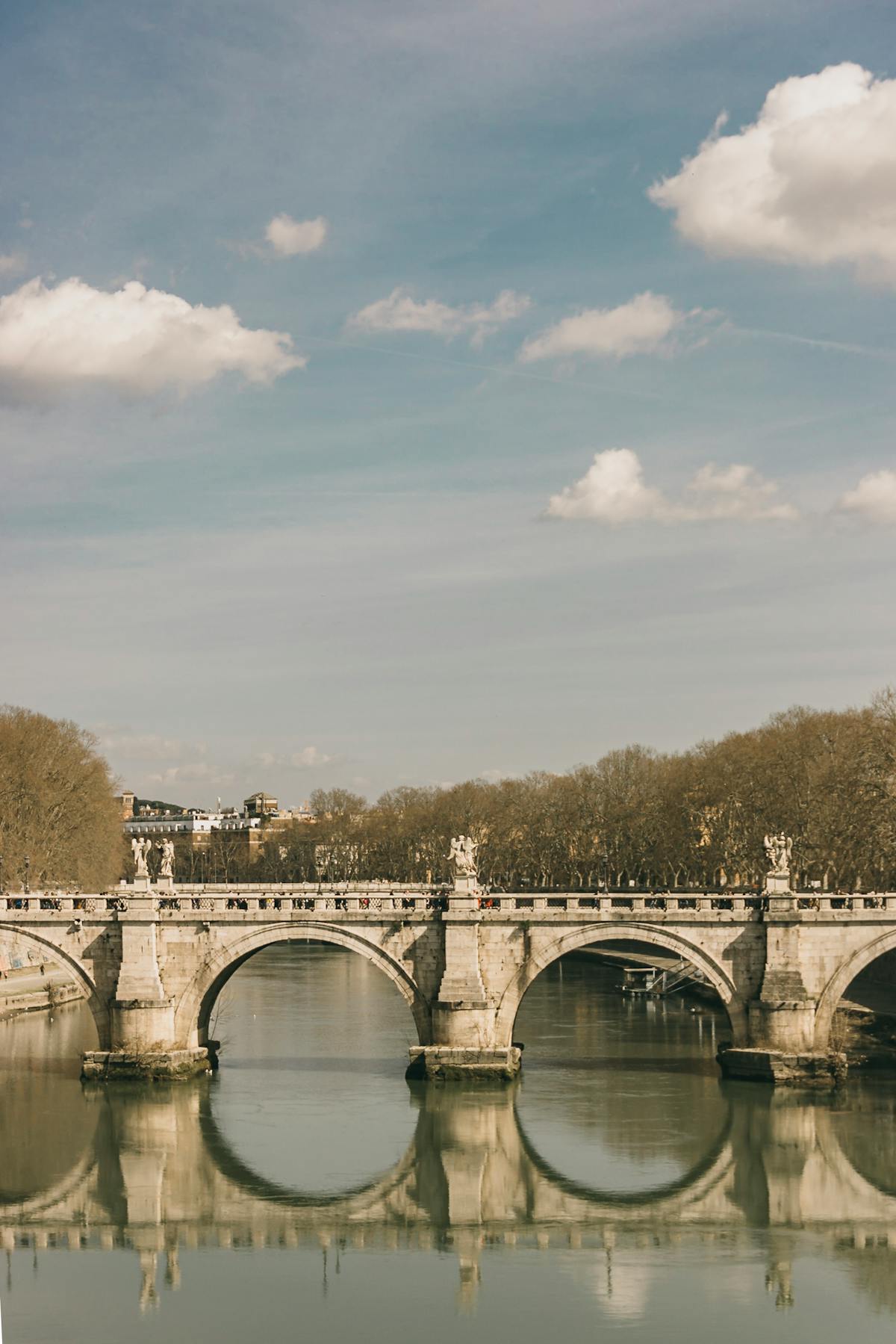
Walk across the bridge at golden hour. Even if you’re visiting the castle interior at a different time, come back to Ponte Sant’Angelo around sunset. The ten Bernini angel statues, the castle glowing amber, and the Tiber reflecting the sky — it’s one of Rome’s most beautiful spots, and it costs nothing.
Getting there: The closest Metro stop is Lepanto (Line A), about an 8-minute walk. Bus lines 40 and 64 stop nearby at Piazza Pia. But honestly, if you’re anywhere in central Rome, just walk. From the Pantheon it’s about 15 minutes, from the Colosseum it’s about 30 minutes, and from Piazza Navona it’s a 10-minute stroll through atmospheric backstreets. A hop-on hop-off bus also stops right near the castle if you’ve got a day pass.
What You’ll See Inside Castel Sant’Angelo
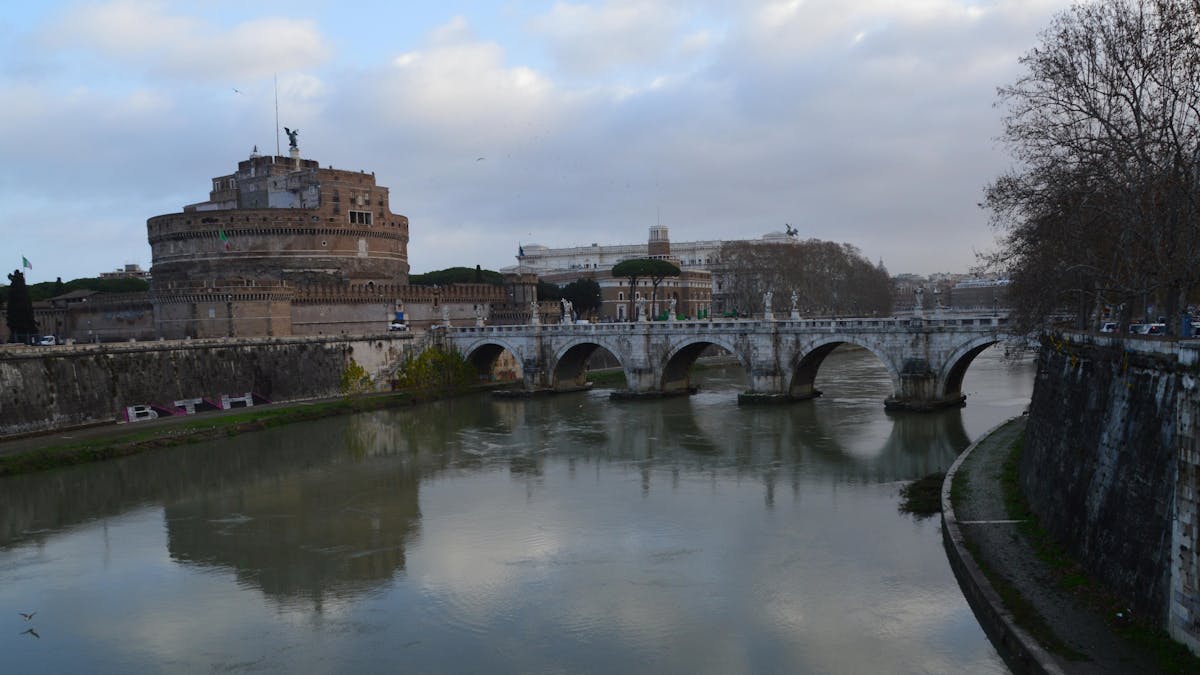
The building is organized in layers, and you’ll move upward through roughly 1,900 years of Roman history as you climb. It’s like a vertical archaeological dig.
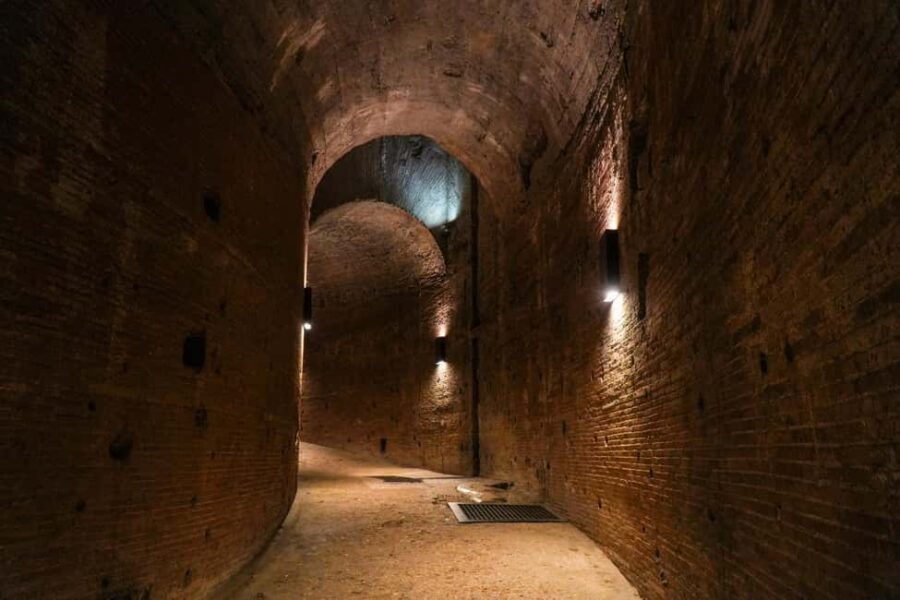
The Roman foundations and spiral ramp (Ground level): You enter through the original 2nd-century structure. The spiral ramp that Hadrian’s funeral procession used to carry his remains upward is still intact — a gently sloping corridor that winds around the core of the building. The walls are original Roman concrete and brick. There are niches along the ramp where urns of imperial family members were placed. It’s dim, cool, and atmospheric.
The medieval military levels (Floors 1-3): As you climb higher, the architecture shifts from Roman to medieval. You’ll pass through rooms that served as the papal treasury, armory, and prison cells. The Cortile dell’Angelo courtyard has a collection of cannonballs and Renaissance-era ammunition stacked like grim snowballs. The oil-pouring holes above the main gate are still visible — defenders would pour boiling oil on attackers from these openings.
The papal apartments (Floors 4-5): This is where things get fancy. Pope Paul III commissioned lavish Renaissance apartments in the 1540s, and the Sala Paolina is the standout — covered floor to ceiling in frescoes depicting scenes from the life of Alexander the Great (a not-so-subtle comparison to Paul III himself). There’s also a bathroom with frescoes. A pope’s bathroom. With Renaissance paintings on the walls. Rome is wild.
The Sala del Tesoro (Treasury Room) once held the papal emergency fund — gold, jewels, and important documents that needed to be accessible from the fortress. The room itself is circular and sits at the heart of the building.
The terrace (Top level): The Terrazza dell’Angelo wraps around the building at the very top, right at the base of the Archangel Michael statue. This is where you’ll spend the most time, and rightfully so. The 360-degree view covers St. Peter’s dome rising directly behind you, the Tiber snaking south toward Trastevere, the orange-roofed expanse of the Centro Storico, and Rome’s hills rolling into the distance.
There’s a small cafe up here where you can grab an espresso and sit with the view. Overpriced? Yes. Worth it for the experience of drinking coffee next to a bronze archangel while looking over ancient Rome? Also yes.
If you’re spending several days in Rome and working through the major attractions, Castel Sant’Angelo slots in perfectly with a Vatican morning or as a standalone afternoon visit. It’s one of the few Rome sites where the building itself tells the story — you just have to know where to look. Or better yet, let a good guide show you.
This article contains affiliate links to tours and tickets from our partners. If you book through these links, we earn a small commission at no extra cost to you. This helps support our work creating free travel guides. All recommendations reflect our genuine opinions — we only suggest tours and experiences we believe are worth your time and money.