
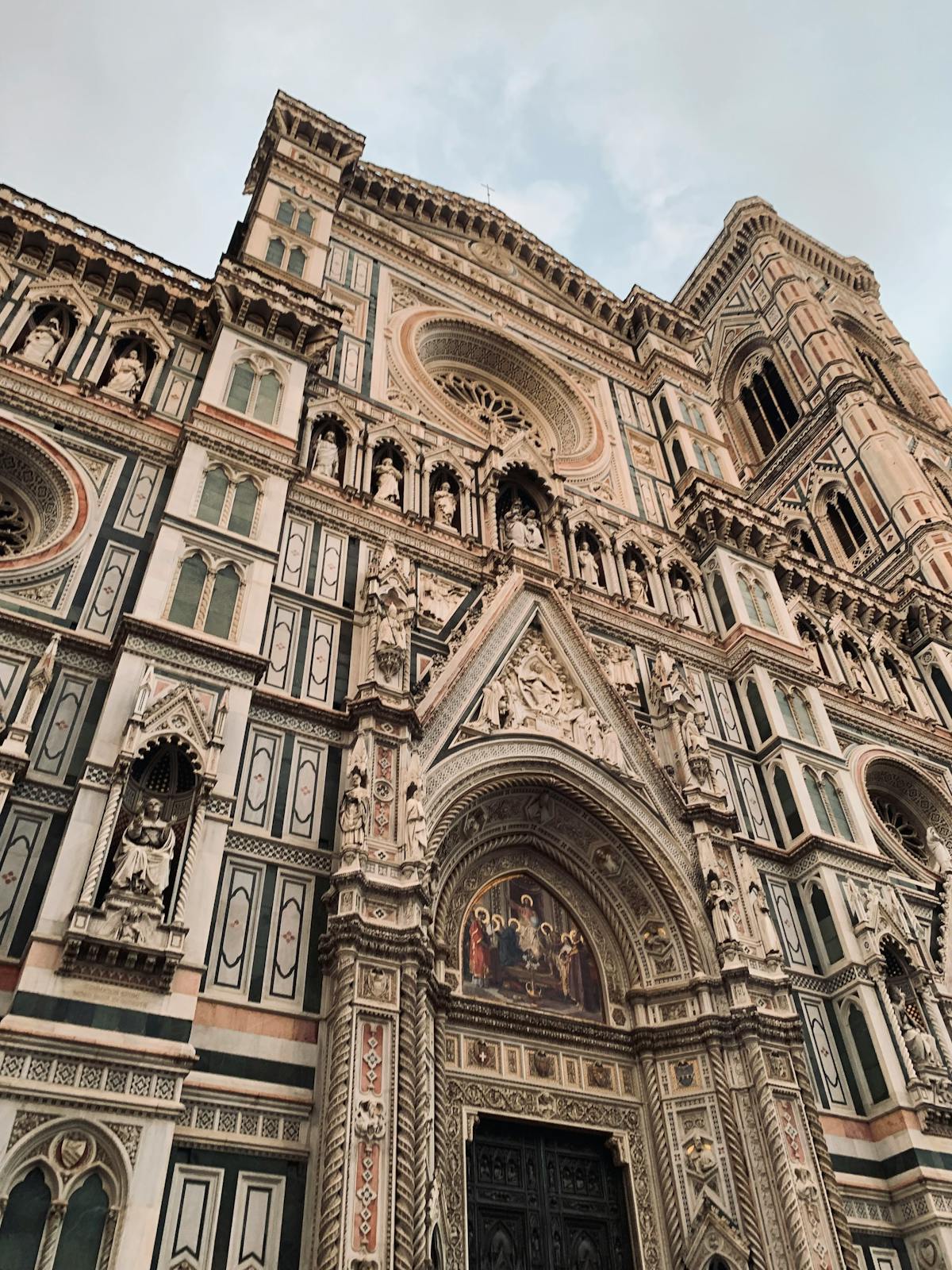
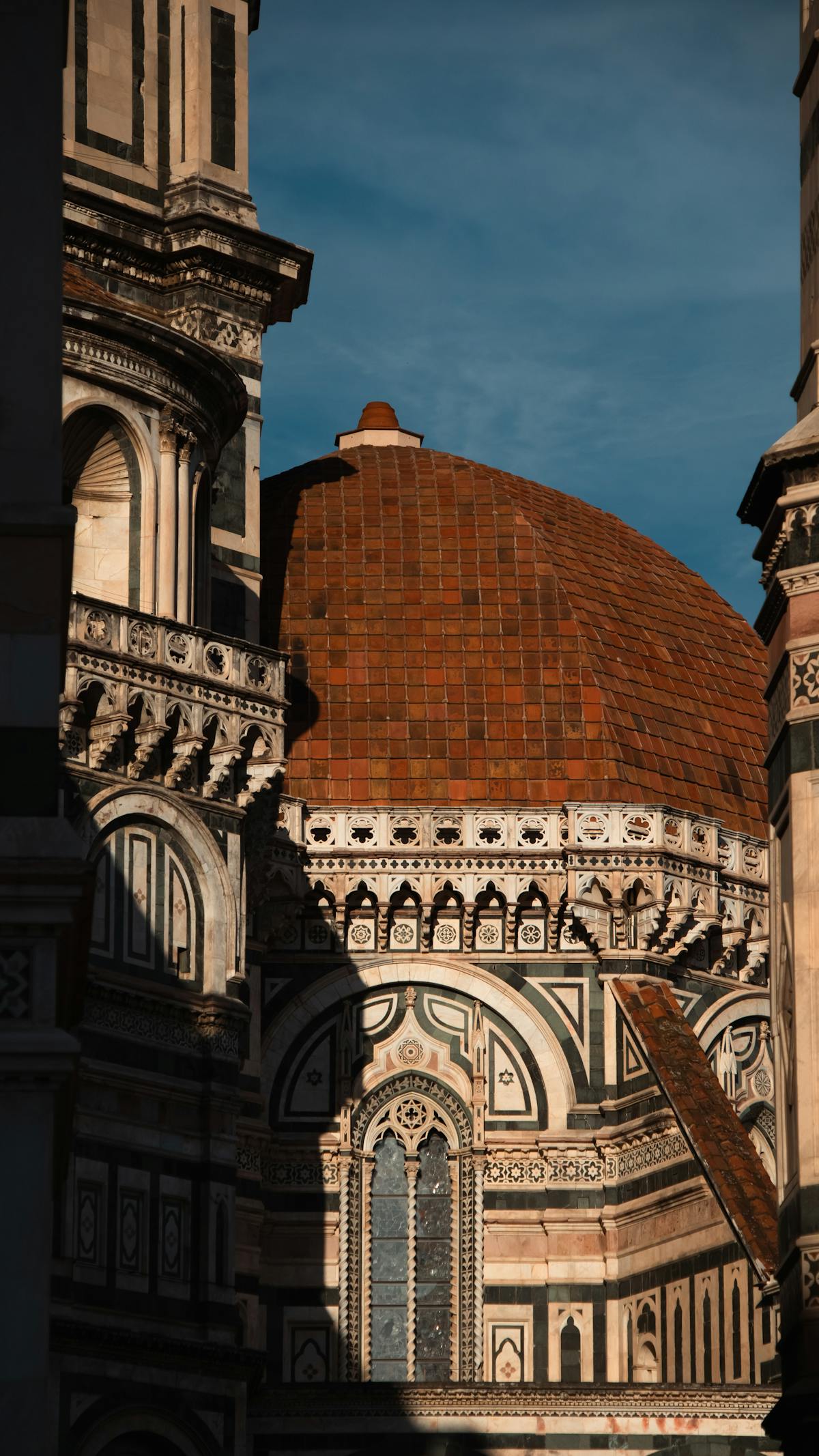
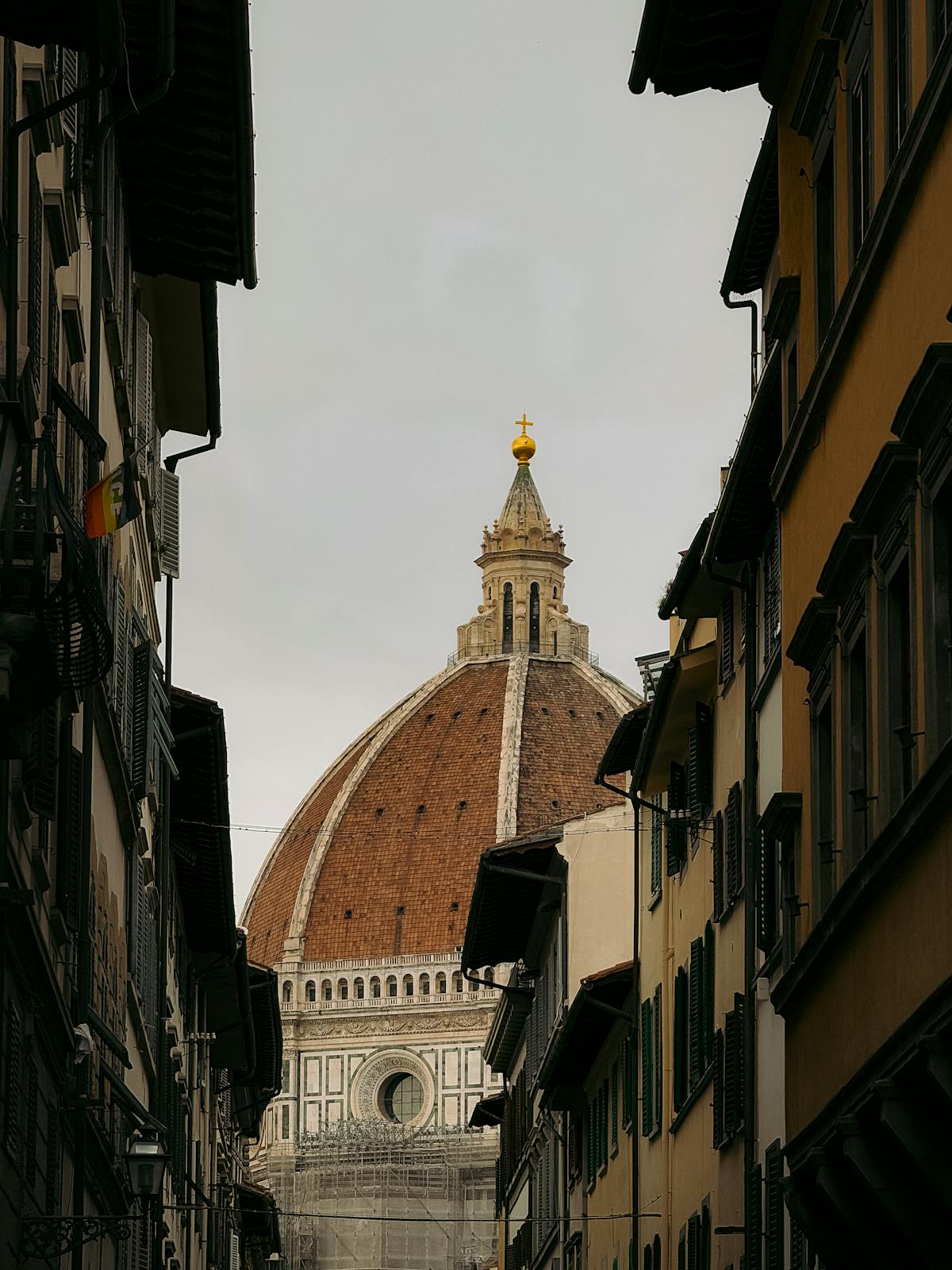
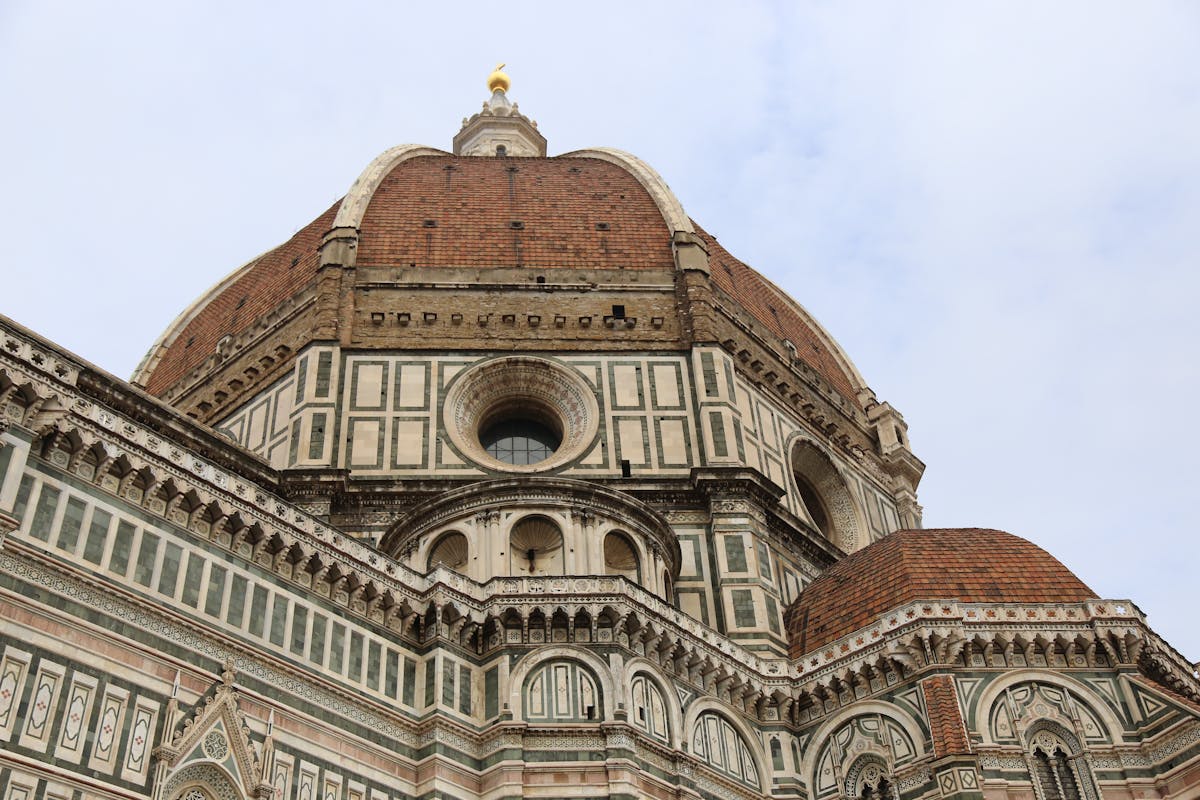
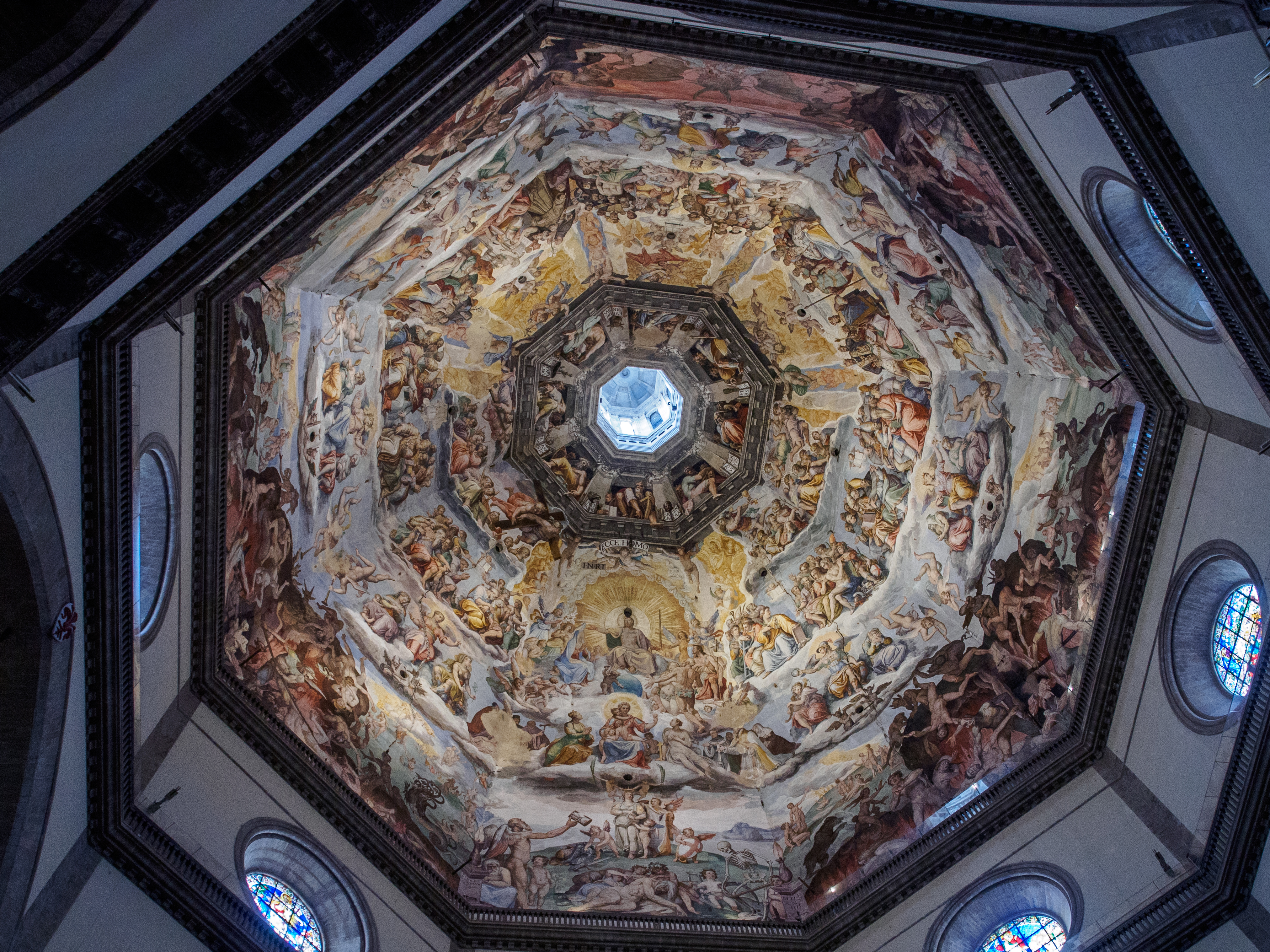
I stood between the inner and outer shells of Brunelleschi’s dome, my shoulders nearly brushing both walls as the stone staircase spiraled tighter. There are 463 steps to reach the top. No elevator. No shortcuts. The passage narrows so much near the summit that you can reach out and almost touch the 3,600-square-meter Last Judgment fresco by Giorgio Vasari — painted figures of demons and angels hovering at arm’s length while you climb past them inside the curve of the dome itself.
When I finally stepped onto the rooftop lantern terrace, the whole of Tuscany opened up in every direction. The Arno glinting below. The tower of Palazzo Vecchio looking small for once. On a clear day, you can make out the Apennine peaks to the north. That moment alone justified every one of those 463 steps.
But getting tickets for the Florence Cathedral dome climb is not straightforward. There’s no single ticket that covers everything. The pass system changed in recent years, and the official site can be confusing. Some time slots sell out weeks ahead, especially between April and October.
This guide covers exactly how the ticketing works, which pass you actually need, whether a guided tour makes sense, and how to avoid the biggest mistakes I see people make when planning their dome climb.
In a Hurry? Here’s What I’d Book
If you want the full dome climb plus all the Duomo complex sites, grab the Brunelleschi Pass ($30) from the official Opera del Duomo site. It includes the dome climb, Giotto’s Bell Tower, the Baptistery, the Crypt of Santa Reparata, and the Opera del Duomo Museum — all on a timed entry for the dome.
If you’d rather have a guide explain the architecture and frescoes while you climb, this dome climb entry ticket with Duomo access ($53) is the most popular option and includes skip-the-line entry.
Planning the rest of your Florence trip? Don’t miss my guides to getting Uffizi Gallery tickets and booking Accademia Gallery tickets to see Michelangelo’s David.
- In a Hurry? Here’s What I’d Book
- How Florence Cathedral Tickets Work (The Pass System Explained)
- Brunelleschi Pass (Around )
- Giotto Pass (Around )
- Ghiberti Pass (Around )
- Self-Guided vs. Guided Dome Climb — Which Should You Choose?
- The Best Florence Cathedral and Dome Tours
- Florence: Brunelleschi’s Dome Climb Entry Ticket and Duomo
- Florence: Cathedral and Brunelleschi’s Dome Ticket with Audio App
- Florence Skip-the-Line Duomo Tour with Guide and Brunelleschi Dome
- Skip-the-Line Duomo Terraces and Dome Climb Tour
- Florence: Skip The Line David Statue and Brunelleschi’s Dome Tour
- Florence Duomo Complex Guided Tour and Brunelleschi’s Dome Climb
- Florence Skyline from the Top of Brunelleschi’s Dome
- When to Visit Florence Cathedral and Climb the Dome
- The Duomo Complex: Everything You Can Visit
- The Cathedral (Santa Maria del Fiore)
- Giotto’s Bell Tower (Campanile)
- The Baptistery of San Giovanni
- The Crypt of Santa Reparata
- Opera del Duomo Museum
- Tips Before You Climb the Dome
- What You’ll See Inside the Dome
- A Brief History of Why This Dome Shouldn’t Exist
- Getting to the Florence Cathedral
- Frequently Asked Questions
How Florence Cathedral Tickets Work (The Pass System Explained)
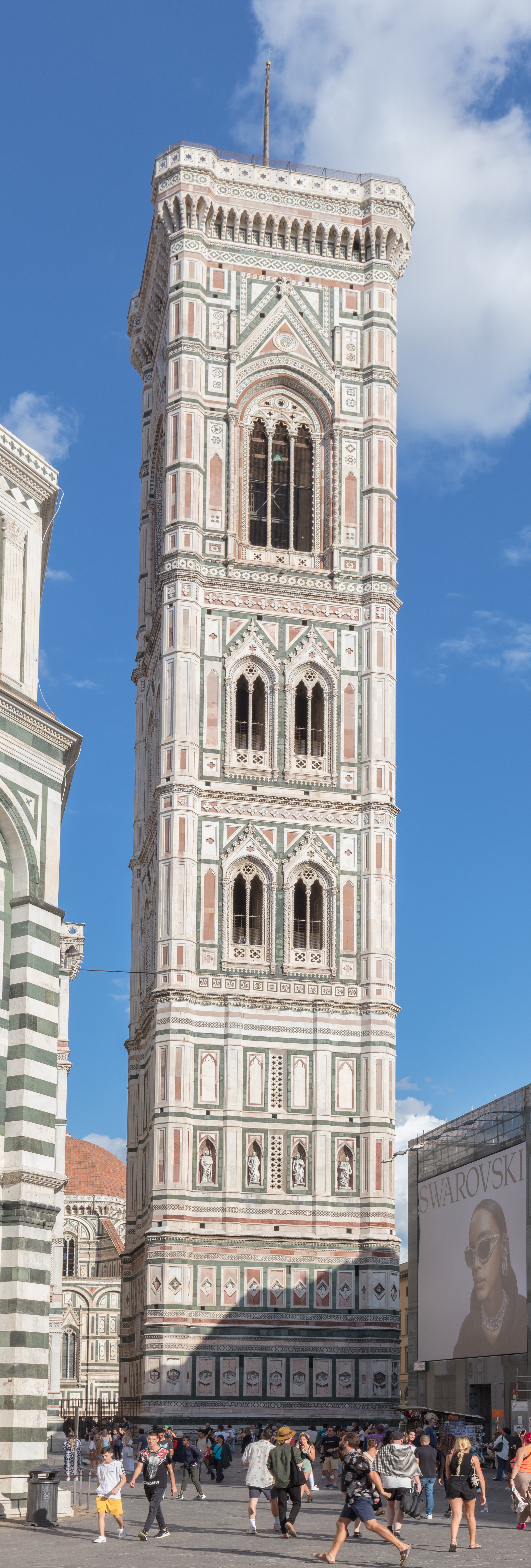
Here’s the thing that trips most visitors up: entering the Florence Cathedral itself is free. You can walk into the nave anytime during opening hours without a ticket. But nearly everything else in the Duomo complex requires a pass.
The Opera di Santa Maria del Fiore (the organization that manages the complex) sells several different passes. These are the ones that matter:
Brunelleschi Pass (Around $30)
This is the pass most visitors need. It includes:
- Brunelleschi’s Dome climb — with a reserved time slot (this is the only way to climb the dome)
- Giotto’s Bell Tower — 414 steps, open access within 3 days
- The Baptistery of San Giovanni — including Ghiberti’s Gates of Paradise
- The Crypt of Santa Reparata — ruins of the original 5th-century church beneath the cathedral floor
- The Opera del Duomo Museum — original sculptures, Michelangelo’s unfinished Pieta, and Ghiberti’s original bronze panels
The dome time slot is fixed. You pick it when you book. Everything else on the pass can be visited at any point within 72 hours of your dome entry. My advice: book the dome for first thing in the morning (8:15 or 8:30 AM) and then visit the other sites afterward.
Giotto Pass (Around $15)
This one skips the dome and gives you the bell tower, Baptistery, crypt, and museum. It’s a good fallback if dome slots are sold out, but honestly, climbing the bell tower doesn’t compare to the dome experience. The bell tower gives you a great view of the dome, though, which the dome climb obviously can’t.
Ghiberti Pass (Around $15)
Covers the Baptistery, crypt, and museum only. No climbs at all. This is the budget option if the dome and bell tower don’t interest you, or if you have mobility concerns about the stairs.
Where to buy: The official site is tickets.duomo.firenze.it. Dome time slots open roughly 30 days in advance. During peak season (June through September), popular morning slots can sell out within days of becoming available. Set yourself a reminder.
Self-Guided vs. Guided Dome Climb — Which Should You Choose?
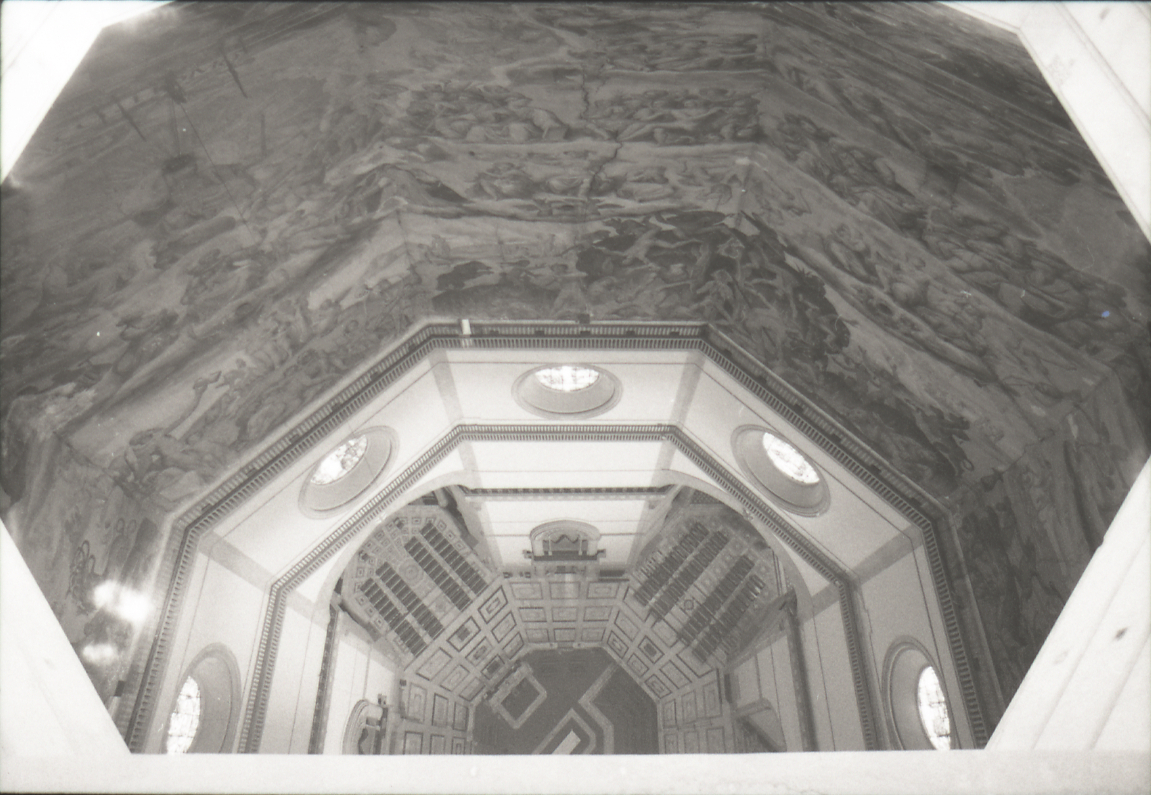
With the Brunelleschi Pass, you climb the dome on your own. There are some information panels along the way, but nothing explains the engineering feat you’re walking through. You’ll pass through the narrow corridor between the two shells — Brunelleschi’s revolutionary double-shell design that engineers still debate about — and unless you’ve read up beforehand, most of that context is lost.
A guided dome climb solves this. A local guide walks you through the construction techniques, points out details in the Vasari frescoes as you pass them, and explains why this dome was considered impossible to build. Brunelleschi invented new hoisting machines, laid bricks in a herringbone pattern that had never been tried at this scale, and worked without any central scaffolding. A good guide makes you appreciate the sheer audacity of the whole project.
My recommendation: if this is your first time in Florence and you care about understanding what you’re seeing, go guided. If you’ve visited before and just want the views, the self-guided Brunelleschi Pass is perfectly fine.
For the rest of your Florence itinerary, you’ll also want to plan your visits to the Uffizi Gallery and the Accademia Gallery. Both sell out fast, especially in summer. And if you have a spare day, a Tuscany day trip from Florence through the Chianti hills is hard to beat.
The Best Florence Cathedral and Dome Tours
I went through every available dome tour and picked the ones actually worth booking. Here are my top picks, organized by what kind of visit you’re after.
Florence: Brunelleschi’s Dome Climb Entry Ticket and Duomo
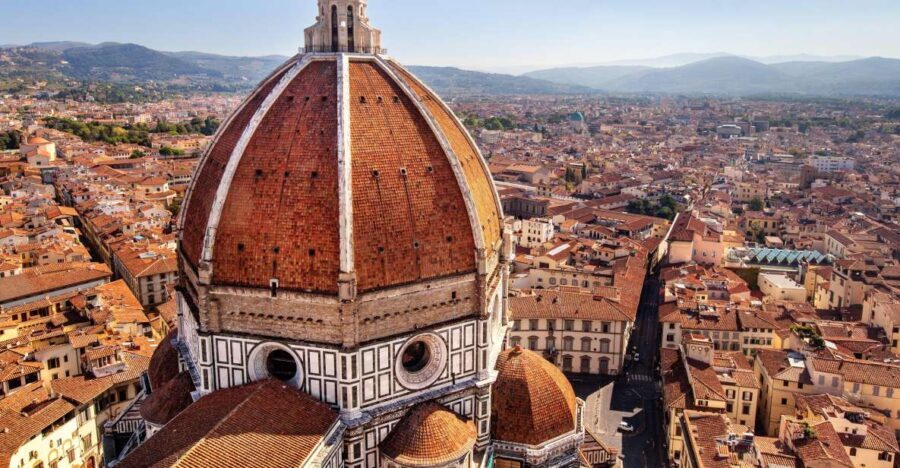
Price: $53 per person | Duration: Valid for 3 days
The most booked option by a wide margin — and for good reason. This is essentially the Brunelleschi Pass purchased through a third party with the added convenience of skip-the-line access. You get the dome climb with a reserved time slot, Giotto’s Bell Tower, the Baptistery, the crypt, and the Opera del Duomo Museum. The slightly higher price compared to the official pass buys you easier booking and confirmed availability when the official site shows sold out. If you’re visiting in peak season and the official site has no slots, check here first.
Florence: Cathedral and Brunelleschi’s Dome Ticket with Audio App
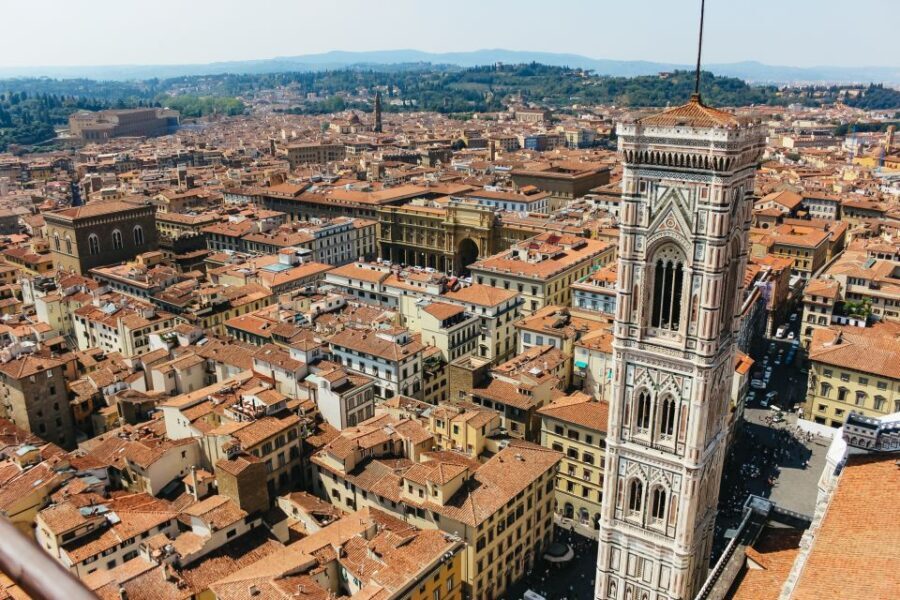
Price: $70 per person | Duration: Valid for 1-3 days
Same access as the Brunelleschi Pass, but with an audio guide app that walks you through every site in the complex. The app covers the dome construction story, the Vasari fresco details, and background on the Baptistery mosaics. A good middle ground between a bare self-guided pass and a full guided tour — you get context at your own pace. The audio content is solid and covers things you’d never notice on your own, like the herringbone brickwork visible in certain sections of the dome corridor. This is the most reviewed option in the category.
Florence Skip-the-Line Duomo Tour with Guide and Brunelleschi Dome
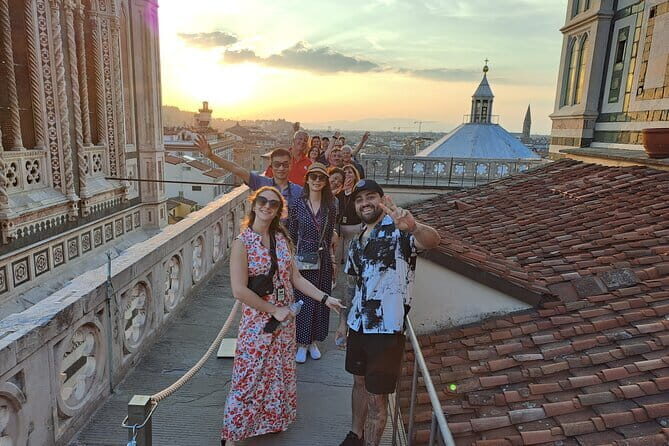
Price: $143.91 per person | Duration: About 2.5 hours
This is the full guided experience and my top pick if you want someone passionate about Florentine architecture to bring the dome alive. Your guide takes you through the cathedral interior, explains the Vasari and Zuccari Last Judgment frescoes in detail, then leads you up the 463 steps while pointing out construction details that are invisible to the untrained eye. The skip-the-line access means you walk straight in while the regular queue snakes around the piazza. One of the highest-rated guided experiences in all of Florence. Group sizes are kept small.
Skip-the-Line Duomo Terraces and Dome Climb Tour
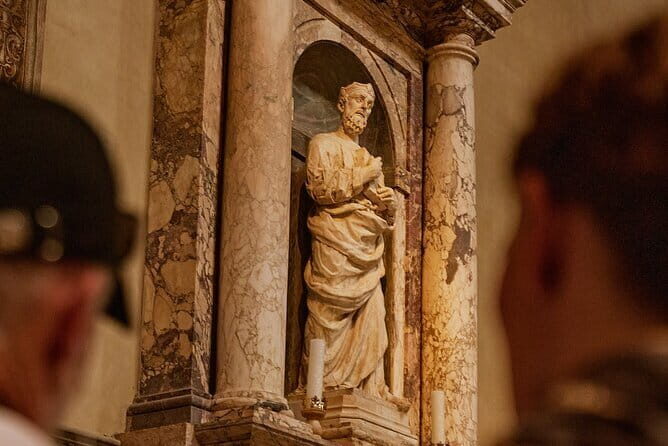
Price: $107.93 per person | Duration: About 2.5 hours
This tour includes something you can’t get with any self-guided pass: access to the Duomo terraces. These are the walkways along the exterior of the cathedral roof, normally closed to the public, giving you eye-level views of the dome’s exterior and a perspective of the city that few visitors ever see. After the terrace walk, you continue up to the dome interior and summit. If you want something beyond the standard dome climb, this is the one. The terraces are genuinely special — you’re standing on top of the cathedral roof with the dome looming right next to you.
Florence: Skip The Line David Statue and Brunelleschi’s Dome Tour
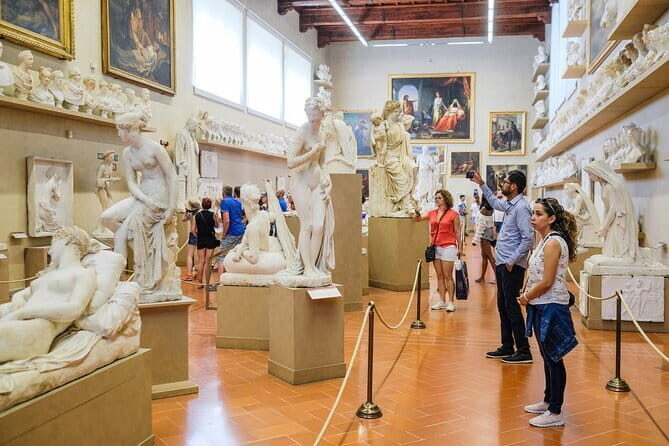
Price: $131.81 per person | Duration: About 3 hours
Two of Florence’s most iconic experiences in one morning. You start at the Accademia Gallery with skip-the-line entry to see Michelangelo’s David — a guide explains the sculptor’s techniques and the statue’s dramatic history — then walk to the Duomo for the dome climb. This combo makes logistical sense because both sites are in the historic center, about a 10-minute walk apart. You avoid booking two separate experiences, and the guided Accademia portion adds real value since David’s backstory is fascinating. A strong option if you’re short on time in Florence.
Florence Duomo Complex Guided Tour and Brunelleschi’s Dome Climb
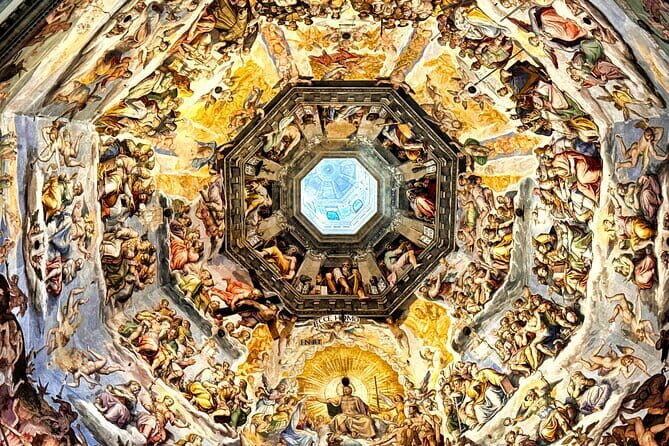
Price: $59.13 per person | Duration: 2-4 hours
The best value guided option. This covers the full Duomo complex — cathedral, dome climb, Baptistery, and the Opera del Duomo Museum — with a local guide. The price is significantly lower than the other guided tours, making it a solid pick if you want expert commentary without the premium price tag. The guide covers the key stories: Brunelleschi’s rivalry with Ghiberti, the dome’s impossible engineering, and the Baptistery’s role in Florentine life. A newer offering that hasn’t built up the review numbers yet, but the early feedback is strong.
Florence Skyline from the Top of Brunelleschi’s Dome
Price: $106.42 per person | Duration: About 2.5 hours
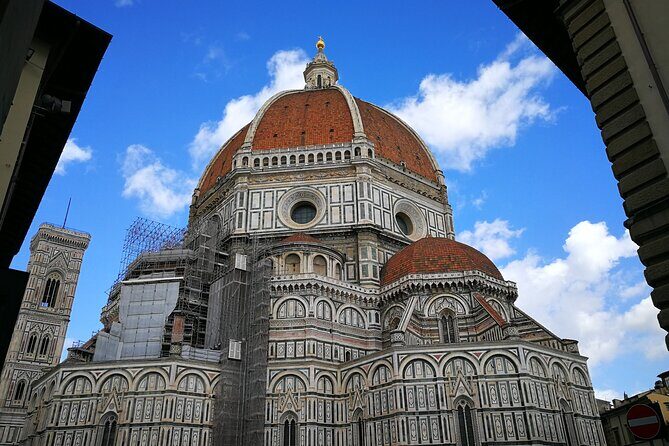
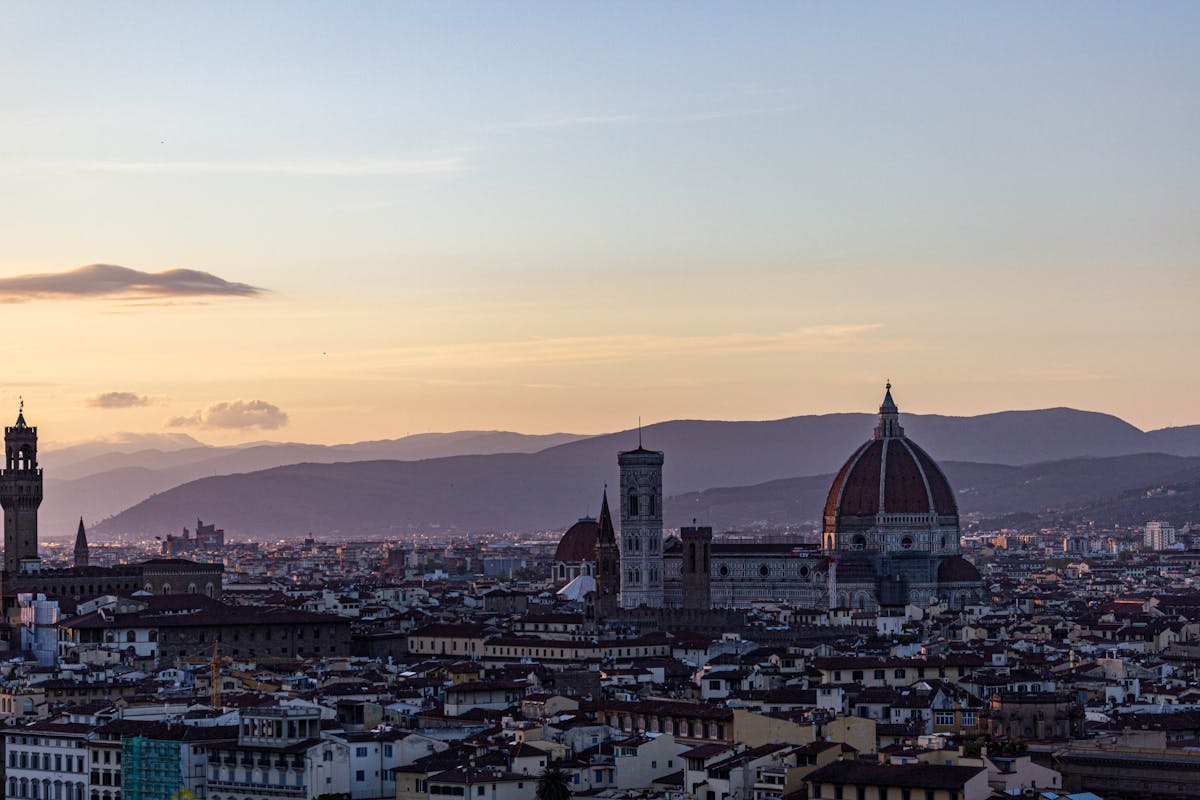
This tour starts in Piazza del Duomo with a walking overview of the cathedral exterior — the guide breaks down the facade’s marble sources (white from Carrara, green from Prato, pink from Maremma) and the architectural timeline before you head inside. After exploring the cathedral interior and learning about the Vasari frescoes from below, you climb the dome with reserved access. What sets this apart is the storytelling focus on the Florentine skyline once you reach the top — the guide points out specific landmarks, explains the medieval tower wars, and gives you context for everything you’re seeing. Good for history buffs who want more than just views.
When to Visit Florence Cathedral and Climb the Dome
The dome is open Monday through Saturday. It closes on Sundays and some religious holidays. The cathedral itself keeps slightly different hours and is open on Sundays for worship (but not for tourism).
Best time of day: Book the first time slot available — typically 8:15 or 8:30 AM. The staircase gets hot, crowded, and stuffy by midday. Morning light from the east also hits the Vasari fresco beautifully as you climb past it. Late afternoon slots (after 4 PM when available) are a reasonable second choice since the crowds thin out.
Best time of year: November through March offers the shortest lines and easiest ticket availability. The dome staircase is much more pleasant when it’s not 35 degrees outside. April, May, and October are the sweet spot — good weather without the crushing summer crowds. June through August is peak season; book dome tickets the moment they become available (about 30 days ahead).
How long to allow: The dome climb itself takes 30-45 minutes, depending on your pace and how long you linger at the top. For the full Brunelleschi Pass (dome, bell tower, Baptistery, crypt, museum), budget a full half-day. The museum alone deserves at least an hour.
The Duomo Complex: Everything You Can Visit
The Piazza del Duomo holds more than just the cathedral and dome. Here’s what’s included with the full Brunelleschi Pass:
The Cathedral (Santa Maria del Fiore)
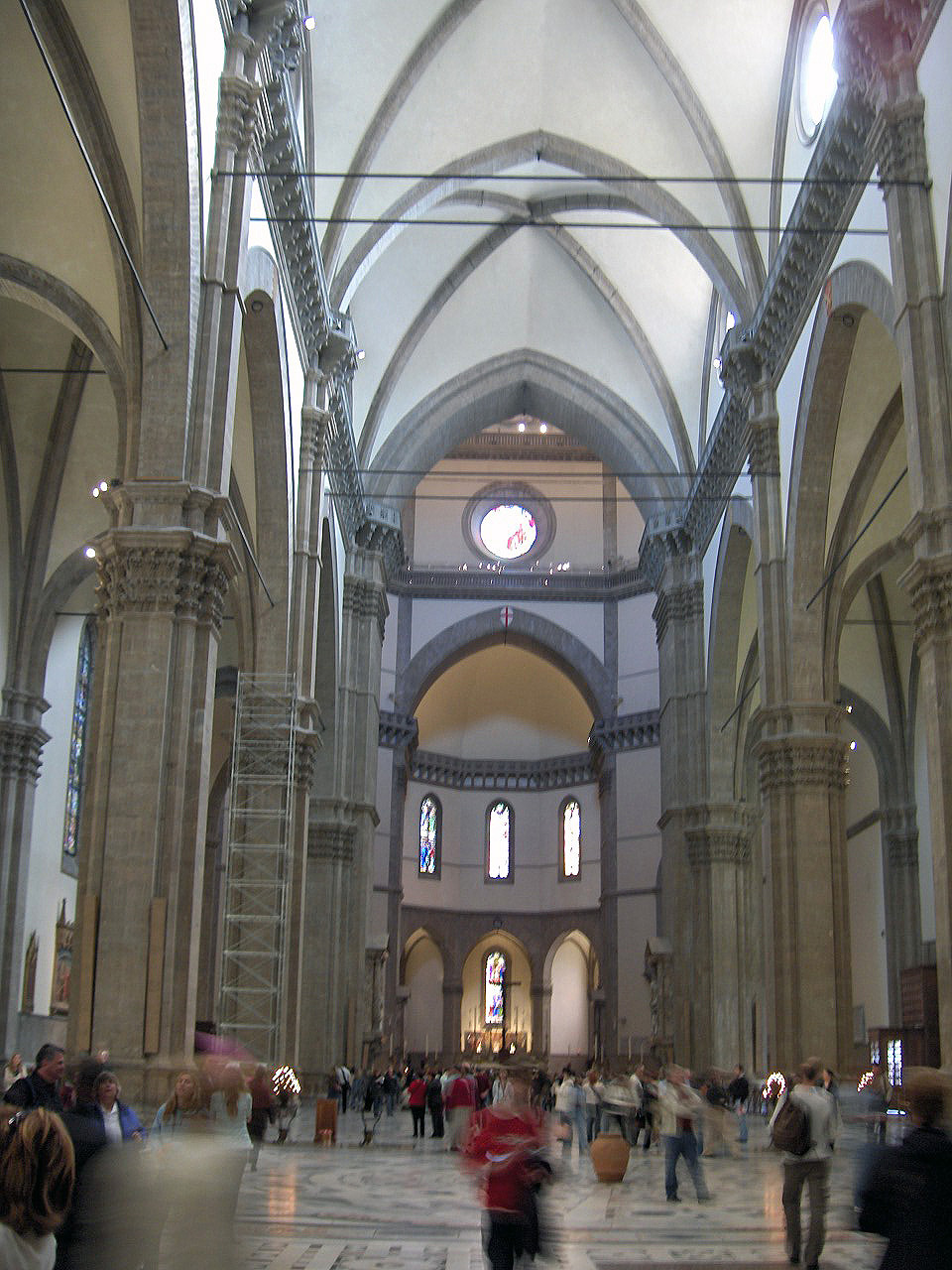
Entry is free, no ticket needed. The interior is surprisingly austere compared to the ornate exterior — vast stone arches, minimal decoration, and the enormous dome fresco visible high above the crossing. Look for Paolo Uccello’s clock on the interior facade (it runs counterclockwise) and the equestrian memorial paintings on the north wall. Most people rush through to get to the dome stairs, but the cathedral deserves its own 20 minutes.
Giotto’s Bell Tower (Campanile)
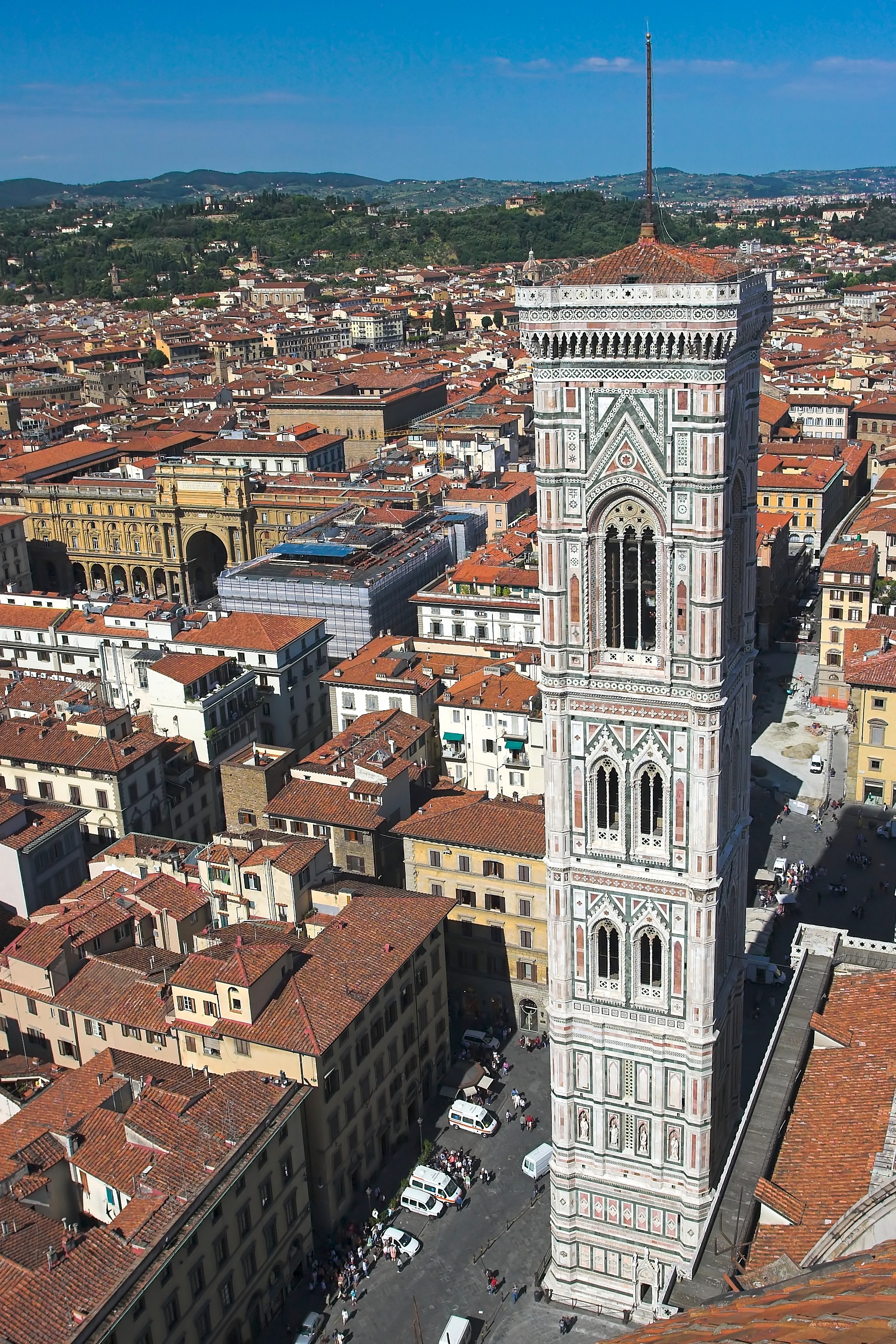
414 steps, with several terrace stops on the way up. The big advantage over the dome climb is the view of the dome — the bell tower gives you the best close-up angle of Brunelleschi’s masterpiece. It’s also less claustrophobic than the dome staircase, with wider passages and more open terraces. If you can only do one climb, choose the dome. If you can do both, the bell tower is a fantastic complement.
The Baptistery of San Giovanni
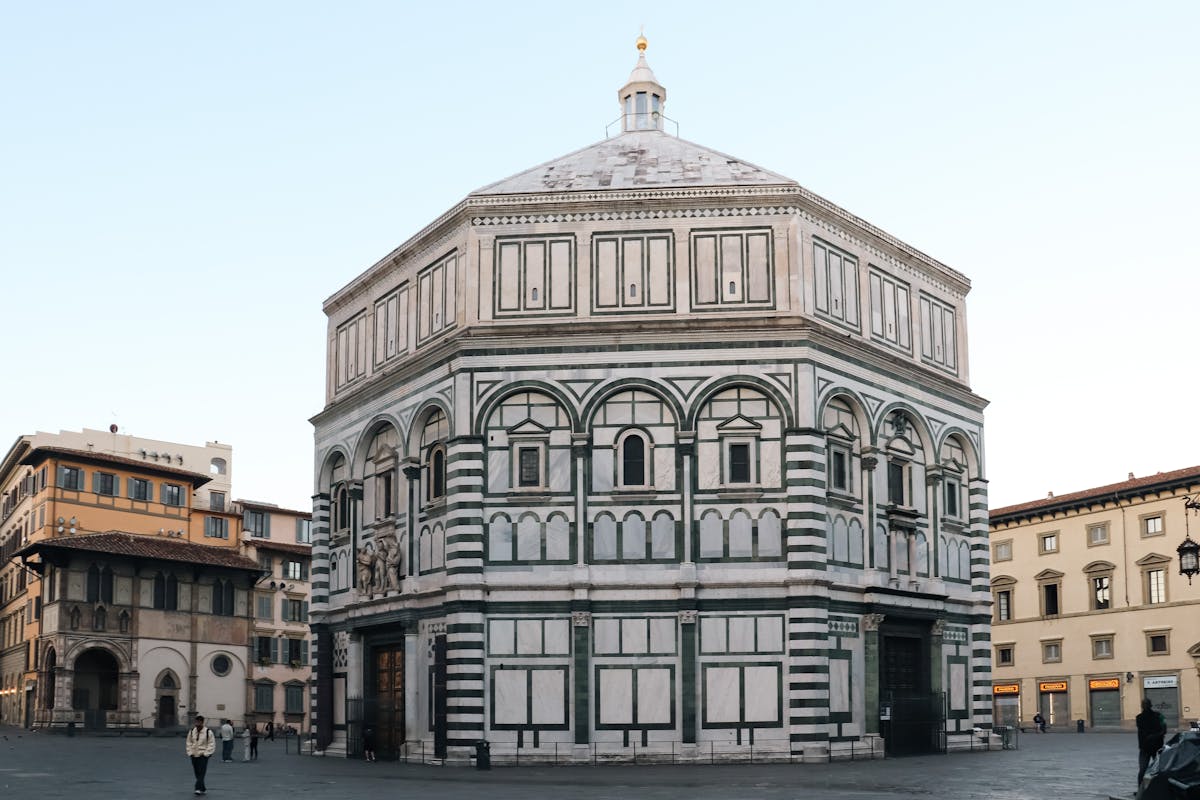
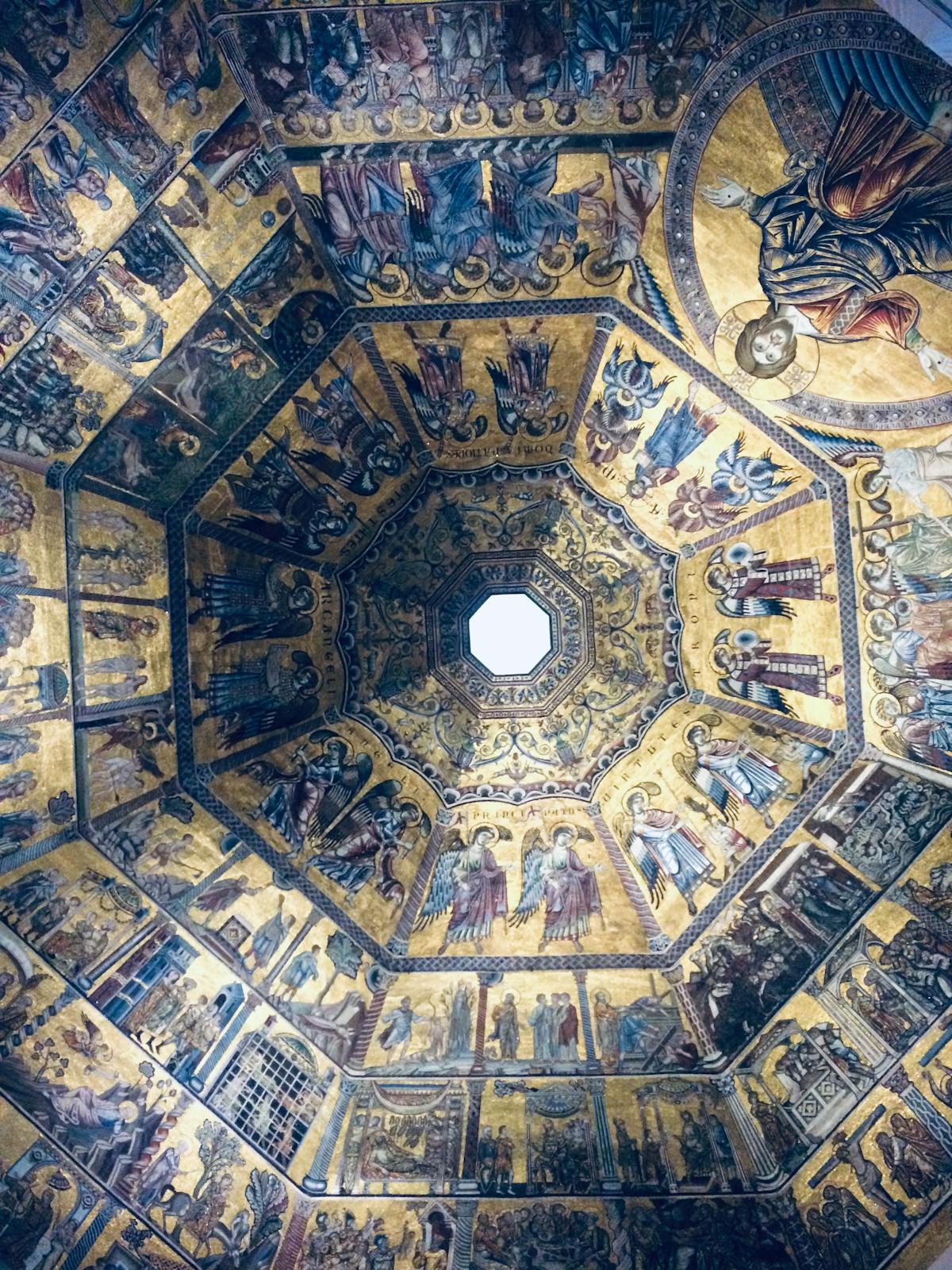
The oldest building in the piazza. Dante was baptized here. The exterior features the famous Gates of Paradise — Ghiberti’s gilded bronze doors that Michelangelo supposedly named. Inside, look up: the ceiling is covered in golden Byzantine mosaics showing everything from the creation of Adam to a terrifying eight-meter-tall Christ figure presiding over the Last Judgment. The mosaics alone make the Baptistery one of the most visually striking interiors in Florence.
The Crypt of Santa Reparata
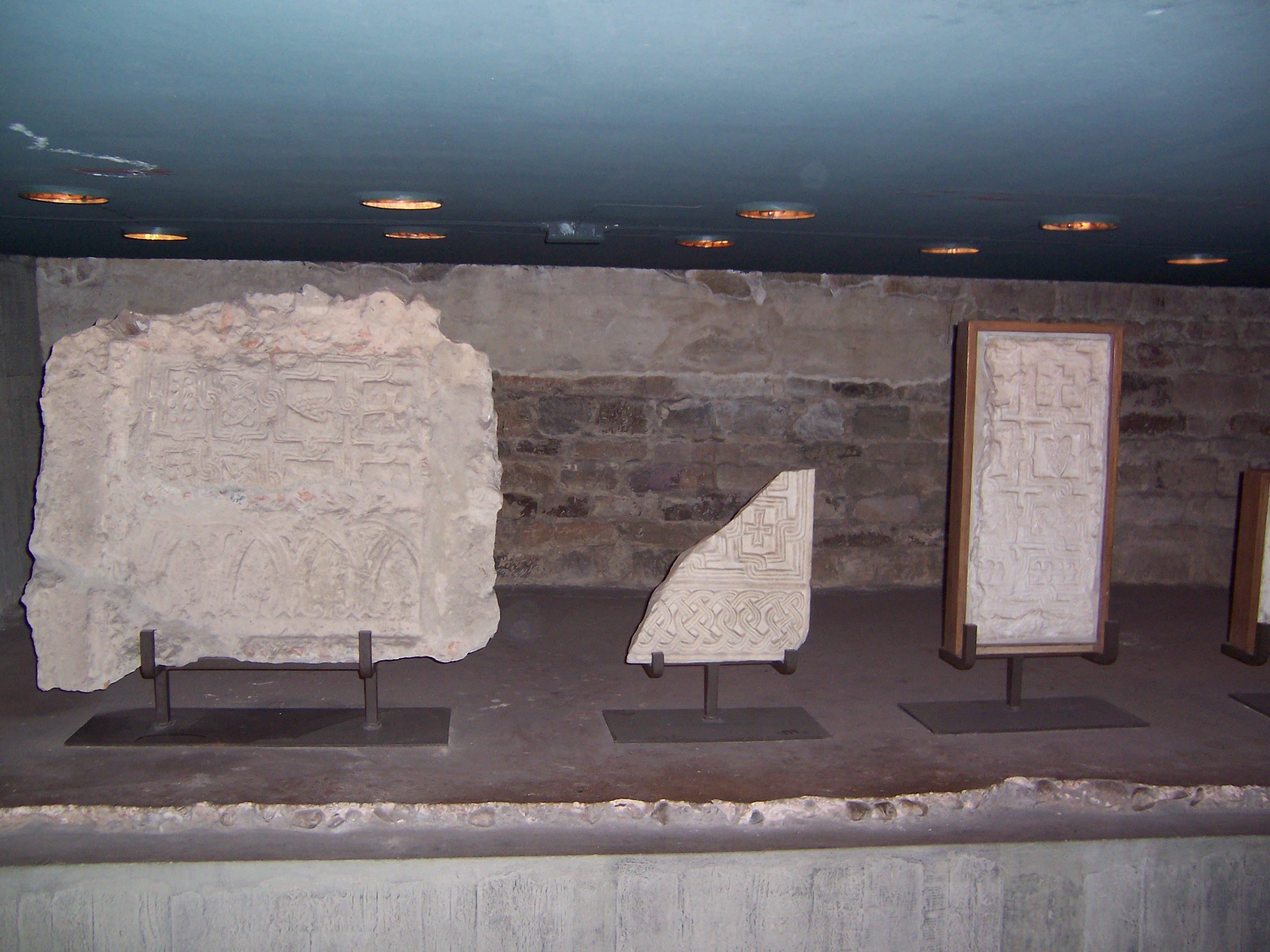
Accessed via stairs inside the cathedral, the crypt contains the excavated remains of Santa Reparata, the earlier church that occupied this site before the current cathedral was built over it. You can see Roman-era floor mosaics, medieval column bases, and — most notably — the tomb of Brunelleschi himself, discovered only in 1972. The crypt is small and usually empty, making it a peaceful contrast to the busy piazza above.
Opera del Duomo Museum
This is the most underrated part of the complex. A full-scale recreation of the cathedral’s original medieval facade greets you in the main hall. You’ll find Ghiberti’s original Gates of Paradise panels (the ones on the Baptistery are copies), Donatello’s gaunt Mary Magdalene, and Michelangelo’s Bandini Pieta — a late work he intended for his own tomb before taking a hammer to it in frustration. Allow at least an hour. The museum closes at 7 PM in summer, giving you time to visit after the dome and bell tower.
Tips Before You Climb the Dome
The 463 steps are real. There’s no elevator, no wheelchair access, and no way to stop once you’re in the narrow section between the shells. The staircase gets progressively narrower and steeper near the top. If you have claustrophobia, knee problems, or serious fear of heights, this climb may not be for you. The bell tower (414 steps, wider stairs, open terraces) is a better alternative.
Arrive at your time slot early. Your timed entry for the dome has a 15-minute window. If you miss it, you’re out. There’s a security check that can add 5-10 minutes to your wait. I recommend arriving at the Porta della Mandorla entrance (the north side of the cathedral) at least 15 minutes before your slot.
Dress code is enforced. This is a working cathedral. Shoulders and knees must be covered. No exceptions, even for the dome climb. They will turn you away at the entrance. Carry a scarf or light jacket if you’re visiting in summer.
No large bags. Backpacks larger than a small daypack are not allowed. There’s a free luggage deposit at the Opera del Duomo Museum (Piazza del Duomo 9), but it fills up. Travel light.
Photography is allowed inside the dome — the frescoes are incredible up close and you’ll want your phone ready. The top terrace has no guardrail issues for photos; the city panorama is wide open.
Water and the heat. Bring water. The staircase between the shells has no ventilation and gets surprisingly warm, even in spring. In July and August, it borders on unbearable during midday slots. Another reason to book the earliest morning time.
Combine with other Florence sights. After climbing the dome in the morning, you’re perfectly positioned to walk to the Accademia Gallery (10 minutes north) or the Uffizi Gallery (10 minutes south along Via dei Calzaiuoli). Both require advance tickets, so plan ahead.
What You’ll See Inside the Dome
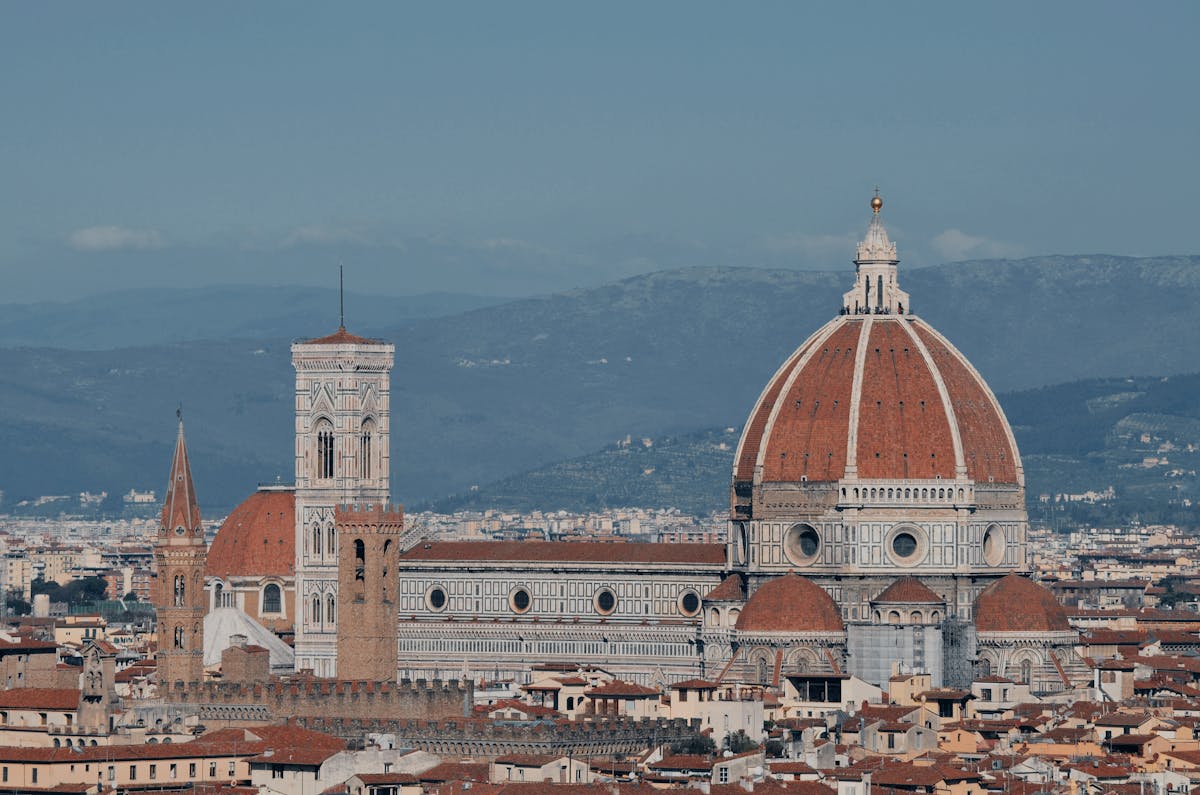
The climb has three distinct phases. First, you ascend through the cathedral’s interior walls — stone stairs that feel like climbing inside a medieval fortress. Then you emerge onto an interior walkway that rings the inside of the dome at the base of the fresco. This is where Vasari’s and Zuccari’s Last Judgment surrounds you on all sides. Demons drag sinners into hell on one side. Angels escort the blessed on the other. The scale is overwhelming — figures are painted at building-height proportions, and you’re standing close enough to see individual brushstrokes.
From the interior walkway, you continue up between the double shells. The passage narrows dramatically. You can feel both walls of the dome curving around you. Brunelleschi’s herringbone brickwork is exposed in some sections — the same technique that made the dome self-supporting during construction. Engineers from MIT and other institutions have studied this pattern for decades and there’s still debate about exactly how it works at the structural level.
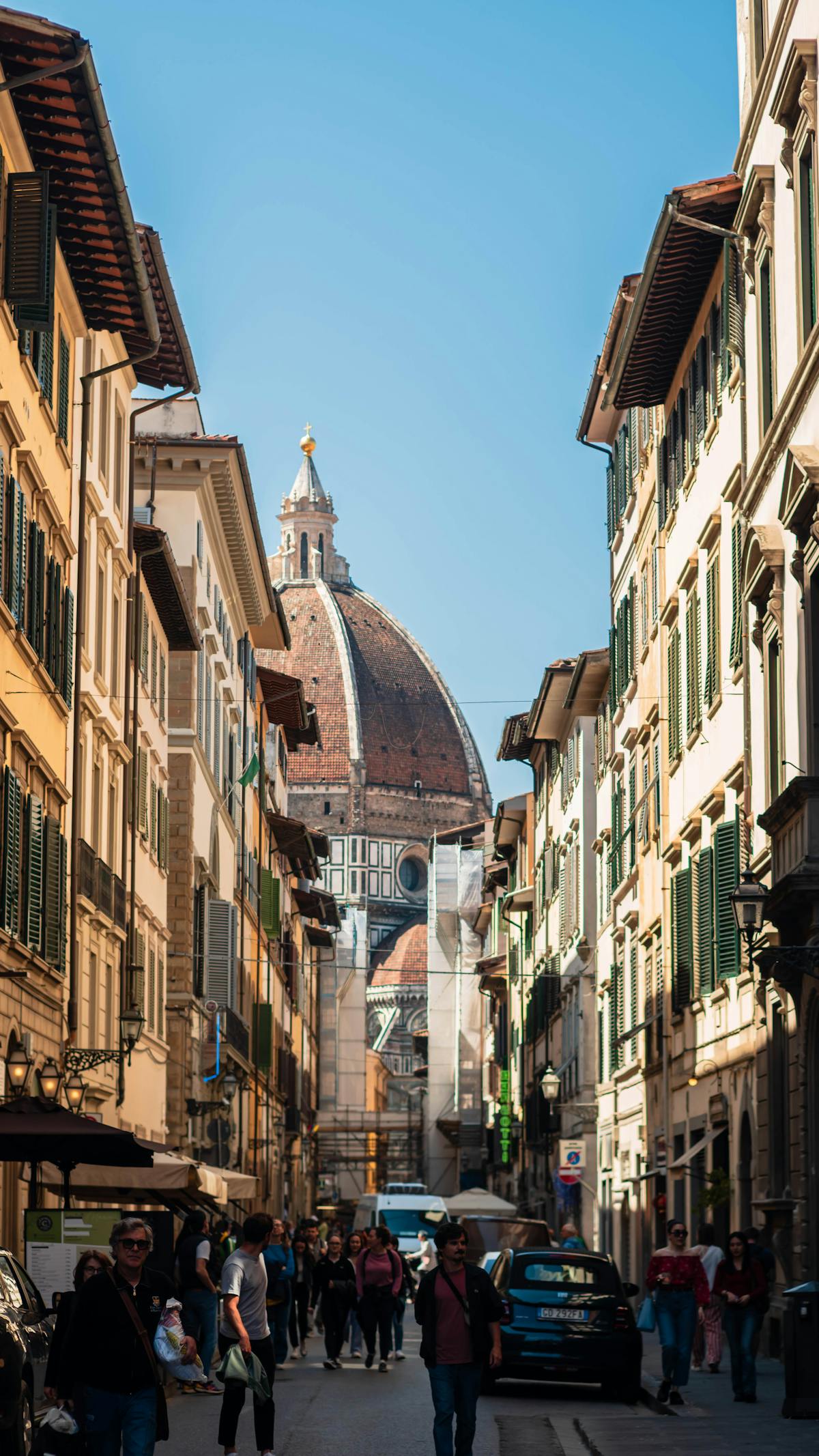
The final stretch is the steepest — nearly vertical steps with a rope handrail leading to the lantern terrace. And then you’re on top. The terrace is surprisingly small and enclosed by marble walls with openings, but the 360-degree view is extraordinary. The Arno River winds through the city below. San Miniato al Monte perches on the hill to the south. Fiesole sits on the ridge to the northeast. On exceptionally clear days, the distant Apennine peaks emerge to the north. You’ll want at least 15 minutes up here.
A Brief History of Why This Dome Shouldn’t Exist
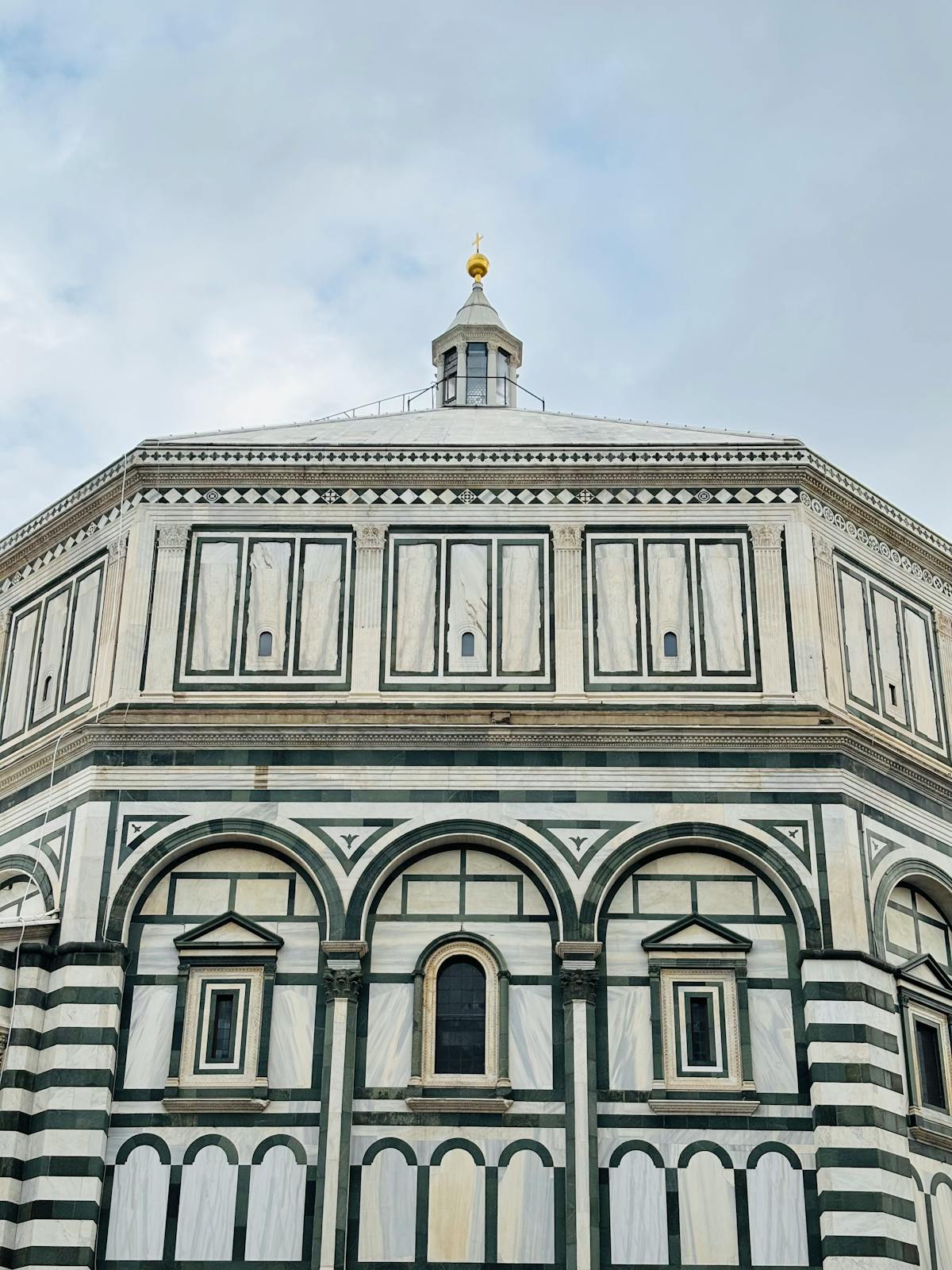
When Florence’s leaders decided to build a cathedral dome in the early 1400s, they had a problem: no one knew how to do it. The octagonal hole at the top of the cathedral was 42 meters across — wider than the Pantheon in Rome. Traditional Gothic construction required wooden scaffolding built from the ground up, but there wasn’t enough timber in all of Tuscany to build scaffolding that tall.
Filippo Brunelleschi, a goldsmith and clockmaker with no formal architectural training, won the 1418 competition to design the dome. His solution was radical: build the dome without any scaffolding at all. He designed a double shell — an inner dome and an outer dome with a hollow corridor between them — that was self-supporting during construction. Workers stood on the dome itself as they built it, adding bricks in a herringbone pattern that locked each new course in place before the mortar dried.
He invented new machines — an ox-driven hoist that could reverse direction without unhitching the oxen, a crane that moved heavy marble blocks laterally across the construction site. He kept some techniques secret, refusing to share complete plans with the building committee because he feared being replaced. The dome took 16 years to build (1420-1436) and remains the largest masonry dome ever constructed. Its construction methods weren’t fully replicated for centuries.
If you’re traveling beyond Florence, you might also be interested in getting Colosseum tickets in Rome or visiting the Vatican Museums. And if Venice is on your itinerary, check out my guides to Doge’s Palace tickets and booking a gondola ride.
Getting to the Florence Cathedral
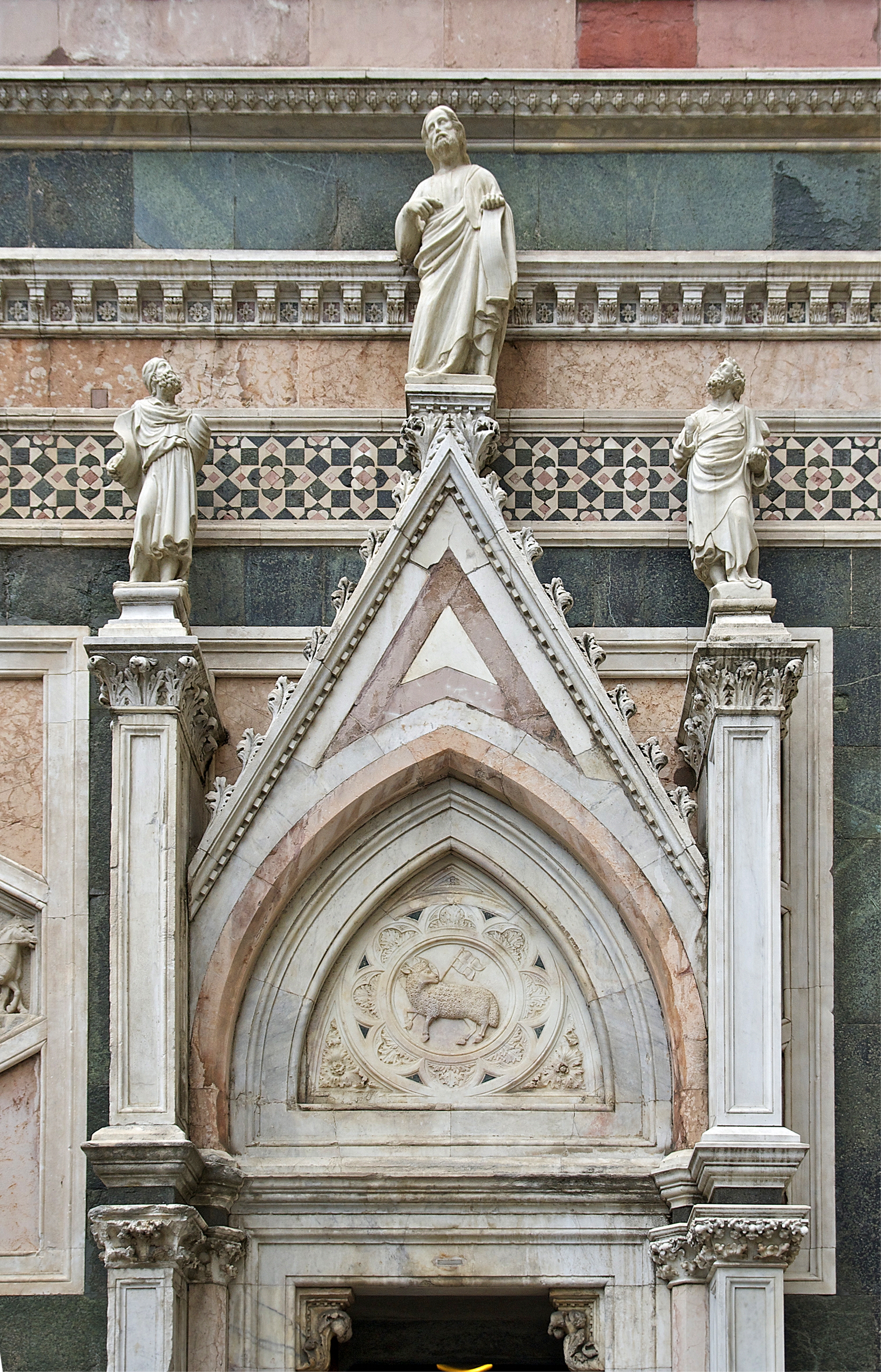
The cathedral sits in the heart of Florence’s historic center at Piazza del Duomo. If you’re staying anywhere in the centro storico, it’s almost certainly within walking distance.
From Santa Maria Novella train station: A 10-minute walk east along Via dei Panzani and Via dei Cerretani. Follow the crowds — or the dome peeking above the rooftops.
By bus: Lines C1 and C2 stop near the piazza. The C1 circles the historic center and is useful if you’re coming from the Oltrarno neighborhood south of the Arno.
By taxi: Taxis can drop you at nearby Piazza San Giovanni. The ZTL (restricted traffic zone) covers the entire historic center, so don’t try to drive there in a rental car.
Dome entrance: The dome climb entrance is at the Porta della Mandorla, on the north side of the cathedral (not the main facade). Look for the smaller door with a queue.
If you’re arriving from other Italian cities, the Pompeii guide and St. Peter’s Basilica tickets guide might be useful for planning the rest of your trip.
Frequently Asked Questions
Can I enter the Florence Cathedral for free?
Yes. The cathedral itself (nave and interior) is free to enter. You only need a pass for the dome climb, bell tower, Baptistery, crypt, and museum.
How far in advance should I book dome tickets?
For peak season (June through September), book as soon as slots open — about 30 days ahead. For shoulder season, a week or two in advance is usually fine. Winter visits can often be booked a few days out.
Is the dome climb safe for kids?
Children are allowed, but use your judgment. The narrow staircase and lack of guardrails in some sections can be intimidating. I’d say age 8+ is reasonable if your child is comfortable with heights and doesn’t mind tight spaces. There’s no stroller access.
What happens if I miss my dome time slot?
You lose it. The timed entry is strict. If you’re more than 15 minutes late, you won’t be admitted. There are no refunds for missed slots. The rest of your Brunelleschi Pass (bell tower, Baptistery, etc.) remains valid.
Can I visit the dome without climbing it?
You can see the dome fresco from the cathedral floor for free — just look up from the crossing. But the only way to get close to the frescoes and reach the top is by climbing. There’s no elevator and no alternative access.
Are there restrooms on the dome climb?
No. Use the facilities before you start. The museum and cathedral have restrooms available.
Disclosure: This article contains affiliate links to tour platforms. If you book through these links, I may earn a small commission at no extra cost to you. This helps keep the site running and allows me to keep writing these in-depth guides. I only recommend tours I’d genuinely book myself.