
Four thousand years ago, a civilization we barely understand built a palace with indoor plumbing, multi-story buildings, and frescoes so vivid they look like they were painted last Tuesday. Knossos isn’t just old. It’s the oldest advanced thing in Europe, full stop.
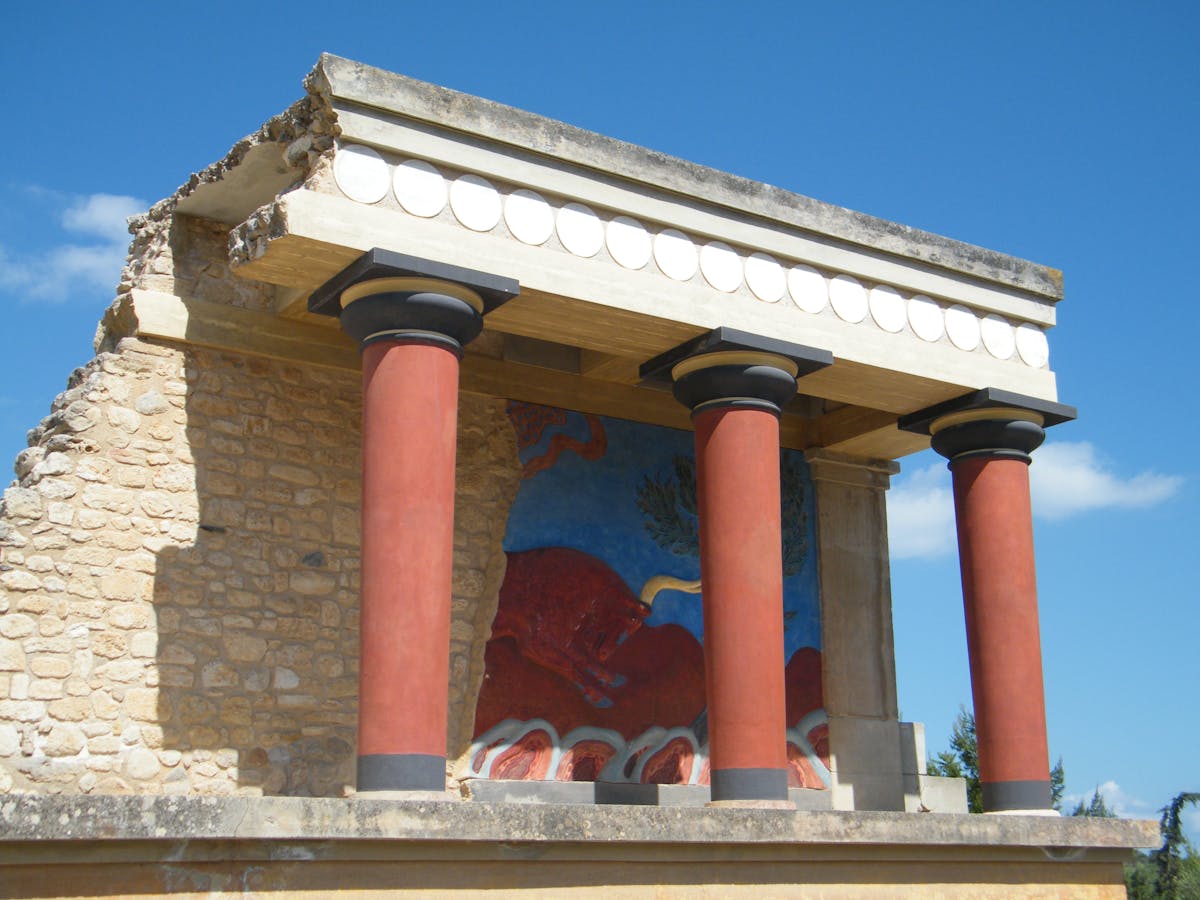
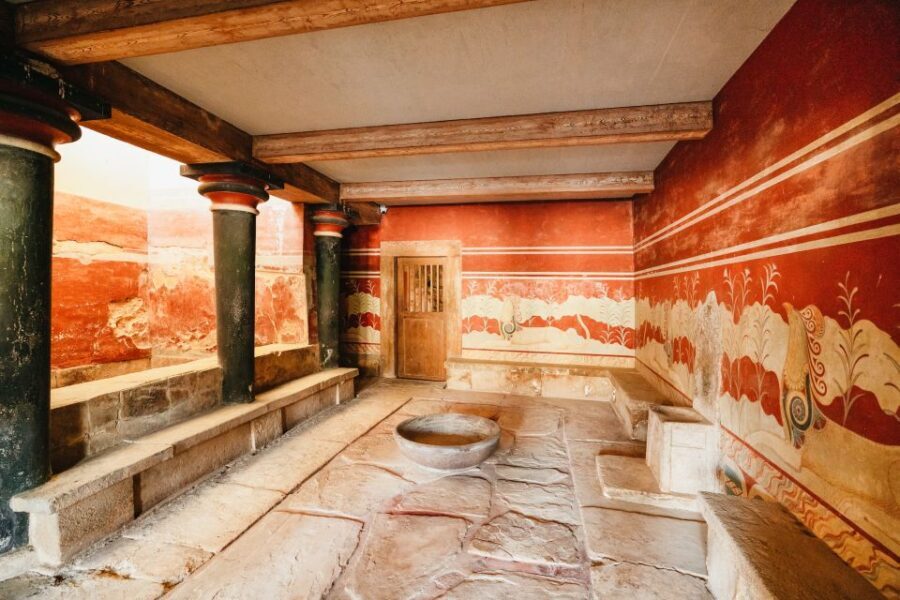
I spent the better part of a morning walking around this place trying to figure out if Arthur Evans was a genius or a madman for rebuilding parts of it with concrete in the early 1900s. Archaeologists still argue about it. But here is what nobody argues about: standing in the Throne Room, looking at a 3,500-year-old stone seat that predates the Parthenon by a thousand years, does something to your brain.
Getting tickets is straightforward, but there are a few things that will save you from wasting time in the Cretan heat. Here is everything you need.
Best overall: Skip-the-Line Guided Walking Tour — $104. Small groups with an excellent guide who actually brings the Minoans to life. Worth every cent.
Best budget: Entry Ticket with Audio Guide — $30. Self-paced entry with a decent audio companion. Hard to beat for the price.
Best full day: Knossos and Heraklion Guided Tour — $35. Combines the palace with Heraklion’s old town. Great if you are based outside the city.
- How the Official Ticket System Works
- Official Tickets vs Guided Tours
- The Best Knossos Palace Tours to Book
- 1. Knossos Palace Skip-the-Line Guided Walking Tour — 4
- 2. Knossos Palace Entry Ticket with Audio Guide —
- 3. Knossos Palace and Heraklion Guided Tour —
- 4. Knossos Palace E-Ticket and Audio Guide —
- When to Visit Knossos
- How to Get to Knossos
- Tips That Will Actually Save You Time
- What You Will Actually See Inside
- Worth Doing While You Are in Crete
- More Greece Guides
How the Official Ticket System Works
The official ticket costs EUR 15 for a standard adult entry. You can buy it on-site at the ticket booth or online through the Greek Ministry of Culture’s portal at hhticket.gr. The online system works, but it is clunky — expect a 2000s-era interface and occasional server hiccups.
A combined ticket covering both Knossos and the Heraklion Archaeological Museum costs EUR 20, and I would recommend it. The museum houses the original frescoes, the Snake Goddess figurines, and the Phaistos Disc — artefacts that actually make the palace ruins click into place. Without the museum, you are looking at reconstructed copies on-site and missing half the story.
Free entry days: Every first Sunday from November through March, plus a handful of national holidays (March 6, April 18, May 18, last weekend of September). These are free but packed. If you are visiting off-season and a free Sunday happens to line up, go for it — the crowds are manageable in winter.
Reduced entry (EUR 8): EU citizens aged 6-25 with valid ID. Under-6 is free.
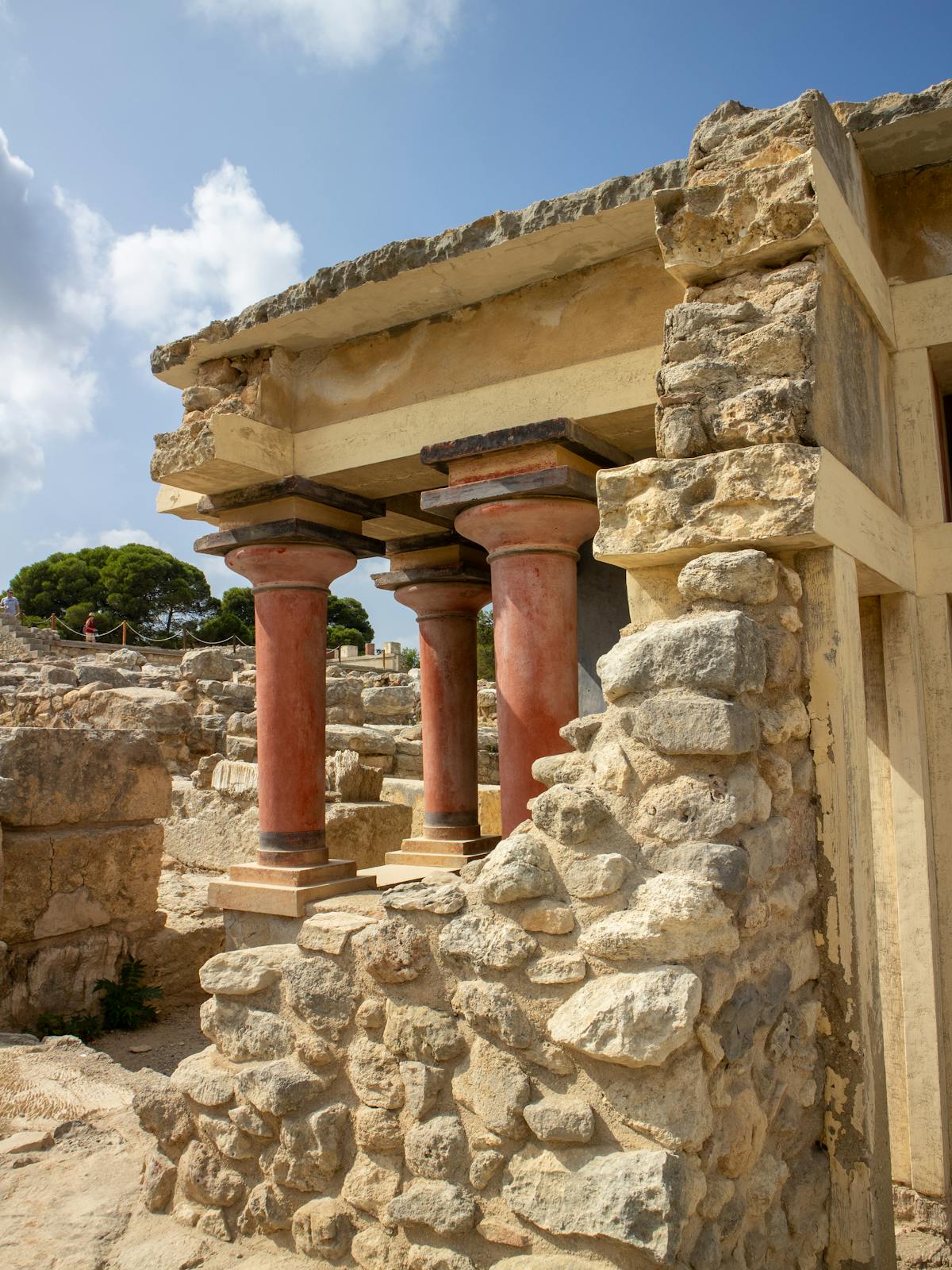
Opening hours: The site opens at 8am daily. Closing time shifts seasonally — 8pm in summer (last entry 7:30pm), 6pm in winter (last entry 5:30pm). Aim for an 8am arrival in peak season. By 10am, dozens of tour buses have unloaded and the narrow pathways around the Throne Room become uncomfortable.
Official Tickets vs Guided Tours
This is actually worth thinking about. Knossos is not like the Acropolis, where you can wander around and more or less understand what you are seeing. Without context, Knossos looks like a confusing jumble of walls, columns, and storage rooms. The signage on-site is minimal — a few plaques here and there, but nothing that ties the story together.
A self-guided visit with the audio guide is perfectly fine if you are the type who reads up beforehand. Download a good podcast episode about Minoan Crete on the drive over, and you will have enough context to appreciate what you are looking at. The audio guide options (either through the ticket provider or Klook’s version) are decent — not amazing, but they cover the highlights.
A guided walking tour is genuinely better here than at most archaeological sites. Good guides do not just describe what you are seeing — they explain the drainage system that was 3,000 years ahead of its time, the political structure that might have inspired the labyrinth myth, and why Evans decided to rebuild parts in concrete (controversial, but fascinating). If you have got the budget, go guided.
The worst option? Buying just the bare ticket with no guide, no audio, and no preparation. You will walk around for 40 minutes, take some photos of red columns, and leave wondering what the fuss was about.
The Best Knossos Palace Tours to Book
1. Knossos Palace Skip-the-Line Guided Walking Tour — $104
This is the one I would pick, and it is the one most people end up picking for a reason. You skip the ticket line entirely (which matters in July and August), and you get a licensed archaeologist-guide who walks you through the palace for about 90 minutes. The groups are small — typically under 15 people — and the guides are consistently excellent.
The price looks steep compared to the bare EUR 15 ticket, but consider what you are actually paying for: skip-the-line access, a professional guide, and an experience that turns scattered ruins into a coherent story. The best guides here blend ancient history with mythology and make the Minoans feel like real people, not just names in a textbook. That is the difference between walking around confused and actually understanding why Knossos matters.
2. Knossos Palace Entry Ticket with Audio Guide — $30
If you prefer wandering at your own speed, this is the smart budget pick. For $30, you get skip-the-line entry plus an audio guide that covers the major highlights. It is not going to match having a real person point things out and answer questions, but it gives you enough context to make sense of the site.
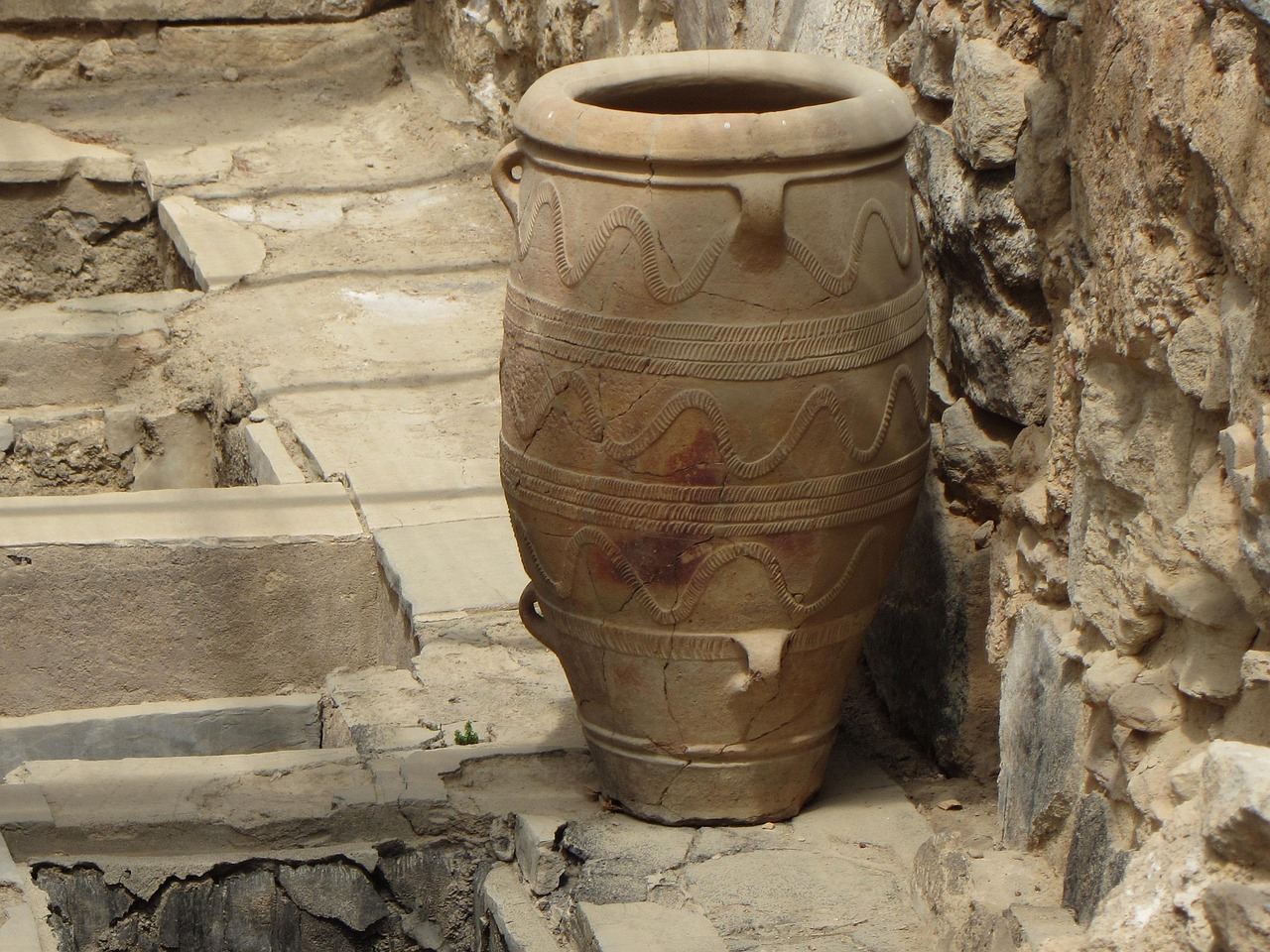
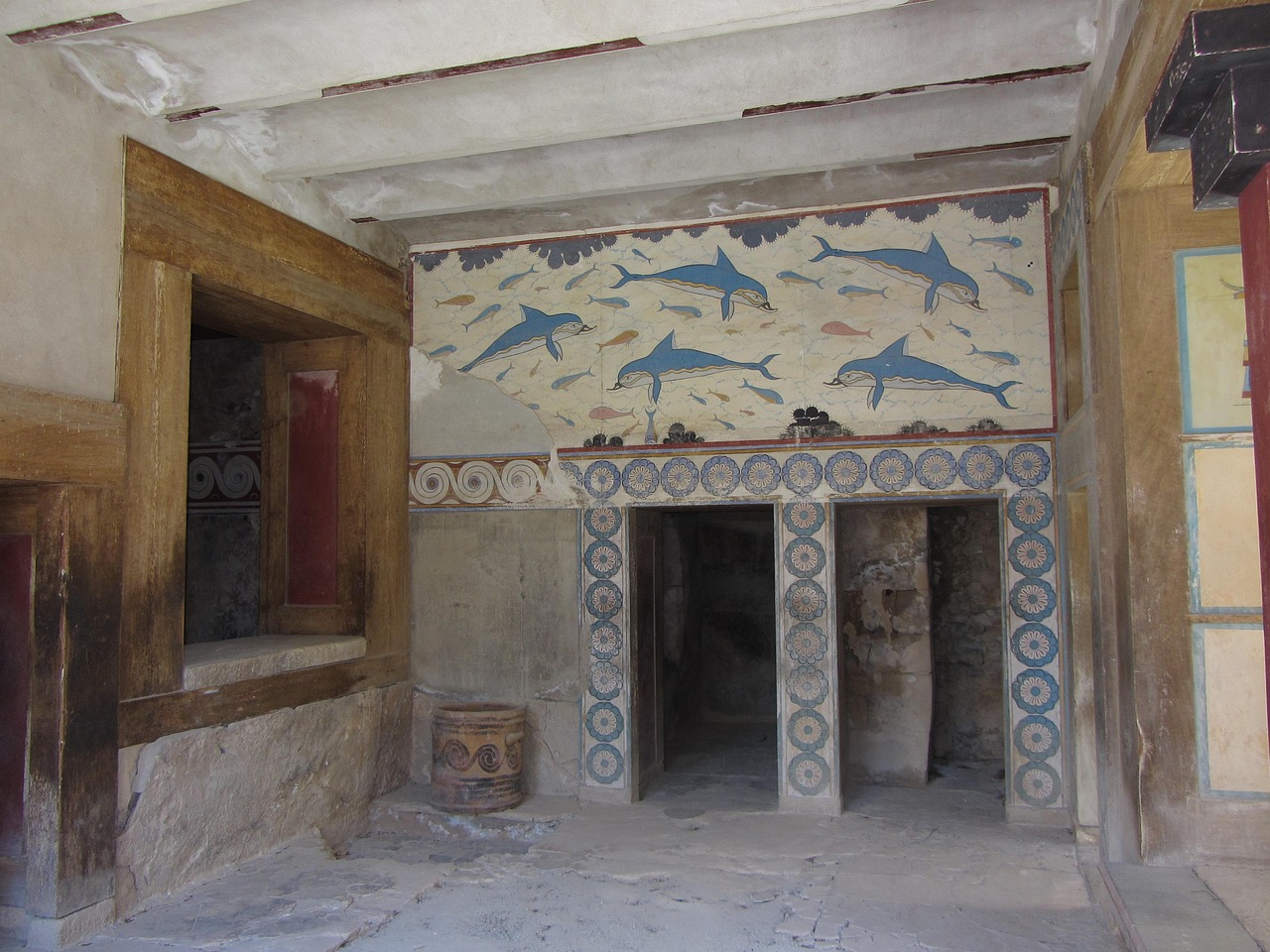
The audio guide walks you through the Throne Room, the Grand Staircase, the storage magazines with their massive pithoi jars, and the Queen’s Megaron with the famous dolphin fresco. Budget about 90 minutes to two hours. The biggest advantage here is flexibility — you can spend 20 minutes staring at the drainage system if that is your thing, or blow through the residential quarters quickly.
3. Knossos Palace and Heraklion Guided Tour — $35
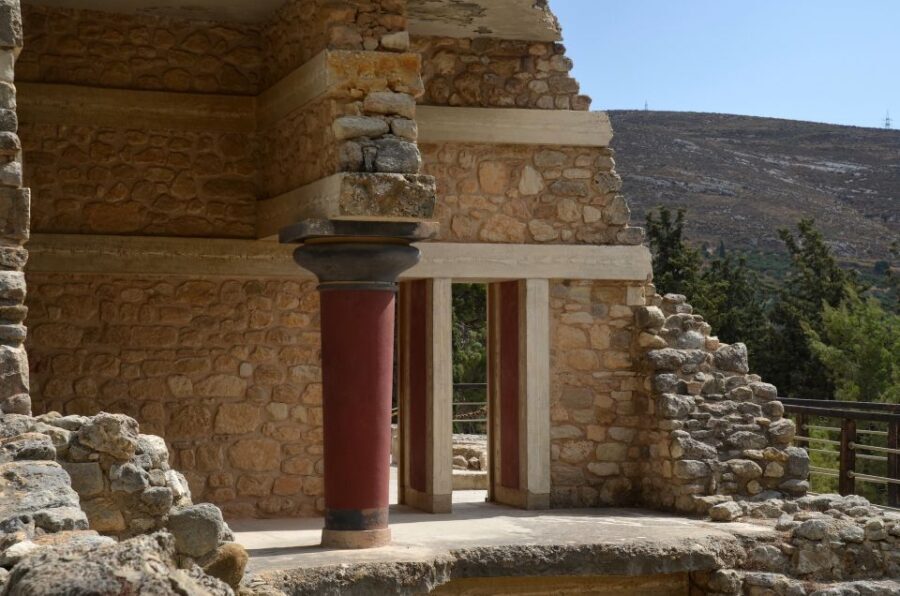
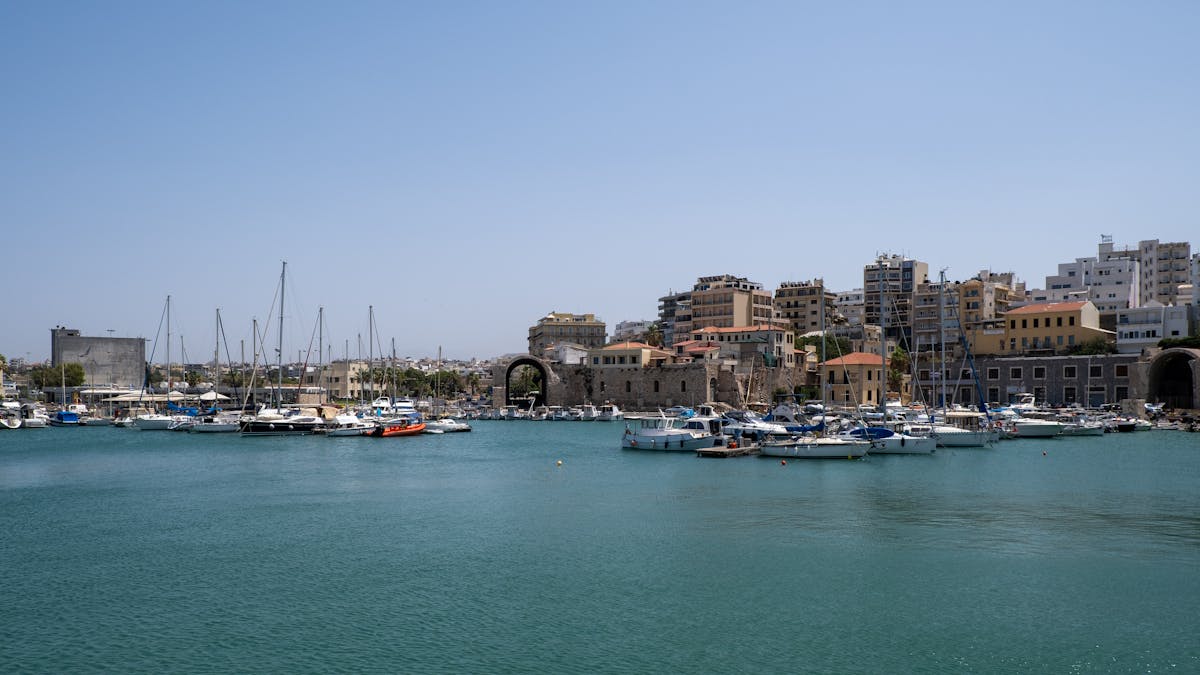
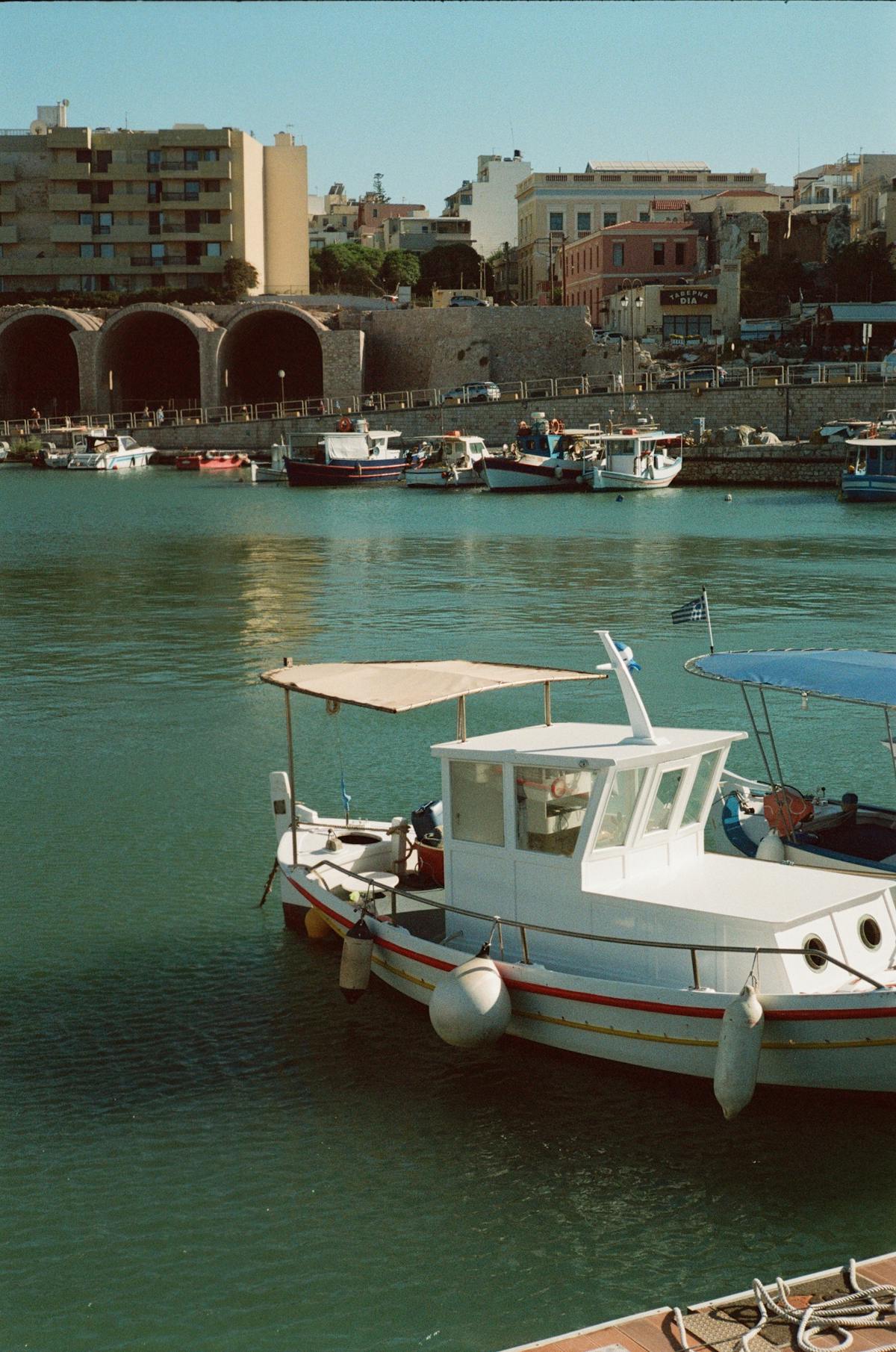
This is the best value option if you want a guided experience but do not want to spend $100+. At $35 per person, you get a full-day tour that covers Knossos Palace in the morning, then moves into Heraklion’s old town — the Venetian harbour, the archaeological museum, the open-air market on 1866 Street, and the Lion Fountain. It runs 6-9 hours depending on pickup location.
The trade-off is group size. These tend to be larger coach tours rather than intimate walking groups. But the guides are knowledgeable — Vangelis, one of the most requested, gets mentioned by name repeatedly for bringing Knossos to life with a blend of history and Greek mythology. If you are based in Agios Nikolaos, Malia, or Hersonissos and need transport included, this is the practical choice. You can see the full review here for details on pickup points.
4. Knossos Palace E-Ticket and Audio Guide — $34
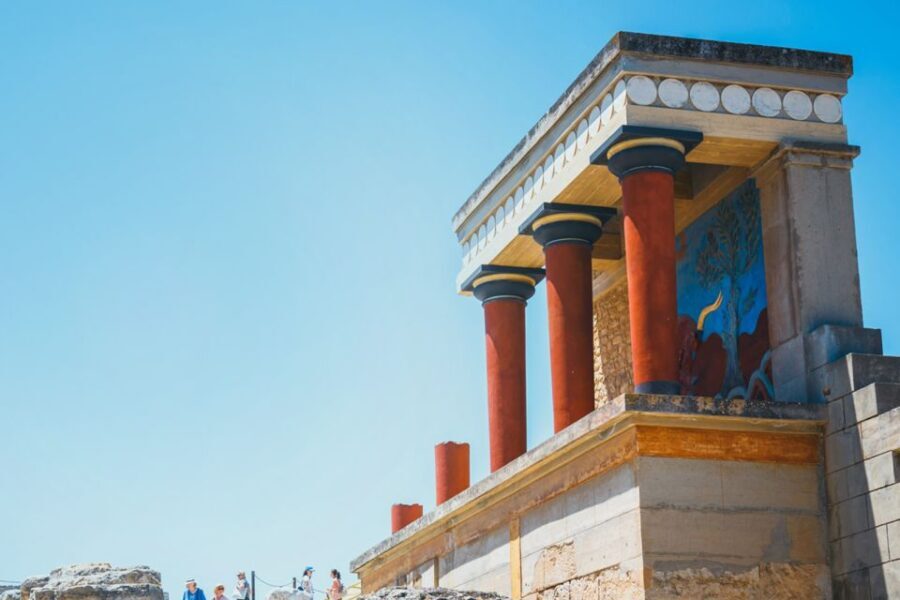
Similar to option #2 but from a different provider. The $34 price includes your entry ticket and a self-guided audio tour. The main difference is the audio content — this version tends to go a bit deeper into the mythology angle, spending more time on the Minotaur legend and the labyrinth theory.
It is a solid backup if the first audio guide option is sold out on your dates. The e-ticket system works smoothly — you get a QR code on your phone, scan it at the gate, and you are in. No printing needed. Give yourself at least 90 minutes, though two hours is better if you want to properly explore the western magazines and the theatrical area.
When to Visit Knossos
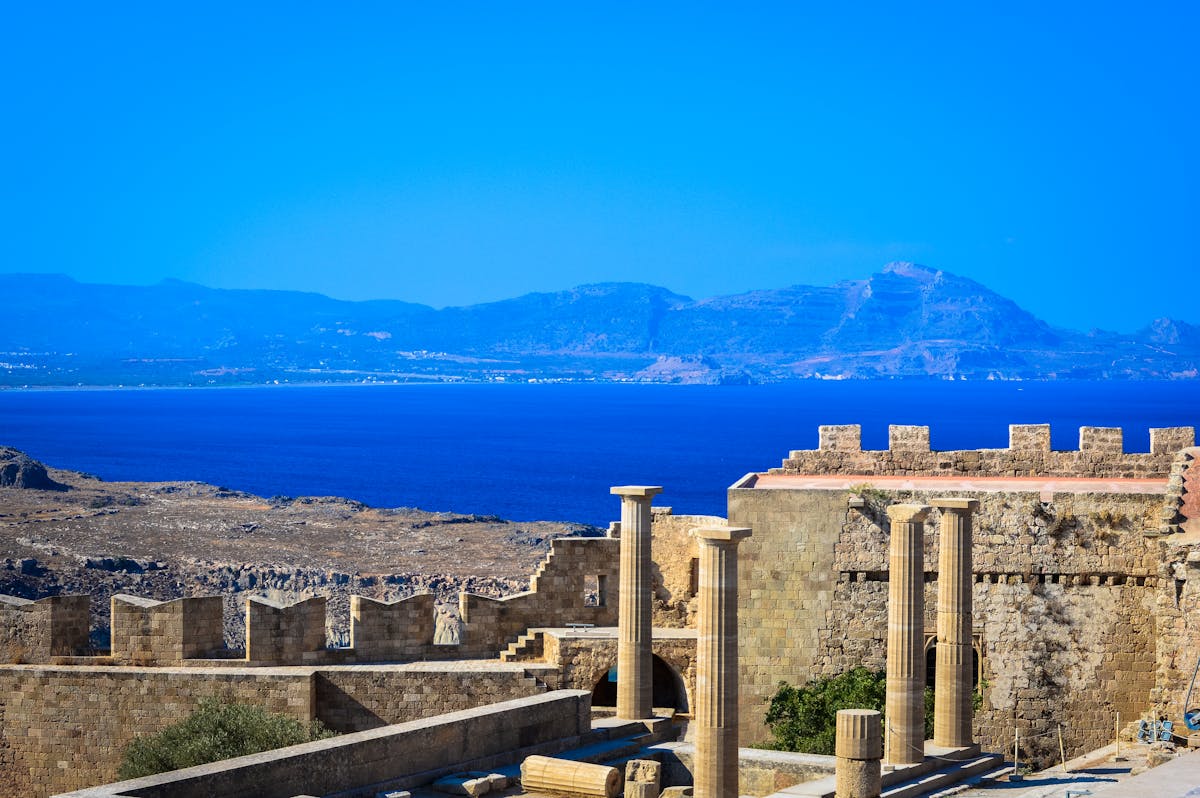
Best time of day: 8am sharp. The site opens, you walk in with maybe 30 other people, and for the first hour you can actually photograph the Throne Room without someone’s selfie stick in the frame. By 10am, the big tour groups arrive and it gets hectic. Late afternoon (after 4pm) is the second-best window — the coaches have left and the light is gorgeous for photos.
Best months: April, May, late September, and October. The weather is warm but not punishing, wildflowers are out in spring, and the crowds are a fraction of what July and August bring. Mid-summer is genuinely uncomfortable — we are talking 35-38 degrees with almost no shade on site.
Worst time: Midday in July or August. There is almost zero shade at Knossos, the stone and concrete radiate heat, and you will be sharing the narrow walkways with hundreds of people. If this is your only option, wear a hat, bring 2 litres of water minimum, and accept that you will be sweaty.
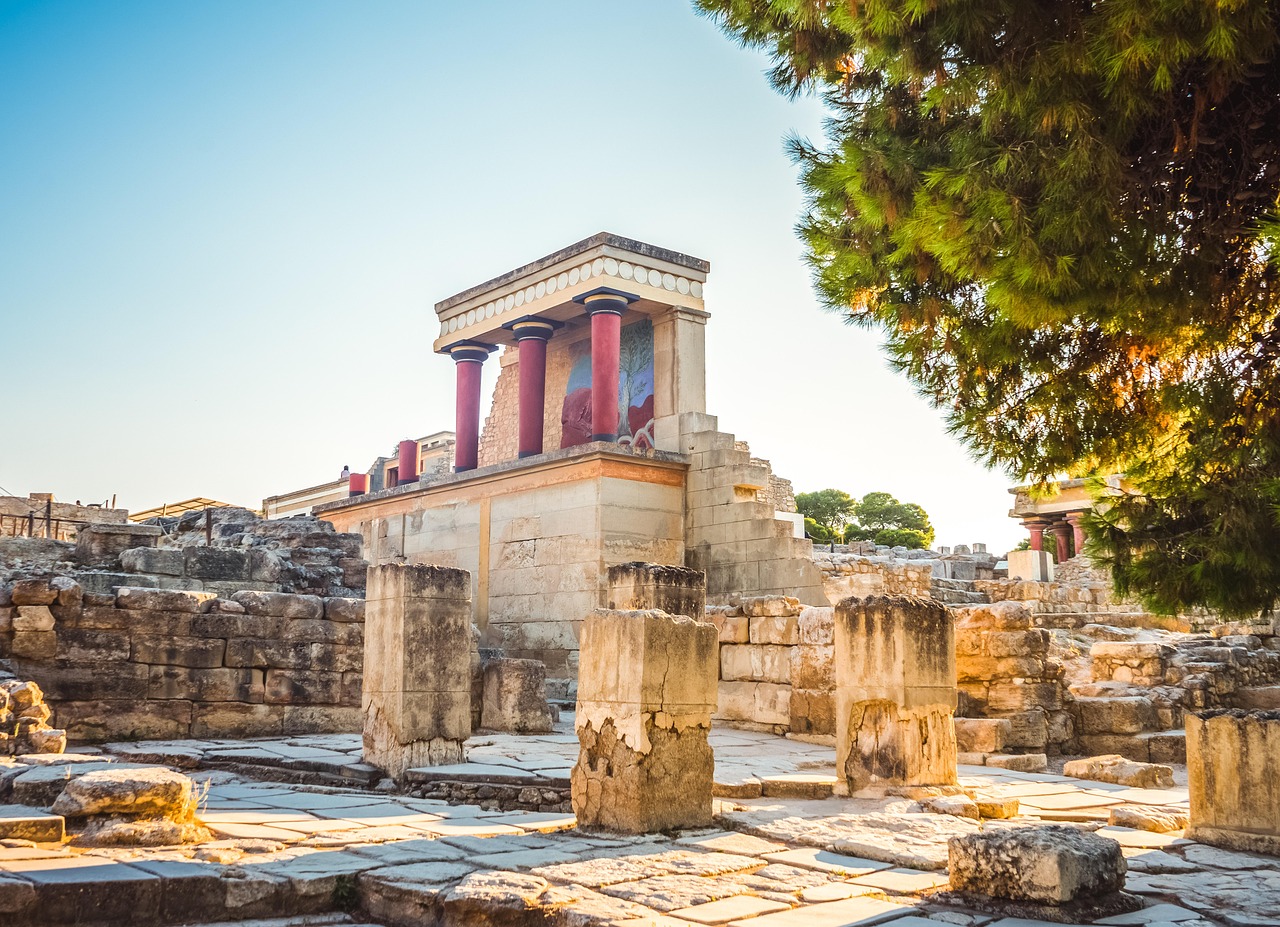
How to Get to Knossos
Knossos sits about 5km south of Heraklion’s city centre. You have got several options:
Public bus (cheapest): Bus lines 2 and 20 leave from Heraklion’s Bus Station A (near the harbour) and drop you right at the site entrance. The ride takes about 20 minutes and costs around EUR 1.70 each way. Buses run every 10-20 minutes in summer, less frequently off-season. This is what most independent travellers do.
Taxi: About EUR 10-15 from central Heraklion. Quick and easy, but you will need to arrange a return or grab a taxi from the site car park (they are usually waiting).
Rental car: There is free parking near the coach park, though it fills up by mid-morning in summer. If you are driving around Crete anyway (and you probably should be — the south coast is incredible), this is the most flexible option.
Organised tours: If you are staying in Rethymno, Chania, or the resort towns east of Heraklion, most tour options include pickup and drop-off. The Knossos and Heraklion guided tour covers transport from multiple pickup points across northern Crete.
Tips That Will Actually Save You Time
Buy tickets online. The on-site queue is not always terrible, but on a busy summer morning it can waste 30-45 minutes. Online tickets or skip-the-line tour tickets eliminate this entirely.
Wear proper shoes. The ground is uneven — ancient stone, gravel paths, and concrete walkways that get slippery when wet. Flip-flops are technically allowed but a bad idea. Trainers or sandals with ankle support are ideal.
Bring your own water. There is a small kiosk near the entrance selling overpriced drinks, but it is better to come prepared. Two bottles minimum in summer. There is almost no shade on the site itself.
Sunscreen and a hat are not optional. Especially between May and October. The site is fully exposed and you will be walking for 1-2 hours.
Do not skip the West Magazines. Most visitors rush to the Throne Room and miss the 22 connected storage rooms along the western side. The massive pithoi (storage jars) are some of the most photogenic things at the site, and they give you a sense of how this place actually functioned as an administrative and economic hub.
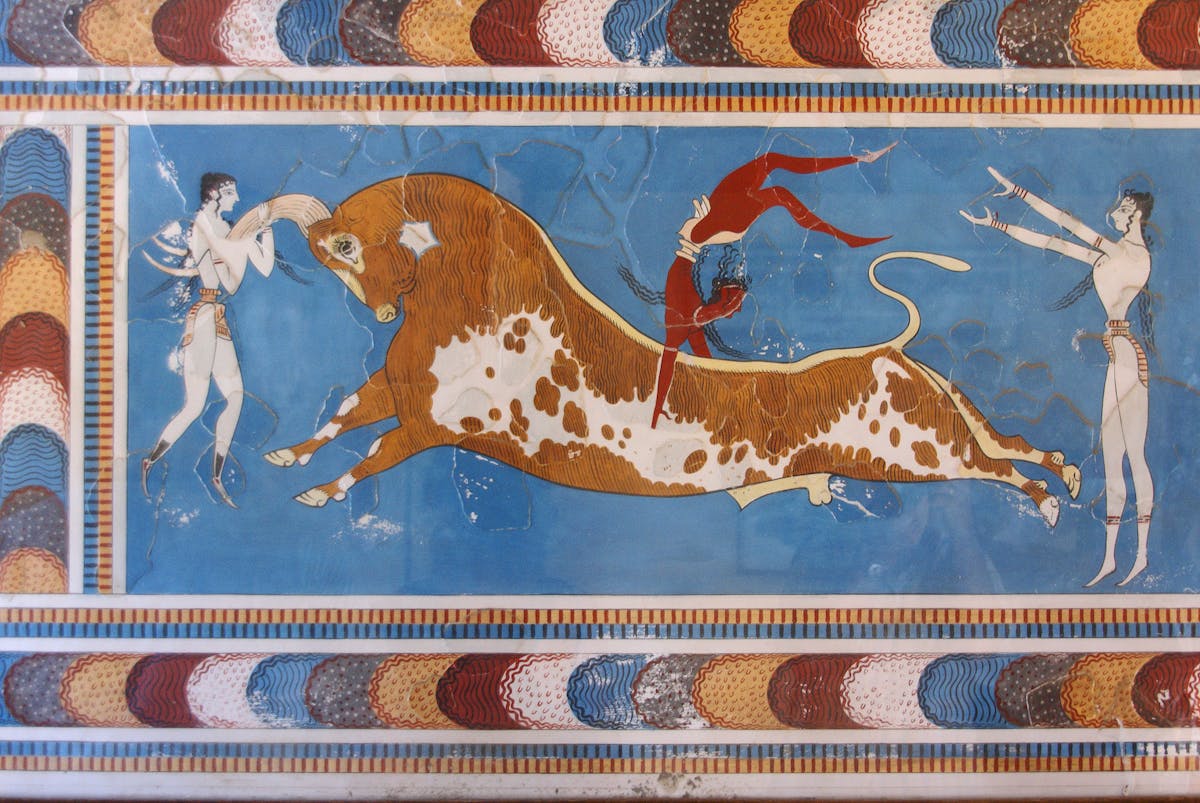
Combine it with the Heraklion Archaeological Museum. I cannot stress this enough. The museum holds the original Bull-Leaping Fresco, the Snake Goddess figurines, the Phaistos Disc, and hundreds of artefacts that were actually excavated from Knossos. The combined ticket (EUR 20) is excellent value. Visit the museum first for context, then Knossos — or do Knossos in the morning and the museum after lunch to escape the afternoon heat.
What You Will Actually See Inside
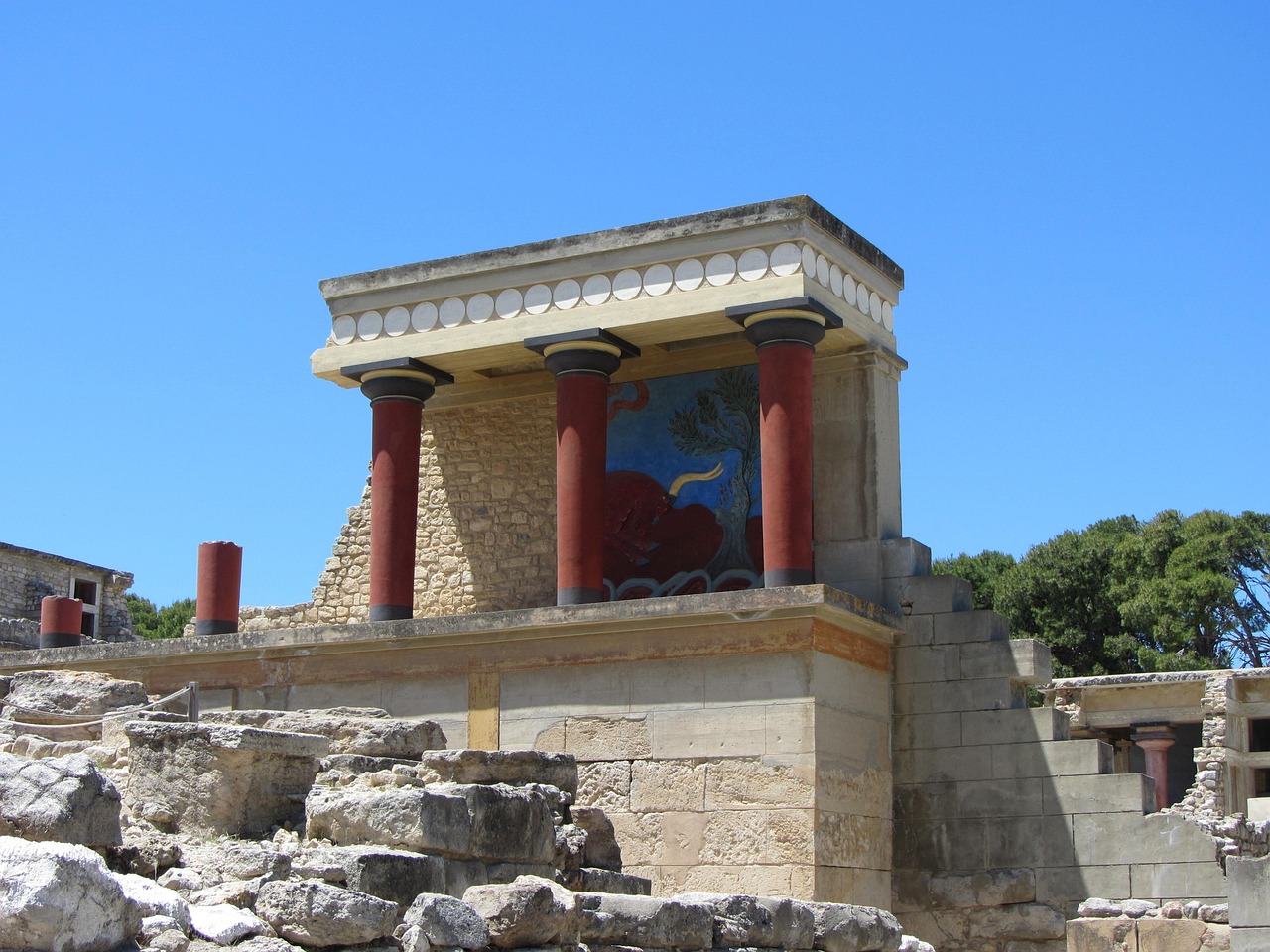
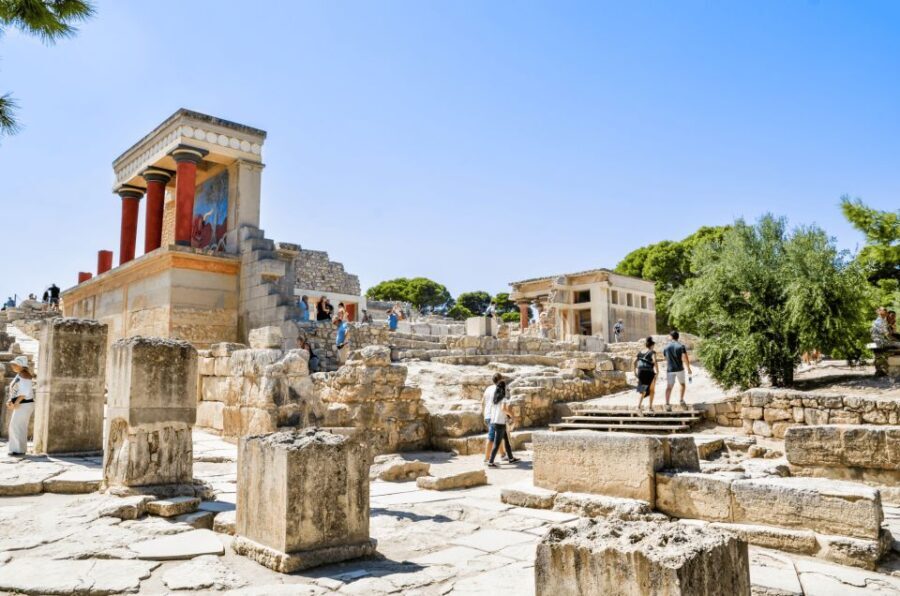
Knossos was the ceremonial and political heart of Europe’s first advanced civilization. The Minoans, who flourished from around 2700 BCE to 1450 BCE, built a palace complex covering roughly 20,000 square metres — with up to five stories, drainage systems that would not be surpassed for another three millennia, and art that still looks shockingly modern.
The Throne Room: The oldest throne room in Europe. The stone seat is still there, flanked by griffin frescoes (reconstructed). The room is small and roped off, so you will view it from the doorway, but it is the single most important spot on the site.
The Grand Staircase: A reconstructed four-flight staircase that gives you the clearest picture of Minoan multi-story architecture. The light wells — vertical shafts that brought natural light deep into the building — were genuinely ahead of their time.
The Queen’s Megaron: Famous for the dolphin fresco (you will see a reproduction on-site — the original is in the museum). The room also has evidence of a bathroom with what appears to be a flush toilet, which is frankly mind-bending for 1700 BCE.
The West Magazines: Twenty-two long storage rooms filled with giant clay jars. These stored the palace’s supplies — olive oil, wine, grain — and they give you a sense of the economic machinery behind the civilization. It is less glamorous than the frescoes but just as important.
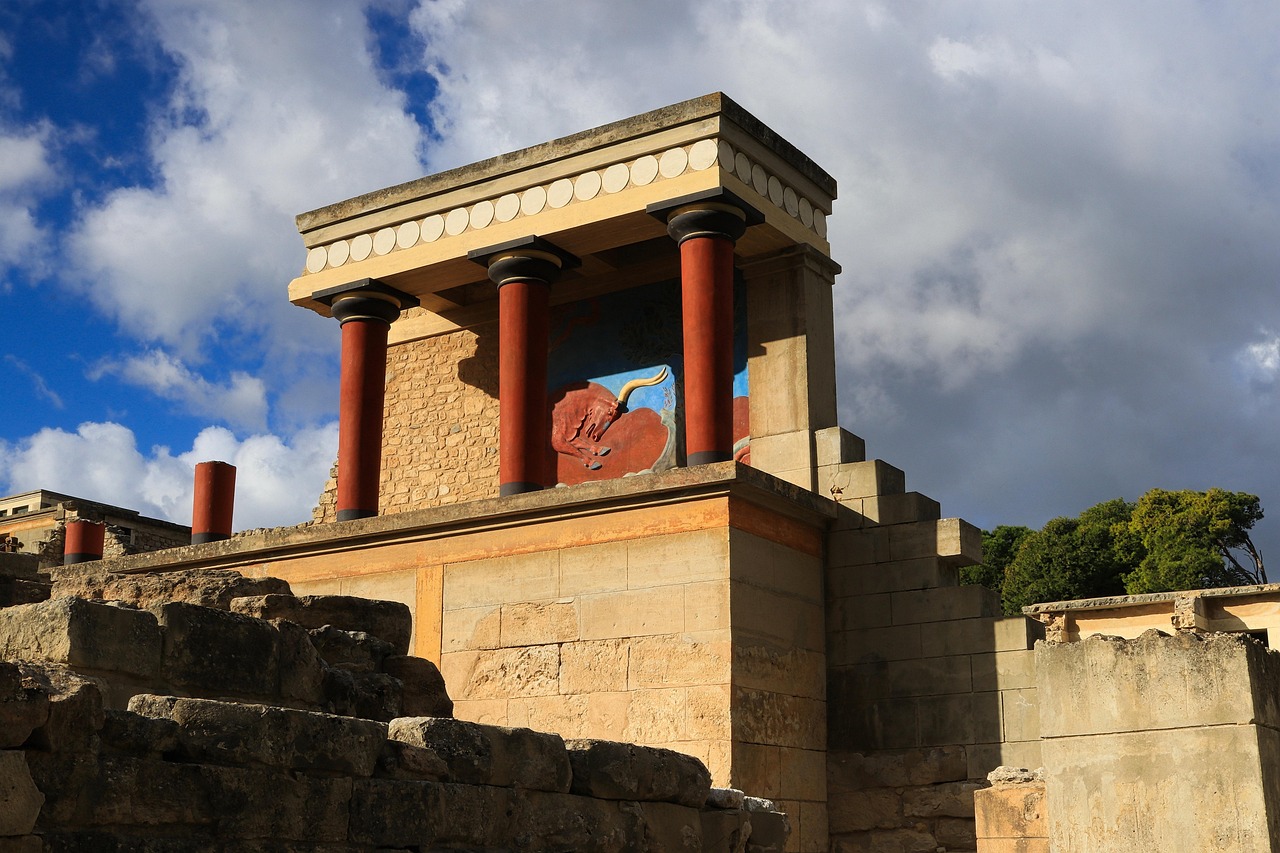
The Central Court: A large open rectangular space where the Minoans likely held ceremonies — possibly including the bull-leaping ritual depicted in the famous fresco. Standing here, surrounded by the remains of the palace on all sides, is where the scale of the place finally sinks in.
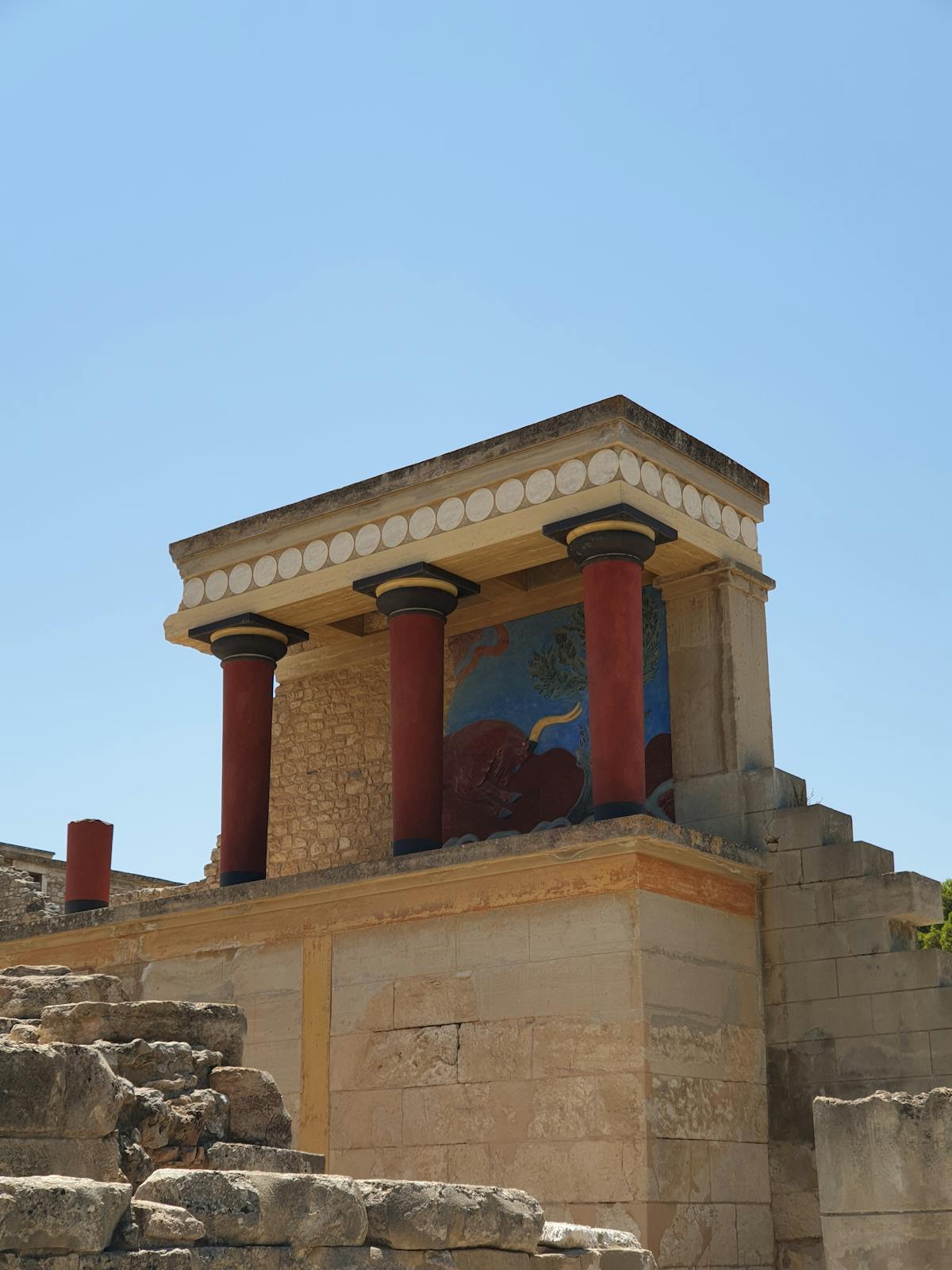
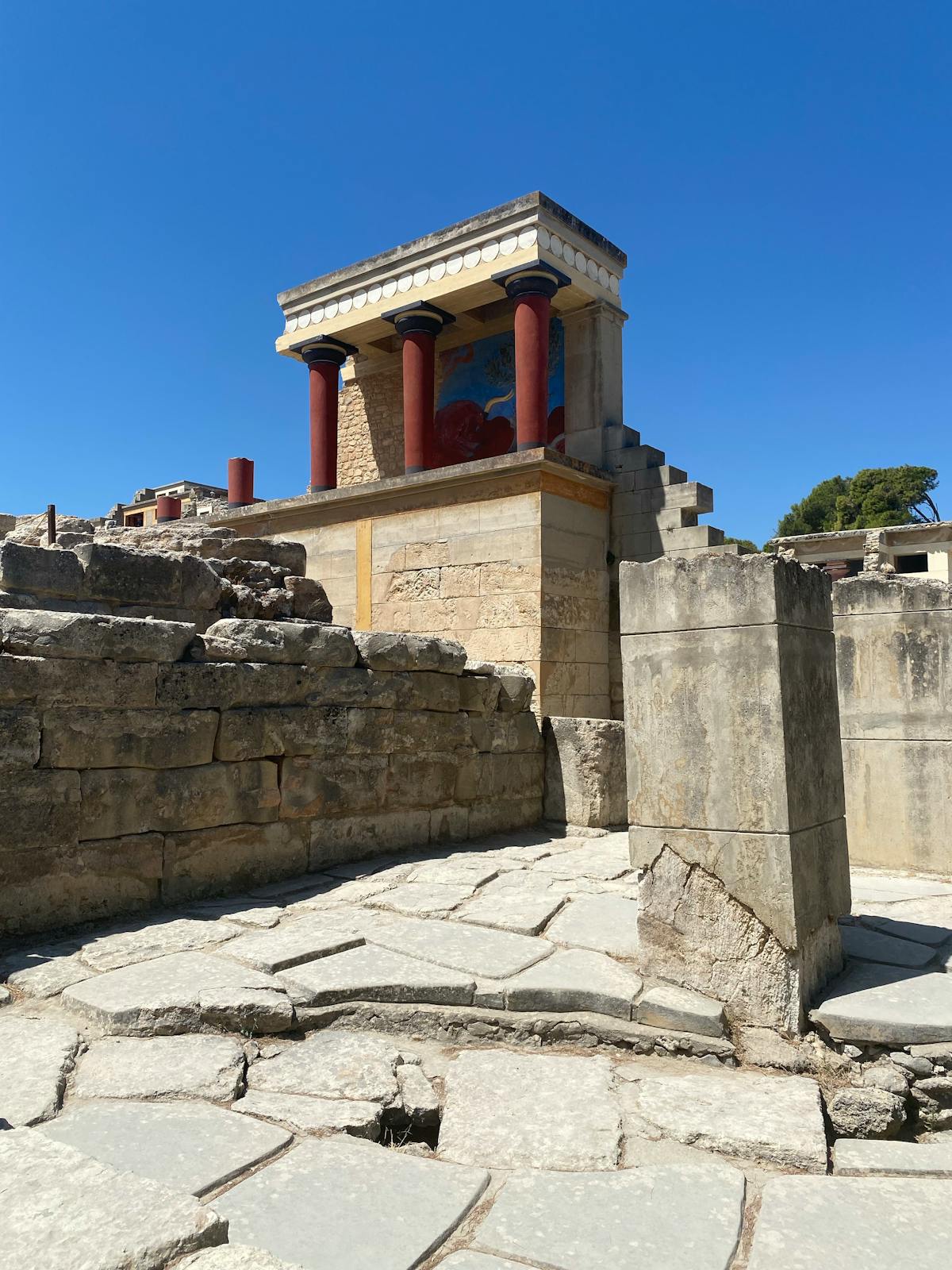
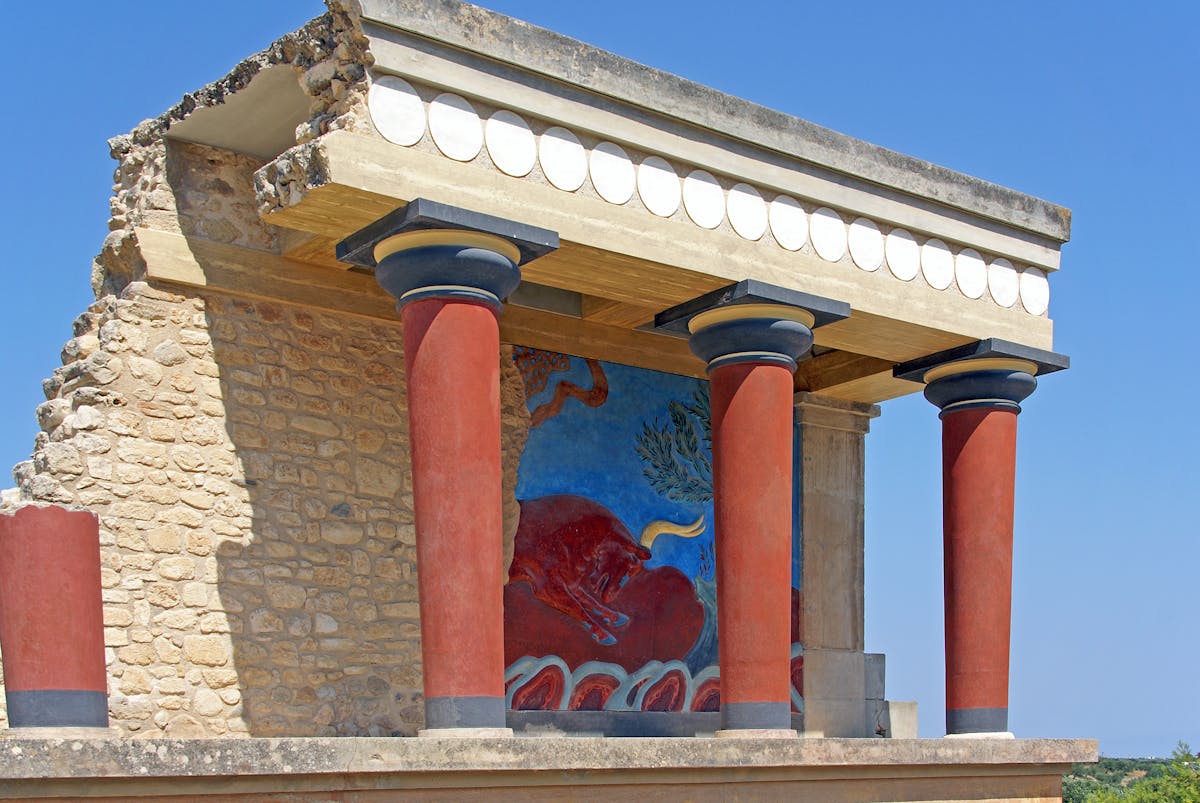
Arthur Evans’s Reconstructions: Love them or hate them, the concrete-and-plaster reconstructions Evans built in the early 20th century are now part of the story. Without them, you would be looking at knee-high walls and guessing. With them, you can actually visualise a multi-story palace. The archaeological community is split on whether this was brilliant public engagement or destructive hubris. You will form your own opinion.
Worth Doing While You Are in Crete
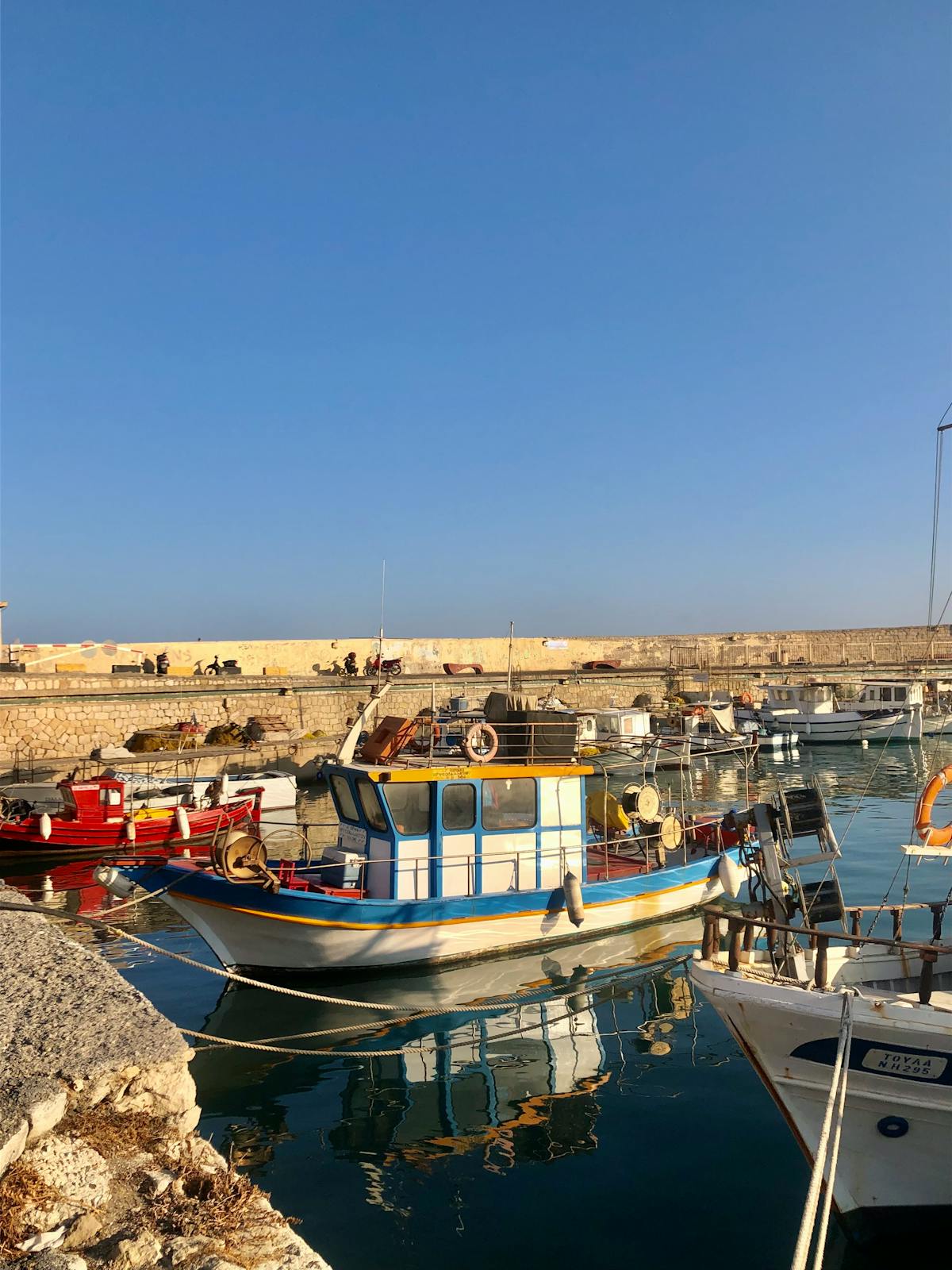
If Knossos is kicking off a longer trip around Greece, you have got plenty to build on. The Acropolis in Athens is the obvious next stop for ancient history, and our guide covers the same skip-the-line strategy. For something completely different, the Santorini caldera cruises are a two-hour ferry from Heraklion and make for a solid day trip or overnight. History buffs should also look at Delphi from Athens — it is one of those places that gets under your skin. And if you have got an extra day on Crete itself, the south coast around Matala and the Samaria Gorge are worth the drive — raw, less touristy Crete that most visitors never see.
This article contains affiliate links. If you book through our links, we earn a small commission at no extra cost to you. This helps us keep producing free travel guides.
More Greece Guides
Knossos covers the Minoan era, but Crete has completely different experiences waiting beyond the palace. Balos Beach and Gramvousa on the western tip of the island offer the kind of turquoise lagoon that looks edited in photos but is not, while Spinalonga Island near Elounda tells a much more recent and haunting story.
If you are up for something physical, Samaria Gorge is sixteen kilometres of the most dramatic hiking on the island — a completely different day from exploring palace ruins, but just as memorable.