
The CityPass changed how I approached Marseille. I’d been once before — years ago — and spent most of that trip squinting at tram maps and overpaying for museum tickets I could have bundled. This time, with a 48-hour pass in hand, I walked into the MuCEM without queuing, hopped on the Petit Train to Notre-Dame de la Garde without fumbling for change, and took the ferry to Chateau d’If on a whim. The kind of trip where logistics disappear and the city just… opens up.
Marseille doesn’t get the same tourist buzz as Paris or Nice. That’s part of its appeal. France’s oldest city — founded as Massalia by Greek colonists from Phocaea around 600 BC — has the rough edges and real energy of a working port town that’s been trading goods and stories for 2,600 years. The CityPass is the smartest way to take it all in without burning through your budget on individual tickets.
Best overall: Marseille CityPass with Transport — $42. Museums, boat trips, Petit Train, and unlimited metro/bus/tram rolled into one card. The 48-hour version is the sweet spot.
Best for sightseeing: Hop-On Hop-Off Bus Tour — $27. Covers the main sights with an audio guide. Good if you only have one day and want to see everything from Notre-Dame de la Garde to the MuCEM.
Best for culture: MuCEM Skip-the-Line Ticket — $13. Skip the queue at Marseille’s most important museum. The building alone is worth the visit.
- How the Marseille CityPass Works
- Is the CityPass Worth the Money?
- The Best Marseille Tours to Book
- 1. Marseille CityPass with Public Transport —
- 2. Hop-On Hop-Off Bus Tour —
- 3. MuCEM Skip-the-Line Ticket —
- 4. OM Stadium Access at the Orange Velodrome —
- When to Visit Marseille
- How to Get Around Marseille
- Tips That Will Save You Time
- What You’ll Actually See in Marseille
- Beyond the CityPass: Day Trips from Marseille
How the Marseille CityPass Works
The Marseille CityPass comes in three versions: 24 hours, 48 hours, and 72 hours. Each one covers a different depth of access, and the clock starts ticking from the moment you first scan it — not from when you buy it.
Here’s what every pass includes:
Unlimited public transport — metro, bus, and tram. This alone is worth more than you’d think if you’re moving between the Vieux-Port area and sites like Notre-Dame de la Garde or the beaches at Prado. Single tickets add up fast.
One Petit Train ride — the little tourist train that climbs up to Notre-Dame de la Garde. Walking up is free but brutal in summer. The train saves your legs and the views from the top are the best in the city.
One Colorbüs tour — the hop-on hop-off panoramic bus route, which hits most of the major sights.
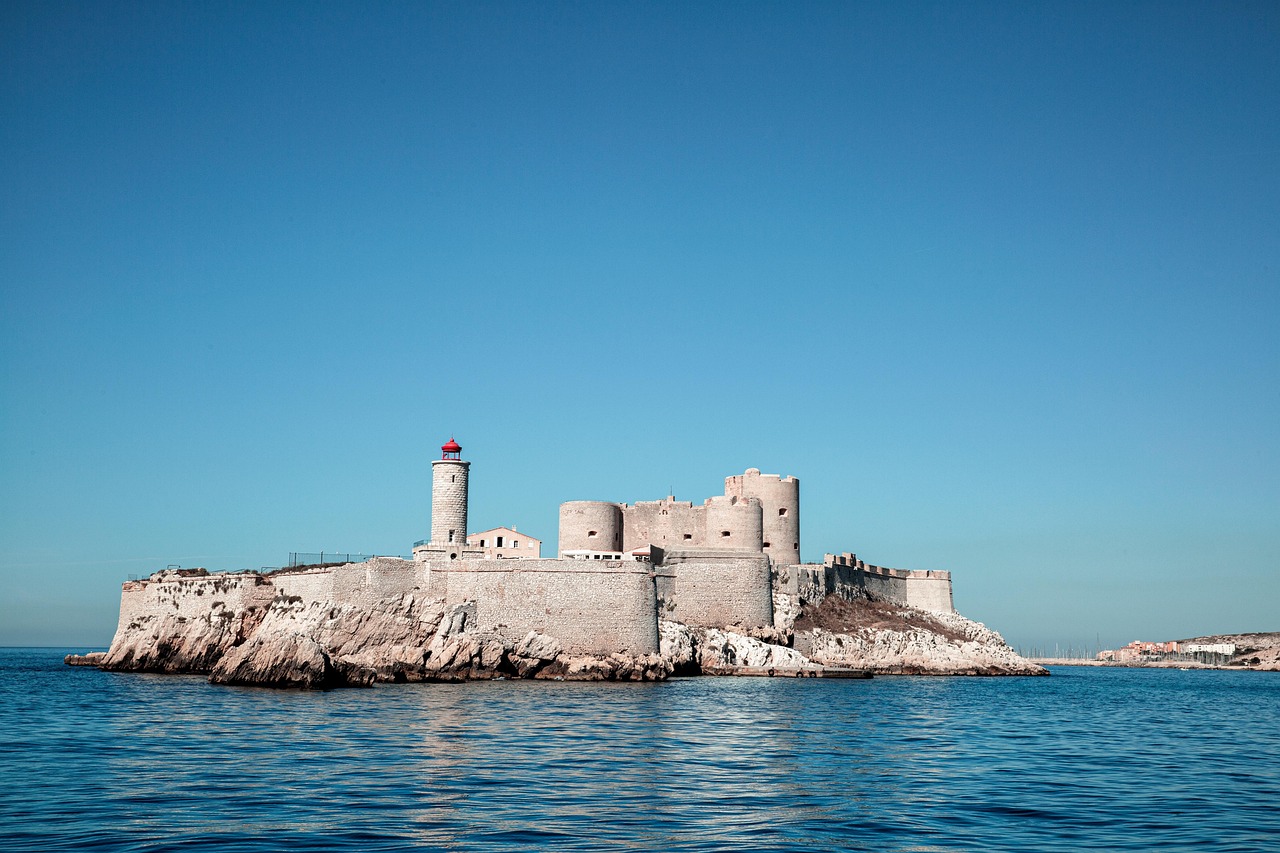
A boat crossing to the Frioul Islands or one entry to Cosquer Mediterranee — this is a choose-one deal. The Frioul crossing includes free admission to the Chateau d’If (the island fortress that Alexandre Dumas made famous in The Count of Monte Cristo, though it was built by Francois I in 1524 as a real fortress, not the prison Dumas imagined). If you pick Cosquer Mediterranee instead, you get the underwater cave replica experience. I’d pick the island — the fortress is worth seeing and the boat ride itself is half the fun.
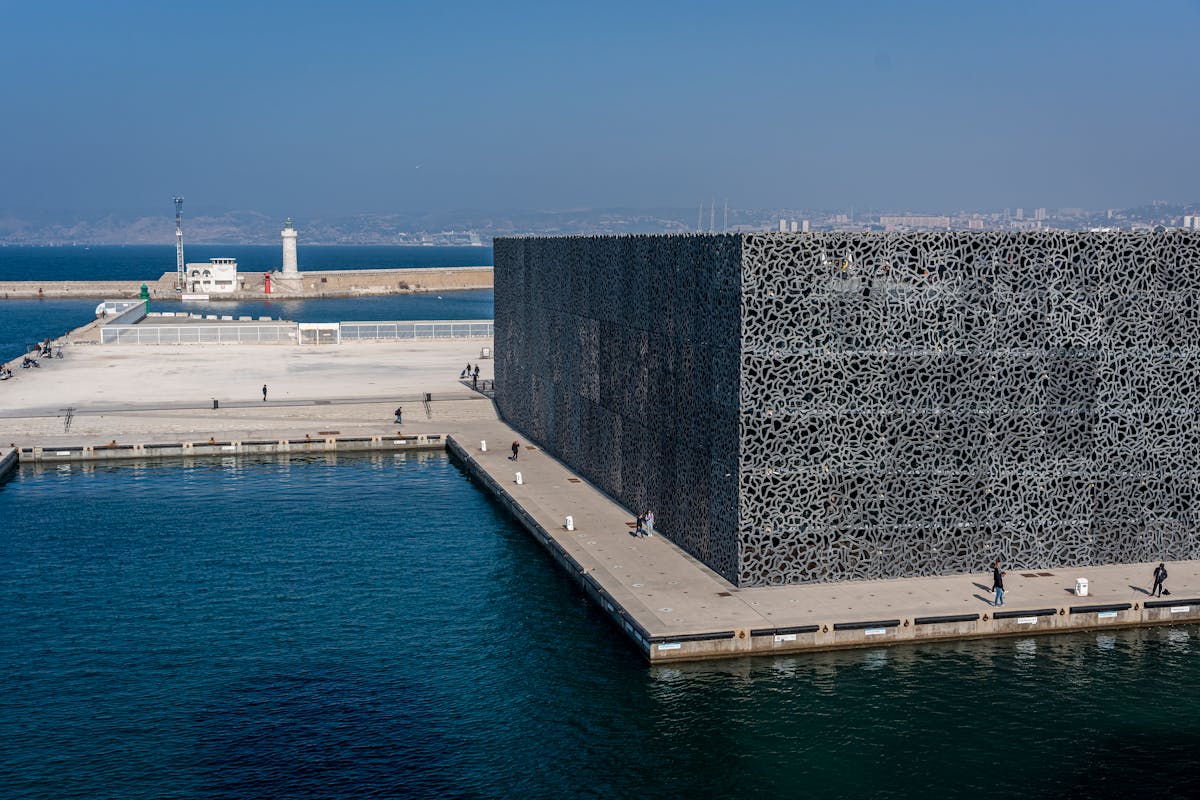
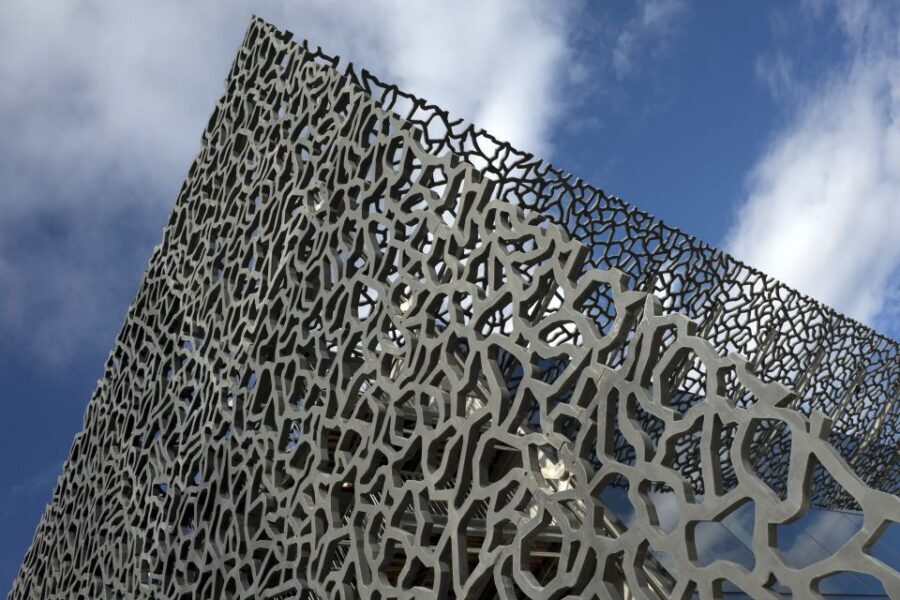
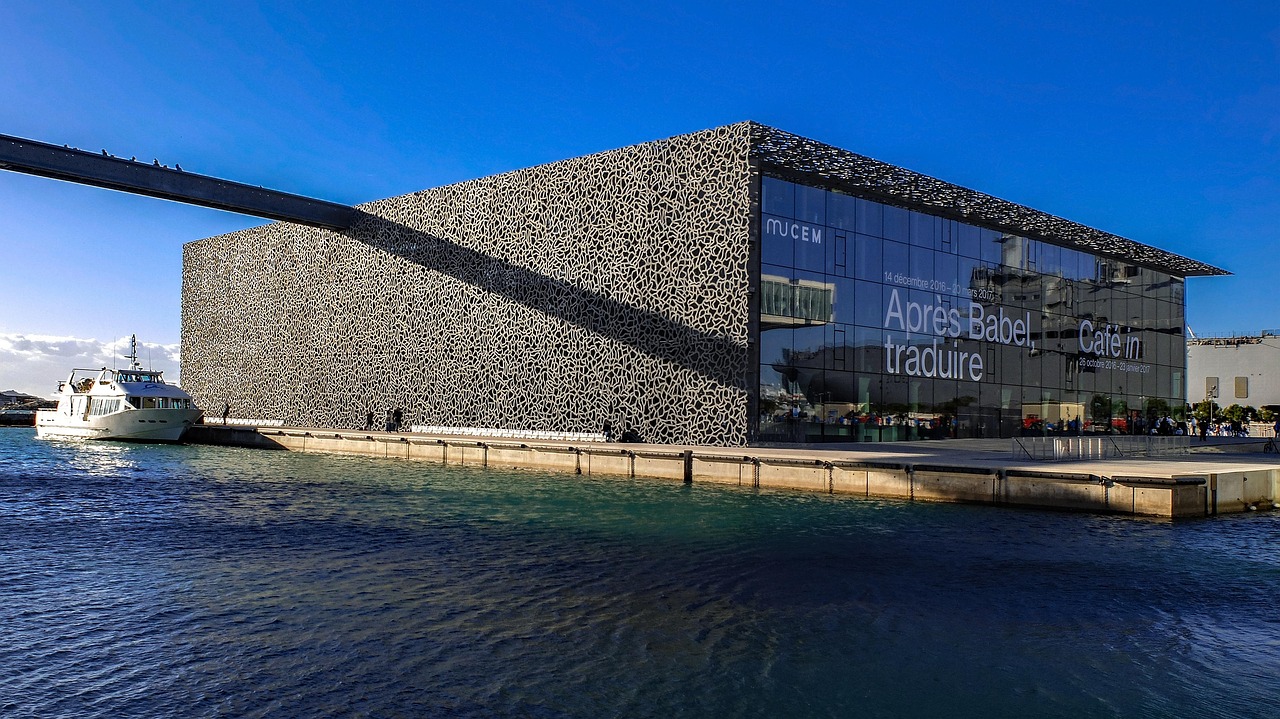
Entry to the MuCEM and Musee Regards de Provence — the MuCEM alone is reason enough to visit Marseille. It opened in 2013 when the city was European Capital of Culture, and the building by architect Rudy Ricciotti is one of the most striking museum buildings in Europe. Inside, the exhibitions on Mediterranean civilisation are genuinely interesting, not just decorative.
One 4D virtual Mehari tour at Maison Yellow Anise Museum.
The 72-hour pass adds a free guided tour from the Tourist Office (the shorter passes give 30% off instead), plus a guided tour of the Citadelle.
All three passes come with 40+ discount offers at restaurants, shops, and activities across the city.
Where to buy it: You can buy the CityPass online through GetYourGuide or directly from the Marseille Tourist Office at 11 La Canebiere (open daily 9am-6pm). If you buy online, you’ll pick it up at the Tourist Office when you arrive. For groups of 10 or more, the Tourist Office handles bookings directly.
Activation: Just scan or present your pass at the first attraction you visit. From that moment, the 24/48/72-hour countdown begins. So if you activate a 24-hour pass at 2pm on Friday, it’s valid until 1:59pm Saturday. Plan your activation time carefully — starting first thing in the morning gets you the most value.
Is the CityPass Worth the Money?

Let’s do some quick maths. If you bought everything separately for a typical 2-day visit:
MuCEM entry: around EUR 11. Petit Train to Notre-Dame: about EUR 8. Boat to Chateau d’If (return) plus fortress entry: EUR 15-20. Two days of metro/bus tickets: roughly EUR 10-12. A guided tour: EUR 10.
That’s already EUR 54-61 worth of activities. The 48-hour CityPass runs about EUR 39 (prices fluctuate slightly depending on where you buy). You’re saving at minimum EUR 15-20, and that’s before counting the discount offers at restaurants and shops.
The 24-hour pass makes sense if you’re on a tight schedule and can pack in the MuCEM, the Petit Train, and either the island ferry or Cosquer in a single day. The 72-hour pass is worth it if you want to explore at a slower pace and take advantage of the free guided tour.
When it’s NOT worth it: If you’re only planning to visit one or two museums and don’t need public transport, you’ll spend less buying individual tickets. The pass is designed for people who want to see and do a lot in a short time.
The Best Marseille Tours to Book
These are the tours I’d recommend for getting the most out of your Marseille visit — whether you go with the CityPass or book separately.
1. Marseille CityPass with Public Transport — $42
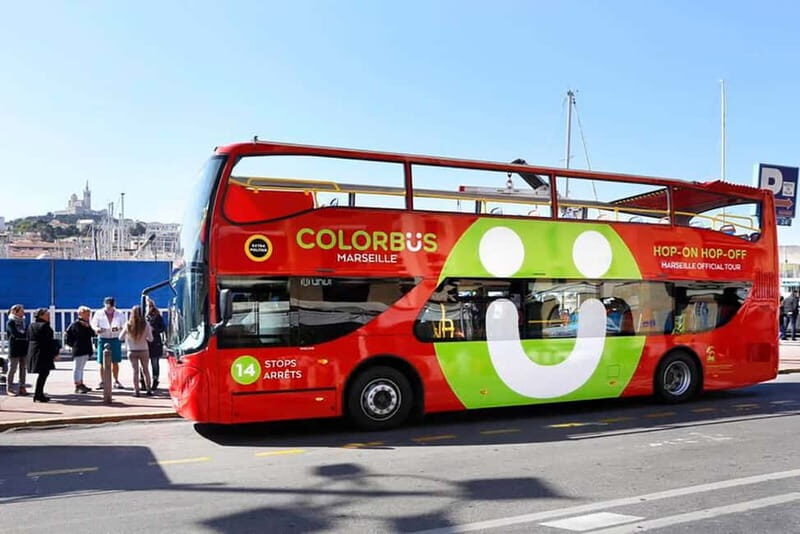
This is the all-in-one option and it’s the one I’d grab first. The Marseille CityPass wraps up unlimited transport, MuCEM entry, the Petit Train, a hop-on hop-off bus loop, and either the Chateau d’If island crossing or the Cosquer Mediterranee experience into a single card. The 48-hour version at about $42 hits the sweet spot — enough time to spread things across two mornings without feeling like you’re speed-running the city.
What I like about this particular pass is the flexibility. You’re not locked into a schedule. Wake up, scan in at the metro, head to the MuCEM, grab the Petit Train later that afternoon, then save the island trip for day two. It works around you, not the other way around.
2. Hop-On Hop-Off Bus Tour — $27
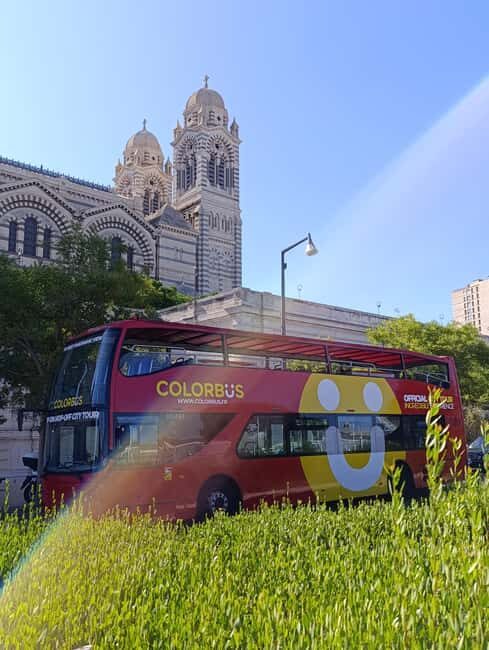
If you’re only in Marseille for a single day and the CityPass feels like overkill, the hop-on hop-off bus covers the greatest hits efficiently. At $27 for a day pass, it loops past Notre-Dame de la Garde, the Vieux-Port, the Cathedral de la Major, and the MuCEM area with an audio guide in multiple languages.
Fair warning: the audio guide runs through an app on your phone rather than physical headsets, which means you need decent phone battery and your own earbuds. The connection can lag in some spots. Not a dealbreaker, but bring a portable charger. The top deck on a sunny Marseille afternoon is worth the trade-off — the views along the Corniche Kennedy coast road are particularly good.
3. MuCEM Skip-the-Line Ticket — $13
The Museum of European and Mediterranean Civilisations is Marseille’s flagship cultural attraction, and the skip-the-line ticket at $13 removes the one annoying part of visiting: the queue. Summer mornings can mean 30-40 minutes of waiting. This MuCEM skip-the-line pass gets you past that.
Beyond the exhibitions, the building itself is the real draw. Architect Rudy Ricciotti wrapped the entire structure in a concrete lattice that filters Mediterranean sunlight into shifting patterns on the walls and floors. Walk the rooftop terrace for views across to Fort Saint-Jean (connected by a footbridge you can cross freely), then down to the Vieux-Port. Budget at least two hours — the permanent collection on Mediterranean civilisation is more engaging than you’d expect from a museum with “civilisation” in the name. Closed Tuesdays.
4. OM Stadium Access at the Orange Velodrome — $24

This one’s a slight detour from the typical tourist trail, but it belongs on the list. Olympique de Marseille is more than a football club here — it’s practically a religion. The self-guided tour of the Orange Velodrome at $24 takes you through the changing rooms, the press area, the tunnel, and onto the pitch itself. The 90-minute experience is surprisingly absorbing even if you’re not a football fan.
The highlight for most people is seeing France’s only Champions League trophy up close — OM won it in 1993 and the city hasn’t stopped talking about it since. The stadium itself holds 67,000 and on match days the atmosphere is legendary (and intense). If you can time your visit to catch a game, that’s the ultimate Marseille experience. But the tour gives you a solid taste of why this city lives and breathes football.
When to Visit Marseille

Best months: May, June, and September. The weather is warm without being punishing, the summer crowds haven’t arrived (or have left), and everything is open. July and August are peak season — prices go up, queues get longer, and temperatures regularly hit 30-35C.
Worst time: January and February are quiet but grey. Some attractions reduce their hours or close entirely (Chateau d’If closes Mondays in winter). If the Mistral wind is blowing — the cold, dry wind that tears through the Rhone valley — outdoor sightseeing becomes unpleasant fast.
CityPass timing tip: Activate your pass early in the morning to get maximum value. If you activate at 2pm, you’ve already lost half your first day. Starting at 9am gives you a full day’s worth of attractions.
Museum closures to plan around: MuCEM is closed Tuesdays. Musee Regards de Provence is closed Mondays. La Friche Belle de Mai closes Mondays and Tuesdays. Check before you go — nothing worse than walking across the city to find a locked door.
How to Get Around Marseille
Marseille has two metro lines, three tram lines, and a solid bus network. With the CityPass, all of this is unlimited — you just tap and go. Without the pass, buy a daily transport ticket (around EUR 5.20) or single-ride tickets.
Metro Line 1 runs roughly north-south and connects Castellane (near the Prado beaches) to La Rose. Line 2 runs east-west through the Vieux-Port area. Between the two, you can reach most of the tourist sights.
Walking: The Vieux-Port to Le Panier (the oldest quarter) is about 10 minutes on foot. Vieux-Port to the MuCEM is 15 minutes along the waterfront. Notre-Dame de la Garde is a steep 30-minute uphill walk from the port — take the Petit Train or bus unless you enjoy climbing in heat.
The Frioul ferry departs from the Vieux-Port and takes about 20 minutes to reach the islands (including Chateau d’If). It runs roughly hourly, more frequently in summer.
Tips That Will Save You Time
Buy your CityPass before you arrive. Online purchase means you skip the queue at the Tourist Office and just pick up your card. The office is right on La Canebiere, the main boulevard running from the Vieux-Port — hard to miss.
Start at the MuCEM on opening. It opens at 10am (11am in winter) and the queues build fast by midday. With a CityPass or skip-the-line ticket, you walk straight in, but even the bypass lanes move faster first thing.
Do the Chateau d’If trip early or late. Midday boats are packed in summer. The morning departures (around 9:30-10am) and late afternoon runs are far more comfortable. And the fortress has almost no shade — bring water, sunscreen, and a hat.
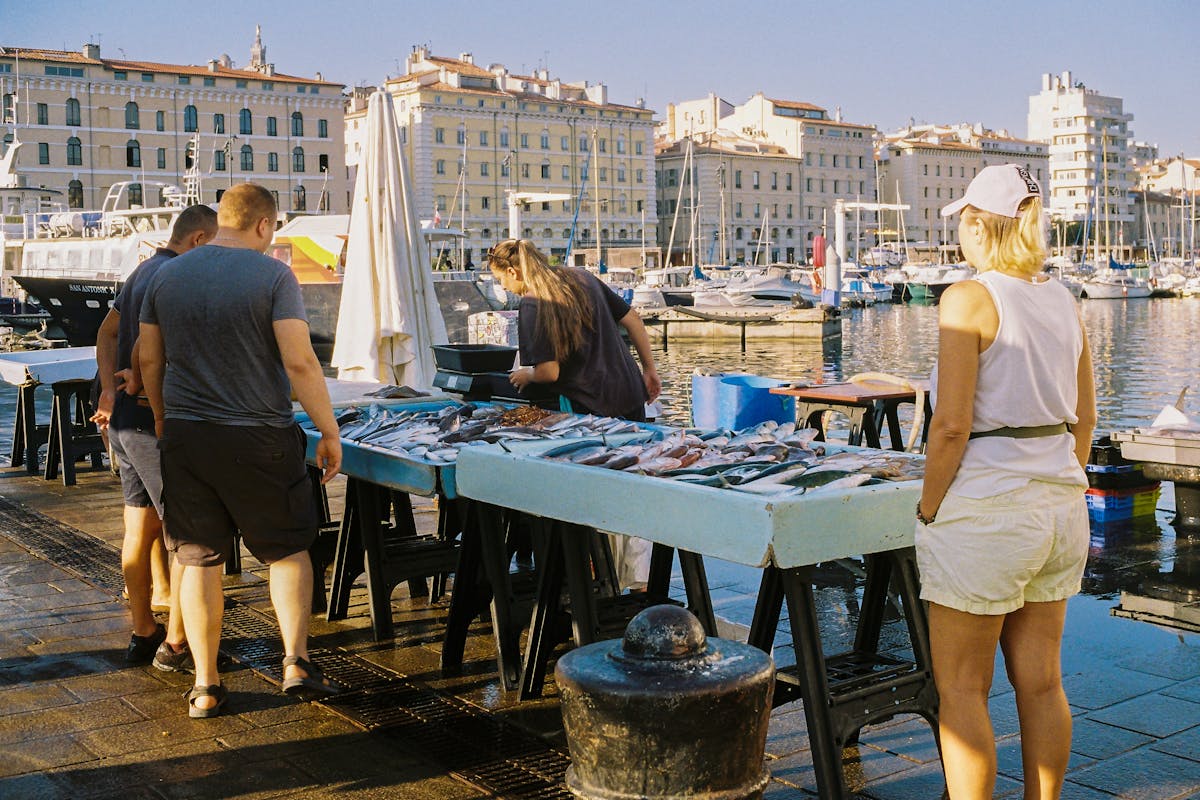
Don’t skip the fish market. The morning fish market at the Vieux-Port quay runs daily but it’s done by late morning. It’s one of the last authentic markets like this in Europe — fishermen selling the morning’s catch directly from their boats. Go before 10am.
Eat bouillabaisse once, properly. The real version uses specific Mediterranean rockfish and follows strict rules — there’s actually a Bouillabaisse Charter that Marseille restaurants sign defining the required ingredients. A proper bouillabaisse at a quayside restaurant costs EUR 50-70 per person. It’s expensive, but this is where the dish was invented, so you might as well do it right. The tourist-menu versions for EUR 20 are not the same thing.
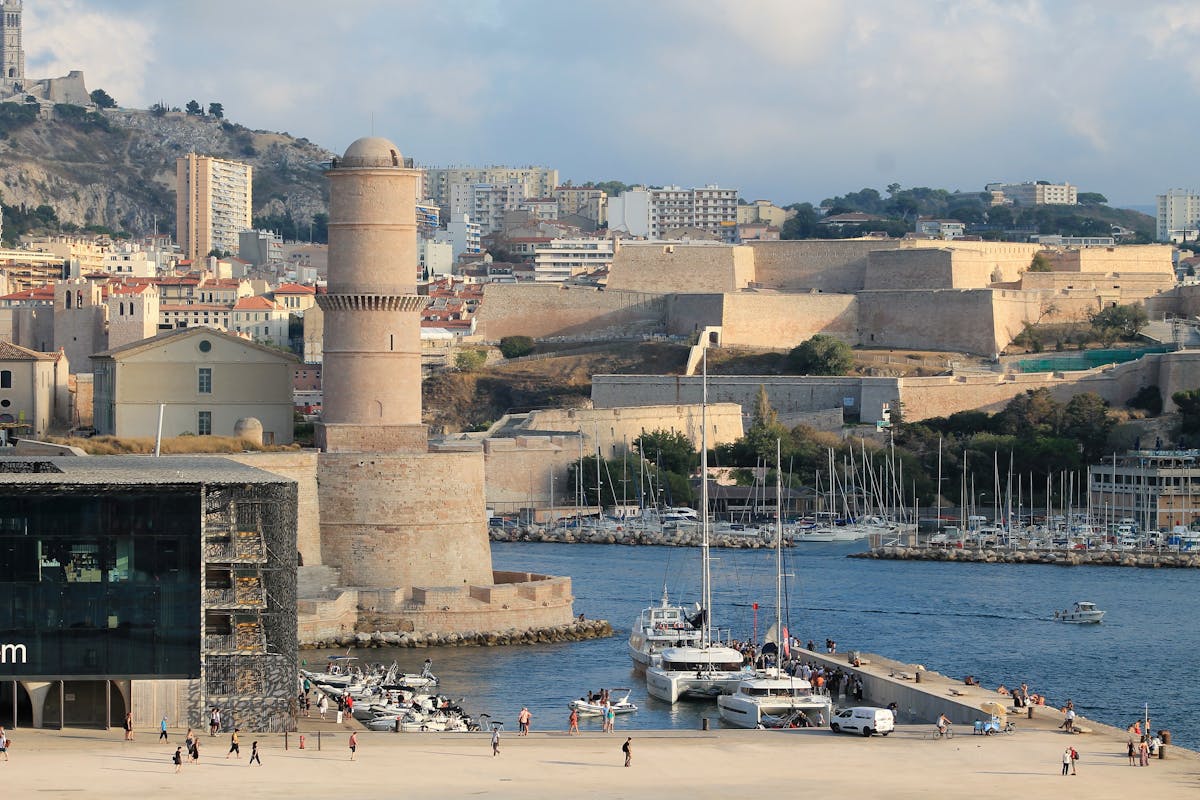
Combine the MuCEM with Fort Saint-Jean. They’re connected by a footbridge and Fort Saint-Jean is free to enter. The views from the fort’s ramparts across the Vieux-Port are some of the best photo opportunities in the city.
What You’ll Actually See in Marseille
Marseille has layers. Most visitors stick to the Vieux-Port area and maybe climb to Notre-Dame de la Garde, but there’s a lot more going on beneath the surface.
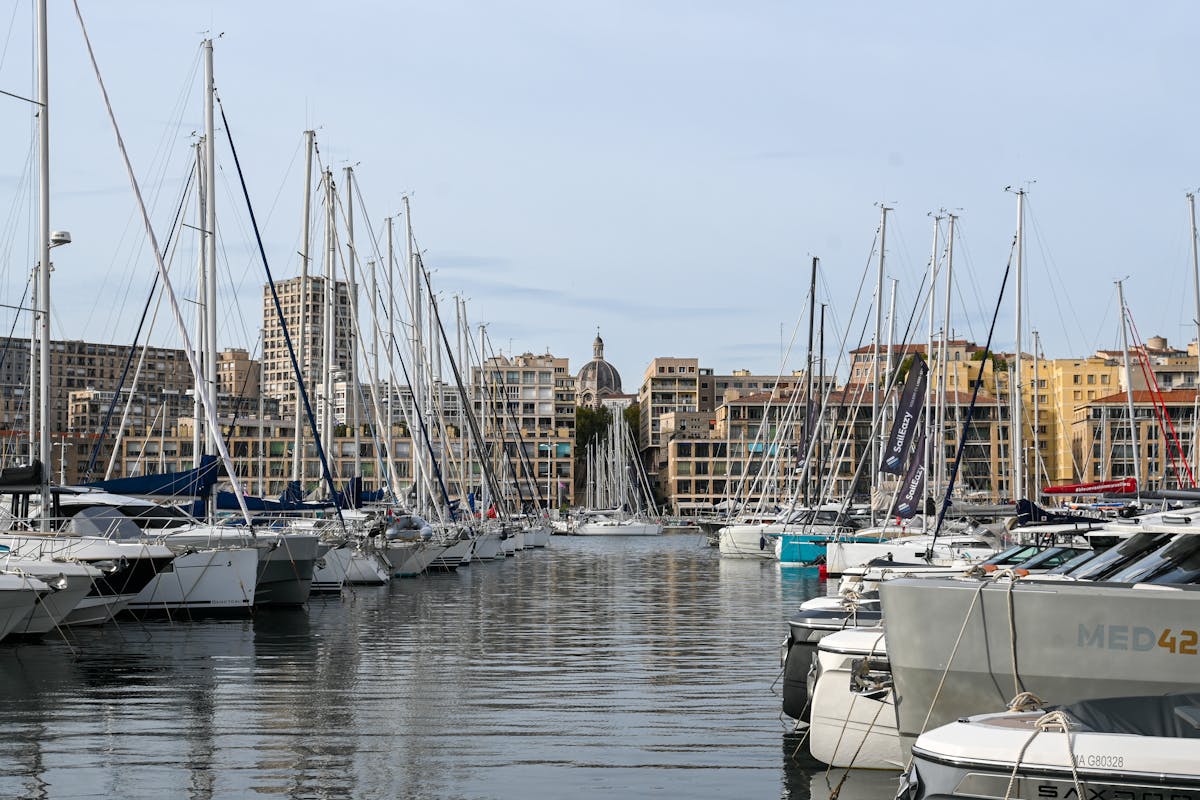
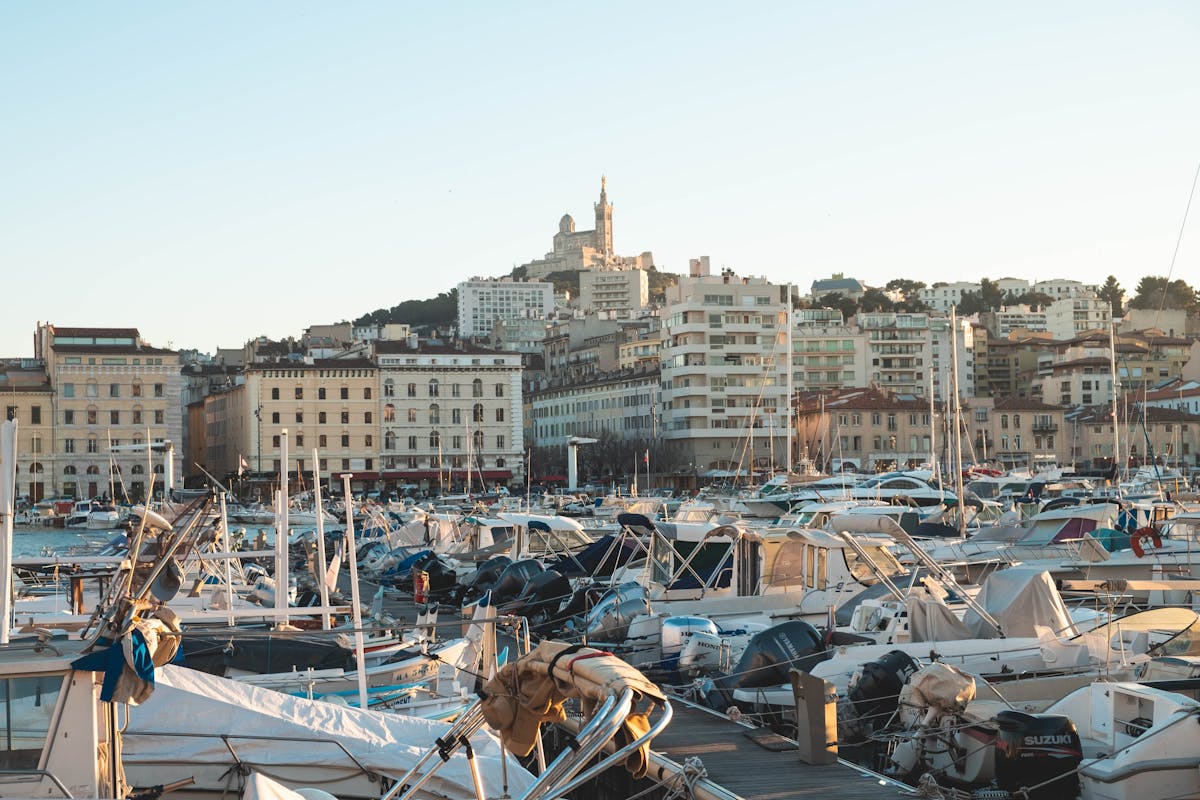
The Vieux-Port has been the city’s commercial heart since the Greeks arrived around 600 BC. It’s still a working harbour — the morning fish market on the quay is proof of that — but it’s also the social centre of the city. Every road in Marseille seems to lead back here eventually. The Norman Foster-designed mirror canopy at the port entrance reflects the water and sky and makes for oddly hypnotic people-watching.
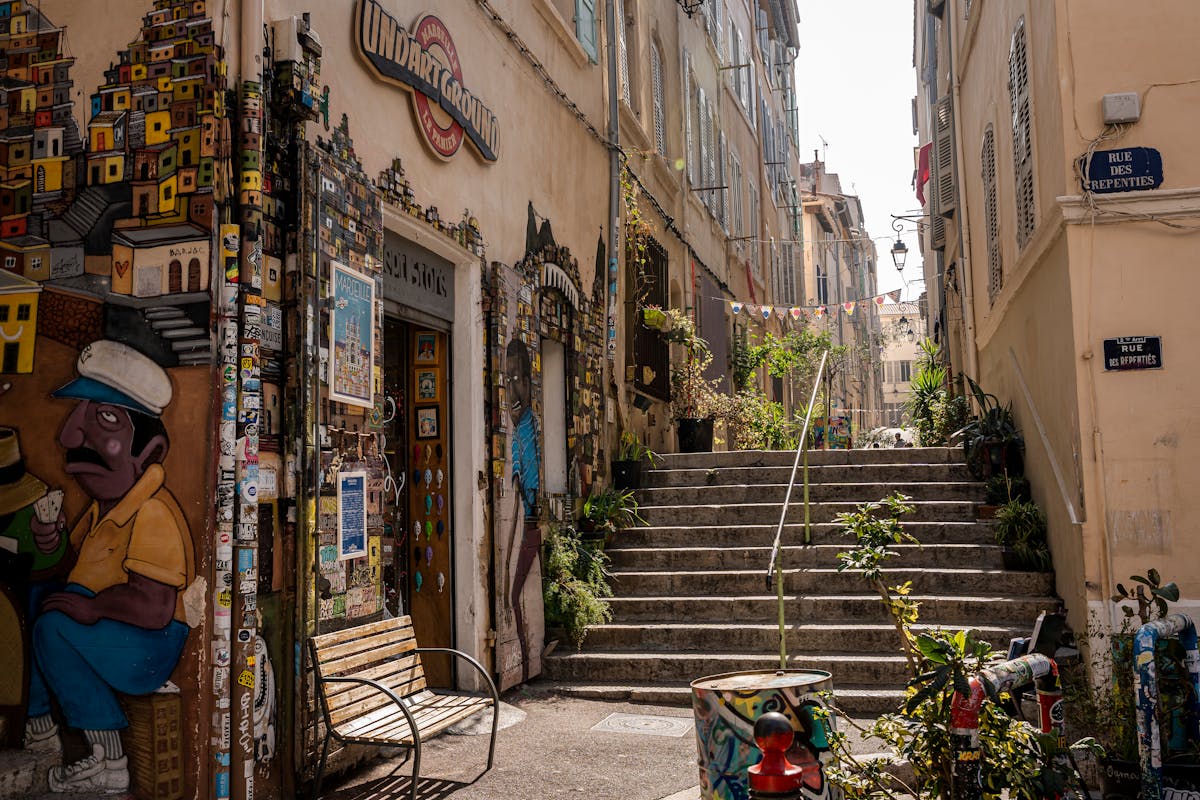
Le Panier, Marseille’s oldest quarter, climbs the hillside just north of the port. Narrow streets, street art on every corner, artisan shops, and the kind of neighbourhood where getting lost is part of the experience. The Vieille Charite — a 17th-century almshouse turned cultural centre — is the architectural highlight.
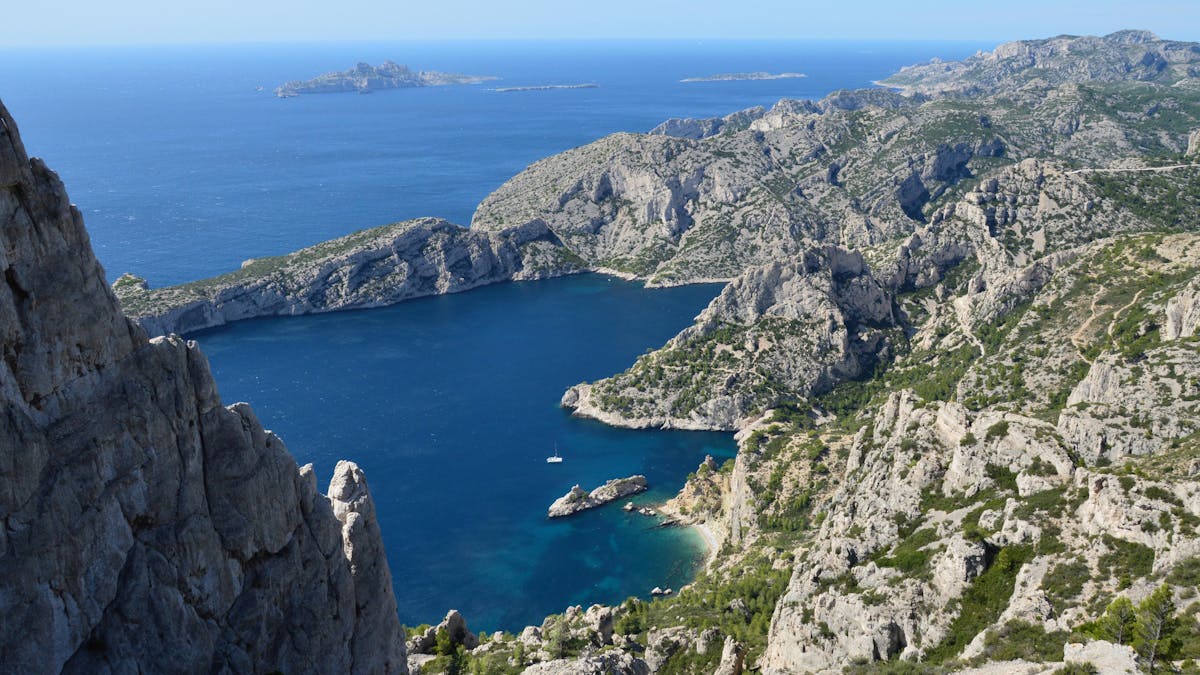
The Calanques are Marseille’s natural crown jewel — a series of dramatic limestone inlets and turquoise coves stretching along the coast toward Cassis. You can hike in (challenging but free), take a boat tour from the Vieux-Port (easier and prettier), or kayak along the coast. Our guide to booking Calanques tours from Marseille covers all the options.
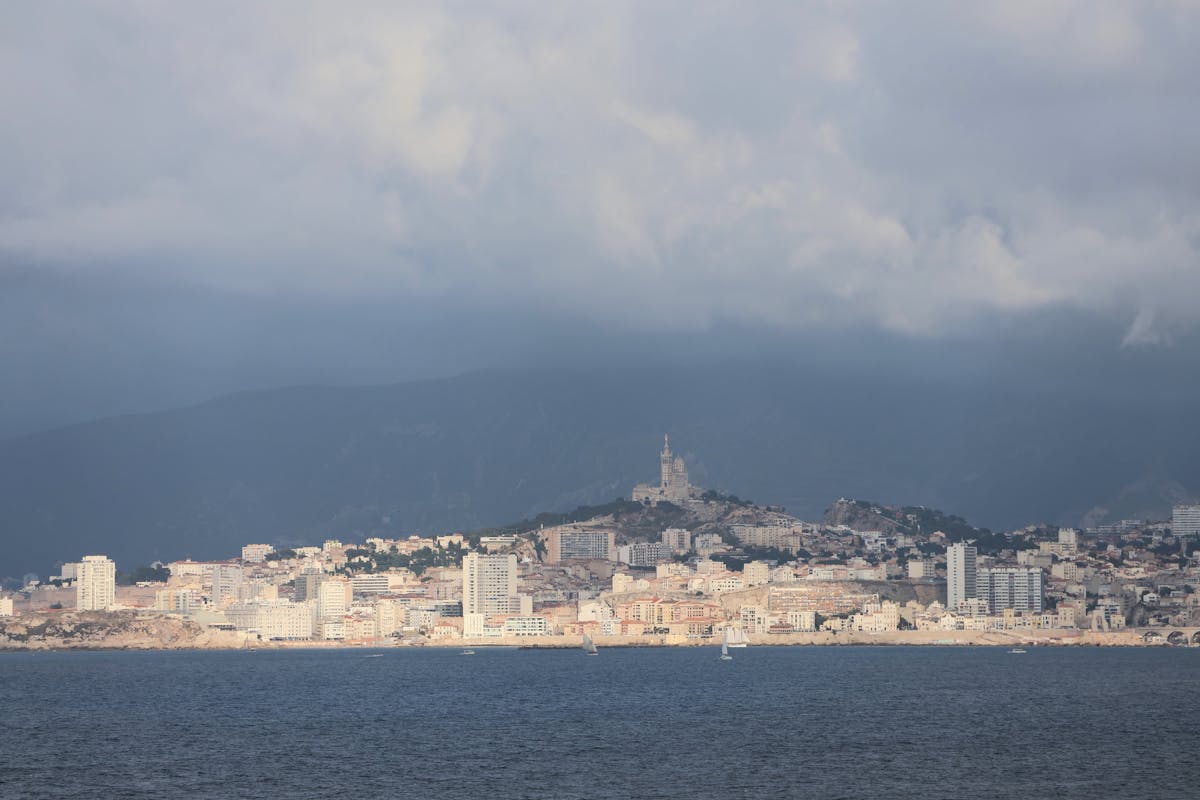
Notre-Dame de la Garde — known locally as “la Bonne Mere” — crowns the highest point in the city. The Romano-Byzantine basilica was built in the 1850s and the golden Madonna statue on top is visible from just about everywhere in Marseille. The panoramic view from the terrace covers the city, the harbour, the islands, and on a clear day the Calanques coastline to the southeast.
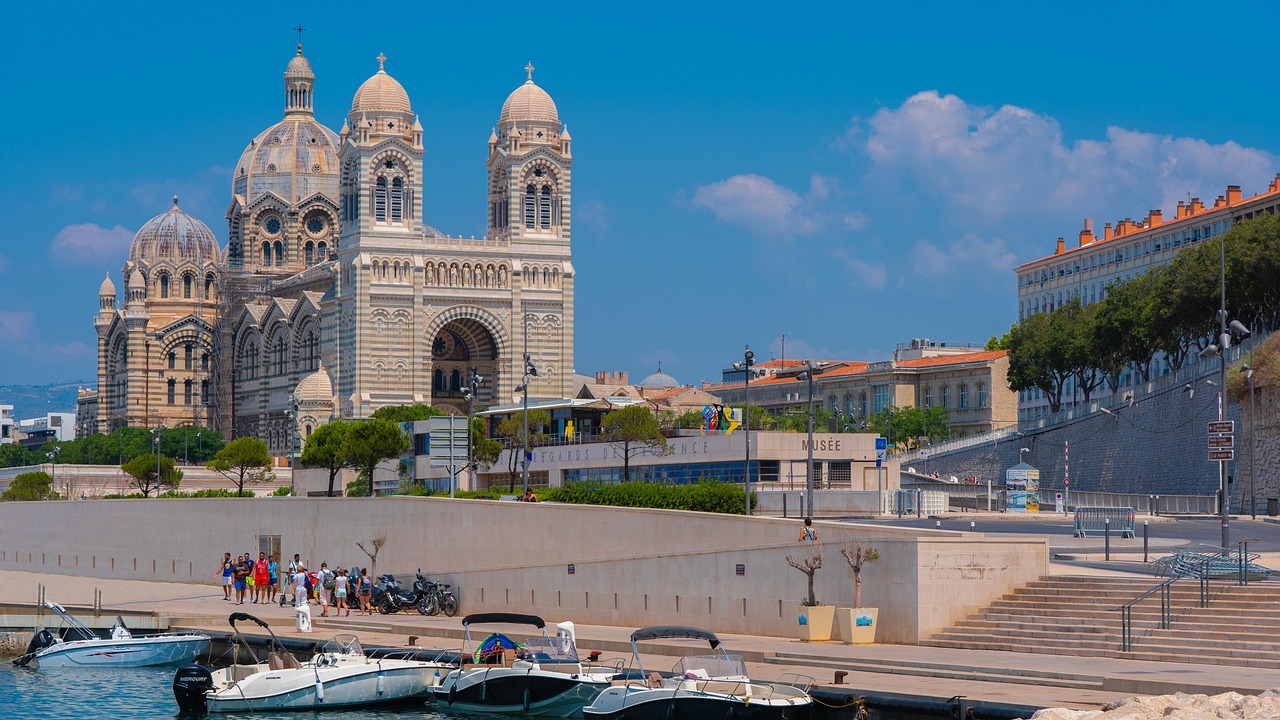
The Cathedral de la Major, near the MuCEM, is an enormous 19th-century Romano-Byzantine cathedral that somehow gets overlooked by most visitors despite being one of the largest churches in France. It’s free to enter and the interior is impressively grand — striped marble, golden mosaics, soaring domes.
Beyond the CityPass: Day Trips from Marseille
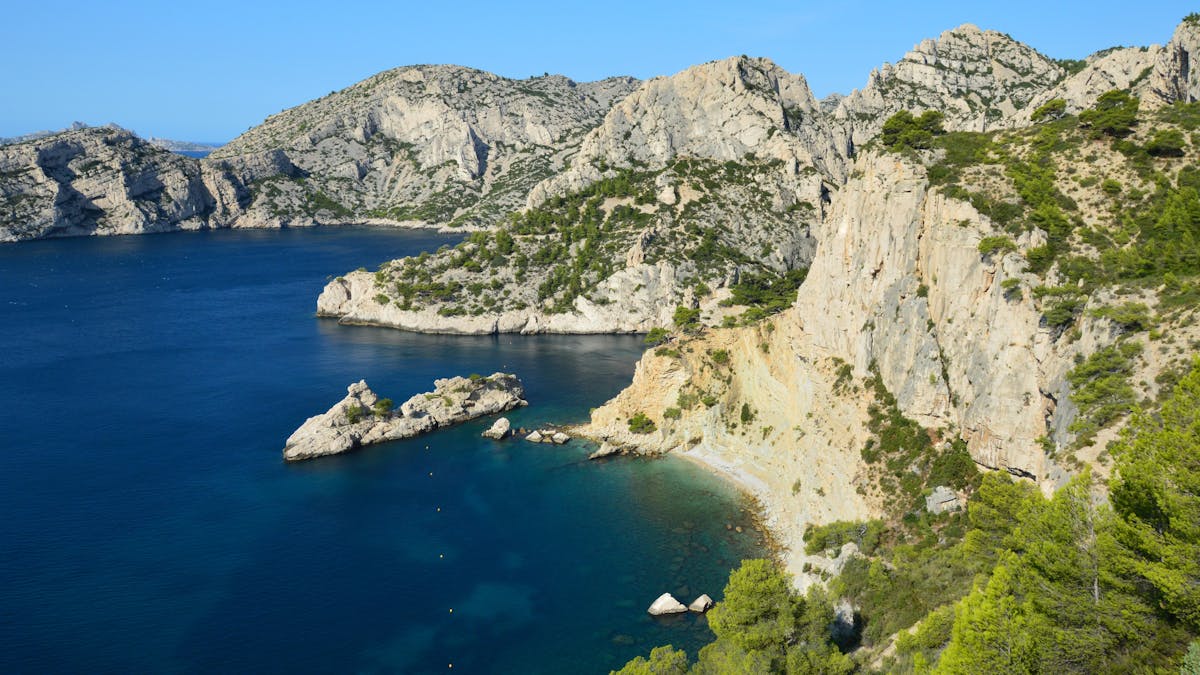
If you have time beyond what the CityPass covers, Marseille is an excellent base for exploring Provence. The Calanques National Park is the obvious first choice — half-day boat tours leave from the Vieux-Port and take you along the coastline to inlets you can’t reach by car. For something completely different, the French Riviera is about two hours east by train, and Nice makes an easy day trip. If the Gorges du Verdon and lavender fields appeal to you, our Verdon guide covers how to visit from Nice, but Marseille is actually closer. And if you want to explore the coast without a car, the Nice sightseeing cruises offer a different perspective on the Riviera.
For food lovers, Marseille’s own food scene deserves more time than a CityPass visit allows. The Cours Julien neighbourhood has some of the best independent restaurants in the city, and the No-Diet Club food tours there are worth looking into. Lyon — France’s other great food city — is just over 90 minutes by TGV if you want to compare notes. Our Lyon walking tour guide has the details.
This article contains affiliate links. If you book through our links, we may earn a small commission at no extra cost to you. This helps keep our guides free and independent.