
The first time I walked into the Museo Nazionale della Scienza e della Tecnologia Leonardo da Vinci, I made a rookie mistake. I thought it was a Leonardo da Vinci museum. It is and it isn’t. Yes, there’s an entire gallery dedicated to the man — over 130 reconstructed machines built from his actual notebook sketches — but this place is so much bigger than that.
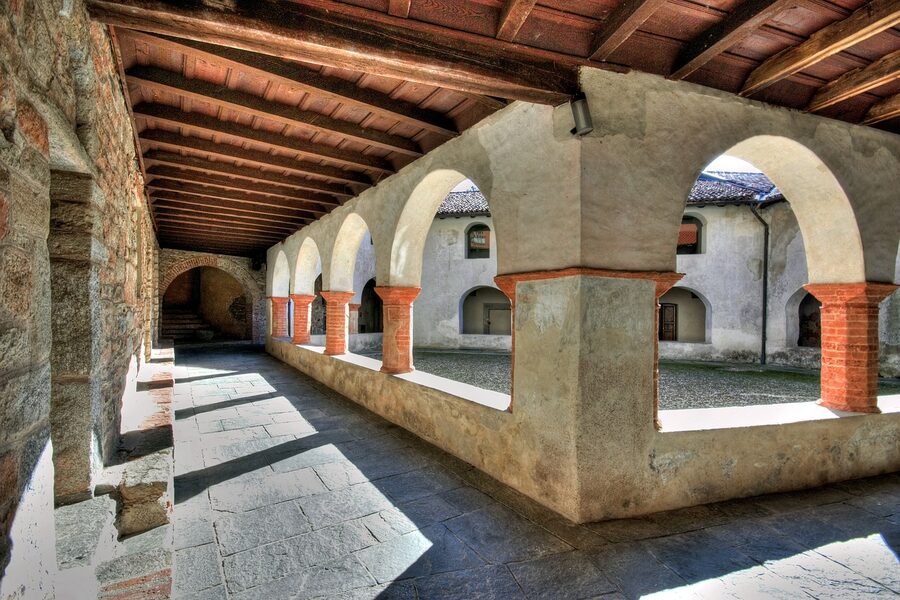
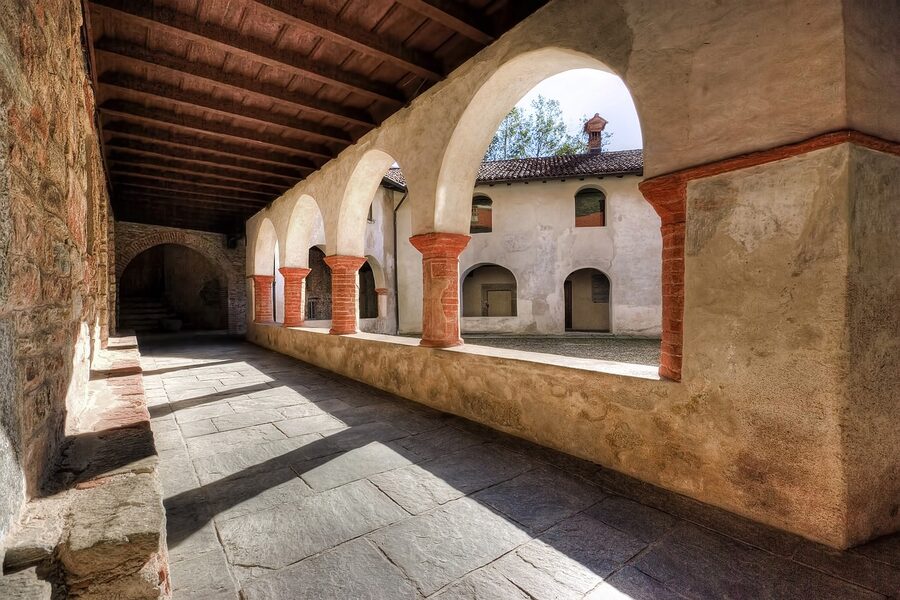
It’s Italy’s largest science and technology museum, spread across a 16th-century Olivetan monastery that could honestly be a destination on its own. The cloisters, the refectory, the church — the building itself is half the experience. And then you stumble into a hall full of steam locomotives. Or a real submarine you can actually walk through.
I’d planned for two hours. I stayed for four. That’s the kind of place this is.

Best overall: Milan Science and Technology Museum Entry — $15. Standard skip-the-line entry with full access to all permanent exhibitions.
Best for Leonardo fans: Leonardo da Vinci Galleries Guided Tour + Museum Ticket — $23. Guided walkthrough of the Leonardo galleries plus full museum access after.
Best on Viator: Science and Technology Museum Entrance — $15.69. Same museum, different platform if you prefer Viator’s cancellation policy.
- How the Ticket System Works
- Official Tickets vs Guided Tours — Which Makes More Sense?
- The Best Milan Science Museum Tours to Book
- 1. Milan: Science and Technology Leonardo da Vinci Museum Entry —
- 2. Leonardo da Vinci Galleries Guided Tour + Museum Ticket —
- 3. Entrance to the Leonardo da Vinci Science and Technology Museum (Viator) — .69
- When to Visit
- How to Get There
- Tips That Will Save You Time
- What You’ll Actually See Inside
- While You’re in Milan
How the Ticket System Works
The Museo della Scienza operates a timed-entry system for general admission. You pick a date and a time slot when you buy online, and that’s your window to enter. Once inside, you can stay as long as you want until closing.
General admission is currently EUR 10 for adults. Reduced tickets run EUR 7.50 for kids aged 3-25, seniors over 65, and various other groups. Children under 3 get in free. There’s also a family ticket at EUR 32 for two adults and two kids — decent value if you’re travelling as a group of four.
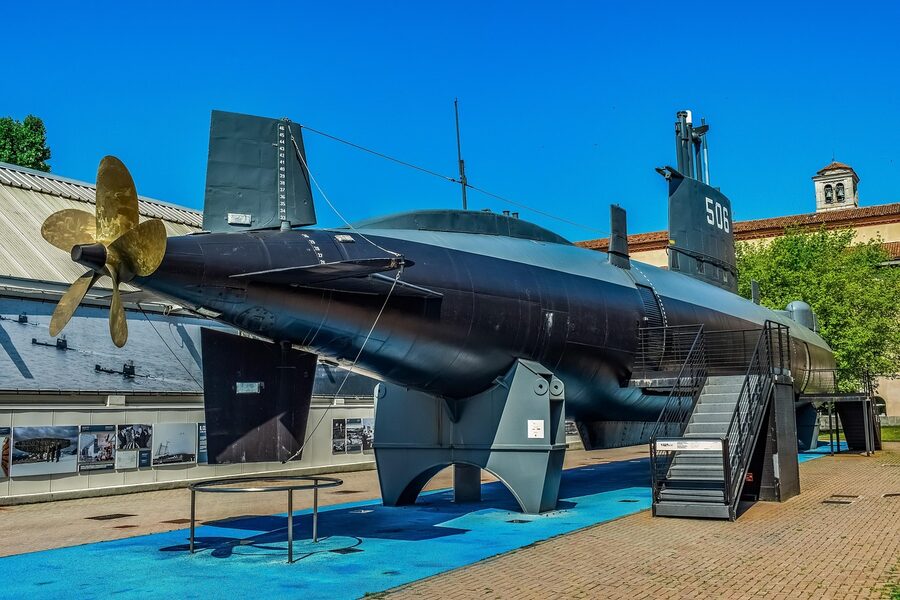
Here’s the thing most people miss: the submarine tour is a separate ticket. The Enrico Toti S-506 — Italy’s first submarine built after World War II — sits in the museum courtyard, and you can go inside on a guided tour. But it costs an extra EUR 10 on top of your museum entry, and spots are limited. The submarine tours run at fixed times throughout the day, and they sell out, especially on weekends and school holidays. Book the submarine tour at the same time as your entry ticket if you want any chance of getting in.
Temporary exhibitions carry additional fees (usually EUR 5-8 depending on the show), and interactive lab activities for kids also cost extra. Check the museum website for what’s running during your visit — they rotate frequently.
The museum is closed on Mondays. Opening hours are Tuesday through Friday 9:30 AM to 5:00 PM, and weekends and holidays 9:30 AM to 6:30 PM. You get an extra 90 minutes on the weekend, and honestly the Saturday afternoon crowd isn’t as bad as you’d expect. Sunday mornings are the busiest time — Italian families treating it as a weekend outing.
Official Tickets vs Guided Tours — Which Makes More Sense?
For most of the museum, you don’t need a guide. The transport halls (trains, planes, ships), the space section, the energy exhibits — all of these are self-explanatory with good signage in Italian and English. Walk through at your own pace, read the panels, let the kids push the buttons on the interactive stations.
The Leonardo da Vinci Galleries are where a guide actually earns their fee. There are 130+ models in there, and without context, you’re just looking at wooden contraptions. With a guide, you learn that the aerial screw was Leonardo’s attempt at a helicopter in the 1480s, or that his self-supporting bridge design was actually used by military engineers centuries later. The difference between “huh, interesting” and “wait, he figured that out in the 15th century?” is about 90 minutes of expert commentary.
So my recommendation: buy a standard entry ticket if you’re a general visitor who wants to see everything at your own speed. Buy the guided tour package if Leonardo is the main reason you’re here.
If you’re visiting with kids under 10, the interactive labs (i.lab) are genuinely brilliant. They run workshops on everything from genetics to programming to food chemistry. These need to be booked in advance and cost EUR 9 per participant on top of museum entry. Not cheap for a family of four, but the quality is miles ahead of most museum kids’ activities I’ve seen in Europe.
The Best Milan Science Museum Tours to Book
1. Milan: Science and Technology Leonardo da Vinci Museum Entry — $15
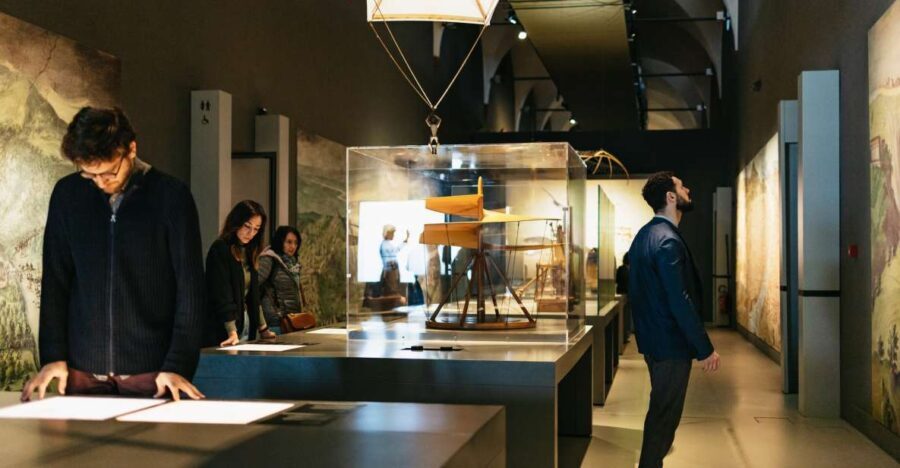
This is the one most people should book. It’s a straightforward skip-the-line entry ticket through GetYourGuide that covers all permanent exhibitions — the Leonardo Galleries, the transport pavilion, the space and astronomy section, the energy and materials halls, and the temporary exhibits included in general admission. At $15 per person, it’s essentially the same as buying at the door but without standing in line.
The main advantage over buying at the museum box office isn’t just speed (though on weekends the queue can stretch 30-40 minutes). It’s the free cancellation up to 24 hours before. Milan weather can be unpredictable, and if you’re on a tight trip schedule, knowing you can shift your museum day without losing money matters. This is the most booked option for the museum by a wide margin — thousands of people choose this every month for good reason.
One thing to flag: this does NOT include the submarine tour or the i.lab workshops. Those are bookable separately at the museum or online. If the Enrico Toti submarine is on your list, sort that out as a separate add-on when you arrive or book through the museum’s own site.
2. Leonardo da Vinci Galleries Guided Tour + Museum Ticket — $23
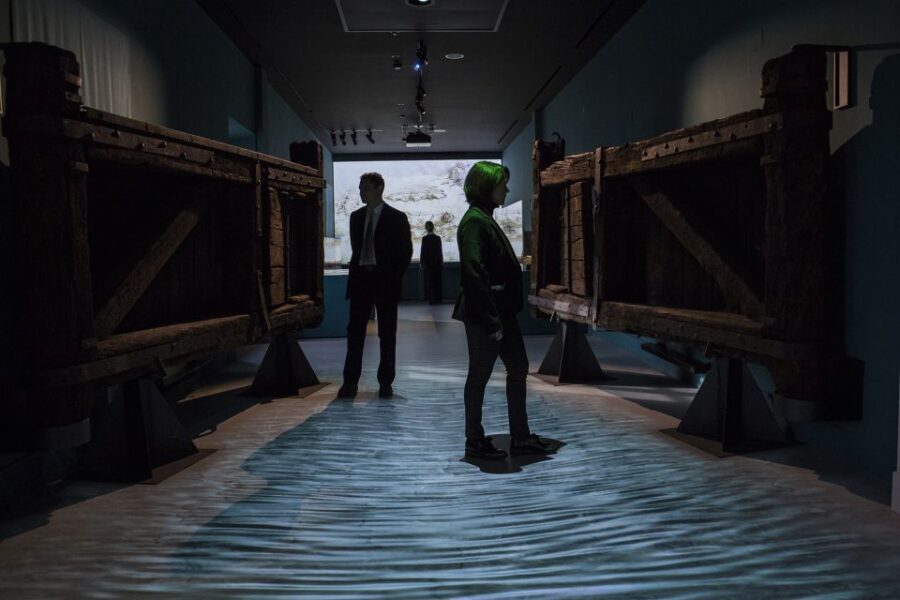
If Leonardo da Vinci is the reason you’re visiting — and for a lot of people, he is — this is the one to pick. The $23 price tag gets you a 90-minute guided tour of the Leonardo Galleries with an English-speaking guide, followed by free time to explore the rest of the museum on your own. The guide walks you through the reconstructed machines, explains which notebook each design came from, and puts them in context of what Leonardo was working on during his 17 years in Milan.
Leonardo moved to Milan in 1482 to work for Duke Ludovico Sforza, and this is where he painted The Last Supper, designed military fortifications, and filled notebooks with drawings that wouldn’t be understood for centuries. The guide connects the museum models to that story, and it genuinely changes how you see the collection. The aerial screw, the self-supporting bridge, the armoured tank — they go from “neat wooden thing” to “this is what a genius was sketching while the rest of Europe was still figuring out plumbing.”
Fair warning: the group size and guide quality vary. Some tours run with up to 20 people, which in the narrower gallery spaces means you’re craning your neck. But the knowledge you walk away with makes it worth the extra $8 over standard entry, especially if this is your one shot at the museum.
3. Entrance to the Leonardo da Vinci Science and Technology Museum (Viator) — $15.69
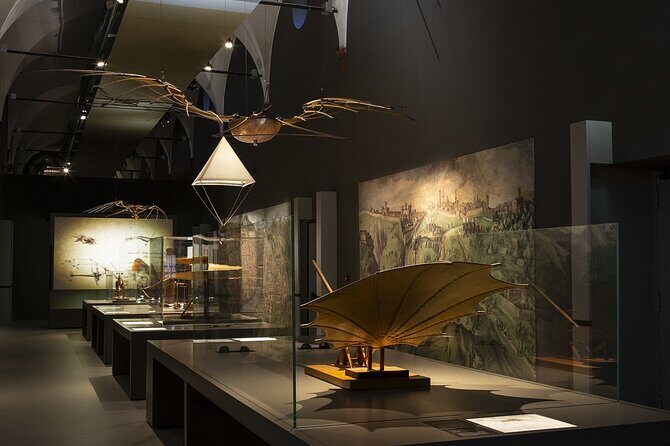
This is functionally the same skip-the-line entry ticket, but booked through Viator instead of GetYourGuide. The $15.69 price is marginally higher, but Viator offers free cancellation up to 24 hours in advance and sometimes runs promotions that bring it below the GYG price. If you already have Viator credits, a loyalty discount, or simply prefer their app and booking system, this is the way to go.
The museum experience is identical — you get entry to all permanent exhibitions, the Leonardo Galleries, the transport section, and everything else included in standard admission. The listing specifically notes it’s suitable for visitors of all ages, and it covers 1-3 hours of visit time depending on how deep you go. I’d say 2-3 hours is realistic if you want to give the main highlights proper attention.
Like the GYG listing, this does not include the submarine tour or any special temporary exhibitions that carry an additional fee. Book at $15.69 and budget an extra EUR 10 at the door if you want to get inside the Enrico Toti.
When to Visit

Tuesday through Thursday mornings are the sweet spot. The museum opens at 9:30 AM and the first hour or so is genuinely quiet — you’ll have entire halls to yourself. Fridays pick up a bit as the weekend crowd starts early, but it’s still manageable.
Weekends are busier, obviously. Sunday mornings are the worst — Italian families with kids pack the interactive sections, and the Leonardo Galleries get congested. If Sunday is your only option, aim for after 3 PM when the morning families start heading out and you get nearly 3.5 hours until the 6:30 PM close.
School holiday periods (Christmas, Easter, mid-June through August) are another level entirely. The museum is one of Milan’s top family attractions, and it shows. During August, you might wait 30+ minutes to get in even with a pre-booked timed entry, because the security check and bag screening create a bottleneck regardless of ticket type.
The museum doesn’t do night visits or extended hours. But one trick worth knowing: they occasionally run special “Notte al Museo” (Night at the Museum) events for kids — sleepovers in the museum with guided activities. They’re massively popular and sell out months in advance. Check the museum website’s “events” section if you’re visiting with children who’d think sleeping next to a submarine is the greatest thing that ever happened.
How to Get There
The museum sits on Via San Vittore 21, in the western part of central Milan. It’s well connected by public transport, and you have several options depending on where you’re coming from.
Metro: The closest station is Sant’Ambrogio on Line 2 (the green line). From the station exit, it’s a 5-minute walk west along Via San Vittore — you can’t miss the monastery facade. If you’re coming from the Duomo area, take Line 1 (red) to Cadorna and walk about 10 minutes south, or switch to Line 2 at Cadorna and ride one stop to Sant’Ambrogio.

Tram: Tram 16 runs along Via Olona/Via San Vittore and stops right near the museum. This is my preferred option from the Duomo area — it’s above ground so you actually see the city, and the stop is closer to the museum entrance than the metro station.
Walking: From the Duomo, it’s about 20-25 minutes on foot heading west through the city centre. The walk takes you past Piazza Affari (Milan’s financial district) and through some quieter residential streets. It’s pleasant enough, but in summer heat you’ll want the tram.
From Milano Centrale train station: Take Metro Line 2 (green) directly to Sant’Ambrogio. It’s about 15 minutes and costs EUR 2.20 for a single ride. No transfers needed.
Tips That Will Save You Time
Book the submarine tour online first, museum entry second. The Enrico Toti tours have far fewer spots available than general admission. If you wait until you arrive to ask about the submarine, it’ll likely be sold out for the day. Check the museum website for available time slots and book the sub tour around a month out during peak season.
Don’t try to see everything in one visit. The museum covers 50,000 square metres across multiple buildings and courtyards. If you charge through trying to tick every section, you’ll be exhausted and remember nothing. Pick two or three areas that genuinely interest you (Leonardo + transport + submarine, or Leonardo + space + interactive labs) and give those your proper attention.
Eat before or after, not in the museum. The museum cafe exists but it’s overpriced and basic. Via San Vittore and the surrounding Navigli district have plenty of good lunch spots. Grab a panino before your visit or head to the Navigli canals afterward for an aperitivo — it’s a 15-minute walk south and the canal-side bars come alive from about 6 PM.
The interactive labs need advance booking. The i.lab workshops fill up fast, especially “Genetics” and “Robotics” which are the most popular with kids. Book online when you buy your entry ticket, not when you arrive. Each lab session runs about 45 minutes and costs EUR 9 per participant.
Audio guides are available but honestly unnecessary for most of the museum. The signage is good and bilingual. Save your money unless you specifically want deep commentary on the Leonardo Galleries — and in that case, the guided tour is better value than an audio guide anyway.
What You’ll Actually See Inside
The museum was founded in 1953, on the 500th anniversary of Leonardo da Vinci’s birth, specifically to celebrate Italy’s scientific and technological heritage. But it’s expanded well beyond that original mission. Here’s what the main sections actually cover.
The Leonardo da Vinci Galleries are the headline act, and rightfully so. Over 130 machines and models reconstructed from Leonardo’s notebooks — the world’s largest collection of its kind. You’ll see the aerial screw (his proto-helicopter), hydraulic systems, mechanical looms, military machines, and anatomical models. The models are built to full scale where possible, and displayed alongside reproductions of the original drawings so you can see exactly how the builders translated sketch to machine. Leonardo lived in Milan from 1482 to 1499, working under Duke Ludovico Sforza, and this gallery makes the case that his engineering genius was at least as impressive as his painting.
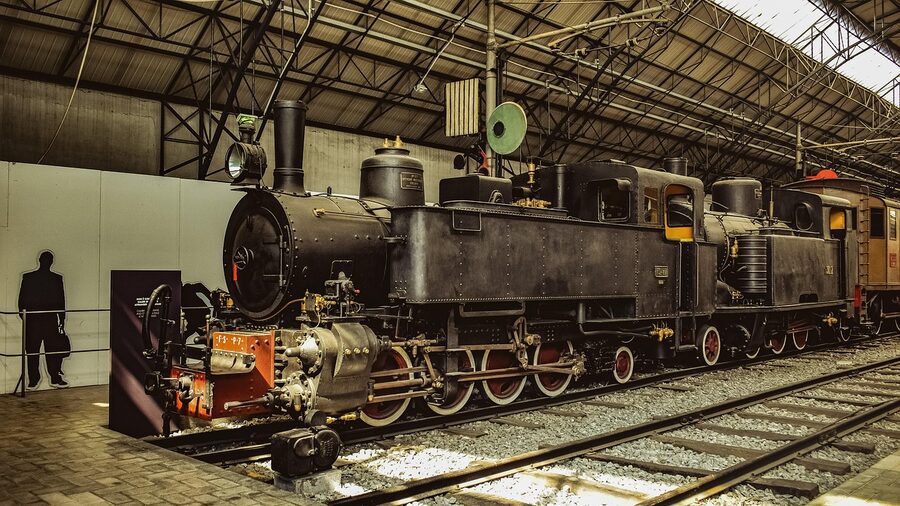
The Transport Pavilion is where the museum really surprises people. There’s a full-size railway hall with steam locomotives and antique rolling stock, an aviation section spanning from early flight to jet engines, and a maritime section with ship models and navigation instruments. It’s all housed in a separate building connected to the main monastery, and the sheer scale of it catches visitors off guard. Most people don’t expect to find a railway museum inside a science museum, but here it is — and it’s one of the better railway collections in Italy.
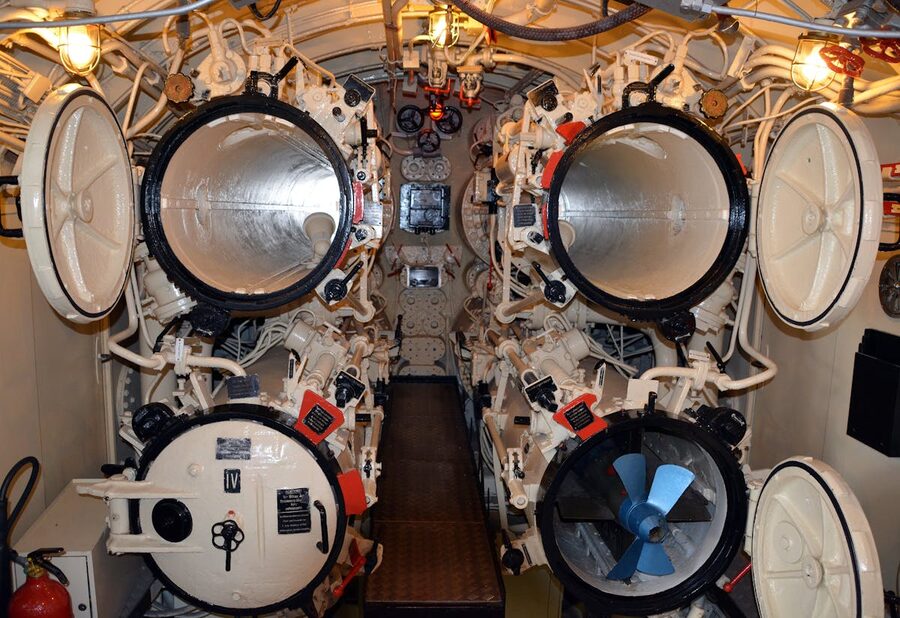
The Enrico Toti Submarine (S-506) sits outside in the museum courtyard, and it’s exactly as surreal as it sounds. This was Italy’s first submarine built after World War II, launched in 1967 and decommissioned in 1999. It was transported through the streets of Milan in 2005 (imagine that logistical nightmare) and installed as a permanent exhibit. The guided tour takes you through the entire interior — the torpedo room, the crew quarters, the engine room, the command centre. It’s tight, industrial, and genuinely fascinating. Book it separately, EUR 10 on top of your museum ticket.
Space and Astronomy: A smaller but well-put-together section with real space hardware, satellite models, and a piece of moon rock. It’s not on the level of the Smithsonian’s Air and Space Museum, but for a section within a broader museum, it punches above its weight.
Energy and Materials: The most “traditional science museum” part of the collection — interactive exhibits on electricity, nuclear energy, petroleum, metals, and plastics. Some of it feels dated, but the hands-on elements work well for younger visitors.
While You’re in Milan
The Science Museum pairs well with a few other spots that are walkable from Via San Vittore. The Last Supper is at Santa Maria delle Grazie, literally a 5-minute walk from the museum — Leonardo painted it while he was living and working in this exact neighbourhood. If you haven’t booked Last Supper tickets yet, read our guide because those sell out weeks in advance and you can’t just show up.
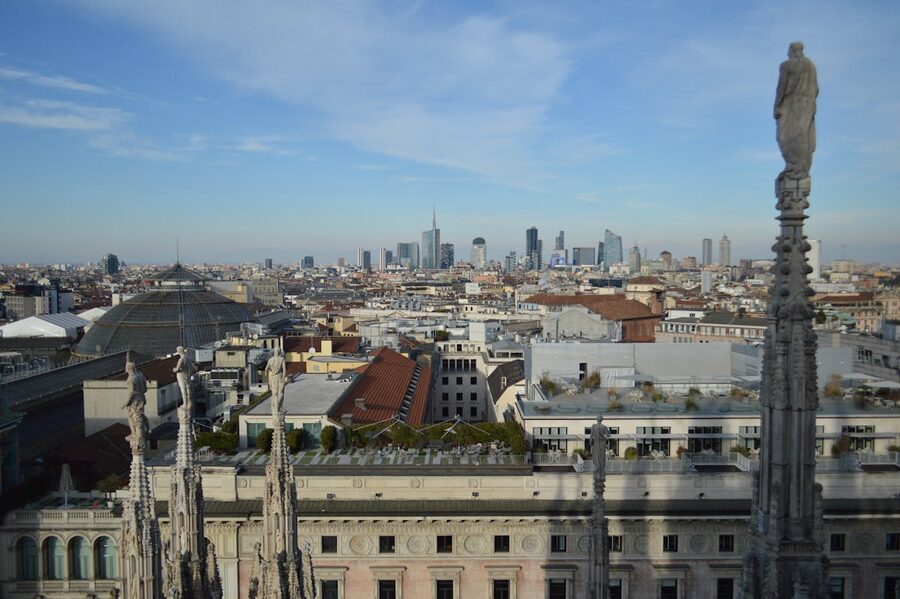
The Milan Duomo is about 20 minutes east on foot, and the rooftop terraces give you the best view of the city. For a different perspective on Milan, the hop-on hop-off bus runs a route that covers both the museum neighbourhood and the Duomo area, which is useful if your legs are tired after four hours of walking through exhibits. And if you’ve got a spare day, a day trip to Lake Como is about an hour by train from Milano Centrale — a complete change of pace from the city.
This article contains affiliate links. When you book through these links, we may earn a small commission at no extra cost to you. This helps us keep creating free travel guides.