
I stood directly beneath the hole in the roof, tilted my head back, and waited. A single drop of rain hit my forehead. Then another. Around me, people scattered toward the walls, shielding their phones. But I just stood there, watching water fall through a 9-meter opening in a 2,000-year-old ceiling that modern engineers still argue about. This is the Pantheon — a building so impossibly well-made that it has survived nearly two millennia without a structural renovation. No steel reinforcement. No restoration of the dome. Just Roman concrete, gravity, and whatever dark magic Hadrian’s architects understood that we apparently don’t.
If you’ve done the Colosseum and the Vatican Museums, the Pantheon is the natural next stop. It’s different from both of those, though. Smaller. Quieter (sometimes). And the thing that gets you isn’t size or spectacle — it’s the way sunlight moves across the marble floor like a slow clock, inching from one side of the rotunda to the other as the hours pass. Raphael saw that same light beam and decided this is where he wanted to be buried. Forever.
Since mid-2023, you need a ticket to get in. It used to be completely free — one of the last great freebies in Rome. That changed when visitor numbers went through the roof and the city decided to charge a modest fee. The good news: it’s only 5 euros, and the system is actually pretty straightforward once you know how it works.
How Tickets Work (Yes, the Pantheon Charges Now)
The Pantheon started charging admission in July 2023. Before that, you could walk in off the street at almost any hour and stand under the dome for free. I miss those days, honestly. But at 5 euros, it’s still one of the cheapest major attractions in Rome by a wide margin (the Colosseum is 16 euros and the Vatican Museums run 17 euros).
Ticket prices:
- Adults (26+): 5 euros
- EU citizens aged 18-25: 2 euros (bring your ID)
- Under 18: Free (still need a ticket)
- Rome residents: Free with proof of residency
- First Sunday of every month: Free for everyone (expect serious crowds)
Where to buy:
You have two options. The first is buying at the ticket kiosks outside the Pantheon entrance. There are two lines — one for cash, one for card. Both tend to be about the same length. Arriving before 9 AM (when doors open) means the line moves quickly because the building is empty and they let everyone in fast.
The second option is buying online through the official Museiitaliani booking portal. Fair warning: this website is clunky. The interface works, but it’s not exactly user-friendly, and the refund policy is unclear. Tickets go on sale mid-month for the following month, and time slots fill up during peak season.
The third (and honestly easiest) option is booking through a platform like GetYourGuide or Viator. You pay a small markup over the base 5-euro price, but you get a fast-track entry line, clearer cancellation policies, and often an audio guide or live guide thrown in. For most people, the convenience is worth the extra few euros.
Opening hours:
- Daily: 9:00 AM – 7:00 PM (last entry 6:30 PM)
- Closed: January 1, August 15, December 25
- Ticket office closes one hour before the site closes
- Religious celebrations can temporarily pause visits — the Pantheon is still an active Catholic church
Self-Guided vs Audio Guide vs Guided Tour
This depends entirely on how much you care about why the dome doesn’t collapse, who’s buried in the floor, and what the seven planetary niches originally represented. If history is your thing, a guided tour is worth every cent. If you just want to stand under the oculus and feel small for twenty minutes, self-guided is fine.
Self-guided (5 euros): You walk in, look up, walk around, walk out. Perfectly fine. Most people spend 20-30 minutes. You’ll miss a lot of context — like why there are drainage holes in the floor (yes, rain comes through the oculus and they’ve been dealing with it for 2,000 years) or that the dome gets progressively lighter toward the top because the Romans mixed different aggregates into the concrete at different heights. But the experience is still powerful.
With audio guide (14-21 euros): The GetYourGuide audio guide option is the most popular ticket in the building — 21,000+ reviews at 4.3 stars. It includes fast-track entry and an audio tour in multiple languages. You move at your own pace, which is nice. The Viator version (Official Audio Guided Tour) runs about 45 minutes and covers 15 listening points.
Guided tour (21-53 euros): A live guide who can answer questions, point out details you’d walk right past, and tell stories that make the building come alive. Worth it if this is your one shot at the Pantheon. The price range depends on group size.
Best Pantheon Tours
I went through the actual tour options available for the Pantheon and picked the ones worth your time based on reviews, value, and what you actually get. Here are the standouts:
Rating: 4.3/5 (21,740 reviews) | Duration: ~1 hour | Price: From 14 euros
The most-booked Pantheon experience by far. You get skip-the-line entry plus the official audio guide. Good for people who want to explore at their own pace but still learn something. The fast-track entry alone is worth it during summer when the ticket line stretches across the piazza.
Check availability on GetYourGuide
Rating: 4.9/5 (4,002 reviews) | Duration: 45-60 minutes | Price: From 21 euros
This is the one I’d pick. Nearly perfect score from over 4,000 people. A live guide walks you through everything — the dome engineering, the royal tombs, Raphael’s burial spot, the whole story of how a pagan temple became a Catholic church. Under an hour, so it doesn’t drag.
Check availability on GetYourGuide
Rating: 5.0/5 (1,447 reviews) | Duration: 1 hour | Price: From 41 euros
A perfect score. This one covers the Pantheon in serious depth — pagan origins, Christian conversion, the architectural tricks that make the dome possible. More expensive, but the reviews speak for themselves. Great if you want to really understand what you’re looking at.
Check availability on Viator
Rating: 4.9/5 (1,226 reviews) | Duration: 50-60 minutes | Price: From 51 euros
Small group means you can actually hear the guide and ask questions without shouting. The higher price buys you a more intimate experience. If you’re traveling with someone who cares about art and architecture, this is the way to go.
Check availability on GetYourGuide
Rating: 4.6/5 (4,108 reviews) | Duration: 1 hour | Price: From 5 euros
The budget option. Just 5 euros gets you entry plus an interactive app that works like a basic audio guide on your phone. No fast-track line here, but at this price, it’s basically the standard ticket with a free app thrown in. Hard to argue with that.
Check availability on GetYourGuide
Rating: 4.9/5 (522 reviews) | Duration: 2 hours | Price: From 46 euros
If you want to knock out several Rome highlights in one evening, this walking tour hits the Pantheon, Piazza Navona, Trevi Fountain, and the Spanish Steps at sunset. The Pantheon portion isn’t as deep as a dedicated tour, but the overall experience — watching Rome shift into its golden hour lighting — is something else. Pairs well with a hop-on hop-off bus tour earlier in the day.
Check availability on GetYourGuide
Rating: 4.7/5 (386 reviews) | Duration: 3 hours | Price: From 41 euros
A more thorough walking tour that covers the Pantheon plus Trevi Fountain and several of Rome’s famous piazzas. Three hours is enough time to actually learn something at each stop rather than just snapping photos. Good value for a half-day in the historic center.
Check availability on GetYourGuide
When to Visit the Pantheon
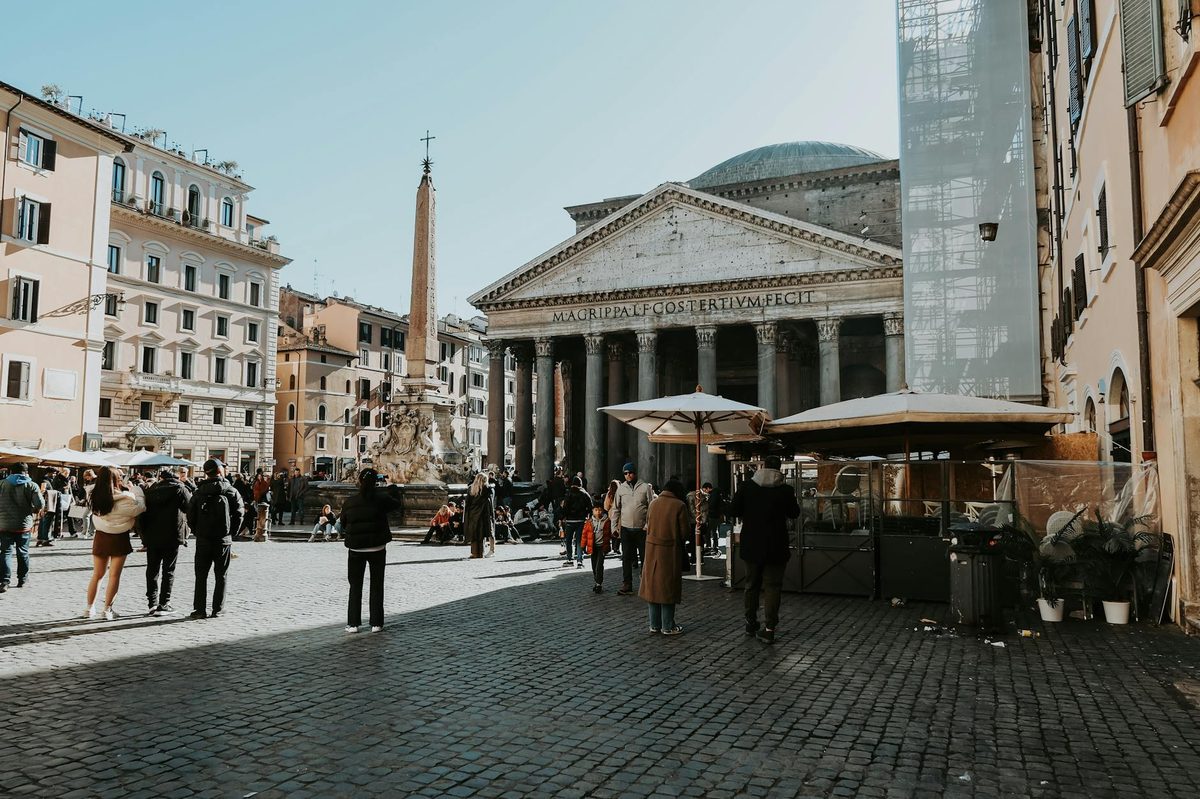
Timing matters more than you’d think. The Pantheon sits in the dead center of Rome’s tourist zone, wedged between Piazza Navona and the Trevi Fountain. It’s going to be busy no matter what. But there are a few things that help.
Best time of day: Right at opening (9 AM) or in the last hour before closing (6-7 PM). The morning crowds thin out a bit between 1-2 PM when everyone breaks for lunch, but this isn’t reliable in peak season. Midday (11 AM – 1 PM) is when the sun beam through the oculus hits the floor most dramatically — it’s the most photogenic time, but also the most packed.
Best day of week: Honestly, I couldn’t tell the difference. Some guides say weekdays are better, but from what I’ve seen (and what other travelers report), the Pantheon stays consistently busy regardless. The one exception: the first Sunday of every month is free, which means the lines are absolutely brutal. Skip that unless free entry really matters to you.
Best season: November through March (excluding Christmas/New Year weeks) is your best bet for shorter lines. April through October is peak season and the piazza turns into a sea of tour groups. September is particularly chaotic.
The rain factor: Here’s something most guides don’t mention. If you visit when it’s raining, you’ll see water falling through the oculus and hitting the marble floor below. The ancient Romans built a drainage system into the floor — slightly convex with 22 small holes — that’s still functioning after nearly 2,000 years. Watching the rain come through the hole in the roof is one of those moments that makes you appreciate how good these builders were.
Tips for Your Visit
Dress code: The Pantheon is officially the Basilica di Santa Maria ad Martyres — a consecrated Catholic church. Shoulders and knees need to be covered. They do enforce this, especially during warmer months when people show up in tank tops and shorts. Bring a light scarf or shawl if you’re wearing sleeveless clothing.
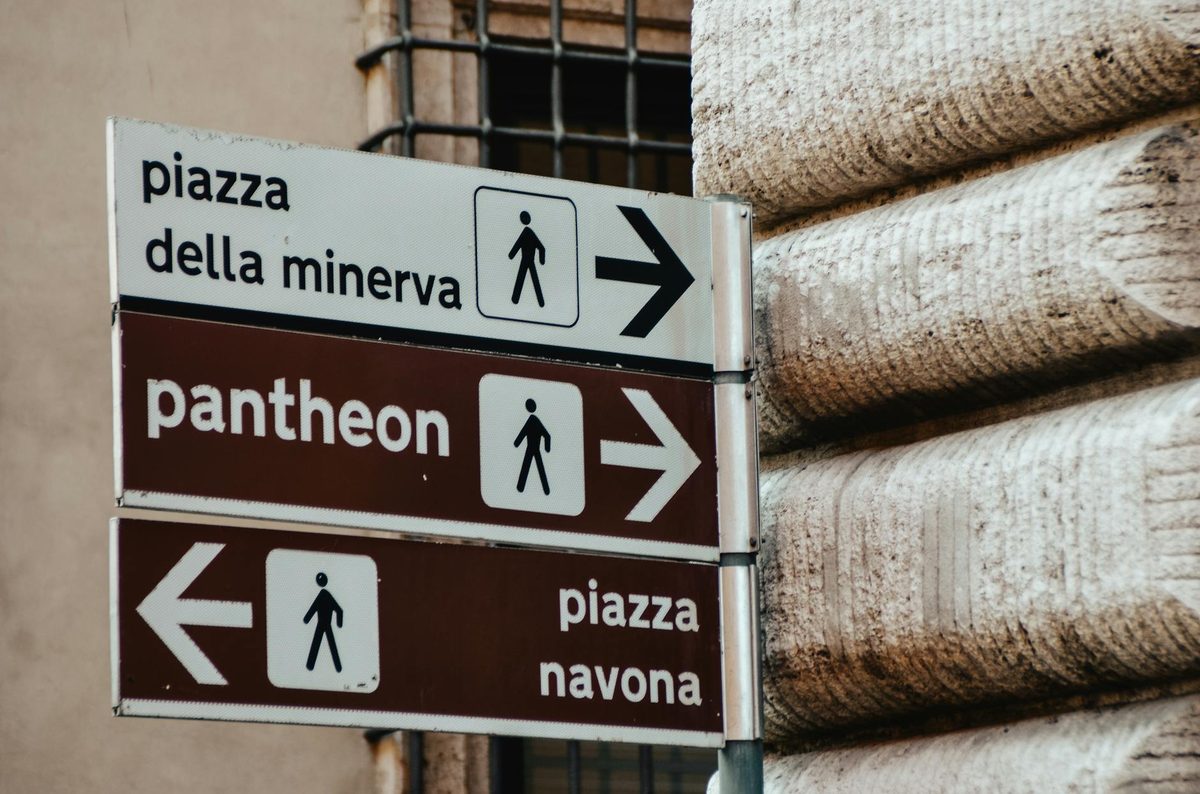
Getting there: It’s in the middle of the pedestrian zone, so no metro station is super close. The nearest stop is Barberini on Line A (about a 12-minute walk). Buses 30, 40, 62, 64, 81, 87, and 492 all stop at Largo di Torre Argentina, which is a 5-minute walk south. But if you’re already doing the Colosseum and Vatican circuit, you’ll probably just walk from one of those areas. The hop-on hop-off bus has a stop nearby too.
How long to spend: Self-guided visitors typically need 20-30 minutes. With an audio guide, plan for 45-60 minutes. Guided tours run 45 minutes to an hour. Add time for lingering if the light beam is doing something interesting.
Photography: Allowed, but no flash and no tripods. The interior is dim enough that phone cameras sometimes struggle. The best shots are looking straight up at the dome from the center of the rotunda, or catching the light beam hitting the wall around midday.
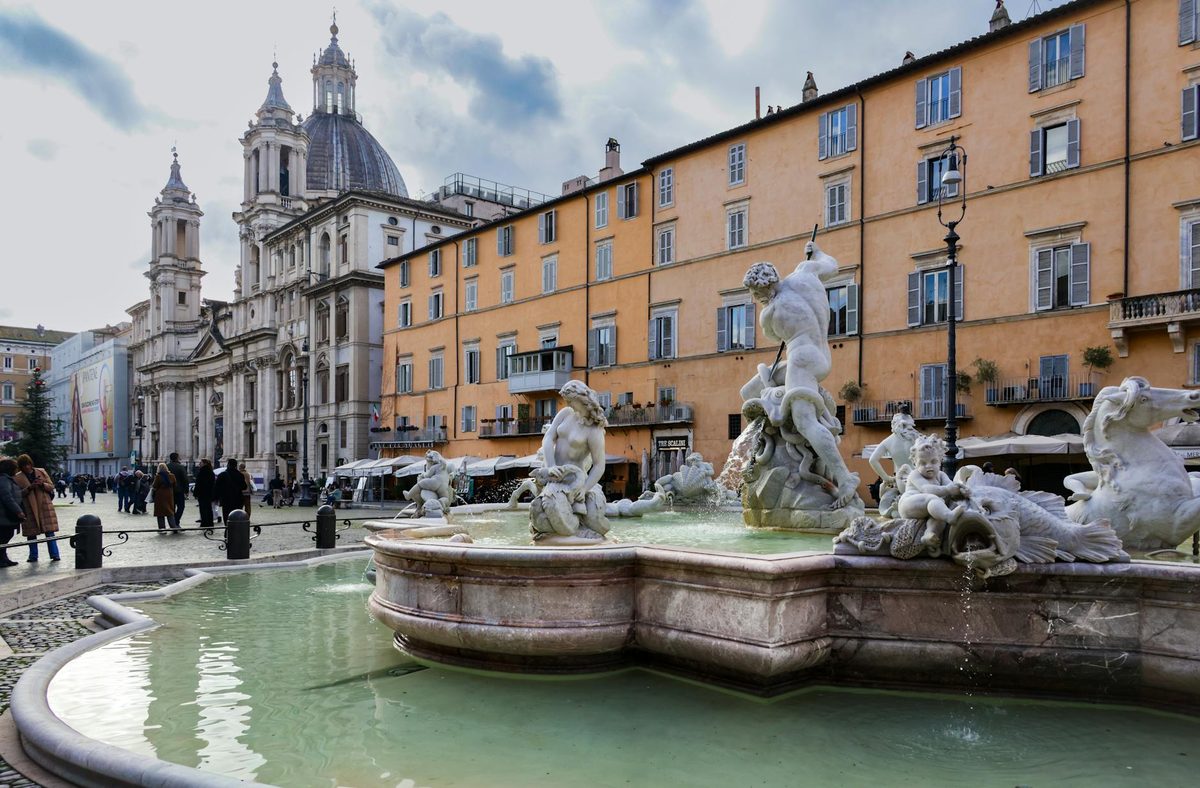
Combine it with nearby sites: Piazza Navona is a 5-minute walk. The Trevi Fountain is 10 minutes. The Colosseum is about 20 minutes on foot (or one bus ride). You can easily do the Pantheon, Piazza Navona, Trevi, and the Spanish Steps in a single morning walk. If you’re doing the full Rome circuit, grab a hop-on hop-off bus pass to connect the dots.
Food tip: Armando al Pantheon (literally steps from the entrance) is a legendary Roman trattoria. Book ahead. For quick gelato, Cremeria Monteforte is solid and not as touristy as the places directly on the piazza. Skip the restaurants with picture menus on Piazza della Rotonda — they’re tourist traps charging double for mediocre pasta.
What You’ll See Inside
The Pantheon isn’t a huge building. You walk in, and essentially you’re in one circular room. But what a room.
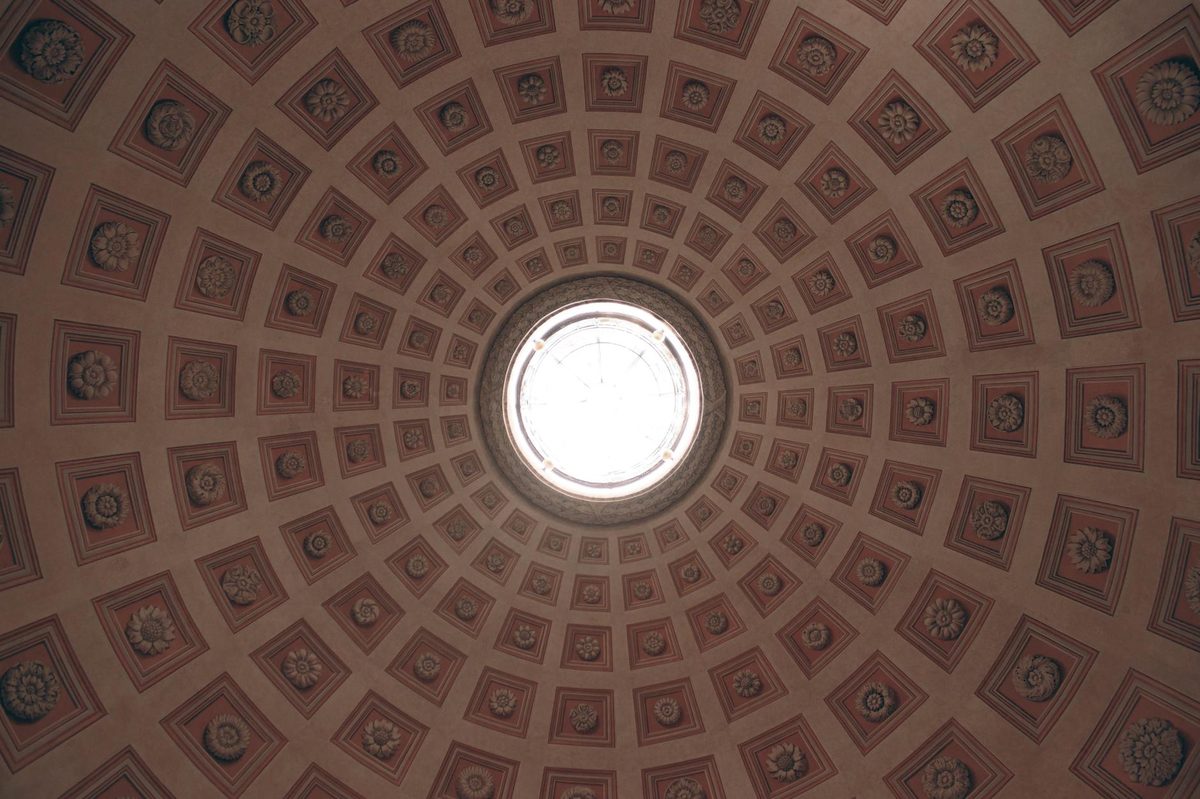
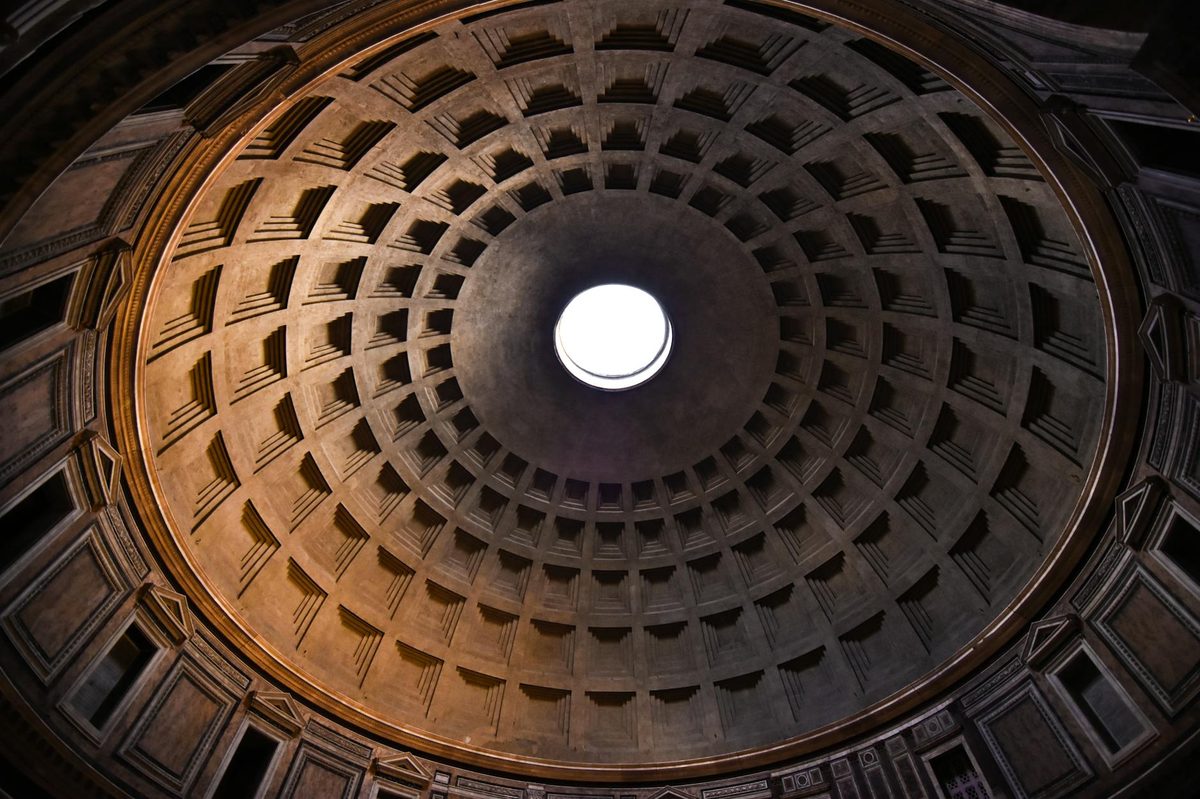
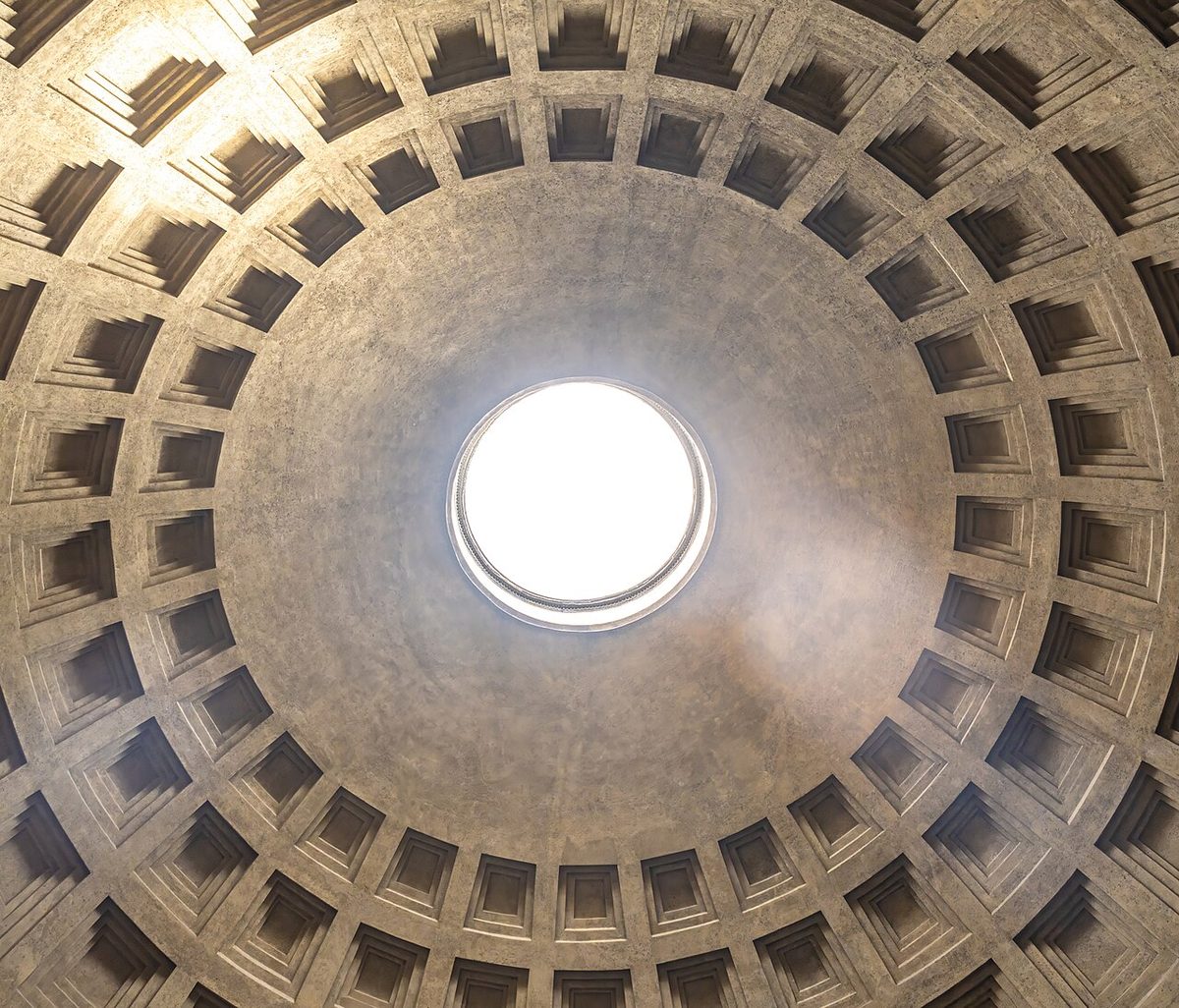
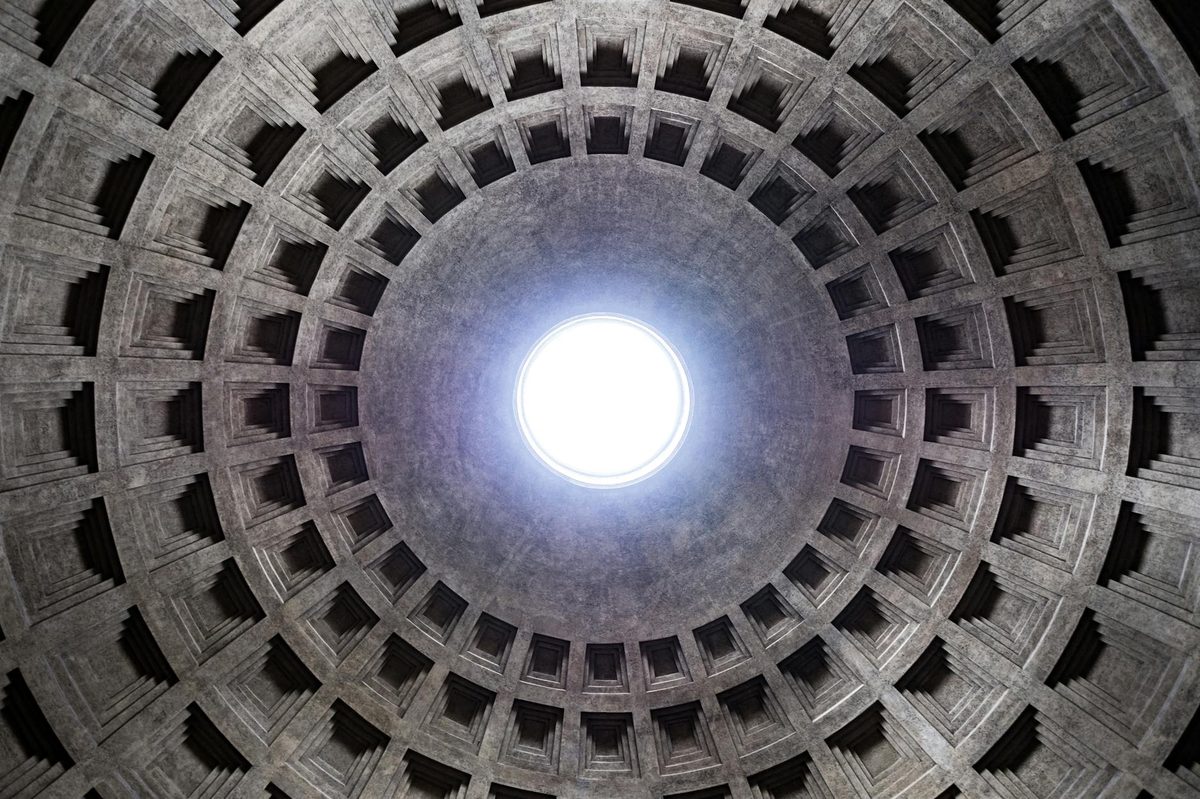
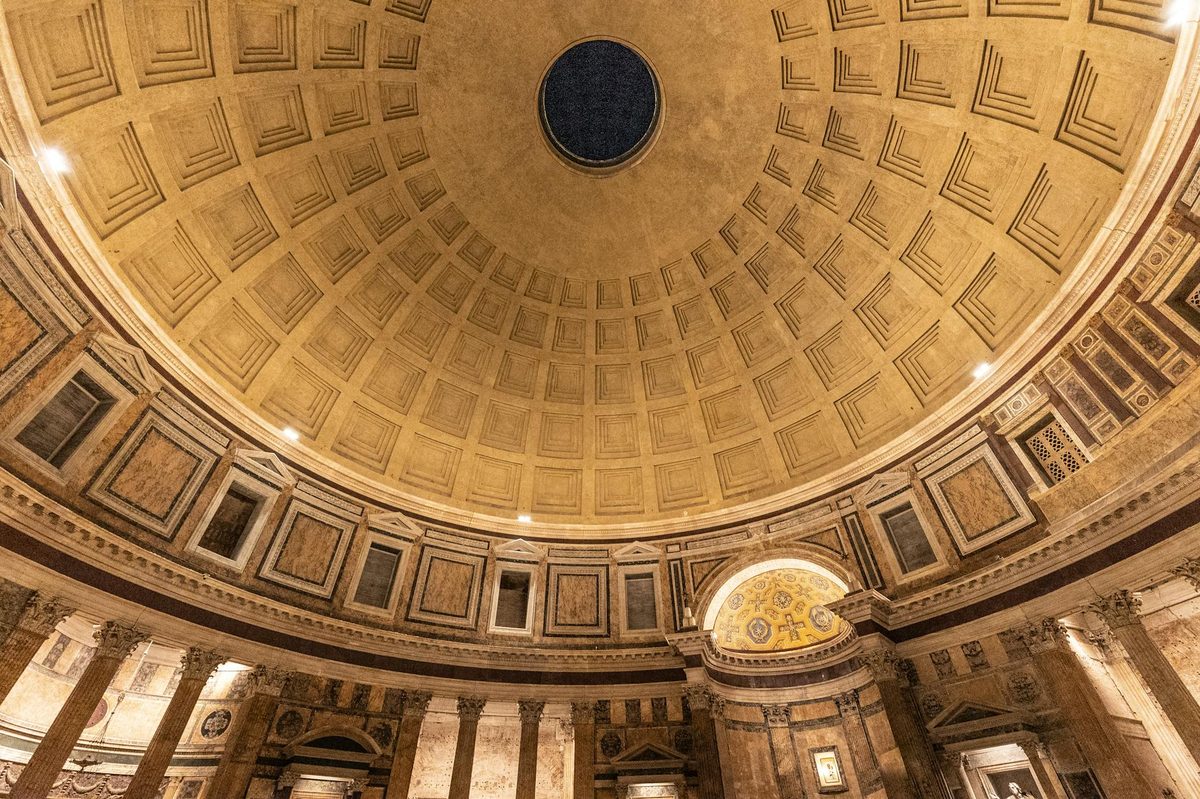
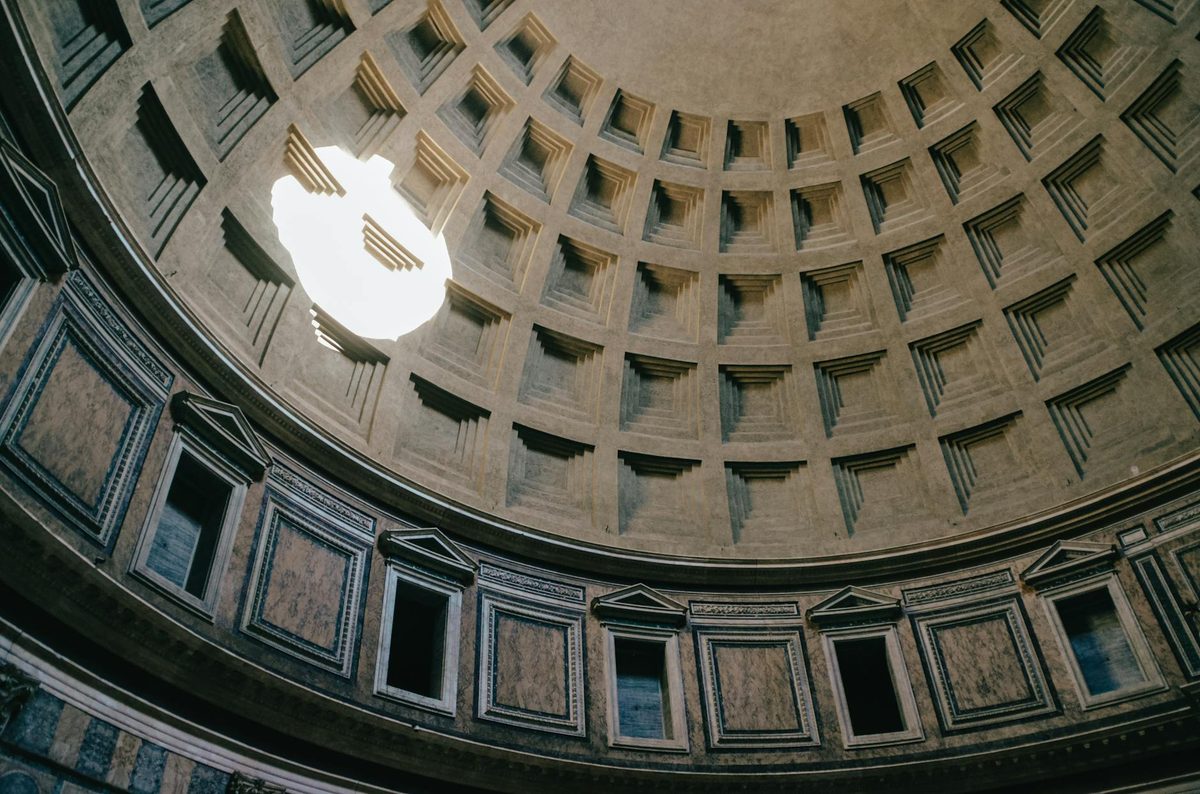
The dome: This is what everyone comes for. The dome spans 43.3 meters across — the exact same measurement as the height from the floor to the top of the oculus. That means if you could complete the dome into a full sphere, it would touch the floor perfectly. The Romans planned that. The interior surface is covered in five rows of 28 coffers (the square recessed panels) that get progressively smaller toward the top, creating an optical illusion of even greater height. The concrete itself changes composition as it rises: heavy basalt aggregate at the base, lighter pumice near the top. Nearly 2,000 years later, this is still the largest unreinforced concrete dome ever built.

The oculus: The 9-meter-wide opening at the top of the dome. It’s the only source of natural light in the building, which creates a moving spotlight effect as the sun crosses the sky. On April 21st (Rome’s traditional birthday), the beam aligns perfectly with the main entrance at noon. The oculus also lets in rain, wind, and occasionally birds. Those 22 drainage holes in the slightly convex floor handle the water.
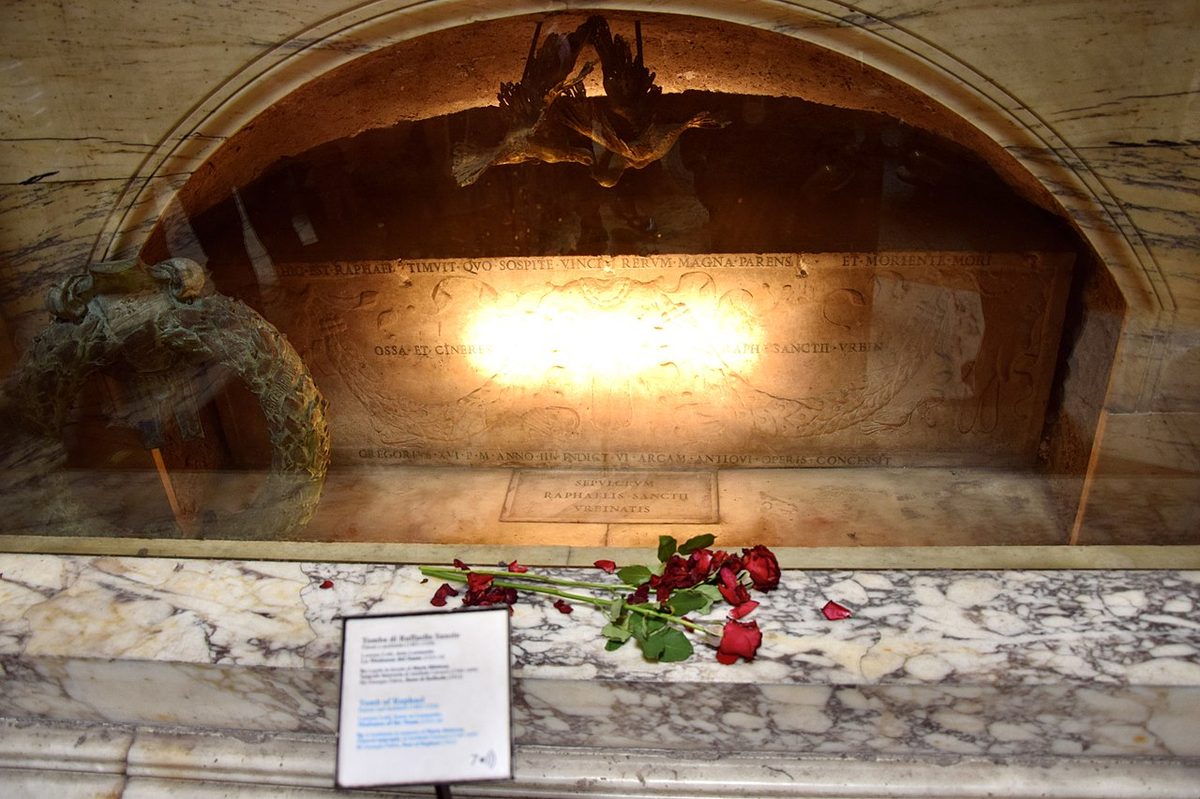
Raphael’s tomb: In an alcove on the left side (as you face the altar), Renaissance painter Raphael Sanzio is buried. He died in 1520 at just 37 and chose the Pantheon as his final resting place. His tomb sits beneath a Madonna sculpture by Lorenzetto. Most people walk right past it without noticing — look for the Latin inscription and the simple marble sarcophagus.
The royal tombs: Italy’s first two kings — Victor Emmanuel II and Umberto I — are also buried here, along with Queen Margherita (yes, the one the pizza is named after). Their tombs are the large, ornate ones you can’t miss on the right side of the rotunda.
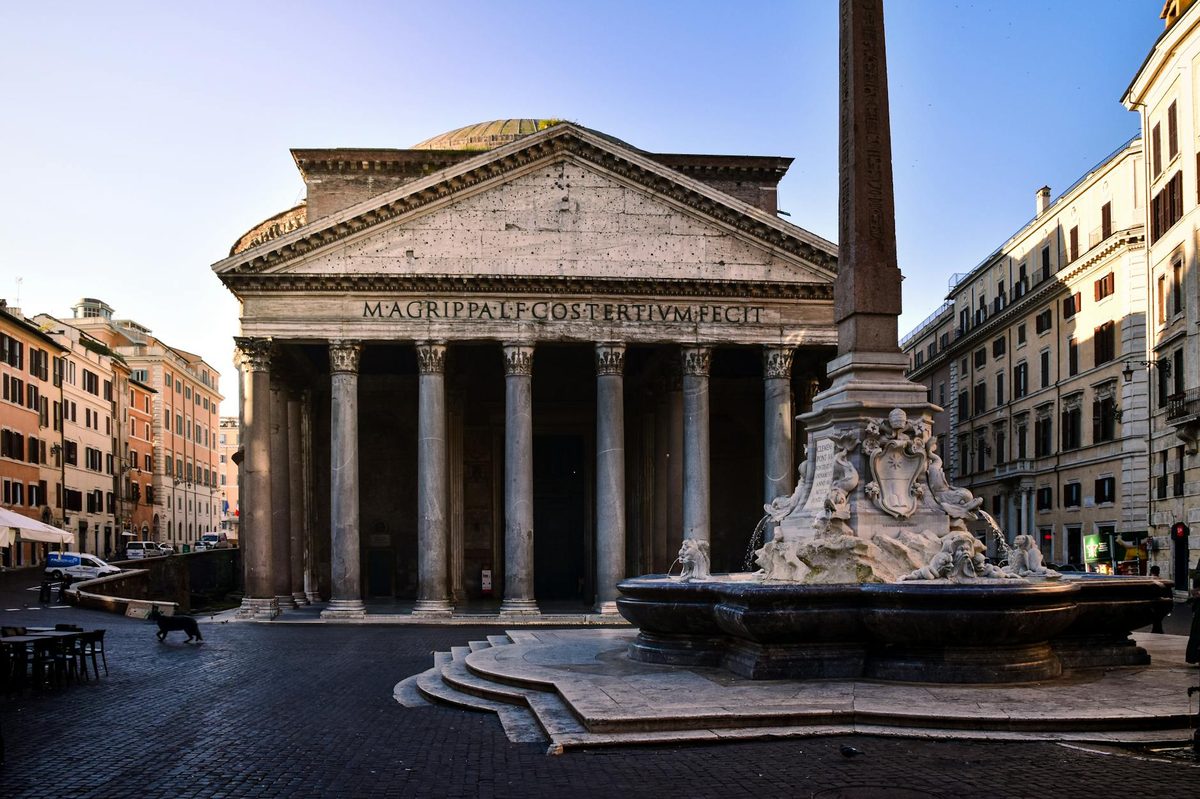
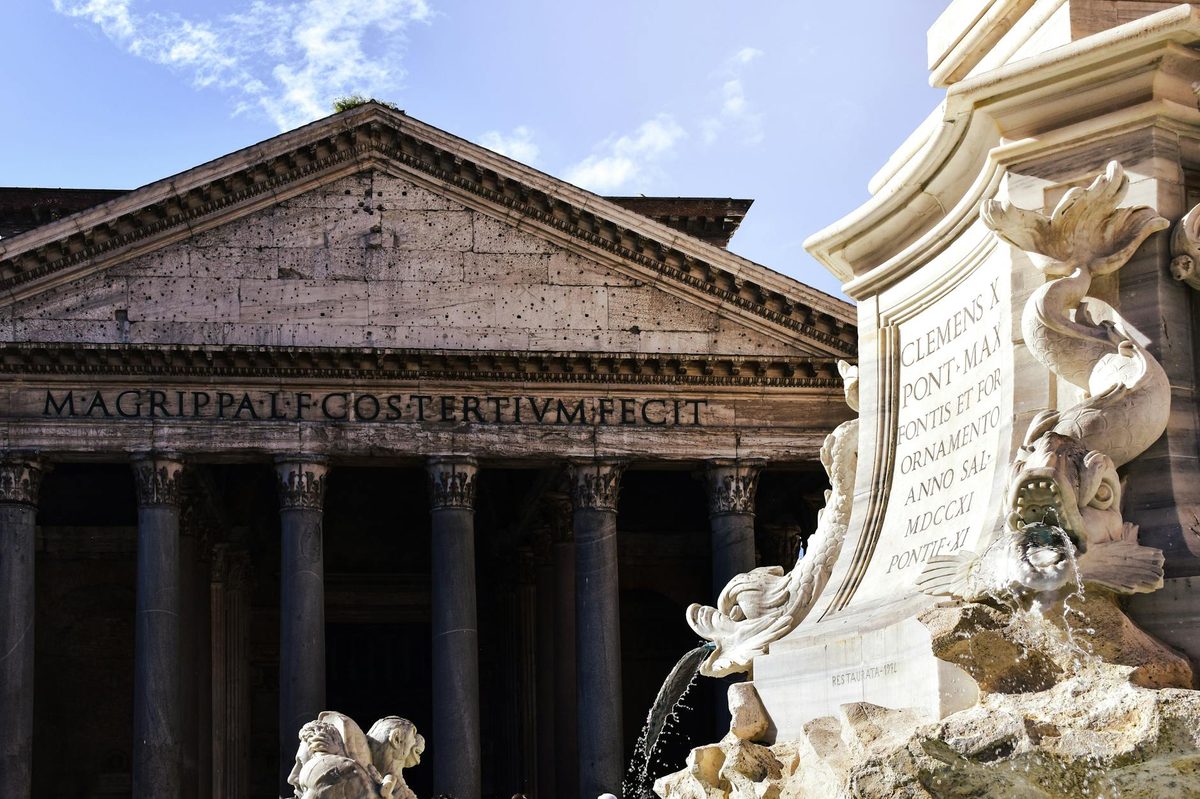
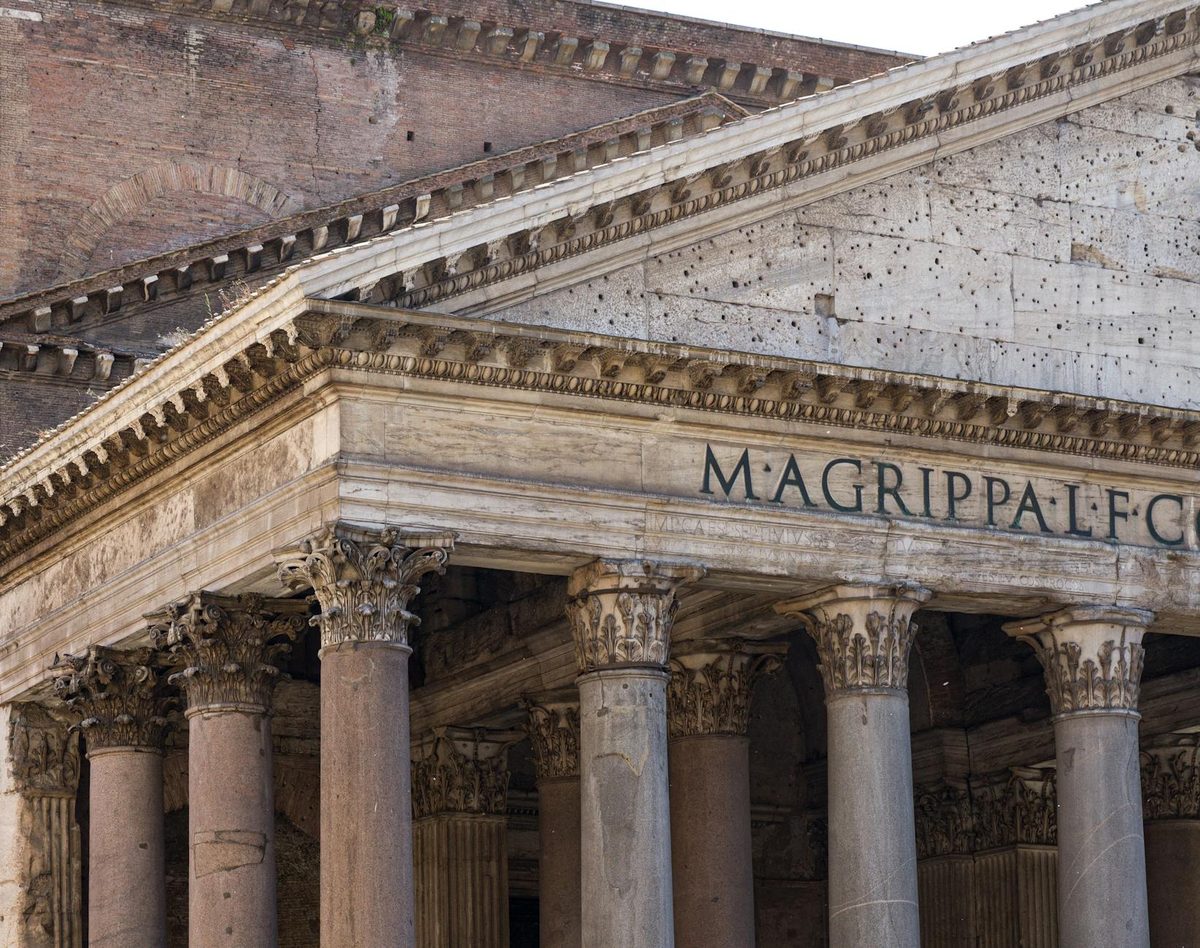
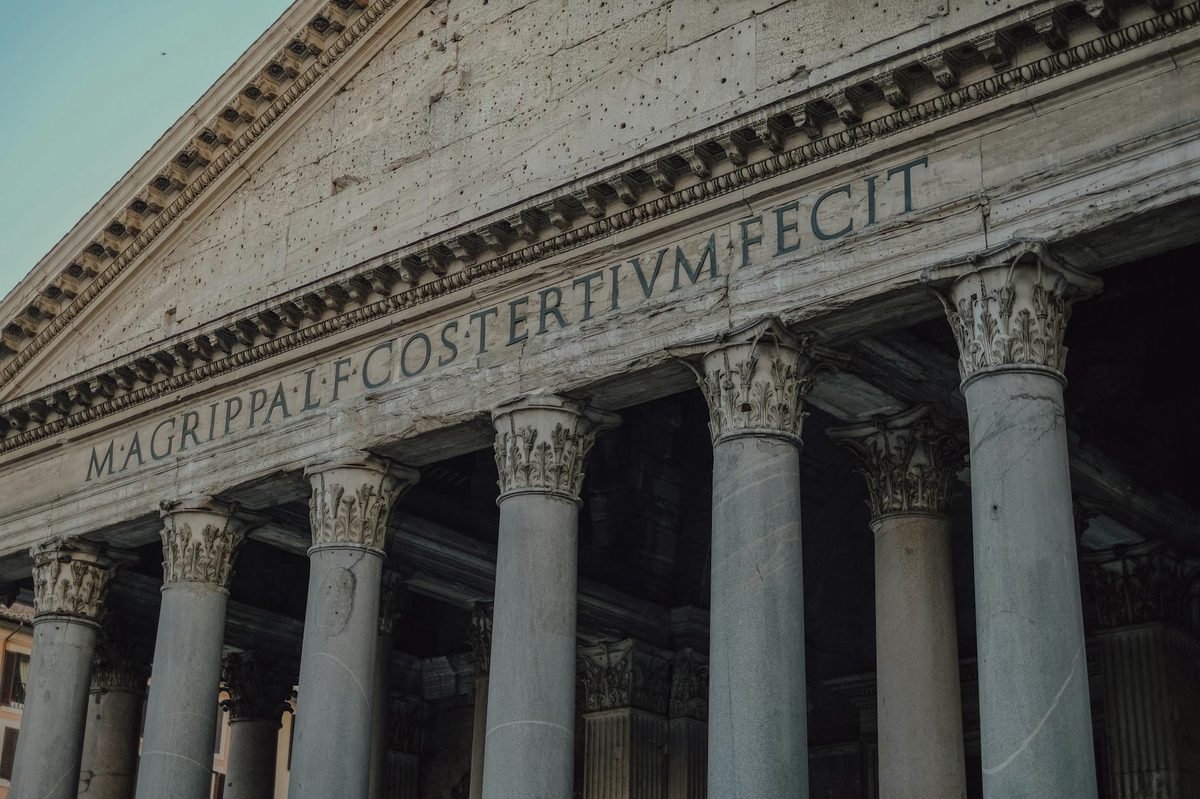
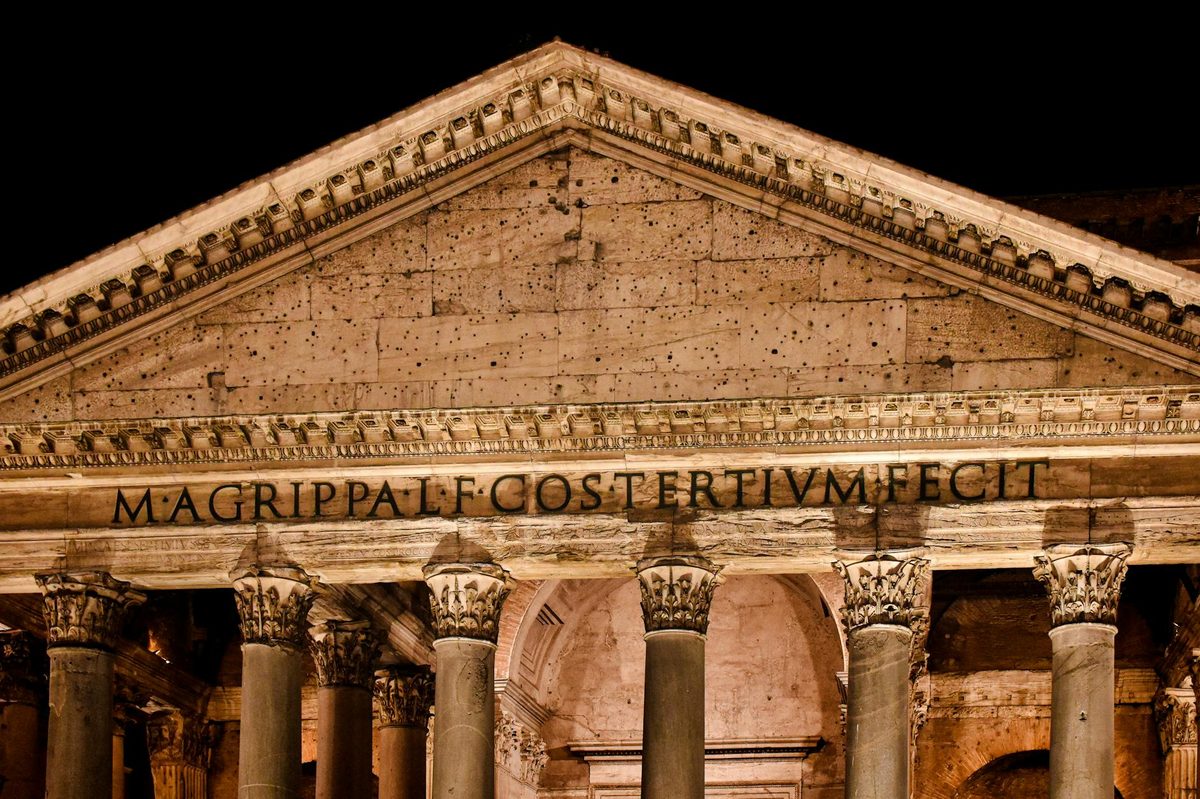
The inscription: Look up at the portico before you go in. The Latin text reads M-AGRIPPA-L-F-COS-TERTIVM-FECIT, meaning “Marcus Agrippa, son of Lucius, in his third consulate, made this.” But here’s the thing — Agrippa’s original temple burned down twice. The building you’re looking at was completely rebuilt by Emperor Hadrian around 125 AD. Hadrian kept the old inscription anyway. Scholars have debated why for centuries.
The floor: Don’t forget to look down. The original Roman floor is still mostly intact — geometric patterns in colored marble (porphyry, granite, giallo antico) from quarries across the ancient empire. The squares and circles mirror the geometry of the dome above. Some of the marble slabs have been replaced over the centuries, but the overall pattern is original.
The bronze doors: The massive doors at the entrance are original Roman bronze, standing 7.5 meters tall. They’re among the oldest doors still in use anywhere in the world. For perspective: these doors were already ancient by the time the Roman Empire fell.
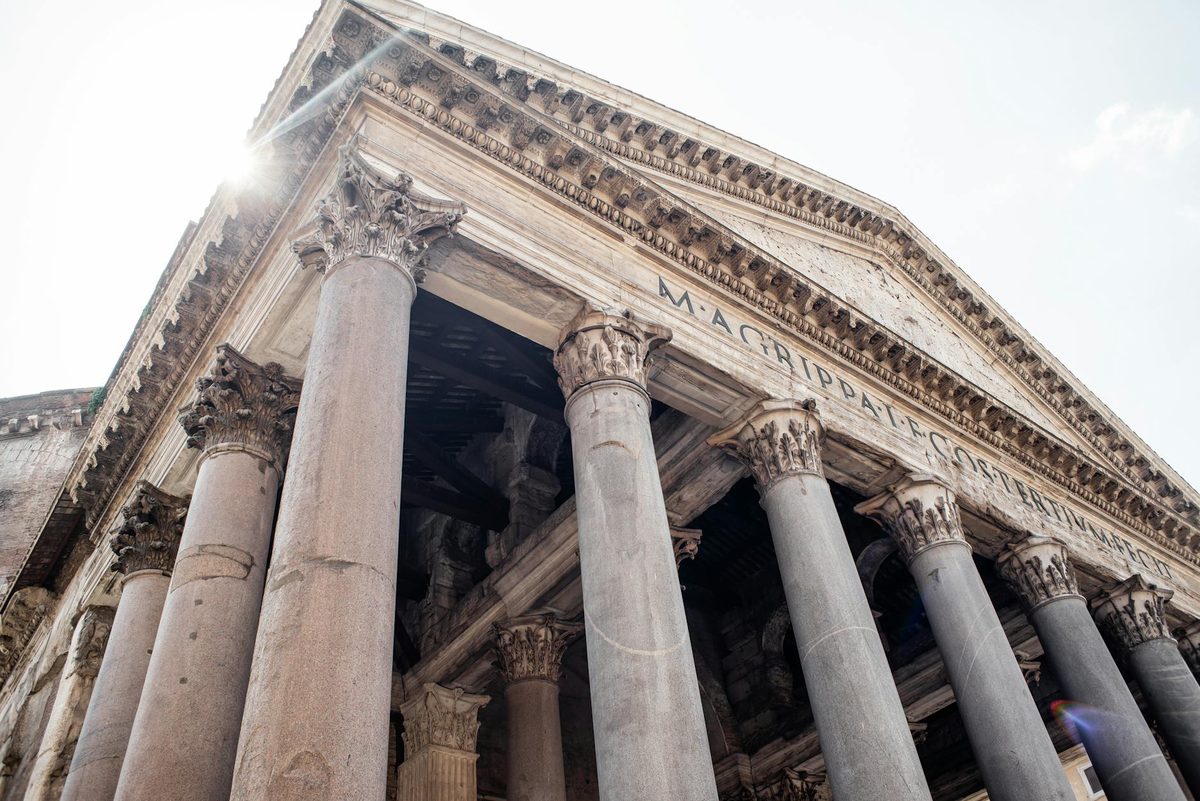
The columns: Each of the 16 front columns is a single piece of Egyptian granite, 11.8 meters tall and weighing about 60 tonnes. They were quarried in Egypt, shipped across the Mediterranean, hauled up the Tiber, and erected by hand. The logistics alone are staggering.
This article contains links to tours and tickets from platforms like GetYourGuide and Viator. If you book through these links, we may earn a small commission at no extra cost to you. This helps us keep creating free travel guides. We only recommend tours and experiences we’d genuinely suggest to a friend.