
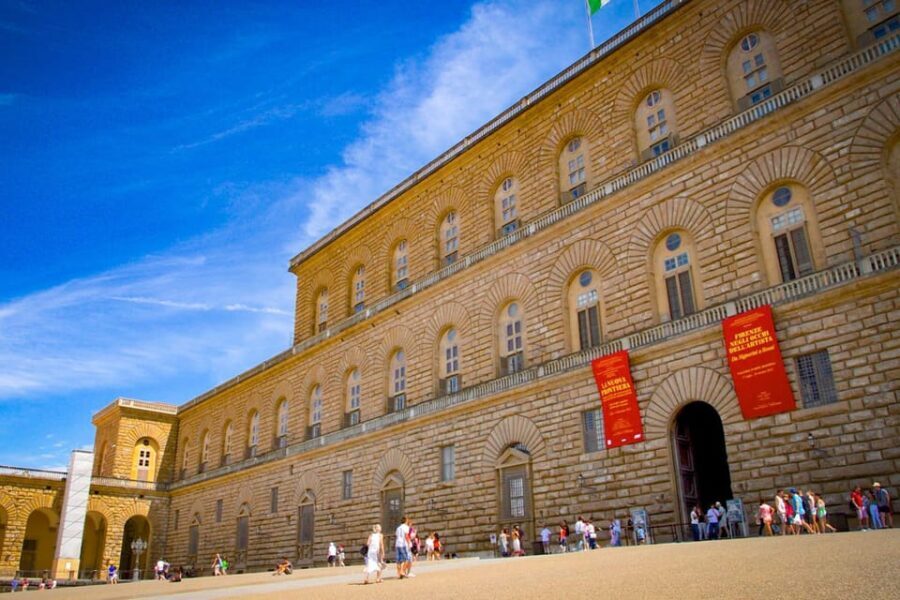
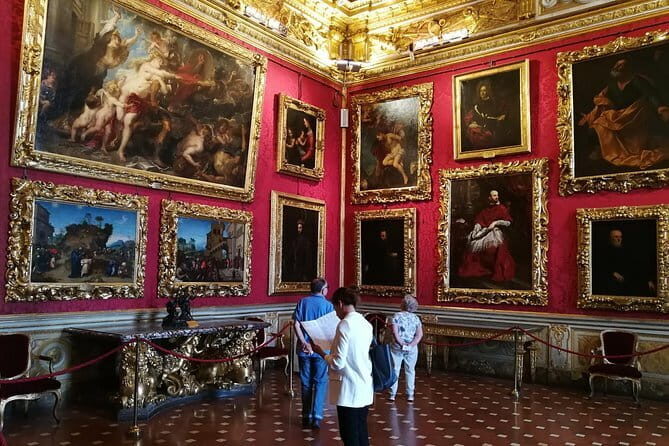
The rooms inside Palazzo Pitti don’t prepare you. You walk in expecting a museum, and instead you get the Palatine Gallery — a series of massive, ornate rooms where paintings by Raphael, Titian, and Caravaggio hang on walls covered in gilded stucco, crammed together floor to ceiling in the old Medici style. No tasteful white gallery walls here. The art doesn’t whisper at you. It shouts.
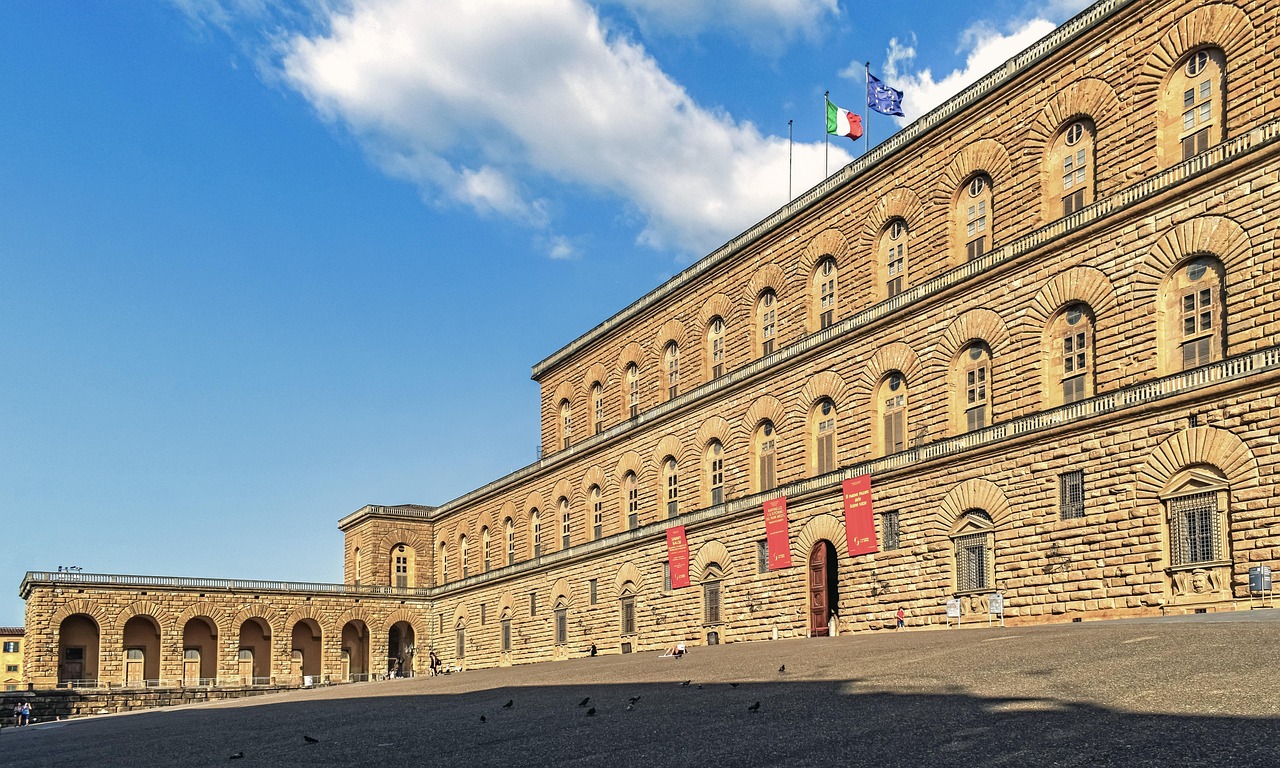
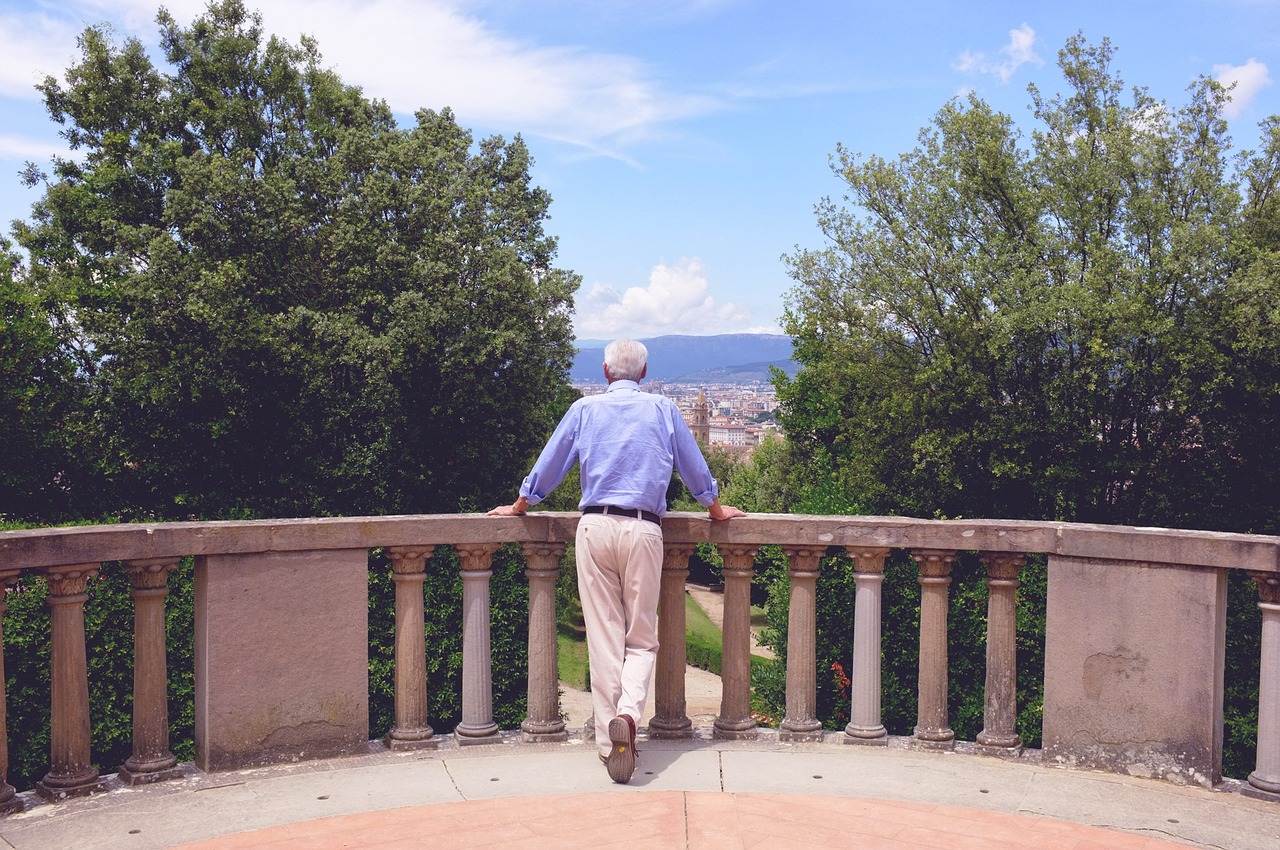
And that’s just one floor of one wing. Behind the palace, the Boboli Gardens climb up the hillside in a series of terraces, grottoes, and fountains that the Medici spent 400 years perfecting. From the top, you get a view across Florence’s rooftops that rivals anything the Duomo terrace offers — and you’ll share it with about a tenth of the crowd.
This was the Medici family’s private residence from 1550 onwards. Cosimo I moved here because the old palace (now Palazzo Vecchio) wasn’t grand enough. Think about that for a moment. Palazzo Vecchio, with its 94-meter tower and enormous halls, wasn’t enough. They needed something bigger. So they bought the largest private palace in Florence and then spent the next two centuries making it even larger.
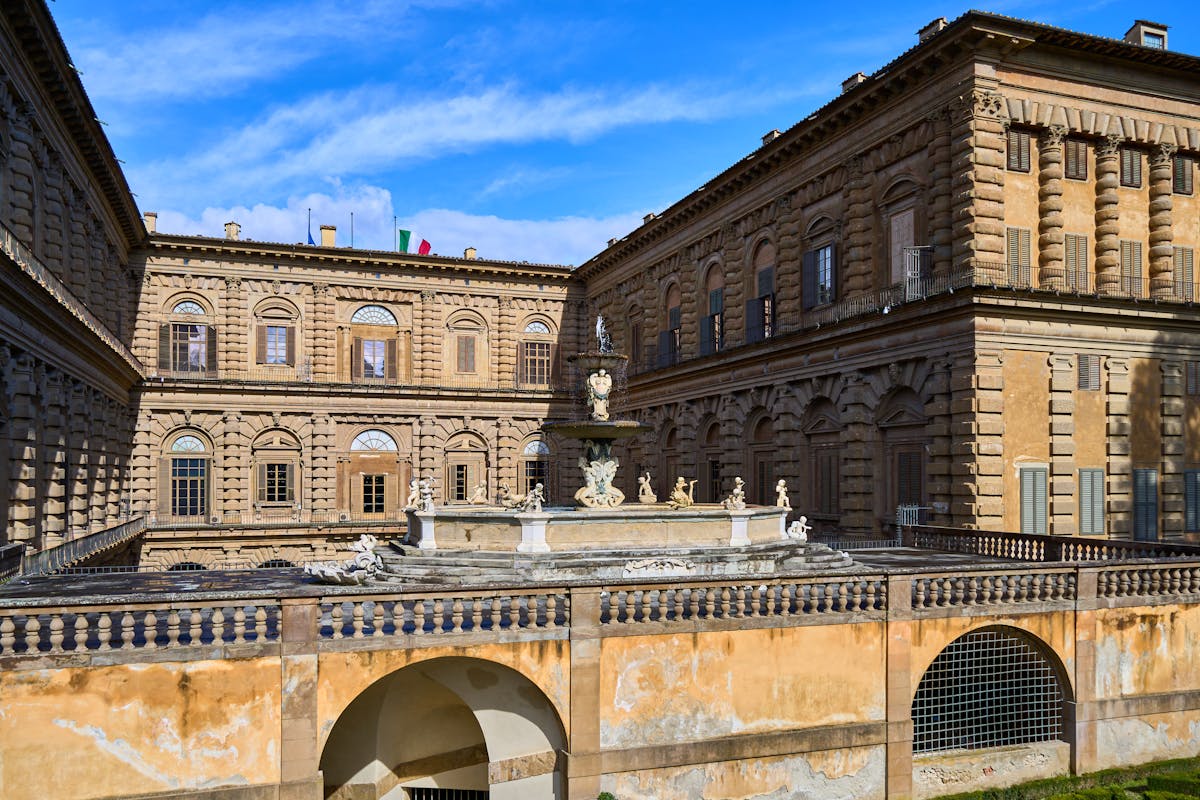
Today, Pitti Palace houses five separate museums and the Boboli Gardens. Most visitors come for the Palatine Gallery and the gardens. Smart visitors also hit the Gallery of Modern Art upstairs (surprisingly good — 19th-century Italian works you won’t see anywhere else). And the handful who make it to the Treasury of the Grand Dukes in the ground-floor rooms find some of the most absurdly beautiful goldsmith work and cameos in Europe.
Here’s what you need to know to plan your visit and not waste a minute.
- Short on Time? Here Are My Top Picks
- How Pitti Palace Tickets Work
- Self-Guided vs. Guided Tour
- The Best Pitti Palace Tours
- Entrance Ticket to Pitti Palace + Audio App
- Pitti Palace and Boboli Gardens Ticket & eBook
- Pitti Palace, Boboli Garden & Palatina Gallery Guided Tour
- Boboli Gardens Reserved Entry Ticket + Audio App
- When to Visit Pitti Palace
- Practical Tips
- What You’ll See Inside
- More Florence Guides
Short on Time? Here Are My Top Picks
Best Value: Pitti Palace Entry + Audio App — Entrance Ticket to Pitti Palace + Audio App
Skip-the-line timed entry to all Pitti Palace museums (Palatine Gallery, Royal Apartments, Gallery of Modern Art, and more) with a self-guided audio companion. The go-to option for most visitors. Thousands of verified reviews.
Best Combo: Pitti Palace + Boboli Gardens Ticket — Pitti Palace and Boboli Gardens Ticket & eBook
$45 per person. Covers both the palace museums and the Boboli Gardens in a single combined ticket, plus an eBook guide. If you want the full Pitti experience (and you should), this saves you buying separate entries.
Best Guided: Palatine Gallery + Boboli Guided Tour — Pitti Palace, Boboli Garden & Palatina Gallery Guided Tour
$119 per person, 3 hours. Small group (max 12 people), expert guide, covers both the Palatine Gallery’s masterpieces and the Boboli Gardens. This is the option if you want someone to explain why a particular Raphael is hung next to a particular Titian — the Medici had reasons for everything.
Just the Gardens: Boboli Gardens Entry + Audio App — Boboli Gardens Reserved Entry Ticket + Audio App
If you’ve already seen the palace interior on a previous trip, or if you’re short on time and want green space more than gilded ceilings. Reserved entry so you skip the queue.
How Pitti Palace Tickets Work
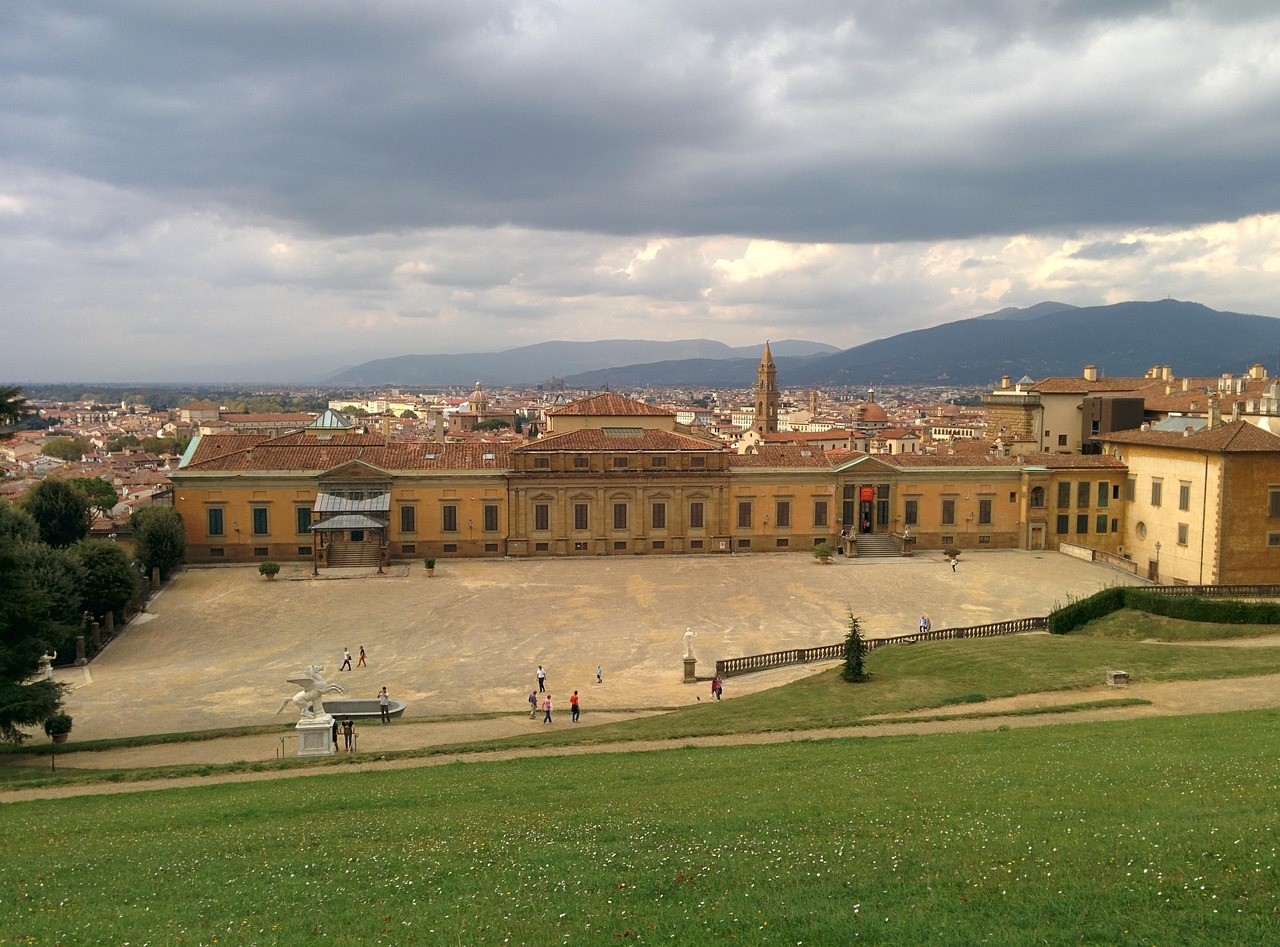
Pitti Palace is part of the Uffizi Galleries system (they’re connected via the Vasari Corridor, that enclosed passageway you can see crossing the Ponte Vecchio). But the ticketing works differently from the Uffizi Gallery.
Standard Pitti Palace ticket (EUR 16 high season / EUR 10 low season) — This gets you into the Palatine Gallery, the Royal and Imperial Apartments, the Gallery of Modern Art, the Treasury of the Grand Dukes, and the Museum of Costume and Fashion. That’s five museums on one ticket. Low season runs November through February; high season is March through October.
Combined Pitti + Boboli ticket (EUR 22 high season / EUR 16 low season) — Adds the Boboli Gardens and the adjacent Bardini Garden to the standard ticket. Valid for the whole day. If you’re visiting between March and October, this is worth it — the gardens are at their best in those months.
PassePartout 5-Day Pass (EUR 65) — Covers the Uffizi, Pitti Palace, AND Boboli Gardens, valid for 5 consecutive days. If you’re spending several days in Florence and plan to visit the Uffizi anyway, the math works in your favour. You’d pay EUR 25+ for the Uffizi and EUR 22 for Pitti+Boboli separately — that’s EUR 47 minimum. The pass saves you nearly EUR 10 and gives you 5 days of flexibility.
Buying at the door vs. online — You can buy tickets at the palace box office, and Pitti Palace rarely has the apocalyptic queues the Uffizi does. On an average weekday you might wait 10-15 minutes. But during peak season (June-August) and on the first Sunday of the month (free entry day — packed), the wait can stretch to 45 minutes or more. Online booking through the official site or platforms like GetYourGuide adds a small fee (EUR 3-4) but gives you a timed entry slot. I’d book online for peak season and just show up the rest of the year.
Free entry — First Sunday of every month. Under 18 always free. EU citizens aged 18-25 get a reduced rate. The free Sunday sounds appealing but the palace and gardens fill up fast. If you’re on a budget, it works. If you value a comfortable visit, pay the ticket and go on a Tuesday.
Self-Guided vs. Guided Tour
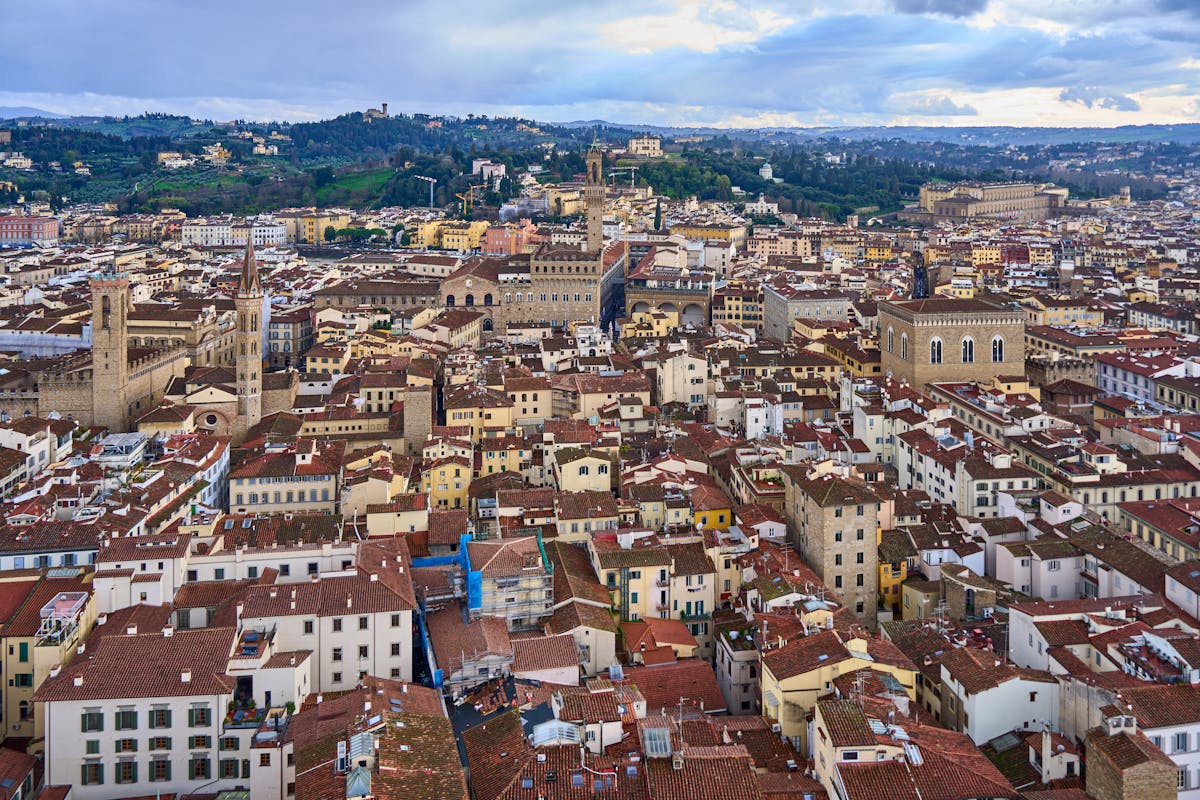
This depends entirely on how you engage with art and history.
Self-guided with audio app — The Pitti Palace audio app is decent. It covers the major rooms and paintings, gives you background on the Medici family, and lets you skip rooms that don’t interest you. The Palatine Gallery alone has over 500 paintings, and honestly, you don’t want commentary on all of them. Self-guided lets you linger where you want (the Raphael rooms are worth 30 minutes alone) and power-walk through others (the Gallery of Modern Art is hit-or-miss unless you’re into 19th-century Italian Macchiaioli painters).
Guided tour — Where a guide earns their fee at Pitti Palace is in the Palatine Gallery. The Medici didn’t hang paintings by artist or period — they hung them by room function and aesthetic effect. A guide explains why Raphael’s Madonna of the Chair is in the same room as works by Andrea del Sarto, why Titian’s Portrait of a Gentleman faces a particular direction, and what the ceiling frescoes above tell you about the room’s original purpose. Without that context, you’re looking at great paintings in beautiful rooms. With it, you’re seeing how a Renaissance family used art as political messaging.
My take: If this is your first time and you care about Renaissance art, book the guided tour. The 3-hour Palatine Gallery + Boboli option covers the essential rooms with an expert who can answer questions. If you’ve been to Pitti before, or if you generally prefer museums at your own pace, the audio app will do. What I’d avoid is visiting with no audio and no guide at all — the palace has almost no wall labels or explanatory text. You’ll see beautiful things but understand very little.
The Best Pitti Palace Tours
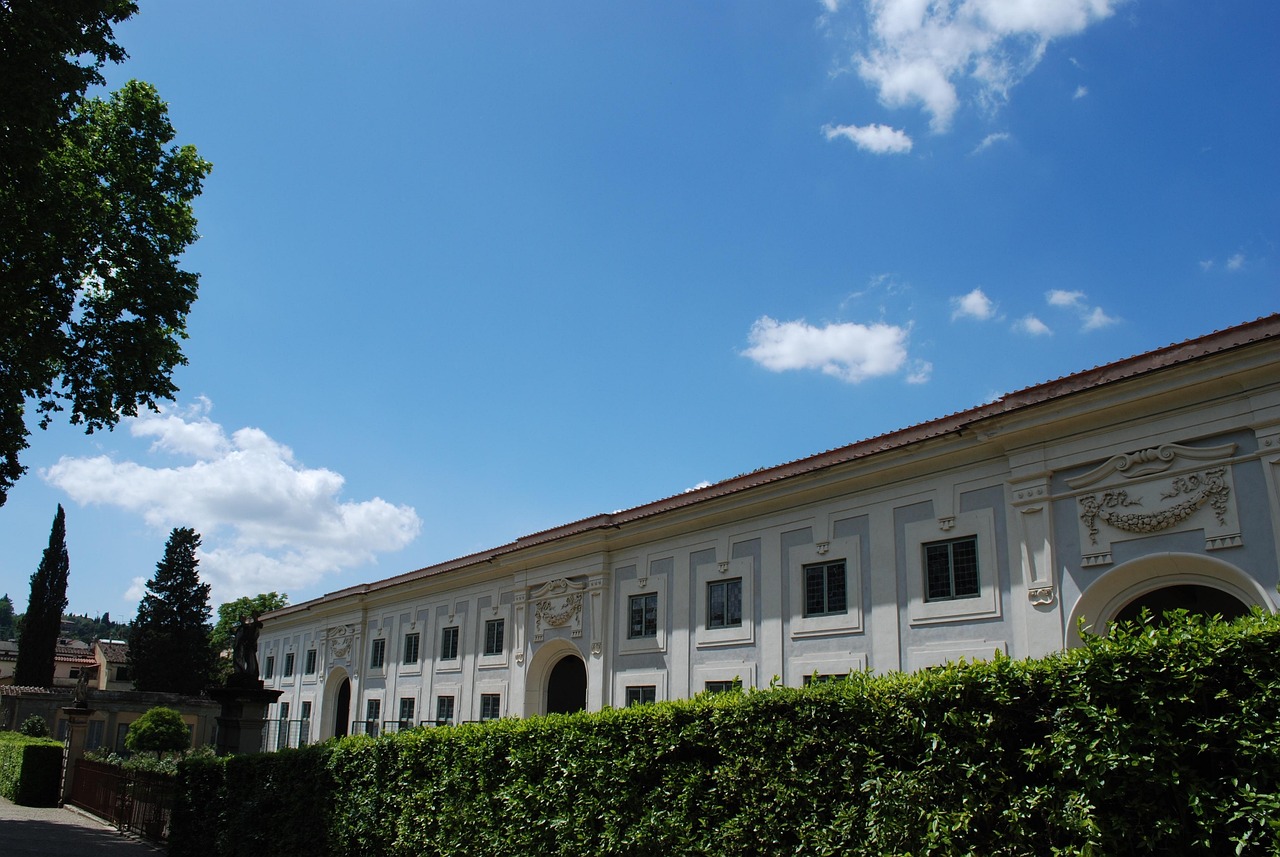
I’ve pulled together the best Pitti Palace and Boboli Gardens tours from our database. These are ranked by the number of verified reviews with strong ratings — the most reliable indicator of a consistently good experience.
Entrance Ticket to Pitti Palace + Audio App
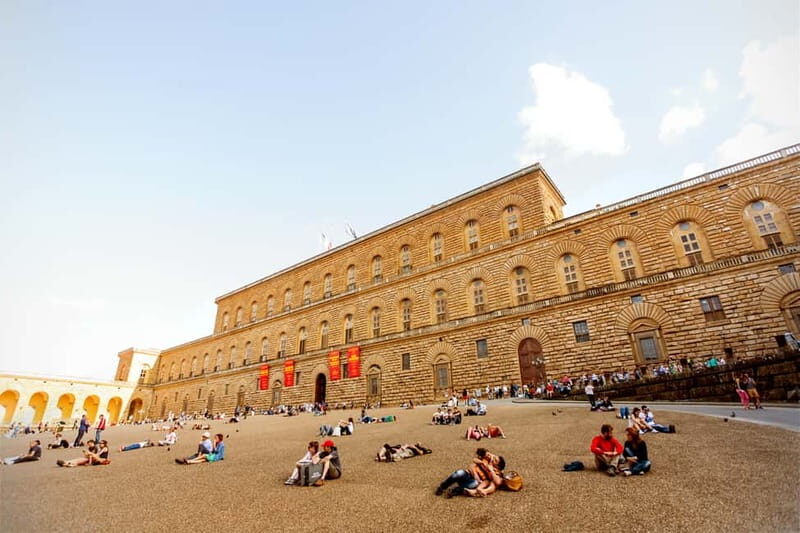
Price: Timed entry | Duration: Self-paced (full day)
Skip-the-line access to all Pitti Palace museums — the Palatine Gallery, Royal Apartments, Gallery of Modern Art, Treasury of the Grand Dukes, and Museum of Costume and Fashion. The audio app walks you through the highlights without locking you into someone else’s schedule. This is the most-reviewed Pitti Palace option in our database by a significant margin, and the rating reflects consistent satisfaction. The flexibility alone makes it the right choice for the majority of visitors.
Read our full review | Check availability on GetYourGuide
Pitti Palace and Boboli Gardens Ticket & eBook
Price: $45 per person | Duration: Full day
The combined ticket that covers everything — all five Pitti Palace museums plus the Boboli Gardens and Bardini Garden. Comes with a digital eBook guide that you can read before or during your visit. At $45, the math works out better than buying palace and garden tickets separately at the box office (especially in high season). If you’re planning to spend a full half-day at the Pitti complex — and you should — this is the most practical option.
Read our full review | Check availability on GetYourGuide
Pitti Palace, Boboli Garden & Palatina Gallery Guided Tour
Price: $119 per person | Duration: 3 hours
The premium option and — for art lovers — the one that’s worth every euro. A small group (capped at 12) with a professional guide who takes you through the Palatine Gallery’s greatest hits and then out into the Boboli Gardens. Three hours is enough to cover the key rooms without rushing, and the small group size means you can actually hear the guide and ask questions. The guide explains the logic behind the Medici’s hanging arrangement, points out details you’d walk past on your own, and makes the transition from palace to gardens feel like one continuous narrative. This is consistently the highest-rated Pitti Palace experience in our database.
Read our full review | Check availability on Viator
Boboli Gardens Reserved Entry Ticket + Audio App

Price: Reserved entry | Duration: Self-paced
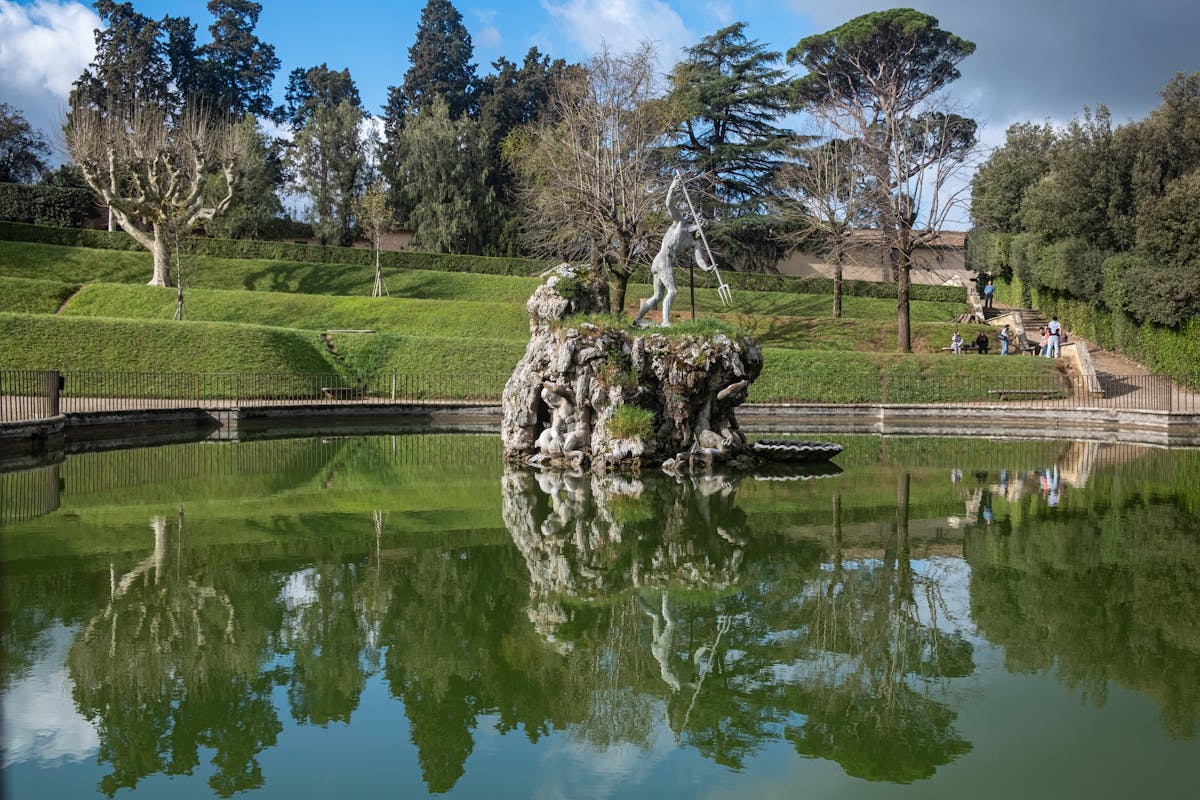
For visitors who want the gardens without the palace. Maybe you’ve already done the Palatine Gallery, or maybe you’re just in Florence for the afternoon and want somewhere beautiful to walk that isn’t another museum. The Boboli Gardens deliver. Reserved timed entry means no queue, and the audio app points out the key fountains, grottoes, and viewpoints so you’re not just wandering. The Neptune Fountain and the Isolotto garden island are particular highlights. Over 5,000 verified reviews make this the most-booked Boboli-only option available.
Read our full review | Check availability on GetYourGuide
When to Visit Pitti Palace

Opening hours: Pitti Palace is open Tuesday to Sunday, 8:15 AM to 6:50 PM (last entry at 5:45 PM). Closed Mondays. The Boboli Gardens have slightly longer summer hours — check the official Uffizi Galleries website for current times. Hours shift between high season and low season, and special closures happen on certain holidays.
Best time of day: Early morning, right at 8:15 AM opening. The Palatine Gallery at 8:30 AM is a completely different experience from the Palatine Gallery at noon. You’ll have rooms to yourself (or close to it) and can actually stand in front of Raphael’s Madonna of the Chair without elbows in your ribs. The other good window is after 3:30 PM — the tour groups have moved on and the light in the west-facing rooms gets warm and golden.
Best months: September and October are ideal. The weather is still warm enough for the gardens, the summer crowds have thinned, and the light in Florence in autumn is gorgeous. March through May is also good, especially for the Boboli Gardens when everything is blooming. November through February means cheaper tickets (EUR 10 vs EUR 16) and minimal crowds, but the gardens lose their punch and some outdoor sections may be closed.
Worst time: July and August are hot — and the palace has limited air conditioning. The Boboli Gardens have almost no shade on the main terraces, so midday visits in summer are genuinely uncomfortable. Also avoid the first Sunday of the month unless you really want free entry, because the place fills up and the experience suffers.
How long to budget: Palace only (Palatine Gallery + Royal Apartments) — 1.5 to 2 hours. Palace + Boboli Gardens — 3 to 4 hours. The full complex including all five museums and the gardens — a full half-day, easily.
Practical Tips

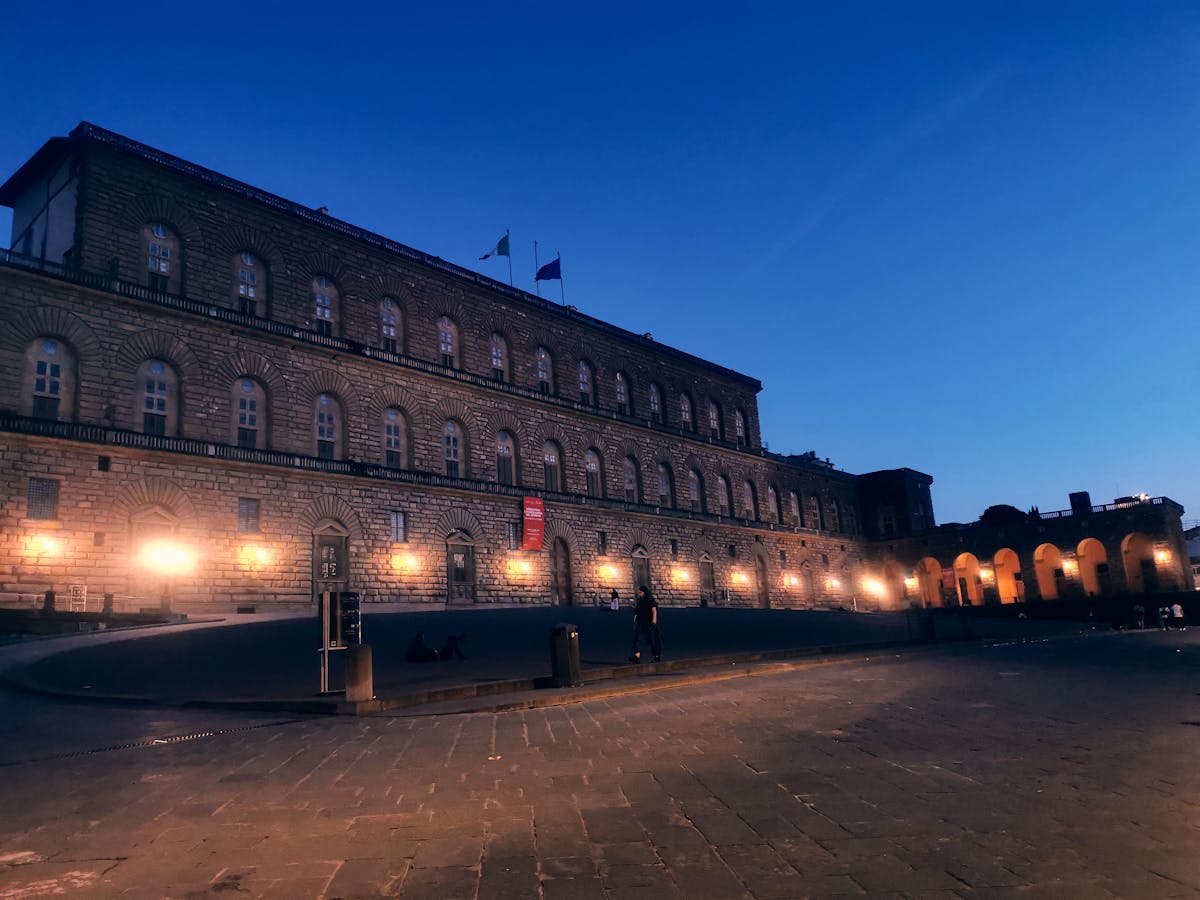
Getting there. Cross the Ponte Vecchio from the center and continue straight down Via de’ Guicciardini. The palace is right there in Piazza de’ Pitti. No bus needed. From the Florence Cathedral, it’s a 15-minute walk.
Combine with the Uffizi. The Uffizi Gallery is a 5-minute walk across the Ponte Vecchio. Do Pitti in the morning and the Uffizi after lunch, or vice versa. The PassePartout 5-Day Pass covers both plus the Boboli Gardens. If you’re also visiting the Accademia Gallery for the David, that’s a separate ticket — but all three can fit into a well-planned two-day Florence museum itinerary.
Wear comfortable shoes. This matters more here than at most Florence museums. The Boboli Gardens involve hills, steps, and gravel paths. The palace itself has stone and marble floors across multiple levels. Sandals are technically allowed (unlike some churches) but you’ll feel it after an hour.
Eat in the Oltrarno, not in the piazza. The restaurants directly facing Pitti Palace are tourist traps with mediocre food and inflated prices. Walk 5 minutes into the surrounding streets of the Oltrarno neighborhood — Via Santo Spirito, Piazza Santo Spirito, or Borgo San Jacopo — and you’ll find excellent trattorias at normal Florentine prices. The Oltrarno is one of the most authentic food neighborhoods in Florence.
Photography is allowed. No flash, no tripods, but phone and camera photos are fine throughout the palace and gardens. The Palatine Gallery rooms photograph beautifully because of the natural light and the ornate gold frames.
Don’t skip the upper floors. Most visitors exhaust themselves in the Palatine Gallery (ground and first floors) and leave without going upstairs. The Gallery of Modern Art on the second floor has an excellent collection of 19th-century Italian paintings — Macchiaioli works that predated and influenced the French Impressionists. Almost nobody goes up there, which means you’ll have the rooms to yourself.
The Grotta Grande in Boboli. This is a 16th-century grotto originally designed by Vasari and later modified by Buontalenti. It contains copies of Michelangelo’s Prisoners sculptures (the originals are at the Accademia) and some genuinely strange artificial stalactites. It’s right near the garden entrance and easy to miss. Don’t.
Bags and security. There’s a cloakroom for bags. No large backpacks are allowed in the galleries. The security check is similar to what you’d find at any major museum — metal detector, bag scan, quick and painless.
What You’ll See Inside
The Palatine Gallery — The main event. Twenty-eight rooms of paintings from the 16th and 17th centuries, arranged not by period or school but by the Medici’s original decorative scheme. You’ll see Raphael’s Madonna of the Chair and La Velata, several Titians including the Portrait of Pietro Aretino, Caravaggio’s Sleeping Cupid, and works by Rubens, Van Dyck, and Andrea del Sarto. The ceilings are painted with elaborate allegorical frescoes by Pietro da Cortona. Some rooms — particularly the Venus Room and the Apollo Room — are overwhelming in the best way.
The Royal and Imperial Apartments — Connected to the Palatine Gallery, these rooms show how the palace actually functioned as a residence. Furnished with period furniture, tapestries, and portraits. Less art-heavy than the gallery but interesting if you want to understand how the Medici (and later the House of Lorraine and the Italian royal family) actually lived. The throne room is quietly impressive.
The Gallery of Modern Art — Upstairs, and often empty. Focuses on Italian art from the late 18th through early 20th centuries. The Macchiaioli paintings are the highlight — a movement of Italian painters who worked with patches of colour and light in ways that anticipated French Impressionism by a decade. Giovanni Fattori’s landscapes are standouts.
The Treasury of the Grand Dukes — Ground floor rooms with the Medici collection of carved gemstones, cameos, semi-precious stone vases, ivory, amber, and silverwork. If you think you’ve seen enough decorative arts in your life, this collection will change your mind. The pietre dure (inlaid stone) tabletops are insane — months of work for a single piece.
The Museum of Costume and Fashion — In the Palazzina della Meridiana wing. Historical costumes, including funeral garments from the Medici family (the only surviving examples). Rotating fashion exhibitions mean the content changes regularly. Worth a look if you’re interested in fashion history; skippable if you’re not.
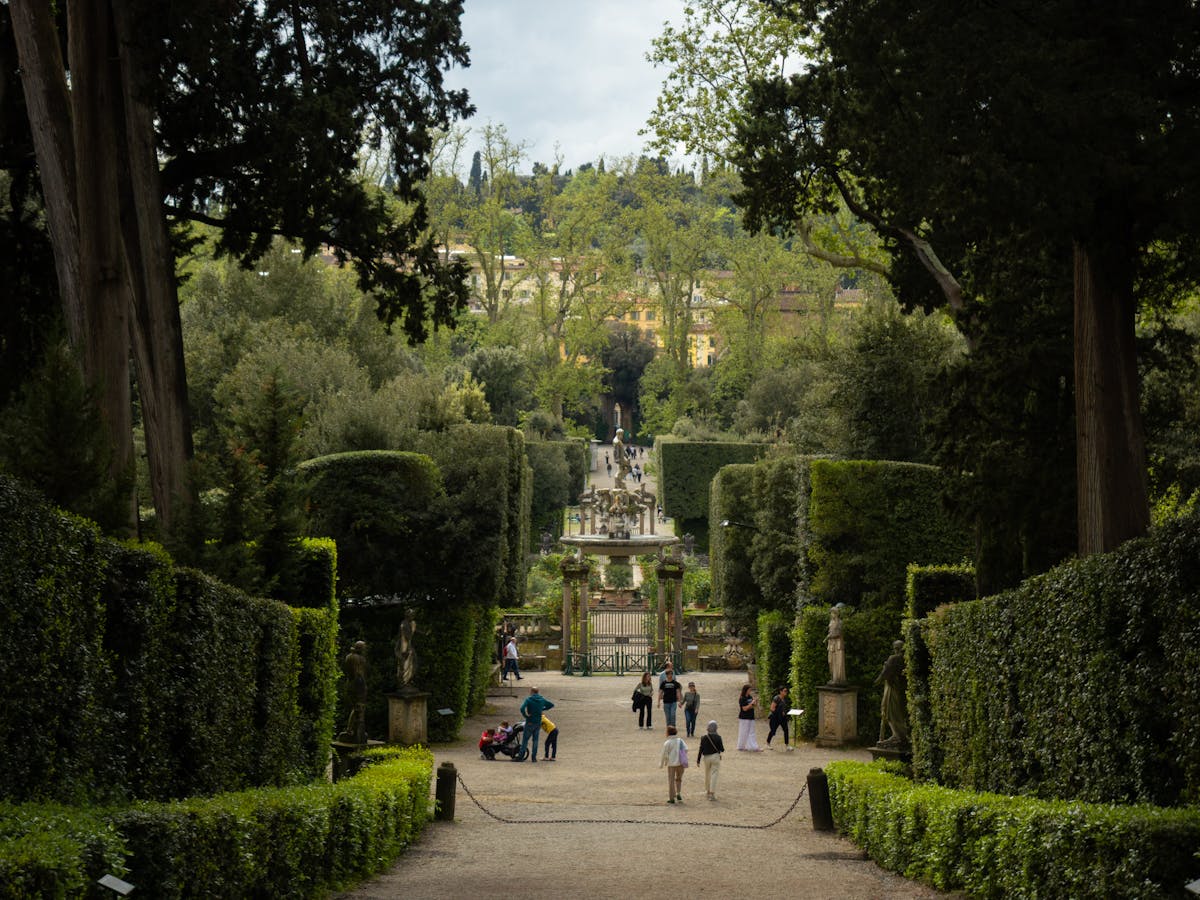
The Boboli Gardens — 45,000 square metres of Renaissance garden stretching up the hill behind the palace. Key highlights: the Amphitheatre (directly behind the palace, with a granite basin from Rome’s Baths of Caracalla), the Neptune Fountain, the Isolotto garden island with Giambologna’s Oceanus fountain, the Viottolone (a long cypress-lined avenue), and the Kaffeehaus terrace with panoramic views over Florence. In spring, the wisteria near the Limonaia (lemon house) is spectacular. Budget at least 60-90 minutes just for the gardens — there’s a lot of ground to cover.

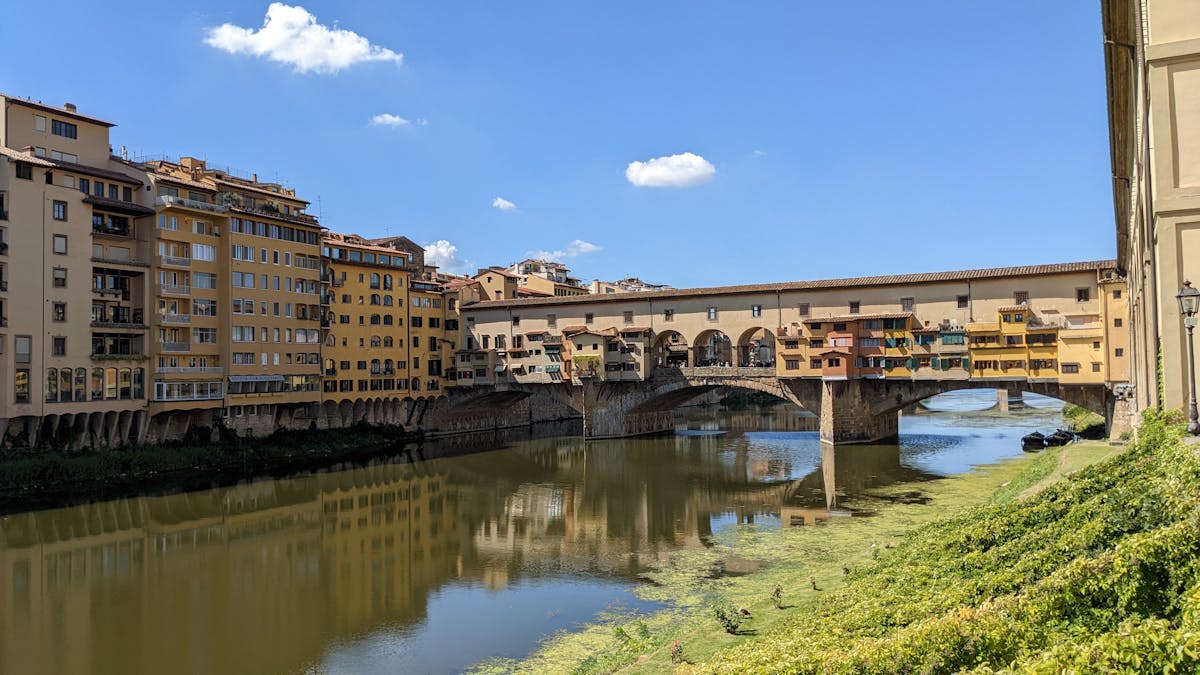
The Vasari Corridor connection. Historically, the Medici walked from Palazzo Pitti to the Uffizi through the Vasari Corridor — an enclosed elevated passageway that crosses the Ponte Vecchio. The corridor has been intermittently open to visitors over the years (with a limited-access ticket). When it’s open, it’s one of the most unique museum experiences in Florence — walking the Medici’s private route above the Arno. Check the Uffizi Gallery information for current access details, as the corridor’s status changes periodically.

We may earn a commission when you book through links on this page — at no extra cost to you. This helps us keep creating free travel content. Thank you for your support.
More Florence Guides
Pitti Palace sits on the Oltrarno side of the Arno, connected to central Florence by Ponte Vecchio. Cross the bridge and you are five minutes from the Uffizi Gallery and Palazzo Vecchio — the Medici used the Vasari Corridor to walk between all three without touching street level. If you are spending a full day on art, the Accademia Gallery is worth the 20-minute walk north to see David in person. On your second day in Florence, consider a Tuscany day trip to get out of the city and into the countryside.