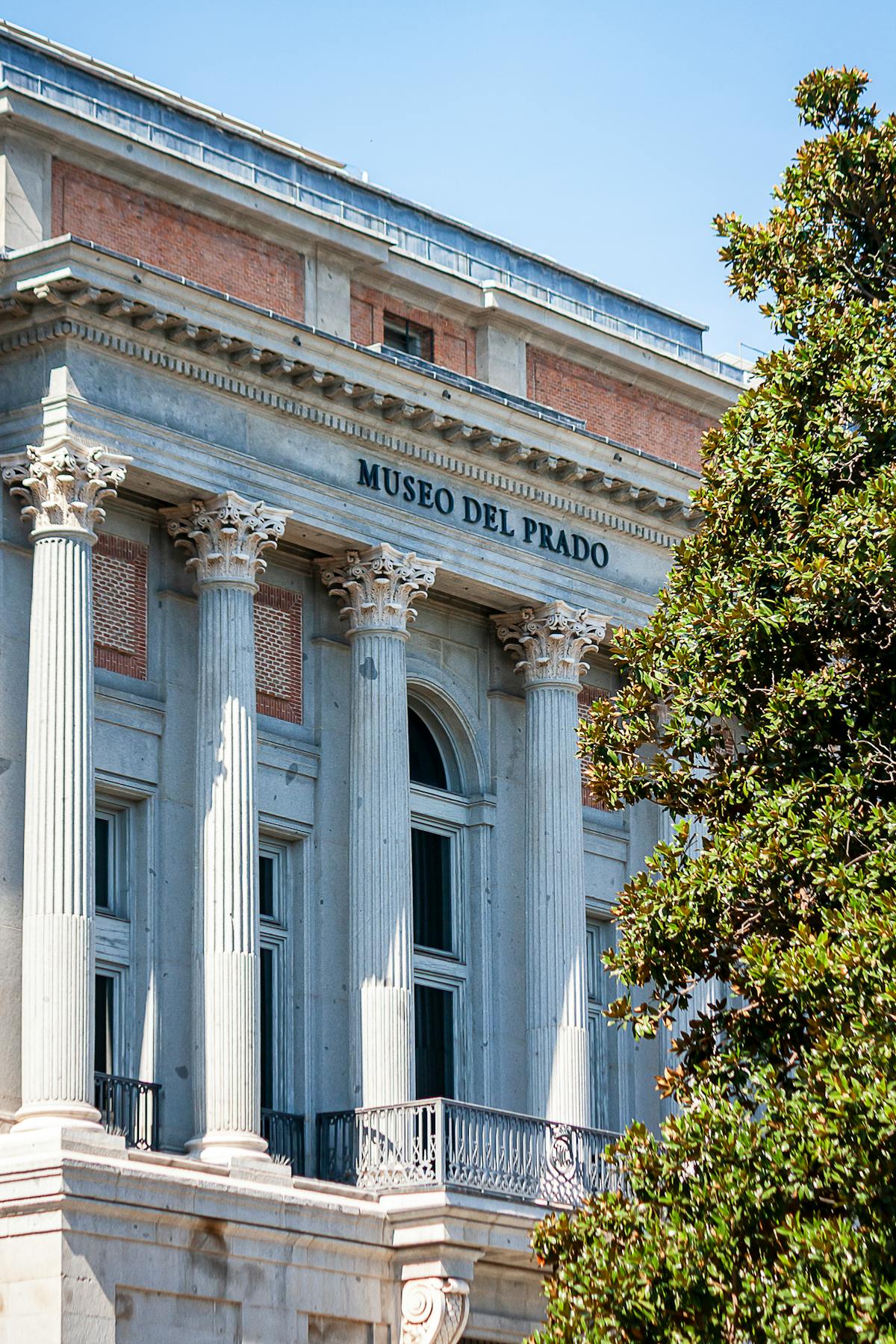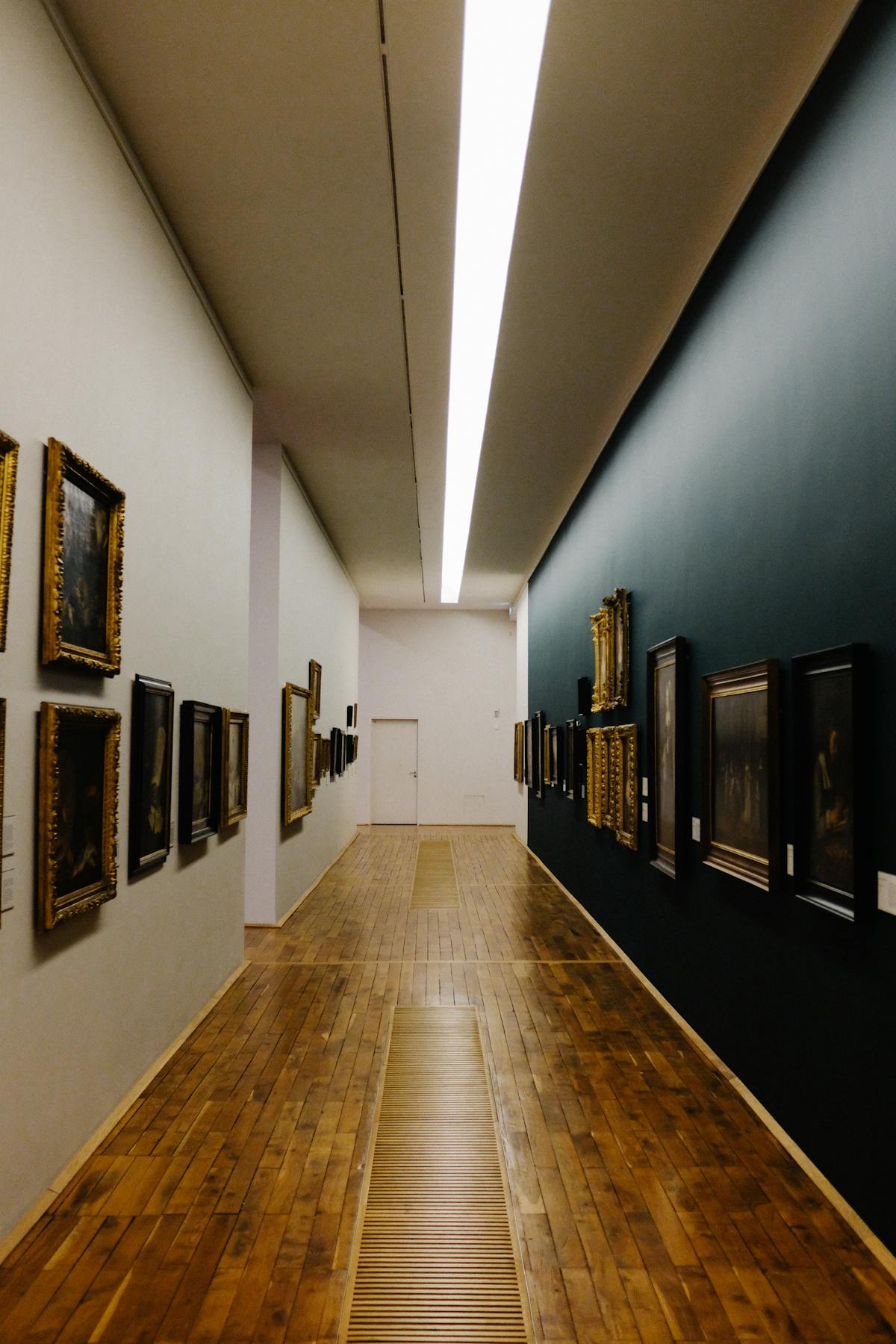
Picasso’s Guernica is 3.49 metres tall and 7.76 metres wide. You walk into Room 206 on the second floor of the Reina Sofia, and the painting fills your entire peripheral vision. Black, white, grey. A screaming horse. A bull standing still. A light bulb shaped like an eye. People stand in front of it and go quiet — not because anyone tells them to, but because the thing demands it.
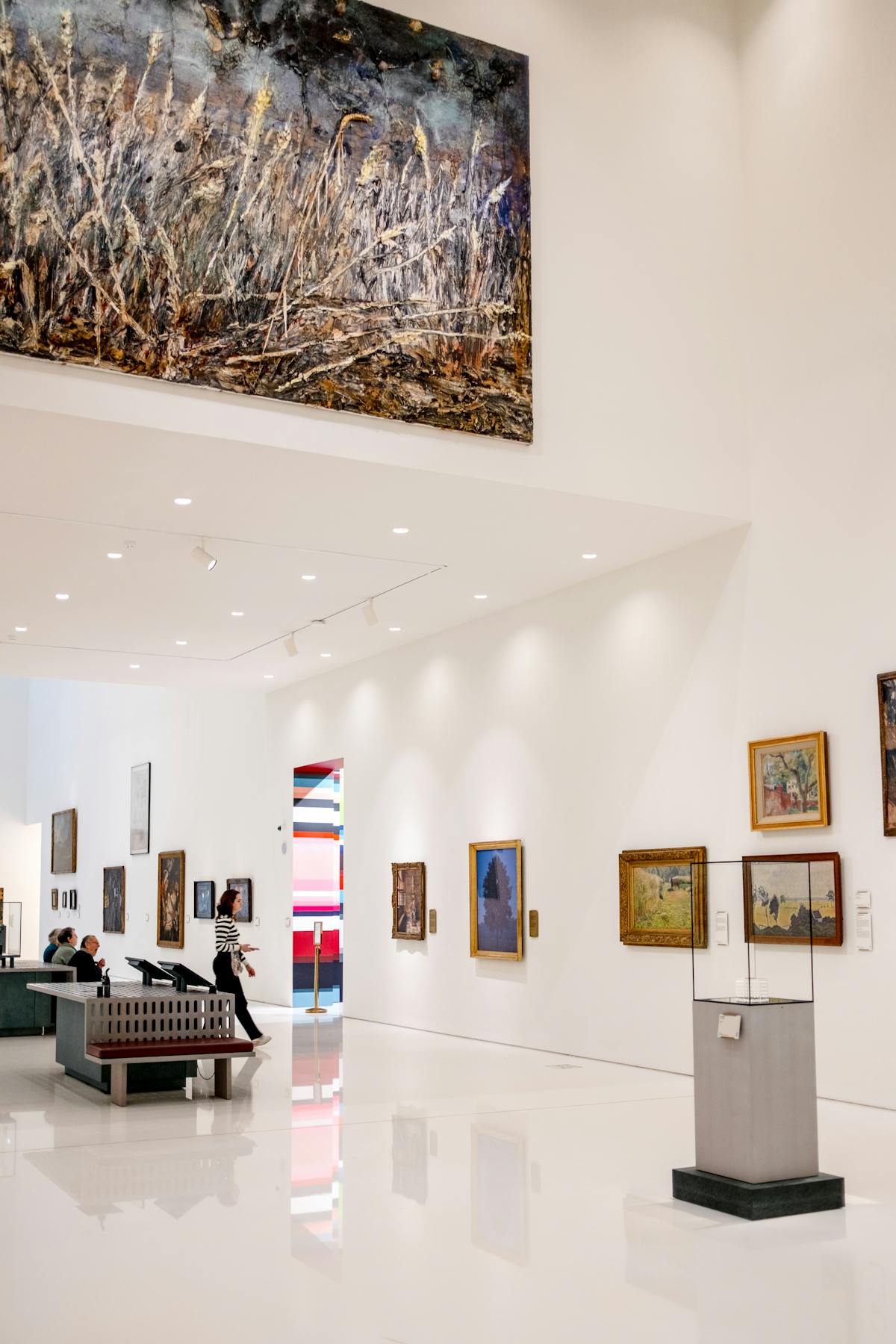
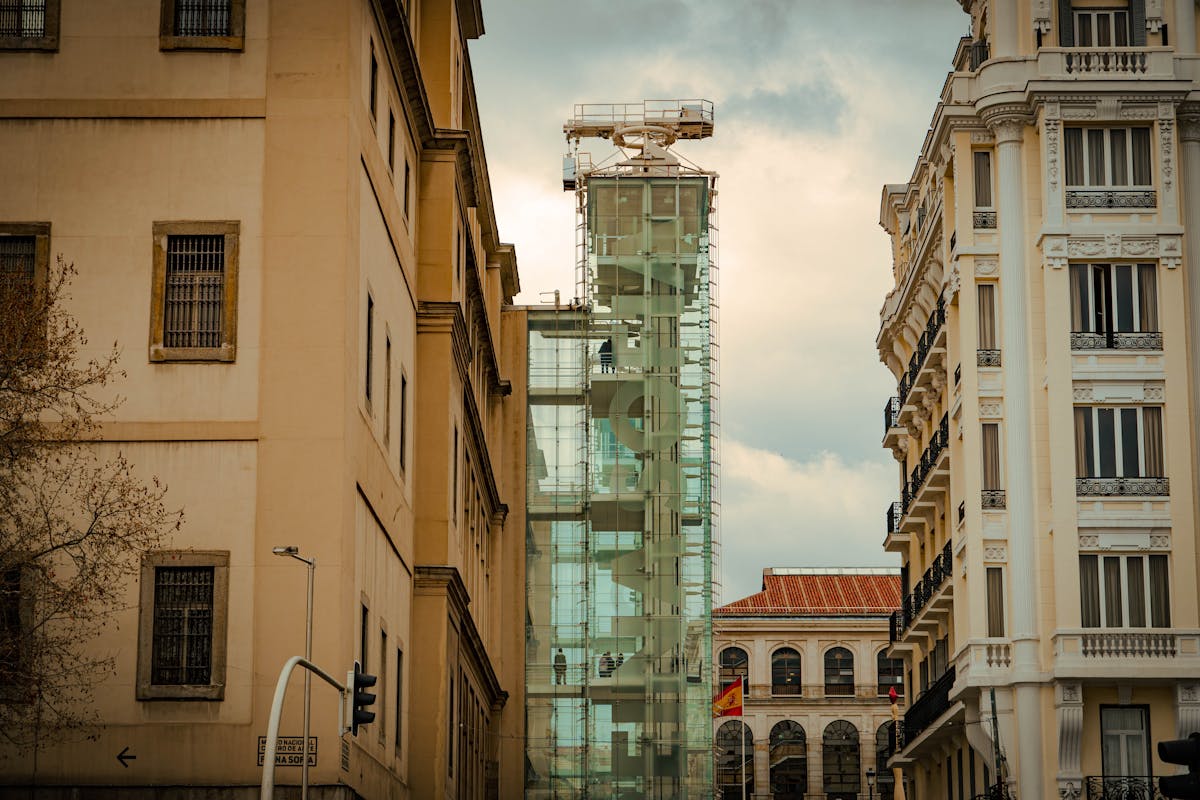
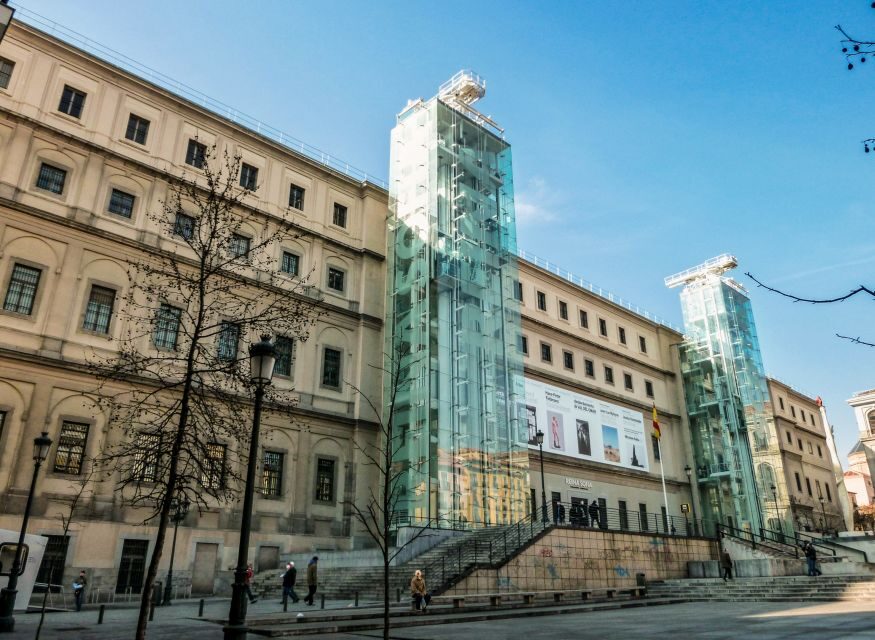
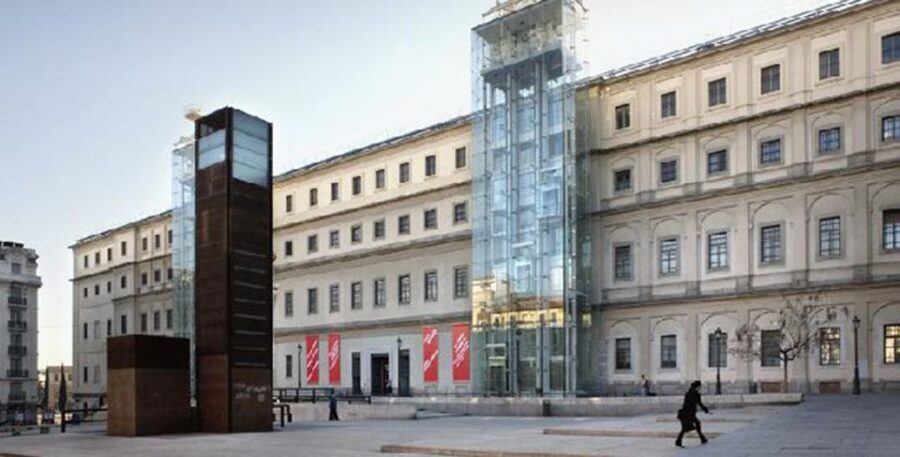
That’s what the Museo Reina Sofia does better than almost any other modern art museum in Europe. It puts Guernica at the centre — literally and emotionally — and builds outward from there. Dali, Miro, Juan Gris, the entire trajectory of 20th-century Spanish art radiates from that one devastating room. The museum sits in what used to be Madrid’s 18th-century General Hospital, and in the 1980s they added those massive glass elevator towers designed by Jean Nouvel that became an architectural landmark on their own.
But the ticket situation is simpler than most people think. There are free entry hours every evening, a combined pass that covers all three museums on the Paseo del Arte, and a handful of guided tours that actually make the collection click instead of just walking you past it. I’ve broken all of it down below.
In a Hurry? My Top Picks
- Best for most visitors: Reina Sofia Museum Entrance Ticket — $14 per person. Standard skip-the-line admission. Gets you into the permanent collection and all temporary exhibitions. Simple, no frills, and cheaper than buying at the door during peak hours. Book this ticket
- Best guided experience: Reina Sofia Museum Guided Tour — $38 per person. Seventy-five minutes with an art historian who connects Guernica to the Spanish Civil War, explains why Dali and the Surrealists matter, and tells you which rooms most visitors wrongly skip. Book this tour
- Best small group option: Guided Tour of Reina Sofia with Entry Ticket — $59 per person. Ninety minutes in a small group. The guide can actually adjust the route based on what interests you, and you’re not competing with fifteen other people to hear the commentary. Book this tour
- In a Hurry? My Top Picks
- How Reina Sofia Tickets Work
- Self-Guided vs. Guided Tours
- Best Tours for the Reina Sofia
- 1. Reina Sofia Museum Entrance Ticket —
- 2. Reina Sofia Museum Guided Tour —
- 3. Guided Tour of Reina Sofia — Small Groups —
- When to Visit
- Tips for Your Visit
- What to See Inside
- More Madrid Guides
How Reina Sofia Tickets Work
The Reina Sofia runs on a simpler system than the Prado or the Royal Palace. No timed-entry slots, no capacity limits that sell out weeks ahead. You show up, you get in.
General admission: 12 euros at the door. This covers the permanent collection on floors 2 and 4 (Guernica is on floor 2, Room 206) plus whatever temporary exhibitions are running. Audio guides cost 4.50 euros extra and are available in Spanish, English, French, and a few other languages. The audio content is decent but skippable — it covers the highlights without adding much beyond what the wall labels say.
Free entry hours: This is the part most visitors don’t know about, or know about but mistime. The Reina Sofia offers free admission every evening:
- Monday and Wednesday through Saturday: 7 PM to 9 PM
- Sunday: 12:30 PM to 2:30 PM (and the museum is closed all day Tuesday)
That evening window is genuinely useful. The museum stays open until 9 PM, and the free-entry crowd thins out after the first twenty minutes as the casual visitors do a quick loop and leave. If you arrive at 7:15 PM and head straight to Room 206, you can stand in front of Guernica with maybe a dozen other people instead of the usual fifty. The Sunday free slot is much more crowded — locals know about it and plan around it.
Paseo del Arte card: If you’re planning to hit all three of Madrid’s big art museums, the Paseo del Arte combined ticket covers the Prado, the Thyssen-Bornemisza, and the Reina Sofia for 32 euros. Buying them individually would cost about 38 euros total, so the savings aren’t massive, but the pass is valid for one year and lets you visit each museum once at any time. You can buy it at any of the three museum ticket offices or online through the Thyssen-Bornemisza website. It’s genuinely worth it if you’re doing all three — which you should, because the Thyssen alone is worth an afternoon.
Students and seniors: Free admission for under-18s and over-65s. EU students aged 18-25 get in free with a valid student ID. Non-EU students pay 50% off the full price. These discounts apply at the ticket office — just bring your ID or student card.
Self-Guided vs. Guided Tours
The Reina Sofia is both easier and harder to visit on your own than the Prado. Easier because the collection is smaller and the layout is more intuitive — two main buildings, four floors, with clear signage. Harder because modern art doesn’t explain itself the way a Velazquez portrait does. You can look at Las Meninas and immediately understand that you’re seeing something extraordinary. Guernica hits you the same way. But the Dali rooms, the Surrealist photography, the post-Civil War abstraction — that stuff benefits from context.
Self-guided works well if: You’re mainly here for Guernica and want to take your time in Room 206 without a group schedule. You’ve got some background in 20th-century art. You prefer wandering at your own speed, doubling back to rooms that catch your eye, and skipping what doesn’t interest you. Budget matters — free evening entry plus no guide means the entire visit costs zero.
A guided tour makes sense if: You want to understand why the collection is arranged the way it is — the Reina Sofia tells a very specific story about Spain’s 20th century through art, and a guide draws those connections. You have limited time and want to hit the essential rooms without getting sidetracked by four floors of material. You’re visiting Madrid’s art museums as a sequence and want the Reina Sofia to connect to what you saw at the Prado and the Thyssen.
The sweet spot for most visitors: book a guided tour for your first visit, then come back during the free evening hours to revisit the rooms that stuck with you. The guided tour gives you the map; the solo return visit lets you use it.
Best Tours for the Reina Sofia
Three tours from the database, covering the range from budget entry ticket to full guided experience. Each one uses the museum’s side entrance for faster access.
1. Reina Sofia Museum Entrance Ticket — $14
Price: $14 per person | Type: Skip-the-line entry ticket
This is entry-only — no guide, no audio tour, just your ticket and access to the permanent collection plus temporary exhibitions. At $14, you’re paying a couple of euros above the standard 12-euro door price, but you skip the ticket queue entirely, which matters on weekend mornings and during Madrid’s peak tourist season from April through October.
The ticket works on a flexible date basis. You book for a specific day, show the mobile voucher at the entrance, and walk in. No assigned time slot, no rush. The museum doesn’t impose capacity limits the way the Alhambra or the Vatican does, so you won’t be turned away even if you arrive at midday on a Saturday.
Who this suits: visitors who know what they want to see, repeat visitors coming back for a specific exhibition, anyone comfortable navigating a modern art museum without narration, and budget travelers who’d rather spend on food than a guide. If you’ve read up on Guernica and the Spanish Civil War context beforehand, the self-guided experience here is excellent.
Who should skip this: first-time visitors with no background in modern art. The collection is extraordinary but it doesn’t hand you meaning on a plate. Without context, the Surrealist rooms and the post-war abstraction galleries can feel opaque.
2. Reina Sofia Museum Guided Tour — $38
Duration: 75 minutes | Price: $38 per person | Type: Guided tour with entry
This is the mainstream guided option and the one I’d recommend for most first-time visitors. Seventy-five minutes with an English-speaking guide who walks you through the essential rooms: the Picasso galleries (including the preparatory sketches for Guernica that show how the painting evolved), the Dali and Miro collections, and the Surrealist photography wing.
The guide’s value here isn’t just art history — it’s editorial. They tell you which rooms are worth your time and which ones you can circle back to later on your own. The Reina Sofia has over 21,000 works in its collection across four floors and two buildings. Without someone steering you, it’s easy to spend forty-five minutes in the wrong wing and run out of energy before reaching Guernica.
At $38 per person, you’re paying about $26 above the standard admission price for the guide. Compared to similar guided museum tours in European capitals — the Louvre, the Uffizi, the British Museum — that’s on the lower end. The group size varies by operator but typically stays under twenty people, which is manageable in the Reina Sofia’s wide galleries.
The 75-minute window focuses on the permanent collection highlights. If a major temporary exhibition is running, ask your guide about it — some will extend the route slightly to include it, others won’t. Either way, you’ll have time to explore on your own after the guided portion ends.
3. Guided Tour of Reina Sofia — Small Groups — $59
Duration: 1.5 hours | Price: $59 per person | Type: Small group guided tour with entry
The premium option for visitors who want a semi-private experience without the private-tour price tag. Group size stays small, which changes the dynamic completely. Instead of a lecture, you get a conversation. The guide reads the room — literally — and spends more time where the group shows interest.
Ninety minutes gives the tour more breathing room than the 75-minute standard option above. That extra fifteen minutes sounds trivial, but it’s the difference between rushing past the preparatory sketches for Guernica and actually stopping to study them. Those sketches — Picasso made dozens — show the painting’s evolution from initial concept to final canvas, and they’re almost as powerful as the finished work.
The tour also covers the Nouvel wing, which the shorter tours sometimes skip. The temporary exhibition spaces in the glass towers are architecturally stunning on their own, and the exhibitions tend toward contemporary and experimental work that provides a sharp contrast to the historical permanent collection.
At $59, you’re paying $21 more than the standard guided tour. The question is whether the smaller group and longer duration are worth it to you. For couples, small friend groups, or anyone who finds large tour groups exhausting, this is the one to book. The intimate format means you can ask the guide about specific artists, request more time in rooms that interest you, and actually hear the answers without straining over the noise of a twenty-person group.
When to Visit
The Reina Sofia is open every day except Tuesday. Hours run from 10 AM to 9 PM Monday and Wednesday through Saturday, and 10 AM to 2:30 PM on Sunday. That Monday opening is unusual for European museums — most close on Mondays — so it’s a good fallback if you’re in Madrid on a Monday and need a cultural fix.
Best time of year: September through November. Madrid’s brutal summer heat (regularly above 38 degrees in July and August) keeps locals away from everything that isn’t air-conditioned, and the travelers who do brave the heat all crowd into the same midday window. Autumn brings milder temperatures, shorter queues, and the museum’s strongest temporary exhibition programming — curators tend to save their best shows for the autumn season.
Best day of the week: Wednesday or Thursday. Monday is surprisingly busy because so many other museums are closed. Friday and Saturday draw the weekend crowd. Sunday mornings before the 12:30 PM free window are calm, but once the free entry kicks in, the Guernica room fills up fast.
Best time of day: Right at 10 AM opening or after 5 PM. The midday hours (noon to 3 PM) are the worst — that’s when tour groups from every operator converge on Room 206 simultaneously. If you’re visiting during free evening hours (7 PM onwards on weekdays), arrive at 7 PM sharp. The initial rush of free-entry visitors dissipates within twenty minutes, leaving you with a surprisingly peaceful museum for the final stretch.
How long to spend: Two hours is enough for the highlights — Guernica, the Picasso galleries, the Dali and Miro rooms, and a quick pass through the Nouvel wing. Three hours lets you explore the fourth-floor contemporary collection and sit in the courtyard garden (which is genuinely one of the nicest hidden spots in central Madrid). Going longer than three hours risks museum fatigue, and the cafe on the ground floor isn’t worth lingering over.
Tips for Your Visit
Photography is allowed in the permanent collection — but not Guernica. This catches people off guard. You can photograph every other work in the museum, but Room 206 has a strict no-photos policy. Staff enforce it. Don’t try to sneak one; the flash disrupts other visitors and the guards will ask you to delete it. Plenty of professional high-resolution images of Guernica exist online if you want a digital copy.
Enter through the Nouvel wing on Ronda de Atocha. The main entrance on Calle Santa Isabel gets the longest queue because it’s the most visible from the street. The Nouvel entrance around the corner on Ronda de Atocha is the same ticket office but with a shorter line. Both entries lead to the same permanent collection — you’re just entering from a different side.
The courtyard garden is free and open to non-visitors. You don’t need a museum ticket to access the Sabatini garden courtyard between the old hospital building and the Nouvel wing. It’s quiet, shaded, has free Wi-Fi, and sits about thirty seconds from one of Madrid’s busiest intersections. Good spot for regrouping between museums if you’re doing the Paseo del Arte circuit.
Bags and backpacks go in the free cloakroom. Large bags aren’t allowed in the galleries. The cloakroom is free and well-managed — I’ve never waited more than a couple of minutes. Don’t skip it to avoid the hassle; carrying a heavy bag through four floors of galleries is worse.
The museum bookshop is one of the best in Madrid. Ground floor, near the main entrance. Strong selection of art books, exhibition catalogues, and Spanish art history titles. If you’re looking for a Guernica print that isn’t a tacky tourist poster, this is where to find it. Prices are reasonable for a museum shop — coffee table books run 25-40 euros.
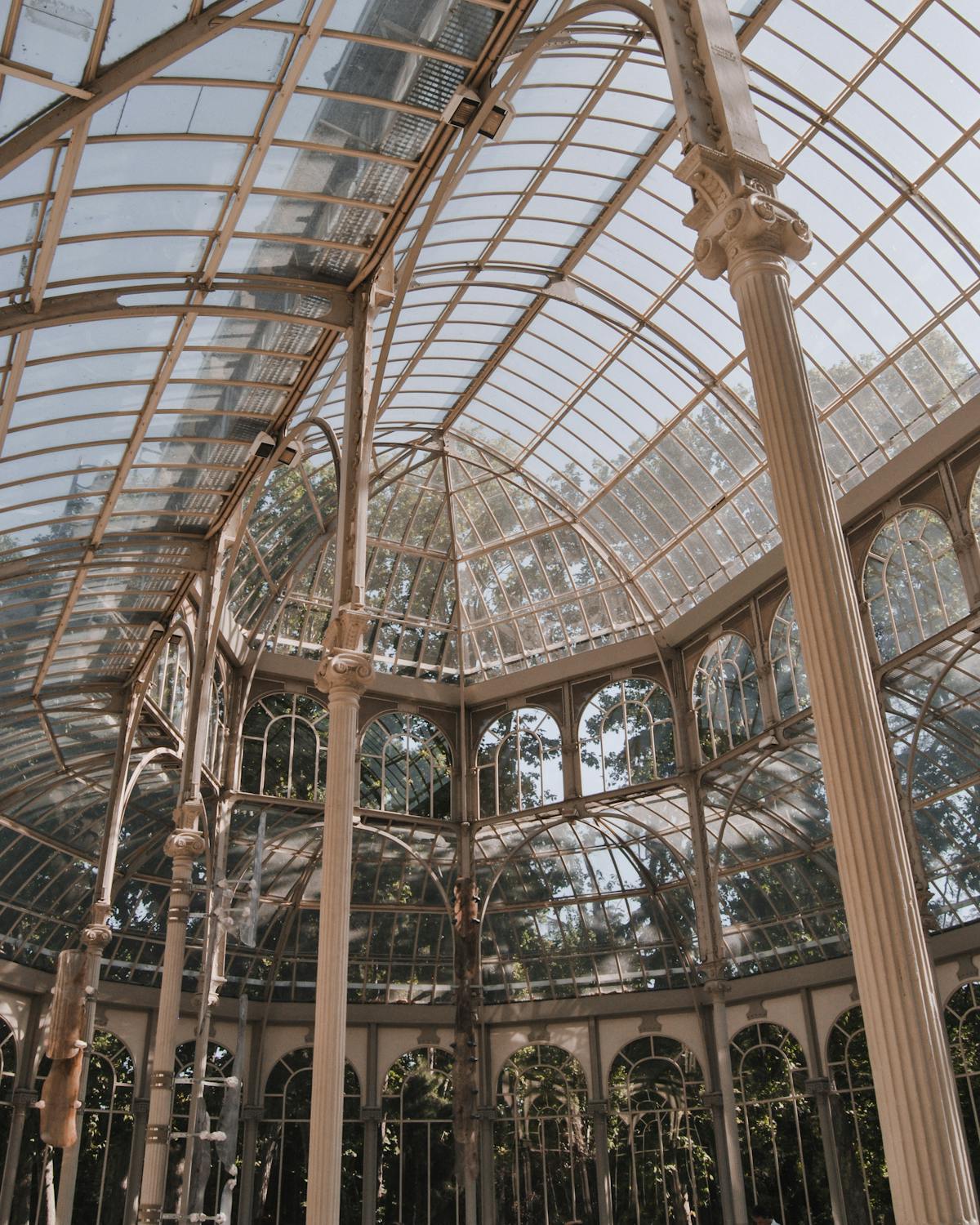
Combine with the Retiro Park. The park entrance is a ten-minute walk east from the museum. After two or three hours of intense art, the lake and the Palacio de Cristal (a glass pavilion that the Reina Sofia actually uses for temporary exhibitions) make a perfect decompression stop. The Palacio de Cristal is free entry.
What to See Inside
The permanent collection spans floor 2 (early 20th century through the Civil War) and floor 4 (post-war to present). Here’s what not to miss, in rough order of priority:
Room 206 — Guernica. The obvious starting point, and rightly so. Picasso painted it in 1937 as a response to the bombing of the Basque town of Guernica during the Spanish Civil War. The surrounding rooms (205 and 207) display his preparatory sketches and photographs by Dora Maar documenting the painting’s creation. Spend at least twenty minutes here. Sit on the bench across from the painting if one is available — the scale reveals details you miss while standing up close.
Rooms 203-205 — Picasso’s other works. Guernica gets all the attention, but the surrounding galleries hold dozens of other Picasso paintings and sculptures spanning decades. The shift in style from his Blue Period work to the fractured Cubist pieces to Guernica itself tells a story about how one artist’s vision evolved through two world wars.
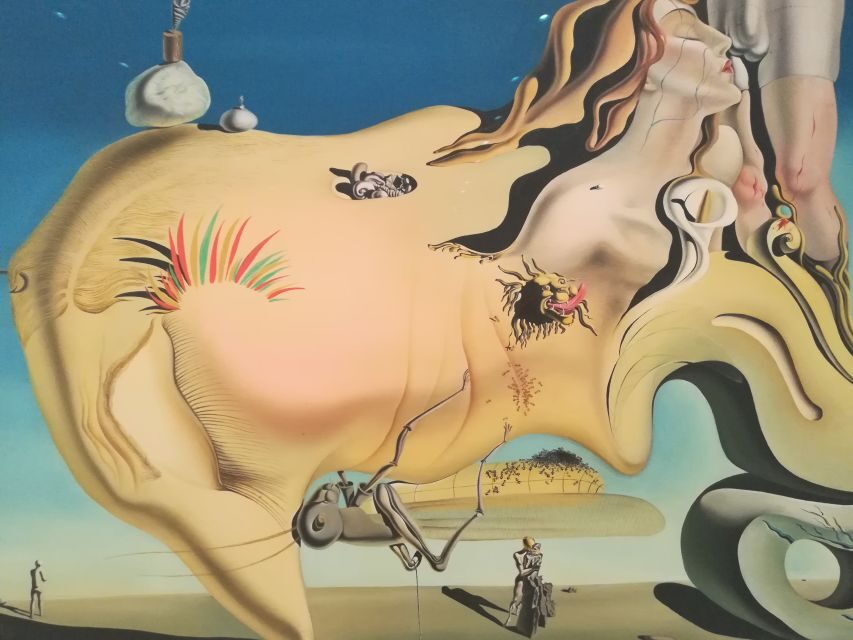
Room 205 — Dali. The Great Masturbator, Face of Mae West, and a selection of Surrealist canvases that range from disturbing to funny to both at once. Dali’s work is easier to engage with than most modern art — the images are striking even if you don’t know the theory behind them. The guide on the $38 tour above spends good time in this room.
Room 206.06 — Miro. Joan Miro’s paintings look deceptively simple — bright colours, biomorphic shapes, childlike figures. But the composition is meticulous. The Reina Sofia has one of the strongest Miro collections anywhere, and this room shows why Miro and Picasso are often mentioned in the same sentence despite working in completely different styles.
Floor 4 — Post-war and contemporary. Less famous but often more surprising. The Spanish Informalism rooms cover the abstract art movement that emerged in Spain during the Franco era — artists working under censorship who channeled political frustration into canvases that pulsate with barely contained anger. The later rooms cover conceptual art, installation work, and multimedia pieces that bring the collection into the 21st century.
The Nouvel wing temporary exhibitions. These change every few months. Check the museum website before your visit to see what’s running. Past exhibitions have covered everything from feminist art in Franco’s Spain to Latin American photography to retrospectives on individual contemporary artists. Quality is consistently high — the Reina Sofia’s curatorial team has a strong track record.