
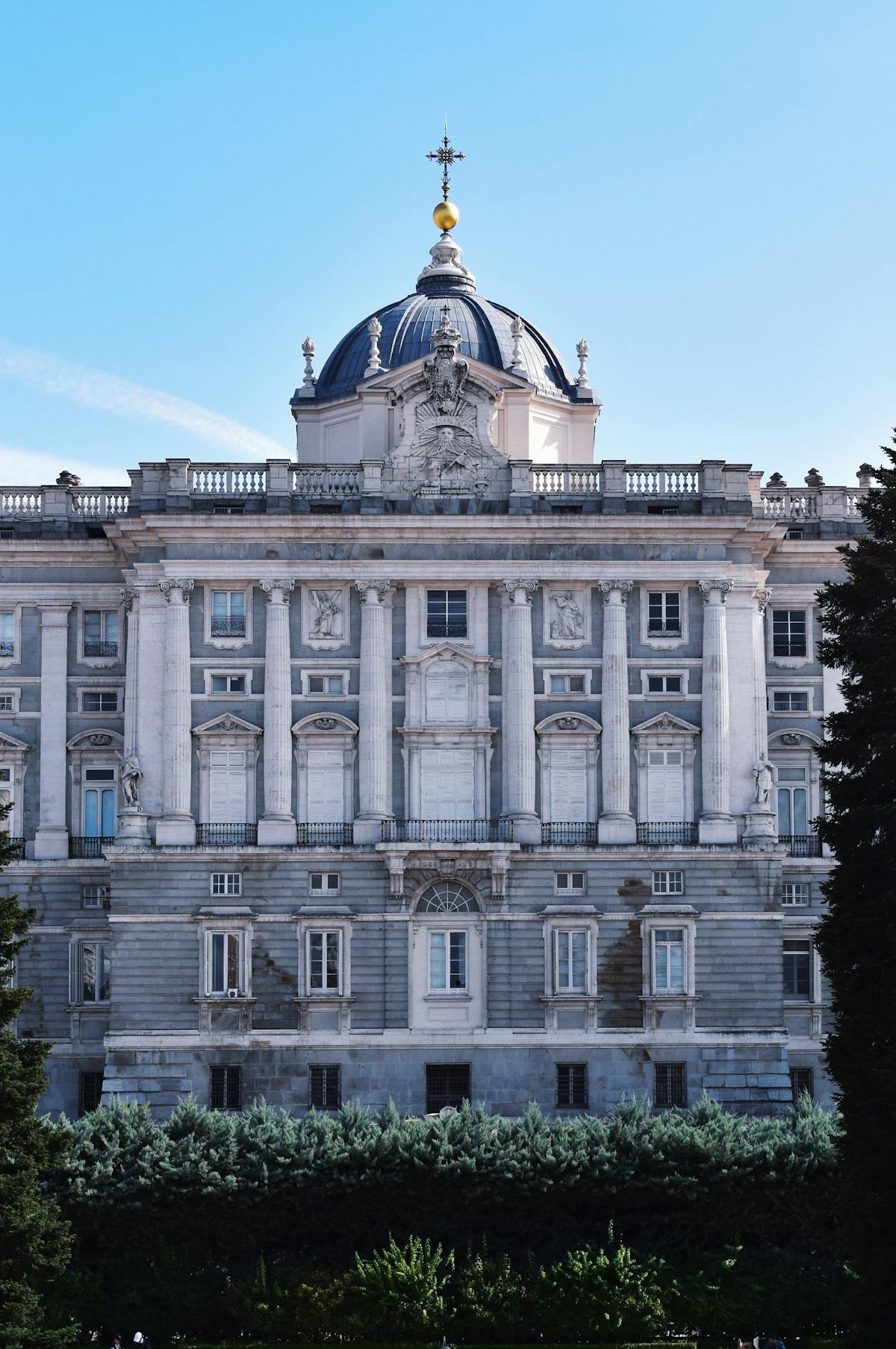
The Royal Palace of Madrid has 3,418 rooms. Three thousand four hundred and eighteen. The Spanish royal family doesn’t live here — they moved out long ago and use it strictly for state ceremonies — but the building keeps functioning as if the king might stroll back in any morning. Guards stand at the gates. The chandeliers stay polished. The Stradivarius violins in the music room are still playable.
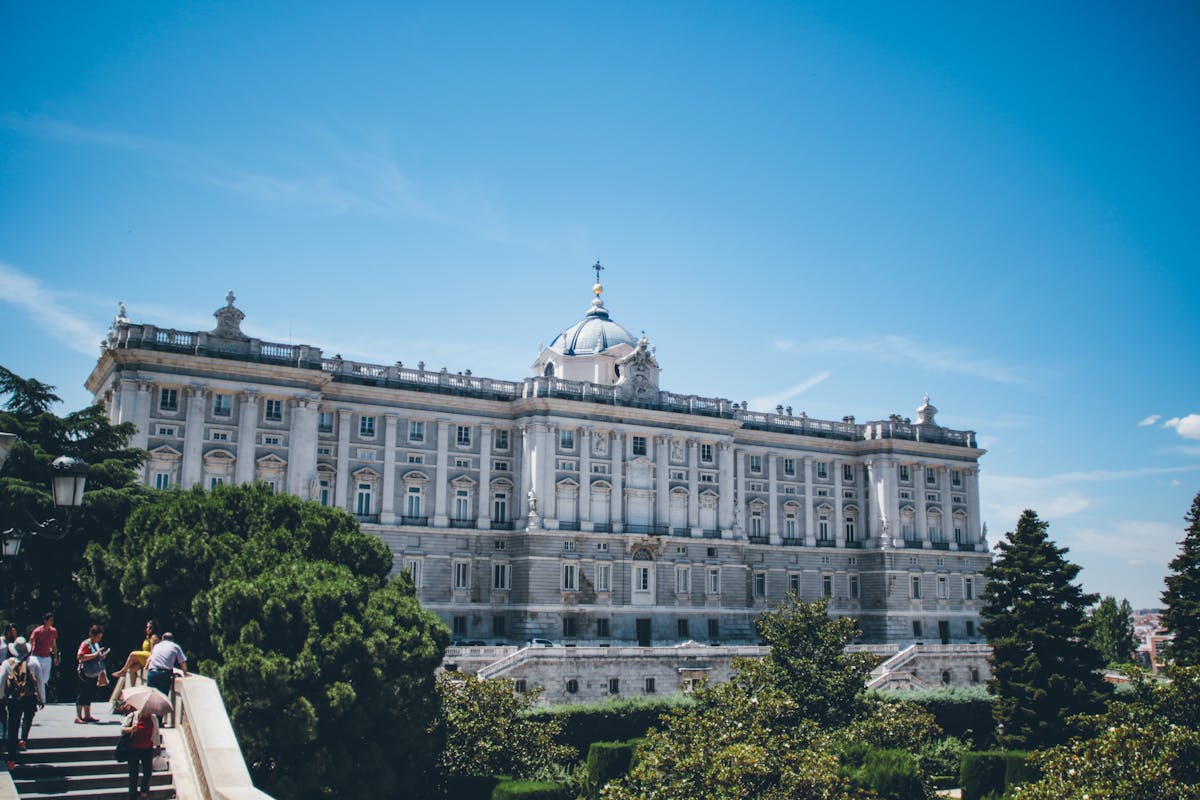
It’s the largest functioning royal palace in Europe — bigger than Buckingham, bigger than Versailles in terms of floor space. And unlike those places, you can walk through the state rooms where actual diplomatic receptions happen. The Throne Room ceiling, painted by Tiepolo in 1764, still watches over visiting heads of state. The Royal Armoury downstairs holds suits of armour worn by Charles V in actual battles. This isn’t a museum pretending to be a palace. It’s a palace that lets travelers in.
But the ticket situation trips people up. There’s an official website, a handful of third-party sellers, guided tours at wildly different price points, and a confusing timed-entry system during busy months. I’ve sorted through all of it below — how the tickets work, when to go, and which tours are actually worth paying for.
In a Hurry? My Top Picks
- Best skip-the-line guided tour: Royal Palace Small Group Skip the Line Ticket — $65 per person. Two-hour guided walk through the state rooms with skip-the-line entry and a group capped at 20. Book this tour
- Best early-bird option: Royal Palace Early Entrance Tour — $47 per person. Gets you inside before the main crowds arrive. Ninety minutes with a guide who covers the highlights without dragging. Book this tour
- Best value combo: Royal Palace and Cathedral of Almudena Tour — $57 per person. Two and a half hours covering both the palace and the cathedral next door. Two landmarks, one ticket, one guide. Book this tour
- Best intimate experience: Royal Palace Small Group Tour (6 Max) — $60 per person. Capped at six people. Ninety minutes. The closest thing to a private tour without the private tour price. Book this tour
- In a Hurry? My Top Picks
- How Royal Palace Tickets Work
- Self-Guided vs. Guided Tours
- Best Tours for the Royal Palace of Madrid
- 1. Royal Palace Small Group Skip the Line Ticket —
- 2. Royal Palace Early Entrance Tour —
- 3. Royal Palace and Cathedral of Almudena Tour —
- 4. Royal Palace Small Group Tour (6 Max) —
- 5. Prado Museum and Royal Palace Guided Tour —
- When to Visit the Royal Palace
- Tips That Save You Time and Money
- What You’ll See Inside
- Getting There
- More Madrid Guides
How Royal Palace Tickets Work
The official ticket office is run by Patrimonio Nacional — the government body that manages Spain’s royal properties. You can buy tickets online at tickets.patrimonionacional.es or in person at the palace gates. The online system works reasonably well, though the English translation can be clunky.
Here’s how it breaks down:
General admission: Currently 16 euros for adults, 8 euros for children (5-16), and free for under-5s and EU citizens over 65. This gets you into the main state rooms — the Throne Room, the Gala Dining Room, the Hall of Columns, the Royal Chapel, and the Stradivarius Room. It does not include the Royal Kitchen, which reopened after renovation and requires a separate ticket.
General admission + Royal Kitchen: A combined ticket for 19 euros that adds the recently restored kitchens. Worth the extra 3 euros if you’re interested in seeing where state banquets for 140 guests were prepared — the copper pots alone are something to see.
Timed entry: During peak season (roughly April through October, plus Christmas and Easter), the palace uses timed-entry slots. You pick a 30-minute window when buying online. Outside peak season, it’s generally first-come-first-served with no assigned times. But even in the off-season, the queue at the ticket office can stretch to 45 minutes on busy mornings.
Free entry hours: The palace offers free admission during the last two hours before closing for EU citizens and residents of certain Latin American countries. The catch: the free-entry queue forms its own separate line, and it can be extremely long. If you’re eligible, arrive at least an hour before the free window opens to have a chance of getting in.
The ticket office accepts cash and cards. No advance booking is strictly required in the off-season, but during summer and around holidays, buying online at least a few days ahead saves you the queue. The palace doesn’t sell out the way the Alhambra does — it’s rare to be turned away entirely — but the wait time without a pre-booked slot can eat into your morning.
Self-Guided vs. Guided Tours
Two approaches, and which one makes sense depends on what kind of visitor you are.
Self-guided with official audio guide: You buy the general admission ticket (16 euros), add an audio guide for 4 euros, and walk through at your own speed. The audio guide covers 25 rooms and runs about 90 minutes if you listen to everything. The content is decent — historical context, architectural details, the odd anecdote about which king threw a tantrum in which room. You can skip sections, linger where you want, and take photos without waiting for a group.
The downside: you’re following a fixed route through the state rooms with hundreds of other visitors doing the same thing. There’s no way to ask questions, and the audio guide can’t adapt to what catches your eye. It also doesn’t cover the Royal Armoury or the Royal Pharmacy in any depth — you’ll walk through those on your own.
Guided tours with skip-the-line: Tour operators buy bulk tickets and get dedicated entry slots, so you bypass the general admission line entirely. Groups range from 6 to 25 people depending on the operator. A live guide walks you through the palace, stops at key rooms, answers questions, and gives you the kind of context that makes the Throne Room more than just a fancy chair under a painted ceiling.
The guided approach costs more — $47 to $82 depending on group size and duration — but it solves two problems at once. You skip the queue (which can be brutal during summer mornings) and you get commentary that the audio guide can’t match. A good guide will tell you why Tiepolo painted what he did on the Throne Room ceiling, why the Royal Armoury matters for European military history, and what the Stradivarius collection sounds like when they’re actually played at state events.
For a first visit, I’d lean toward a guided tour. The palace is enormous and easy to rush through without understanding what you’re seeing. Once you’ve been with a guide, you can always come back self-guided later to spend more time in the rooms that interested you most.
Best Tours for the Royal Palace of Madrid
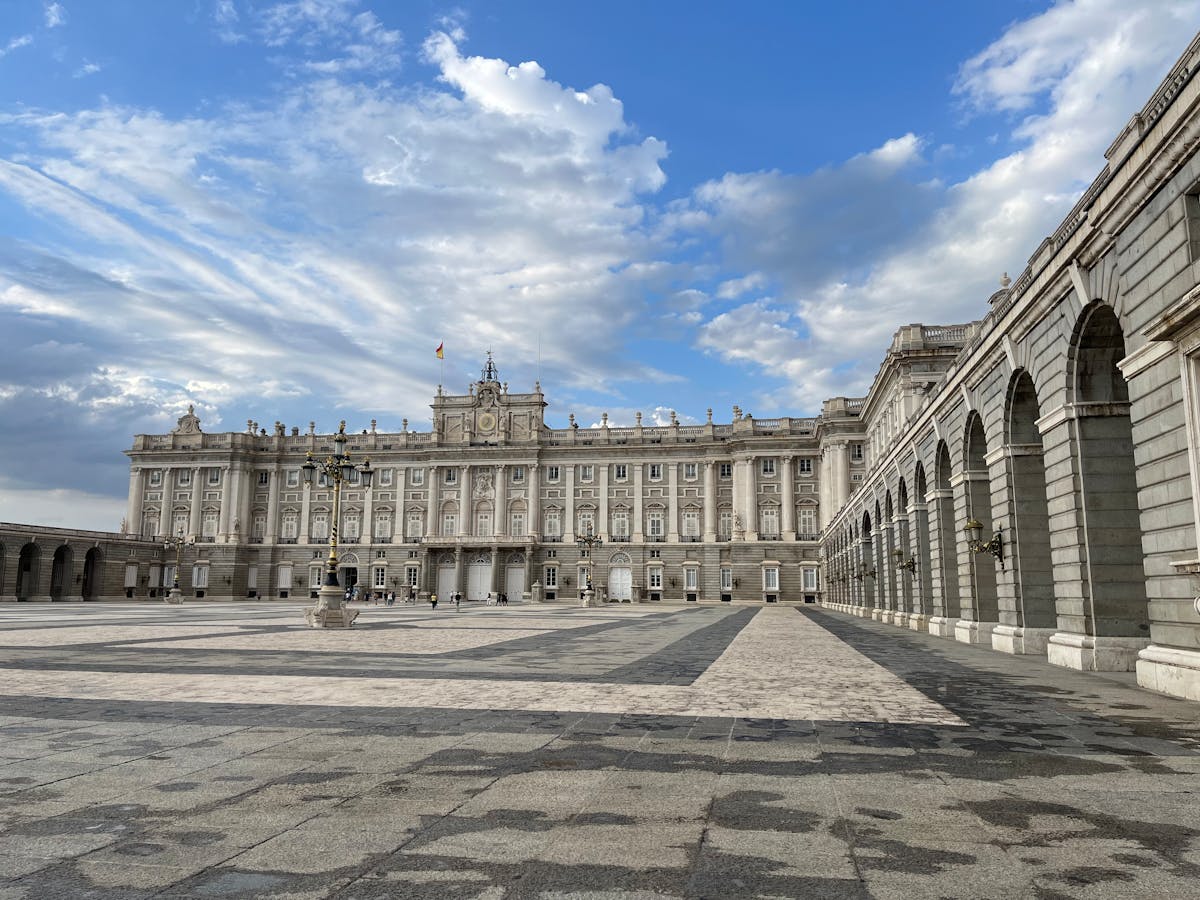
I’ve picked four tours from the database that cover the main options: a standard guided tour, an early-morning option, a combo with the cathedral, and an intimate small-group experience. Plus a combo that adds the Prado for full-day visitors.
1. Royal Palace Small Group Skip the Line Ticket — $65
Duration: 2 hours 10 minutes | Price: $65 per person | Type: Small group guided, skip-the-line
This is the standard recommendation for most visitors. Two hours gives you time to cover the Grand Staircase, the Throne Room, the Hall of Columns, the Gala Dining Room, the Stradivarius Room, and the Royal Armoury. The guide handles the timed entry and queue-skipping, and groups stay small enough that you can actually hear the commentary without straining.
What sets this apart from the cheaper options is the pacing. Two hours means the guide can stop at the Throne Room ceiling and actually explain Tiepolo’s fresco — the allegory of the Spanish monarchy depicted across that massive canvas — instead of pointing upward and moving on. The Royal Armoury gets proper attention too, which matters because that collection of jousting armour and ceremonial weapons is one of the best in Europe, and most people walk past it too quickly.
At $65, you’re paying about $47 more than the official ticket price. But you’re skipping a queue that regularly hits 30-45 minutes during peak months, and you’re getting expert narration through rooms that don’t explain themselves. If the Royal Palace is a priority on your Madrid trip, this is the tour to book.
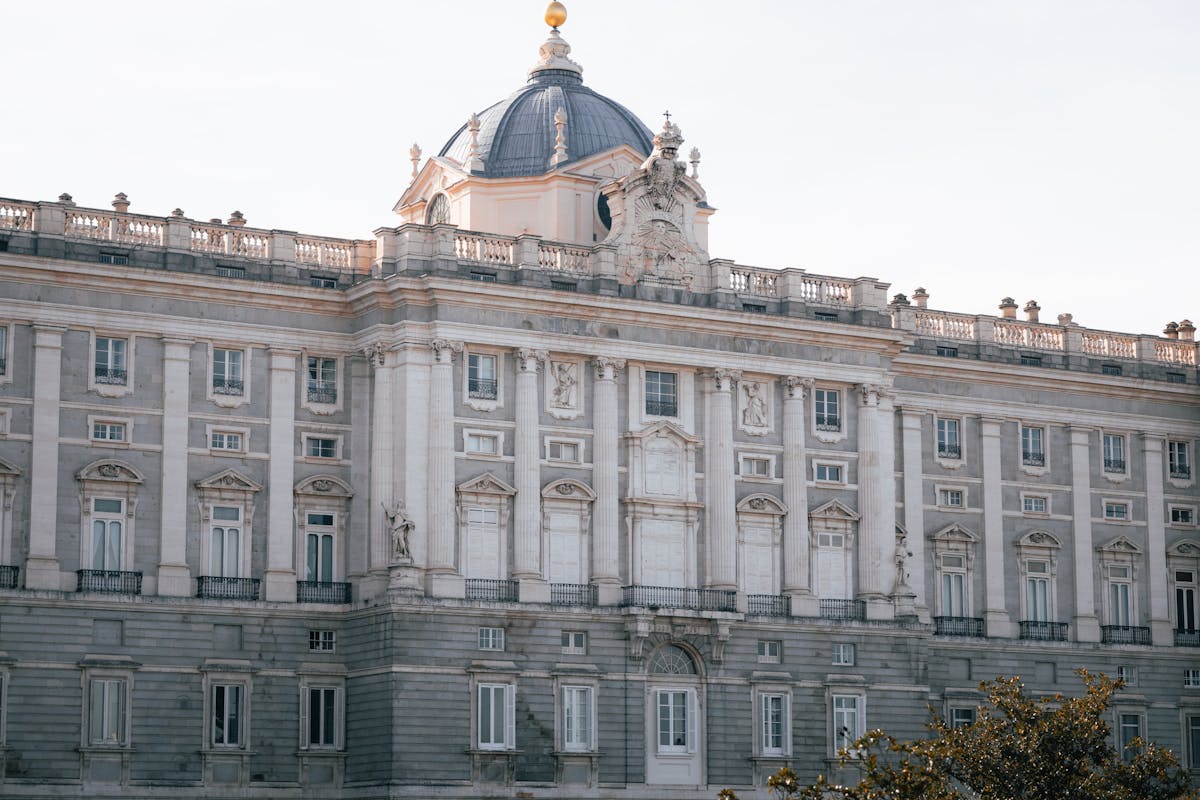
2. Royal Palace Early Entrance Tour — $47
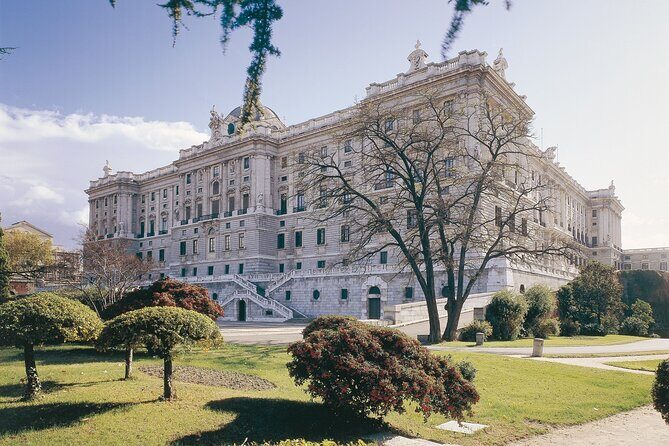
Duration: 1 hour 30 minutes | Price: $47 per person | Type: Guided tour, early access
This one plays a different game. Instead of competing with the mid-morning crowds, you enter the palace during the first available slot when the rooms are relatively empty. The guide moves efficiently through the highlights — Throne Room, Grand Staircase, Gala Dining Room, Royal Chapel — in 90 minutes.
The shorter duration is both the advantage and the trade-off. You see the essential rooms with better light, fewer crowds, and less time standing behind other tour groups at doorways. But you sacrifice depth. The guide won’t linger at the Royal Armoury or spend much time on the Stradivarius collection. If those interest you, plan to loop back on your own afterward with a general admission ticket (or just book the longer tour above).
At $47, it’s the cheapest guided option that includes skip-the-line. For travelers who want a professional introduction to the palace without a half-day commitment, or those pairing the palace with other Madrid sights the same morning, the early entrance tour strikes a good balance.
3. Royal Palace and Cathedral of Almudena Tour — $57
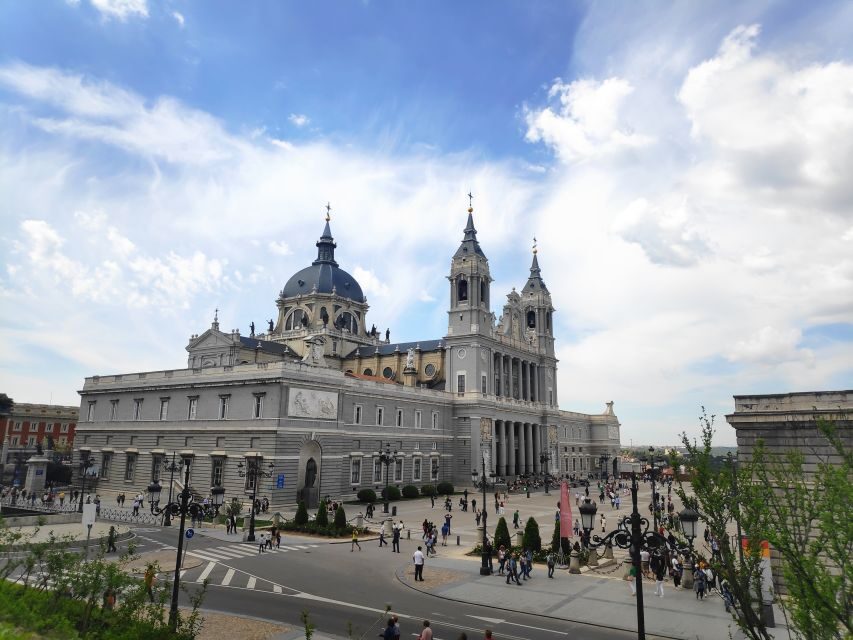
Duration: 2.5 hours | Price: $57 per person | Type: Guided tour, two landmarks
The Almudena Cathedral sits directly across the plaza from the Royal Palace. Most visitors glance at it, maybe pop inside for five minutes, and move on. That’s a mistake. The cathedral took 110 years to build — construction started in 1883 and finished in 1993 — and the interior is unlike any other cathedral in Spain. Neo-Gothic arches with a colour palette of greens, oranges, and golds that looks nothing like the usual grey stone interiors.
This combo tour gives you both buildings with a single guide over two and a half hours. You start at the palace, cover the state rooms, then walk across the plaza to the cathedral. The guide connects the history between the two — how the cathedral was commissioned specifically to sit beside the palace, why it took over a century to complete (civil wars, budget problems, design changes), and what the unusual modern interior means in the context of Spanish religious architecture.
At $57, this is cheaper than the standalone palace tours above and gives you more total content. The trade-off is slightly less time inside the palace itself, since the tour splits between two venues. But if you were planning to visit the cathedral anyway — and you should — this saves you time and gives you context you wouldn’t get on your own.
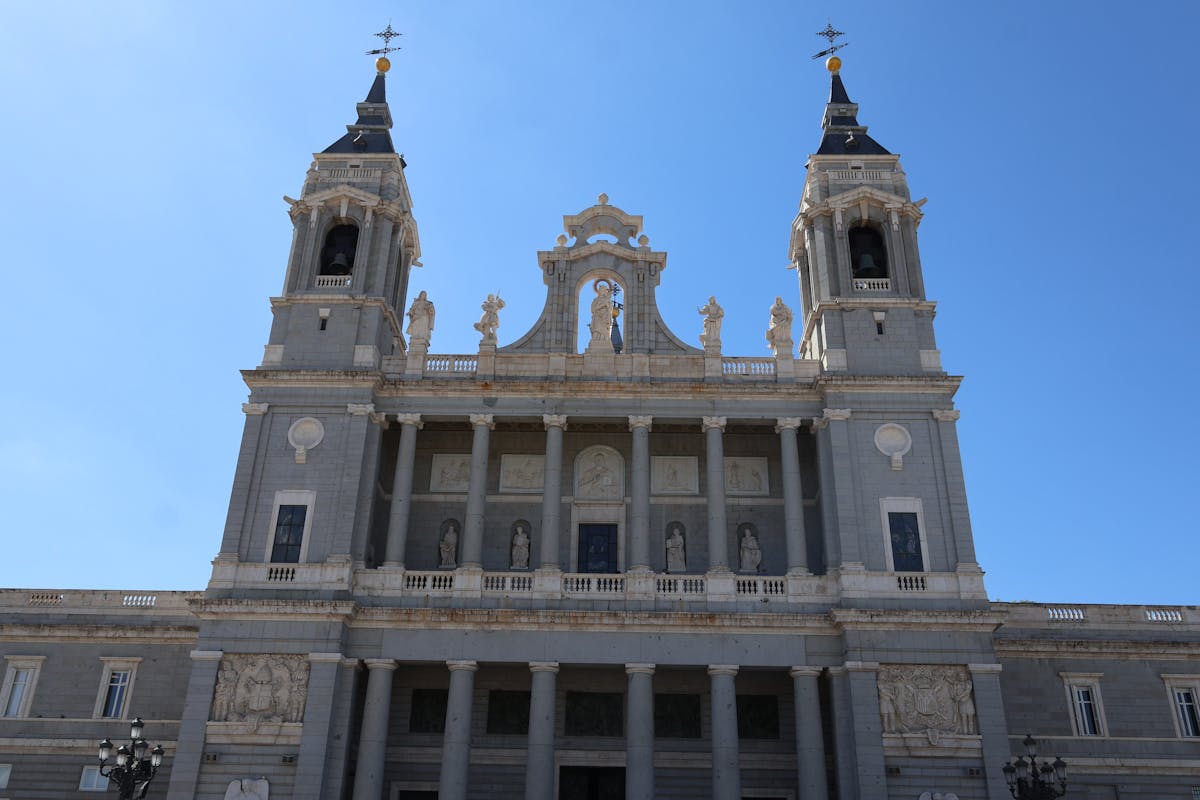
4. Royal Palace Small Group Tour (6 Max) — $60
Duration: 1 hour 30 minutes | Price: $60 per person | Type: Small group (max 6), skip-the-line
If you dislike group tours because they feel like cattle drives, this is the fix. Capped at six participants, it’s functionally a semi-private experience. The guide can adjust the route based on what interests the group, spend extra time in rooms that spark questions, and actually have a back-and-forth conversation instead of broadcasting to a crowd.
The 90-minute duration covers the core state rooms — the same highlights as the longer tours — but with more flexibility. If everyone wants to spend ten minutes studying the detail on the Throne Room’s canopy rather than the standard three-minute stop, the guide can do that. You lose the Royal Armoury deep dive and some of the peripheral rooms, but you gain intimacy and adaptability.
At $60, it’s priced between the early entrance tour and the standard group tour, which feels fair for the six-person cap. Couples and small friend groups get the most out of this format. Families with young children might prefer the longer standard tour where the group size gives kids more room to drift without derailing the experience for everyone.
5. Prado Museum and Royal Palace Guided Tour — $82

Duration: 5 hours | Price: $82 per person | Type: Guided combo tour, skip-the-line
This is the all-day option for visitors who want Madrid’s two biggest cultural landmarks covered in a single guided experience. You start at one venue (usually the Prado), spend about two and a half hours inside, then walk to the other for the second half.
The Prado-to-Palace route takes you through the heart of Madrid — past the Puerta del Sol, through the Plaza de Oriente — which turns the walk between venues into its own mini tour. The guide covers the connection between the art in the Prado (much of which came from the royal collection) and the palace where that collection originally hung. Velazquez’s Las Meninas makes a lot more sense when you’ve just walked through the rooms it was painted in.
At $82, you’re getting two skip-the-line tickets plus five hours of guided commentary. Buying a Prado ticket and a Royal Palace ticket separately would run about 30 euros total, so you’re paying roughly $50 for the guide and the convenience. Whether that’s worth it depends on whether you’d want a guide at the Prado anyway — and at the Prado, I’d argue a guide is almost essential. The collection is too vast and too dense to navigate well on your own without some direction.
The catch: five hours is a long time on your feet. Wear comfortable shoes, and don’t schedule anything demanding for the rest of the afternoon.
When to Visit the Royal Palace
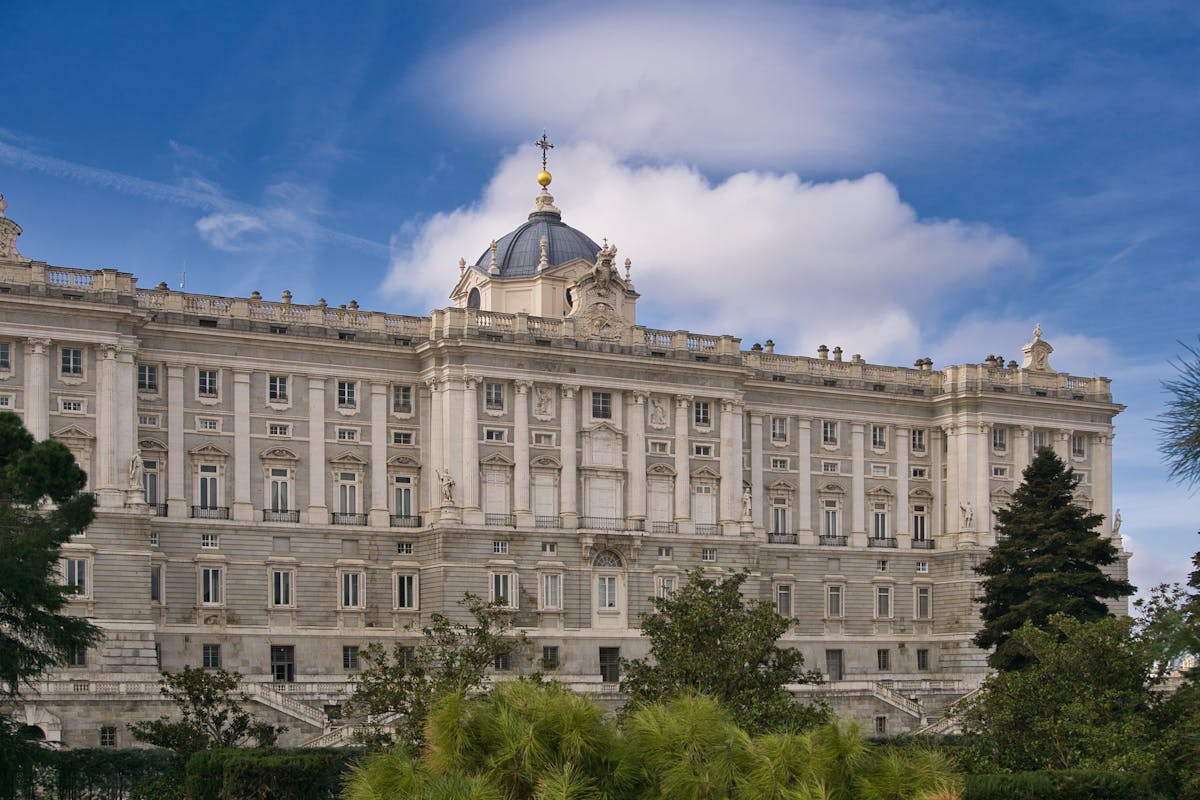
The palace is open year-round except for certain state events (when it’s used for actual government functions) and a handful of public holidays. Opening hours shift seasonally: roughly 10 AM to 6 PM in winter and 10 AM to 8 PM in summer, but always check the Patrimonio Nacional website for the exact schedule.
Best time of year: October through March. Madrid’s tourism peaks from June through September, and the palace reflects that. Summer mornings see queues stretching across the Plaza de la Armeria, and the state rooms get uncomfortably warm when packed with tour groups. Autumn and winter bring shorter lines, cooler temperatures for walking, and the same palace experience at a fraction of the crowd density. November is particularly good — the weather is mild, the city has a great energy, and you can often walk straight into the ticket office.
Summer visits: If you’re visiting between June and August, book the earliest morning slot you can find. By 11 AM the queue-less window is gone, and afternoon temperatures in Madrid regularly exceed 35 degrees. The palace interior stays cool, but standing in the sun waiting to get in is no fun. The early entrance tour mentioned above was basically designed for summer visitors.
Best time of day: Opening time or after 3 PM. The first hour after the doors open is always the least crowded. Most tour groups arrive between 10:30 AM and 1 PM, creating a crunch in the state rooms. After 3 PM, the crowds thin again as day-trippers head to lunch and the afternoon heat keeps casual visitors away. The last two hours before closing are often surprisingly quiet.
Days to avoid: Wednesday and Saturday mornings are the busiest. Wednesday because many Madrid museums close on Monday and the palace becomes the default midweek attraction, Saturday for obvious reasons. Sunday mornings are also heavy due to the free-entry program for EU citizens. If possible, visit on a Tuesday or Thursday.
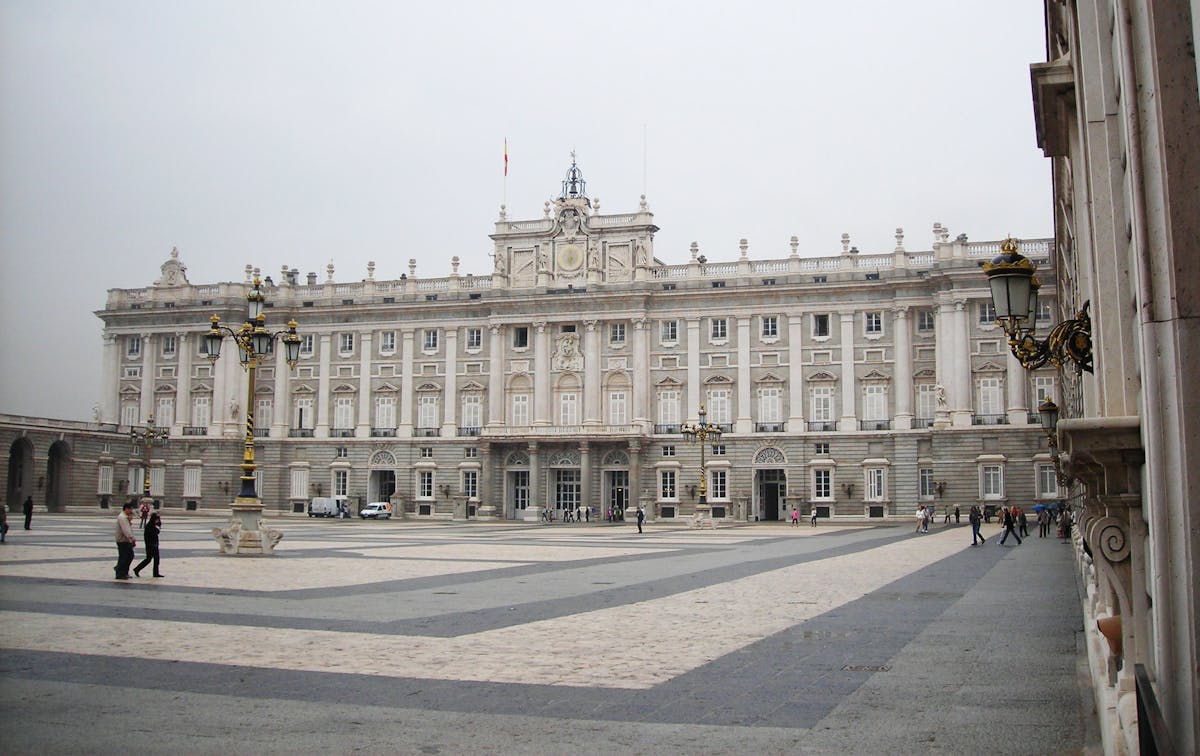
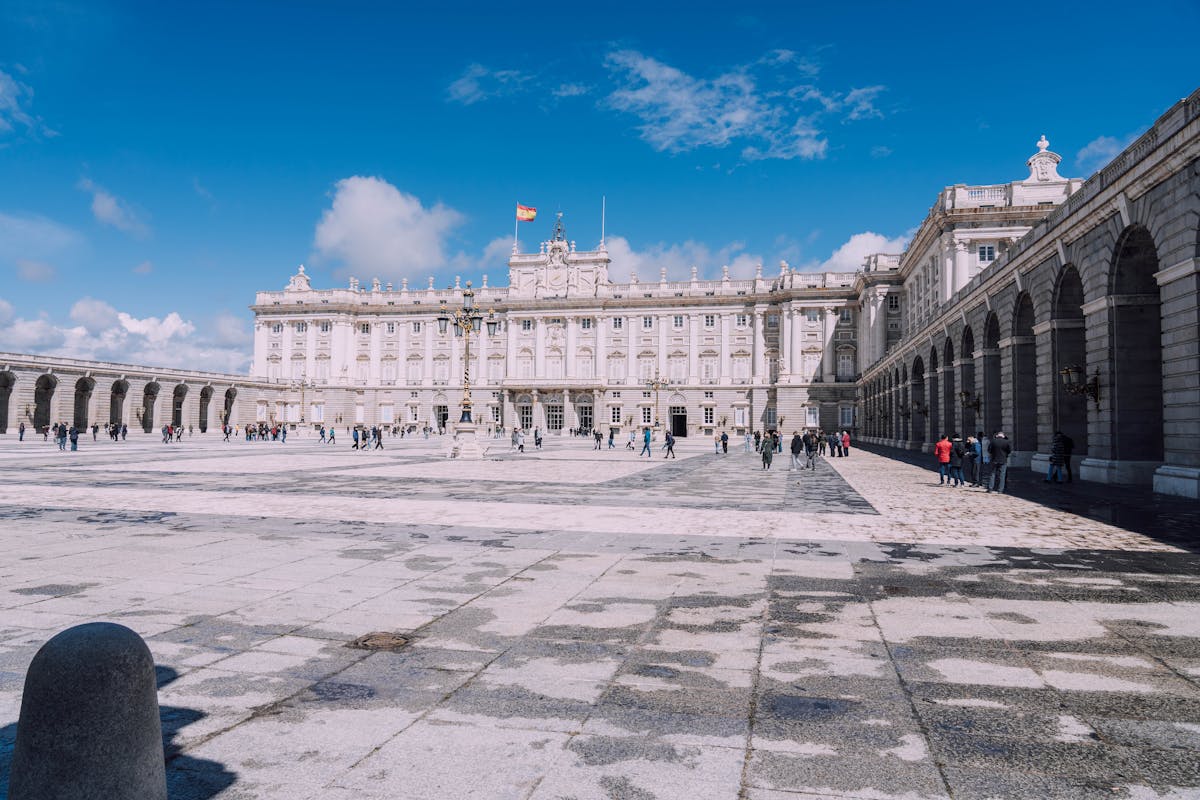
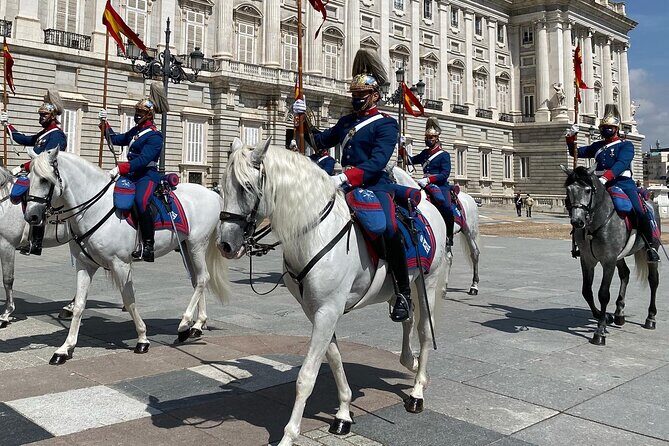
Changing of the Guard: On the first Wednesday of each month (except January, August, and September), a ceremonial changing of the guard takes place at noon in the Plaza de la Armeria. It draws a large crowd but adds something to the visit if you time it right. Arrive at the plaza by 11:30 AM to get a decent vantage point.
Tips That Save You Time and Money
Don’t skip the Royal Armoury. Most visitors beeline for the state rooms and treat the armoury as an afterthought. That’s backwards. The collection includes full suits of jousting armour made for Charles V and Philip II, ceremonial swords, horse armour with intricate engravings, and weapons spanning five centuries. It takes 30 minutes and it’s included in the general admission price. The entrance is on the lower level of the plaza — look for the signs near the south gate.
The Royal Kitchen is worth the extra 3 euros. Reopened after a long renovation, the kitchens show the industrial side of palace life. Copper pots the size of bathtubs, roasting spits that could handle whole animals, and the logistics of feeding hundreds of guests at a state dinner. It’s a side of royal life that the gilded state rooms don’t show, and the contrast is fascinating.
Photography is allowed in most rooms. No flash, no tripods, no selfie sticks. But regular photos are fine throughout the state rooms. The Throne Room and the Gala Dining Room are the most photogenic. Position yourself at the far end of the Gala Dining Room for the length shot — the table stretches into the distance with chandeliers running the full length of the ceiling.
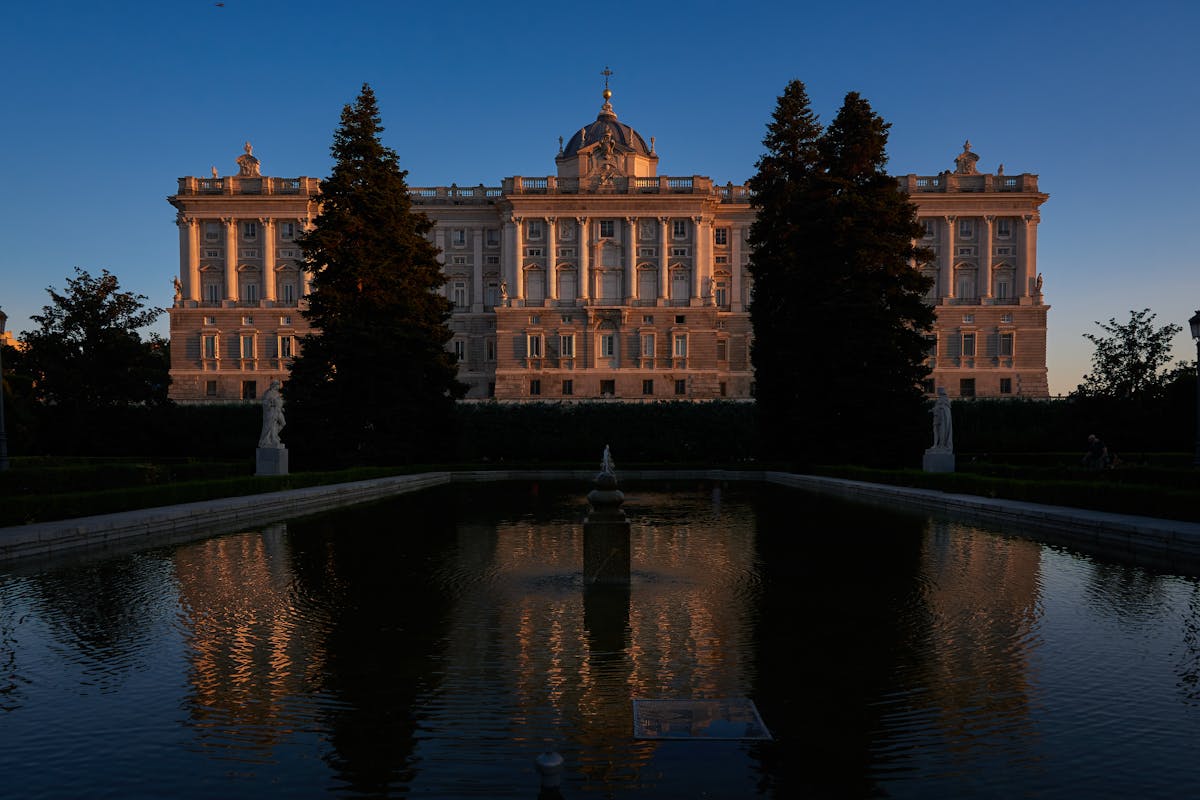
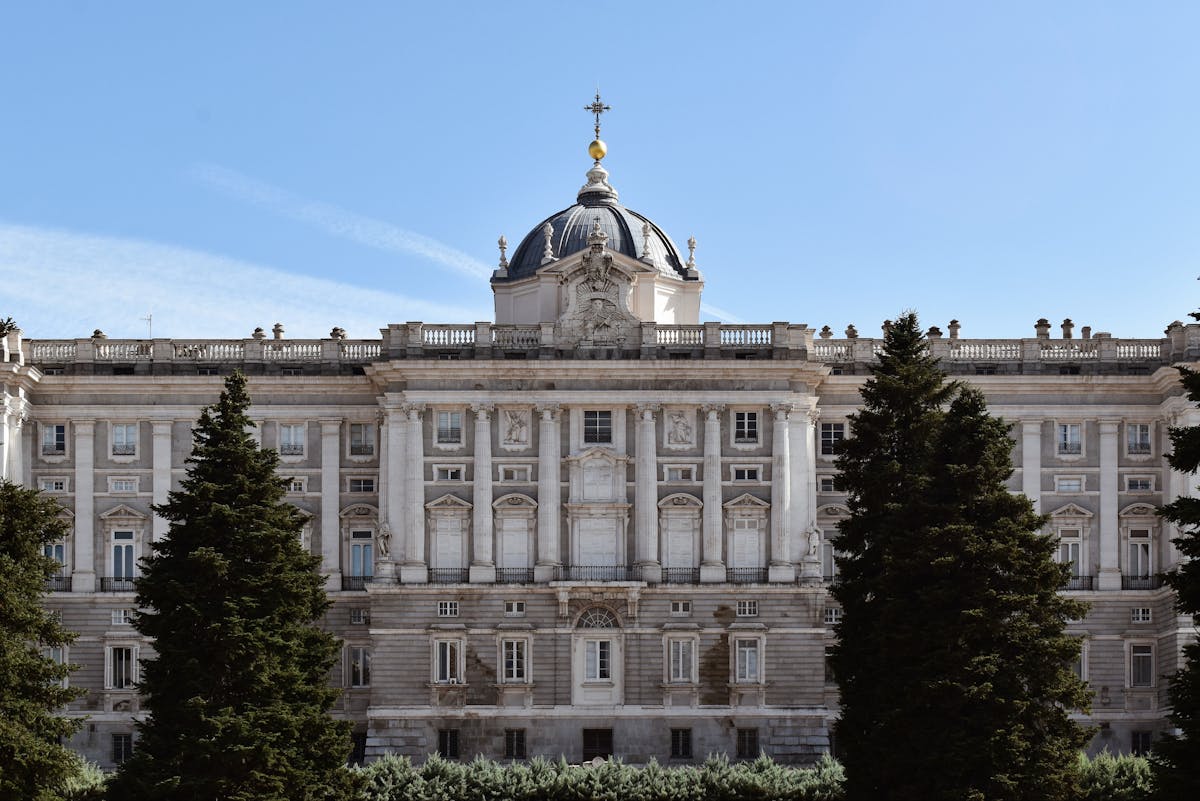
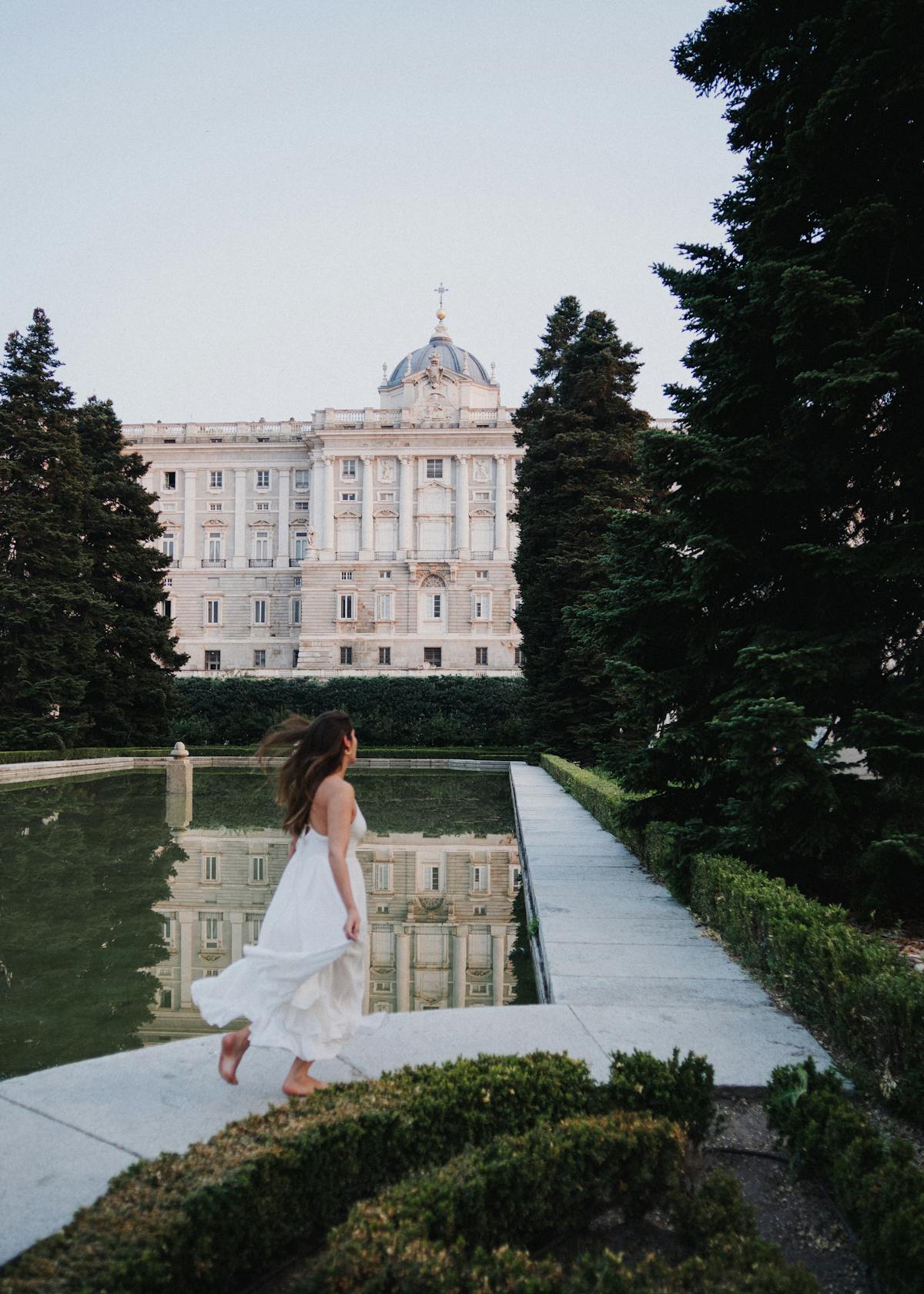
Combine with the Sabatini Gardens. These formal gardens sit directly behind the palace and are completely free. Laid out in the neoclassical style with hedged pathways, fountains, and a reflecting pool that mirrors the palace’s north facade, they’re worth 20 minutes of your time and make for a good cooldown after the tour. The best time is late afternoon when the light hits the palace from the west.
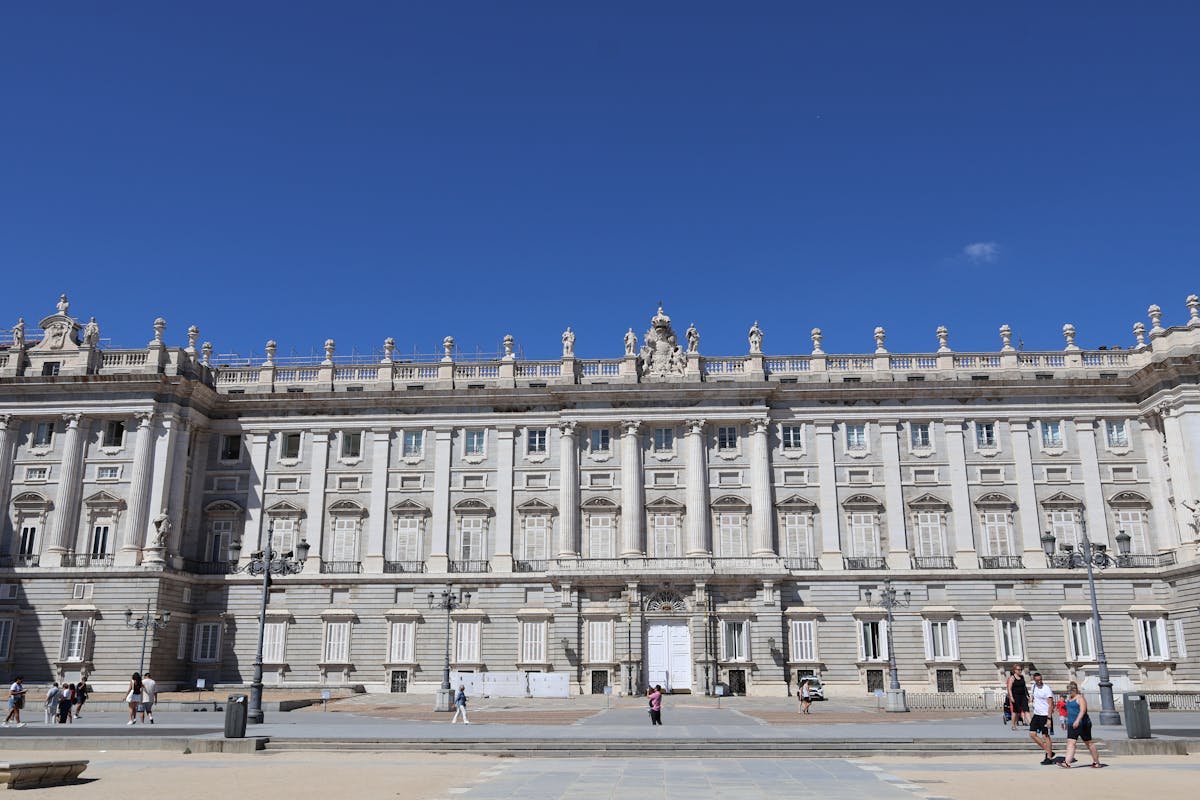
The Plaza de Oriente is better for coffee than the palace cafe. The cafeteria inside the palace complex is overpriced and underwhelming. Walk five minutes to the Plaza de Oriente and pick any of the terraza bars lining the square. You’ll pay less for better coffee and get to sit facing the palace’s east facade, which is arguably the most photogenic angle of the whole building.
Bring layers in winter, water in summer. The palace interior temperature varies wildly between rooms. Some are heated, some aren’t. In winter, you’ll want a light jacket even inside. In summer, carry water — the walk between the entrance, the state rooms, and the armoury covers more ground than you’d expect, and there’s no water fountain inside.
What You’ll See Inside
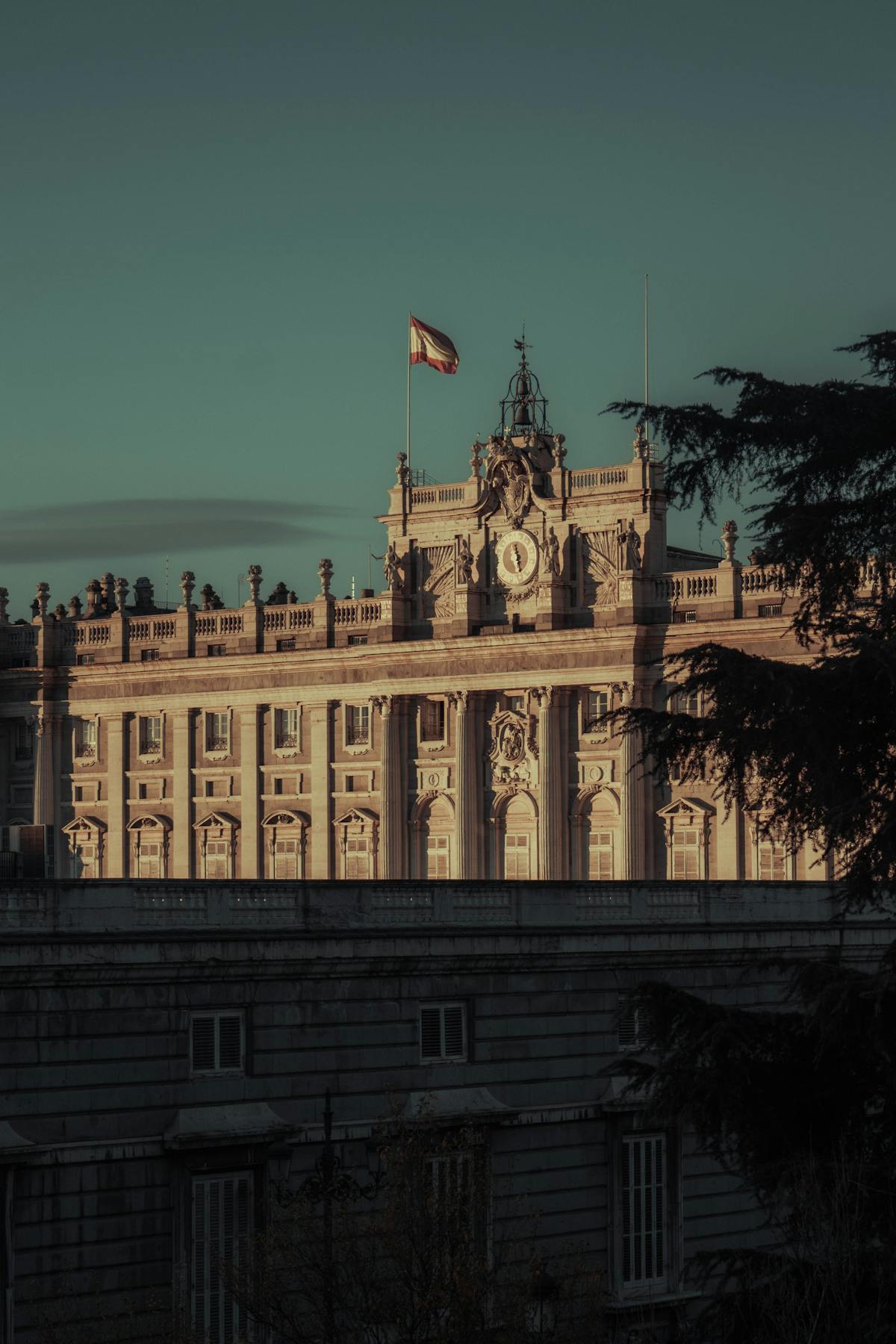
The visitor route takes you through roughly 50 of the palace’s 3,418 rooms. Here are the ones that stop people in their tracks:
The Grand Staircase: Your first glimpse of what this palace is about. A single imperial staircase made from San Agustin marble, flanked by lion sculptures and lit from above. The ceiling fresco by Corrado Giaquinto depicts Religion, Faith, and the Church. It’s designed to make you feel small, and it works.
The Throne Room: The centrepiece. Tiepolo’s ceiling fresco — “The Apotheosis of the Spanish Monarchy” — is the largest work in the palace, and it’s staggering. Red velvet walls, Venetian crystal chandeliers, and the actual thrones still positioned beneath the canopy. This room is still used for credential ceremonies when foreign ambassadors present themselves to the king.
The Gala Dining Room: A table set for 140 guests with Sevres porcelain, crystal glassware, and silver-gilt candelabras. The room itself is a hundred feet long. State dinners still happen here, and the place settings haven’t changed since Alfonso XII’s time. Looking down the length of that table gives you a sense of scale that photos struggle to convey.
The Stradivarius Room: Five string instruments made by Antonio Stradivari in the early 1700s — two violins, a viola, and two cellos. They’re considered the finest complete Stradivarius collection in the world, and they’re still played during select palace events. The room is small and easy to rush past, so slow down.
The Royal Armoury: One of the most important collections of arms and armour in the world, alongside the Tower of London and Vienna’s Kunsthistorisches Museum. Full suits of parade armour made for Habsburg kings, battle armour with dents and scratches still visible, crossbows, muskets, and ceremonial swords. Charles V’s tournament armour alone is worth the visit.
The Royal Pharmacy: Hundreds of ceramic jars from Talavera de la Reina, distillation equipment, and the recipes used to prepare medicines for the royal family. It’s oddly charming and almost always empty of visitors, which makes it a quiet detour from the crowded state rooms.
Getting There
The palace sits at the western edge of central Madrid, overlooking the Manzanares river valley. The nearest metro station is Opera (lines 2 and 5), which drops you about a three-minute walk from the main entrance. Sol station (lines 1, 2, 3) is a ten-minute walk through the pedestrianised streets around Plaza de Isabel II.
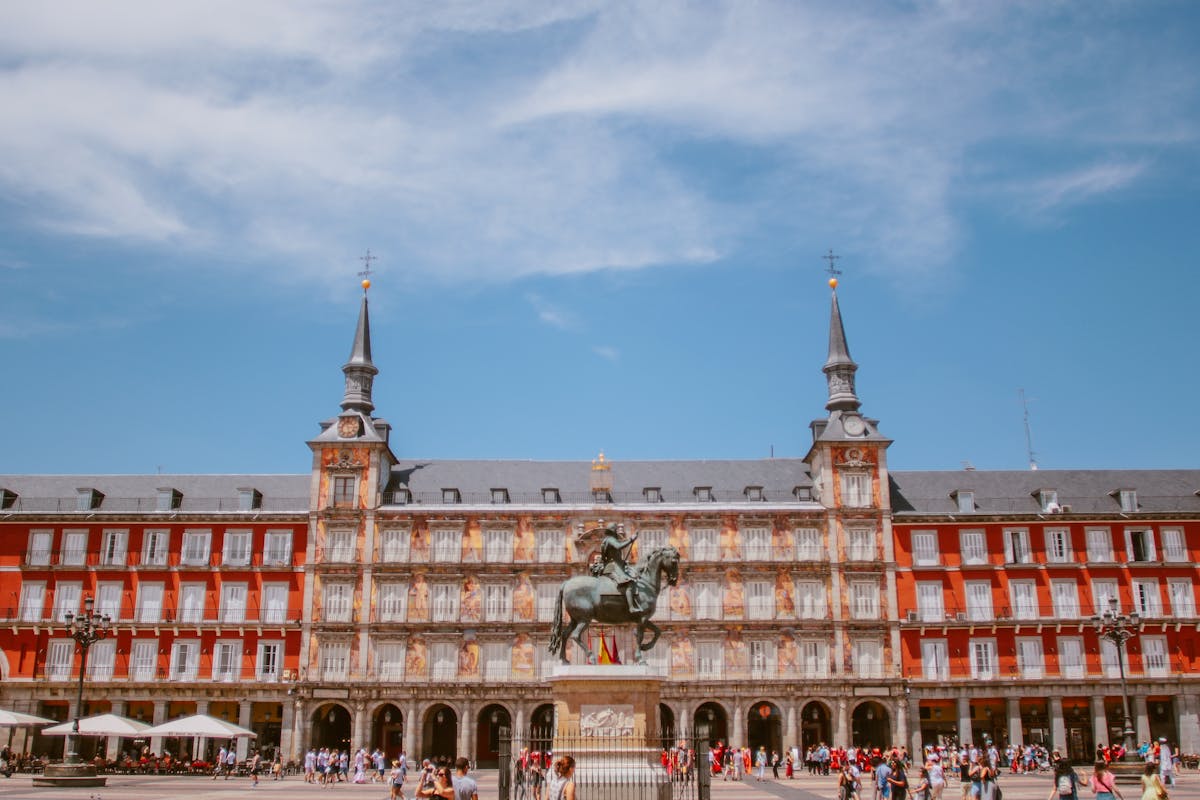
If you’re coming from the Prado Museum, it’s a 25-minute walk through the centre of Madrid — past Sol, through Plaza Mayor, and down Calle Bailen. It’s a pleasant route and a good way to see the city. Alternatively, bus lines 3 and 148 connect the two areas.
More Madrid Guides: Planning more time in the city? Check our other Madrid coverage for tours and tickets to the Prado Museum, the Reina Sofia, Toledo day trips, and more. Each guide breaks down the ticket options and tour picks the same way, so you can build a full Madrid itinerary without overpaying or standing in unnecessary queues.
Disclosure: This article contains affiliate links. If you book a tour through one of these links, we earn a small commission at no extra cost to you. We only recommend tours that are well-reviewed and that we’d book ourselves.