
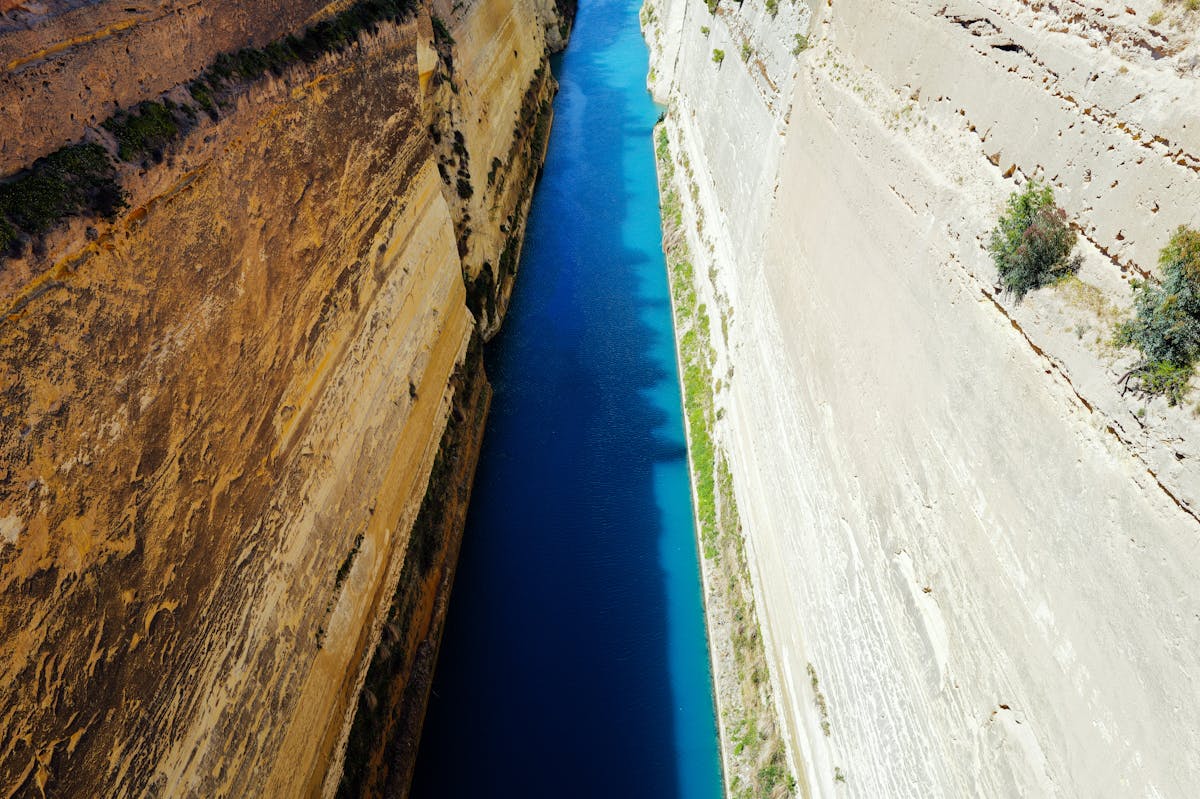
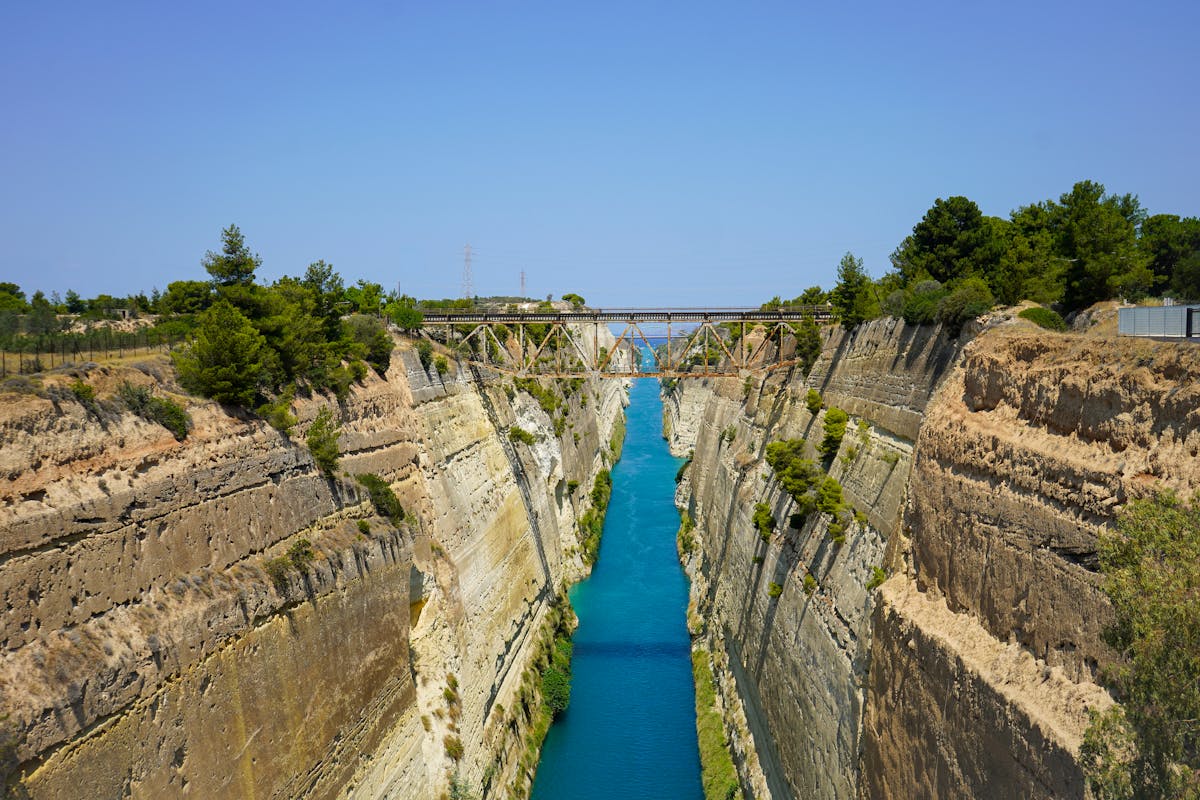
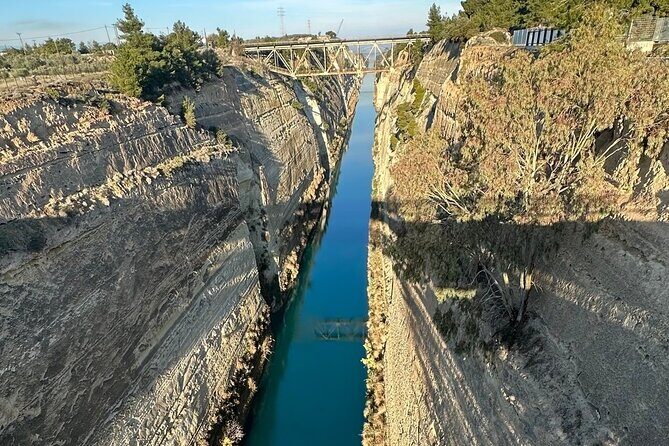
I was standing on the footbridge over the Corinth Canal, looking straight down into a 90-metre drop of perfectly vertical limestone, when it hit me: the ancient Greeks tried to dig this thing by hand. Emperor Nero brought 6,000 slaves to start the job in 67 AD. They gave up. It took another 1,800 years and a team of French engineers to finally punch through.
That’s the Peloponnese for you. Everything here is built on layers of ambition and failure and people trying again.
Ancient Corinth sits about 80 kilometres west of Athens, and it’s one of the most rewarding day trips you can do from the capital. You get the canal, the ruins of a city that once rivalled Athens itself, the Temple of Apollo (still standing after 2,500 years), and if you pick the right tour, a swing through Nafplio on the way back.
Best overall: Ancient Corinth Day Trip with Canal & VR Guide — $41. Six hours, covers the canal and all the major ruins, and the VR guide adds context you won’t get from signboards alone.
Best budget: Ancient Corinth & Nafplion Guided Tour — $32. Full day including Nafplio, which is one of the prettiest towns in Greece. Hard to beat for the price.
Best for history buffs: Biblical Tour: St Paul’s Footsteps — $170.50. Deep dive into St Paul’s Corinth journey with a specialist guide. Small group, extremely detailed.
- How the Corinth Ticket System Works
- DIY Visit vs Guided Tour — Which One Makes Sense?
- The Best Ancient Corinth Tours to Book
- 1. Ancient Corinth Day Trip with Canal & VR Guide —
- 2. Ancient Corinth & Nafplion Premium Guided Tour —
- 3. Biblical Tour: Letters to the Corinthians & St Paul’s Footsteps — 0.50
- When to Visit Ancient Corinth
- How to Get to Ancient Corinth from Athens
- Tips That Will Save You Time
- What You’ll Actually See at Ancient Corinth
- The Corinth Canal — Why Every Tour Stops Here
- Adding Nafplio to Your Day Trip
- While You’re in Greece
- More Greece Guides
How the Corinth Ticket System Works
The archaeological site of Ancient Corinth charges EUR 8 for adults. That covers the ruins and the on-site Archaeological Museum of Corinth, which is genuinely worth your time (more on that below). Under-18s get in free. EU students with a valid card pay reduced rates.
You buy tickets at the gate. There’s no online booking system and no timed entry slots, which is both good and bad. Good because you don’t need to plan weeks in advance. Bad because in peak summer (July and August), the morning tour buses from Athens all arrive around 9:30am and the entrance area gets congested for about an hour.
The site is open daily from 8:00am to 8:00pm in summer (April through October) and 8:30am to 3:30pm in winter. Those winter hours are tight, so plan accordingly if you’re visiting between November and March.
Free admission days: March 6, April 18, May 18, the last weekend of September, October 28, and every first Sunday from November through March. But honestly, the EUR 8 is so reasonable that timing your visit around free days isn’t worth the logistical hassle.
DIY Visit vs Guided Tour — Which One Makes Sense?
You can absolutely do this on your own. Rent a car, drive the A8 motorway for about an hour, and you’re there. The suburban railway (Proastiakos) from Athens’ Larissa Station also gets you to modern Corinth in about 75 minutes, though you’ll need a taxi for the last 5km to the archaeological site.
But here’s the thing: Ancient Corinth doesn’t explain itself well. The signboards are sparse, weathered, and sometimes missing entirely. If you show up without context, you’re looking at a lot of old rocks and guessing at what they meant. A good guide turns those rocks into a 2,500-year story about trade wars, religious scandal, and the apostle Paul standing trial.
The Corinth day trip with VR guide from Athens solves this problem by literally showing you what the buildings looked like before they crumbled. You hold up a device and see the Roman marketplace at full height. It’s a bit gimmicky, but it works surprisingly well at a site where so much is missing.
My honest take: If you’re a classical history nerd who reads Thucydides for fun, go solo and take your time. For everyone else, a guided half-day tour is the better call. The canal stop alone is worth it, since most DIY visitors drive over the canal bridge without even realising what they’re crossing.
The Best Ancient Corinth Tours to Book
I’ve gone through the available options and narrowed it down to three that cover different budgets and interests. Each includes transport from Athens, so you don’t need to worry about rental cars or train schedules.
1. Ancient Corinth Day Trip with Canal & VR Guide — $41
This is the one I’d pick if I had to choose one tour for a first visit. Six hours, which is enough to see the canal and the full archaeological site without feeling rushed. The VR guide is the main selling point — instead of squinting at foundations and imagining what used to be there, you get an overlay that reconstructs the ancient buildings at scale.
The stop at the Corinth Canal bridge is included, and the guide gives you the full backstory on why it took 2,000 years to dig. At $41 per person, this undercuts most competitors by a solid margin, and it’s on GetYourGuide so cancellation is flexible.
2. Ancient Corinth & Nafplion Premium Guided Tour — $32
This is a full-day tour (10 hours) that pairs Ancient Corinth with Nafplio, which was Greece’s first capital before Athens took over in 1834. For $32 per person, it’s the cheapest way to see both, and frankly it’s a steal.
The Nafplio portion gives you free time to wander the Old Town, grab lunch at a waterfront taverna (not included in the price, but budget EUR 12-15 for a solid meal), and poke around the fortress if you’re feeling energetic. The guide quality is strong based on what I’ve seen, and multiple visitors specifically called out their driver’s skill navigating Athens traffic, which is no small thing.
The trade-off: you spend more time on the bus and less time at each site. If Ancient Corinth is your main goal, the half-day option above is better. But if you want to cover more ground in one day, this is the move.
3. Biblical Tour: Letters to the Corinthians & St Paul’s Footsteps — $170.50
This is the specialist option, and it’s not cheap at $170.50 per person. But if St Paul’s letters to the Corinthians mean something to you, this tour goes places the standard ones skip entirely. You’ll visit the Bema (the tribunal where Paul was tried before the Roman governor Gallio), the Lechaion Road, Cenchreae port, and the Isthmus Canal.
The guide is a biblical history specialist, not a general tour guide reading from a script. The tour consistently gets perfect marks, and the small group size (it’s essentially private) means you can ask every obscure theological question you’ve been saving up. Six hours, with pickup from your Athens hotel.
Not the right pick if you just want to see cool ruins. But for the right audience, nothing else comes close.
When to Visit Ancient Corinth
Best months: April, May, September, and October. The weather is warm but not punishing, and the tour groups thin out compared to peak summer. Spring is especially good — the wildflowers around the ruins are a bonus you won’t get in summer.
Worst time: July and August, midday. The site has almost no shade. I’m not exaggerating. The Temple of Apollo columns throw a thin strip of shadow and that’s about it. If you must visit in summer, book a morning tour that gets you there by 9am.
Winter: The site closes at 3:30pm, which means you need to leave Athens early. It’s doable, and the upside is that you’ll often have the ruins almost to yourself. Bring layers — the Peloponnese gets cold and windy in January and February.
Time of day: First thing in the morning is best, full stop. The light is better for photos, the stone isn’t radiating heat yet, and you beat the Athens tour buses that arrive around 9:30-10:00am.
How to Get to Ancient Corinth from Athens
By organised tour: The easiest option. All three tours above include hotel pickup from central Athens. You’re collected between 7:30-8:30am depending on your hotel location, and dropped back by early-to-mid afternoon (or evening for the full-day options).
By car: Take the A8/E94 motorway west from Athens. It’s about 80km and takes roughly an hour without traffic. Toll costs add up to about EUR 6 each way. Parking at the archaeological site is free and usually has space, even in summer. Plug “Archaeological Museum of Ancient Corinth” into Google Maps — that drops you right at the entrance.
By train: The Proastiakos suburban railway runs from Athens’ Larissa Station to Corinth (Korinthos) Station. About 75 minutes, tickets around EUR 9. From Corinth Station, you’ll need a taxi to the archaeological site (about 5km, roughly EUR 8-10). Check the return schedule before you go — trains don’t run super frequently, and missing the last one means an expensive taxi back to Athens.
By bus: KTEL intercity buses leave from the Kifissos Terminal (Terminal A) in Athens. Journey time is 60-90 minutes depending on stops. Same taxi situation from the bus station to the ruins.
Honestly, unless you’re renting a car for your whole Greece trip anyway, the organised tour is the path of least resistance. The logistics of trains and taxis eat into your day, and you still don’t get a guide at the site.
Tips That Will Save You Time
Bring water. The site has a small canteen near the entrance, but prices are tourist-inflated and the selection is limited. Fill a bottle before you go. In summer, you’ll go through a litre faster than you think.
Wear proper shoes. The paths are uneven stone and packed dirt. Sandals are technically possible but uncomfortable and slippery when the stone is smooth. Trainers minimum.
Don’t skip the museum. It’s included in your ticket and it’s genuinely one of the better small archaeological museums in Greece. The collection of Corinthian pottery is extraordinary — the aryballos (small perfume jars) that Corinth was famous for are displayed beautifully, and you can see the evolution of the distinctive Corinthian style that was exported across the Mediterranean.
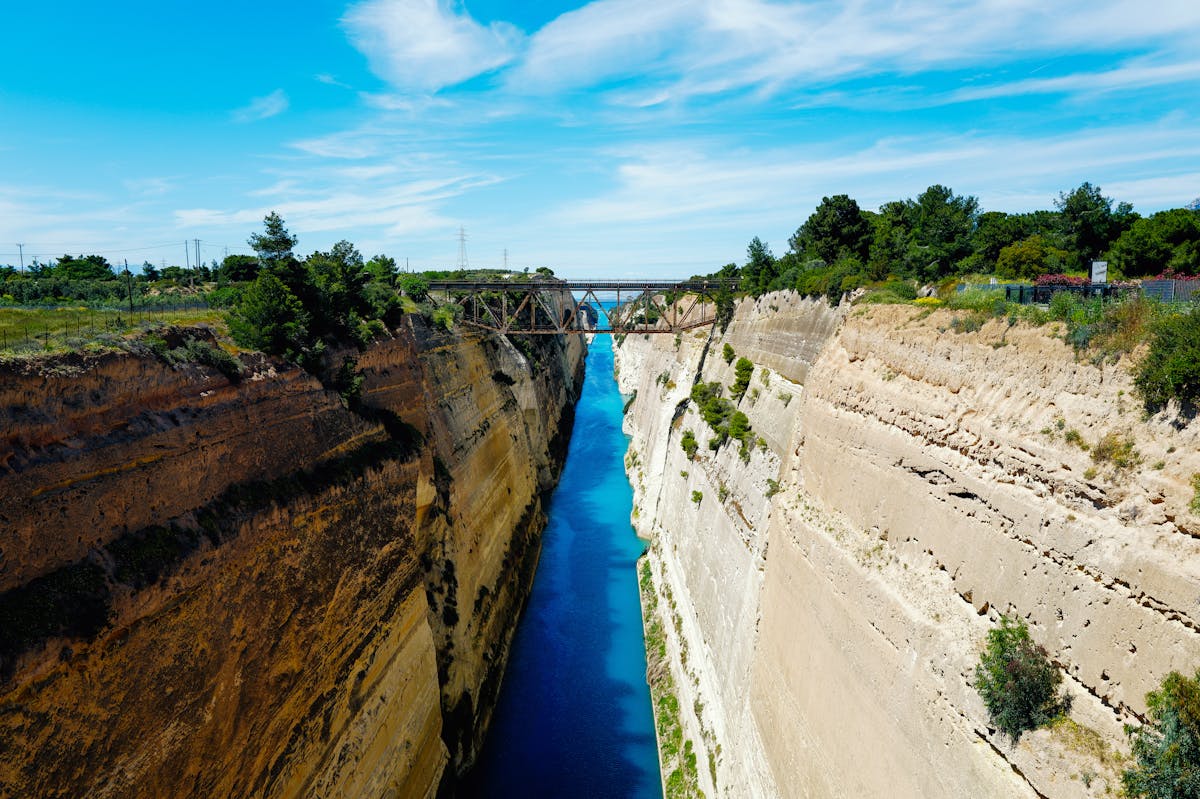
The canal stop is quick. Most tours spend 15-20 minutes at the canal bridge. That’s enough time to look, take photos, and feel slightly dizzy looking down. Don’t expect an extended visit — it’s a photo stop, not a destination.
Cash is still king. The site ticket office accepts cards, but the village of Ancient Corinth (five minutes’ walk) has small tavernas that may be cash-only. Bring some euros.
Return schedule matters. If you’re doing this independently by train or bus, check the last return departure before you leave Athens. Getting stranded in Corinth overnight isn’t the worst fate (there are a couple of basic hotels), but it’s not what you planned.
What You’ll Actually See at Ancient Corinth
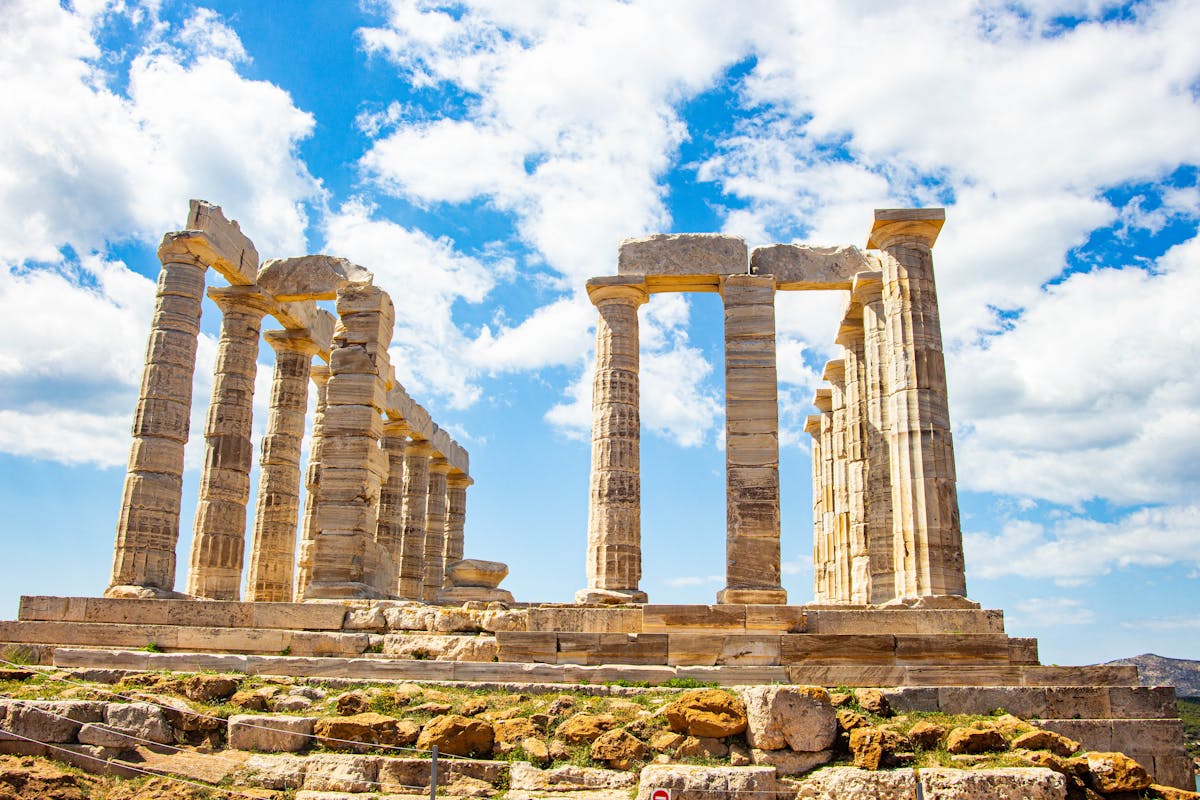
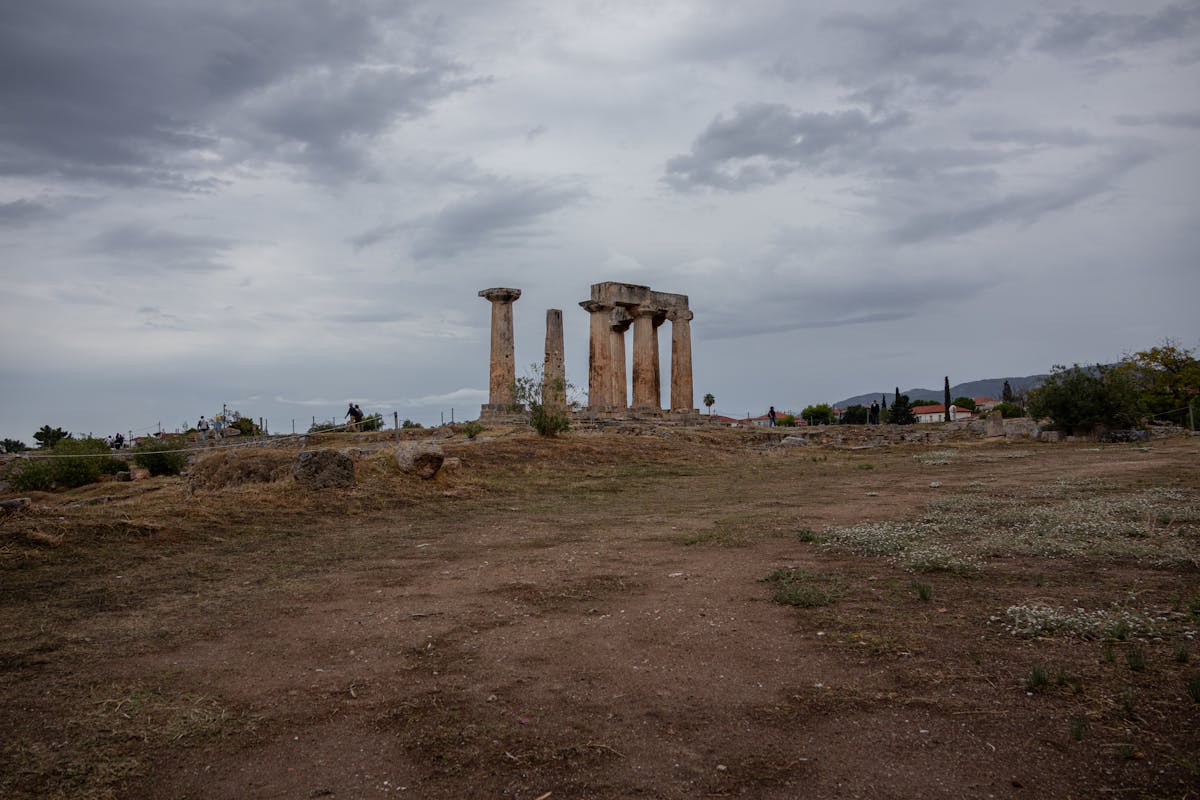
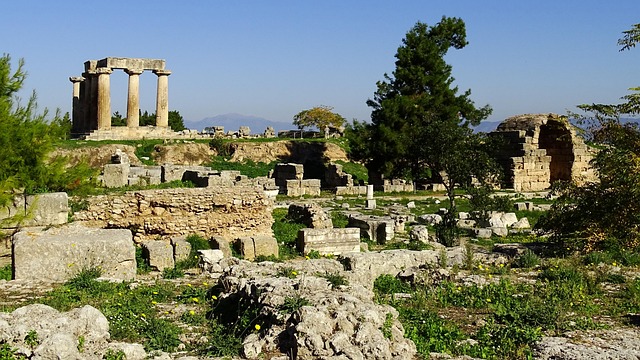
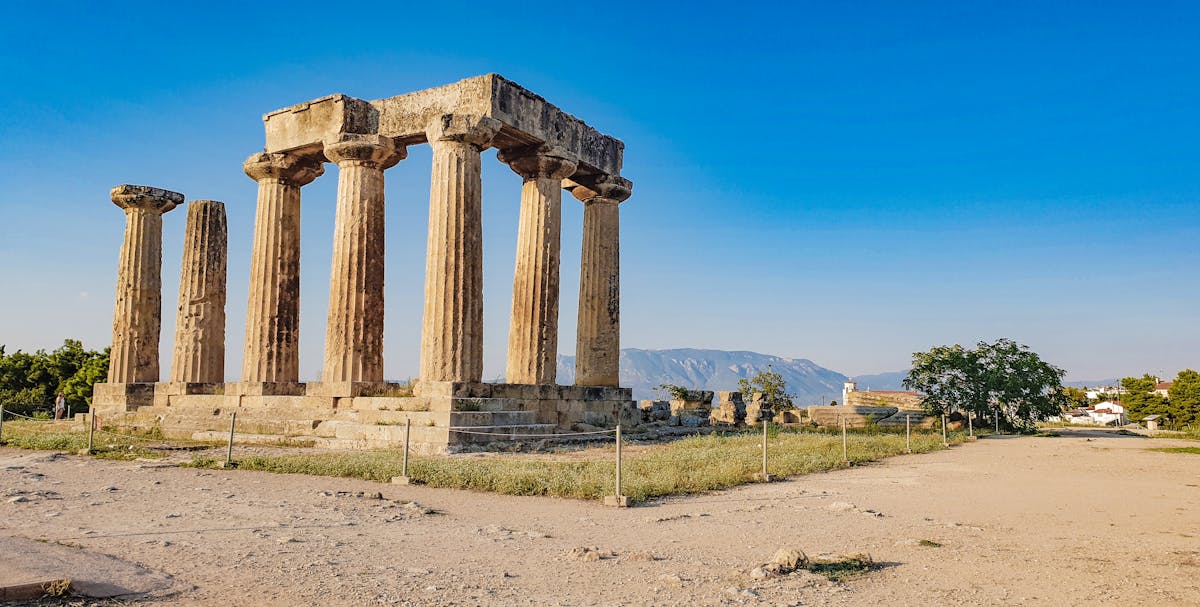
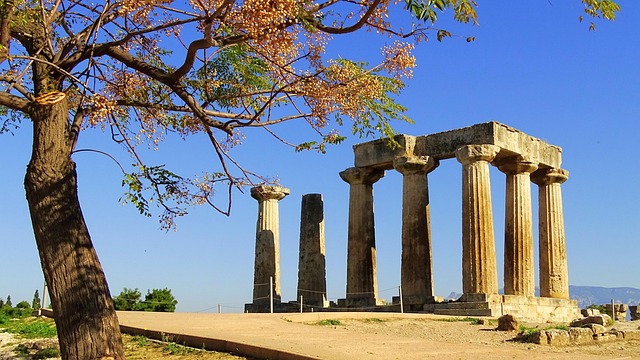
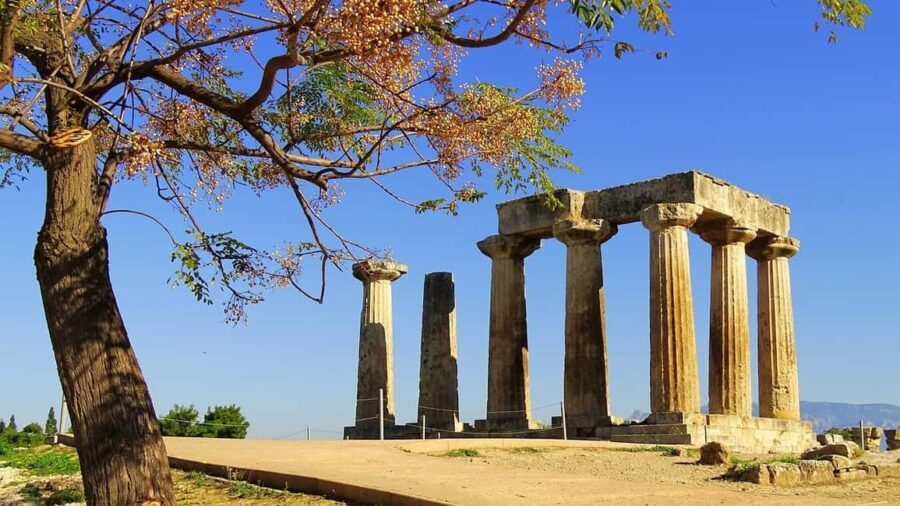
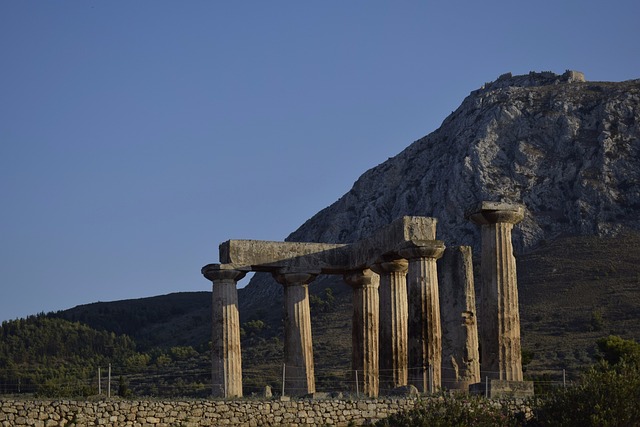
The Temple of Apollo dominates the site. Seven Doric columns from the 6th century BC, still standing. It’s one of the earliest stone temples in Greece and it somehow survived earthquakes, invasions, and 2,500 years of weather. You can’t go inside, but the view from the west side with the Corinthian Gulf behind it is the money shot.
The Roman Agora (marketplace) stretches out below the temple. This is where daily life happened — shops, courts, temples, and public buildings. The scale is impressive. Ancient Corinth at its peak had a population around 90,000, making it one of the largest cities in the ancient world.
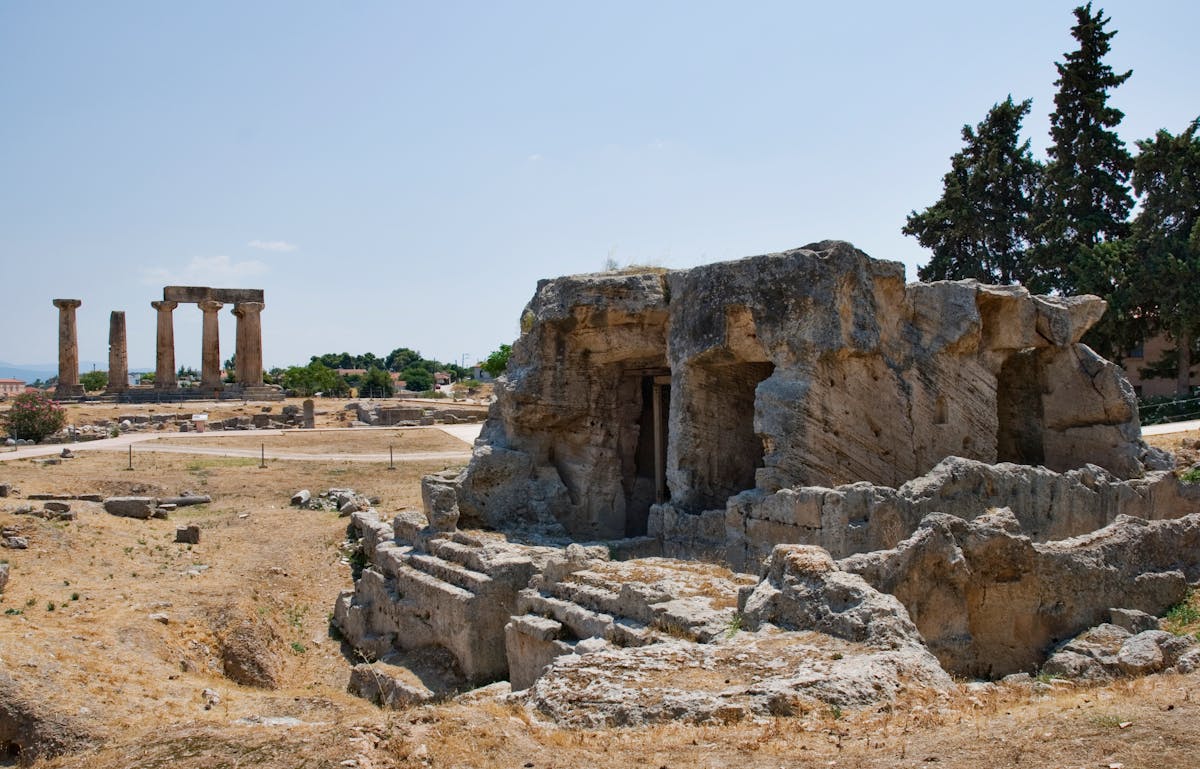
The Fountain of Peirene is carved into the rock below the agora. According to myth, the spring was created by the tears of Peirene, who wept so much after her son’s death that the gods turned her into a fountain. The Romans covered it with an elaborate facade and archways, parts of which survive. You can still see water trickling through in places.
The Bema is where the apostle Paul was hauled before the Roman governor Gallio around 51 AD. If you’ve read Acts 18, you’re standing in the exact spot. The stone platform is still there, and it’s remarkably unremarkable looking for a place that changed the course of Western religion.
The Lechaion Road is the ancient main street leading from the port to the city centre. Wide, paved, and lined with the remains of shops and public buildings. Walking it gives you the best sense of Corinth’s scale.
The Archaeological Museum sits at the edge of the site and houses finds from over 120 years of excavation. The Corinthian pottery collection alone is worth the stop. Corinth invented a distinctive style of black-figure pottery featuring animals and mythological scenes that was traded across the ancient world. The Kouroi of Klenia statues (archaic-era stone youths) are another highlight.
If you have energy left, the hike up to Acrocorinth (the fortified acropolis above the site) takes about 30-45 minutes and rewards you with panoramic views of the Gulf on both sides. But it’s steep, exposed, and brutal in summer heat. Only attempt it if you’re fit and it’s not July.
The Corinth Canal — Why Every Tour Stops Here
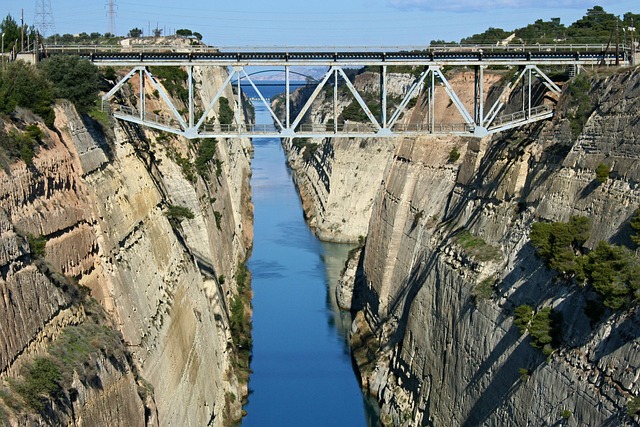
The canal is not technically part of Ancient Corinth, but every tour between Athens and the Peloponnese stops at the bridge for good reason. It’s one of those engineering feats that photos can’t quite capture.
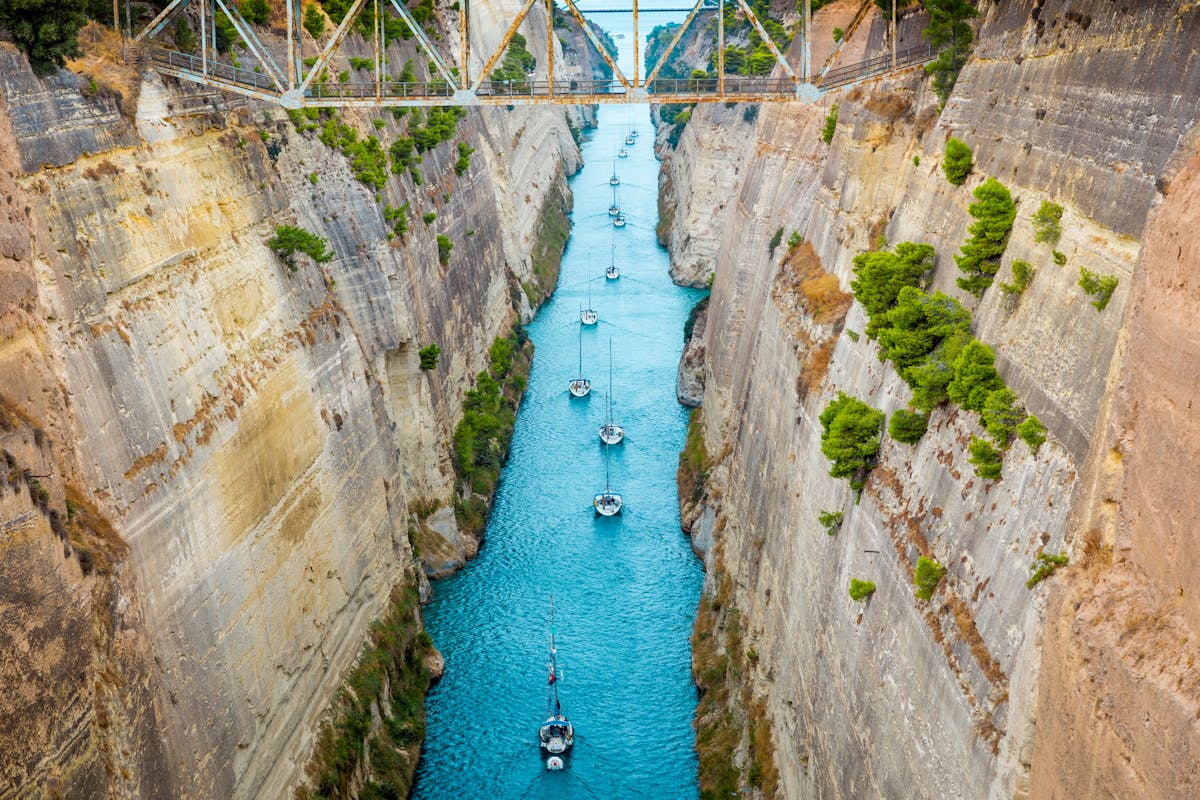
Six kilometres long, only 21 metres wide at water level, and carved 90 metres deep through solid limestone. The ancient Greeks wanted to build it — the tyrant Periander considered it in the 7th century BC. Nero actually started it. But every attempt failed until French engineers finished the job in 1893.
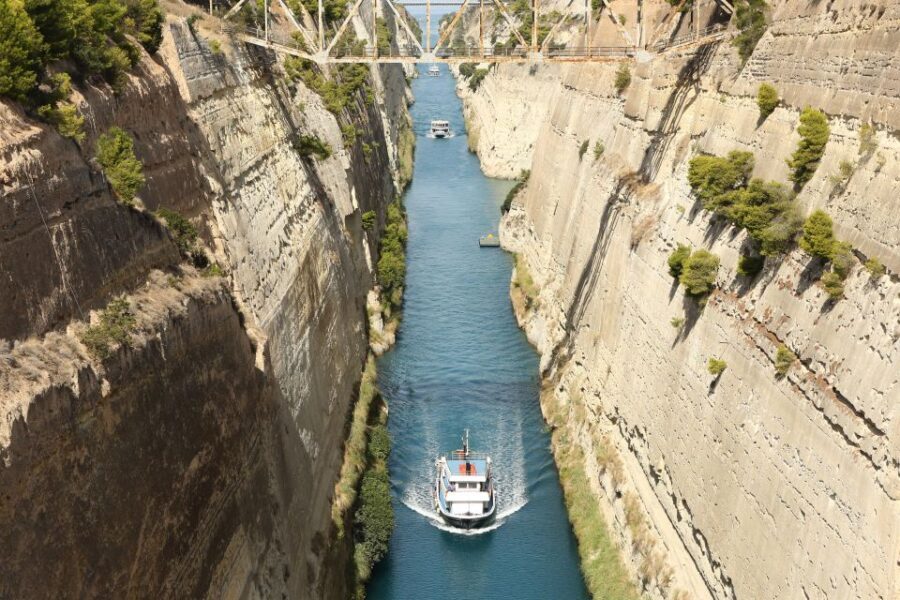
Today, it separates the Peloponnese from mainland Greece (technically making the Peloponnese an island, though nobody calls it that). Small boats and yachts still pass through, and if you time your stop right you can watch one squeeze through with barely a metre of clearance on each side.
For the adventurous, bungee jumping from the bridge is available through certain operators. I haven’t tried it. Looking down from the railing was enough to convince me that 80 metres of freefall over a canal is not my thing.
Adding Nafplio to Your Day Trip
Some tours (like the Corinth & Nafplion full-day tour) extend the trip south to Nafplio, and if you have the time, it’s absolutely worth it.
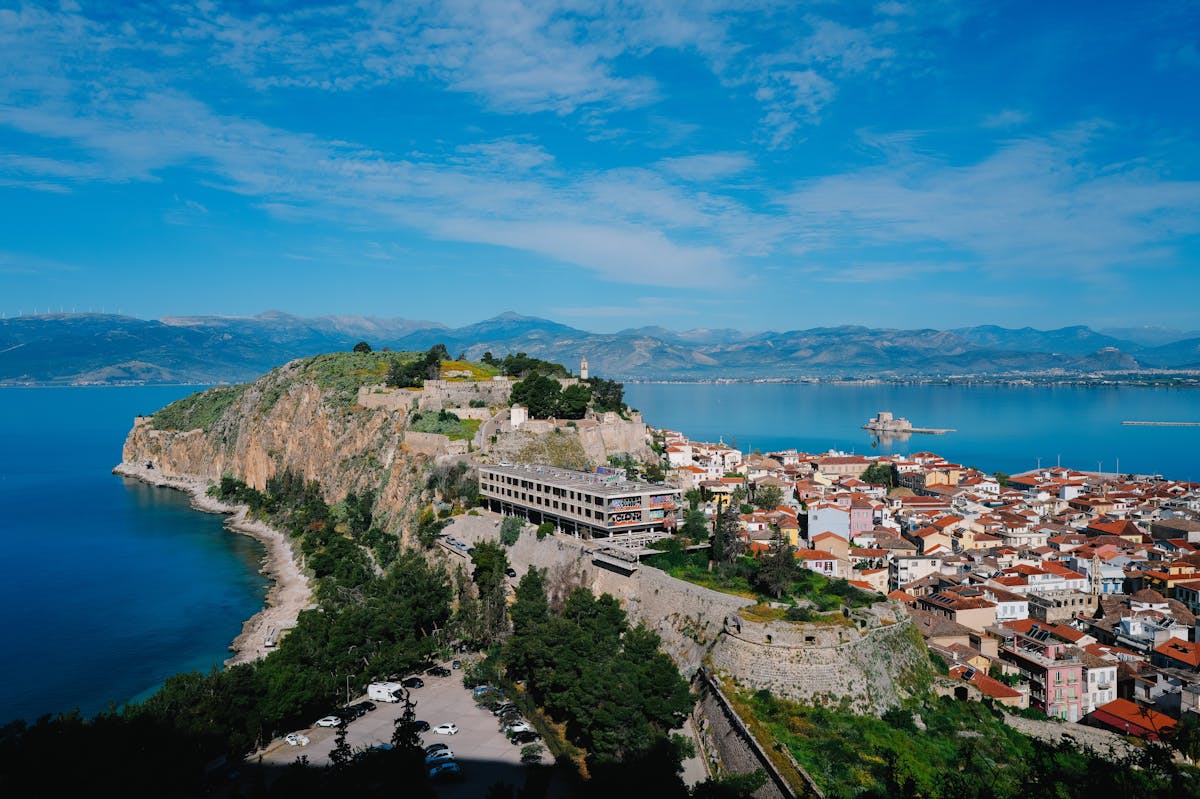
Nafplio is the kind of town that makes you want to cancel your return to Athens and just stay. Venetian architecture, a harbour with a castle sitting on a tiny island, and back streets lined with restaurants that haven’t figured out they could charge twice as much for the setting. The Palamidi Fortress above town involves 999 steps (yes, people count), but the view from the top covers the entire Argolic Gulf.
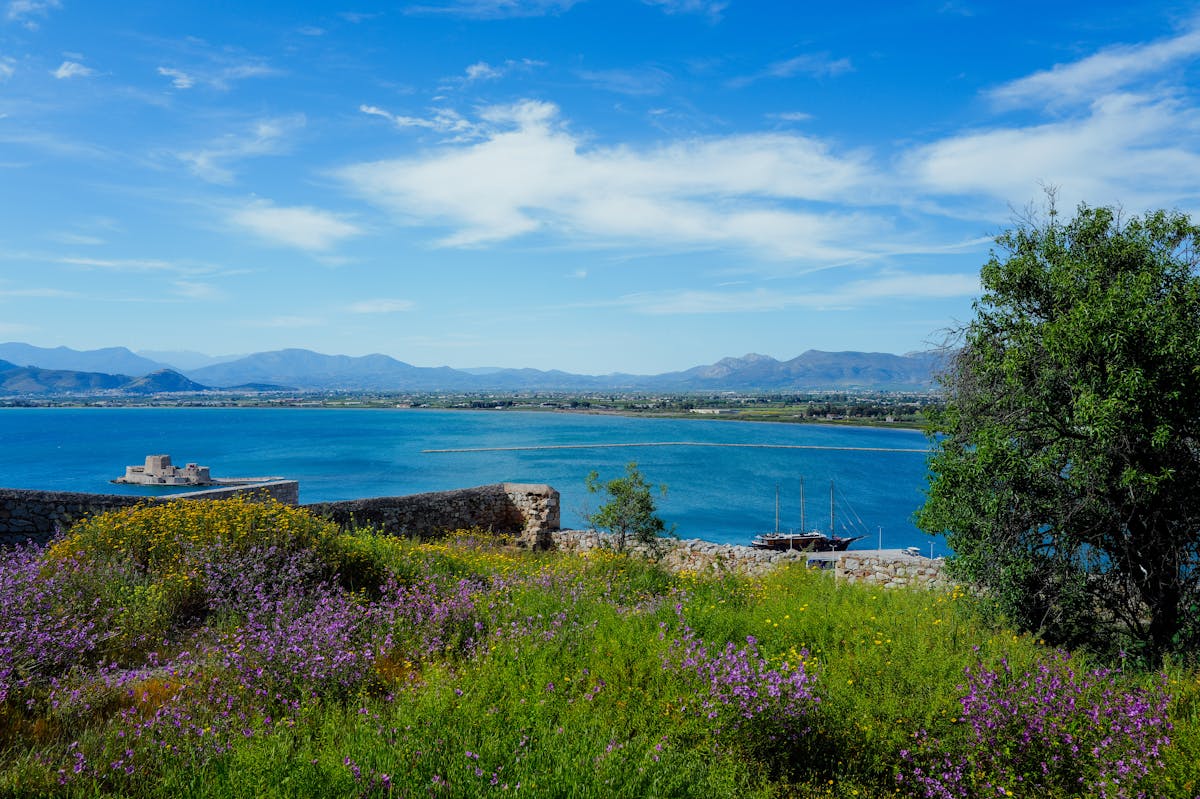

Budget tip: if you’re doing the full-day tour that includes lunch in Nafplio, the lunch is not included in the tour price. You’ll have free time to find your own spot. Skip the waterfront restaurants closest to where the bus drops you — walk one street back and the prices drop significantly with the same quality. A full Greek lunch with wine runs EUR 12-18 per person away from the tourist strip.
While You’re in Greece
Ancient Corinth pairs naturally with a couple of other day trips from Athens. The Acropolis is obviously the big one if you haven’t done it yet, and our guide covers the skip-the-line ticket situation. If you’re interested in the Peloponnese beyond Corinth, the route to Meteora is a longer commitment but one of the most spectacular day trips in all of Greece. For something completely different, a food tour through Athens is a solid way to spend an evening after a day of ruins. And if island hopping is on the agenda, our guides to Santorini caldera cruises and the Cape Sounion sunset tour cover two of the best options reachable from Athens.
This article contains affiliate links. If you book through our links, we earn a small commission at no extra cost to you. This helps us keep producing free travel guides.
More Greece Guides
Ancient Corinth sits on the road to the Peloponnese, so it works well combined with Epidaurus and Mycenae if you have a full day. Both cover different eras and the drive between them passes through scenery worth the window time.
For shorter Athens-based outings, Cape Sounion is another half-day trip with ancient ruins on a coastal cliff. The Saronic Islands cruise is a different kind of day — three islands, turquoise water, and car-free ports. A food tour in Athens fills in any gaps between day trips.