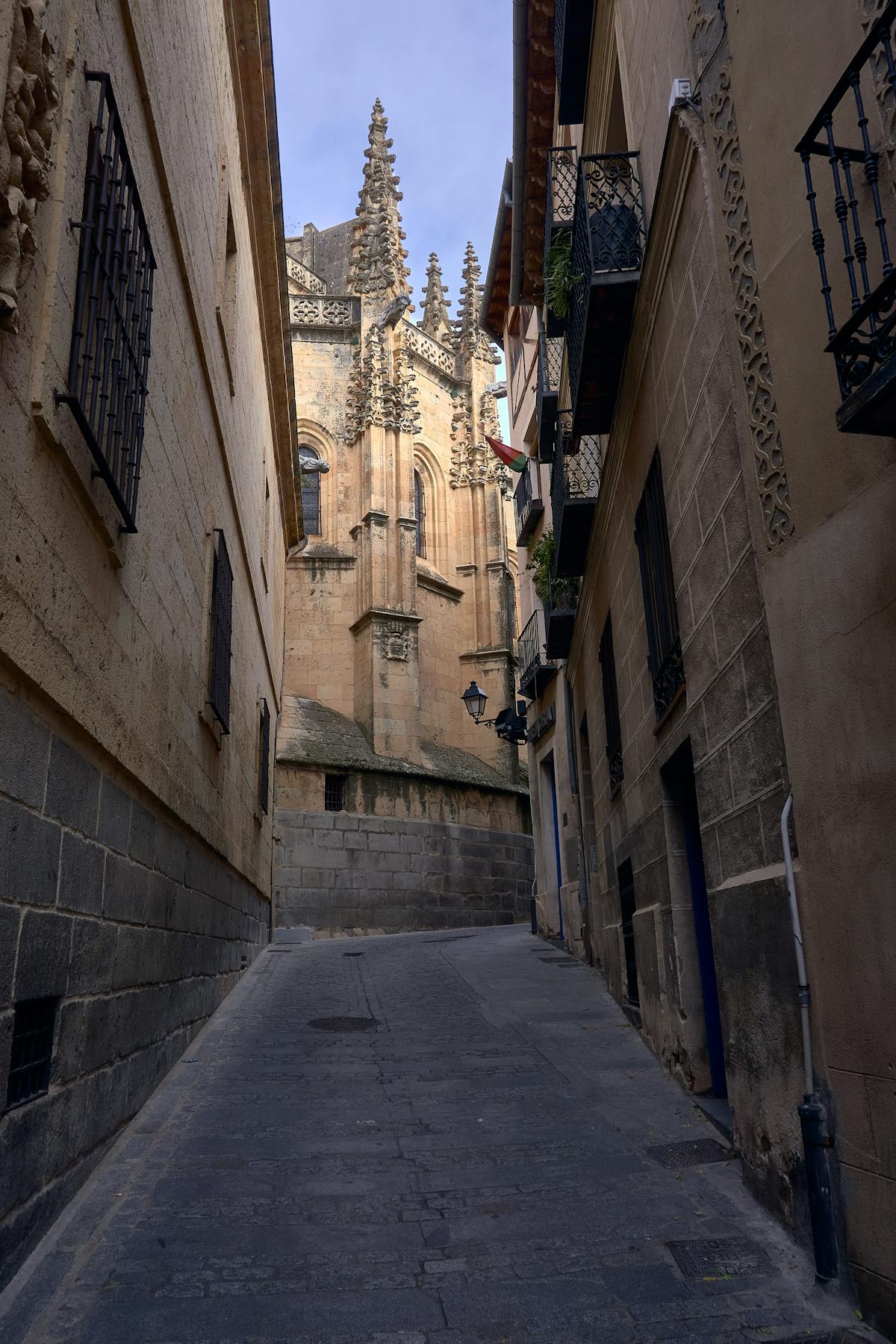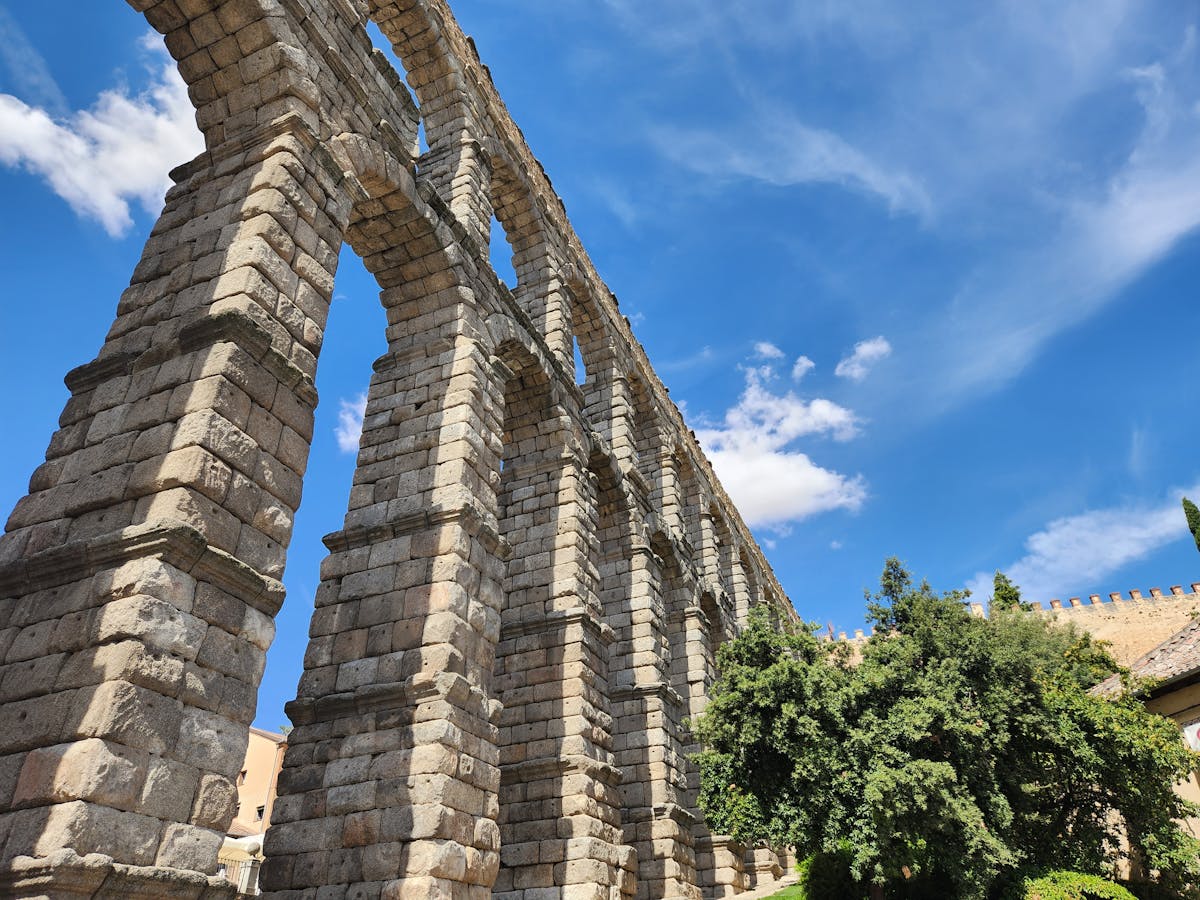
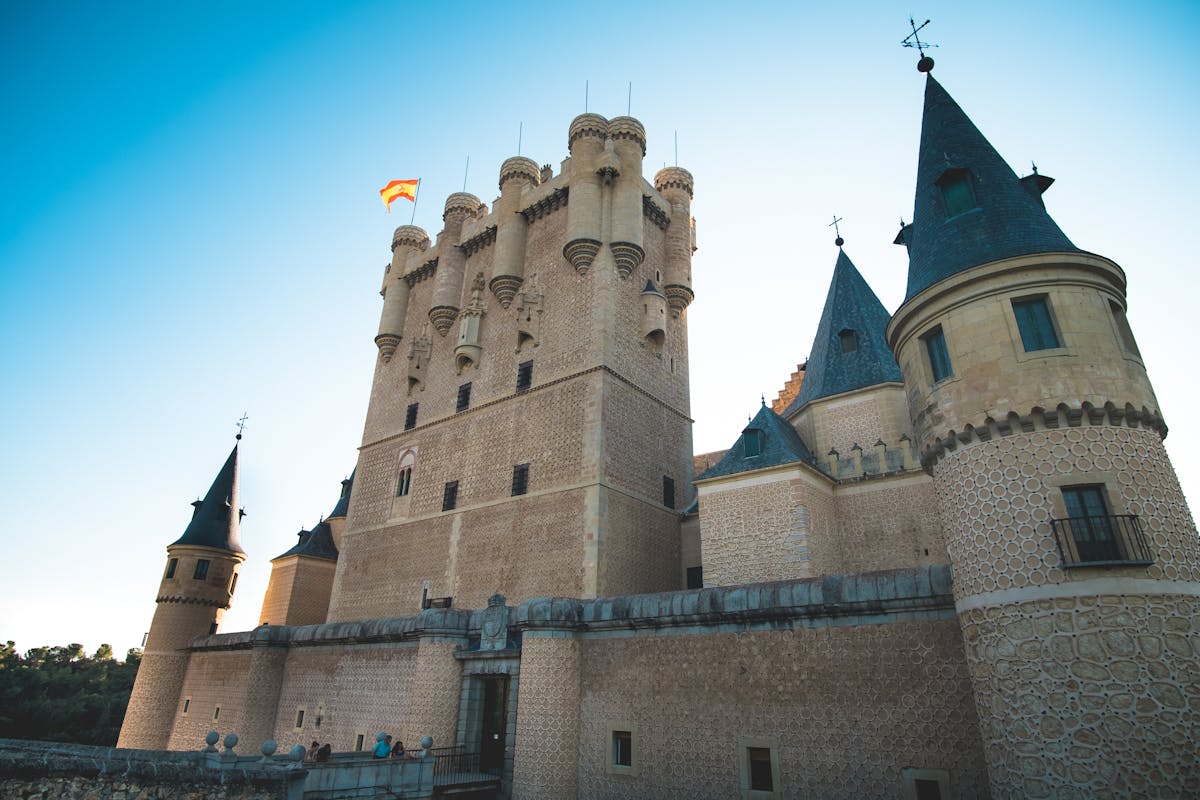
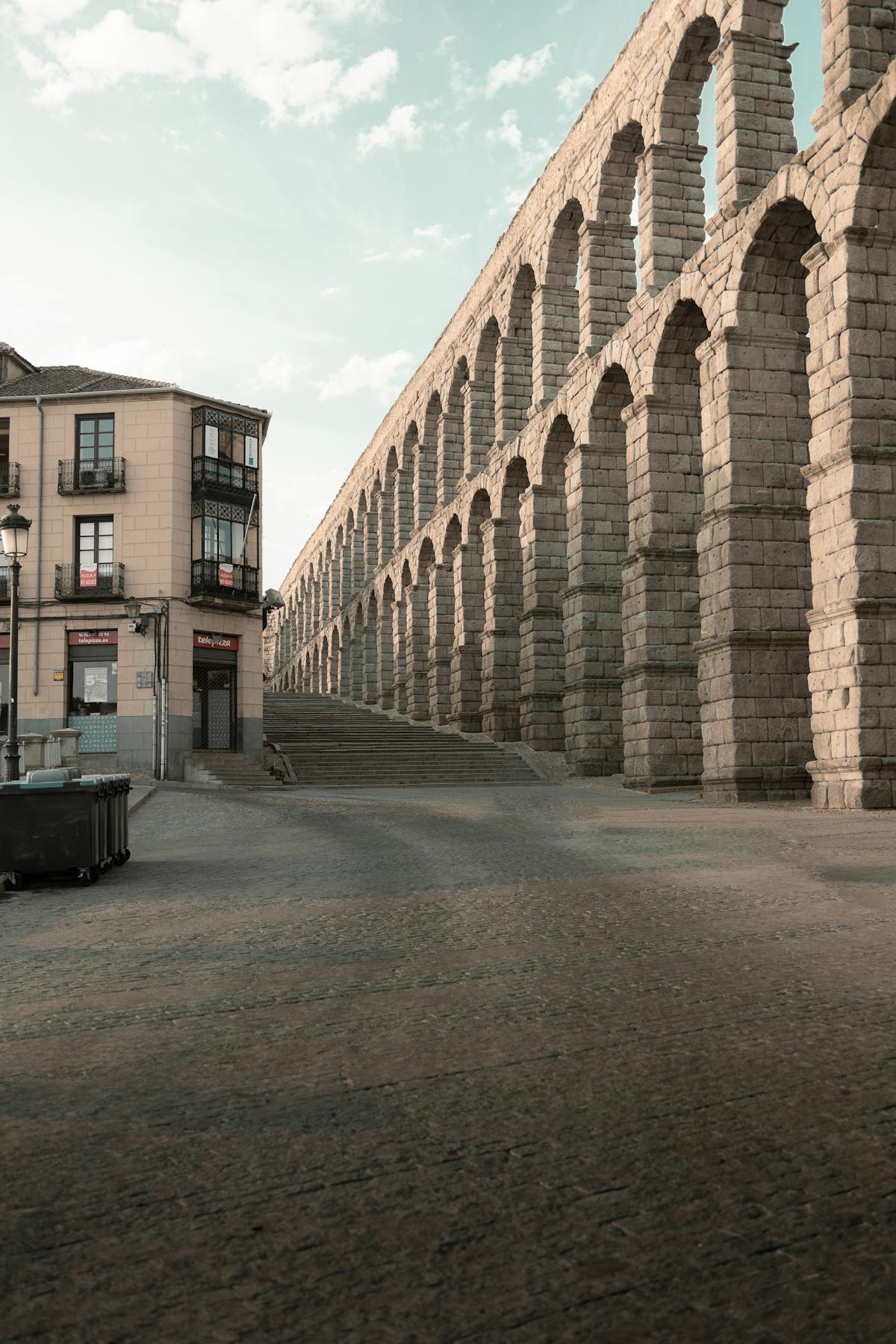
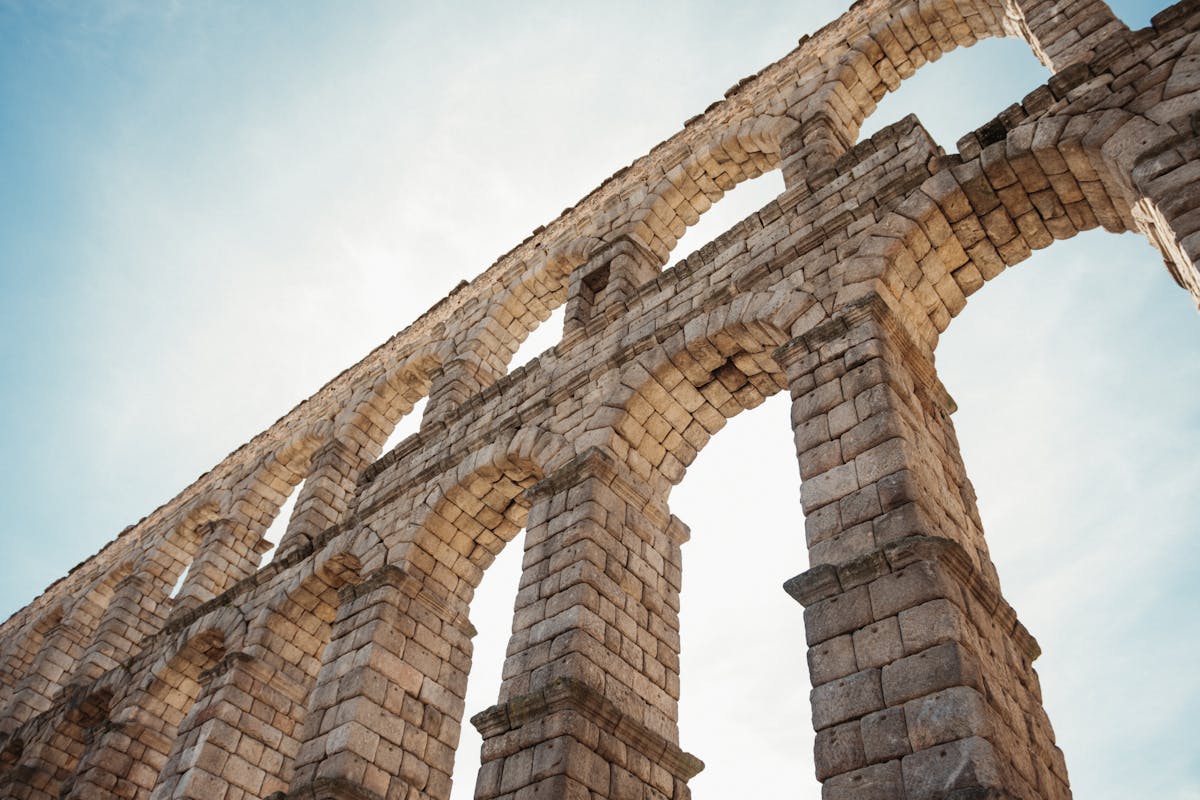
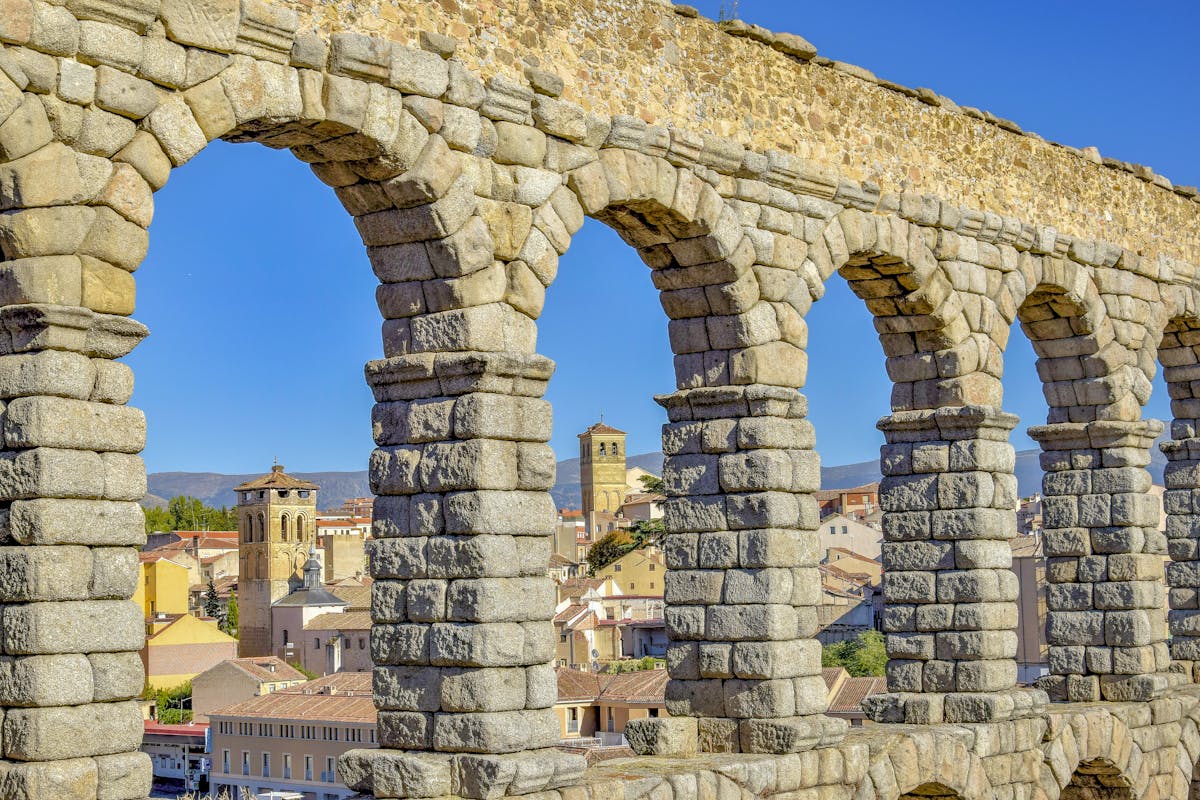
An hour northwest of Madrid, there’s a castle that looks like it was pulled straight from a Disney movie. That’s because it was — the Alcazar of Segovia is widely credited as one of the inspirations for Cinderella’s castle, with its pointed turrets and dramatic cliff-edge perch above two converging river valleys. And the Roman aqueduct standing in the middle of town? It was built around the 1st century AD without any mortar holding it together, and it carried water into the city until 1973. Not a typo. Nineteen seventy-three.
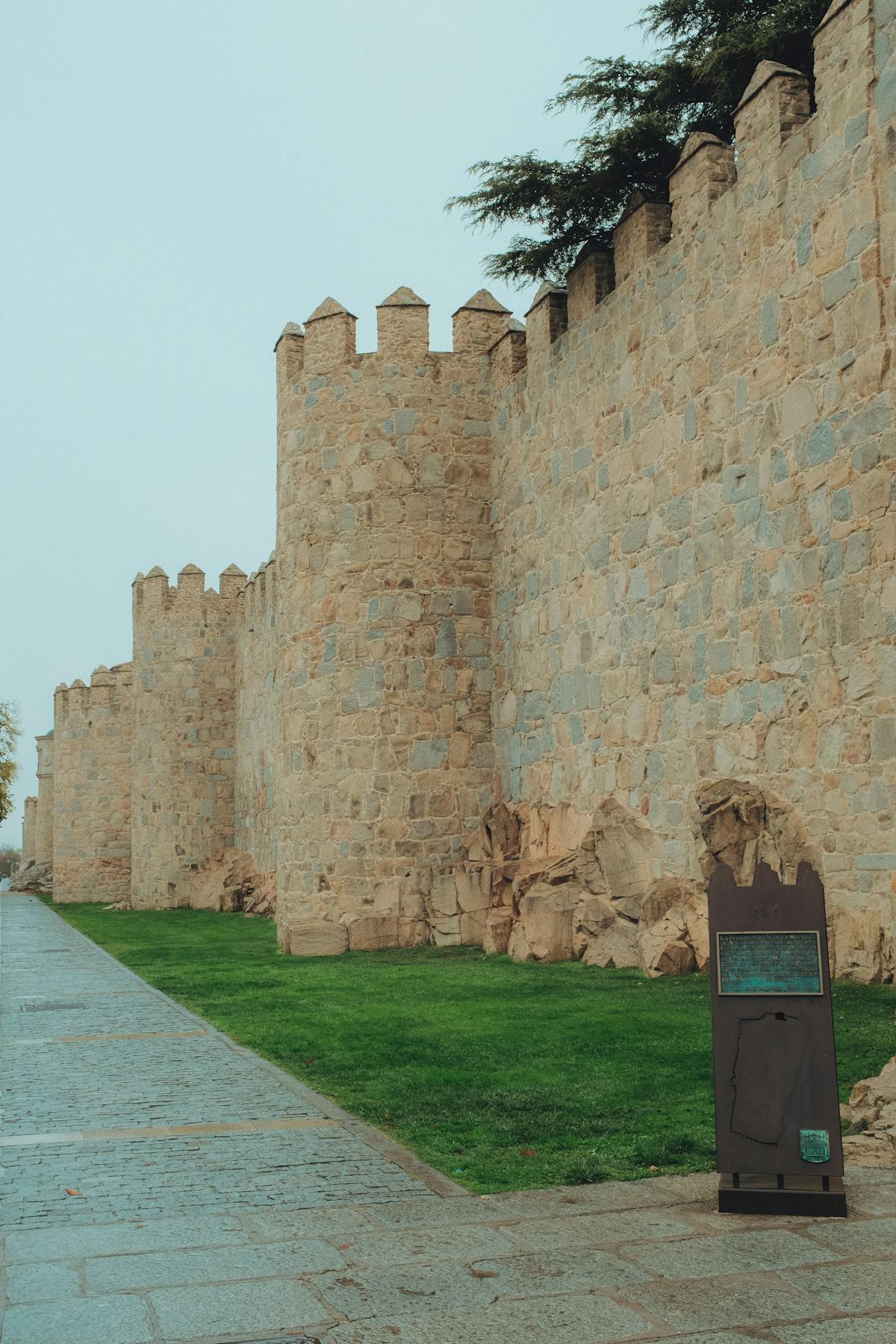
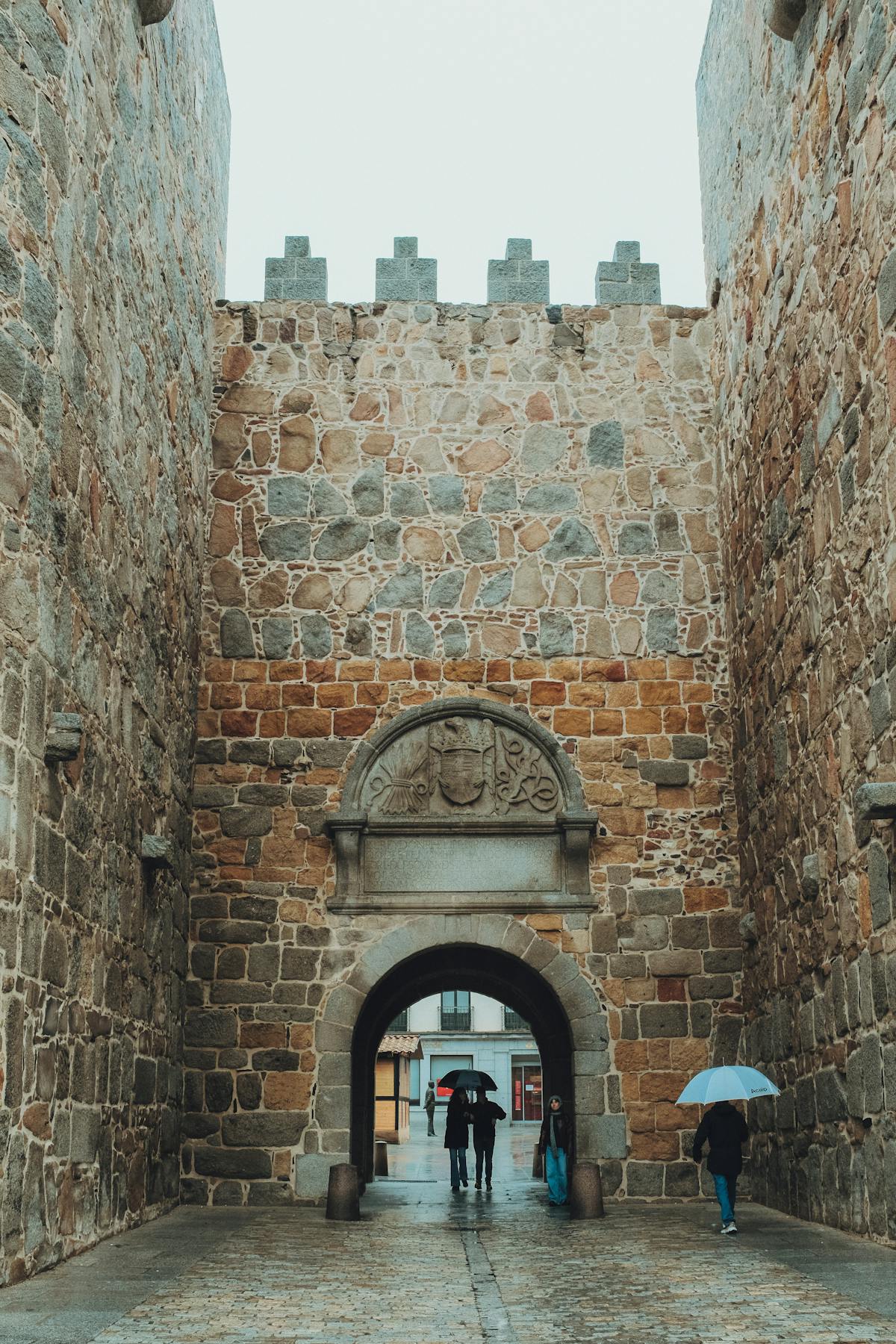
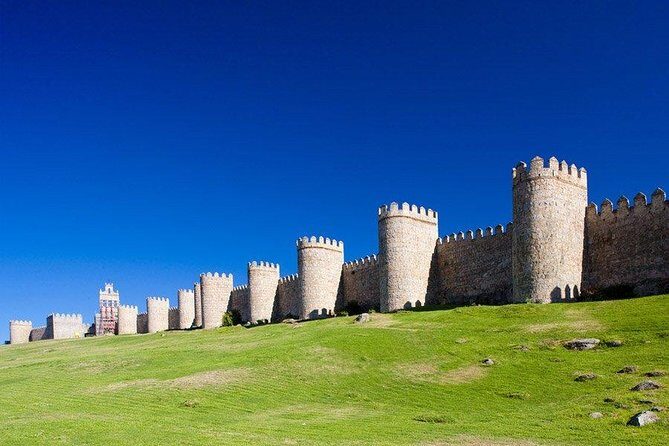
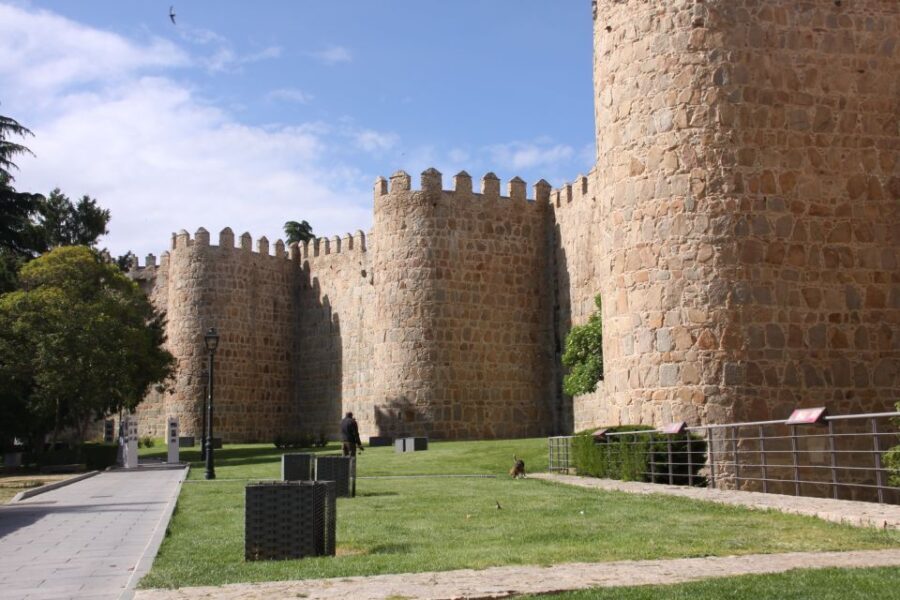
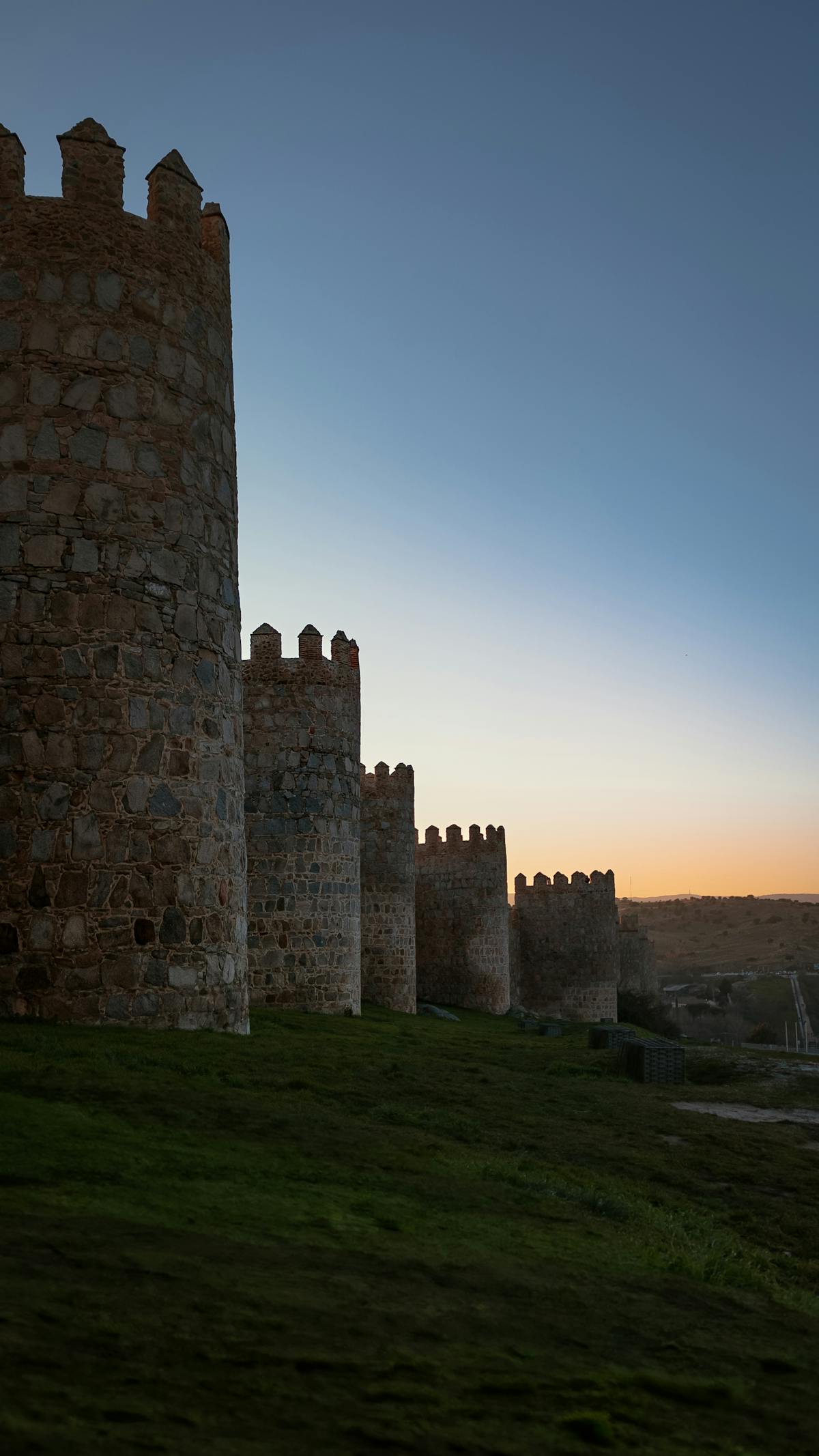
Then there’s Avila, about 45 minutes further west. It has the most complete medieval walls in all of Europe — 2.5 kilometers of granite fortifications with 88 towers, built in the 11th century and still walkable today. You can literally stroll along the top of them, looking down into the old town on one side and out across the Castilian plateau on the other. The city was home to Saint Teresa, the Carmelite mystic who founded convents across Spain in the 1500s, and her presence still marks the place. Convents, churches, a museum — Avila takes its patron saint seriously.
Both cities sit within easy reach of Madrid, and most day tours combine them into a single trip. You leave Madrid in the morning, spend a few hours in each city, and you’re back in time for a late dinner. It’s one of the best day trips you can do from the capital — two UNESCO World Heritage Sites, completely different from each other, neither one requiring more than half a day to see properly.
Here’s everything you need to know: how to get there, which tour type makes sense for you, the five best tours worth booking, and what to actually do once you arrive.
In a Hurry? My Top Picks
- Best overall day trip: Avila & Segovia Tour with Tickets to Monuments — $81 per person. Nine hours, monument entry included, the most popular combo tour for good reason. Book this tour
- Best budget option: Madrid: Avila and Segovia Day Trip with Tickets — $74 per person. Same cities, same duration, slightly lower price point with monument tickets included. Book this tour
- Best triple city marathon: Three Cities in One Day: Segovia, Avila & Toledo — $127 per person. Twelve hours, three UNESCO cities. Exhausting but extraordinary value if time is short. Book this tour
- Best Segovia + Toledo combo: Segovia and Toledo Tour with Alcazar and Cathedral — $48 per person. Skips Avila but pairs Segovia with Toledo instead. Strong value at this price. Book this tour
- Best splurge: Hot-Air Balloon Ride over Segovia — $248 per person. See the aqueduct and Alcazar from 3,000 feet. Once-in-a-lifetime stuff. Book this tour
- In a Hurry? My Top Picks
- Getting There from Madrid
- Segovia Only vs. Avila + Segovia Combo
- The 5 Best Tours from Madrid
- 1. Avila & Segovia Tour with Tickets to Monuments —
- 2. Madrid: Avila and Segovia Day Trip with Tickets —
- 3. Three Cities in One Day: Segovia, Avila & Toledo — 7
- 4. Segovia and Toledo Tour with Alcazar and Cathedral —
- 5. Hot-Air Balloon Ride over Segovia — 8
- When to Visit
- What to See in Segovia
- What to See in Avila
- Tips for the Trip
- More Madrid Guides
Getting There from Madrid

You have three options: train, bus, or a guided tour that handles everything for you.
By train to Segovia: High-speed trains (AVE/AVANT) run from Madrid’s Chamartin station to Segovia-Guiomar, the new station about 5 kilometers outside the city center. The ride takes 27 minutes. Tickets cost around 12 to 15 euros each way if booked on renfe.com a few days ahead, though last-minute prices can double. From Segovia-Guiomar station, bus number 11 runs into the city center for about 2 euros and takes 15 minutes. Trains depart roughly every hour from early morning.
By train to Avila: Regional and media distancia trains run from Madrid’s Chamartin station to Avila in about 1.5 to 2 hours. These are slower than the Segovia trains and less frequent — usually four to six departures per day. Tickets cost around 10 to 14 euros each way. Avila’s train station sits about a 15-minute walk from the old town walls.
By bus: Avanza buses run from Madrid’s Moncloa bus station to Segovia (1.5 hours, around 8 euros) and to Avila (1.5 hours, similar price). Buses are cheaper than trains but slower. The Segovia bus drops you right in the center, which is actually more convenient than the train station.
By guided tour: Most tours depart from central Madrid between 8:00 and 9:00 AM by air-conditioned bus, visit both cities with a guide, and return by 5:00 to 6:00 PM. This is by far the easiest option and the one I’d recommend for a first visit. You skip the train-to-bus transfers, the route planning between cities, and the guesswork about what to see in each place. The guide fills in centuries of context that makes the buildings more than just old stones.
Segovia Only vs. Avila + Segovia Combo
This is the first decision most people face, so here’s how to think about it.
Choose Segovia only if: you want to slow down and really absorb one city, you’re planning to go inside multiple monuments (the Alcazar, the cathedral, the Casa de los Picos), or you’re combining it with Toledo on the same day. A Segovia-only trip also works well as a DIY train excursion — the logistics are simple and the city is compact enough to cover on foot without a guide.
Choose the Avila + Segovia combo if: you want to see both UNESCO cities in one trip, you’re fine spending about 3 to 4 hours in each (which is genuinely enough to cover the highlights), or you’re the type who’d rather see more places at a slightly faster pace than linger in one spot all day. The combo tours handle the 45-minute drive between the two cities, which would be a pain to do independently by public transport.
My honest take: the combo is the better day trip for most first-time visitors. Avila and Segovia complement each other perfectly. Avila gives you medieval walls and religious history; Segovia gives you Roman engineering and a fairy-tale castle. You get two completely different experiences in one day, and neither city suffers from the split attention. The tours that combine them are well-paced — you don’t feel rushed in either place.
The exception is if you’re already doing a Toledo day trip separately. In that case, a Segovia-only tour makes more sense, since the Segovia + Toledo combos tend to feel more hurried than the Segovia + Avila ones.
The 5 Best Tours from Madrid
I’ve picked five tours covering different budgets and styles. A best-seller with monument access, a slightly cheaper alternative, a three-city marathon, a Segovia-Toledo pairing, and a once-in-a-lifetime balloon flight.
1. Avila & Segovia Tour with Tickets to Monuments — $81
Duration: 9 hours | Price: $81 per person | Type: Full-day combo with monument tickets
This is the tour most people end up booking, and for good reason. Nine hours gives you roughly four hours in each city (minus the drives), which is the sweet spot — enough to see the big attractions without that “we need to move, the bus is leaving” feeling.
In Avila, you walk the medieval walls with your guide explaining how they were built in the 11th century as a defensive ring around the city. You get tickets to climb a section and walk along the top, which is the kind of thing that sounds simple until you’re actually up there looking down at a city that hasn’t changed its footprint in a thousand years. The cathedral, which is built directly into the wall like a military stronghold, is included too.
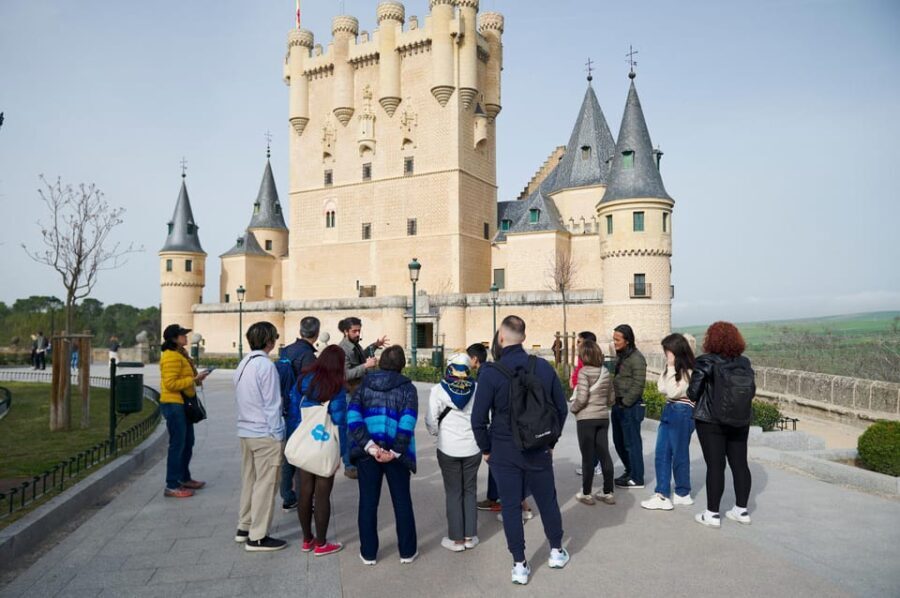
In Segovia, the Alcazar entry is included. The castle is genuinely impressive inside — the throne room ceilings are covered in gold leaf and intricate Mudejar patterns, and the narrow climb up the Torre de Juan II gives you views across the entire region. You’ll also see the aqueduct up close (hard to miss, it cuts straight through the city center) and get free time to wander the old town.
The drive between cities takes about 45 minutes through the Castilian countryside, which is surprisingly beautiful — rolling plains, scattered oaks, and medieval villages that look untouched.
Best for: first-time visitors who want the full experience without organizing anything themselves.
2. Madrid: Avila and Segovia Day Trip with Tickets — $74
Duration: 9 hours | Price: $74 per person | Type: Full-day combo with monument tickets
This covers essentially the same ground as the first tour — Avila’s walls, Segovia’s Alcazar, the aqueduct, guided walking tours in both cities — at a slightly lower price. The difference comes down to operator, group dynamics, and sometimes the specific monuments included beyond the core ones.
At $74, you’re saving about seven dollars per person compared to the top pick, which adds up for a family of four. The tour runs nine hours with a similar split between cities. Monument tickets are included, and you get a professional guide in both locations.
Where this tour occasionally falls short compared to the pricier option is in the lunch break logistics — some groups report being steered toward specific restaurants rather than being given free reign. That’s a minor complaint, and it doesn’t happen consistently, but it’s worth noting if you’re the type who likes to find your own lunch spot.
One advantage this tour has: it sometimes runs with slightly smaller groups than the bestseller above, which means more direct interaction with the guide and less time waiting for stragglers at meeting points.
Best for: budget-conscious travelers who want the same experience for less, smaller group seekers.
3. Three Cities in One Day: Segovia, Avila & Toledo — $127
Duration: 12 hours | Price: $127 per person | Type: Full-day triple city tour
Twelve hours. Three cities. Every major day trip from Madrid crammed into a single marathon session. This tour starts early (usually around 7:30 AM), hits Avila first, then Segovia, then Toledo, and drops you back in Madrid around 7:30 PM. It sounds exhausting, and honestly, your feet will agree by the end. But the sheer volume of what you see makes it hard to beat for time-pressed travelers.
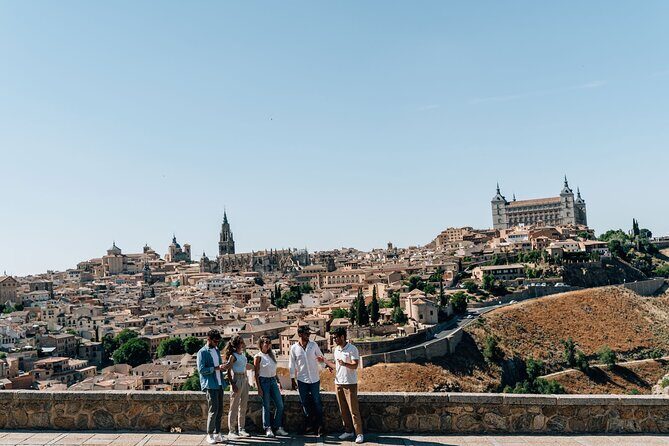
The pacing works better than you’d expect. Avila gets about two hours (walls, cathedral, quick walk through the old town), Segovia gets about three hours (aqueduct, Alcazar, lunch break), and Toledo gets the final stretch of the afternoon (cathedral, Jewish Quarter, panoramic views). The drives between cities — roughly 45 minutes to an hour each — serve as built-in rest periods.
The catch is obvious: you’re trading depth for breadth. You won’t have time to explore the backstreets of any single city or linger in a museum that catches your eye. But you will see the headliners of all three, which for some travelers is exactly the right trade-off. If you’re spending just four or five days in Madrid and want to maximize your day trips, this tour covers what would otherwise take three separate outings.
At $127, you’re paying about $42 per city — less than what some single-city tours charge. The math works.
Best for: travelers with limited days in Madrid, people who want to see everything, those who’d rather rest on the bus than plan three separate trips.
4. Segovia and Toledo Tour with Alcazar and Cathedral — $48
Duration: 12 hours | Price: $48 per person | Type: Full-day combo with monument access
This pairs the two most famous day trips from Madrid — Segovia and Toledo — into a single outing. No Avila, which means you miss the walls, but you gain Toledo’s cathedral, Jewish Quarter, and the whole layered-civilizations story that makes it one of Spain’s most fascinating cities.
At $48, the value here is remarkable. You get entry to Segovia’s Alcazar and Toledo’s cathedral, guided tours in both cities, and round-trip transport from Madrid. The morning typically covers Segovia (aqueduct, Alcazar, old town walk, and usually a lunch break where cochinillo — roast suckling pig — is available), and the afternoon moves to Toledo.
The long day (12 hours) is the main drawback. You leave Madrid early and return late, with a roughly 90-minute drive between Segovia and Toledo in between. By the time you reach Toledo in the afternoon, your energy may be flagging. The experienced travelers on this tour tend to use the Segovia-to-Toledo drive for a power nap.
This tour makes the most sense if you’ve already decided against visiting Avila separately. If you want to see Segovia AND Toledo but don’t want to burn two full days on it, $48 for both is hard to argue with.
Best for: travelers who want Segovia + Toledo in one shot, value seekers, anyone who’s more interested in Roman and Gothic architecture than medieval walls.
5. Hot-Air Balloon Ride over Segovia — $248
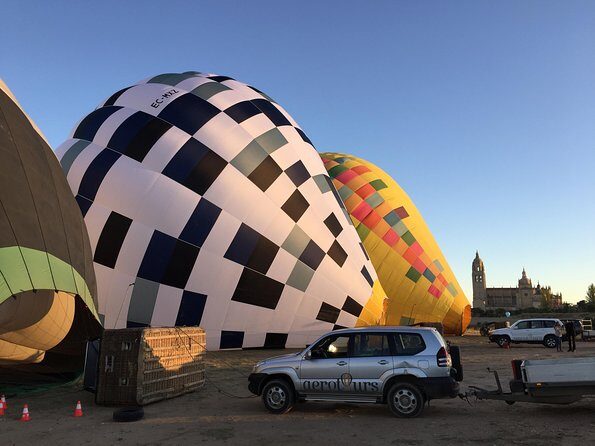
Duration: 3 to 6 hours | Price: $248 per person | Type: Sunrise balloon flight with optional Madrid transfer
This is the outlier on the list, and I’m including it because it’s one of those experiences that people come back from and won’t shut up about. You fly over Segovia at sunrise, when the light is low and golden, and the Alcazar and aqueduct cast long shadows across the landscape. The flight lasts about an hour, floating at various altitudes between 500 and 3,000 feet.
The balloon launches from a field outside Segovia, usually just after dawn. If you’re coming from Madrid, the optional transfer picks you up very early — around 5:00 to 6:00 AM depending on the season. After landing, the tradition is a champagne toast in the field (included in the price), which feels ceremonial in that wonderful, slightly over-the-top way.
At $248, this is expensive. There’s no way around that. It’s also weather-dependent — flights can be cancelled for wind or rain, in which case you get rescheduled or refunded. But the reviews are overwhelmingly positive from people who took the plunge. The perspective on the Alcazar is genuinely unique, and the Castilian landscape at sunrise looks like a painting.
This isn’t a replacement for a ground-level tour of Segovia. You won’t walk the streets, visit the Alcazar interior, or see the aqueduct up close. Think of it as a complement — fly over it in the morning, then spend the afternoon exploring on foot.
Best for: special occasions, photography enthusiasts, anyone who’s already done the standard day trip and wants something different.
When to Visit
Both cities sit on the high Castilian plateau north of Madrid, at elevations of 1,000 to 1,130 meters. That altitude means cooler temperatures than Madrid year-round, but also sharper winters.
Best months: April through June, and September through October. Temperatures range from 15 to 28 degrees, the skies are reliably clear, and the crowds haven’t peaked yet (or have already thinned). Late April is particularly good — wildflowers on the plains, warm enough for shirt sleeves during the day, cool enough to appreciate a jacket in the morning.
Summer (July and August): Hot but less brutal than Madrid. Segovia and Avila typically sit 5 to 8 degrees cooler than the capital thanks to the altitude. Still, expect 30 to 35 degree afternoons. The upside is that both cities have enough shade in their old quarters to stay comfortable, and the Alcazar interior stays cool regardless. Summer is peak tourist season, so expect crowds at the aqueduct and on Avila’s walls.
Winter (November through March): Cold. Genuinely cold. Avila regularly drops below freezing overnight, and Segovia isn’t much warmer. Snow is possible, especially in January and February, and when it happens, both cities look extraordinary — medieval walls and Roman arches dusted in white. But walking tours in 3-degree weather with a biting wind off the plateau isn’t for everyone. If you go in winter, dress in serious layers and check tour schedules, as some operate on reduced winter timetables.
Weekday vs. weekend: Tuesday through Thursday is ideal. Spanish domestic travelers flood both cities on weekends, and the combination of narrow streets and tour groups can make Saturday visits feel congested. Monday works too, though check that the specific monuments you want to visit are open — a few smaller sites close on Mondays.
What to See in Segovia
The Roman Aqueduct: Start here. It’s impossible to miss — the aqueduct runs right through the center of town, with its highest point at the Plaza del Azoguejo where the arches reach 28.5 meters. Walk underneath it, then climb the stairs to the viewing platform at the top for a perspective that shows the full 813-meter length stretching toward the mountains. The stonework is genuinely humbling when you remember that each block was cut and placed by hand.
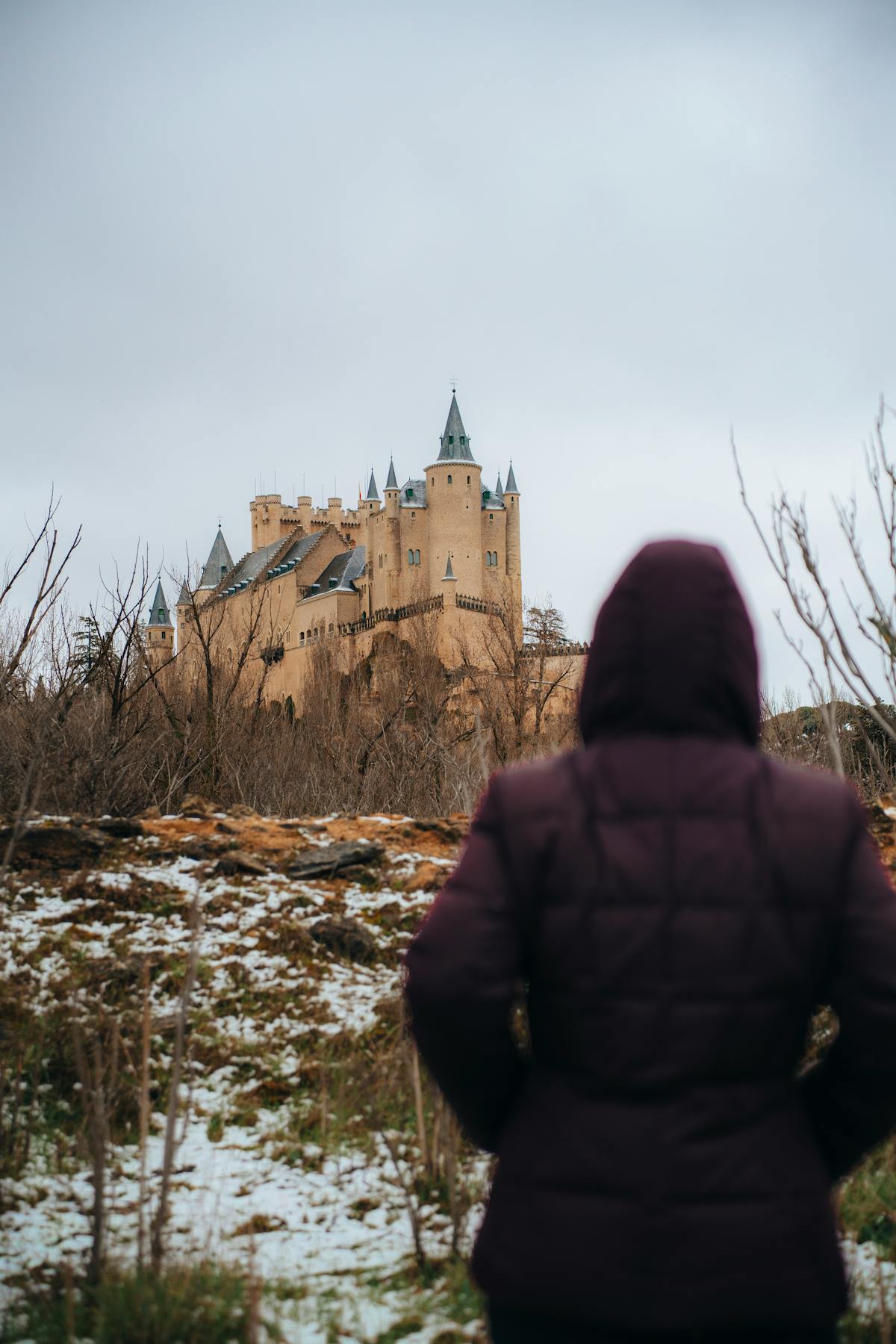
The Alcazar: The castle at the western tip of the old town, sitting on a narrow rock spur above two river valleys. Inside, the Hall of Kings features a frieze of 52 painted monarchs, and the Mudejar ceilings in the throne room and armory are covered in gold leaf and geometric patterns. Climb the Torre de Juan II (152 steps, narrow spiral staircase) for the best views in the city. Entry costs about 9 euros, or 12 euros with the tower. Budget an hour to see it properly.
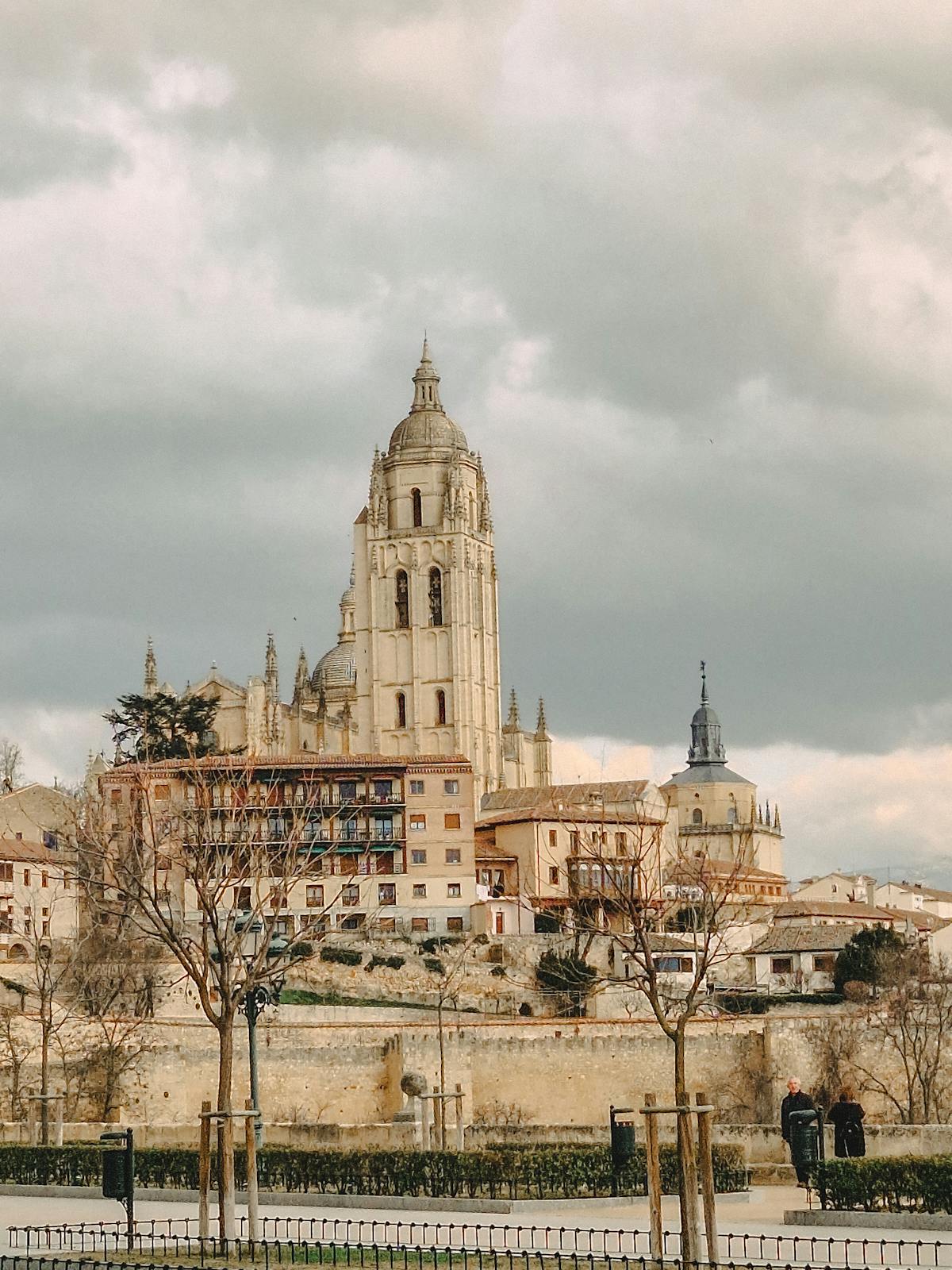
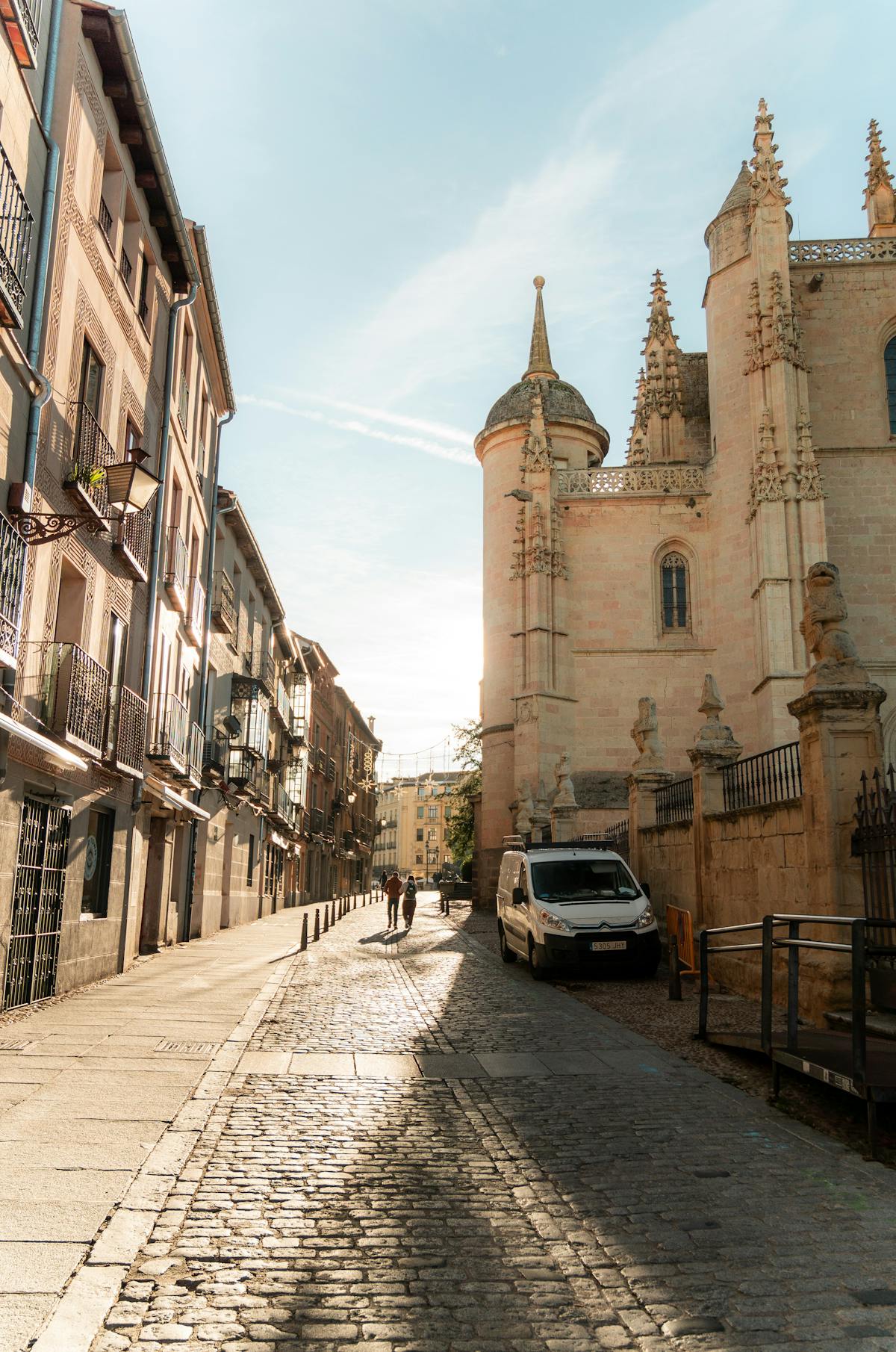
Segovia Cathedral: The last Gothic cathedral built in Spain, finished in the 18th century when the style was already outdated. It sits in the Plaza Mayor and its exterior has a delicacy that earned it the nickname “the Lady of Cathedrals.” The interior is impressive but less ornate than Toledo’s — the cloisters are the highlight, transported stone by stone from the old cathedral that was destroyed during the revolt of the Comuneros in 1520.
Cochinillo asado (roast suckling pig): This is Segovia’s signature dish, and it’s everywhere. The piglet is roasted in a wood-fired oven until the skin turns glass-crisp, then traditionally carved with the edge of a plate (not a knife) to demonstrate how tender it is. Restaurants like Meson de Candido and Jose Maria are the famous ones, but smaller places along the old town streets serve it just as well for less money. Expect to pay 20 to 25 euros per person for a full portion.
The Jewish Quarter (Barrio Judio): A quiet tangle of streets south of the Plaza Mayor, with the old synagogue (now the Corpus Christi church) at its heart. It’s easy to miss if you’re rushing between the aqueduct and Alcazar, but the atmosphere is worth a twenty-minute detour.
What to See in Avila
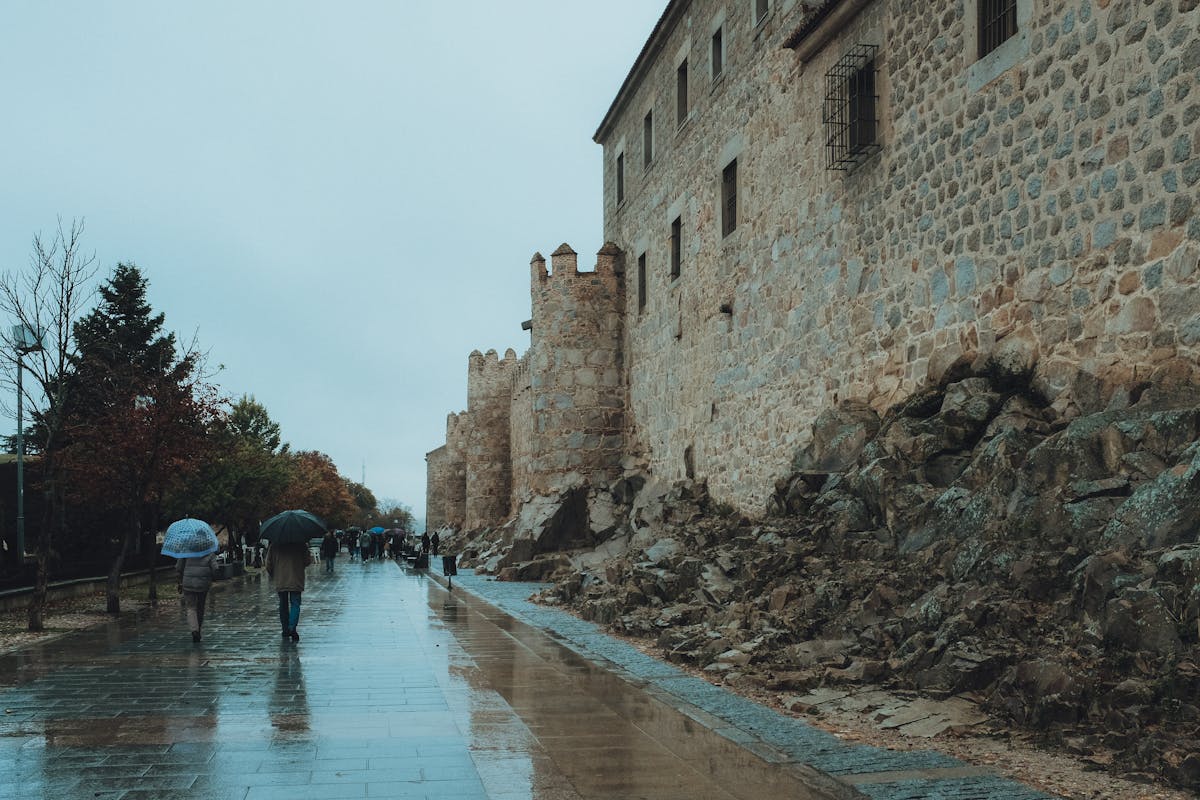
The Medieval Walls: The reason most people come to Avila, and they deliver. You can walk about 1.3 kilometers of the walls (roughly half the full circuit), with entry points at the Puerta del Alcazar and Puerta del Carmen. The walk takes about 30 to 45 minutes and gives you views across the old town rooftops on one side and the Castilian plateau on the other. Entry costs about 5 euros. Go in the morning before the sun heats the exposed stone walkway.
Avila Cathedral: Built directly into the city walls as both a place of worship and a defensive fortification. The apse forms one of the wall towers — you can see it clearly from outside the city. Inside, it’s a mix of Romanesque and Gothic styles, with a notable retablo (altarpiece) by Berruguete. It’s smaller and less famous than Segovia’s cathedral, but the wall integration makes it architecturally unique.
Convento de Santa Teresa: Built on the site of the house where Teresa of Avila was born in 1515. The convent includes a small museum with relics (including, somewhat disconcertingly, one of her fingers) and a church. Whether or not you’re interested in Catholic mysticism, the convent gives you a window into how deeply one person shaped this city.
Yemas de Santa Teresa: Avila’s signature sweet — small egg-yolk candies made by local convents using a recipe that’s been unchanged for centuries. You’ll find them in pastry shops throughout the old town. They’re intensely sweet and rich, the kind of thing where two or three is plenty. Pick up a small box as a souvenir — they travel well.
The Four Posts (Los Cuatro Postes): A stone monument on the road west of the city that gives you the classic postcard view of Avila’s walls. It’s about a 15-minute walk from the old town, across the Adaja River. Most tours stop here for photos, but if you’re on your own, the late afternoon light is when the walls look their best from this angle.
Tips for the Trip
Wear proper shoes. Both cities are built on hills with cobblestone streets that get slippery when wet. Avila’s wall walk has uneven stone surfaces. Segovia’s climb to the Alcazar tower is a tight spiral staircase. Sandals and heels are a bad idea.
Bring layers. Even in summer, the altitude means mornings start cooler than Madrid. In spring and fall, the temperature can swing 15 degrees between early morning and midday. A light jacket that packs small is your best friend.
Eat lunch in Segovia, not Avila. Both cities have good food, but Segovia’s cochinillo asado is the standout regional specialty. Avila’s yemas are a snack, not a meal. If your tour includes a lunch break, Segovia is where you want to spend it.
Cash helps at smaller sites. The main monuments accept cards, but some smaller museums, wall entry points, and convent shops in Avila still prefer cash. A 20-euro note covers most incidentals.
Book morning tours when possible. The light is better for photos, the cities are quieter before late-morning tour buses arrive, and you’ll be back in Madrid with the whole evening free. Afternoon returns around 5:00 to 6:00 PM leave time for a proper Madrid dinner.
Don’t skip the drives. The landscape between Madrid, Avila, and Segovia is part of the experience. The Castilian meseta — wide, flat, dotted with ancient villages and holm oaks — has a stark beauty that catches people off guard. Keep your eyes out the window instead of on your phone.