
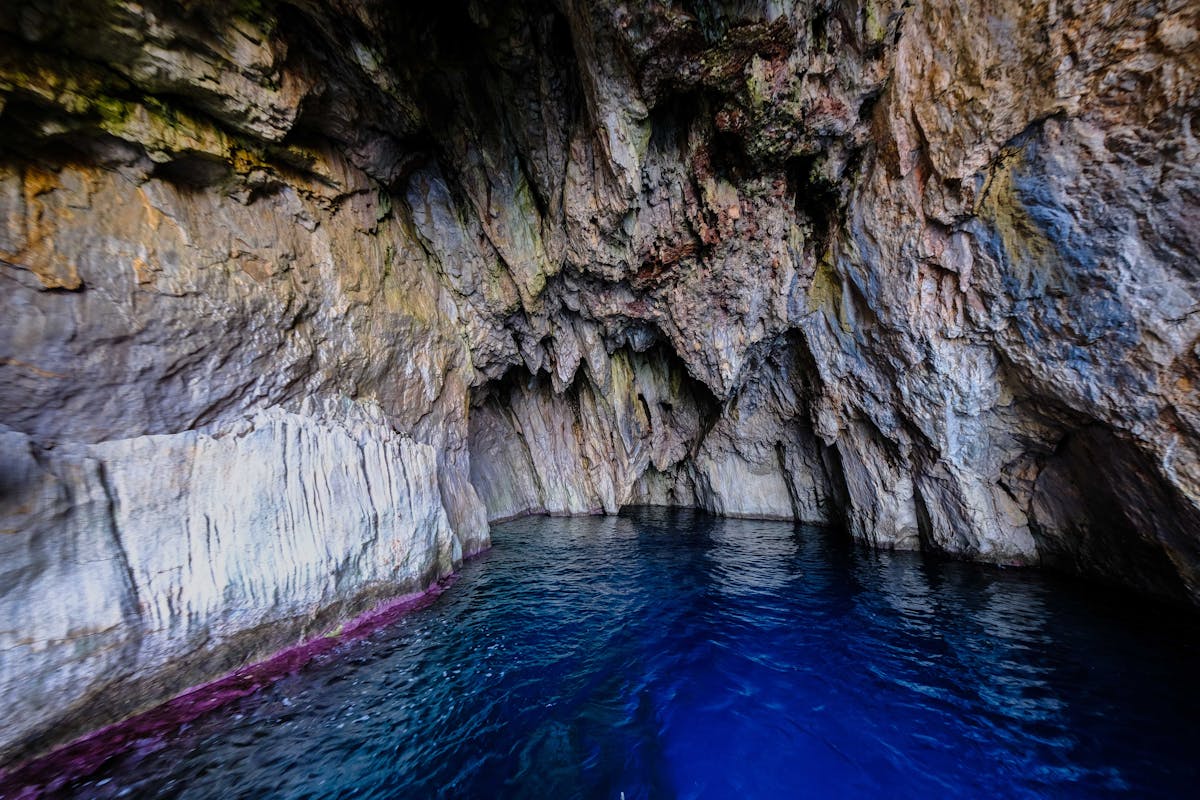
The Blue Cave on Bisevo island is one of those natural phenomena that sounds exaggerated until you’re inside it. A sea cave barely two metres wide at its entrance, it opens into a chamber where sunlight enters through an underwater opening and refracts through the water, flooding the entire interior with an electric blue glow that seems to come from the rock itself. It’s the kind of thing that makes you understand why ancient sailors believed in sea gods.
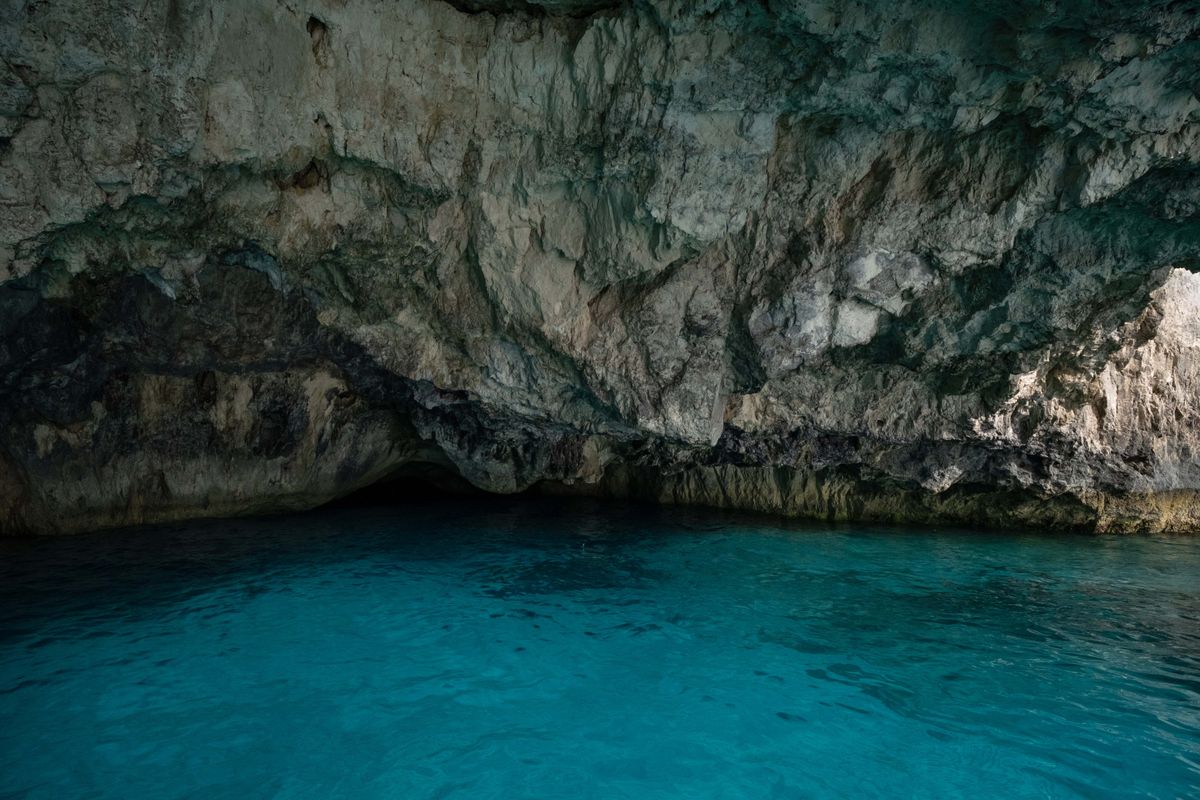
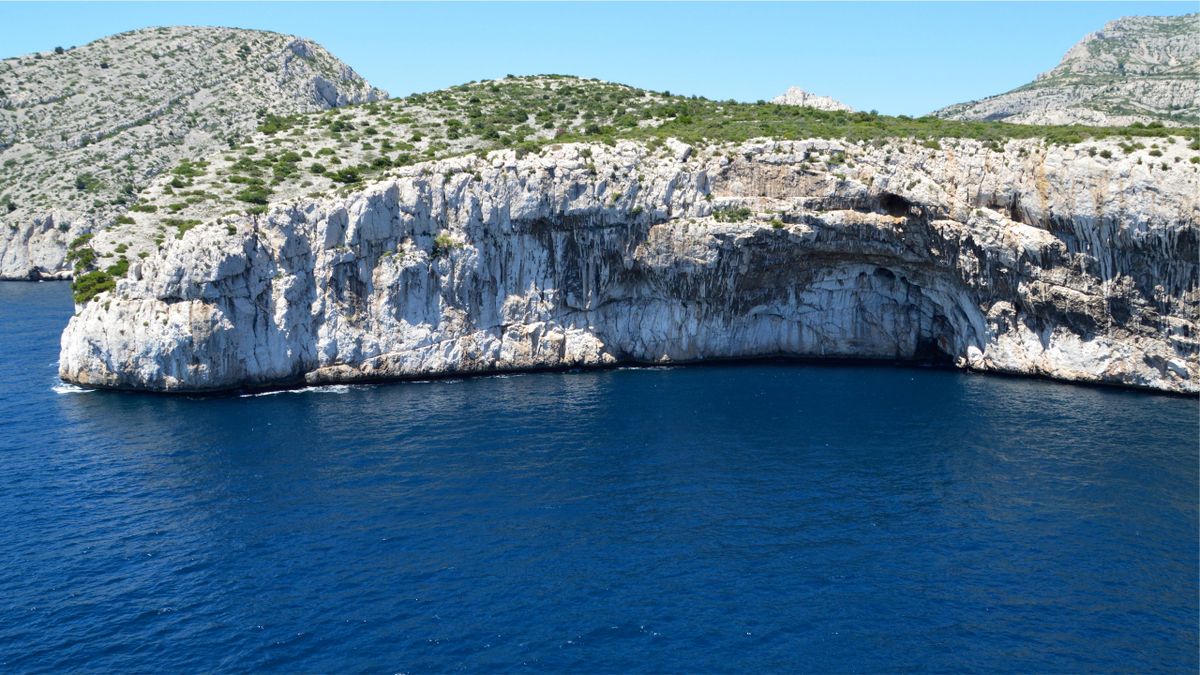
Bisevo is a tiny, almost uninhabited island about 5 kilometres southwest of Vis, which is itself one of the most remote inhabited islands in the Croatian Adriatic. Getting there from Split requires a speedboat ride of about 90 minutes across open water — which means Blue Cave tours are full-day adventures that typically combine the cave with stops at Hvar, Vis, the Pakleni Islands, and a handful of hidden swimming coves that you’d never find on your own.

I’ve compared the top-rated Blue Cave tours departing from Split and Trogir. Every tour on this list combines the cave with multiple island stops, because the journey to Bisevo naturally passes some of Croatia’s most spectacular islands and coastline. Here are the best options, plus the science behind that otherworldly glow and the islands you’ll visit along the way.
Short on time? Here’s what to book:
Most popular: Blue Cave, Mamma Mia & Hvar 5 Islands Tour — €111. Five islands by speedboat including the Blue Cave, Hvar, and the filming bay from Mamma Mia 2. The definitive Dalmatian island-hopping day.
Best budget: Blue Cave, Mamma Mia, Vis & Hvar 5 Islands Tour — €93. Same five-island format at a lower price point, with pickup from Split. Excellent value.
Most islands: Blue Cave & 6 Islands Speedboat Tour — €131. Six islands including Stiniva Beach (voted best in Europe). The most complete island-hopping experience from Split.

- What to Know Before Visiting the Blue Cave
- The blue light only works at certain times
- Visits are extremely short
- Sea conditions can cancel cave visits
- The journey is half the experience
- The Best Blue Cave Tours from Split
- 1. Blue Cave, Mamma Mia & Hvar 5 Islands Speedboat Tour — €111
- 2. Blue Cave, Mamma Mia, Hvar & 5 Island Tour — €109
- 3. Blue Cave & Hvar 5 Islands Tour from Split/Trogir — €121
- 4. Blue Cave & 6 Islands Speedboat Tour — €131
- 5. Blue Cave, Mamma Mia, Vis & Hvar 5 Islands Tour — €93
- The Science and History of the Blue Cave
- The Islands You’ll Visit Along the Way
- Tips for Your Blue Cave Tour
- What else to know about the speedboat experience
- Frequently Asked Questions
- What if the Blue Cave is closed on my tour day?
- Is the speedboat ride rough?
- Can children go on Blue Cave tours?
- Do I need snorkelling experience?
- Is the Blue Cave worth the price?
What to Know Before Visiting the Blue Cave
The blue light only works at certain times
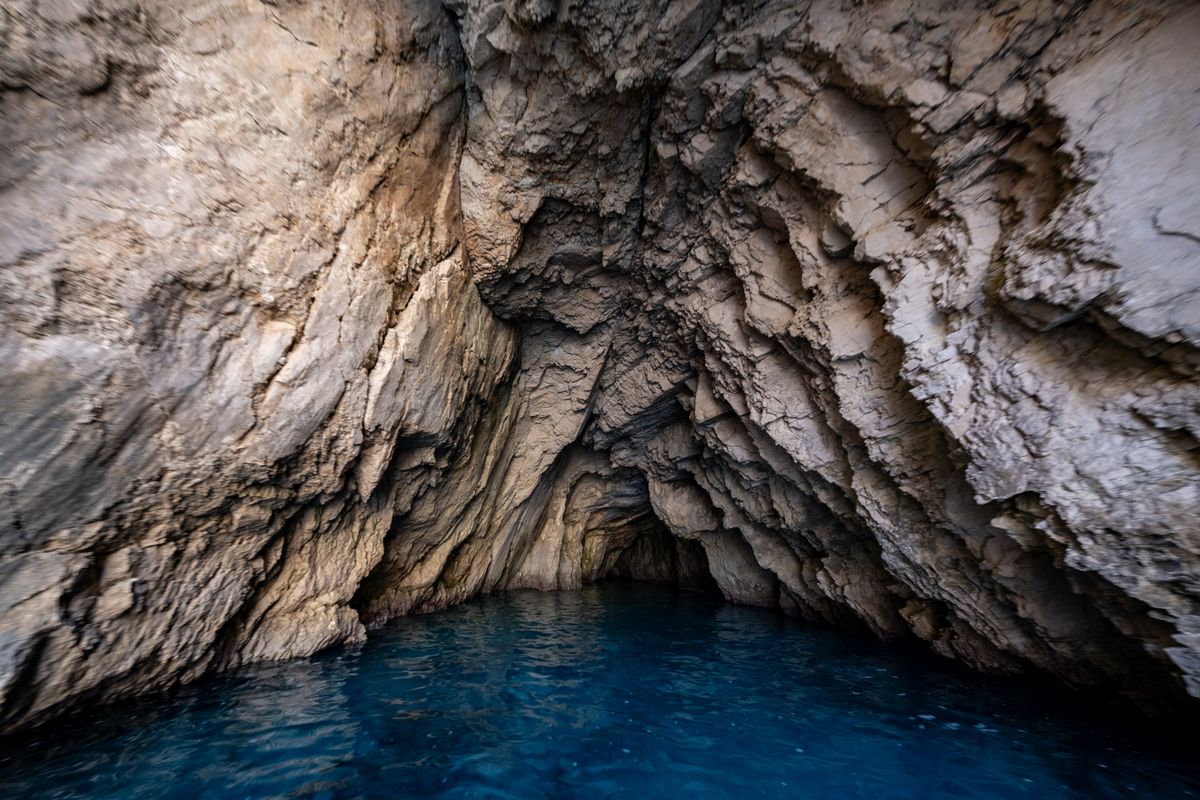
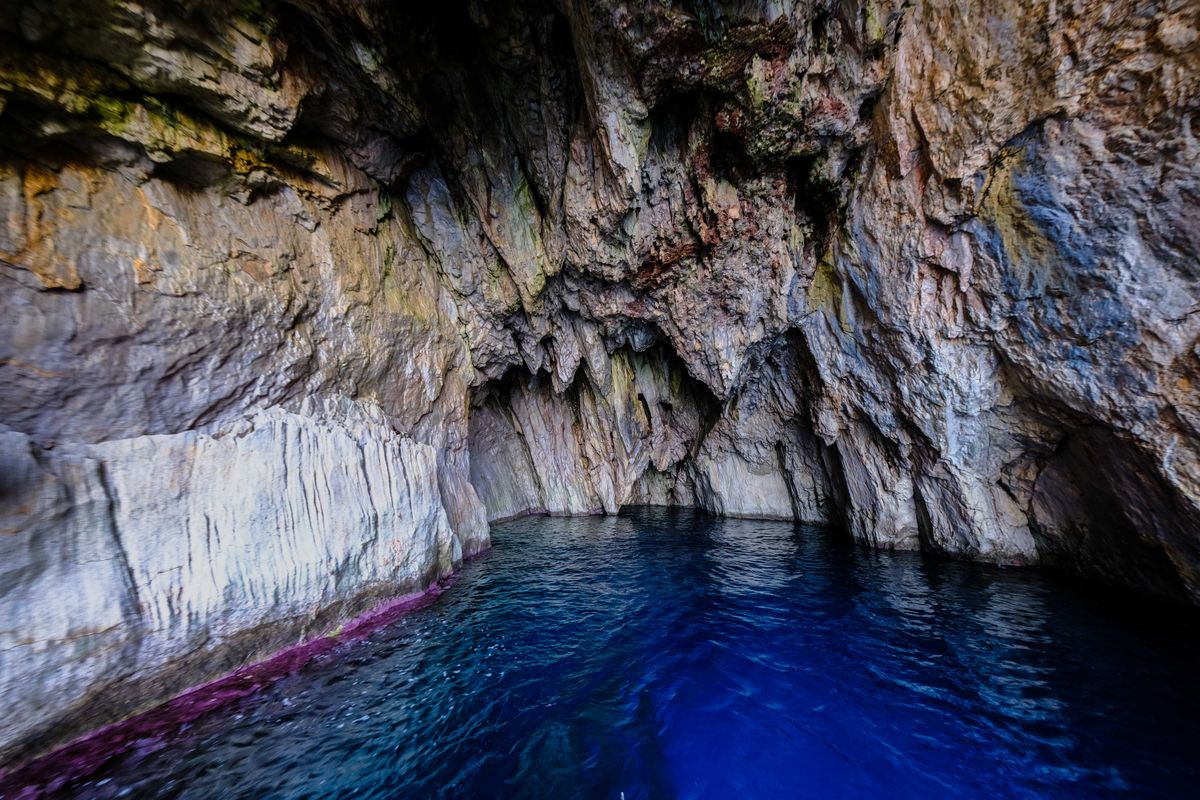
The Blue Cave’s famous glow is caused by sunlight entering through an underwater opening on the south side of the cave. The effect is strongest between 10 AM and noon on sunny days, when the sun is high enough to send light through the underwater passage at the optimal angle. Overcast days produce a dimmer effect, and afternoon visits lose the intensity. Tour schedules are designed around this window.
Visits are extremely short
You’ll spend about 5-10 minutes inside the cave. Small boats (around 10 passengers) enter through the narrow mouth one at a time, circle inside the chamber while the guide explains the geology, and exit. It sounds brief — and it is — but the visual impact in those few minutes is extraordinary. The cave’s small size and the queue of boats waiting to enter make longer visits impractical.
Sea conditions can cancel cave visits
The cave entrance is only about 1.5 metres high and 2.5 metres wide. When seas are rough, waves make entry dangerous and the cave is closed. This happens several times per month even in summer. Most tours offer a partial refund or an alternative stop when the cave is inaccessible. Booking early in your trip gives you a backup day if conditions cancel your first attempt.
The journey is half the experience
Don’t think of this as “paying €100+ to spend 10 minutes in a cave.” The Blue Cave tours are full-day island-hopping adventures. The cave is the headline attraction, but the swimming at Stiniva Beach, the time in Hvar Town, the Mamma Mia filming bay, and the speedboat ride across the open Adriatic are all highlights in their own right.

The Best Blue Cave Tours from Split
1. Blue Cave, Mamma Mia & Hvar 5 Islands Speedboat Tour — €111
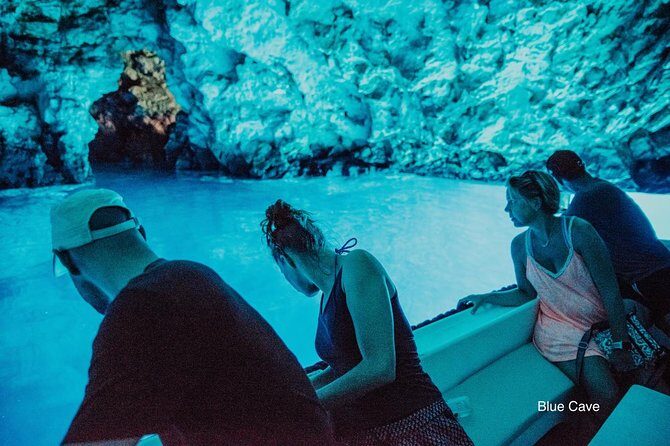
The quintessential Dalmatian island-hopping experience. Five islands in one day by speedboat: the Blue Cave on Bisevo, the stunning bay on Vis where Mamma Mia: Here We Go Again was filmed, the green lagoon of Budikovac for snorkelling, the Pakleni Islands for swimming, and Hvar Town for culture and cocktails.
The pace is fast and the day is long (10-12 hours), but every stop delivers something different — natural wonder, film location, snorkelling paradise, secluded beach, historic town. Snorkelling gear is provided. The speedboat itself is part of the fun — bouncing across open water between islands with the Dalmatian coastline stretching in every direction.
Duration: 10-12 hours | Departure: Split or Trogir, early morning
2. Blue Cave, Mamma Mia, Hvar & 5 Island Tour — €109
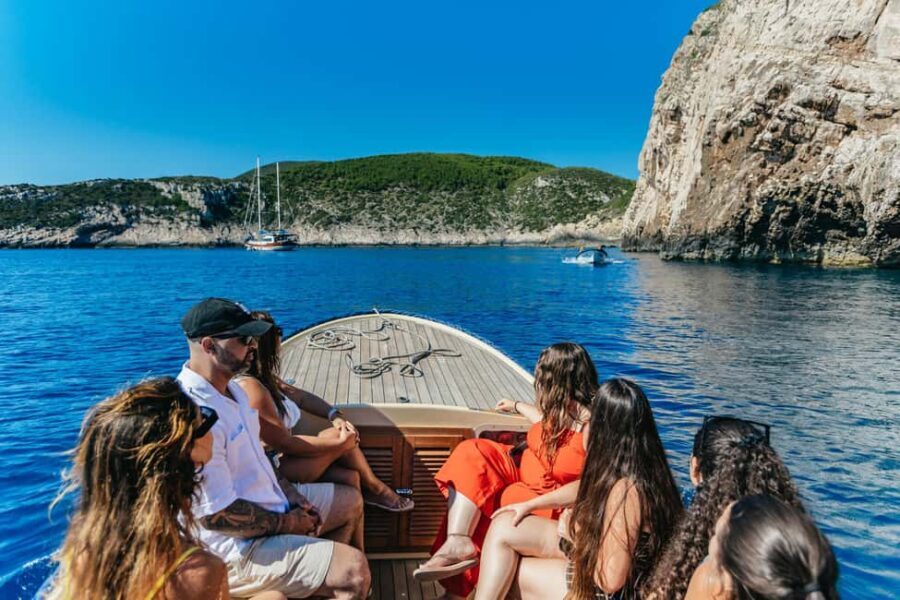
Nearly identical to the top pick — five islands, speedboat, Blue Cave, Mamma Mia bay, green lagoon, Pakleni, and Hvar. The slight price difference and different departure times make this an excellent alternative when the first option is fully booked (which happens regularly in peak season).
The main practical difference is the operator and boat — this company runs slightly smaller speedboats, which means a more intimate experience and potentially faster turnaround at each stop. The guide provides commentary between islands, explaining the geology of the caves and the history of the Vis archipelago.
Duration: 10-11 hours | Departure: Split or Trogir, morning
3. Blue Cave & Hvar 5 Islands Tour from Split/Trogir — €121
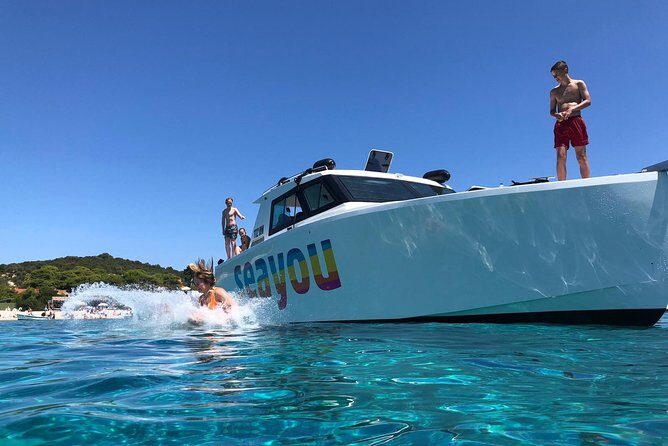
Another five-island speedboat option with a slightly different sequencing. This tour sometimes visits the islands in a different order depending on weather and sea conditions, which can mean catching the Blue Cave at a slightly different (sometimes better) time. The flexibility is actually an advantage — experienced skippers know when the light is optimal and adjust accordingly.
The tour includes the same major stops — Blue Cave, Hvar, swimming at the Pakleni Islands — with the addition of some alternative swimming coves that vary by departure. Snorkelling gear is provided, and the crew is helpful with getting in and out of the water at rocky access points.
Duration: 10-11 hours | Departure: Split or Trogir, morning
4. Blue Cave & 6 Islands Speedboat Tour — €131
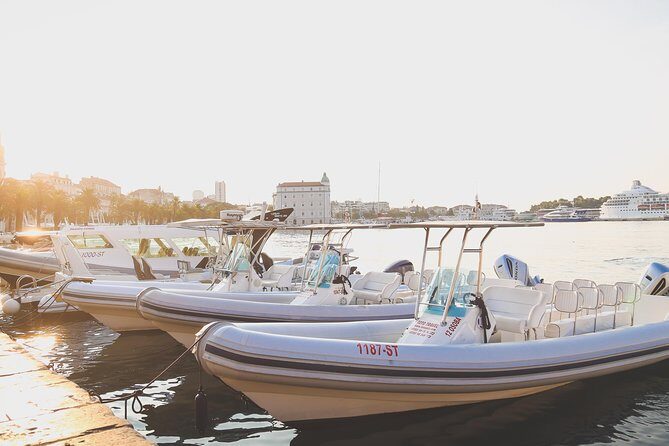
The “more is more” option. Six islands instead of five, adding Stiniva Beach on Vis — a hidden cove enclosed by towering cliffs with a narrow entrance from the sea that feels like discovering a secret world. Stiniva was voted Europe’s best beach in 2016, and the approach by speedboat through the cliff gap is genuinely cinematic.
The extra island adds about an hour to the itinerary and €20 to the price. Whether the premium is worth it depends on how much value you place on Stiniva — for beach lovers and photographers, it’s absolutely worth it. The rest of the itinerary matches the five-island tours: Blue Cave, Hvar, Pakleni swimming, and the Mamma Mia bay.
Duration: 10-11 hours | Departure: Split or Podstrana, morning
5. Blue Cave, Mamma Mia, Vis & Hvar 5 Islands Tour — €93
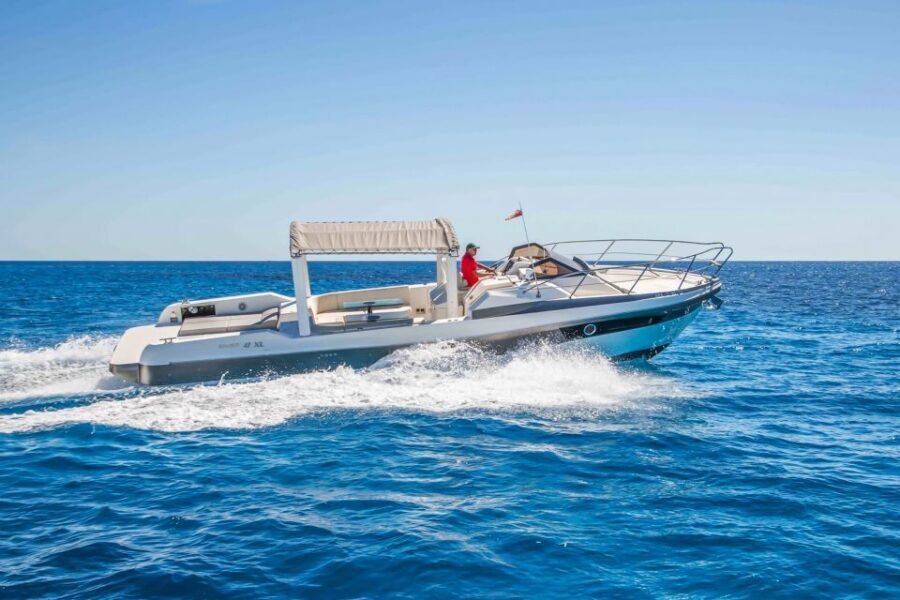
The budget-friendly five-island option. At €93, this is the most affordable way to see the Blue Cave and Hvar on a multi-island tour from Split. The itinerary covers the Blue Cave, the Mamma Mia bay, Vis island, the Pakleni archipelago, and Hvar Town — the same highlights as the more expensive tours at a lower price point.
The price difference compared to the €111 tours typically reflects a slightly older or smaller boat, or a different pickup arrangement. The core experience — Blue Cave entry, five island stops, full day on the water — is the same. For budget-conscious travellers who don’t need the newest speedboat, this delivers the same memories at a friendlier price.
Duration: 10.5 hours | Departure: Split, morning
The Science and History of the Blue Cave
The Blue Cave was known to local fishermen for centuries, but it entered the wider world in 1884 when Baron Eugen von Ransonnet, an Austrian painter and naturalist, explored the cave and publicised its extraordinary light effects. The Austro-Hungarian Empire controlled the Dalmatian coast at the time, and Ransonnet’s paintings and descriptions made the cave a fashionable destination for the aristocratic Grand Tour.
The cave formed naturally over thousands of years as the sea eroded a weakness in the limestone cliff. The critical feature is the underwater opening on the southern side — about 1.5 metres below the waterline and roughly 4 metres wide. When sunlight enters through this submerged gap, it passes through the water and hits the white limestone floor, which reflects the light back up. The water acts as a blue filter — absorbing red and orange wavelengths and transmitting blue — which is why the entire interior glows with that distinctive electric blue.

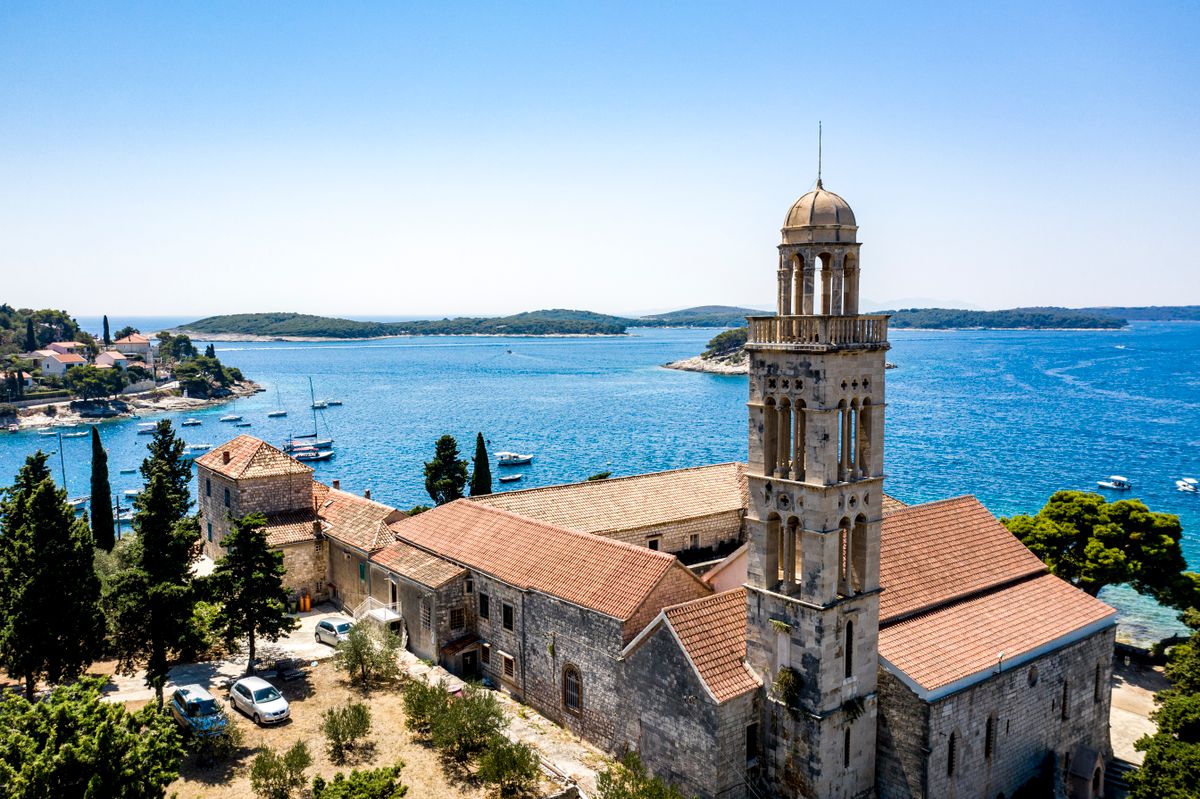
The islands you’ll pass on the way to the Blue Cave have their own remarkable history. Vis (ancient Issa) was a Greek colony founded in 397 BC, making it one of the oldest urban settlements in Croatia. In 1866, the Battle of Lissa was fought in the waters around Vis — one of the first naval battles featuring ironclad warships, where the Austrian fleet defeated the Italian navy despite being outnumbered. From 1945 to 1989, Vis was a Yugoslav military base, completely closed to foreign visitors. This enforced isolation preserved the island’s traditional character, which is why Vis today feels like a time capsule — fishing villages, stone houses, and vineyards untouched by decades of tourism development.

The Islands You’ll Visit Along the Way

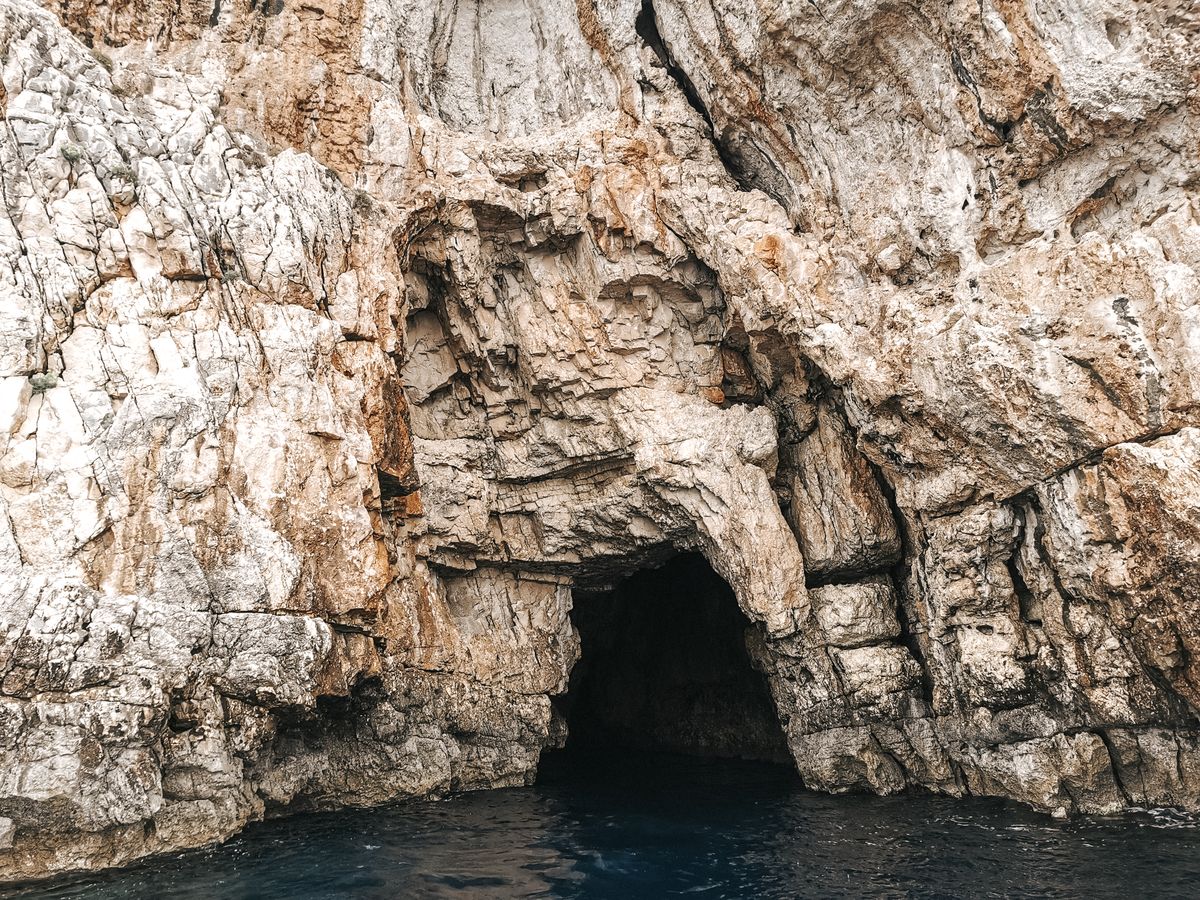
Bisevo (Blue Cave): The tiny island housing the Blue Cave. Fewer than 15 people live here year-round. Besides the cave, the island has several other sea caves (including a Green Cave with its own light effects) and empty beaches accessible only by boat.
Vis: The most remote major island in the Croatian Adriatic. Key stops include Komiza (a picture-perfect fishing town), Stiniva Beach, and the Mamma Mia filming bay. The island produces some of Croatia’s best wine from ancient Vugava and Plavac Mali vines.
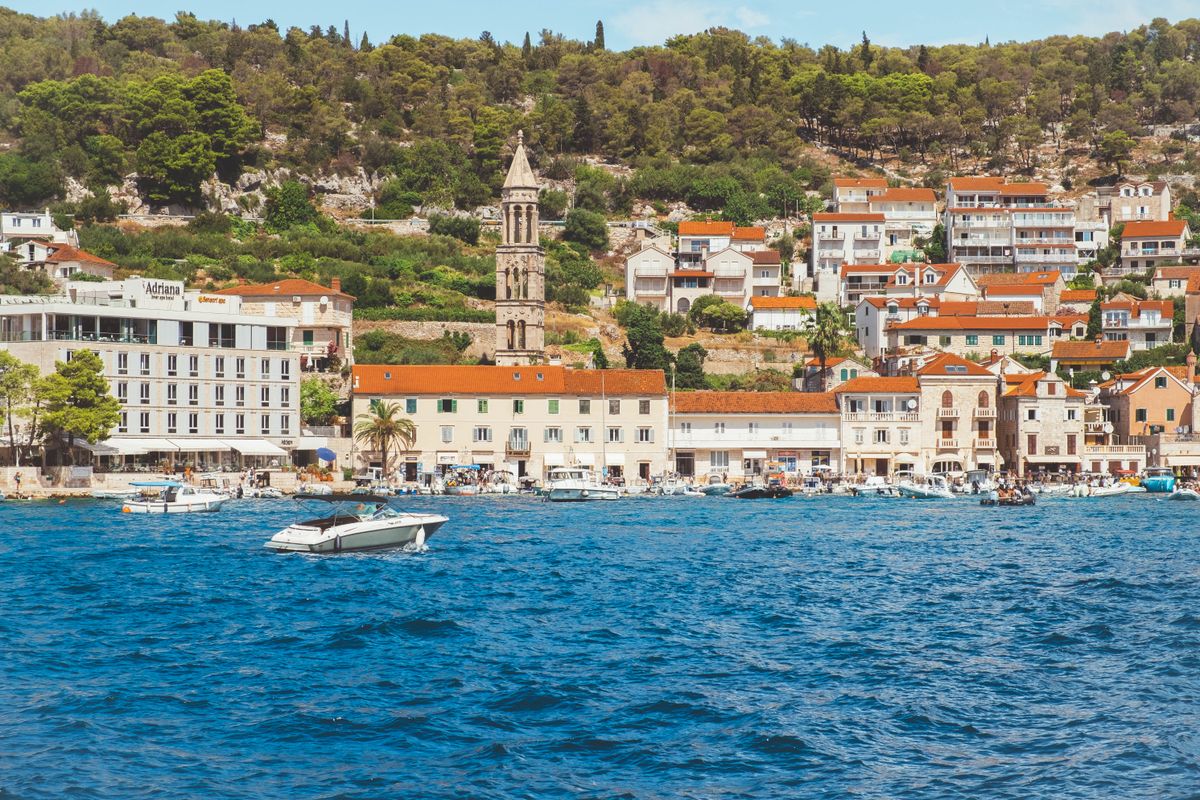
Hvar: The glamorous island with a Venetian old town, the oldest public theatre in Europe, and a nightlife scene that earned it comparisons to the French Riviera. Most tours stop here for 1-2 hours.
Pakleni Islands: An uninhabited archipelago off Hvar’s coast. The swimming here is among the best in Croatia — sheltered bays, pine-scented shores, and water that stays warm and clear even on breezy days.


Tips for Your Blue Cave Tour
Book the earliest departure. The Blue Cave’s light is best between 10 AM and noon. Tours leaving Split at 7-8 AM reach Bisevo in time for the peak glow. Later departures may catch a dimmer effect.
Bring a waterproof phone case. The speedboat ride generates spray, and you’ll want your phone ready for the cave. A waterproof case also lets you take underwater shots at swimming stops.
Pack sunscreen and reapply. Ten hours on a speedboat means constant sun exposure. The breeze masks how much UV you’re absorbing. Apply before departure and reapply at every island stop.
Eat before you go. Most tours don’t include lunch (unlike the traditional boat cruises). Bring snacks, sandwiches, and water. You can also grab food at Hvar Town or Komiza, but prices at harbour restaurants are steep.
Manage expectations for the cave. You’ll spend 5-10 minutes inside. That’s normal and enough — the visual impact is instant. The rest of the day’s island-hopping is the main event. Think of the Blue Cave as the opening act for a full day of Adriatic exploration.
What else to know about the speedboat experience
Most speedboats carry 10-12 passengers, giving the day a small-group feel. The skipper doubles as your guide between islands, sharing local knowledge about the coast, the caves, and the best swimming spots. Some boats have shade covers; others are open. Ask about the boat type when booking if shade matters to you — ten hours of Croatian sun is no joke.
The return to Split in the late afternoon is often the most scenic part — tired, sun-kissed, and watching the Dalmatian coast slide by as the speedboat carves through calm evening water. Most people are back in Split by 6-7 PM, which leaves just enough time for a shower and a sunset drink on the Riva before dinner.
Frequently Asked Questions
What if the Blue Cave is closed on my tour day?
Rough seas close the cave regularly — even in summer. Most operators offer a partial refund (for the cave entrance fee) or substitute an alternative stop, such as the Green Cave on Ravnik island. The rest of the tour continues as planned.
Is the speedboat ride rough?
It can be. The open water between Split and the Vis archipelago is exposed, and on windy days the ride is bouncy. If you’re prone to seasickness, take medication before departure. Once you’re among the islands, the water is sheltered and calm.
Can children go on Blue Cave tours?
Most operators accept children over 3-4 years old. The speedboat ride can be intense for very young children, and life jackets are mandatory. The swimming stops are generally safe and shallow. Check the specific tour’s age policy before booking.
Do I need snorkelling experience?
No. The snorkelling stops are in shallow, calm bays. Gear is provided on most tours. The water is warm and clear, making it ideal for first-time snorkellers. You can also just swim — snorkelling is optional.
Is the Blue Cave worth the price?
If you frame it as paying €100+ for 10 minutes in a cave, it seems excessive. But you’re actually paying for a full day of island-hopping across the most beautiful part of the Adriatic, with the cave as the centrepiece. The total experience — five or six islands, multiple swimming stops, speedboat adventure — is excellent value for a 10-hour day on the water.
The Blue Cave tour covers much of the Dalmatian coast in a single day. If you want to go deeper on any of the stops, Hvar Island deserves its own dedicated visit for the Venetian old town, lavender fields, and nightlife. Back on the mainland, Krka Waterfalls offer a completely different kind of natural beauty — cascading freshwater falls in a forested canyon. And for a day trip in the opposite direction, Plitvice Lakes takes you into Croatia’s mountain interior for sixteen turquoise lakes connected by hundreds of waterfalls.