
Most people walk past Damrak 66 without a second glance. It looks like any other Amsterdam shopfront from the outside — glass doors, a modest sign, travelers shuffling in and out. But seven floors up, a man frozen mid-stride has his skin peeled back to reveal every muscle fiber in his legs, and a woman’s circulatory system hangs in space like a red coral sculpture, separated from the body it once served.
That’s Body Worlds Amsterdam for you. Fascinating and unsettling in equal measure. Real human bodies, preserved through a process called plastination, displayed in ways that make you rethink everything you assumed about what’s happening underneath your own skin right now.
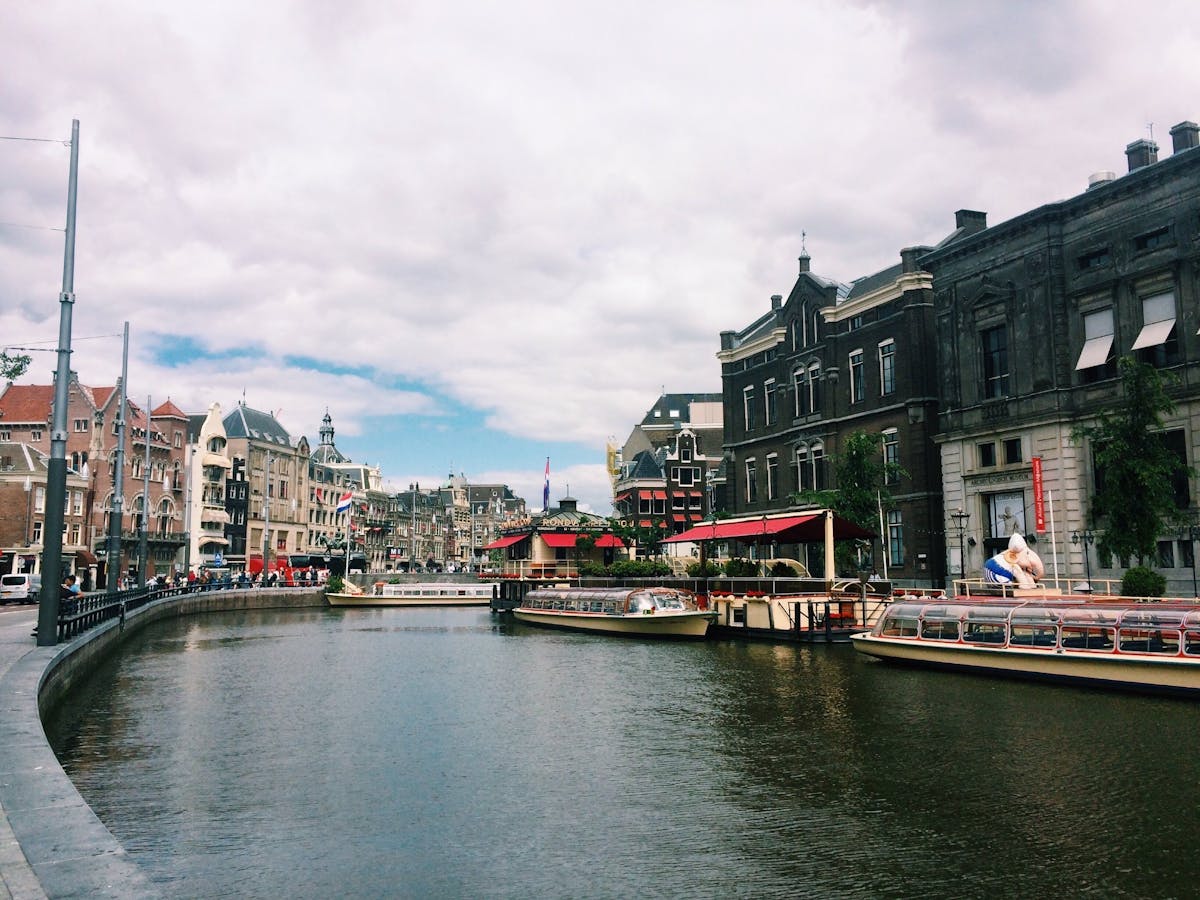
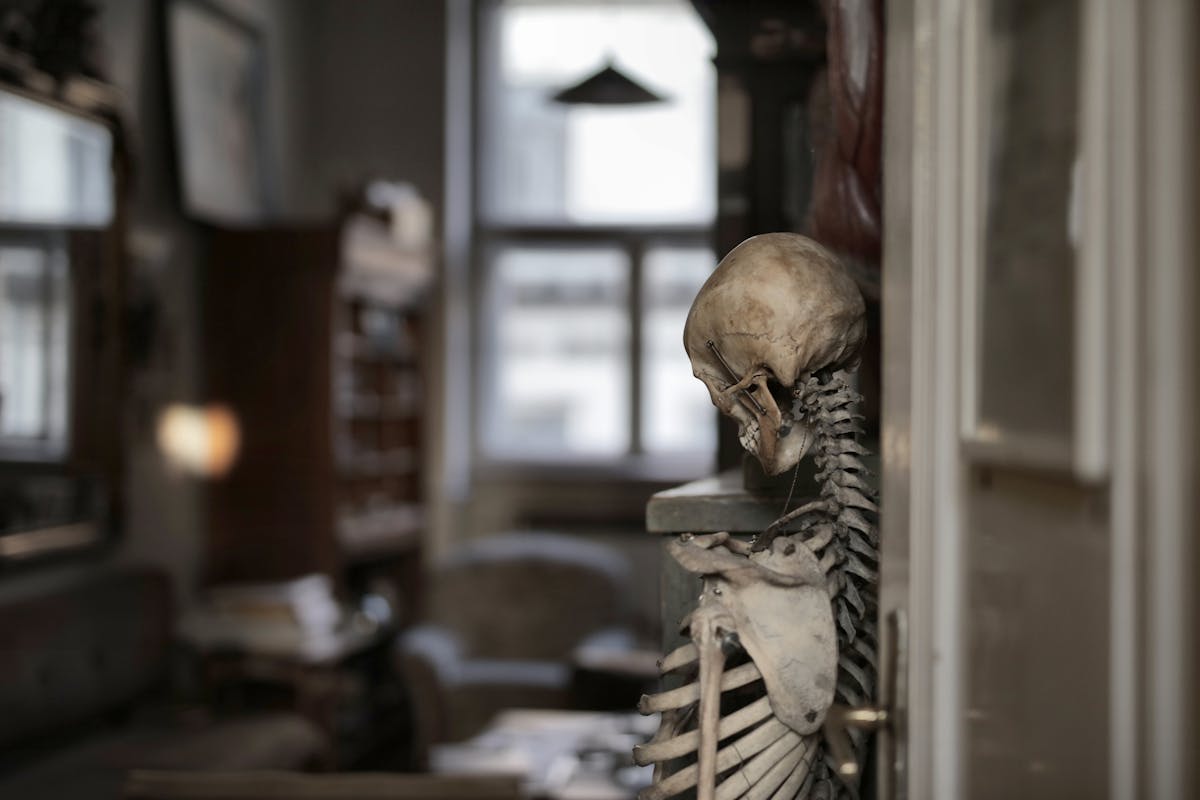
I went in expecting something clinical, like a science class with better lighting. What I got was more like an art gallery that happens to use real human bodies as its medium. The exhibition — officially called “The Happiness Project” — asks a surprisingly personal question: what actually makes us happy, and what does that do to the body?
Best overall: The Happiness Project Ticket — $26. Standard admission, self-paced, includes a free InBody health scan. This is the one most people should buy.
Best for skipping lines: Fast-Lane Ticket — $27. Same exhibition, priority entry. Worth the extra dollar on weekends and holidays.
Best combo deal: Body Worlds + Canal Cruise — $41. Bundles the exhibition with an hour-long canal cruise. Saves a few euros versus buying separately.
- How Tickets Work at Body Worlds Amsterdam
- Should You Buy Official Tickets or Go Through a Tour Platform?
- The Best Body Worlds Tours to Book
- 1. Body Worlds Amsterdam: The Happiness Project Ticket —
- 2. Body Worlds Amsterdam Fast-Lane Ticket —
- 3. Body Worlds + Canal Cruise Combo —
- When to Visit Body Worlds Amsterdam
- How to Get to Body Worlds
- Tips That Will Save You Time
- What You’ll Actually See Inside
- Making the Most of Your Amsterdam Day
How Tickets Work at Body Worlds Amsterdam
Body Worlds Amsterdam runs on timed entry. You pick a date and time slot when you book online, show up at Damrak 66, scan your ticket at the door, and head up. There’s no guided route you’re forced to follow — you move through seven floors at your own pace, lingering where you want, skipping what doesn’t grab you.
The current exhibition is “The Happiness Project”, which explores how emotions, stress, nutrition, and movement show up in actual human tissue. Over 200 plastinated specimens are spread across the floors — full bodies, individual organs, cross-sections, and some genuinely startling comparative displays (a healthy lung next to a smoker’s lung is the kind of thing that stays with you).
Every ticket includes a free InBody Scan. It’s a quick body composition analysis that measures your muscle mass, body fat, hydration, and a few other metrics. Takes about two minutes and you get a printed readout. I thought it would be a gimmick but the results were surprisingly detailed.
Pricing breakdown:
- Adults: around $26-27 depending on the platform
- The exhibition doesn’t have a complicated tier system — one ticket gets you everything
- Children under 6 enter free
- Teachers can get free admission with employment verification (contact the venue directly)
There is no need to print anything. Mobile tickets work fine — just show the QR code on your phone.
Should You Buy Official Tickets or Go Through a Tour Platform?
Body Worlds sells tickets through its own site (bodyworlds.nl) and through third-party platforms like GetYourGuide and Viator. The price difference is minimal — sometimes a euro or two either way depending on the day.
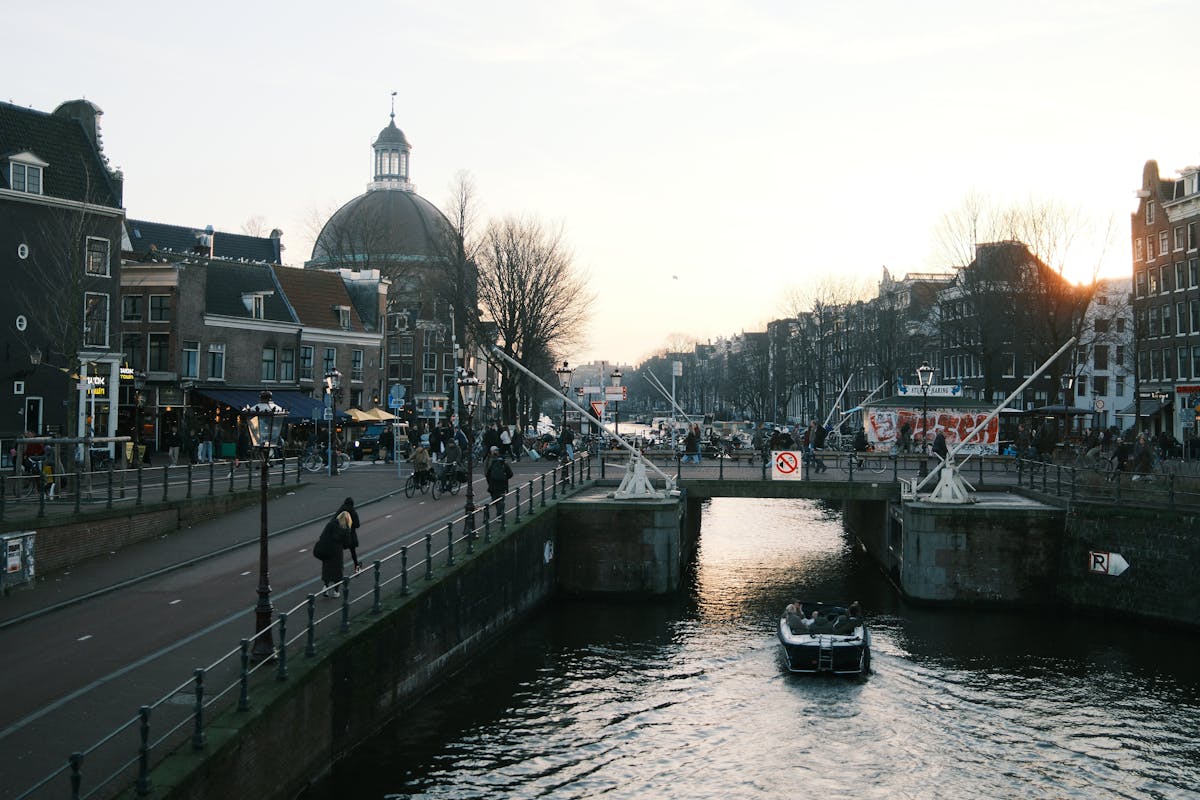
The main reason to book through GetYourGuide or Viator is free cancellation. Most of their Body Worlds tickets let you cancel up to 24 hours before for a full refund. Amsterdam weather is unpredictable, plans change, and having that flexibility costs you nothing extra. The official site’s refund policy is stricter.
The combo ticket (Body Worlds + canal cruise) is only available through third-party platforms, not the official site. If you’re planning to do both anyway — and honestly, a canal cruise in Amsterdam is one of those things you should just do — the combo saves you a few euros and handles both bookings in one go.
The Best Body Worlds Tours to Book
1. Body Worlds Amsterdam: The Happiness Project Ticket — $26
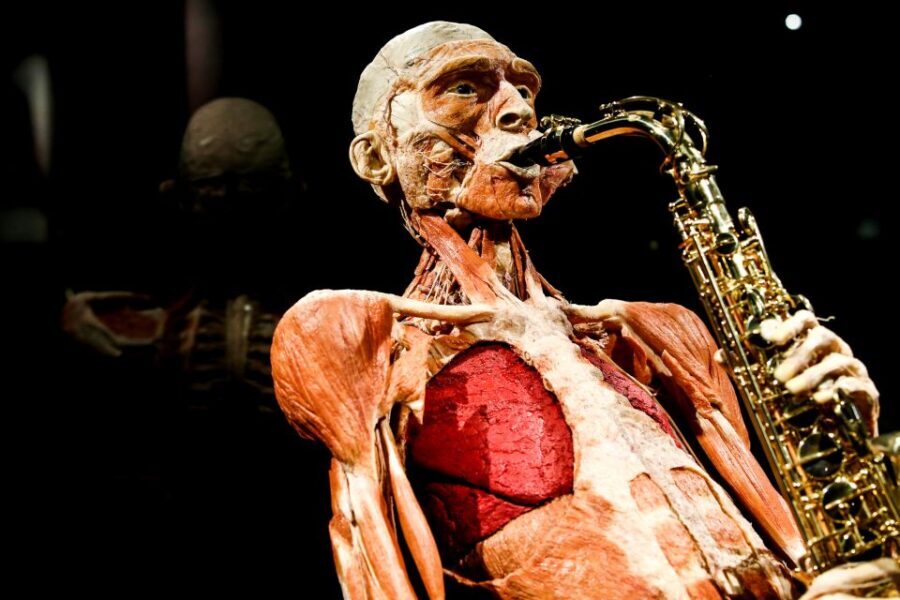
This is the straightforward admission ticket and the one I’d recommend to most people. You get full access to the entire exhibition across all seven floors, plus the free InBody body composition scan that’s become a signature part of the Amsterdam location. There’s no audio guide included, but honestly the written displays are detailed enough that you don’t need one. The exhibition is self-paced, so you can spend twenty minutes or three hours depending on how deep into the anatomy you want to go.
What makes this the top pick is simplicity. At $26, it’s one of the most reasonably priced museum experiences in Amsterdam — less than the Rijksmuseum, less than the Van Gogh Museum, and arguably more memorable than either. The Happiness Project angle keeps it from feeling like a dry anatomy lesson. You’ll learn things about your own body you didn’t know, and you’ll leave thinking differently about how your daily habits show up in your actual tissue.
This is the most booked Body Worlds experience in Amsterdam by a wide margin, and visitors consistently praise the self-paced format. It works whether you’re into biology, art, or just want something genuinely different from the standard Amsterdam museum circuit.
2. Body Worlds Amsterdam Fast-Lane Ticket — $27
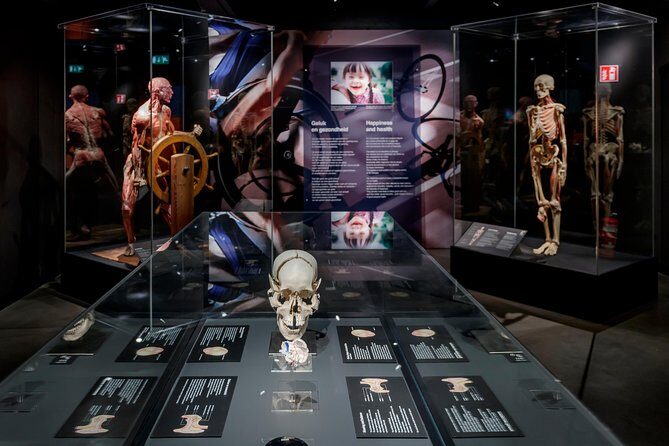
Same exhibition, same InBody scan, same self-paced access — but you skip the entrance queue. The fast-lane ticket routes you through a separate line at the door, which matters during peak times. Weekends from late morning through mid-afternoon can get backed up, especially in summer and around school holidays. On a quiet Tuesday in March? You probably don’t need this. On a rainy Saturday in August when every tourist in Amsterdam is looking for indoor activities? Absolutely worth it.
At just $27 through Viator, the premium over the standard ticket is basically nothing. The booking comes with a specific 90-minute time window, though nobody’s actually timing you once you’re inside. Most visitors spend between one and two hours, but I’ve heard of people going through in 45 minutes and others who linger for three hours reading every single display panel.
This option also offers free cancellation up to 24 hours in advance, so there’s almost no reason not to grab the fast-lane version if you’re even slightly worried about crowds.
3. Body Worlds + Canal Cruise Combo — $41
If you’re doing both anyway, this bundle makes sense. You get the full Body Worlds exhibition plus a one-hour canal cruise, and the cruise departure point is conveniently close to Damrak. The total comes to $41, which saves you a handful of euros compared to booking each separately. Not a huge discount, but the convenience of having both sorted in one transaction is nice — one confirmation, one QR code, done.
The order is flexible. You can do the canal cruise first and Body Worlds after, or the other way around. I’d suggest doing Body Worlds first — it’s more mentally demanding — then decompressing on the water with the canal cruise as a relaxed finish to the afternoon. The cruise loops through the major canal rings and passes Anne Frank’s house, the Westerkerk, and several historic bridges.
One note: this combo doesn’t include fast-lane access to Body Worlds. If you’re visiting on a busy day, you might still face a short queue at the entrance. But the two-hour total time commitment (roughly 90 minutes for Body Worlds plus 60 for the cruise) makes this a well-structured half-day plan that doesn’t leave you exhausted.
When to Visit Body Worlds Amsterdam
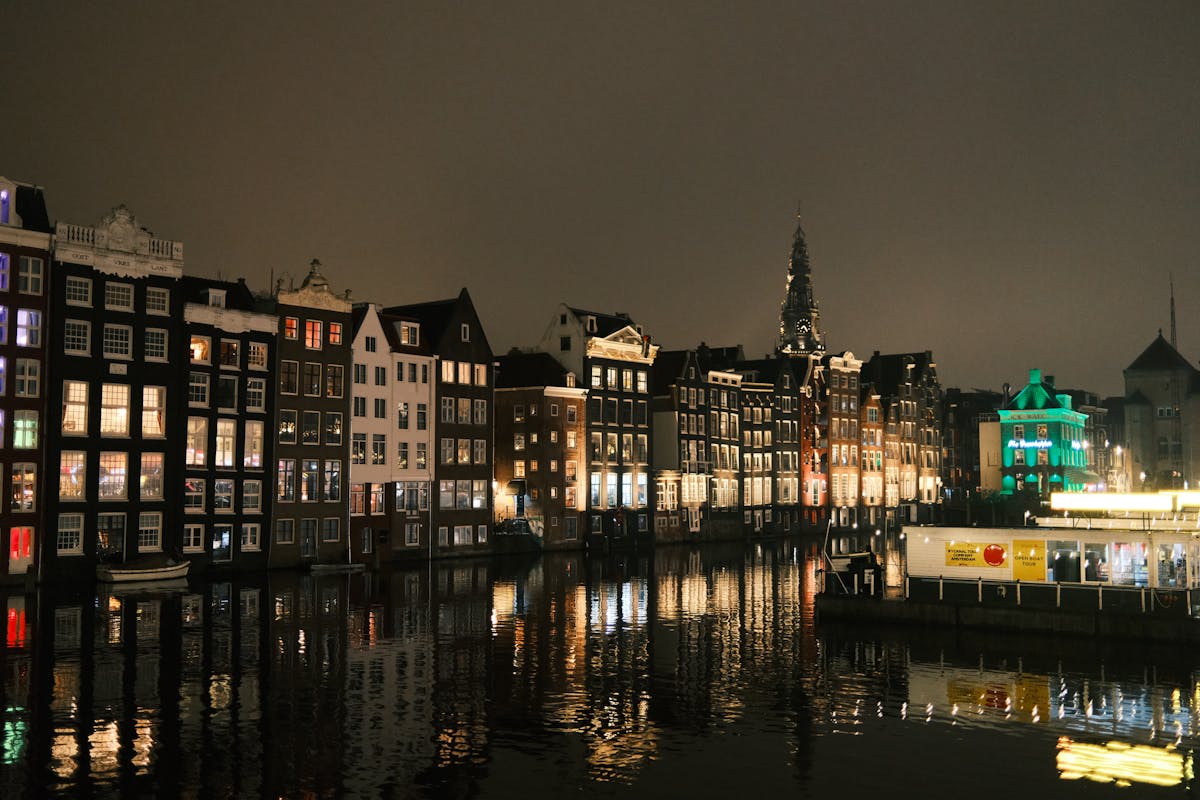
Body Worlds is open daily. Typical hours run from 10am to 8pm, with last entry usually an hour before closing. Weekday mornings are the quietest — especially Tuesday through Thursday before noon. That’s when you’ll have entire floors mostly to yourself, which makes a real difference when you want to stand in front of a full-body specimen for five minutes without someone’s backpack bumping into you.
Best times:
- Weekday mornings (10am-12pm) for the fewest people
- Late afternoon (4pm-6pm) if you want to combine with an evening canal cruise or dinner nearby
- Rainy days — everyone flocks indoors, but Body Worlds absorbs crowds better than most Amsterdam museums because of the seven-floor layout
Worst times:
- Saturday and Sunday 11am-3pm, especially during Dutch school holidays
- King’s Day (April 27) and surrounding dates — central Amsterdam is chaos
Most people spend between 60 and 90 minutes inside. If you’re the type who reads every panel and information card, budget two hours. If you’re more of a walk-and-look visitor, an hour is plenty.
How to Get to Body Worlds
Address: Damrak 66, 1012 LM Amsterdam
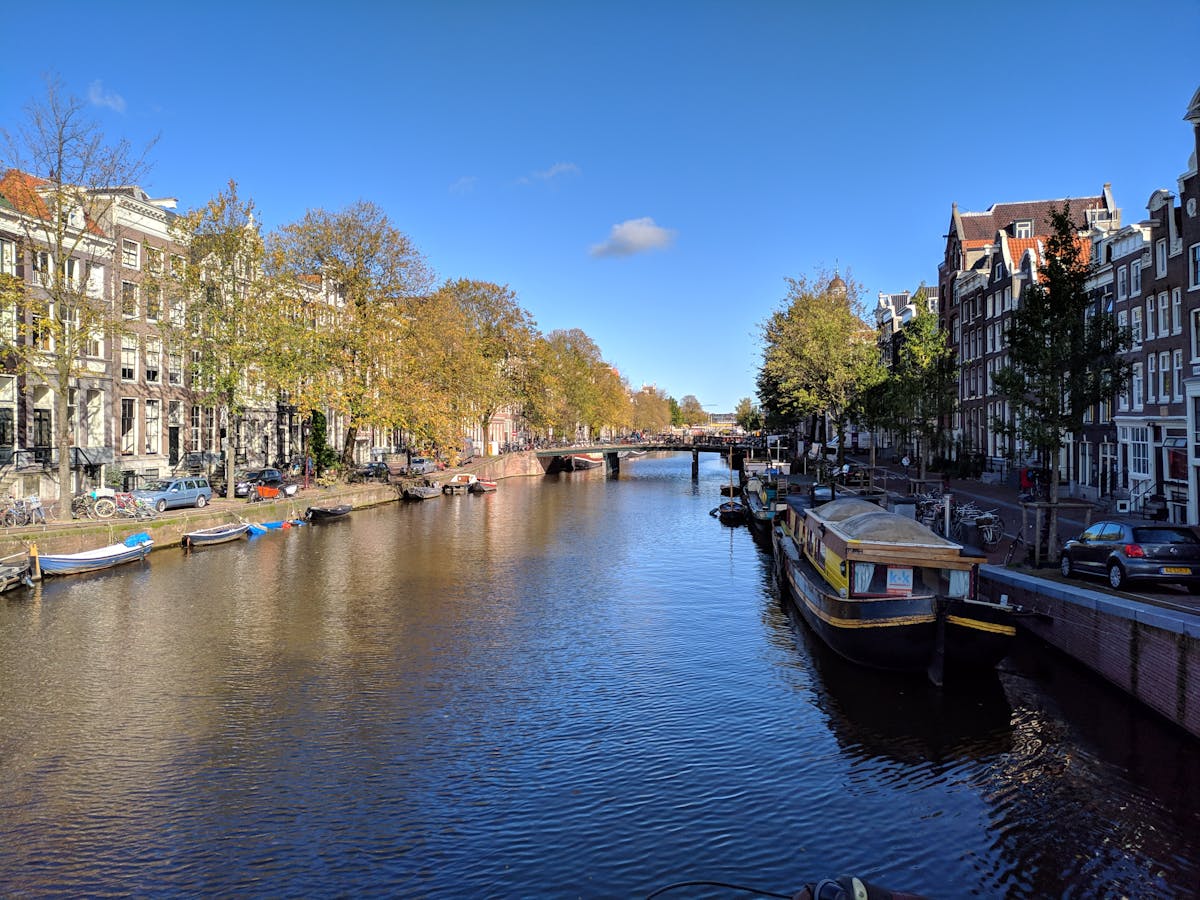
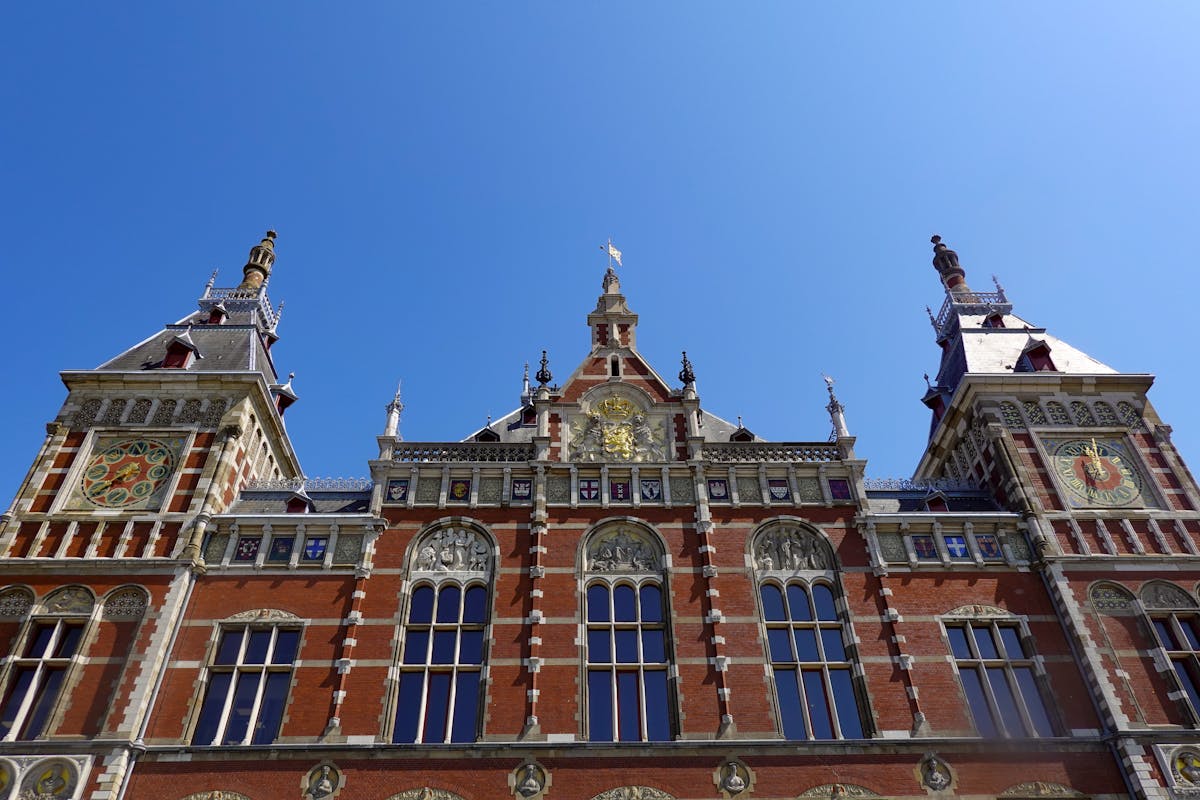
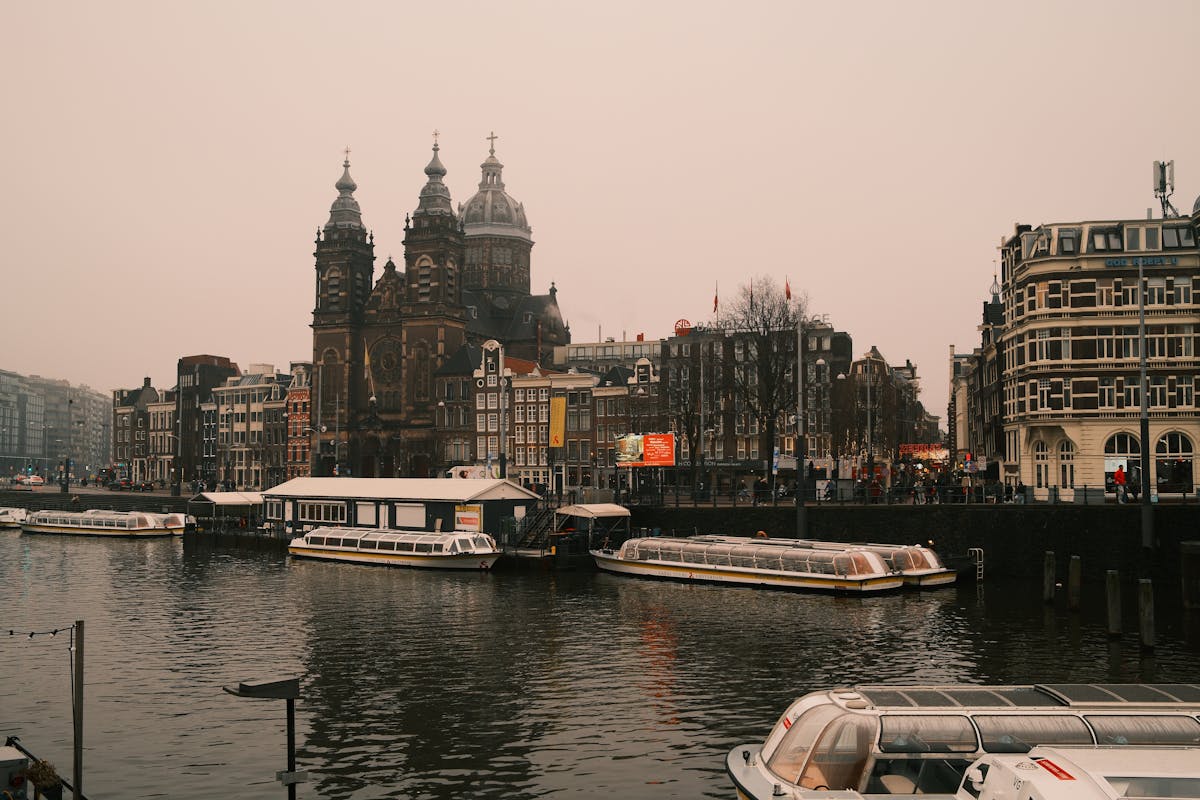
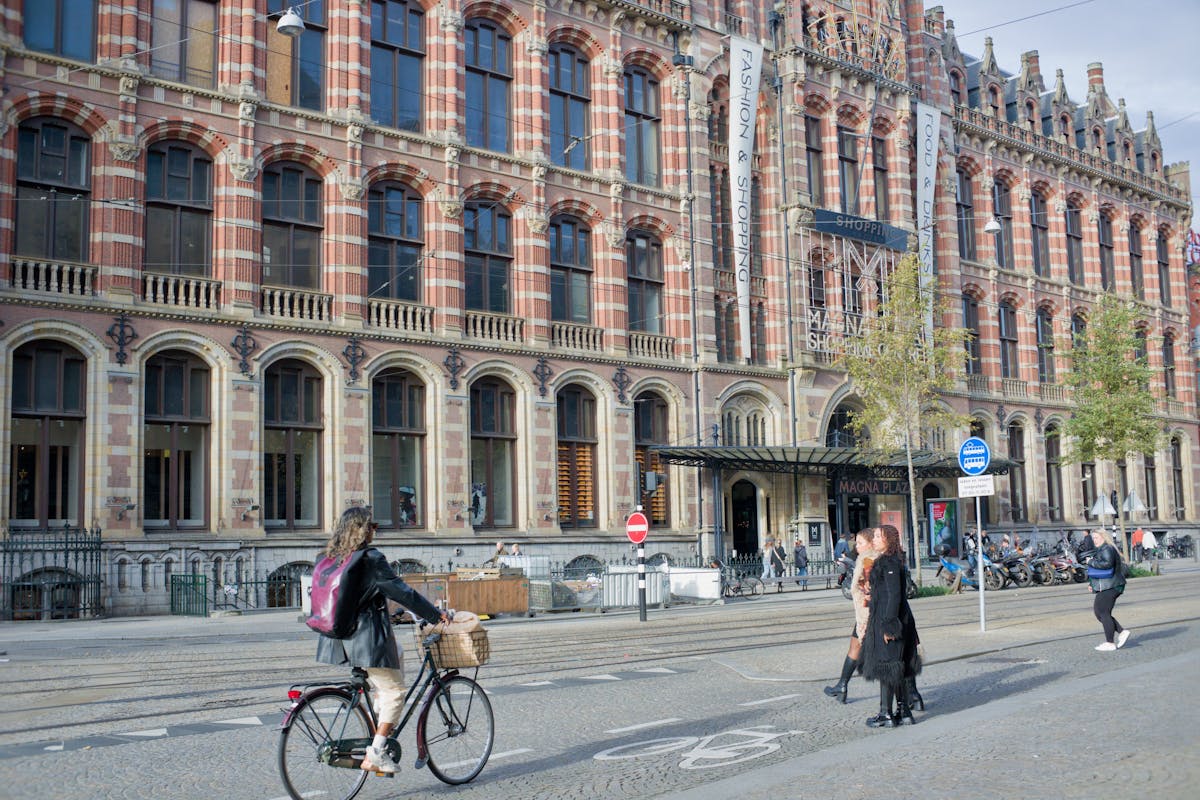
Body Worlds sits on Damrak, the wide boulevard that runs straight south from Amsterdam Centraal Station toward Dam Square. If you can find the station, you can find Body Worlds — it’s a four-minute walk.
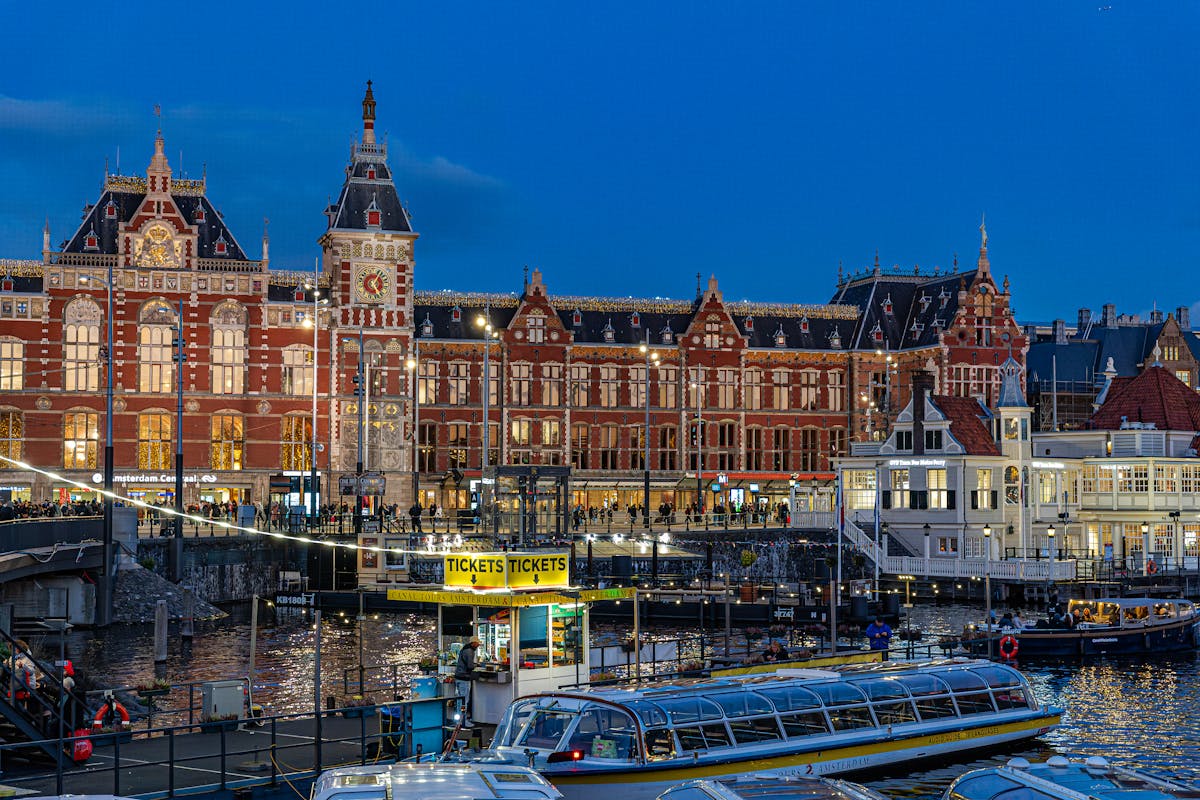
From Amsterdam Centraal: Walk straight out the main exit, cross the bridge, and continue south on Damrak. Body Worlds is on the right side after about 300 meters. You’ll pass several canal boat ticket offices and souvenir shops. Total walking time: 4-5 minutes.
By tram: Trams 4, 9, 16, and 24 stop at Dam/De Bijenkorf, which is a one-minute walk from the entrance. Trams 1, 2, 5, 13, 14, and 17 stop at Dam station, about five minutes away on foot.
By bike: There’s bike parking on Damrak, but Amsterdam being Amsterdam, secure your lock properly. The Fietsflat (bike parking garage) behind Centraal Station is a safer option if you’re nervous about it.
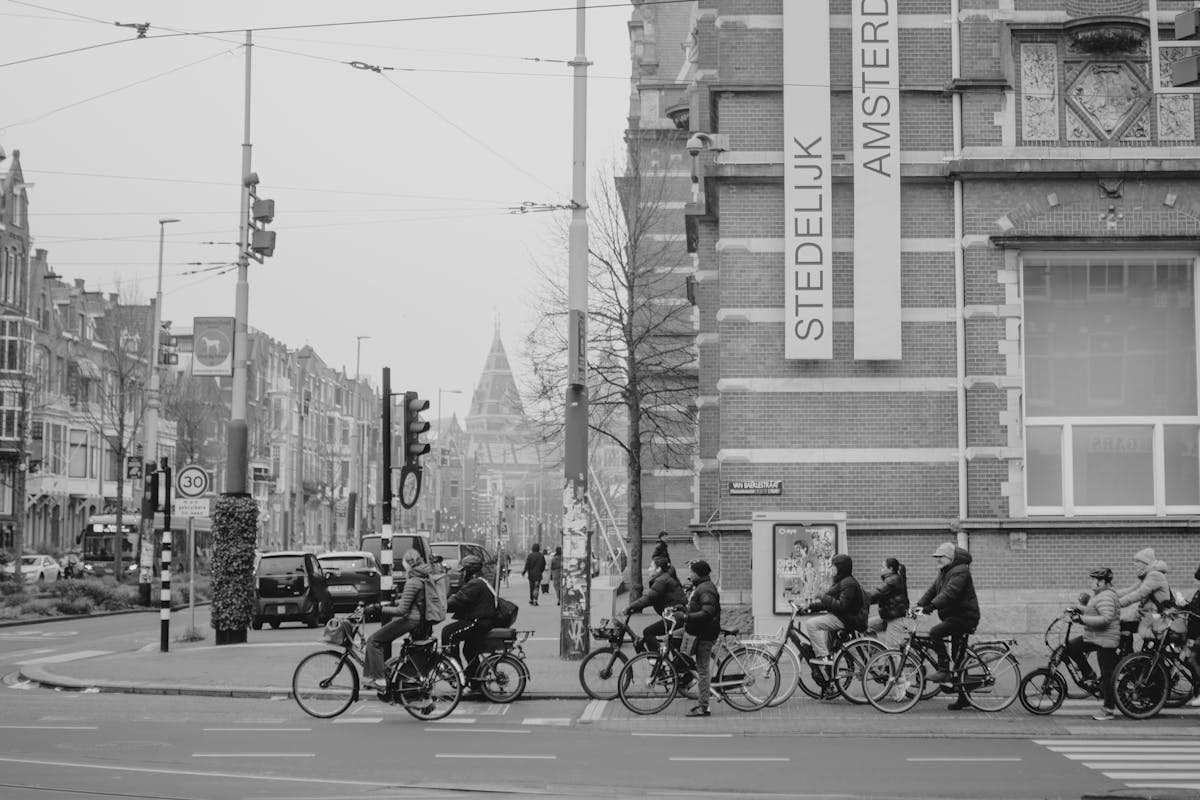
By car: Don’t. Driving in central Amsterdam is expensive and stressful. If you must, Q-Park De Bijenkorf (444 spaces) and Q-Park Nieuwendijk (360 spaces) are the closest garages. Expect to pay around EUR 5-7 per hour.
Tips That Will Save You Time
- Book online, always. Walk-up tickets are available but the queue is longer and you risk sold-out time slots on busy days. Online tickets also come with free cancellation on most platforms.
- Arrive 5 minutes early, not 15. This isn’t airport security. A couple minutes before your time slot is fine. There’s no benefit to arriving much earlier because they won’t let you in before your slot anyway.
- Start at the top. The exhibition begins on the upper floors. Most people follow the suggested route down, which keeps the flow moving. Going rogue and starting at the bottom just puts you swimming against the crowd.
- The InBody Scan has its own queue. Do it first thing when you enter or at the very end. Mid-visit, the line tends to be longer because everyone hits it at the same point in their walk-through.
- No photography. This is enforced. The staff will ask you to put your phone away if you try. Respect the rule — the specimens are donated human bodies and the no-photo policy is part of the donor agreements.
- Bring a light jacket. Some floors are climate-controlled to keep the specimens in good condition. It’s not freezing but it’s noticeably cooler than outside, especially in summer.
- The ground-floor gift shop is worth a look even if you don’t buy anything. They have anatomical models, books about plastination, and some genuinely interesting science-themed items.

What You’ll Actually See Inside
The exhibition spans seven floors and contains over 200 plastinated specimens. Plastination is a preservation technique invented by German anatomist Gunther von Hagens in the late 1970s. It replaces the water and fat in biological tissue with reactive plastics, which hardens and preserves the body in lifelike positions indefinitely.
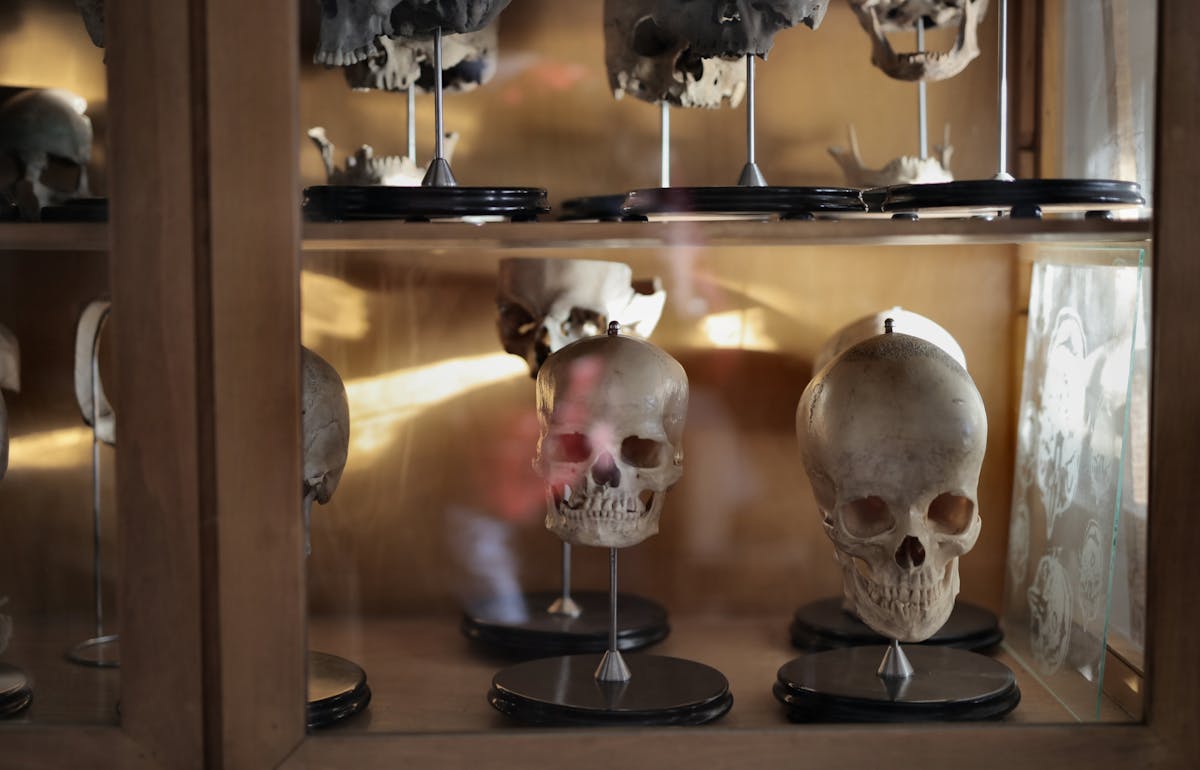
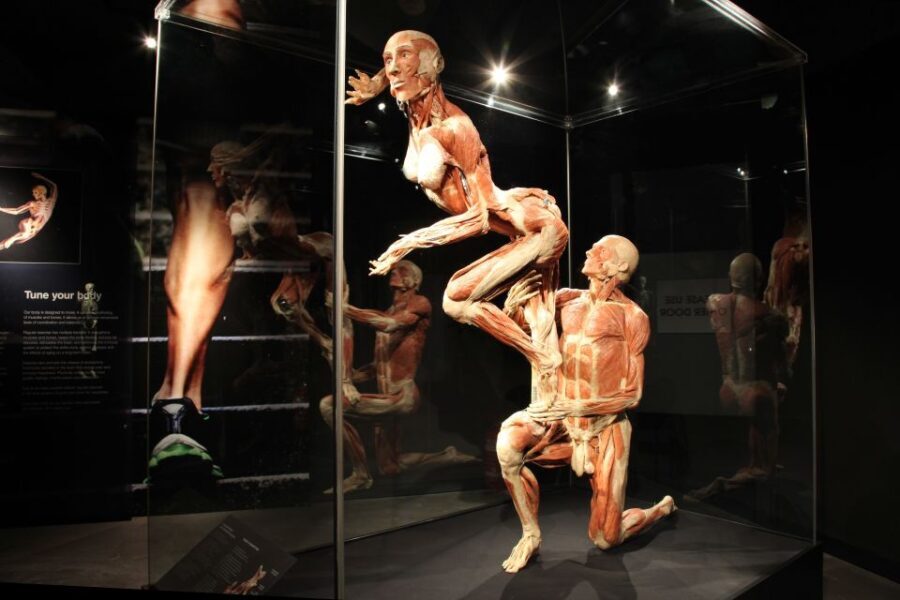
What separates Body Worlds from a standard anatomy museum is how the bodies are posed. These aren’t lying flat on tables. A man plays chess. A woman does yoga. A soccer player kicks a ball. Each pose is designed to show specific muscle groups, tendons, and joints in action — so you’re not just seeing a body, you’re seeing how your body works when it moves.
The Amsterdam exhibition groups displays by organ system and theme. You’ll walk through sections on:
- The nervous system — including a full-body specimen showing nothing but nerves, separated from everything else. It looks like a delicate web.
- The circulatory system — there’s a standalone blood vessel display that’s genuinely hard to look away from. Every capillary visible.
- Healthy vs. damaged organs — side-by-side comparisons of healthy lungs and smoker’s lungs, healthy livers and cirrhotic livers. This section is blunt and effective.
- The Happiness Project layer — interactive elements exploring how stress, diet, exercise, and social connection physically change your organs over time.
The InBody Scan ties everything together. After spending an hour looking at what bodies look like on the inside, you get a printout of your own body’s metrics. It creates a feedback loop that most museums can’t replicate — you don’t just observe, you connect it back to yourself.
A quick note on the ethical question that always comes up: all bodies in the exhibition are from people who voluntarily donated their remains to the Institute for Plastination’s body donation program. This is documented and the exhibition addresses it directly. Some visitors find the whole concept unsettling regardless, which is fair. But the specimens are treated with genuine respect — the posing is thoughtful, not sensational.
Is it suitable for children? Officially there’s no age restriction. Kids under about 8 might find some displays confusing or scary, but plenty of families bring older children and teenagers. The educational value is real — it’s a far more effective anatomy lesson than any textbook. Use your judgment based on your own kid’s temperament.

Making the Most of Your Amsterdam Day
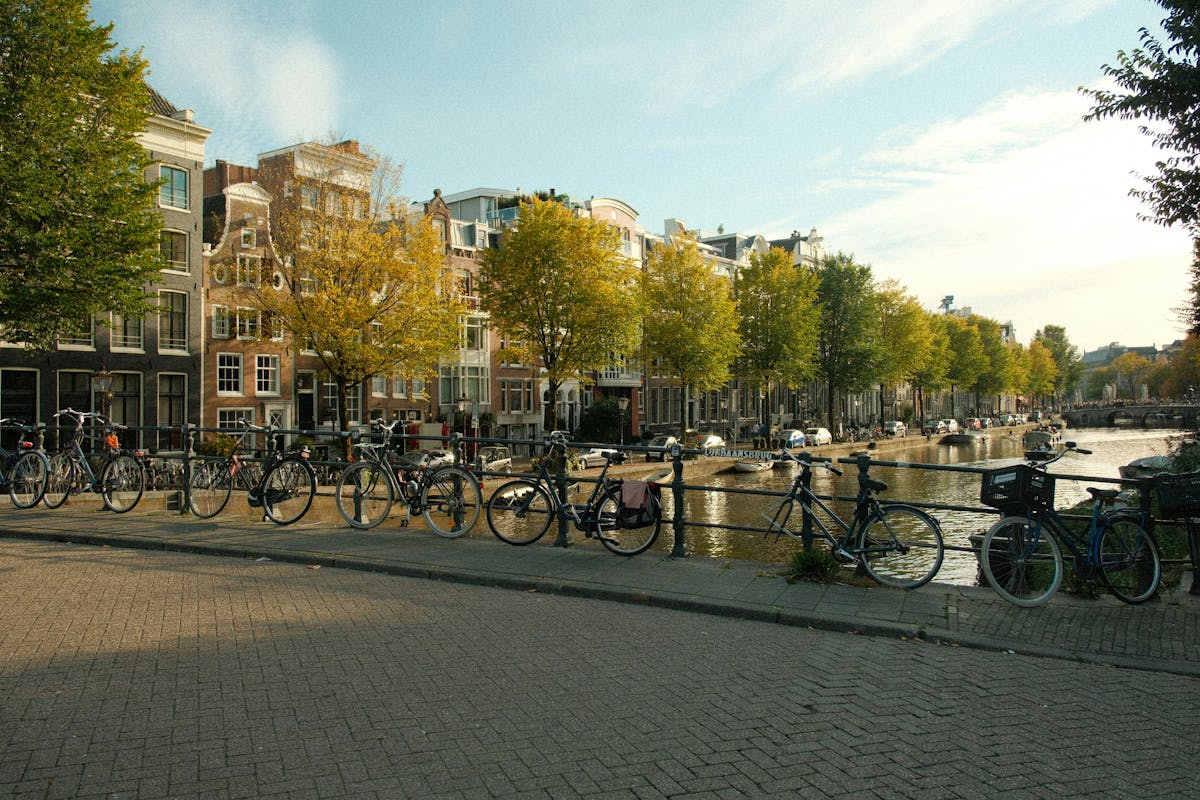
Body Worlds takes about 90 minutes and sits in the dead center of Amsterdam’s tourist core. That makes it easy to stack with other things. A canal cruise is the obvious pairing — you can book the combo ticket or just walk to one of the boat launches on Damrak after you finish. If you’ve got a full day, a walking tour covers the historic center that surrounds Body Worlds, or you could head to the food tour circuit around the Jordaan neighborhood, which starts about a 15-minute walk west of Damrak.
For something completely different the next day, the windmills at Zaanse Schans are a popular half-day trip from Centraal Station, and if you’re visiting in spring, Keukenhof is one of those places that genuinely lives up to the hype. The hop-on hop-off bus is another option if you want to cover a lot of ground without planning every stop, and a bike tour gives you the real Amsterdam experience beyond the tourist core.

Body Worlds won’t be for everyone. Some people walk in and walk right back out. But for the rest of us — the ones who are curious about what’s going on inside the machine we walk around in every day — it’s one of the most unexpectedly gripping things you can do in Amsterdam. I went in thinking I’d spend thirty minutes. I stayed for nearly two hours and left thinking about my posture, my lungs, and whether I should start stretching more. Not many museums do that.
This article contains affiliate links. If you book through our links, we earn a small commission at no extra cost to you. This helps us keep producing free travel guides.
Body Worlds sits on Damrak, right between Centraal Station and Dam Square, which makes it easy to pair with nearly anything else in the city center. The Anne Frank House is a fifteen-minute walk through the canal ring, and the Moco Museum on Museumplein offers another version of the visually arresting and slightly provocative. The Rijksmuseum and Van Gogh Museum round out a museum-heavy day if you have the energy, and the Fabrique des Lumieres provides an immersive experience that sits somewhere between science and art — not unlike Body Worlds itself.