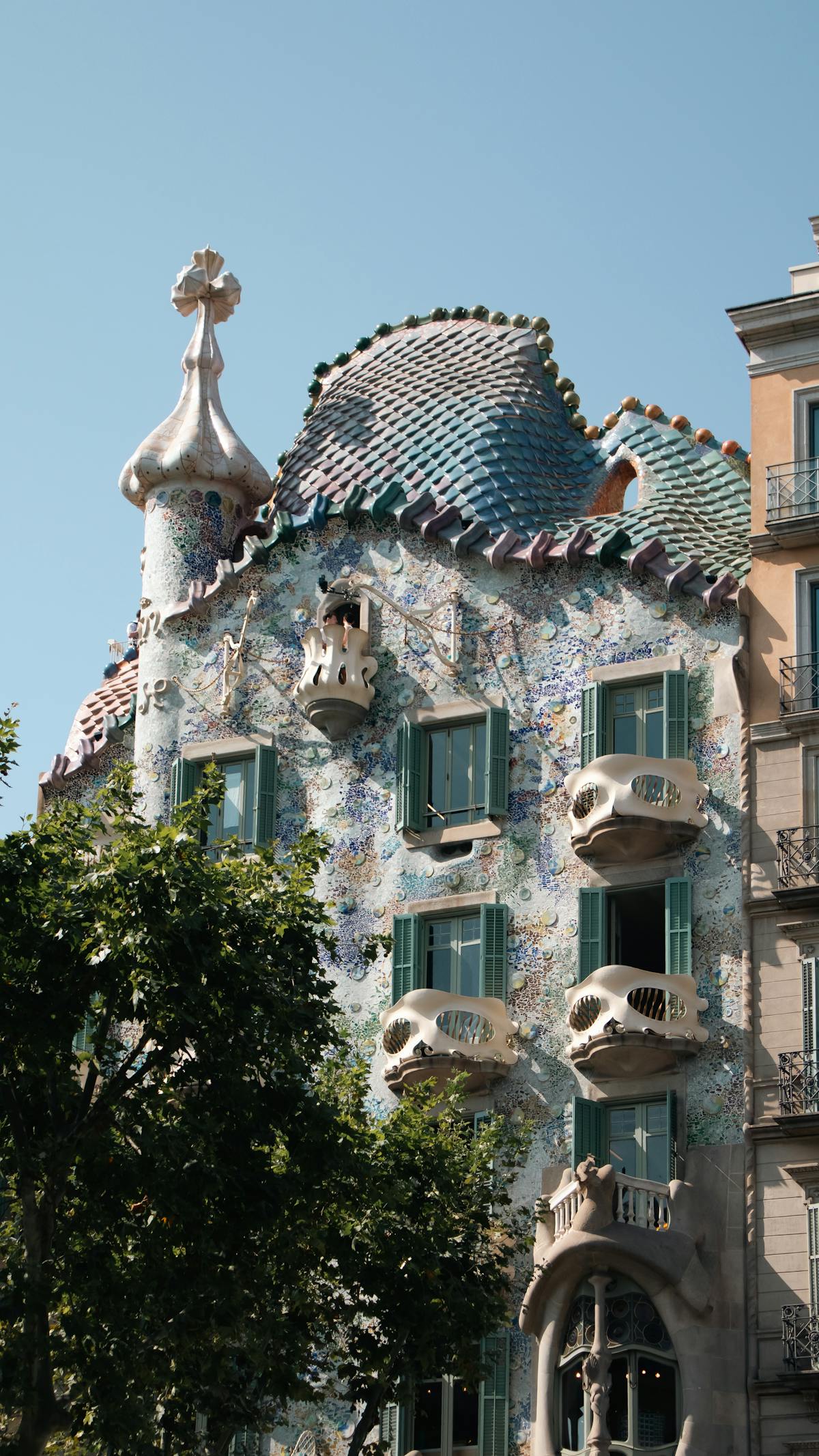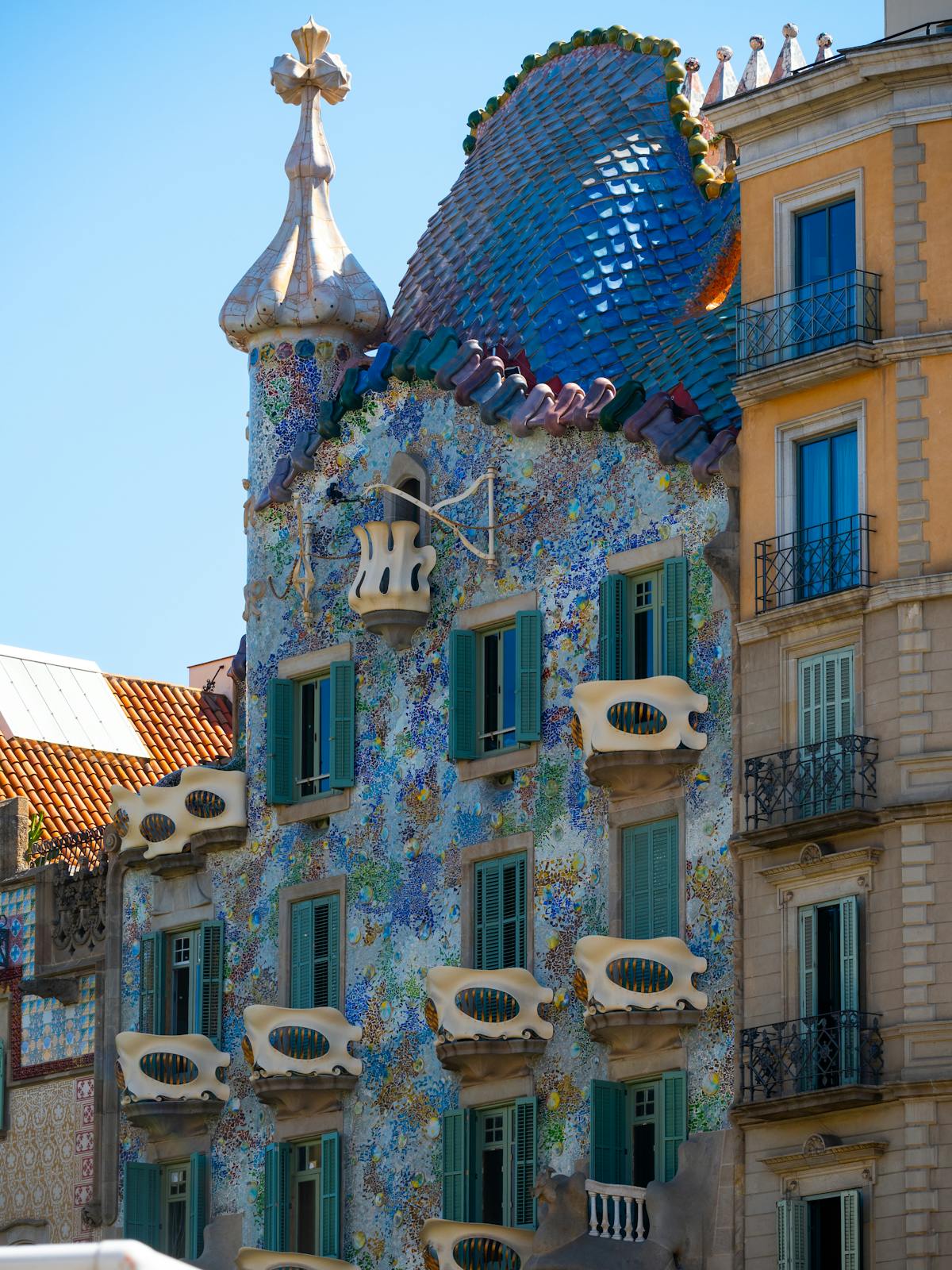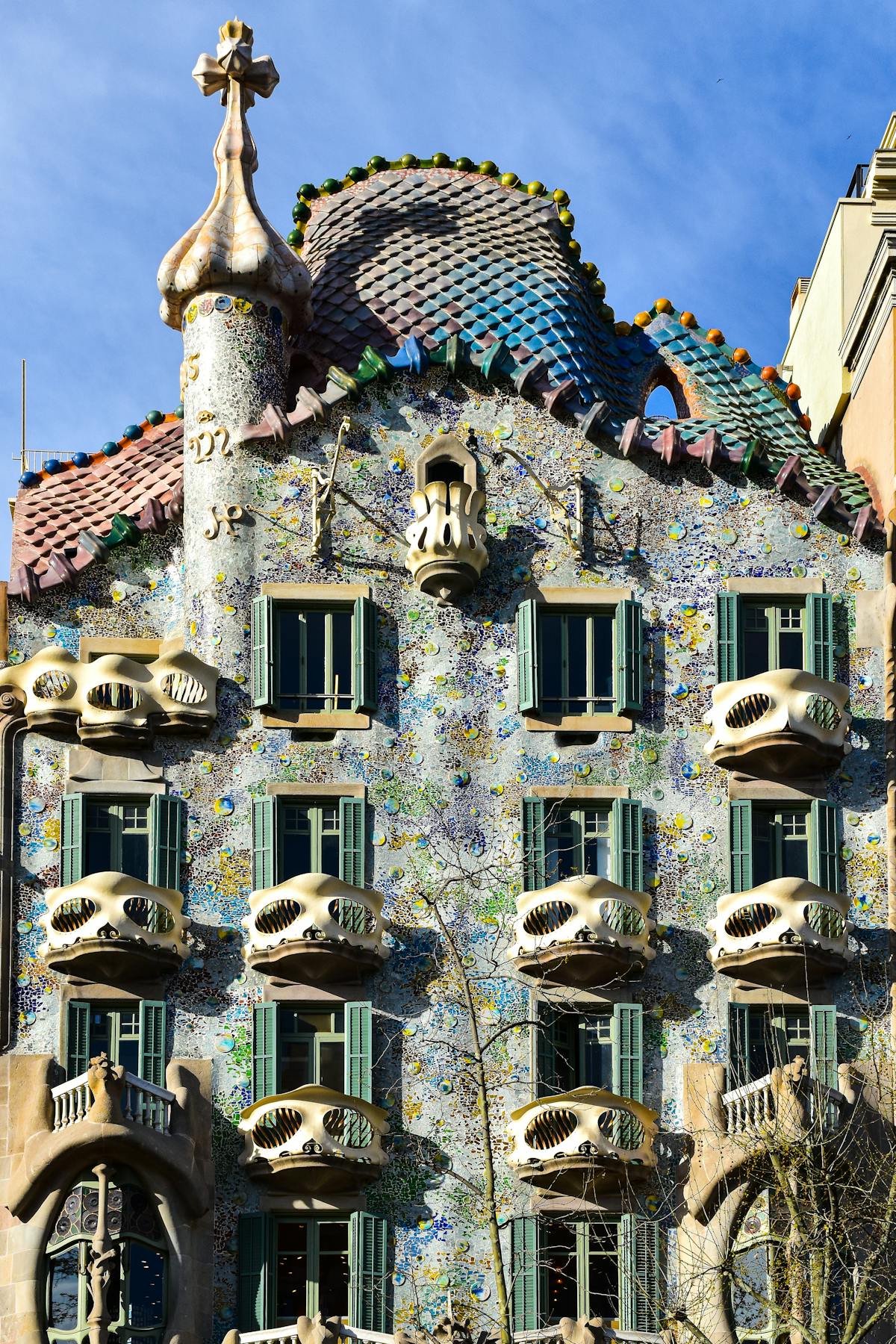
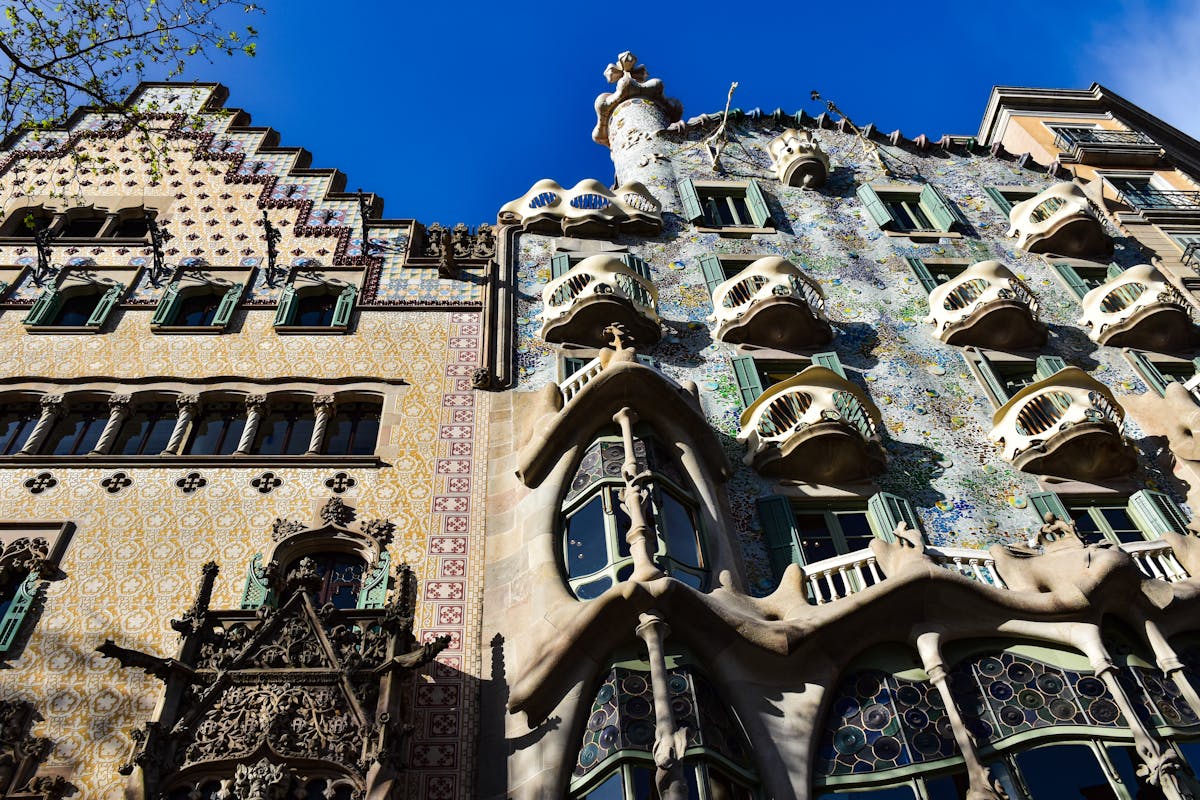
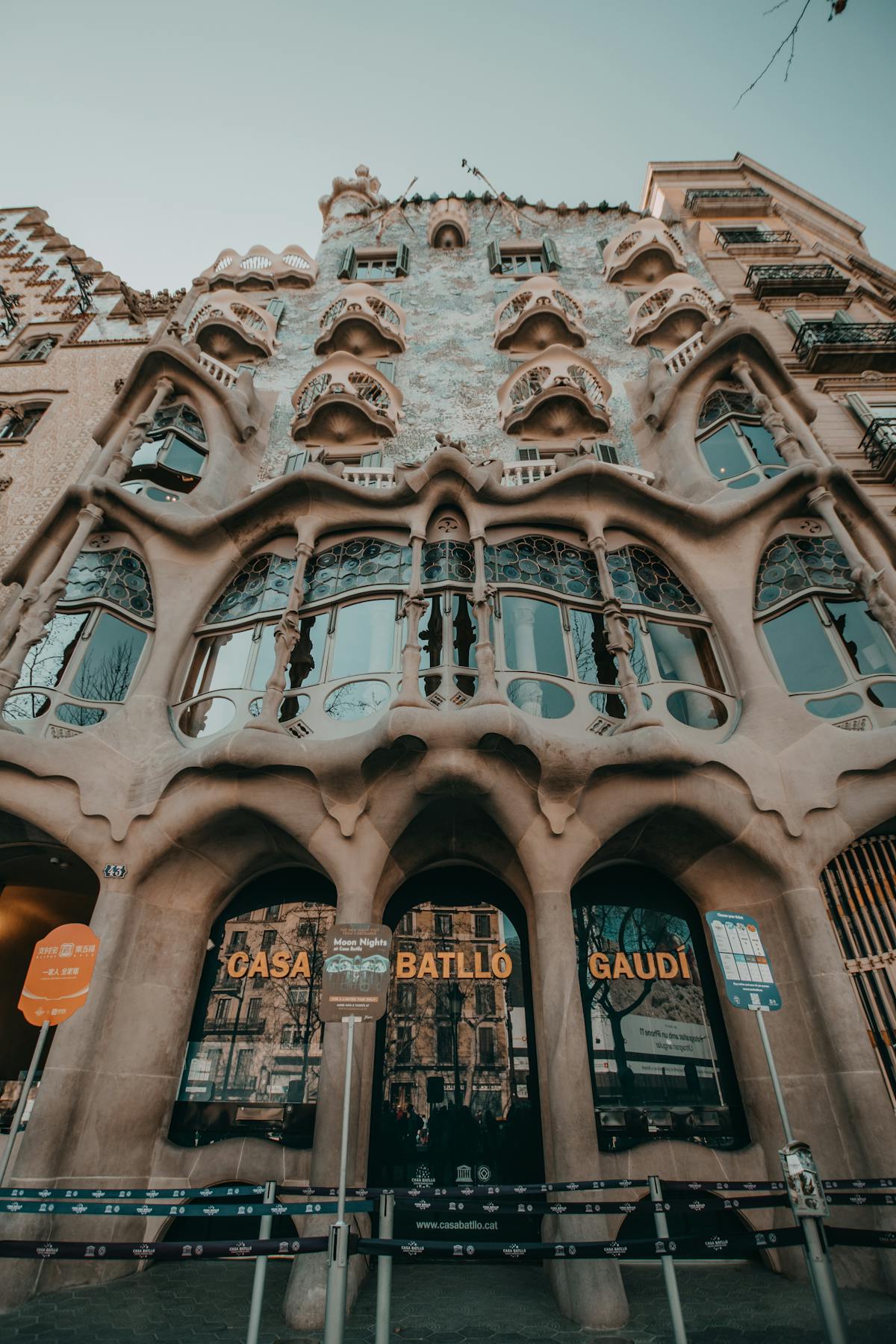
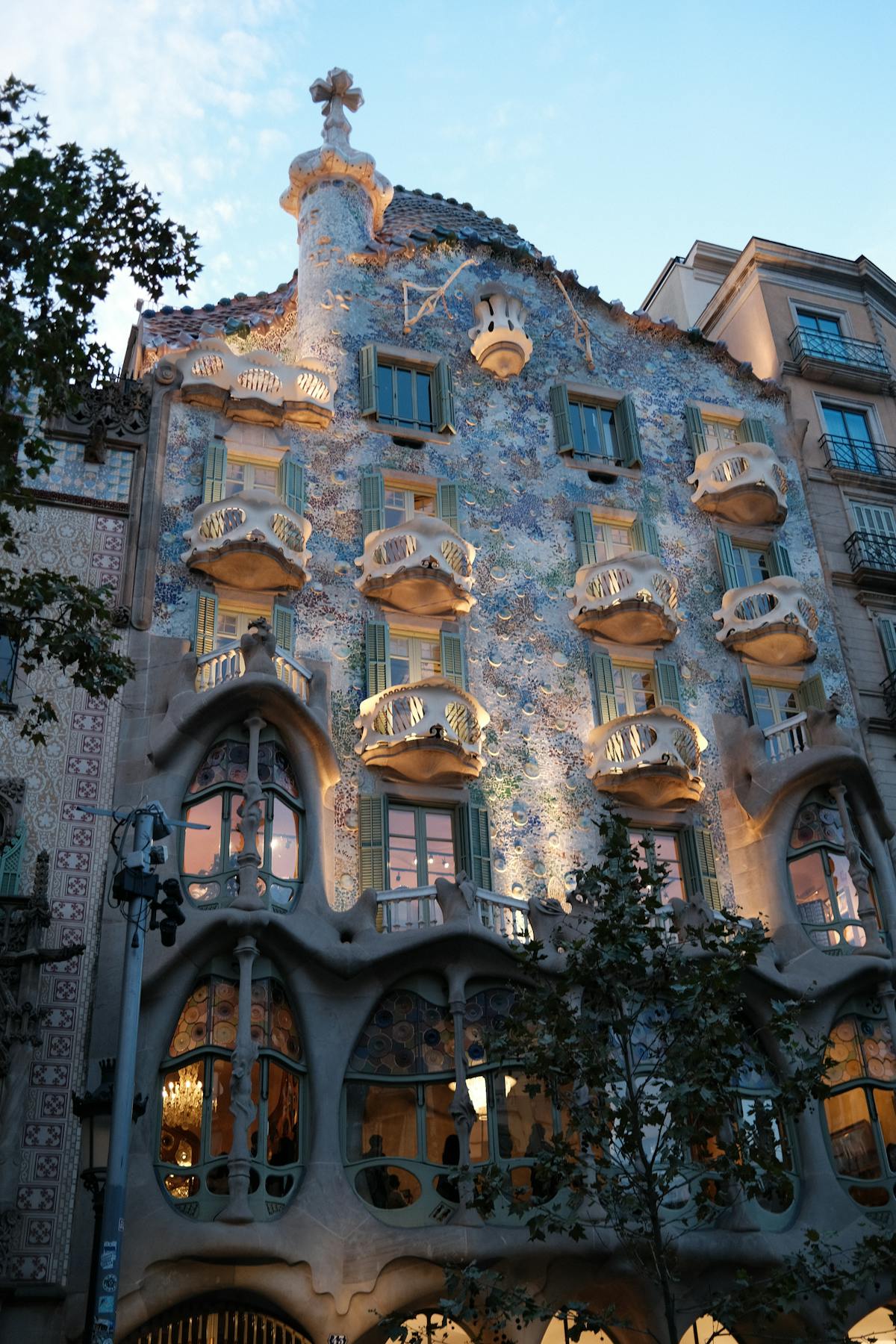
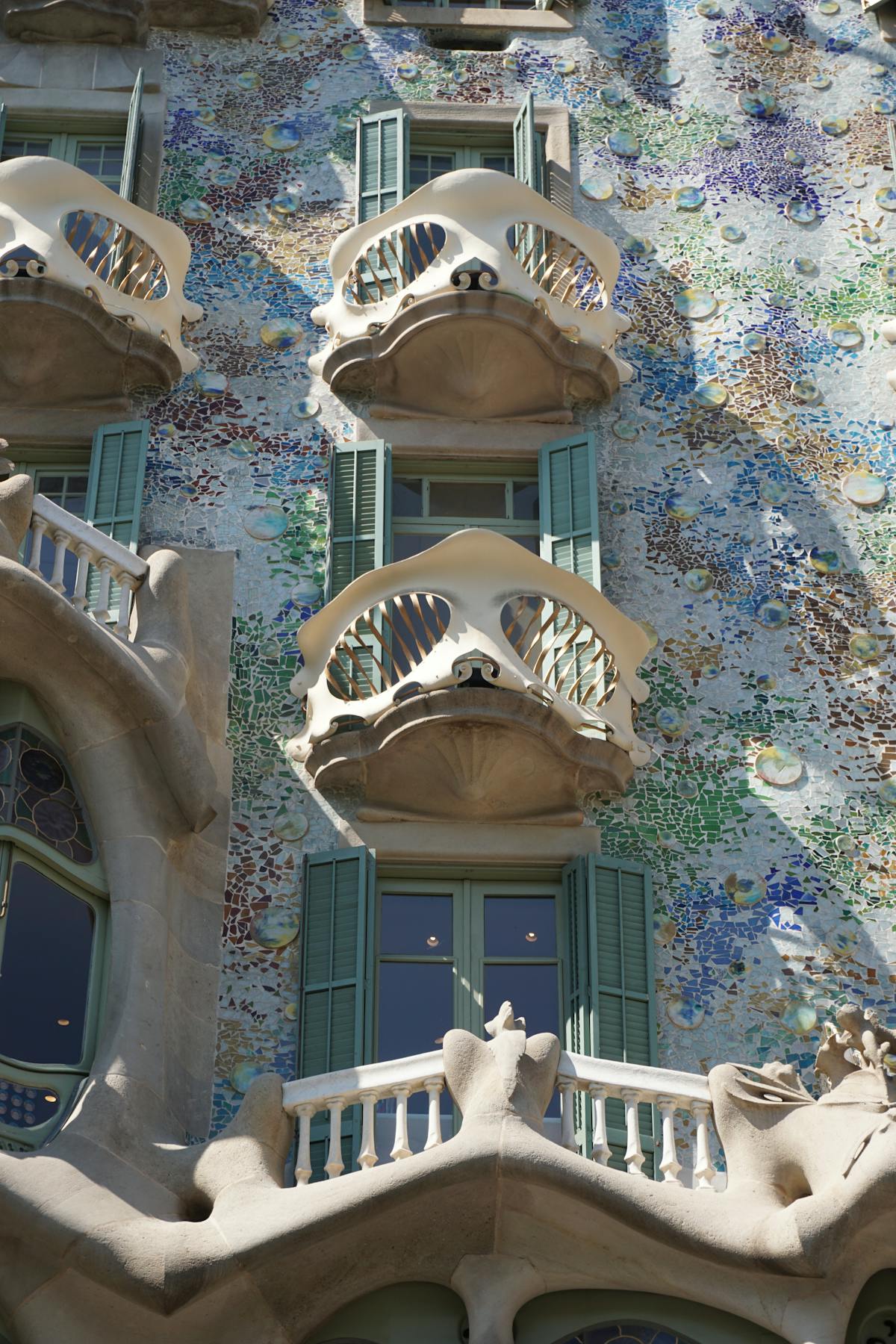
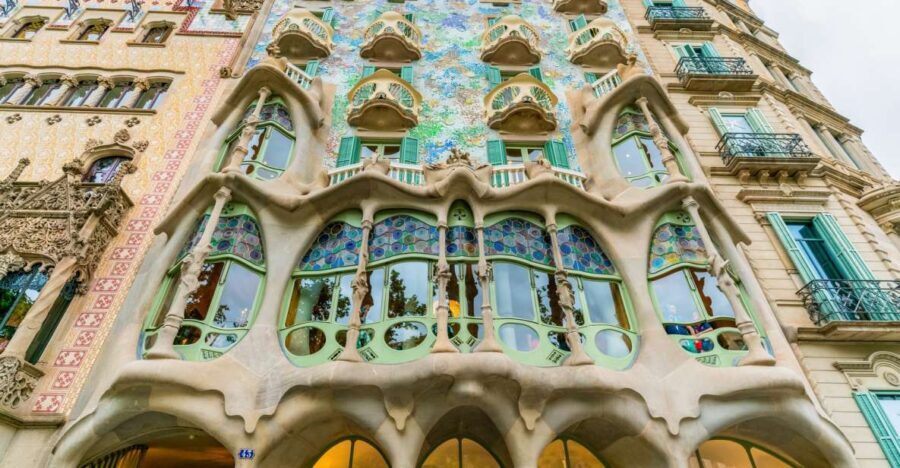
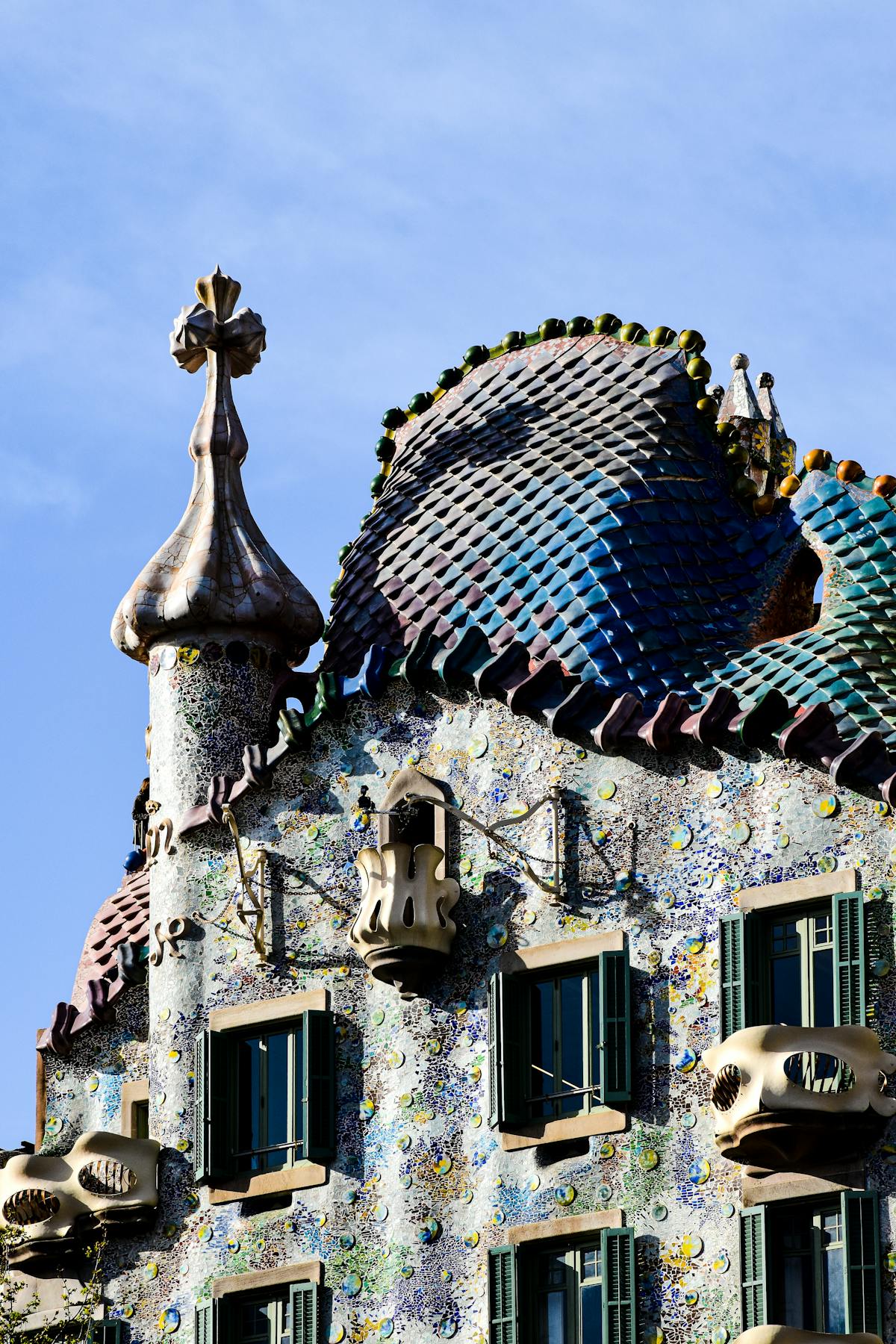
The first time I stood in front of Casa Batllo, a woman next to me said “it looks like the building is breathing.” She was right. The facade undulates. The tiles shift colour depending on where you stand and how the light hits them — blues, greens, golds, purples — like the scales of some enormous sleeping reptile draped across Passeig de Gracia. Nothing about this building sits still.
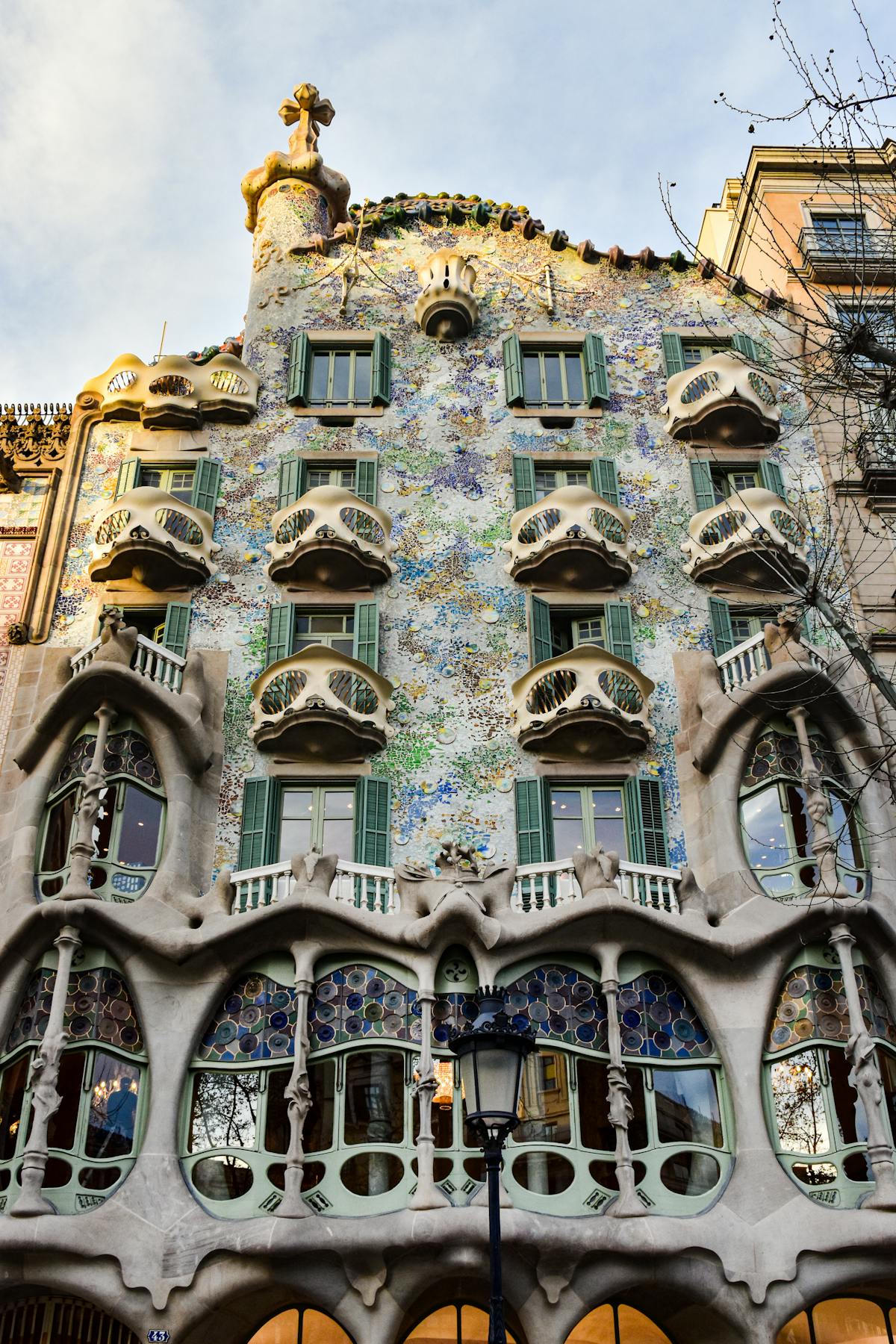
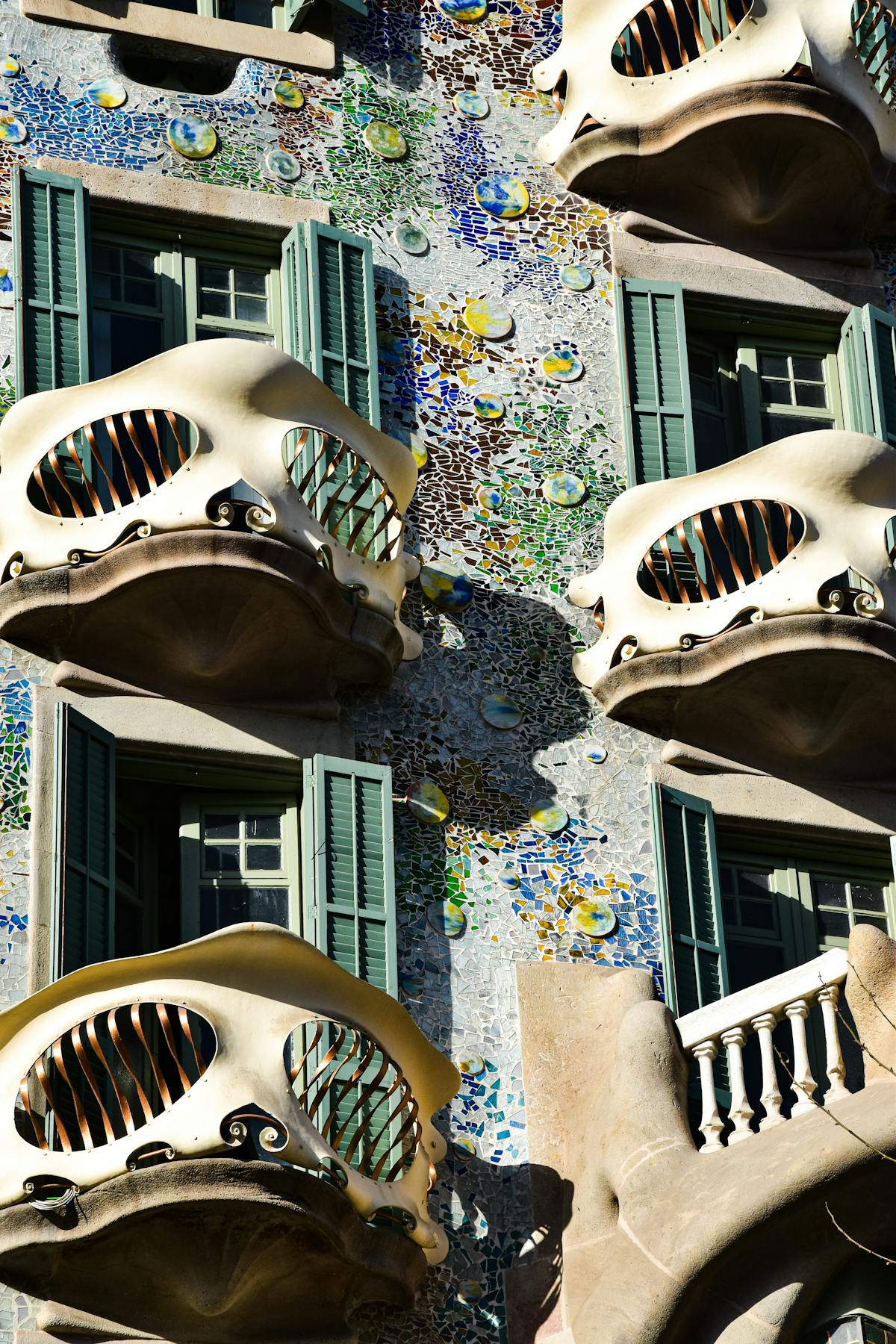
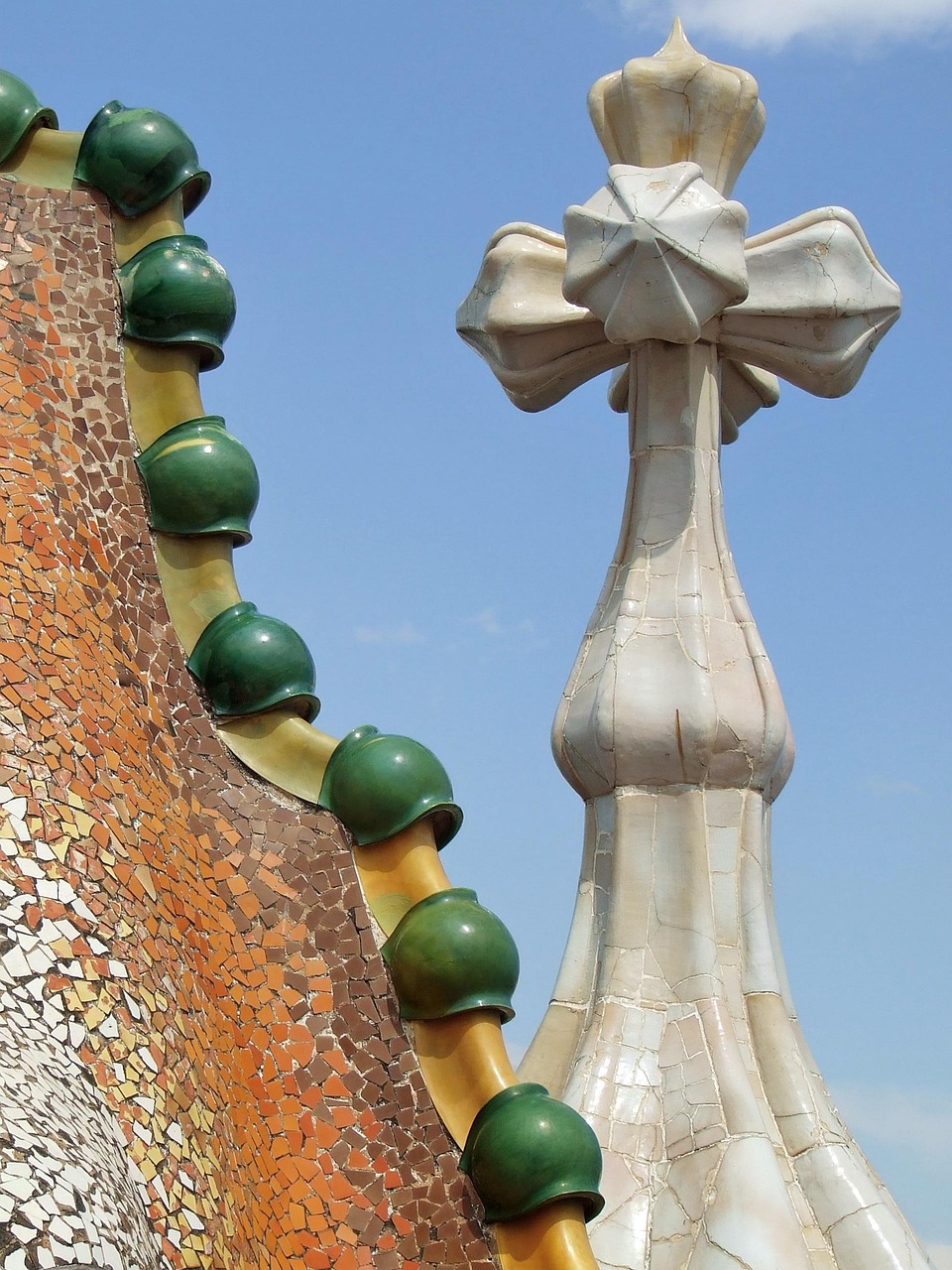
Antoni Gaudi redesigned this building in 1904 for the textile industrialist Josep Batllo, and he essentially took a conventional apartment block and turned it inside out. The ground floor columns look like leg bones. The balconies resemble masks or jawbones. The roof ridge is a dragon’s spine with ceramic scales, and the cross-topped tower beside it is the lance of Sant Jordi (Saint George, Catalonia’s patron saint) plunged through the beast’s back. The whole thing is a dragon-slaying story told in stone, glass, and tile.
But getting inside requires a ticket, and there are more options than you might expect. Casa Batllo runs three ticket tiers, offers augmented reality experiences, and sells out fast during peak months. I have gone through every option and broken down what is actually worth your money.
If You’re in a Hurry: My Top 3 Picks
- Best value entry: Casa Batllo Entry with Self-Audioguide Tour — $34 per person. Standard timed entry with the augmented reality guide included. Covers the full building at your own pace. Book this ticket
- Best for early birds: Casa Batllo Be The First Entry Ticket — $53 per person. You enter before the general public and get the building nearly to yourself. Worth every extra dollar. Book this ticket
- Best combo deal: Complete Gaudi Tour: Casa Batllo, Park Guell and Sagrada Familia — $162 per person. All three major Gaudi sites in one guided day. Saves you the headache of booking each separately. Book this tour
- If You’re in a Hurry: My Top 3 Picks
- How Casa Batllo Tickets Work
- Standard Visit vs Be The First vs Night Experience
- Best Casa Batllo Tours and Tickets
- 1. Casa Batllo Entry with Self-Audioguide Tour —
- 2. Casa Batllo Be The First Entry Ticket —
- 3. Complete Gaudi Tour: Casa Batllo, Park Guell and Sagrada Familia — 2
- 4. Casa Batllo Night Visit with Welcome Drink — evening experience
- When to Visit Casa Batllo
- Tips for Your Visit
- What You Will See Inside
- More Barcelona Guides
How Casa Batllo Tickets Work
Casa Batllo sells timed-entry tickets in three tiers. Every ticket includes access to the full building and the augmented reality (AR) smart guide that runs on a device they hand you at the entrance. There is no “basic entry without tech” option — the AR guide is baked into the experience.
Blue (standard entry): Around 35 EUR. This is the base ticket. You pick a time slot, show up, and follow the AR guide through six rooms plus the rooftop. The AR overlays animated visuals onto the actual rooms — the Noble Floor’s fireplace comes alive with flames, the light well fills with underwater creatures, the roof sprouts a full dragon. It sounds gimmicky but it is genuinely well done. The technology does not replace the architecture; it reveals what Gaudi was thinking when he designed each space. Total visit time: about 60-90 minutes depending on how long you linger.
Silver (priority entry): Around 43 EUR. Same visit as Blue but you skip the general queue and enter through a priority lane. On busy days — any morning in summer, weekends year-round — the standard queue can be 20-40 minutes even with a timed ticket. Silver eliminates that. You also get a brief welcome experience with a glass of cava in a dedicated lounge before you enter the building. If you are visiting between May and September, Silver is worth the extra eight euros just for the queue skip.
Gold (exclusive experience): Around 49 EUR. Everything in Silver plus access to a private area, a more detailed AR experience, and some extras that rotate seasonally. The Gold ticket also includes a theatrical lighting sequence in the main salon that the other tiers do not see. Whether the premium is worth it depends on how much you care about having the fullest possible experience versus saving money for lunch on La Rambla.
Standard Visit vs Be The First vs Night Experience
This is where most visitors get tripped up, because Casa Batllo sells multiple experience types on top of the three ticket tiers. Here is the breakdown.
Standard daytime visit is what 80% of visitors do. You arrive at your time slot, collect the AR device, and explore the building from the main floor up through the attic and onto the rooftop. The whole route is self-paced. Good for anyone who wants flexibility and does not mind sharing the building with other visitors.
Be The First lets you enter before regular opening hours. You walk through Casa Batllo with a tiny fraction of the usual crowd. The Noble Floor — the main living space with the huge windows facing Passeig de Gracia — is a completely different experience when you can stand in it without thirty other people jostling for the same photo angle. If you are a photographer or just someone who values breathing room, this is the ticket. At $53, it costs more than standard entry, but the difference in experience quality is significant.
The night visit transforms Casa Batllo into something different entirely. The building is lit with atmospheric projections, live music plays from the rooftop terrace on certain dates, and you get a welcome drink. It runs after regular hours and draws a smaller, more relaxed crowd. The night experience leans into mood and spectacle over architecture — you are not going to learn much about Gaudi’s structural methods in the dark. But as a Barcelona evening experience, it is memorable. Just know that photo quality suffers in low light, and the rooftop terrace music is seasonal.
Best Casa Batllo Tours and Tickets
1. Casa Batllo Entry with Self-Audioguide Tour — $34
Duration: Visit at your pace (allow 60-90 min) | Price: $34 per person | Type: Self-guided entry with AR
This is the core Casa Batllo experience. You get timed skip-the-line entry and the augmented reality smart guide — a handheld device that overlays animations and narration onto each room as you walk through.
The AR guide is the highlight. Point it at the fireplace in the Noble Floor and you see the flames Gaudi intended. Point it at the light well (the central atrium with graduated blue tiles) and it fills with sea life swimming upward. On the rooftop, the dragon’s spine comes alive. Casa Batllo invested heavily in this technology and it shows — this is not a cheap gimmick layered onto a museum visit. The animations are based on Gaudi’s original design notes and they genuinely help you understand why every surface curves, why every tile is placed where it is.
The self-paced format means you can spend twenty minutes studying the mushroom-shaped fireplace nook on the Noble Floor or breeze past it. The building is not huge — six main areas plus the rooftop — so even at a leisurely pace, you will be done in about 90 minutes.
At $34, this is excellent value for a world-class architectural experience. The only downside is that during peak hours, the rooms get crowded and the AR device loses some of its magic when you are bumping elbows with other visitors.
2. Casa Batllo Be The First Entry Ticket — $53
Duration: Visit at your pace | Price: $53 per person | Type: Early access entry with AR
Be The First gets you inside Casa Batllo before general opening. You enter with a small group while the building is nearly empty, which transforms the whole experience.
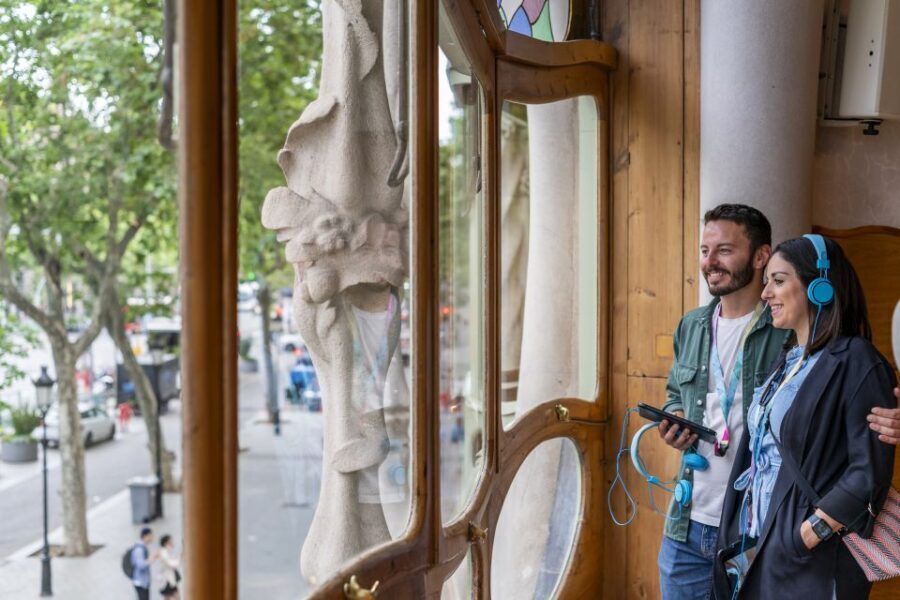
The Noble Floor is where this ticket really pays off. That main salon — the one with the undulating ceiling and the enormous stained glass windows facing Passeig de Gracia — is one of the most photographed rooms in Barcelona. During normal hours, you share it with dozens of people all trying to get the same shot. With Be The First, you might have it to yourself for a few minutes. Morning light streams through the coloured glass and paints the floor in shifting patterns. Without a crowd blocking the view, you can actually see how Gaudi designed the room to flow: the ceiling ripples like water, the walls curve into the windows, and the whole space feels like the inside of a wave.
You still get the full AR smart guide and access to every room including the rooftop. The experience is identical to the standard ticket in every way except crowd size. At $53, it is $19 more than standard entry. For a building this popular in a city this visited, that premium for space and quiet is a bargain.
The catch: you have to be there early. If you are not a morning person or your hotel is far from Eixample, factor in the wake-up call. But honestly, standing in that salon with the light coming in and nobody else around is one of those Barcelona moments you remember.
3. Complete Gaudi Tour: Casa Batllo, Park Guell and Sagrada Familia — $162
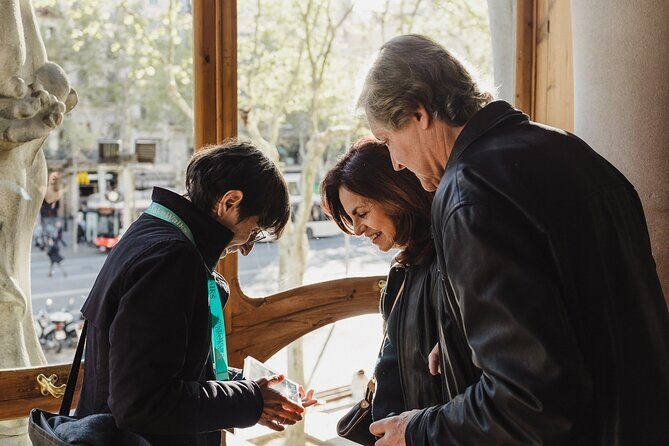
Duration: 5.5 hours | Price: $162 per person | Type: Full-day guided combo
If you want to see Gaudi’s three masterpieces without juggling three separate bookings, three queues, and three sets of directions, this tour handles all of it. You visit Casa Batllo, Park Guell, and Sagrada Familia in one half-day with a guide who weaves the three sites into a single story about Gaudi’s career.
What makes the combo format work is context. At Casa Batllo, the guide explains how Gaudi used nature as his structural blueprint — the bones, the dragon, the ocean references. At Park Guell, you see how those same organic ideas play out in a public space: the serpentine bench, the gingerbread gatehouses, the hypostyle hall with its leaning columns. And at Sagrada Familia, everything converges — the natural forms, the structural innovations, the spiritual ambition — into the building Gaudi considered his life’s purpose. Seeing all three in sequence, with a guide connecting the threads, creates an understanding you would not get visiting them separately over different days.
The trade-off is time. Five and a half hours is a lot, and you spend less time at each individual site than you would on a dedicated visit. If Casa Batllo is your main interest, the standard entry ticket gives you more room to explore. But if you are in Barcelona for a short trip and want the full Gaudi story in one go, this is the efficient choice. Skip-the-line entry at all three sites is included, which alone saves you significant queuing time in peak season.
4. Casa Batllo Night Visit with Welcome Drink — evening experience
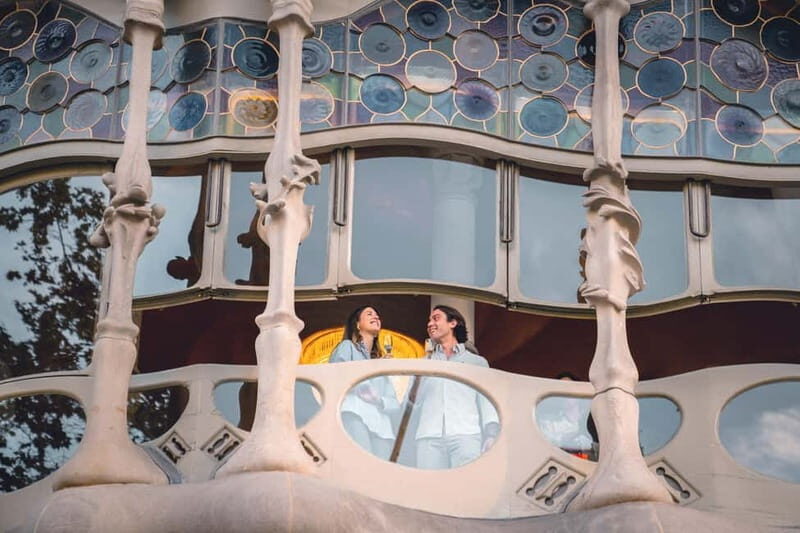
Type: Evening experience with drink | Schedule: Select evenings (check availability)
The night visit strips away the educational layer and replaces it with atmosphere. Casa Batllo after dark is moody, theatrical, and a bit otherworldly. The rooms are lit with coloured projections that emphasise the organic shapes — the ceiling ripples look like actual waves, the light well glows like a deep-sea cavern, and the rooftop dragon spine is backlit against the Barcelona skyline.
You get a welcome drink (usually cava or a cocktail, depending on the season) and access to the rooftop terrace, where on certain dates there is live music. The terrace at night, with views across the Eixample rooftops and a drink in hand, is one of the more atmospheric spots in the city. It is not a club or a party — the vibe is relaxed and a bit magical.
The honest downside: you see less of the actual architecture. The dramatic lighting is beautiful, but it obscures the details that make Casa Batllo remarkable as a piece of design. The tile gradients in the light well, the precise curves of the window frames, the mushroom fireplace nook — these are all harder to appreciate in the dark. If this is your only visit to Casa Batllo, do the daytime experience. If you have already been during the day and want to come back for something different, or if you just want a unique Barcelona evening that is not another tapas bar, the night visit delivers.
When to Visit Casa Batllo
Best months: October through March. The crowds inside Casa Batllo thin dramatically once summer ends. The building is small — much smaller than Sagrada Familia or Park Guell — and when it is packed, the experience suffers. You are funnelled through rooms that were designed as intimate living spaces, and having forty people crammed into the Noble Floor salon diminishes the effect Gaudi intended.
Best time of day: first slot of the morning or late afternoon. The early morning slots have lighter crowds, and if you book Be The First, you will have even fewer people. Late afternoon (after 4 PM) also thins out as day-trippers head to dinner.
Summer (June-August) is the worst time for crowds. Tickets sell out a week or more in advance, the rooms are packed, and the air conditioning does not quite keep up with several hundred visitors cycling through a 19th-century building. If summer is your only option, book the earliest possible slot and spring for Silver or Be The First.
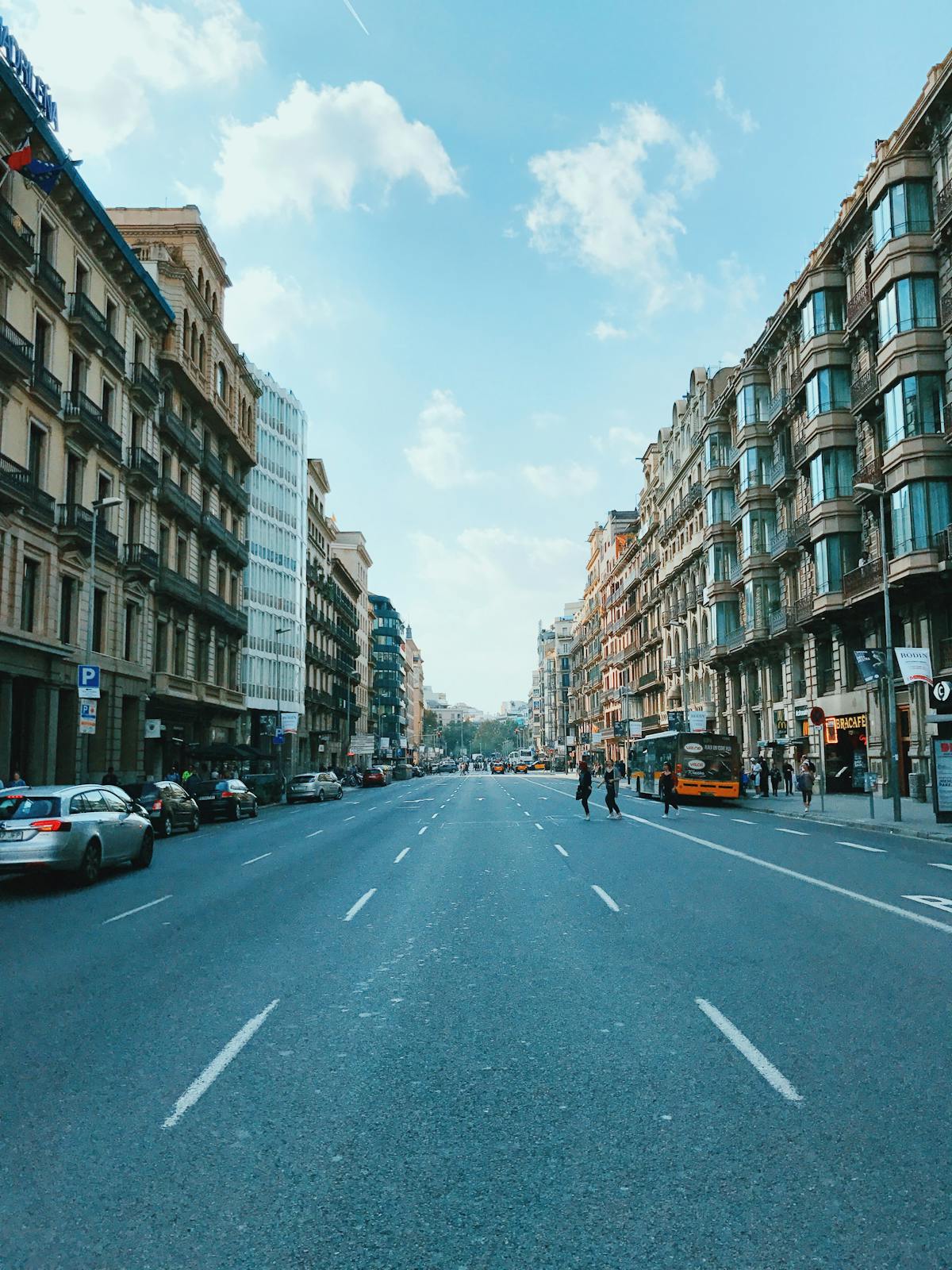
Spring and autumn are ideal. The weather is perfect for walking Passeig de Gracia before and after your visit, the crowds are manageable, and ticket availability is better. April-May and September-October hit the sweet spot.
Winter is the insider season. Barcelona in December-February is mild (10-15 degrees Celsius), the tourist numbers drop, and you can often book tickets a day or two ahead. The building does not rely on natural light the way Sagrada Familia does, so you lose nothing by visiting on an overcast day — the interior is lit by design, not by weather.
Tips for Your Visit
Book at least a few days ahead. Casa Batllo is smaller than Barcelona’s other big attractions, which means fewer tickets per time slot. Morning slots and weekends sell out first. Booking a week ahead in shoulder season and two weeks ahead in summer gives you the best selection.
Allow 60-90 minutes. The building is not large, but the AR experience adds time at each stop. Rushing through in 30 minutes means you miss most of what makes it special. The Noble Floor alone deserves 15-20 minutes — there are details in the ceiling, the fireplace, the windows, and the floor tiles that reward slow looking.
Charge your phone fully. The AR device they provide works well, but many visitors also use their phones for photos and video. The building is extraordinarily photogenic from every angle, and you will shoot more than you expect.
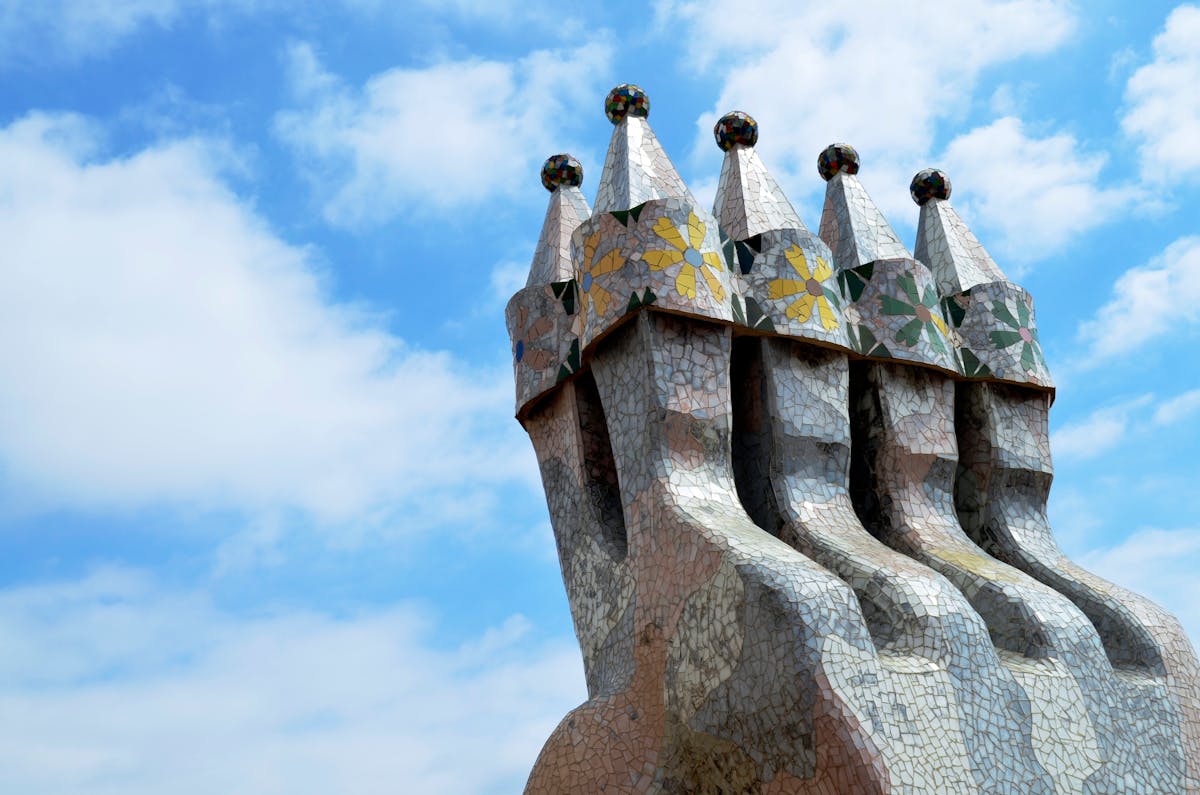
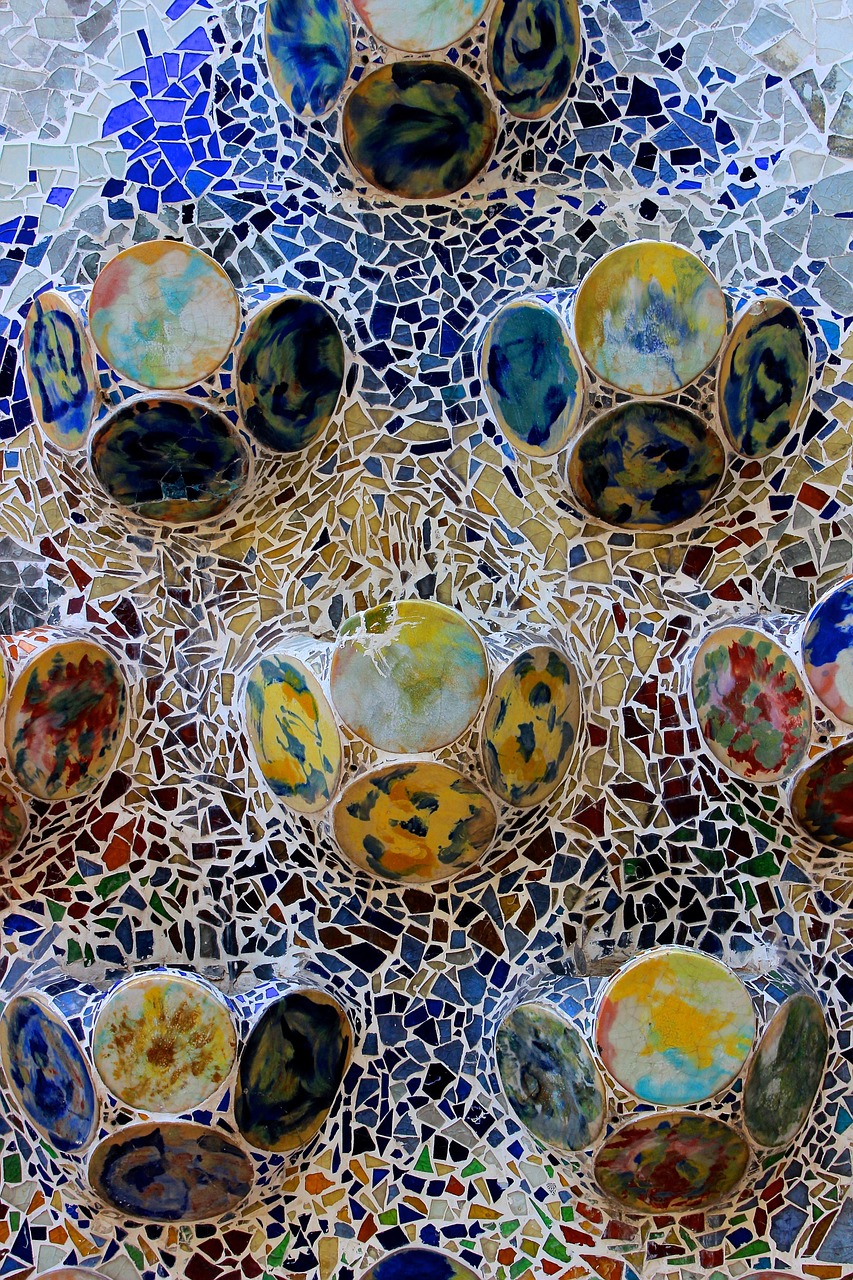
The rooftop is the grand finale — do not skip it. The route saves the dragon-spine rooftop for last, and some visitors are flagging by then. Push through. The chimneys covered in trencadis (broken tile mosaic), the arched dragon back lined with ceramic scales, and the views across the Eixample rooftops are the payoff. Spend at least ten minutes up there.
Combine with La Pedrera (Casa Mila). Gaudi’s other residential masterpiece is a ten-minute walk up Passeig de Gracia at number 92. Seeing both in one day gives you a fascinating comparison — Casa Batllo is more intimate and theatrical, while La Pedrera is larger and more structurally radical. Many visitors do Casa Batllo in the morning and La Pedrera in the afternoon.
The gift shop is expensive but has unique items. The ceramic tile reproductions and Gaudi-design homeware are not cheap, but they are better quality than the tourist tat on La Rambla. The trencadis-pattern items (coasters, small plates) make genuinely good gifts.
Accessibility note. Casa Batllo has a lift that covers most of the building, but some areas (the attic and parts of the rooftop) involve stairs. The building is a UNESCO World Heritage Site and modifications are limited. Check the official site for current accessibility options before booking.
What You Will See Inside
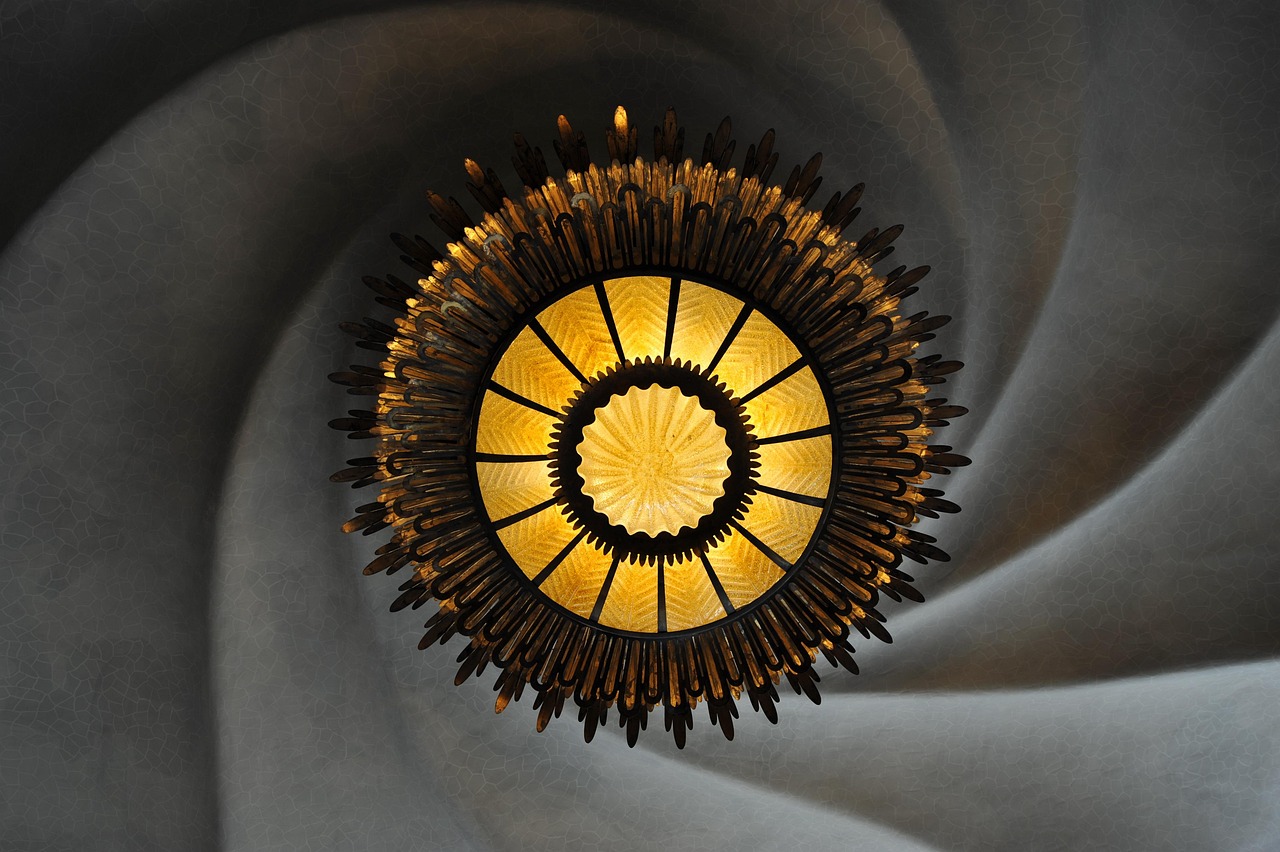
The Noble Floor (Planta Noble) is the main living space and the heart of the building. This is where the Batllo family actually lived, and every surface has been designed to serve both function and story. The ceiling spirals into a vortex. The fireplace nook is shaped like a mushroom cap, with built-in benches on either side where the family would sit together on cold evenings. The windows facing Passeig de Gracia are enormous, coloured in stained glass, and flanked by columns that let in light without structural interruption. Through the AR device, the room comes alive — but even without it, just standing there and looking up at that ceiling is enough.
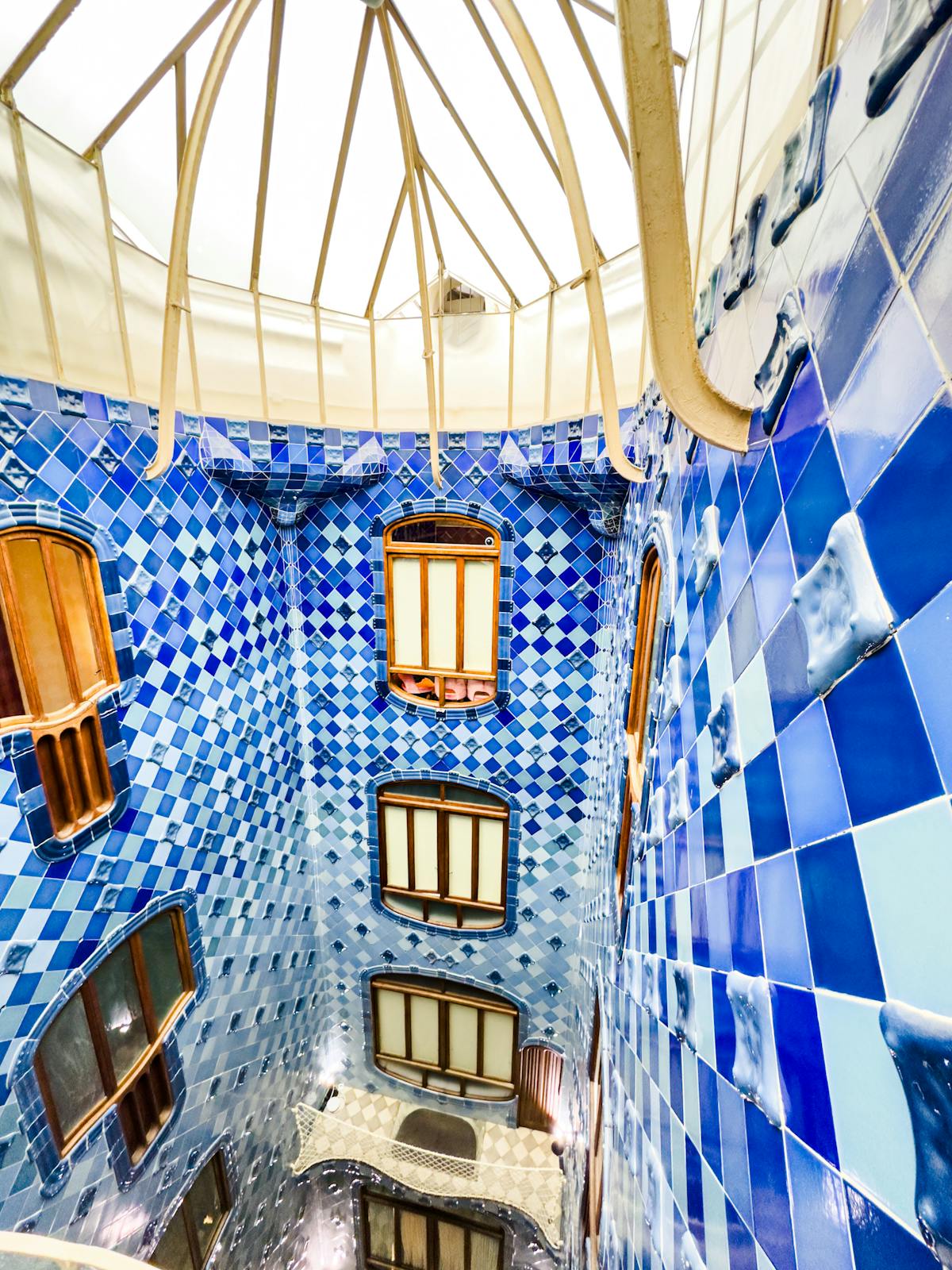
The Light Well is Gaudi’s most clever trick in this building. The central courtyard runs the full height of the structure, and Gaudi lined it with over 15,000 ceramic tiles that grade from deep cobalt blue at the top to pale white-blue at the bottom. The reason: light entering from the top is strongest, so the dark tiles absorb excess brightness. As it descends, the tiles get lighter, reflecting more of the diminishing light. The result is even, ocean-like illumination on every floor. The windows also increase in size as they go down, for the same reason. Functional engineering that happens to look like an underwater cavern.
The Attic sits directly under the dragon-spine roof and is one of the most structurally fascinating spaces in the building. A series of parabolic arches — sixty of them — create a ribcage-like tunnel that supports the roof above. The shape is not aesthetic; it is the mathematically optimal form for distributing the weight of the roof tiles. Gaudi figured this out by hanging chains upside down and studying the catenary curves they formed, the same technique he used at Sagrada Familia. The attic originally housed laundry rooms and storage. Now it feels like standing inside the belly of the dragon.
The Rooftop is where everything comes together. The dragon’s spine runs along the ridge, covered in iridescent ceramic tiles that shift between blue, green, and purple depending on the angle. The chimneys are covered in trencadis mosaic — each one unique, each one looking like it grew there. The four-armed cross of Sant Jordi stands at the highest point, the hero’s lance embedded in the beast. And from up there, you can see the full stretch of Passeig de Gracia below, with the Sagrada Familia towers visible in the distance.