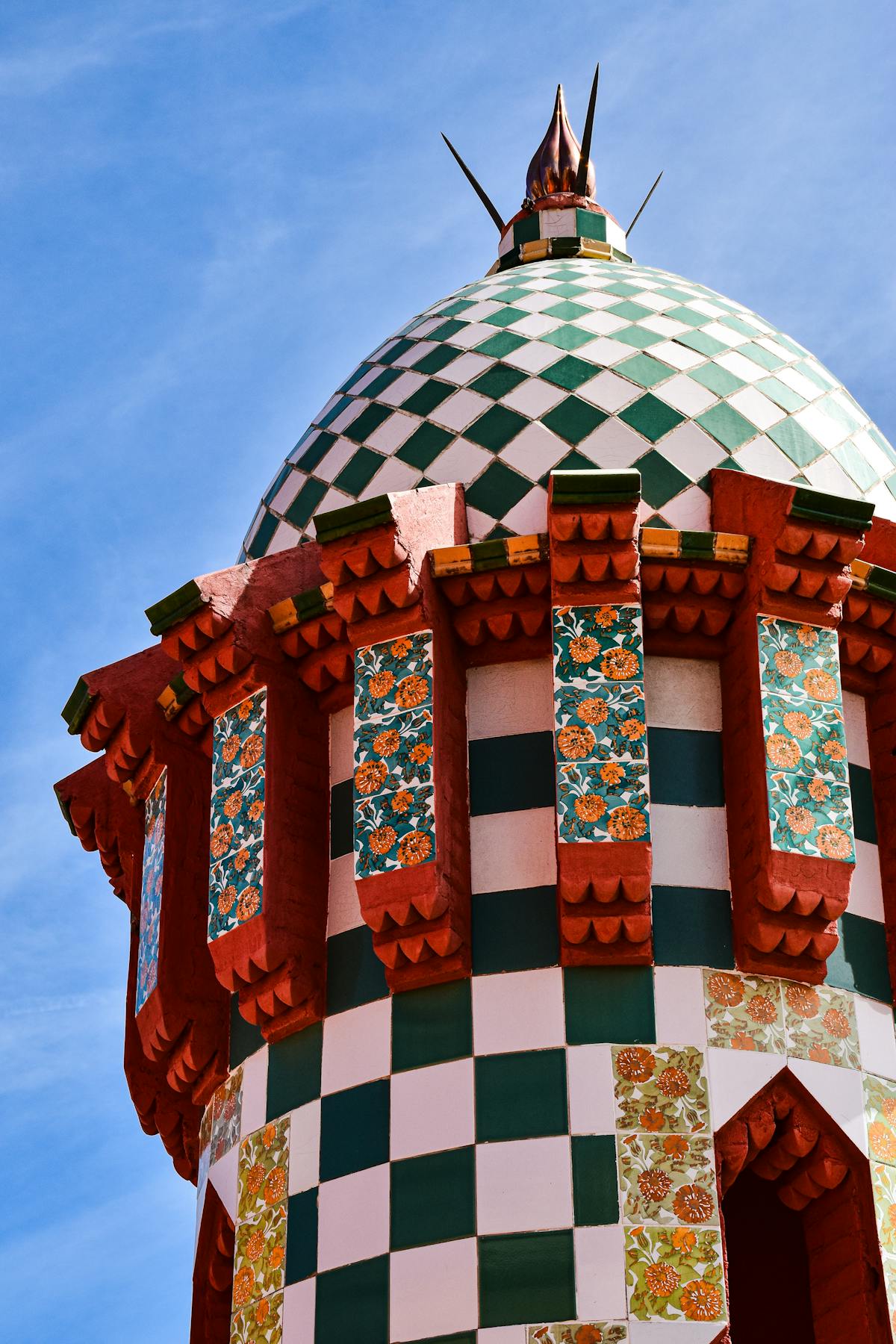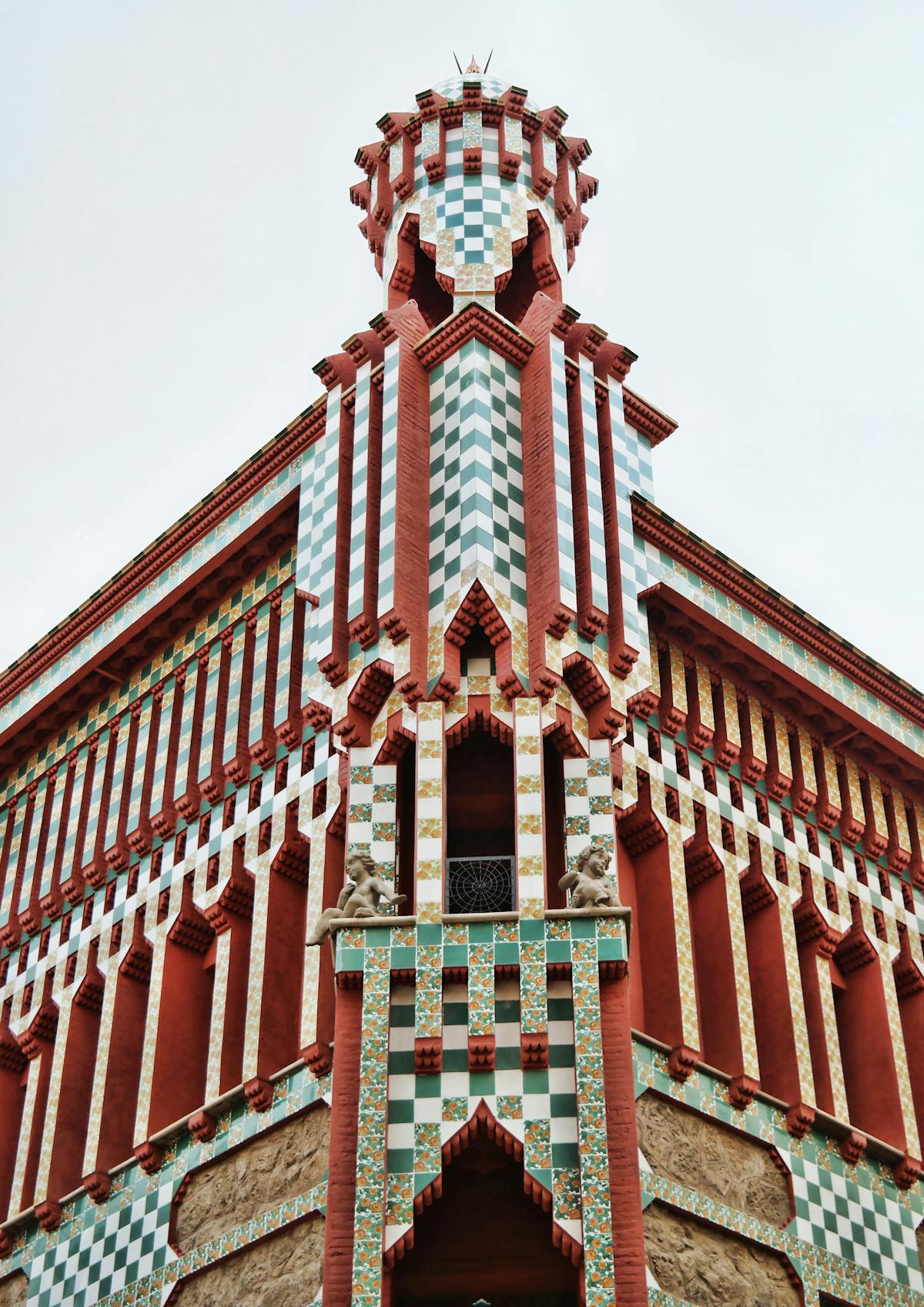
Everyone knows Sagrada Familia. Most visitors hit Casa Batllo and La Pedrera on Passeig de Gracia. But Casa Vicens — Gaudi’s actual first house, the project that launched everything — barely registers on most Barcelona itineraries. That is a mistake.
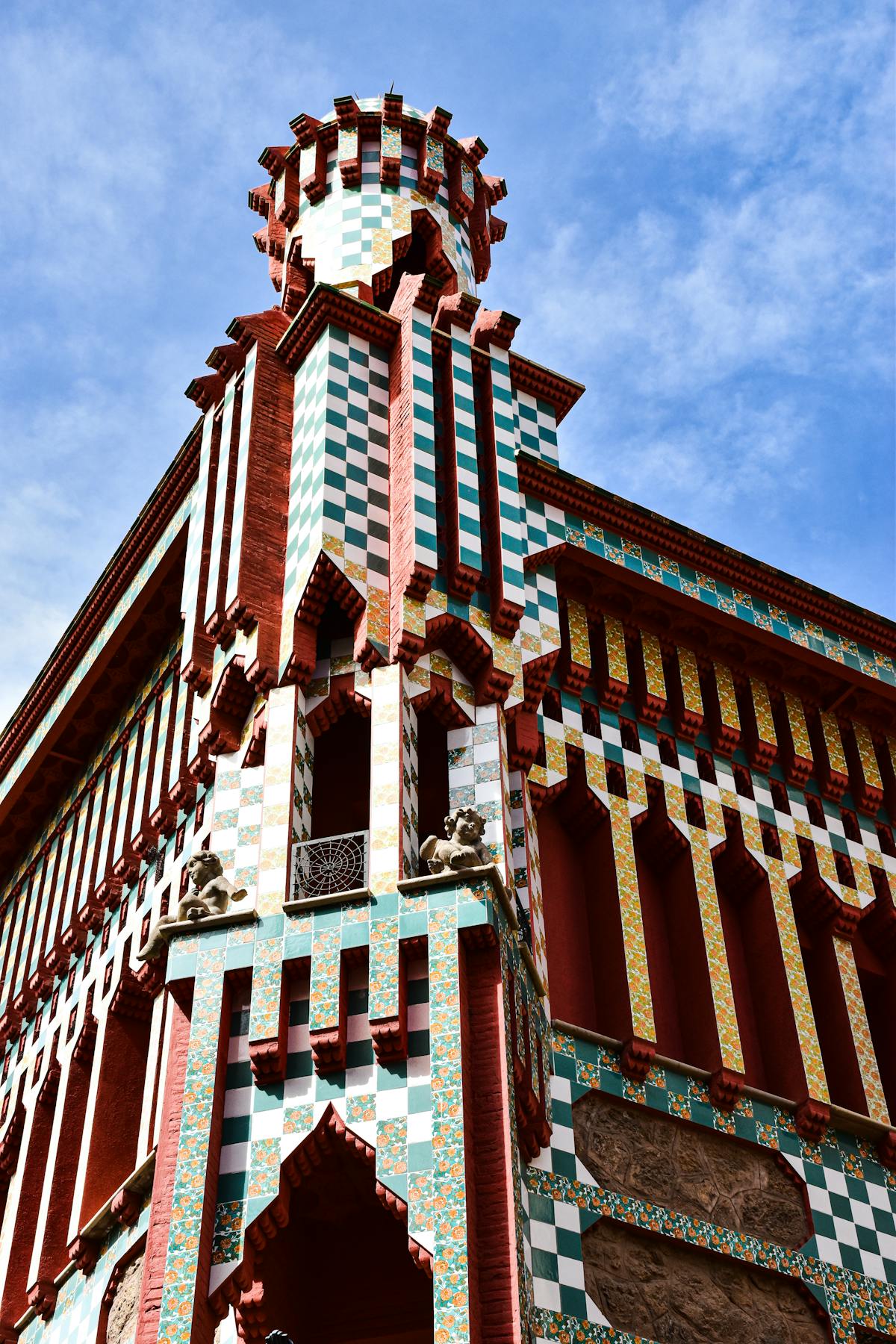
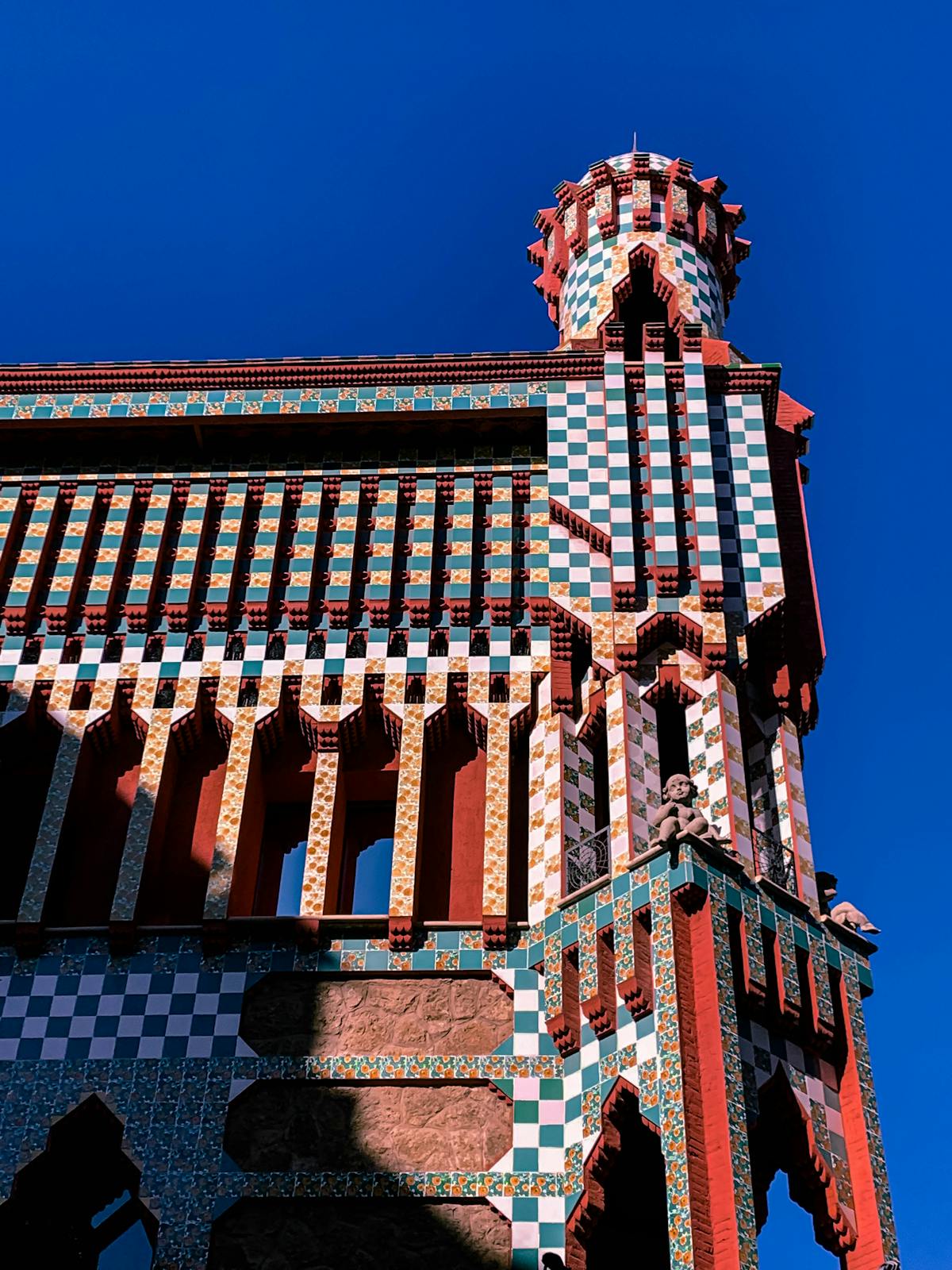
Manuel Vicens i Montaner, a stockbroker, commissioned a 31-year-old Gaudi in 1883 to build a summer house on Carrer de les Carolines. What Gaudi delivered was so different from anything Barcelona had seen that it effectively invented Catalan Modernisme. The house mixes Moorish, Oriental, and neo-Gothic influences into something that does not really belong to any of those categories — it is Gaudi figuring out, in real time, that he could break every rule and make it work. The building sat as a private residence for over a century and only opened to the public in 2017, making it the newest of Gaudi’s major sites to visit.
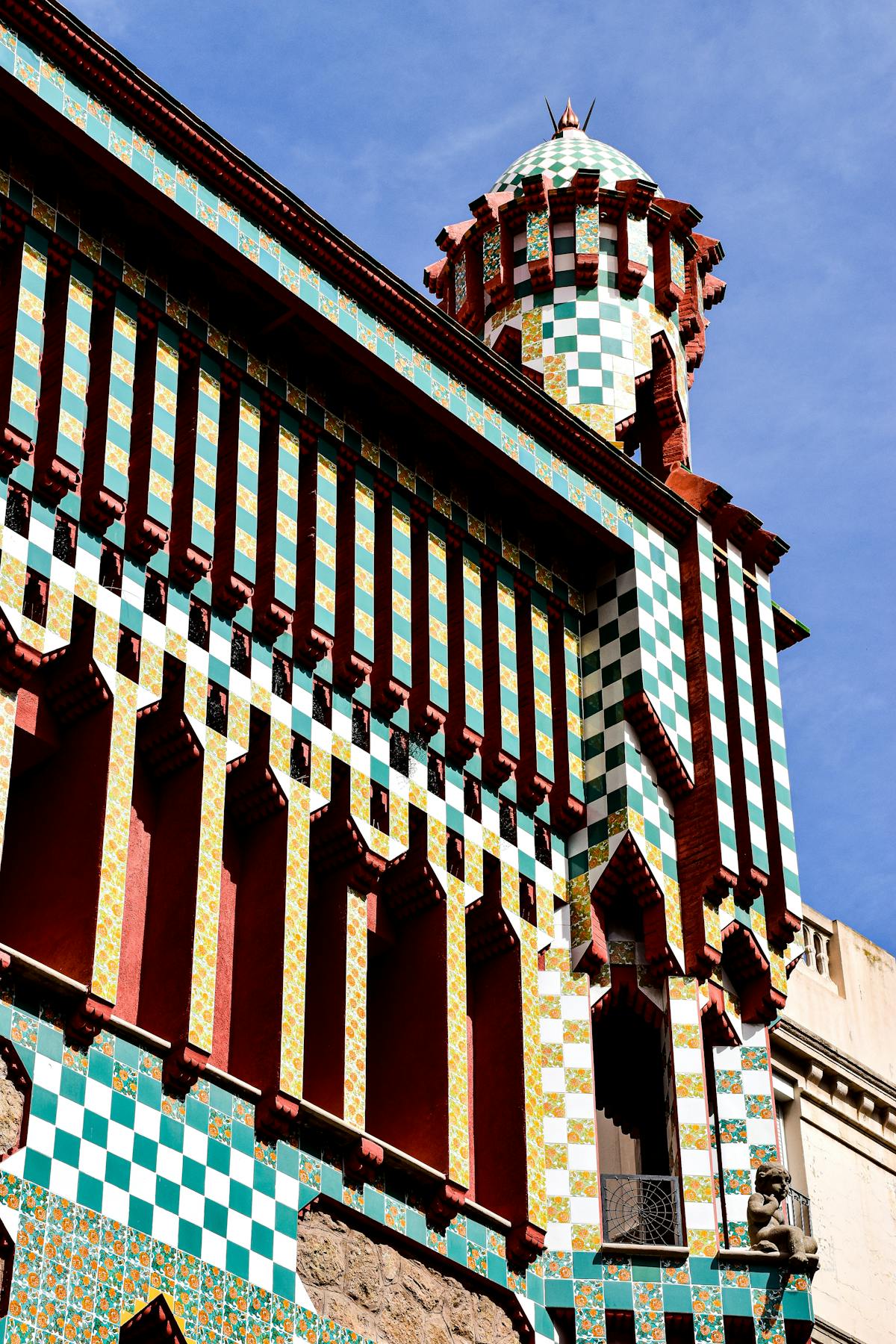
It is also the smallest and most intimate of his house museums. Where Casa Batllo and La Pedrera can feel like grand architectural statements designed to impress, Casa Vicens feels like walking through someone’s home — a wildly decorated, slightly eccentric someone, but a home nonetheless. You get about an hour inside and it never feels rushed.
But you do need a ticket, and there are a few different ways to see the place. Here is what actually works and what your money gets you.
If You’re in a Hurry: My Top 3 Picks
- Best for most visitors: Casa Vicens Skip-the-Line Entrance Ticket — $26 per person. Timed entry with skip-the-line access. You explore the full house at your own pace with an audioguide included. Book this ticket
- Best for context: Casa Vicens Guided Tour — $27 per person. A guide walks you through Gaudi’s design decisions room by room. Only a dollar more than standard entry and worth it for the backstory alone. Book this tour
- Best combo: Gaudi Houses Tour: Casa Vicens, Pedrera and Casa Batllo — $144 per person. All three residential Gaudi masterpieces in one guided half-day. Saves time and connects the dots between early and mature Gaudi. Book this tour
- If You’re in a Hurry: My Top 3 Picks
- How Casa Vicens Tickets Work
- Best Casa Vicens Tours and Tickets
- 1. Casa Vicens Skip-the-Line Entrance Ticket —
- 2. Casa Vicens Guided Tour —
- 3. Gaudi Houses Tour: Casa Vicens, La Pedrera and Casa Batllo — 4
- When to Visit Casa Vicens
- Tips for Your Visit
- What You Will See Inside
- More Barcelona Guides
How Casa Vicens Tickets Work
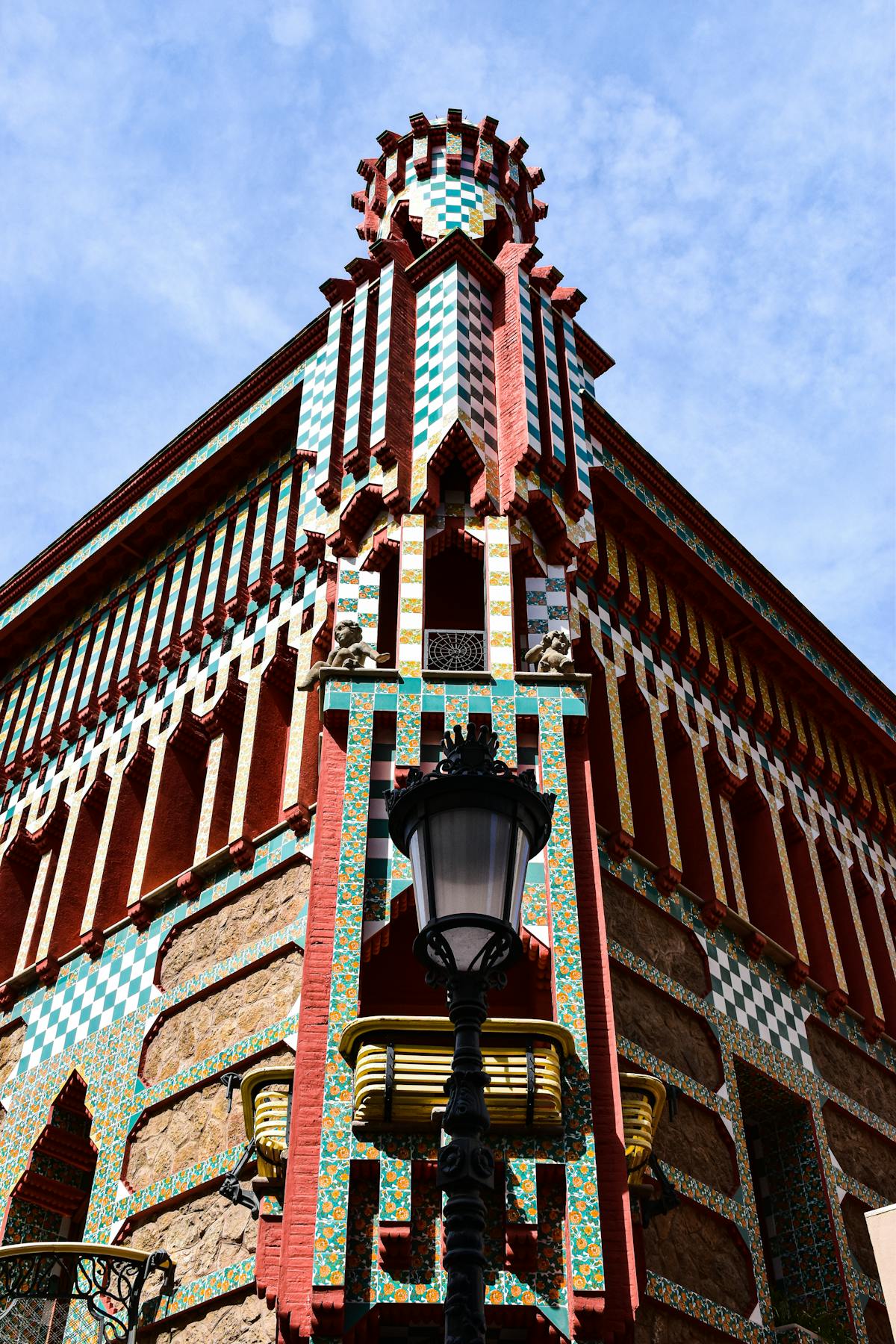
Casa Vicens runs a straightforward ticketing system. You buy a timed-entry ticket, show up at your slot, and explore the house. There are no tiered pricing levels like Casa Batllo’s Blue/Silver/Gold system — one ticket, one price, full access. The standard adult price from the official site is around 18-20 EUR, though third-party platforms often bundle in audioguides or skip-the-line perks for a few euros more.
The house is not large. Four floors plus a rooftop terrace, and you move through them in a set route. Most people take 45 minutes to an hour. There is no augmented reality or tech overlay here — the decoration IS the experience. Every wall, ceiling, and floor tile is the attraction, and you just walk through it and look.
Tickets are timed to control crowds, which is good because the rooms are compact. Casa Vicens handles maybe 15-20 people per time slot, compared to the hundreds that cycle through Casa Batllo every hour. The intimacy is a feature, not a limitation.
Important: The official site sometimes sells out for same-day visits during peak season, but third-party booking platforms frequently have availability when the official site shows full. This is because they buy allocation in advance. If you are booking last-minute, check platforms like GetYourGuide or Viator before assuming it is sold out.
Best Casa Vicens Tours and Tickets
1. Casa Vicens Skip-the-Line Entrance Ticket — $26
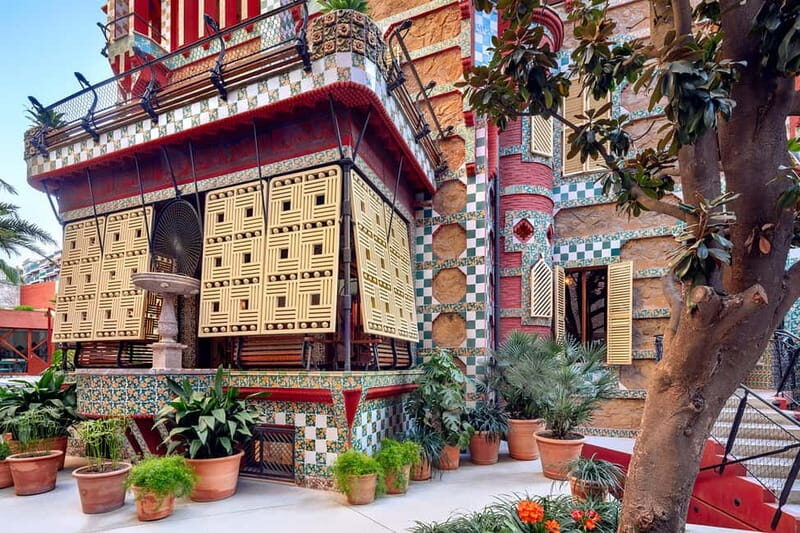
Duration: Visit at your pace (allow 45-60 min) | Price: $26 per person | Type: Self-guided entry with audioguide
This is the standard way to see Casa Vicens. You get a timed skip-the-line entry and an audioguide that walks you through each room with context about Gaudi’s design choices and the history of the Vicens family.
The audioguide is genuinely useful here, more so than at Gaudi’s other houses. Casa Vicens draws from Moorish, Japanese, and Gothic traditions, and unless you happen to know why a 31-year-old Catalan architect in 1883 was obsessed with Islamic geometric patterns, the narration fills in gaps you did not know you had. It explains why the smoking room ceiling looks like a North African palace, why the dining room is covered in cherry blossoms, and why the iron fence out front is shaped like palm fronds.
The self-paced format suits the house well. Some rooms demand ten minutes of staring at the ceiling. Others you will walk through quickly. The rooftop terrace at the end gives you a view across Gracia’s rooftops that puts the house in its neighborhood context — this was not built on a grand boulevard like Casa Batllo. It was a summer house on a quiet residential street, and standing on the roof, you can still feel that.
At $26, this is one of the cheapest ways to get inside a major Gaudi building. And because Casa Vicens is less famous than the Passeig de Gracia trio, it feels less like a tourist production and more like a genuine discovery.
2. Casa Vicens Guided Tour — $27
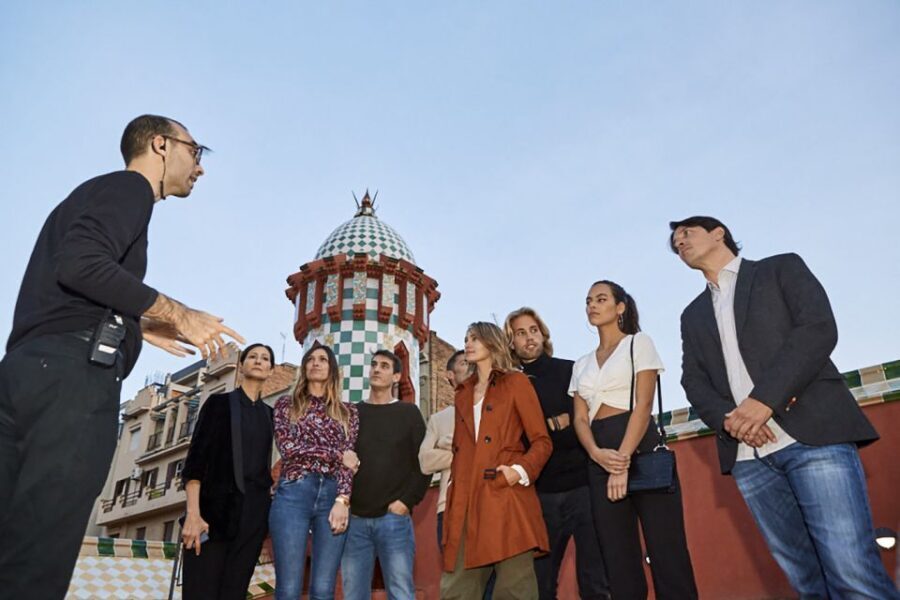
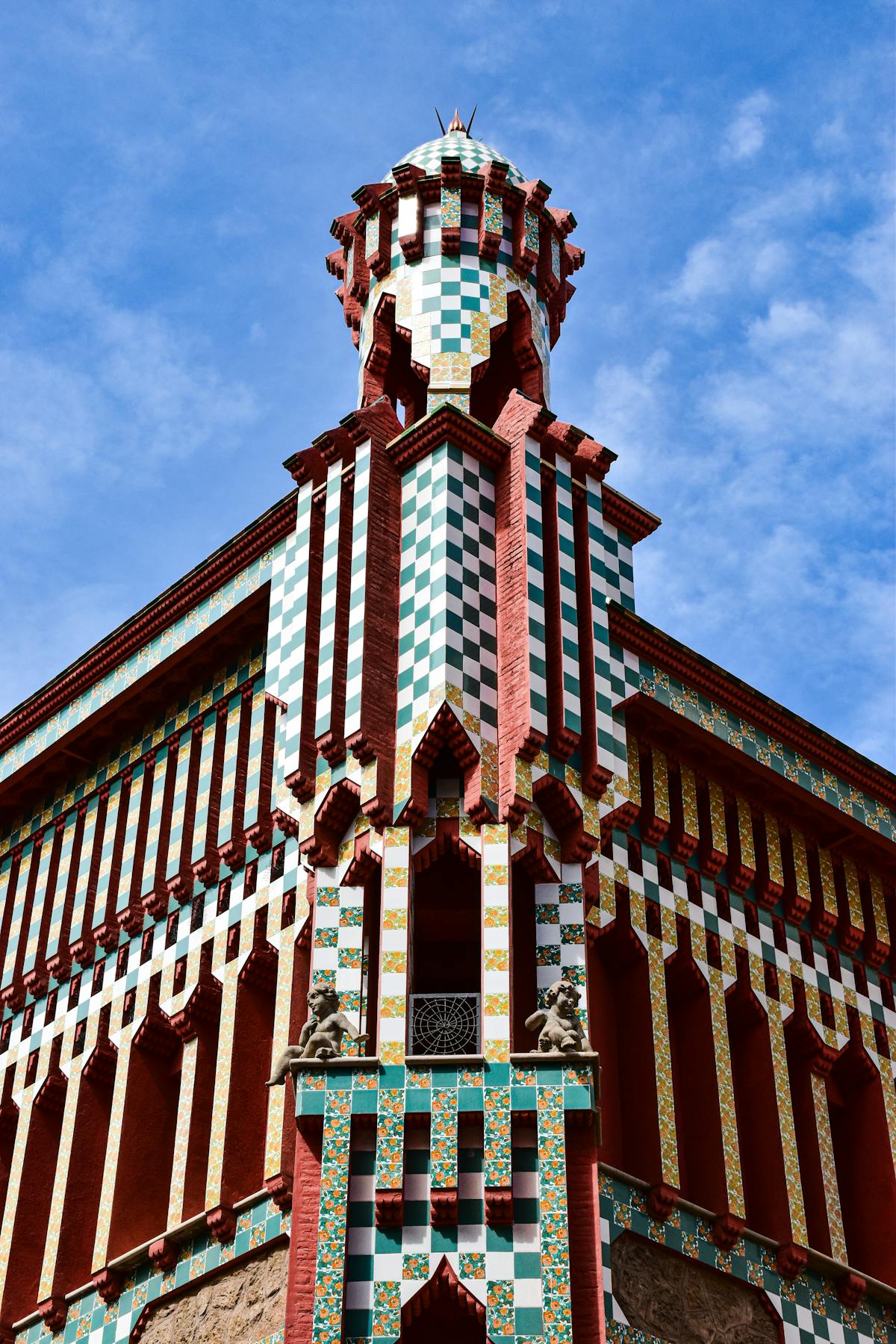
Duration: 1.5 hours | Price: $27 per person | Type: Guided tour with expert
For one dollar more than the standard entry ticket, you get a guide who actually knows why Gaudi put cherry blossoms on the dining room walls and Arabic calligraphy on the smoking room ceiling. That pricing is either a marketing oversight or a gift — either way, take it.
The guided tour runs about 90 minutes and covers the same route as the self-guided visit, but with someone who can answer questions, point out details you would walk past, and connect Casa Vicens to Gaudi’s later work. The guides here tend to be architecture specialists, not generic tour leaders, and they are good at explaining how this house was Gaudi’s laboratory — the place where he tested ideas that would later appear in Park Guell, Casa Batllo, and Sagrada Familia.
One thing the guide does that the audioguide cannot: they show you how the house changed over time. The original building was smaller than what you see today. It was expanded in 1925 by another architect, and some rooms are Gaudi originals while others are later additions. The guide points out which is which, and once you know, the difference is obvious — Gaudi’s rooms have a coherence and intensity that the additions, while competent, simply do not match.
The group sizes are small — typically under 15 people — which suits the intimate scale of the rooms. You do not feel herded.
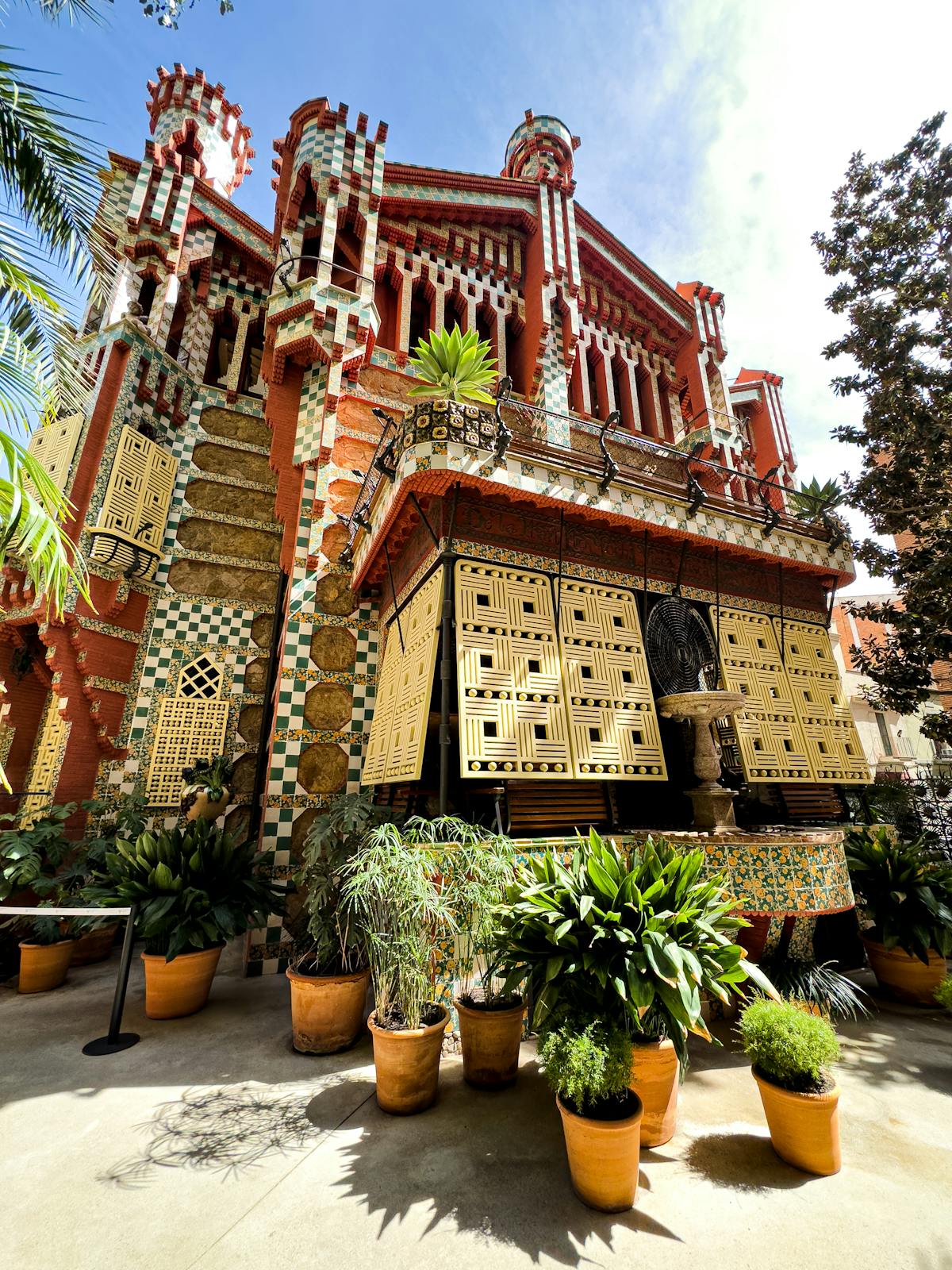
3. Gaudi Houses Tour: Casa Vicens, La Pedrera and Casa Batllo — $144

Duration: 3 hours | Price: $144 per person | Type: Multi-site guided tour with skip-the-line
This is the tour for people who want to understand Gaudi, not just see his buildings. You visit Casa Vicens (1883), Casa Batllo (1904), and La Pedrera (1906) in chronological order, and the guide traces how Gaudi’s thinking evolved from the Moorish tile obsession of his twenties to the organic, nature-mimicking experiments of his forties.
The chronological structure is what makes this work. At Casa Vicens, you see Gaudi drawing from Islamic geometry, Japanese screens, and Mediterranean craft — pulling from everywhere, not yet sure of his own voice. At Casa Batllo, twenty years later, the borrowed references have disappeared. The building is pure Gaudi: bones, dragons, ocean light, every surface serving both function and narrative. And at La Pedrera, he abandons conventional structure entirely — the building has no load-bearing walls, the facade undulates like a cliff face, the roof is a sculpture garden. Seeing all three in sequence turns individual house visits into a story about an artist finding and then transcending his style.
The trade-off: you spend less time at each site than on a dedicated visit, and the pace is brisk. If Casa Vicens is your primary interest, the standalone guided tour gives you deeper immersion. But if you are in Barcelona for a few days and want to hit all three residential masterpieces with context, this is efficient and informative. Skip-the-line access at all sites is included, which during summer saves you genuinely painful amounts of queuing.
When to Visit Casa Vicens
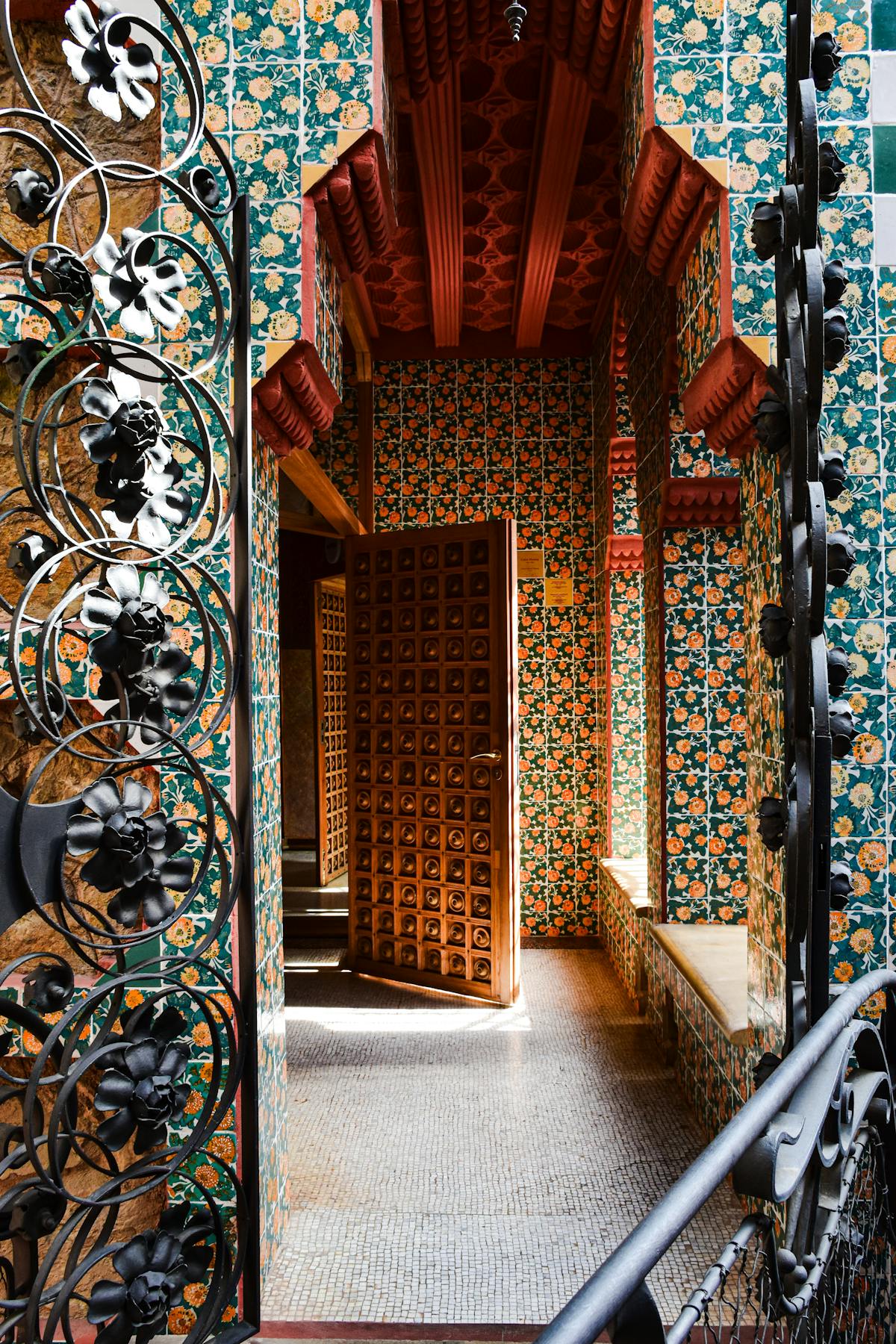
Best months: September through May. Casa Vicens is in the Gracia neighborhood, away from the tourist corridor of Passeig de Gracia and the Gothic Quarter. It never gets as insanely crowded as Casa Batllo or Sagrada Familia. But summer still brings heavier traffic, and the house is small enough that even moderate crowds change the feel.
Best time of day: early morning, right when it opens. The first slot of the day has the smallest crowds. You can linger in the smoking room and the dining room without jostling for position. Late afternoon also works, as day-trippers tend to have moved on to dinner plans by then.
Summer (June-August) is fine here, just book a few days ahead. Casa Vicens does not have the same capacity pressure as the big Gaudi sites, so you will rarely find it completely sold out. But the early slots do fill first, so if you want morning light pouring through those stained glass windows, do not wait until the day before.
Spring and autumn are perfect. Barcelona’s weather is warm enough for the walk through Gracia to feel pleasant rather than sweaty, the house is quiet, and you can often book same-day. October is particularly good — the light in Barcelona in October is golden, which does beautiful things to those marigold tiles.
Winter is underrated. The house is indoors, the interior does not depend on natural light the way some Gaudi buildings do, and the Gracia neighborhood in winter has a cozy, local feel that the summer months bury under tourist traffic. You will also find the cheapest flights to Barcelona between November and February.
Tips for Your Visit
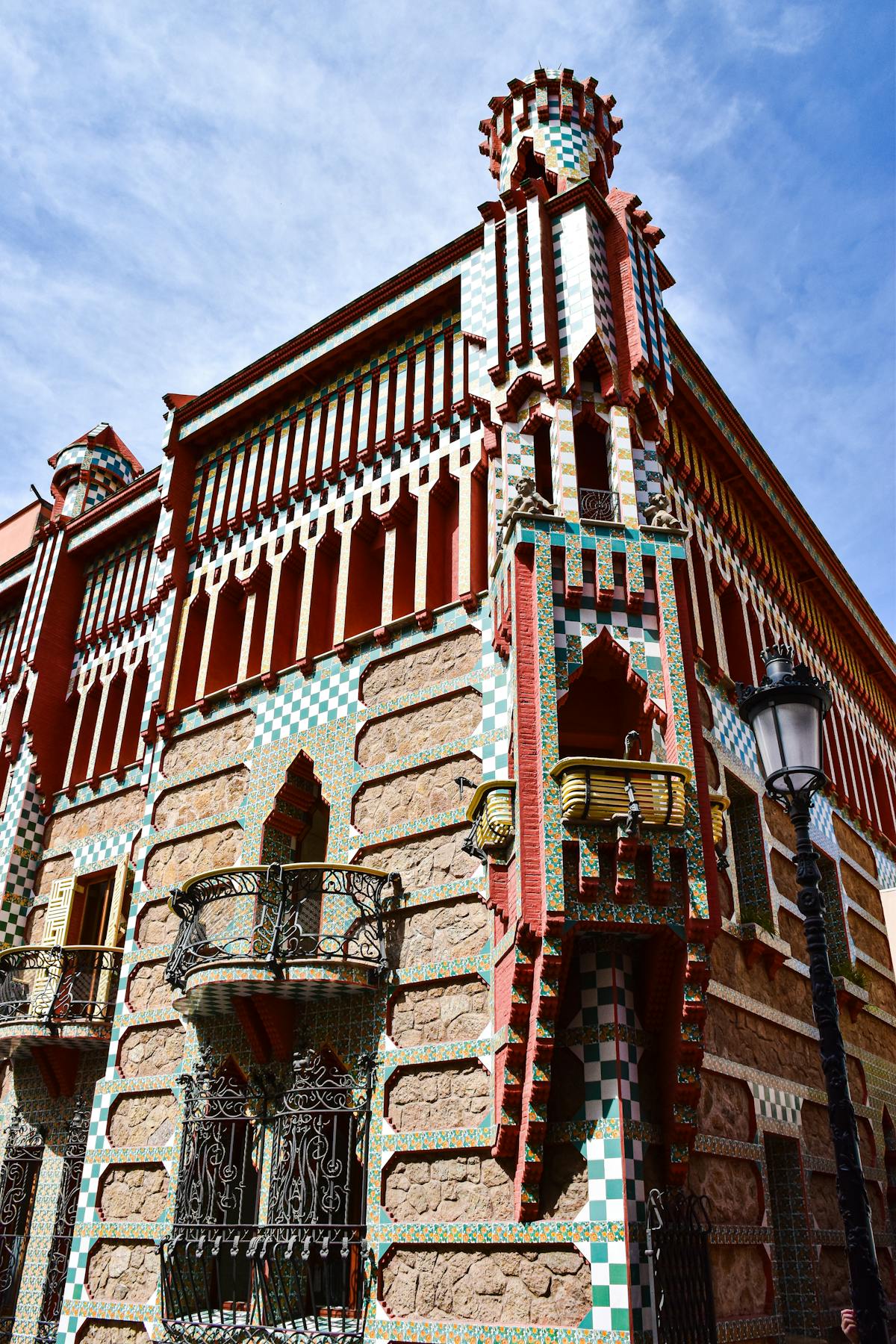
Get there via the Gracia neighborhood, not a taxi straight to the door. Half the experience of Casa Vicens is its context. The house sits on Carrer de les Carolines, a residential street in one of Barcelona’s most charming neighborhoods. Walk up from Fontana metro (L3, Green line), take ten minutes to wander past the independent shops and cafes on Carrer Gran de Gracia, and arrive at Casa Vicens having absorbed the neighborhood feel. The building makes more sense when you see what surrounds it — it was designed for this street, not for a tourist guidebook.
Allow 45-60 minutes for the self-guided visit, 90 for the guided tour. The house has four floors plus the rooftop. It is not enormous, but every room is dense with detail. Rushing through in 20 minutes means you miss the smoking room ceiling, the dining room cherry blossoms, and the way the staircase light changes on each floor. Slow down.
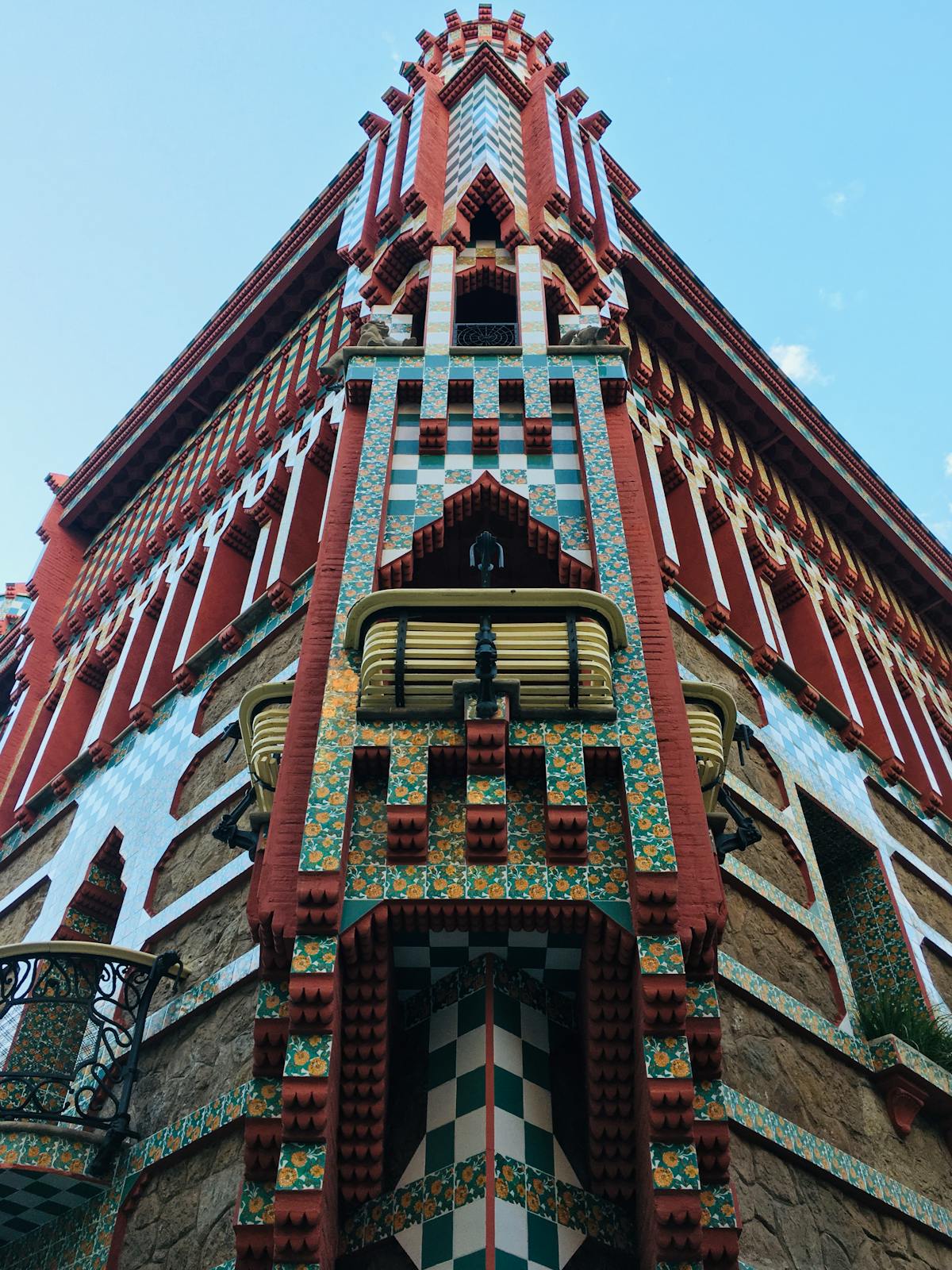
Look up constantly. The ceilings in Casa Vicens are where Gaudi went all out. The smoking room on the ground floor has a ceiling painted to look like an open sky with birds flying across it. The dining room ceiling is covered in cherry blossom branches. The upper floors have geometric patterns that shift depending on where you stand. If you only look at eye level, you miss half the house.
The rooftop terrace is worth the climb. It is modest compared to the dragon-spine drama of Casa Batllo’s roof, but the view across Gracia’s low-rise rooftops is peaceful and gives you a sense of what this neighborhood looked like when Gaudi built here — before the city grew up around it.
Combine with a Gracia walk. After your visit, walk down to Placa de la Vila de Gracia and have lunch at one of the terraces. Gracia was an independent village until 1897, and it still feels separate from central Barcelona. The streets are narrow, the plazas are shaded, and the restaurants are pitched at locals, not travelers. It is the best post-museum neighborhood in the city.
Photography is allowed inside. No flash, but you can shoot freely. The smoking room and the dining room are the most photogenic interiors. The facade is best photographed from across the street in the afternoon, when the sun hits the tiles directly and the colors pop.
What You Will See Inside
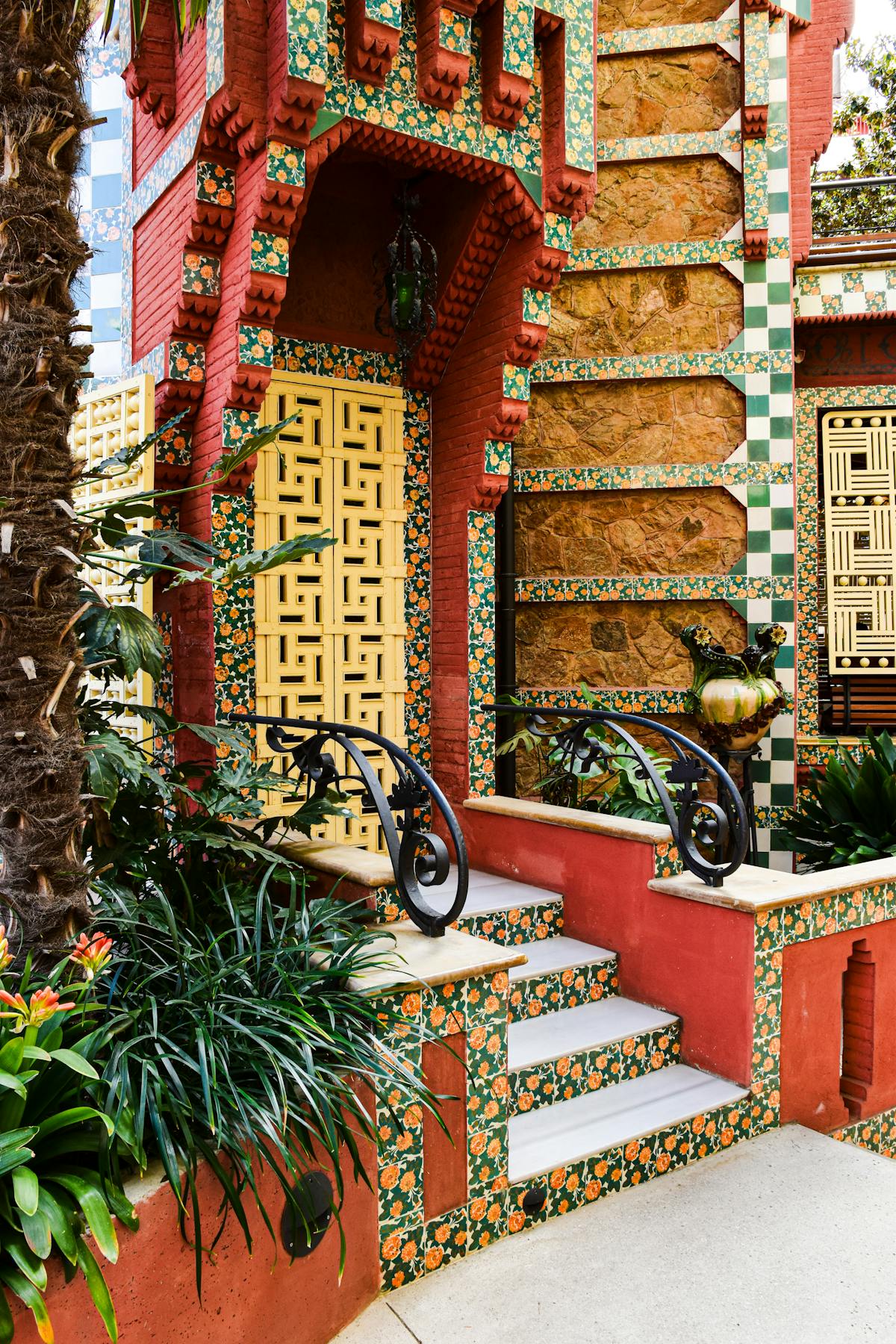
The Smoking Room (Fumador) is the knockout on the ground floor and the room most visitors remember. Gaudi covered the walls and ceiling in a Moorish-inspired composition of painted plaster, ceramic tiles, and papier-mache reliefs. The ceiling features a painted sky with birds — swallows, swifts, parrots — flying across a pale blue background. The walls are dense with geometric patterns drawn from Islamic art, and the whole room feels less like a Victorian parlor and more like stepping into a Moroccan riad. Gaudi would have been about 32 when he designed this. He had visited the Alhambra and clearly it never left him.
The Dining Room is covered in cherry blossoms. Floor-to-ceiling ceramic tiles depict branches heavy with fruit and flowers, and the effect is strikingly Japanese — this was designed during the height of the Japonisme movement in European art, and Gaudi absorbed that influence wholesale. The room wraps you in foliage. It is a dining room that feels like eating inside a garden.
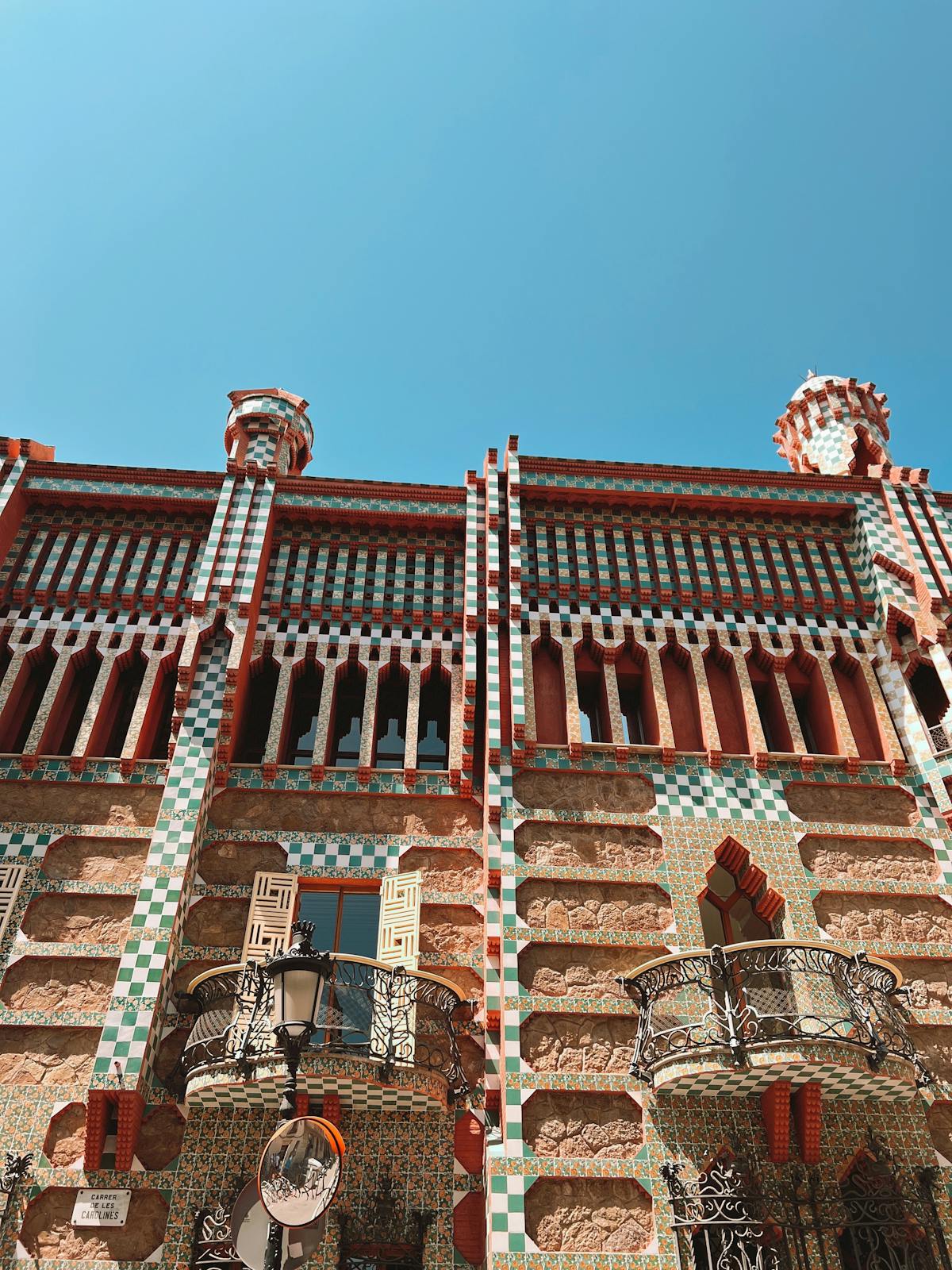
The Upper Floors show the house as a living space. Bedrooms, sitting rooms, and a gallery space that hosts rotating exhibitions about Gaudi and the house’s history. The ceilings on each floor have different treatments — painted wood beams, geometric tile patterns, floral motifs — and the staircase that connects them is itself a piece of design, with hand-painted ceramic railings and windows that filter light differently on each landing.
The Rooftop Terrace is small but satisfying. The checkerboard tiles that define the facade continue up here, and the view across the low Gracia rooftops gives you perspective on the house’s setting. On a clear day you can see the Sagrada Familia towers in the distance, a direct sightline between Gaudi’s first commission and his last.
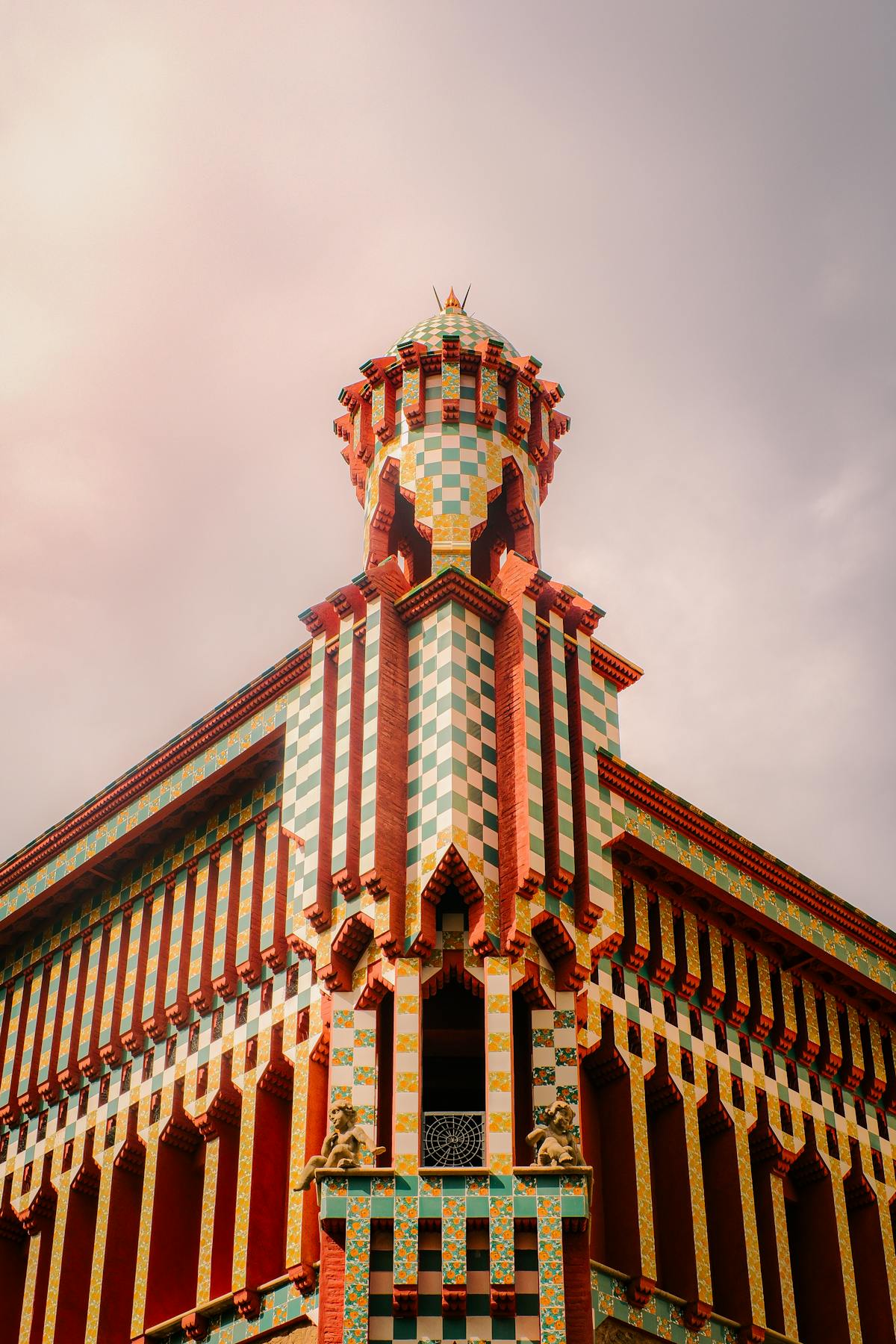
The Temporary Exhibition Space on the upper floor changes regularly and often focuses on Gaudi’s wider body of work or the context of Catalan Modernisme. It adds about 15 minutes to your visit and is usually worth it for the archival photographs of the house before restoration.