
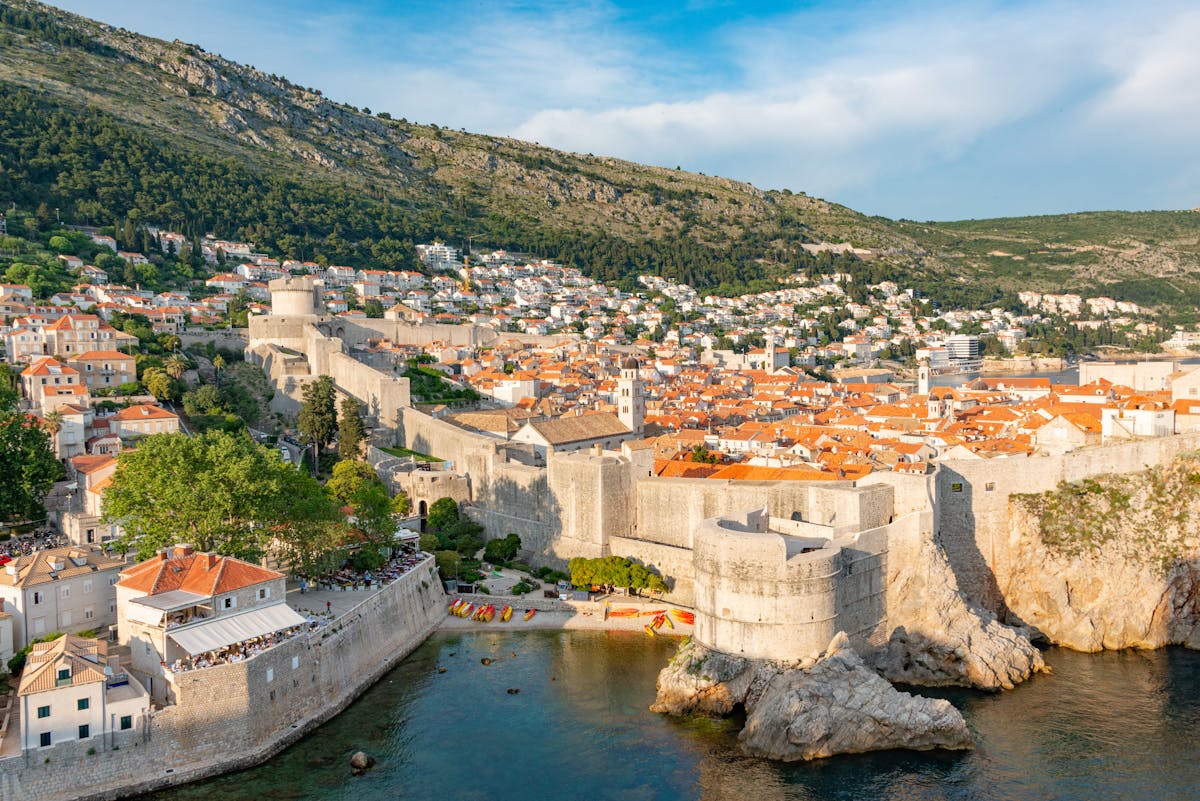
Dubrovnik’s city walls are not just a tourist attraction — they’re one of the finest examples of medieval military architecture anywhere in Europe. Stretching 1,940 metres around the entire old town, reaching heights of 25 metres and widths of up to 6 metres on the sea-facing side, these fortifications kept the Republic of Ragusa independent for over four centuries while empires rose and fell around it.
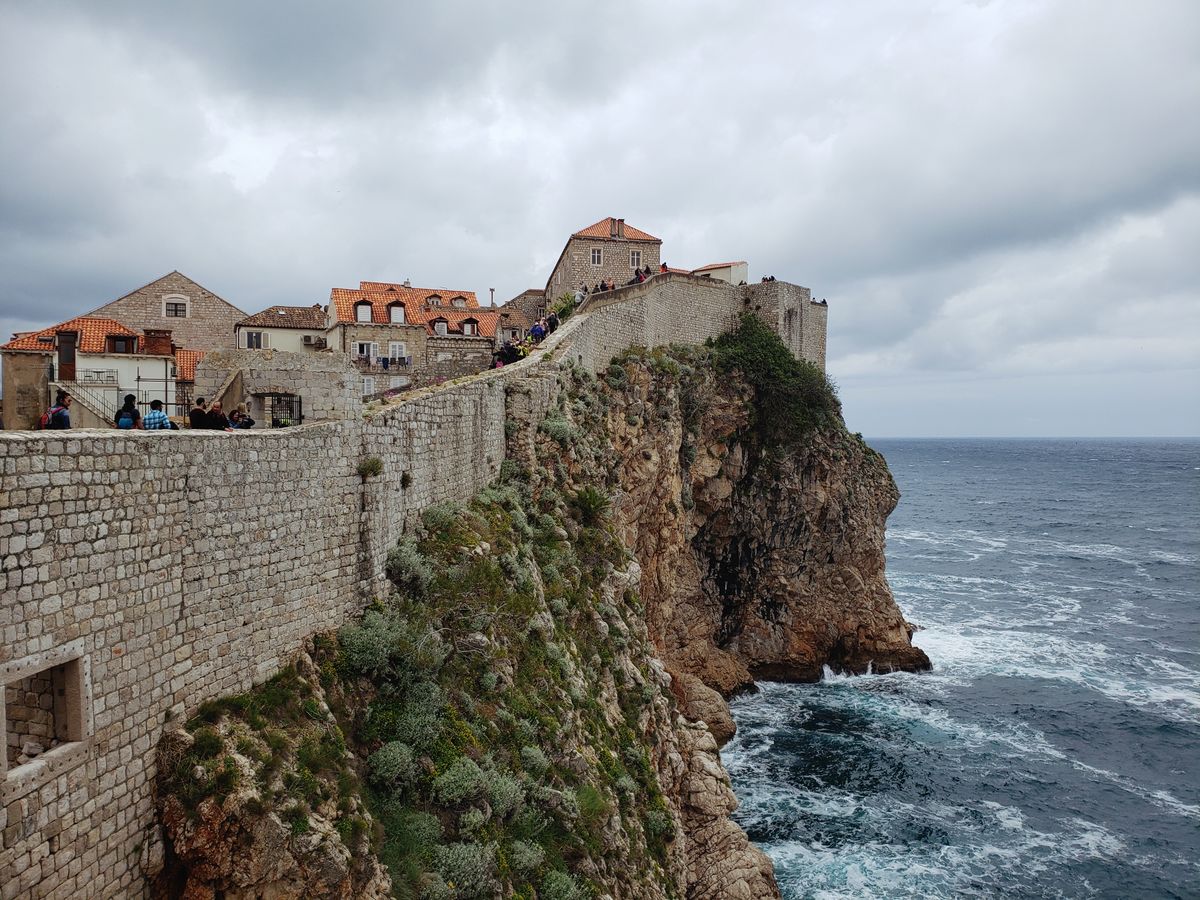
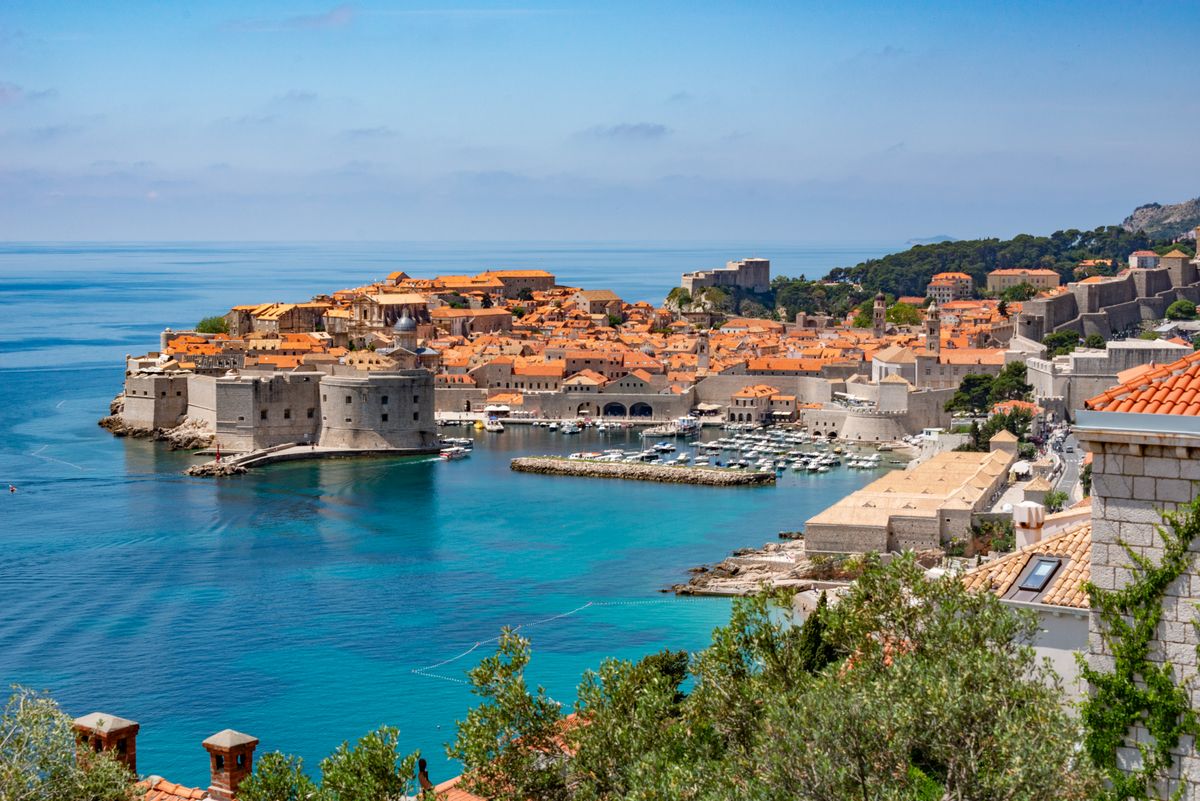
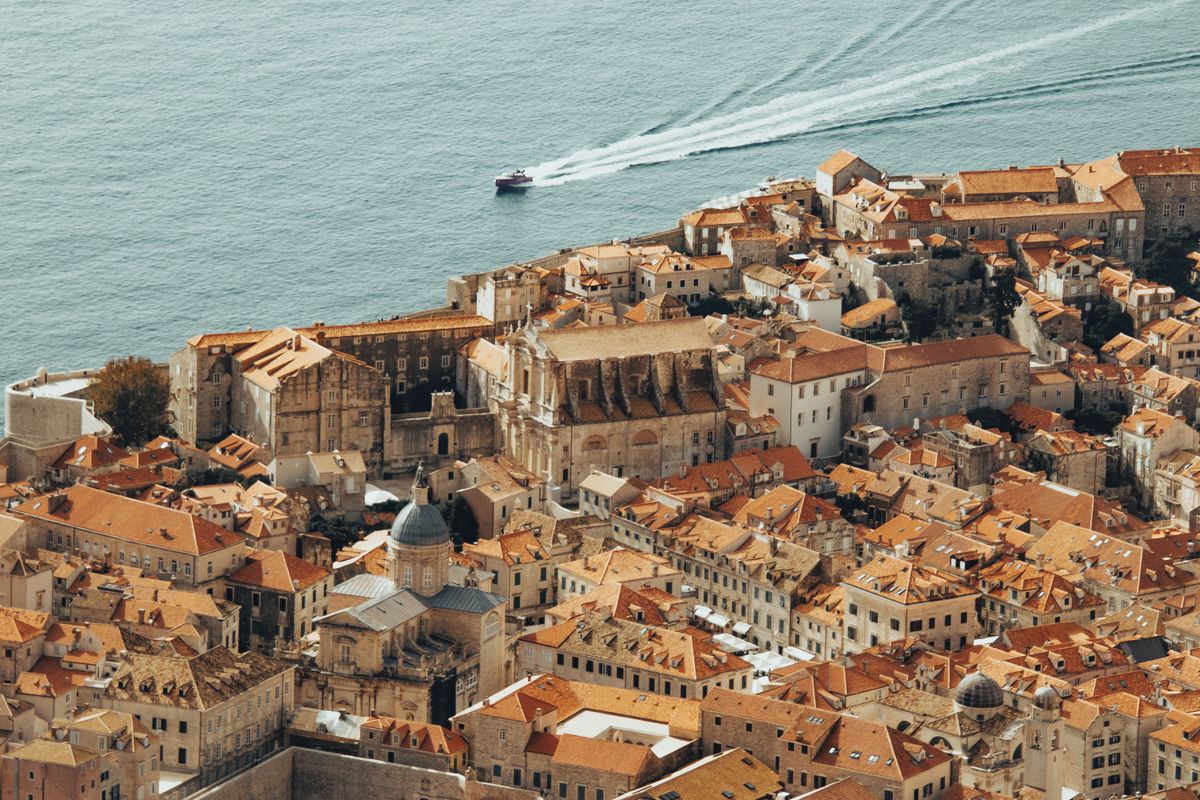
Walking the full circuit takes about 1.5 to 2 hours and gives you a 360-degree perspective on the old town that no other experience in Dubrovnik can match. From the walls, every terracotta rooftop, every church dome, every hidden courtyard, and every narrow lane is laid out below you like a living map. To the south, the Adriatic stretches to the horizon. To the north, the bare karst mountains of the Dalmatian hinterland rise sharply.

I’ve compared the best city walls tours in Dubrovnik — from dedicated walls-only walks to combo packages that bundle the walls with old town tours and cable car rides. A guide transforms the walk from scenic exercise into an education in military engineering, political survival, and a city’s remarkable refusal to surrender. Here are the top picks, plus tips for timing your visit and the history built into every stone.
Short on time? Here’s what to book:
Best historical depth: Ancient City Walls & Wars Walking Tour — €30. Two hours with a historian guide covering the walls’ military history, the 1991 siege, and the engineering behind Europe’s finest fortifications.
Best value combo: City Walls, Old Town Walking Tour & Adriatic View — €27. Walls walk plus old town ground tour in one package. The most efficient way to cover both perspectives.
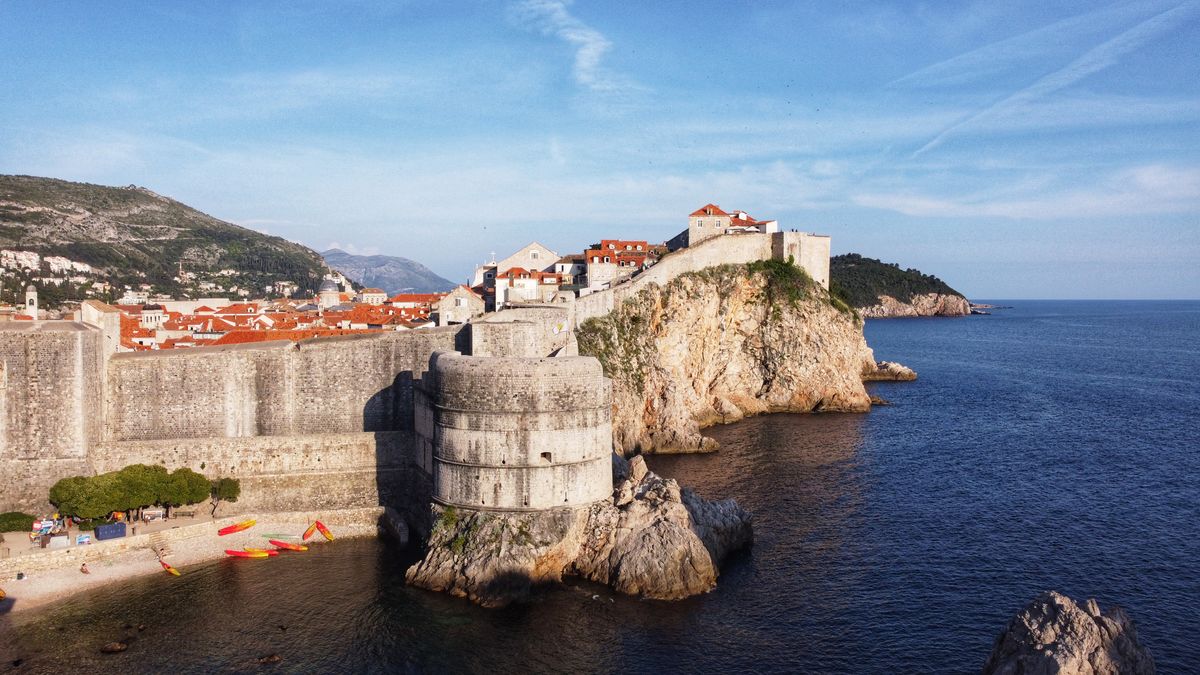
Best at golden hour: City Walls Sunset Walking Tour — €29. Walk the walls as the sun sets and the limestone turns amber. The most photogenic option.
- What to Know Before Visiting the Walls
- It’s a one-way circuit with limited exits
- Admission is separate from everything else
- Go early or at sunset
- Bring water and sunscreen
- The Best City Walls Tours in Dubrovnik
- 1. Ancient City Walls & Wars Walking Tour — €30
- 2. City Walls, Old Town & Adriatic View Walking Tour — €27
- 3. City Walls Early Morning or Sunset Walking Tour — €29
- 4. Dubrovnik Combo: Old Town & Ancient City Walls — €52
- 5. Cable Car, Old Town & City Walls Super Saver — €167
- Engineering a Fortress: How the Walls Were Built
- The Circuit: Section by Section
- When to Go
- Frequently Asked Questions
- How much does wall admission cost?
- Is the walls walk difficult?
- Can I leave and re-enter?
- Are the walls wheelchair accessible?
- Self-guided or with a guide?
What to Know Before Visiting the Walls
It’s a one-way circuit with limited exits
The walls walk is one-directional (counter-clockwise from the Pile Gate entrance). There’s one mid-point exit near the Ploce Gate and the main exit back at the start. The full circuit takes 1.5-2 hours at a steady pace with photo stops. There’s no shortcut once you’ve started — plan accordingly.
Admission is separate from everything else
City walls admission costs around €35 for adults and is not included in most general Dubrovnik walking tours. The guided walls tours listed here include admission. If you visit independently, buy tickets online to skip the queue. The same ticket also gives you entry to Fort Lovrijenac (the Red Keep from Game of Thrones) — don’t miss it.
Go early or at sunset
The walls are exposed with almost no shade. In summer, the stone absorbs and radiates heat, making the midday walk genuinely brutal. Early morning (8-9 AM, when the walls open) or late afternoon (2-3 hours before closing) are far more comfortable. Sunset tours are the most popular for good reason — the light transforms the entire experience.
Bring water and sunscreen
There are a couple of small bars along the walls where you can buy drinks (at tourist prices), but carrying your own water is essential. A litre minimum in summer. Sunscreen, a hat, and sunglasses are non-negotiable — there is genuinely no shade for most of the circuit.

The Best City Walls Tours in Dubrovnik
1. Ancient City Walls & Wars Walking Tour — €30
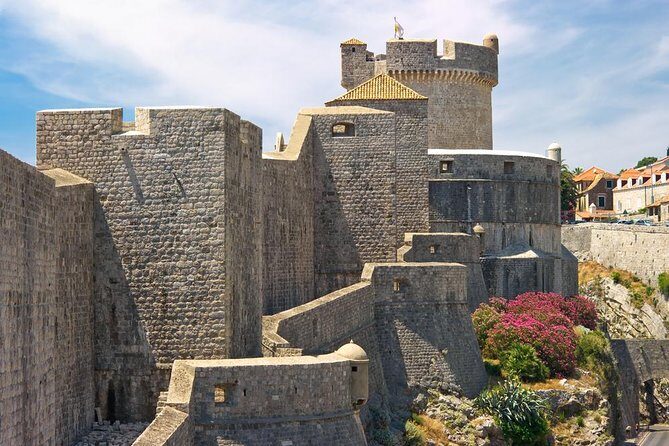
The most historically focused walls tour. In two hours, your guide walks you along the entire circuit while explaining how the walls were built, how they were defended, and how they held up during the 1991 siege. The tour connects medieval military engineering to modern conflict, showing you bullet and shell impact marks that are still visible on the fortification stones.
The guide explains the strategic placement of every tower, the geometry of overlapping fields of fire, and why the sea-facing walls are three times thicker than the land-facing sections. At Minceta Tower (the highest point), you get the full panorama with commentary on what the city looked like before the 1667 earthquake, during the Republic of Ragusa’s golden age, and after the 1991 bombardment. It’s a military history lesson delivered from the most dramatic classroom imaginable.
Duration: 2 hours | Includes: Wall admission, professional guide
2. City Walls, Old Town & Adriatic View Walking Tour — €27

A combo tour that pairs the walls walk with a ground-level old town tour. You start on the walls for the panoramic perspective — every rooftop, every tower, every hidden garden visible below — then descend to street level and walk through the landmarks you just saw from above. The dual perspective is genuinely powerful — seeing a building from 20 metres up and then standing in front of it creates a three-dimensional understanding of the city.
At €27, this is the best value on the list. You’re getting a guided walls walk plus a full old town tour for less than the price of self-guided wall admission alone. The guide connects the two halves, explaining what you saw from above as you encounter it at ground level. For first-time visitors with one day in Dubrovnik, this is the single most efficient way to understand the city.
Duration: 2.5 hours | Includes: Wall admission, old town guided tour
3. City Walls Early Morning or Sunset Walking Tour — €29
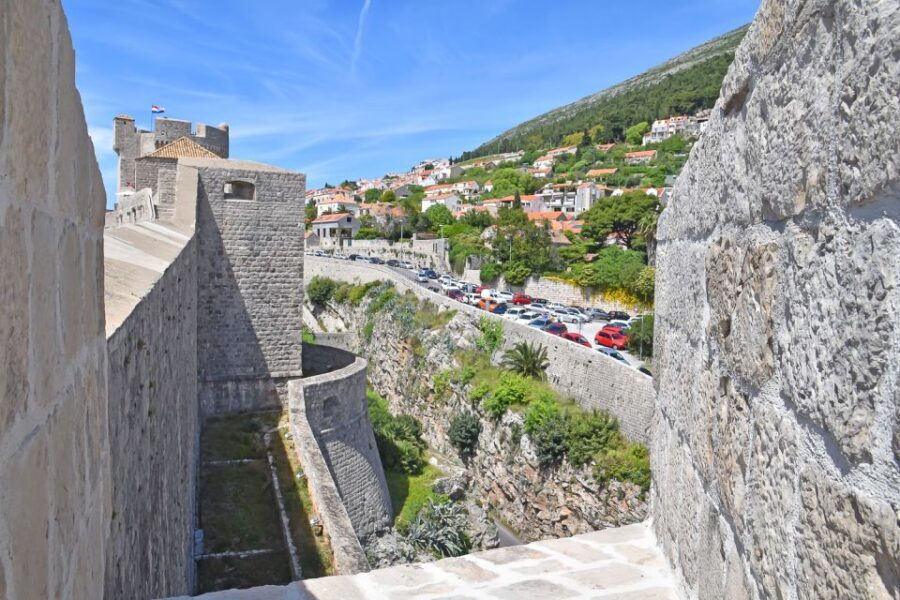
Timing is everything with this tour. The early morning option gets you on the walls at opening time — cool air, empty walkways, soft morning light, and the old town slowly waking up below. The sunset option is the opposite — warm golden light, the Adriatic turning gold and pink, and the walls transforming from white to amber as the sun drops.
Both time slots avoid the midday crush and the brutal summer heat. The guide provides historical commentary throughout, but the atmosphere is the real star. Watching the sunset from the highest point of the walls — with the old town below, the Adriatic beyond, and the Croatian mountains catching the last light — is one of those travel moments that stays with you. Wall admission is included in the price.
Duration: 1.5-2 hours | Includes: Wall admission, guided tour
4. Dubrovnik Combo: Old Town & Ancient City Walls — €52
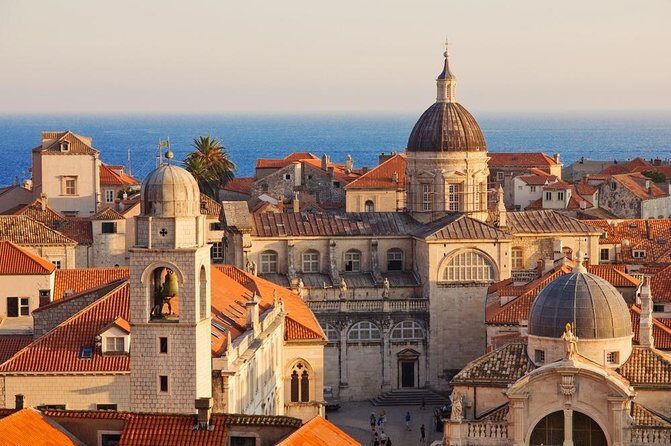
A longer combo that gives both the walls and the old town the time they deserve. At 3.5 hours, this is nearly double the length of the budget combo, which means more stops, deeper commentary, and less rushing between viewpoints. The guide takes you through the full walls circuit first, then descends for a thorough old town walk covering the Rector’s Palace, Cathedral, Franciscan Monastery, and the back streets that shorter tours skip.
The premium over the €27 combo buys you time — more time at each viewpoint on the walls, more stops at old town landmarks, and a guide who can answer questions without watching the clock. If you’re the kind of traveller who wants to understand a place rather than just see it, the extra investment in time and money pays off.
Duration: 3.5 hours | Includes: Wall admission, thorough old town tour
5. Cable Car, Old Town & City Walls Super Saver — €167
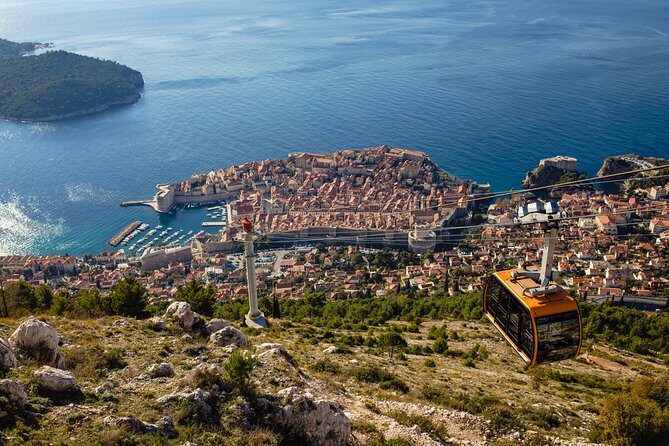
The everything-in-one-day option. This 4.5-hour tour combines three of Dubrovnik’s top experiences: the cable car up Mount Srd for aerial views, the full city walls circuit, and a guided old town walk. You see the city from three different heights — mountain-top panorama, walls-level, and street level — building a layered understanding that individual tours can’t match.
The cable car ascent up Mount Srd is genuinely spectacular. From 412 metres above the city, you see the entire old town, the island of Lokrum, the Elaphiti archipelago, and on clear days, the Italian coast across the Adriatic. Combined with the walls walk and old town tour, you leave Dubrovnik having seen it from literally every possible angle. The premium price reflects three admissions (cable car, walls, Fort Lovrijenac) plus 4.5 hours of guided time.
Duration: 4.5 hours | Includes: Cable car, wall admission, Fort Lovrijenac, guided tour

Engineering a Fortress: How the Walls Were Built

The walls you walk today are not the first fortifications on this site. The original Byzantine walls were much smaller, enclosing just the rocky island of Laus (which later merged with the mainland to form the current old town). As the city grew, the walls were extended, heightened, and reinforced over centuries — a continuous building project that reflected the Republic of Ragusa’s evolving threats and growing wealth.
The current walls date primarily from the 13th to 17th centuries. The most significant upgrades came after three events: the Ottoman expansion into the Balkans (which prompted massive reinforcement of the landward walls), the 1667 earthquake (which required rebuilding damaged sections), and the development of gunpowder artillery (which required thicker walls and lower, more angled towers designed to deflect cannonballs rather than absorb their impact).
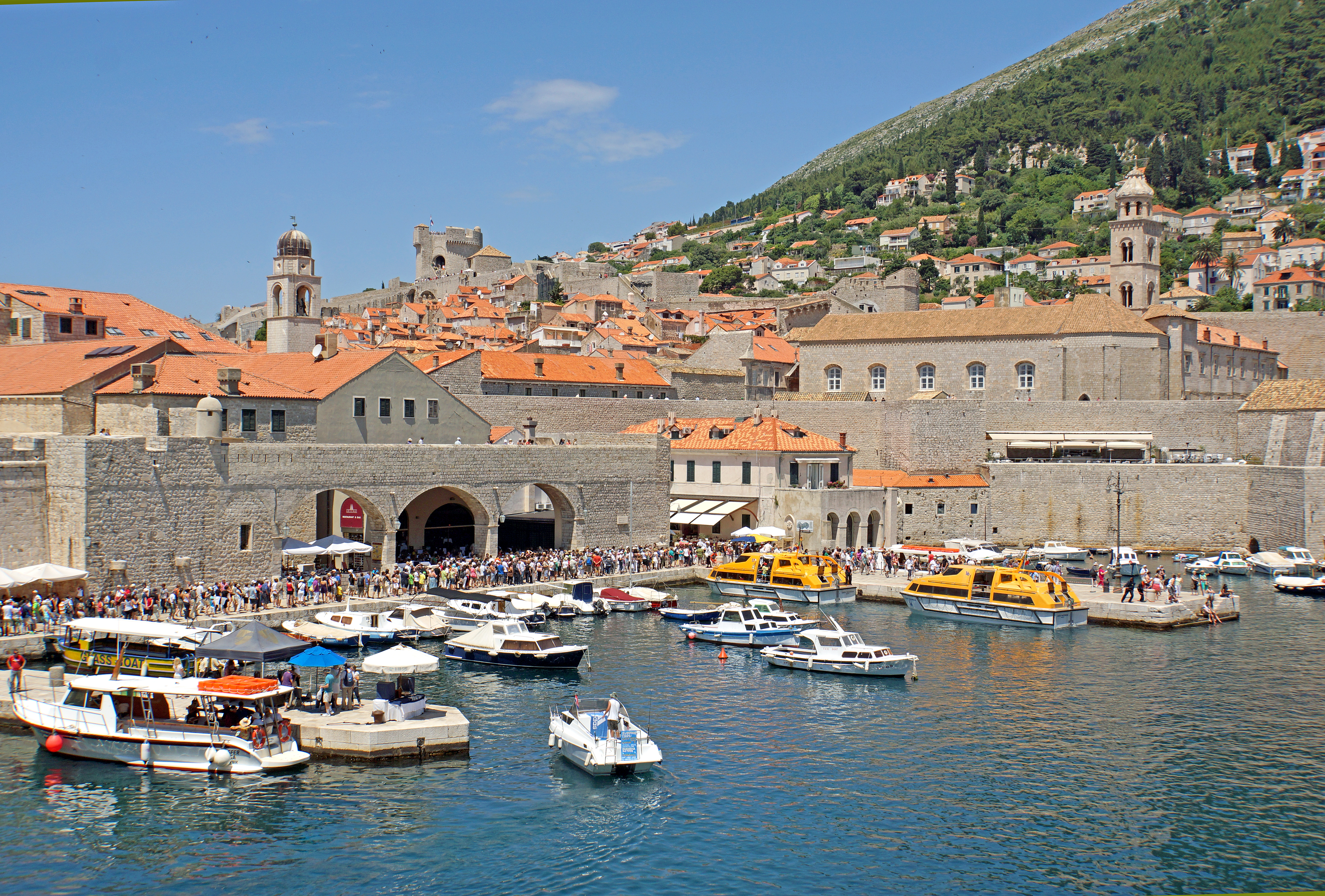
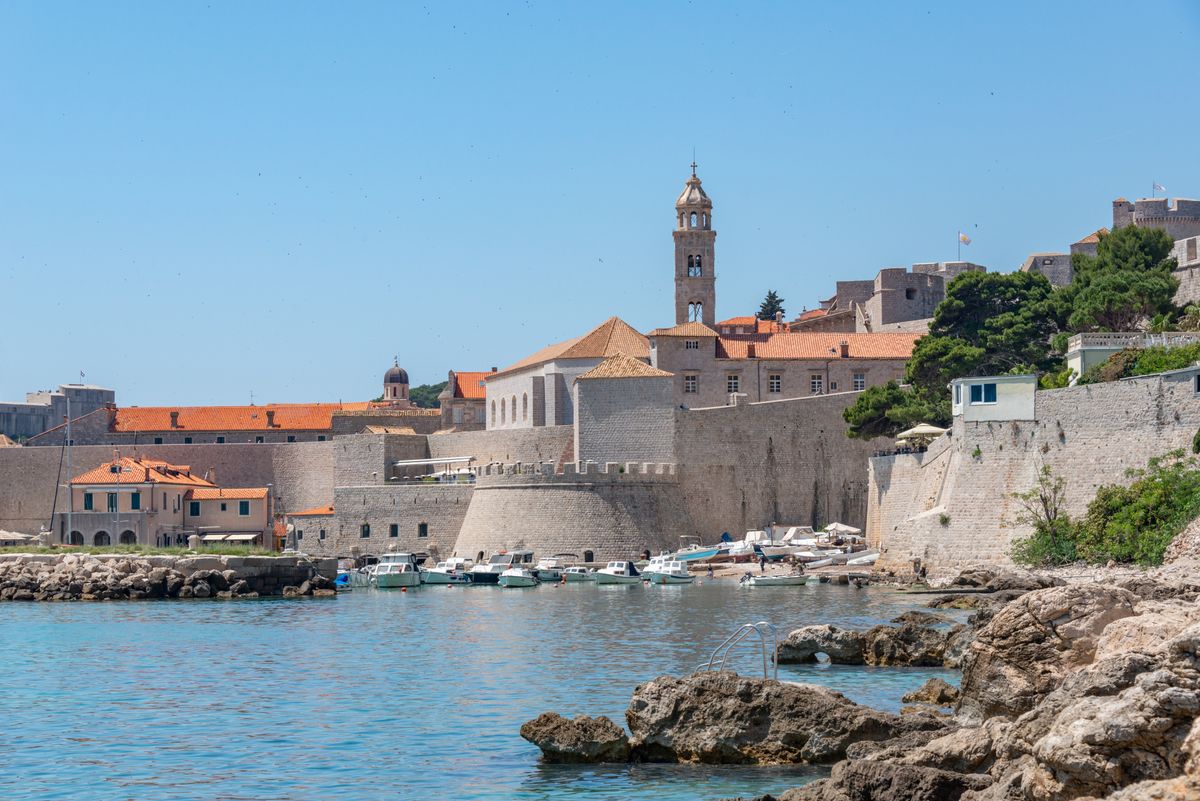
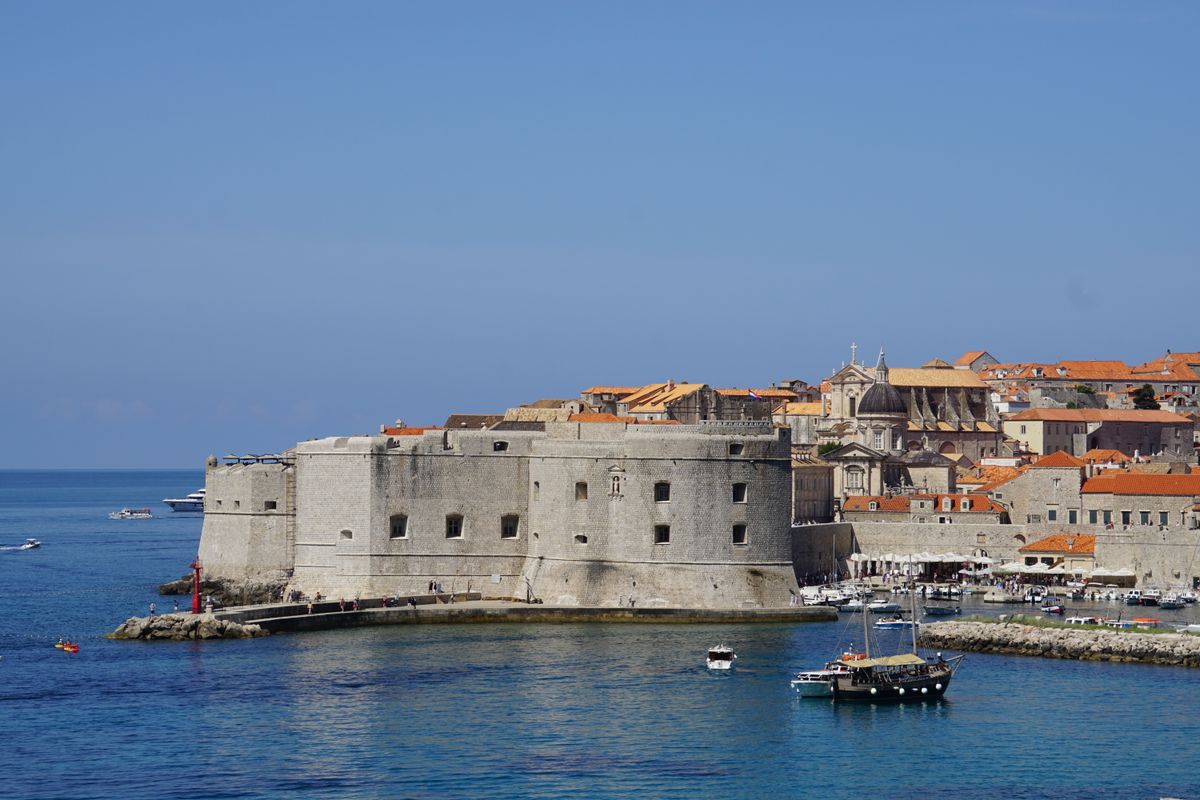
The engineering is remarkable for its era. The sea-facing walls are up to 6 metres thick — wide enough to absorb the kinetic energy of a cannonball without cracking through. The towers are positioned at irregular intervals, designed by military architects who calculated the maximum effective range of crossbows and later cannon, ensuring every section of wall could be defended from at least two towers. The Bokar Fortress and Minceta Tower are masterworks of Renaissance military architecture, designed by some of the same engineers who worked on fortifications in Italy and the Levant.
During the 1991 siege, the walls proved their durability one final time. Despite sustained shelling from Yugoslav forces positioned in the surrounding hills, the walls themselves suffered relatively little structural damage — a testament to the engineering of builders who had anticipated exactly this kind of assault centuries earlier. The buildings inside the walls were far more vulnerable, and it was the rooftops, churches, and palaces that bore the brunt of the bombardment.
The Circuit: Section by Section
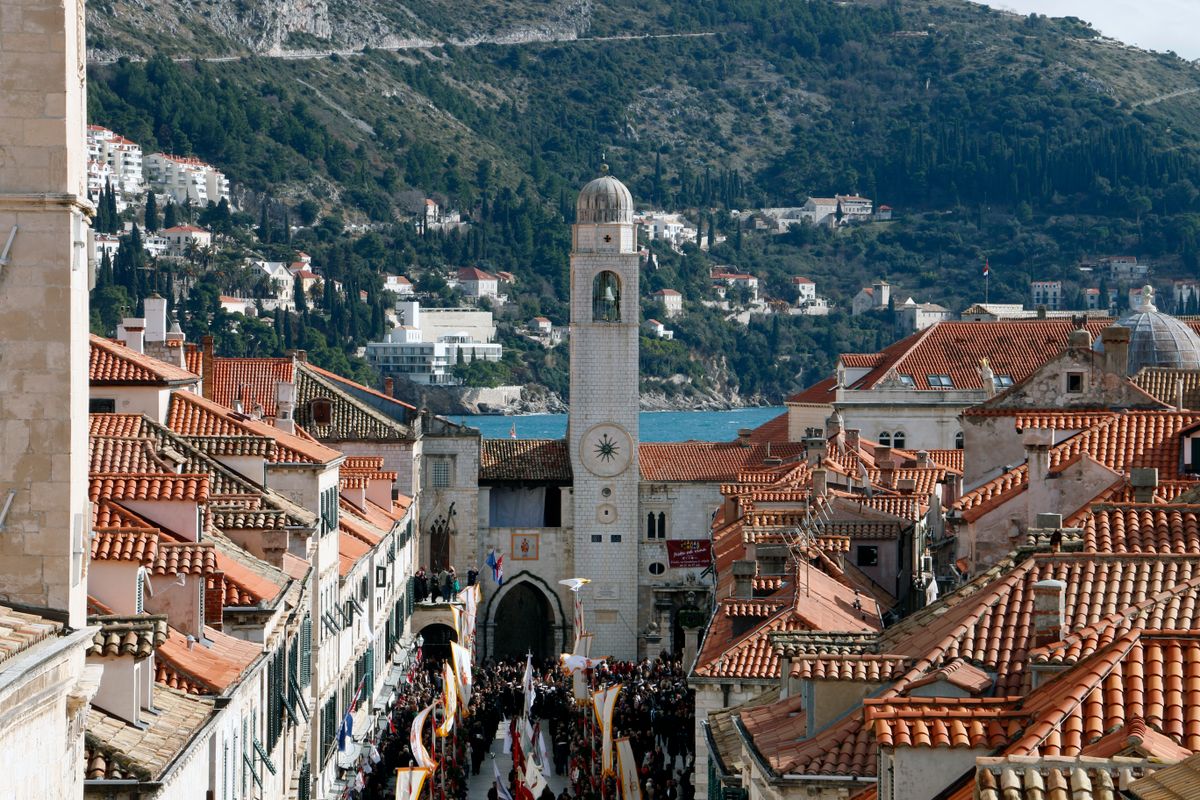
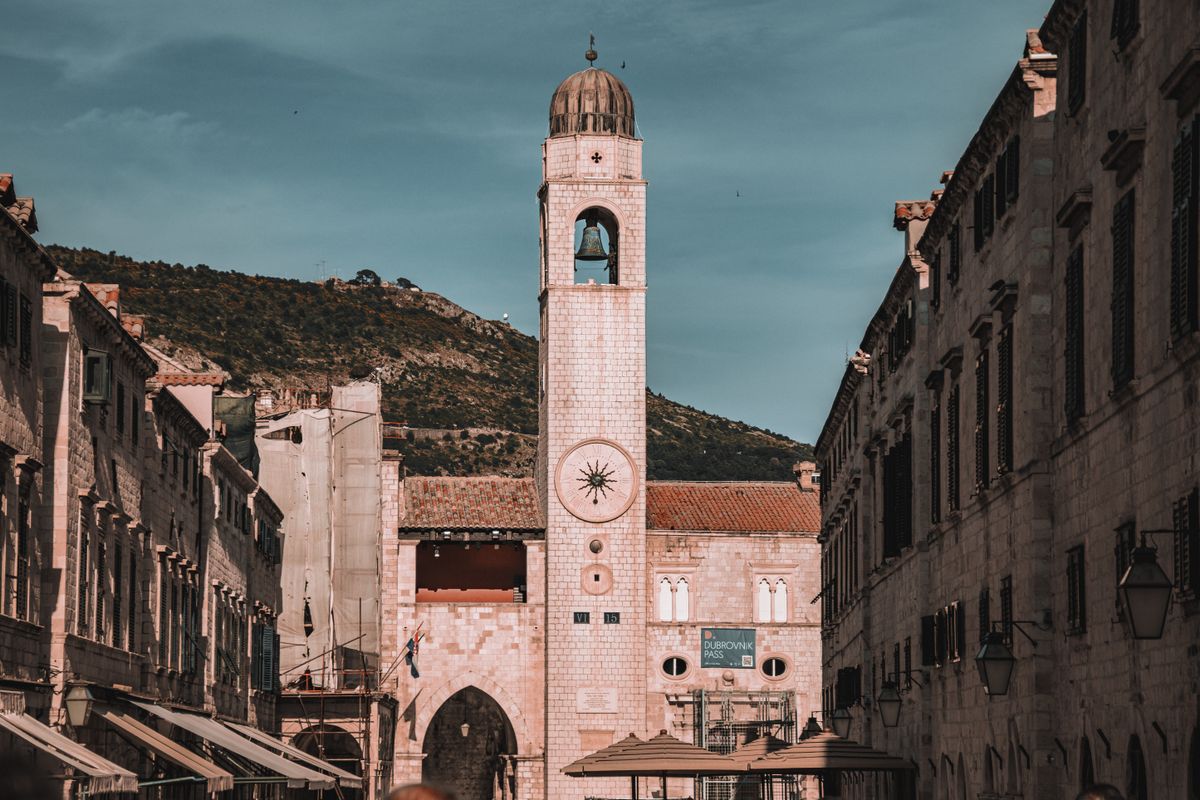
Pile Gate to Minceta Tower (western section): The walk begins with a steep climb from the Pile Gate entrance up to the western walls. The views over the Stradun open quickly, and you can see the full length of the old town’s main street. Minceta Tower, the highest point, offers the most famous panorama.
Minceta Tower to Ploce Gate (northern section): The landward walls facing the mountains. These are the sections most heavily reinforced against Ottoman attack — thicker walls, more frequent towers, and a visible moat (now dry) that once added another defensive layer. The views here are over the residential quarters and into the mountains beyond.
Ploce Gate to the Old Port (eastern section): A gradual descent toward the harbour. This section offers views over the Dominican Monastery and the Revelin Fortress. The east-facing walls catch morning light beautifully.
Old Port to Pile Gate (southern section): The sea-facing walls — the most photogenic and the most dramatic. The walls here drop almost vertically to the Adriatic, and you can see kayakers paddling far below. The views across to Lokrum island and the open sea are the reward for the final stretch.

When to Go
Best months: April through June and September through October. Comfortable temperatures for 2 hours of exposed walking. The light in these months is warm without being harsh.
Peak season: July and August. Brutally hot on the walls (no shade, stone radiating heat, temperatures above 35 degrees). If you must visit in peak summer, go at opening time (8 AM) or book a sunset tour. Carry at least a litre of water.
Winter: The walls are open year-round (reduced hours). Winter visits are atmospheric — dramatic skies, empty walkways, and moody light. The stone can be slippery when wet, so proper footwear is important.
Avoid cruise ship days. When multiple ships dock, the walls get congested — shuffling behind tour groups on narrow walkways kills the experience. Check the Dubrovnik cruise schedule and plan for ship-free days.

Frequently Asked Questions
How much does wall admission cost?
Around €35 for adults, €15 for children. The ticket also includes Fort Lovrijenac admission. Guided tours listed here include admission in the price. Buy online to avoid the queue at Pile Gate.
Is the walls walk difficult?
Moderately. The full circuit is about 2 kilometres with some steep sections (especially the initial climb from Pile Gate). Stairs are frequent and uneven. It’s not a hike, but it’s more physically demanding than flat walking. Anyone with reasonable mobility can manage it at a gentle pace.
Can I leave and re-enter?
No. The ticket is for a single entry. Once you exit, you’d need a new ticket. Plan to do the full circuit in one go. There’s a small bar at the midpoint if you need a drink break.
Are the walls wheelchair accessible?
Unfortunately, no. The circuit involves narrow paths, steep stairs, and uneven stone surfaces throughout. There is no wheelchair-accessible route on the walls.
Self-guided or with a guide?
Both work, but a guide transforms the experience. Self-guided gives you freedom to stop wherever you want. A guide gives you the military history, siege stories, and architectural details that invisible without expert knowledge. At €27-30 including admission, the guided tours are barely more expensive than buying a ticket alone.
The city walls are one piece of Dubrovnik’s puzzle. At ground level, an old town walking tour fills in the stories behind the buildings you see from above. From the water, sea kayaking gives you the wall-level view that even the walls themselves can’t provide. And beyond the city, a day trip to Mostar shows you a different kind of walled city — Ottoman rather than Venetian, river rather than sea. For the complete picture, our Dubrovnik guide covers everything from the best beaches to where to eat and the best time to visit Croatia.