
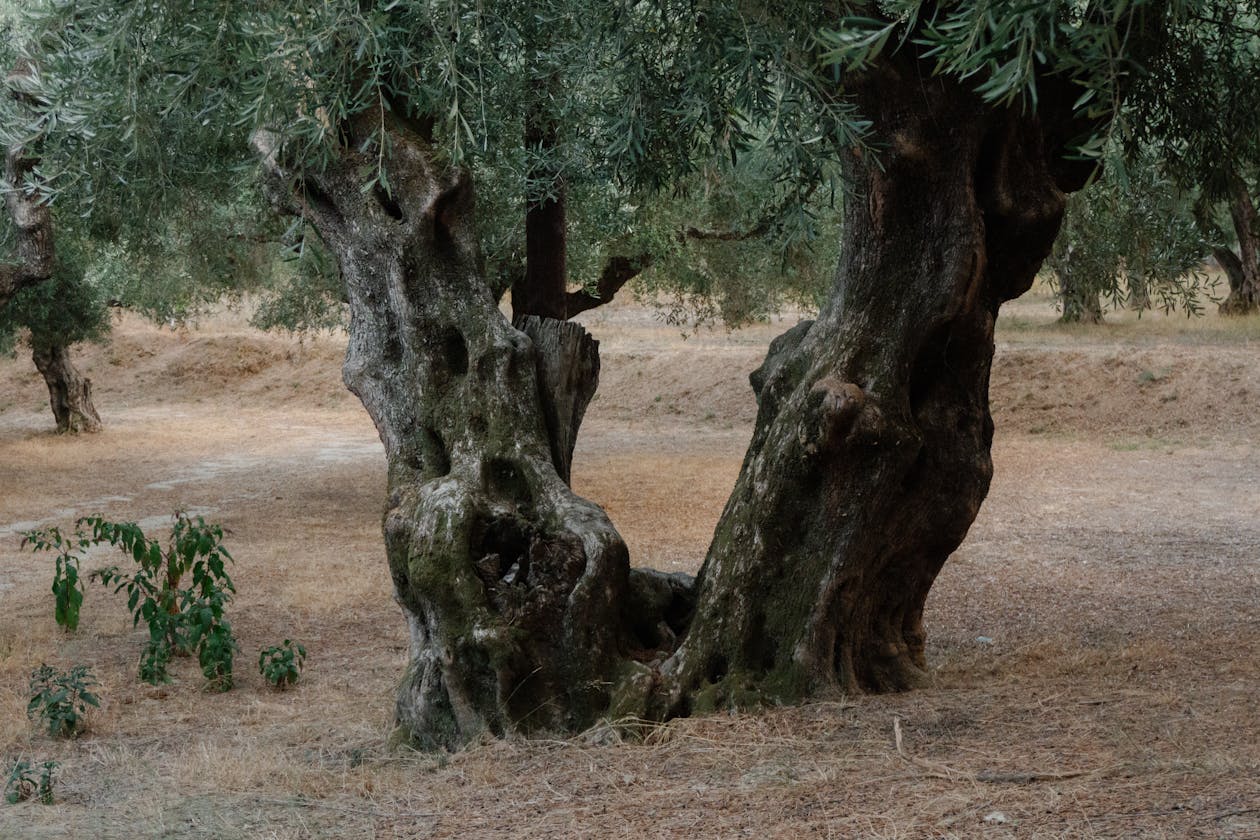
The ancient Greeks believed Delphi was the exact centre of the world. Zeus released two eagles from opposite ends of the earth, and they met right here, on this steep mountainside above the largest olive grove you have ever seen.
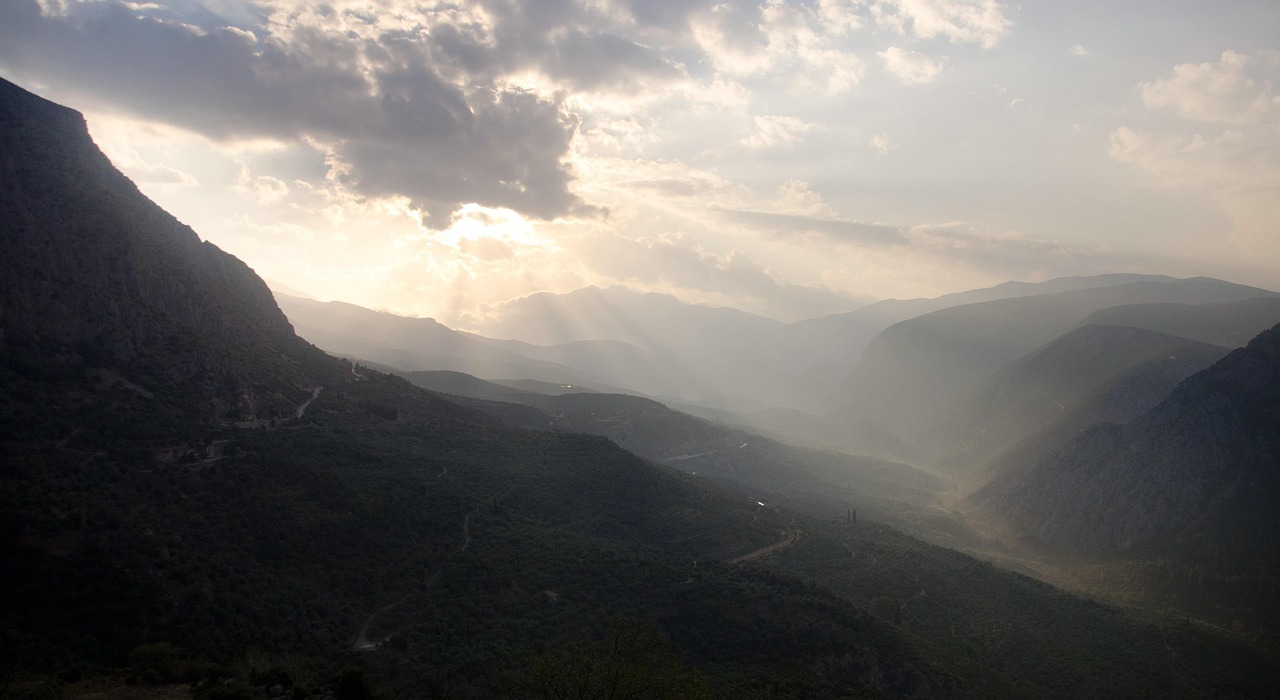
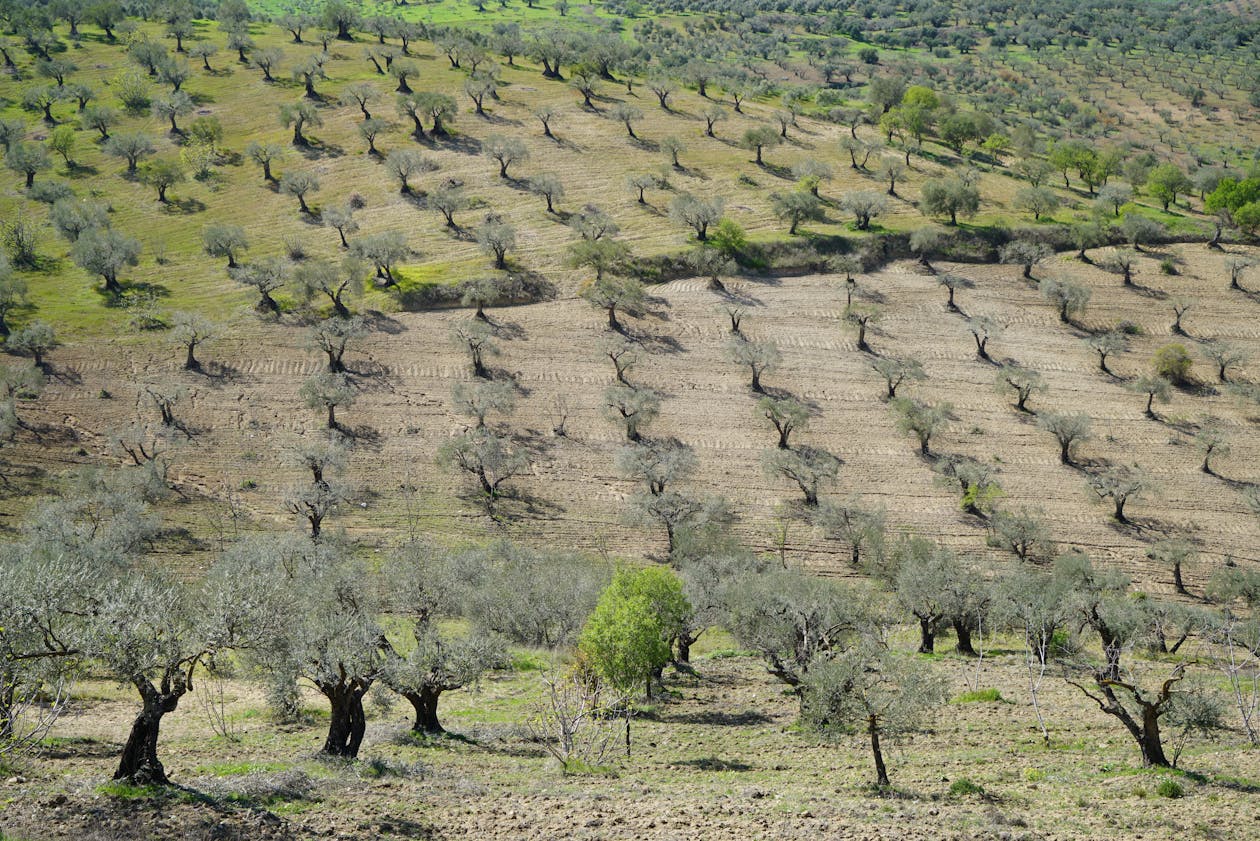
I thought that was a great story until I actually stood at the Temple of Apollo and looked out. The valley drops away below you, thousands of olive trees stretching to the Gulf of Corinth, mountains rising on every side, and for a moment the whole “centre of the world” thing doesn’t sound like mythology at all. It sounds about right.
Getting to Delphi from Athens takes about two and a half hours by road, which puts it firmly in day trip territory. But there are decisions to make: do you go independently by bus, hire a car, or join a guided tour? Each option changes the experience significantly, and I have tried all three.
Best overall: Mythology of Delphi Guided Tour — $30. Full-day with a live guide, museum entry, and Arachova stop. Hard to beat for the price.
Best for independent travellers: Delphi & Arachova Audio Guide Trip — $34. Transport sorted, but you explore at your own pace with an audio guide.
Best premium experience: Delphi, Thermopylae & 300 Spartans Tour — $169. Adds the battlefield of Thermopylae and the Corycian Cave. A longer, wilder day.
- How Tickets and Entry Work at Delphi
- Going Solo vs Joining a Guided Tour
- The Best Delphi Tours from Athens
- 1. Mythology of Delphi, Museum & Arachova Guided Tour —
- 2. Delphi & Arachova Day Trip with Audio Guide —
- 3. Delphi Oracle & Museum Tour with Licensed Guide —
- 4. Delphi, Thermopylae & Corycian Cave — 9
- When to Visit Delphi
- How to Get to Delphi from Athens
- Tips That Will Save You Time
- What You’ll Actually See at Delphi
- The Arachova Stop
- While You’re in Greece
- More Greece Guides
How Tickets and Entry Work at Delphi
Delphi has two separate ticketed areas: the archaeological site and the archaeological museum. You can buy a combo ticket that covers both, and I strongly recommend you do. The museum context makes everything you see on the site click into place.
Ticket prices for 2026:
- Combo ticket (site + museum): EUR 12 (April to October), EUR 6 (November to March)
- Site only: EUR 6 full season
- Museum only: EUR 6 full season
- Free entry: Under 25 from EU countries, and the first Sunday of every month from November through March
You can buy tickets at the gate or online through the official Greek archaeological sites portal. Online tickets let you skip the queue at the entrance, which matters in summer when 20 tour buses arrive at once. If you are joining a guided tour, entry fees are almost always included in the price.
Going Solo vs Joining a Guided Tour
You can visit Delphi independently. KTEL buses run from Athens’ Liosion bus station (Terminal B) to Delphi roughly four to five times a day. The journey takes about three hours, tickets cost around EUR 17 one way, and the schedule gives you enough time at the site if you catch the early morning departure.
But here is the honest truth: I have done it both ways, and the guided tour is better value for almost everyone.
The bus gets you there, but Delphi is not a place where you just wander and absorb the atmosphere. Without context, you are looking at broken columns and foundations. With a guide who knows the mythology, the politics, and the archaeology, those same stones become the place where King Croesus asked whether he should go to war (the Oracle said he would destroy a great empire, and he did: his own).
The guided tours also include hotel pickup in Athens, which saves you the metro ride to the bus station. And most stop in Arachova, the mountain village near Delphi that is worth visiting but nearly impossible to reach on your own without a car.
Go solo if: you have a rental car and want to stay overnight in Delphi (the site at sunset is extraordinary), or you are on a very tight budget and comfortable navigating Greek bus schedules.
Join a tour if: you want the mythology and history explained properly, you don’t want to deal with bus connections, or you have one day and want to make the most of it. The price difference between a guided tour and independent transport is surprisingly small once you factor in bus tickets, site entry, and the Arachova taxi.
The Best Delphi Tours from Athens
I have sorted through the full list of Delphi tours available from Athens and narrowed it down to four that cover different budgets and styles. All of them include transport from Athens, entry tickets, and enough time at the site to see everything properly.
1. Mythology of Delphi, Museum & Arachova Guided Tour — $30

This is the Delphi tour I recommend to most people, and it is the most popular one on the market for a reason. At $30 per person for a full-day guided experience with museum entry and a stop in Arachova, the value is hard to argue with. The guide walks you through the entire site and connects the ruins to the mythology in a way that makes the whole place come alive.
Ten hours sounds long, but around four of those are driving (two each way). You get genuine time on the ground, not a rushed 45-minute flyby. The Arachova stop is a nice break on the return trip, a stone-built mountain village where you can grab Greek coffee and local pastries before the drive back to Athens.
2. Delphi & Arachova Day Trip with Audio Guide — $34

Not everyone wants to follow a guide with a microphone for four hours, and this tour gets that. You get the same comfortable coach ride from Athens, the same entry tickets, and the same Arachova stop, but at the site you explore on your own with a well-produced audio guide instead of a live narrator.
At $34, it costs slightly more than the guided version, which might seem odd. But what you are paying for is flexibility: linger at the theatre for 20 minutes taking photos, skip the museum if you are not in the mood, or spend extra time in Arachova without the group breathing down your neck. For travellers who have already read up on Delphi’s history or have visited Greek archaeological sites before, this is the smarter pick.
3. Delphi Oracle & Museum Tour with Licensed Guide — $36
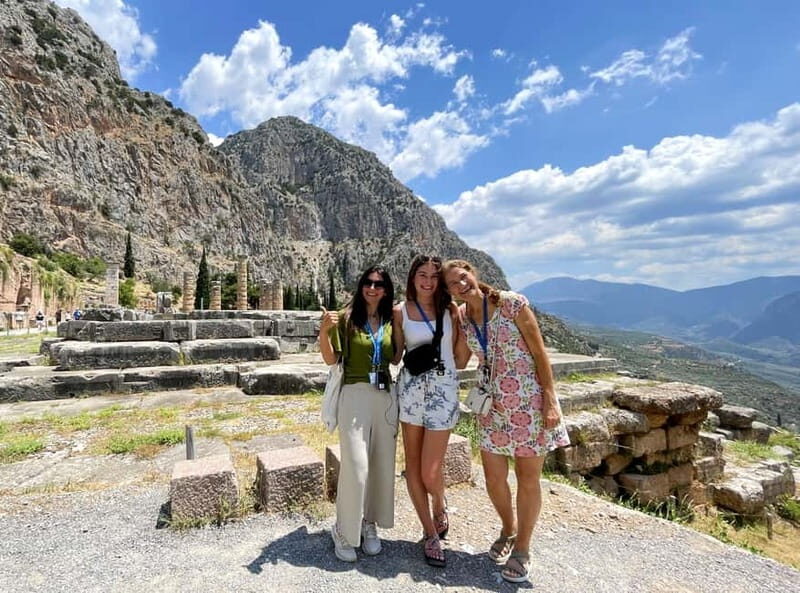
This tour costs just $6 more than the budget option but the guide quality jumps noticeably. You get a licensed Greek guide, which in practice means someone with a university degree in archaeology or history who passed a national exam. The difference shows. Instead of rehearsed scripts, you get someone who can answer your oddball questions about the Oracle’s political influence or why the Romans kept funding the sanctuary centuries after the Greeks.
The 11-hour itinerary gives you slightly more time at the site than the 10-hour tours, and the museum section is where the licensed guide really earns the extra money. The Charioteer of Delphi alone deserves 15 minutes of explanation. If you are the kind of traveller who reads the plaques at museums, this is your tour.
4. Delphi, Thermopylae & Corycian Cave — $169
This is the one for people who want more than ruins and a gift shop. At $169 it is significantly more expensive than the standard Delphi tours, but it packs an entirely different kind of day. You visit Delphi (the main event), then drive to Thermopylae where Leonidas and 300 Spartans made their famous stand against the Persian army. Then you head up a rough mountain road to the Corycian Cave, a massive cavern sacred to Pan and the Nymphs.
A word of warning from past visitors: the mountain road to the Corycian Cave is genuinely steep and rocky. The cave itself is muddy and slippery, and you will ruin good shoes. Wear hiking boots and clothes you don’t mind getting dirty. This is not a polished tourist experience, and that is exactly why the people who take it tend to love it. It is a small-group tour, which makes the logistics of the cave portion manageable.
When to Visit Delphi
Opening hours: The archaeological site and museum are open daily. Summer hours (April to October) are typically 8:00 to 20:00, with last entry at 19:40. Winter hours (November to March) are shorter, usually 8:30 to 15:30. Hours can shift, so check the official Greek Ministry of Culture website before you go.
Best months: April through mid-June and September through October. The wildflowers in spring are stunning, temperatures sit around 18-24C, and the tour buses have not yet reached peak volume. July and August are brutal. Delphi sits at 570 metres elevation, which helps slightly, but the exposed stone paths with zero shade make midday visits exhausting.
Best time of day: First thing in the morning. The 8:00 opening is ideal because you get 90 minutes before the Athens tour buses start arriving. If you are on a tour that departs Athens at 8:00 or 8:30, you will arrive around 10:30-11:00 alongside everyone else. That is still fine, but the early morning serenity is gone.
Worst time: Midday in July or August. The archaeological site has almost no shade, the stones radiate heat, and you will be sharing the Sacred Way with hundreds of other visitors. If you must visit in peak summer, go early and bring a hat, sunscreen, and more water than you think you need.
How to Get to Delphi from Athens
By tour bus (recommended): Every tour listed above includes pickup from central Athens hotels. The drive takes roughly 2.5 hours via the E75 motorway and the scenic mountain road through Boeotia. Most tours stop for a coffee break near Levadia.
By KTEL bus (budget option): Buses depart from Athens’ Terminal B (Liosion Street). Take the metro to Attiki station, then walk 10 minutes to the terminal. Departures are at roughly 7:30, 10:30, 13:00, 15:00, and 17:30 (schedules change seasonally). The journey takes about 3 hours and costs around EUR 17 one way. Buy tickets at the station or online at ktelbus.com.
By rental car: The fastest route is the E75 north to Thiva, then west on the mountain road to Delphi. About 180 km, 2-2.5 hours depending on traffic leaving Athens. Parking at Delphi is free but fills up fast in summer. Arrive before 9:00 to guarantee a spot near the site entrance.
By taxi/transfer: Private transfers run about EUR 200-280 round trip from Athens. Worth considering if you are a group of 3-4 splitting the cost, as it works out close to the tour price with complete flexibility on timing.
Tips That Will Save You Time
- Visit the museum first. Most tour groups go to the site first and the museum second. Flip the order if you are independent. You will have the museum almost to yourself in the morning, and the context makes the outdoor ruins far more meaningful.
- Wear proper shoes. The Sacred Way is uneven stone, and the path up to the stadium is steep. Sandals and flip-flops are a bad idea.
- Bring your own water and snacks. There is one cafe near the entrance and prices are tourist-inflated. The site visit takes 2-3 hours with the museum, and you will want water.
- Download an offline map. Mobile signal at the site is patchy. If you are using an audio guide app, download the content over WiFi at your hotel before you leave Athens.
- Budget 3 hours minimum. The site alone takes 1.5-2 hours if you walk up to the stadium (you should). The museum adds another 45-60 minutes. Do not try to rush it.
- The stadium is worth the climb. Many visitors turn around at the theatre. Keep going. The ancient stadium at the top is remarkably well-preserved and the views from there are the best on the entire site.
- Arachova is better than Delphi town for lunch. The restaurants in modern Delphi town are tourist traps. Arachova, 12 km east, has genuinely good tavernas and a mountain village atmosphere that is worth the detour.
What You’ll Actually See at Delphi
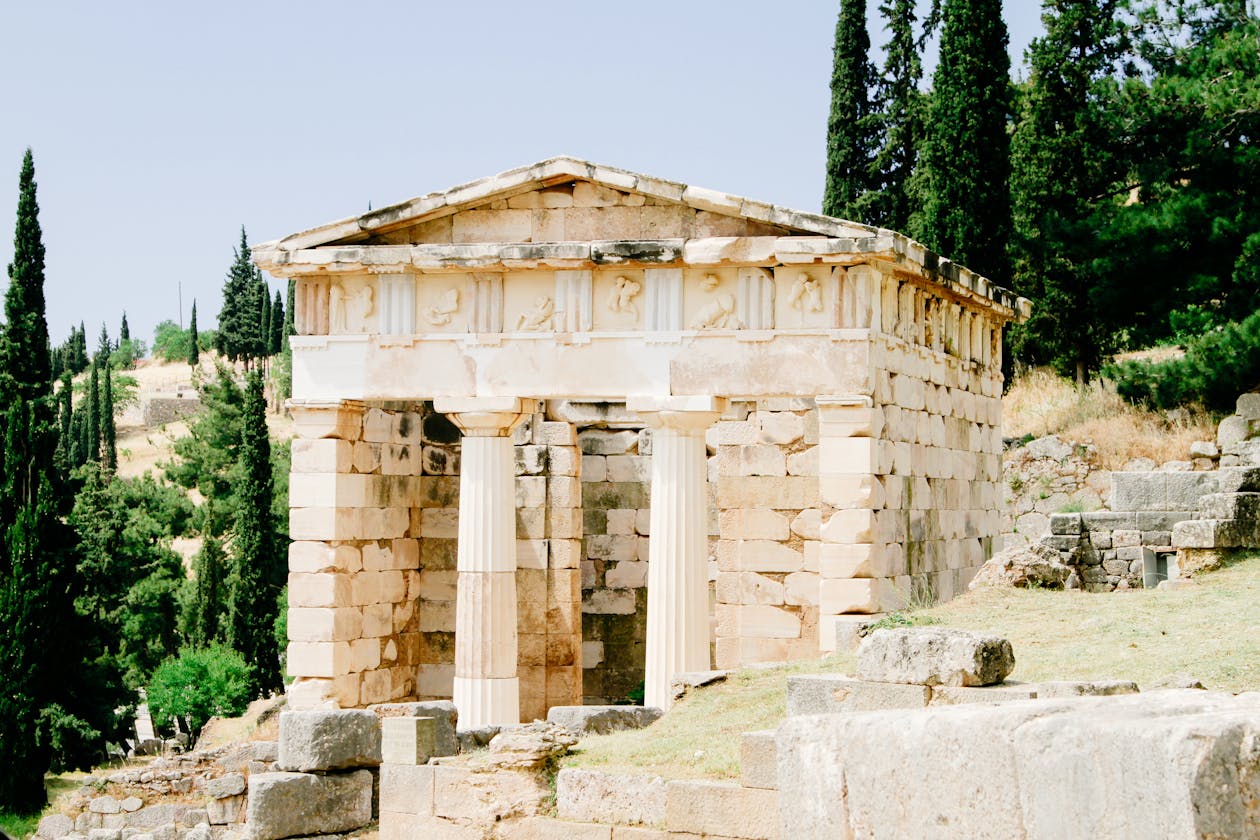
Delphi was not just one temple. It was an entire religious complex that grew over eight centuries, filled with monuments, treasuries, and offerings from city-states competing to impress the Oracle. Walking the Sacred Way from the entrance up to the Temple of Apollo, you pass the ruins of more than twenty treasuries, each one built by a different Greek city to store their offerings and show off their wealth.
The Sacred Way: This zigzagging path from the entrance up to the Temple of Apollo is the spine of the site. It is lined with the remains of monuments, statues, and treasuries. Your guide will stop at the key points, but even without a guide the walk is atmospheric.
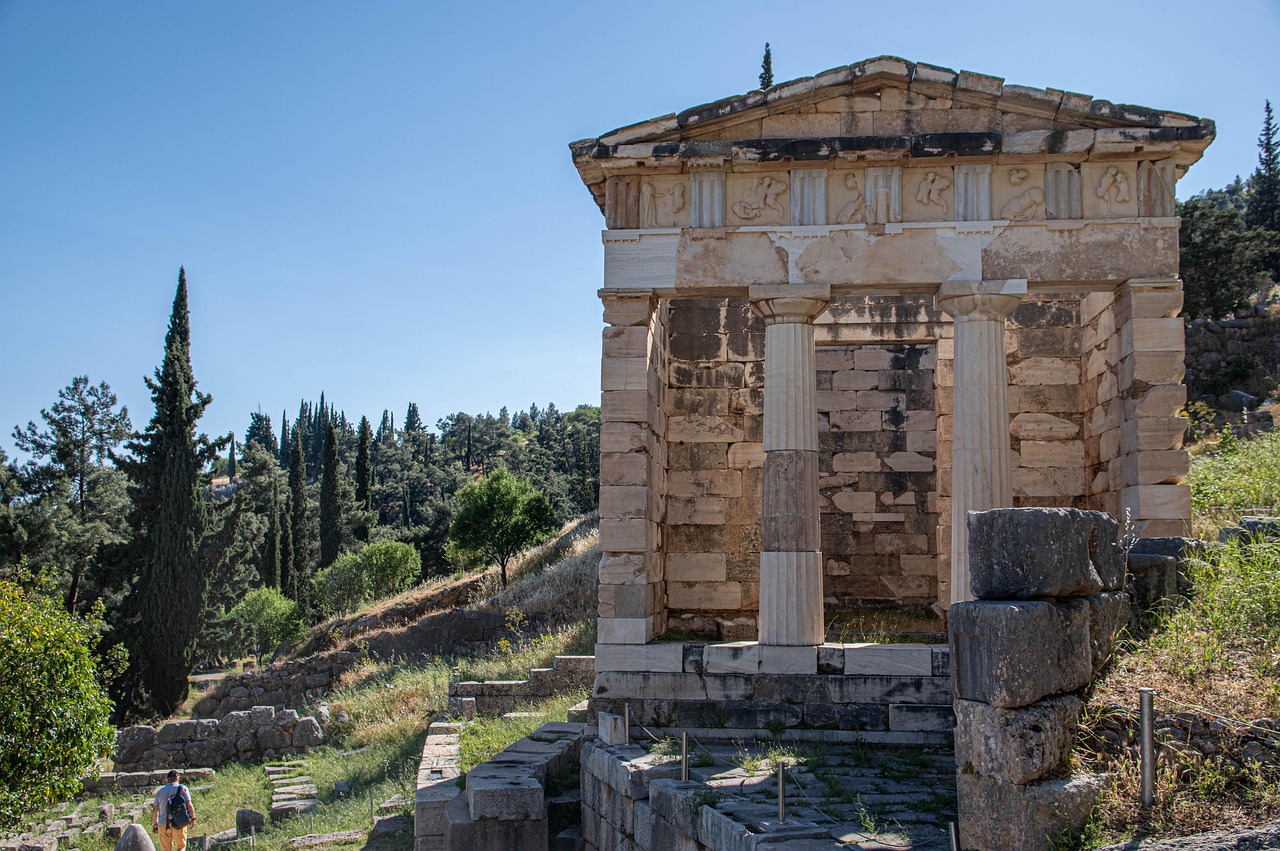
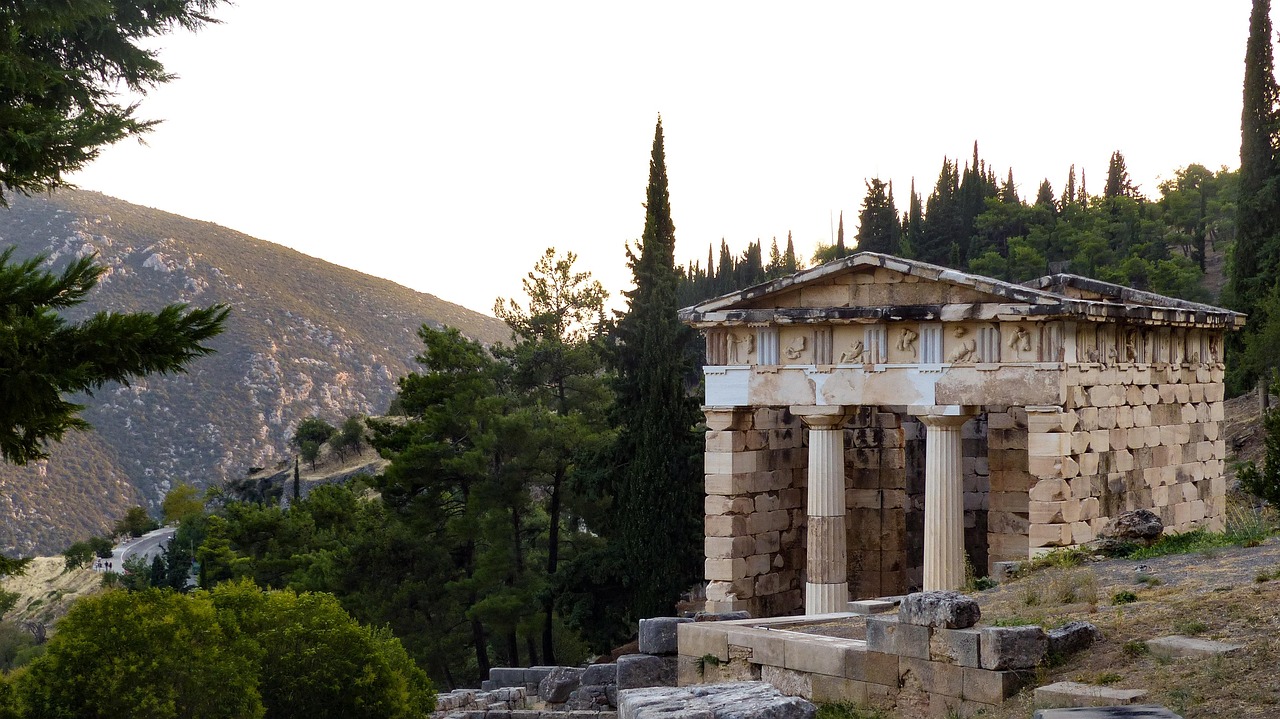
The Treasury of the Athenians: The best-preserved building on the site, partially reconstructed in the early 1900s. It was built to celebrate the Athenian victory at the Battle of Marathon. If you only photograph one building at Delphi, make it this one.
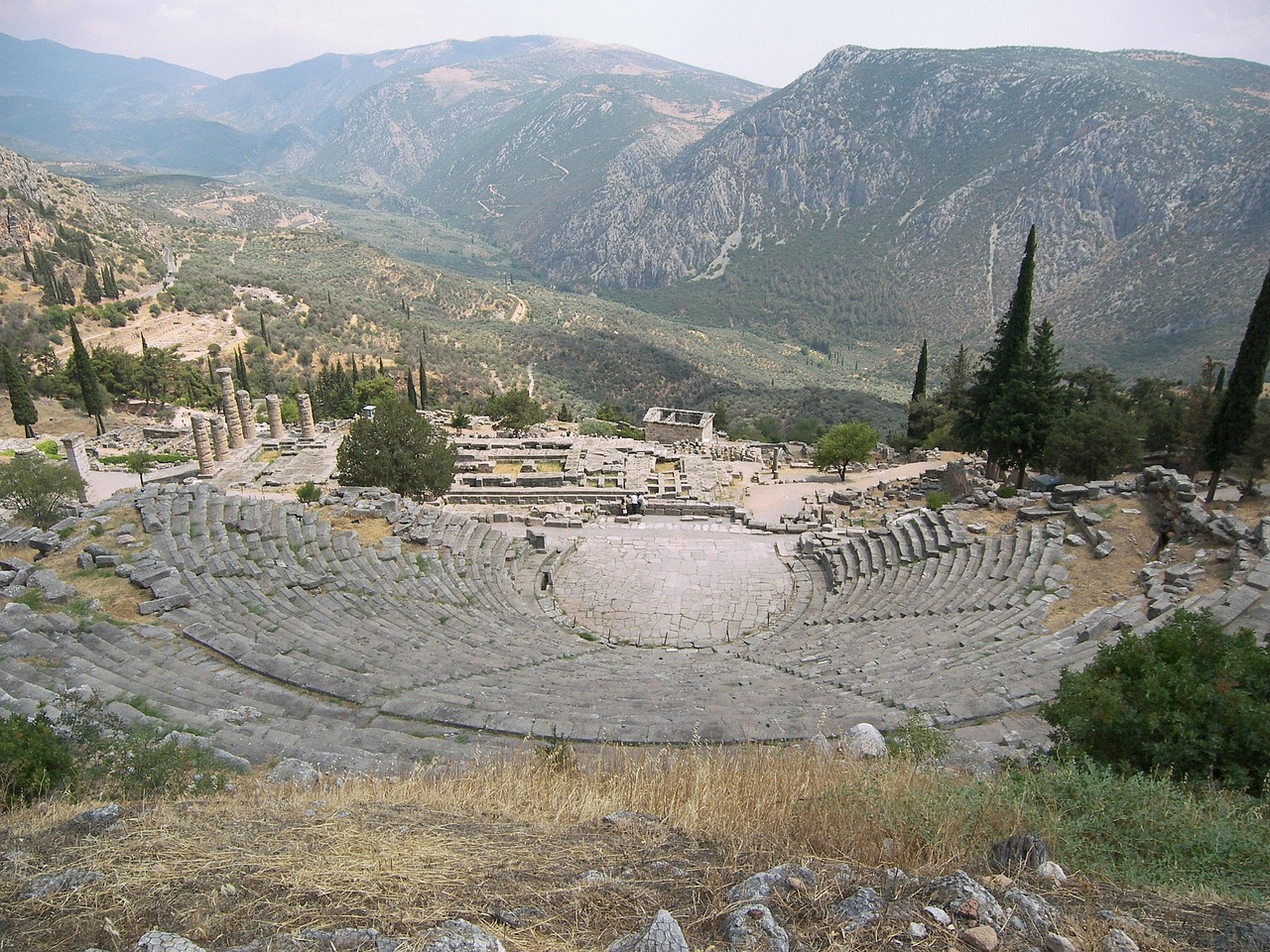
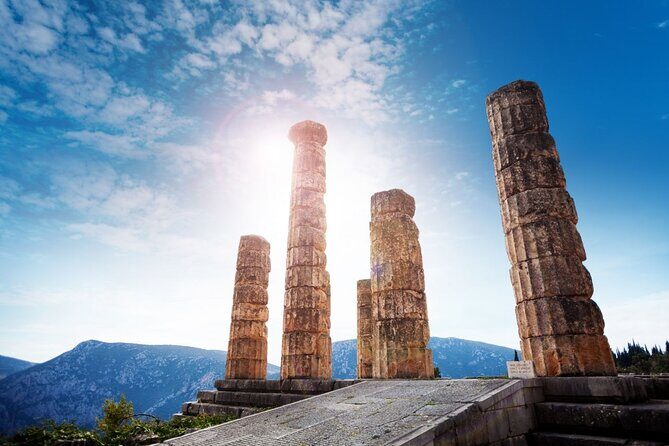
The Temple of Apollo: The main event. This is where the Oracle delivered her prophecies, seated over a fissure in the rock where intoxicating fumes were said to rise from the earth. Only six columns are still standing, but the foundation is massive and gives you a sense of the temple’s original scale.
The Theatre: Built in the 4th century BC with 35 rows of seats for 5,000 spectators. The acoustics are remarkable. Stand at the orchestra (the circular stage area) and speak normally; someone at the top row will hear every word. The view from the upper seats across the sanctuary and down to the olive valley is one of the best panoramas in Greece.
The Stadium: A steep 10-minute climb above the theatre. This is where the Pythian Games were held, the ancient predecessor to the Olympics. The starting blocks are still visible. Most tour groups skip the stadium, which means you might have it almost to yourself.
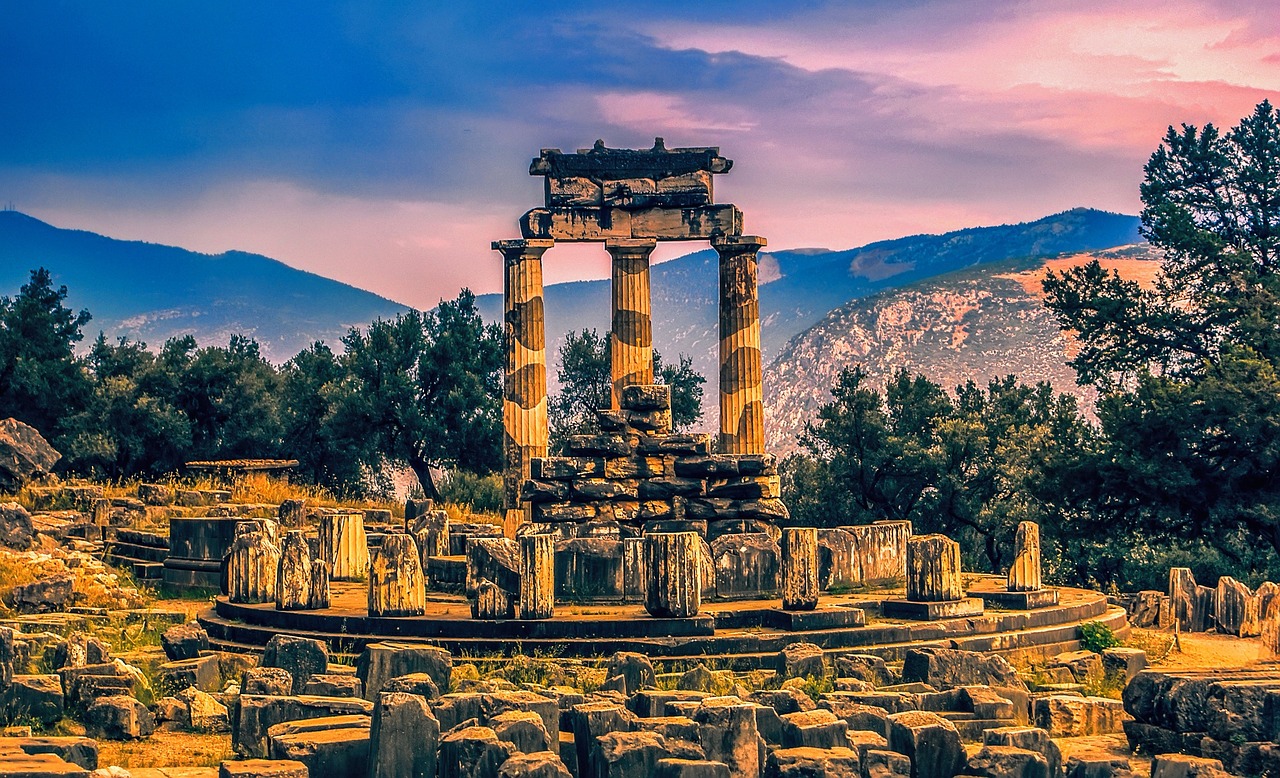
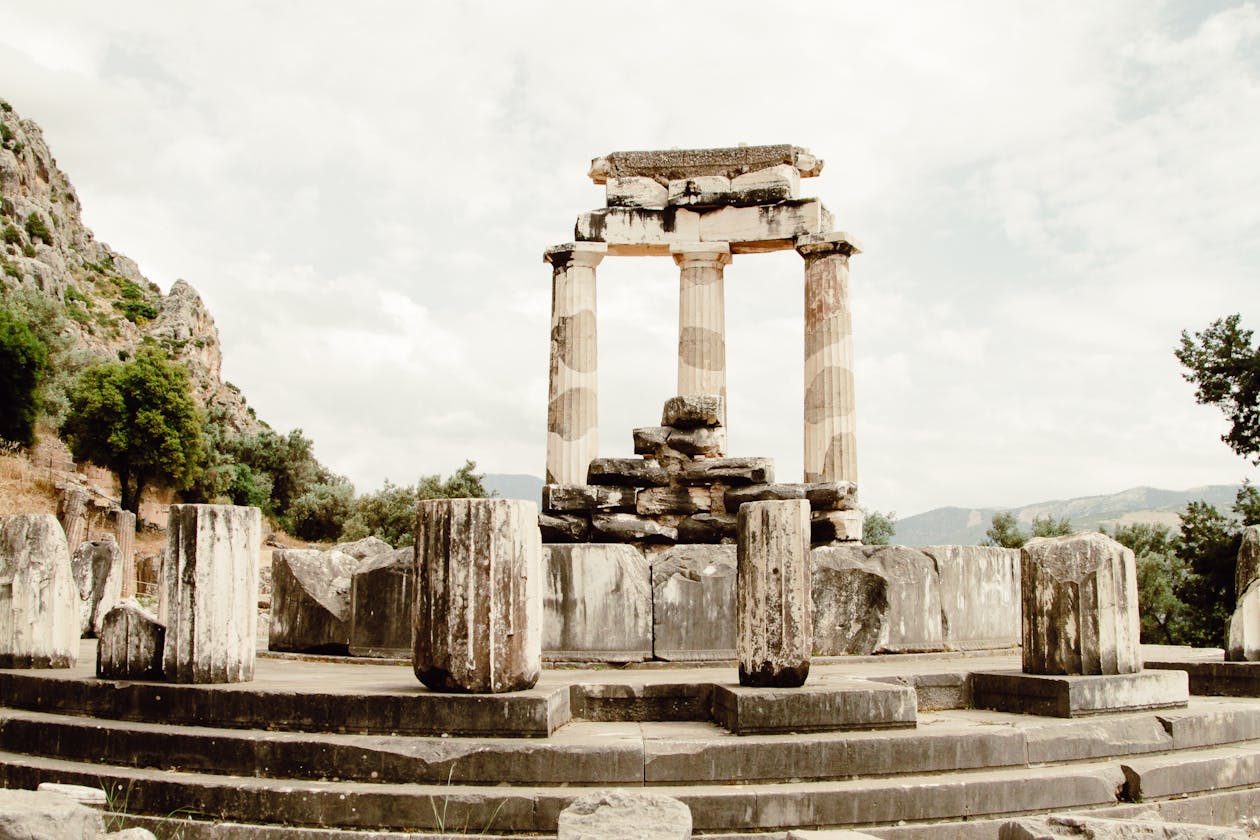
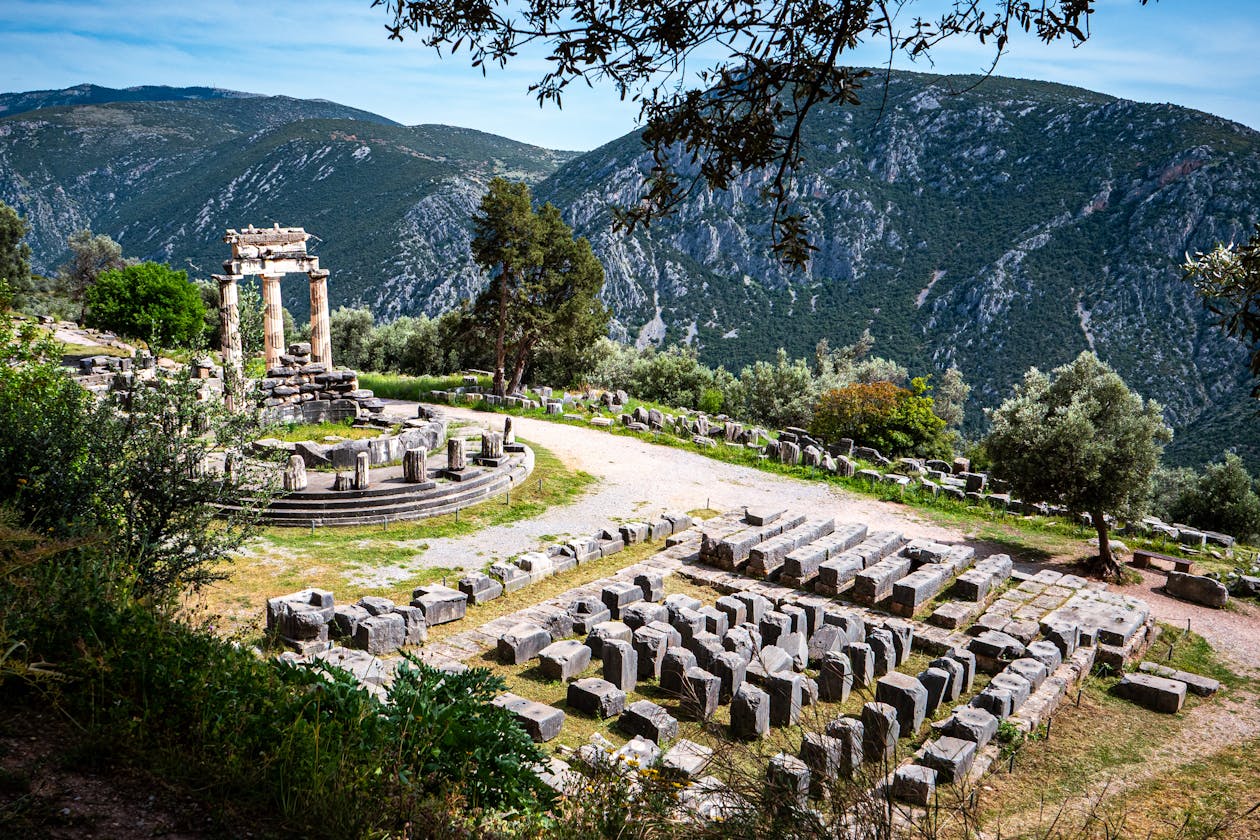
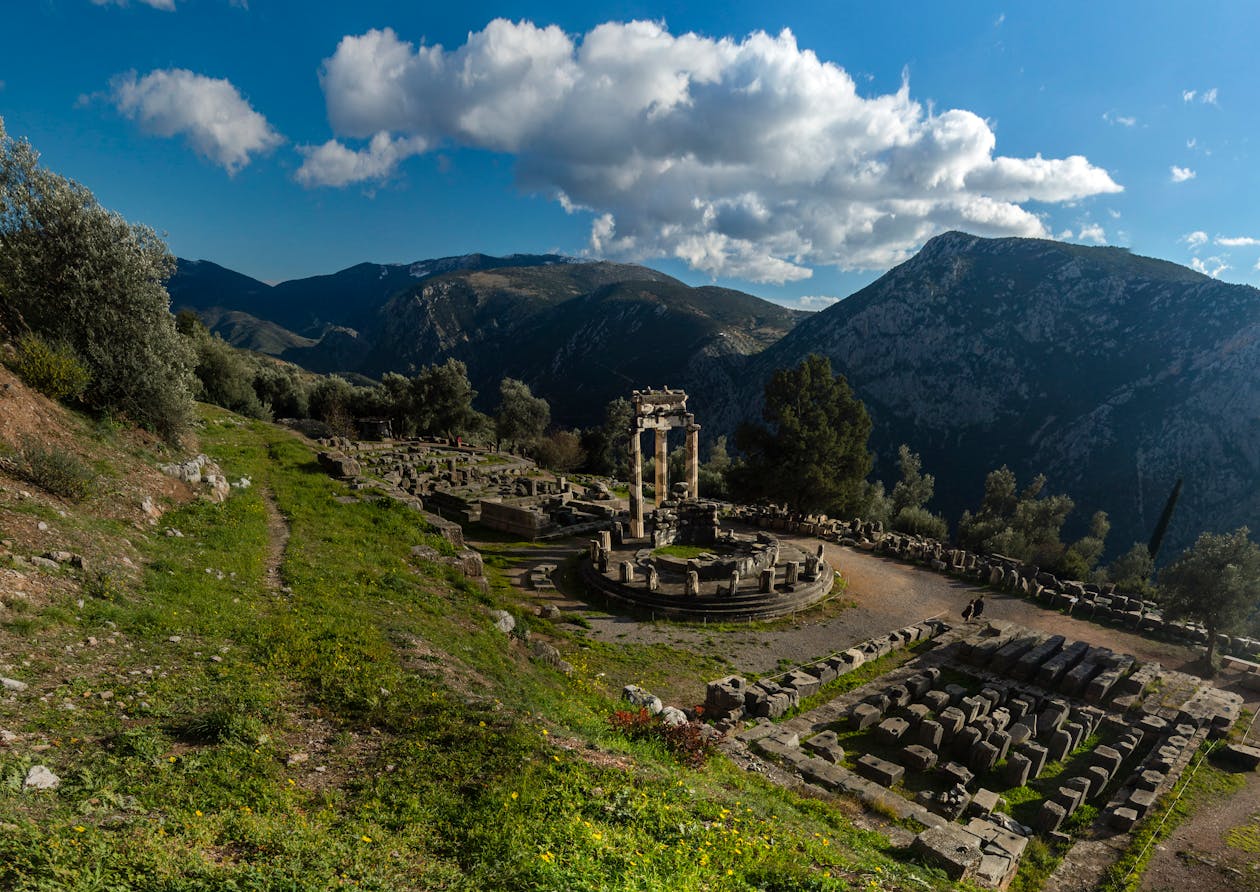
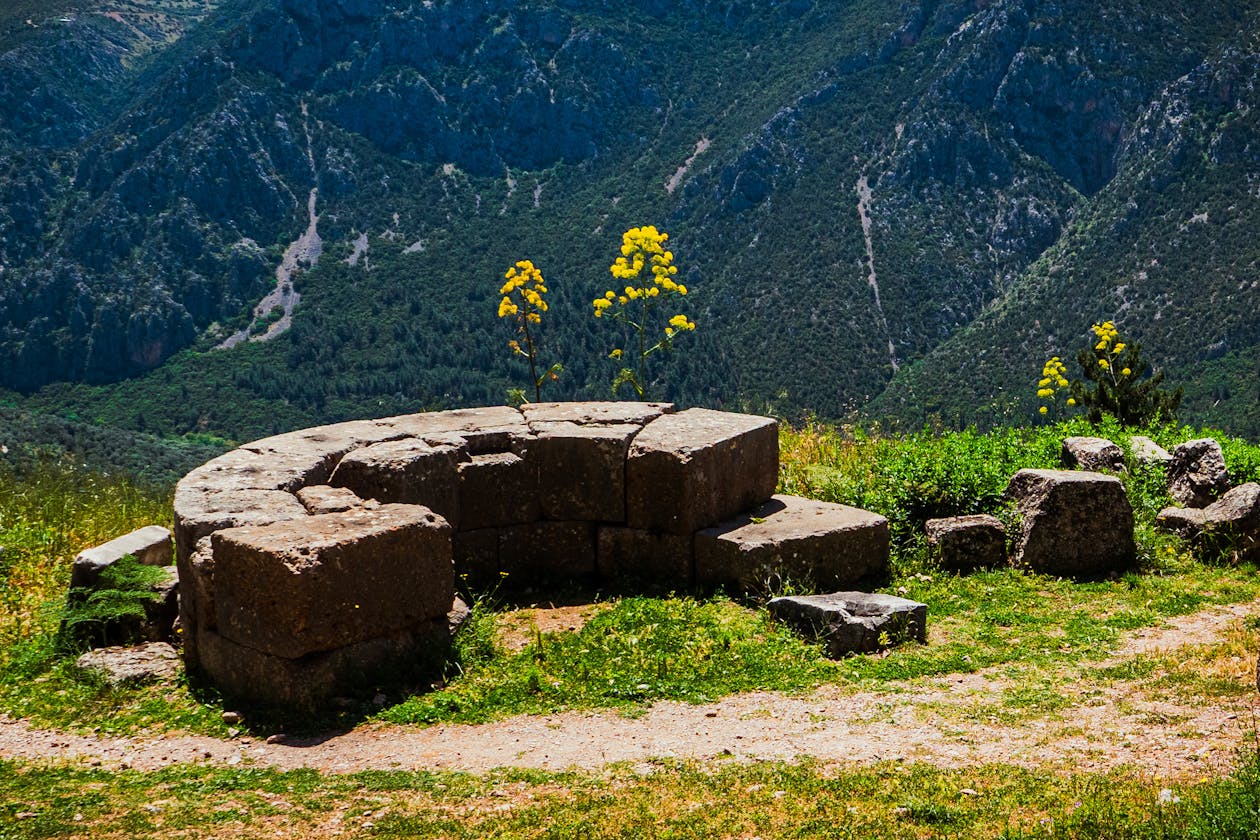
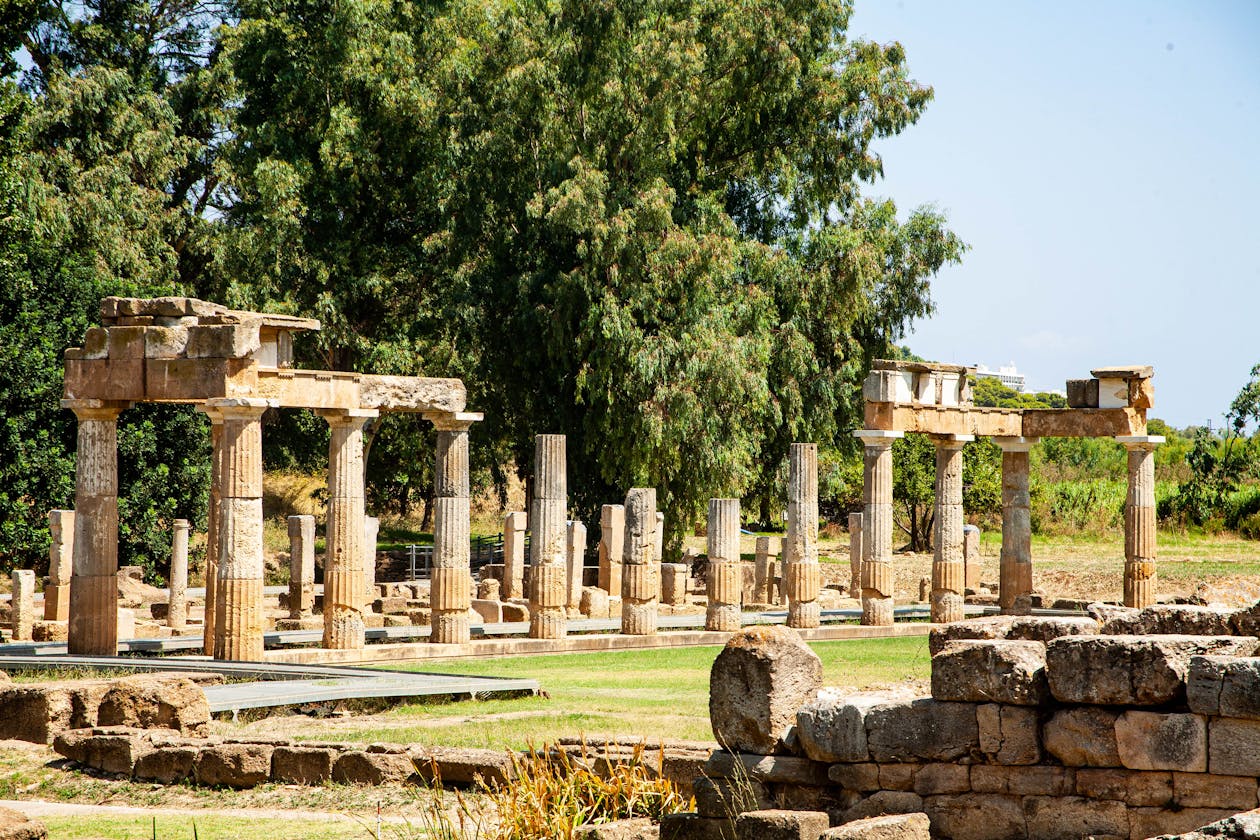
The Tholos: Down in the Sanctuary of Athena Pronaia, a short walk from the main site entrance. This circular temple with its three remaining Doric columns is the image you have seen on every Delphi postcard. The purpose of the Tholos is still debated by archaeologists, which somehow makes it more interesting.
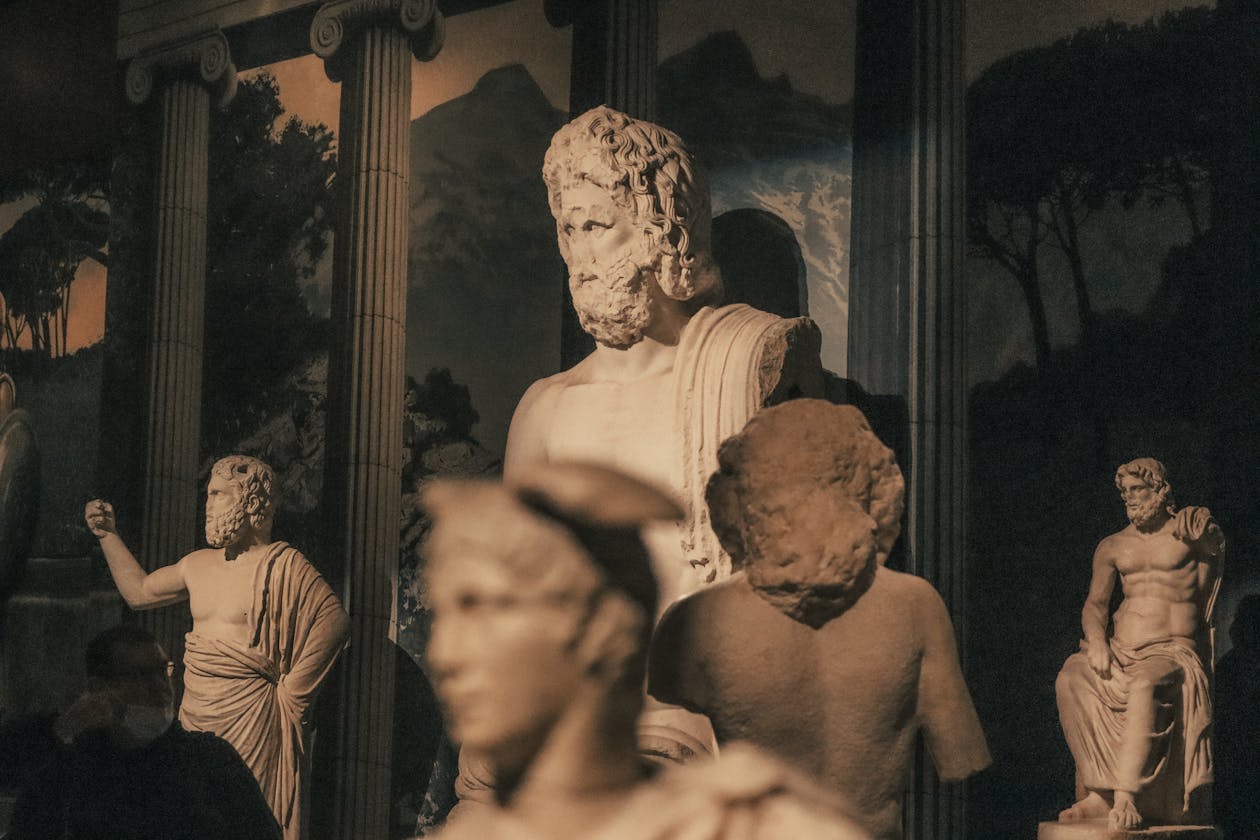
The Museum: Contains the finds from the site including the bronze Charioteer, the Sphinx of Naxos, and the twin Kouroi statues. The Charioteer alone is worth the visit, an almost perfectly preserved bronze from 478 BC with inlaid glass eyes that still look alive. The museum takes 45-60 minutes and is air-conditioned, a welcome break in summer.
The Arachova Stop
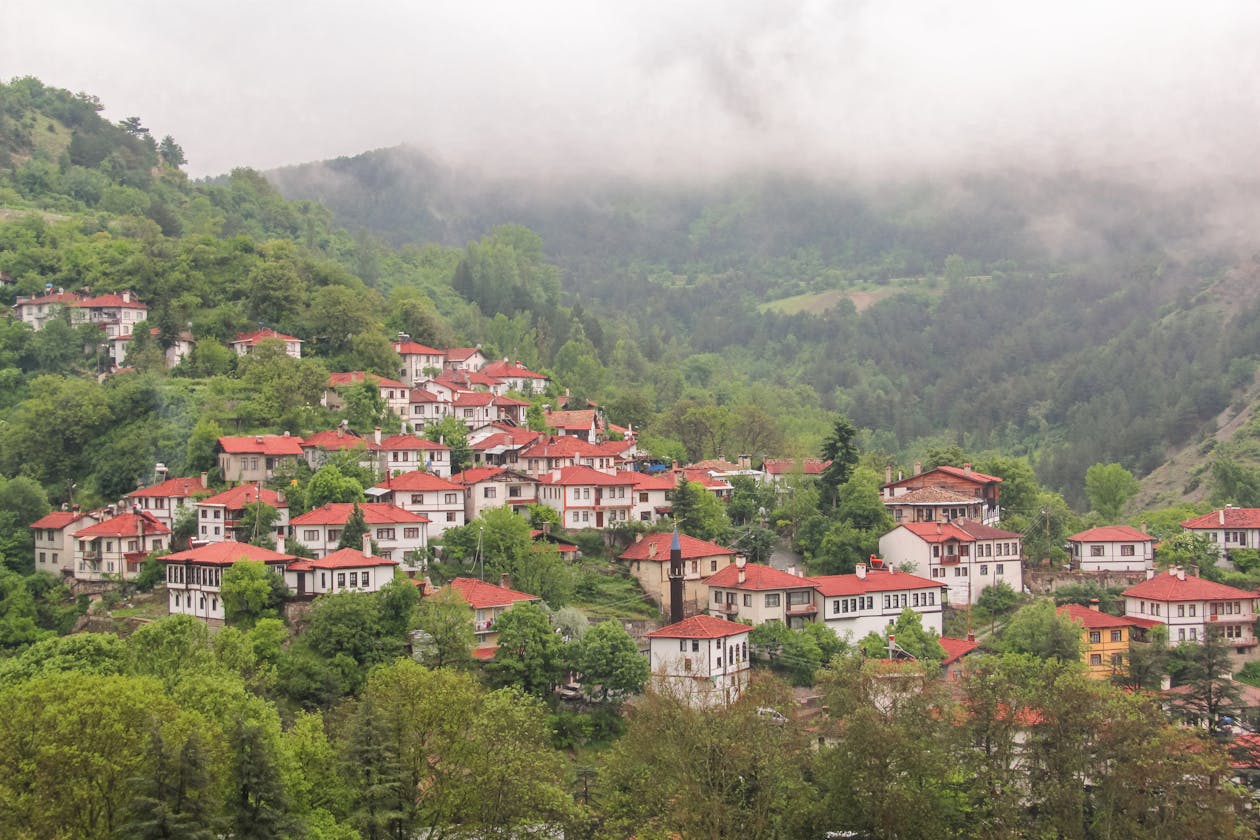
Almost every Delphi tour includes a stop in Arachova, a stone-built mountain village perched on the slopes of Mount Parnassus about 12 km from the archaeological site. In winter it is a ski resort town. In summer it is a beautiful place to stretch your legs, browse the shops selling local honey, olive oil, and handwoven rugs, and eat lunch at a taverna with mountain views.
The typical tour gives you 30-45 minutes here. If you want more time, the audio guide tour (option 2 above) tends to be more flexible, or you can drive yourself and make an afternoon of it. The main street climbs steeply through the village, so wear comfortable shoes here too.
While You’re in Greece
If Delphi is on your list, you are probably spending at least a few days in Athens, and there is no shortage of things to book while you are there. The Acropolis is the obvious one, and our guide covers the skip-the-line ticket situation that saves you an hour of standing in the sun. For something completely different from ancient ruins, an Athens food tour through the Central Market and backstreet tavernas is the best way to understand how modern Athenians actually eat. And if Delphi has given you a taste for dramatic Greek landscapes, the Meteora monasteries are an even longer day trip, but the cliff-top monasteries are extraordinary. Some tours even combine Delphi and Meteora into a two-day trip that eliminates the backtracking, which is a smart move if your schedule allows it. A Santorini caldera cruise is a different kind of Greece entirely, but if you have the time, the island hopping is worth it.
This article contains affiliate links. If you book a tour through one of our links, we earn a small commission at no extra cost to you. This helps us keep writing detailed travel guides.
More Greece Guides
Delphi takes a full day from Athens, so schedule your city sightseeing separately. The Acropolis and a food tour both fit into a different day, and the hop-on hop-off bus handles logistics between city sites.
If Delphi leaves you wanting more ancient sites, Ancient Corinth is a shorter trip from Athens and often combined with Epidaurus and Mycenae on a Peloponnese loop. Meteora is the other big full-day trip — monasteries on sandstone pillars instead of oracle ruins.