
Philip II wanted a palace for God and a shack for himself. He got both — under the same roof.
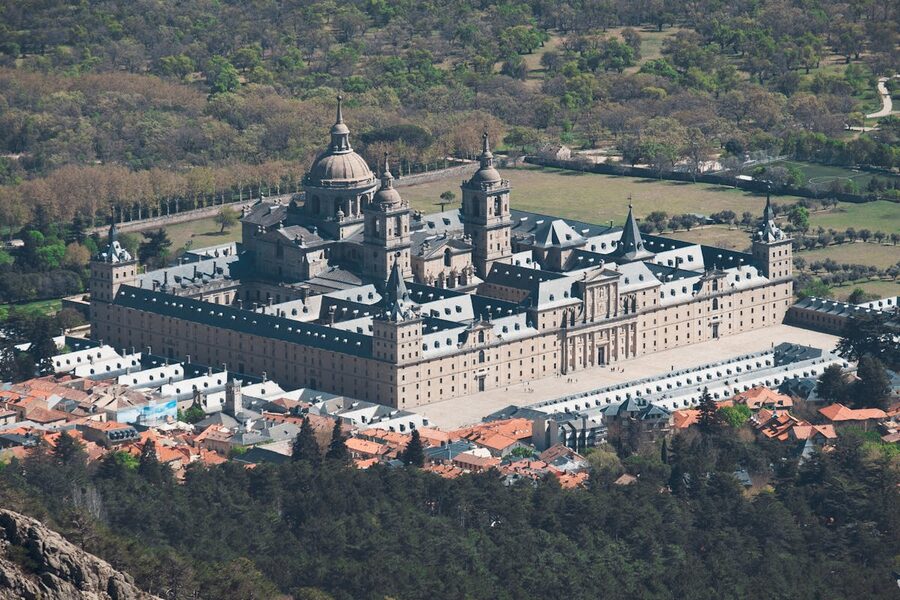
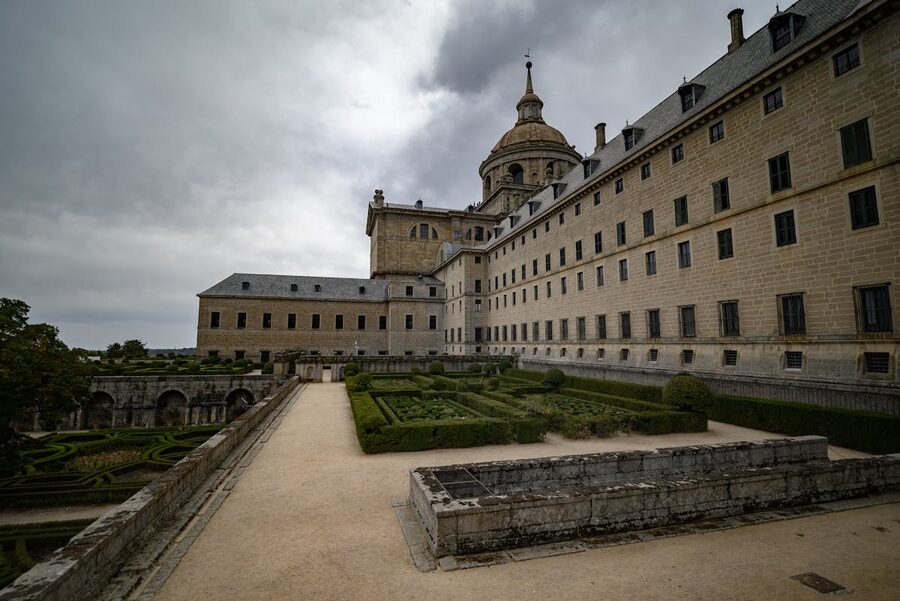
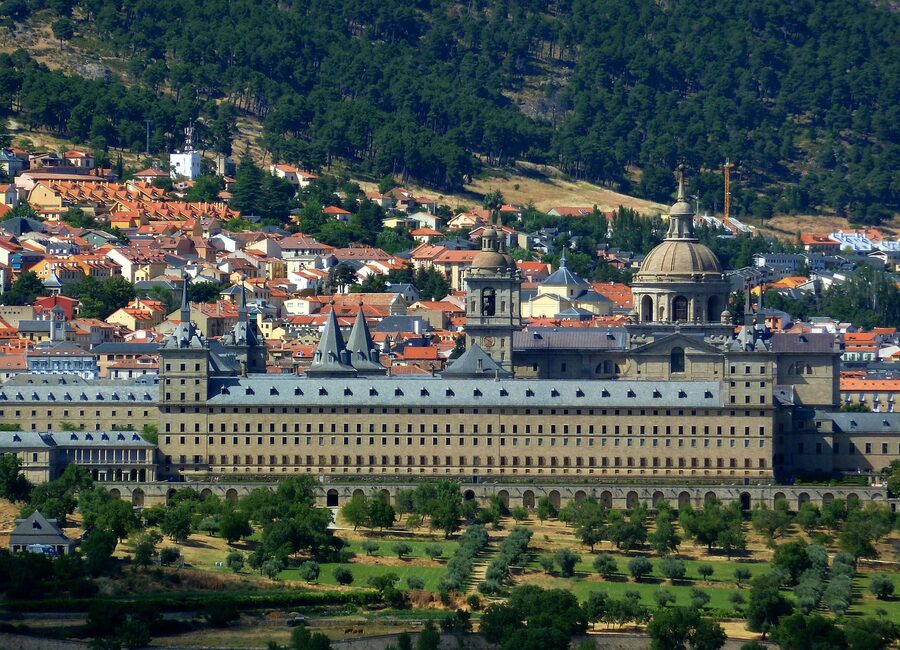
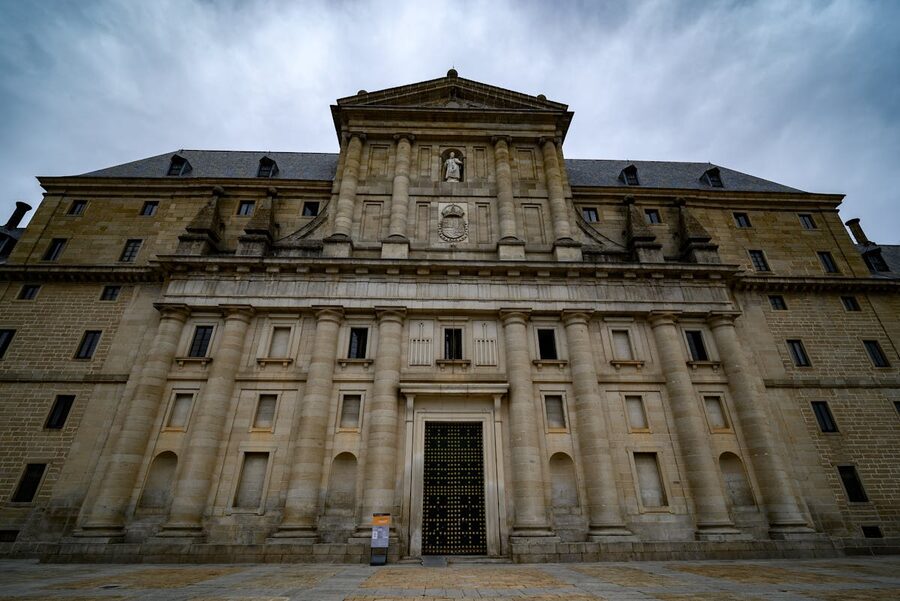
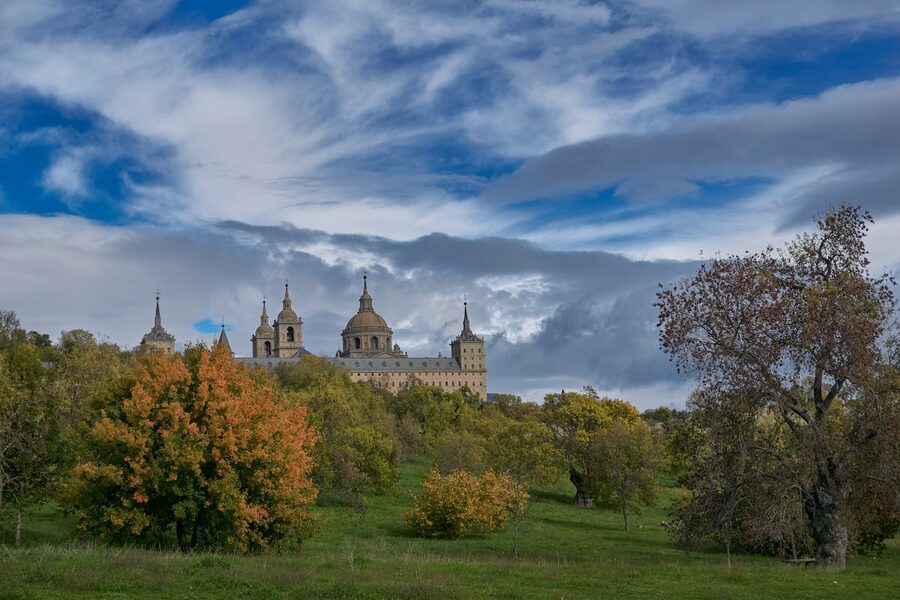
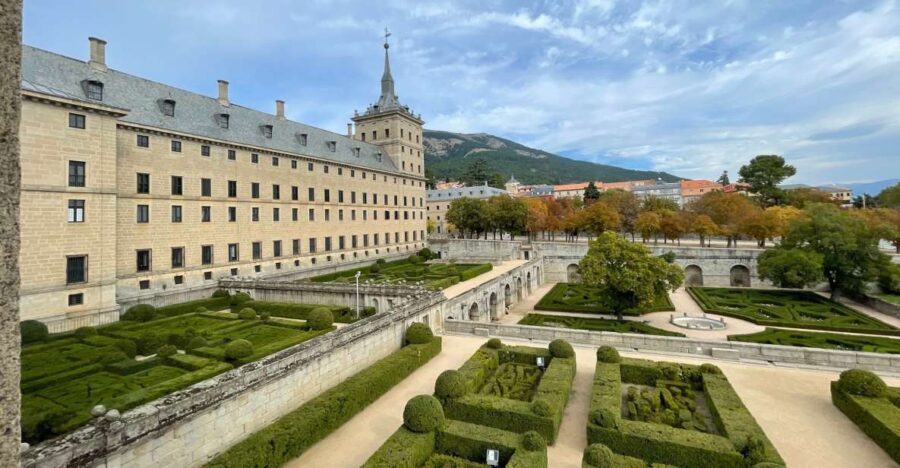
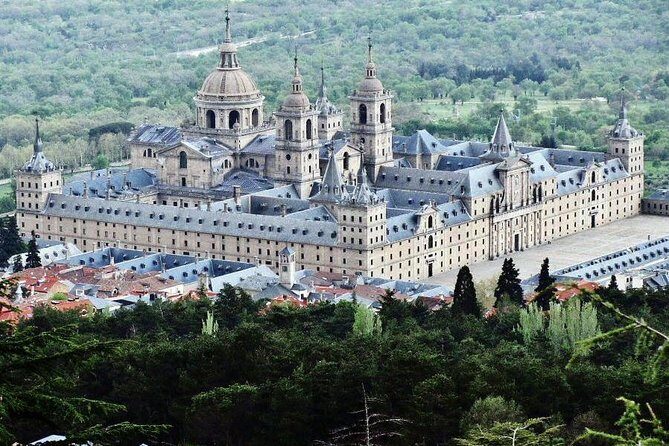
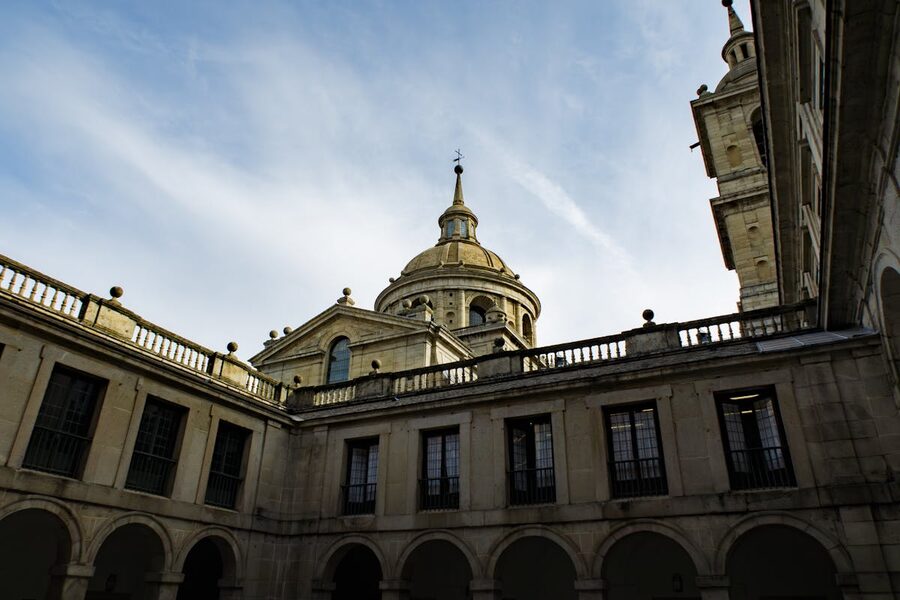
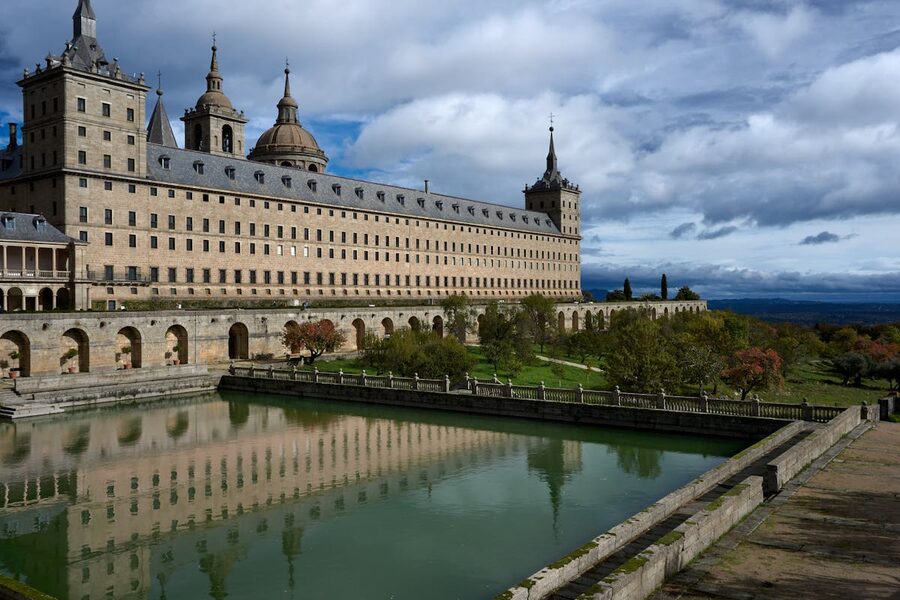
El Escorial sits about 50 kilometres northwest of Madrid in the foothills of the Sierra de Guadarrama, and the first time you see it from the road, you think it’s a fortress. It’s not. It’s a monastery, a royal palace, a library holding 40,000 volumes, a school, and a mausoleum for Spanish kings — all packed into one enormous granite rectangle that took 21 years to build. Philip watched the construction from a rock outcrop above the site. That rock is still there.
Then there’s the Valley of the Fallen — or the Valley of Cuelgamuros, as Spain now officially calls it. A 150-metre granite cross rising from a mountain, visible from 30 kilometres away. A basilica carved 262 metres into solid rock, longer than St Peter’s in Rome. Franco built it between 1940 and 1958, partly with political prisoner labour, as a memorial to the Spanish Civil War. Whether it’s a monument to reconciliation or a monument to victory depends entirely on who you ask. Either way, it’s one of those places that hits harder in person than any photo can prepare you for.
Most visitors do both in a single half-day trip from Madrid, and that’s exactly how I’d recommend doing it. They’re 15 minutes apart by road and the combination works. Here’s everything you need to know to book it right.
Best overall: From Madrid: Escorial Monastery and the Valley of the Fallen — $73. Five hours, skip-the-line, smaller group feel. The guide Beatriz gets mentioned by name in nearly every positive review I’ve read.
Best for history buffs: Escorial Monastery and Valley of the Fallen Tour from Madrid — $75. The most popular option for a reason — over 2,400 reviews, full ticket coverage, and guides who go deep on the Civil War history.
Best for flexibility: Escorial Monastery and the Valley of the Fallen from Madrid — $79. Slightly longer at 5.5 hours with more time at each site. Worth the extra few dollars if you don’t want to feel rushed.
- How the Official Ticket System Works
- Official Tickets vs Guided Tours — Which Makes Sense?
- The 3 Best El Escorial and Valley of the Fallen Tours
- 1. From Madrid: Escorial Monastery and the Valley of the Fallen —
- 2. Escorial Monastery and the Valley of the Fallen Tour from Madrid —
- 3. Escorial Monastery and the Valley of the Fallen from Madrid —
- When to Visit El Escorial and the Valley of the Fallen
- How to Get There on Your Own
- What You’ll Actually See Inside
- El Escorial
- Valley of the Fallen (Valley of Cuelgamuros)
- Tips That Will Save You Time (and Frustration)
- More Madrid Day Trips Worth Booking
How the Official Ticket System Works
El Escorial and the Valley of the Fallen operate on separate ticketing systems, which is the first thing that trips people up.
El Escorial (Patrimonio Nacional): Tickets are sold through the Patrimonio Nacional website. The general admission fee is 12 EUR for adults. EU citizens between 5 and 16 pay 6 EUR, and it’s free for EU children under 5. There’s also free entry on certain public holidays and Wednesday/Thursday afternoons for EU residents, though the hours vary by season. Audio guides cost an additional 4 EUR.
Valley of Cuelgamuros (Valley of the Fallen): Entrance tickets cost 9 EUR for adults and 4 EUR for children (5-16). You can buy them at the gate or through Patrimonio Nacional online. The basilica itself is the main draw — the cross and exterior are visible from the car park without a ticket.
Combined option: There’s no official combo ticket linking both sites. That’s one reason guided tours work so well here — they bundle both entries plus transport for roughly the price of two separate tickets plus a rental car.
Official Tickets vs Guided Tours — Which Makes Sense?
If you have a rental car and strong feelings about going at your own pace, buying tickets separately and driving yourself is doable. El Escorial is about 55 minutes from central Madrid. The Valley is another 15 minutes north from there.
But here’s the honest calculation: two tickets (12 + 9 EUR = 21 EUR per person), parking, petrol, highway tolls, and the time spent navigating mountain roads versus a $73 guided tour that includes all entries, hotel pickup, and a professional guide explaining what you’re looking at. For solo travellers or couples, the guided option is almost always the better deal. For families of four or five, driving might save you a bit — but you lose the context, and El Escorial without context is just a very large building.
The Valley of the Fallen, especially, benefits from a guide. The political history is layered and recent — Franco’s exhumation in 2019 was front-page news across Spain, and the site was officially renamed in 2022 under the Historical Memory Law. A good guide makes sense of all that without turning it into a lecture.
The 3 Best El Escorial and Valley of the Fallen Tours
I went through every available tour, checked the reviews, compared what’s included, and narrowed it down to three worth booking. All depart from central Madrid and return the same day.
1. From Madrid: Escorial Monastery and the Valley of the Fallen — $73
This is the one I’d book. At $73 per person for a five-hour tour with skip-the-line access and all entries included, it’s the best value of the three. The guide Beatriz gets name-checked in review after review, and that kind of consistency matters. One recent visitor noted she covered both the Spanish monarchy and the Civil War monument without it feeling rushed — high praise for a half-day tour covering two heavy-hitting sites.
Groups tend to run smaller than the Viator alternatives, which means more time for questions and less time herding people through corridors. The pickup is from a central Madrid meeting point, and you’re back by early afternoon with the whole day still ahead of you.
2. Escorial Monastery and the Valley of the Fallen Tour from Madrid — $75
This is the workhorse. Over 2,400 reviews, a near-perfect rating, and it’s been running long enough that the kinks are ironed out. The $75 price includes all entries and a five-hour itinerary that covers both sites thoroughly. Multiple guides rotate on this one — Beatrice and Sergio both get mentioned frequently — and the driver (Pablo, apparently) is part of what makes the day feel relaxed rather than logistical.
The only knock I’d give it is that the groups can occasionally run larger than the GetYourGuide option, which means a bit more waiting at choke points inside El Escorial’s narrower halls. But if you want the most battle-tested option with the longest track record, this is it.
3. Escorial Monastery and the Valley of the Fallen from Madrid — $79
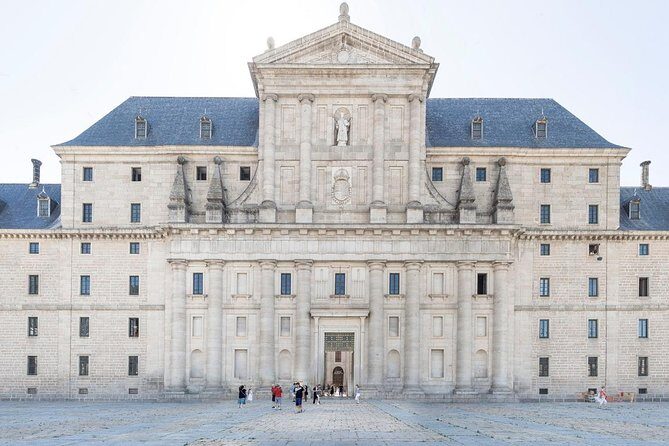
At $79, this is the priciest of the three by a small margin, but you get an extra 30 minutes — 5.5 hours total instead of 5. That half hour doesn’t sound like much, but it’s the difference between sprinting through El Escorial’s gardens to the bus and actually having a moment to sit on a bench and take in the view toward Madrid. Run by Julia Travel, one of Spain’s oldest and most established tour operators, so the logistics are polished.
One reviewer mentioned weather issues making some things harder to see — fog in the mountains is real and more common than you’d expect, especially in autumn and winter mornings. Not the tour’s fault, but worth knowing. If you get a clear day, the views from the Valley of the Fallen are spectacular.
When to Visit El Escorial and the Valley of the Fallen
Both sites are open year-round, but the experience changes significantly by season.
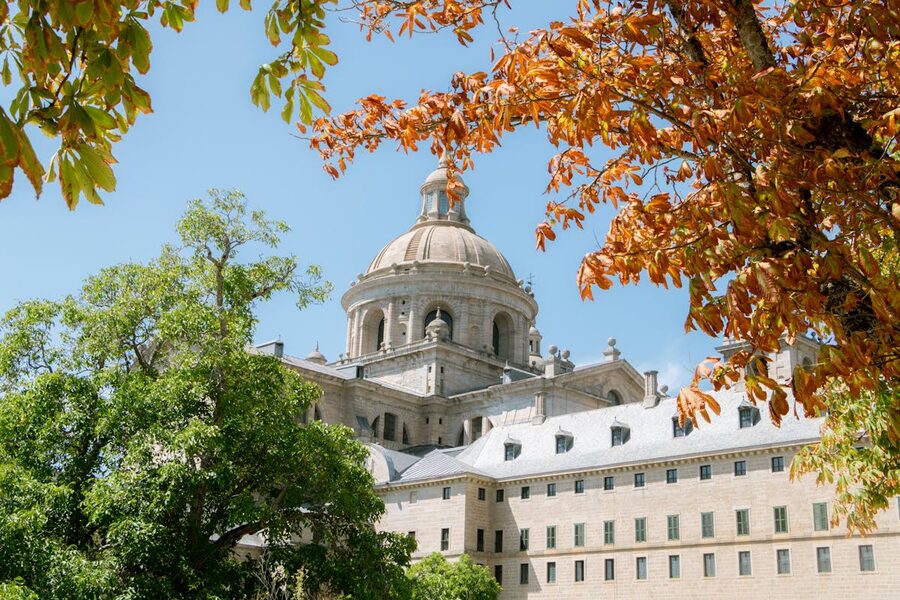
Best time: Late September through November. The crowds thin out dramatically after summer, temperatures in the mountains hover around 15-20C, and the forests around El Escorial turn copper and gold. You’ll actually be able to stand in the Basilica at El Escorial without someone’s elbow in your back.
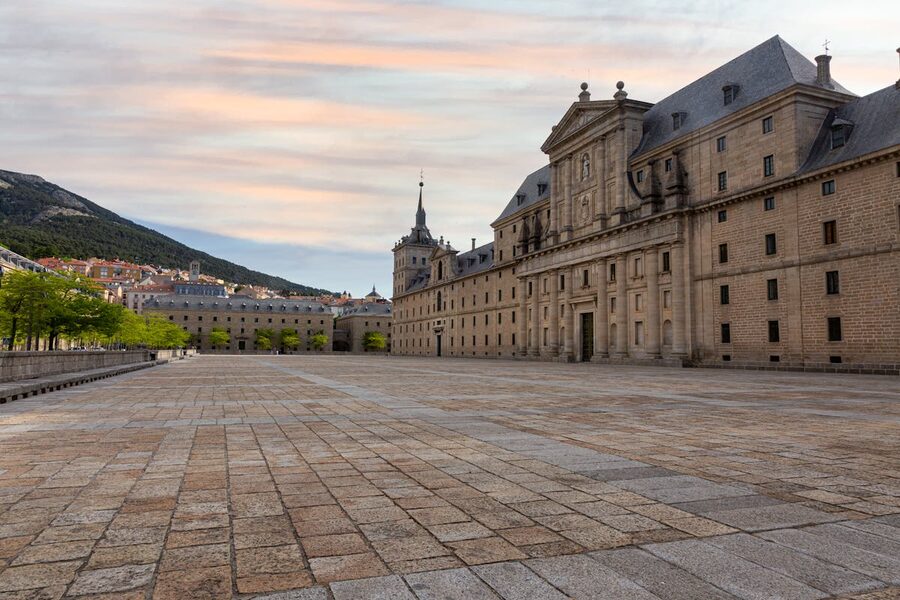
Summer (June-August): Hot. Madrid’s heat follows you into the mountains, though it’s a few degrees cooler at 1,000 metres elevation. The sites get packed with Spanish school groups and European travelers. Book your tour at least a week in advance during July and August.
Winter: El Escorial is quieter and moodier — the austere granite works beautifully under grey skies. But the Valley of the Fallen occasionally closes during severe weather, and fog can obscure the cross entirely. Check conditions before heading up.
Hours: El Escorial is open Tuesday to Sunday, 10:00-18:00 (October-March) or 10:00-20:00 (April-September). Closed Mondays. The Valley follows similar hours but closes at 19:00 in summer. Both close on January 1, May 1, and December 25.
How to Get There on Your Own
By train: Renfe Cercanías line C-3a runs from Madrid’s Atocha station to El Escorial station in about an hour. From the station, it’s a 15-minute walk uphill to the monastery, or grab the local bus (L661). Cost: around 5-6 EUR each way. The problem is getting from El Escorial to the Valley of the Fallen by public transport — there’s no direct bus, and you’d need a taxi (roughly 15-20 EUR each way).
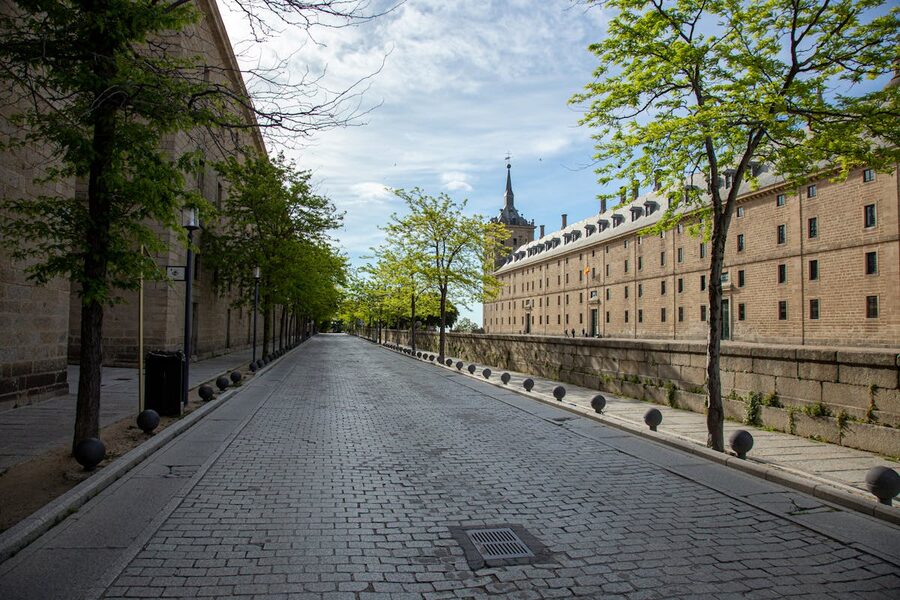
By bus: Autocares Herranz (line 661 or 664) runs from Madrid’s Moncloa bus station to San Lorenzo de El Escorial. About 50 minutes, roughly 5 EUR. Same problem getting to the Valley afterward.
By car: Take the A-6 motorway from Madrid toward A Coruina, exit at M-600 for El Escorial. About 55 minutes in normal traffic. Free parking is available at the site, though it fills up by mid-morning in summer. From El Escorial, the Valley is 15 minutes north via the M-600 and M-527.
The honest take: If you want to visit both sites, a guided tour eliminates the biggest headache — the transfer between El Escorial and the Valley of the Fallen. Public transport connects Madrid to El Escorial fine, but the Valley is basically car-only.
What You’ll Actually See Inside
El Escorial
The building is divided into several distinct sections, and a standard ticket covers them all.

The Library: This is what most people remember long after they’ve forgotten the rest. 40,000 volumes, including medieval manuscripts and Arabic texts that survived the Reconquista. The books are stored spine-in — you see the gilt page edges, not the spines — because Philip II wanted the gold to catch the light from the windows. It’s one of those details that makes you rethink everything you assumed about 16th-century aesthetics.
The Basilica: Directly above the Pantheon of Kings, which means you’re walking over generations of dead monarchs. The retable behind the altar is 30 metres tall and absolutely dominates the space. If you’ve been to other Spanish churches and felt underwhelmed, this one is different — the scale is deliberate, almost overwhelming.
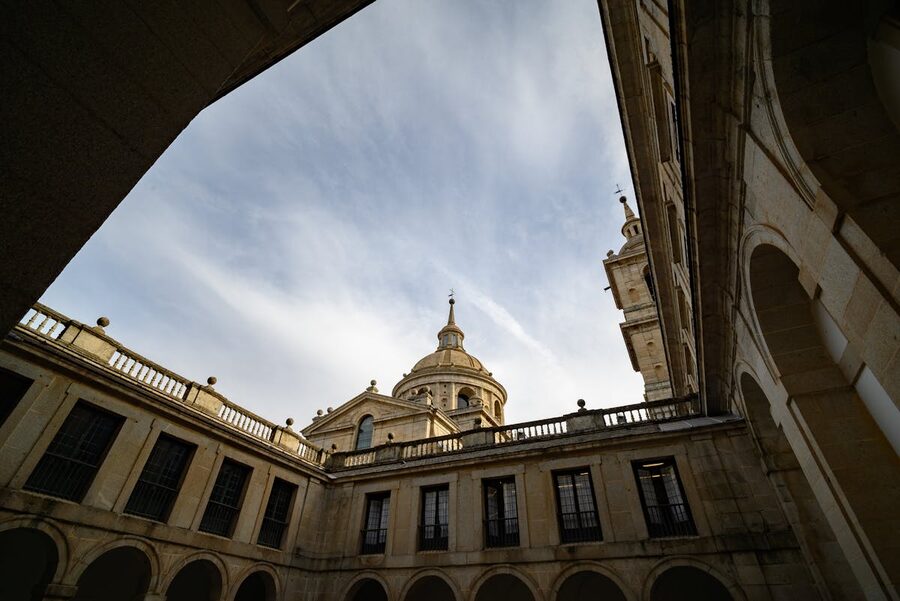
The Pantheon of Kings: A circular crypt directly below the basilica altar, lined with marble and bronze sarcophagi containing nearly every Spanish monarch since Charles V. It took over 150 years to complete — Philip II started it, but the room wasn’t finished until the reign of Charles III. The air is cool and still, and the silence is striking after the echoing halls above.
The Royal Apartments: Deliberately austere. Philip II’s bedroom is small, plain, and positioned so he could see the altar of the basilica from his bed. He died here in 1598, watching mass through a small window. The contrast between this simple room and the enormous complex surrounding it says everything about the man.
Valley of the Fallen (Valley of Cuelgamuros)
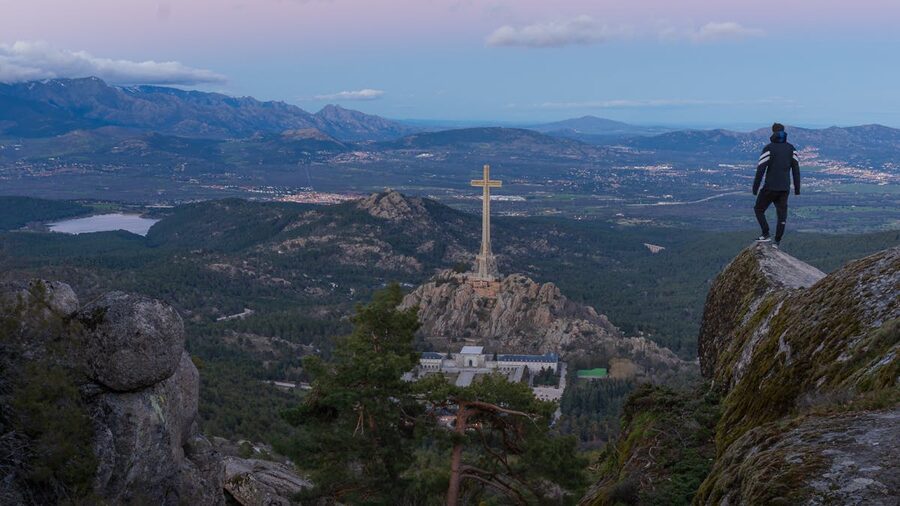
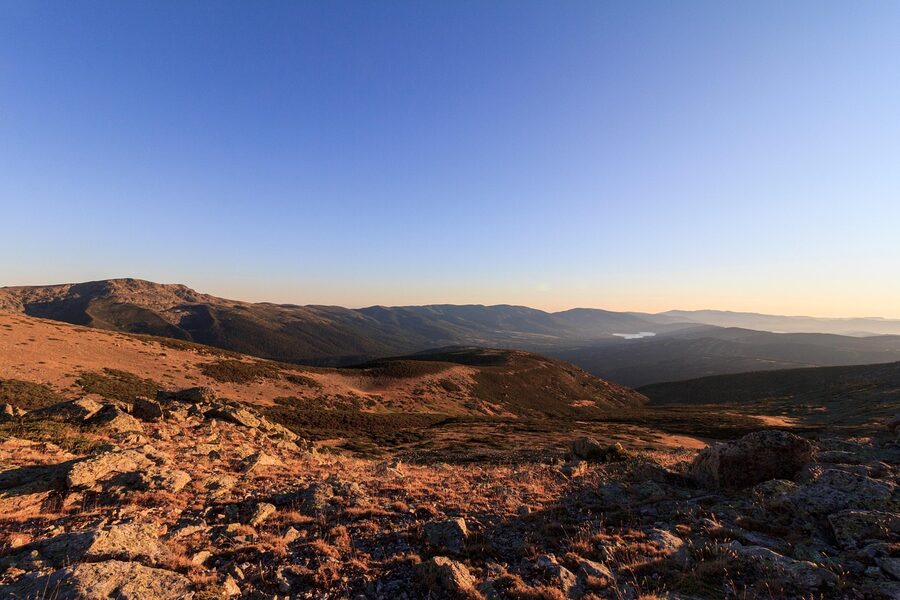
The first thing you see is the cross. At 150 metres, it’s the tallest memorial cross in the world, and it sits atop a granite ridge cut from the Sierra de Guadarrama. Below it, carved into the mountain itself, is the Basilica of the Holy Cross — at 262 metres long, it’s longer than St Peter’s in Rome. Franco ordered its construction in 1940 and it wasn’t finished until 1958. Much of the labour came from political prisoners, which is a central part of the site’s controversy and something your guide will address directly.
The interior is sparse and cold — bare rock walls, dim lighting, a single massive nave leading to the altar. About 34,000 casualties from both sides of the Spanish Civil War are interred in the walls. Franco himself was buried here from his death in 1975 until 2019, when his remains were exhumed and moved to a municipal cemetery in El Pardo. That exhumation — televised, politically charged, opposed by Franco’s descendants — was one of the most significant acts of Spain’s ongoing reckoning with its Civil War legacy.
The site was renamed “Valle de Cuelgamuros” in 2022 under the Law of Democratic Memory. Whether you call it the Valley of the Fallen or Cuelgamuros, it’s a place that demands engagement rather than passive tourism. Don’t rush it.
Tips That Will Save You Time (and Frustration)
Wear proper shoes. Both sites involve significant walking on stone and marble floors. El Escorial alone covers about 33,000 square metres. Sandals are technically allowed but you’ll regret them by the Pantheon.
Bring a layer. The Pantheon of Kings is underground and noticeably cooler than the rest of El Escorial. The Valley basilica is carved from mountain rock and stays cool even in July. A light jacket solves both.
Photography rules: No photos inside the Basilica at El Escorial or in the Pantheon. The library is hit-or-miss — sometimes guards allow it, sometimes not. The Valley’s basilica interior allows photography without flash. Exteriors and gardens are fair game everywhere.
The morning fog problem: Tours departing before 9am in autumn and winter sometimes arrive at the Valley while it’s still socked in with fog. The cross can be completely invisible. If you have the choice, afternoon departures tend to have better visibility for the Valley, while morning light is better for El Escorial’s east-facing facade.
Eat in San Lorenzo. The town next to El Escorial has proper restaurants — not tourist traps. If your tour includes free time in town, use it. The Madrid tapas scene is great, but the mountain-town restaurants around El Escorial serve different things — heartier Castilian food, roast lamb, cochinillo.
Book the Royal Palace of Madrid for a different day. Seeing both El Escorial and the Royal Palace on the same day is information overload. Space them out and you’ll appreciate each one more.
More Madrid Day Trips Worth Booking
If El Escorial and the Valley are your first day trip from Madrid, good choice — but don’t stop there. Toledo is the most popular day trip from the capital and for good reason — a full day walking through medieval streets that genuinely haven’t changed much in 500 years. Avila and Segovia work well as a combined day trip, and the Roman aqueduct in Segovia is worth the drive alone. Back in Madrid, the Prado Museum deserves at least half a day — it’s one of the finest art collections in Europe, and the walking tours of Madrid can fill in the gaps between the big attractions. For something completely different, booking a flamenco show is a Madrid evening well spent.
This article contains affiliate links. When you book through these links, we may earn a small commission at no extra cost to you. This helps us keep creating free travel guides.