
Two of the most rewarding day trips from Barcelona happen to sit on the same highway, about 40 minutes apart from each other. Girona — the medieval city of colourful riverside houses, a cathedral with the widest Gothic nave in the world, and filming locations from a certain fantasy television series — lies 100 kilometers north of Barcelona. Continue another 45 minutes up the AP-7, and you reach Figueres, where Salvador Dali built himself a museum inside a bombed-out theatre and filled it with the most deliberately strange art collection in Europe.
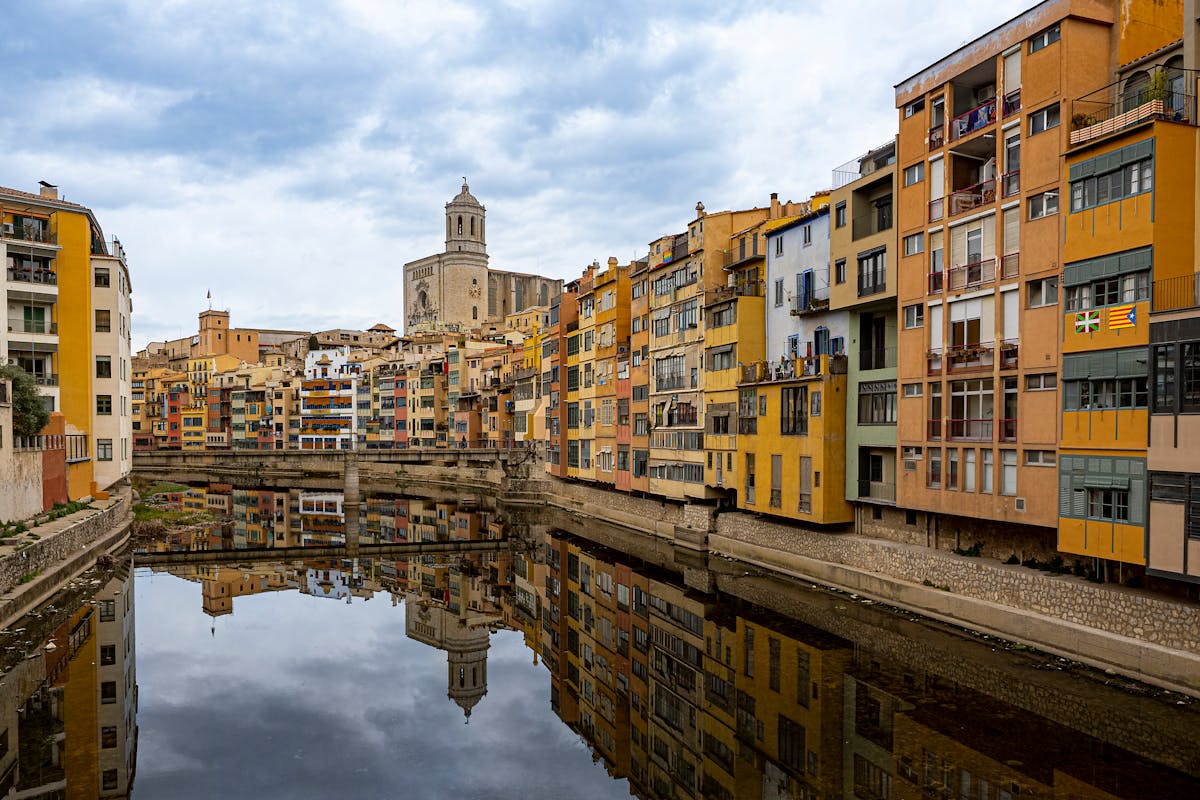
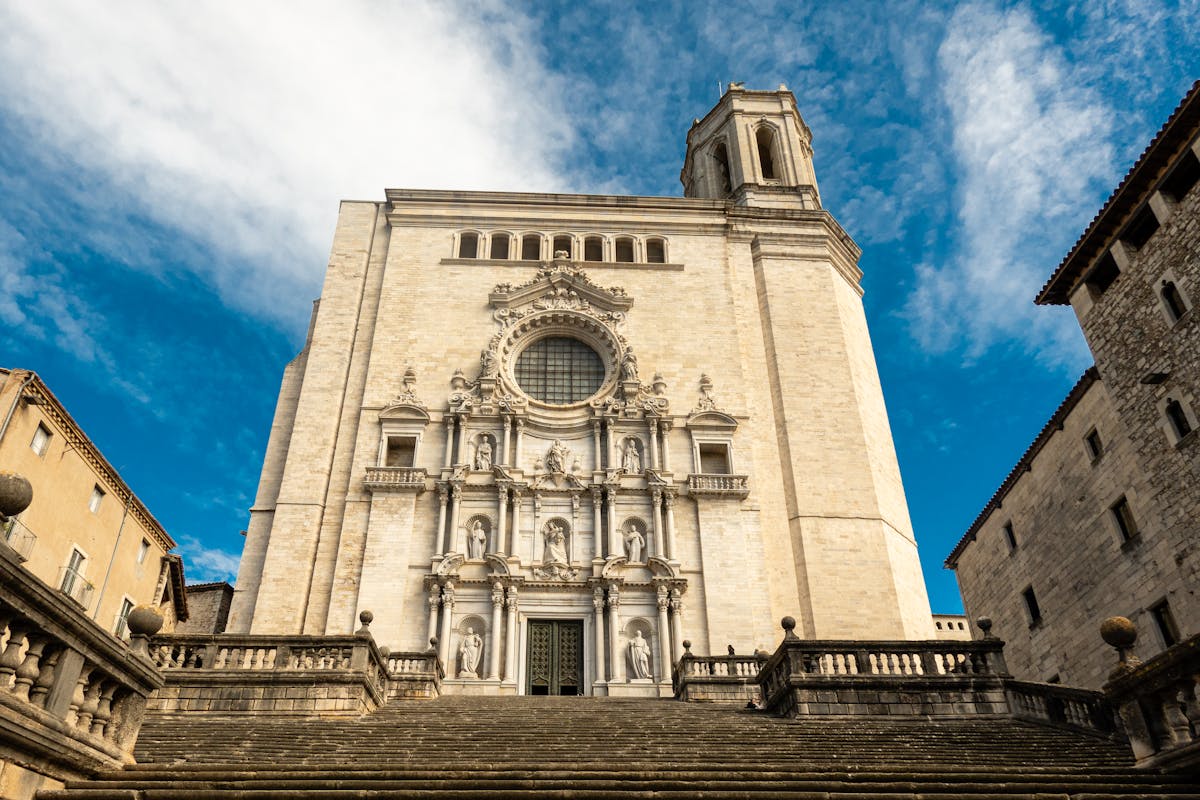
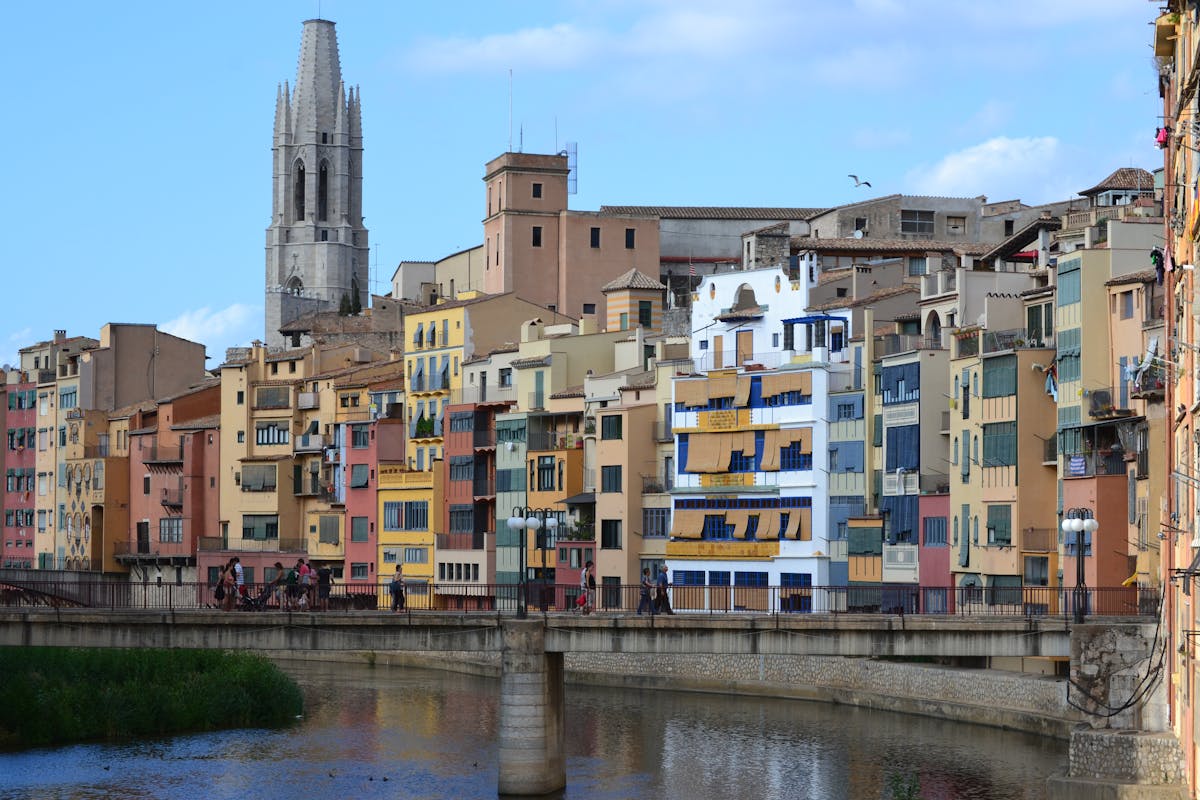
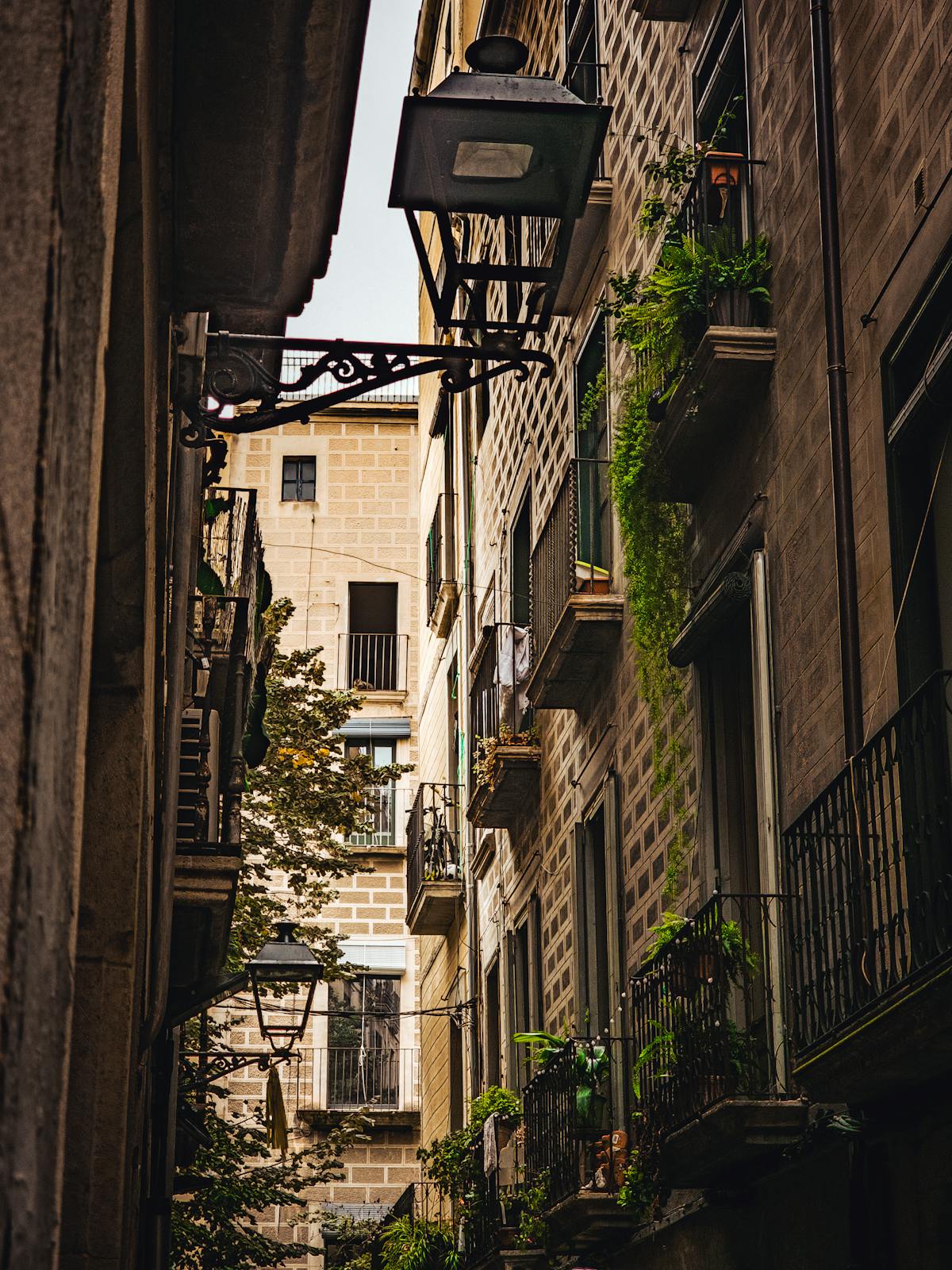
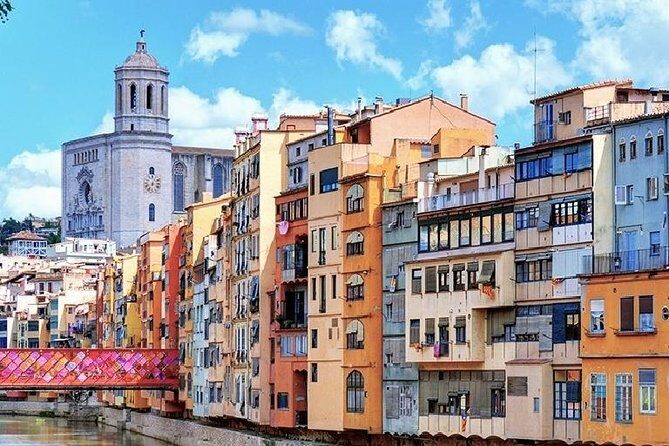
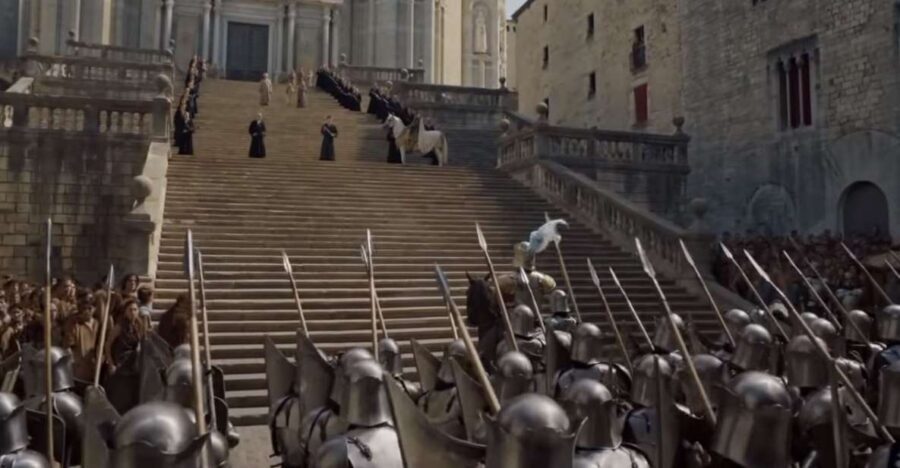
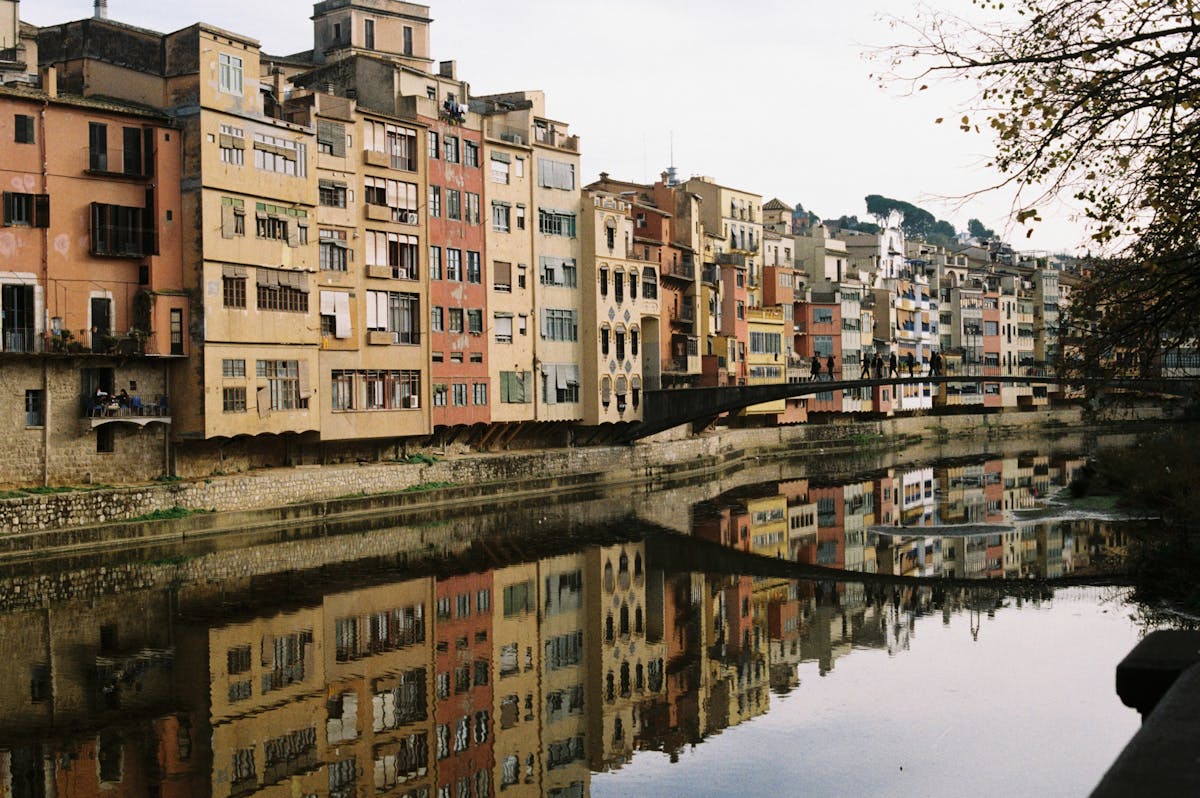
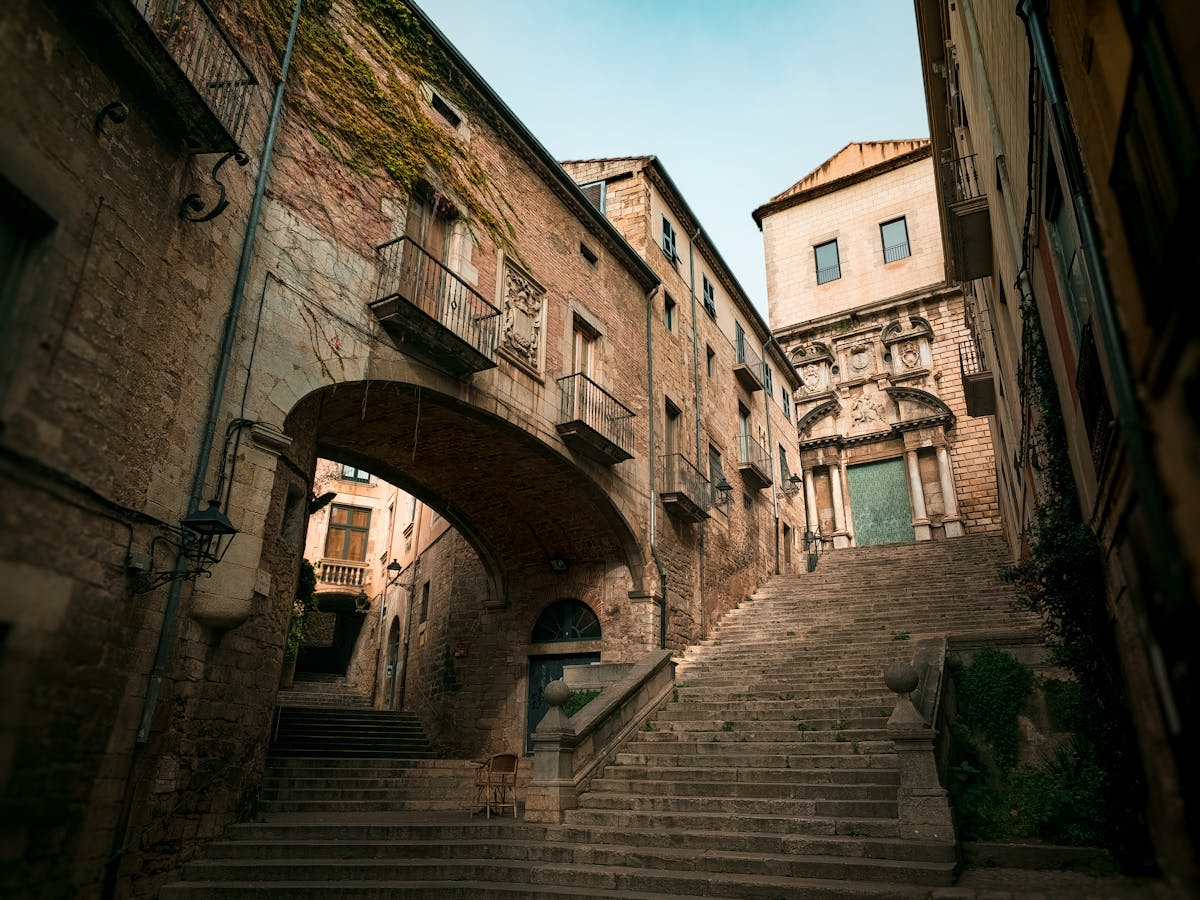
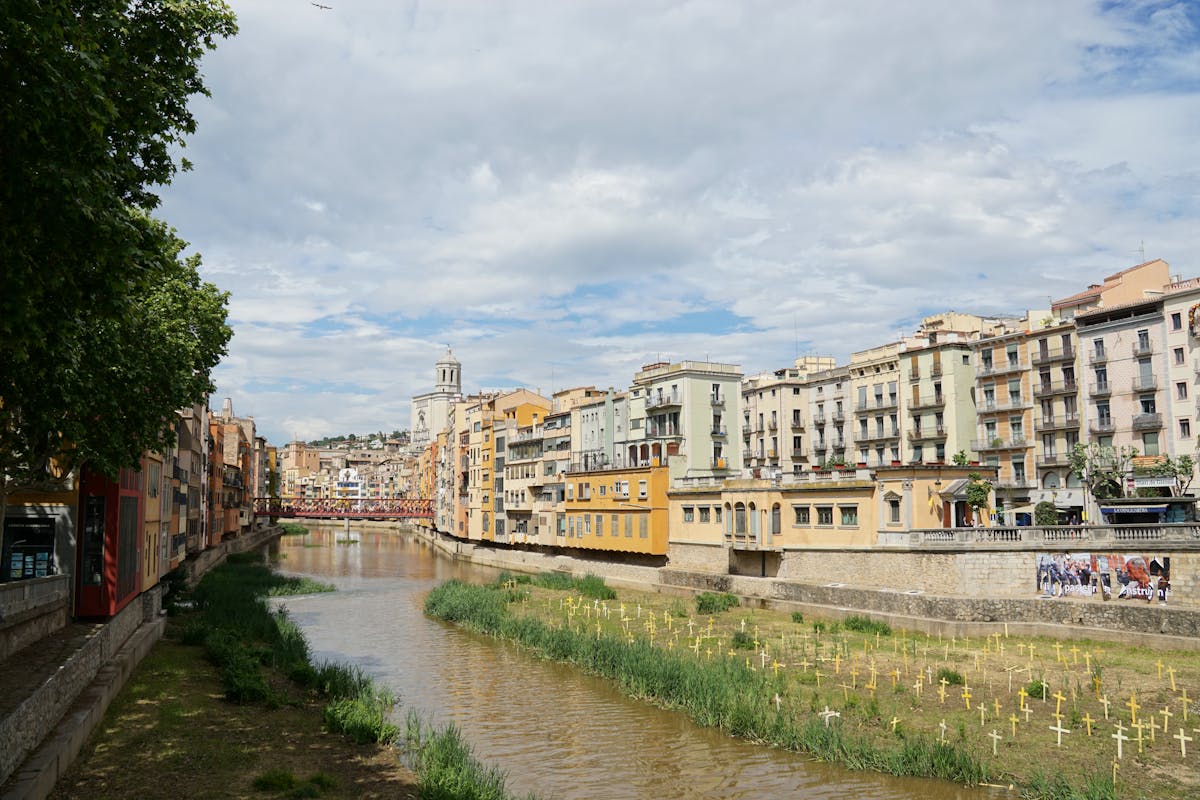
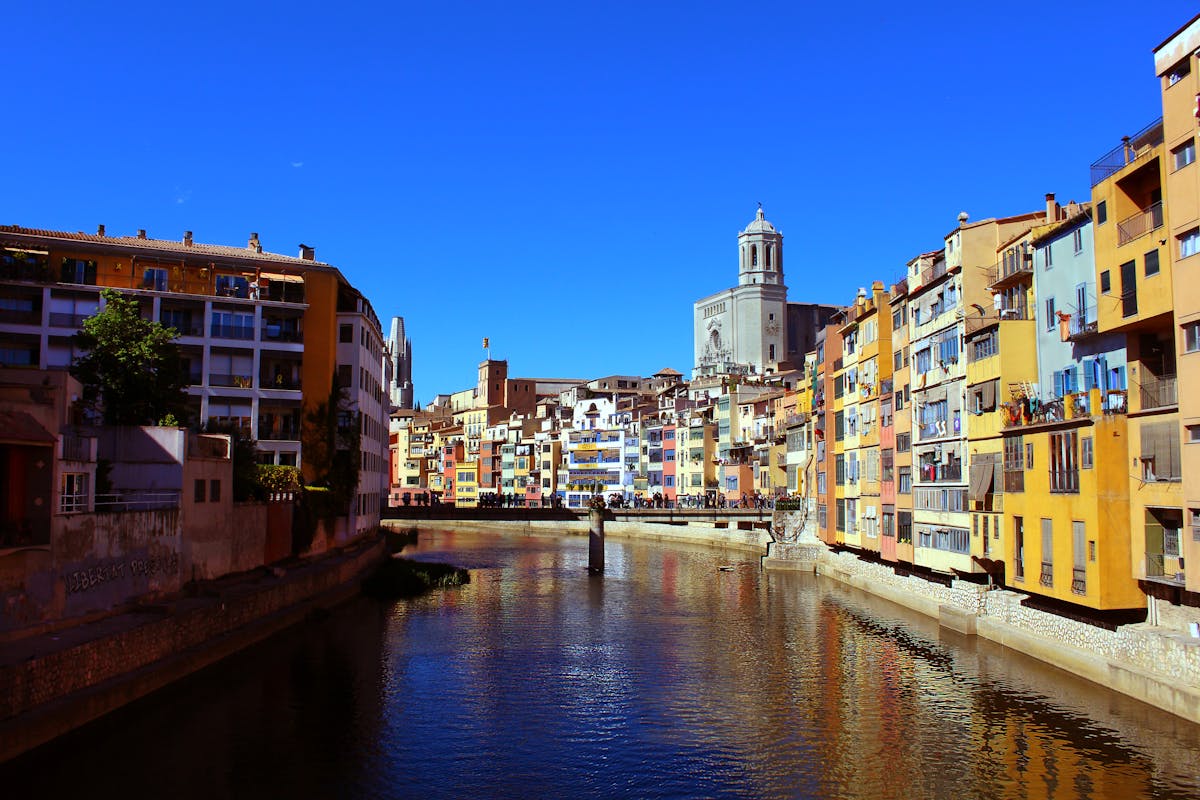
You can visit one or both in a single day from Barcelona, and the decision between them says something about what kind of traveler you are. Girona rewards wandering. Its Jewish Quarter is a labyrinth of stone stairways and covered passages that date back to the 12th century. The cathedral steps look familiar because they were Braavos in Game of Thrones. The Onyar River is lined with houses painted in warm yellows, oranges, and reds that look like they borrowed their palette from the Italian Riviera.
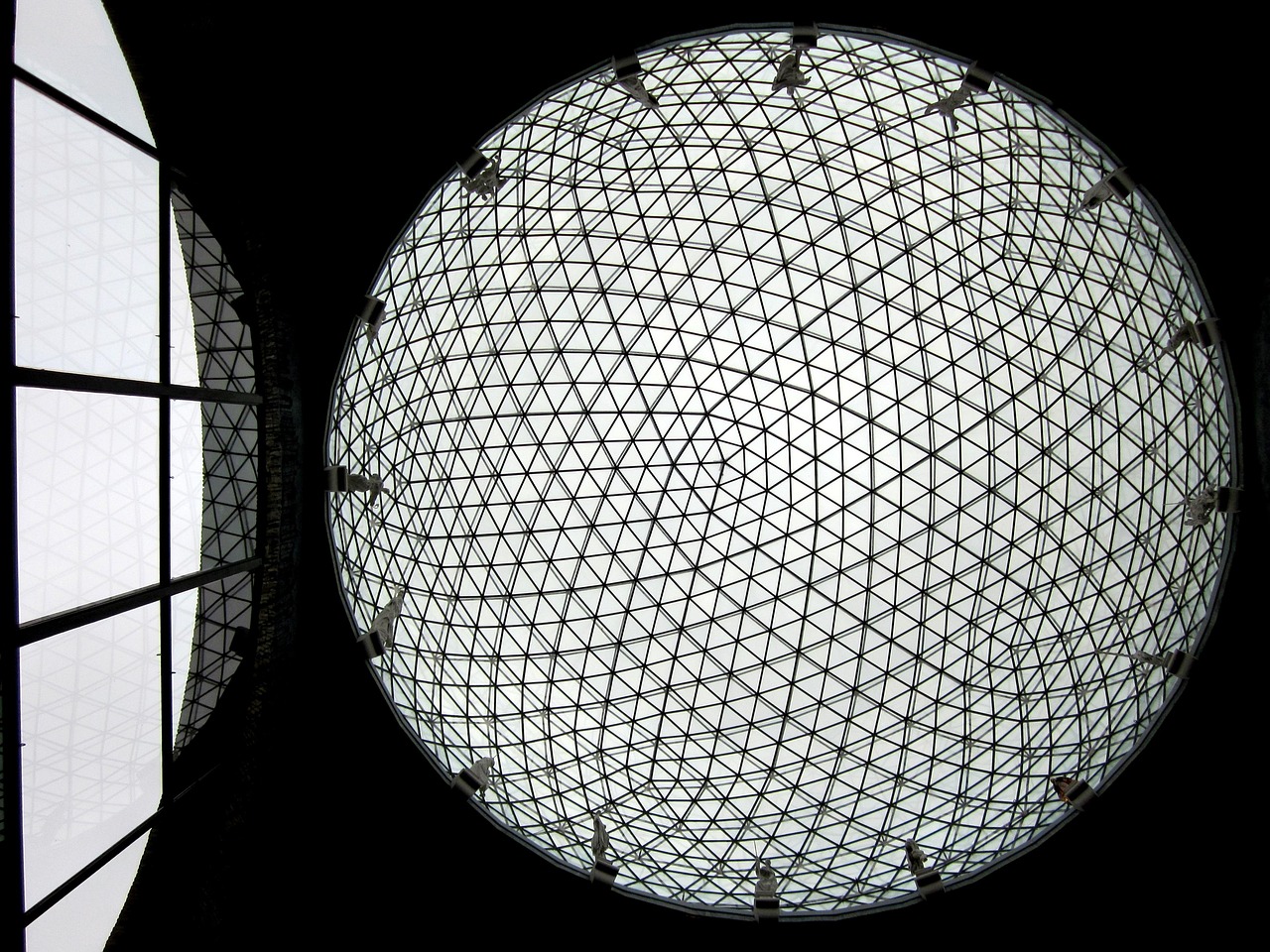
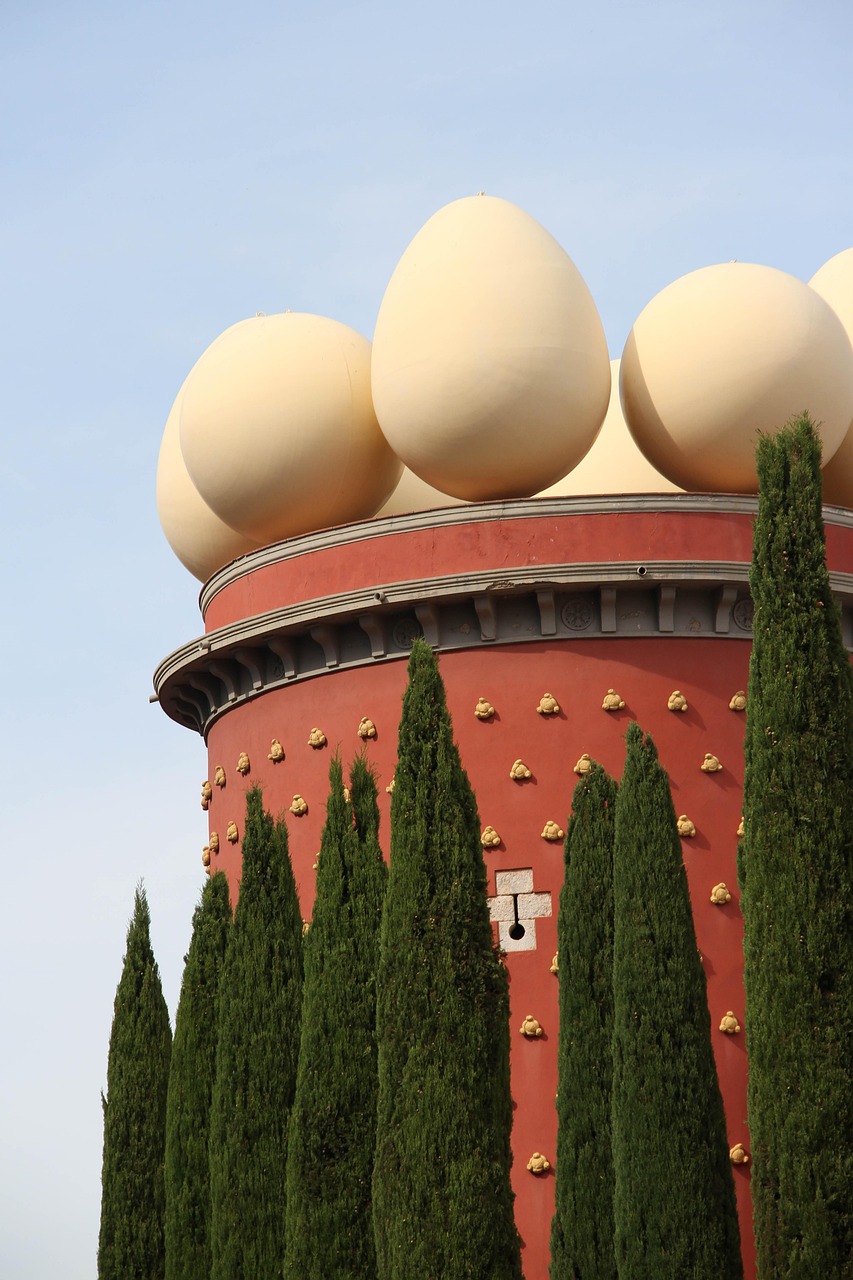
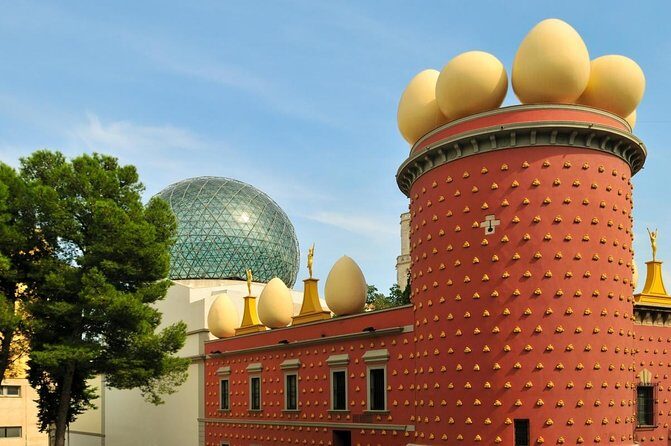
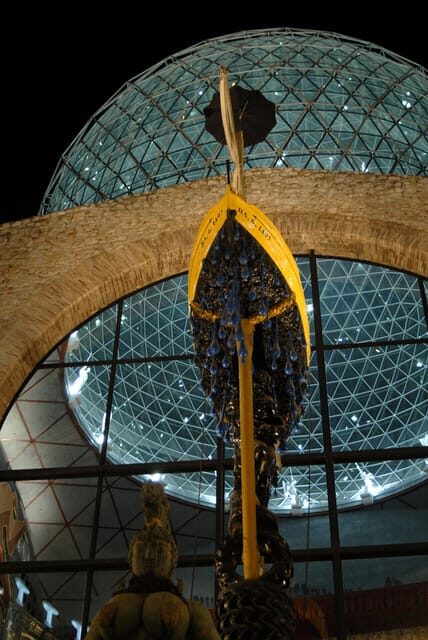
The Dali Theatre-Museum is a different kind of experience entirely. Dali did not just put paintings on walls. He designed the building as one continuous installation — rooms where the furniture becomes a face when viewed from the right angle, a courtyard with a Cadillac that rains on the inside, a ceiling fresco visible through a jeweled portal. It is the kind of place where you turn a corner and find a sofa shaped like Mae West’s lips positioned under a fireplace that forms her nose.
This guide covers how to visit both, whether you should pick one or combine them, and which tours are worth the money versus doing it independently.
If You’re in a Hurry: My Top 3 Picks
- Girona & Dali Museum Small Group Tour — The best combination tour. You get a guided walk through Girona’s old town in the morning, then drive to Figueres for the Dali Museum in the afternoon. Small groups, hotel pickup included. From $120.29 per person.
- Girona, Figueres, Dali Museum & Cadaques — The expanded version that adds the whitewashed fishing village of Cadaques to the itinerary. More ground to cover, but you see a wider slice of the Costa Brava. Excellent value at the price. From $70 per person.
- Dali Theatre-Museum Entry Ticket — If you only want the museum and prefer to get there on your own, this skip-the-line ticket saves you from the long queue outside. Pair it with a train from Barcelona Sants for the cheapest possible day trip. From $27 per person.
- If You’re in a Hurry: My Top 3 Picks
- How to Get to Girona and Figueres from Barcelona
- Girona vs. the Dali Museum vs. Both: How to Decide
- Best Tours from Barcelona to Girona and the Dali Museum
- Girona & Dali Museum Small Group Tour with Pick-up from Barcelona
- Girona & Costa Brava Small-Group Tour with Pickup from Barcelona
- From Barcelona: Girona, Figueres, Dali Museum & Cadaques
- Dali Theatre-Museum Entry Ticket
- Girona: Game of Thrones Small Group Tour
- When to Visit Girona and the Dali Museum
- What to See in Girona and Figueres
- In Girona
- In Figueres
- Tips for Visiting Girona and the Dali Museum
- More Barcelona Guides
How to Get to Girona and Figueres from Barcelona
Both cities sit on the main railway line running north from Barcelona toward France, which makes independent travel straightforward if you prefer it over a guided tour.
High-speed train (AVE/AVLO): The fastest option. Barcelona Sants to Girona takes 38 minutes on the AVE, and Barcelona Sants to Figueres-Vilafant takes about 55 minutes. Tickets on Renfe start around 10-12 euros each way if you book in advance, though prices climb on busy days. The Figueres-Vilafant AVE station is about 1.5 kilometers from the Dali Museum — a 20-minute walk or a quick taxi ride.
Regional train (Rodalies/Media Distancia): Slower but cheaper. Barcelona to Girona takes about 90 minutes and costs around 8-12 euros. Barcelona to Figueres on the regional line takes about two hours. The Figueres town station drops you much closer to the Dali Museum — about a 12-minute walk through the centre of town.
Bus: Sagales and other companies run buses from Barcelona Nord station. The ride to Girona takes about 90 minutes and costs around 13 euros. Less frequent than trains and not much cheaper, so the train is generally the better option.
Driving: Girona is about 100 kilometers from Barcelona via the AP-7 motorway (around 90 minutes with traffic). Figueres is another 45 minutes north. Parking in Girona’s old town is limited, but there are several car parks near the river. Driving makes the most sense if you want to combine Girona and Figueres in one day at your own pace, or if you plan side trips to smaller Costa Brava villages along the way.
Guided tour: If the logistics of coordinating trains, walking distances, and museum opening times feel like work rather than adventure, a guided tour handles everything. Pickup from your Barcelona hotel, air-conditioned minibus, a guide who knows both cities, and a pre-booked Dali Museum entry that skips the ticket line. Most tours run about 10-11 hours and cover both Girona and Figueres in a single day.
Girona vs. the Dali Museum vs. Both: How to Decide
This is the most important decision to make before you book anything, and it depends on what you care about.
Girona only (half day or full day): Pick this if you love medieval architecture, food culture, and exploring a city on foot. Girona is a proper city with layers of history — Roman walls, a medieval Jewish Quarter, Romanesque and Gothic churches, and a modern food scene that benefits from the influence of nearby restaurants that have earned Michelin recognition. You could easily spend a full day here and not see everything. The Game of Thrones filming locations are scattered throughout the Barri Vell (old quarter) and are free to visit.
Dali Museum only (half day): Pick this if you are specifically interested in Dali and surrealist art. The museum in Figueres is not a typical art gallery — it is an immersive environment that Dali spent the last decades of his life designing. Budget 2-3 hours inside. Figueres itself is a pleasant Catalan town, but most visitors come for the museum and leave. You can easily do this as a half-day trip using the AVE train and be back in Barcelona by early afternoon.
Both in one day (guided tour recommended): This is the most popular option and works well if you plan carefully. The standard itinerary visits Girona in the morning (2-3 hours walking the old town) and Figueres in the afternoon (2-3 hours at the museum). The challenge when doing it independently is the logistics: Girona to Figueres requires a train or bus connection, and the Dali Museum has timed entry in peak season. A guided tour eliminates this friction entirely. You spend the day experiencing two very different places without worrying about connections.
Best Tours from Barcelona to Girona and the Dali Museum
I selected these five tours to cover the main ways people visit: the classic Girona-plus-Dali combo, a Girona-focused trip with the Costa Brava coast, an expanded three-stop route through Cadaques, a museum-only ticket for independent travelers, and a Girona walking tour for people who want to go deep on one city.
Girona & Dali Museum Small Group Tour with Pick-up from Barcelona
Duration: 10 hours | From: $120.29 per person
This is the tour I recommend for most people visiting both Girona and the Dali Museum in a single day. A minibus picks you up from central Barcelona in the morning and drives north through the Catalan countryside. You spend the first part of the day in Girona, walking the Jewish Quarter, crossing the Eiffel Bridge over the Onyar River, climbing the cathedral steps, and hearing the stories behind the medieval buildings from a local guide who knows which corners to duck into.
After lunch (free time to eat where you like in Girona — ask your guide for recommendations beyond the tourist strip), the bus continues north to Figueres. The Dali Theatre-Museum entry is pre-booked, which matters because the ticket line outside can stretch down the block in peak season. Inside, your guide walks you through the most important rooms, explaining the symbolism and personal history behind pieces that would otherwise just look wonderfully bizarre. The pace is relaxed, with time to explore the museum on your own after the guided portion.
The small group format — typically 8 to 16 people — keeps things personal in a way that large bus tours cannot match. You can actually ask questions and hear the answers without straining.
Girona & Costa Brava Small-Group Tour with Pickup from Barcelona
Duration: 10 hours | From: $120.29 per person
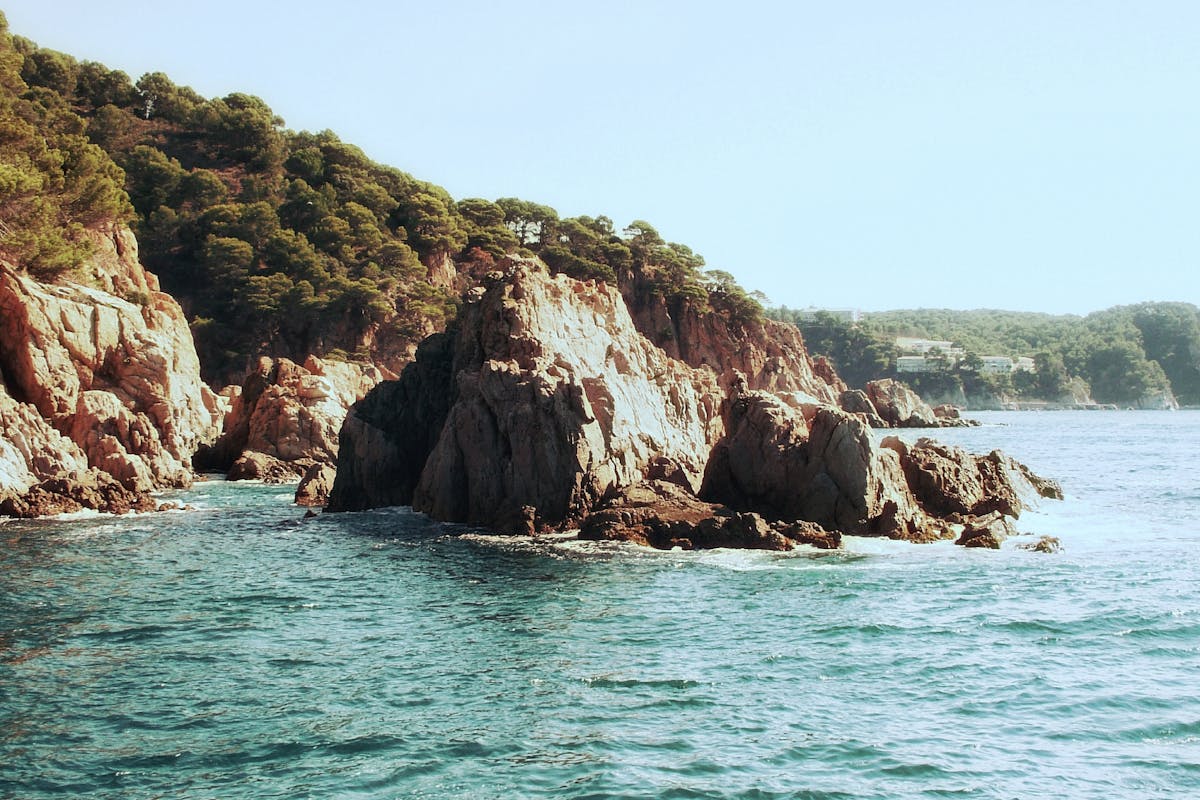
If you are more interested in Girona itself than in the Dali Museum, this tour skips Figueres entirely and replaces it with a stop on the Costa Brava coast. You spend a generous amount of time in Girona — the cathedral, the Jewish Quarter, the colourful houses along the Onyar, the Arab Baths, the ancient city walls with their panoramic walkway — and then head east to one of the picturesque seaside towns that make this stretch of coastline famous.
The Costa Brava leg typically visits a town like Calella de Palafrugell, Tossa de Mar, or a similar village depending on the season and conditions. These are the kind of places where fishing boats are still pulled up on the beach between restaurants, the water is turquoise in the coves, and the pace of life moves at a speed that Barcelona forgot a long time ago. It is a completely different side of Catalonia from what you see in the city.
This is a strong choice for repeat visitors to Barcelona who have already done the major Gaudi attractions and want to see the Catalan countryside. The combination of a medieval city and a Mediterranean coast town makes for a varied day.
From Barcelona: Girona, Figueres, Dali Museum & Cadaques
Duration: 11 hours | From: $70 per person
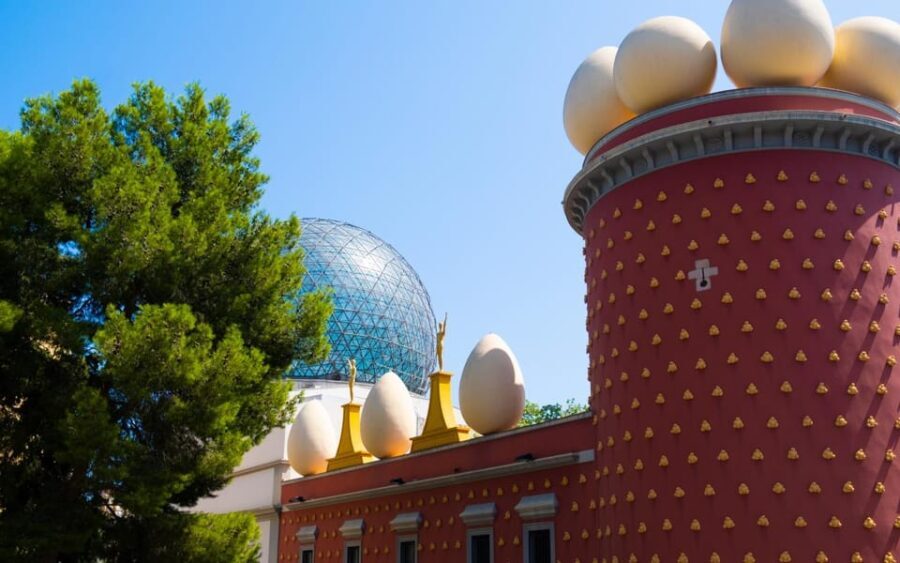
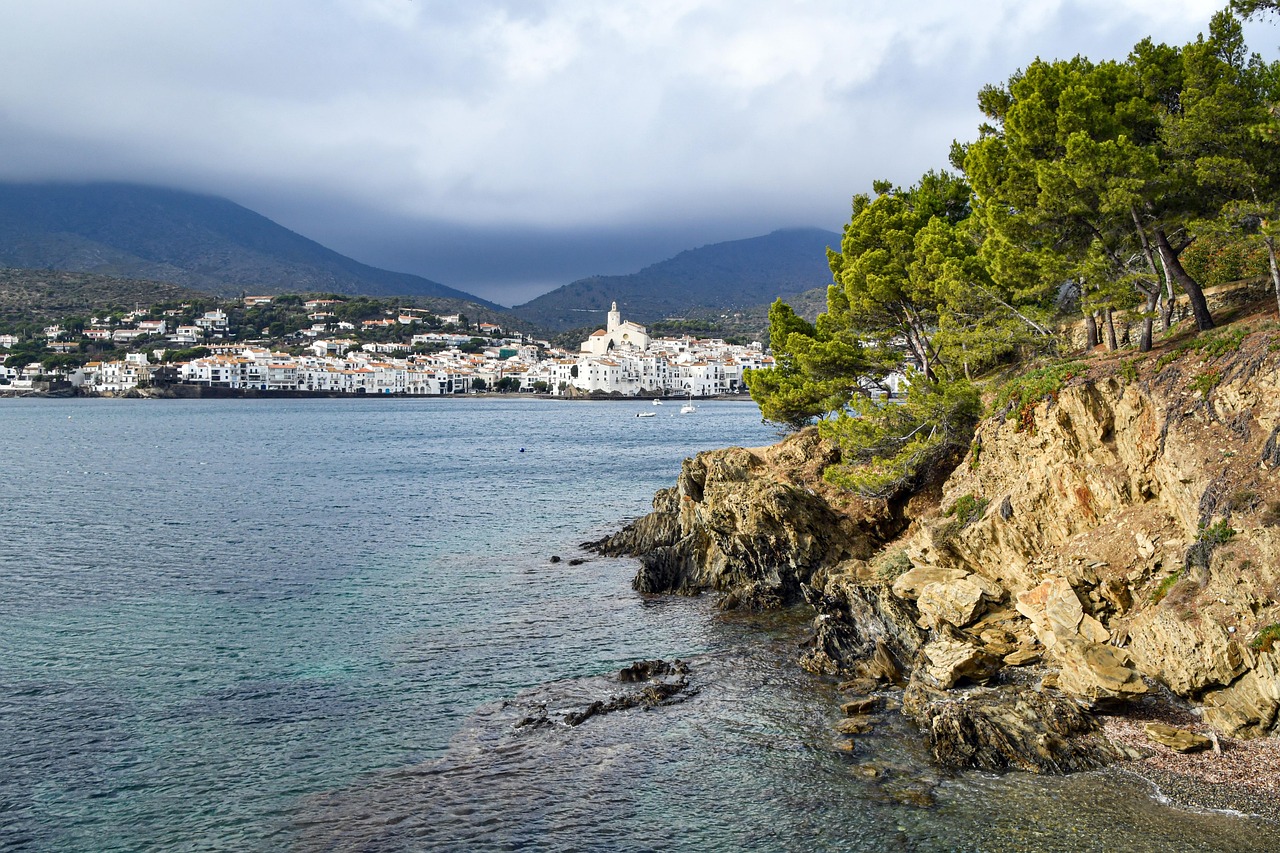
The most ambitious itinerary on this list, and arguably the best value. For 70 dollars you visit three distinct destinations in one long day: Girona for the medieval city, Figueres for the Dali Museum, and Cadaques — the whitewashed fishing village on the coast where Dali lived and worked for much of his life.
Cadaques is the wild card that makes this tour special. It sits on a rocky peninsula that was so isolated for centuries that the only reliable access was by sea. The village is still wonderfully uncommercialized compared to other Costa Brava towns, with narrow streets winding down to a harbour where fishing boats bob beside small restaurants. Dali’s house in nearby Port Lligat (now a museum requiring separate tickets) overlooks one of the most beautiful coves in the Mediterranean.
The trade-off is time. With three stops in 11 hours, you get less time at each destination than on the dedicated combo tour. The Girona walking portion is shorter, the Dali Museum visit is focused on the highlights, and Cadaques is a quick taste rather than a long afternoon. But if you want to see as much of this corner of Catalonia as possible in one day, nothing else packs this much geography into the budget.
Dali Theatre-Museum Entry Ticket
Duration: At your own pace | From: $27 per person
The museum-only option for people who want to handle transport themselves. This is a timed-entry ticket that gets you past the queue outside the Dali Theatre-Museum in Figueres. Once inside, you explore at your own pace — there is no guide included, but the museum itself is designed to be experienced intuitively rather than explained. Dali intended the building as a total artwork, and the layout pulls you through rooms in a sequence he carefully planned.
The practical advantage of having a pre-booked ticket becomes obvious in summer and on weekends, when the walk-up ticket line can mean 30 to 60 minutes of standing in the Figueres sun. With the timed entry, you show up at your designated time and walk in. Pair this with a morning AVE train from Barcelona Sants (38 minutes to Girona, 55 to Figueres-Vilafant), and you can do both cities in one day entirely on your own for about 50-60 euros total including transport.
This is the cheapest way to see the Dali Museum if you are comfortable navigating Spanish trains and walking from stations to attractions. It is also the right choice if you want unlimited time inside the museum rather than the 1.5-2 hours that group tours typically allow.
Girona: Game of Thrones Small Group Tour
Duration: 2 hours | From: $35 per person
For fans of the show, this is the definitive way to see the filming locations. Girona doubled for Braavos, Oldtown, and King’s Landing in Seasons 6 and 7, and the production team chose the city because its medieval streets and buildings needed almost no digital alteration to look like Westeros. The cathedral steps became the Great Sept of Baelor. The Arab Baths were used for interior scenes. Narrow lanes in the Jewish Quarter became the streets of Braavos where Arya trained.
This walking tour covers all the major filming locations with a guide who carries stills from the episodes and holds them up at each spot so you can match the scene to the real location. It is the kind of thing that sounds gimmicky but actually works — seeing how precisely the production mapped the show’s fictional geography onto Girona’s real streets is genuinely impressive, whether you watched every episode or just caught a few seasons.
At two hours and 35 dollars, this pairs well with a self-guided afternoon at the Dali Museum if you take a morning train to Girona and a midday train onward to Figueres. Or combine it with a full day of exploring Girona at your own pace.
When to Visit Girona and the Dali Museum
Best months: April through June and September through October. Temperatures in Girona hover around 18-26 degrees Celsius, the Dali Museum is less crowded than in July and August, and the light in both cities is beautiful for photography. Spring brings flowering trees along the Onyar, and autumn turns the plane trees golden.
Summer (July-August): Both Girona and Figueres get hot — consistently above 30 degrees, and the inland location means less sea breeze relief than the coast. The Dali Museum is at its busiest, with timed-entry slots selling out days or weeks in advance. If you visit in summer, book your museum ticket early and plan to be indoors during the hottest part of the afternoon. Girona’s old town has enough shaded streets and cool stone interiors to manage the heat if you pace yourself.
Winter (November-February): Noticeably quieter, which is a genuine advantage at the Dali Museum where summer crowds can make the smaller rooms feel claustrophobic. Girona in winter has a subdued elegance — fewer travelers, the restaurants fill with locals rather than visitors, and the medieval streets have a moody quality that photographs well. Temperatures drop to 5-12 degrees, so bring a warm layer. The Dali Museum keeps shorter winter hours, so check before you go.
Girona Flower Festival (Temps de Flors): If your visit happens to fall in mid-May, Girona hosts a week-long flower festival where the entire old town, including private courtyards, patios, churches, and gardens, is decorated with elaborate floral installations. It transforms the city into something extraordinary — but it also transforms the crowd levels. Book accommodation and tours well in advance if you want to catch Temps de Flors.
What to See in Girona and Figueres
In Girona
The Cathedral (Catedral de Girona): The baroque facade sits at the top of a grand staircase of 86 steps, but the real architectural achievement is inside. The single Gothic nave measures 22.98 meters across — the widest Gothic nave ever constructed. The attached museum holds the Tapestry of Creation, an 11th-century embroidered cloth that is one of the finest surviving examples of Romanesque textile art.
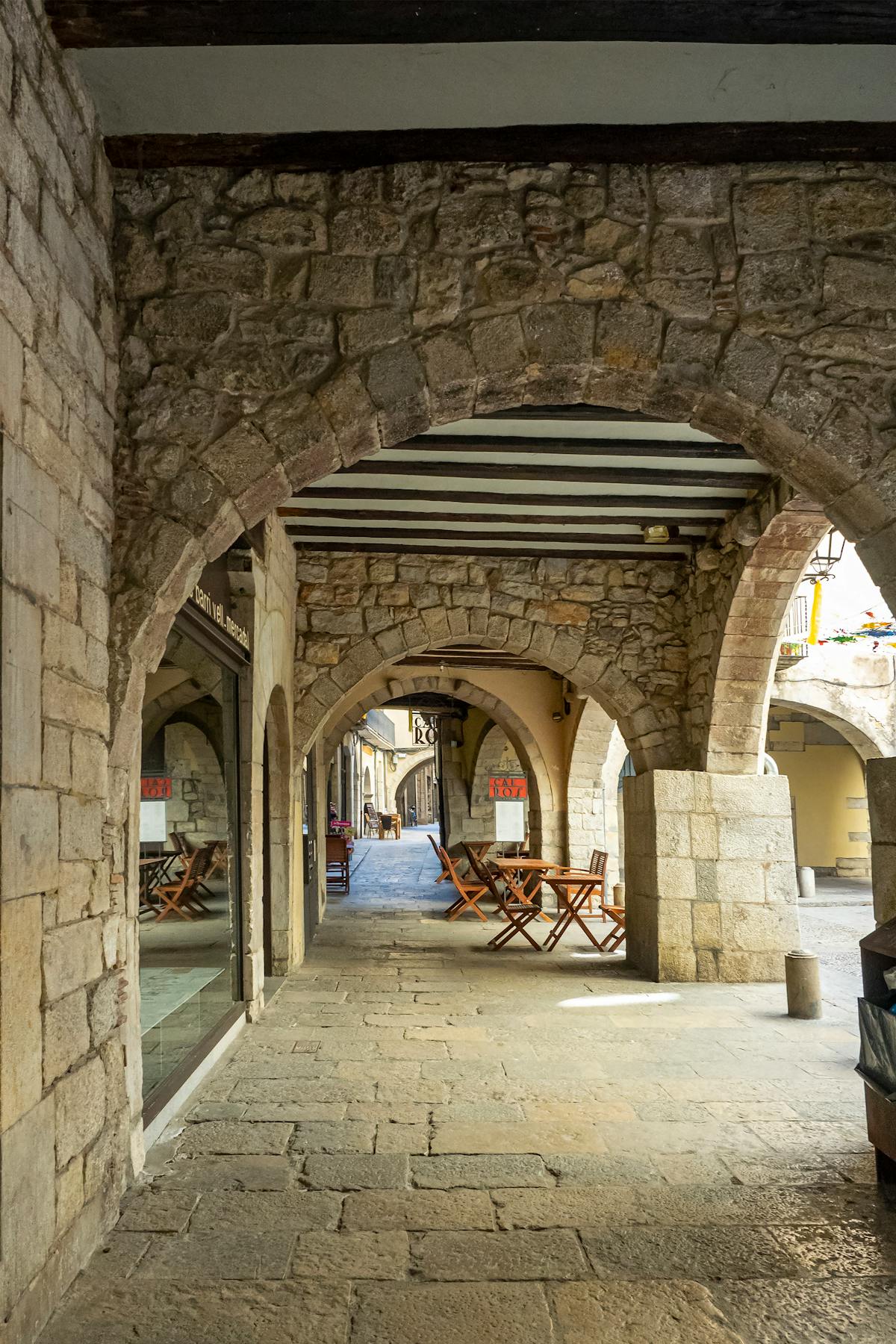
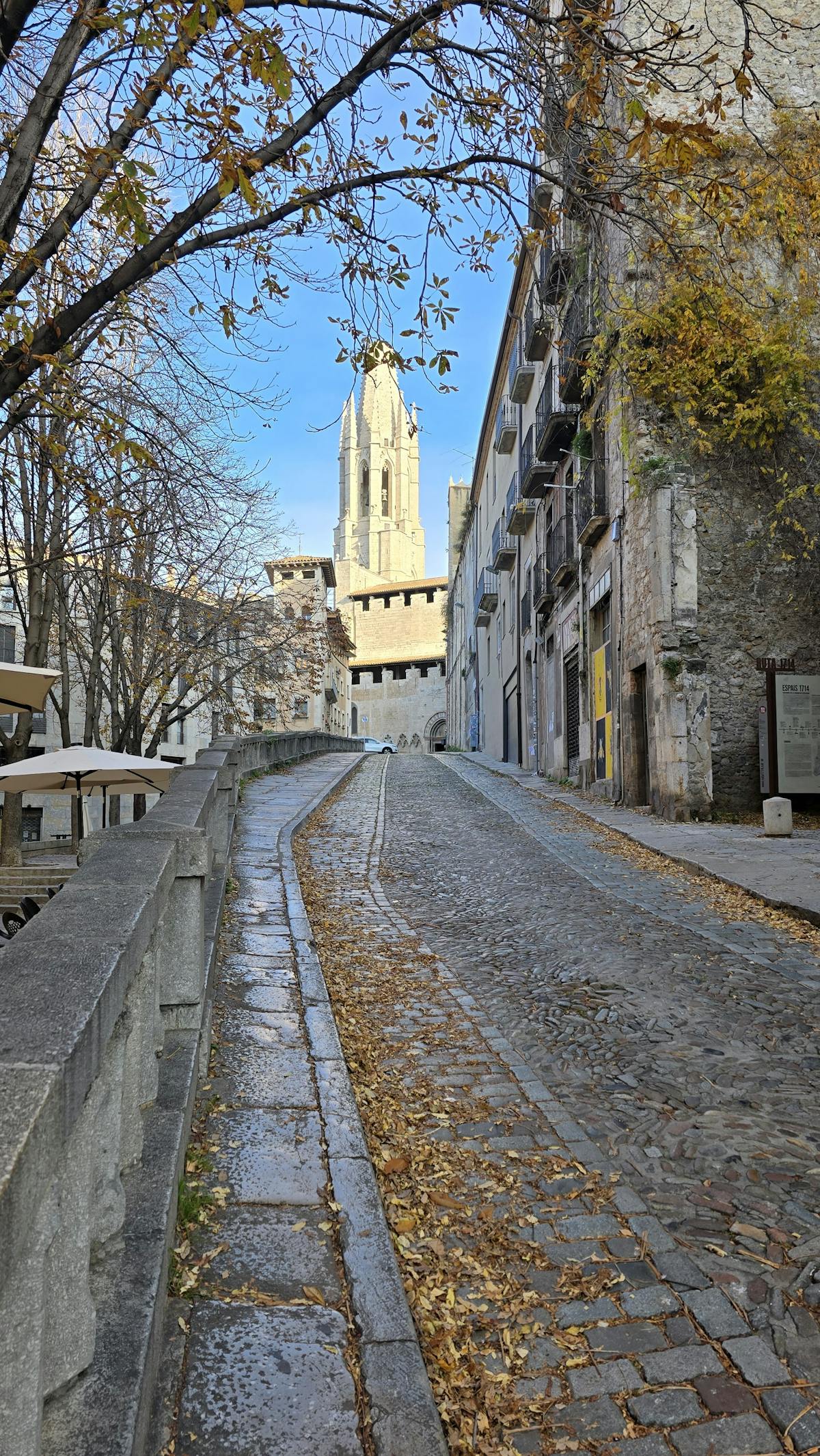
The Jewish Quarter (El Call): One of the best-preserved medieval Jewish neighbourhoods in Europe. The narrow stone streets, covered passages, and tiny squares have barely changed since the 15th century. The Bonastruc ca Porta Centre occupies the site of what was once the synagogue and serves as a museum of Jewish history in Catalonia. Unlike some historical quarters that have been polished for travelers, El Call retains a lived-in, slightly crumbling authenticity.
The Onyar River Houses: The colourful facades reflected in the water are Girona’s most iconic image. Walk across the Pont de Ferro, the iron bridge designed by the Eiffel company (yes, the same firm that built the tower in Paris), for the classic postcard view. Early morning or late afternoon gives you the best light.
Arab Baths (Banys Arabs): A 12th-century bathhouse modeled on Roman and Moorish designs. The central pool room with its slender columns and skylighted dome is one of the most photogenic interiors in Girona. Despite the name, these baths were built by Christians — the architectural style is Arabic, but the builders were Catalan.
The City Walls (Passeig de la Muralla): A walkway atop the old defensive walls that wraps around the eastern side of the old town. The views from up here cover the cathedral, the old town rooftops, the river, and the surrounding hills. Most visitors skip this entirely, which is baffling because it is free and beautiful.
In Figueres
Dali Theatre-Museum: The main event. Dali took the ruins of the Figueres municipal theatre — which was bombed during the Spanish Civil War and happened to be where he held his first exhibition at age 14 — and rebuilt it as a monument to his own imagination. Every room is designed as a complete environment rather than a gallery wall. The Mae West room, the courtyard with the rainy Cadillac, the jewel-encrusted heart that actually beats, the optical illusions that change depending on where you stand — all of it was conceived by Dali himself. He is buried in the crypt beneath the stage.
Dali Jewels Exhibition: A separate collection within the museum complex showcasing 37 pieces of jewelry that Dali designed. These are extraordinary objects — a golden heart made of rubies that mechanically pulses, a brooch shaped like an eye with a working clock mechanism as the iris. The craftsmanship required to execute Dali’s surrealist designs in precious metals and gemstones is remarkable.
Tips for Visiting Girona and the Dali Museum
Book Dali Museum tickets in advance. This is not a suggestion, it is a necessity in peak season. The museum uses timed entry, and popular time slots sell out days ahead. If you are visiting between June and September, book at least a week in advance. Off-season you can usually get same-day tickets, but it is still smarter to book ahead and guarantee your slot.
Visit Girona in the morning, Figueres in the afternoon. This is the standard itinerary for a reason. Girona’s old town is best explored in the cooler morning hours when the light hits the cathedral steps and the colourful houses. The Dali Museum is indoors and works well in the afternoon heat. Most guided tours follow this sequence.
Wear comfortable walking shoes. Girona’s old town is built on a hill. The cathedral sits at the top. The Jewish Quarter is a network of stone steps and uneven cobblestones. You will do a lot of climbing. In Figueres, the museum itself has multiple levels connected by stairs. This is not a day for sandals or new shoes.
Eat in Girona, not Figueres. Girona has a genuinely impressive food scene. The streets around Placa de la Independencia and the old town are lined with restaurants ranging from traditional Catalan cooking to creative modern plates. Figueres has restaurants too, but they tend to be more tourist-oriented and less distinctive. If you are doing both cities in one day, make lunch in Girona the main eating event.
Allow 2-3 hours at the Dali Museum. You can rush through in 90 minutes, but you will miss half of the details. Many of the installations only reveal their full effect when you look from specific angles or distances. The Mae West room, for example, becomes a face only from a particular spot on a raised platform. The courtyard Cadillac has coins that activate the interior rain. Take your time.
The Girona city walls are free and uncrowded. While everyone clusters around the cathedral and the river houses, the Passeig de la Muralla — the walkway along the medieval city walls — is often empty. The views from the top cover the entire city and beyond. Enter from the Jardins dels Alemanys on the eastern side of the old town.
Consider an overnight in Girona. If you have flexibility in your Barcelona itinerary, spending a night in Girona transforms the experience. The day-trippers leave by 6 PM, and the old town becomes yours. Dinner at a local restaurant without the lunch rush, an evening walk along the illuminated river, morning coffee in a quiet square before the first tour buses arrive. Hotels in the old town start around 80-100 euros per night.