
Guadalest has a population of about 200 people. It’s the second most-visited municipality in Spain, after Barcelona. That fact sounds wrong until you see the car park at 10am on a Tuesday and count the tour buses. Forty-three, the last time I checked. For a village you could walk across in four minutes.
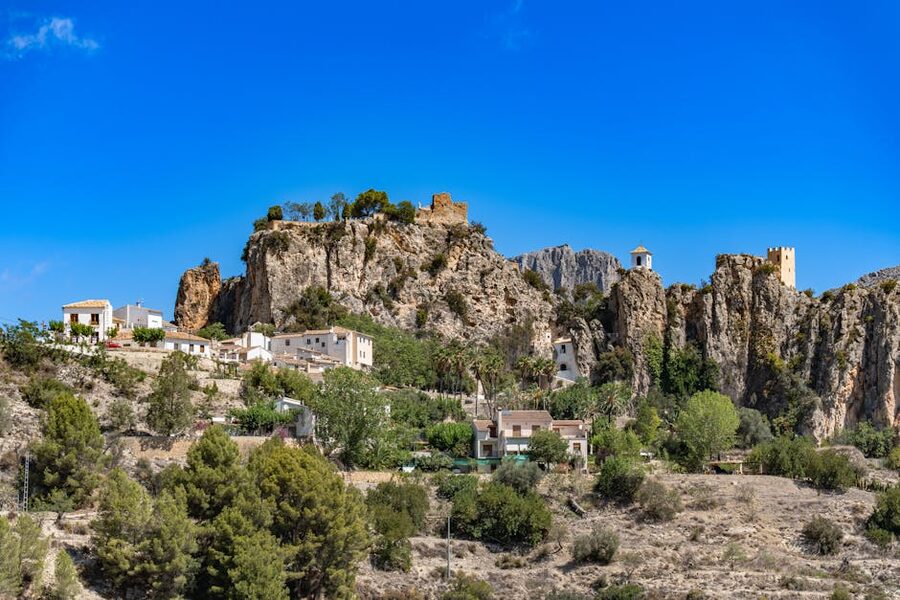
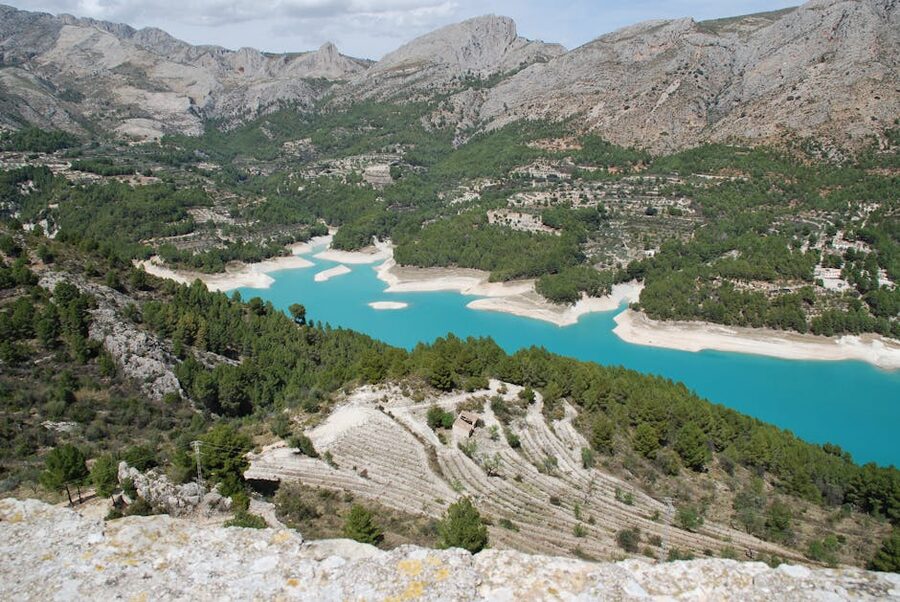
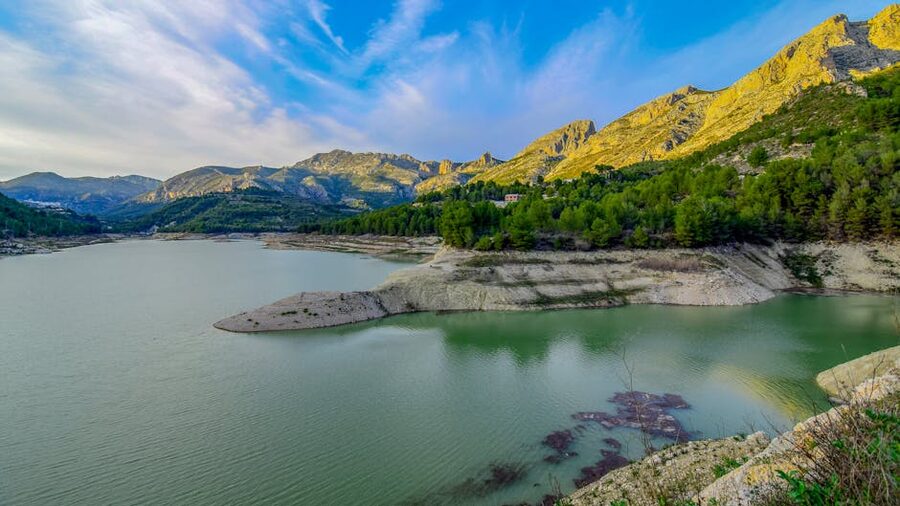
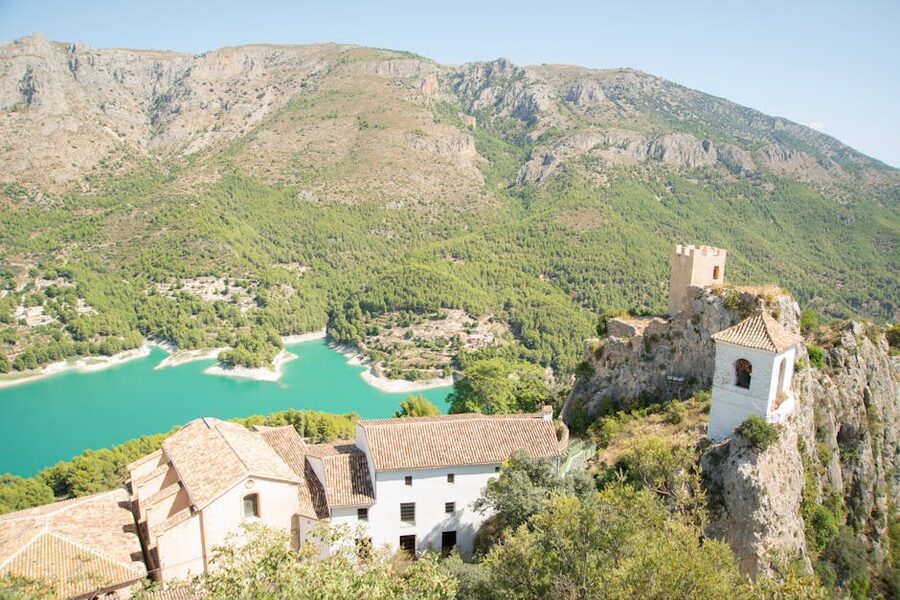
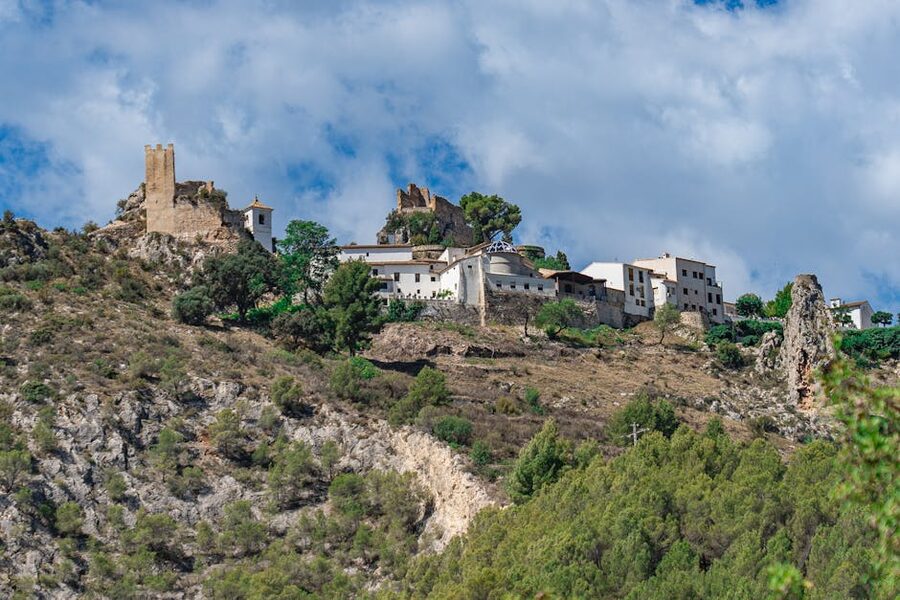
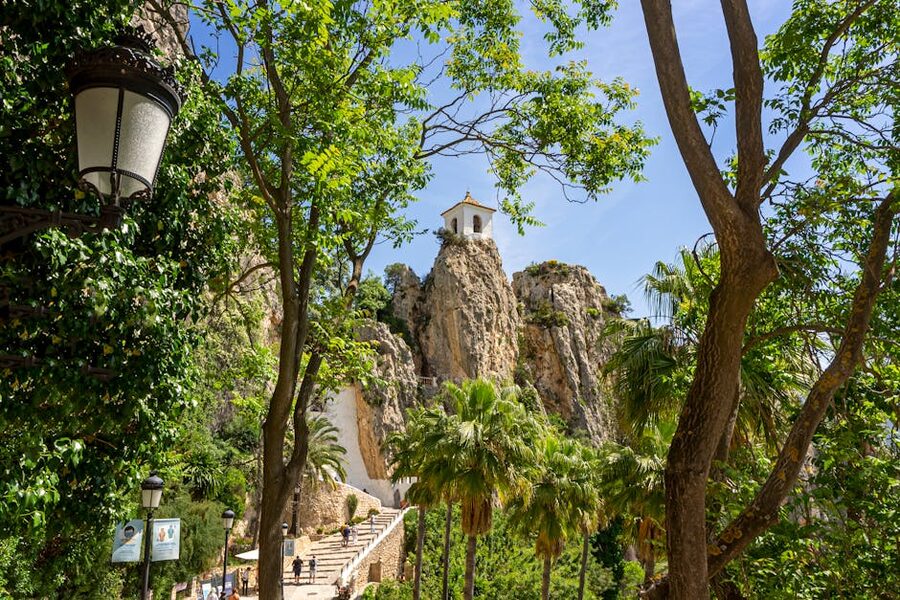
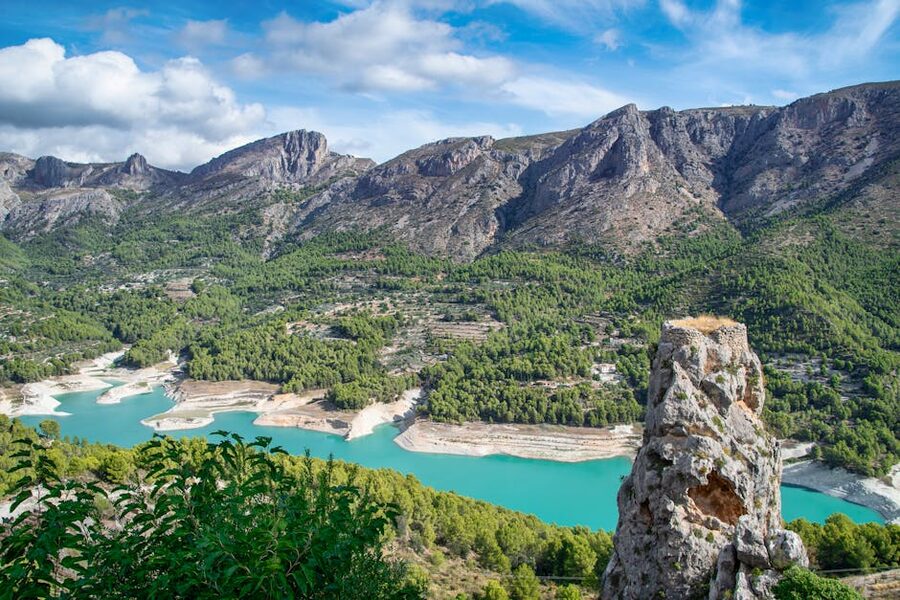
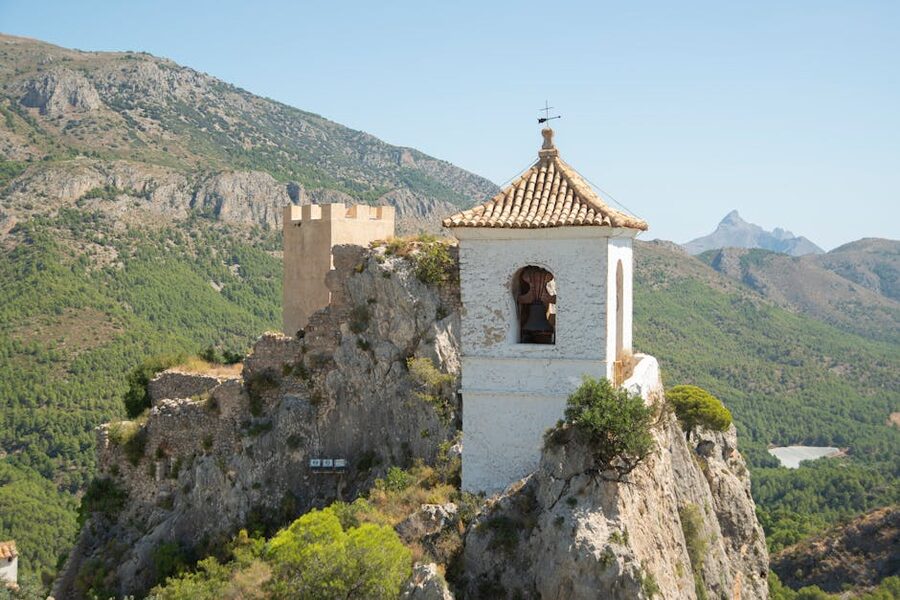
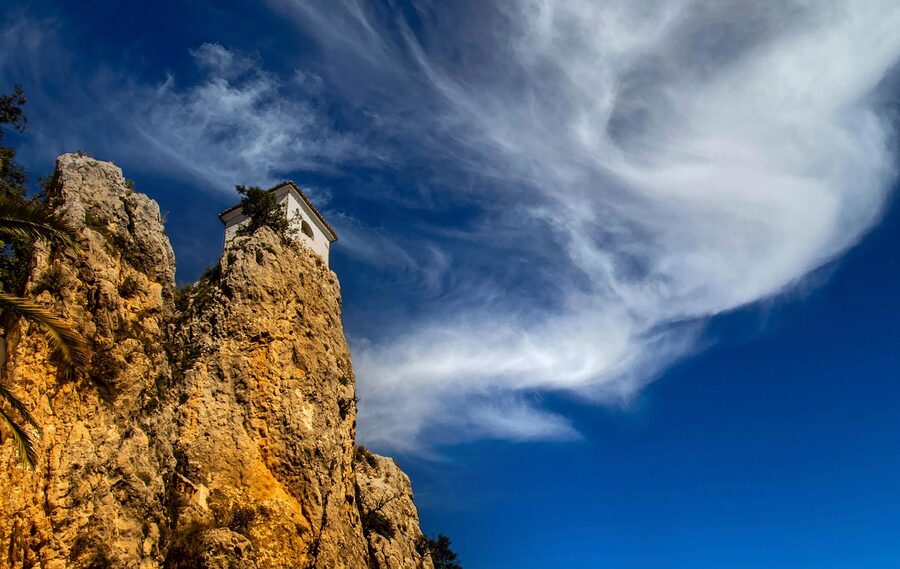
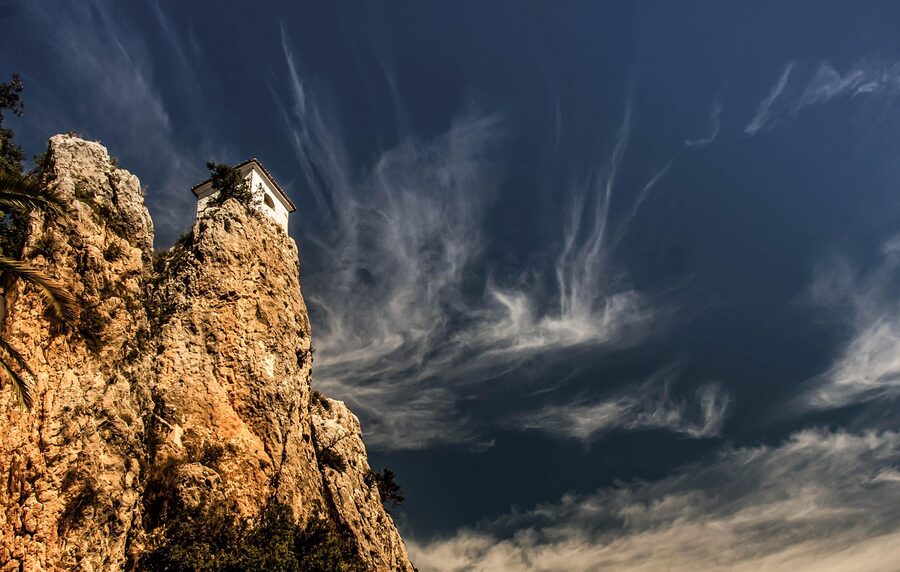
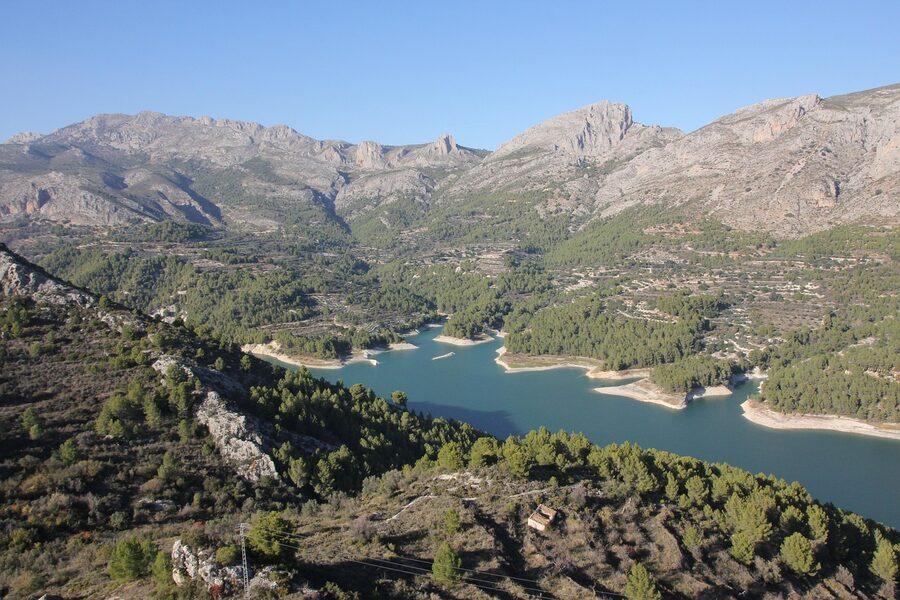
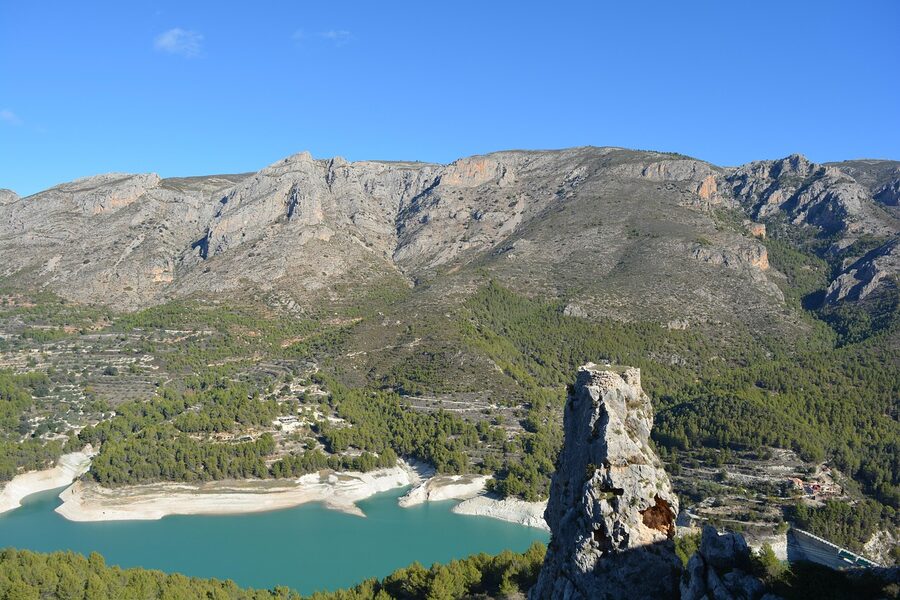
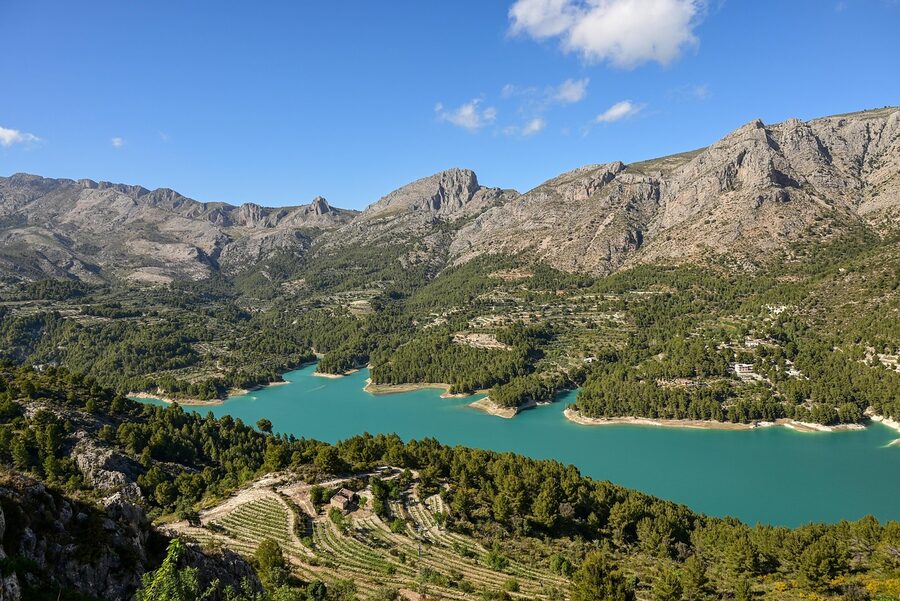
The thing that makes Guadalest different from every other mountain village in Spain is the entrance. You don’t walk in through a gate or across a bridge. You walk through a tunnel carved straight through the rock face. It was cut by hand centuries ago, and when you emerge on the other side, the village is suddenly there — white houses clinging to a cliff, a bell tower on a rock needle, and a reservoir below that’s such an aggressive shade of turquoise it almost looks fake.
Getting here from Alicante is easy but not obvious. There’s no direct public bus, which is why most people come on organised tours. But there are options at every price point, from budget coach trips to private jeep safaris through the mountain back roads.
- In a Hurry? 3 Best Ways to Visit Guadalest from Alicante
- Why Guadalest Is Worth the Trip
- The 3 Best Tours from Alicante to Guadalest
- 1. From Alicante: Guadalest, Altea and Algar Waterfalls —
- 2. From Alicante/Benidorm: Guadalest and Algar Waterfalls Tour —
- 3. Benidorm: Guided Jeep Trip to Guadalest and Algar Falls —
- The Algar Waterfalls: What to Expect
- Altea: The Third Stop You Shouldn’t Skip
- A Castle Carved Into Rock: The History of Guadalest
- Getting to Guadalest Independently
- Practical Tips
- Best Time to Visit
- What to Bring
- How to Choose a Tour
- What Else to Do Near Alicante
In a Hurry? 3 Best Ways to Visit Guadalest from Alicante
- Best full-day experience: Guadalest, Altea and Algar Waterfalls — $50/person. The complete package: three stops, full-day, transport included, and you get Algar Waterfalls entry thrown in.
- Best budget option: Guadalest and Algar Waterfalls Tour — $53/person. Shorter day (6-8 hours), focused on the two main attractions.
- Best for adventure: Guided Jeep Trip to Guadalest and Algar Falls — $82/person. Off-road through the mountains in a 4×4. If you want more than a bus ride, this is the one.
Why Guadalest Is Worth the Trip
You might look at the distance — about 65 kilometres from Alicante — and think it’s barely worth a half day. You’d be wrong. Guadalest is one of those places that punches wildly above its size. In a village smaller than most city blocks, there are more museums per square metre than anywhere else in Spain.
I’m not exaggerating about the museums. There’s a micro-miniature museum where you look through microscopes at art carved on the head of a pin. There’s a salt and pepper shaker museum with over 20,000 sets from around the world. There’s a medieval torture museum that’s exactly as unsettling as it sounds. And there’s a classic car museum at the bottom of the hill. In a village of 200 people.
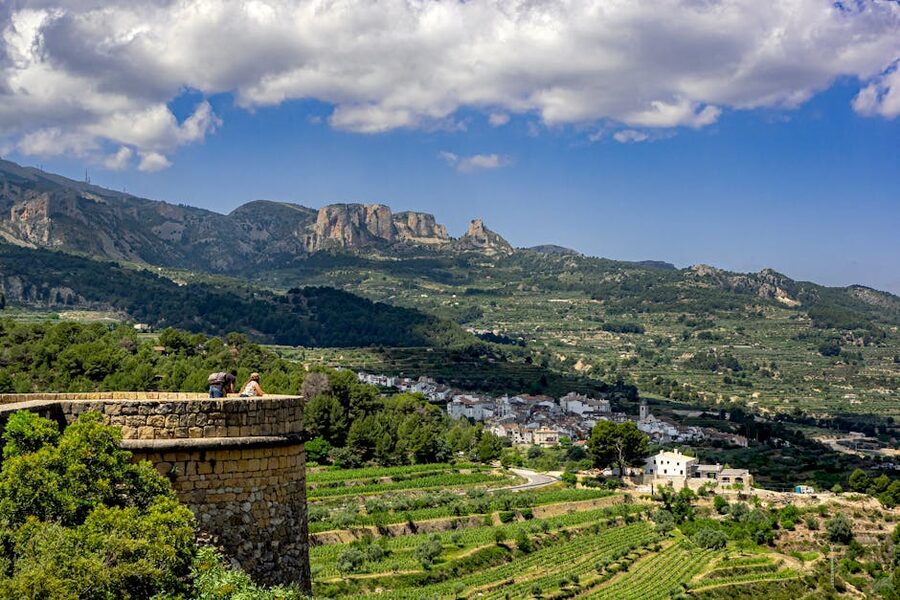
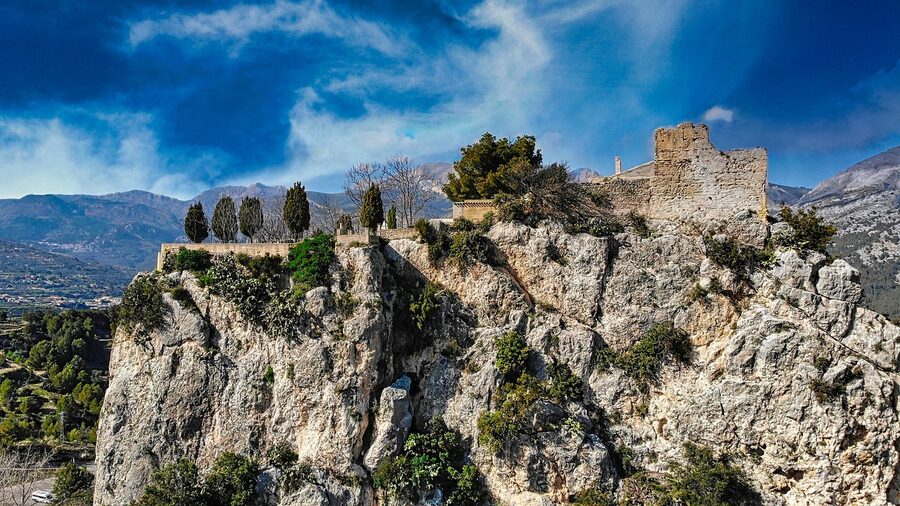
The castle itself — Castell de Guadalest, officially the Alcozaiba — was built by the Moors in the 11th century. What remains is mostly ruins, but the position is what matters. You climb up through the rock tunnel, past the church, and suddenly you’re standing on a cliff edge with the entire valley spread below you. The reservoir is straight down. The mountains stretch to the horizon. On a clear day you can see the coast.
The 3 Best Tours from Alicante to Guadalest
1. From Alicante: Guadalest, Altea and Algar Waterfalls — $50
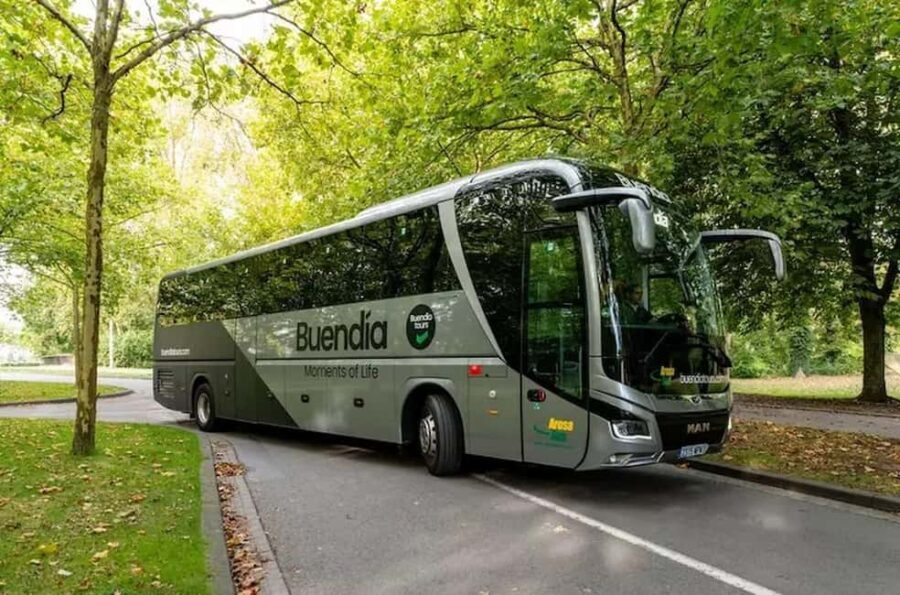
This is the most popular Guadalest tour from Alicante, and the numbers back that up. An 11-hour day that covers three completely different experiences: the whitewashed artist town of Altea, the mountaintop fortress of Guadalest, and a swim at the Algar Waterfalls. The entry ticket to Algar is included, which saves you about eight euros. Our full review covers the timing at each stop — you get roughly two hours at Guadalest, which is enough for the castle and one or two museums.
2. From Alicante/Benidorm: Guadalest and Algar Waterfalls Tour — $53
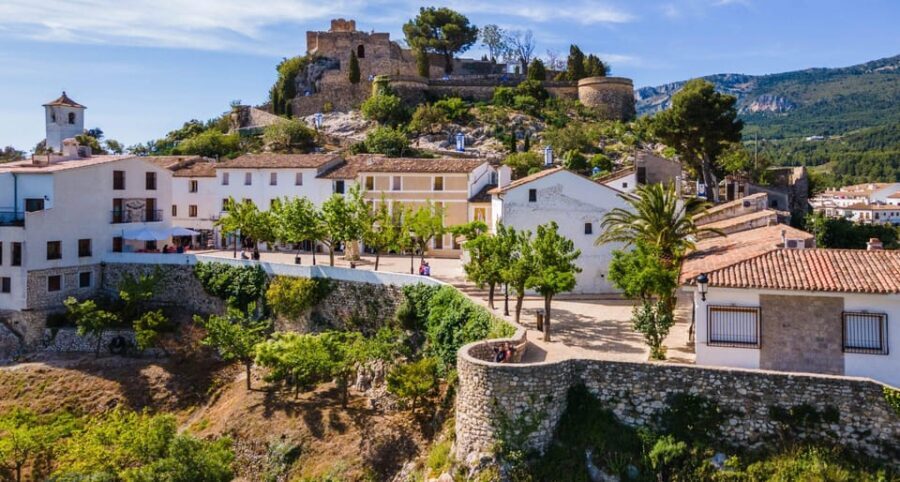
If the 11-hour tour feels like too much, this 6-to-8-hour version strips it down to the two headline attractions. You’ll get more time at both Guadalest and the Algar Waterfalls, and the shorter day means you’re back in Alicante or Benidorm by mid-afternoon. The guide Javier is a frequent highlight — knowledgeable about local history and genuinely passionate about the area. Read our detailed review for the full breakdown of what each stop includes.
3. Benidorm: Guided Jeep Trip to Guadalest and Algar Falls — $82
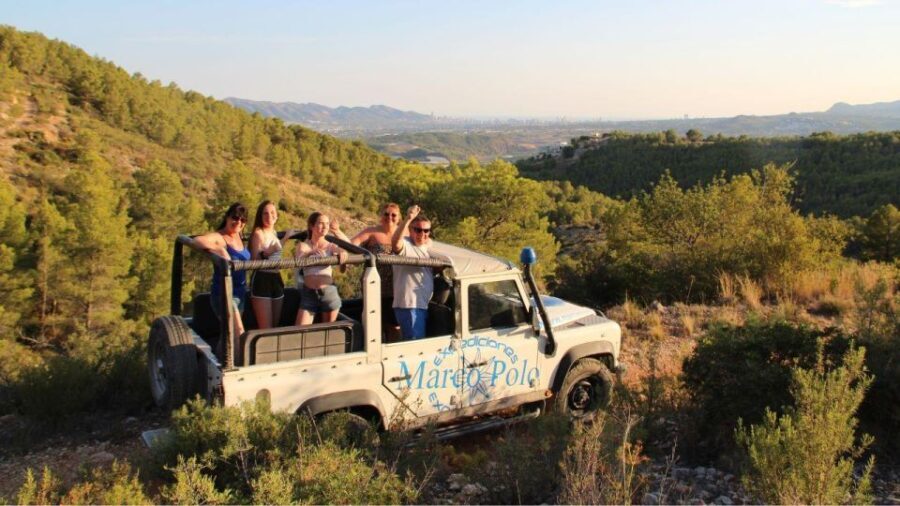
This one costs more, and it’s worth every cent if adventure is what you’re after. Seven hours in a 4×4, taking mountain back roads through almond orchards and olive groves that the coach tours never see. The off-road sections are genuinely thrilling — there are lap belts, but you’ll be gripping the roll bar on the steep bits. The rear seats get the bumpiest ride, which is either a warning or a selling point depending on your personality. Our review has more detail on the off-road route and what to wear.
The Algar Waterfalls: What to Expect
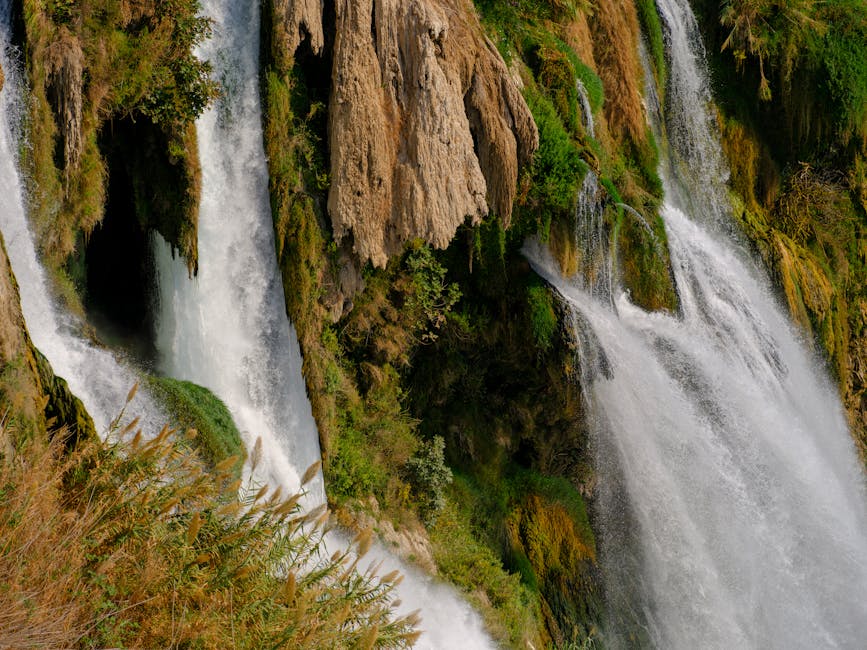
Almost every Guadalest tour includes a stop at the Fuentes del Algar — the Algar Waterfalls — about 15 minutes down the valley. These aren’t Niagara. They’re a series of small cascades and natural pools in a Mediterranean pine forest, fed by spring water that stays cold year-round.
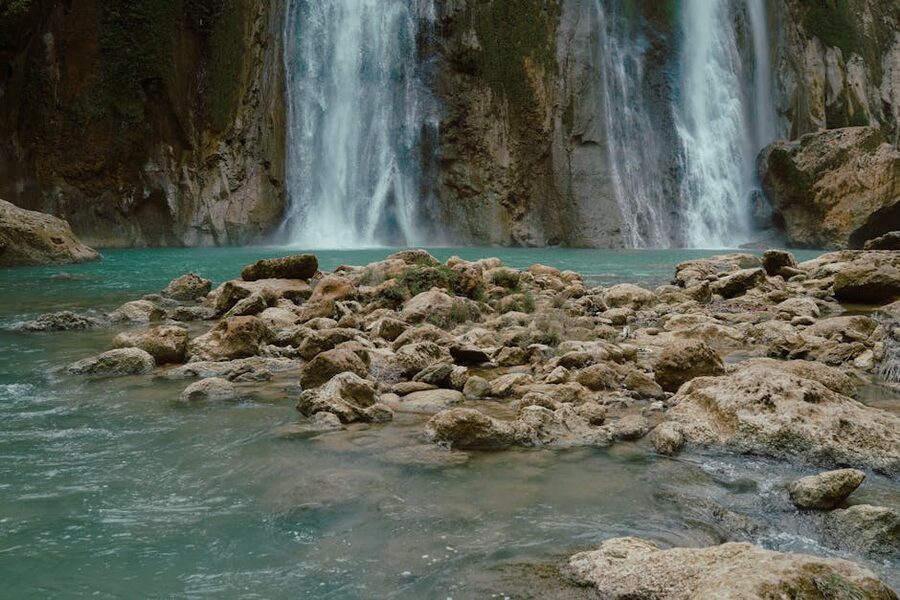
The walking trail through the waterfalls is about a kilometre long, mostly on wooden boardwalks and stone paths. It’s shaded the whole way, which makes it one of the few outdoor activities in this part of Spain that’s comfortable in July and August. The water is swimmable at several points. Some people go in just to cool off. Others treat it like a full swimming session. Bring a towel and water shoes if you plan to get in — the rocks at the bottom are slippery.
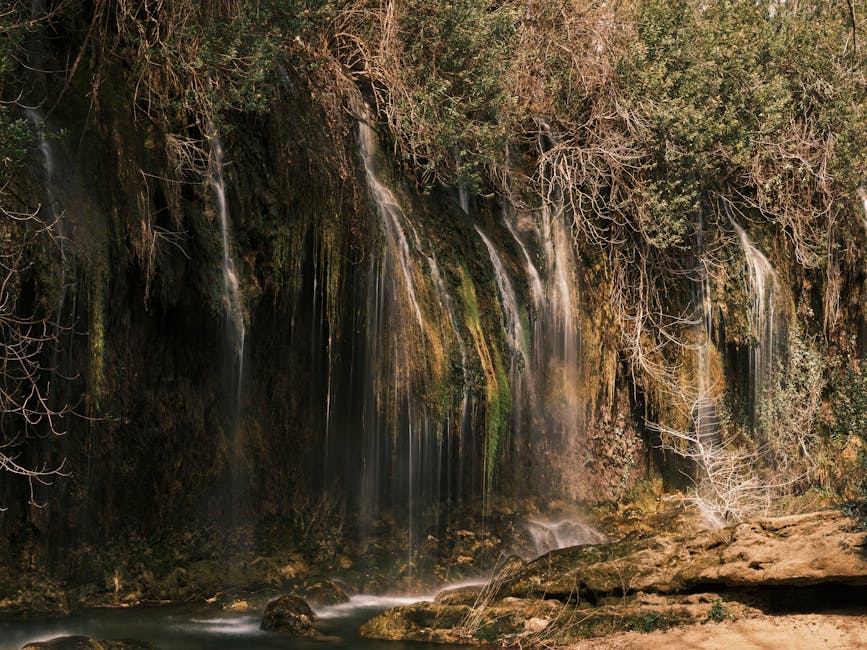
Entry costs about eight euros if you’re visiting independently (included in tour prices). There’s a small restaurant and shop at the entrance. Arrive early if you’re driving yourself — the car park fills up by midday in summer.
Altea: The Third Stop You Shouldn’t Skip
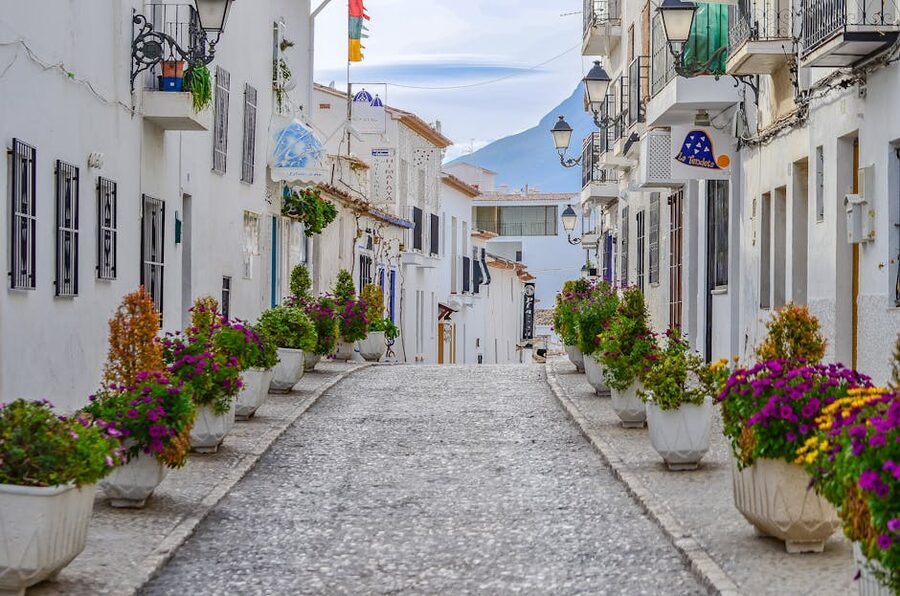
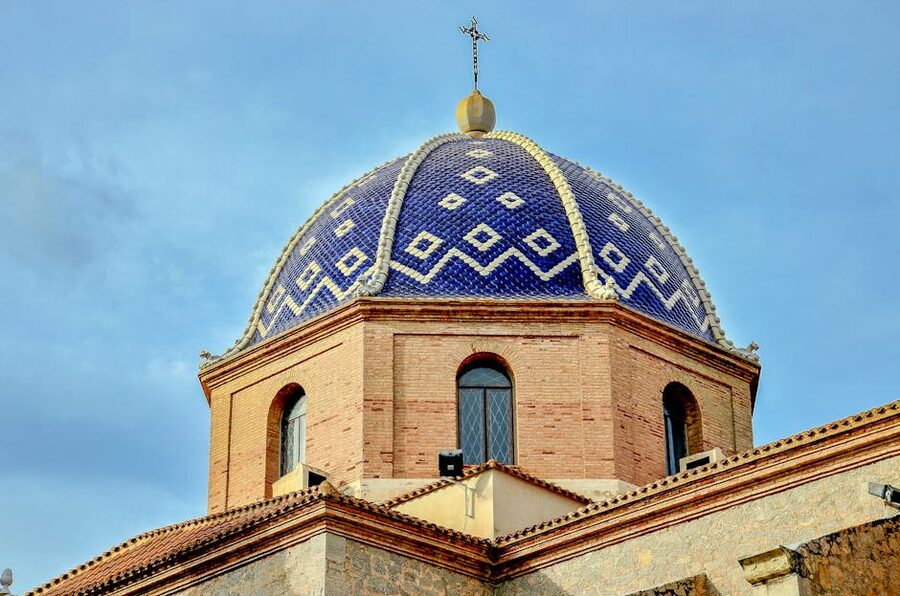
Some tours include Altea, the whitewashed coastal town between Alicante and Guadalest. It’s worth it. Altea has the kind of old quarter that makes you walk slowly — narrow cobblestone alleys, ceramic tiles on every doorstep, bougainvillea spilling off balconies, and a blue-and-white domed church at the top that’s become the town’s unofficial logo.
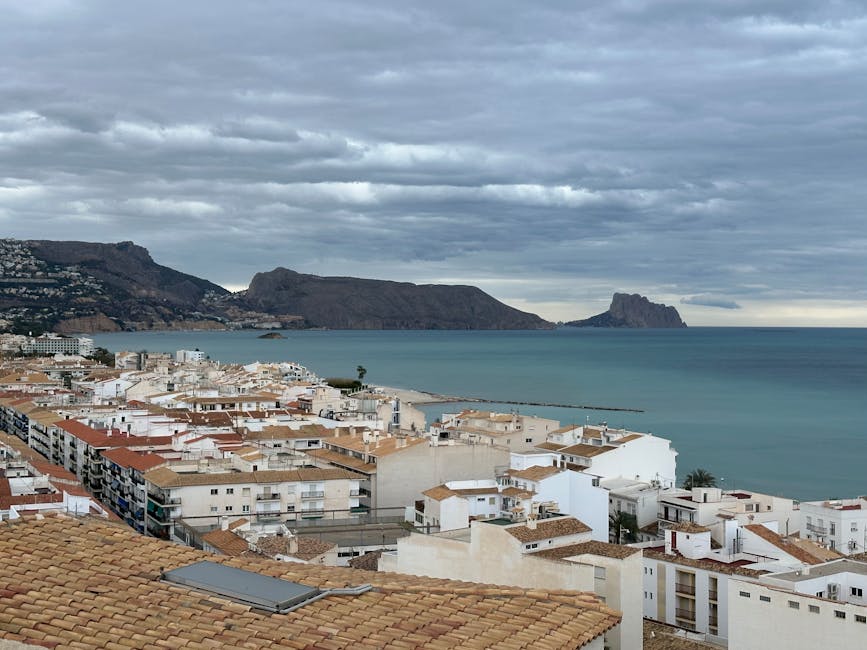
The town has attracted artists and writers for decades. Altea’s artist colony started in the 1960s and it shows — there are galleries, craft shops, and ceramics studios along nearly every street in the old quarter. The waterfront promenade is lined with restaurants, though most of the better places to eat are one street back from the sea (cheaper, better food, same view from the upstairs terrace).
A Castle Carved Into Rock: The History of Guadalest
The Moors built the first fortification here in the 11th century. The position was strategic — a mountaintop that could see in every direction, with only one way in (through that rock tunnel). The castle changed hands during the Christian Reconquista in the 13th century when Jaume I of Aragon took control of the region.
The village survived earthquakes (1644 was devastating), wars, and the slow decline of rural Spain. By the mid-20th century, Guadalest was nearly abandoned. Then the tour buses arrived. The municipal government made a deliberate decision in the 1960s and 70s to develop tourism — building the car park, opening museums, maintaining the castle ruins — rather than let the village die.
It worked. Today, over two million people visit Guadalest each year. That’s 10,000 visitors for every permanent resident. The economics are interesting — the museums, restaurants, and souvenir shops employ people from surrounding towns, keeping a whole micro-economy alive around what would otherwise be a forgotten ruin.
Getting to Guadalest Independently
If tours aren’t your thing, you can drive to Guadalest yourself. From Alicante, take the AP-7 motorway north toward Benidorm, then follow signs to Callosa d’en Sarria and up into the mountains. Total drive time is about 50 minutes in normal traffic. The road from Callosa up to Guadalest is winding but well-maintained — it’s the same road the tour buses use, so it’s been kept in good condition.
Parking costs about three to four euros all day. There are two main car parks — both are at the bottom of the hill. The upper one fills up first and is closer to the village entrance. Arrive before 10am in summer to guarantee a spot.
There is no direct public bus from Alicante to Guadalest. You can take a bus to Benidorm (about an hour, very frequent), then a local bus from Benidorm to Guadalest, but the connections aren’t reliable and you’ll lose half the day waiting. If you’re without a car and don’t want to drive, a tour is genuinely the most sensible option.
Practical Tips
Best Time to Visit
Spring (March through May) and autumn (September through October) are ideal. The weather is warm enough to enjoy the waterfalls without the crushing heat and crowds of July and August. Winter is quiet but some museums close, and the waterfalls are less impressive after the dry season.
In peak summer, the village gets extremely crowded between 11am and 2pm. If you’re on an organised tour, you won’t have a choice about timing. If you’re driving, arrive at 9am or come after 3pm.
What to Bring
For Guadalest: comfortable walking shoes (there are steps and cobblestones), sunscreen, and cash for museum entry. Most museums cost two to four euros each. Some accept cards, some don’t. Water and a hat are essentials in summer.
For the Algar Waterfalls: swimsuit, towel, water shoes (the rocks are genuinely slippery), and a dry bag if you’re carrying electronics. The temperature at the falls is noticeably cooler than the coast, which is either a relief or a shock depending on the month.
How to Choose a Tour
The three tours I’ve recommended above cover the main options. The full-day triple (Altea + Guadalest + Algar) is the most complete experience. The half-day (Guadalest + Algar) is better if you don’t want to spend an entire day on a bus. The jeep safari is for people who want the journey to be as exciting as the destination.
All three include pick-up from central Alicante. Most also offer Benidorm pick-up. Book at least three to four days ahead in summer. Off-season, a day or two is usually fine.
What Else to Do Near Alicante
If Guadalest has whetted your appetite for day trips, the Alicante region has more to offer than most visitors realise. A food tour in Alicante is the best way to explore the city’s Moorish-influenced cuisine and the Mercado Central — arroz a banda, turron from Jijona, and local wines you won’t find anywhere else.
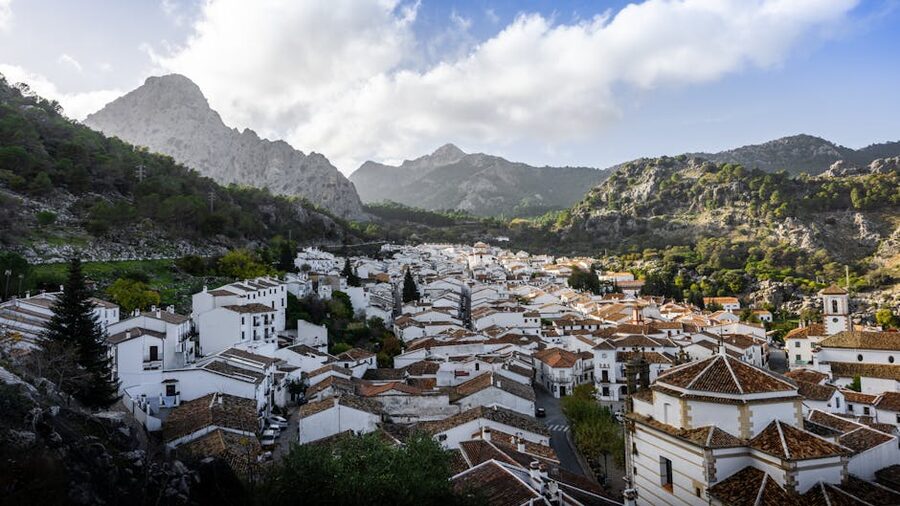
Boat tours from Alicante run to Tabarca Island, a tiny car-free speck in the Mediterranean with some of the clearest snorkelling water on the entire coast. To the north, Valencia is about two hours by train and has its own city of arts and sciences, the original paella, and a flamenco scene that rivals Seville’s. And if you’re heading south along the coast, Nerja and Frigiliana are two of the prettiest white villages in Andalusia, easily reachable from Malaga.
This article contains affiliate links. When you book through these links, we may earn a small commission at no extra cost to you. This helps us keep creating free travel guides.