
In 2012 a Chinese property developer built a full-scale replica of Hallstatt in Guangdong Province. Austrian officials were furious at first, then realized it was free marketing for the original. The village now has 780 permanent residents and roughly 10,000 visitors on a summer Saturday — Austria’s most crowded small town by a wide margin.
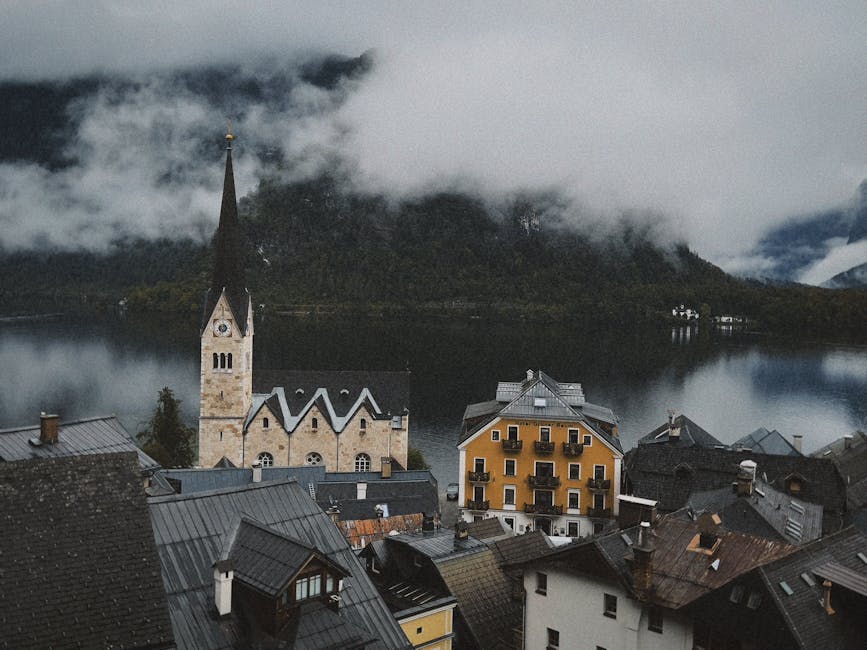
From Salzburg, Hallstatt is 75 kilometres east by road — about 75-90 minutes each way by tour bus, through the Salzkammergut lakes district. A half-day guided tour runs €95-100 per person and covers the transport, 90-120 minutes on the ground, and the driver/guide commentary en route. Full-day tours extend to include the salt mines (the 7,000-year-old ones that gave the village its name) or the Sound of Music filming locations around Lake Wolfgang.
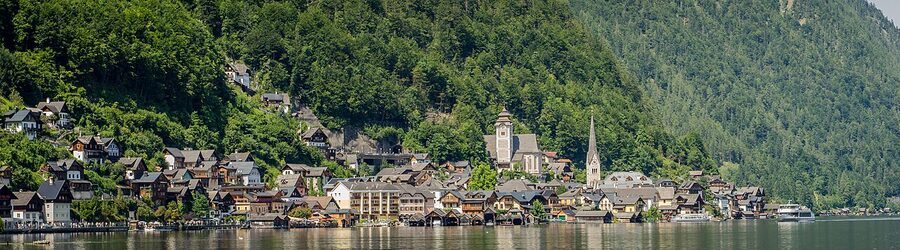
The village itself takes 90 minutes to walk end-to-end with stops. There’s a 400-metre-long main strip along the lake, a parish church built on a ledge 50 metres above the waterfront, a single historic square, a salt-mine funicular station, and one of Europe’s most unusual ossuaries. Then the cliff starts. Hallstatt exists because 7,000 years ago the local hills turned out to have commercially viable rock salt; nothing about its physical layout makes sense for a modern tourist economy, which is part of what makes it feel small and overwhelmed at the same time.

In a Hurry? The Three Hallstatt Tours from Salzburg
- Best overall: Half-Day Tour to Hallstatt — $100, 4-5 hours, 3,596+ reviews. The standard pick.
- Best combo: Hallstatt + Sound of Music Tour — $164, 8-9 hours, adds SoM filming locations.
- Best for history: Hallstatt + Salt Mines Small-Group — $168, 9-10 hours, adds the 7,000-year-old salt mine tour.
- In a Hurry? The Three Hallstatt Tours from Salzburg
- Which Tour to Book
- 1. From Salzburg: Half-Day Tour to Hallstatt — from 0
- 2. Salzburg: Hallstatt and Sound of Music Tour — from 4
- 3. Hallstatt and Salt Mines Small-Group Tour from Salzburg — from 8
- What You Actually See in 90 Minutes
- The Other Salzkammergut Lakes Worth Knowing About
- Hallstatt’s Overtourism Problem
- The Salt Mining History — Why Hallstatt Exists
- When to Go
- Getting There — The Drive and Route
- Making the Most of the Tour Day
- Pairing with Salzburg and Beyond
- Common Mistakes
- Hallstatt vs Hallstatt from Vienna — Which Origin City
- Practical Details
- The Short Version
Which Tour to Book
1. From Salzburg: Half-Day Tour to Hallstatt — from $100
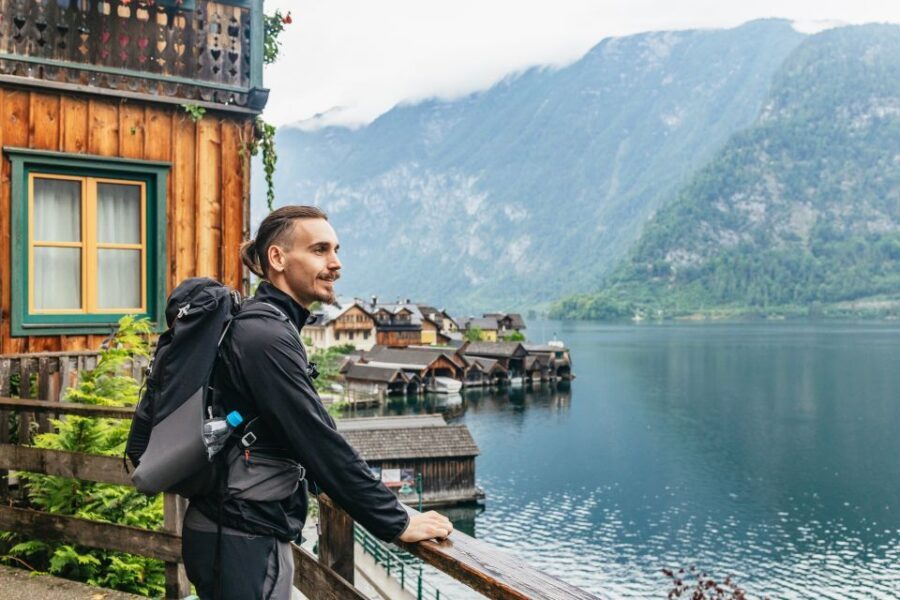
The default Hallstatt-from-Salzburg tour. Bus leaves Salzburg around 9am, arrives Hallstatt 10:15-10:30, free time until 12-12:30, returns by 1-2pm. Group sizes 8-15 people. Guide-commentary en route covers the salt mining history and the Salzkammergut landscape. Bare-bones — doesn’t include the salt mine tour, Beinhaus, or Skywalk entry. Good if you want the iconic photos and don’t need the full experience. Our full review covers the route specifics.
2. Salzburg: Hallstatt and Sound of Music Tour — from $164
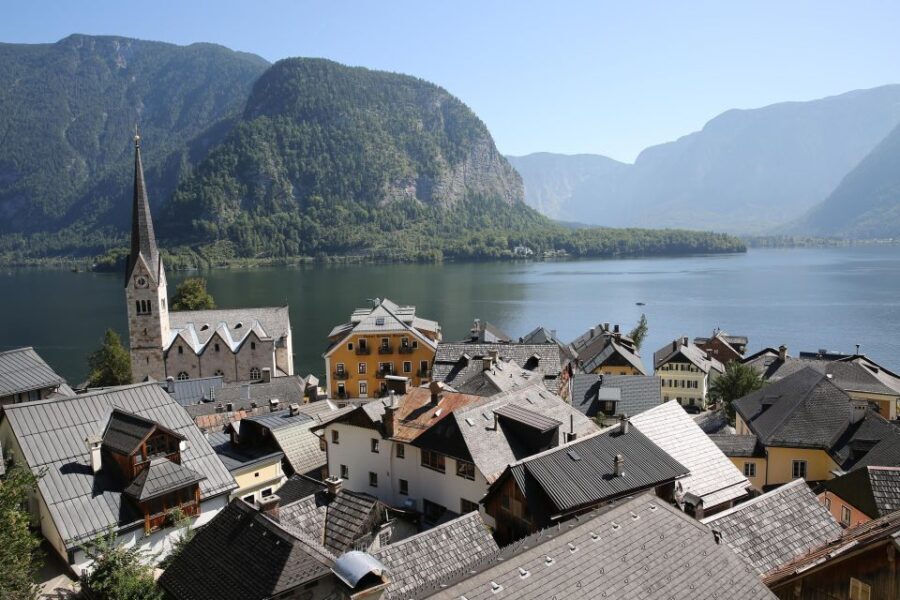
For first-time visitors wanting the Salzkammergut classic combo. Morning in Sound of Music territory (the wedding church at Mondsee, Maria’s fountain at St. Gilgen, scenic drives along the Fuschlsee), afternoon in Hallstatt. 8-9 hours total. Most people who do this tour rate it as the single best day trip from Salzburg. Our full review has the exact stop schedule.
3. Hallstatt and Salt Mines Small-Group Tour from Salzburg — from $168
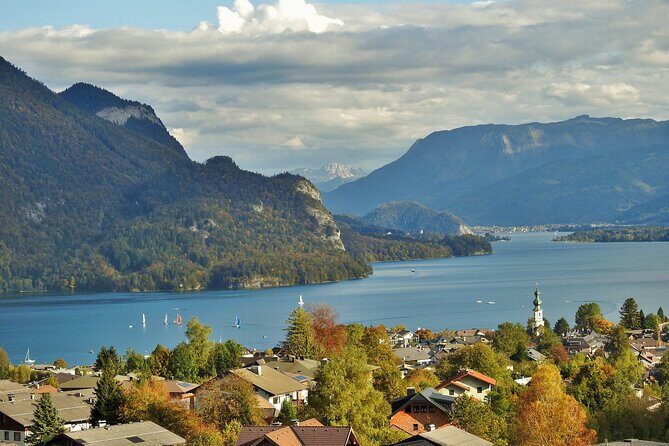
For visitors who care about the salt mining story as much as the village itself. Includes entry to the Hallstein Salt Mine (the original — 7,000 years of continuous operation), the funicular up to the mine, and guided visit to the underground works where Bronze Age miners literally died under cave-ins and were preserved in the salt. 9-10 hours. Less crowded than the mainstream Hallstatt tour — small groups of 6-8. Best for history-curious travellers.
What You Actually See in 90 Minutes
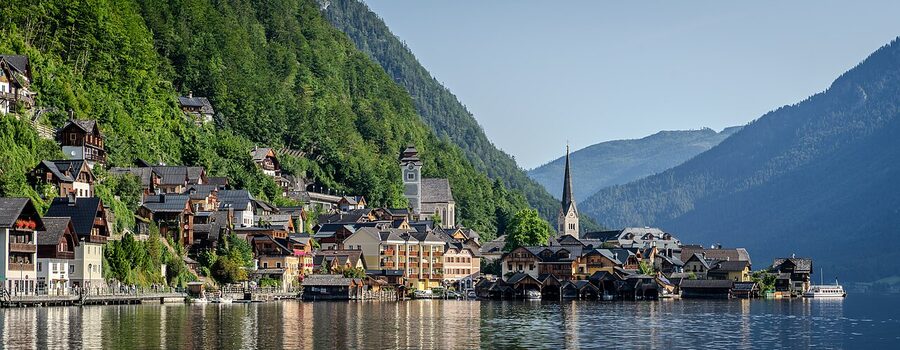

The half-day tour drops you in Hallstatt with 90-120 minutes of free time. That’s enough to see the essentials if you’re efficient. The village is essentially a 400-metre-long strip between the lake and an 800-metre cliff — there’s nowhere to get lost.
Marktplatz (market square): the heart of the village. Statue of the Holy Trinity in the centre, historic Gasthof restaurants around it, and the standard tourist shops. Good for 15 minutes. The square is where every tour bus group photographs first — arrive 20 minutes after your bus to miss them.
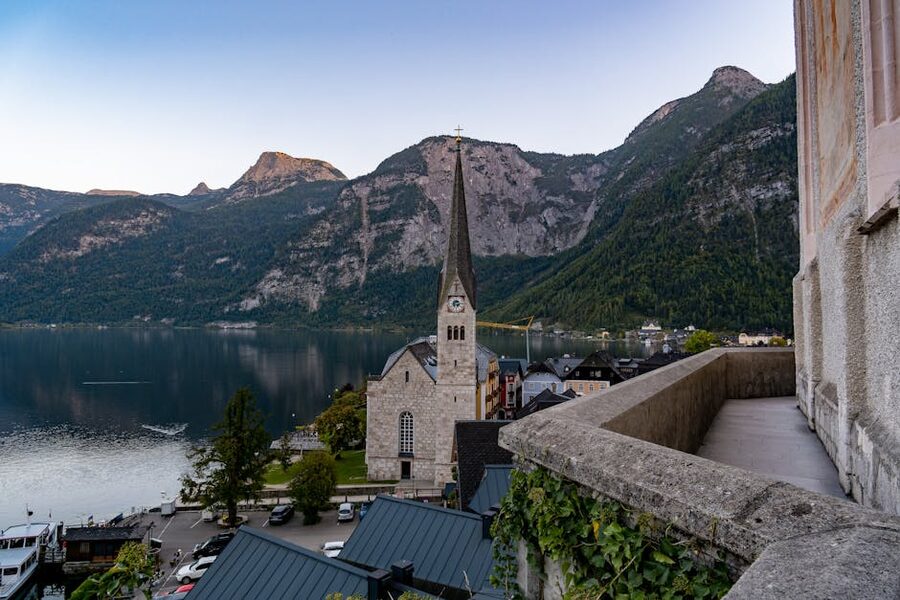
The famous viewpoint: walk north along the lakefront (Seestraße) to the Bergfriedhof cemetery and the Evangelical Church. That’s where the famous postcard shot is taken from — church spires in the foreground, mountains and lake stretching into the distance. Everyone takes this photo. Queue can hit 20 people at peak hours.
Catholic Church (Pfarrkirche): the taller parish church, built on the hillside above the village. Climb the 150 steps up from the main square. The interior has unusual Gothic wooden altars. Free entry.
Beinhaus (Bone Chapel): the most unusual thing in the village. 1,200 human skulls stacked in a small ossuary behind the Catholic Church — painted with names, dates, and family crests. Started in the 12th century when the village ran out of cemetery space and began exhuming older burials to make room. €2 entry. 10-15 minutes. Genuinely unique.
Lake shore walk: 5-10 minutes of walking along the lakeside houses. The wooden balconies, boat sheds, and swans make for good photos.
What you can’t fit in 90 minutes: the Skywalk viewpoint (funicular ride up the cliff, €16, 1-hour round trip), the salt mine tour (2 hours plus the funicular), a proper meal at a lakeside restaurant.
The Other Salzkammergut Lakes Worth Knowing About
Most tours treat Hallstatt as the only destination. The Salzkammergut region has 76 lakes, and several are genuinely better to spend time at than Hallstatt itself.
Wolfgangsee (St. Wolfgang): the largest lake on the route and often the most photogenic. The village of St. Wolfgang (on the north shore) is roughly the same size as Hallstatt but gets maybe a quarter of the visitors. The 16th-century pilgrimage church has Michael Pacher’s altarpiece — one of the most significant late-Gothic works in central Europe. Most full-day tours stop here.
Fuschlsee: the smallest of the big four lakes, entirely car-free on the south shore, with some of the best swimming water in Austria. Where Sound of Music’s opening helicopter shot was filmed.
Traunsee: the deepest (192m) and arguably the most dramatic — sheer cliffs on one side, traditional lakeside villages on the other. Schloss Ort sits on a small island in the lake, reached by a wooden footbridge.
Gosausee: 20 minutes from Hallstatt by car. Glacier lake with the Dachstein mountain reflected in impossibly still water. This is the view non-Hallstatt Instagram accounts post when they want the “authentic Austria” shot. Wonderfully uncrowded.
Mondsee: where the Sound of Music wedding was filmed (Basilica St. Michael). Mid-sized lake, small village, good restaurant scene.
Full-day Salzkammergut tours can cover 3-4 of these in addition to Hallstatt. If you like lakes and you have a day to spare, the combo is genuinely better than a 90-minute Hallstatt stop alone.
Hallstatt’s Overtourism Problem
A word of warning for 2026 visitors. Hallstatt has spent the last decade dealing with what locals now call a “crisis of tourism.” In 2019 the residents installed a wooden fence at the main photo point to block Instagram photos (later removed under pressure from tourism authorities). In 2020 the mayor publicly asked visitors to stop coming. In 2024 the village installed bollards and occasionally closes the main square to tour buses during peak hours.
None of this stops the tourists. Summer Saturdays still see 10,000+ visitors for a village of 780 residents. The popular post-lunch hours (12-3pm) can feel genuinely overrun — the main square is shoulder-to-shoulder, the viewpoint queue is 20 people deep, and the waterfront shops are selling tourist tat at markup prices.
What to do:
– Arrive before 10am or after 3pm. Tour buses cluster between 10:30 and 2:30.
– Walk away from the square. The northern and southern ends of the lakefront strip are quieter.
– Respect residents. Balconies with flowers are people’s homes, not photo backdrops. “Please don’t photograph us” signs mean it.
– Don’t drive in. The village bans non-resident vehicles inside the core. Tour buses drop off at a lot outside the village.
The village is genuinely beautiful and worth the visit. But it’s also one of the clearest examples of tourism pressure in Europe right now, and going respectfully makes the difference between supporting the village and contributing to its problems.
The Salt Mining History — Why Hallstatt Exists
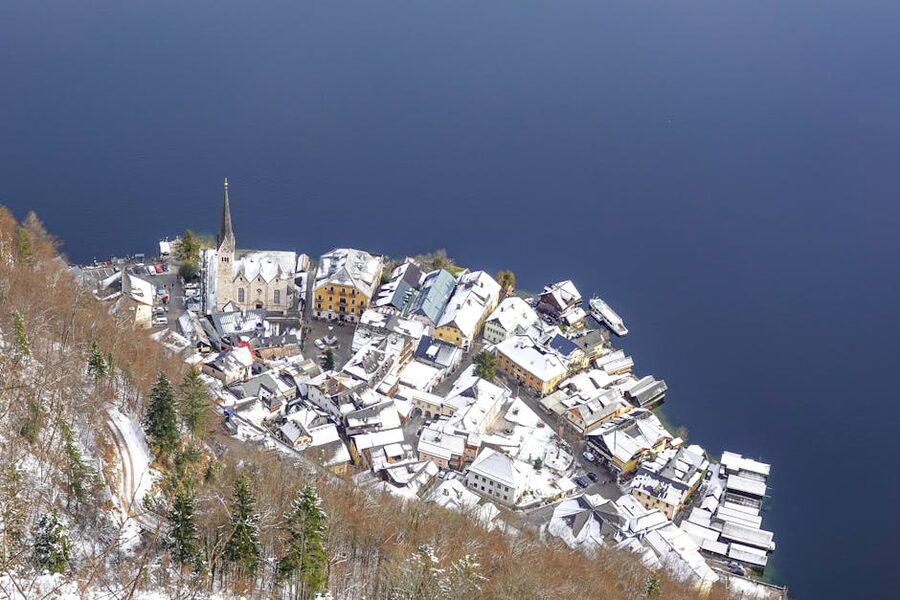
The name “Hallstatt” comes from the Celtic word “hall” meaning salt. This is the oldest continuously inhabited salt-mining site on Earth — archaeological evidence shows mining from at least 5000 BC, with continuous operation for the past 3,000 years.
The Hallstatt salt mines were so important that an entire pre-Roman European Iron Age culture was named after them: the “Hallstatt culture” (c. 1200-500 BC) dominated central and western Europe. Archaeological finds from this period — burial goods, weapons, preserved bodies — fill museums across Austria.
The preserved bodies are the most striking finds. Salt mines are natural refrigerators; bodies of miners who died in cave-ins 2,500-3,500 years ago have been found with skin, hair, clothing, and tools intact. One famous find from 1734 was nicknamed “the Man in Salt” — a Bronze Age miner perfectly preserved, his leather shoes and woollen cap still wearable. He was reburied at the Beinhaus.
The modern mine continues to operate. It’s the oldest active commercial enterprise in the world — roughly 30 employees, still producing edible salt, though the core business today is mine tours (€36 entry, includes 70-minute underground tour, funicular ride up, and optional wooden mining slide that visitors ride down).
The Skywalk is at the entrance to the mine. Glass platform extending 350 metres above the village — the “World Heritage View.” Included in the salt mine ticket. 15 minutes if you’re not afraid of heights.
How to visit the salt mine: take the funicular up from the village (6 minutes), 70-minute underground tour, return by funicular. 3-4 hours total. Most half-day tours from Salzburg don’t include this — you’d need the full-day combo (Option 3 above) or an overnight stay.
When to Go
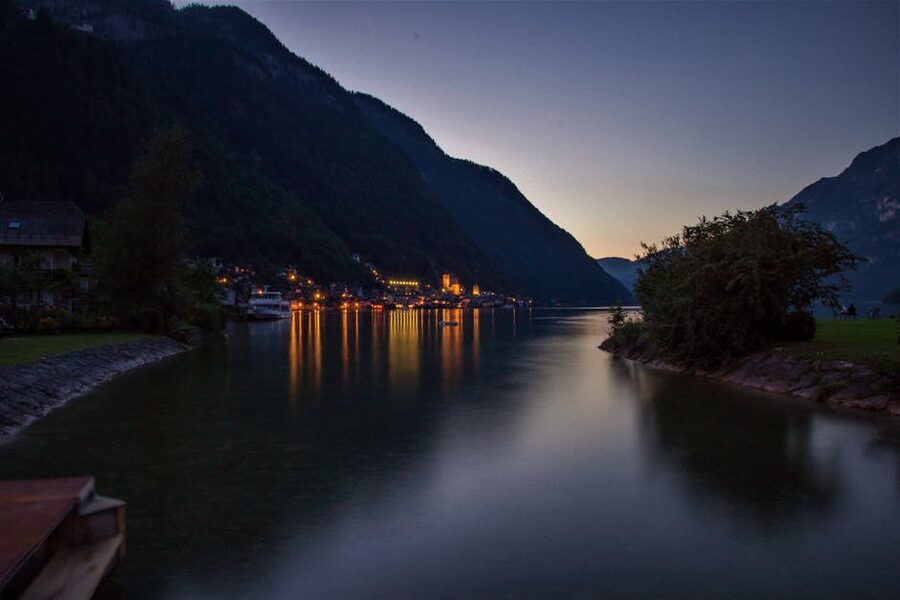
Best time of year: May and September-October. Weather is reliably mild, the lake is at its most photogenic, and visitor numbers drop 30-40% from the peak. October is arguably the single best month — the surrounding forests turn autumn colours.
Shoulder: April and November. Quieter still, but weather gets variable. Some businesses start closing for the season in November.
Summer (June-August): visually at its best, crowd-wise at its worst. Weekdays are tolerable; weekends are overwhelming. Book the earliest tour slot (departures at 8-9am from Salzburg).
Winter (December-March): snow-covered, quiet, surreal. The village genuinely empties to something close to its pre-tourism self. Hallstatt in January is many visitors’ favourite version.
Best day of week: Tuesday-Thursday. Weekends see the biggest day-trip crowds from Vienna (5 hours each way) and Salzburg.
Avoid: Austrian public holidays (especially Whitsun/Pentecost and Assumption Day) when Austrian families add to the international crowd.
Getting There — The Drive and Route
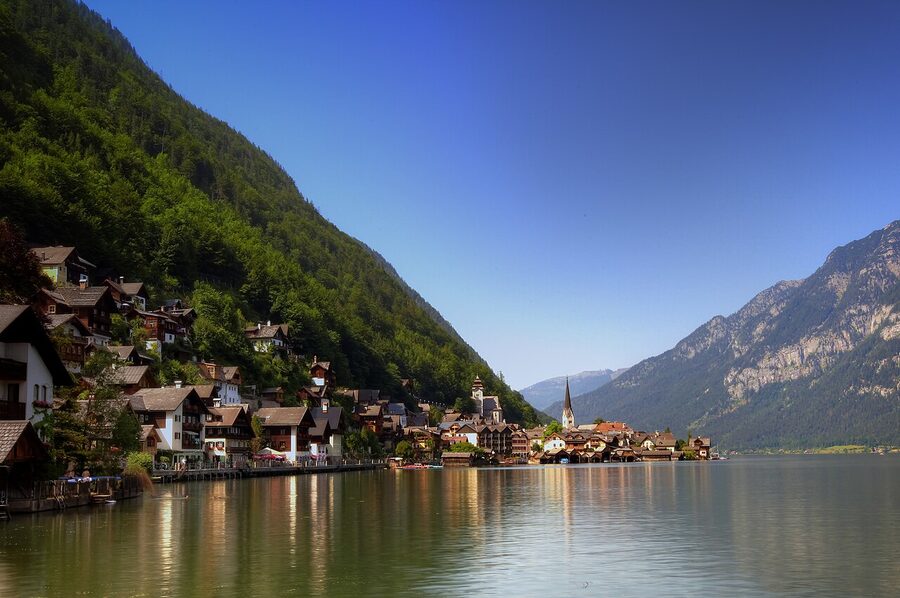

By guided tour (recommended): bus pickup at Salzburg Hauptbahnhof or central city hotels. 75-minute drive east through Fuschlsee, Wolfgangsee, Bad Ischl. The tour bus drops in the P1 parking lot outside the village; you walk 15 minutes to the main square.
By public transport (possible but slow): train Salzburg → Attnang-Puchheim (1h 10min), change to Attnang-Puchheim → Hallstatt Bahnhof (1h 20min). Hallstatt station is across the lake from the village — you take a ferry (€4, 10 minutes) to reach it. Total journey 3+ hours each way. Not worth the saving unless you’re on a strict budget.
By rental car: 75 minutes each way. Parking is tight. The village bans non-resident cars inside the core; you park in the P1 or P2 lots outside. Parking is €12-16 for the day. Only worth doing if you’re continuing to other Salzkammergut destinations.
By private transfer: €200-300 one-way for a private car. Worth considering for groups of 4+.
Making the Most of the Tour Day
On the bus out: sit on the right side. The Wolfgangsee and Traunsee views are on that side.
First 20 minutes in Hallstatt: skip the main square initially. Walk directly to the viewpoint spot at the Evangelical Church for photos — you’ll be ahead of the bus-group rush.
Mid-visit: eat something. The Gasthof Simony and Gasthof Grüner Baum do €15-25 mains. Simple, good, not fine-dining. Skip lunch if you’re on a tight 90-minute schedule.
Bone Chapel: 10-minute detour up to the Catholic Church. The ossuary is behind the church cemetery. €2, take your time.
Don’t rush the viewpoint: 5 minutes of waiting + 5 minutes of standing and taking it in is enough.
Before the bus leaves: grab a coffee at Hallstatt Café or ice cream at Eissalon Hallstatt. Small shops, not tourist-traps.
Pairing with Salzburg and Beyond
Classic Salzburg day 2: Day 1 Salzburg city + Sound of Music tour. Day 2 Hallstatt half-day. Day 3 Eagle’s Nest or Salzburg salt mines. 3-day itinerary covering most of what people come for.
Combining in one day: Option 2 (Hallstatt + Sound of Music) does both in 9 hours. Tight but efficient.
Two days in Salzkammergut: stay overnight in Hallstatt or nearby Bad Ischl. Hallstatt early-evening and early-morning (when day-trippers are gone) is genuinely peaceful. Combine with Lake Wolfgang, Gosausee, or the Dachstein glacier.
Longer Austria trip: Hallstatt fits naturally into a 7-10 day itinerary covering Vienna → Salzburg → Salzkammergut → Innsbruck/Tyrol. Day-trip from Salzburg is the standard approach.
Common Mistakes
Going on summer Saturday afternoon. The worst possible combination. Try for Wednesday morning or October weekday.
Expecting to park in the village. You can’t. Non-resident vehicles are banned from the core. Park in P1 or P2 lots.
Spending 90 minutes queuing for the one viewpoint. The secondary viewpoints (south end of the lakefront strip, or the Catholic Church climb) are similar and uncrowded.
Not booking tickets for the salt mine in advance. If you’re doing the full-day combo, the salt mine tours sell out in summer. Book 2-3 days ahead.
Photographing residents through windows. These are homes, not tourist exhibits. The village has had genuine privacy-invasion incidents.
Missing the Beinhaus. €2, 10 minutes, most unusual small-museum experience in Austria. Don’t skip.
Expecting the Skywalk to be in the village. It isn’t — it’s up the mountain at the salt mine entrance. 15-minute funicular ride required.
Hallstatt vs Hallstatt from Vienna — Which Origin City
Vienna-based travellers often ask whether to add Hallstatt to their Vienna trip. The short answer: only if you have a full day to spare, and a Salzburg base is almost always better.
From Vienna: 280 km by road, 4-5 hours each way by bus. Full-day tours run 12-14 hours door-to-door with very little time on the ground. The Vienna-Hallstatt full-day tour squeezes Melk Abbey + Hallstatt into one brutal day — you arrive in Hallstatt tired and leave before the good light.
From Salzburg: 75 km, 75-90 min each way. You can do a half-day and still have an afternoon in Salzburg. The driving scenery (Salzkammergut lakes) is itself worth the trip.
From Munich: 200 km, 3 hours each way. Not commonly offered as a tour; most Munich visitors take the train to Salzburg first and tour from there.
Optimal approach: base in Salzburg for 2-3 nights, day-trip to Hallstatt, and use the saved transit time for Sound of Music, Eagle’s Nest, or the Salzburg old town itself.
Overnight in Hallstatt: stay at Gasthof Simony, Seehotel Grüner Baum, or Heritage Hotel Hallstatt. Rooms €150-300 in summer. Genuinely worth one night — seeing the village empty out at 5pm and refill at 10am next morning is the part day-trippers don’t experience.
Practical Details
Duration: 75-90 min each way by tour bus. Plan 4-5 hours door to door for half-day tours.
Cost: €95-170 per person depending on tour type.
What to bring: water, sunscreen (summer), sweater (year-round — it’s 550m above sea level and cools quickly), comfortable shoes (cobblestones + 150 steps up to Catholic Church).
Food: bring a snack for the bus. Lunch in Hallstatt is tight time-wise unless you skip other sights.
Language: English widely spoken in tourist-facing shops and restaurants. Menus usually bilingual.
Currency: Euro. Most places accept cards; small shops may be cash only.
Toilets: small public WCs near the square (€0.50). Restaurants prefer you to eat before using theirs.
The Short Version
Book the €100 half-day tour from Salzburg for the classic Hallstatt experience — bus there, 90 minutes on the ground, bus back. It’s enough time for the viewpoint, the Marktplatz, and the Beinhaus. Upgrade to the $164 Sound of Music combo if you haven’t done the SoM sites yet, or to the $168 salt mines tour if you’re interested in the 7,000-year mining history.
Go early (9am bus from Salzburg) or in shoulder season. Don’t expect the village to be empty — it won’t be. Respect residents, tip at restaurants, and remember that this is someone’s town, not a theme park. Hallstatt is genuinely beautiful. It’s also the clearest example of tourism pressure in Austria, and visiting thoughtfully makes a difference.
Affiliate disclosure: Some links in this article are affiliate links. If you book through them we may earn a small commission at no cost to you. All recommendations are based on my own visit.