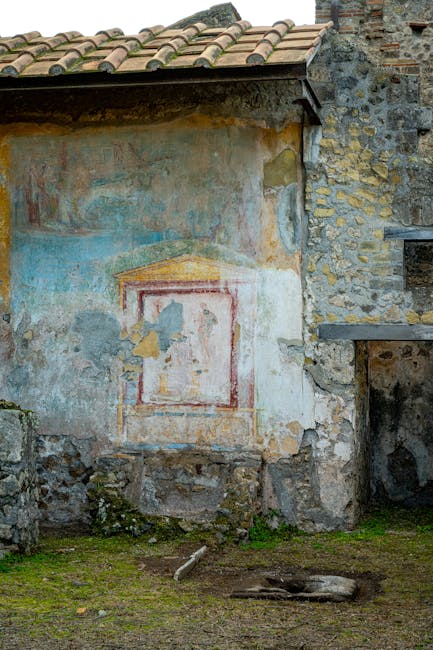
The wooden cradle stopped me.
I’d been walking through Herculaneum for about an hour, past crumbling walls and mosaic floors, telling myself this was basically Pompeii’s smaller cousin. Then I turned a corner and there it was — a baby’s cradle, made of wood, carbonized but intact. Nearly two thousand years old. Still recognizable as the thing you’d rock a child to sleep in.
- If You’re in a Hurry
- Herculaneum vs. Pompeii: Which One Should You Visit?
- How to Get Herculaneum Tickets
- The Best Herculaneum Tours to Book
- 1. Skip-the-Line Guided Tour with Archaeologist
- 2. Skip-the-Line Entry Ticket with Audio Guide
- 3. Herculaneum Small Group Tour with an Archaeologist
- 4. Pompeii and Herculaneum Small Group Tour with an Archaeologist
- When to Visit Herculaneum
- How to Get There from Naples
- By train (the best option)
- By guided tour with transport
- By taxi or rideshare
- By car
- What You’ll Actually See Inside
- Tips That Will Save You Time and Hassle
- More Naples Area Tours Worth Checking Out
- More Naples Guides
If You’re in a Hurry
Don’t have time to read the whole guide? Here are my top picks:
- Best guided tour: Herculaneum: Skip-the-Line Guided Tour with Archaeologist — $53/person, 2 hours. The most popular Herculaneum tour and the one I’d pick for a first visit. An actual archaeologist walks you through the site, pointing out details you’d walk right past on your own — the carbonized food, the graffiti, the second-floor rooms.
- Best budget option: Herculaneum: Skip-the-Line Entry Ticket with Audio Guide — $15/person, self-paced. Skip the queue, get an audio guide, explore at your own speed. Hard to beat for the price.
- Best combo: Pompeii and Herculaneum Small Group Tour with an Archaeologist — $77/person, 6-11 hours. Both sites in one day with an expert. If you want the complete picture of what happened on August 24, 79 AD, this is the move.
Herculaneum vs. Pompeii: Which One Should You Visit?
But I know that’s not always realistic. If you only have time for one, here’s my honest comparison:
Choose Pompeii if:
- You want scale — Pompeii covers 170 acres, with wide streets, public buildings, an amphitheatre, and dozens of houses to explore
- You want the full “frozen city” experience — the bakeries, the bars, the brothel, the political graffiti
- You’re a first-time visitor to the region and want the iconic experience
- You have 3+ hours to spend
Choose Herculaneum if:
- You want the better-preserved site — organic materials survived here that were destroyed at Pompeii
- You prefer fewer crowds (Herculaneum gets a fraction of Pompeii’s visitors)
- You’re fascinated by domestic life — the houses here are extraordinarily well preserved, with mosaics, frescoes, and even furniture
- You have 2 hours and want something manageable
- You’ve already done Pompeii and want something different
The fundamental difference comes down to how each city was destroyed. Pompeii was buried under about 20 feet of volcanic ash and pumice — abrasive, hot, and destructive. Herculaneum was buried under roughly 60 feet of superheated volcanic mud (pyroclastic flow), which hardened like concrete around everything it touched. That mud preserved wood, cloth, food, and organic materials that turned to dust at Pompeii.
If you’re planning to visit Pompeii from Naples, consider adding Herculaneum — it’s on the same train line, closer to Naples, and you can do both in a single (long but rewarding) day.
How to Get Herculaneum Tickets
The basics:
- Standard adult ticket: 13 euros (about $14-15 USD)
- EU citizens aged 18-25: 2 euros
- Under 18 (any nationality): Free
- First Sunday of the month: Free entry for everyone (expect bigger crowds)
Where to buy:
The official ticket site is ticketone.it (the authorized reseller for the Herculaneum archaeological park). You can also buy at the gate, but I’d recommend buying in advance during peak season (April through October) because they do cap daily visitors.
The alternative — and what I’d suggest for most visitors — is to book through a platform like GetYourGuide or Viator. You’ll pay slightly more (around $15-21 for entry-only tickets), but you skip the ticket queue entirely and usually get an audio guide bundled in. On a busy morning, skipping that queue is worth every extra cent.
Pro tip: Herculaneum doesn’t sell out as often as Pompeii, but the ticket office can have a queue of 20-30 minutes during peak hours (10 AM to 1 PM in summer). Either arrive early, come after 2 PM, or pre-book online.
The Best Herculaneum Tours to Book
I’ve gone through the options and picked four that cover the range — from budget entry tickets to the full combo day with Pompeii.
1. Skip-the-Line Guided Tour with Archaeologist
- Price: $53 per person
- Duration: 2 hours
- Provider: GetYourGuide
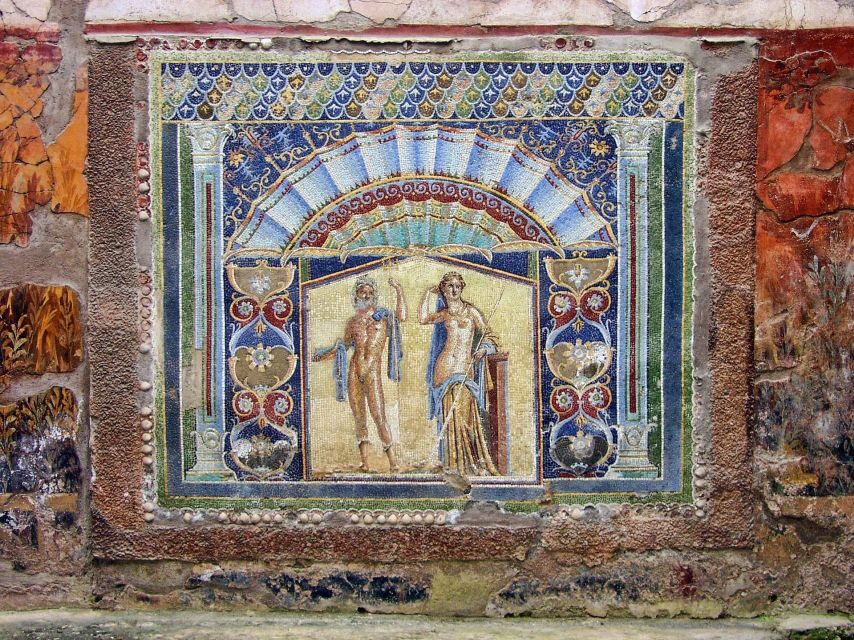
This is the one I recommend for most visitors. You get an archaeologist as your guide, skip-the-line entry, and a focused 2-hour walkthrough of the key sites. What makes this worth the money over a self-guided visit is the context. An archaeologist will explain why one house has a mosaic of Neptune and another has a simple tile floor — and what that tells you about Roman social hierarchy. They’ll point out the carbonized wooden partition walls that you’d walk right past, and take you to the boat sheds where the real emotional weight of this place hits you.
Two hours is the right amount of time for Herculaneum. The site is compact enough that you’ll see the major highlights without feeling rushed.
Best for: First-time visitors who want to actually understand what they’re looking at.
Read our full review | Check prices and availability
2. Skip-the-Line Entry Ticket with Audio Guide
- Price: $15 per person
- Duration: Self-paced
- Provider: GetYourGuide
If you’re on a budget or you prefer exploring independently, this is the way to go. Fifteen dollars gets you skip-the-line entry and an audio guide on your phone. You set your own pace, linger where you want, and move on when you’re ready. The audio guide won’t match a live archaeologist for depth, but it’ll give you enough context to appreciate what you’re seeing.
This is also a solid choice if you’ve already done a guided tour at Pompeii and have some baseline knowledge of Roman domestic life — you’ll recognize patterns and pick up on details without needing everything explained.
Best for: Budget travelers, independent explorers, and repeat visitors to the region.
Read our full review | Check prices and availability
3. Herculaneum Small Group Tour with an Archaeologist
- Price: $53.81 per person
- Duration: 2 hours
- Provider: Viator
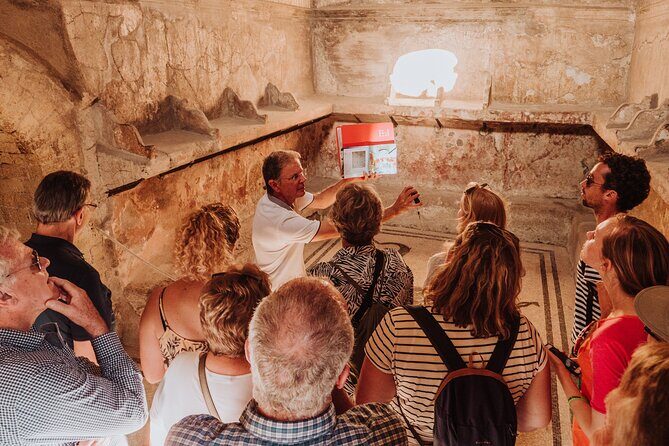
Very similar to the first option but run through Viator with a slightly different operator. The small group cap means you’ll have a more intimate experience — easier to hear the guide in the narrow streets and ask questions without competing with twenty other people. The archaeologist guides on this tour are consistently excellent, and the 2-hour format covers all the essential sites.
If you’ve had good experiences booking through Viator before, or if the GetYourGuide option is sold out for your dates, this is an equally strong choice.
Best for: People who prefer small groups and a more personal experience.
Read our full review | Check prices and availability
4. Pompeii and Herculaneum Small Group Tour with an Archaeologist
- Price: $77.09 per person
- Duration: 6-11 hours
- Provider: Viator
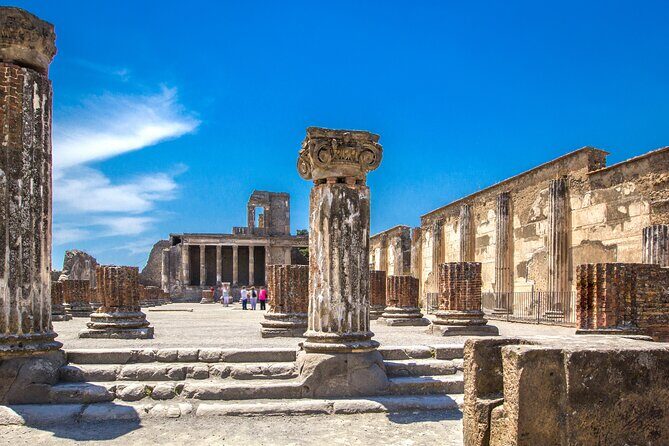
The “see everything” option. You get both Pompeii and Herculaneum in a single day with an archaeologist guide, and the contrast between the two sites is genuinely eye-opening. You’ll see how volcanic ash preserved Pompeii one way, and how pyroclastic mud preserved Herculaneum in a completely different way. Same eruption, same day, two radically different results.
It’s a long day and you’ll be tired. But if you only have one day to dedicate to Roman archaeology near Naples, this tour squeezes maximum value out of it. The guides handle all logistics — tickets, transport between sites, timing — so you just show up and absorb.
Best for: Visitors with limited time who want both sites, and history enthusiasts who want the complete 79 AD experience.
Read our full review | Check prices and availability
When to Visit Herculaneum
- April 1 to October 31: 8:30 AM to 7:30 PM (last entry at 6 PM)
- November 1 to March 31: 8:30 AM to 5:00 PM (last entry at 3:30 PM)
- Closed: January 1 and December 25
Best months: April, May, September, and October. The weather is warm but not punishing, and the crowds are manageable. Unlike Pompeii, Herculaneum sits in a sheltered excavation pit, so it can trap heat in summer — think of it as a stone bowl baking in the sun.
Best time of day: First thing in the morning. Arrive at 8:30 AM when the gates open and you’ll have the site nearly to yourself for the first hour. Most tour groups arrive between 10 AM and noon. Alternatively, a late afternoon visit (entering around 3-4 PM in summer) gives you softer light for photos and thinning crowds.
How long to spend: Plan for 2 to 3 hours. The site is compact — you can see everything in 90 minutes if you’re efficient, but 2 hours lets you linger at the boat sheds, study the mosaics, and soak up the atmosphere. If you’re combining with Pompeii in the same day, budget 2 hours for Herculaneum and 2-3 for Pompeii.
How to Get There from Naples
Herculaneum is in the modern town of Ercolano, about 12 kilometers southeast of central Naples. Getting there is straightforward.
By train (the best option)
Circumvesuviana: From Napoli Piazza Garibaldi station (the lower level of the main Napoli Centrale station), take the Circumvesuviana train toward Sorrento. Get off at Ercolano Scavi station. The journey takes about 20 minutes and costs around 2.50 euros one way.
From the station, it’s a 10-minute walk downhill to the entrance of the archaeological site. Just follow the signs (and the other travelers — you’ll see them).
EAV/Trenitalia regional: A slightly more comfortable option. Regional trains from Napoli Centrale stop at Ercolano station, which is a bit further from the ruins but still walkable (15 minutes).
Important note about the Circumvesuviana: The trains are old and can be crowded, especially during peak hours. Petty theft happens, so keep your belongings close. It’s not dangerous — just keep your wits about you, same as any busy transit system. Trains run roughly every 20-30 minutes.

By guided tour with transport
Several of the tours listed above include pickup from central Naples, which eliminates the train entirely. If you’re not comfortable navigating Italian public transit (or just don’t want to deal with the Circumvesuviana), a tour with transport is the stress-free option. The Pompeii and Herculaneum combo tour handles all transport between sites.
By taxi or rideshare
A taxi from central Naples to Herculaneum costs roughly 30-40 euros one way (negotiate the price before getting in, or use an app). This only makes financial sense if you’re splitting with a group of 3-4 people. The ride takes 20-30 minutes depending on Naples traffic, which can be chaotic.
By car
From Naples, take the A3 motorway toward Salerno and exit at Ercolano. There’s paid parking near the archaeological site (around 5-7 euros for the day). Driving in Naples itself is an adventure I wouldn’t recommend to the faint-hearted, but once you’re on the motorway it’s fine.
What You’ll Actually See Inside
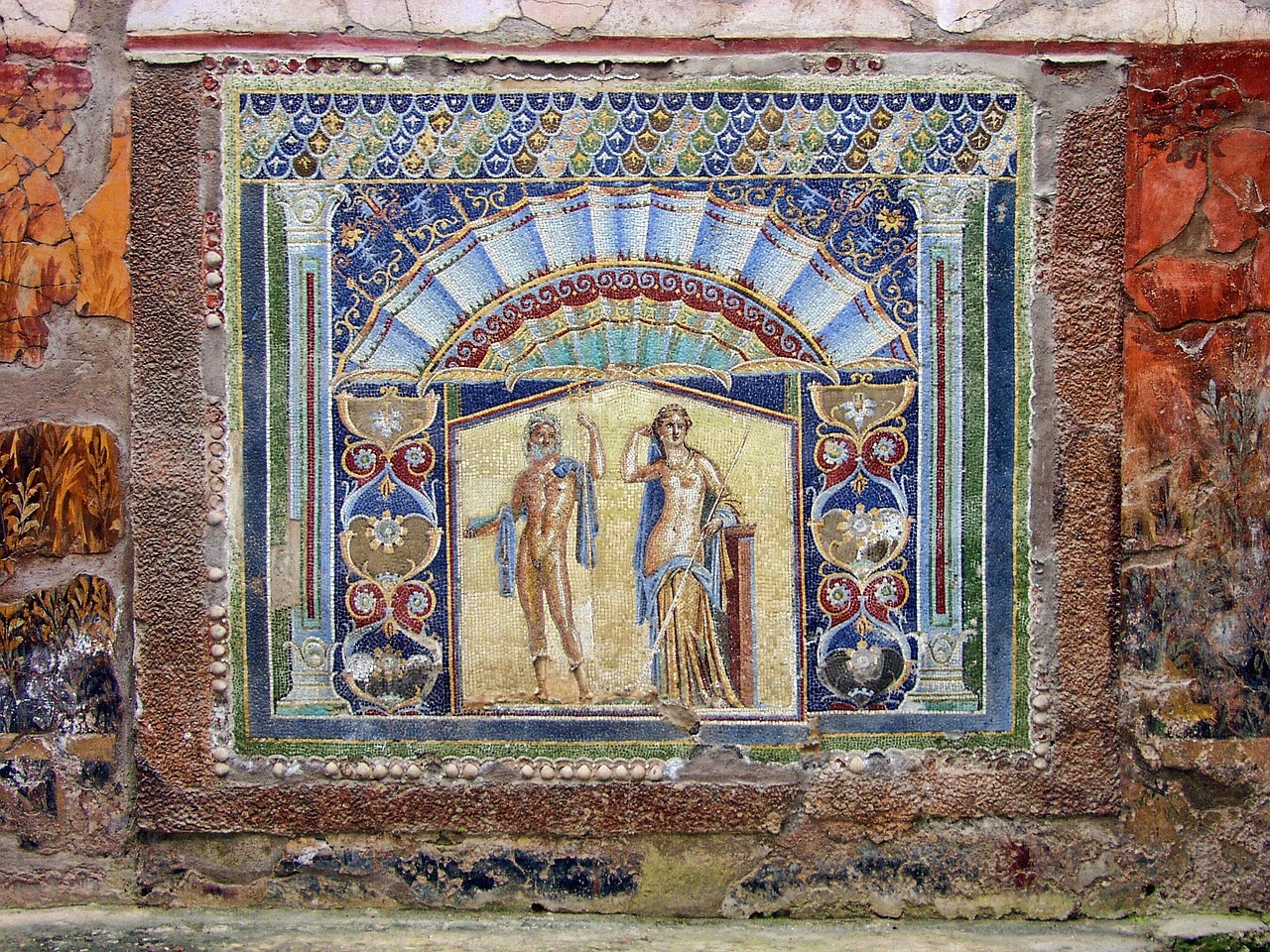
Despite its small size, what’s been uncovered is extraordinary:
The Boat Sheds (Fornici) — This is the most powerful thing at Herculaneum, and arguably the most emotionally devastating archaeological discovery in Italy. Along the ancient shoreline, stone archways that once stored boats now contain the skeletal remains of roughly 300 people. They fled to the waterfront hoping to escape by sea when Vesuvius erupted. The boats never came. A wall of superheated gas and volcanic rock — traveling at over 100 miles per hour at temperatures exceeding 500 degrees Celsius — killed them instantly. Their bones are still there, in the positions they died, some clutching jewelry, one soldier still wearing his sword belt.
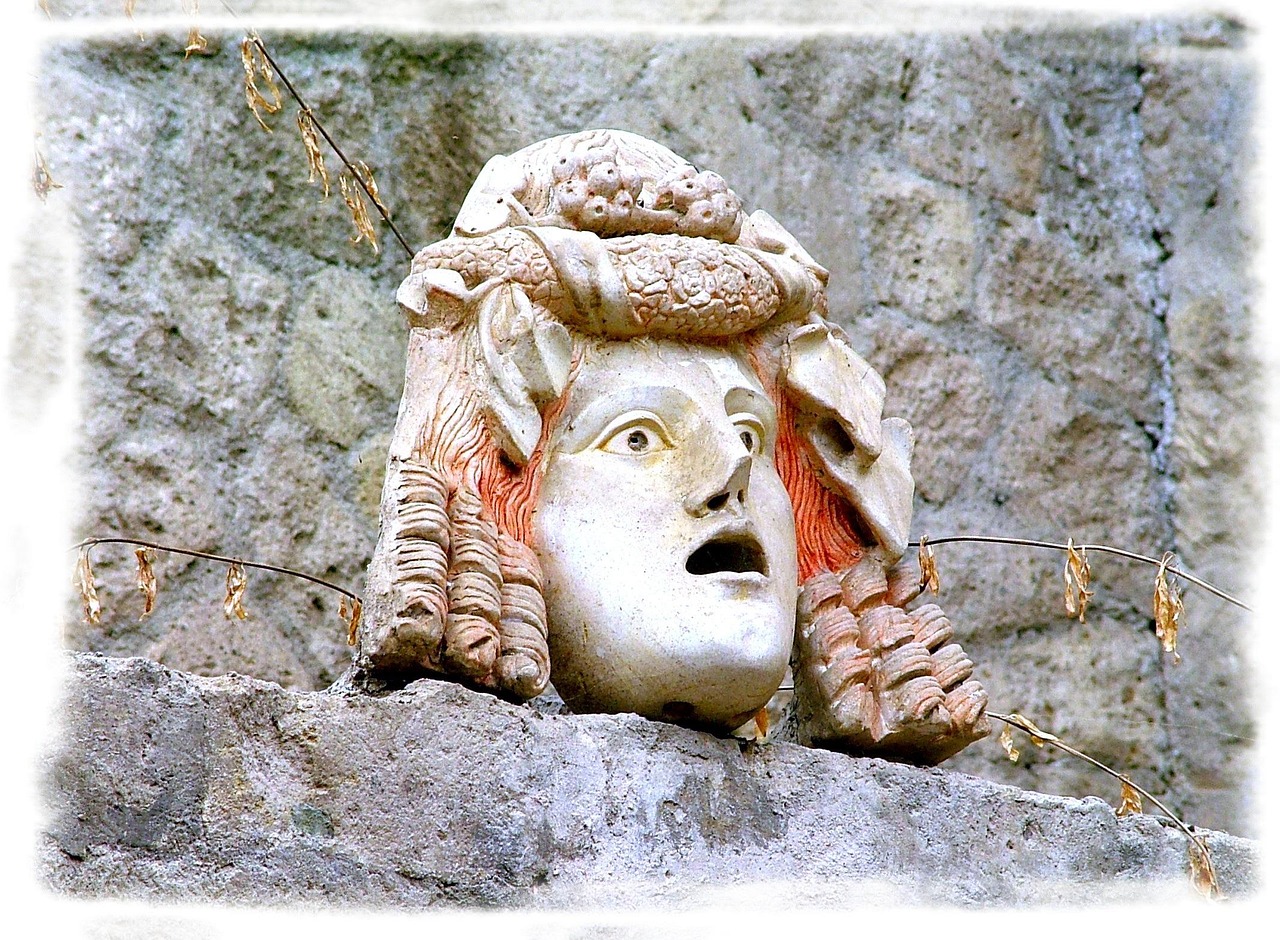
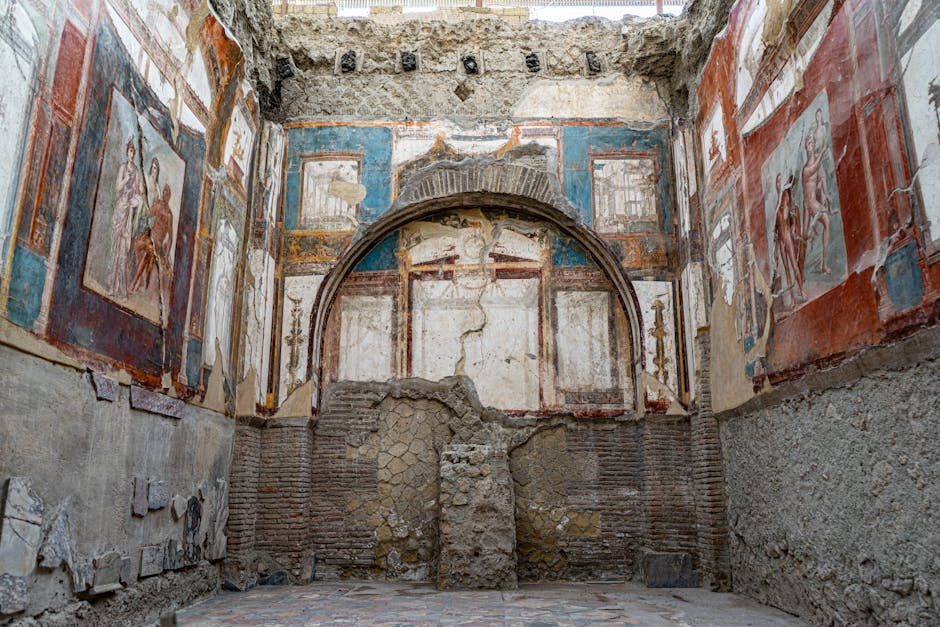
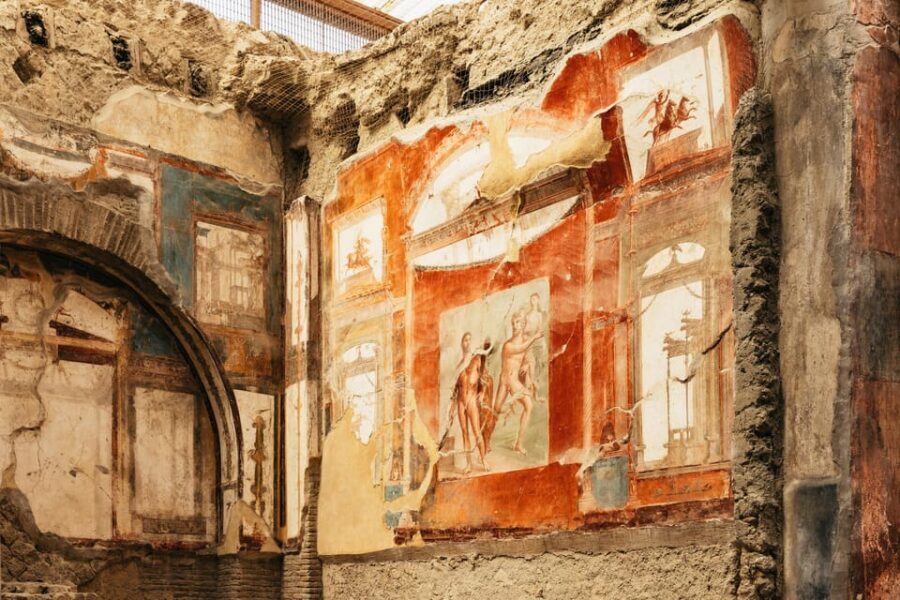
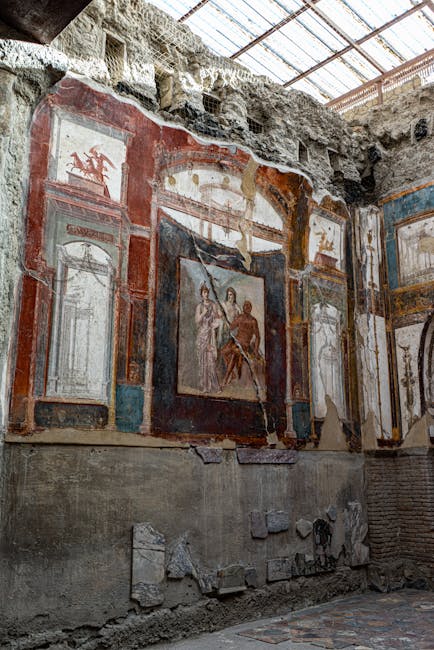
The College of the Augustales — A meeting hall for the priesthood dedicated to the cult of Emperor Augustus. The frescoes here show mythological scenes in remarkable condition. This building gives you a window into Roman civic religion that’s hard to find elsewhere.
The Thermopolium (Ancient Fast Food Counter) — Romans didn’t always cook at home. This food counter still has its serving vessels embedded in the marble countertop, exactly where the owner left them. You can see the holes where large clay pots (dolia) held hot food and drinks. It’s essentially a Roman takeaway restaurant, and the layout would look familiar to anyone who’s eaten at a modern food counter.
The Wooden Structures — This is Herculaneum’s unique selling point. Wooden doors, bed frames, shelving, roof beams, even a baby’s cradle — all carbonized but preserved by the mud that buried them. At Pompeii, almost everything organic was destroyed. Here, you get a three-dimensional picture of how Romans actually lived, down to the furniture in their bedrooms.
The Samnite House — One of the oldest structures in Herculaneum, dating to the 2nd century BC (predating the eruption by about 250 years). The atrium with its gallery and loggia gives you a sense of how wealthy Romans lived across several centuries.
Tips That Will Save You Time and Hassle
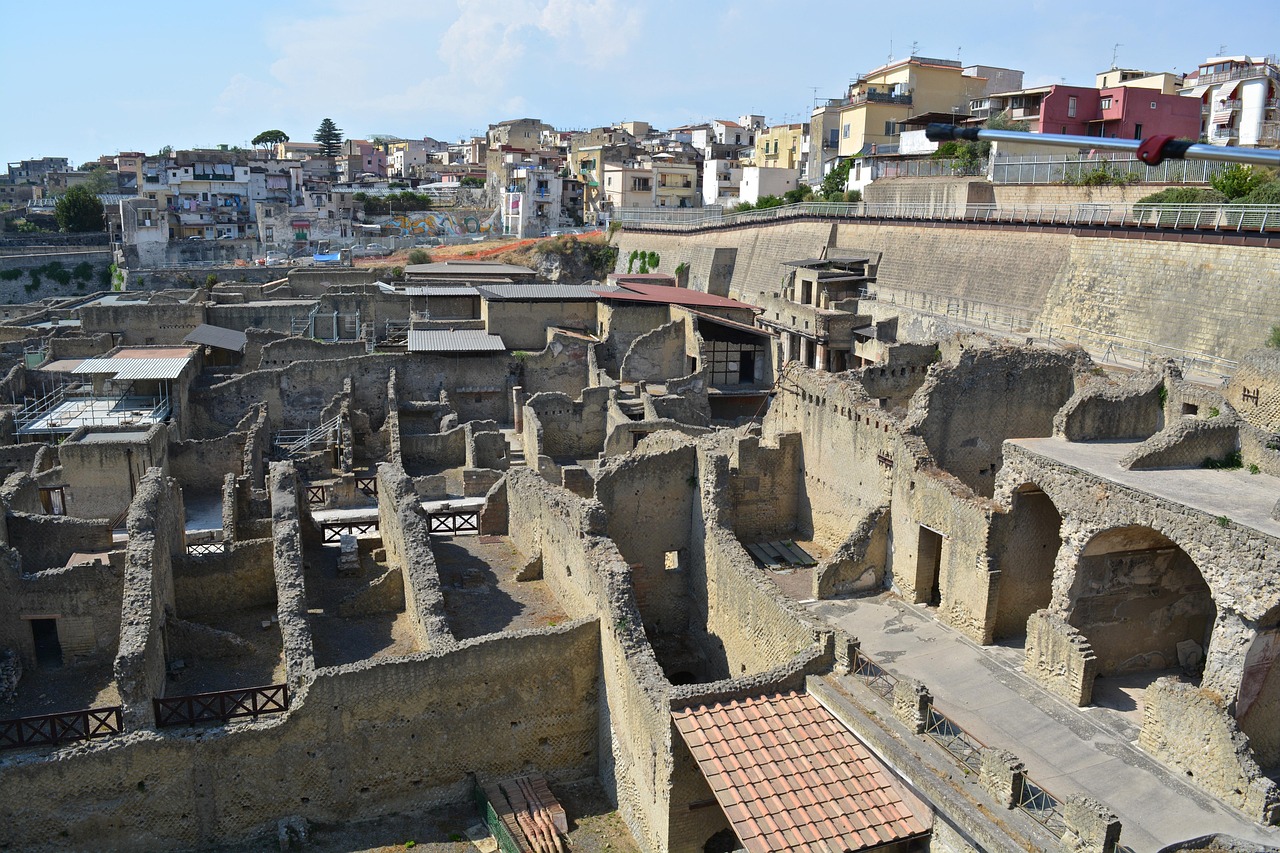
Bring water and sun protection. The excavation pit traps heat, and there’s limited shade. In summer, it can feel 5-10 degrees hotter down in the ruins than it does up on the street. Bring at least a liter of water per person and wear a hat.
Visit Herculaneum first if doing both sites. If you’re combining Herculaneum and Pompeii in one day, do Herculaneum in the morning when you’re fresh and it’s cooler. It’s the closer site to Naples, and the smaller size means you’ll finish in 2 hours. Then take the Circumvesuviana onward to Pompeii (about 20 minutes further down the line).
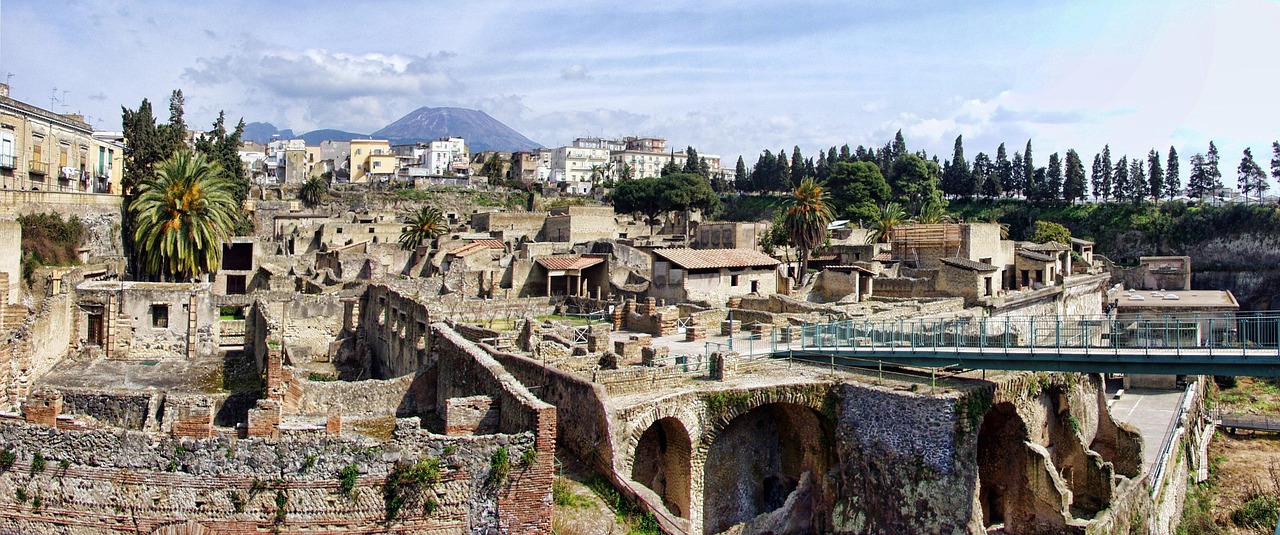
The entrance walkway is worth pausing on. You enter Herculaneum via a long elevated walkway that gives you a bird’s-eye view of the entire excavated city below. Don’t rush past this — take a moment to orient yourself and appreciate the scale of the buried city. You can see how modern Ercolano’s buildings sit directly on top of the unexcavated portions.
Don’t skip the boat sheds. They’re at the far end of the site, past the main ruins, and some visitors turn around before reaching them. Don’t. The boat sheds are the emotional core of Herculaneum — where the human reality of the eruption becomes visceral and immediate.
Consider the Naples Archaeological Museum. Many of the finest artifacts from Herculaneum are displayed at the Museo Archeologico Nazionale di Napoli (MANN) back in Naples. The Herculaneum Papyri — carbonized scrolls from a villa’s private library, some of which are now being read using AI technology — are housed there. Visiting the museum before or after the site adds tremendous context.
Combine with Naples Underground if you’re fascinated by what lies beneath cities. It’s a completely different experience — Greek and Roman aqueducts below modern Naples — but scratches the same archaeological itch.

More Naples Area Tours Worth Checking Out
If you’re spending time in the Naples area, here are some other experiences that pair well with Herculaneum:
- How to Visit Pompeii from Naples — the obvious companion trip, and our complete guide
- How to Visit Naples Underground — explore ancient tunnels and aqueducts beneath the city streets
- How to Visit Capri from Naples — ferries, tours, and what to do once you’re on the island
- How to Get Colosseum Tickets in Rome — if your Italy trip includes the capital